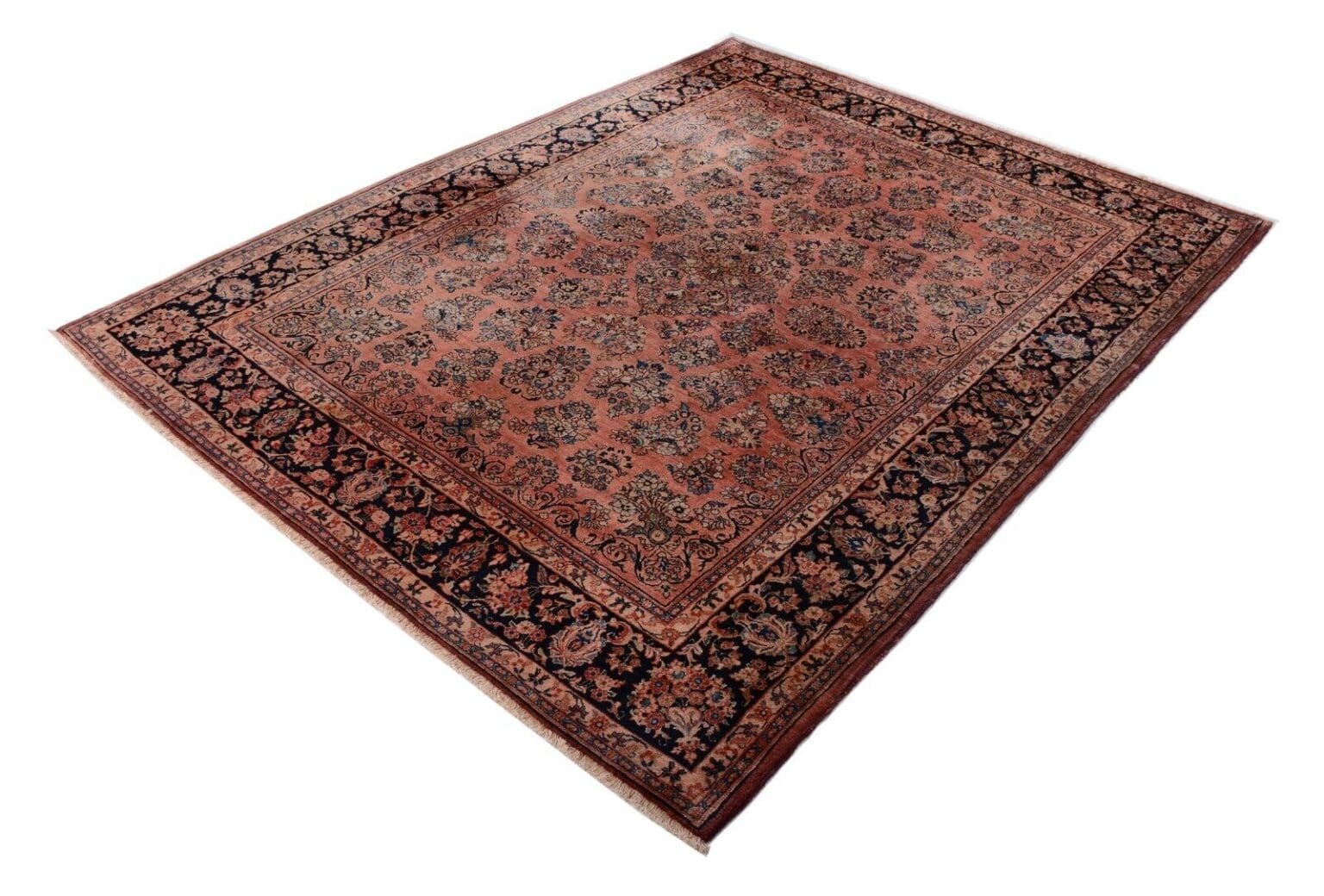
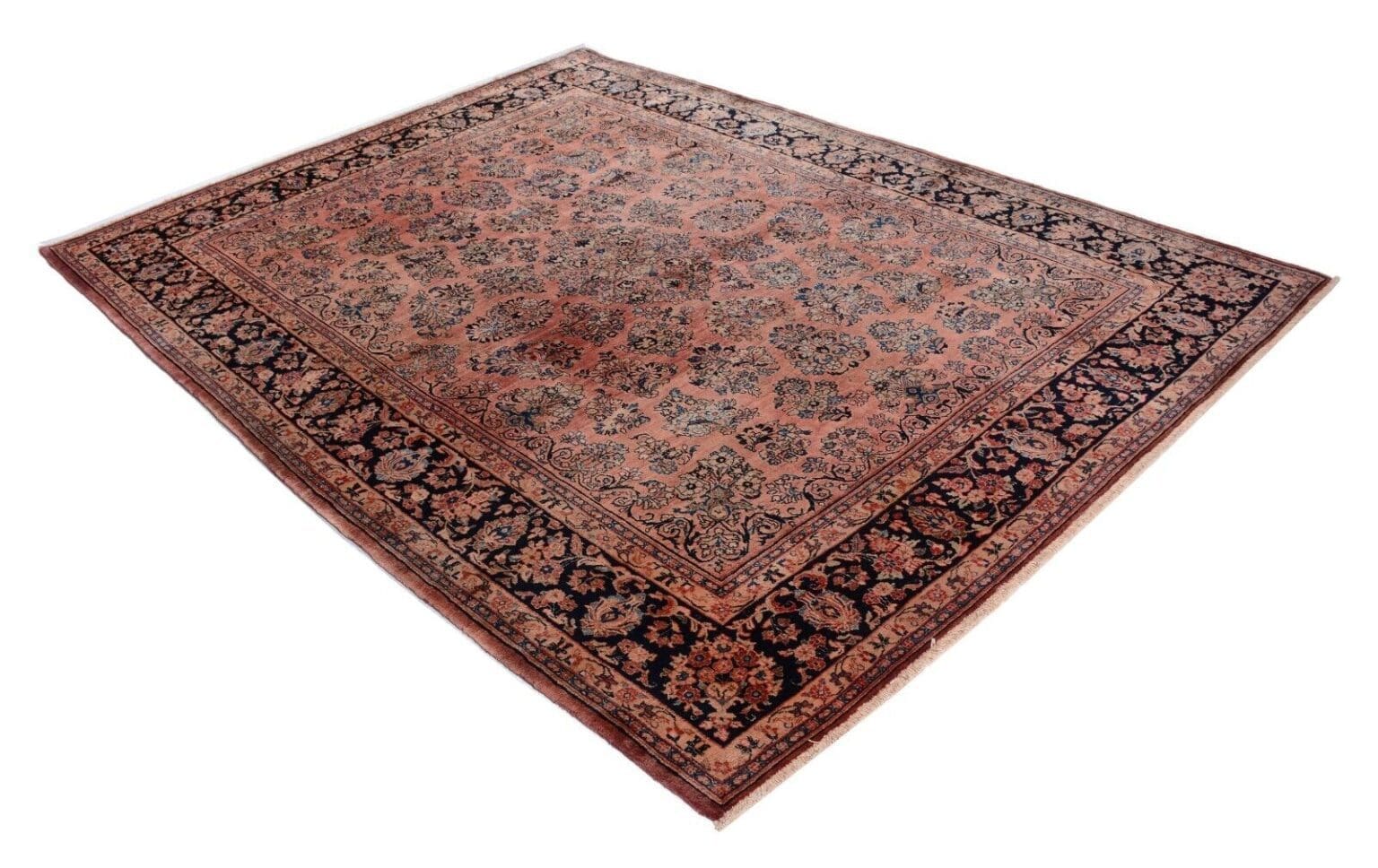
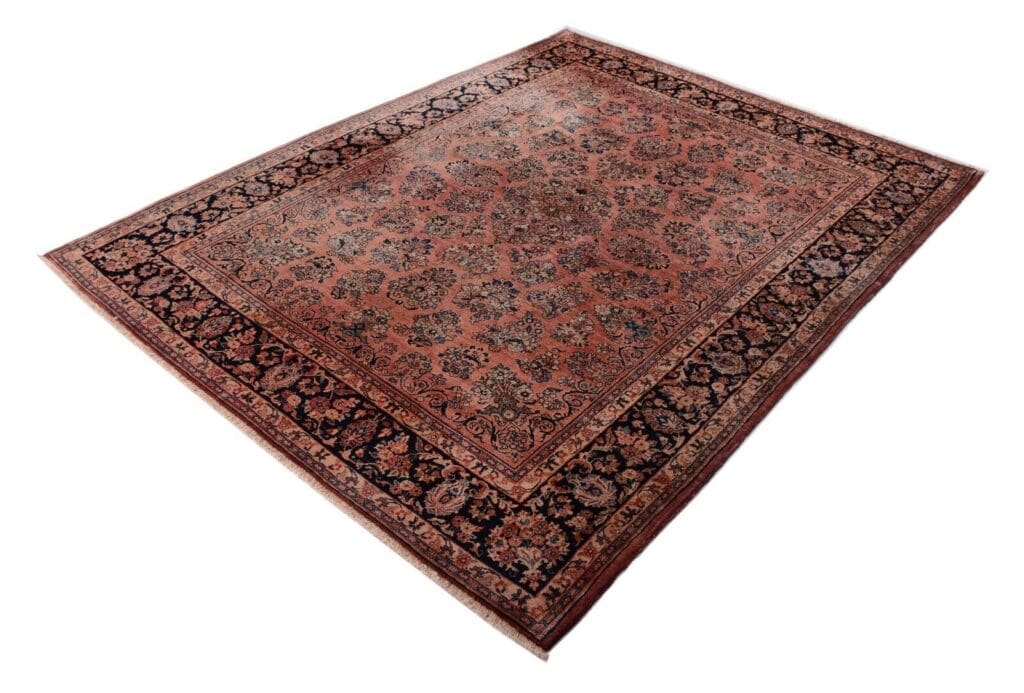
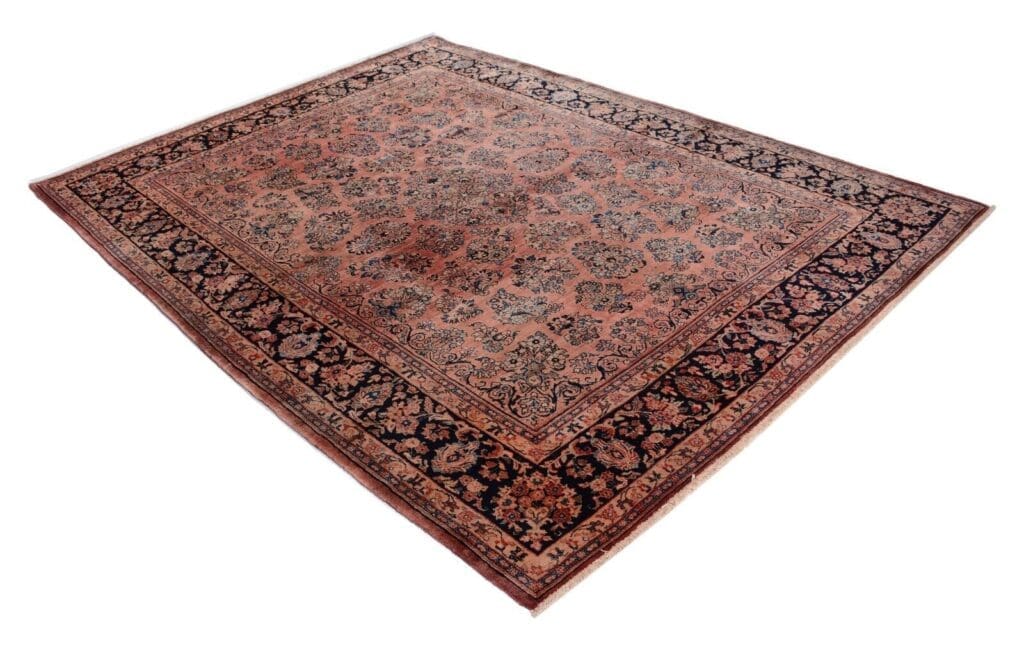
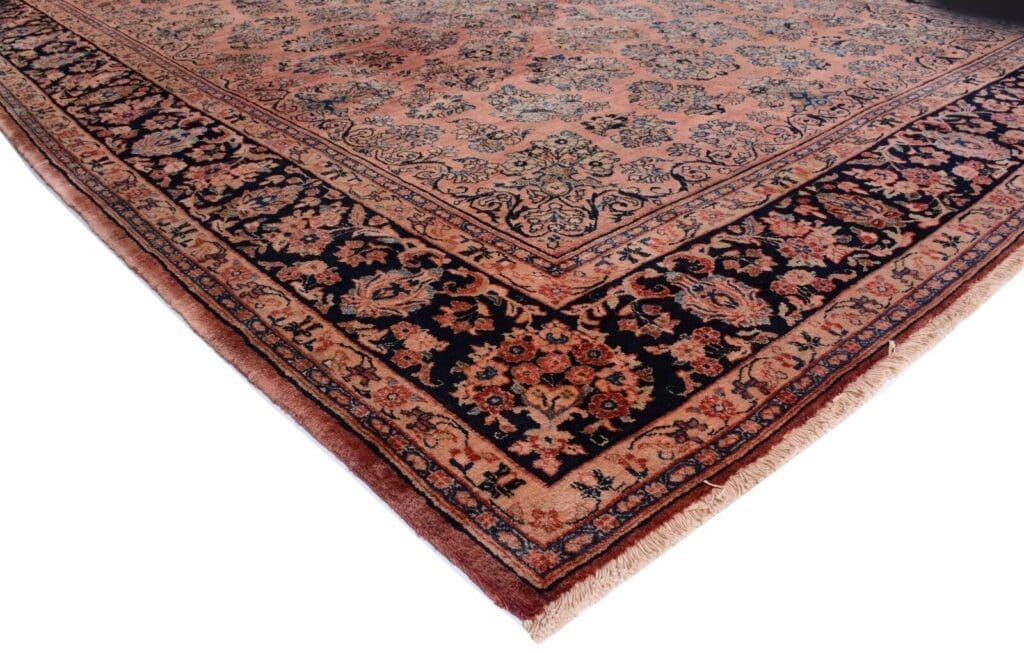
Hand-knotted Sarough Persian Rug | Knot density: 300,000 knots/m² | Material: pile 100% hand-dyed virgin wool | Size: 373 x 273 cm | Pattern: Oriental with floral medallion | Condition: New with tag
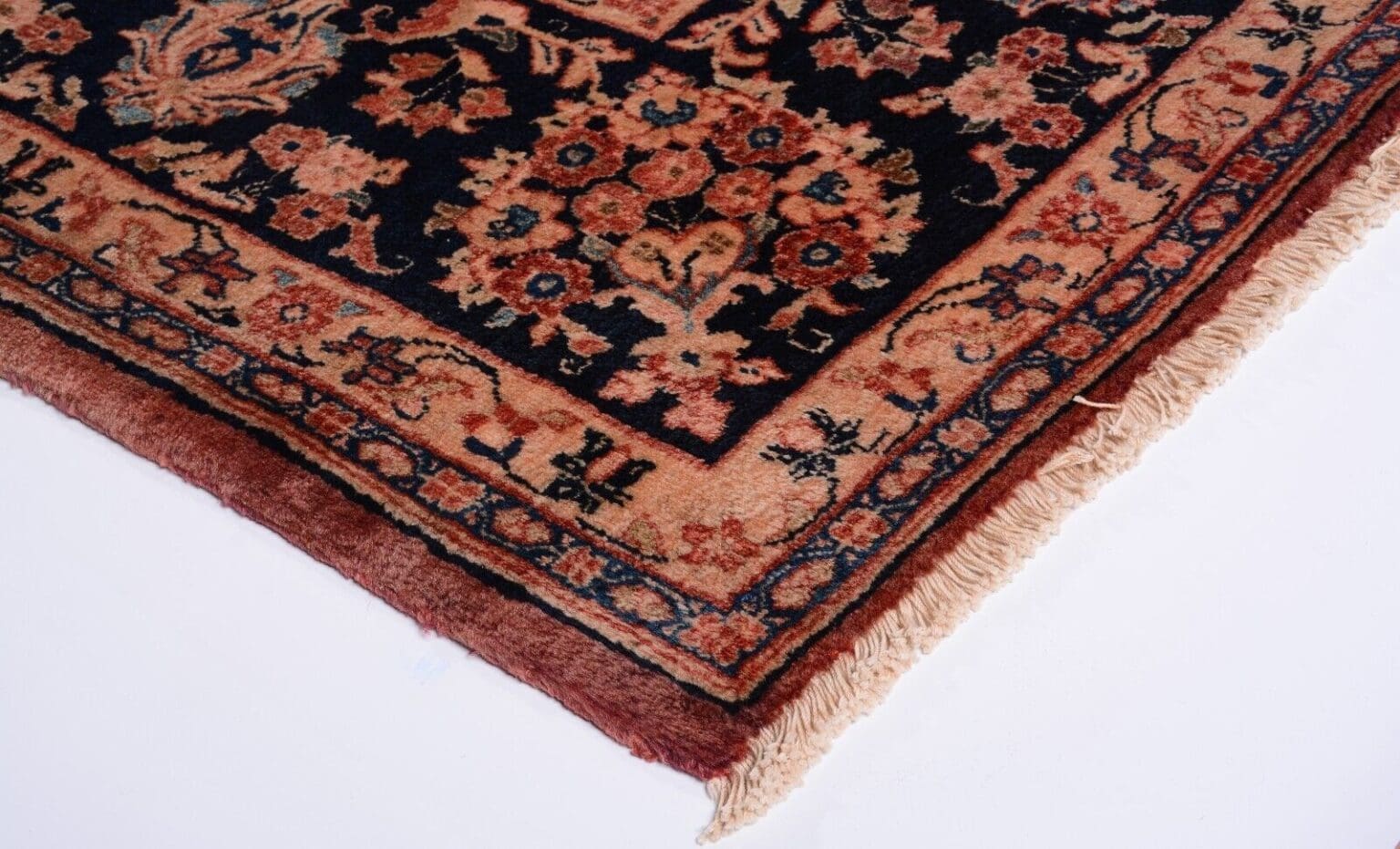
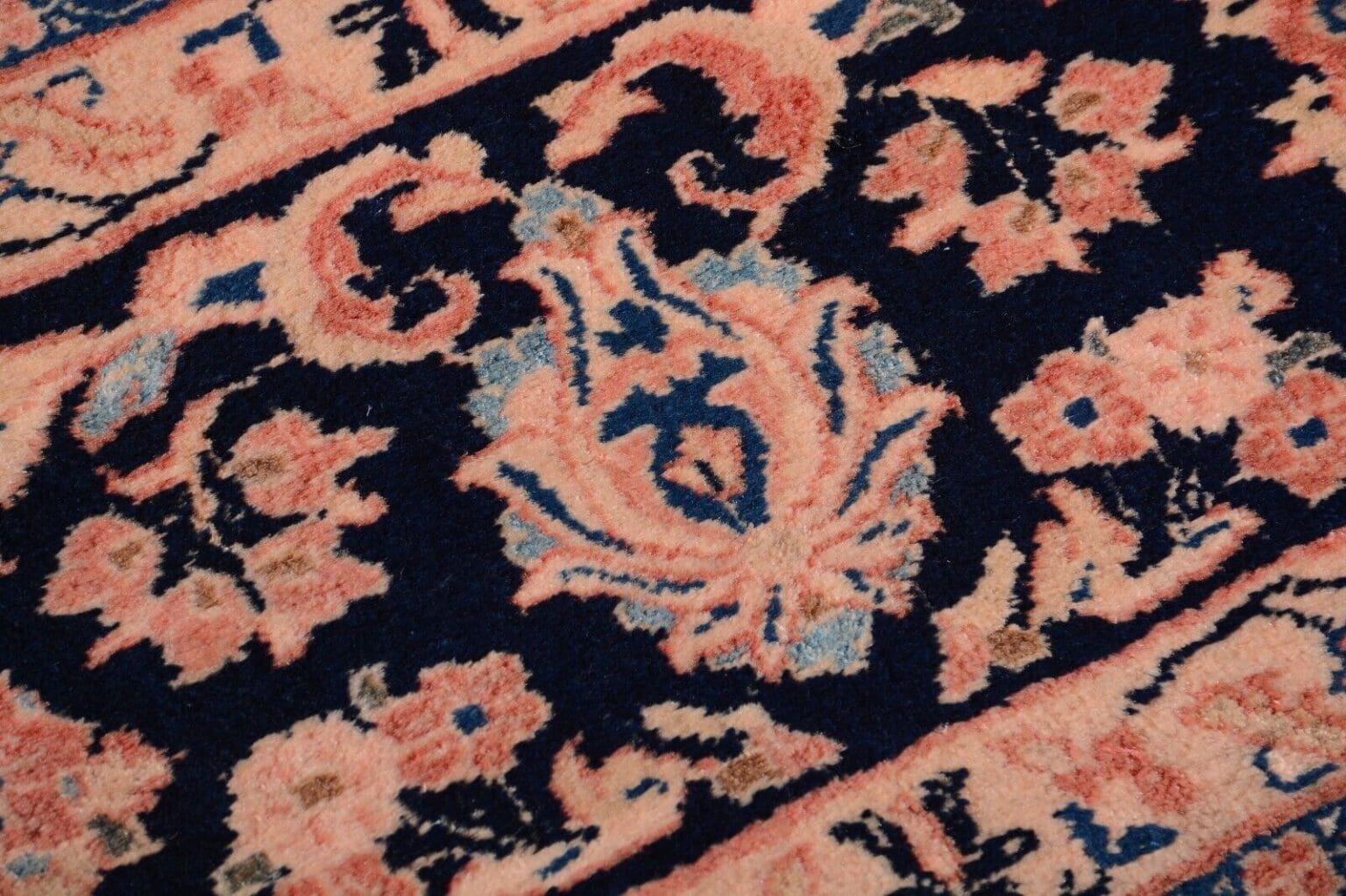
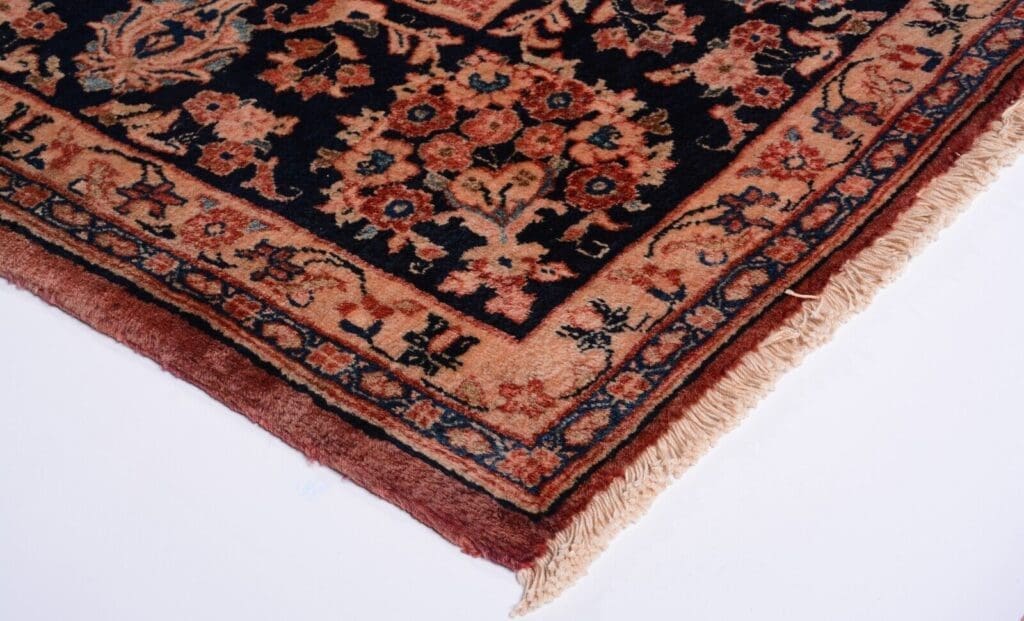
This Sarough Persian rug is hand-knotted with a pile made from 100% hand-dyed virgin wool. The wool was dyed by hand and forms the visible, tactile surface of the rug. Its construction is recorded at 300,000 knots per square metre, so the pile is shaped by a substantial number of individual knots placed by hand.
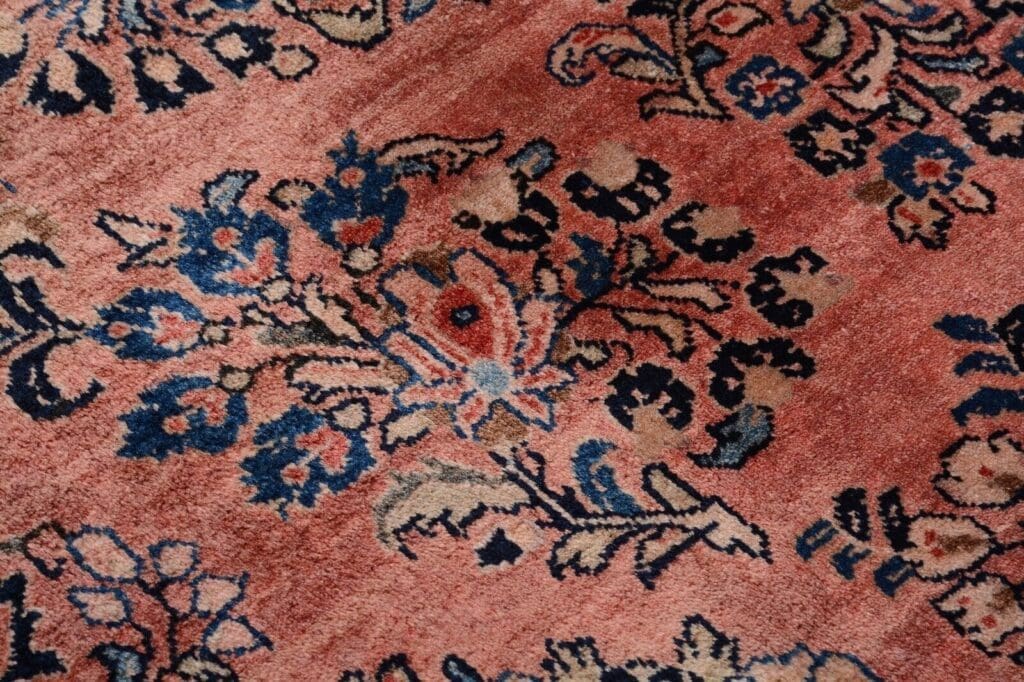
In hand-knotting, each knot is tied separately into the foundation. The rug grows row by row as the knots create the pile, the colour fields and the pattern. Unlike a machine-made floor covering, the design results directly from the work carried out at the loom. Knot density affects the level of detail that can be expressed in a floral medallion and in the surrounding outlines.
Virgin wool has long been used in oriental rug making because it accepts colour and can be formed into a resilient pile with a textile feel underfoot. In this rug, the wool is specifically described as hand-dyed. The combination of hand-knotting and hand-dyed virgin wool therefore connects the material of this piece with the established craft of Persian rug production.
The condition is listed as new with tag. This condition description appears alongside the rug’s historical classification as an object from the early twentieth century. Its hand-knotted construction, wool pile and recorded knot density define the technical side of the piece, while the pattern and colour arrangement provide its decorative identity.
Origin and Tradition
Sarough is a province in north-western Iran known for its rugs. The region’s weaving tradition is connected with a long history of Persian textile art, whose patterns and designs became established in the Persian Empire as early as the sixteenth century. A Sarough rug belongs to a setting in which manual weaving, ordered ornament and carefully structured fields have developed together over a long period.
Persian rugs are considered through both their regional traditions and their method of production. Sarough identifies the tradition of origin, while hand-knotting describes the way the rug was made. These are related but separate aspects. The region contributes a vocabulary of forms and compositions; the knotting process turns that vocabulary into a particular textile object.
Sarough rugs are associated with a balance between traditional art and a more contemporary visual direction. The American style named for this rug places its Sarough vocabulary within that direction. It does not remove the Persian foundation of the design. Instead, floral and structured elements are presented in a composition that can also be read in relation to contemporary interiors.
The history of Persian rug making depends on the transmission of skills, patterns and colour practices. Knowledge of preparing the foundation, tying knots and organising borders has been preserved and adapted through generations. Regional workshops developed recognisable characteristics while remaining part of a wider Persian language of ornament. This relationship between local identity and shared tradition is central to understanding the place of Sarough within Persian rugs.
In Sarough design, the arrangement of ornament and open field is often treated as a unified composition. Floral forms provide organic movement, while a clear structure keeps the pattern legible. This combination allows Sarough rugs to be considered alongside traditional Persian furnishings as well as more restrained modern schemes. The American style of this piece gives that inherited vocabulary a further contemporary framing.
This rug is dated to the early twentieth century, specifically the period from 1911 to 1940. Its description as an antique Persian rug refers to that historical classification and to its place within Iranian rug tradition. At the same time, its condition is given as new with tag. Both statements belong to the description of this one piece and are retained without changing either designation.
Design and Pattern
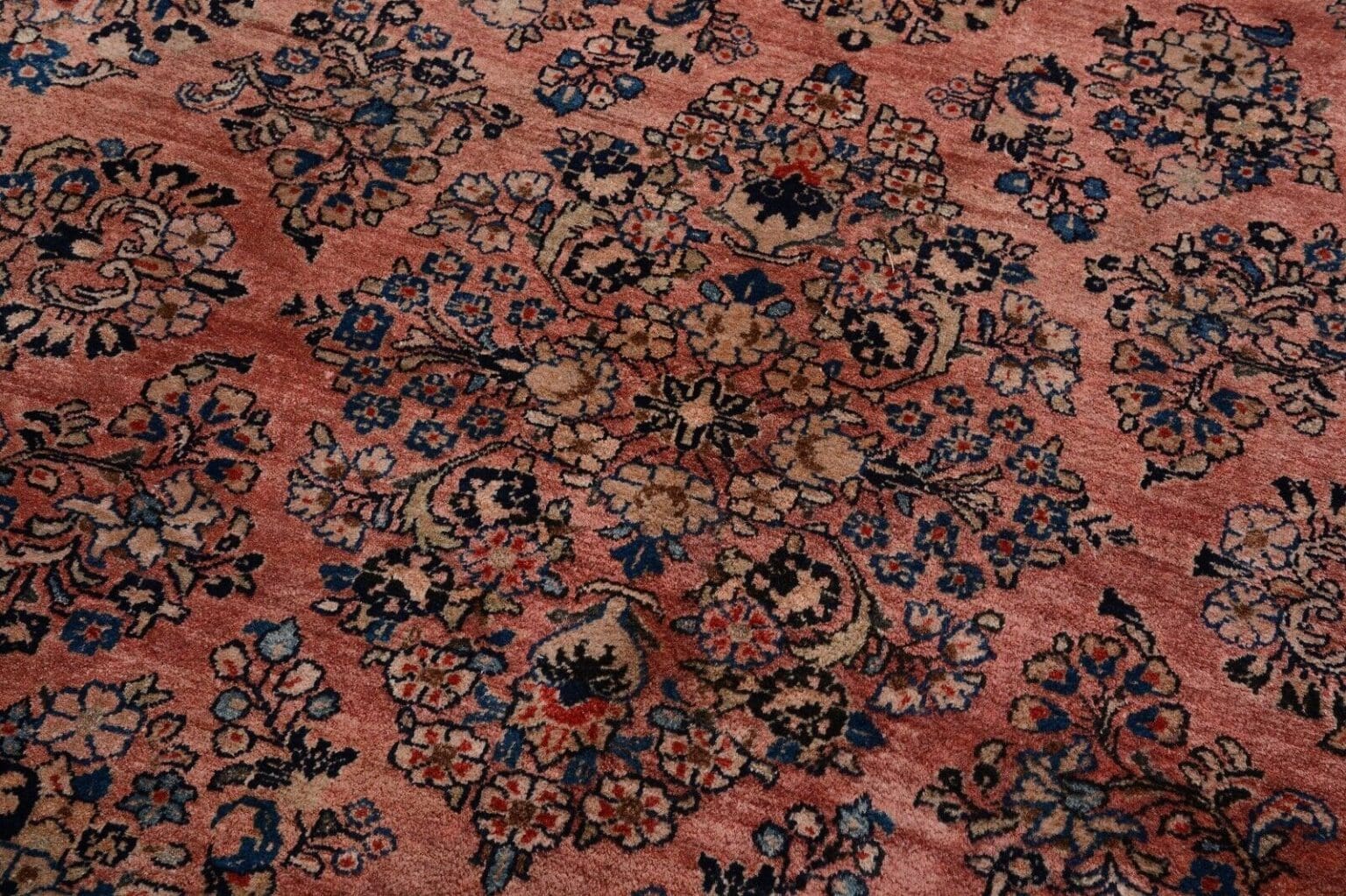
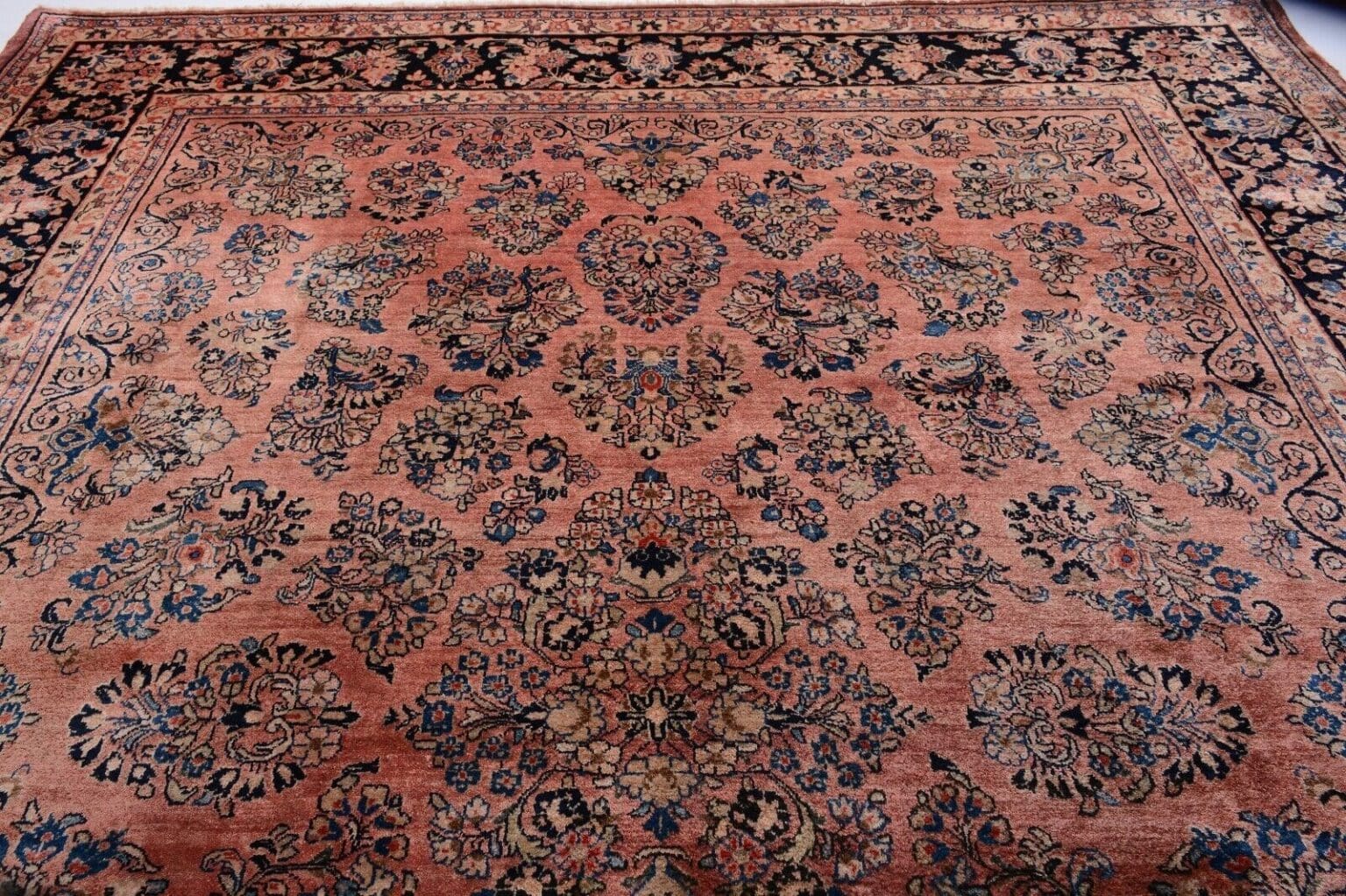
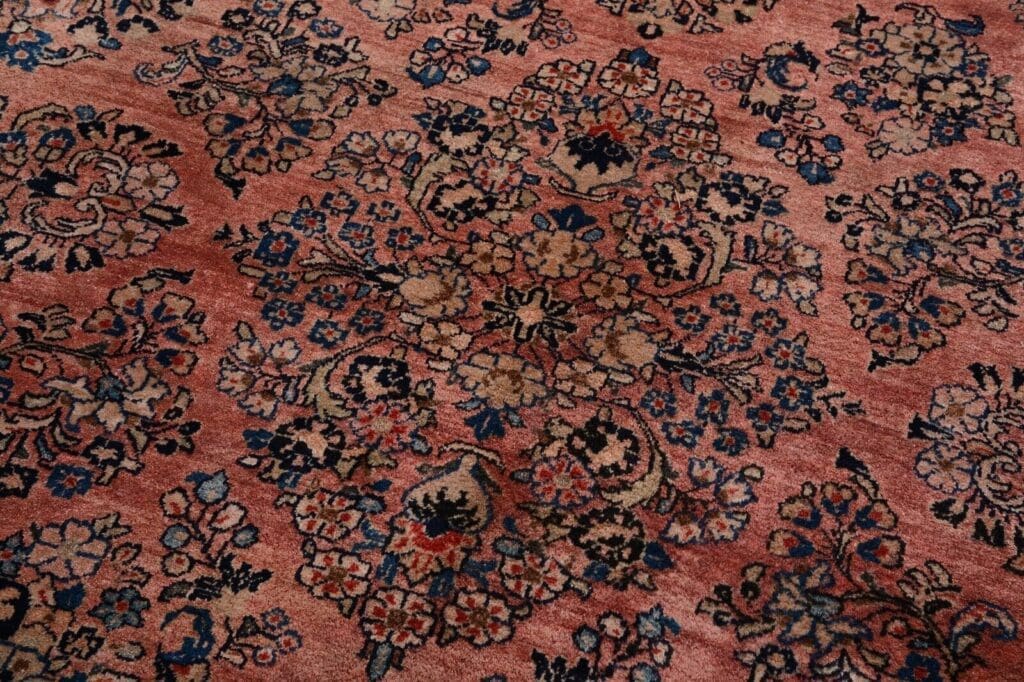
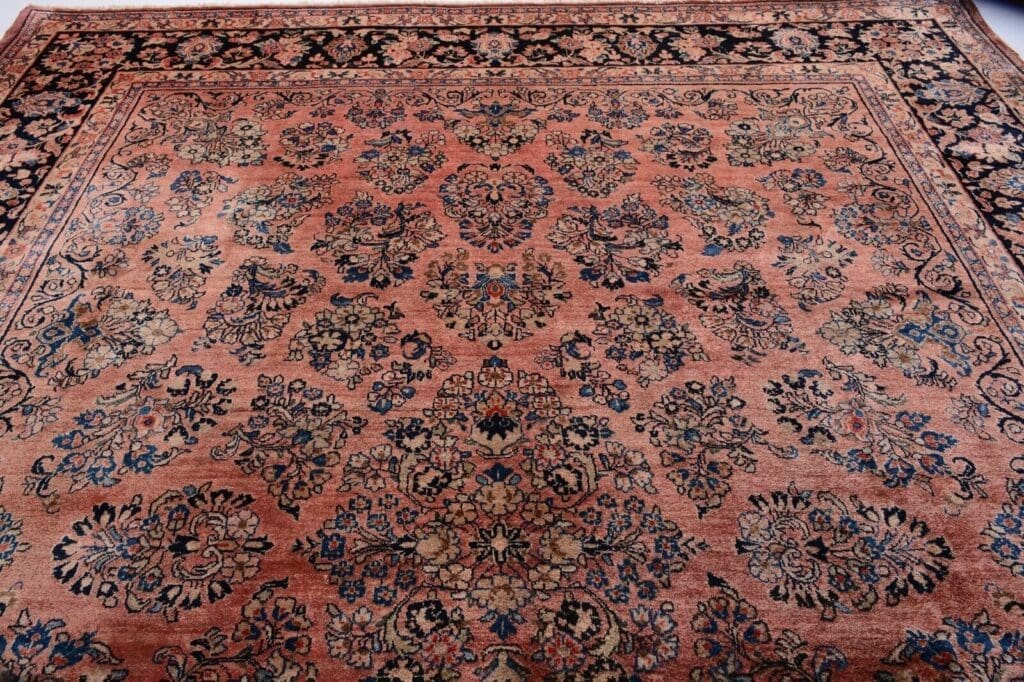
The pattern is described as Oriental with a floral medallion. A medallion establishes a visual centre for a rug composition. It gathers the principal lines and ornaments in the middle of the field and gives the surrounding elements a point of reference. In this Sarough, that central structure is combined with floral forms, lending the pattern an organic quality.
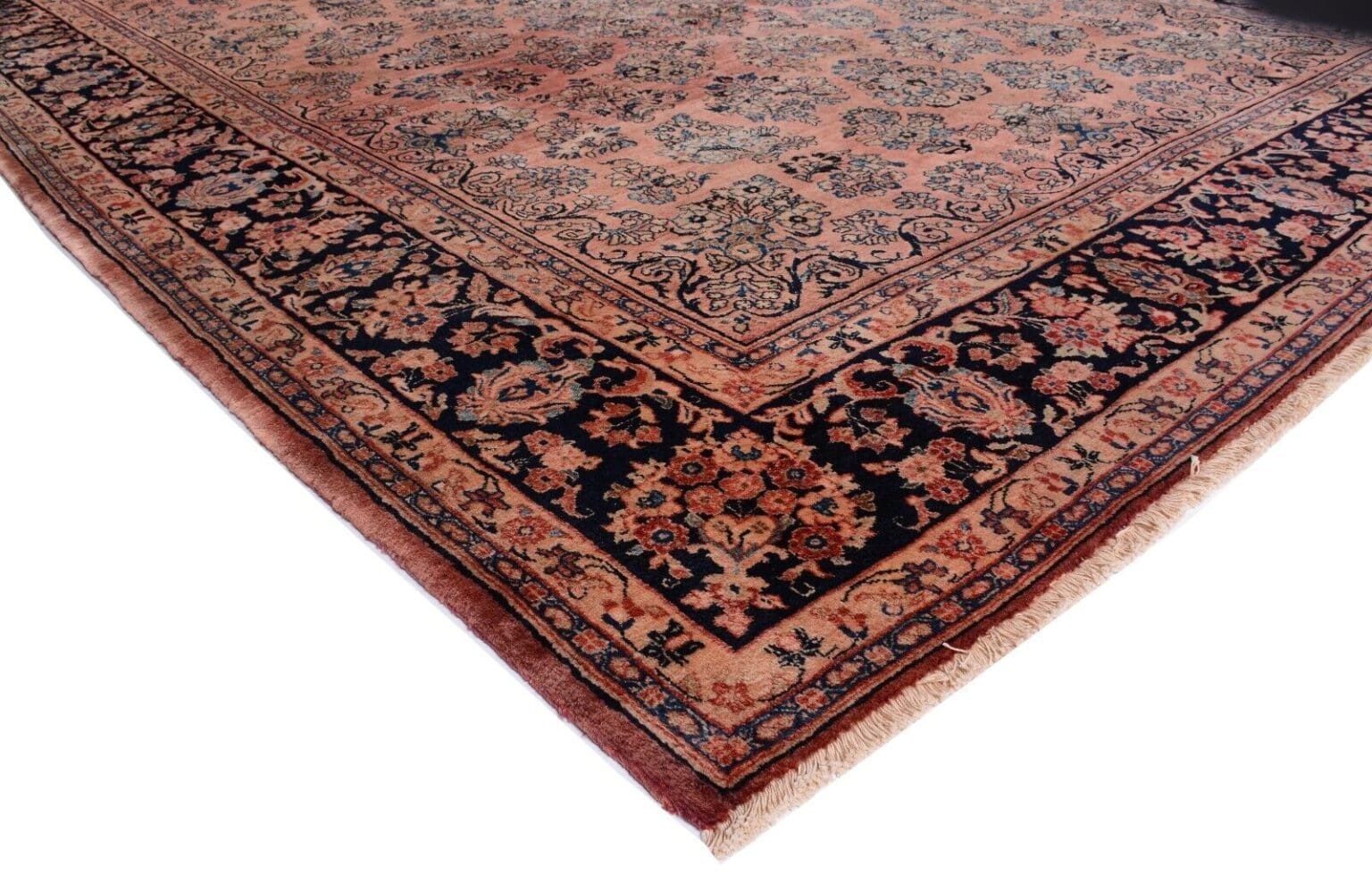
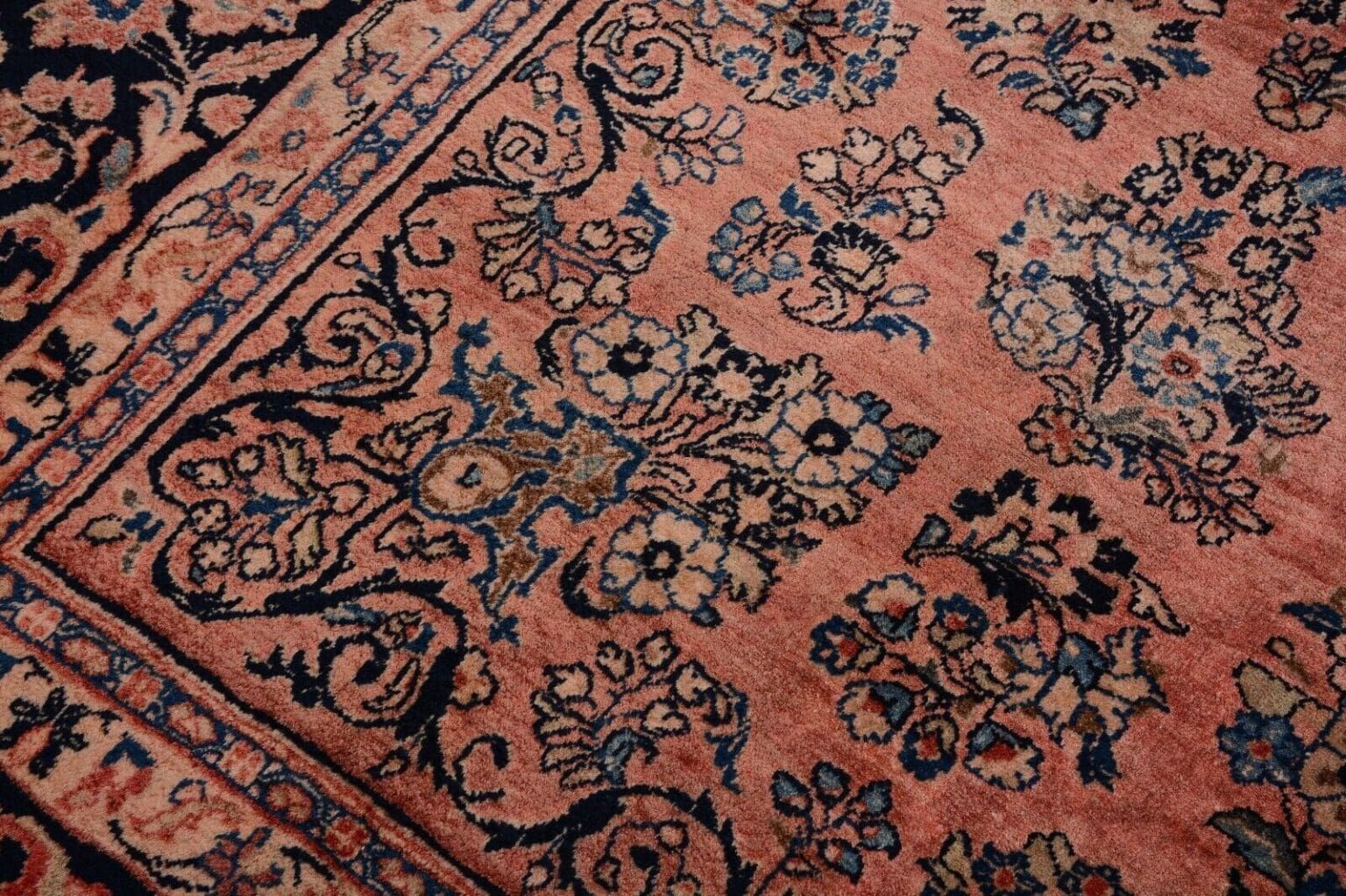
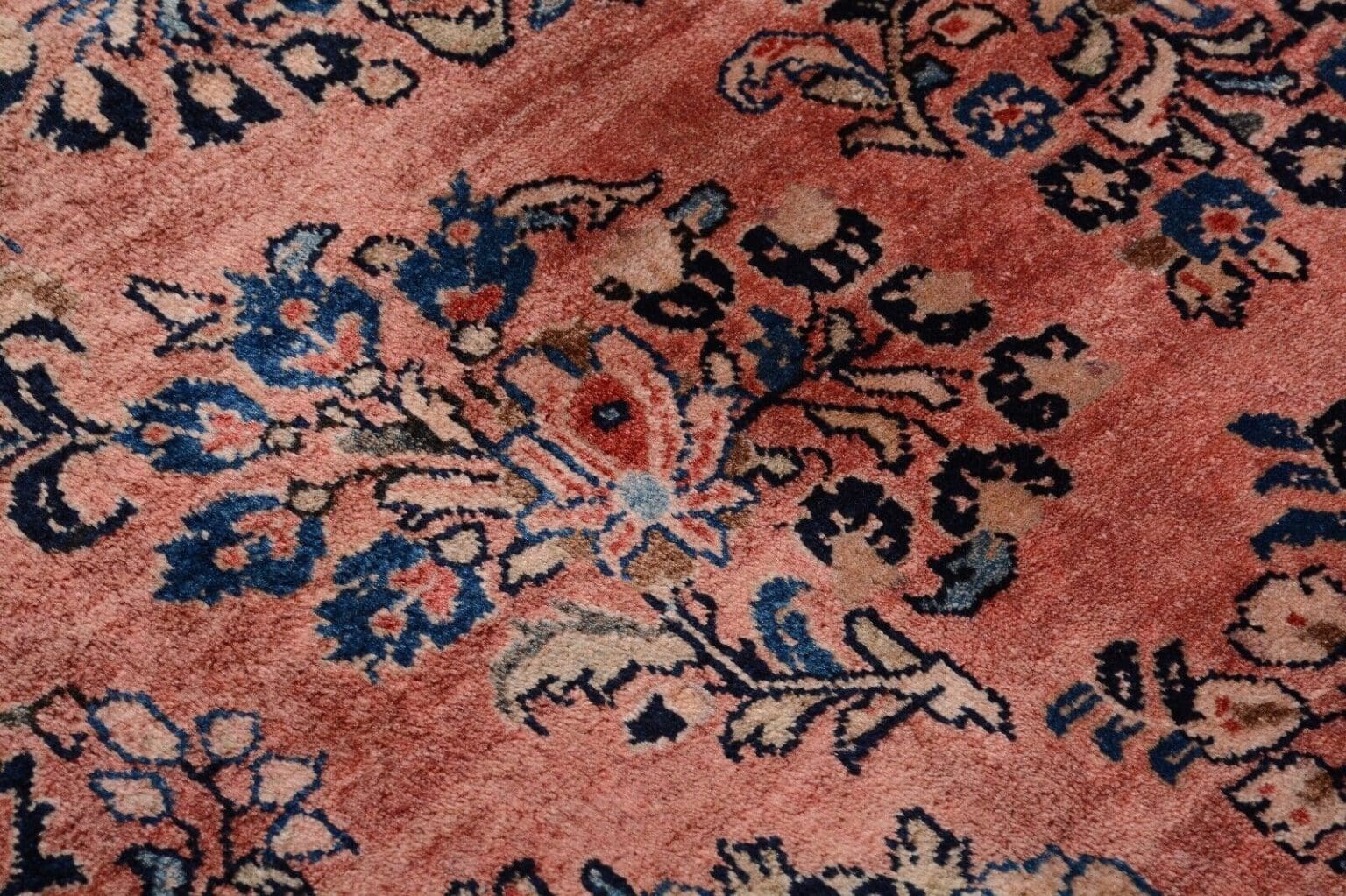
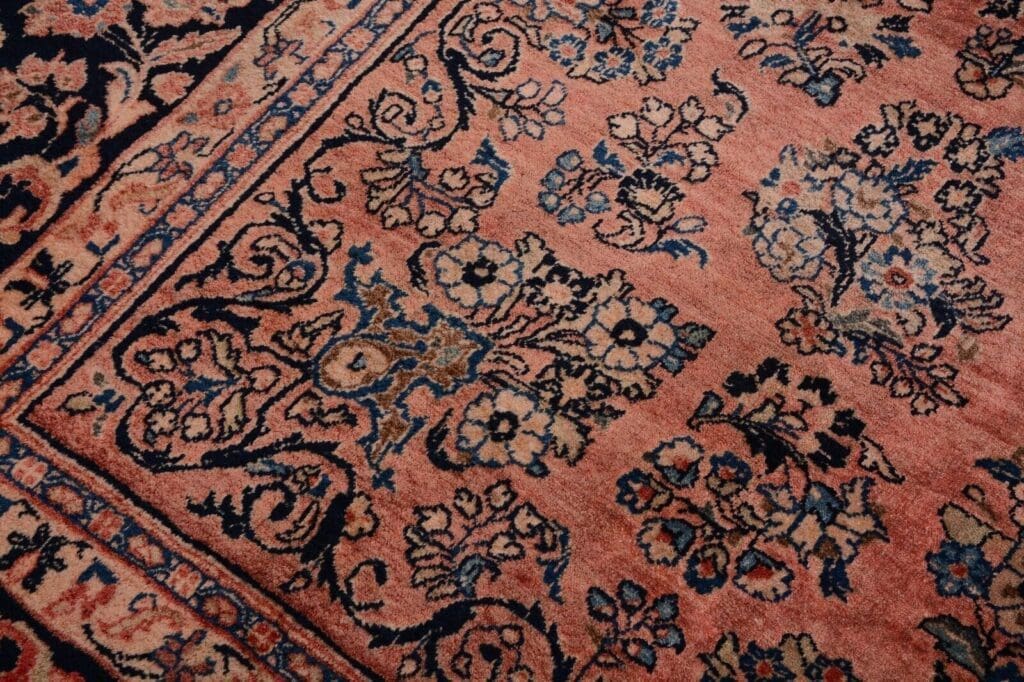
Floral ornament is one of the recurring design languages of Persian rugs. Flowers, leaves, vines and curving lines may appear as separate motifs or may be joined into larger repeating arrangements. They introduce movement across the field without abandoning the order of the overall composition. When used with a medallion, they create a relationship between a defined centre and the ornament that surrounds it.
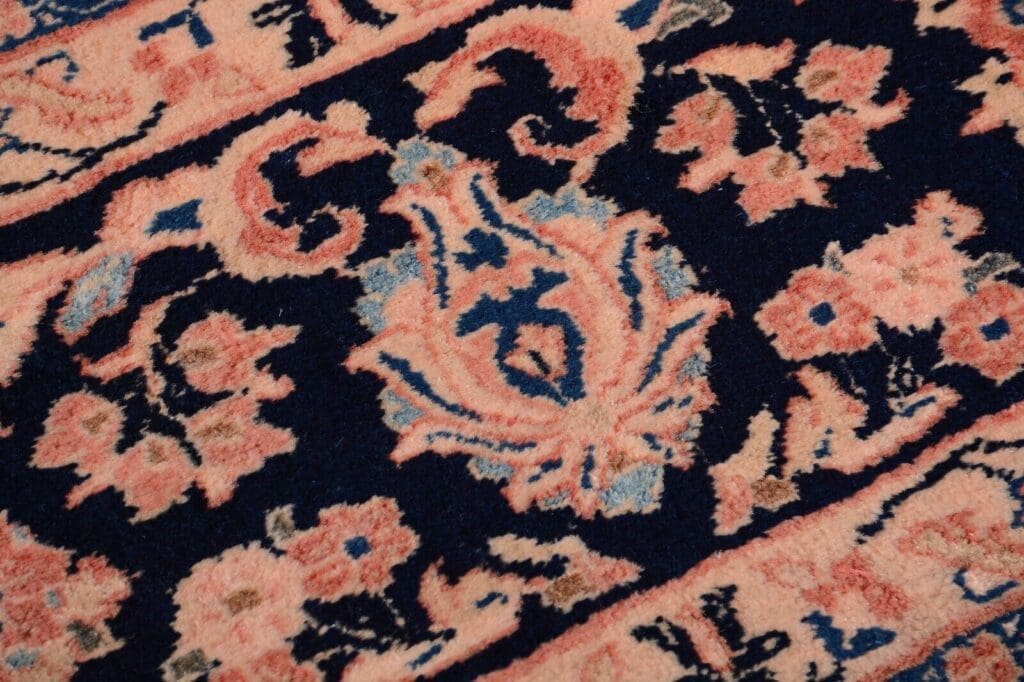
Sarough tradition is associated with strong colours and floral patterns. For this rug, the colour impression is described through warm earth tones and vivid accents. The earthy tones provide a grounded base, while brighter accents can draw attention to selected ornaments. This description conveys the visual character of the palette without adding particular colours or specifying an arrangement that is not stated.
The American style brings inherited Oriental ornament into a more contemporary setting. Classical motifs can therefore be presented in a way that relates to current living spaces rather than only to historical interiors. The floral medallion remains the identifiable focus, while symmetry and the controlled distribution of motifs keep the composition visually balanced.
Geometric designs are also described as characteristic of Sarough rugs alongside floral ornament. Geometric elements may define borders, frame areas of the field or organise the relationship between larger motifs. Their straight lines and measured structure contrast with the softer curves of flowers and vines. This contrast helps connect organic decoration with the ordered character associated with Persian rug design.
Symmetry is important to a composition built around a central medallion. It establishes balance from one side of the field to the other and repeatedly guides the eye back toward the centre. Symmetry does not require every small detail to be identical. Rather, it concerns the proportion and placement of the principal shapes, floral ornaments and surrounding lines.
The design can therefore be understood through the interaction of origin, technique and style. The medallion provides the central framework, the floral ornament relates to the established vocabulary of Persian rugs, the warm earth tones and vivid accents define the colour impression, and the American style gives the arrangement a contemporary orientation. These points describe the stated design without adding motifs or colours that are not part of the description.
Special Features
This piece combines a historical classification with a condition recorded as new with tag. It is described as an antique Persian rug from the early twentieth century and is also identified as new with tag. In addition, it is suitable for use on a floor with underfloor heating. That feature makes it compatible with rooms where a textile floor covering is used together with an existing heating system.
The hand-dyed virgin wool, the recorded knot density and the floral medallion are the principal features of this Sarough. Its care is described as straightforward because robust wool is dirt-repellent and easy to clean. To help preserve the colours, direct sunlight should be avoided, the rug should be vacuumed regularly on a low setting, and professional cleaning should be arranged from time to time.
FAQ
How should I care for this Sarough Persian rug?
Direct sunlight should be avoided so that the colours do not fade. For regular care, vacuuming on a low setting is recommended. The wool is described as robust, dirt-repellent and easy to clean. Occasional professional cleaning can complement routine maintenance and help keep the rug in good condition. Because this is a hand-knotted rug, cleaning should be carried out gently so that the pile, knots and hand-dyed colours are treated with care.
Can the Sarough be used with underfloor heating?
Yes. This Sarough is suitable for floors with underfloor heating. Wool is described as a good insulator and can provide a comfortable sense of warmth without trapping the heat. The rug can therefore be used in a room with underfloor heating. As with any textile floor covering, it should lie flat and receive regular care so that its hand-knotted surface remains suitable for everyday use.
How can I tell whether my Sarough is an original?
Traditional hand-knotting, the structure of the rug and its knot density are useful points when assessing an authentic Persian rug. A clear record of origin can also support the identification. High-quality rugs often have a certificate confirming their authenticity. For this piece, the Sarough designation, Iranian origin, hand-knotted construction and recorded knot density are relevant descriptive features. A binding assessment of authenticity should be carried out by a specialist.
To provide the best experiences, we use technologies like cookies to store and/or access device information. Consenting to these technologies will allow us to process data such as browsing behavior or unique IDs on this site. Not consenting or withdrawing consent, may adversely affect certain features and functions.
Functional Always active
The technical storage or access is strictly necessary for the legitimate purpose of enabling the use of a specific service explicitly requested by the subscriber or user, or for the sole purpose of carrying out the transmission of a communication over an electronic communications network.
Preferences
The technical storage or access is necessary for the legitimate purpose of storing preferences that are not requested by the subscriber or user.
Statistics
The technical storage or access that is used exclusively for statistical purposes.The technical storage or access that is used exclusively for anonymous statistical purposes. Without a subpoena, voluntary compliance on the part of your Internet Service Provider, or additional records from a third party, information stored or retrieved for this purpose alone cannot usually be used to identify you.
Marketing
The technical storage or access is required to create user profiles to send advertising, or to track the user on a website or across several websites for similar marketing purposes.

 SECURE PAYMENT
 SHIPPING PARTNERS


