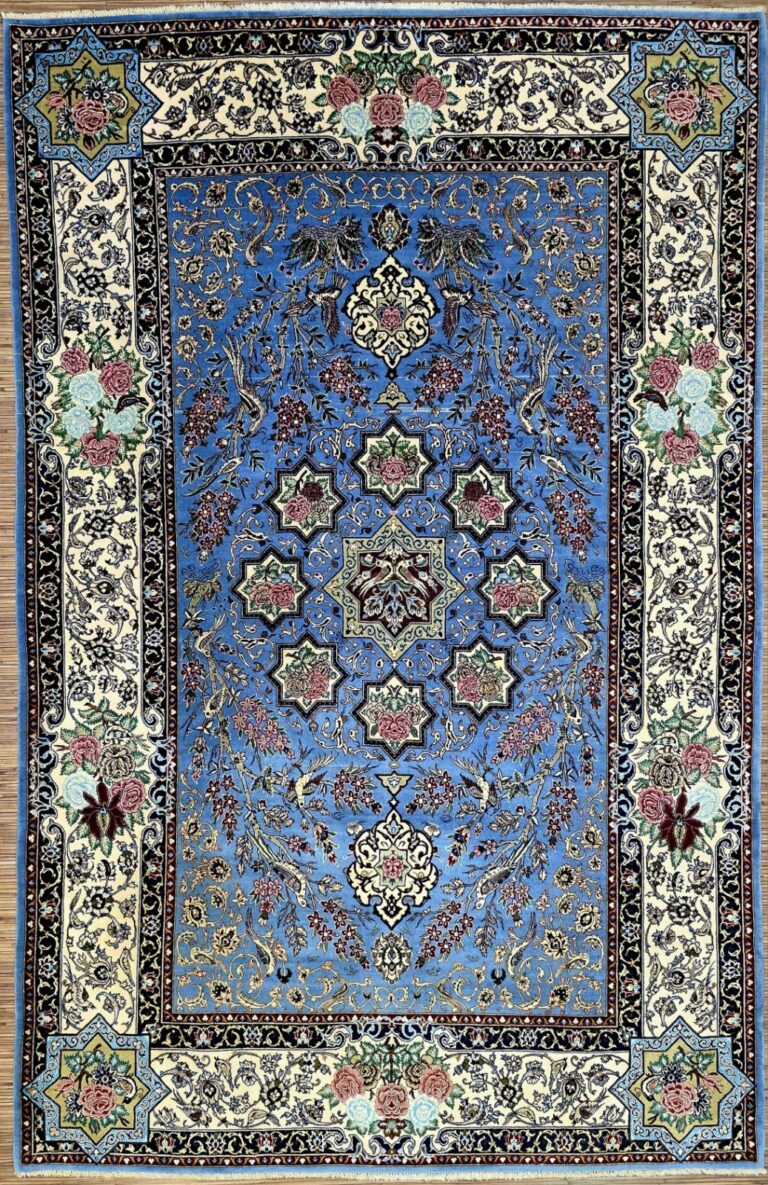
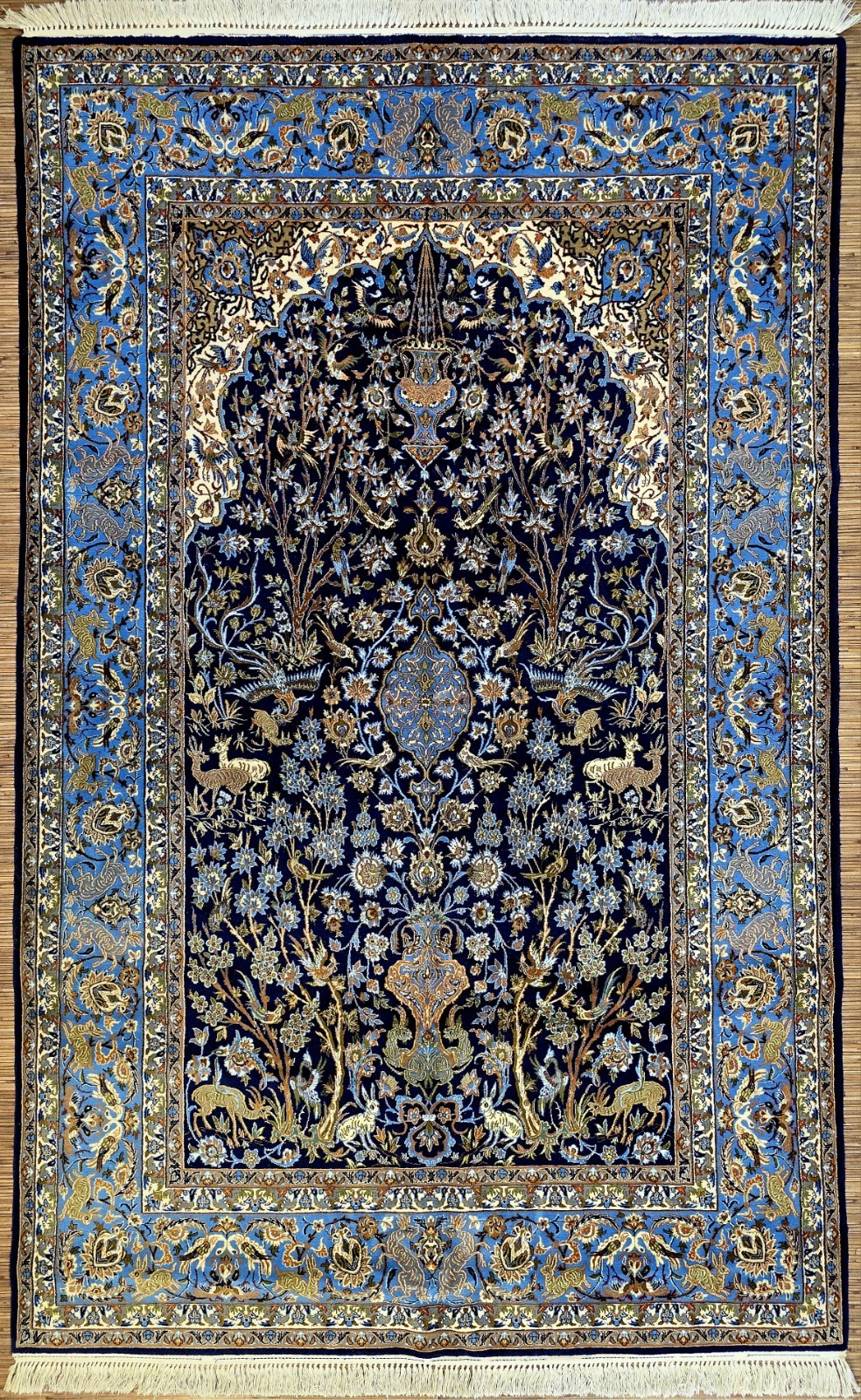
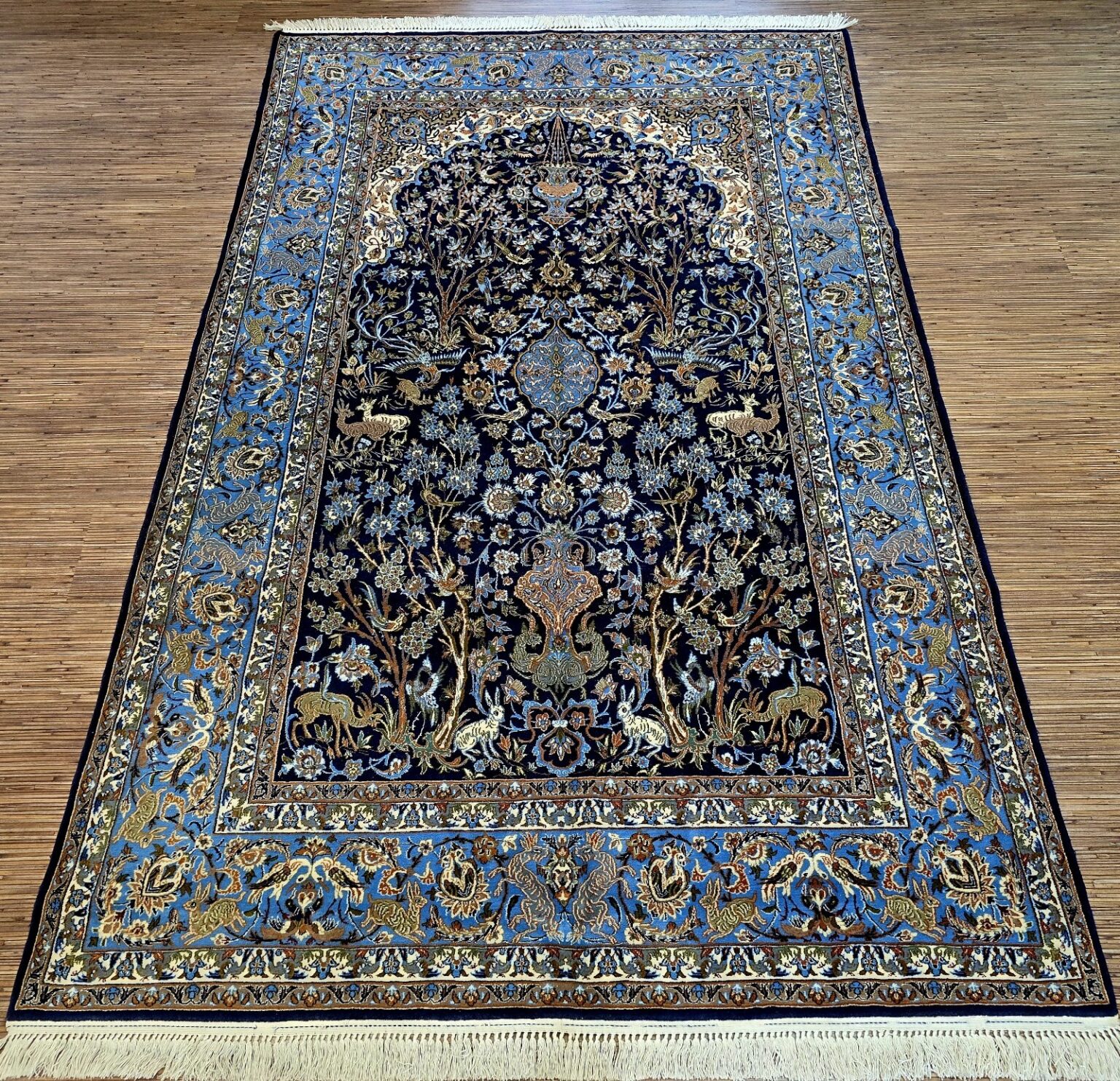
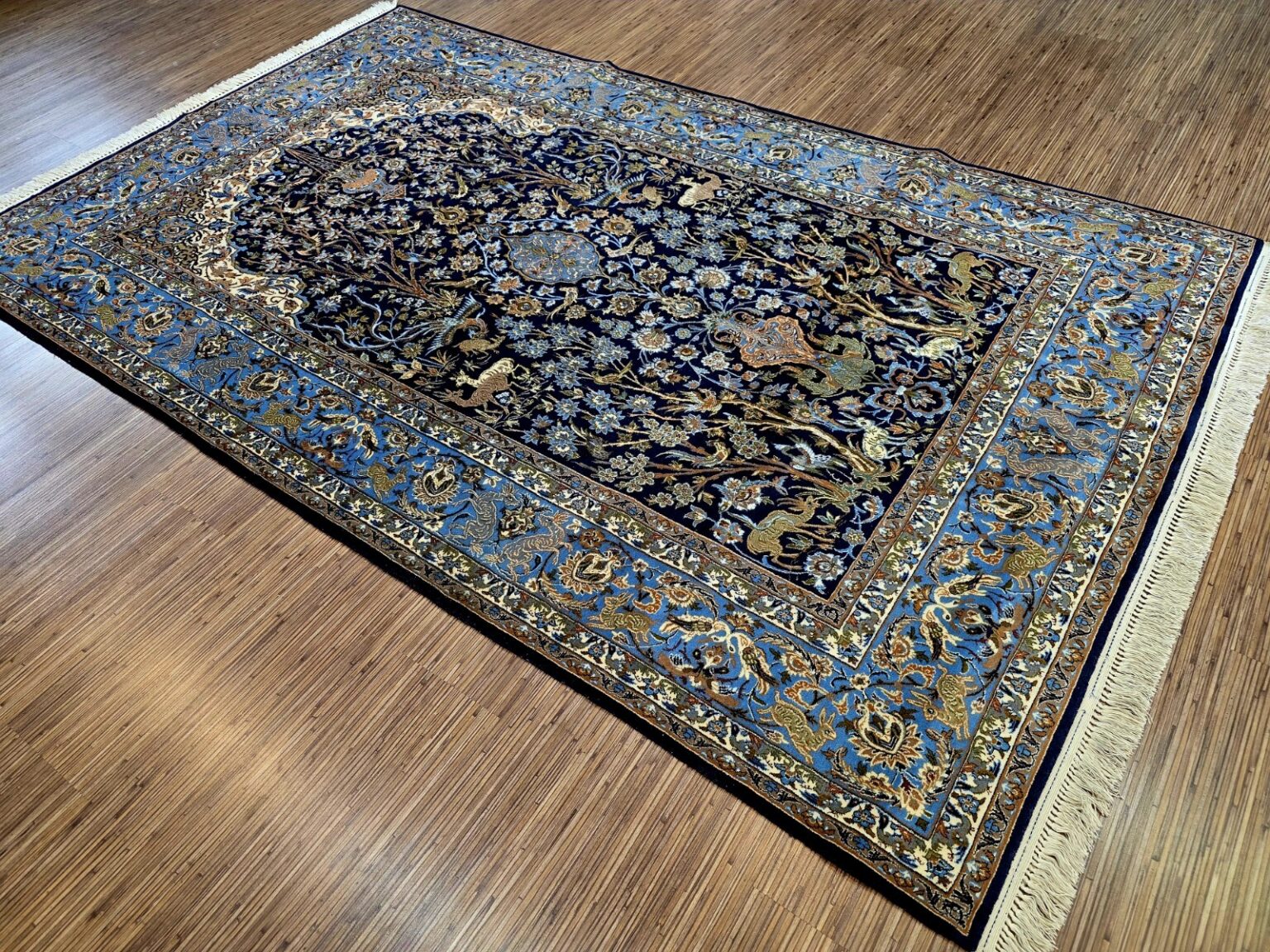
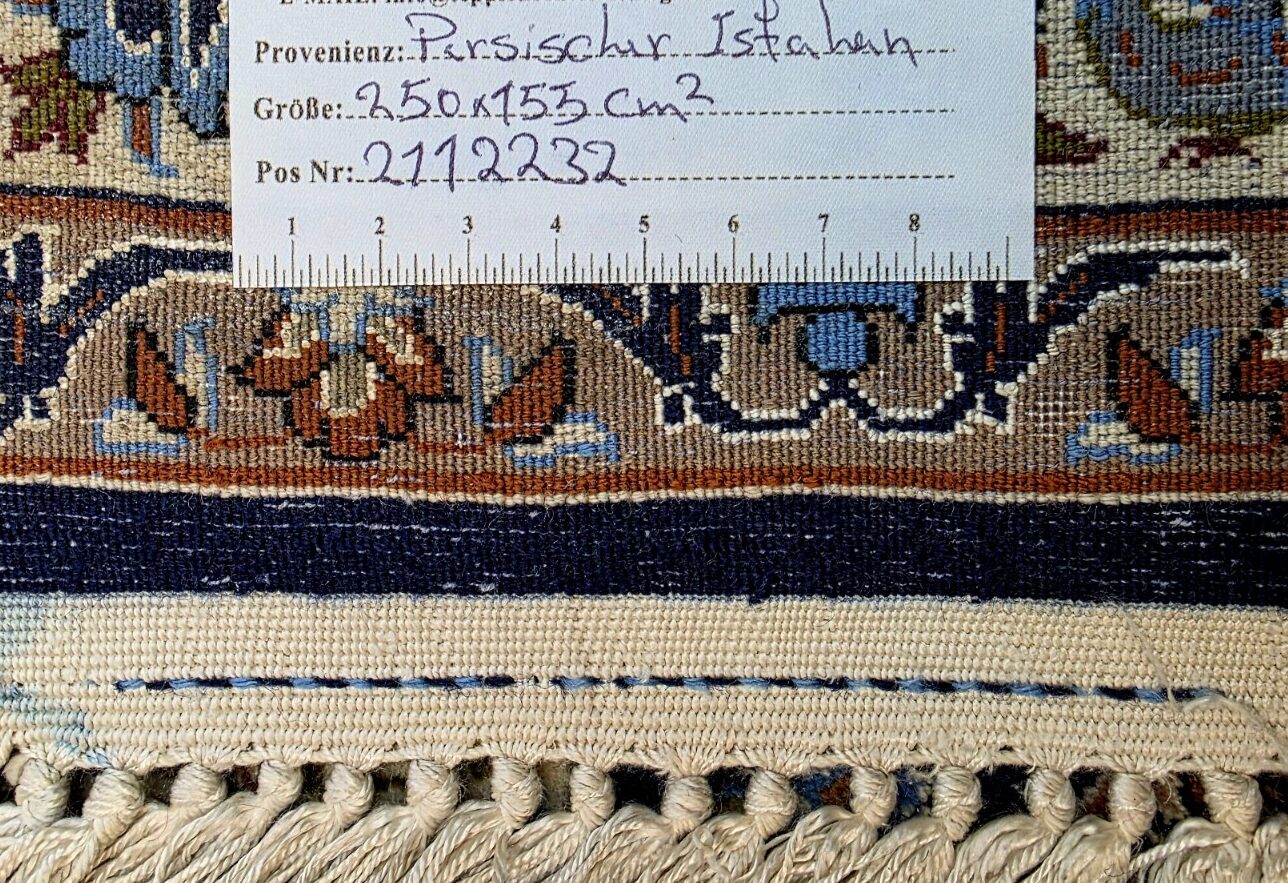
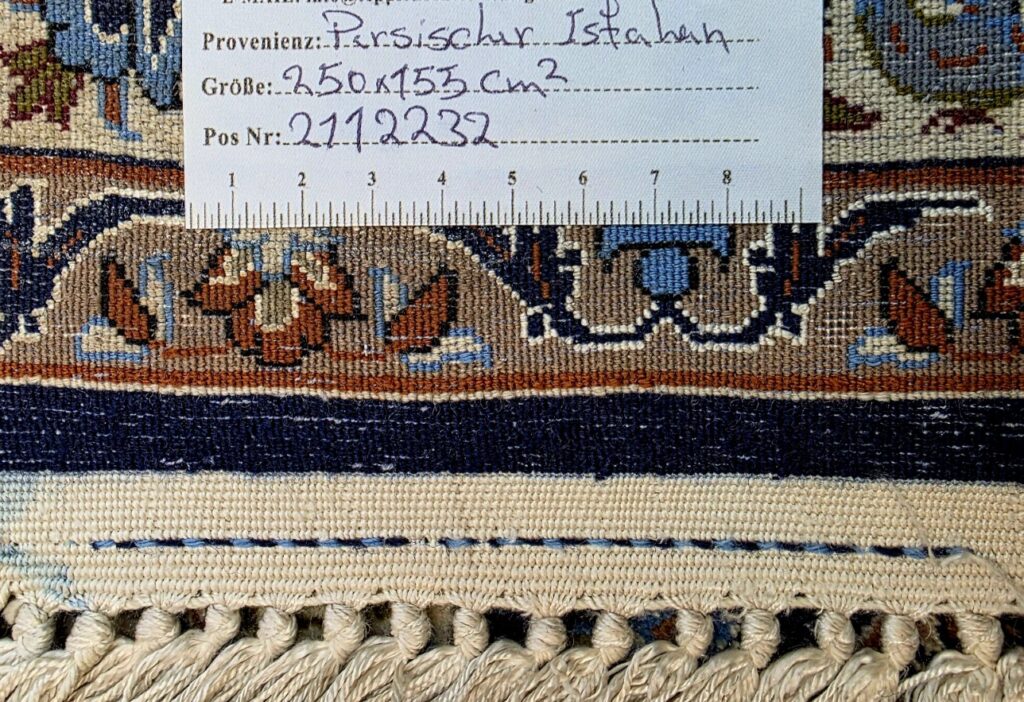
Persian Rug Isfahan 250 x 155 cm Silk Hand-knotted
€ 3600
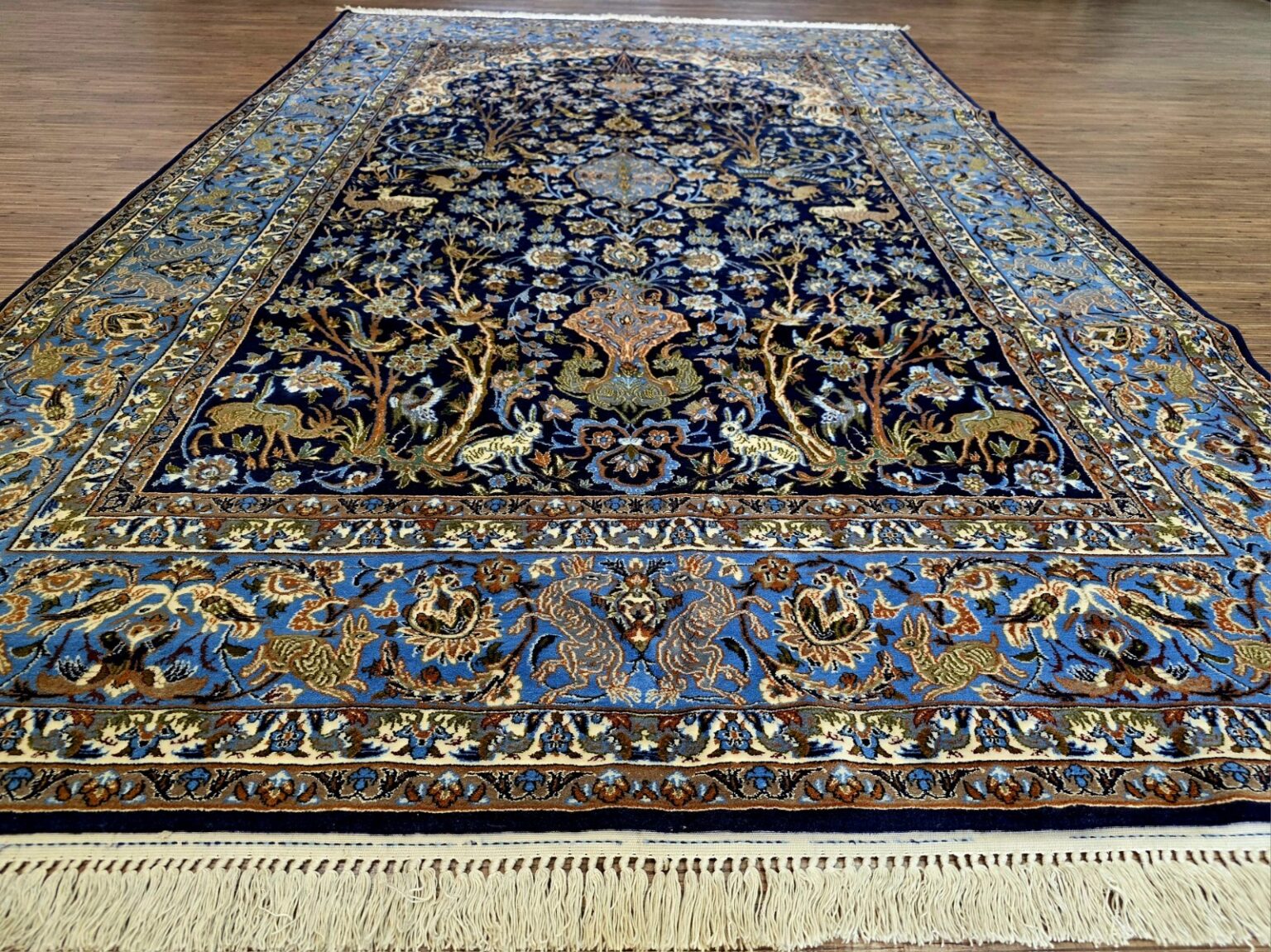
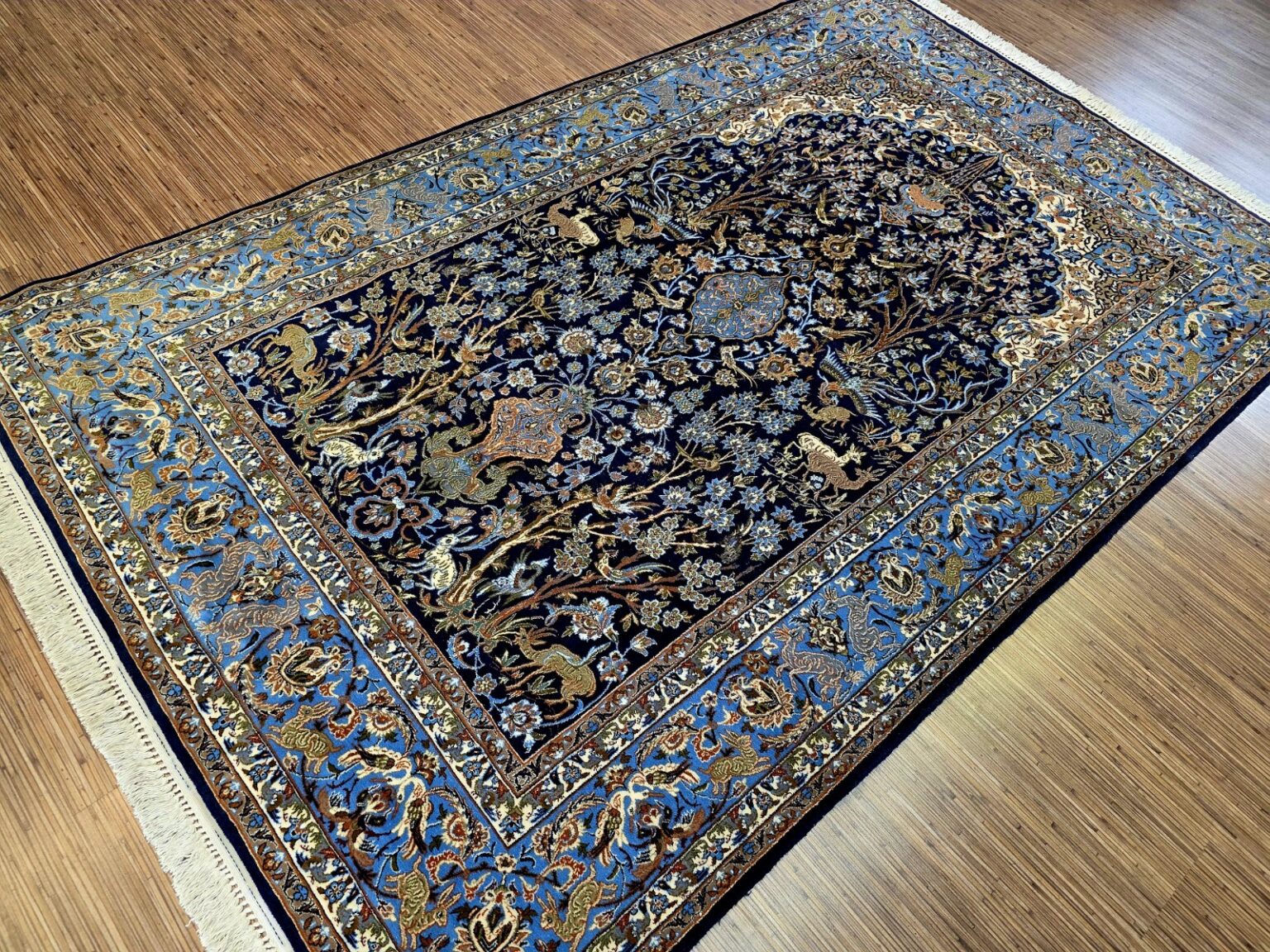
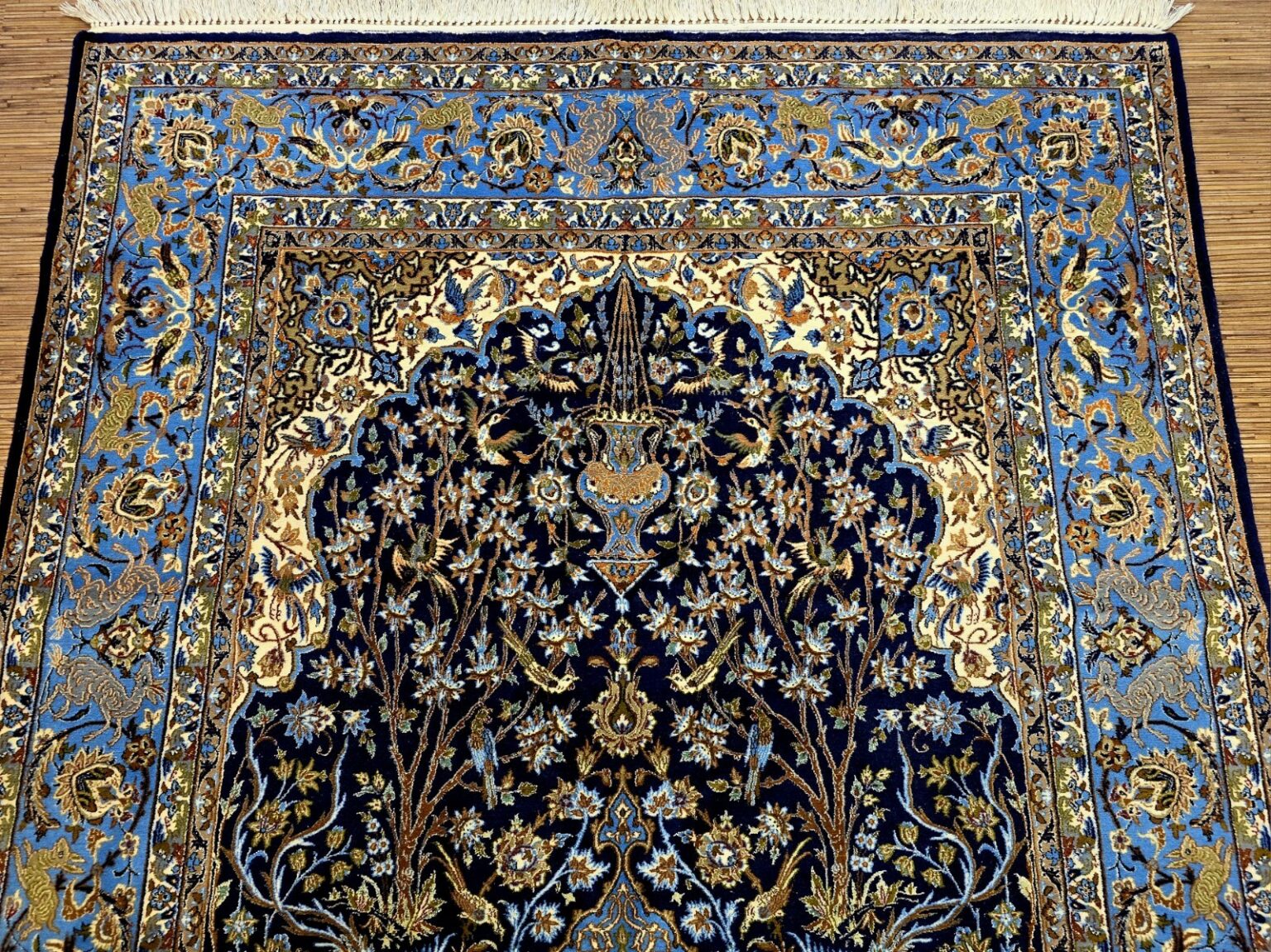
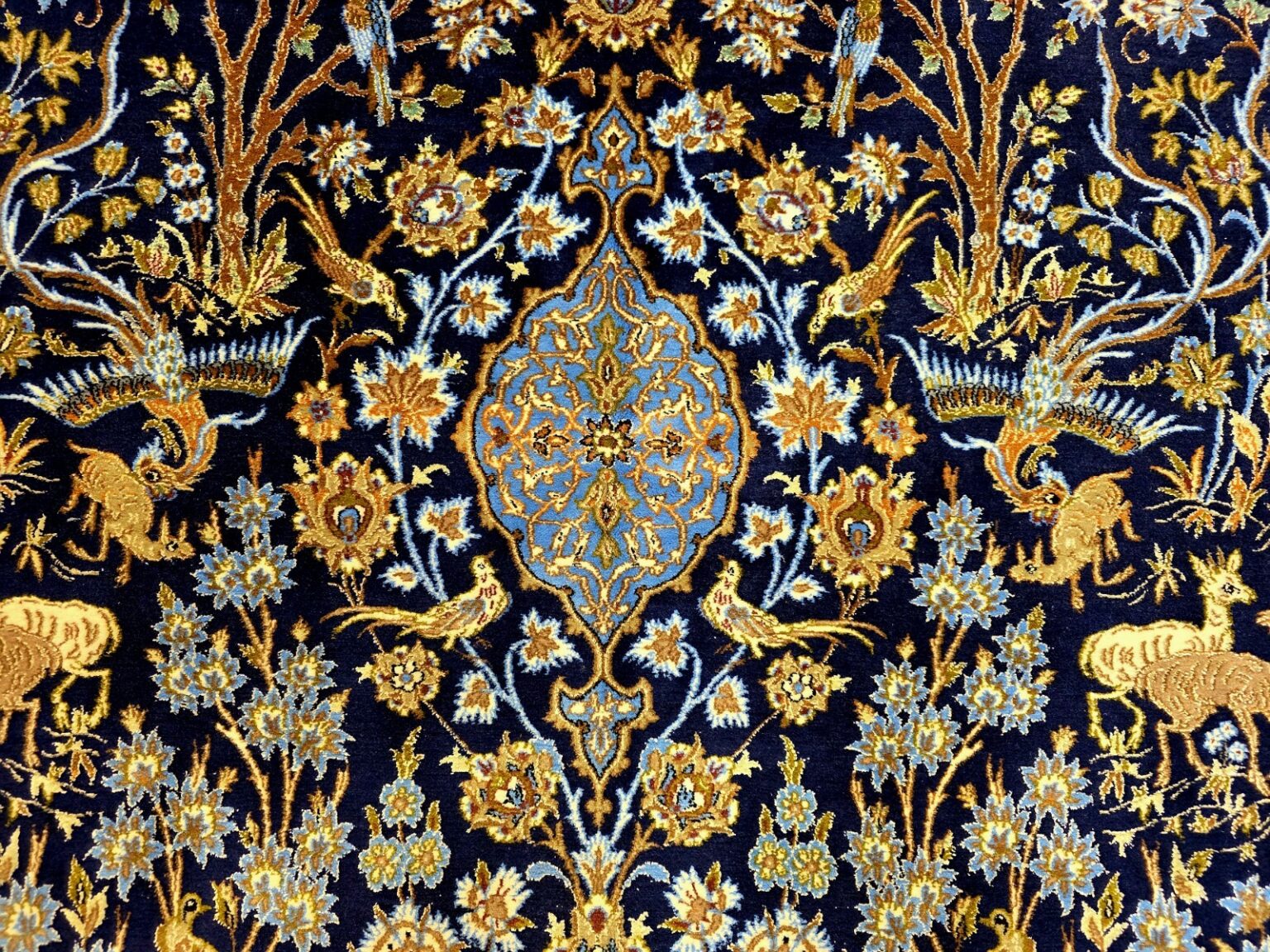
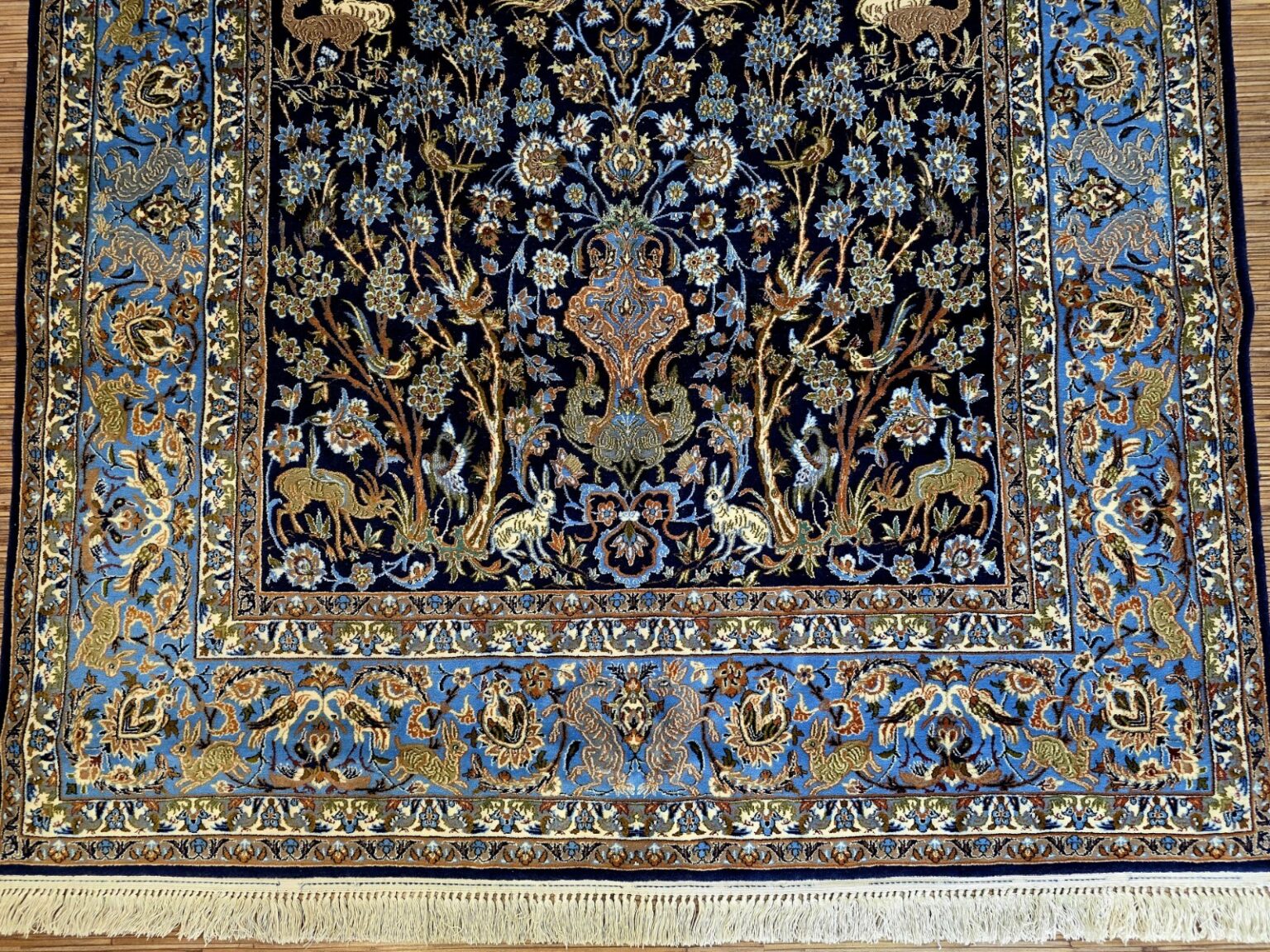
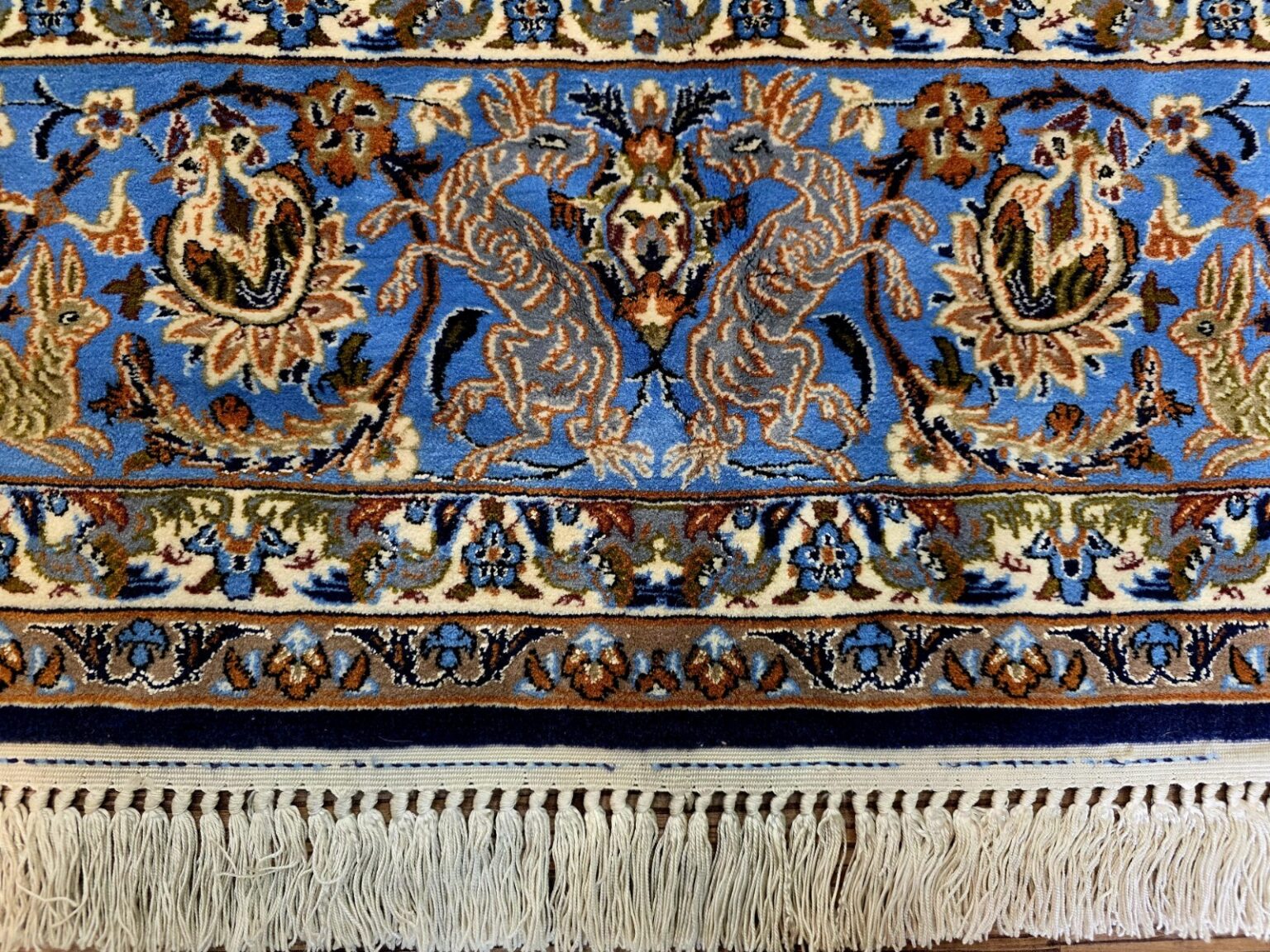
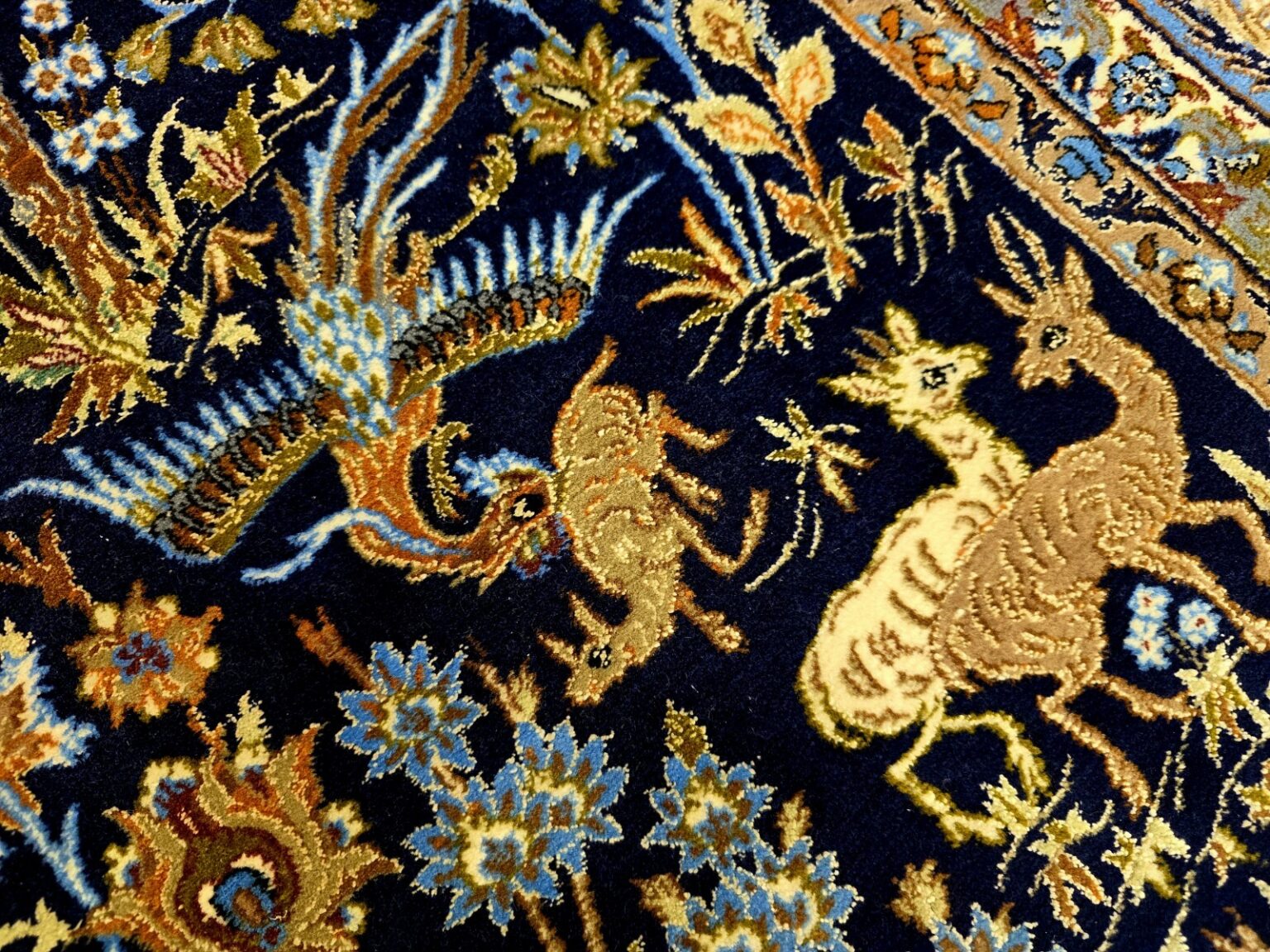
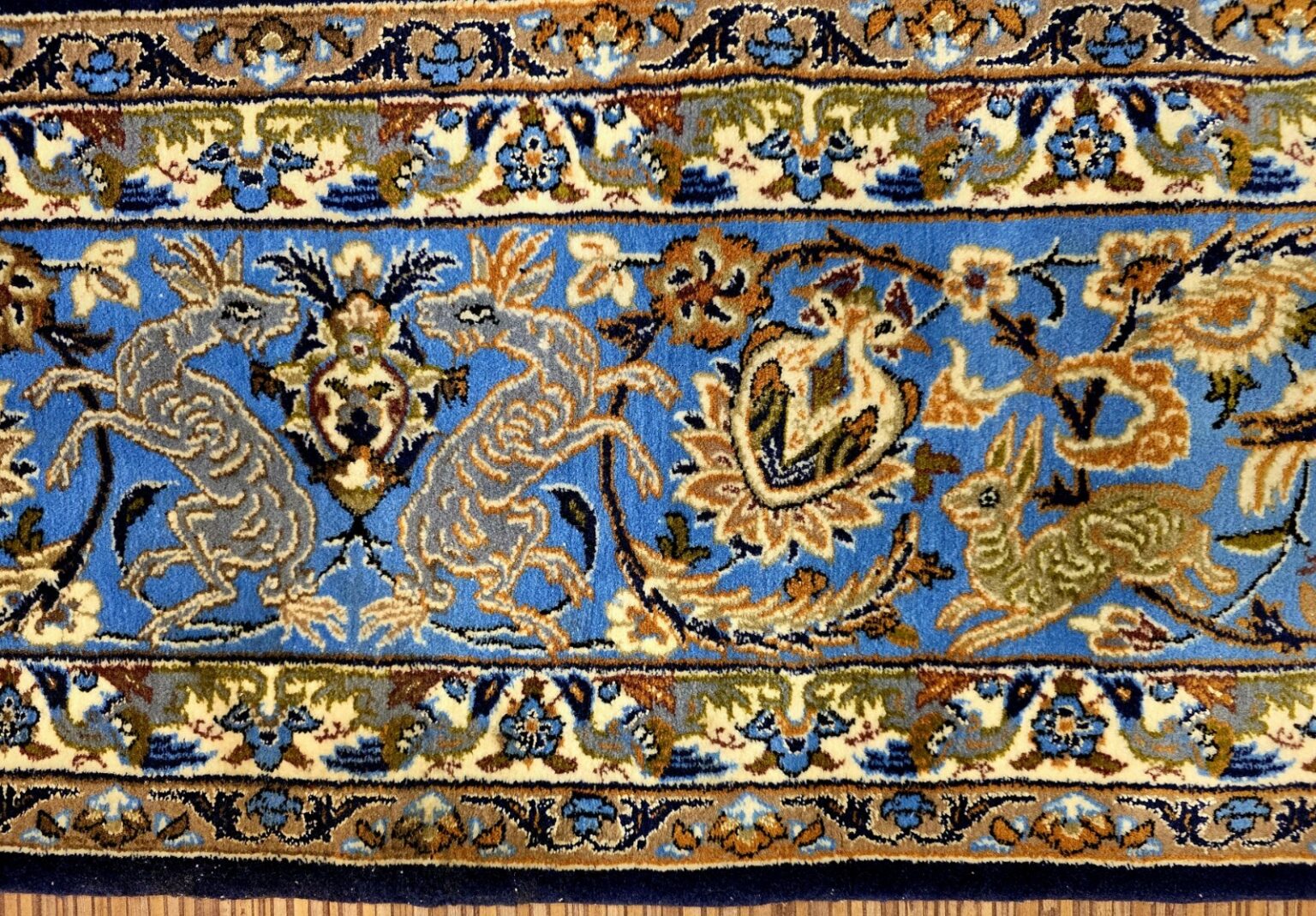
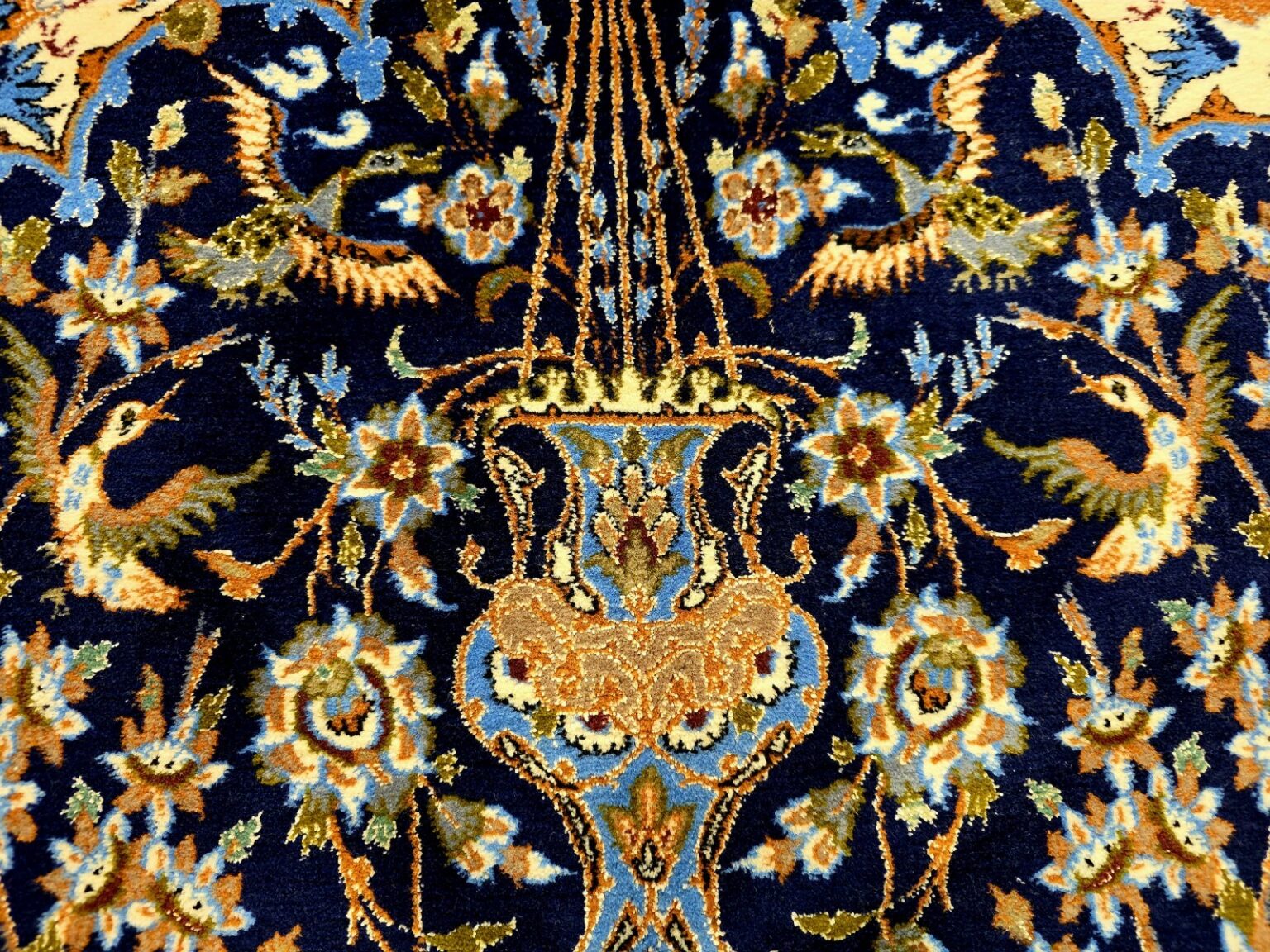
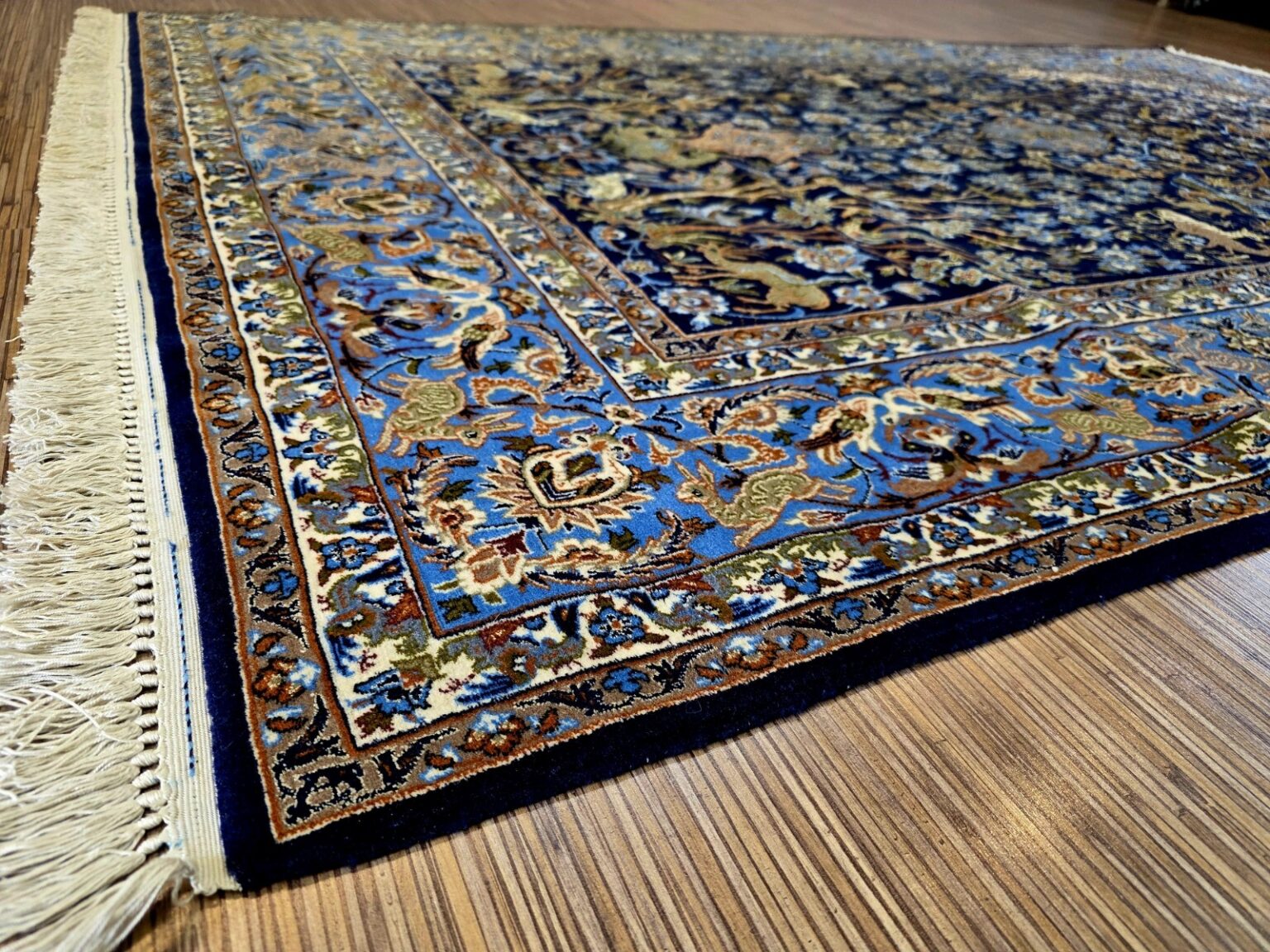
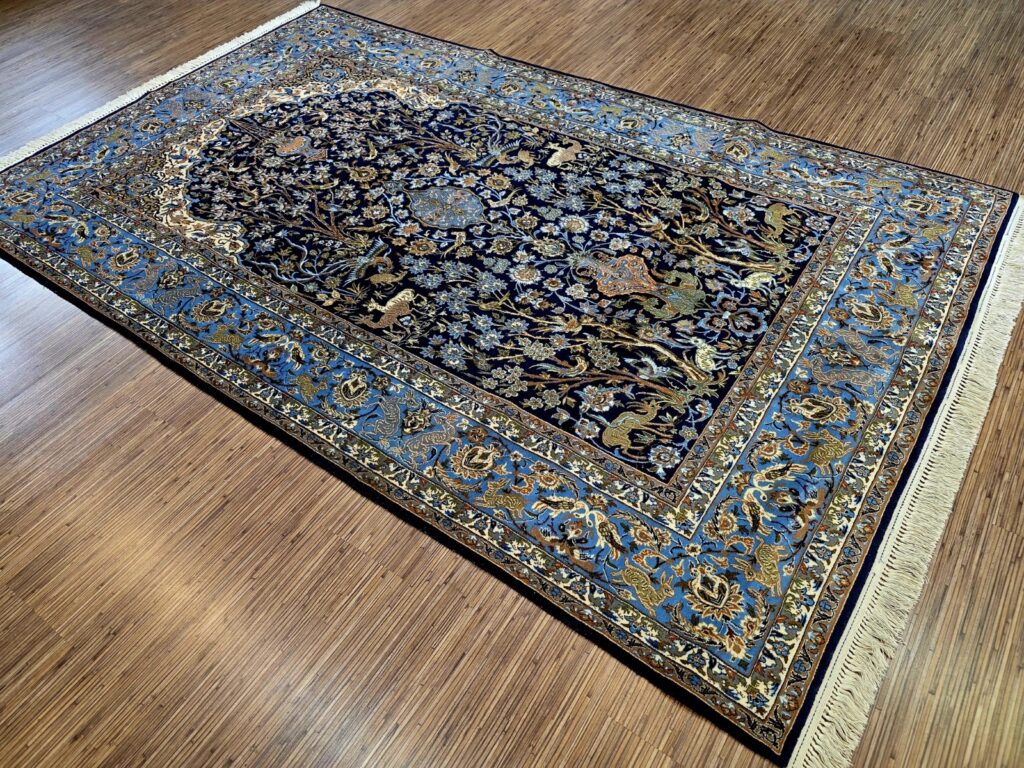
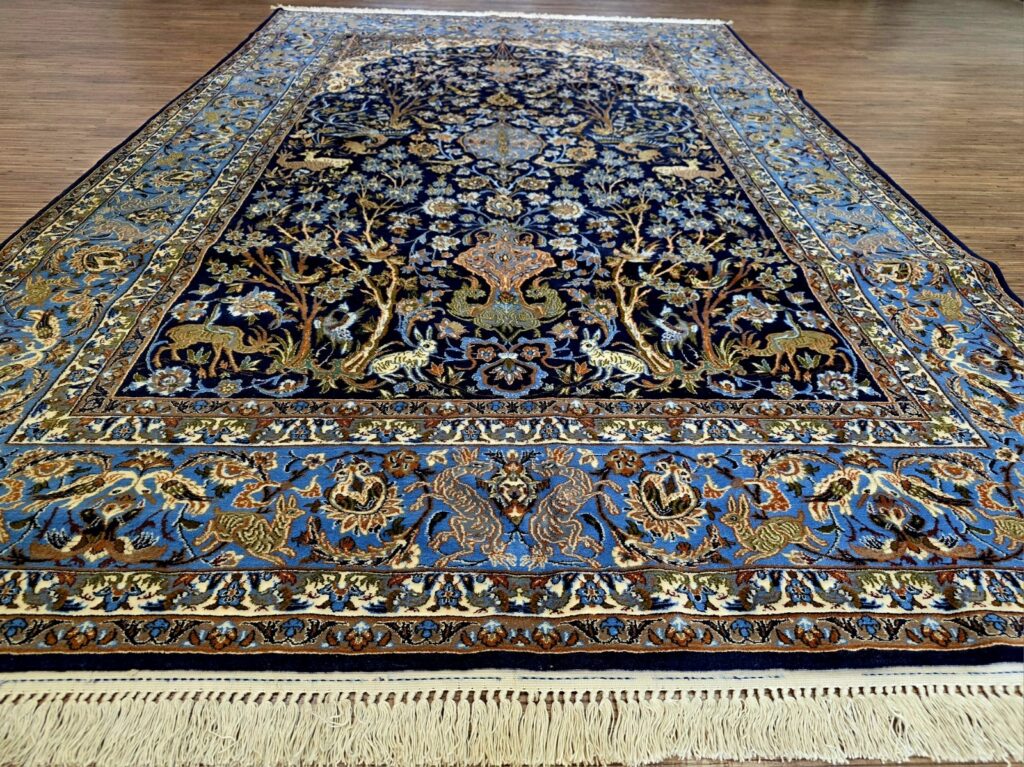
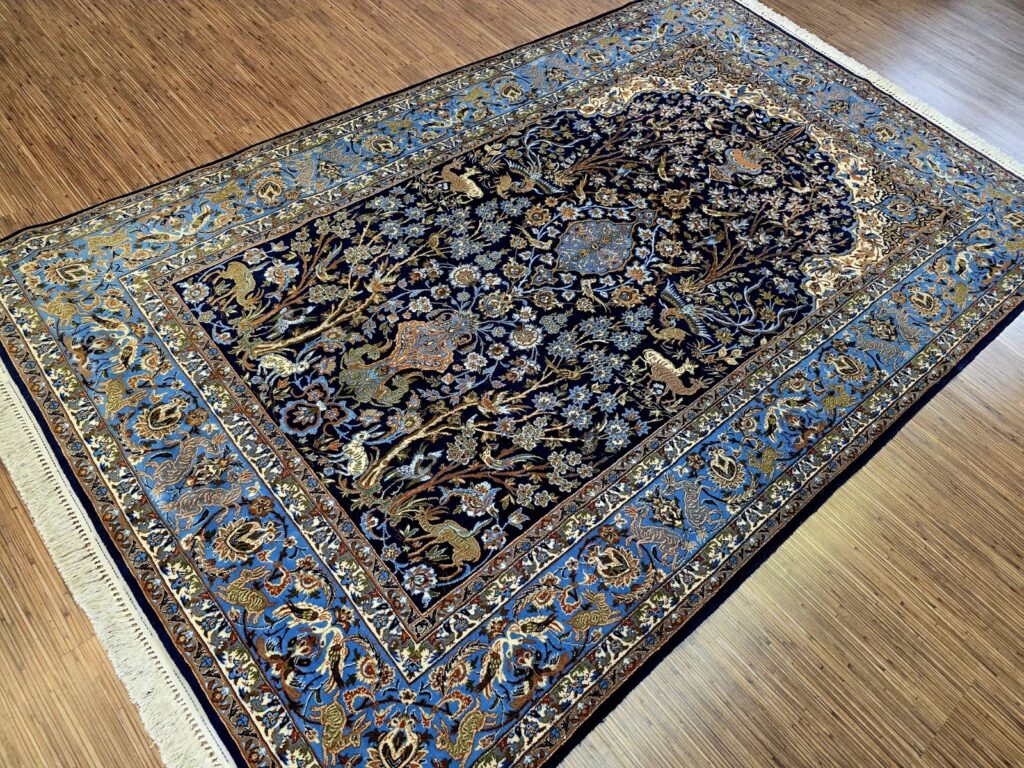
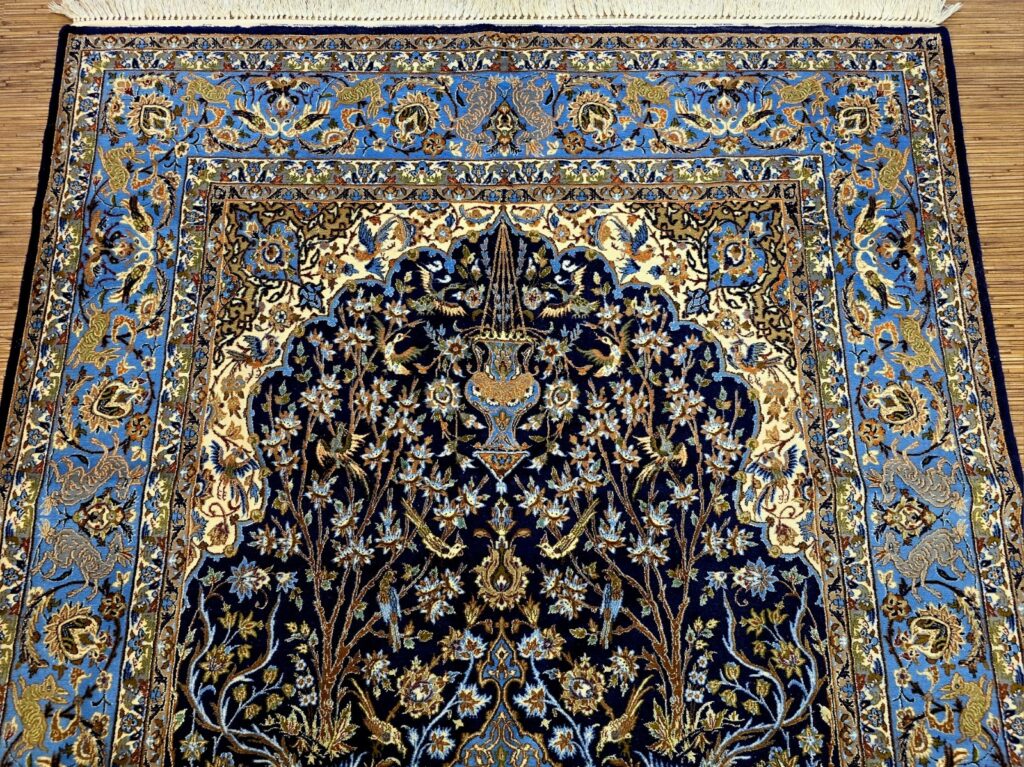
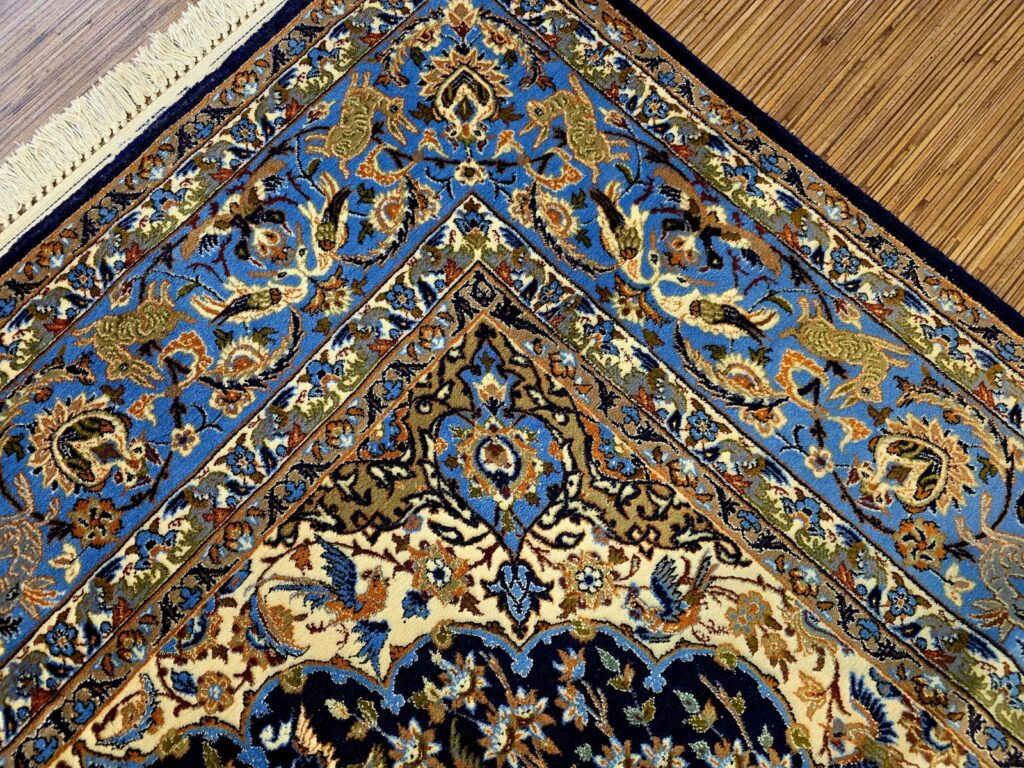
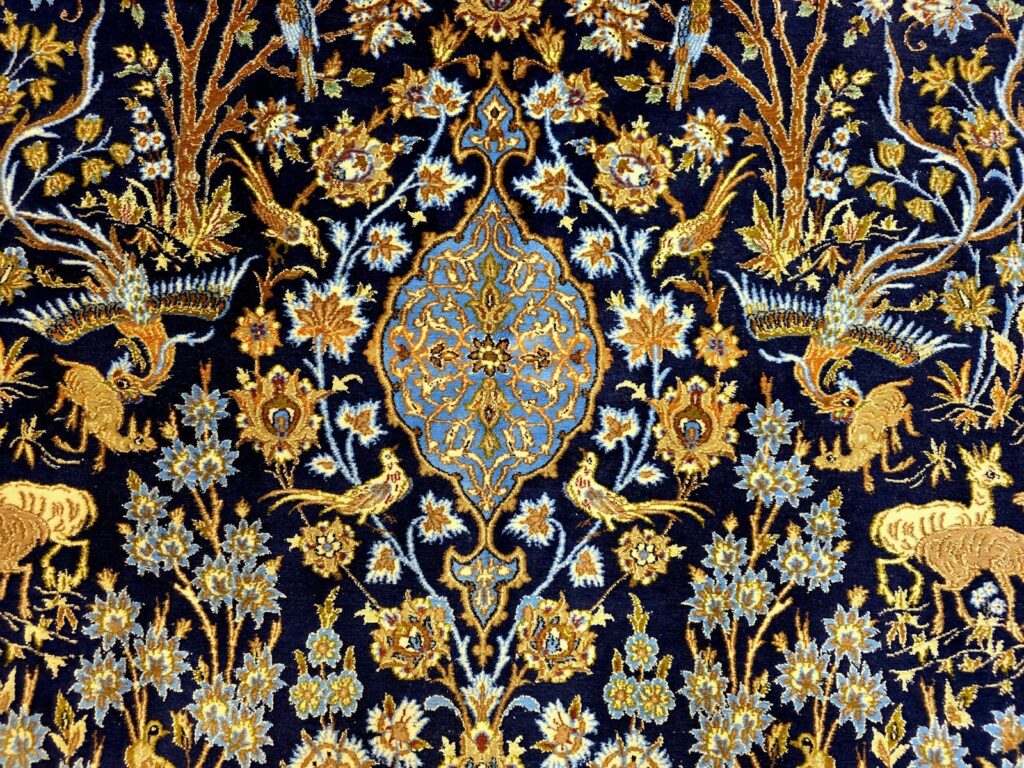
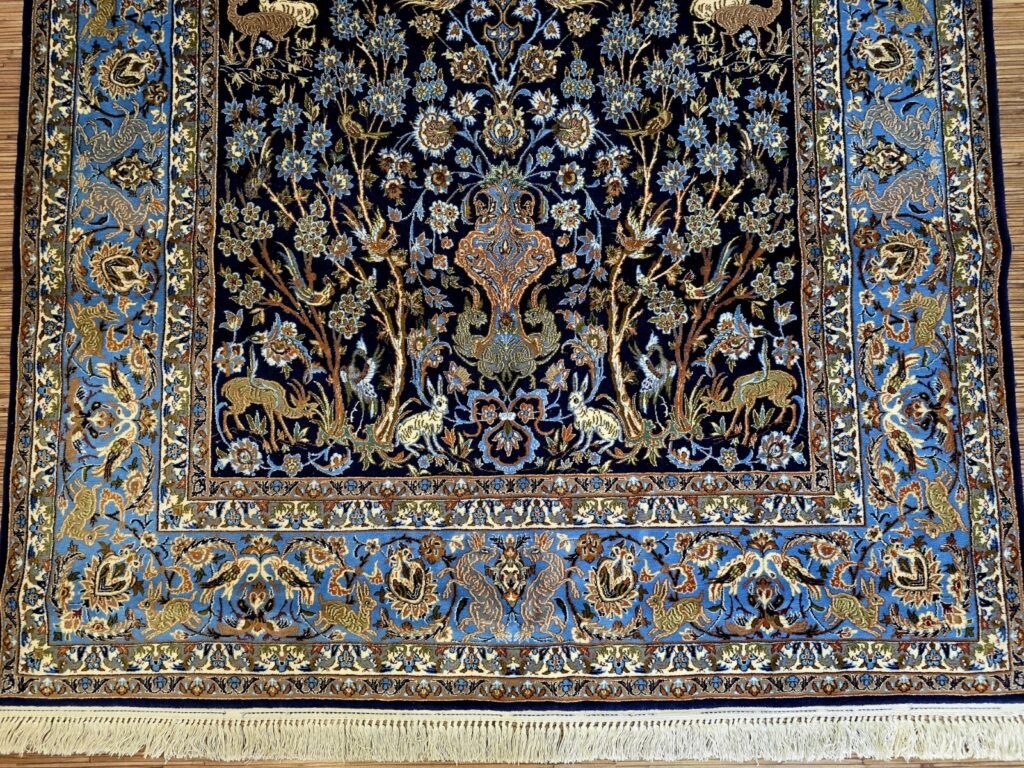
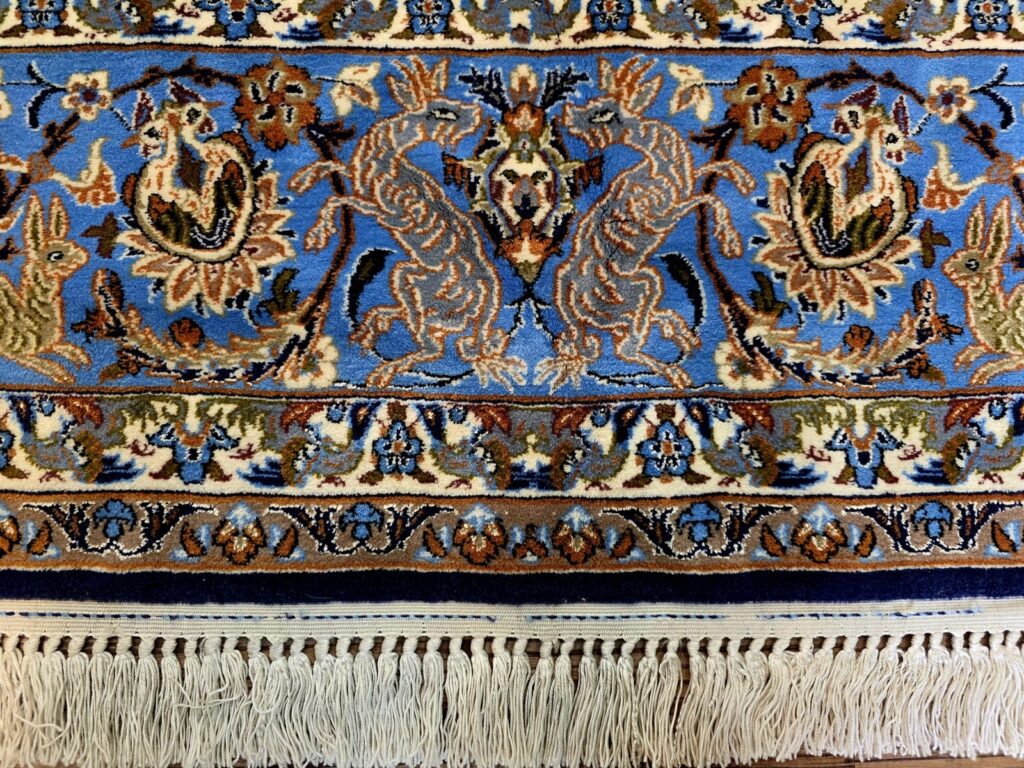
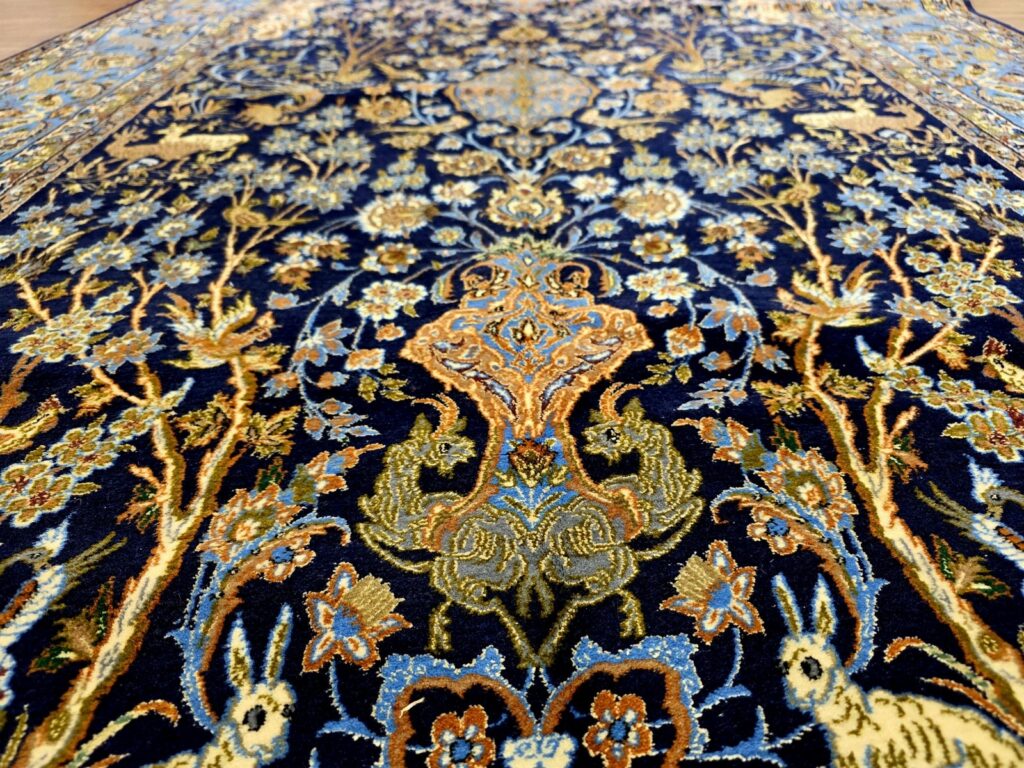
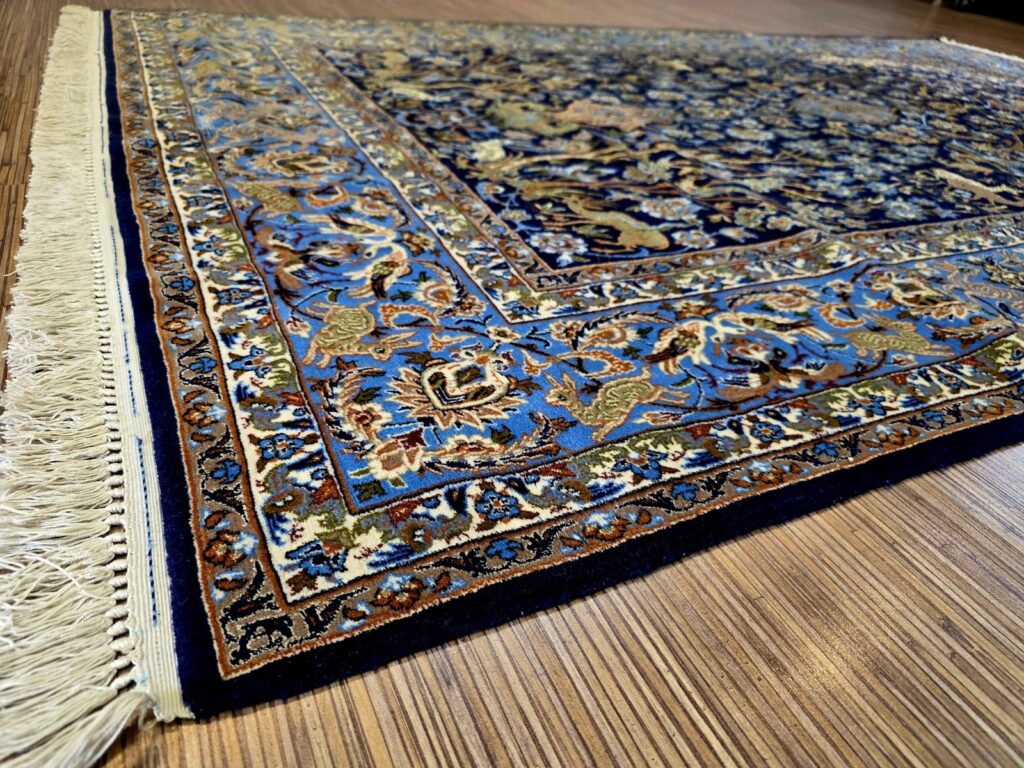
Hand-knotted Isfahan Persian rug | Knot density: 800,000 knots per square metre | Material: Silk pile | Size: 250 x 155 cm | Pattern: Floral and geometric elements | Condition: Very good
This hand-knotted Persian rug from Isfahan is made with silk. Its construction by hand distinguishes it from industrially produced rugs, whose surfaces are created through standardized machine processes. In hand knotting, the textile image is built up one knot at a time. The final surface therefore depends on the care applied throughout the knotting process rather than on a printed design added after manufacture.
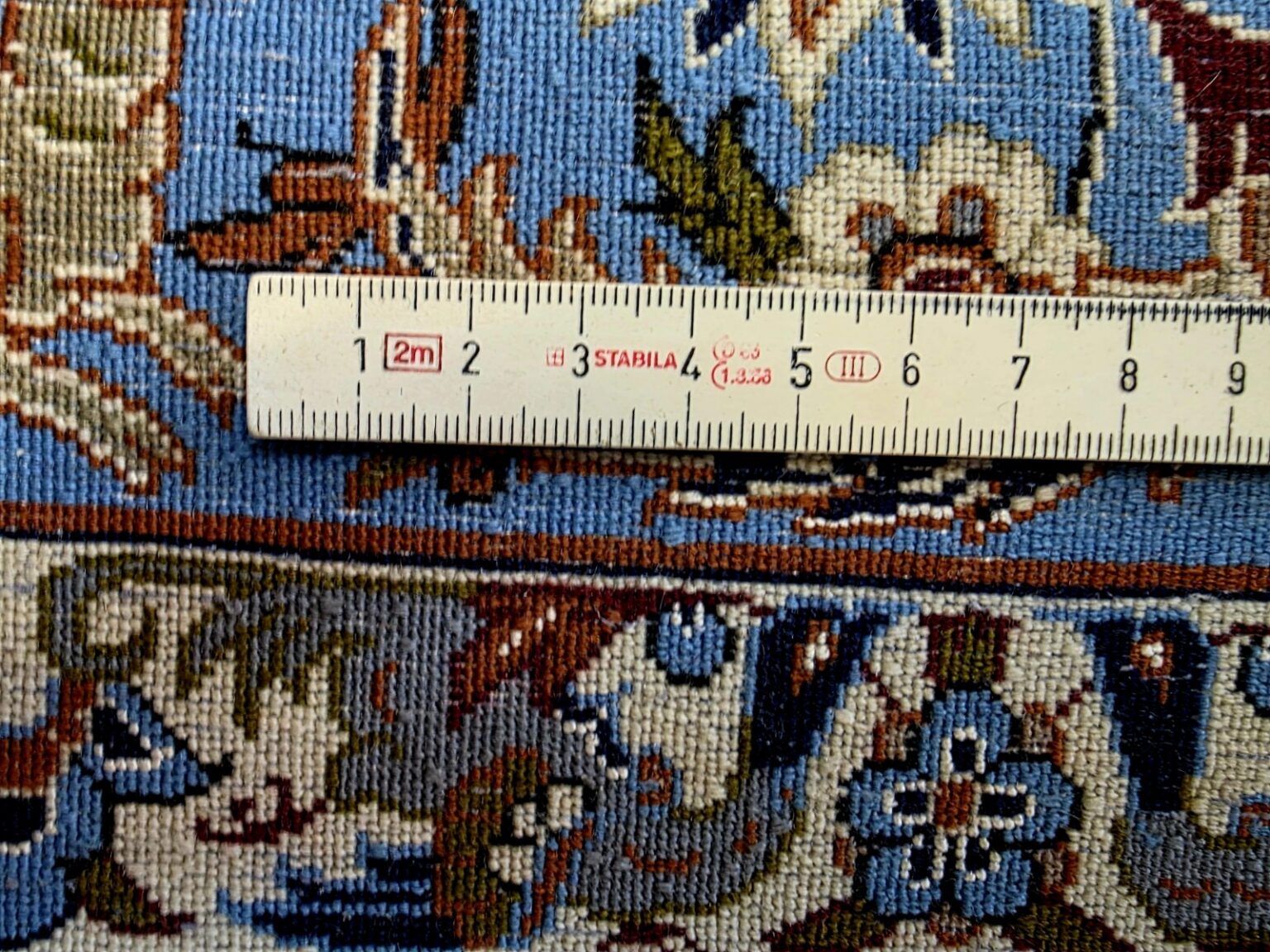
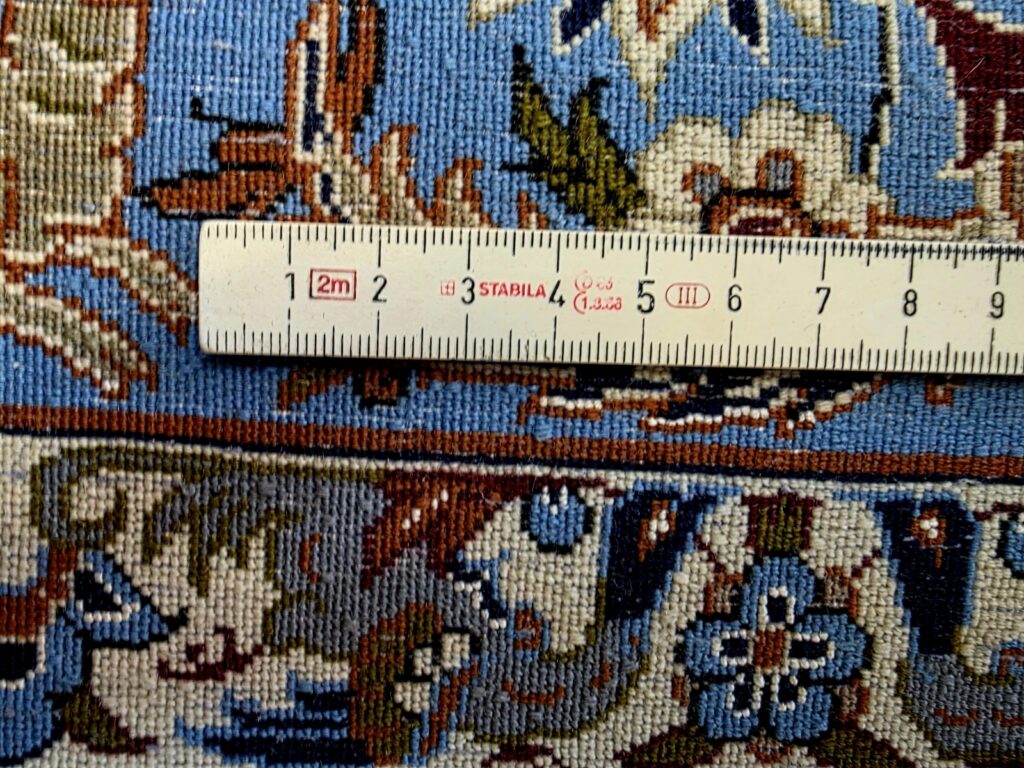
The stated knot density is 800,000 knots per square metre. Such a density indicates a very finely structured knotting process and allows small lines, outlines and ornaments to be represented with considerable detail. Silk is the material specified for the pile. As a natural fibre, silk can be spun into fine threads and has long been used in textile work where a smooth surface and precise decorative drawing are required.
In a hand-knotted rug, the pattern is not printed onto a completed surface. Coloured areas are formed as the individual threads are incorporated during knotting. The maker must therefore follow the design continuously and keep the placement of each knot aligned with the intended composition. The silk pile, the hand-knotted technique and the stated density of 800,000 knots per square metre are the specific production details given for this rug.
Origin and Tradition
Isfahan is a city in Iran and is widely associated with a long tradition of Persian carpet making. Its cultural history also includes architecture, miniature painting, ornament and other forms of applied art. These fields have influenced one another over time, and textile designers have drawn on a shared vocabulary of balanced layouts, plant forms, borders and repeated motifs. In the context of this rug, Isfahan names the stated origin rather than merely describing a decorative theme.
Iranian carpet production developed through many regional traditions, each with its own preferences in structure, colour and ornament. Isfahan became known for urban and workshop-based forms of design in which careful drawing and a coherent overall composition were important. Historical patterns could include medallion arrangements, floral scrolls, border systems, inscriptions and geometric divisions. They were not fixed formulas; designers and workshops adapted them to different commissions, materials and periods.
Persian carpets are traditionally made by hand. A weaver or knotter works from a design plan that establishes the main field, the borders and the placement of individual motifs. The more finely articulated the drawing, the more carefully the knots must be positioned. Knot density is consequently a useful technical reference when describing the fineness of a rug’s construction. The source for this piece specifies 800,000 knots per square metre.
Isfahan rugs are often discussed in connection with the relationship between material and drawing. Fine fibres can support narrow outlines, small leaves, delicate blossoms and closely repeated ornaments. Silk is particularly suited to very fine threads, although the regional tradition includes a variety of materials and constructions. Not every Isfahan rug has the same composition. The category covers differing colour schemes, layouts and decorative approaches, while retaining a connection to the city’s established carpet culture.
The history of Persian carpet design is also part of a wider exchange between textile art, book illumination, architecture and garden imagery. Plant forms may be stylized from flowers, leaves and vines; geometric devices may be used to organize a field or define the corners of a border. Through repetition and variation, these elements turn a flat textile into a structured visual composition. A rug can have a central area, a surrounding frame and transitional zones that connect the two.
Hand knotting preserves the link between the drawn design and the person making the textile. The design may provide an exact guide, but the work still consists of many separate manual actions. This is why construction, pattern and regional tradition are normally considered together when Persian rugs are described. The stated Iranian origin places this rug within the Persian carpet tradition, while its material and knot density describe the particular example offered here.
Isfahan’s position in the history of Persian art also explains why its carpets are frequently described as detailed and carefully organized. The tradition values legible ornament, controlled repetition and relationships between large and small forms. Such principles can be expressed in many different ways and do not by themselves establish a specific motif for an individual rug. The source identifies floral and geometric elements in the design description, but it does not assign a more narrowly named pattern.
Design and Pattern
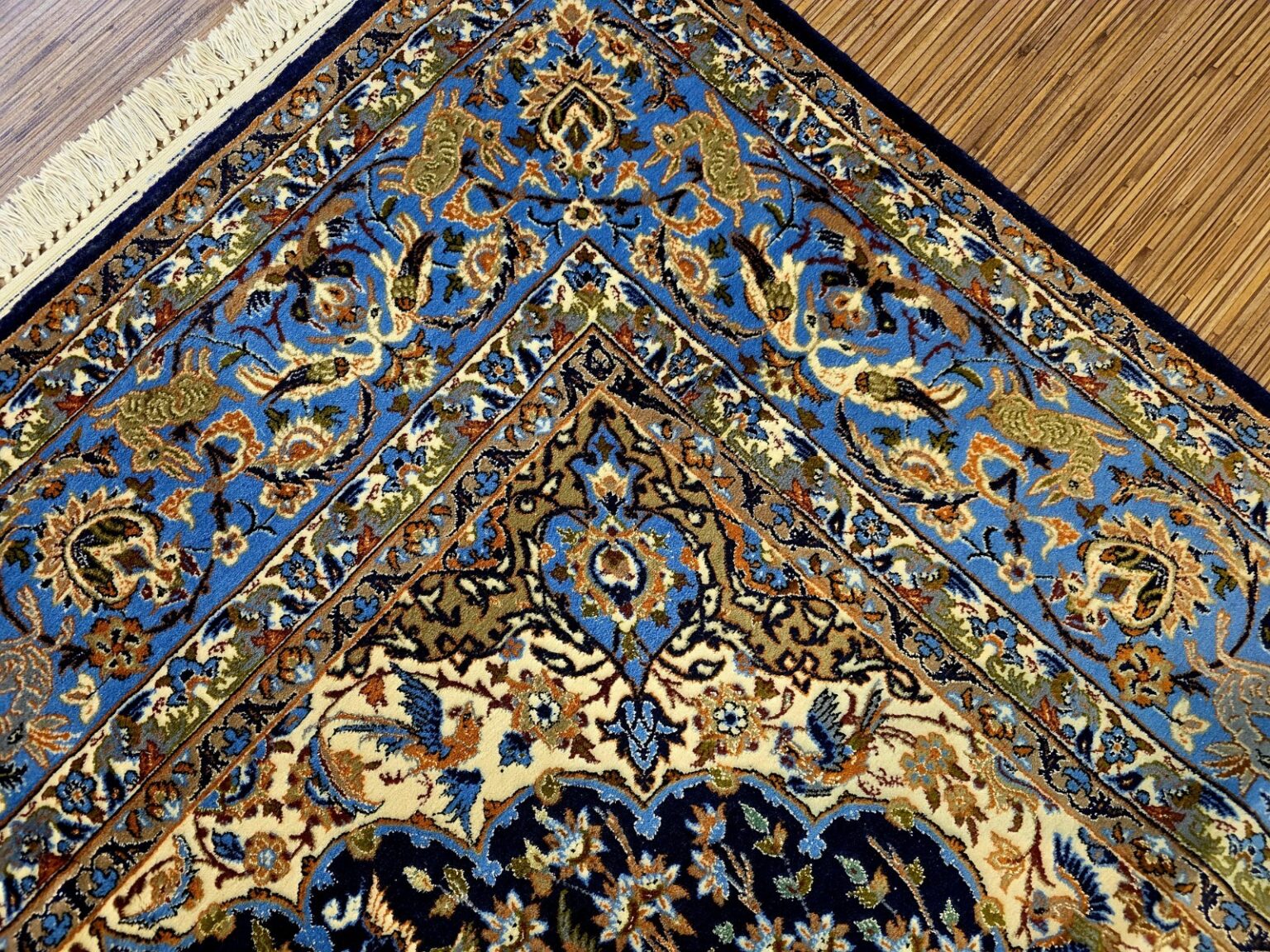
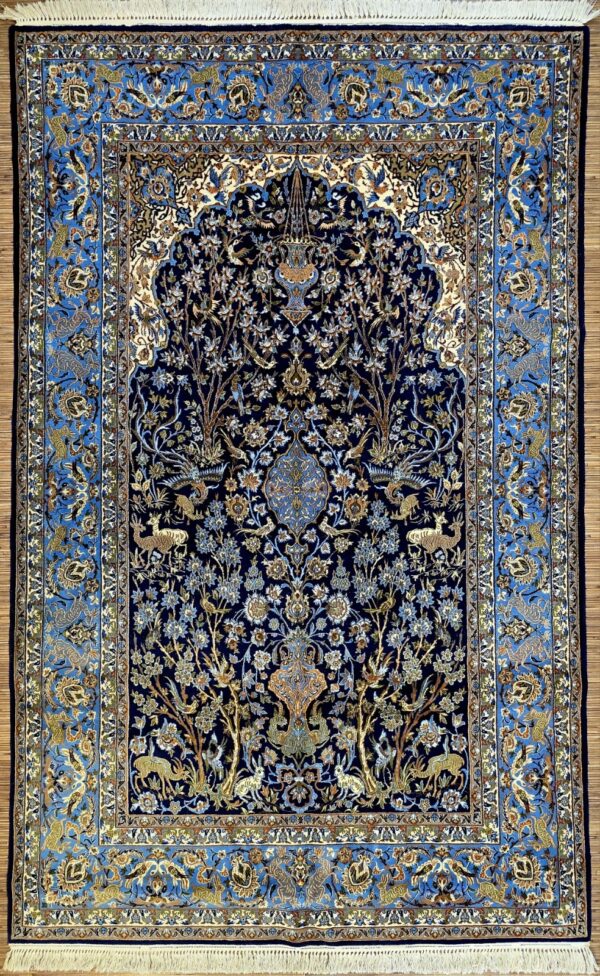
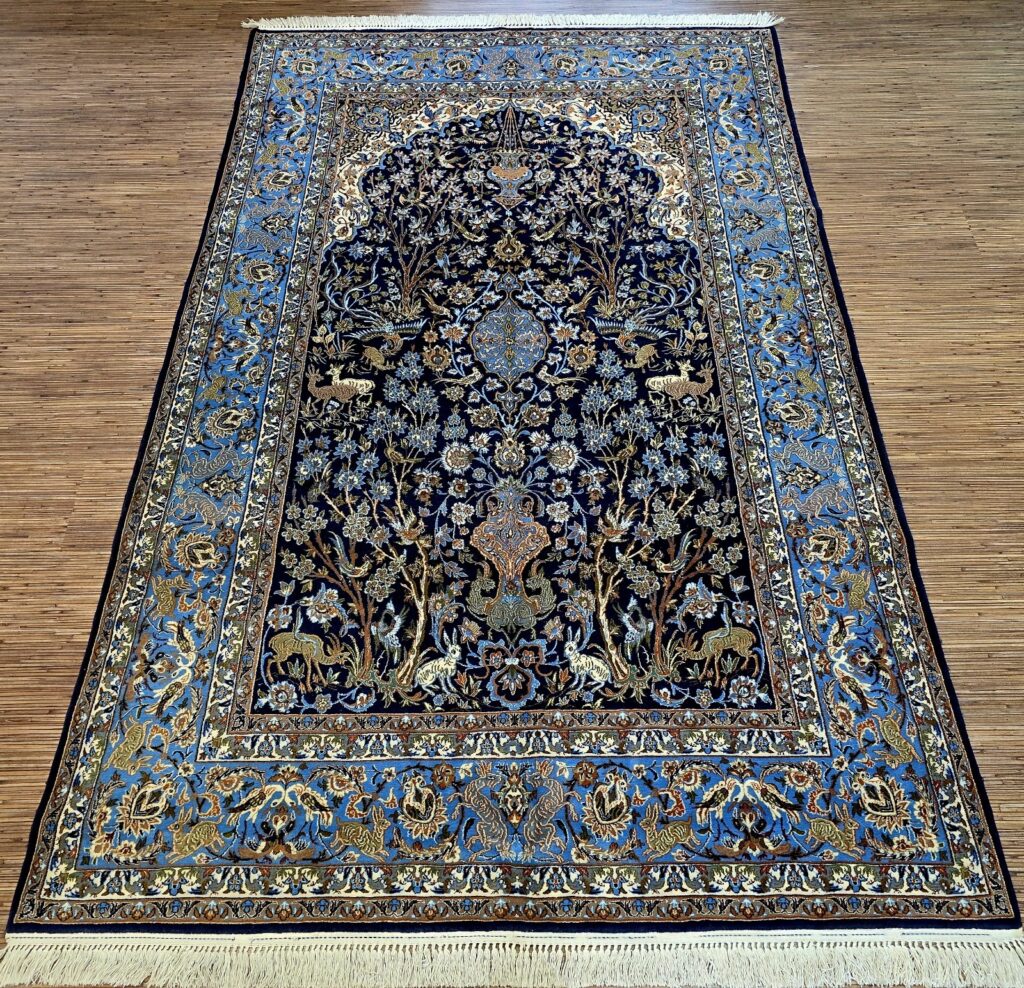
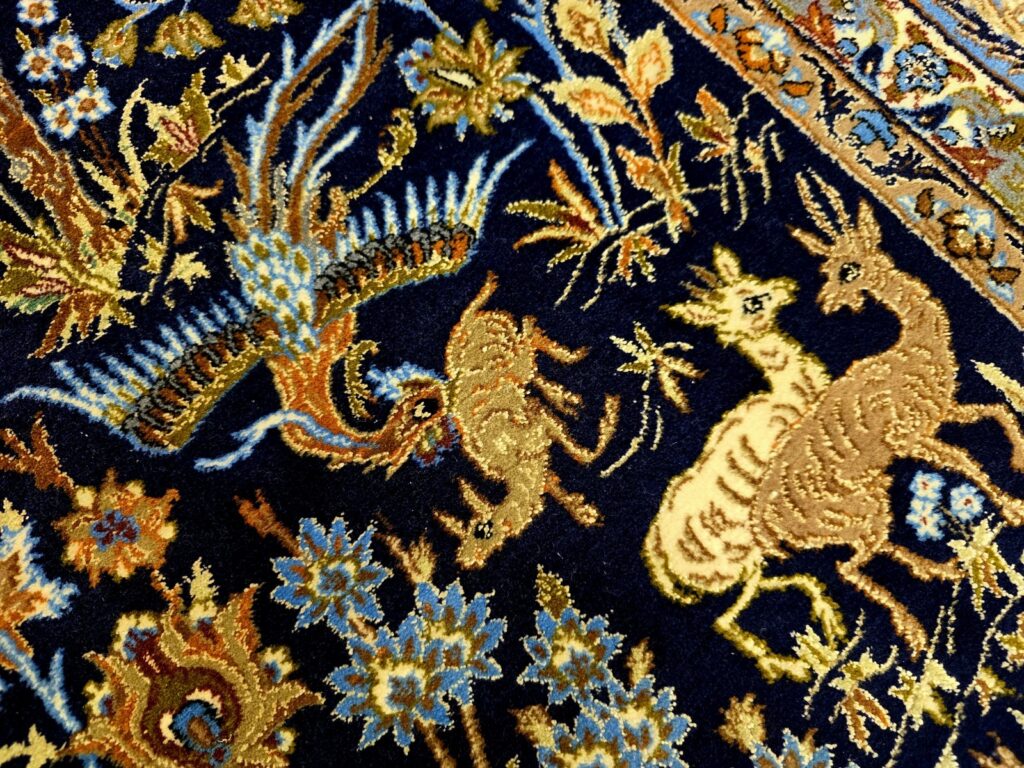
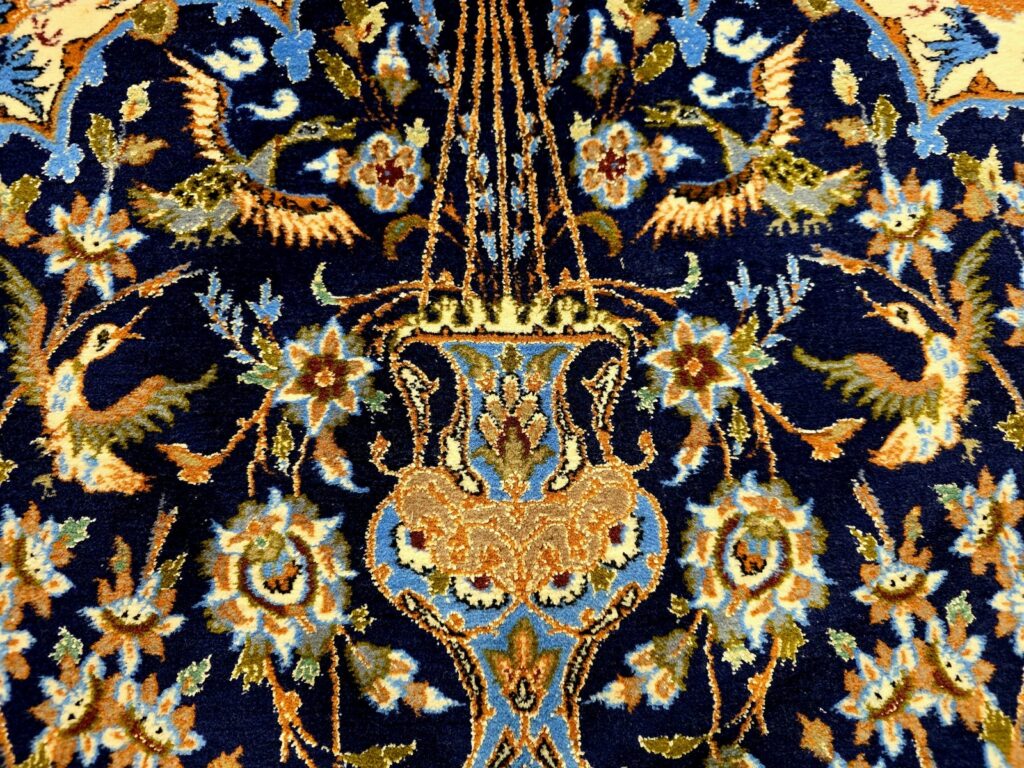
The design description for this Isfahan rug refers to harmonious colours and detailed patterns. It also identifies geometric forms and floral elements as characteristic components. Geometric forms can establish axes, repetitions and clear divisions within a composition. Floral elements can introduce blossoms, leaves and scrolling lines. When the two are combined, geometry provides structure while vegetal ornament creates movement across the field or along the borders.
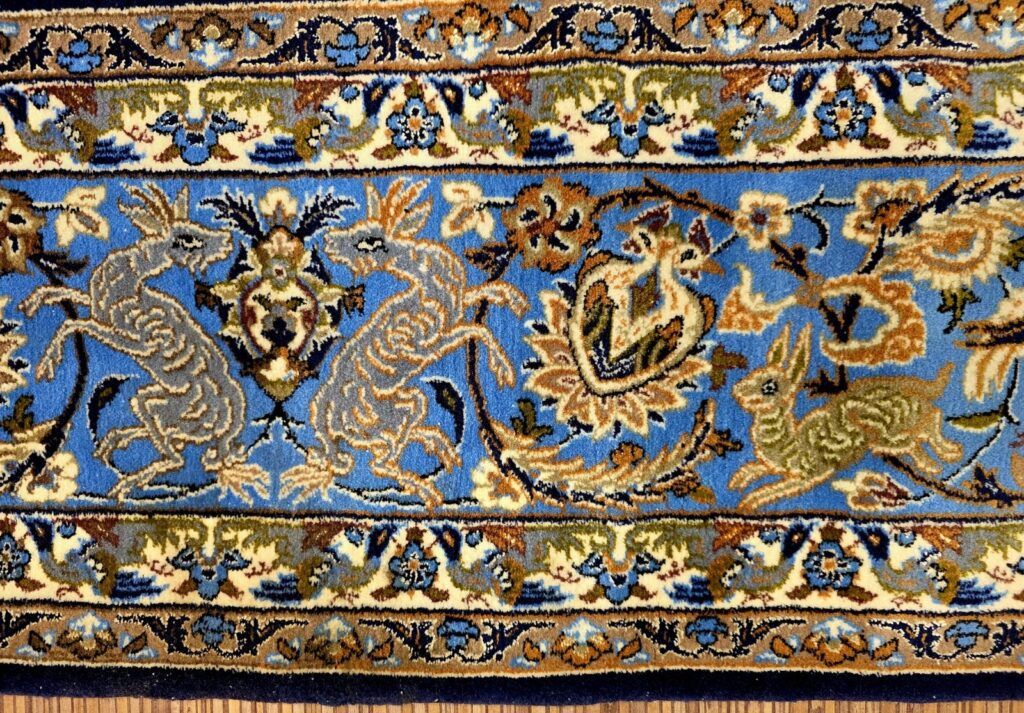
A traditional Persian carpet design is often organized into several visual zones. A central field may be enclosed by one or more borders, with smaller bands serving as transitions between them. The inner field can contain a medallion, an all-over repeat, floral scrollwork or geometric units. This is general background on Isfahan design practice; it is not a claim that every one of these components appears on this individual rug. The supplied description gives the broader information that the pattern includes floral and geometric elements.
Symmetry is a common organizing principle in Persian ornament. It may operate around a central axis, between opposing sides or through the repeated placement of a motif. Symmetrical planning gives a composition balance and makes the relationship between field and border easy to read. Small variations can occur in handmade work because the design is translated into separate knots rather than reproduced mechanically. Fine knotting allows outlines and repeated units to remain visually coherent even when they are small.
Floral ornament in Persian carpet design is generally stylized rather than intended as a botanical illustration. Leaves, flowers and vines are reshaped to fit the rhythm of the textile. A scrolling line may connect separate motifs, fill an open area or guide the eye around a border. Geometric details can frame these forms, define corners or provide a regular counterpoint to the more flowing vegetal lines. The resulting design language can be both ordered and varied.
The colour treatment of Persian rugs ranges from restrained combinations to pronounced contrasts. The source describes the colours here as harmonious and varied and notes that natural dyes are often used in this tradition. Natural dyes may be derived from plant, mineral or other naturally occurring materials. Their final appearance depends on the fibre, the dye bath, water, preparation and exposure to light. Colour therefore plays both a decorative and structural role: it separates motifs, clarifies borders and helps establish visual depth.
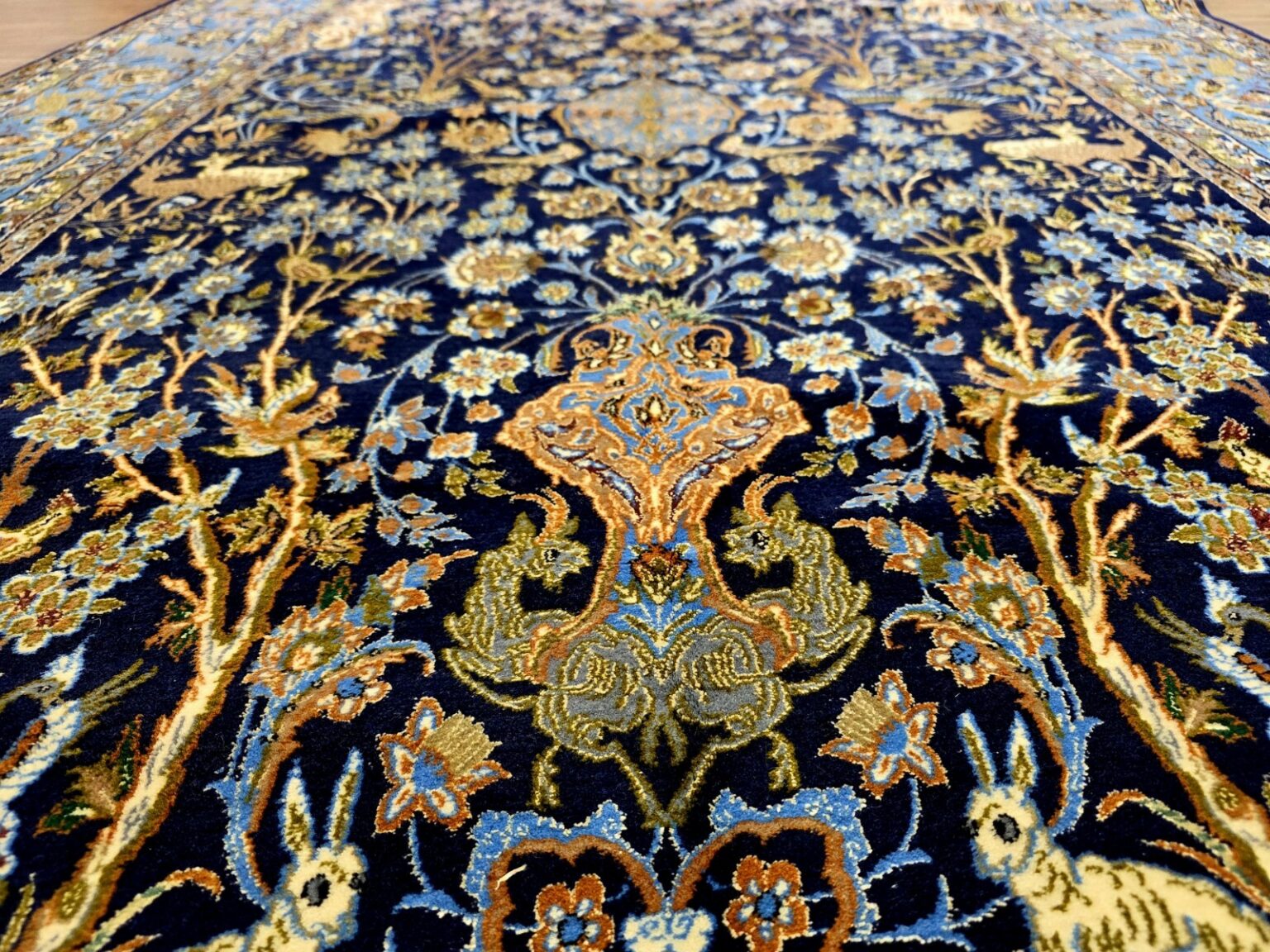
Silk can affect the way a patterned surface is perceived because its smooth fibres reflect light differently according to the viewing angle. A colour may appear to shift subtly as the surface is seen from different directions. This is a general property of silk textiles and explains why fine silk work can show delicate changes in tone. It is not an additional statement about the condition or provenance of this particular rug.
The relationship between design and technique is central to hand-knotted carpet making. A pattern first exists as an arrangement of lines, colours and motifs, then becomes a textile through the repeated placement of knots. High knot density makes it possible to translate more detailed drawing into the surface, while the fibre influences the clarity and character of those lines. In an Isfahan context, floral and geometric vocabulary is therefore closely connected to the practical demands of careful knotting.
Viewed as a regional design tradition, Isfahan combines compositional order with fine ornament. Borders establish a perimeter, central arrangements provide a focus, and repeated leaves, flowers or geometric shapes create rhythm. These principles explain the background of the supplied pattern description without adding an unsupported named motif. The rug is identified specifically through its Isfahan origin, its hand-knotted construction, its silk pile and its stated material and condition.
Special Features
The rug is described as being in very good condition. The source also states that an authenticity certificate can be provided if required, with the certificate confirming the rug’s authenticity. This documentation is a stated service associated with the offering and should be considered separately from general information about Persian carpet history.
Another expressly mentioned feature is the density of 800,000 knots per square metre. Together with the silk pile and hand-knotted construction, this records the specific characteristics supplied for this one-off rug. For hand-knotted rugs in general, professional cleaning is recommended so that the colours and textile structure can be treated appropriately.
FAQ
How can the authenticity of an oriental rug be assessed?
Several points should be considered together, including knot density, material and construction method. For this rug, the supplied details are a silk pile, hand-knotted production and 800,000 knots per square metre. An authenticity certificate can also be made available if required. A certificate, the written product information and an expert examination are best evaluated together rather than relying on one isolated feature.
What care does a hand-knotted rug require?
Hand-knotted rugs should be cleaned regularly to remove dust and loose dirt. Professional cleaning is recommended for a thorough treatment, since the cleaner can take the material, colours and textile structure into account. A silk pile is a fine surface and should be handled accordingly. The appropriate interval and method depend on how the rug is used and on the amount of dirt present.
Which countries are known for important oriental rugs?
Oriental rugs are produced in countries including Iran, Turkey, Afghanistan and India. Each region has developed its own traditions of materials, techniques, structures and design. The rug described here is assigned to Iran and, more specifically, to Isfahan. That origin comes from the product information supplied for the rug and should not be inferred from a decorative motif alone.
To provide the best experiences, we use technologies like cookies to store and/or access device information. Consenting to these technologies will allow us to process data such as browsing behavior or unique IDs on this site. Not consenting or withdrawing consent, may adversely affect certain features and functions.
Functional Always active
The technical storage or access is strictly necessary for the legitimate purpose of enabling the use of a specific service explicitly requested by the subscriber or user, or for the sole purpose of carrying out the transmission of a communication over an electronic communications network.
Preferences
The technical storage or access is necessary for the legitimate purpose of storing preferences that are not requested by the subscriber or user.
Statistics
The technical storage or access that is used exclusively for statistical purposes.The technical storage or access that is used exclusively for anonymous statistical purposes. Without a subpoena, voluntary compliance on the part of your Internet Service Provider, or additional records from a third party, information stored or retrieved for this purpose alone cannot usually be used to identify you.
Marketing
The technical storage or access is required to create user profiles to send advertising, or to track the user on a website or across several websites for similar marketing purposes.
 SECURE PAYMENT
 SHIPPING PARTNERS