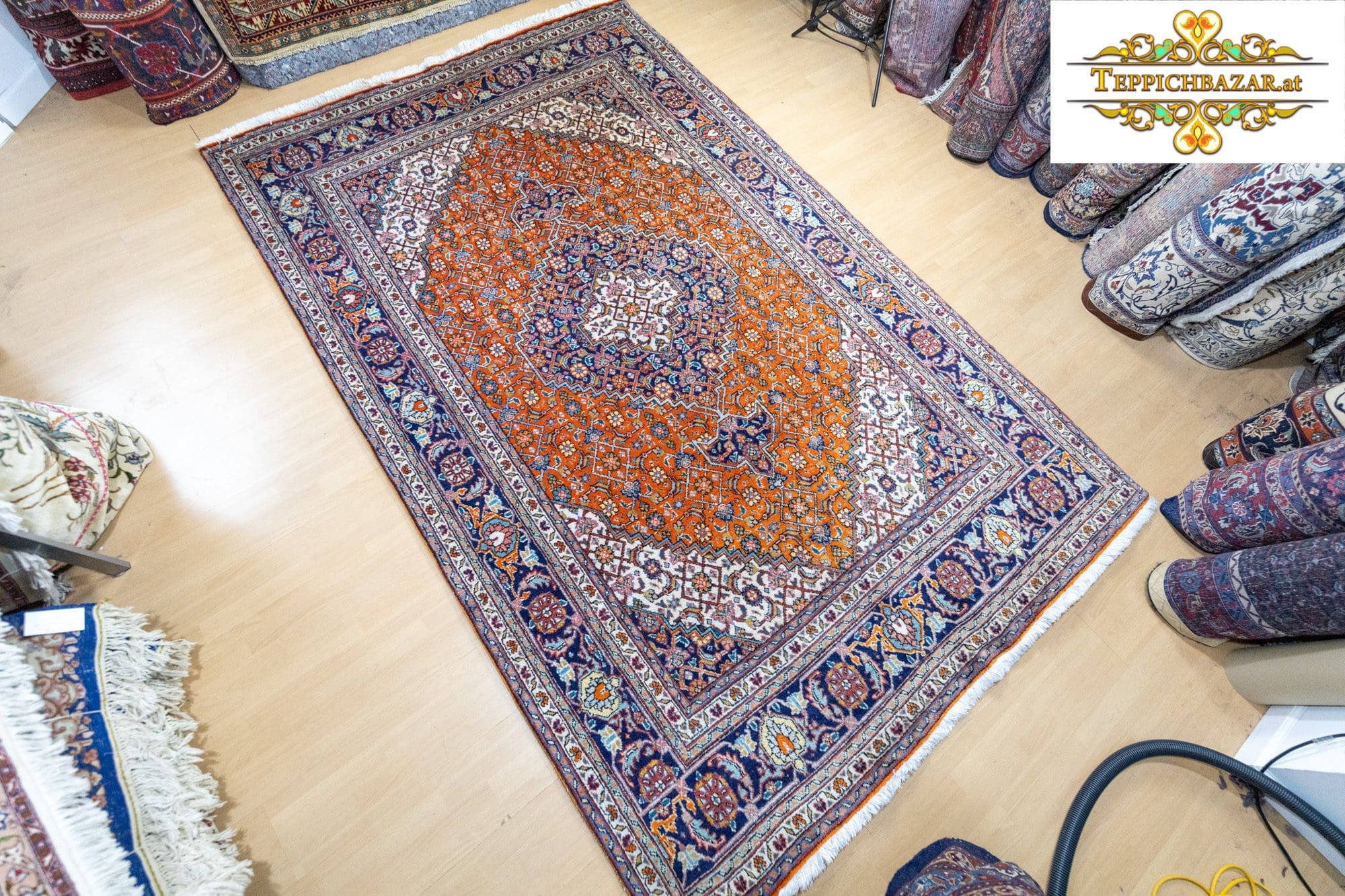
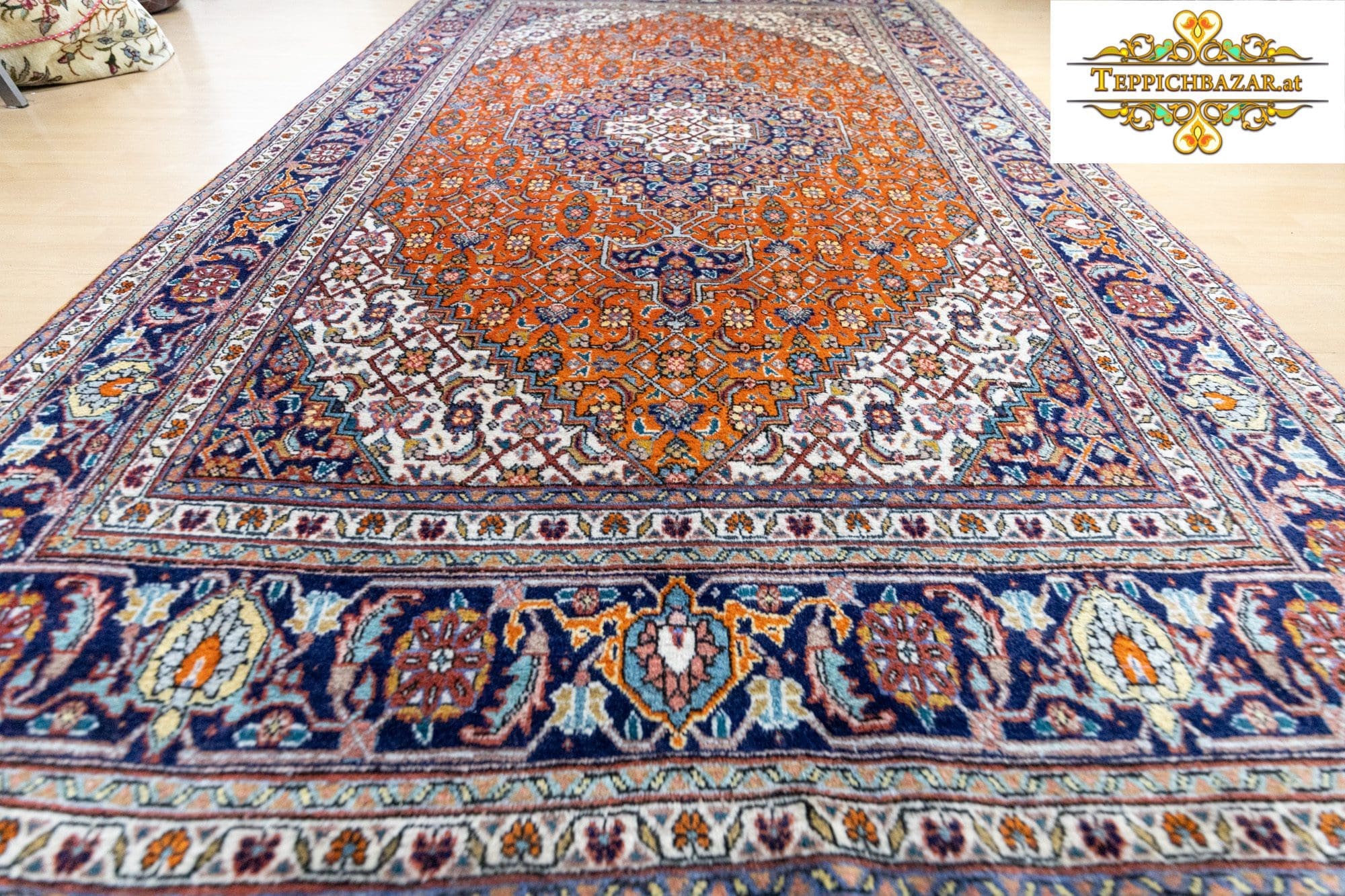
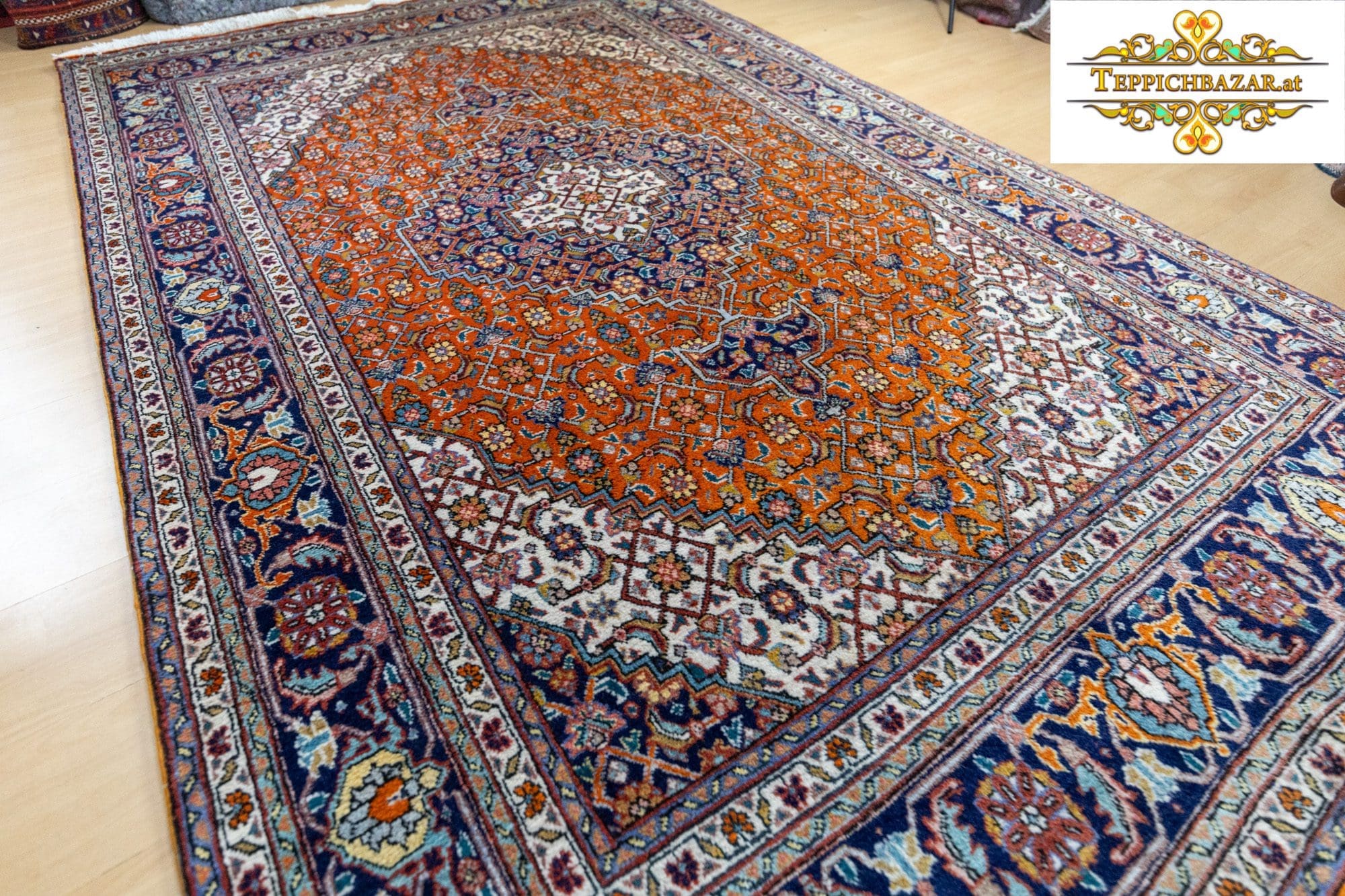
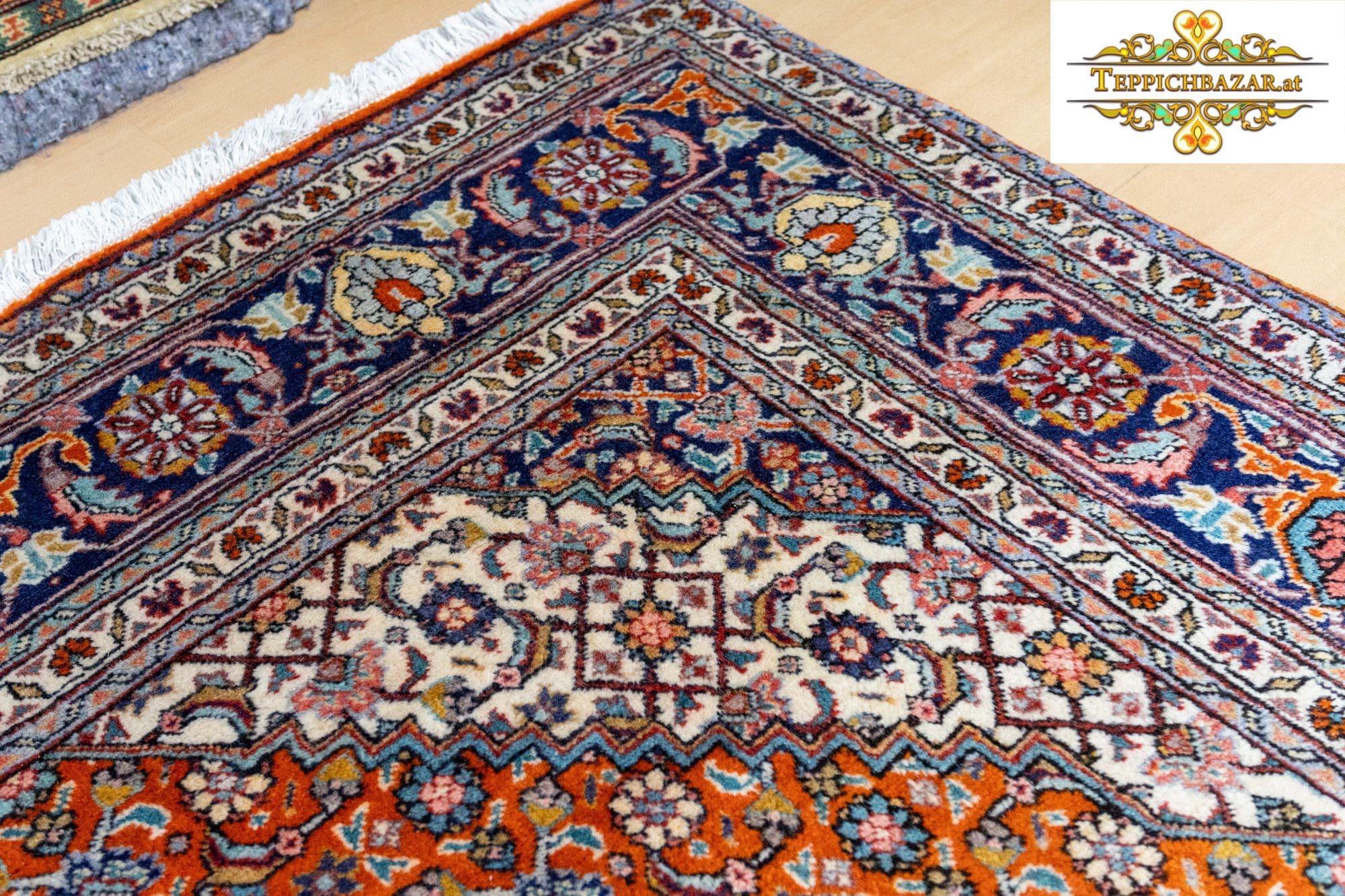
Hand-knotted Täbriz Azarshahr Persian Rug | Knot density: approx. 200,000 knots/sq m (30 Radj) | Material: pile virgin wool and silk, warp cotton | Size: approx. 308 x 196 cm | Pattern: Mahi fish pattern with medallion | Condition: like new, clean and freshly washed
This hand-knotted Persian rug is identified as coming from Täbriz, more specifically Azarshahr. Its pile combines virgin wool and silk, while the foundation warp is made of cotton. Silk is used in the medallion and in the corner designs. The result is a textile surface in which the wool component of the pile is joined by selected silk details with a smoother appearance and a different response to light. The cotton warp forms the structural basis of the knotting.
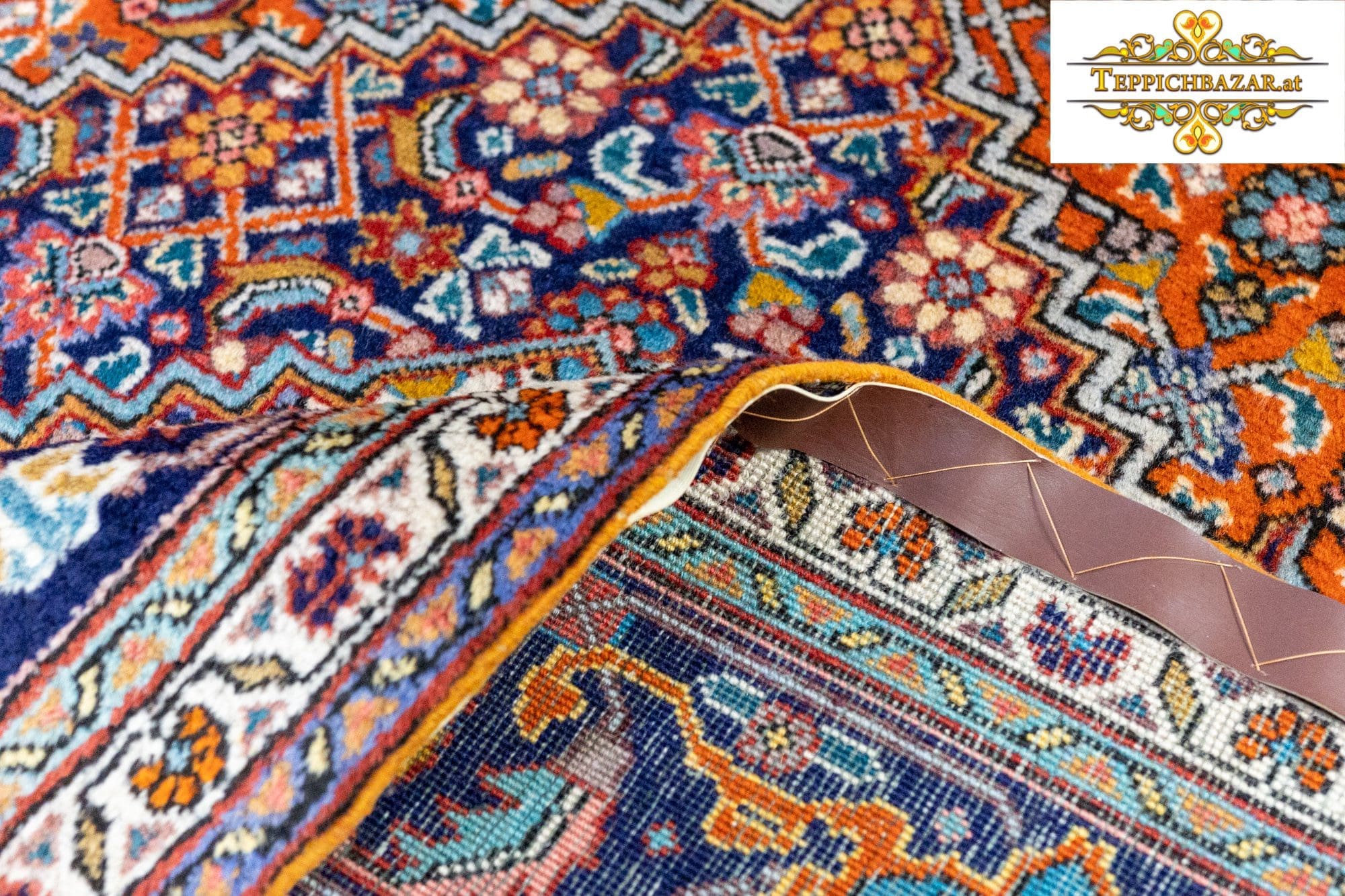
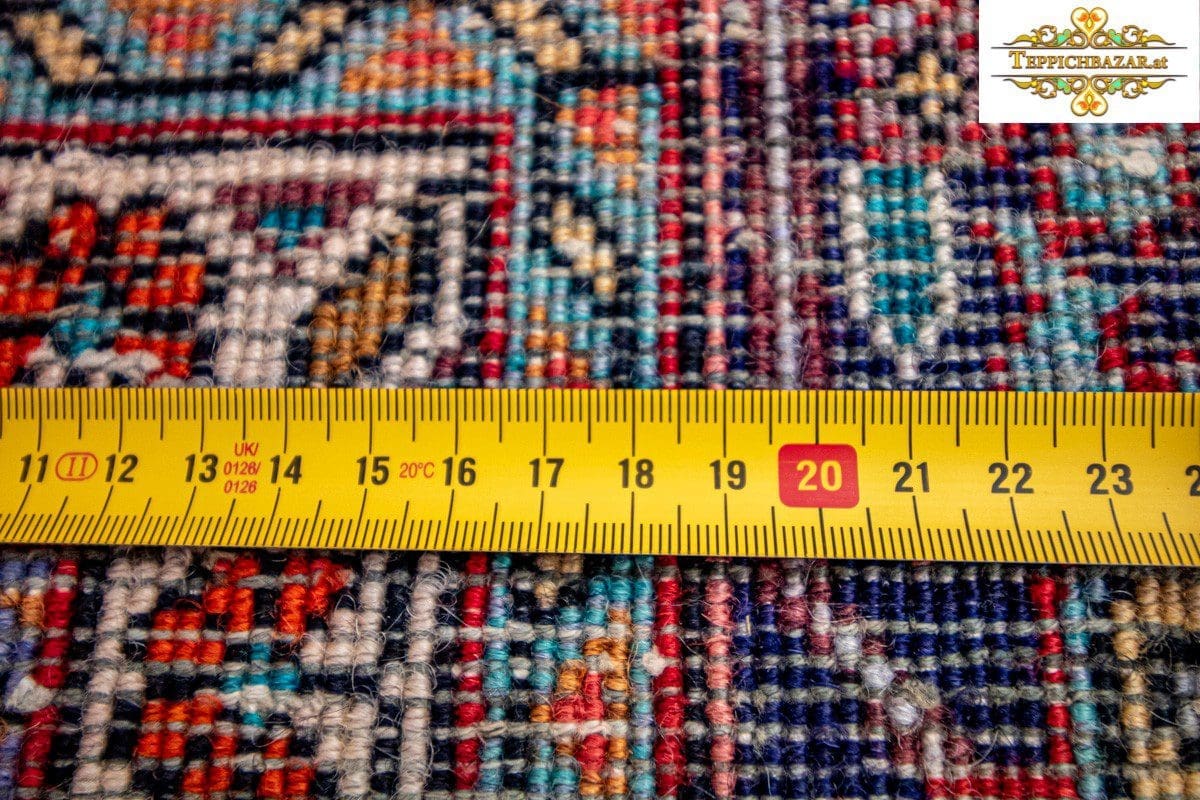
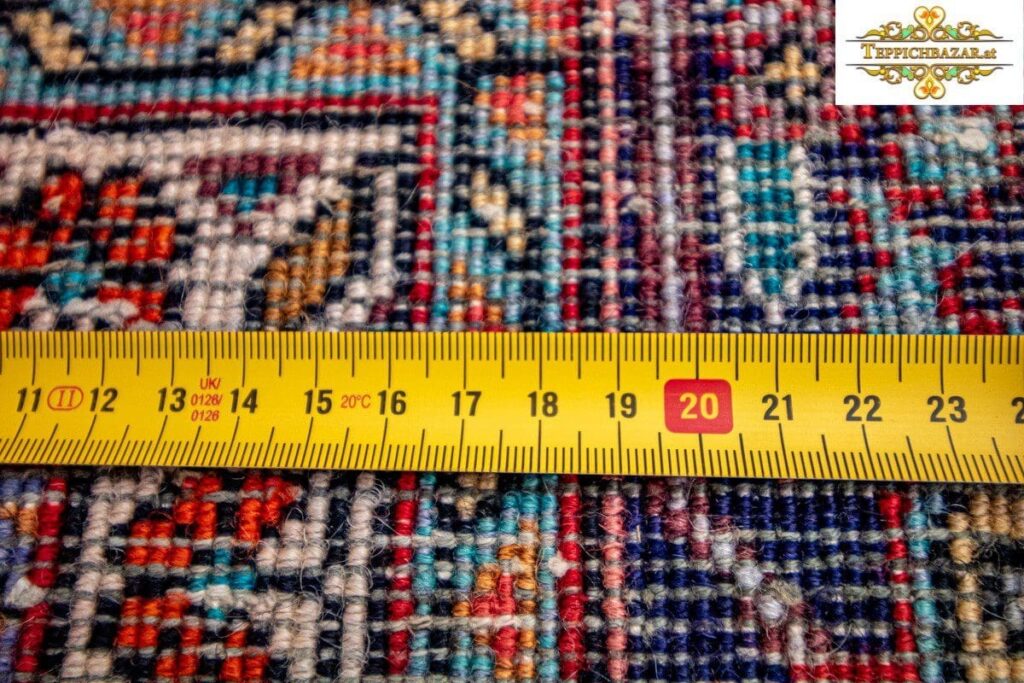
Hand-knotting is a gradual process in which individual pile knots are tied into a prepared warp. Each row is built by hand, compacted, and aligned before the work continues. The stated density of approximately 200,000 knots per square metre, corresponding to 30 Radj, indicates a closely worked construction. A fine structure of this kind can support carefully drawn outlines, small ornaments, and controlled transitions between the various parts of a design.
Wool has a long-established role in Persian rug making because its fibres are resilient and flexible. It accepts dye well and gives a pile a distinct textile hand. Silk has a smoother surface and is often used when a particular motif is to be visually separated from its surroundings. In this rug, the source specifically places silk in the medallion and corner patterns, while virgin wool and silk together make up the pile. The materials therefore have both a practical and a decorative role.
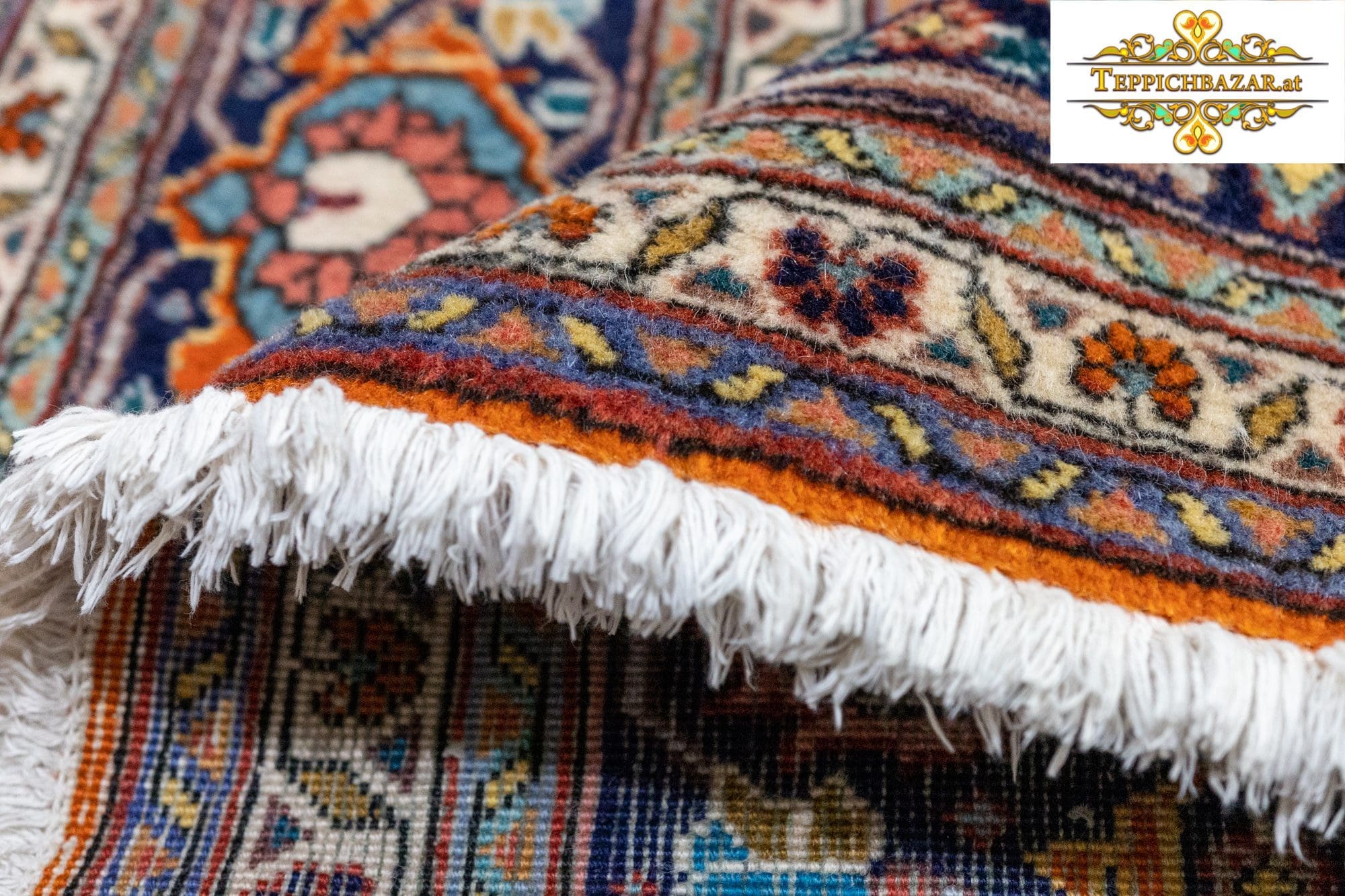
The cotton warp is largely concealed by the pile once the rug is complete. It holds the rows in position and provides the underlying framework into which the knots are inserted. Cotton warp and a wool-and-silk pile are a familiar division of materials in Persian weaving. This construction allows the weaver to create a stable foundation while developing a surface with more than one texture and with selected areas of silk emphasis.
The density of a hand-knotted rug should be understood together with the drawing of its pattern. More knots allow a weaver to divide a given area into smaller units, although density alone does not define quality or origin. The final character also depends on the design, the materials, the workmanship, and the finishing of the pile. For this individual rug, the source gives the knot density as an approximate figure and identifies the construction as hand-knotted.
Origin and Tradition
Täbriz is one of the recognised centres of Persian rug production. The city lies in north-western Iran and has long been associated with trade, cultural exchange, and the development of workshop-based carpet design. Rugs linked with Täbriz are commonly discussed in relation to precise drawing, carefully organised fields, and detailed ornamental work. The source gives Azarshahr as the more specific place associated with this rug, within the broader Täbriz designation.
The Täbriz tradition includes compositions built around a central medallion as well as all-over patterns without a single dominant centre. A medallion creates a visual anchor and helps organise the field around it. Corner pieces, borders, and secondary ornaments can then be arranged in relation to that centre. Such planning gives the design structure while leaving room for fine internal detail. The relationship between the main field and its surrounding elements is an important part of the regional design vocabulary.
Persian rug making is not limited to the act of tying knots. It also includes preparing the warp, selecting and preparing the pile fibres, following a drawn or memorised design, maintaining row alignment, and finishing the surface. A workshop’s visual language develops through these linked stages. The placement of wool and silk, the treatment of outlines, and the scale of repeated ornaments all influence how the finished textile is read.
Regional names in rug culture can refer to a place of production, a workshop environment, or a wider tradition of design and technique. They should not be confused with the name of a motif. Here, Täbriz and Azarshahr are the stated places of origin, while Mahi identifies the pattern. Keeping those terms separate is important: one describes where the rug is said to come from, and the other describes the ornamental language used across its field.
Azarshahr belongs to the cultural and weaving environment of north-western Iran. Local production can exist alongside wider regional conventions, with designs adapted by individual workshops and weavers. Patterns may be transmitted through templates, workshop practice, and repeated instruction, yet hand production allows each implementation to develop its own line quality and balance. The result remains connected to tradition without being mechanically identical to every other rug associated with the same region.
In Persian carpet history, commercial centres such as Täbriz helped circulate both finished rugs and ideas about design. Merchants, workshop owners, designers, and weavers all contributed to the movement of patterns between places. This helps explain why a regional rug may contain familiar motifs that are also seen elsewhere in Persian art. Origin is therefore assessed through the combined evidence of place, technique, materials, and construction rather than through a single ornament viewed in isolation.
The hand-knotted format preserves this relationship between design and making. A pattern is translated into a field of individual knots rather than printed onto a finished surface. Lines may be built through successive colour changes, and small forms depend on the careful placement of each knot. The work requires continuity and attention over the entire rug. It also explains why a hand-knotted piece is a textile document of both a design tradition and a manual process.
Persian weaving traditions have been maintained through practical knowledge passed between generations. This knowledge includes fibre preparation, colour handling, loom work, knotting, trimming, and washing. The use of silk in selected areas demonstrates one way a weaver can create contrast within a wool-based composition. In this rug, the origin statement and the named materials place the piece within that broader history while the Mahi-and-medallion layout gives it a specific design identity.
The description of this rug does not provide a date, a signature, or a named workshop. Those details are therefore not used to extend its provenance. What can be stated is that the rug is described as a hand-knotted Persian rug from Täbriz, specifically Azarshahr, made with a virgin-wool-and-silk pile on cotton. That distinction between documented information and general regional context is essential when discussing a one-off woven object.
Design and Pattern
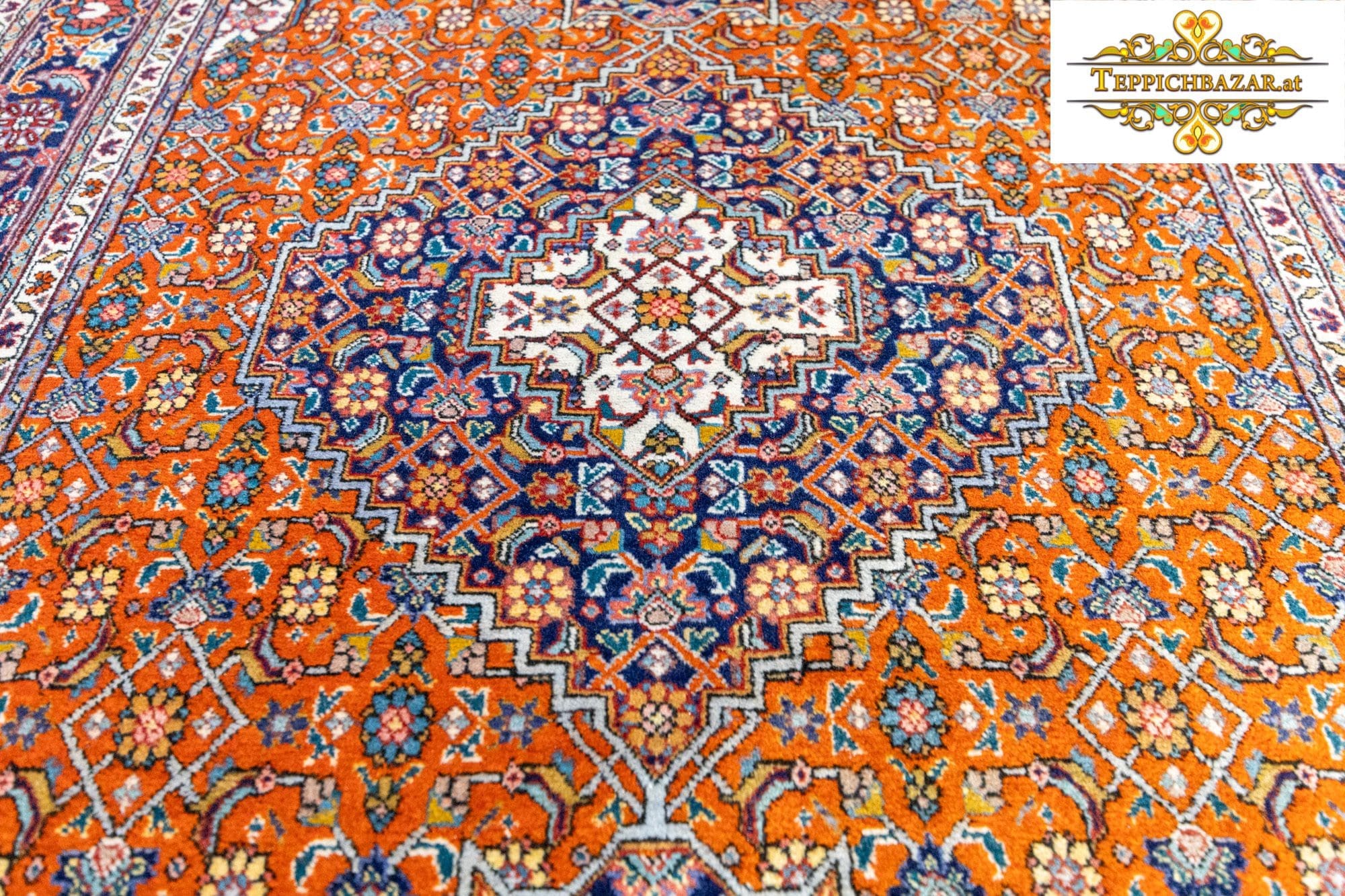
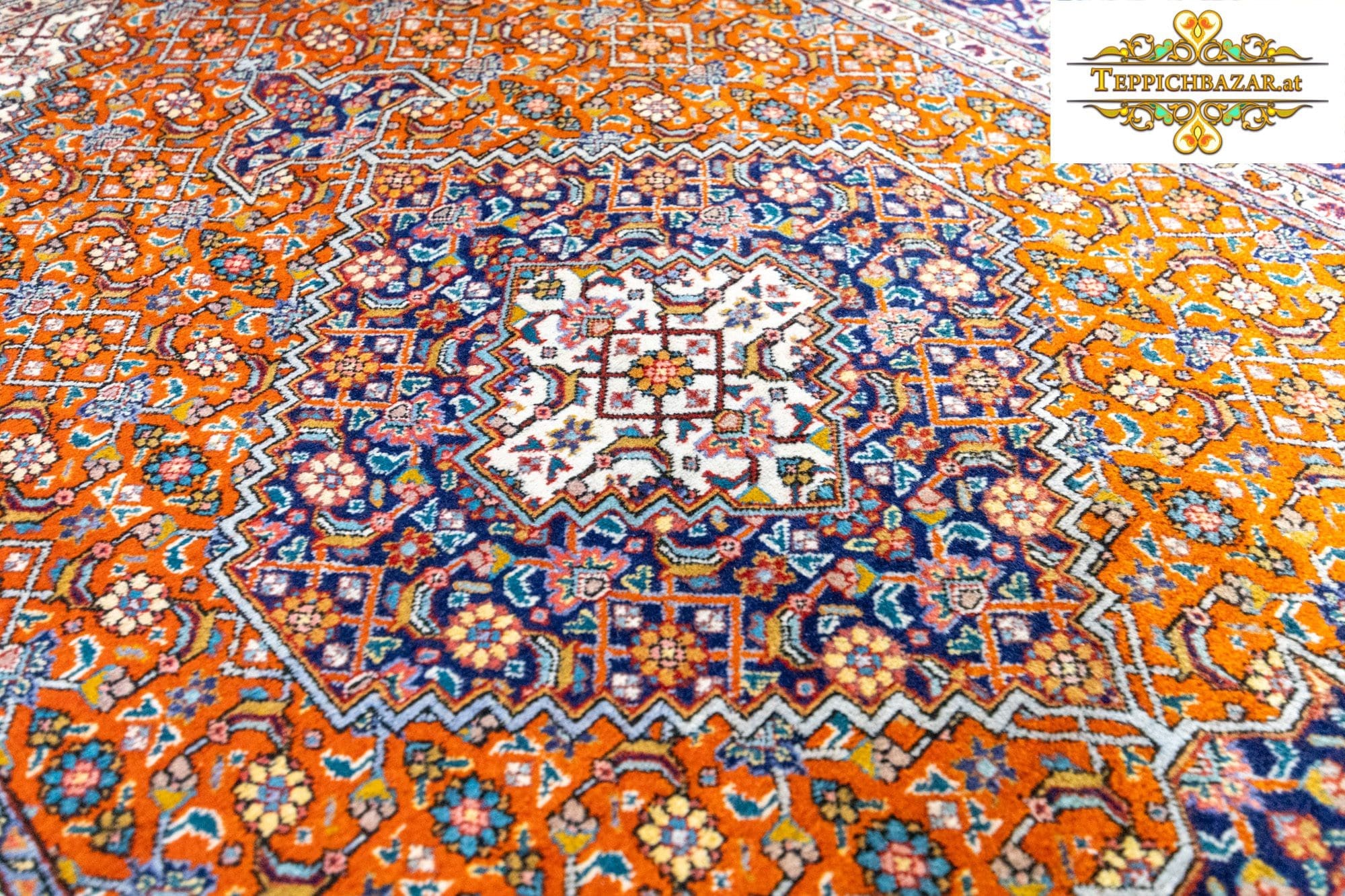
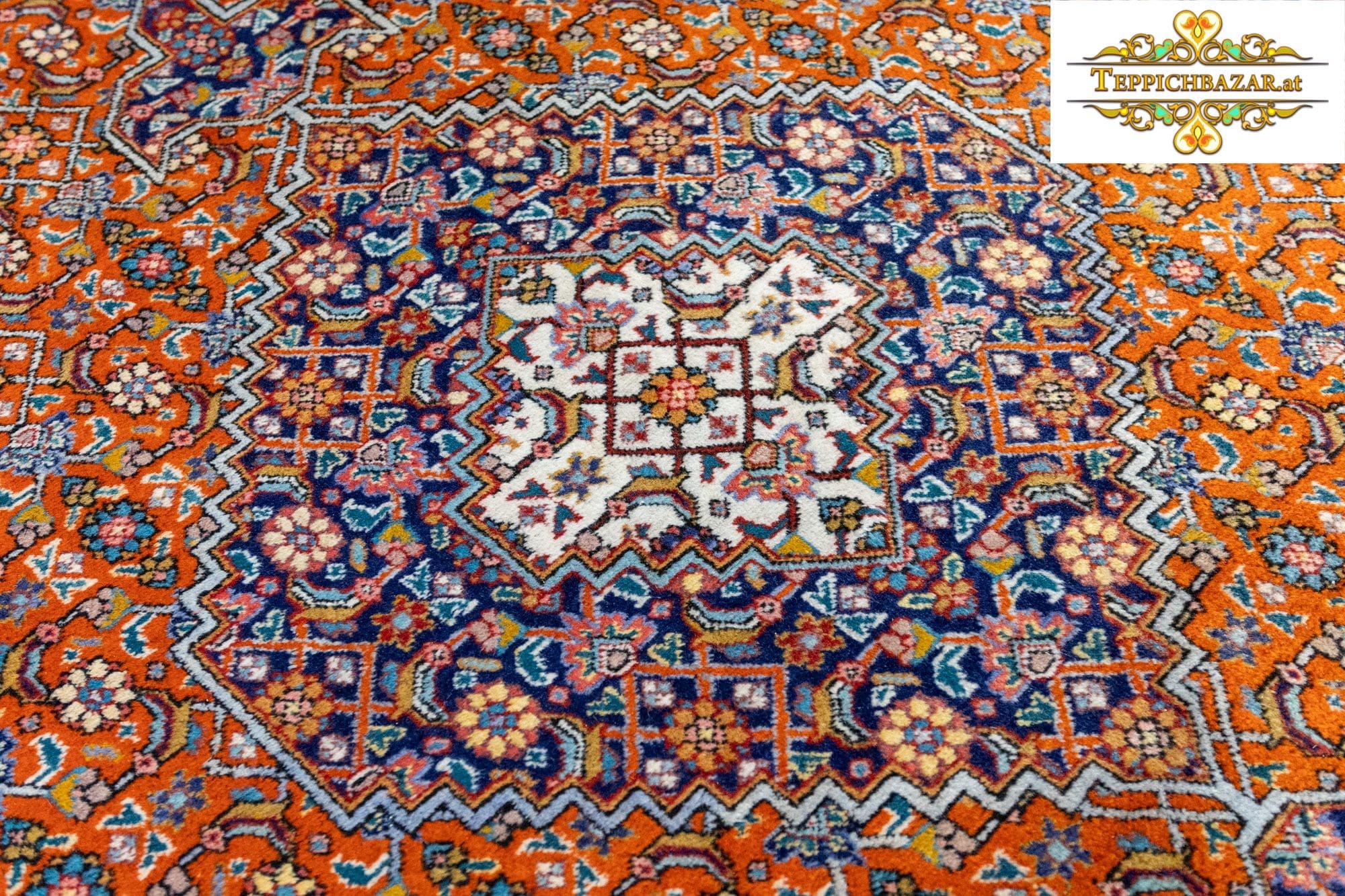
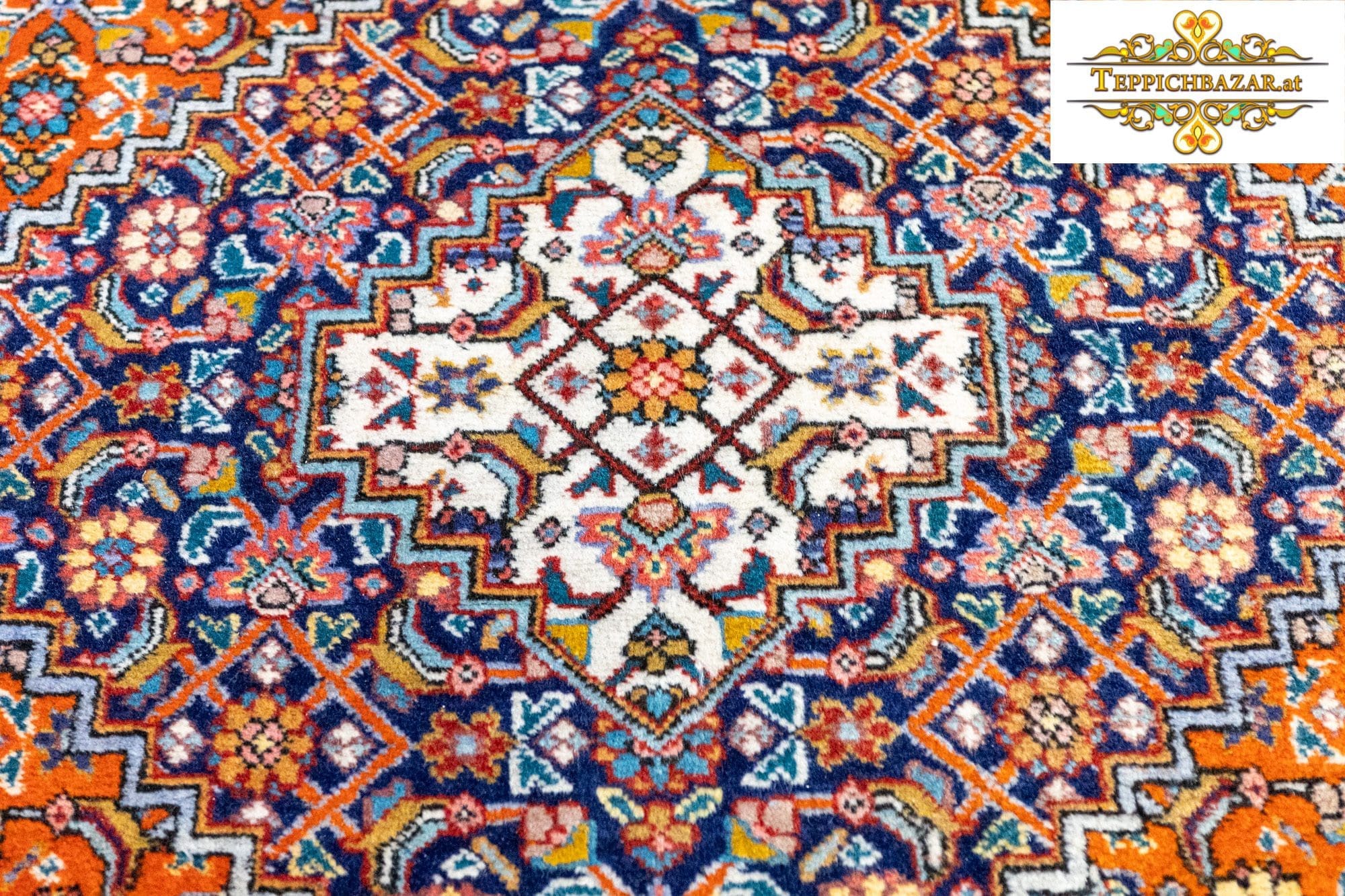
The design is identified as the Mahi fish pattern with a medallion. In Persian rug terminology, Mahi refers to a stylised repeating ornament rather than a literal scene showing one particular fish. The motif is generally built from interlocking leaves, curved forms, and small floral details. Its identity comes from the relationship between these parts and from the way they repeat across the field.
A Mahi arrangement can create a continuous visual rhythm. Individual elements appear to turn, face one another, or nest within larger forms, allowing the eye to travel through the pattern. Repetition gives the surface cohesion, while changes in internal lines and small details prevent the field from reading as a completely uniform texture. The ornament is therefore both ordered and active, with its character depending on the balance of symmetry, direction, and spacing.
The medallion introduces a second organising principle. Instead of allowing the repeated motif to occupy the entire field with equal emphasis, the central form establishes a point of focus. Surrounding Mahi elements can be oriented around it, creating a transition between the centre and the outer areas. The corner designs complete the formal movement at the edges. In this rug, the source specifies that the medallion and corner patterns are made of silk.
Silk can distinguish a design element through its surface and light reflection. Its smoother fibre does not look exactly like wool when the pile is viewed from different directions. Used in a medallion and in corner patterns, it can clarify the hierarchy of the composition without changing the underlying drawing. The source also describes the rug’s pattern as lively and its colours as strong, so the design is presented as clearly legible rather than muted.
Persian ornament is often based on stylisation rather than direct naturalistic representation. Leaves, blossoms, vines, and other forms are reduced to lines and repeatable units that can be fitted into a woven field. This transformation makes complex ideas workable within the geometry of rows and knots. The Mahi pattern is a notable example of this approach: a recognisable ornamental formula can be repeated, mirrored, and connected while retaining a coherent visual structure.
The combination of Mahi and a central medallion gives the rug both continuity and hierarchy. The repeating pattern provides movement through the field, while the medallion signals the centre. Corner ornaments help resolve the transition to the borders and give the rectangular layout a sense of completion. This does not mean that every Mahi rug follows one fixed scheme; regional workshops and individual weavers can vary the scale, density, direction, and internal drawing of the motif.
Fine knotting is particularly relevant to patterns containing small repeated elements. A closely worked pile can accommodate narrow contours and more intricate internal divisions than a very coarse structure. The stated density of this rug is therefore consistent with a design in which Mahi ornaments, a medallion, and corner details are all important. Density by itself, however, is not a complete description of the visual result. Colour, fibre, drawing, and finishing work together to determine how the pattern appears.
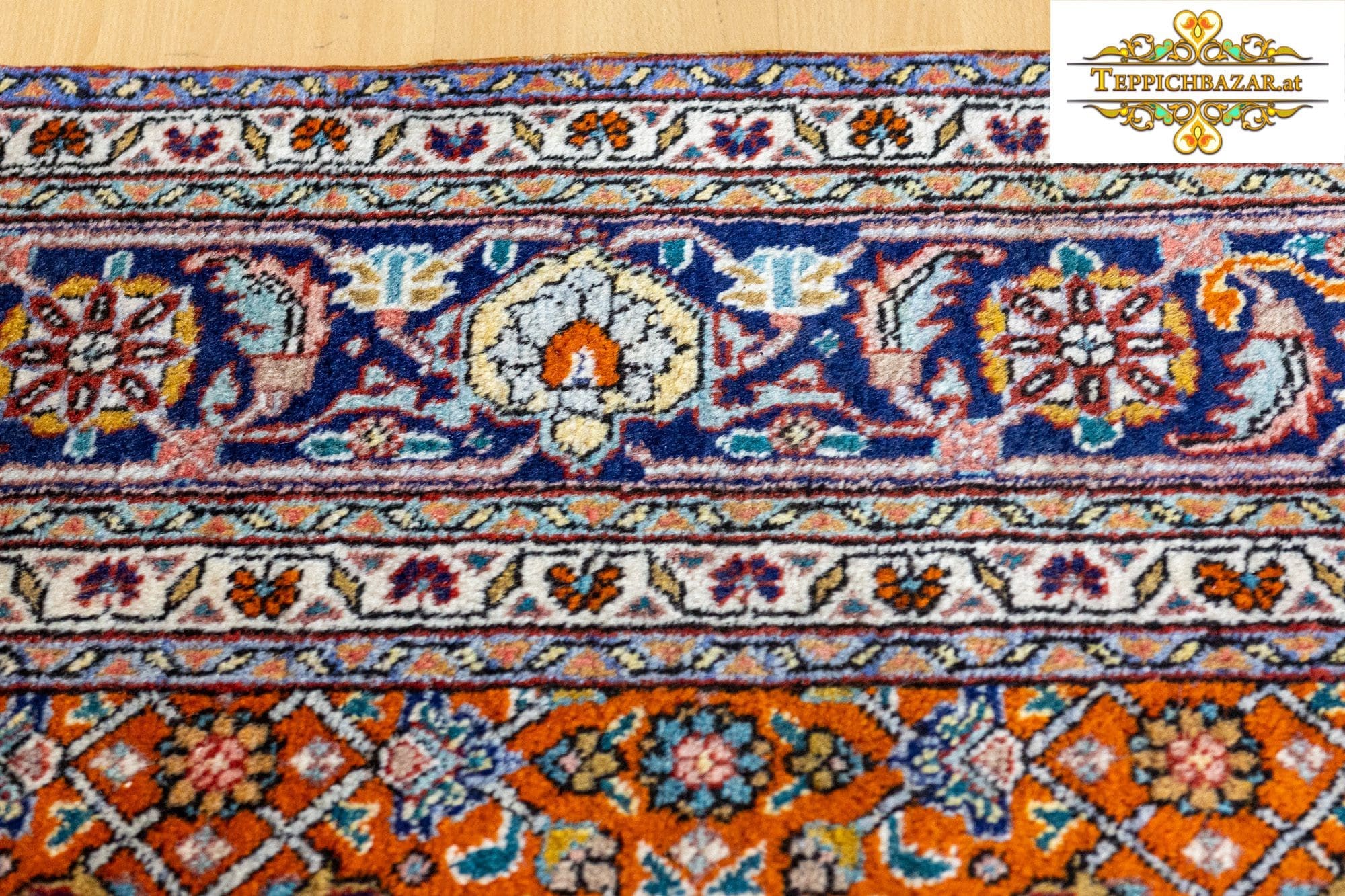
Many Persian rug designs use a relationship between field and frame. The central area carries the main ornamental statement, while borders contain and direct the visual flow. Secondary bands may mediate between them. The supplied description names the Mahi pattern, the medallion, and the corner designs, but does not specify the number or names of any borders. Those unnamed details should not be added. The general principle remains useful: a well-organised composition allows repeated ornament and central emphasis to coexist.
Mahi is sometimes discussed as a motif with a long history in Persian decorative arts. Its continued use reflects the adaptability of traditional ornament. The forms can be enlarged or reduced, opened up or made denser, and combined with different central arrangements. In this case, the named combination with a medallion belongs to the described rug, while the explanation of repetition, stylisation, and compositional balance provides the broader cultural context.
Special Features
The documented features of this one-off rug are its Persian origin in the Täbriz and Azarshahr area, its hand-knotted construction, and its stated density of approximately 200,000 knots per square metre, or 30 Radj. The pile is made of virgin wool and silk on a cotton warp. Silk is specifically used for the medallion and the corner designs.
The condition is described as like new. The rug is also stated to be clean and freshly washed. Its pattern is identified as the Mahi fish pattern with a medallion, and the description refers to a lively design and strong colours. These statements concern this particular piece and are kept separate from the general information about Täbriz weaving and Mahi ornament.
No date, signature, restoration history, or named workshop is supplied in the source. Those points are therefore not inferred. The special features listed here are limited to the stated origin, materials, construction, pattern, density, and condition.
FAQ
Where does this Persian rug come from?
The source identifies it as a Persian rug from Täbriz, more specifically from Azarshahr. Täbriz is a major centre of Persian carpet making in north-western Iran. In this description, the place names indicate the stated origin, while Mahi refers to the pattern rather than to a place of manufacture.
What materials are used in the rug?
The pile combines virgin wool and silk, and the warp is cotton. The medallion and the corner patterns are specifically described as being made of silk. This creates a material contrast between the wool portion of the pile and the selected silk ornaments.
What is the condition of the rug?
The rug is described as like new. It is also stated to be clean and freshly washed. The source does not provide information about its age, repairs, restoration, or signature, so no additional condition or provenance claims are made.
To provide the best experiences, we use technologies like cookies to store and/or access device information. Consenting to these technologies will allow us to process data such as browsing behavior or unique IDs on this site. Not consenting or withdrawing consent, may adversely affect certain features and functions.
Functional Always active
The technical storage or access is strictly necessary for the legitimate purpose of enabling the use of a specific service explicitly requested by the subscriber or user, or for the sole purpose of carrying out the transmission of a communication over an electronic communications network.
Preferences
The technical storage or access is necessary for the legitimate purpose of storing preferences that are not requested by the subscriber or user.
Statistics
The technical storage or access that is used exclusively for statistical purposes.The technical storage or access that is used exclusively for anonymous statistical purposes. Without a subpoena, voluntary compliance on the part of your Internet Service Provider, or additional records from a third party, information stored or retrieved for this purpose alone cannot usually be used to identify you.
Marketing
The technical storage or access is required to create user profiles to send advertising, or to track the user on a website or across several websites for similar marketing purposes.

 SECURE PAYMENT
 SHIPPING PARTNERS


