This Nain Persian rug is hand-knotted with a pile made of approximately 97 percent virgin wool and 3 percent silk. The silk is incorporated into the wool pile, adding a fine sheen and a soft hand to the surface. The warp is made of cotton. These materials have distinct roles within the rug: the pile creates the visible colour and pattern, while the cotton warp forms the foundation into which the knots are tied.
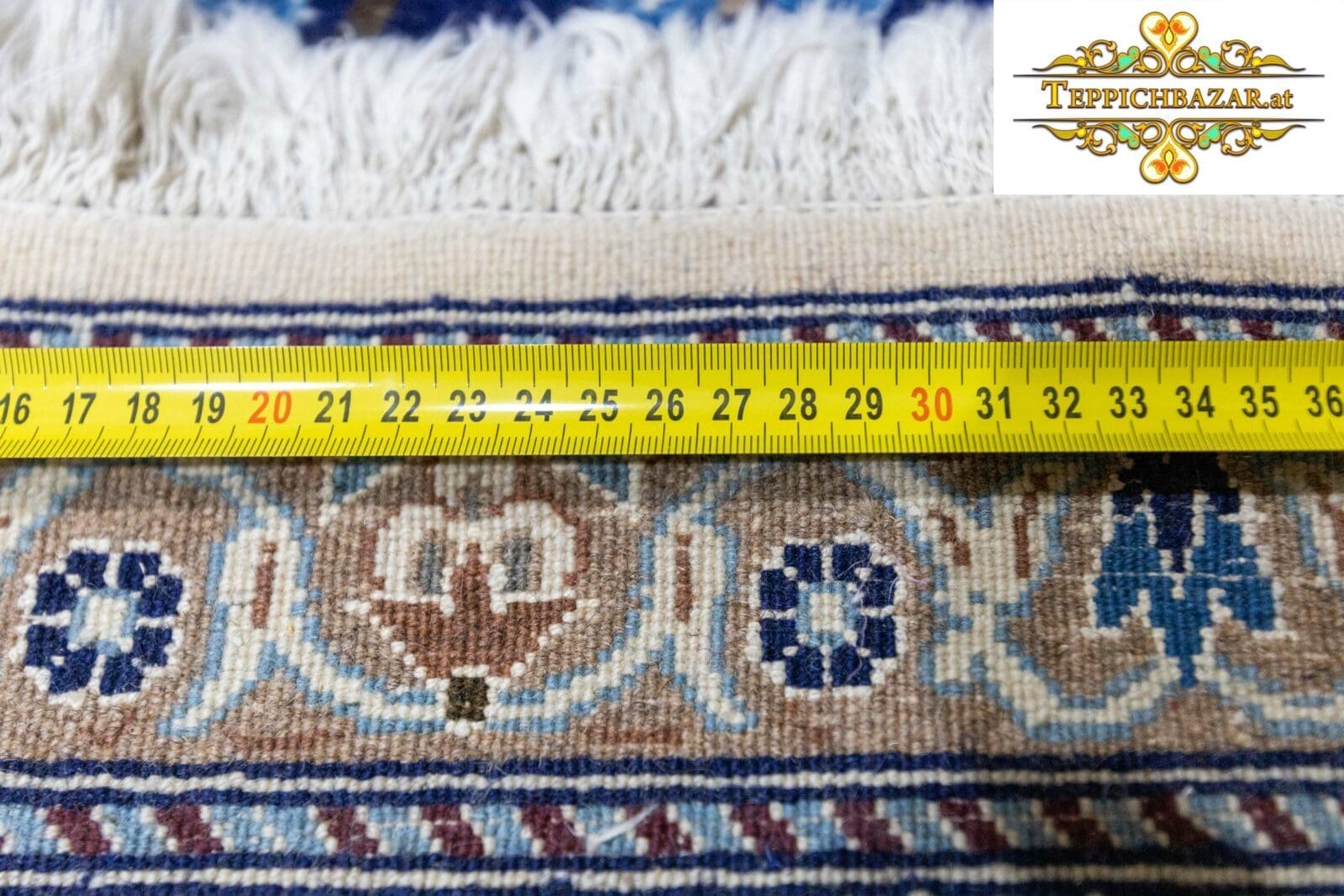
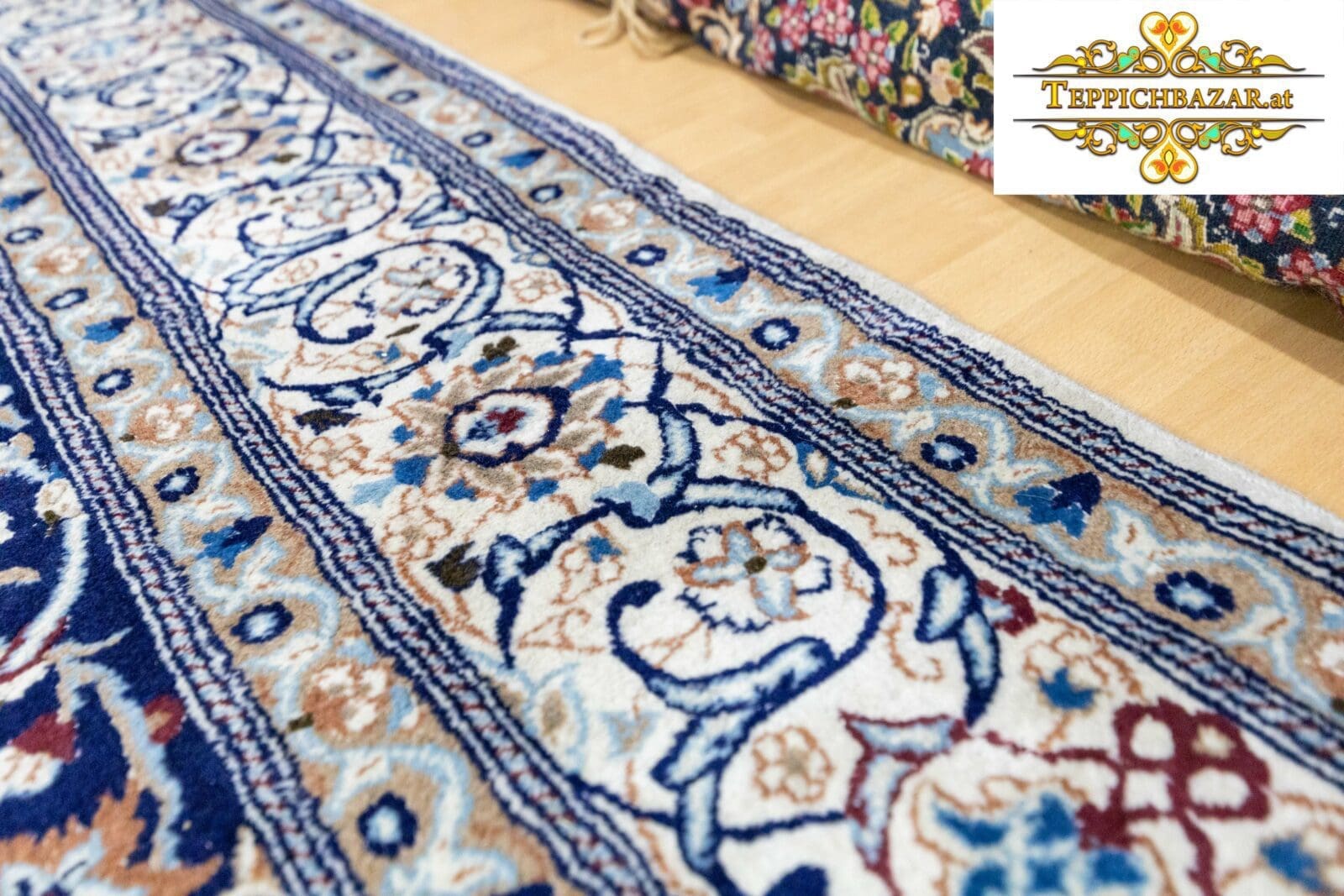
The term 12la refers to twelve yarn layers. In Nain weaving, this designation describes a fine construction and points to a carefully executed knotting process. The stated density of approximately three hundred and fifty thousand knots per square metre supports precise drawing of outlines, small ornaments and transitions. In hand knotting, each knot is tied individually around the prepared warp. Row by row, this produces a firm surface capable of holding detailed designs. The combination of a fine pile, silk content and close knotting accounts for the carefully worked appearance of the pattern.
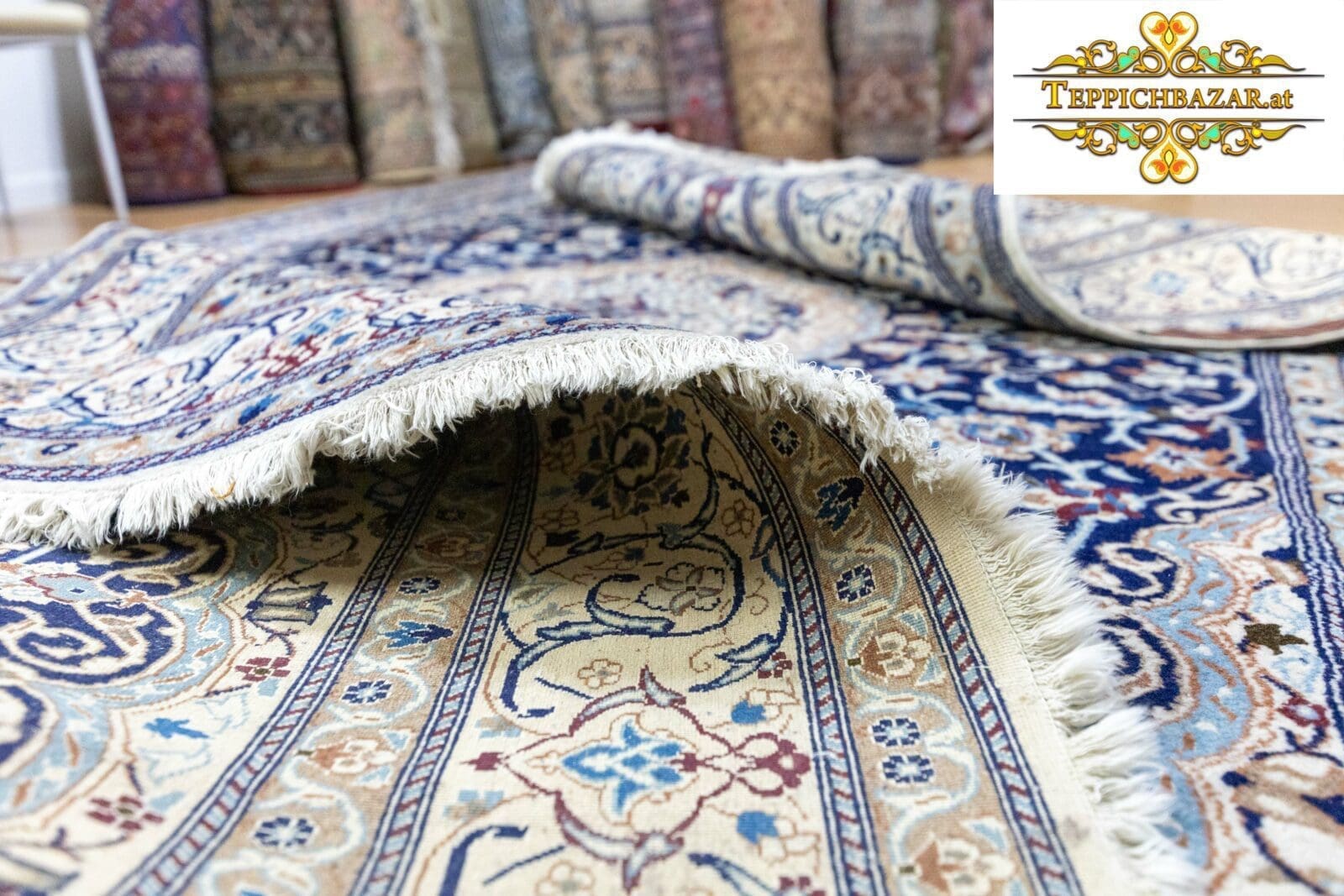
The rug is described as being in very good condition and freshly washed. This is part of the description of the individual piece and complements the information about its construction. The visible surface is formed by the wool pile, with silk providing an additional accent within it. Cotton remains the structural warp beneath the pile and supplies the foundation for the hand-tied knots. The result is a textile whose character can be understood through its materials, its construction and its current condition.
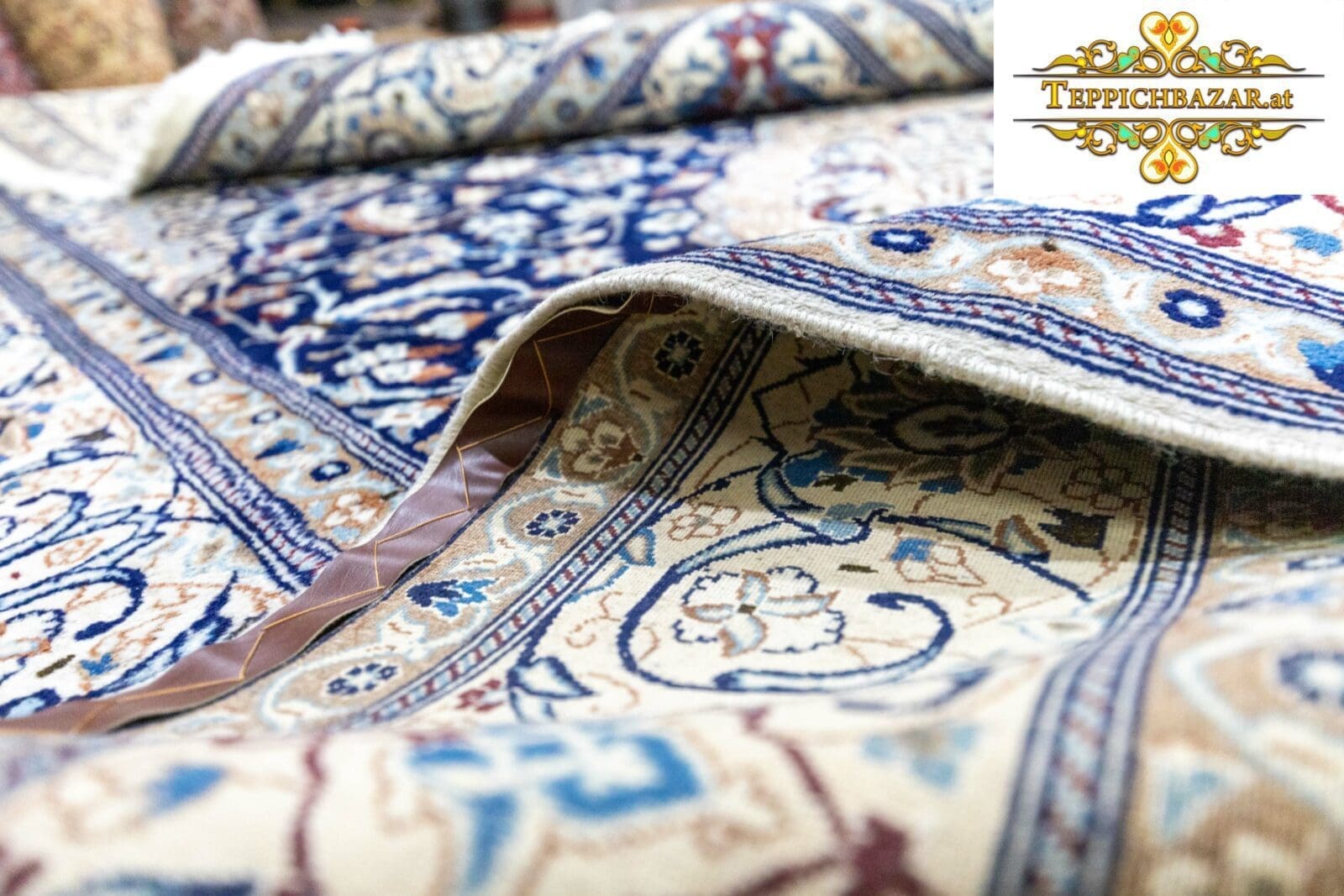
Hand knotting is a sequential craft. The warp must be prepared, the design must be followed, and the knots must be secured row after row. The weaver works with a controlled rhythm while preserving the proportions of the composition. Fine knotting permits small changes in direction and the careful shaping of curved or angular motifs. It also allows the pattern to remain legible when many details are placed close together. The 12la construction and the indicated density therefore relate directly to the level of detail visible in a Nain design.
Origin and Tradition
Nain is a city in central Iran known for hand-knotted rugs. The origin of this rug is given as the city of Nain in Persia. Nain occupies a recognised place within Iranian carpet weaving because its tradition combines fine materials, controlled workmanship and clearly organised designs. The weaving tradition there reaches back to the nineteenth century. Over time, Nain rugs became associated with compositions in which the precision of the drawing is as important as the practical textile structure.
The Nain tradition is based on knowledge passed through an established craft culture. Preparing the warp, selecting materials, planning colour relationships and translating a drawn design into knots are connected stages of one process. The design has to work on a woven surface rather than on paper alone. Its lines must remain coherent, its ornaments must relate to the field, and its borders must frame the composition. A close knot structure supports this approach by allowing contours and small decorative elements to be placed with greater control.
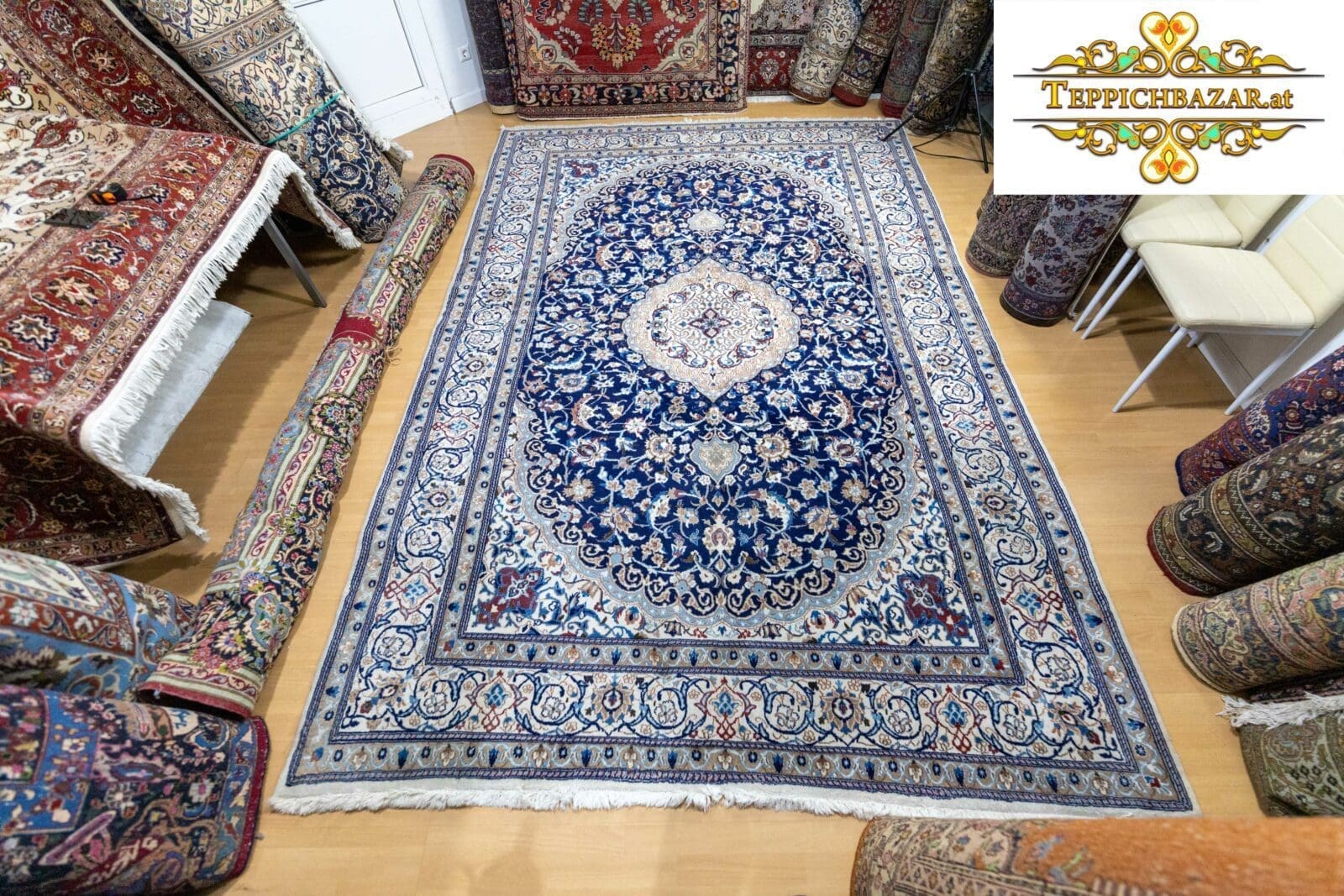
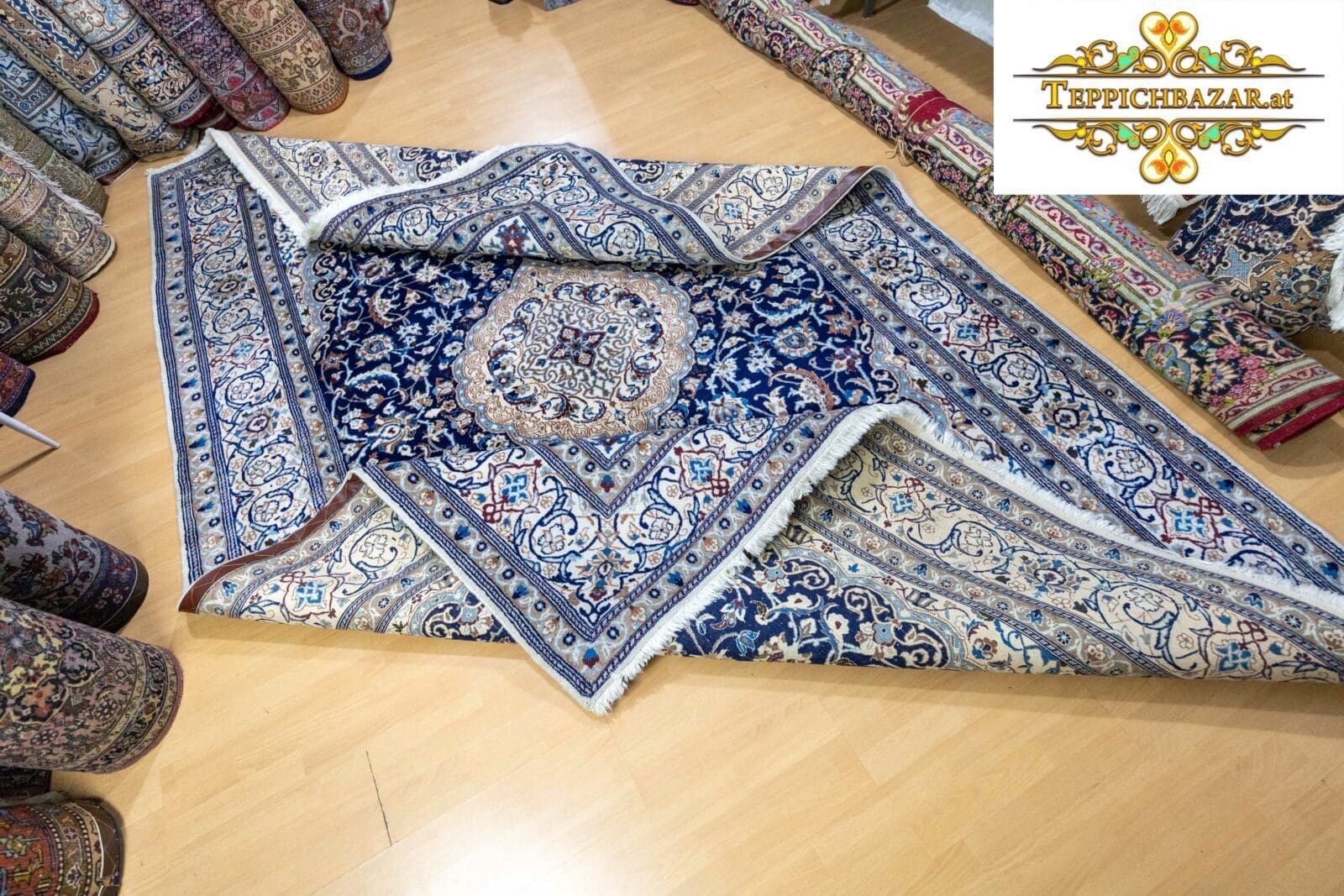
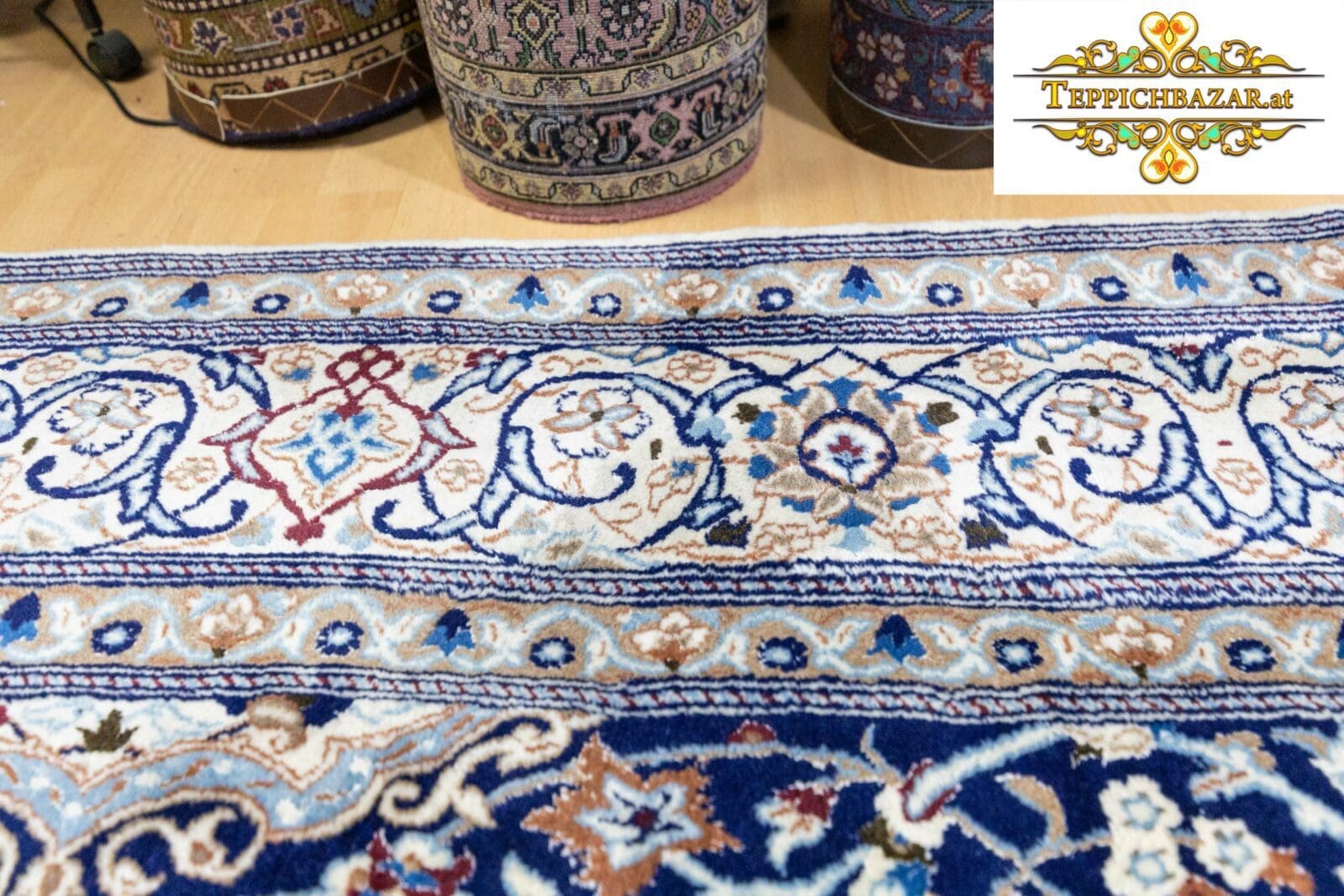
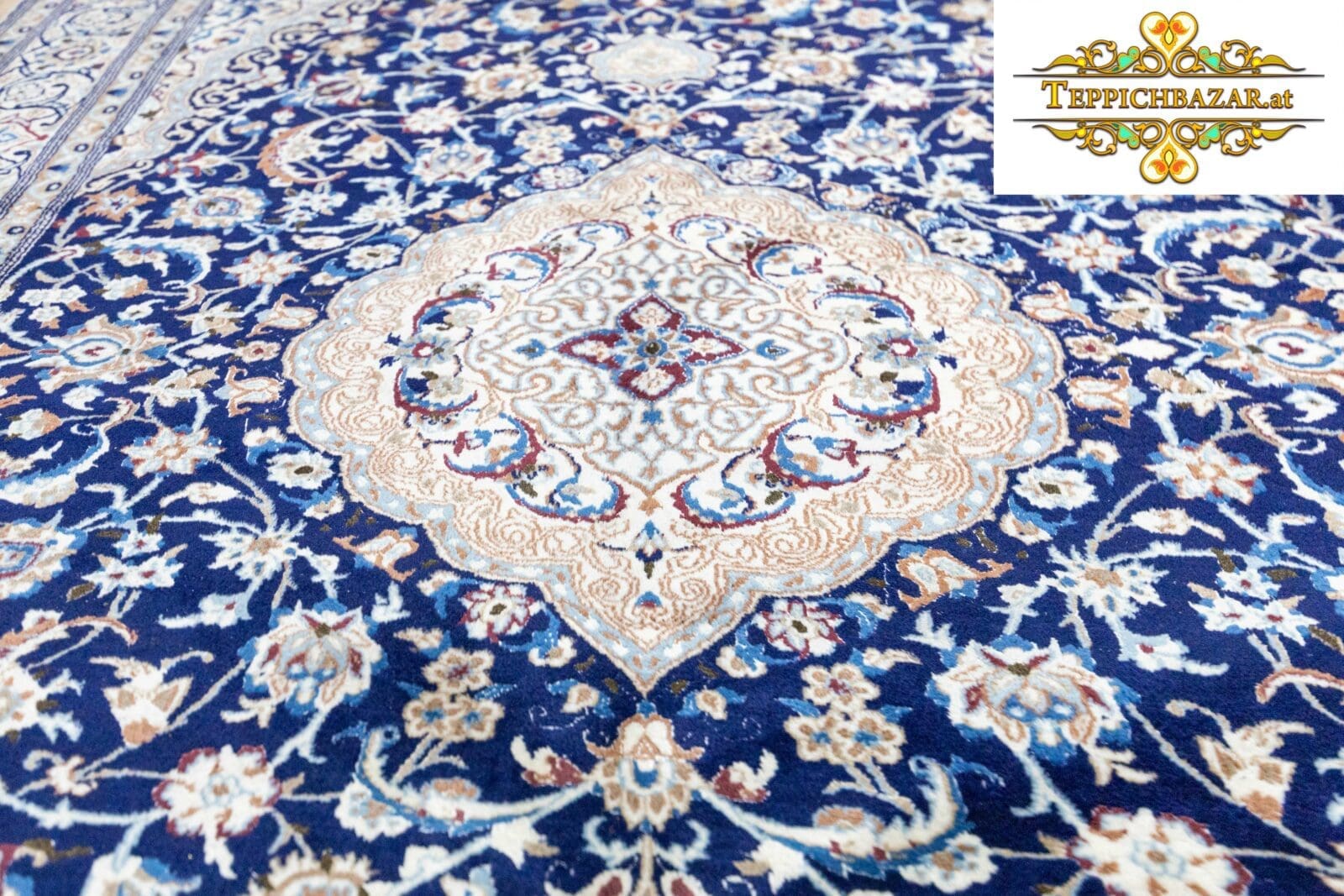
Nain rugs are often associated with harmonious contrasts and refined pattern work. Floral and geometric motifs may be arranged within a carefully balanced structure. A central medallion can establish the main focus, while surrounding fields, corner pieces and borders guide the eye around the rug. This does not mean that every Nain follows one identical formula. Rather, these are recurring principles within a regional design language. The identity of the weaving centre is expressed through the relationship between material, technique, colour and composition.
The history of Nain weaving also illustrates how a carpet can function as both a useful textile and a carrier of regional culture. A hand-knotted rug records many decisions: the selection of fibres, the preparation of the foundation, the placement of each knot and the treatment of the design. These stages are not separated from the finished object; they remain visible in its surface and structure. In a Nain, the controlled fineness of the drawing is a particularly important part of this identity.
The Persian designation is appropriate for this rug because its origin is stated as Nain in Persia. Nain belongs to the Iranian carpet landscape, where individual centres are recognised through their own combinations of pattern and workmanship. Regional tradition does not require every piece to look the same. It provides a framework within which weavers can arrange floral details, geometric order and medallion formats in different ways. The Nain medallion named for this rug belongs to that framework and connects the individual design with its stated place of origin.
Understanding the origin also helps distinguish a place from a motif. Lachak-Toranj identifies a design arrangement, while Nain identifies the weaving origin given for this rug. Keeping those two descriptions separate makes the product information precise. The regional background explains why a fine medallion composition, close knotting and a combination of wool and silk can appear together without treating the pattern name as a separate provenance claim.
Design and Pattern
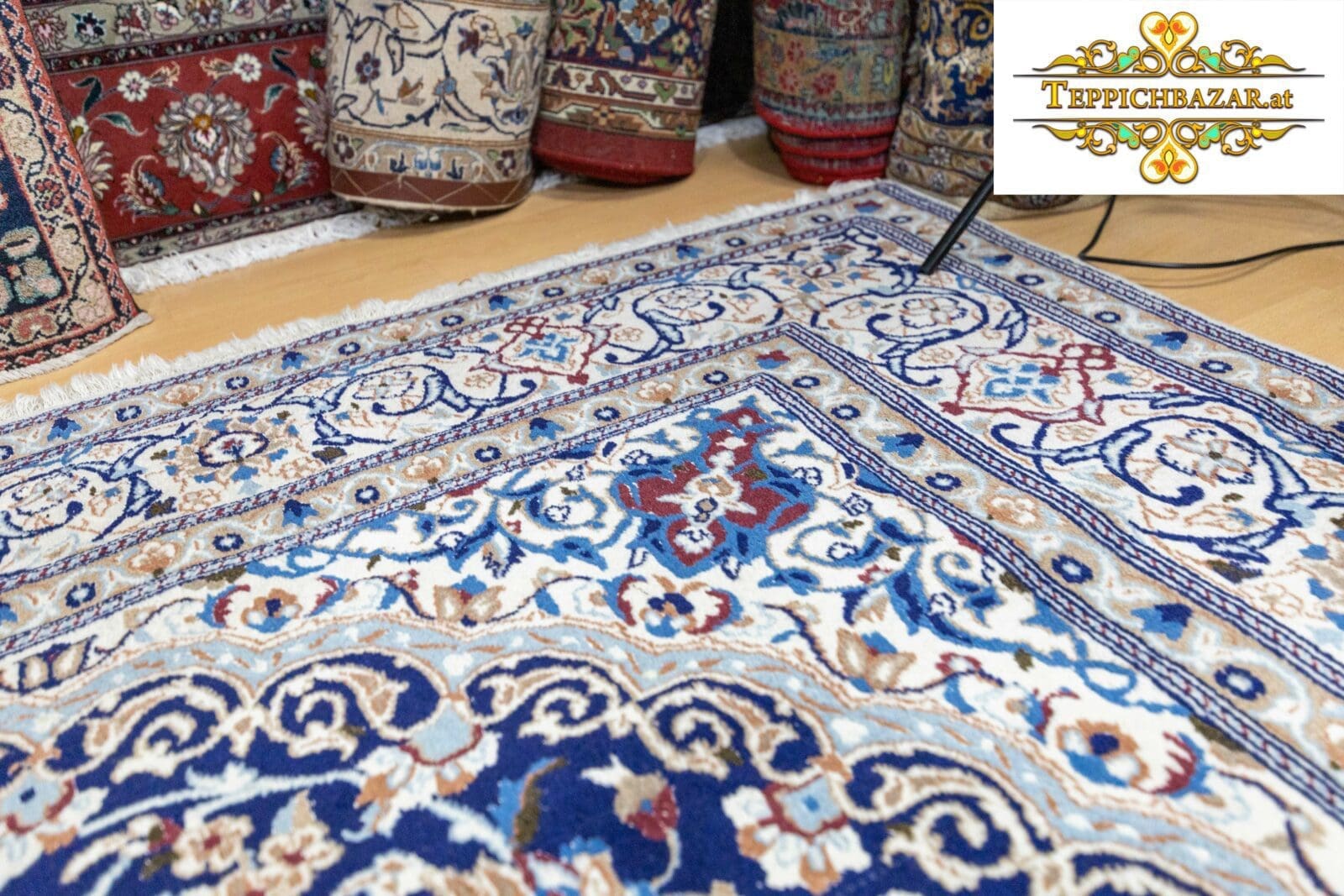
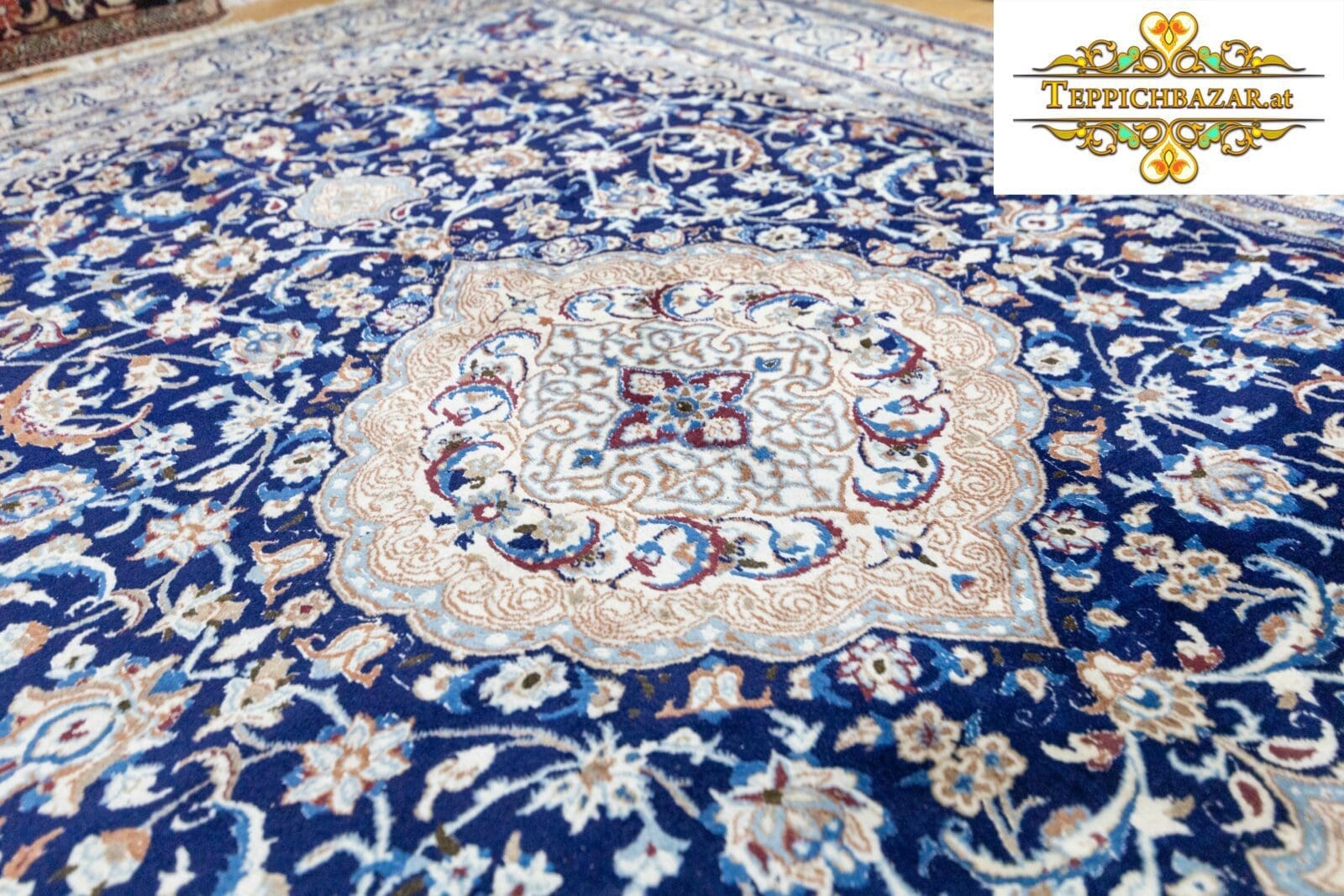
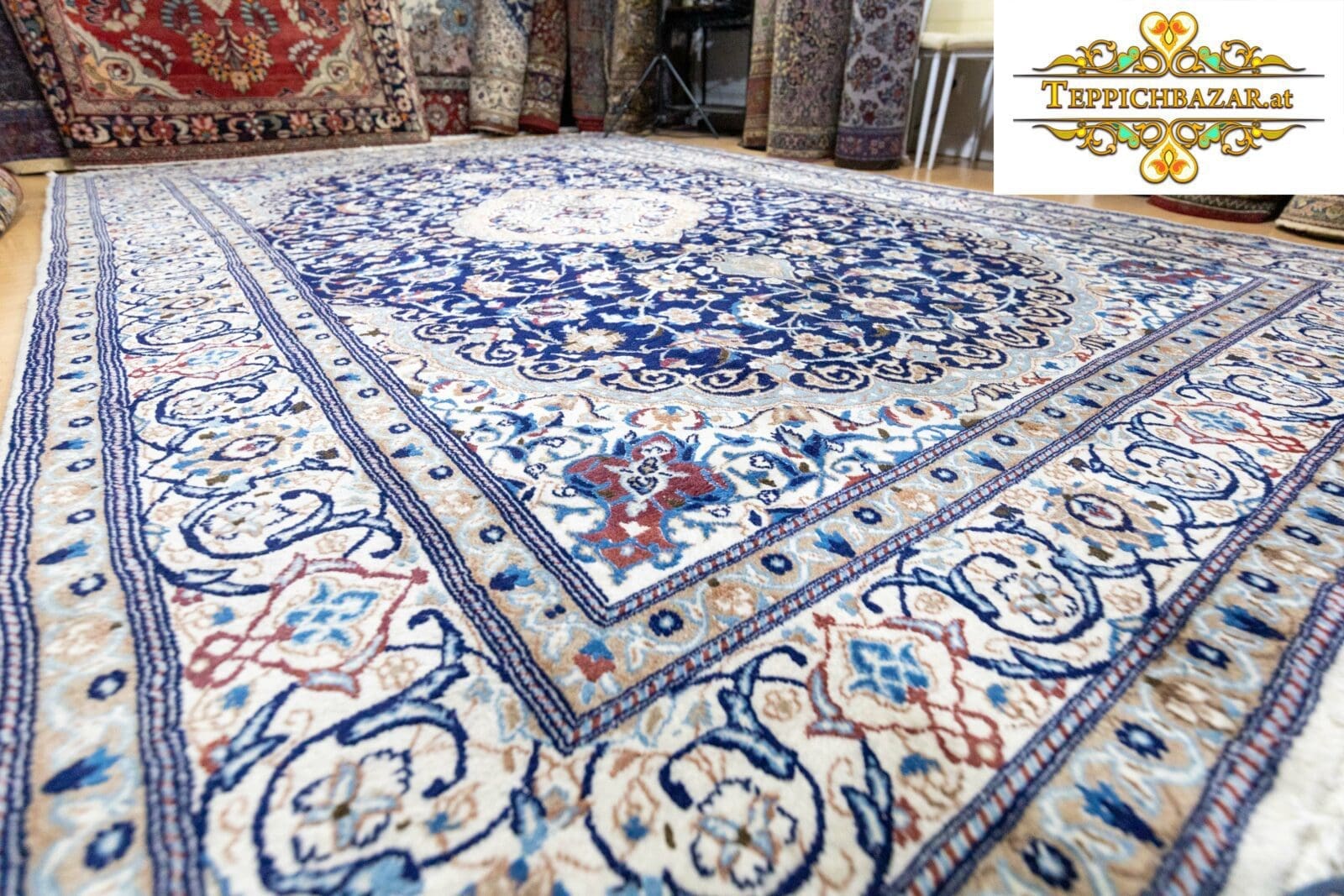
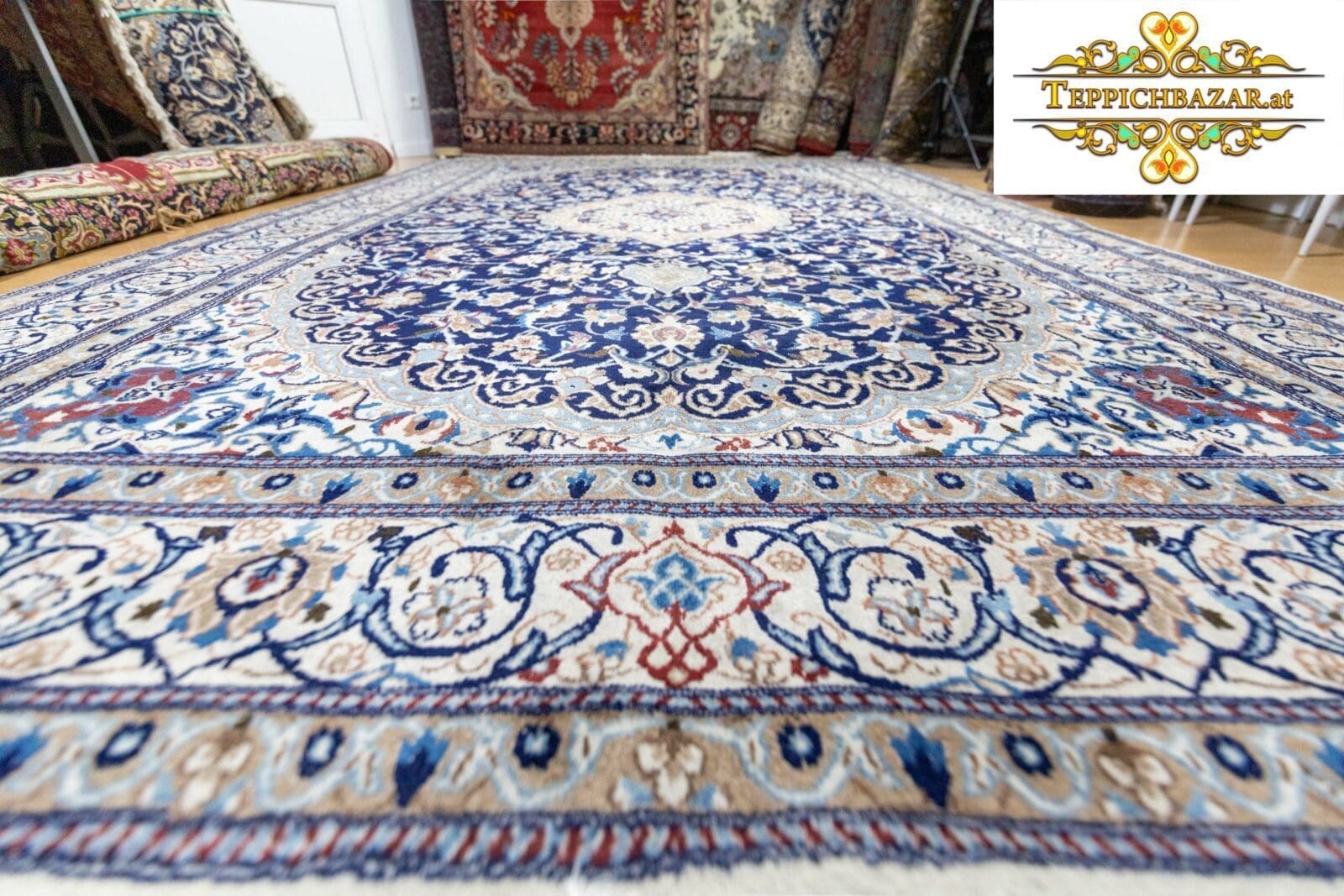
The pattern of this rug is identified as a Lachak-Toranj Nain medallion. Lachak-Toranj brings together corner elements with a central toranj, or medallion. This arrangement gives the rectangular field a clear visual order. The centre becomes the main point of reference, while the corner pieces and surrounding ornaments connect it to the outer frame. The term Nain medallion describes the regional design context of the composition; it does not assign the rug to a different place of origin.
A medallion layout divides the field into related areas rather than leaving the eye without a point of focus. The central ornament is read first, and the surrounding lines and motifs then lead the eye towards the corners and borders. In a Lachak-Toranj composition, the corner designs create a transition between the central field and the outer edge. This helps the rug appear balanced and gives the pattern a sense of continuity across the entire surface.
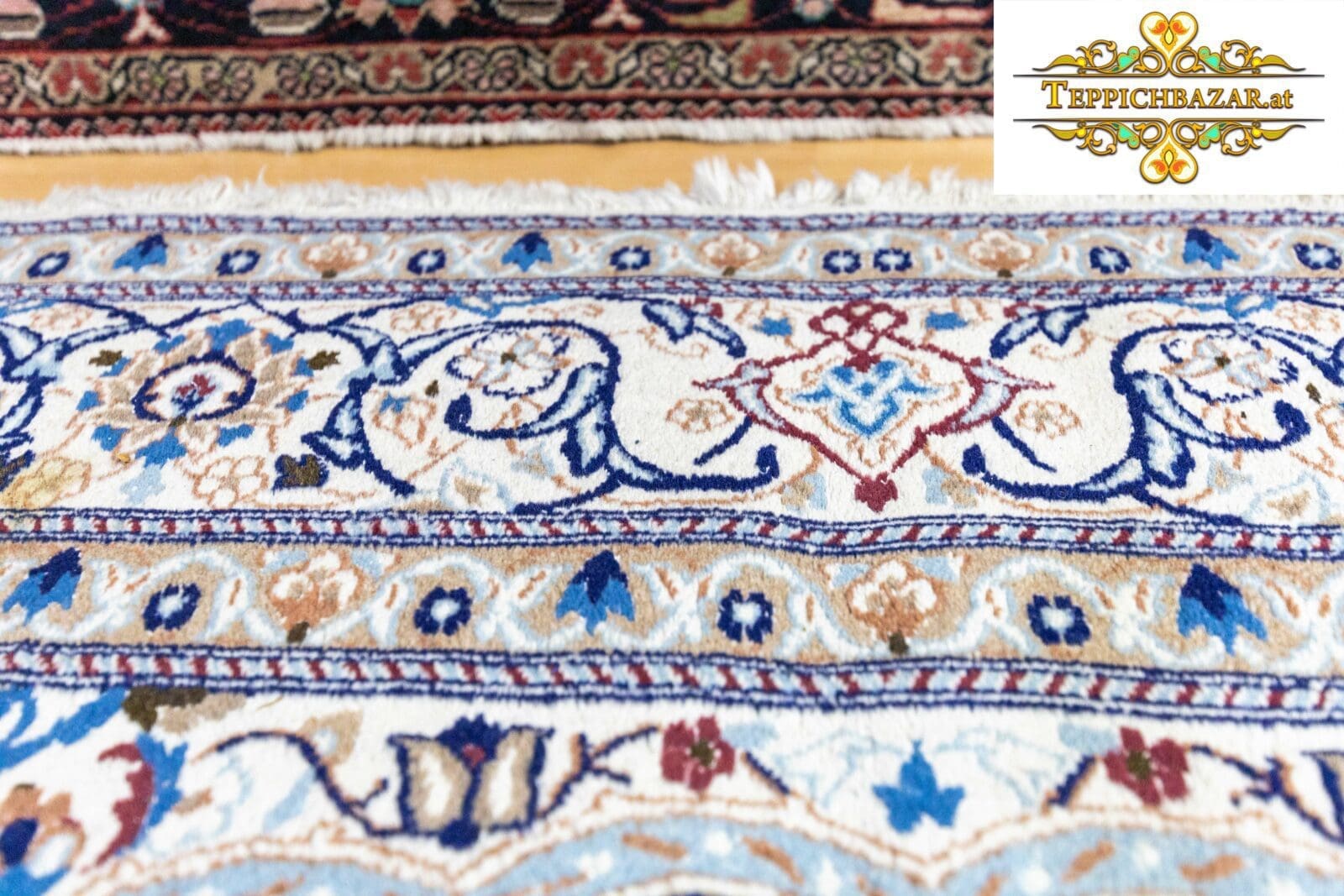
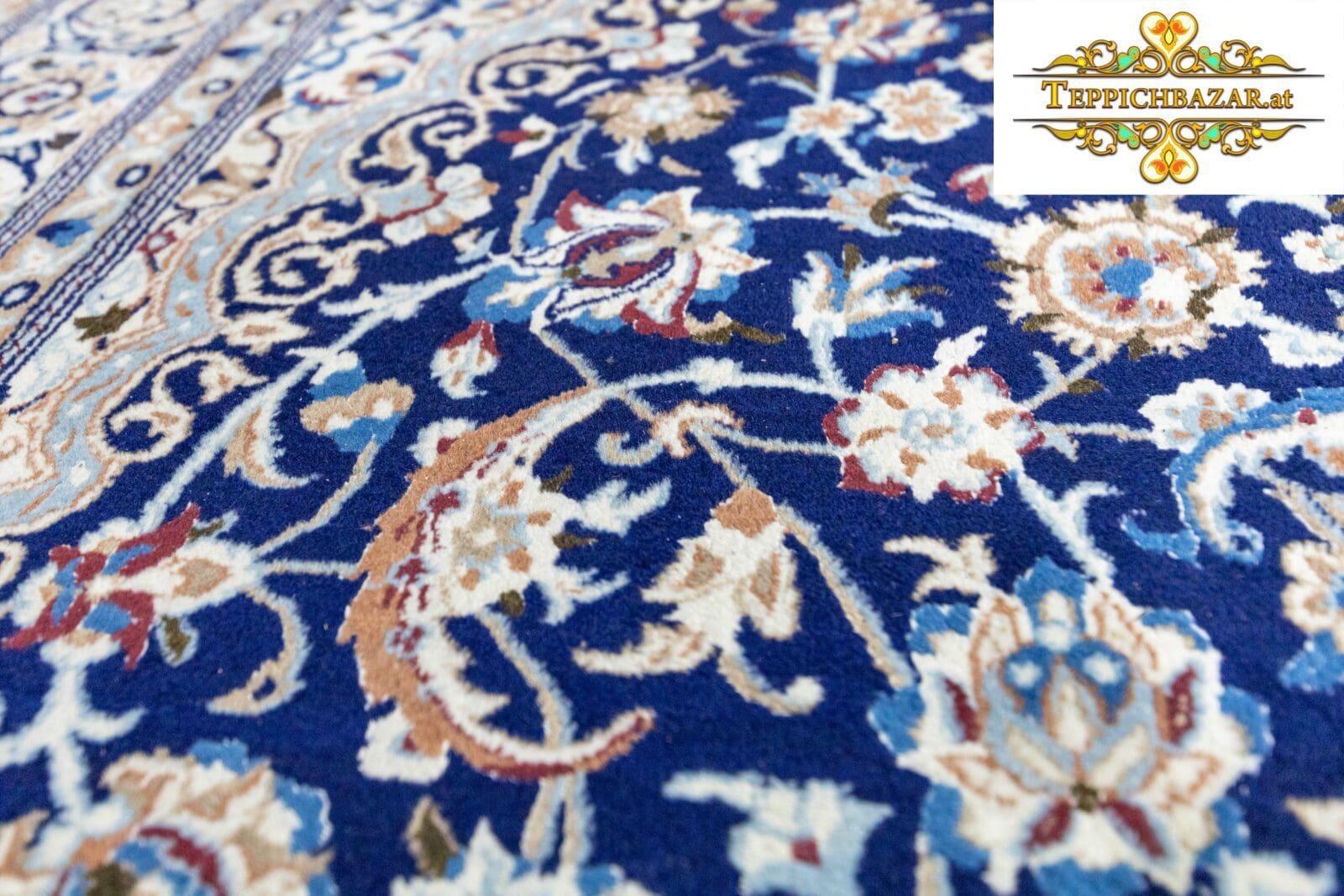
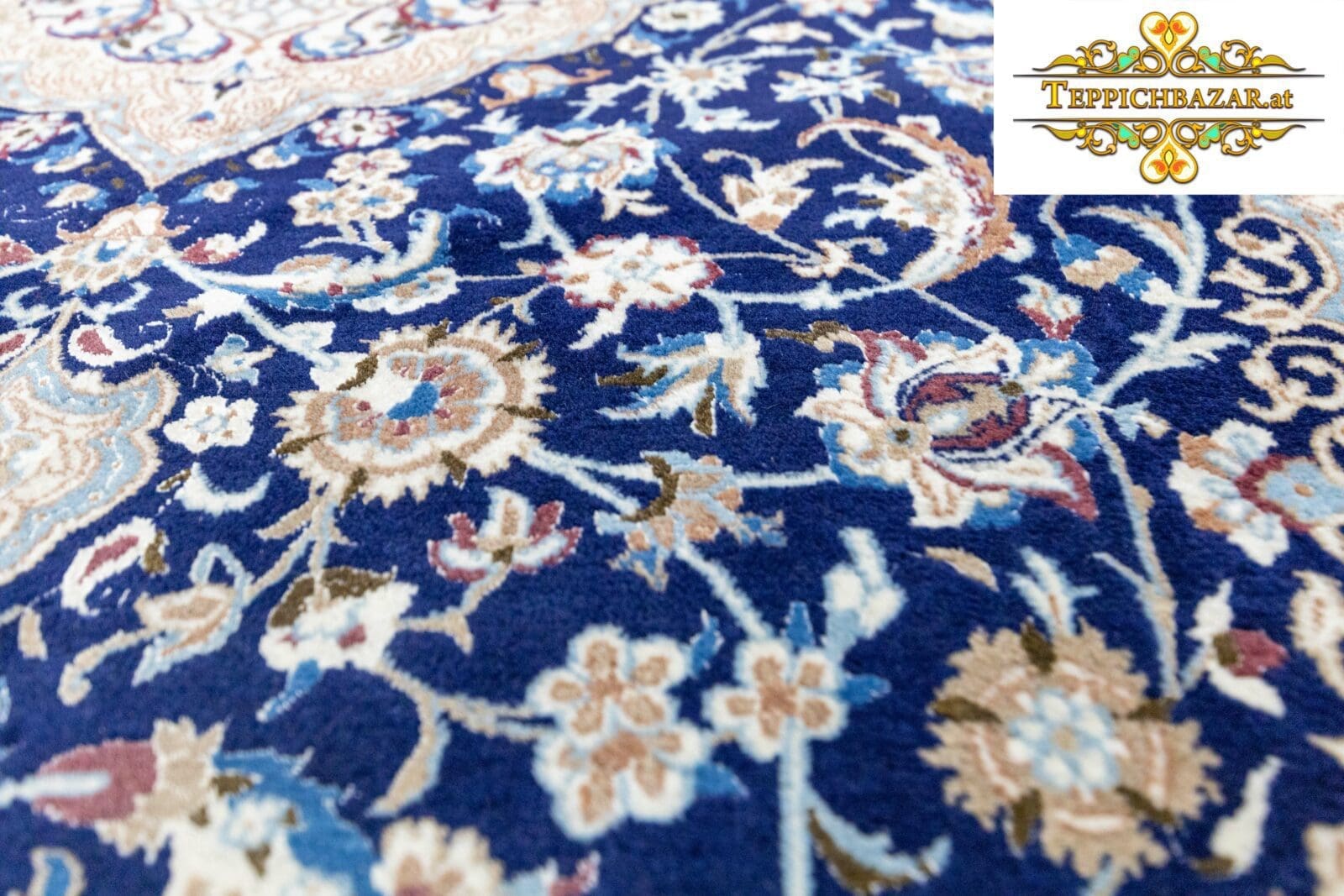
Nain designs frequently combine stylised botanical forms with geometric organisation. Leaves, blossoms and scrolling forms may be arranged rhythmically, while axes, repeated intervals and defined contours keep the overall composition orderly. These floral elements are textile interpretations rather than literal depictions of one particular garden. Their repetition creates unity, and their placement within a measured framework makes fine details readable. Geometry supplies structure; stylised vegetation supplies movement and variation.
The pattern name is a precise description of this particular rug’s design. It states that the composition is a Lachak-Toranj Nain medallion. It does not change the stated origin, which is Nain in Persia. This distinction matters because regional place names can occur in pattern descriptions as well as in provenance descriptions. Here, Nain functions in both the stated origin and the design name, while Lachak-Toranj identifies the arrangement of the medallion and corner elements.
Knotted construction is closely connected to the appearance of the design. A dense sequence of individual knots allows narrow outlines, controlled curves and small transitions to be represented with greater definition than a coarse construction normally permits. Silk within a wool pile can catch light differently from the surrounding wool and may emphasise selected details without changing the underlying composition. The visual result is created by the interaction of the motif, the fibres, the colours, the knotting and the surface.
Floral and geometric features can coexist naturally in a Nain medallion rug. The geometric plan organises the field, while plant-derived ornaments create a repeating rhythm within that plan. Borders reinforce the limits of the composition and help relate the centre to the edges. Small variations are part of the nature of handwork. Each rug is made as an individual piece, so a design family describes its structure and tradition rather than an industrially identical product.
Special Features
The distinctive features of this rug include its fine 12la construction, its silk content, its stated high knot density and its Lachak-Toranj Nain medallion. The 12la designation summarises twelve yarn layers. Together with a pile of virgin wool and silk, this construction gives the surface both a soft textile quality and the capacity for detailed pattern drawing.
The rug is freshly washed and described as being in very good condition. It is hand-knotted, has a cotton warp and is identified as originating in Nain in Persia. These details bring together the individual piece’s construction, condition, origin and design. The close knotting supports the fine treatment of the motif, while the silk within the wool pile contributes a particular sheen and hand to the surface.
FAQ
How should I care for my Nain Persian rug?
Regular vacuuming is recommended for routine care, with professional cleaning from time to time. Direct sunlight should be avoided so that the colours remain as even as possible. If a spill occurs, the area should be dabbed immediately with a dry cloth. Rubbing, soaking the pile or applying unsuitable household cleaners is not part of a careful maintenance routine. Because the pile contains virgin wool and silk, professional treatment is especially appropriate. This rug has been freshly washed, but continued care still means removing dirt promptly and avoiding unnecessary stress on the surface. A suitable underlay and careful placement can also help reduce movement and abrasion during everyday use.
Can the rug be used in a heavily trafficked area?
The close knotting and the high-quality materials make this hand-knotted Nain Persian rug durable. Even so, it is advisable to place it in an area with less intense traffic. Moderate use helps preserve the surface, the fine pattern drawing and the material effect over time. The right location depends on how often the room is used, how people move across the rug and whether regular care can be provided. The rug is suitable for private use, while a more considered setting supports the preservation of its very good condition and the visual structure of the Lachak-Toranj medallion.
How can I tell whether my rug is genuine?
Authentic Nain rugs are hand-knotted and have a high knot density. For this piece, the construction is identified as 12la and the density as approximately three hundred and fifty thousand knots per square metre. Typical Nain designs and colours can provide further indications of stylistic association. A certificate of authenticity may also be helpful when a more formal assessment is required. An expert examination can consider the back, the knot structure, the warp and the pile together. The pattern name alone is not sufficient, since motifs can appear in more than one weaving tradition. A sound assessment considers hand knotting, regional design, material structure and the stated origin in Nain as a combined set of characteristics.
To provide the best experiences, we use technologies like cookies to store and/or access device information. Consenting to these technologies will allow us to process data such as browsing behavior or unique IDs on this site. Not consenting or withdrawing consent, may adversely affect certain features and functions.
Functional Always active
The technical storage or access is strictly necessary for the legitimate purpose of enabling the use of a specific service explicitly requested by the subscriber or user, or for the sole purpose of carrying out the transmission of a communication over an electronic communications network.
Preferences
The technical storage or access is necessary for the legitimate purpose of storing preferences that are not requested by the subscriber or user.
Statistics
The technical storage or access that is used exclusively for statistical purposes.The technical storage or access that is used exclusively for anonymous statistical purposes. Without a subpoena, voluntary compliance on the part of your Internet Service Provider, or additional records from a third party, information stored or retrieved for this purpose alone cannot usually be used to identify you.
Marketing
The technical storage or access is required to create user profiles to send advertising, or to track the user on a website or across several websites for similar marketing purposes.

 SECURE PAYMENT
 SHIPPING PARTNERS


