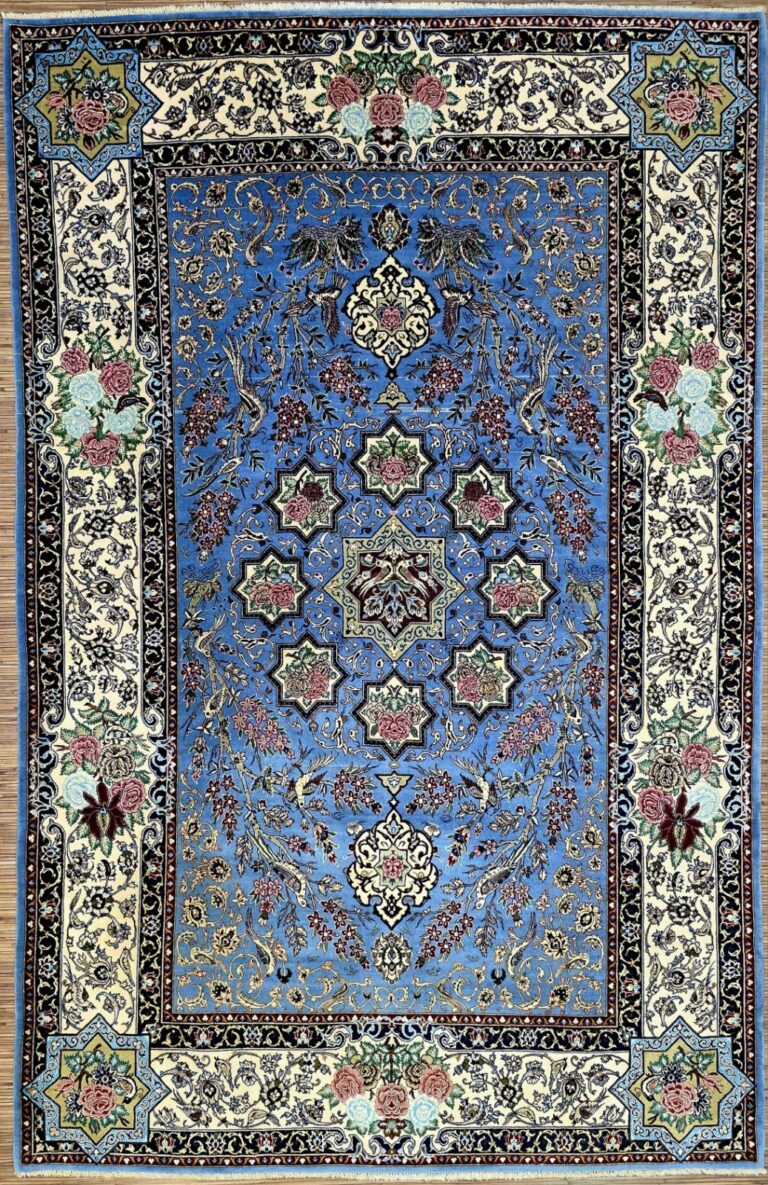
This Persian rug is hand-knotted with a pile made from 100% virgin wool. The wool gives the surface a pleasantly tactile character while providing the hard-wearing quality stated for the rug. Virgin wool has long been used in Oriental rugs because, when carefully worked, it combines resilience with a distinct natural handle. Here it forms the visible pile and suits a living environment in which a durable floor covering is required.
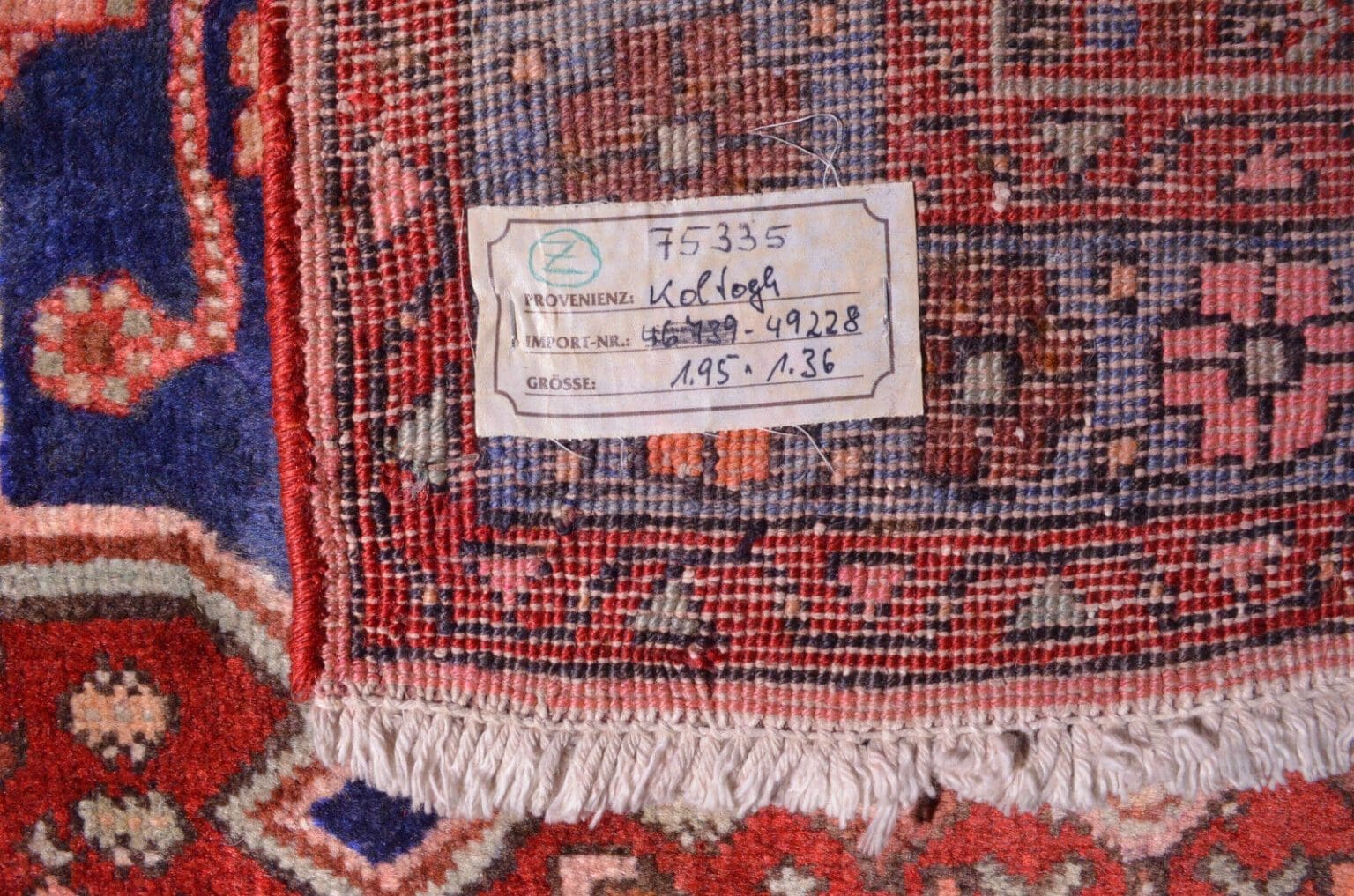
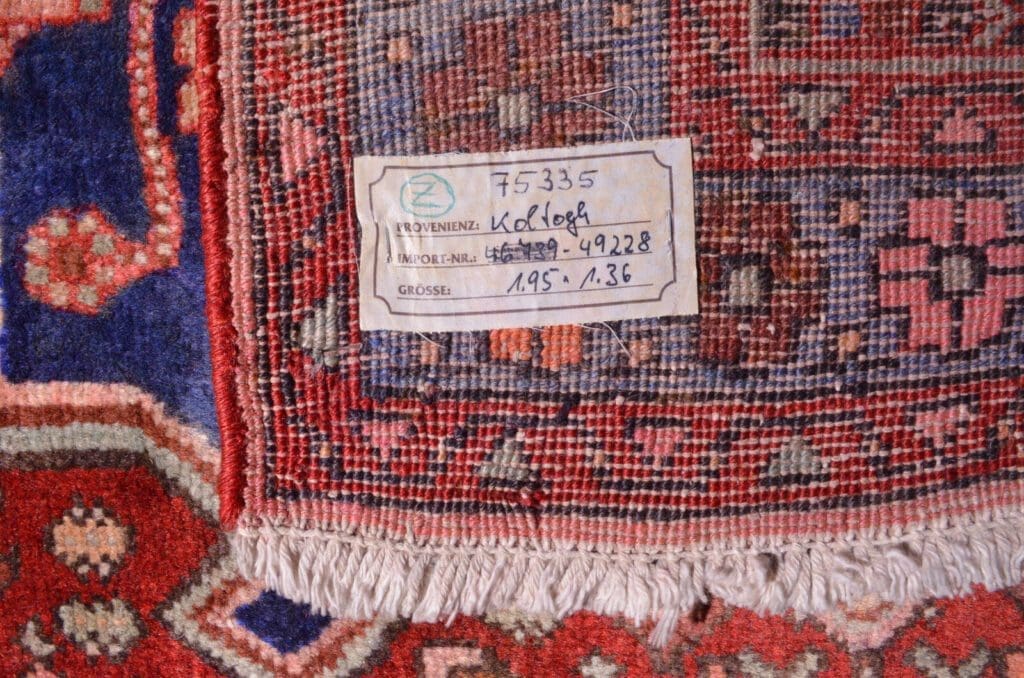
The knot density is 250,000 knots per square metre. In hand-knotting, individual knots are tied into the foundation one by one. The pile is then trimmed and the surface is refined through further stages of work. This process differs from machine production: the rug develops gradually on the loom through many separate manual operations. Its construction therefore reflects a traditional textile method rather than a printed or mechanically imitated pattern.
The combination of virgin wool and hand-knotting defines the material character of this piece. Wool accepts colour clearly and gives ornament a textured presence. The rug is described as hard-wearing and easy to care for, making its traditional construction compatible with regular domestic use. Its condition is new and unused.
Origin and Tradition
The rug comes from Nordwest-Persien and belongs to the wider tradition of Persian carpet making. In this tradition, knotting is both a practical craft and a body of knowledge passed through generations. Designs, colour arrangements and methods of construction develop within regional workshops, families and weaving communities. Each area contributes its own ways of arranging lines, fields, borders and ornaments.
Nordwest-Persien has a varied carpet culture shaped by local landscapes and historic routes of exchange. The region has brought together different influences, from strongly structured compositions to detailed floral drawing. A design that joins geometric order with plant-based ornament therefore fits within a broader regional language. It does not mean that every rug from the region follows one fixed template. Rather, the tradition provides a vocabulary that individual workshops can arrange in different ways.
A Persian rug is traditionally built from warp, weft and pile. The warp threads create the foundation on which the knots are tied. Weft threads pass through the rows and help secure the structure. The visible pile is formed from the knot ends and is later brought to an even height. Regional working methods, the planned design and the desired surface can all affect the details of construction. The essential principle remains the gradual creation of a textile surface from linked rows of knots.
In a hand-knotted rug, the design is not simply printed onto a finished material. Coloured pile threads are placed according to the planned drawing, so the image grows row by row. This calls for concentration and experience, particularly where angular outlines meet branching or leaf-like details. A fine knot structure can support a carefully divided pattern, although knot density by itself is not a complete measure of a rug’s character. Fibre, workmanship, design and use all belong to the wider context of the piece.
Persian rugs have traditionally served as floor coverings while also carrying regional forms of ornament into the home. Their patterns can preserve ideas that have been repeated, adapted and refined over time. A rug from Nordwest-Persien can therefore be considered both a useful textile and an example of a living regional craft. This piece combines that origin with hand-knotting and a pattern described through geometric floral ornament.
Design and Pattern
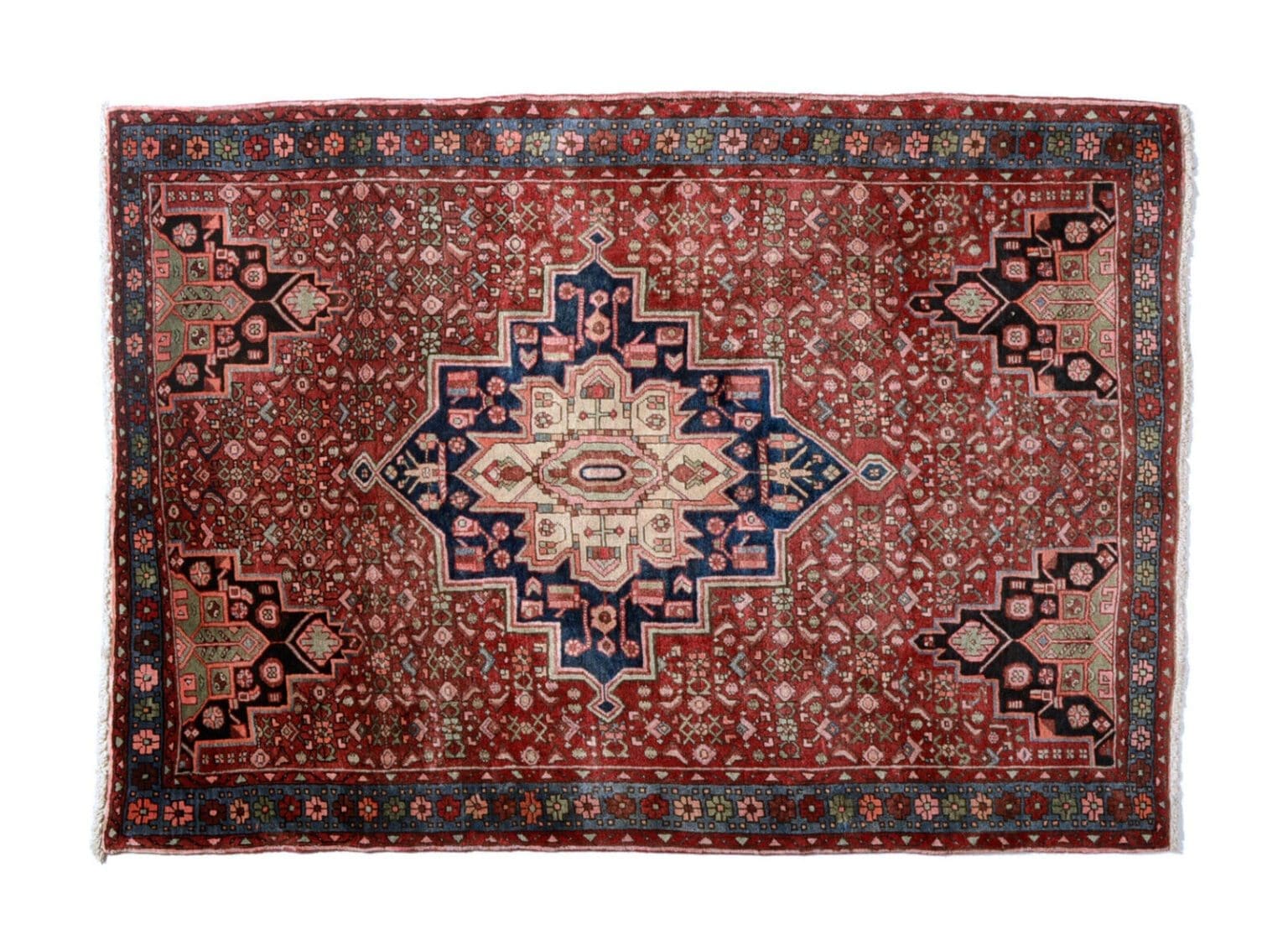
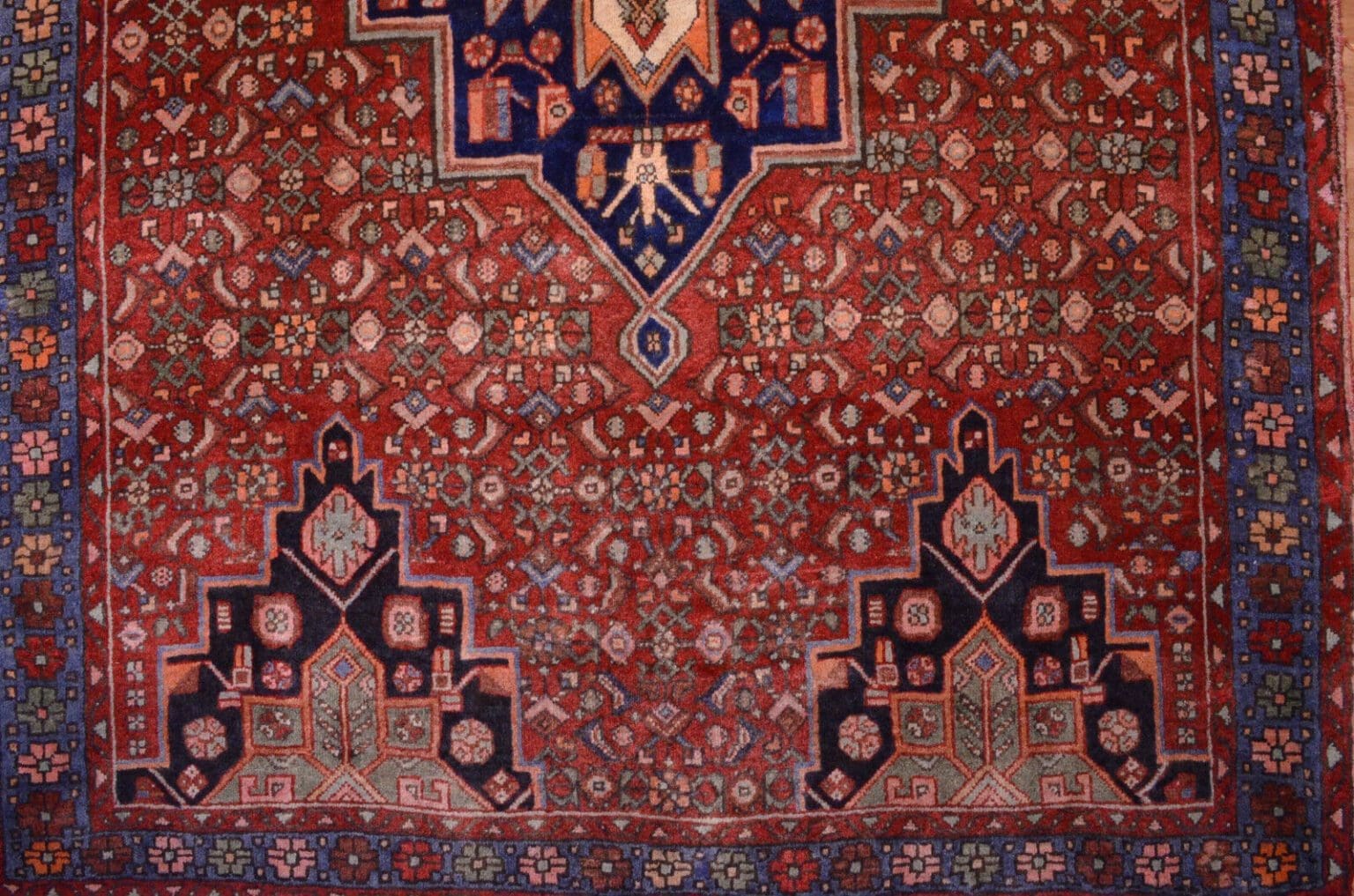
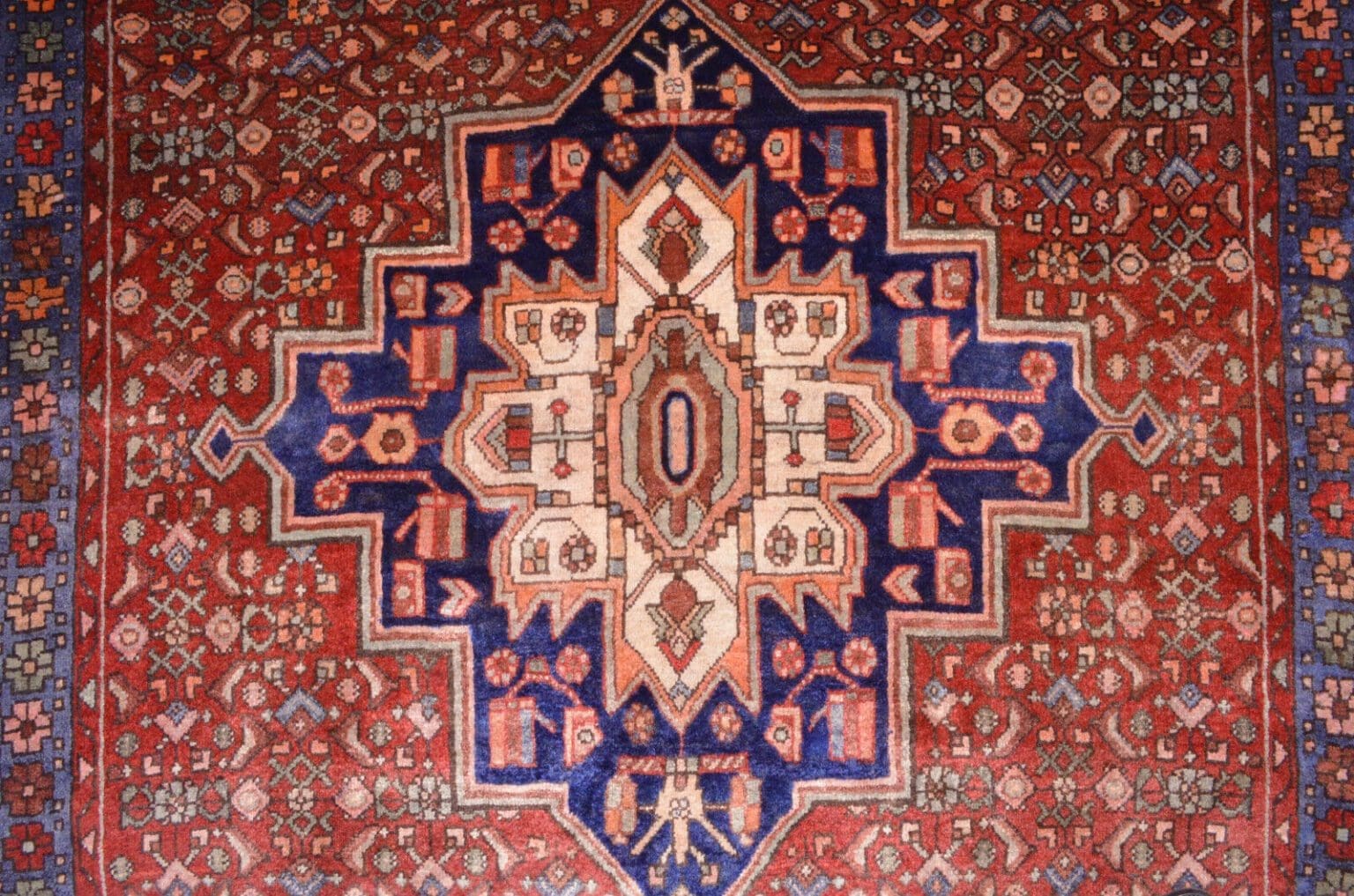
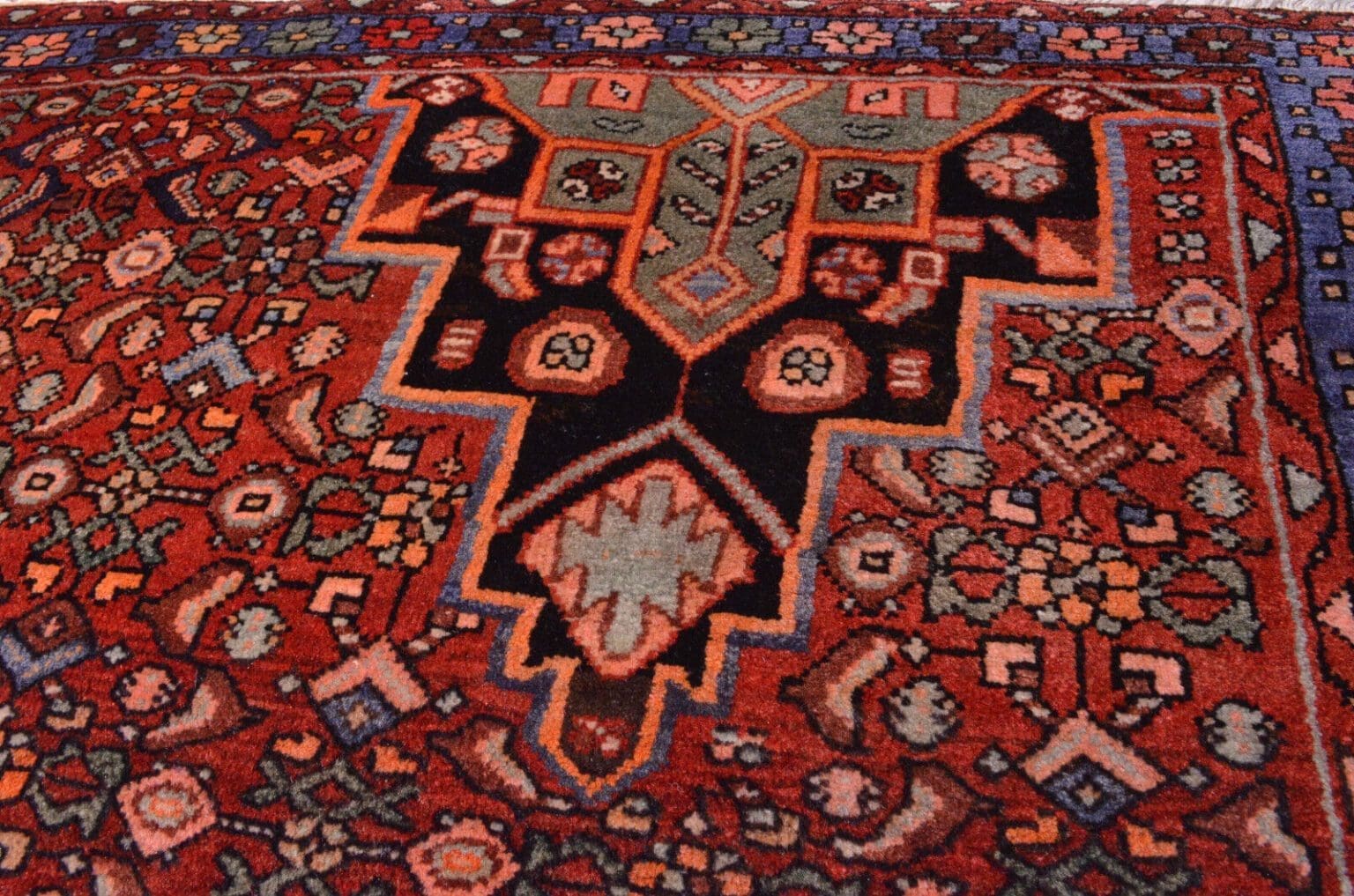
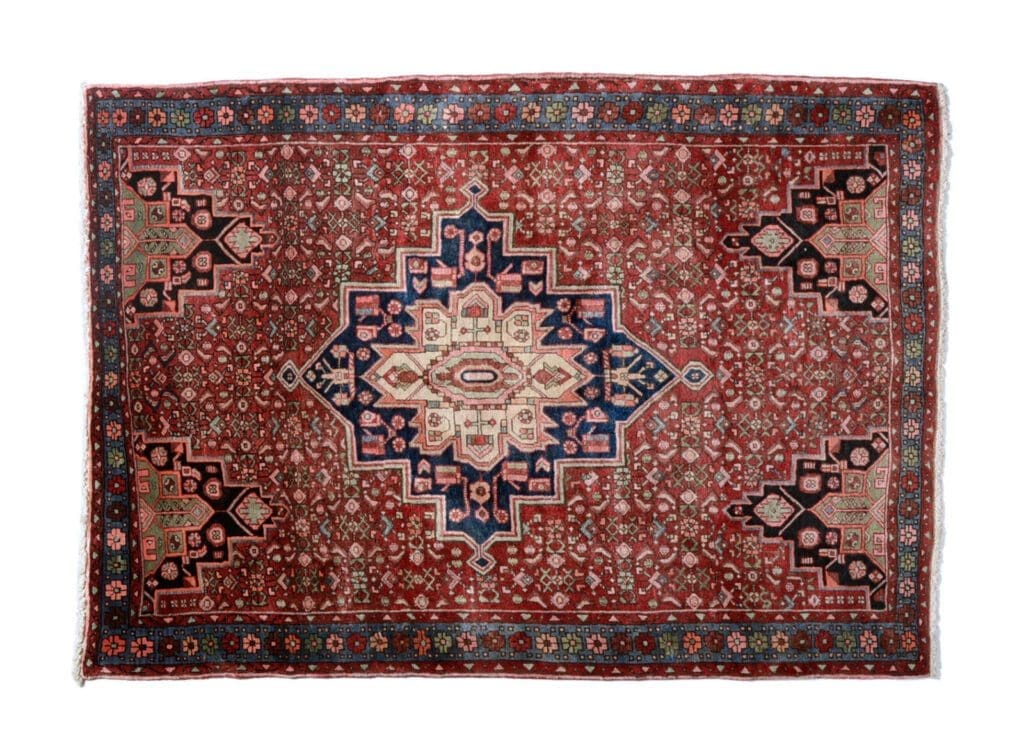
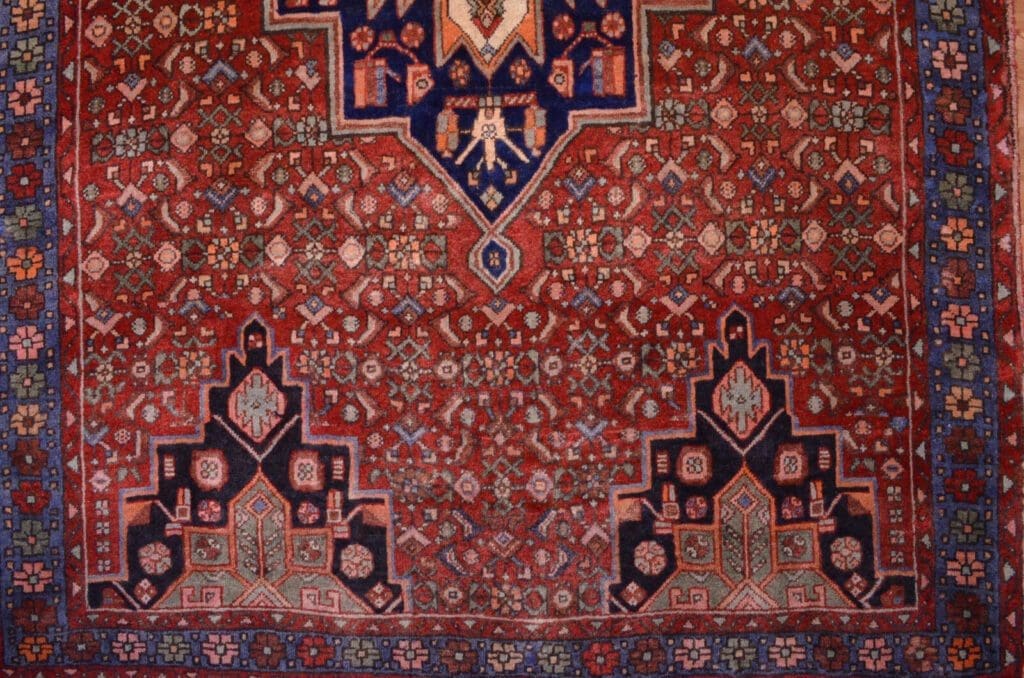
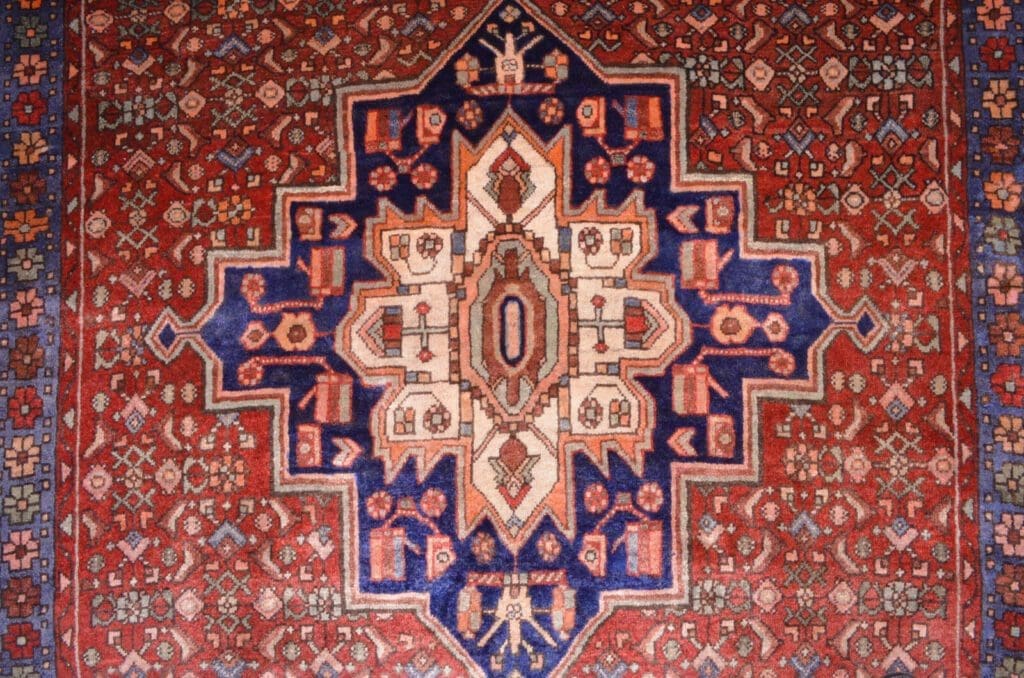
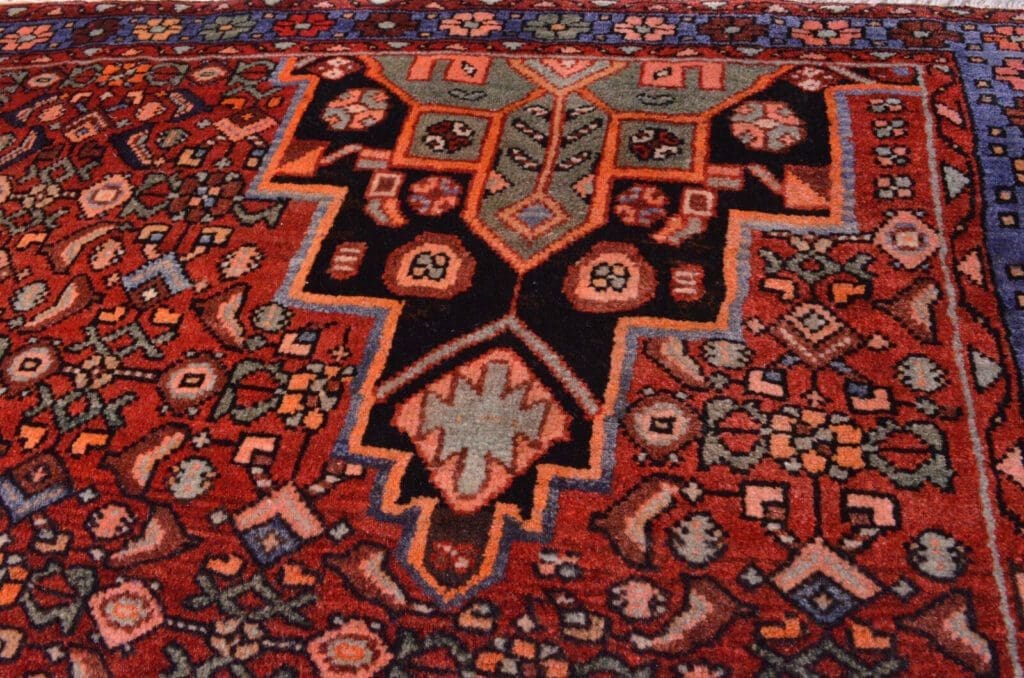
The design is made up of geometric floral ornaments. Two visual systems work together: geometric forms organise the field, while floral elements introduce plant-based detail. Geometry may establish axes, repeated units, angular contours or enclosed sections. Floral ornament adds leaves, blossoms, stems or abstracted botanical shapes to that framework. The result is a composition in which structure and organic reference are deliberately combined.
Geometric design has a long place in Persian carpet art. Diamonds, angles, lines, stars and repeated units can be used to create rhythm across a textile surface. Repetition helps establish order and allows a design to be carried through successive rows while knotting. Yet a geometric arrangement need not appear rigid. Changes in proportion, contour and spacing can give the repeated forms a varied, hand-worked presence.
Floral ornament in Persian carpet design is often an interpretation rather than a literal botanical illustration. Leaves, flowers and tendrils may be simplified, stylised and adjusted to fit a border, corner, central field or axis. Such motifs can be repeated at different scales or connected into flowing sequences. Their purpose is not necessarily to imitate a particular plant. Instead, they contribute a recognisable language of nature-inspired forms that can be integrated with the geometry of the overall design.
The combination of geometry and floral ornament is commonly associated with harmony and balance. Geometric forms suggest order and proportion, while floral motifs are traditionally linked with nature and life. These are general meanings within Persian carpet imagery and do not replace a detailed reading of every individual motif. What can be stated clearly here is the visual relationship between defined geometric structure and floral decoration.
This kind of pattern can work across different interiors because it is neither limited to severe linear abstraction nor dependent on fully naturalistic flowers. Its effect comes from the movement between repetition and variation, containment and filling. Borders may frame a field, while the interior carries the main sequence of ornament. Even without a specified colour description, the pattern has a clear identity through its form: it is geometric in organisation and floral in its decorative vocabulary.
Hand-knotting reinforces the character of the design. Each element is built from individual knots, so the contours belong to the textile structure rather than being applied only to its surface. Minor variations are part of the manual process and distinguish a hand-knotted rug from a uniform industrial reproduction. The traditional Oriental and Persian style named for this piece is expressed through the meeting of inherited ornament, wool pile and a practical rug format.
Special Features
The rug is new and unused. Its pile is specified as 100% virgin wool, and its technique is hand-knotting. It is described as hard-wearing and easy to care for. It is also suitable for underfloor heating. These details place a traditional form of craftsmanship in a contemporary domestic setting.
For care, the surface should be vacuumed regularly. Spills and stains are best blotted promptly with a damp cloth so that they do not remain in the fibres. A professional rug cleaner is recommended when a deeper cleaning is needed. Harsh cleaning agents should be avoided. Prolonged direct sunlight should also be avoided, and turning the rug occasionally helps distribute wear more evenly across the surface.
FAQ
What is the best way to clean a hand-knotted Persian rug?
Begin with regular, gentle vacuuming to remove loose dust from the wool pile. If a stain occurs, blot it promptly with a damp cloth rather than rubbing the affected area. Rubbing can place additional stress on the fibres and may work the dirt further into the pile. For a thorough cleaning, use a professional rug-cleaning service familiar with hand-knotted wool rugs. Professional treatment can be adapted to the construction and surface of the rug. Harsh cleaning products are not recommended because they may affect the fibres or the appearance of the ornament.
How can I extend the life of my rug?
Regular vacuuming and restrained care help preserve the rug in everyday use. Avoid leaving it in direct sunlight for long periods. For marks or spills, start by blotting carefully with a damp cloth and avoid harsh cleaning agents. Turning the rug from time to time can distribute foot traffic and wear more evenly across its surface. When a deeper clean is required, professional cleaning is the appropriate option. These measures support the durability of the hand-knotted wool pile while keeping routine maintenance straightforward.
Is this Persian rug suitable for allergy sufferers?
Hand-knotted Persian rugs made from natural materials such as wool are generally considered suitable for allergy sufferers because they attract less dust and fewer allergens than synthetic rugs. This general statement does not replace individual medical advice. Regular cleaning remains important so that dust and possible allergens do not accumulate in the pile. Careful vacuuming and professional cleaning when necessary can help keep the indoor load low. The material specified for this rug is 100% virgin wool.
To provide the best experiences, we use technologies like cookies to store and/or access device information. Consenting to these technologies will allow us to process data such as browsing behavior or unique IDs on this site. Not consenting or withdrawing consent, may adversely affect certain features and functions.
Functional Always active
The technical storage or access is strictly necessary for the legitimate purpose of enabling the use of a specific service explicitly requested by the subscriber or user, or for the sole purpose of carrying out the transmission of a communication over an electronic communications network.
Preferences
The technical storage or access is necessary for the legitimate purpose of storing preferences that are not requested by the subscriber or user.
Statistics
The technical storage or access that is used exclusively for statistical purposes.The technical storage or access that is used exclusively for anonymous statistical purposes. Without a subpoena, voluntary compliance on the part of your Internet Service Provider, or additional records from a third party, information stored or retrieved for this purpose alone cannot usually be used to identify you.
Marketing
The technical storage or access is required to create user profiles to send advertising, or to track the user on a website or across several websites for similar marketing purposes.

 SECURE PAYMENT
 SHIPPING PARTNERS