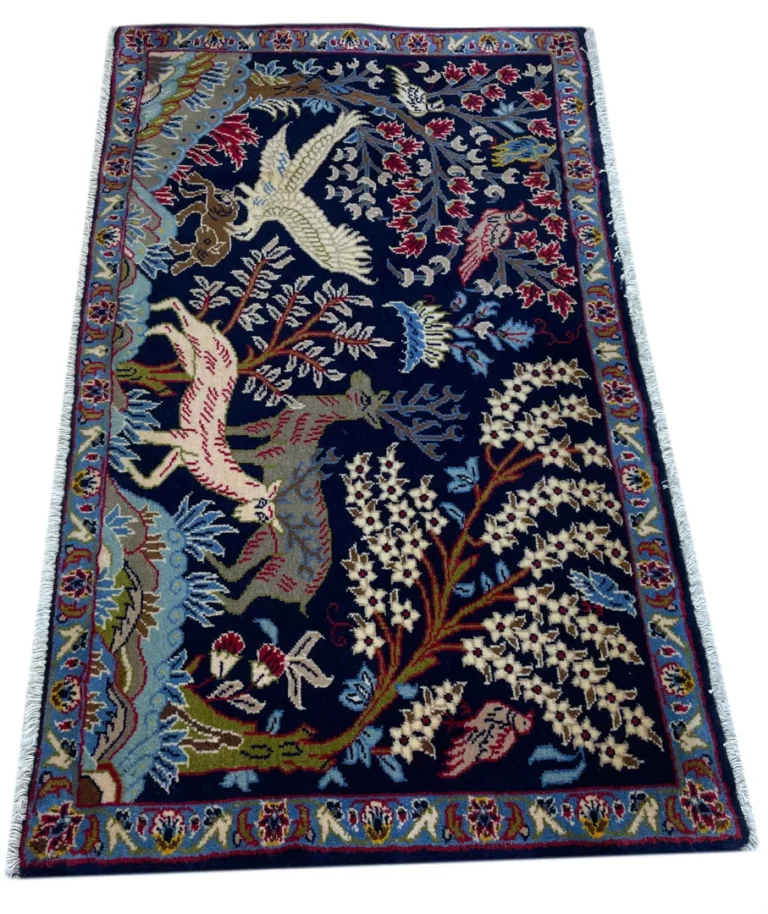
This Keshan Persian rug is hand-knotted. Its construction is therefore based on individual knots inserted by hand into a prepared textile foundation. The pile is built up row by row, creating a compact surface whose appearance is closely connected with the way it was made. Hand knotting is a defining method in Persian rug production: the design is not printed onto a finished fabric but formed within the structure as the work progresses.
The pile is made from high-quality sheep wool. Wool is traditionally valued in Keshan rug making for its resilient character and its ability to create a substantial, tactile pile. Cotton is used for the warp and weft. The warp runs lengthwise through the rug, while the weft passes across the rows of knots and helps hold the foundation together. This combination of a wool pile with a cotton structure is a familiar technical solution in hand-knotted Persian rugs.
The knot density of this rug is between 150,000 and 300,000 knots per square metre. A dense knot structure allows outlines, leaves, blossoms and smaller ornaments to be rendered with greater definition. It also represents a considerable amount of manual work, since each knot is placed individually. Together, the knots, wool pile, warp and weft form a coherent textile construction rather than a surface decoration applied after weaving.
Origin and Tradition
The rug originates in Iran and belongs to the Keshan tradition. Keshan, also written Kashan, is a historic centre of Persian rug production in central Iran. Its position within the Iranian plateau connected the city with established cultural and commercial routes. Over time, weaving in the region developed through the continued use of local textile knowledge, established design principles and careful treatment of wool.
Keshan rugs are associated with a disciplined and finely organised approach to Persian rug design. Workshop compositions may be arranged around a central medallion, developed as an all-over field or structured as a broader floral scheme. In each case, the relationship between the field, the border and the smaller filling motifs is important. The separate areas are designed to work together, producing a balanced composition rather than a collection of unrelated ornaments.
Hand-knotted rug making involves a sequence of skilled operations. The warp is first set up on the loom, and weft threads are inserted as the knotting advances. Wool knots are tied row by row and secured within the foundation. Once the knotting is complete, the pile is sheared so that the surface is even and the pattern can be read clearly. Finer knotting permits more precise contours and smaller details, while the final appearance also depends on the experience of the weavers and the quality of the materials.
Iran has many regional weaving traditions, each with its own preferences in structure, ornament and colour. Keshan is traditionally recognised for orderly floral compositions and carefully articulated pattern work. Tabriz is known for a broad range of detailed designs, while Nain is often associated with light colour schemes and fine decorative drawing. Isfahan also has a long and important Persian weaving tradition. These names refer to established regional identities, not simply to a colour combination or a particular decorative theme.
Kerman and Shiraz are also recognised Iranian weaving centres. Their workshops have developed their own approaches to composition and ornament. Comparing these traditions shows how varied Persian rugs can be while still sharing a foundation of manual skill, wool preparation, loom work and inherited design knowledge. A Keshan rug belongs within this wider history but retains the particular identity of its named Iranian origin.
Design and Pattern
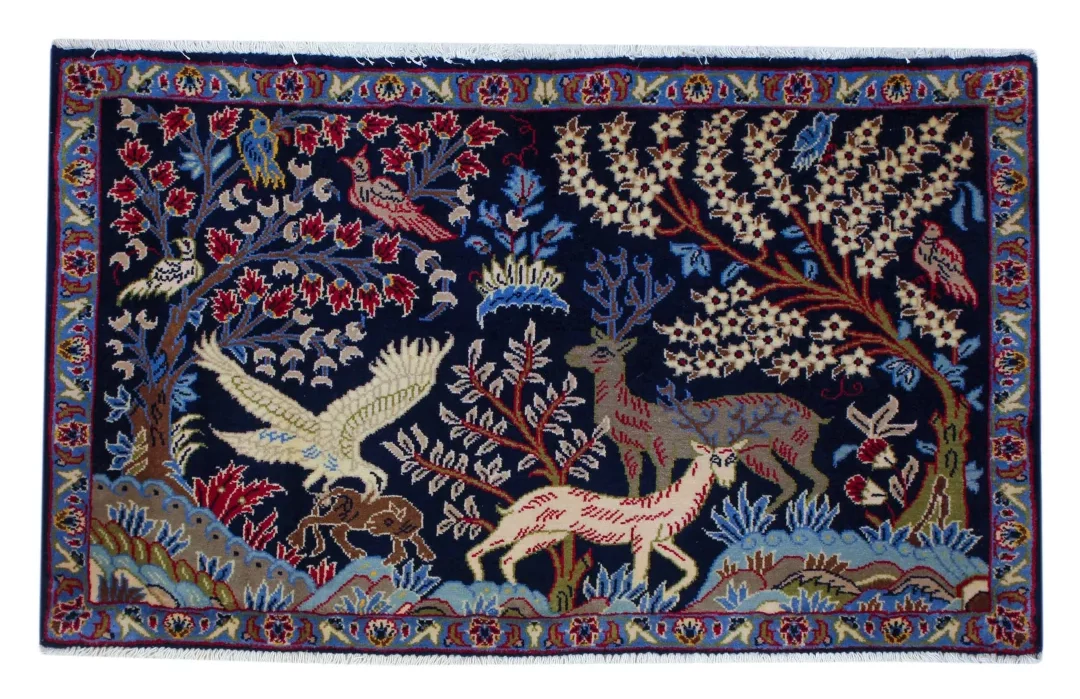
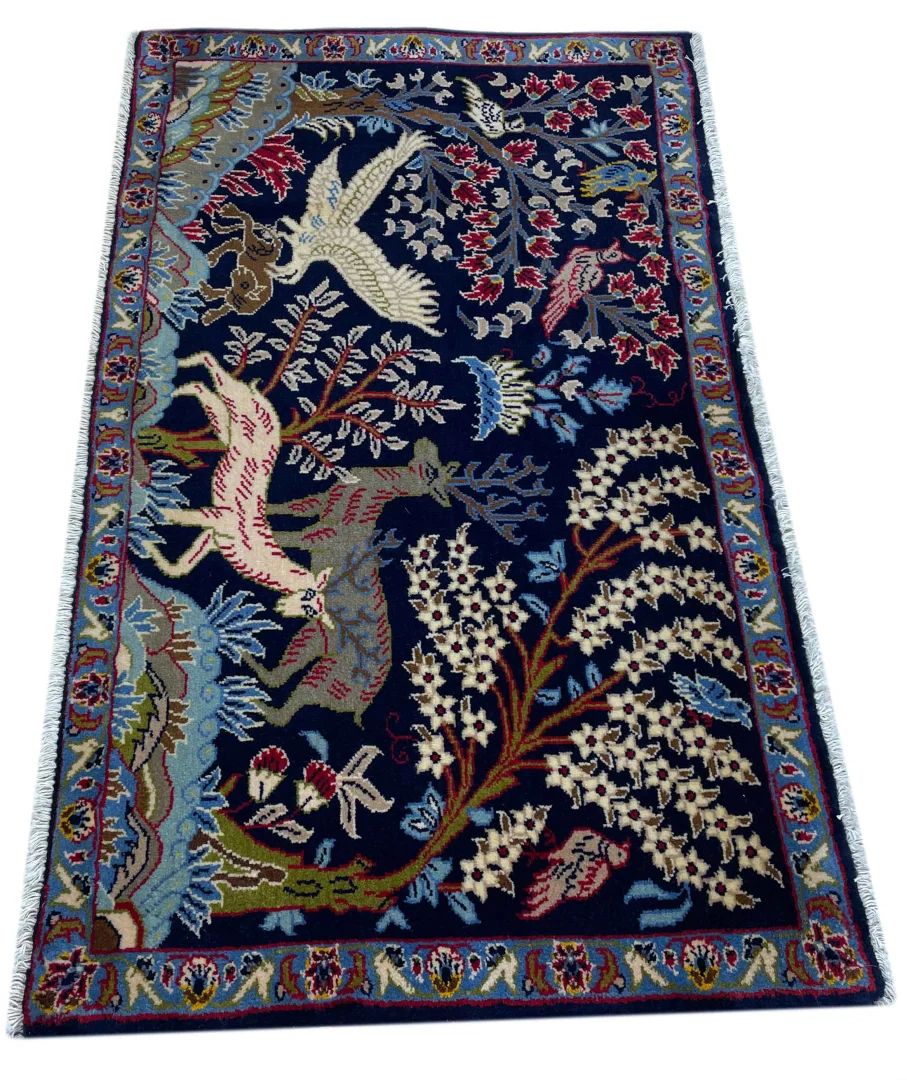
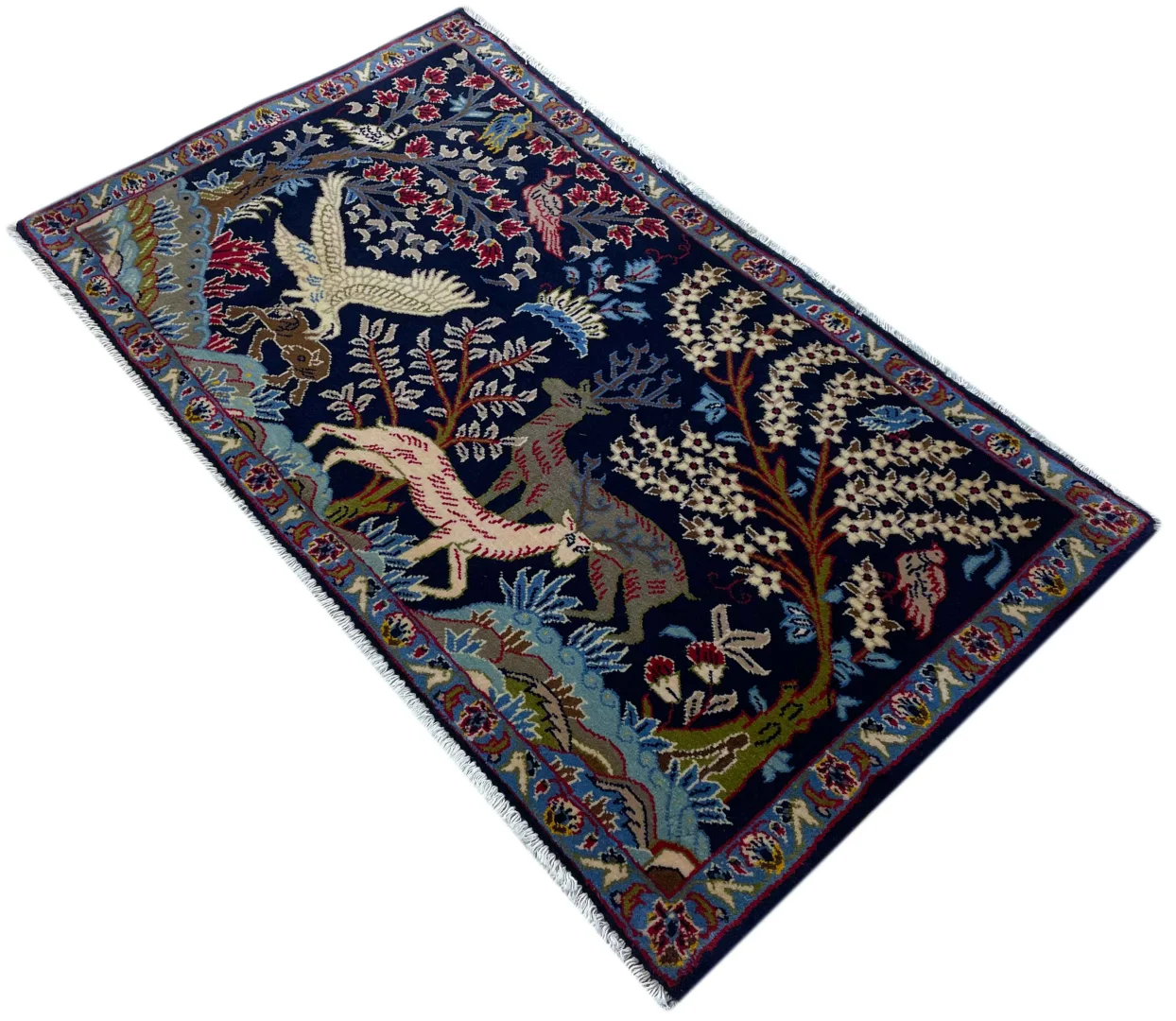
Keshan rugs are known for rich floral patterning. Blossoms, leaves and scrolling stems are often linked into a continuous ornamental system. A design may be organised symmetrically around a centre, or the motifs may be distributed across the field in an all-over arrangement. Smaller elements fill the spaces between larger flowers and help connect one part of the composition with another. The result is a pattern that reveals additional detail when viewed closely.
The division between field and border is a central principle in Persian rug design. The field carries the main composition, while one or more borders frame it and guide the eye towards the edge. In Keshan patterns, border ornaments may echo the flowers and vines of the field, repeat them at a measured rhythm or present a more contained version of the same vocabulary. This relationship gives the design visual continuity while allowing the border and field to retain different roles.
Floral motifs in Persian rugs are generally stylised interpretations rather than literal depictions of one particular garden. Traditional forms are adapted and recombined through repeated workshop practice. A blossom may be shown open, turned to one side or surrounded by leaves and curling stems. Buds, foliage and connecting vines introduce changes of direction and rhythm. Dense knotting makes it possible to articulate these elements with fine lines and to distinguish small details within the larger floral structure.
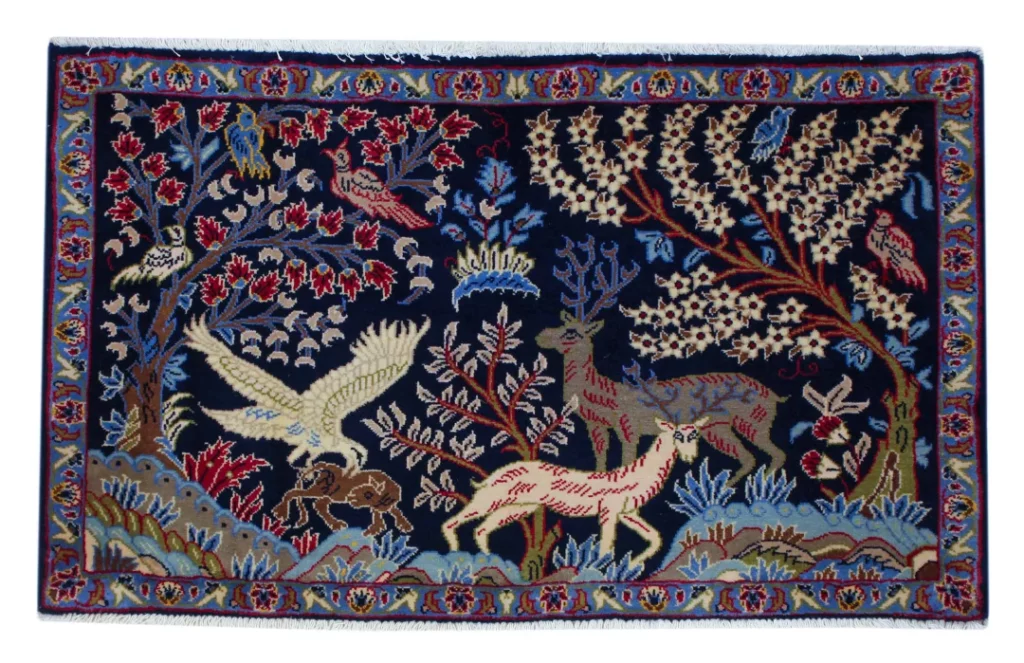
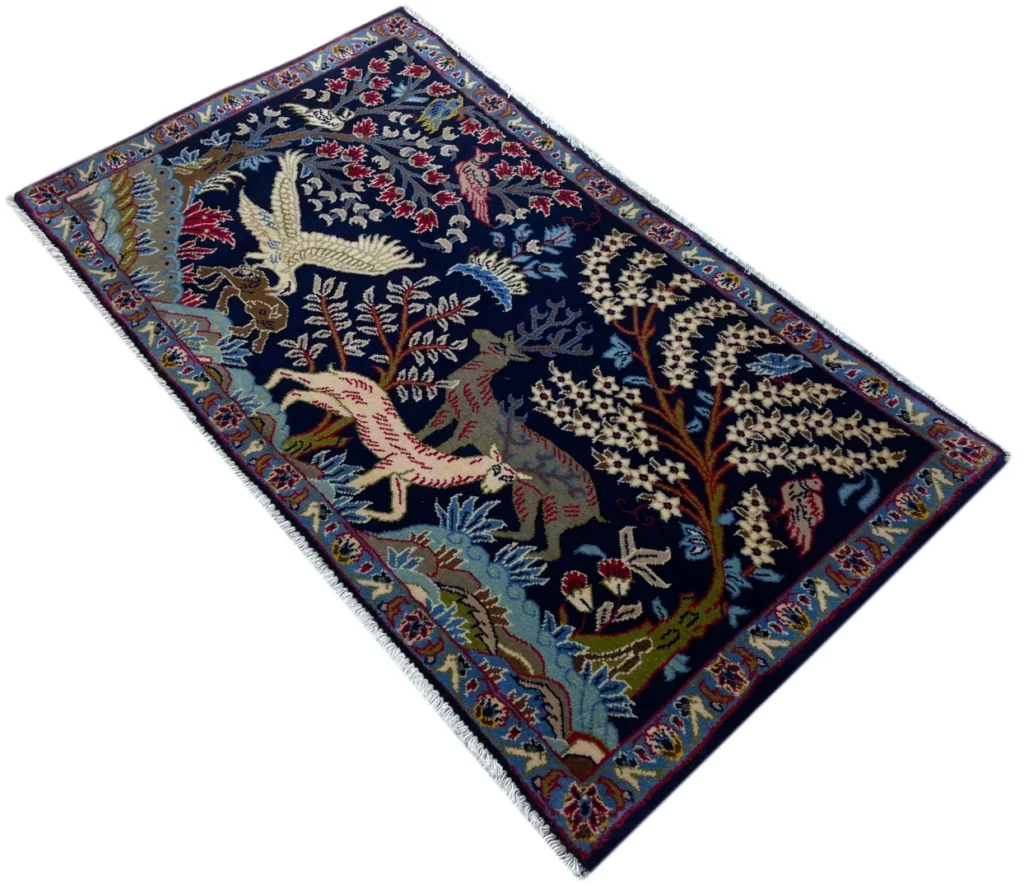
Traditional Keshan colour systems often bring together blue, red and beige tones in a coordinated arrangement. Colours can separate the ground from the ornaments, emphasise the border or make particular flowers and leaves more visible. Darker passages create definition, while lighter areas give the pattern space to emerge. The precise balance varies from one design to another. It depends on the composition, the chosen dyes and the way the wool receives and reflects colour.
A hand-knotted pattern is assembled through thousands of individual decisions. A design drawing can provide guidance, but the finished image is created knot by knot and becomes part of the textile itself. This is why the surface of a hand-knotted rug has a woven depth rather than the uniform character of a printed image. In Keshan design, this method supports both the clarity of the overall arrangement and the fine variation found in detailed floral ornament.
Special Features
The notable features of this rug are its Iranian origin, hand-knotted construction, high-quality sheep wool pile and cotton warp and weft. Its knot density is between 150,000 and 300,000 knots per square metre. The condition is very good. These details describe the offered piece directly and distinguish its documented construction from the broader range of Keshan rugs.
Care should be gentle and consistent. Regular vacuuming without a rotating brush attachment helps remove loose dust while placing less stress on the wool pile. A fresh stain should be dabbed with a damp cloth rather than rubbed. Rubbing can work dirt further into the fibres or disturb the surface. A professional cleaning every few years is suitable when a more thorough treatment is needed, because the cleaner can take the wool and hand-knotted construction into account.
A suitable rug pad can provide additional protection and help reduce movement underfoot. It is also advisable to avoid continuous direct sunlight, since prolonged exposure can affect textile colours. Placing the rug in a less heavily trafficked area limits everyday wear. Regular care, sensible positioning and prompt attention to spills help preserve the pile and keep the floral drawing legible over time.
FAQ
How should I clean a Keshan rug?
Vacuum a Keshan rug regularly with an attachment that does not have a brush. This removes dust and loose particles while treating the wool pile more gently. If something is spilled, dab the area promptly with a damp cloth. Avoid vigorous rubbing, as it may push the substance deeper into the pile or put unnecessary strain on the fibres. For a deeper clean, professional treatment every few years is recommended. A specialist can take the rug’s wool pile, cotton foundation and hand-knotted construction into consideration when selecting the appropriate method.
Where do the materials for a Keshan rug come from?
Materials used for Keshan rugs traditionally come mainly from the area around Keshan in Iran. The pile is made from high-quality sheep wool, while sturdy cotton is generally used for the warp and weft. Wool provides the visible and tactile surface; cotton forms and reinforces the underlying structure. Sheep wool and cotton are the materials specified for this rug. Their combination reflects the traditional construction of many hand-knotted Keshan rugs and explains the contrast between the resilient foundation and the softer pile.
How can I extend the life of my Keshan rug?
Consistent, gentle care is the main way to help a Keshan rug remain in good condition. Vacuum it regularly without a brush attachment and deal with spills promptly by dabbing rather than rubbing. Protect the rug from continuous direct sunlight, which can gradually alter textile colours. A position with less frequent foot traffic reduces everyday wear, while a suitable rug pad or protective underlay can help limit movement and abrasion. Professional cleaning at appropriate intervals provides additional care when ordinary maintenance is no longer sufficient.
To provide the best experiences, we use technologies like cookies to store and/or access device information. Consenting to these technologies will allow us to process data such as browsing behavior or unique IDs on this site. Not consenting or withdrawing consent, may adversely affect certain features and functions.
Functional Always active
The technical storage or access is strictly necessary for the legitimate purpose of enabling the use of a specific service explicitly requested by the subscriber or user, or for the sole purpose of carrying out the transmission of a communication over an electronic communications network.
Preferences
The technical storage or access is necessary for the legitimate purpose of storing preferences that are not requested by the subscriber or user.
Statistics
The technical storage or access that is used exclusively for statistical purposes.The technical storage or access that is used exclusively for anonymous statistical purposes. Without a subpoena, voluntary compliance on the part of your Internet Service Provider, or additional records from a third party, information stored or retrieved for this purpose alone cannot usually be used to identify you.
Marketing
The technical storage or access is required to create user profiles to send advertising, or to track the user on a website or across several websites for similar marketing purposes.
 SECURE PAYMENT
 SHIPPING PARTNERS


