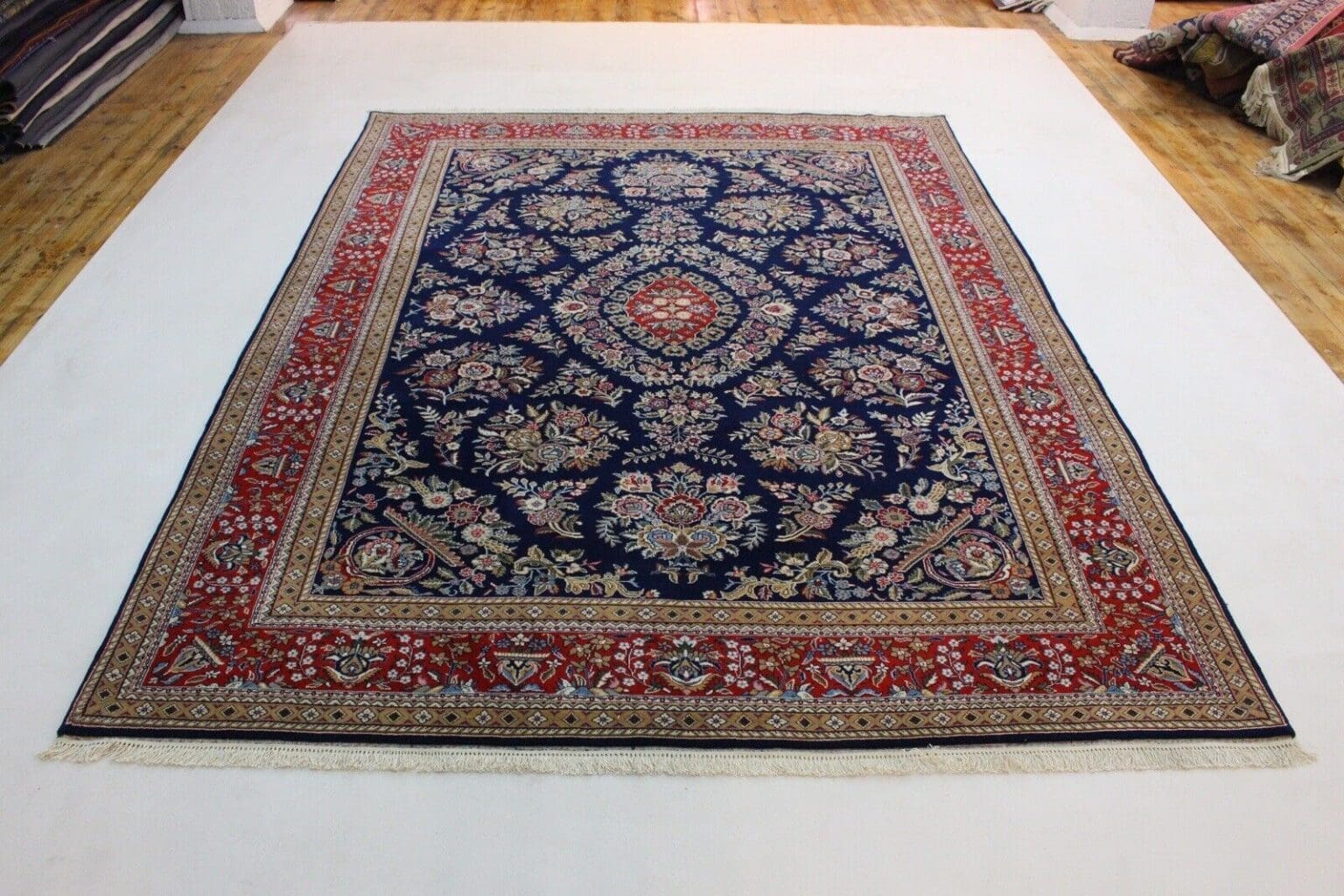
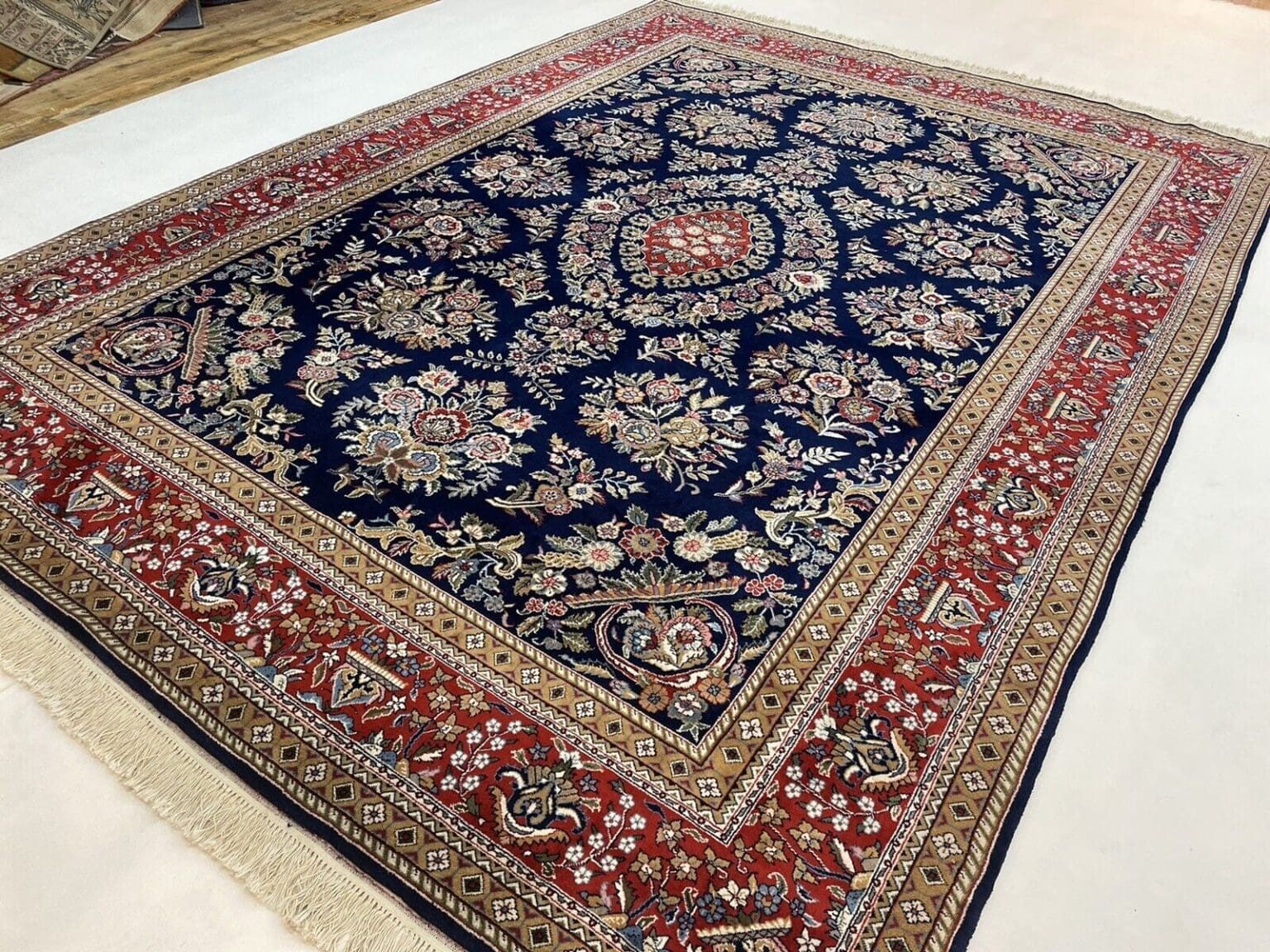
This Oriental rug is entirely hand-knotted and has a pile made from 100% pure cork wool. Hand knotting builds the surface one knot at a time, with individual pile strands secured into the foundation and then compacted through the making process. The result is a textile structure rather than a printed decoration. The pile height is 10 mm, giving the surface a defined relief and a soft tactile character.
Cork wool is a fine wool quality used in rug making for its soft feel and resilience. Natural wool fibres have a certain elasticity, allowing the pile to respond to everyday pressure and recover part of its shape. Wool can also interact with moisture in indoor air without immediately feeling damp. These qualities are general properties of the fibre and do not replace careful maintenance. Regular vacuuming without a rotating brush is suitable for removing loose dust while treating the pile gently.
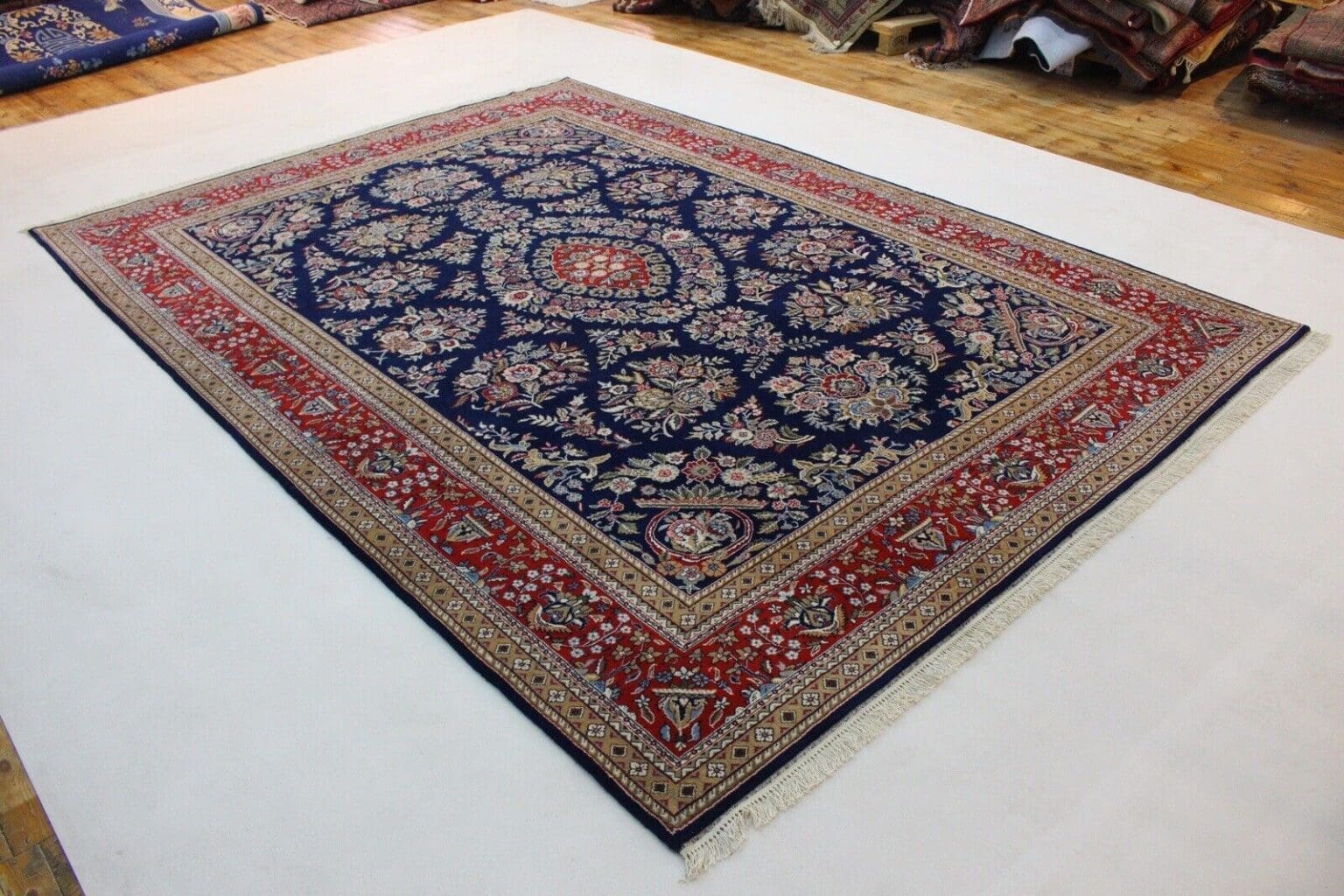
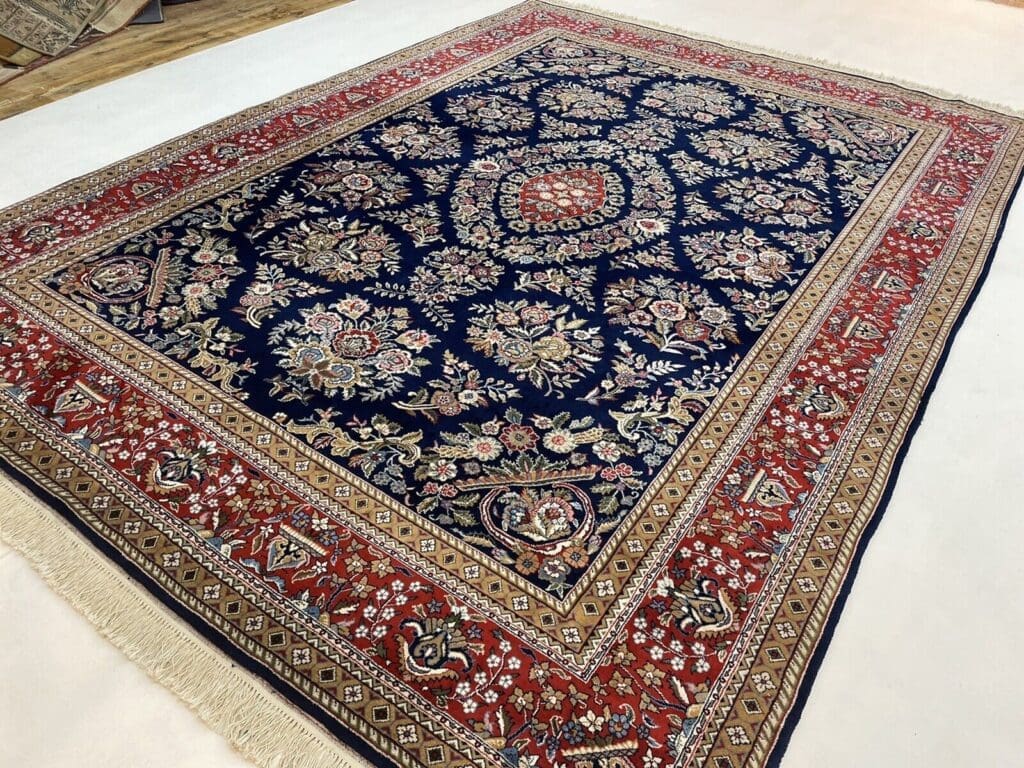
The rectangular format is a classic rug shape that gives the composition a clear outer boundary. Hand knotting is particularly suited to ornamental designs because flowers, leaves and other details can be built from differently coloured knots. The pattern therefore belongs to the structure of the rug itself. This piece is also suitable for use with underfloor heating.
Origin and Tradition
The stated origin of this rug is China. It is therefore an Oriental rug rather than an original Persian rug made in Iran. Ghom Design identifies the visual reference, not the country of manufacture. Ghom, also known as Qom, is a major rug centre in Iran with a distinctive tradition of finely organised ornament. In the international rug trade, regional design names can also be applied to pieces made outside the historical region they reference. Design origin and manufacturing origin must consequently be kept separate.
Ghom-inspired compositions are associated with carefully ordered decoration, pronounced symmetry and an abundance of small plant forms. Traditional examples often use a strong central organisation, repeated floral units and connecting stems or vines to guide the eye across the field. The design language is detailed but controlled. Its character comes from the relationship between repetition, balance and the scale of the individual ornaments.
Iranian rug culture includes many regional traditions. Ghom became particularly influential for finely drawn floral compositions and complex decorative arrangements during the twentieth century. Tabriz is widely associated with elaborate drawing and varied medallion structures. Isfahan designs often combine refined floral ornament with a measured overall balance, while Nain is commonly recognised for light tonal schemes and delicate patterning. Kashan has a long tradition of broad floral arrangements. Each of these names refers to a particular historical and visual context rather than serving as a general label for every Oriental rug.
A Chinese-made rug carrying a Ghom Design transfers such visual ideas into a different production setting. It should not be presented as Iranian simply because the pattern refers to an Iranian city. China has its own extensive textile heritage and produces hand-knotted rugs in a range of techniques and decorative approaches. For this individual piece, China is the relevant manufacturing origin, while Ghom Design explains the stylistic vocabulary used in its pattern.
Design and Pattern
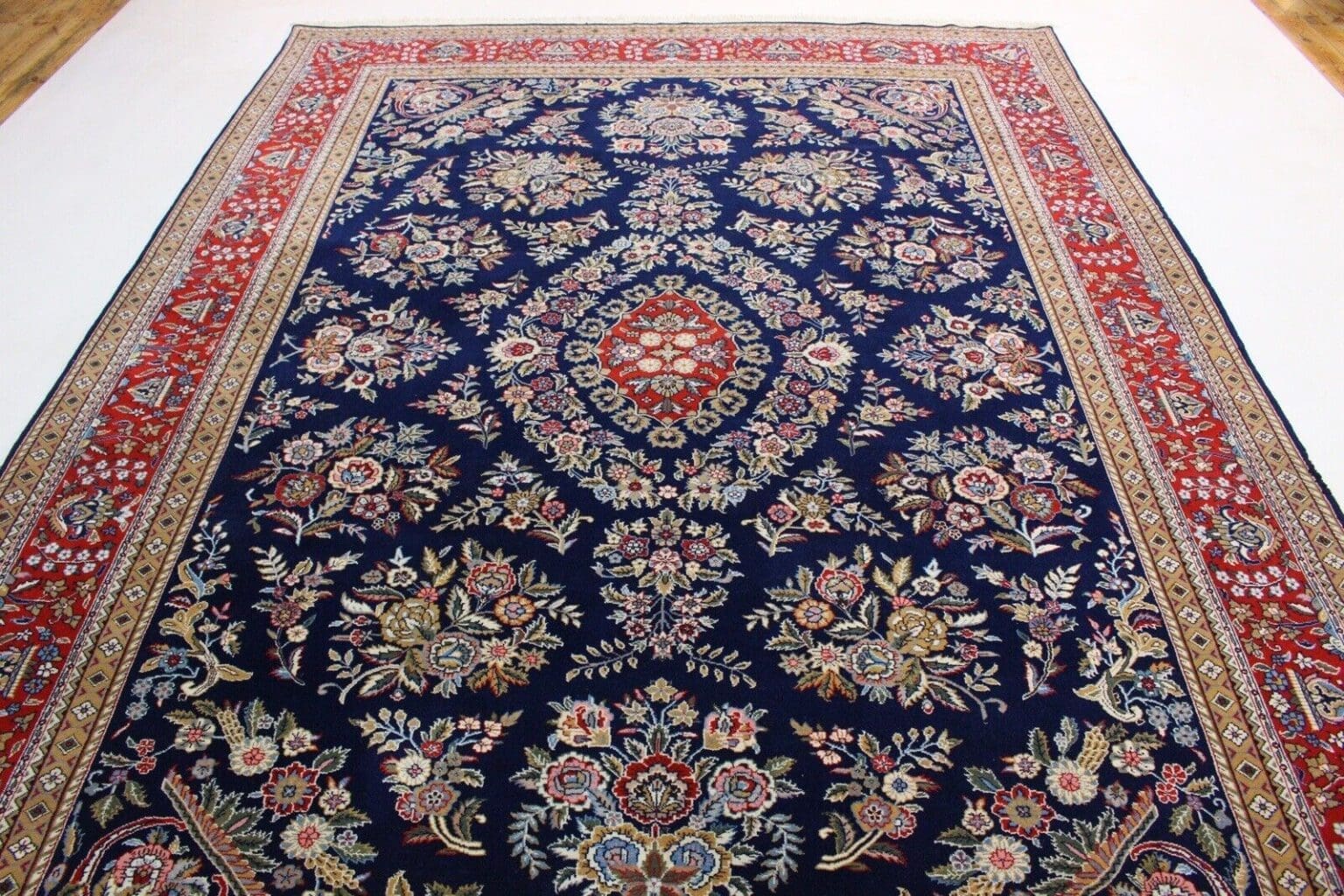
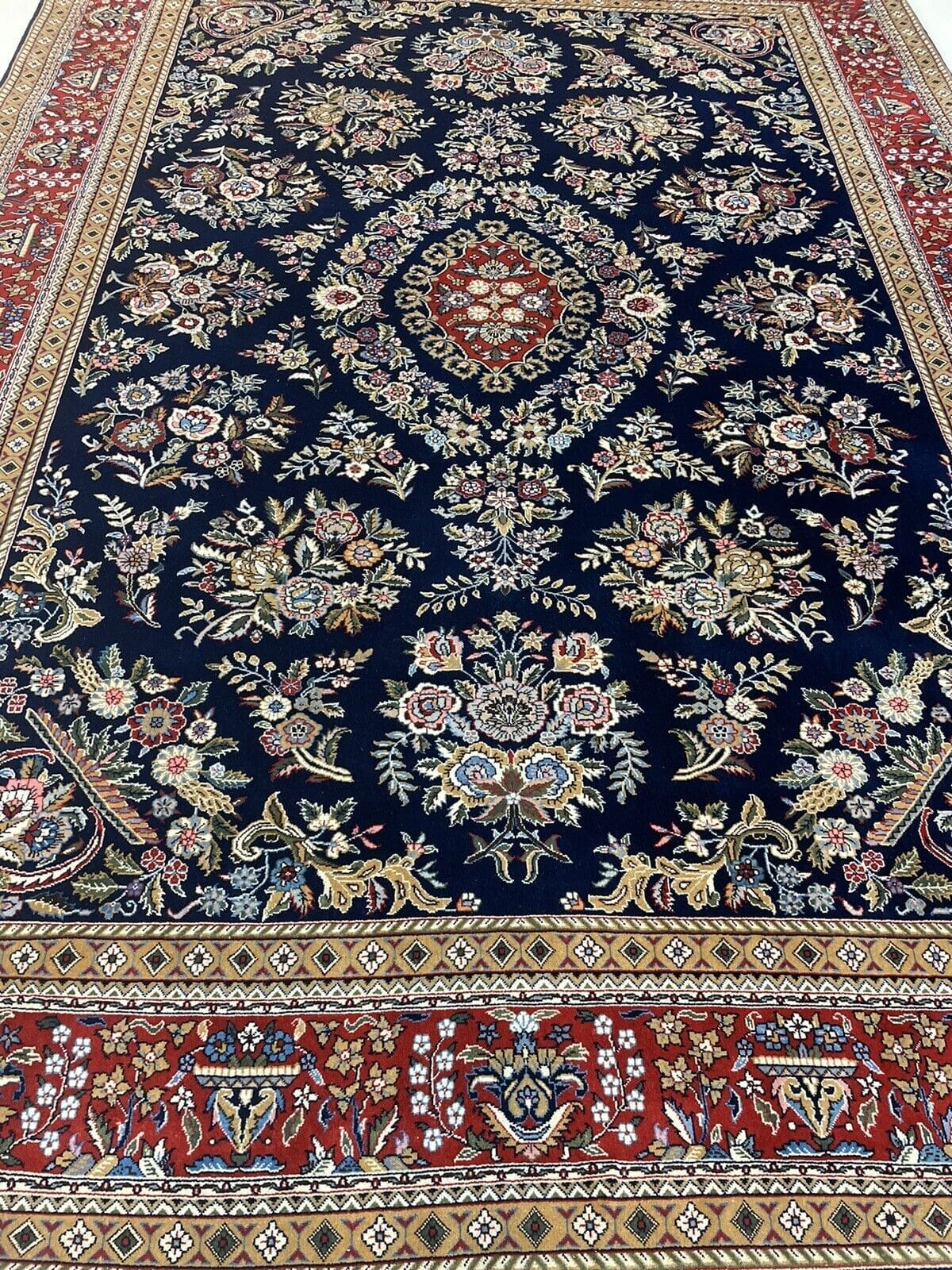
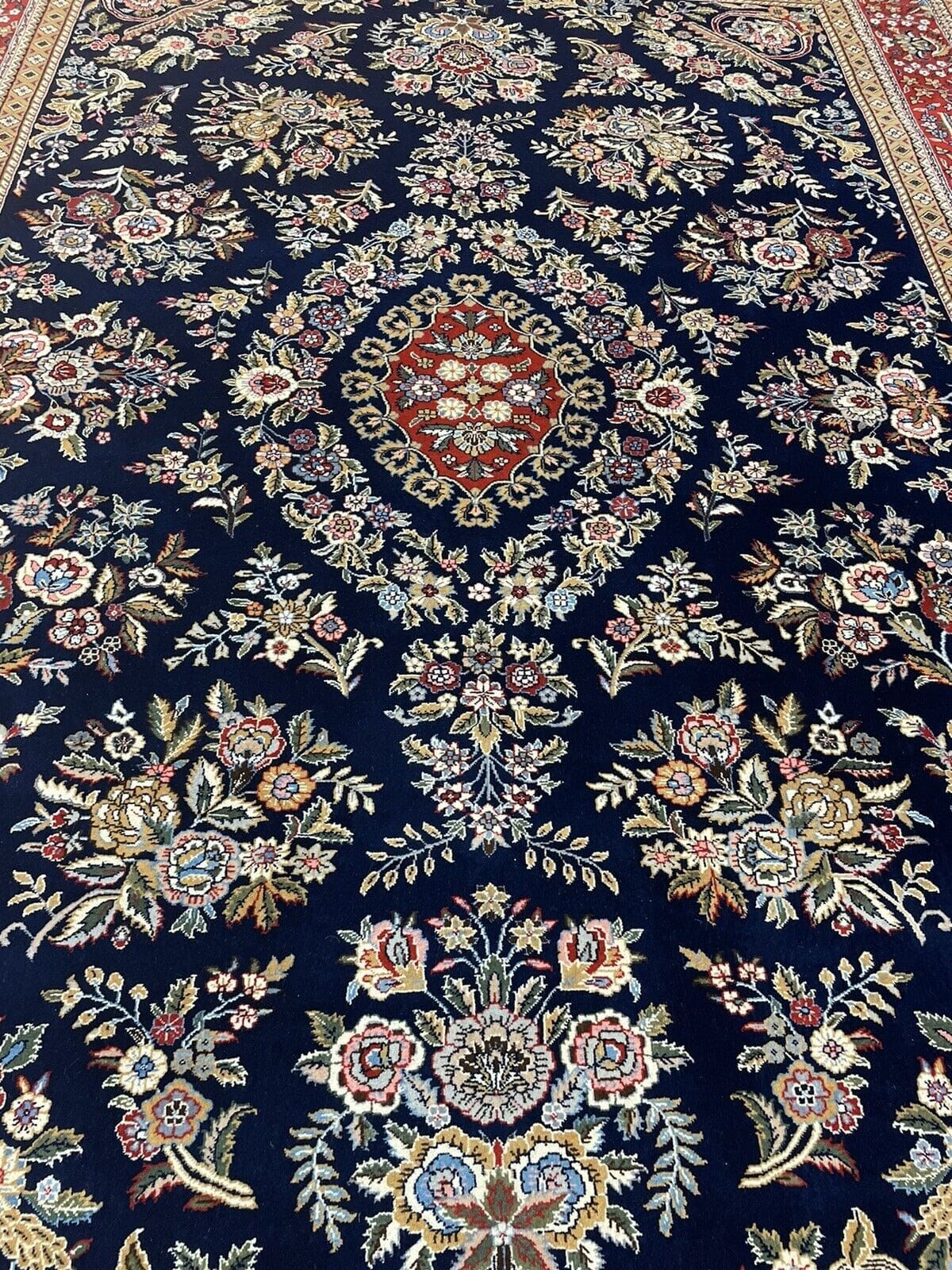
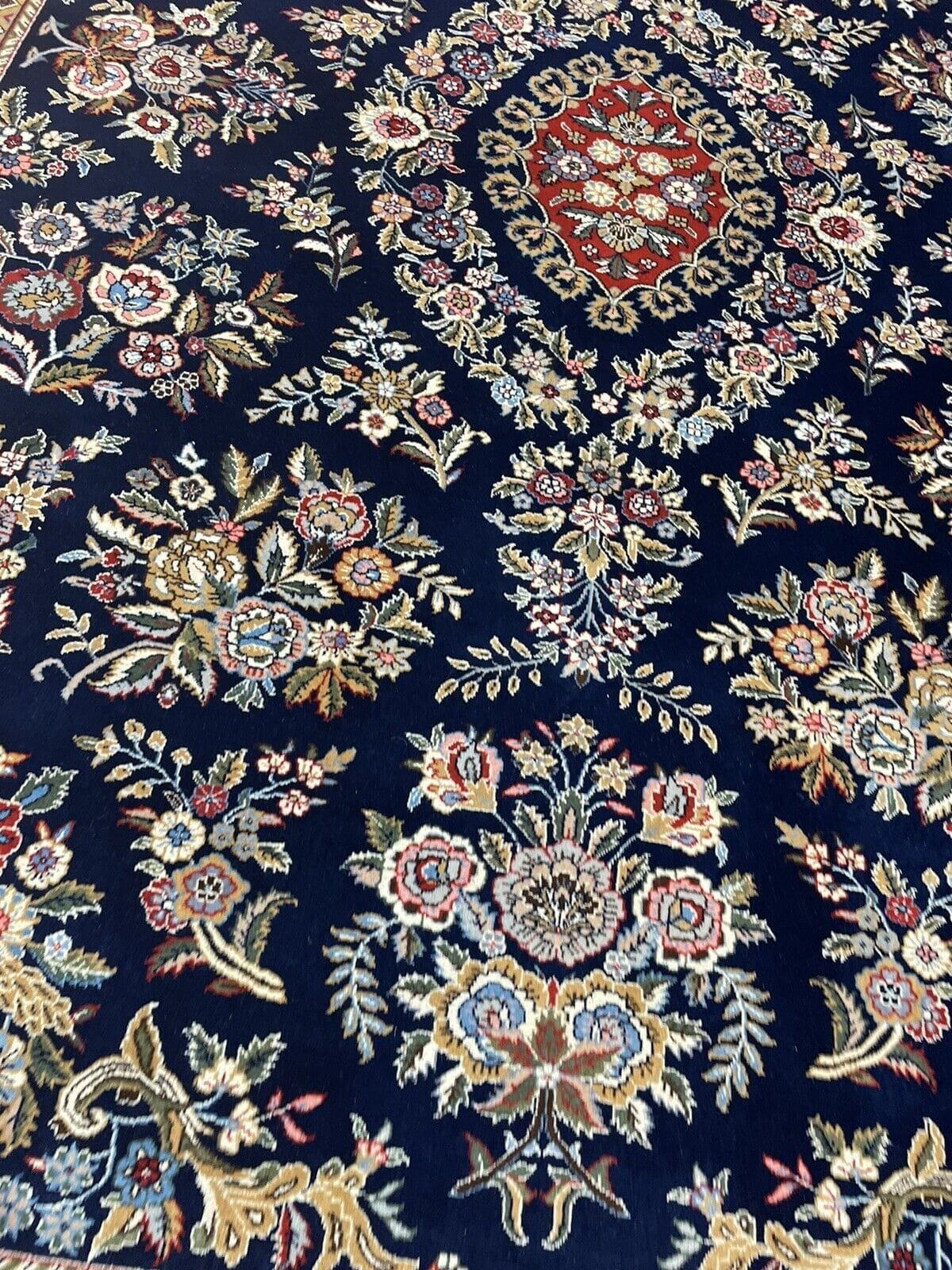
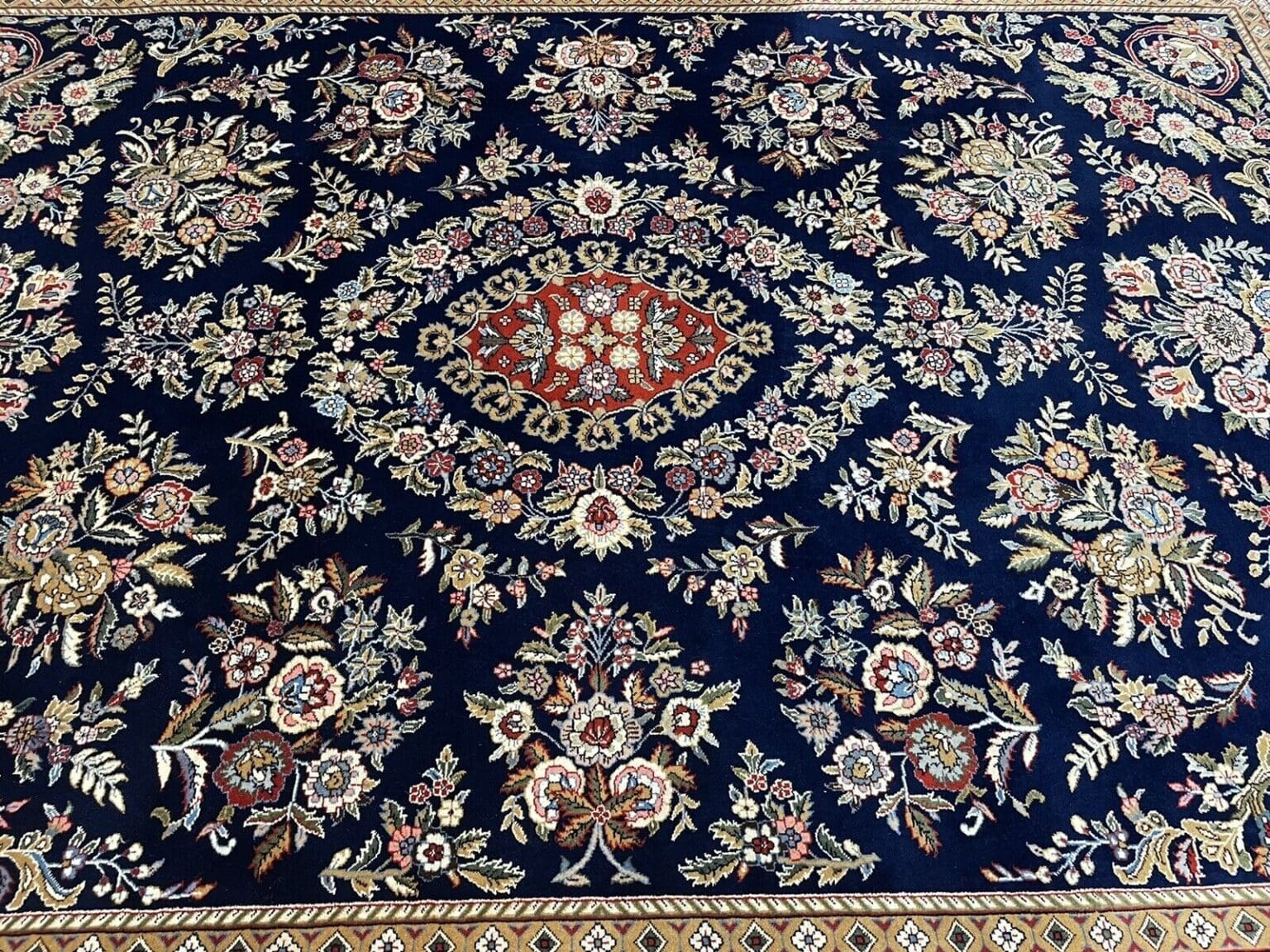
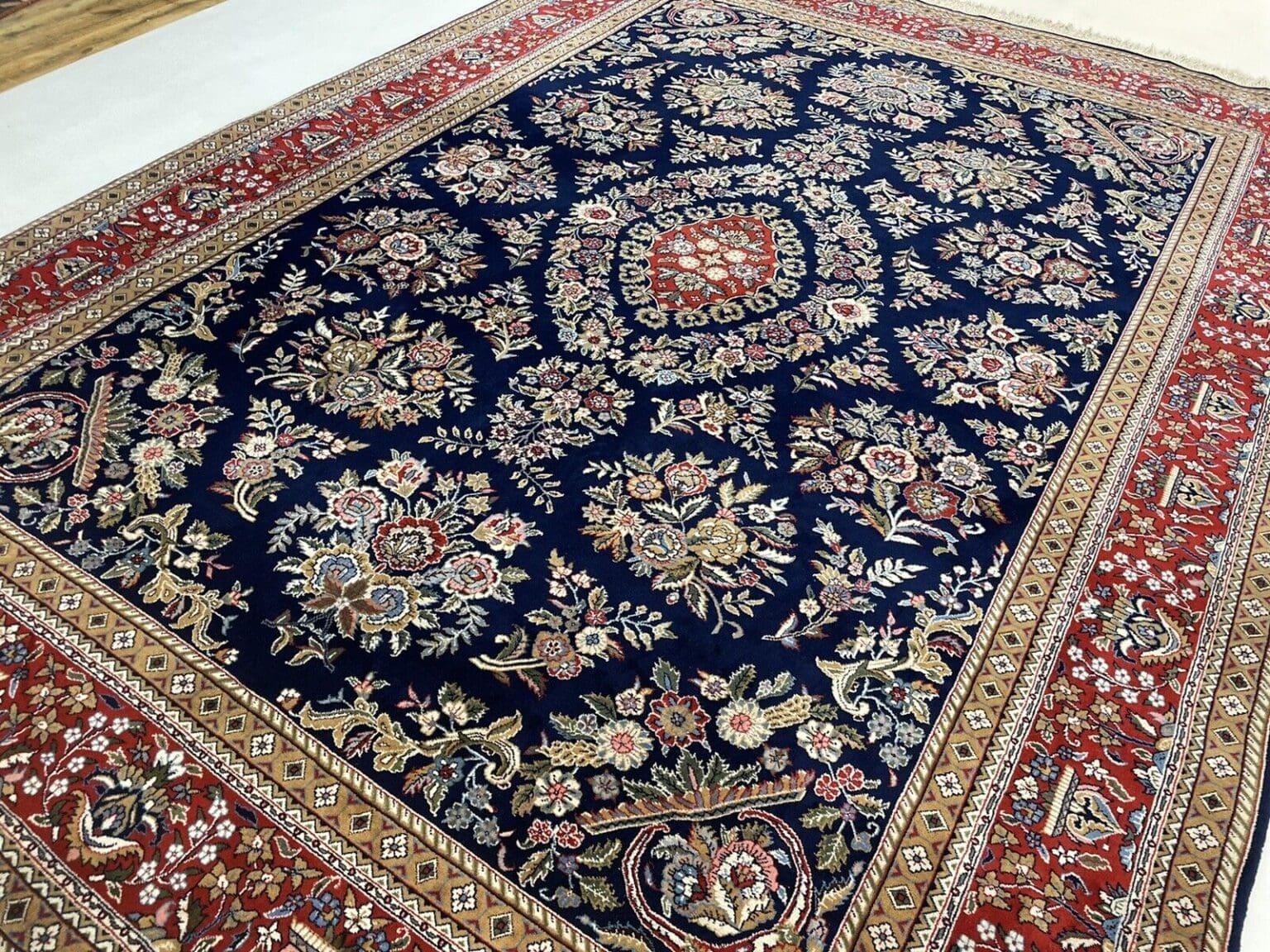
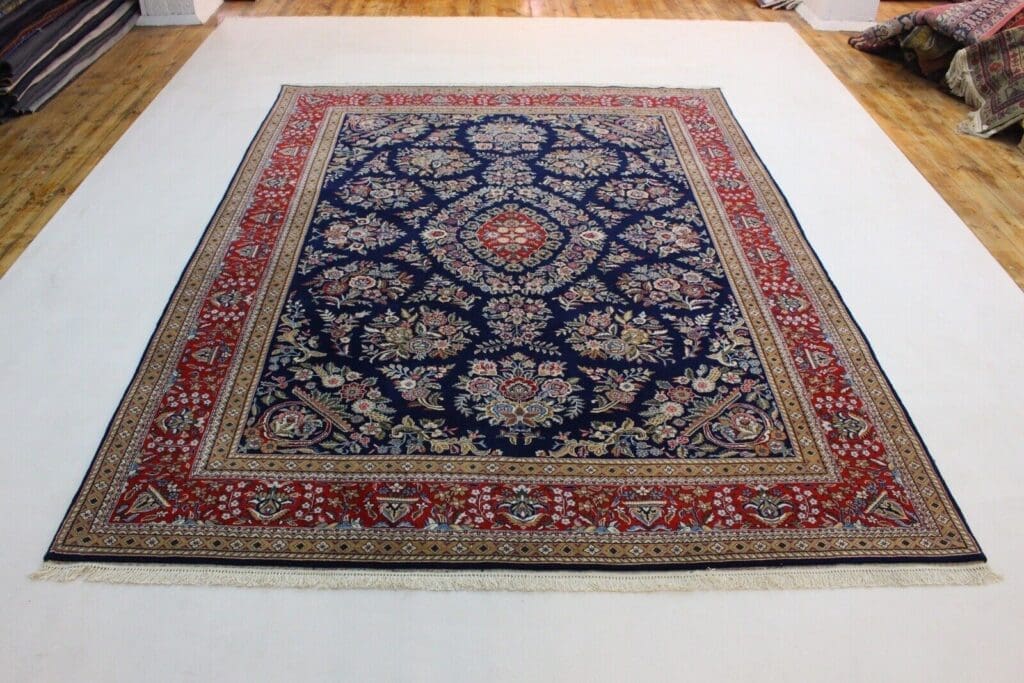
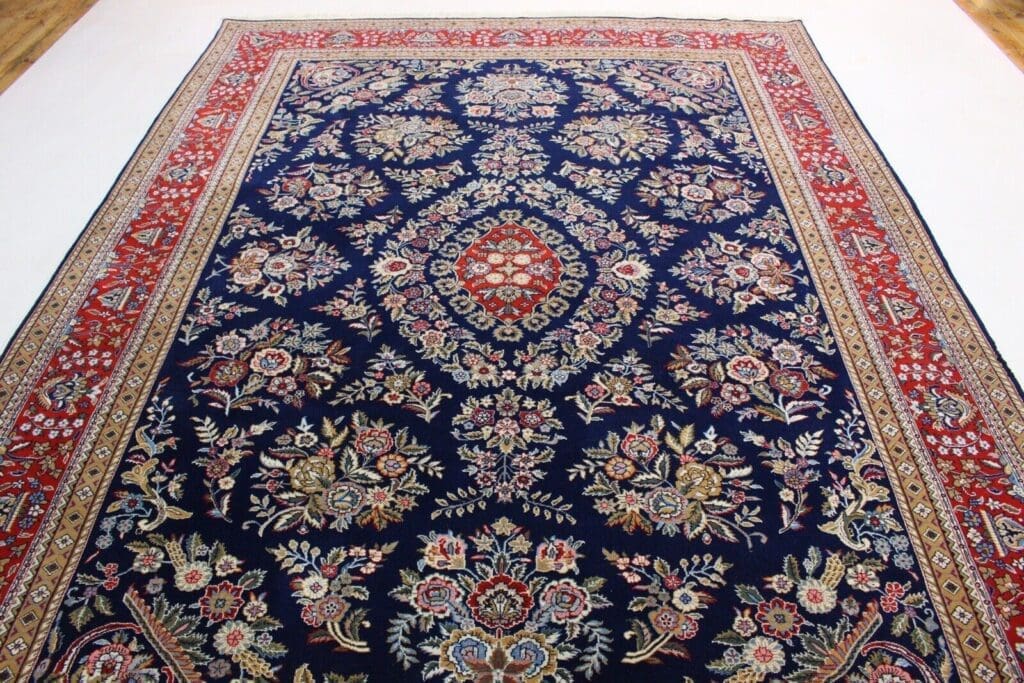
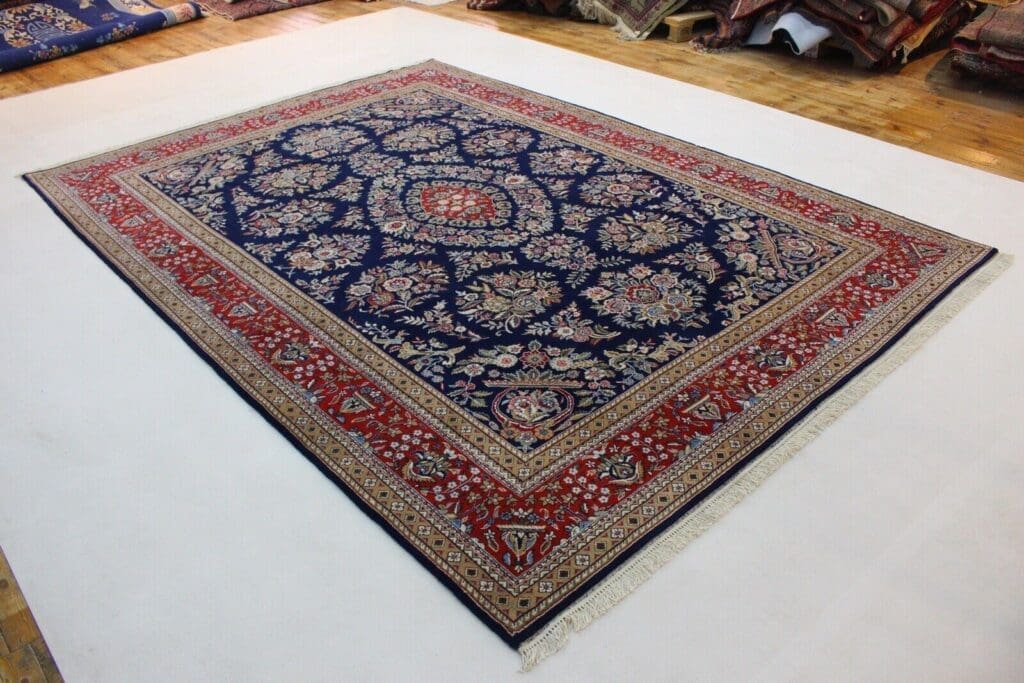
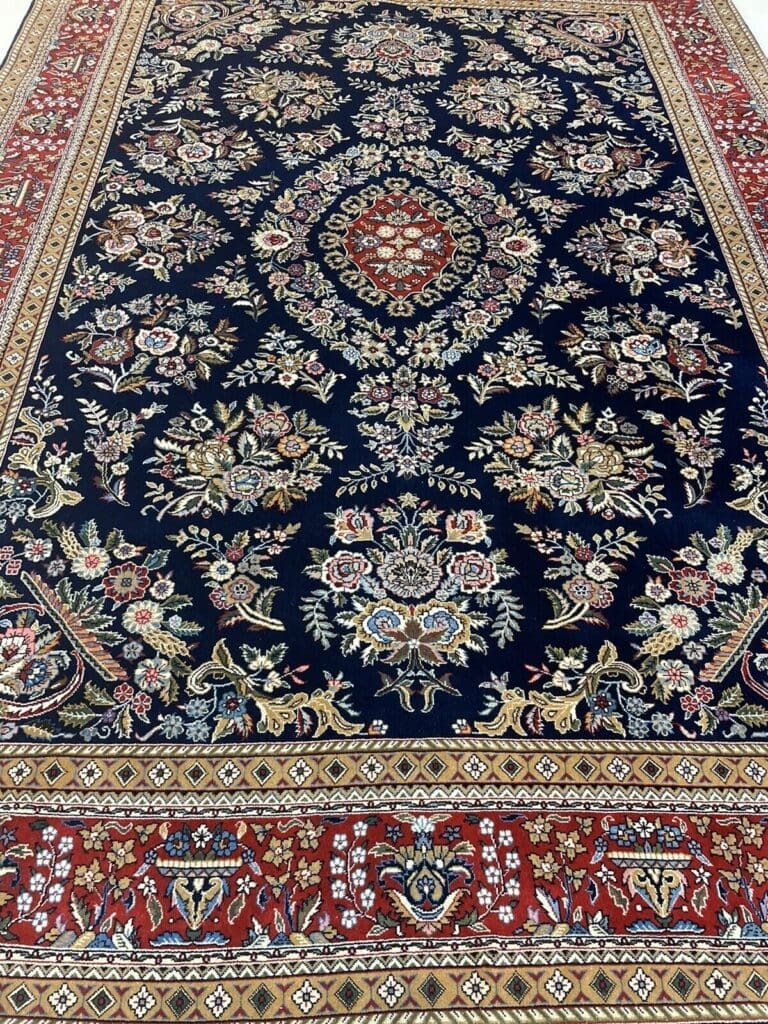
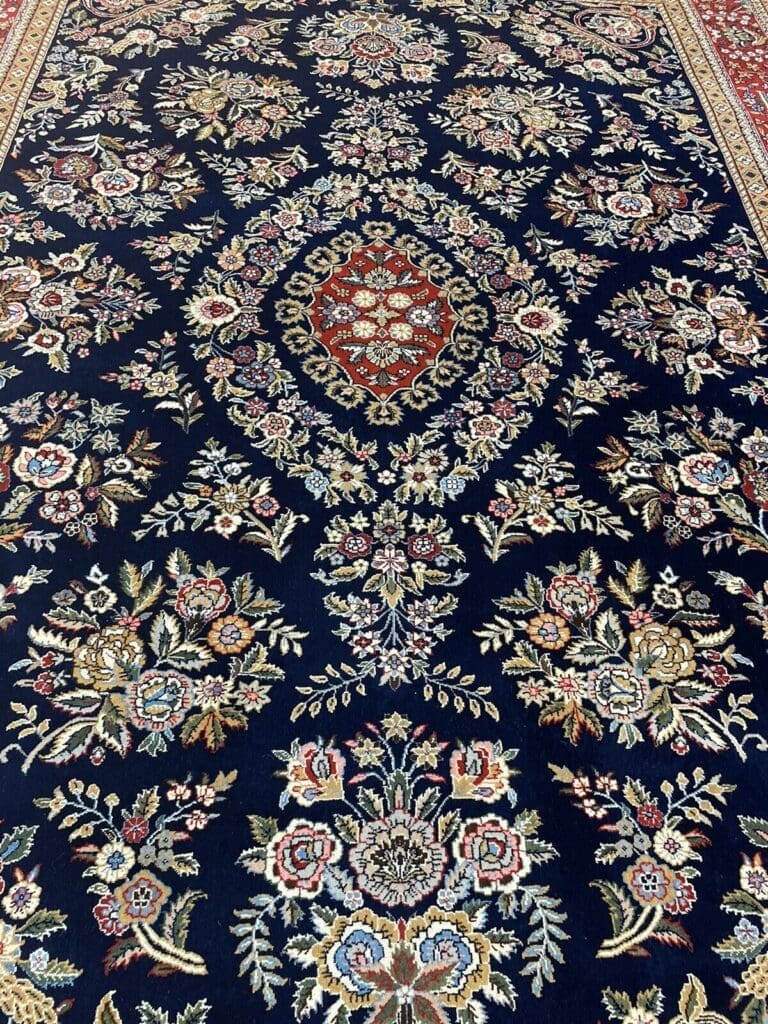
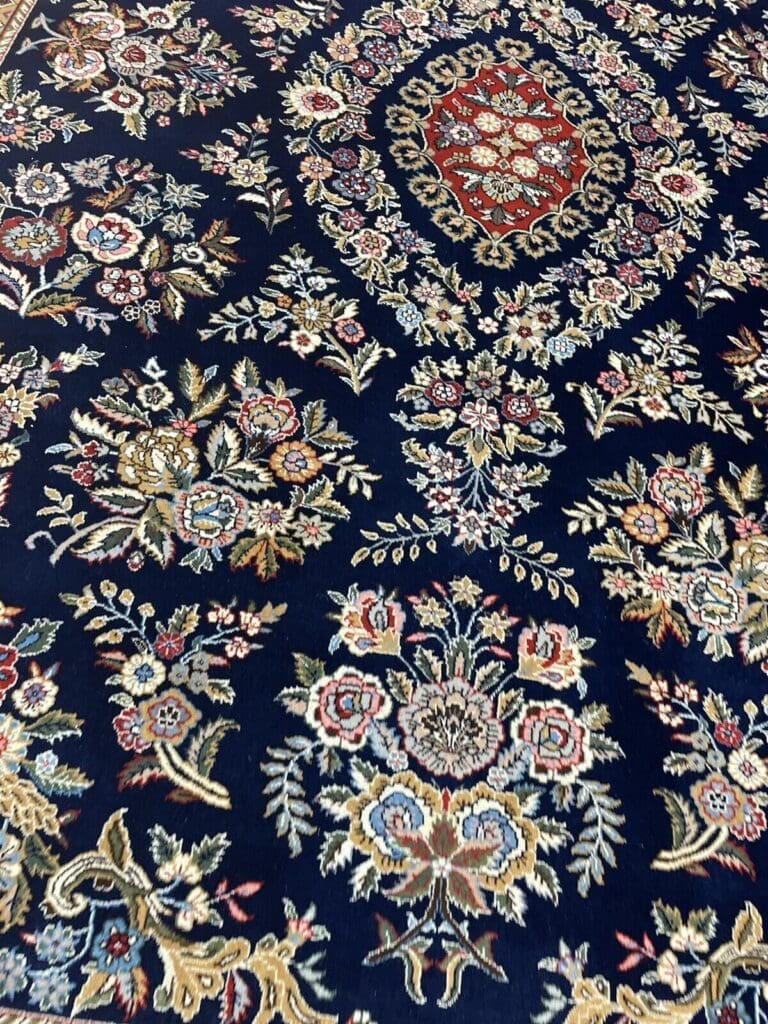
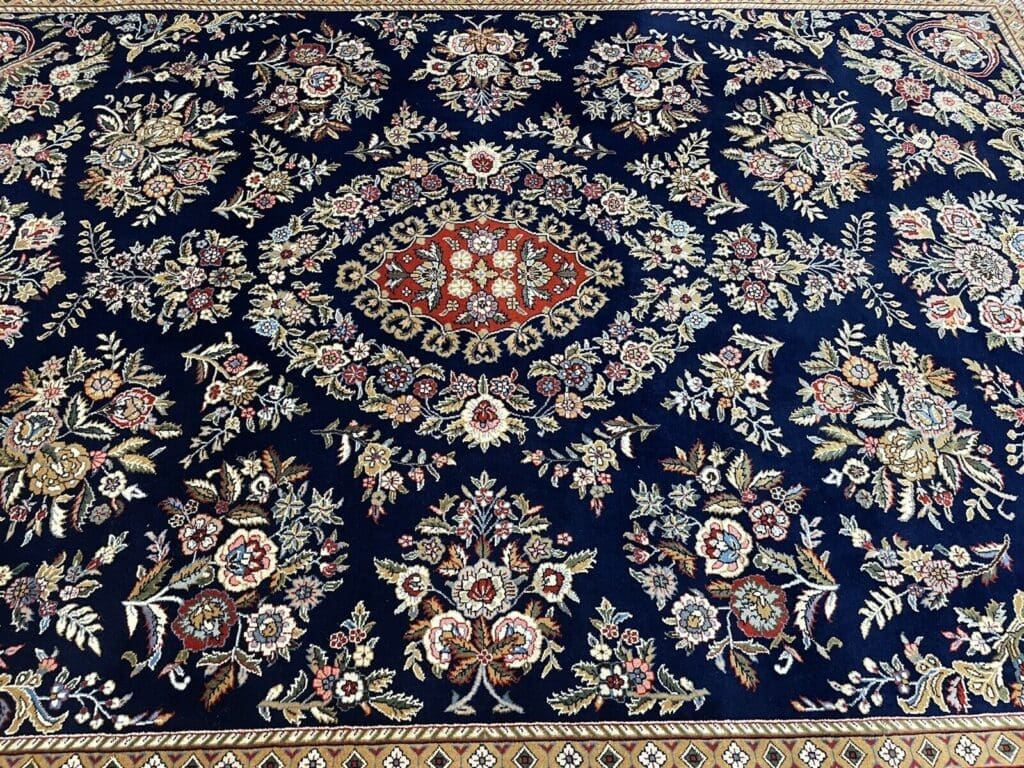
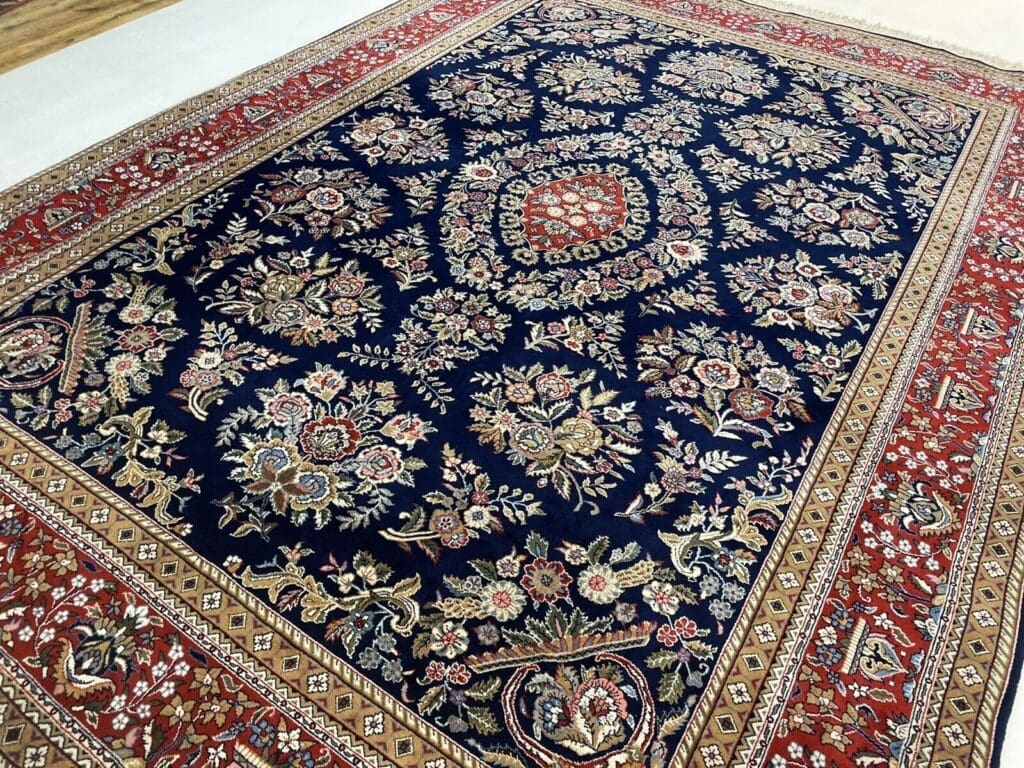
The pattern is named “Blumen Paradis”. Its central theme is a floral world in which flowers and botanical forms provide the decorative structure. Floral ornament is one of the enduring subjects of Oriental textile art. A design may show separate blossoms, connect them through vines, or fill the field with a continuous garden-like arrangement. The visual effect depends not only on the individual flower but also on the way the motifs are repeated and positioned in relation to one another.
In a Ghom-inspired design, a floral field is generally held together by clear organisation. Repeated blossoms establish rhythm, while leaves, stems and tendrils divide the spaces between them. This creates richness without abandoning structure. Because the rug is hand-knotted, even small outlines are formed through the placement of individual knots. The pattern consequently has a woven and tactile presence rather than the perfectly flat appearance of a surface print.
The wording Blumen Paradis suggests an abundant, decorative interpretation of the flower theme. In Persian and Oriental carpet traditions, the garden often serves as an image of order, fertility and idealised nature. Garden and floral motifs developed into many different forms over time. A rug may evoke a stylised garden without depicting a specific real location. Flowers are usually transformed into recognisable ornamental shapes, allowing them to repeat across the field and remain legible as part of a larger composition.
Ghom-related designs are often discussed in connection with fine drawing and a substantial amount of ornament. Those are general characteristics of the design tradition and must not be read as a knot-density statement about this rug, because no knot density is provided for this piece. Nor are particular colours or a specific medallion structure asserted here. The documented pattern is Blumen Paradis, placed within a traditional Oriental or Persian-influenced design vocabulary.
Described as a design classic of the twenty-first century, the rug places a longstanding ornamental language in a contemporary category. Floral patterns can work with traditional furniture as well as with restrained modern interiors because their repetition provides a coherent decorative field. The rectangular outline adds a simple geometric frame to the botanical theme. This allows the design to remain distinct without assigning the rug to one particular room or furnishing style.
Special Features
The specific features of this piece are its complete hand-knotted construction, a pile of 100% pure cork wool, a 10 mm pile height and a rectangular form. Its condition is new with tag. It is also suitable for use over underfloor heating. These statements describe the material, construction, condition and practical classification recorded for this individual rug.
The combination of Ghom Design and the Blumen Paradis pattern gives the rug its recognisable visual direction. At the same time, the origin listed as China establishes where this piece was made. Calling it an Oriental rug follows that origin and avoids confusing a Persian-influenced design with an Iranian-made Persian rug. Material, technique, design reference and country of manufacture are therefore distinct parts of its description.
FAQ
How should I care for the Ghom Design Oriental rug?
Vacuum the rug regularly without using a brush attachment or rotating brush. This removes loose dust while keeping unnecessary friction away from the pile. If a spill occurs, dab it promptly with a damp cloth rather than rubbing it into the fibres. Rubbing can disturb the wool surface and affect the clarity of the pattern. A professional rug cleaning every few years can refresh the textile and help preserve its structure. The cleaner should take the cork wool, pile height and hand-knotted construction into account when selecting a method.
How can I recognise the hand-knotted construction?
The reverse side is a useful place to inspect a hand-knotted rug. Individual knots and the underlying construction can be seen there, rather than a completely uniform machine-made print. The relationship between pile, warp and pattern also provides information about how the rug was made. The hand-knotted technique is explicitly specified for this piece. Ghom Design, however, identifies the decorative reference and does not establish an Iranian manufacturing origin, since the stated origin of this rug is China.
Can the rug be used outdoors?
Outdoor use is not recommended. Wool and the knotted construction are not intended for continued exposure to rain, changing weather or strong direct sunlight. Moisture can affect the material and the structure, while prolonged sunlight may alter colours. The appropriate setting is a protected indoor space. Suitability for underfloor heating concerns indoor use and does not change the need to keep the rug away from outdoor weather conditions.
To provide the best experiences, we use technologies like cookies to store and/or access device information. Consenting to these technologies will allow us to process data such as browsing behavior or unique IDs on this site. Not consenting or withdrawing consent, may adversely affect certain features and functions.
Functional Always active
The technical storage or access is strictly necessary for the legitimate purpose of enabling the use of a specific service explicitly requested by the subscriber or user, or for the sole purpose of carrying out the transmission of a communication over an electronic communications network.
Preferences
The technical storage or access is necessary for the legitimate purpose of storing preferences that are not requested by the subscriber or user.
Statistics
The technical storage or access that is used exclusively for statistical purposes.The technical storage or access that is used exclusively for anonymous statistical purposes. Without a subpoena, voluntary compliance on the part of your Internet Service Provider, or additional records from a third party, information stored or retrieved for this purpose alone cannot usually be used to identify you.
Marketing
The technical storage or access is required to create user profiles to send advertising, or to track the user on a website or across several websites for similar marketing purposes.

 SECURE PAYMENT
 SHIPPING PARTNERS


