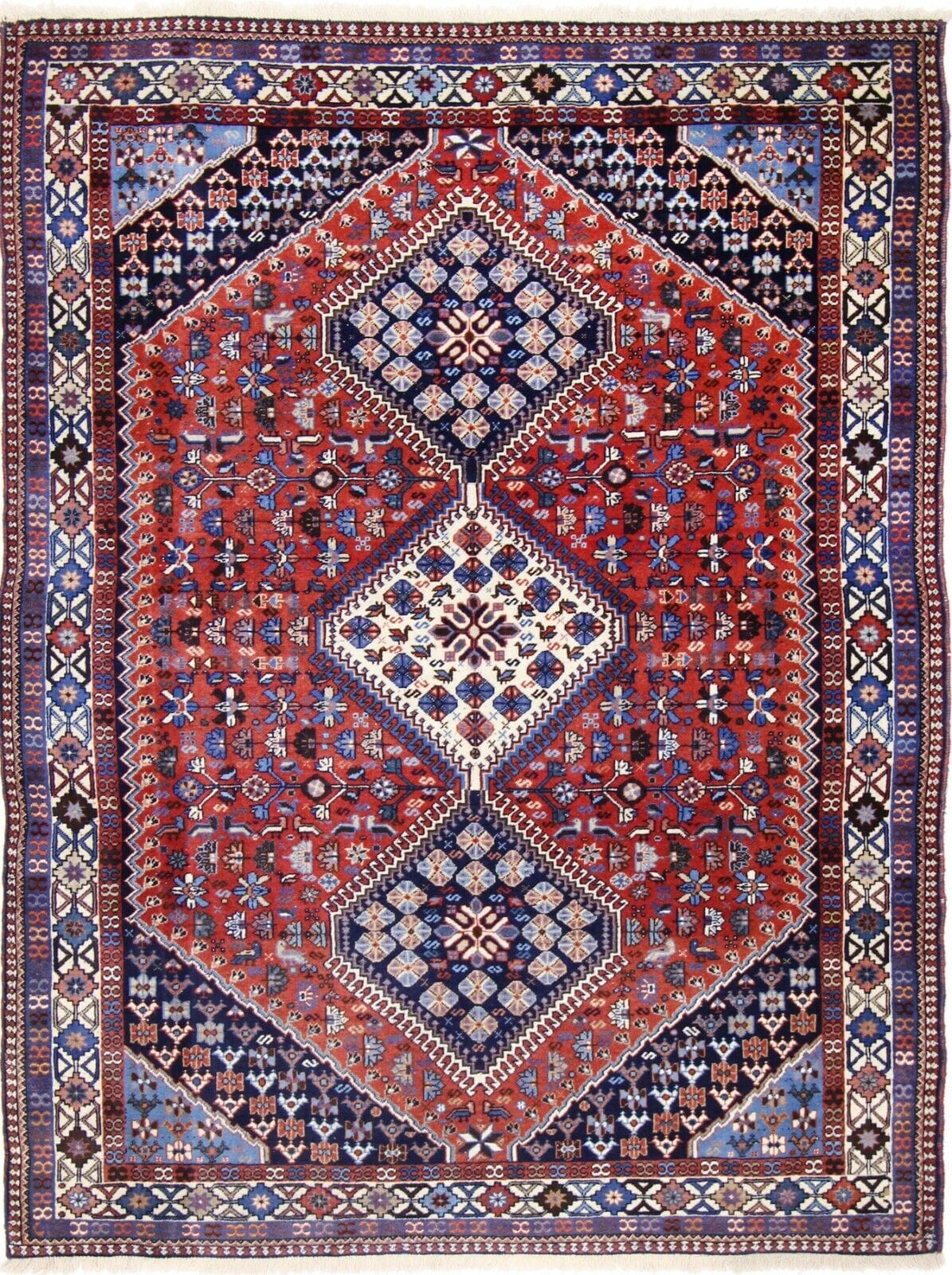
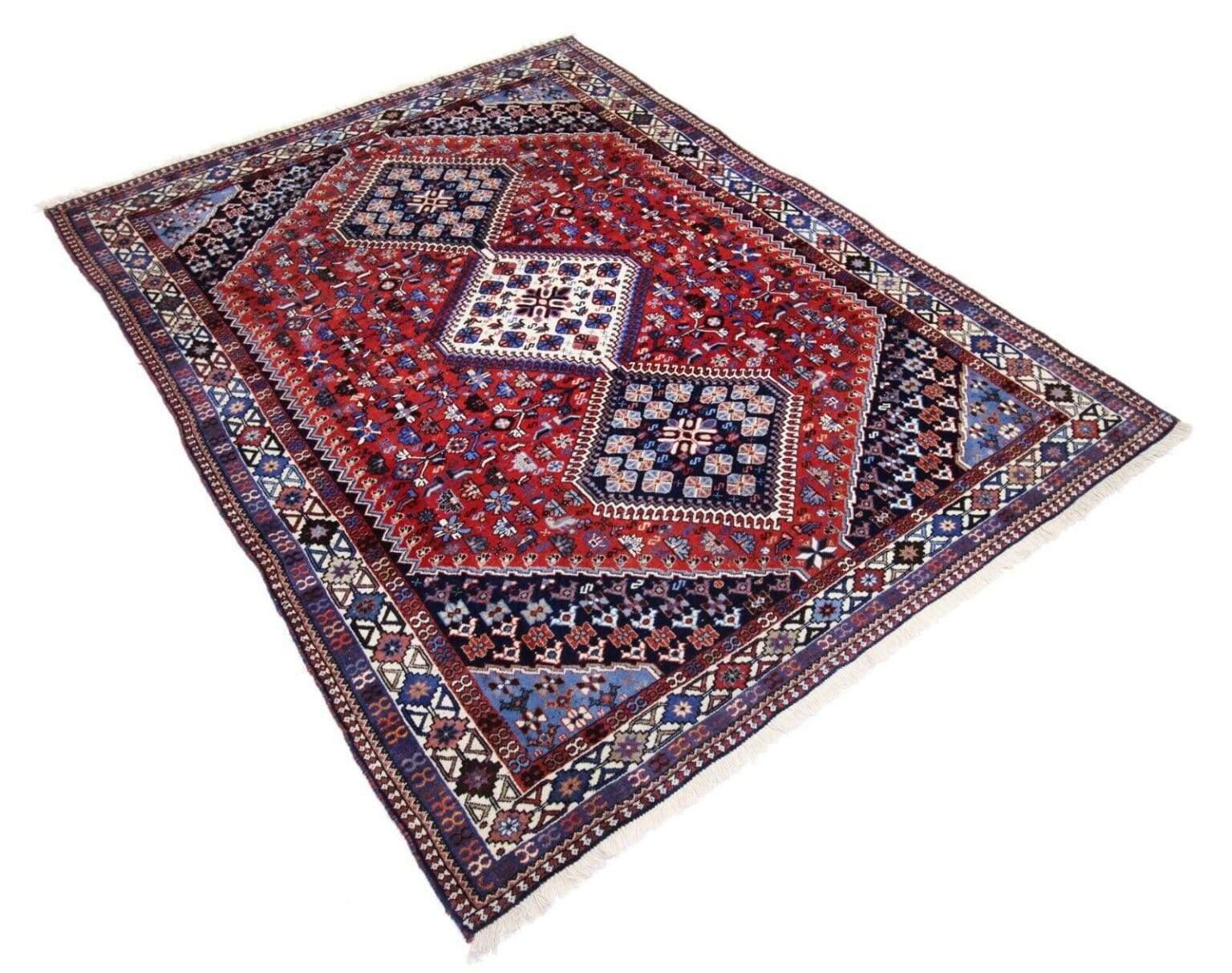
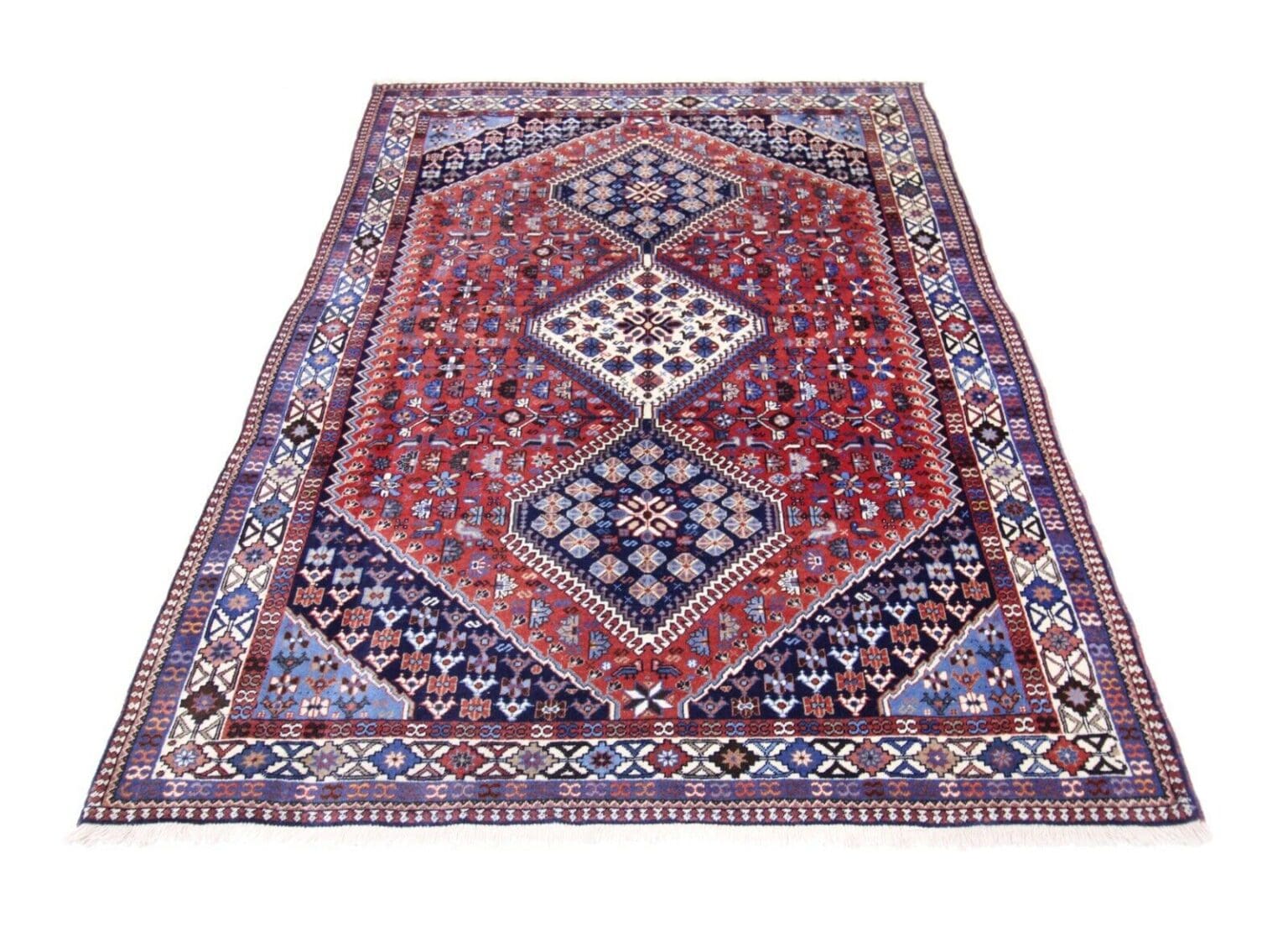
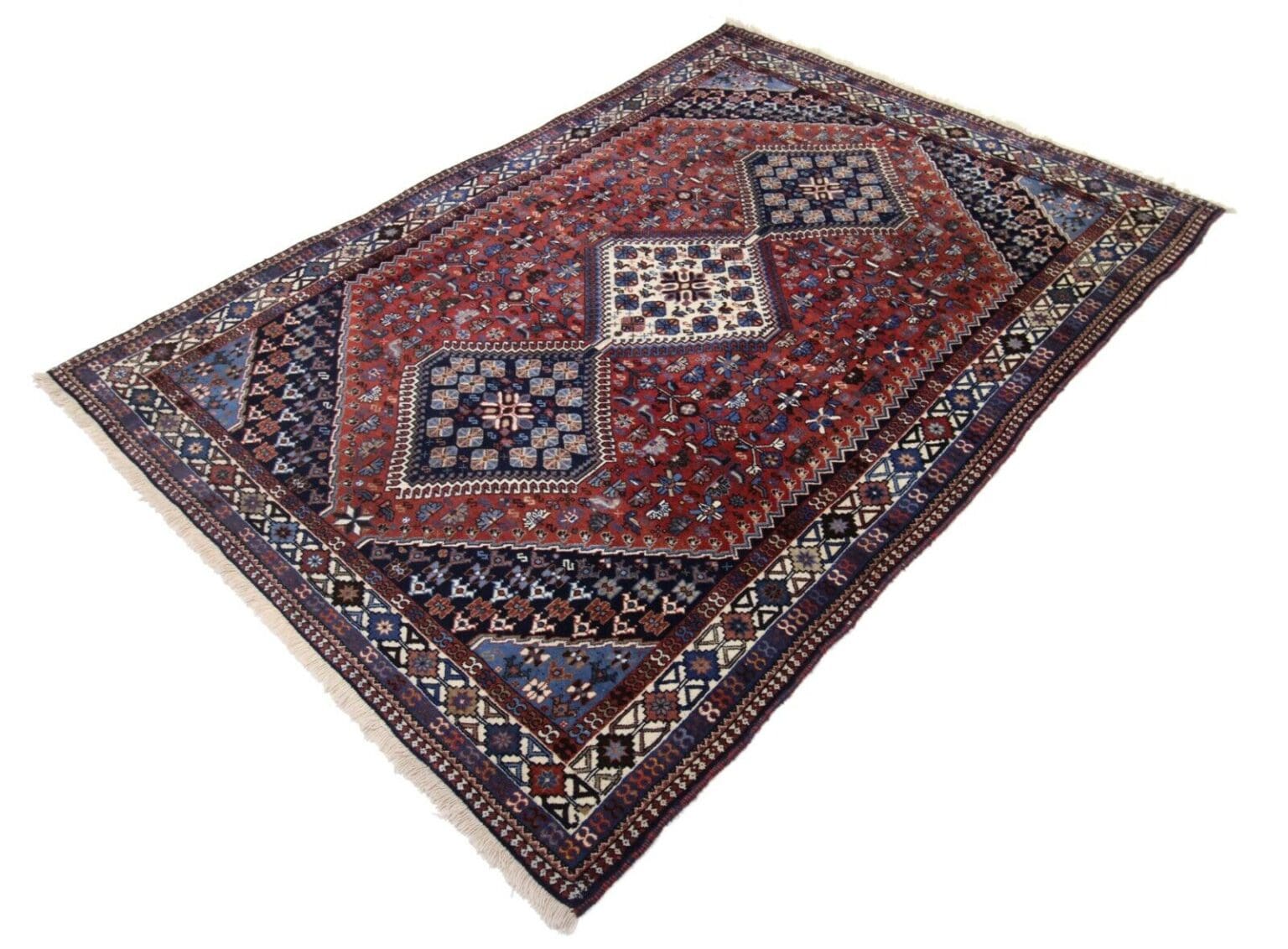
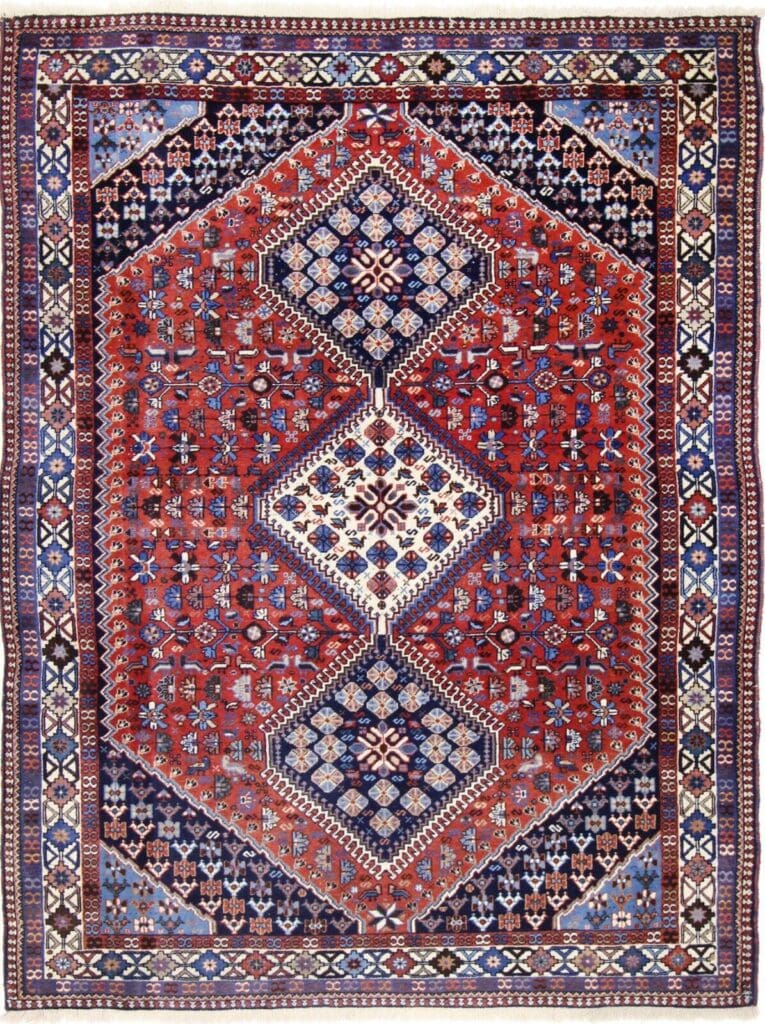
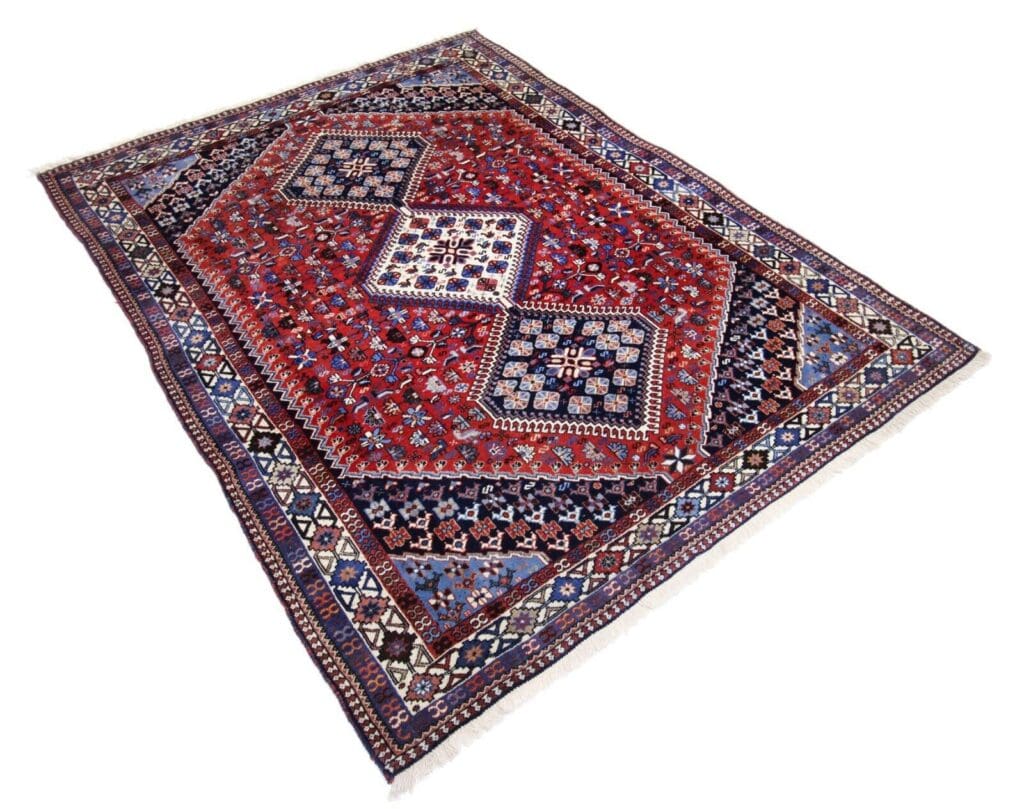
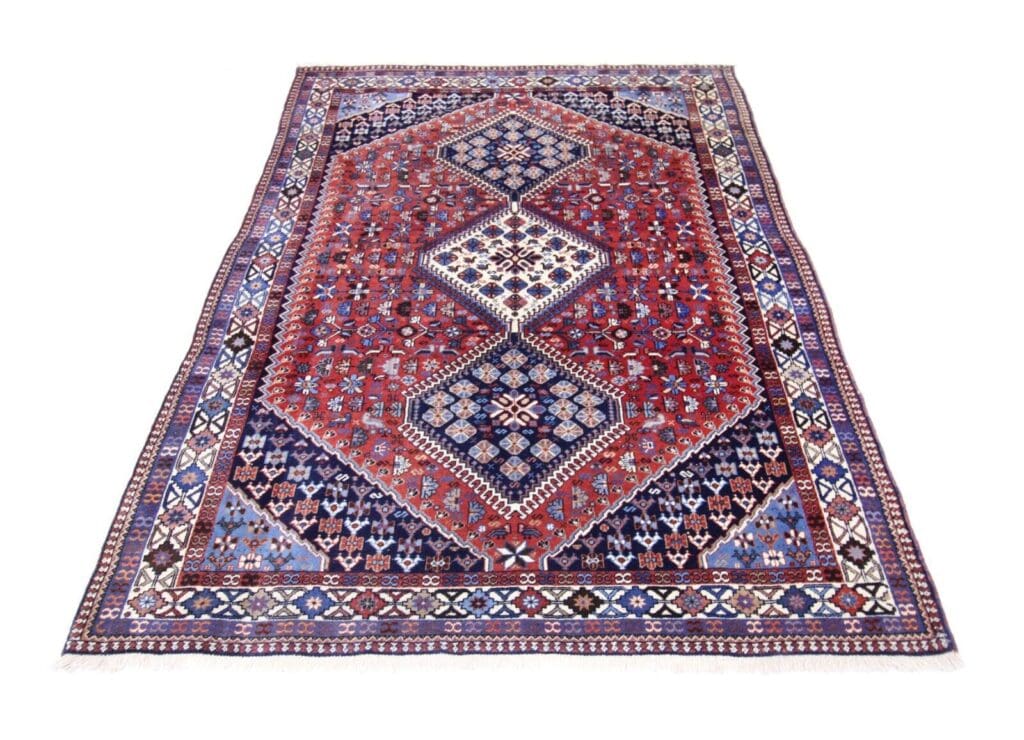
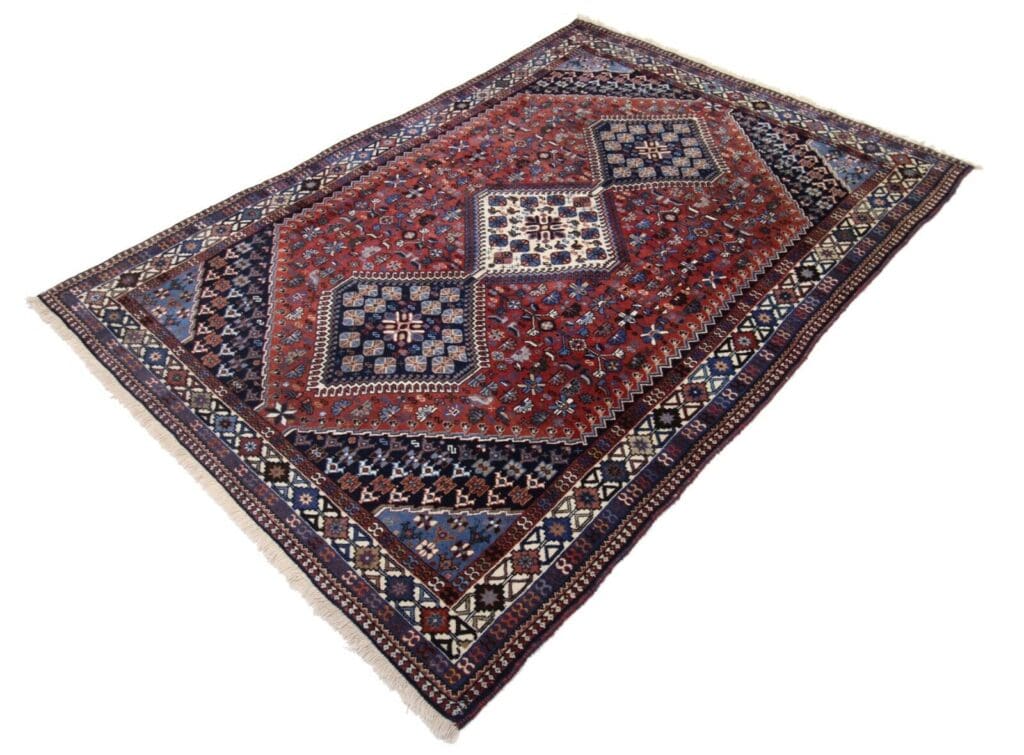
Persian Rug Yalammeh 200 x 150 cm Wool Hand-knotted
€ 1201
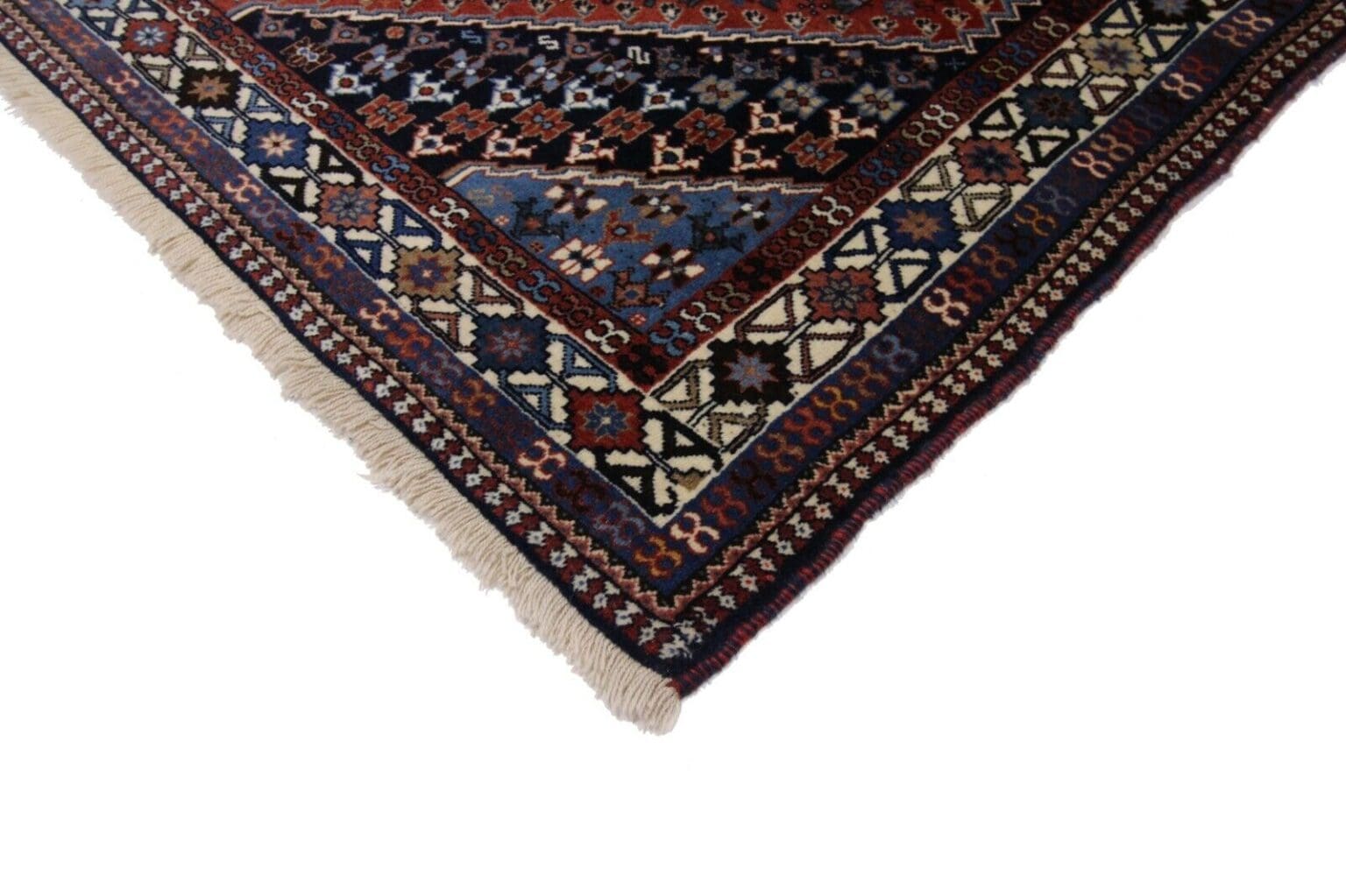
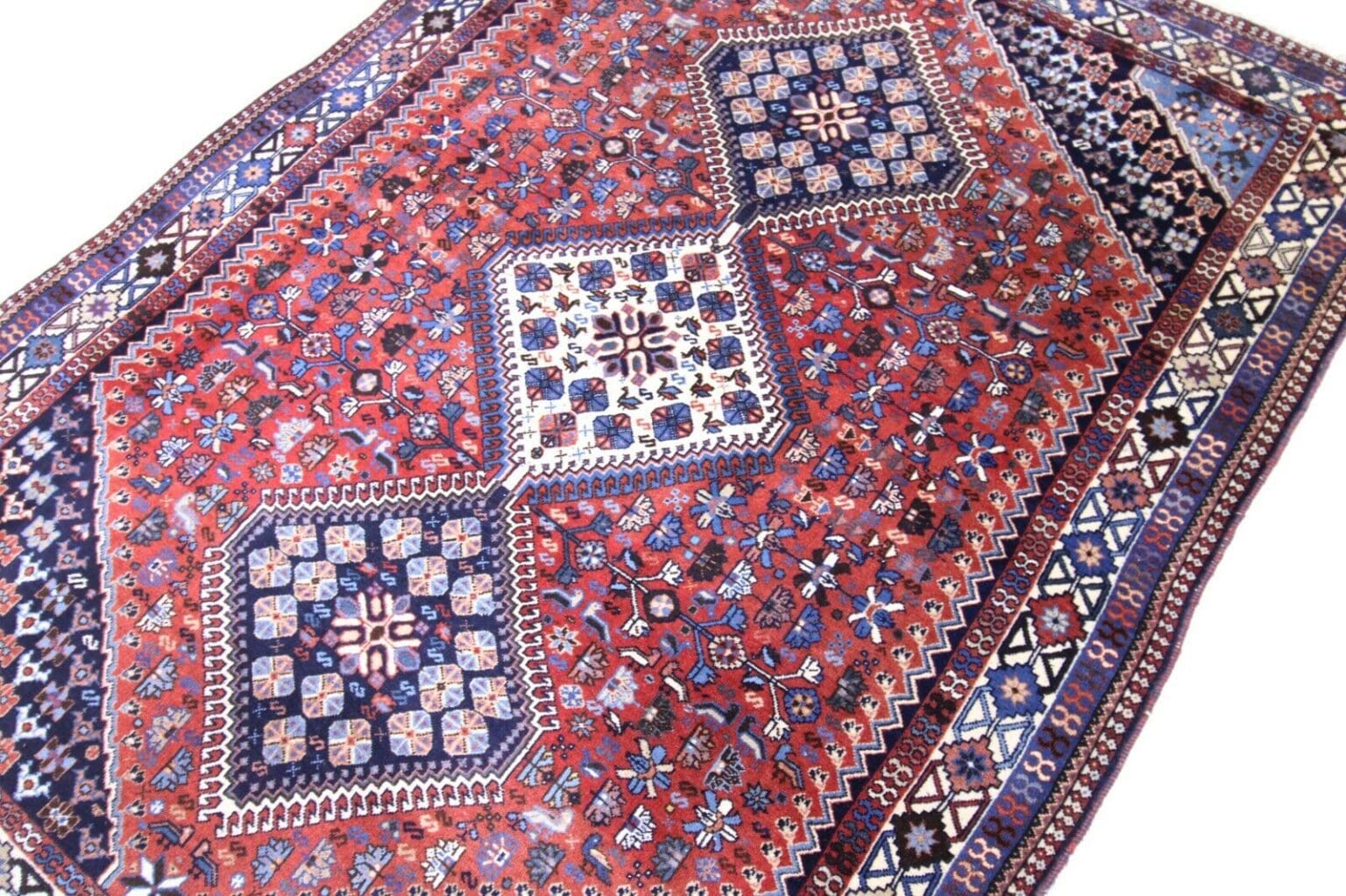
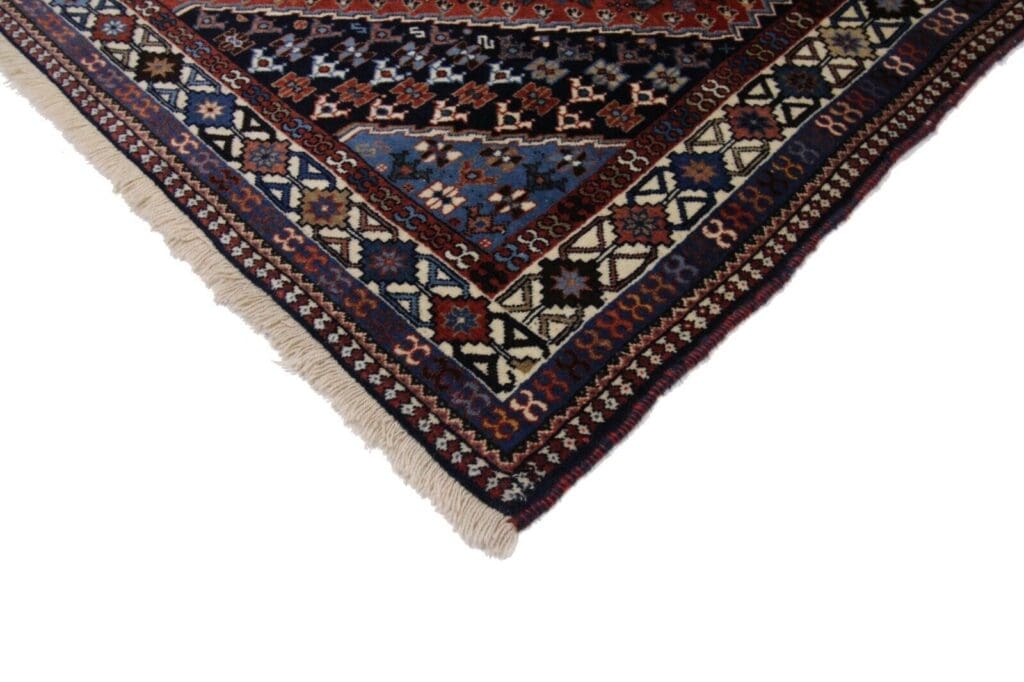
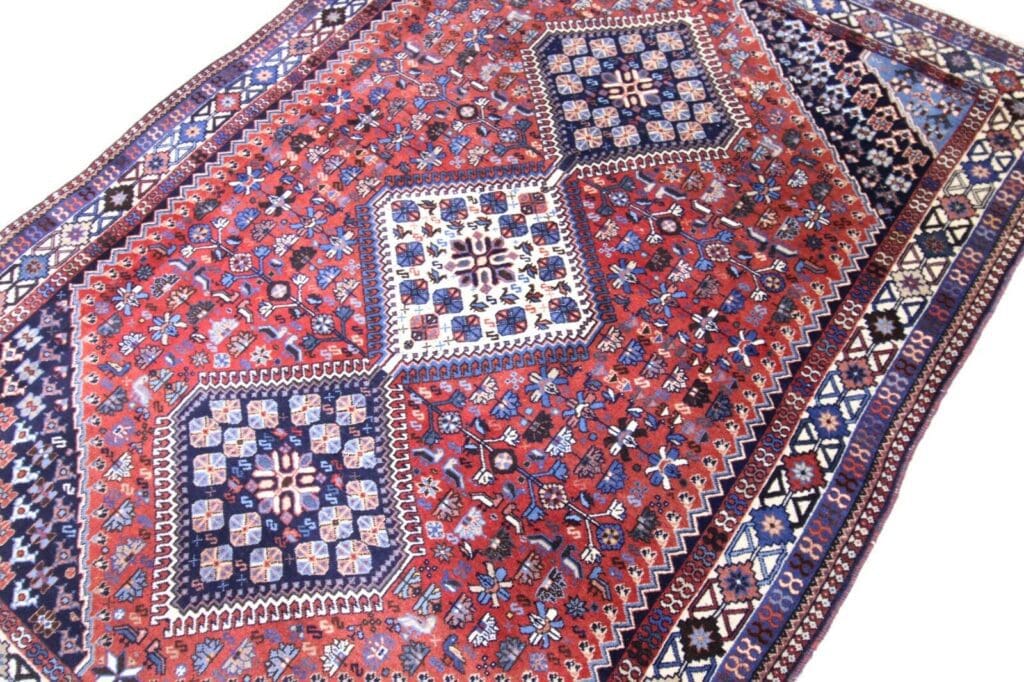
Hand-knotted Yalammeh Persian Rug | Knot density: High-quality craftsmanship | Material: pile 100% wool, warp 100% cotton | Size: 200 x 150 cm | Pattern: Traditional Persian design | Condition: New without label, top condition
This Yalammeh Persian rug is hand-knotted. Its construction combines a traditional knotting method with the materials specified for this piece: the pile is made of 100% wool and the warp of 100% cotton. The warp forms the supporting foundation of the rug. Wool knots are inserted into this foundation row by row, after which the pile is trimmed and the surface is shaped. The result is a one-off textile whose appearance is formed by knots placed by hand.
Wool has long been used in oriental rugs because it provides a resilient and naturally textured pile. It can absorb and release some moisture from the surrounding air and has a comfortable feel underfoot. Cotton is commonly used for warp threads because it provides even, stable lines for the structure of the rug. In this piece, the wool pile and cotton warp therefore form a clearly stated material combination rather than an unspecified blend.
The knot density is described as high-quality craftsmanship. In general, careful knotting can be recognised through consistent rows, an evenly built pile and controlled tension in the foundation. Handwork makes every section of the process part of the finished textile, so no two rugs are completely identical. The term hand-knotted refers to the actual construction of this rug and distinguishes it from a machine-made reproduction.
Origin and Tradition
This rug comes from Persia. Persia refers to the historic cultural region largely associated today with Iran and is one of the major centres of carpet production. Over many generations, carpet making there developed into a craft in which materials, colour, pattern and structure are considered together. A Persian rug is therefore both a practical floor covering and a textile expression of regional knowledge passed from one generation to the next.
Yalammeh is the designation used for this rug. It is also described as a nomadic oriental rug. Within Persian weaving traditions, nomadic rugs are associated with mobile ways of life and with the practical use of materials that could be obtained and worked within those communities. Such rugs were made to be useful, durable and transportable, while still carrying recognisable visual signs. Designs could develop from memory, local examples or the individual interpretation of the people doing the weaving.
Persian carpet culture includes many different production settings. Some rugs are made in urban workshops, while others belong to village or nomad-influenced traditions. Differences can be found in knotting methods, density, wool preparation, colour treatment and the way a design is organised. The origin Persia provides the cultural and geographical framework for this rug, while Yalammeh is the designation used in its listing for its particular regional and stylistic classification.
Hand-knotted carpets are traditionally built on a vertical or horizontal loom. The warp threads are stretched first. Knots are then tied into the warp and secured with weft threads after each working row. The pile is trimmed during the process so that the design can be brought into focus. This sequence explains why hand knotting requires time and concentration. It also explains why the surface, knot structure and tension of each handmade rug have their own individual character.
Persian rugs have traditionally served several purposes: they provide warmth, cover a floor and contribute to the arrangement of a living space. Their importance lies both in practical use and in the preservation of motifs and techniques. This rug connects that tradition with a contemporary production date, which is given as from 2020 onward. It thus represents a modern execution within an older Persian craft tradition, rather than a historical piece from an earlier period.
Nomadic weaving is often discussed in relation to adaptability. A loom, the available wool and the intended use can influence how a rug is made. This does not mean that every nomadic rug follows one fixed formula. Instead, the tradition includes many variations in scale, structure and visual language. The Yalammeh designation places this rug within that named tradition, while the stated Persian origin identifies the broader cultural setting in which its craft belongs.
Design and Pattern
The pattern is described as traditional Persian design. This identifies the artistic classification without assigning an individual motif that has not been specified for this rug. Persian designs may generally be geometric, floral or based on a combination of both. They organise the field, establish rhythm and guide the eye through a relationship between larger forms, secondary details and coloured areas.
Geometric compositions can use clear outlines, diamonds, stepped forms, hooks or repeated angular figures. Floral compositions may draw on stylised blossoms, leaves, vines and rosettes. In Persian carpet design, these natural references are rarely intended as literal botanical pictures. They are simplified, mirrored, repeated or arranged into a continuous textile structure. Their transformation into recognisable signs makes them suitable for translation into rows of knots.
Nomad-influenced rugs are often associated with direct, rhythmic patterning. Repetition does not always appear mathematically exact. Small variations may result from handwork, from recalling a design without a paper template or from adapting the composition to the available weaving area. For a hand-knotted Yalammeh rug with traditional Persian design, this relationship between inherited forms and individual execution is part of the way the pattern can be understood. The specific ornament of this piece is not described beyond its Persian classification.
A rug pattern performs several functions. It divides the surface, establishes visual balance and gives the pile a coherent order. A central field may be framed by borders, or the entire surface may be arranged as a repeated all-over design. In many Persian compositions, borders provide a clear transition between the inner field and the outer edge. These are general principles of Persian carpet design; different regions and workshops interpret them in their own ways rather than producing one uniform pattern language.
The design of a knotted rug is created progressively. Each knot is one small part of the visible image. The weaver transfers the pattern section by section onto the warp, gradually building the surface. Wool absorbs colour according to the character of its fibres and produces a tactile, textile appearance. Together with the knot density, the construction affects how clearly lines and fields are seen. The colour palette of this particular rug is not stated; the documented design classification is traditional Persian design.
The Yalammeh can therefore be understood as a rug using an established Persian design vocabulary without attributing unlisted individual motifs to it. Its name provides the stylistic and regional designation, while hand knotting turns the pattern into a usable textile object. The result is an oriental rug from Persian tradition whose decoration is described in the listing as traditionally Persian.
Pattern traditions also show how a rug can connect function and visual order. A repeated border can frame the central area, while smaller forms can create transitions between larger elements. Whether a design is strongly geometric or more flowing, the knotting process converts a drawn or remembered arrangement into a surface of wool. This makes the pattern inseparable from the technique: the image is not printed onto the rug but built through the placement of individual knots.
Special Features
The rug is listed as new without a label and in top condition. It is also described as an original rug. Its production period is given as from 2020 onward. These details identify it as a contemporary, unused offering rather than a vintage piece. The description as a Yalammeh nomadic oriental rug combines its Persian origin with a nomad-influenced stylistic classification.
The rug is stated to be suitable for young people and adults. No particular room or furnishing arrangement is prescribed by that statement. As with any hand-knotted rug, regular and gentle care remains important. The wool pile, cotton warp and high-quality craftsmanship are the specific material and construction features recorded for this one-off piece.
FAQ
How should I care for my Persian rug?
Regular vacuuming without a brush attachment helps remove loose dirt from the wool pile without placing unnecessary strain on its surface. Occasional professional cleaning is recommended for a more thorough treatment. Direct sunlight should be avoided to reduce the risk of colour fading. If a spill occurs, do not rub aggressively; careful professional treatment is safer for the pile and knot structure than strong household cleaners.
What is the difference between Persian rugs and other oriental rugs?
Persian rugs come from Persia, largely associated with present-day Iran, and are known for differentiated pattern traditions and varied hand-knotting practices. Other oriental rugs may come from different regions and have their own designs, materials and construction methods. Wool quality, the type of warp and knot density can all influence a rug’s character. This piece combines Persian origin, traditional Persian design, a wool pile, a cotton warp and hand knotting.
Where is the best place for my Persian rug?
A location with limited foot traffic can help reduce wear. The rug may be placed as a central element in a room so that its handwork and traditional pattern remain visible. When choosing a position, it is also sensible to avoid direct sunlight and to place the rug where furniture or constant movement will not put continuous pressure on its surface. These measures support careful everyday use without changing the rug’s documented characteristics.
To provide the best experiences, we use technologies like cookies to store and/or access device information. Consenting to these technologies will allow us to process data such as browsing behavior or unique IDs on this site. Not consenting or withdrawing consent, may adversely affect certain features and functions.
Functional Always active
The technical storage or access is strictly necessary for the legitimate purpose of enabling the use of a specific service explicitly requested by the subscriber or user, or for the sole purpose of carrying out the transmission of a communication over an electronic communications network.
Preferences
The technical storage or access is necessary for the legitimate purpose of storing preferences that are not requested by the subscriber or user.
Statistics
The technical storage or access that is used exclusively for statistical purposes.The technical storage or access that is used exclusively for anonymous statistical purposes. Without a subpoena, voluntary compliance on the part of your Internet Service Provider, or additional records from a third party, information stored or retrieved for this purpose alone cannot usually be used to identify you.
Marketing
The technical storage or access is required to create user profiles to send advertising, or to track the user on a website or across several websites for similar marketing purposes.
 SECURE PAYMENT
 SHIPPING PARTNERS