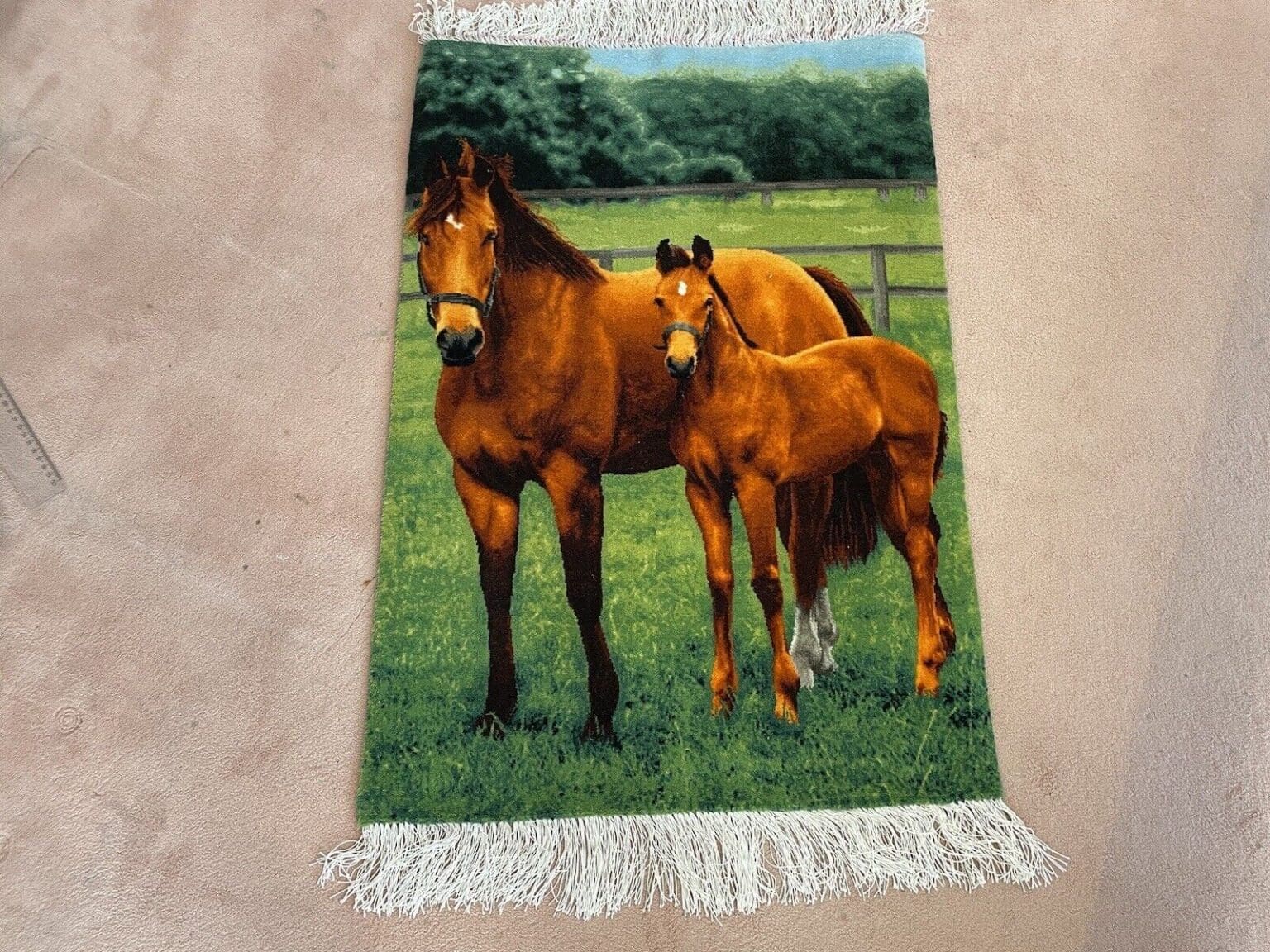
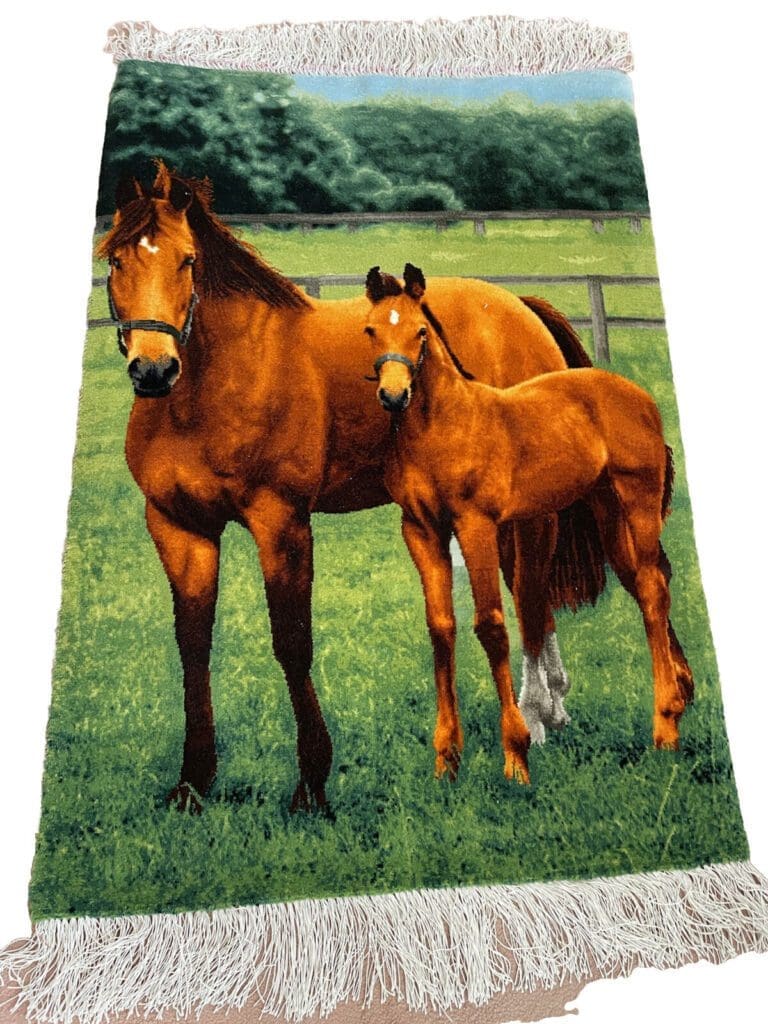
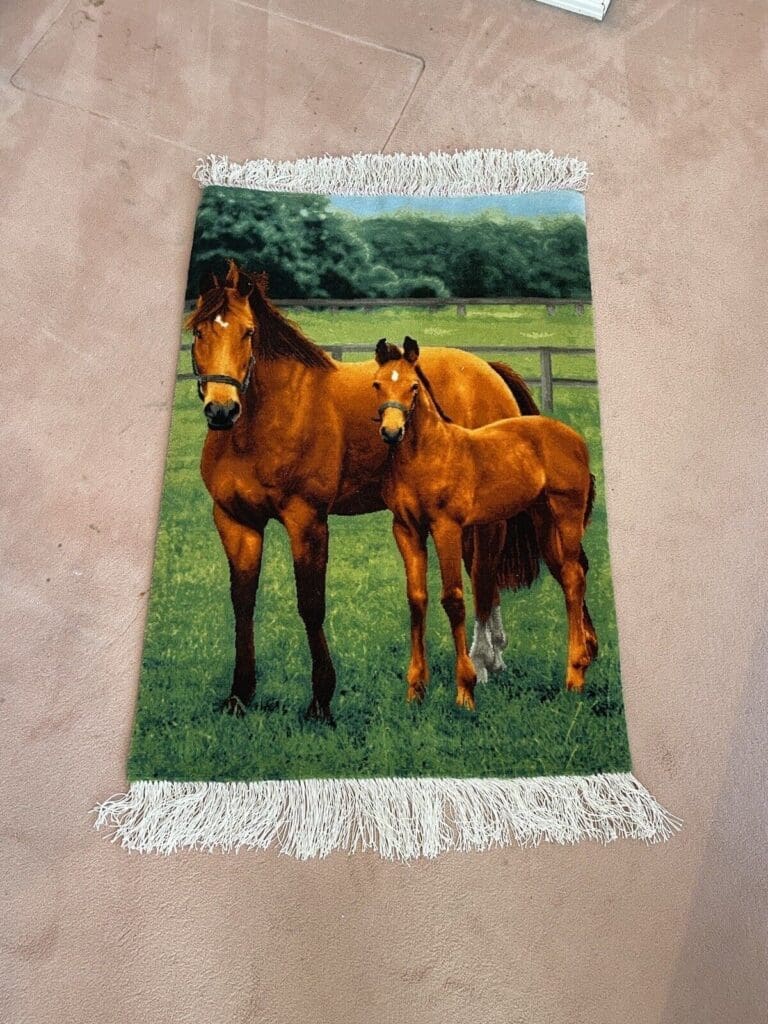
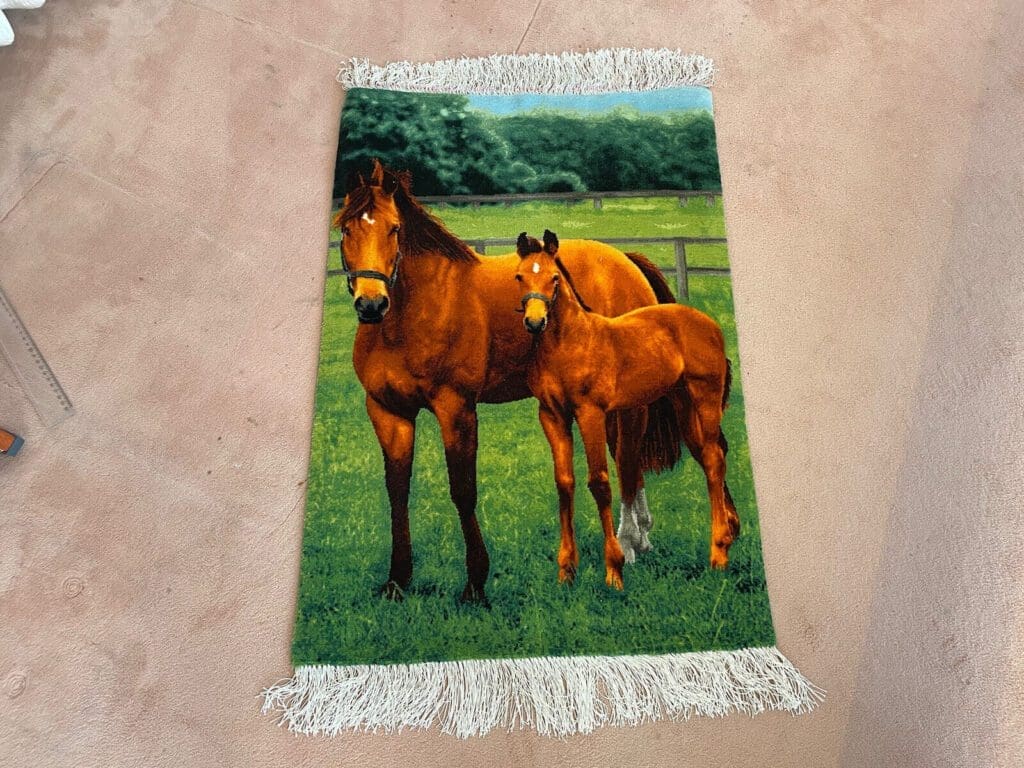
Hand-knotted Tabriz Persian Rug | Knot density: 70 Raj | Material: pile wool and cotton | Size: 90 x 60 cm | Pattern: horse motifs | Condition: new with tag
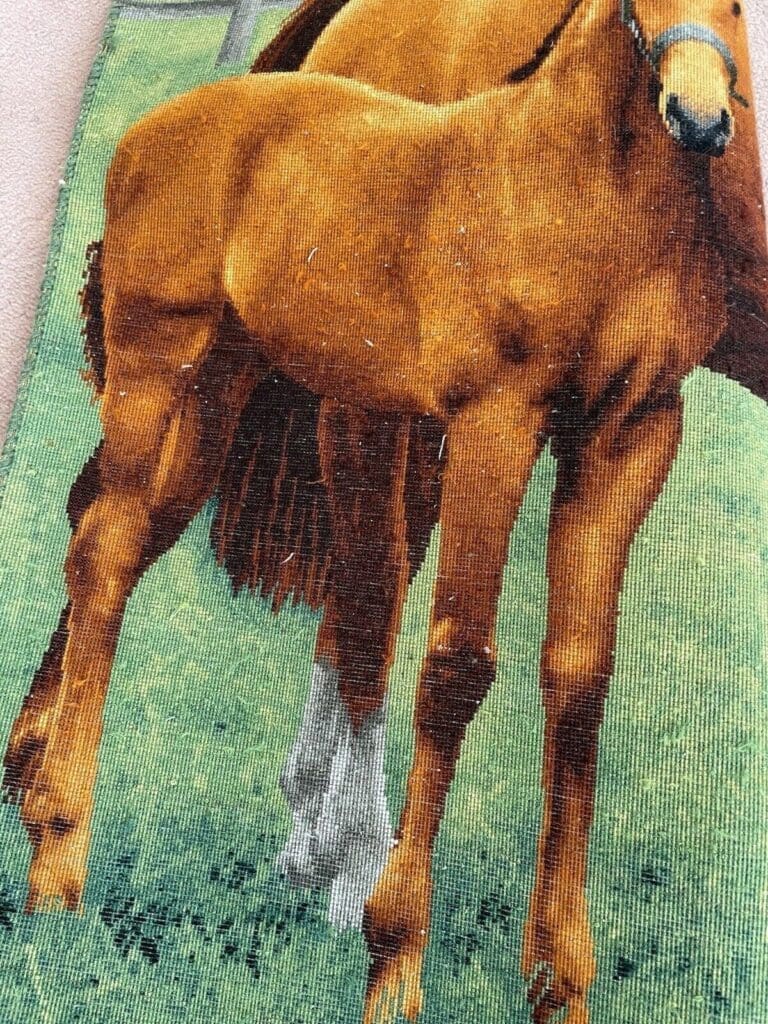
This Persian rug is described as a very finely hand-knotted Tabriz rug with a knot density of 70 Raj. Hand-knotting means that the design is built into the textile one knot at a time. This method allows a pictorial subject to be rendered with distinct lines and small details. The fine construction is directly associated in the product description with the carefully worked depiction of horses.
The short description lists wool and cotton as materials. The fuller description additionally calls the rug a combination of fine wool and pure silk. Both statements are part of the product information: wool and cotton appear in the short data, while silk is also identified in the longer account. A specific assignment of these fibres to pile and warp is not given. The rug is therefore presented here with all stated material references and without adding a construction detail that the source does not provide.
The longer text links the wool-and-silk combination with a lustrous surface and a pleasant handle. It also describes the material combination as durable. In this way, the rug is presented as both a decorative textile and a carefully made example of Iranian rug craft. The knot density supports the finely drawn appearance of the image, while the stated technique remains hand-knotting rather than machine production.
Material choices affect how a rug receives light, how its surface feels and how a drawn motif is perceived. Wool can give a textile design depth, while silk is associated in the description with a visible sheen. Cotton is also named in the short description. For this one-off rug, the material information is therefore kept to the stated combination of wool, cotton and the additional reference to silk. No unstated fibre content or technical structure is added.
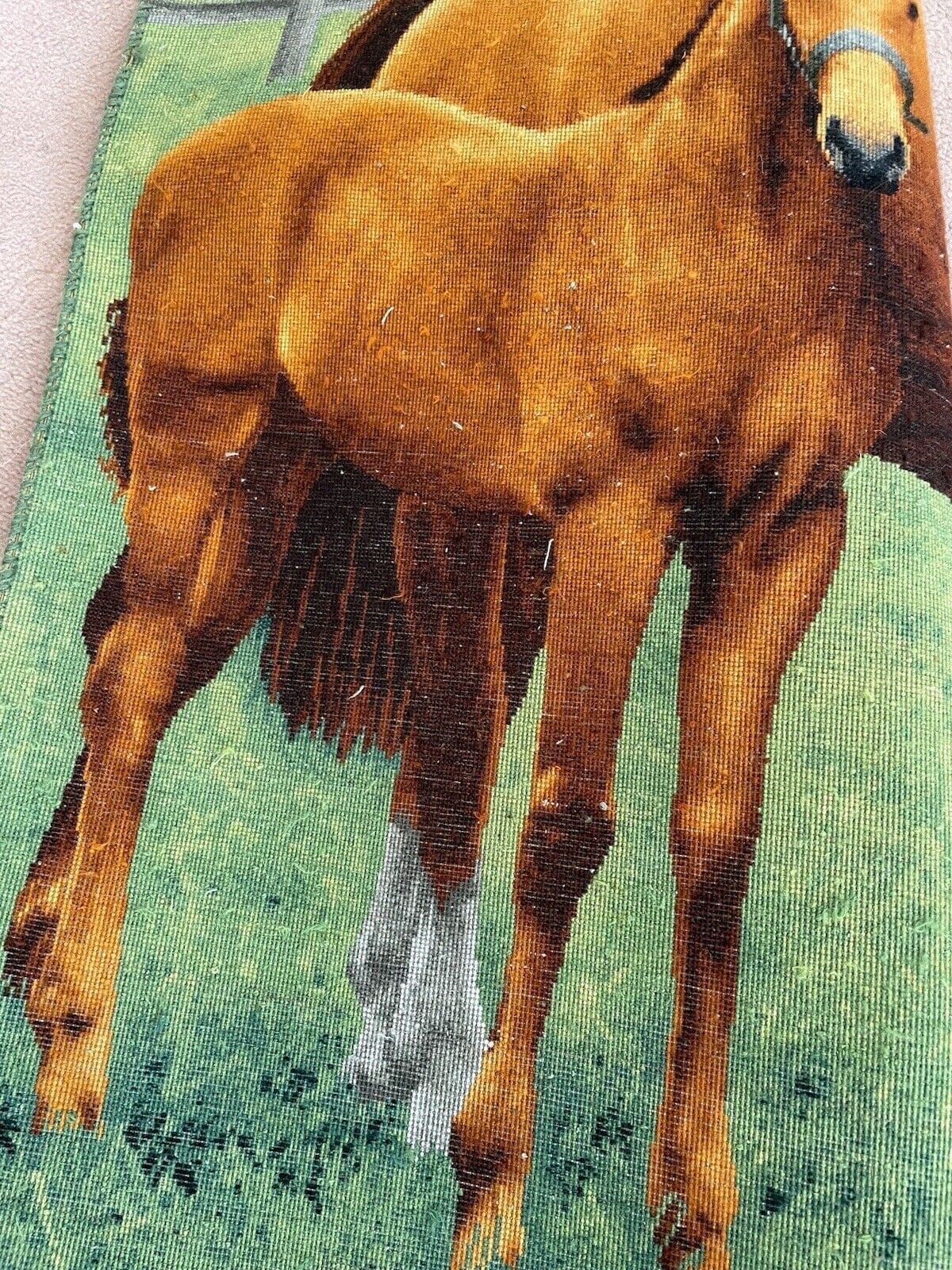
Hand-knotting also gives the maker control over changes in contour and colour within a pictorial design. In a horse image, these changes are important for separating bodies, legs, heads and areas of movement. The source describes the technique as filigree and connects it with a lively, detailed result. That connection explains the craftsmanship of the rug without assigning it a construction feature that is not mentioned.
Origin and Tradition
The rug comes from Tabriz in Iran. Tabriz is one of the recognised centres of Iranian carpet weaving and has been associated with high-quality rugs for centuries. Located in north-western Iran, the city became an important place for production, trade and the circulation of designs. Tabriz rugs are commonly associated with controlled drawing and carefully organised compositions, qualities that are relevant to a pictorial rug as well as to floral or geometric examples.
The Tabriz tradition brings design planning, colour arrangement and knotting technique together. A composition is not simply scattered across the field; it is prepared so that the principal forms remain legible within the available textile surface. A figurative subject makes this planning especially significant. Lines, proportions and movement have to work together for the image to read clearly. The product description emphasises the fine hand-knotting and the high knot density of this rug in connection with its detailed horse design.
Iranian rugs developed through many regional traditions, each with its own approaches to drawing, colour and subject matter. Tabriz is known not only for floral and geometric arrangements but also for elaborately drawn pictorial rugs. Such pieces may focus on one subject, a scene or a symbolic image. The horses on this rug place it within that broader tradition of textile pictures, while the stated origin remains specifically Tabriz.
The history of Tabriz weaving was shaped by workshops, merchants and contact with other Iranian rug-producing areas. This exchange allowed different influences to appear in Tabriz designs without removing their regional identity. The city is associated with a combination of precise line work, orderly composition and manual production. This rug is offered as a Persian rug from Tabriz and therefore belongs to the Iranian tradition named in the source.
Iranian carpet culture also reflects the relationship between a useful floor textile and an image-bearing work of craft. A rug can serve a practical purpose while preserving a subject through knots, colour and repeated handling of the design. A horse picture places the emphasis on recognisable form rather than on an entirely abstract repeat. The longer description consequently presents this piece as both a decorative element and a collector’s item. That description complements its Tabriz origin; it does not replace it with another regional attribution.
The source mentions other Iranian traditions as points of comparison. Isfahan rugs are described there as often using floral motifs and complex geometric designs. Kashan rugs are associated with deep reds and traditional patterns, while Nain rugs are mentioned for fine wool and silk knots and elegant designs. These names provide context within Persian rug culture. They are not origins for this rug, which is identified as coming from Tabriz.
The regional background also helps explain why a Tabriz rug can accommodate a subject outside the most familiar carpet patterns. Workshop drawing permits a design to be adapted to a specific image while retaining the discipline of a hand-knotted textile. The source calls the style traditional Persian and Oriental. In combination with the stated Iranian origin, the hand-knotted technique and the horse subject, this gives the piece its place within the wider history of Persian rug making.
Design and Pattern
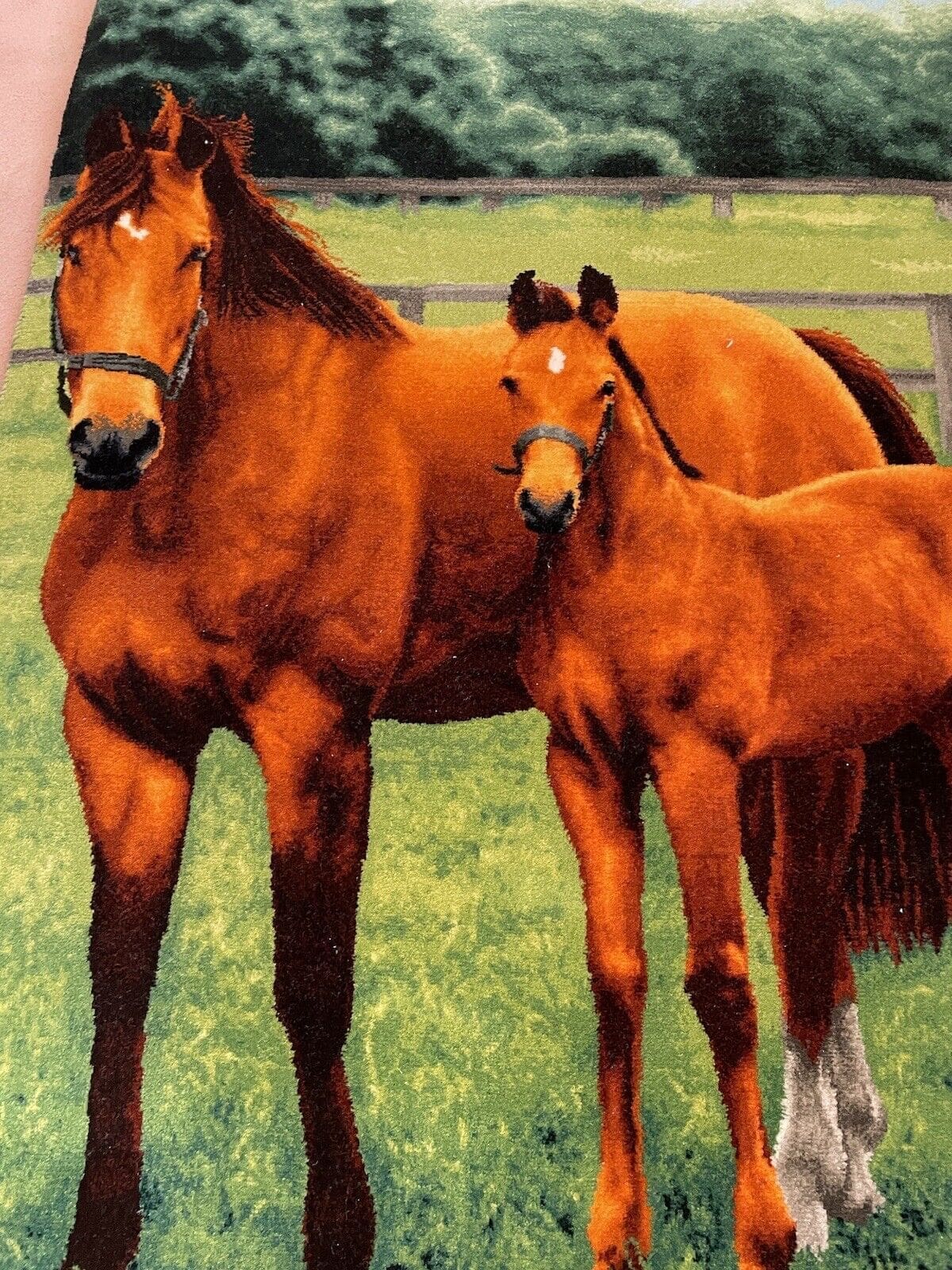
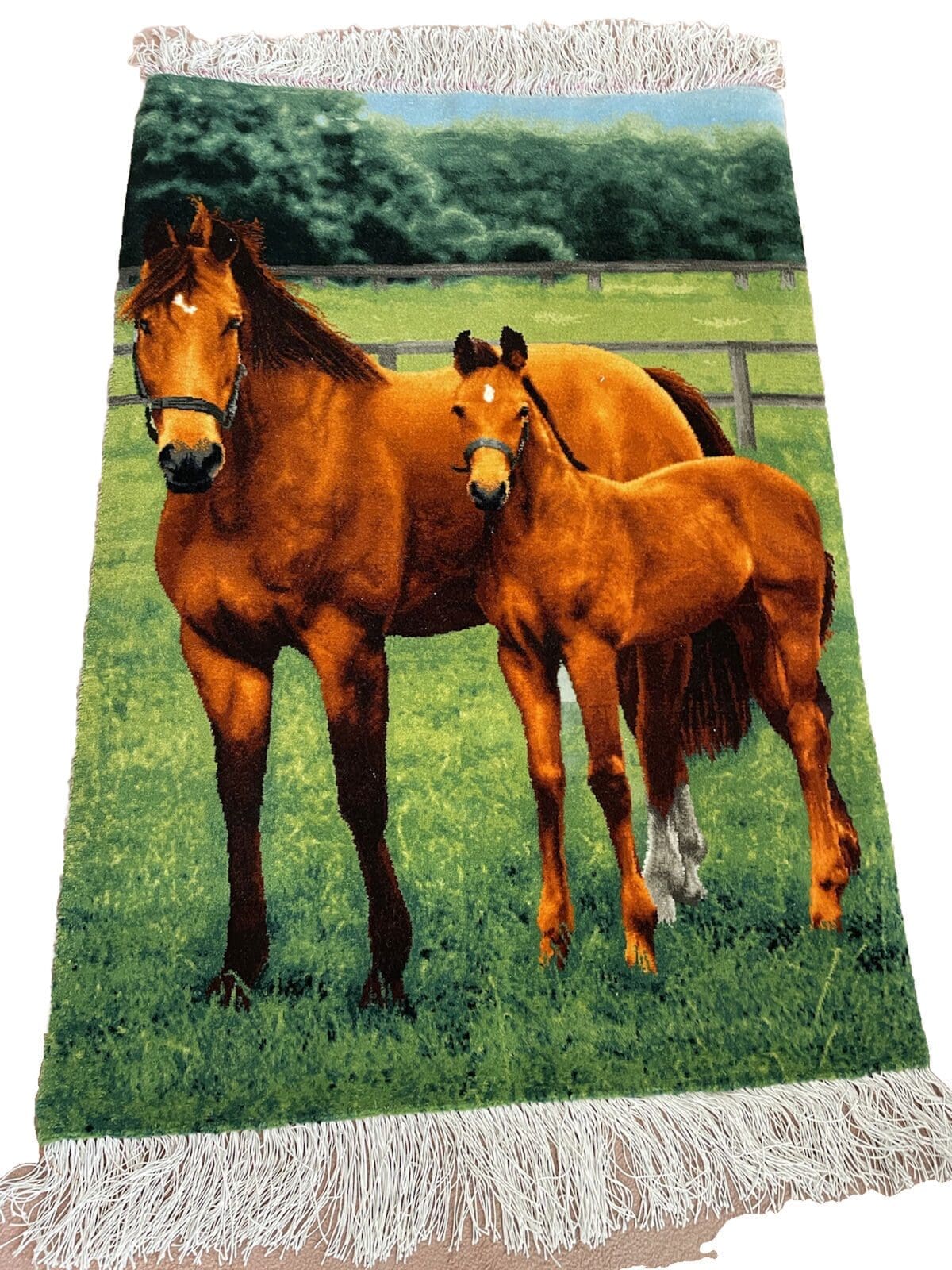
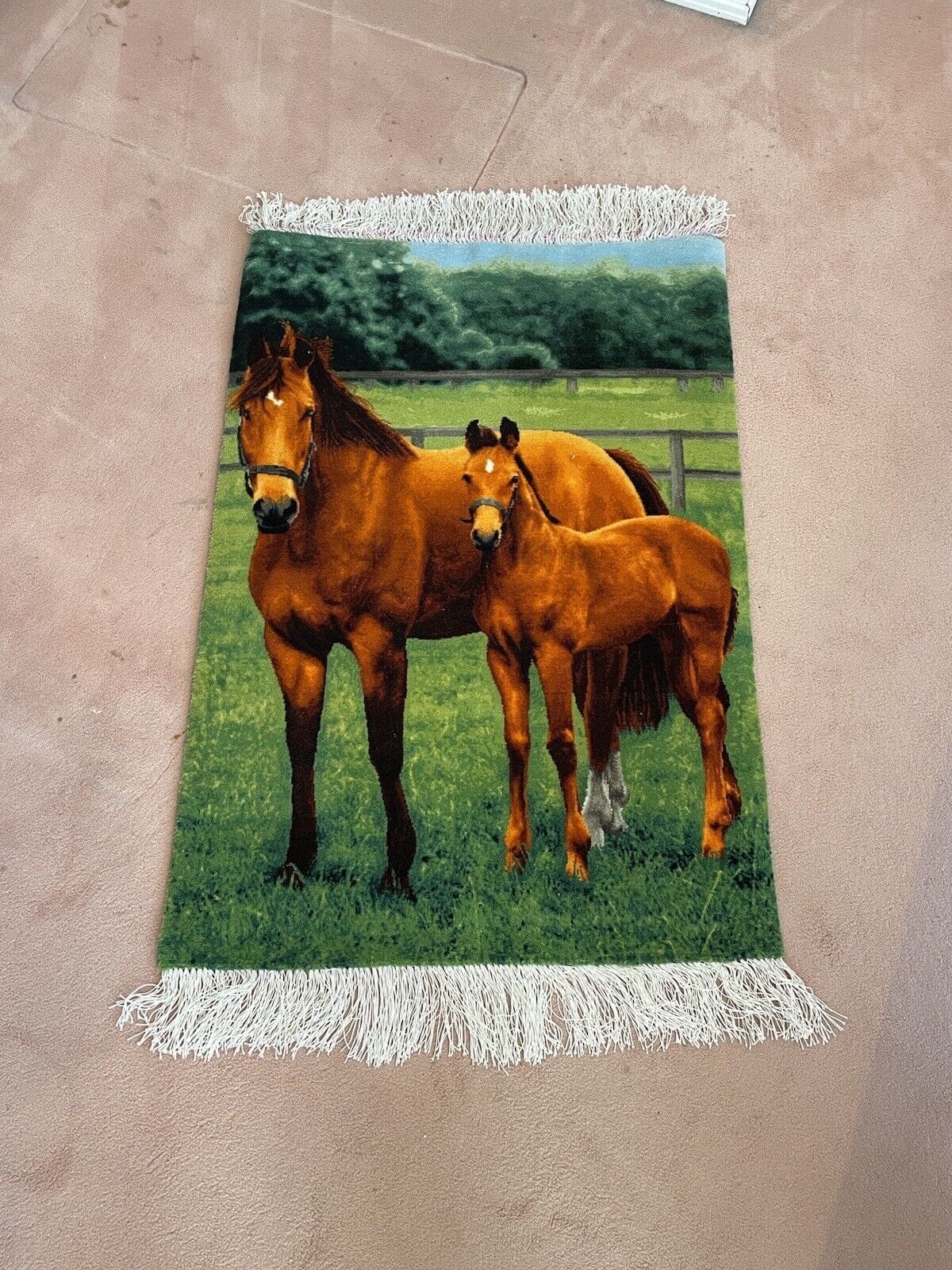
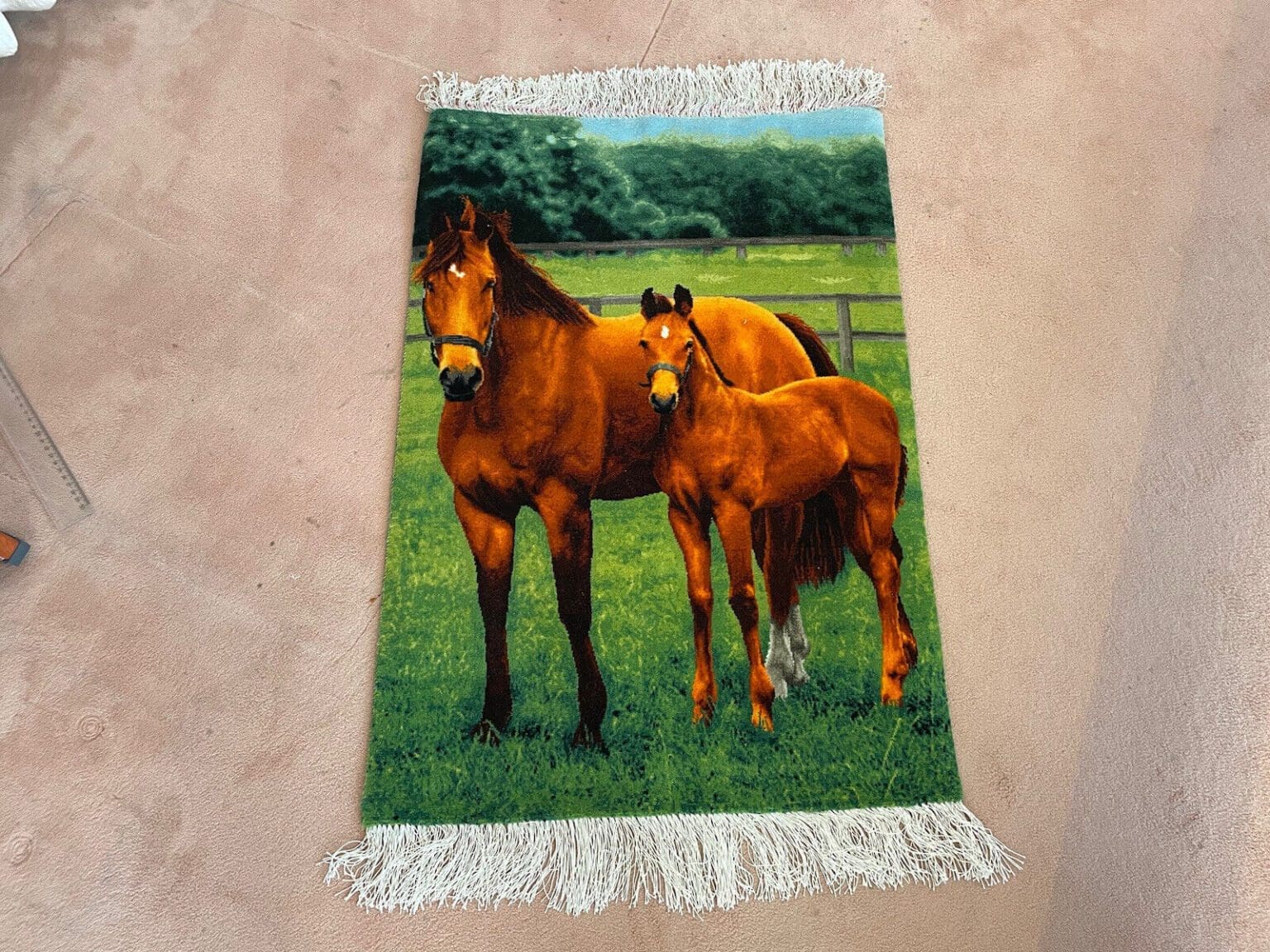
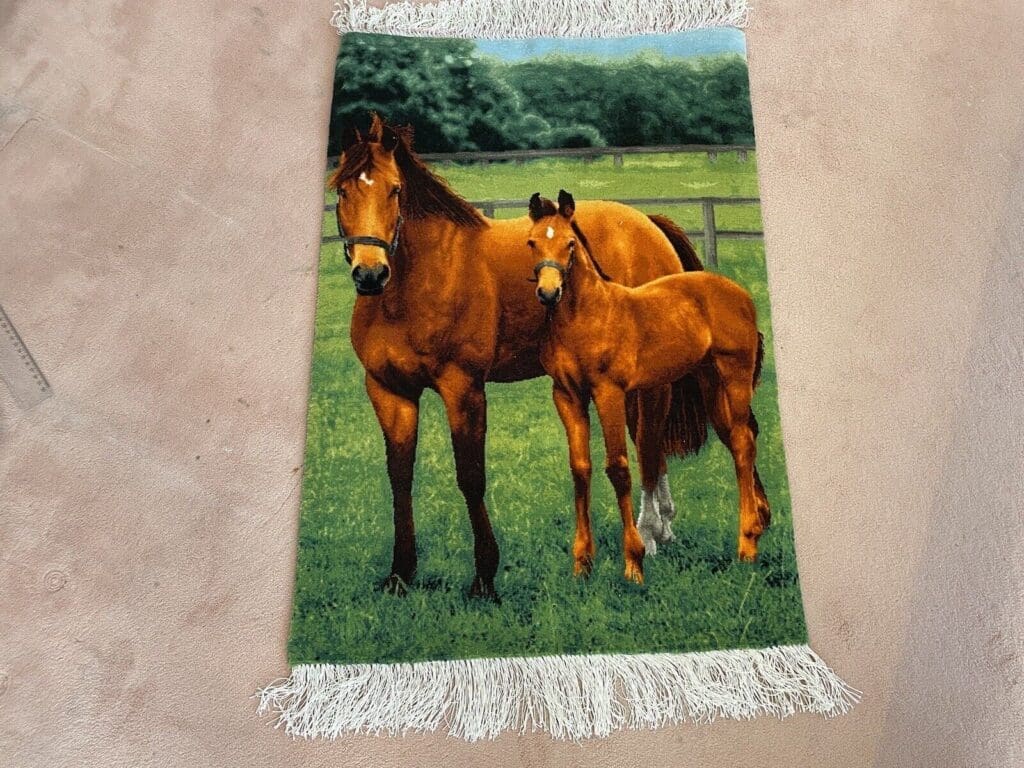
The central subject is horses. The pattern directs attention to the animals’ forms, postures and presence. The product text describes the design as an impressive image of horses and notes that the fine knotting makes the individual details appear lively and engaging. This is therefore a figurative composition rather than a purely decorative scatter of repeated ornaments.
The source associates horses with strength and freedom. That symbolism is part of the stated interpretation of the design and helps explain why the rug is aimed particularly at horse enthusiasts. In visual traditions, a horse may suggest movement, power or independence, depending on its posture and placement. For this specific piece, the concrete description is that horse motifs dominate the design and that the subject is presented as a rare design for people who appreciate horses.
Figurative rug designs require a different kind of control from a simple geometric repeat. A floral or geometric field can be organised through symmetry and repetition. A horse image must instead keep bodies, legs, heads and directions of movement visually coherent. A fine knot structure can support small transitions and contours when the design is transferred into textile form. The source specifically highlights the filigree knotting as a reason the horses can be shown with detail.
Tabriz design traditions include compositions with a clear centre as well as more scene-like pictorial arrangements. A horse motif may be placed within a framed field, shown as part of a setting or repeated as a principal subject. The exact arrangement of the horses on this rug is not described. No particular border, medallion, landscape or colour sequence is therefore assigned to the piece. The confirmed design information consists of the horse motifs, their pictorial character and the traditional Persian and Oriental style named in the short description.
The longer source refers to vivid colours in connection with Tabriz rugs. Colour in a pictorial textile can separate figures from their background, clarify overlapping forms and draw attention to important outlines. It can also affect whether a scene appears calm, formal or dynamic. The exact palette of this rug is not stated, so no individual colour is presented as a fact about it. The regional association with lively colour remains general background about Tabriz design.
A horse image can work in a modern interior as well as in a traditional one because the subject is not tied to one furniture period. The longer description explicitly mentions both modern and traditional furnishing styles. Its role can be understood between floor covering and textile image: the rug uses a traditional Iranian technique to preserve a subject that remains immediately recognisable. That combination gives the pattern a distinct identity without requiring an invented description of its layout.
The design also explains the collector-oriented wording used in the source. A rare subject is less commonly encountered than the floral, medallion or geometric patterns frequently associated with Persian rugs. The product text does not claim that every detail is unique in the entire market; it calls this horse design rare and especially suitable for horse lovers. That precise description is retained here.
Special Features
The defining special feature is the rare horse design for horse enthusiasts. The horse motifs give the rug a clear thematic focus and distinguish it from pieces based solely on floral or geometric ornament. The very fine hand-knotted execution and the stated knot density of 70 Raj are additional features explicitly included in the product description.
The condition is given as new with tag. The longer description presents the rug as ready for use and describes it as both a decorative object and a collector’s piece. The short description does not report previous use or specific wear; “new with tag” is therefore the applicable condition statement. No additional history of ownership or age is supplied.
The rug is described as suitable for underfloor heating. This statement concerns its intended use in a living space. Advice about an underlay, cleaning intervals or room humidity is not listed as a special feature of this individual rug and is not added here. The confirmed special characteristics are its new tagged condition, the horse subject, the fine hand-knotting and the suitability for underfloor heating.
Its Iranian origin is another important identifying element, although it is not a decorative feature. Tabriz places the rug within Persian carpet production, while the unusual subject gives it a more specific visual identity. Together, origin, technique, material references and design describe the piece without confusing the Tabriz attribution with the other Iranian rug names mentioned for comparison.
FAQ
How should I care for the Tabriz Persian rug?
Regular vacuuming is recommended to keep loose dust from remaining on the textile surface. The rug should also be protected from direct sunlight. If a stain occurs, treat it promptly with a damp cloth and a mild soap solution. Avoid unnecessary vigorous rubbing, particularly across the finely hand-knotted horse image. These care instructions apply to the wool-and-silk description in the long text, while the short description also lists cotton among the materials.
Where does the Persian rug come from?
The rug comes from Tabriz in Iran. The city of Tabriz is known for a carpet-weaving tradition that goes back centuries and is recognised as an important centre of Iranian hand-knotted rugs. This origin is the basis for the designation Tabriz Persian rug. The horse pattern identifies the design of this piece; it does not change the stated origin to one of the other Iranian regions mentioned as comparisons.
Is the Tabriz rug with silk durable?
Yes. The longer product description calls the combination of high-quality silk and fine wool durable and describes a robust surface intended to retain its appearance even with daily use. At the same time, the rug is identified as very finely hand-knotted. Silk is expressly named in the long description, while the short description lists wool and cotton. Both material references are retained as part of the complete product information.
To provide the best experiences, we use technologies like cookies to store and/or access device information. Consenting to these technologies will allow us to process data such as browsing behavior or unique IDs on this site. Not consenting or withdrawing consent, may adversely affect certain features and functions.
Functional Always active
The technical storage or access is strictly necessary for the legitimate purpose of enabling the use of a specific service explicitly requested by the subscriber or user, or for the sole purpose of carrying out the transmission of a communication over an electronic communications network.
Preferences
The technical storage or access is necessary for the legitimate purpose of storing preferences that are not requested by the subscriber or user.
Statistics
The technical storage or access that is used exclusively for statistical purposes.The technical storage or access that is used exclusively for anonymous statistical purposes. Without a subpoena, voluntary compliance on the part of your Internet Service Provider, or additional records from a third party, information stored or retrieved for this purpose alone cannot usually be used to identify you.
Marketing
The technical storage or access is required to create user profiles to send advertising, or to track the user on a website or across several websites for similar marketing purposes.
 SECURE PAYMENT
 SHIPPING PARTNERS


