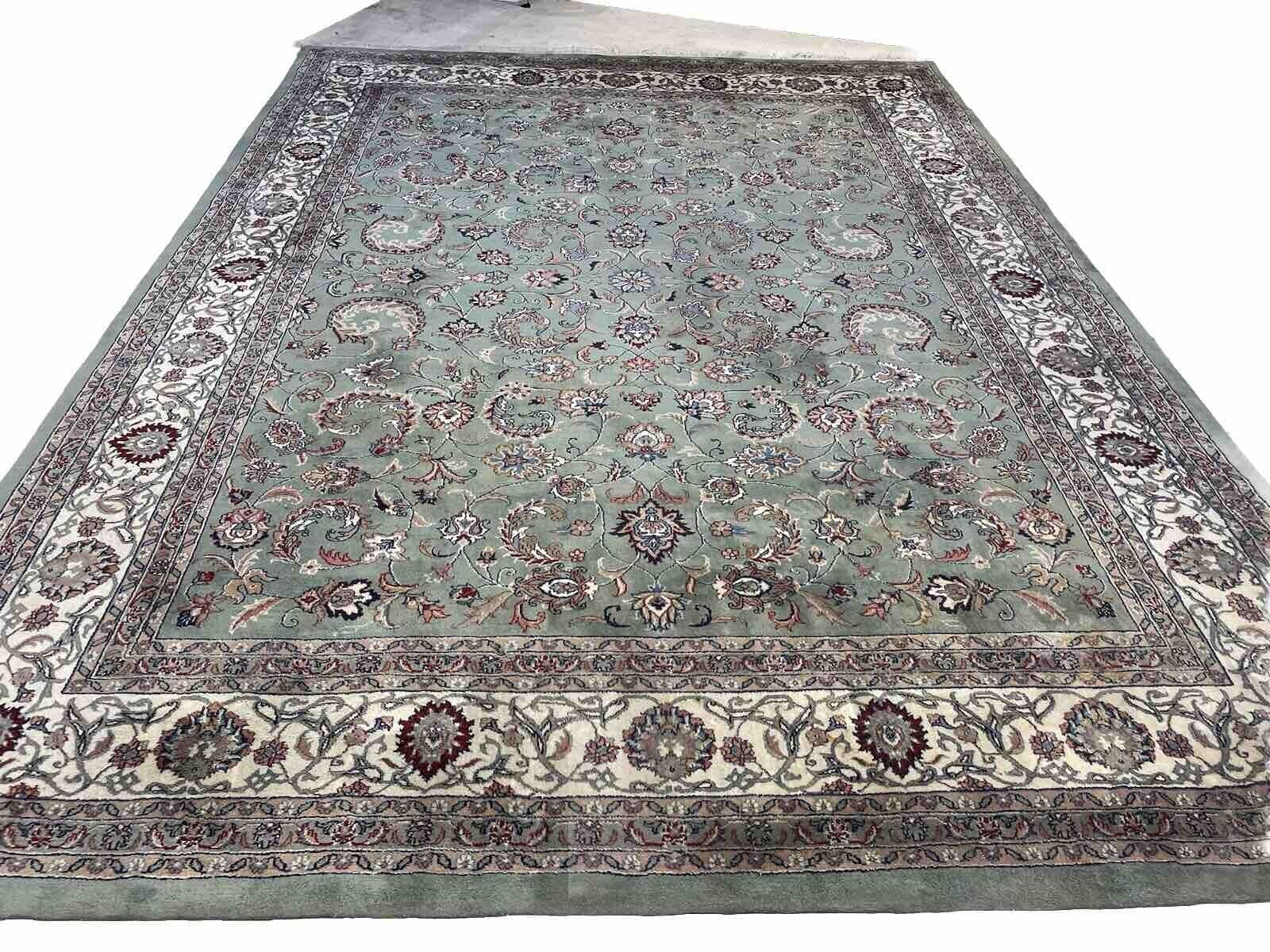
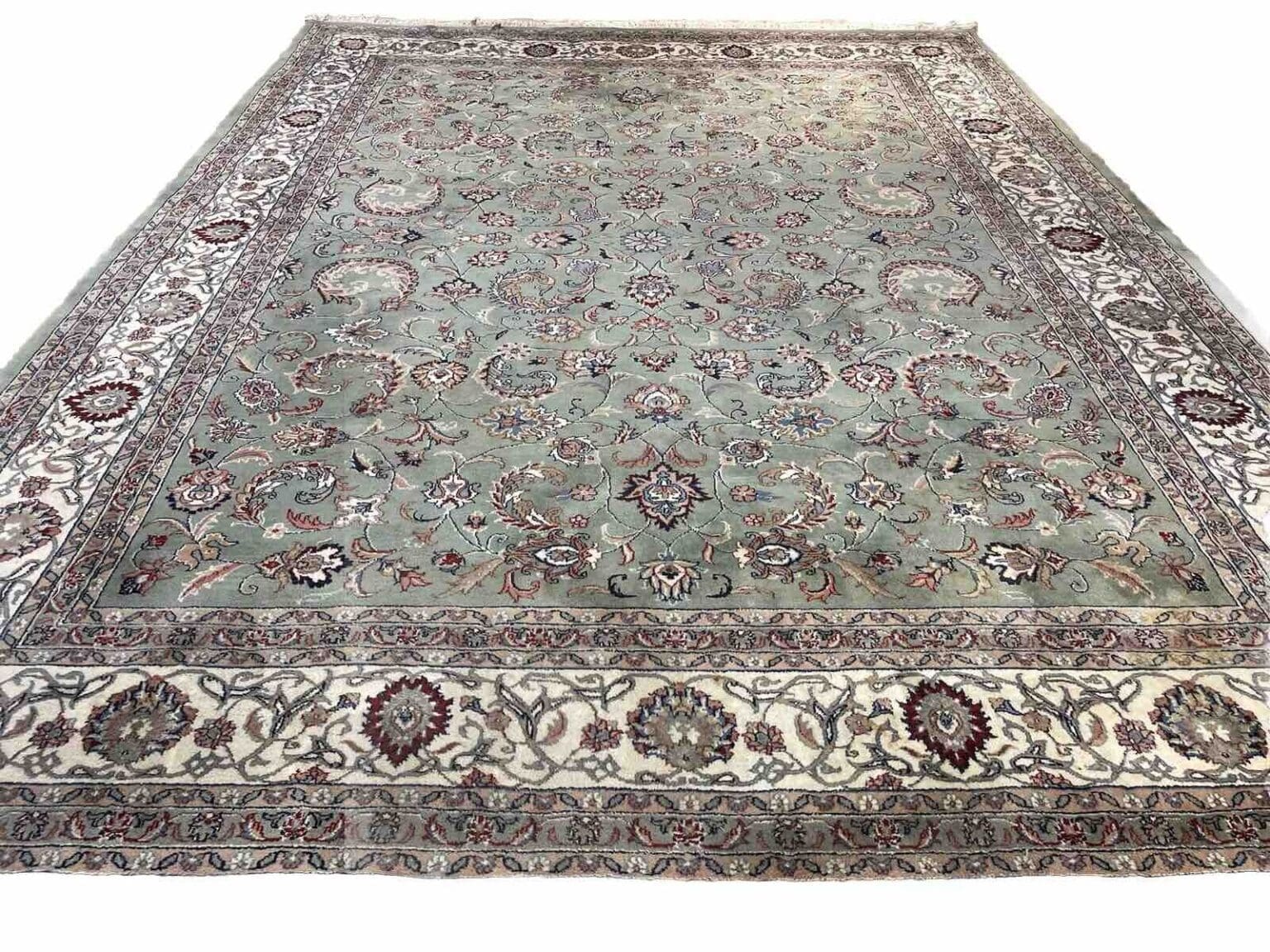
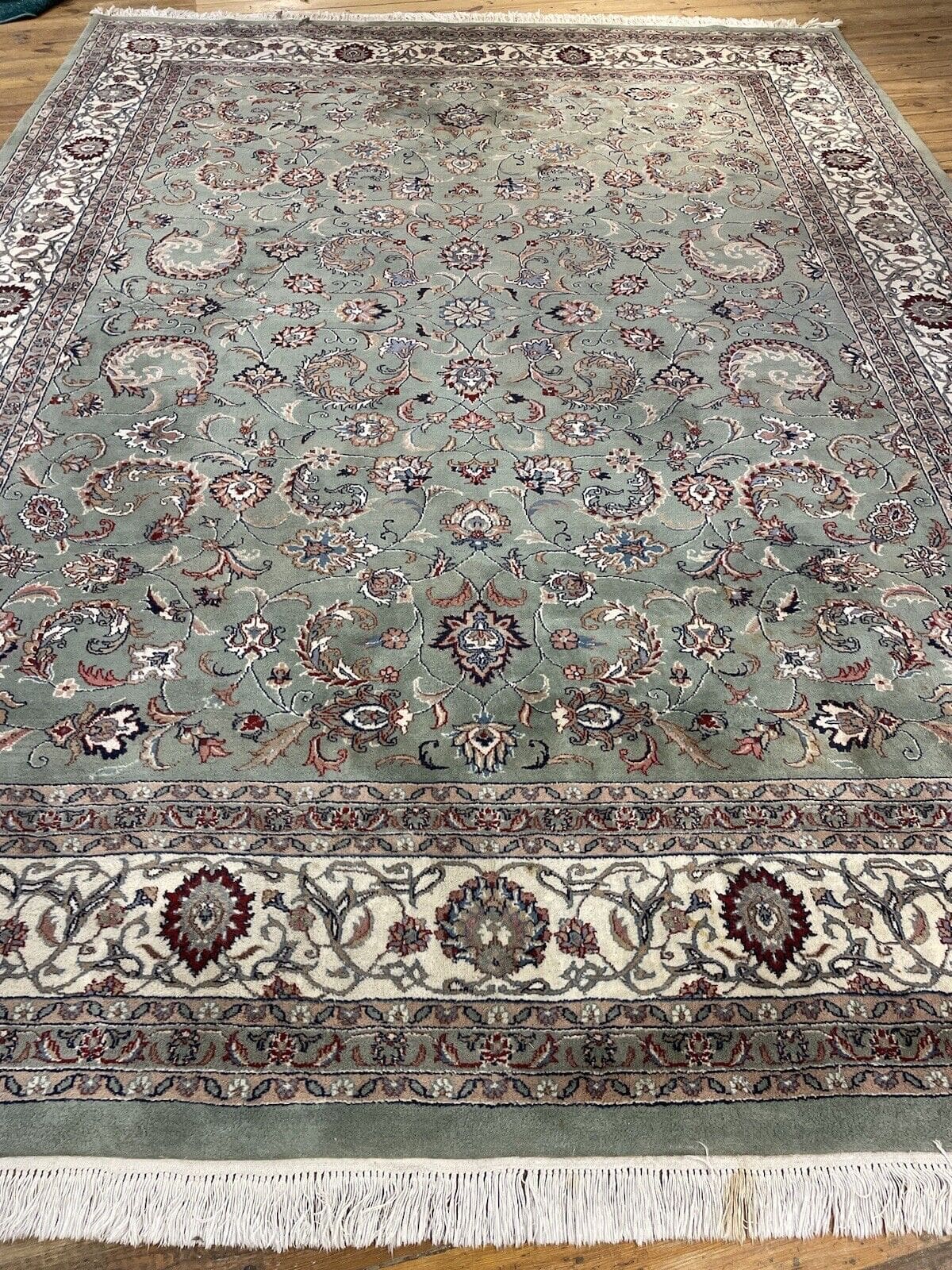
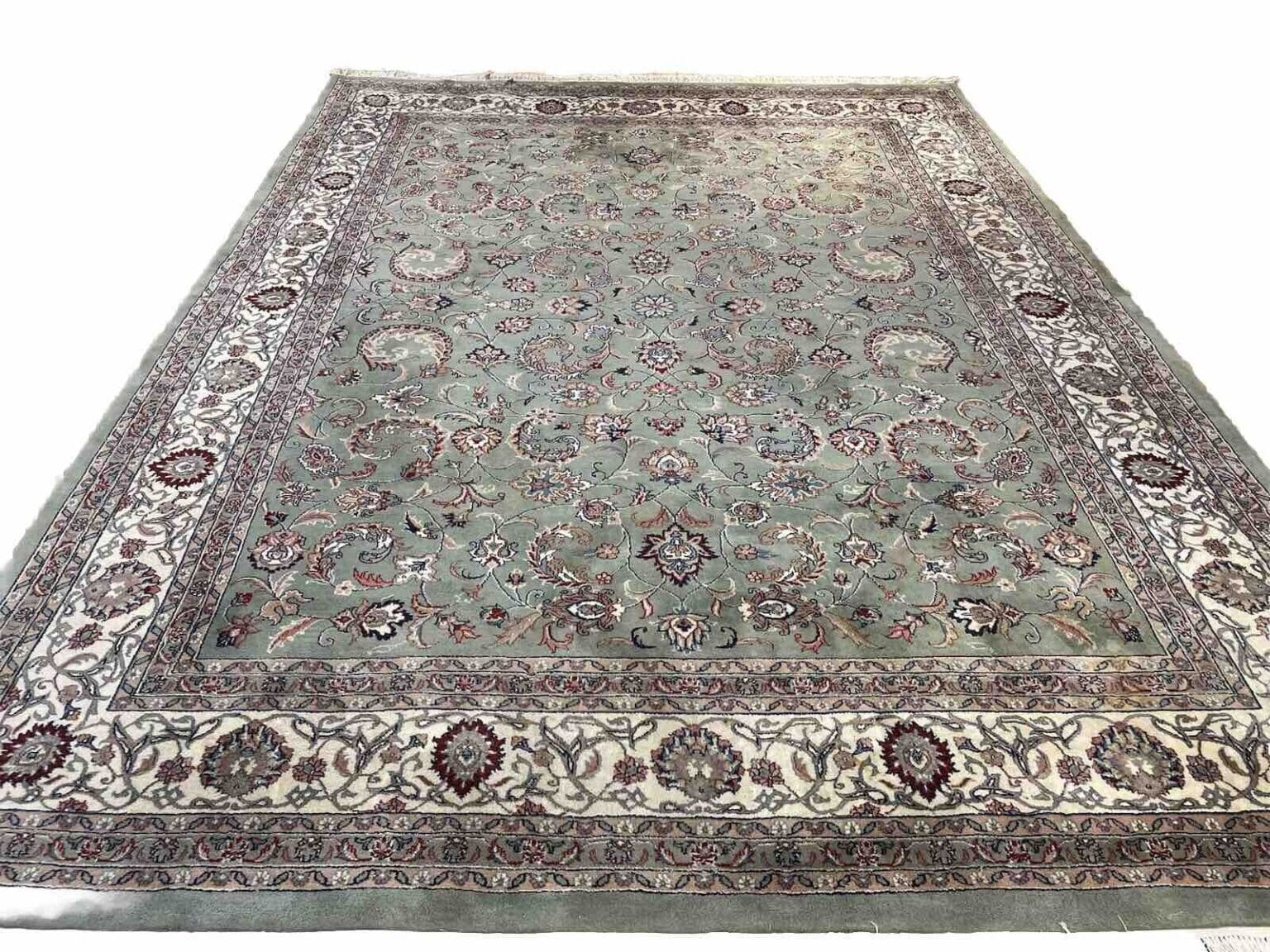
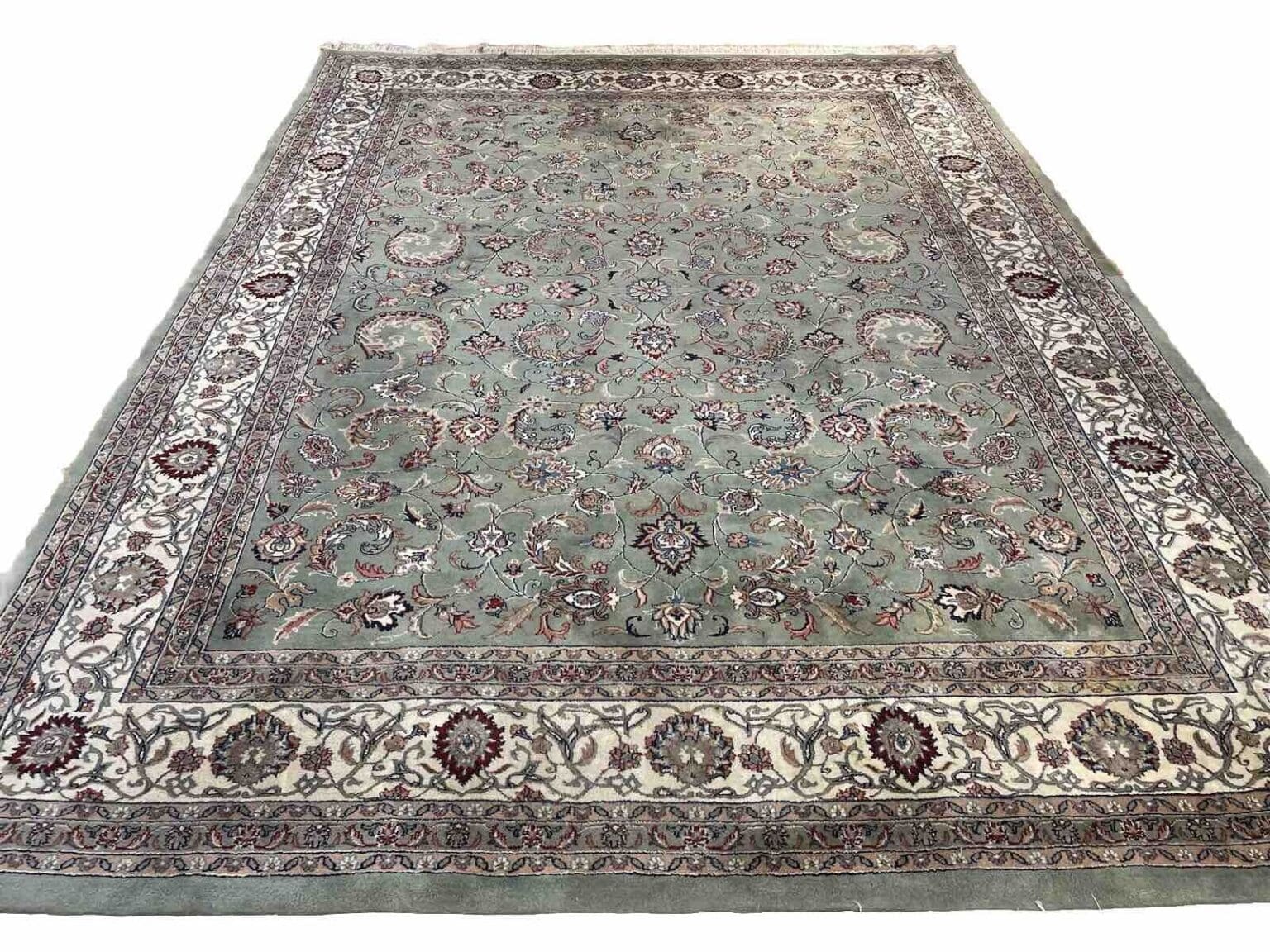
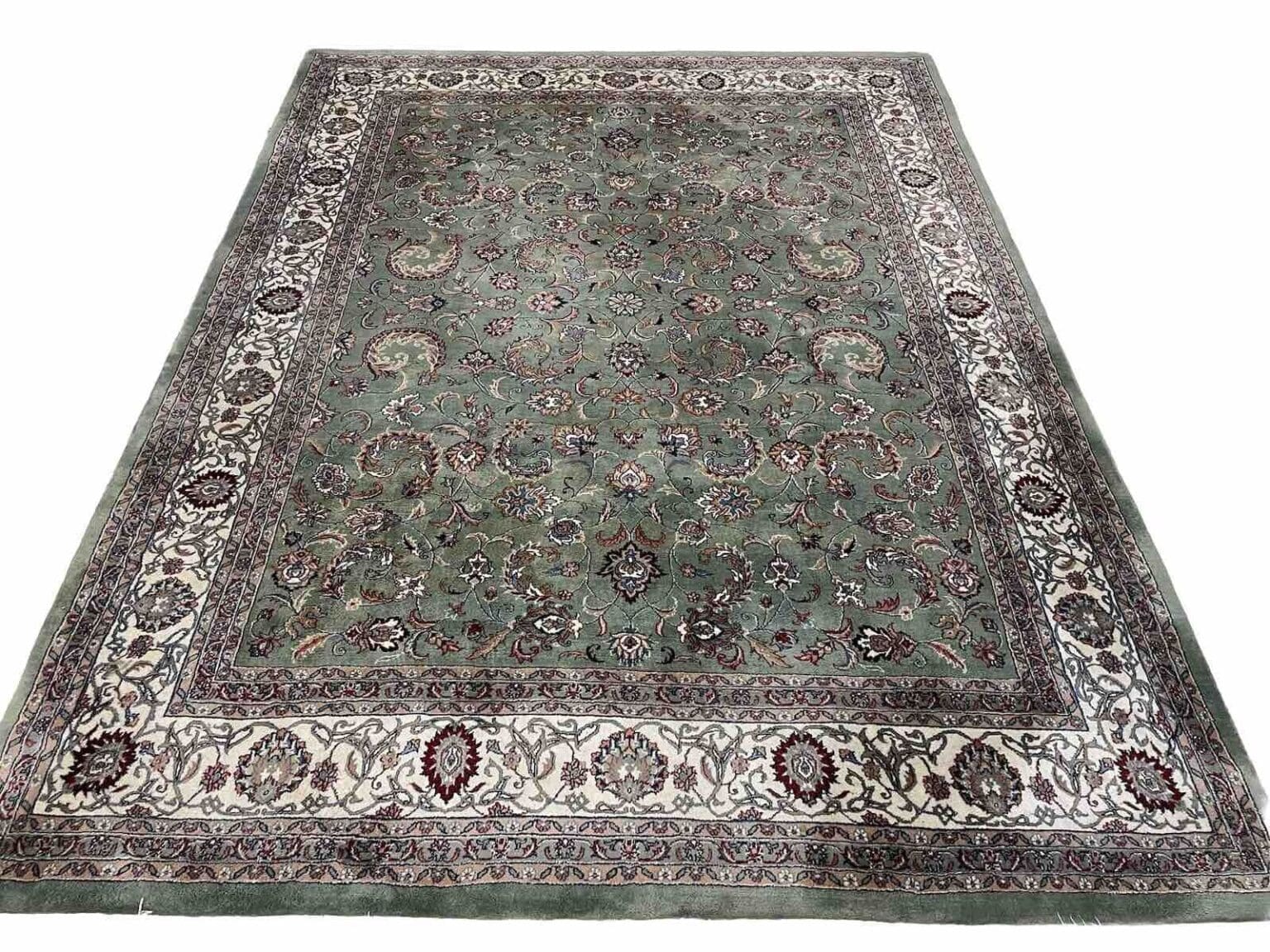
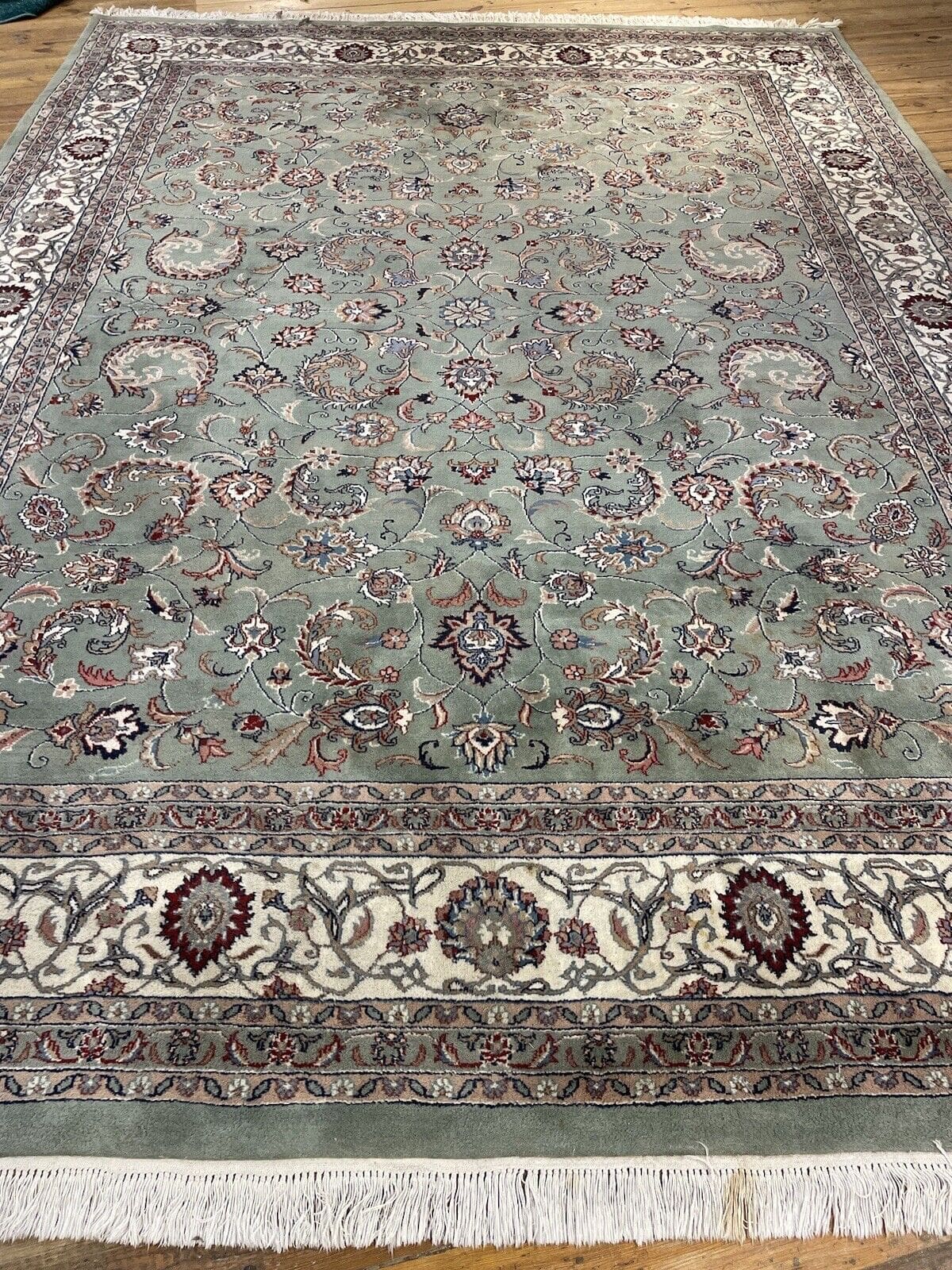
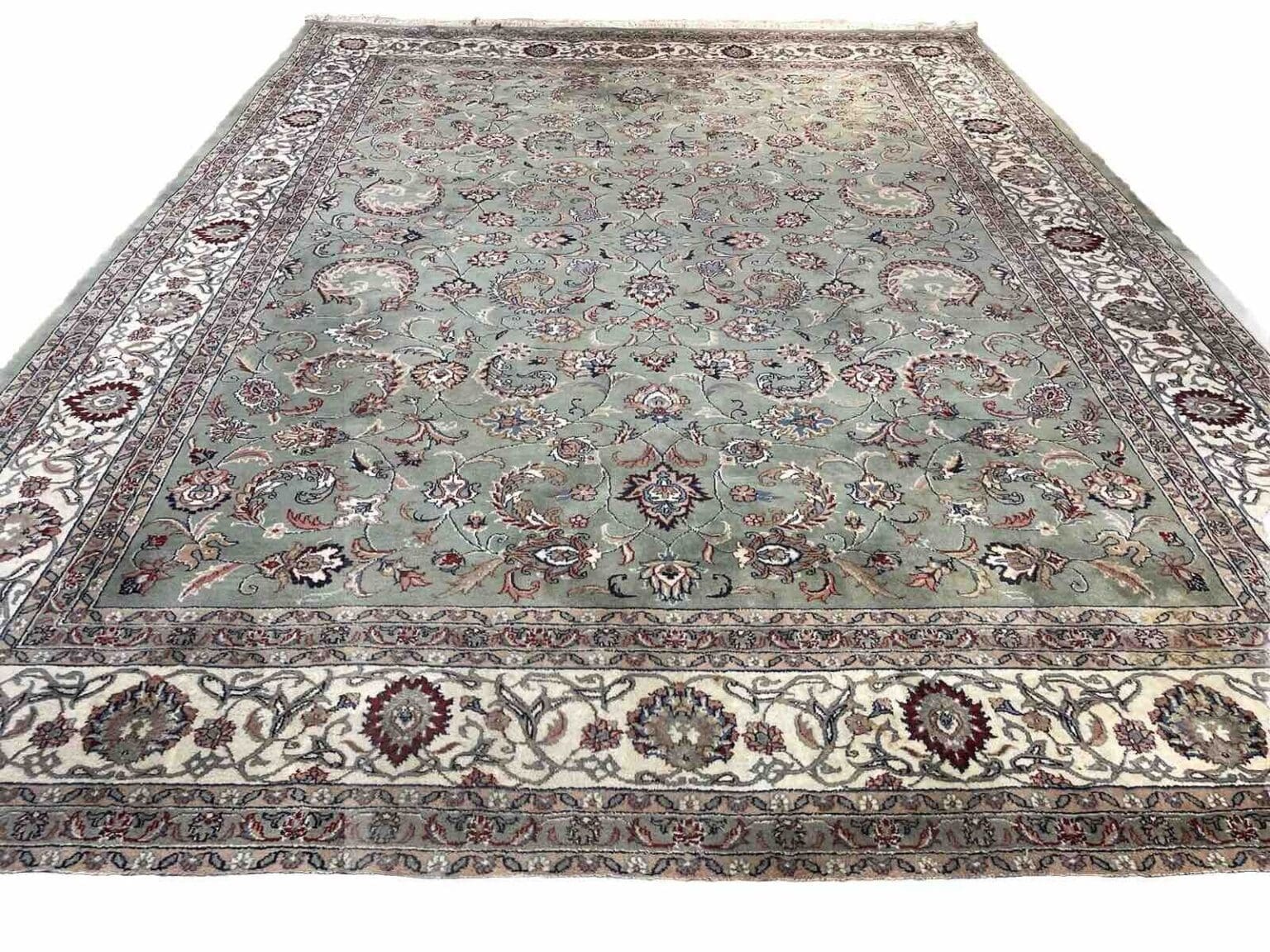
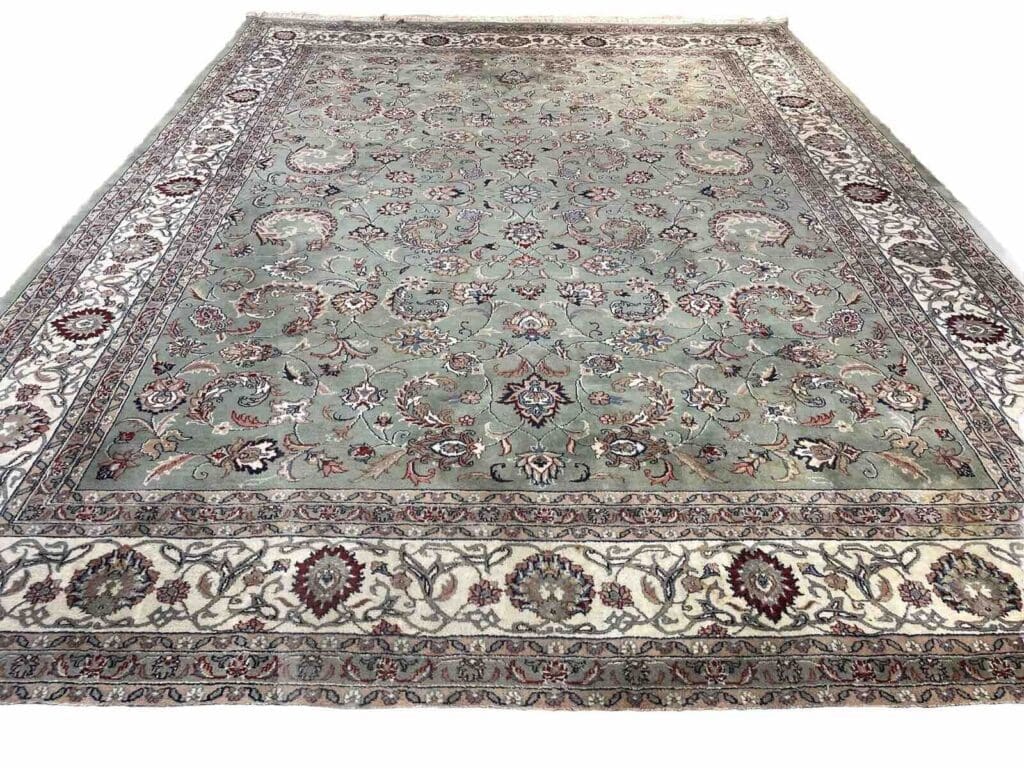
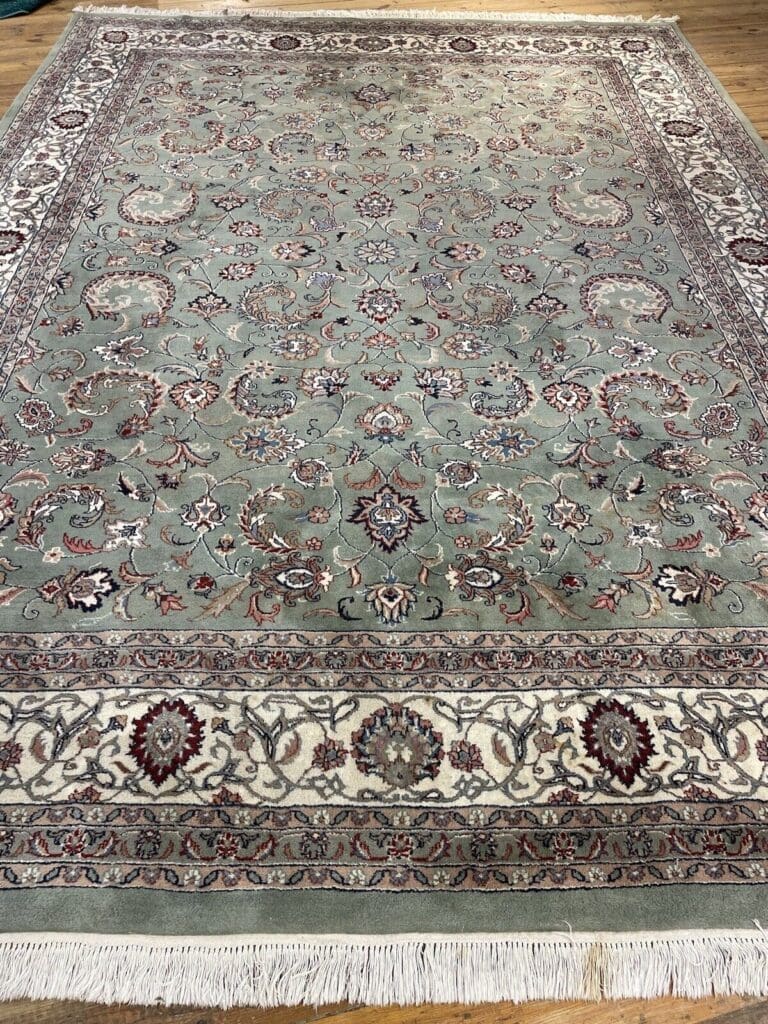
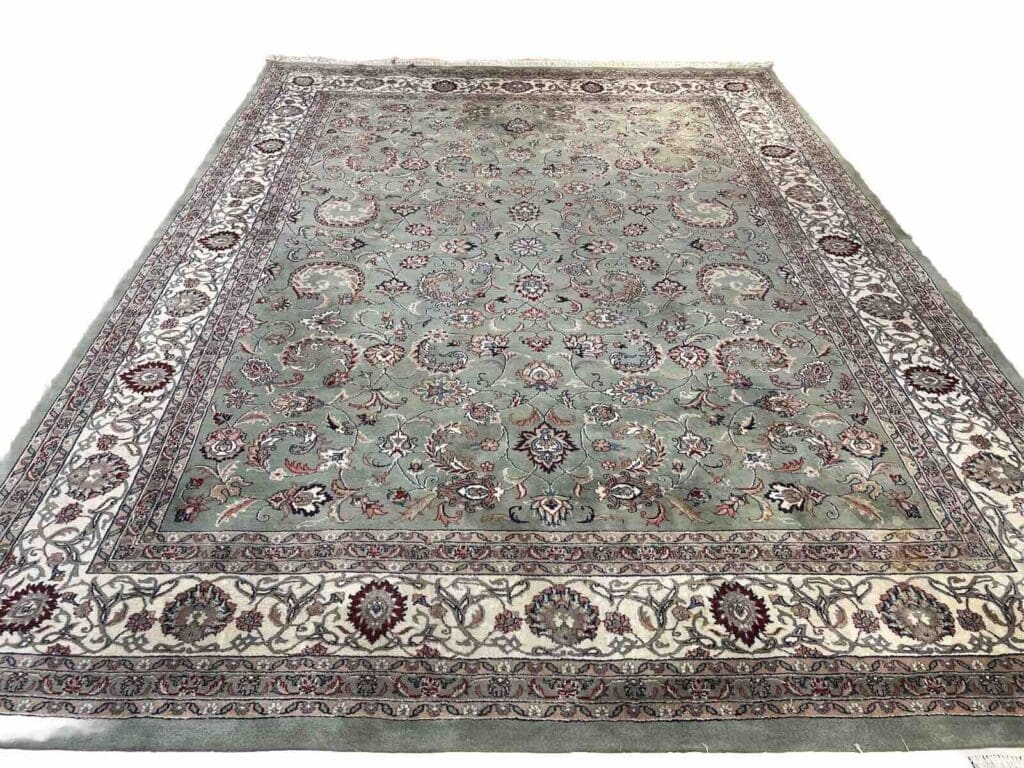
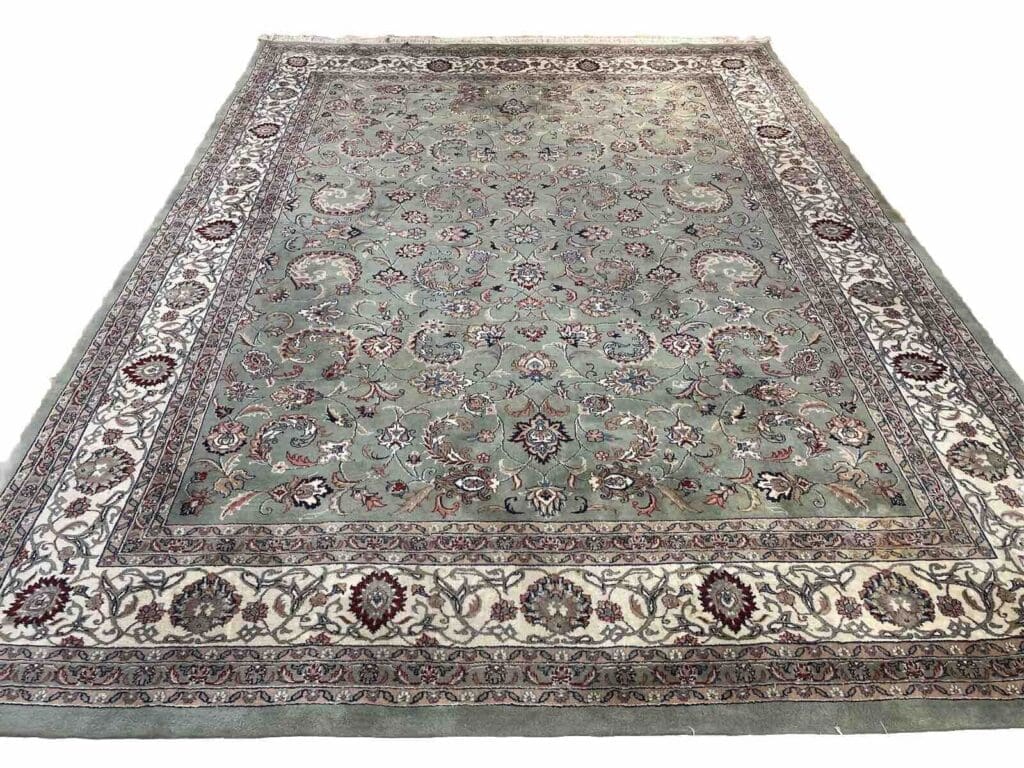
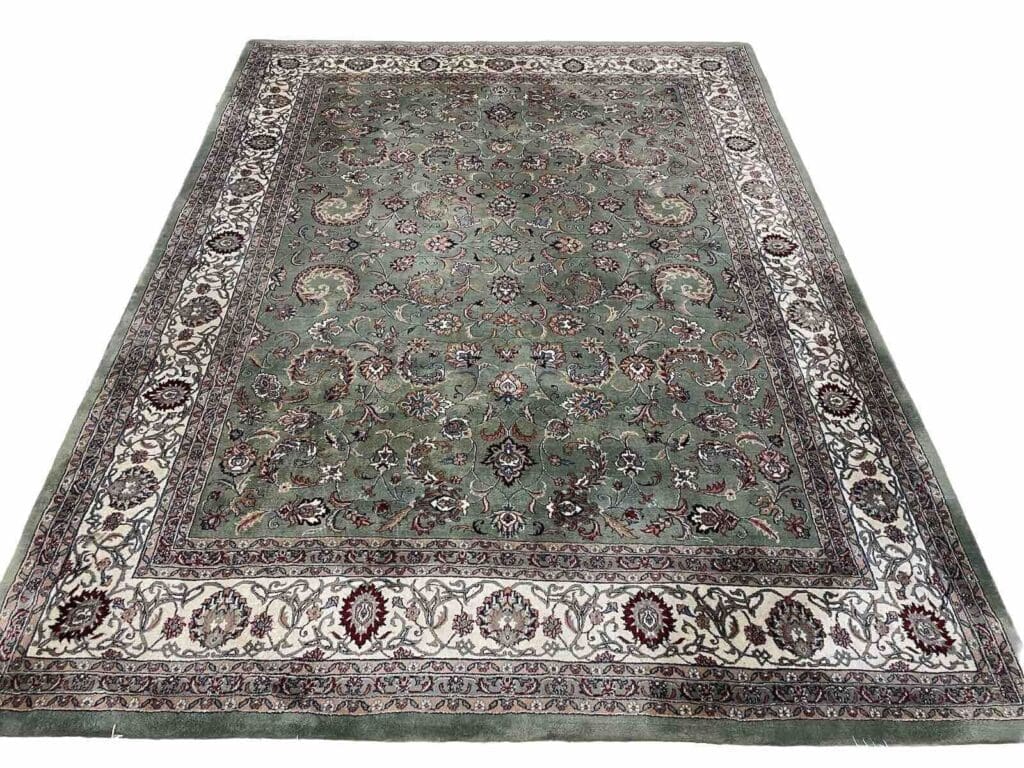
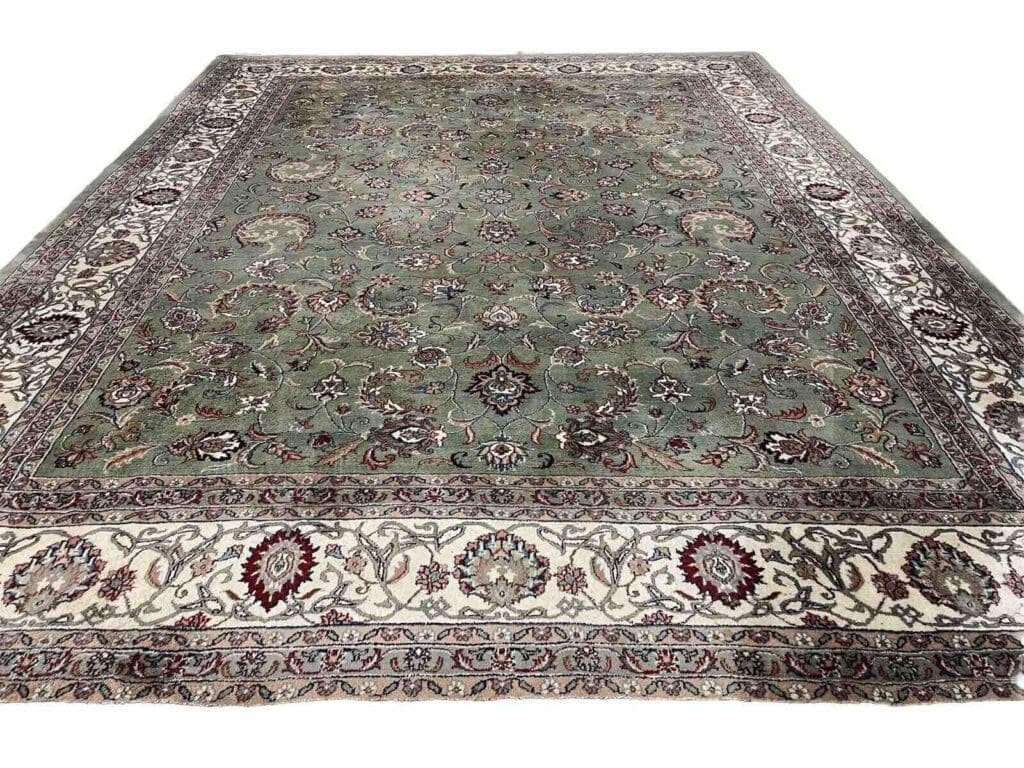
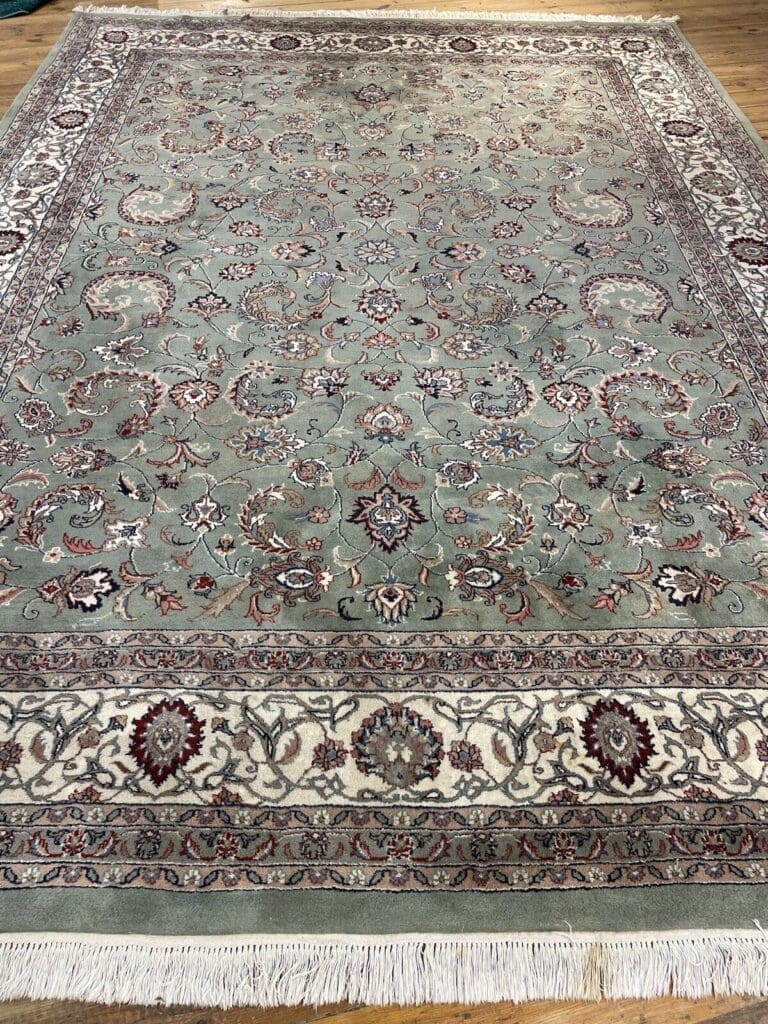
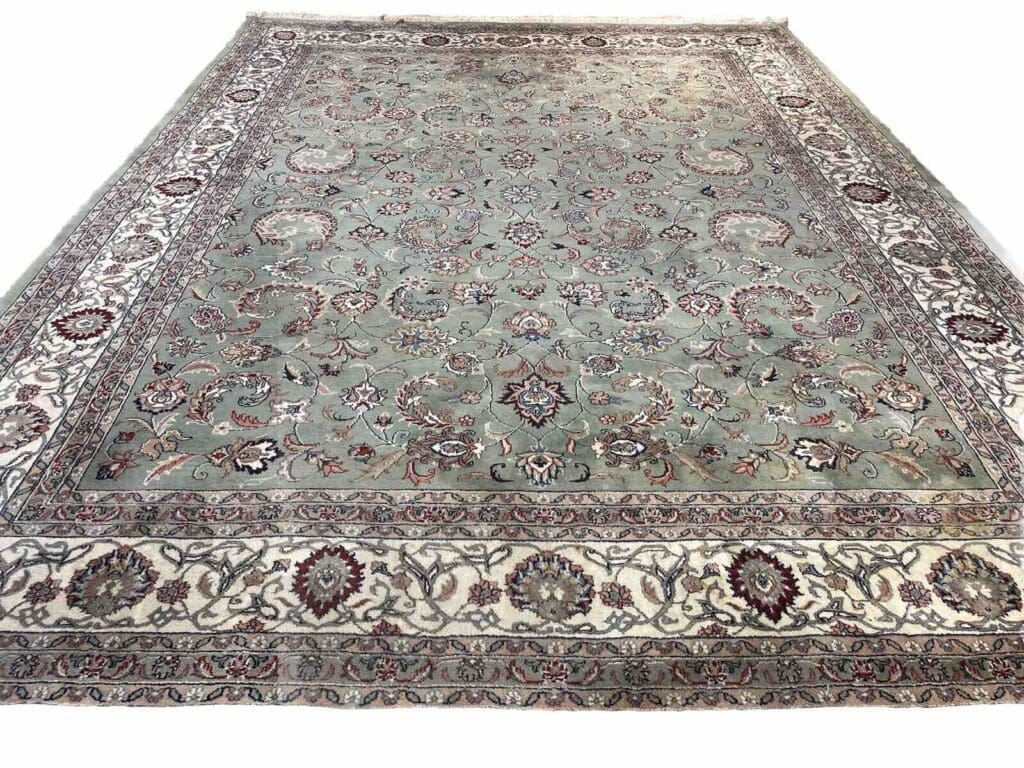
Hand-knotted Tabriz Persian rug | Knot density: 350,000 knots/m² | Material: pure new wool pile, cotton warp | Size: 365 x 275 cm | Pattern: All-over design | Condition: New with tag
This original Persian rug from Tabriz is hand-knotted. The pile is made of pure new wool, while the warp is cotton. These are the materials specified for this individual piece: wool forms the visible pile and the cotton warp provides the textile foundation for the knotting. No additional material is attributed to the rug beyond the stated pure new wool pile and cotton warp.
The knot density is 350,000 knots per square metre, and the rug is described as finely knotted. In general, close knotting allows a design to be rendered with carefully controlled lines and small ornamental details when the drawing calls for that level of precision. The pile height is 14 mm. Knot density and pile height are specific technical details of this rug and are not supplemented with unlisted construction features.
With hand-knotting, individual knots are tied into a prepared warp, row by row. The pile is then finished and brought into an even surface. This method differs from machine production because the design is built directly through the knotting process. The technique specified for this rug is hand-knotted.
The condition is listed as new with tag. The rug is also described as suitable for underfloor heating. Its shape is rectangular. These details belong to the individual product together with the pure new wool pile, cotton warp, stated knot density and stated pile height.
Origin and Tradition
Tabriz is one of the established carpet centres of Persia. The city lies in the north-west of present-day Iran and has a long-standing role in Persian carpet culture. The regional tradition is associated with carefully planned designs and precise hand execution. Tabriz rugs are therefore often discussed in connection with clear drawing, finely organised surfaces and disciplined knotting.
Tabriz developed its carpet identity within a city that was also an important centre of trade and cultural exchange. Designs, materials and technical knowledge travelled through the region, while local workshops adapted them to their own practices. This exchange helped create a broad but recognisable Tabriz tradition. The place name identifies a regional history of carpet making, not one single motif or fixed composition.
Traditional Tabriz workshop practice may begin with a design that establishes the relationship between the field, borders and ornaments. The drawing is then transferred into the warp through rows of individually tied knots. Depending on the design, the composition may use floral forms, geometric structures or a combination of both. Accurate execution requires attention to proportion, repetition, contour and the distribution of colour across the surface.
Preparing the warp is a fundamental stage in hand-knotted carpet making. It provides the textile framework into which the knots are inserted. Successive rows are secured with weft and gradually build the pile. Once the knotting is complete, the pile is trimmed and the surface is finished. This sequence explains why a hand-knotted rug is a constructed textile rather than a printed pattern placed onto a finished fabric.
The Tabriz tradition is known for designs in which the surface can be divided into carefully related areas. Many regional compositions coordinate a field with surrounding borders and repeated ornaments. Other designs extend their motifs across the field in an all-over arrangement. The exact appearance depends on the particular drawing and its execution. For this rug, the regional design is Tabriz and the pattern is specified as all-over.
Persian carpet knowledge is transmitted through practical experience with materials, design, knotting and finishing. This knowledge is preserved not only through written pattern traditions but also through workshop instruction and repeated manual work. Regional character develops from the meeting of inherited design principles and the decisions made during the production of an individual rug.
The designation Tabriz should be distinguished from the names of individual motifs. Many ornaments belong to a shared Persian design vocabulary and can appear in carpets associated with several centres. Origin refers to the regional making tradition, while pattern describes the visible organisation of the surface. In this case, Tabriz is the stated regional design and the documented pattern arrangement is all-over.
Hand-knotted Tabriz rugs also show how a functional floor covering can carry a complete textile composition. A carpet can serve as a floor textile while presenting a carefully ordered arrangement of colour, line and ornament. Regional tradition concerns not only the visible image but also the preparation, knotting and finishing that create the surface. Material and technique are therefore part of the same craft process.
Design and Pattern
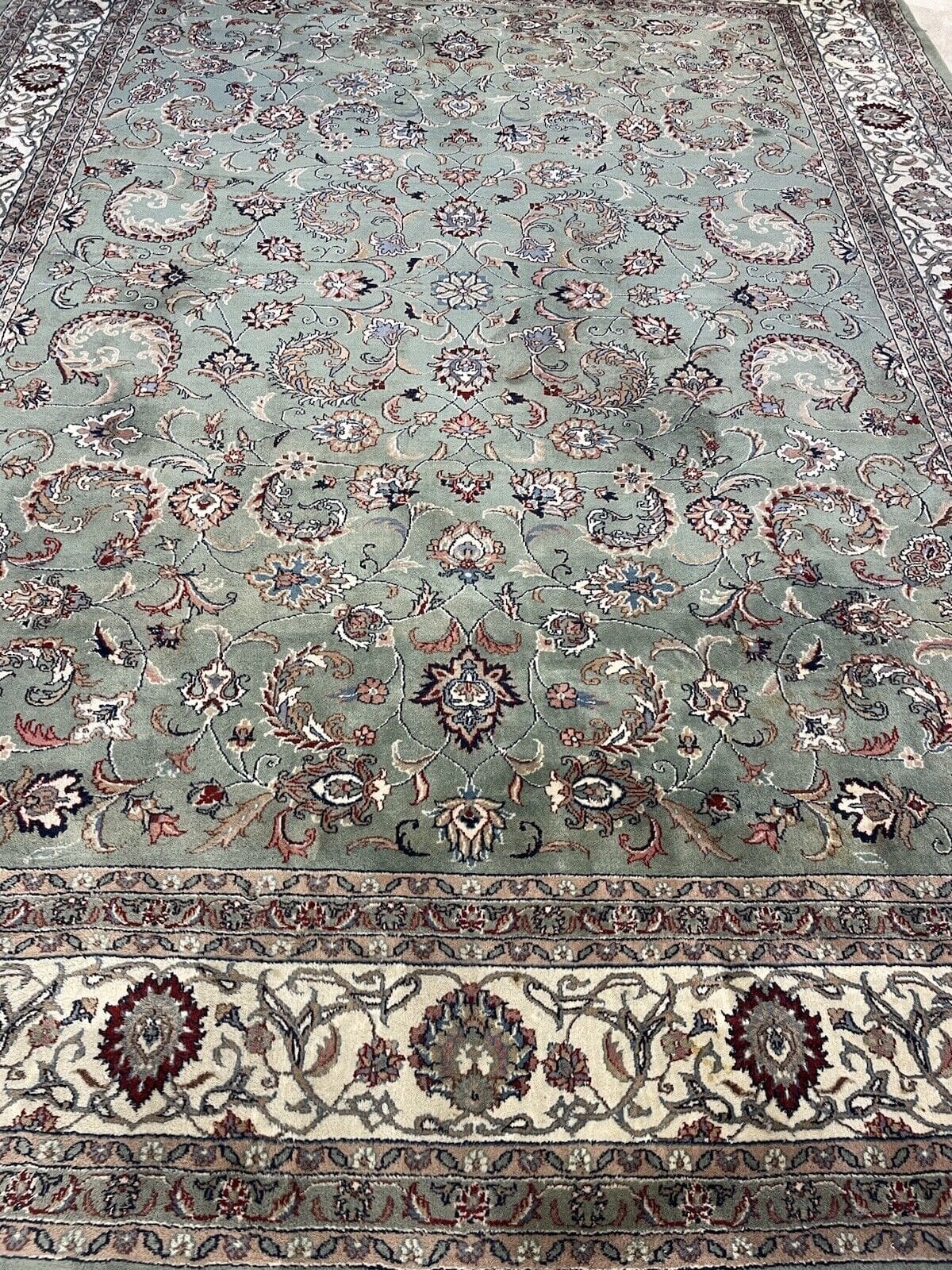
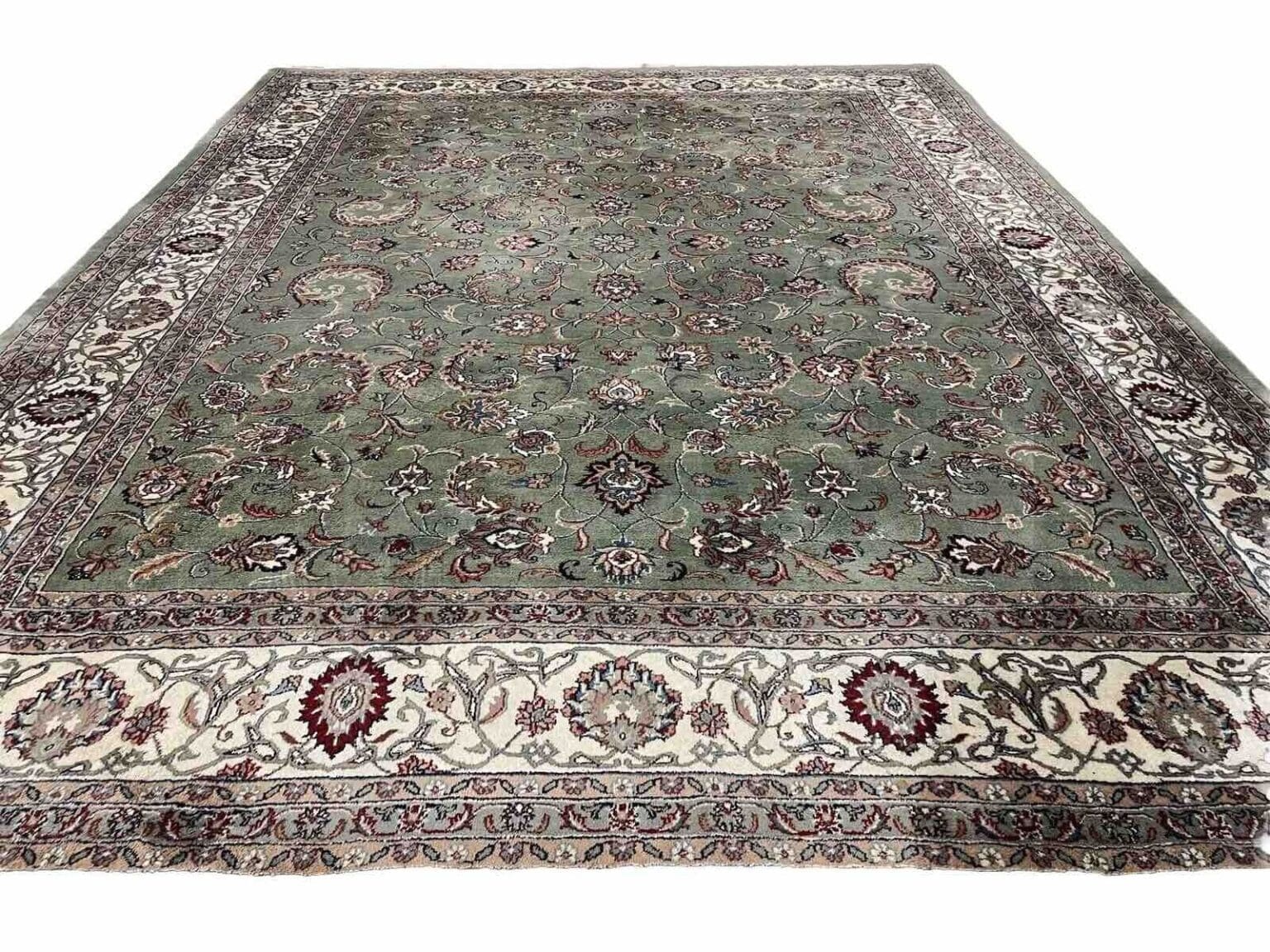
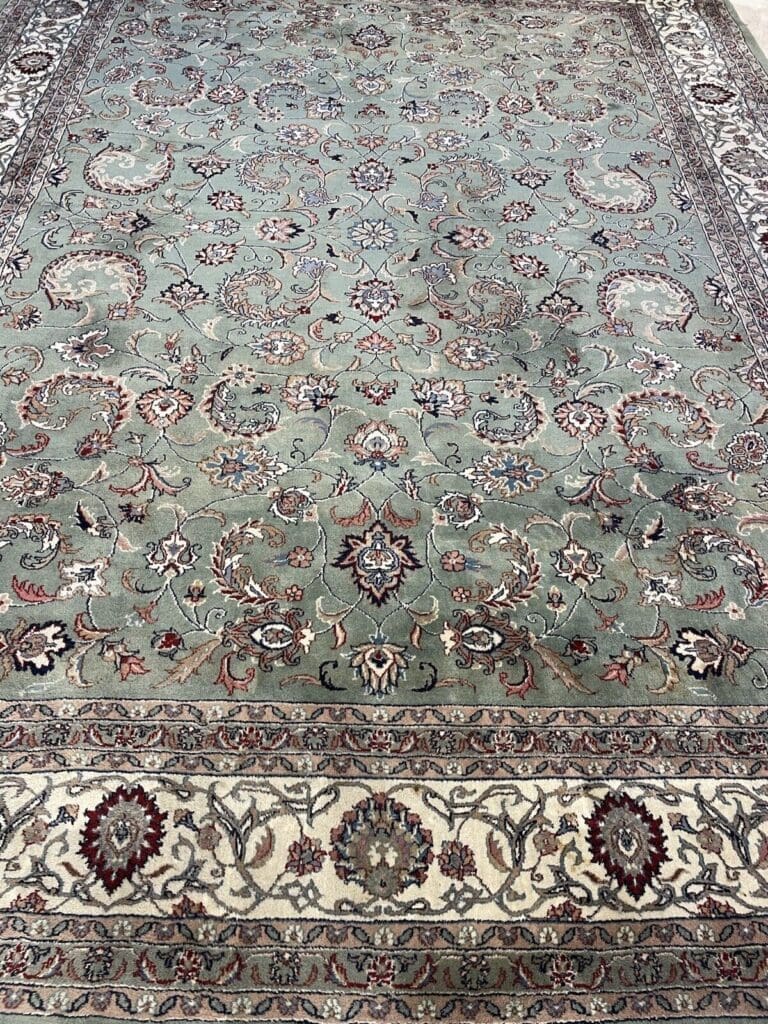
The pattern of this rug is described as all-over. Its organisation therefore relates to the complete surface rather than being defined only by one central medallion. In an all-over design, continuing lines, repeated forms and distributed ornaments establish the visual rhythm. This identifies the structure of the pattern without assigning individual motifs that have not been named.
The regional design is Tabriz. Tabriz design traditions include compositions with a clearly defined field and enclosing borders, as well as patterns in which floral or geometric elements continue throughout the surface. Different workshops and designs use these principles in different ways. The specific motifs of this rug are not identified, so the accurate description remains an all-over Tabriz design.
Beige and pastel green are both given as colour descriptions. Beige appears in the title and extended description, while pastel green is listed as the colour in the short description. Both stated colours are retained here. In a hand-knotted rug, colour is formed through the placement of dyed yarn within the knot structure, and the visual balance depends on the relationship between ground areas and ornaments. No additional palette or unlisted colour sequence is assigned to this piece.
A high knot density can generally support the precise rendering of small contours and repeated details in a Persian rug. This rug is specified at 350,000 knots per square metre and is also described as finely knotted. These facts explain the technical basis for a detailed all-over surface. They do not, however, establish motifs that have not been stated; the documented design information remains Tabriz as the regional design and all-over as the pattern arrangement.
An all-over pattern can create coherence through recurrence. Similar forms may reappear across the field, while lines and colour areas connect separate parts of the composition. The overall rhythm comes from the relationship between these repeated elements rather than from a single focal point. In Tabriz design, such relationships may be planned carefully so that the surface remains ordered across its full extent.
When viewing a Tabriz rug, it is useful to distinguish regional design language from the individual drawing. Regional language includes inherited principles of proportion, ornament and surface division. The individual drawing results from a particular design and its execution by a workshop. For this rug, the documented elements are the Tabriz regional design, the all-over pattern and the named colours beige and pastel green.
Hand-knotting transfers a design into the surface through a sequence of individual knots. A line is not applied in one operation; it is formed through many adjacent knots arranged in successive rows. The precision of a contour is therefore related to the knotting, the yarn and the finishing of the pile. In this rug, that craft method is combined with the stated fine knotting and all-over Tabriz design.
Special Features
The specific features recorded for this rug include hand-knotting, a pure new wool pile and a knot density of 350,000 knots per square metre. The warp is cotton and the pile height is 14 mm. The condition is new with tag, so the piece is expressly identified as new. Its all-over pattern and Tabriz regional design complete the documented visual profile.
The rug is rectangular and suitable for underfloor heating. Regular vacuuming without a brush attachment is recommended for care. Stains should be treated immediately with a soft, damp cloth. Professional cleaning every few years is also advisable. Direct sunlight should be avoided to help preserve the colour intensity and structure of the hand-knotted surface.
FAQ
How should I care for this Tabriz Persian rug?
Vacuum the rug regularly without using a brush attachment. Treat stains immediately with a soft, damp cloth and avoid aggressive rubbing. Professional cleaning every few years is recommended as part of its continued care. The rug should also be protected from direct sunlight so that its stated colour appearance and the structure of the hand-knotted surface can be maintained.
What gives a Persian rug its value?
For a Persian rug from Tabriz, the relationship between material, knot density and hand production is central to its craft character. This rug has a pure new wool pile, a cotton warp, a knot density of 350,000 knots per square metre and a fine hand-knotted construction. Its all-over Tabriz design adds a regional design dimension. Each hand-knotted piece is the result of the particular execution of its own knotting work.
Why choose a hand-knotted Persian rug?
A hand-knotted Persian rug combines a functional textile surface with an established regional design tradition. This piece brings together hand-knotting, pure new wool in the pile, the stated fine knot density and an all-over Tabriz design. It is listed as new with tag, rectangular and suitable for underfloor heating. These clearly stated craft, design and practical characteristics distinguish the individual rug without requiring additional claims about it.
To provide the best experiences, we use technologies like cookies to store and/or access device information. Consenting to these technologies will allow us to process data such as browsing behavior or unique IDs on this site. Not consenting or withdrawing consent, may adversely affect certain features and functions.
Functional Always active
The technical storage or access is strictly necessary for the legitimate purpose of enabling the use of a specific service explicitly requested by the subscriber or user, or for the sole purpose of carrying out the transmission of a communication over an electronic communications network.
Preferences
The technical storage or access is necessary for the legitimate purpose of storing preferences that are not requested by the subscriber or user.
Statistics
The technical storage or access that is used exclusively for statistical purposes.The technical storage or access that is used exclusively for anonymous statistical purposes. Without a subpoena, voluntary compliance on the part of your Internet Service Provider, or additional records from a third party, information stored or retrieved for this purpose alone cannot usually be used to identify you.
Marketing
The technical storage or access is required to create user profiles to send advertising, or to track the user on a website or across several websites for similar marketing purposes.
 SECURE PAYMENT
 SHIPPING PARTNERS


