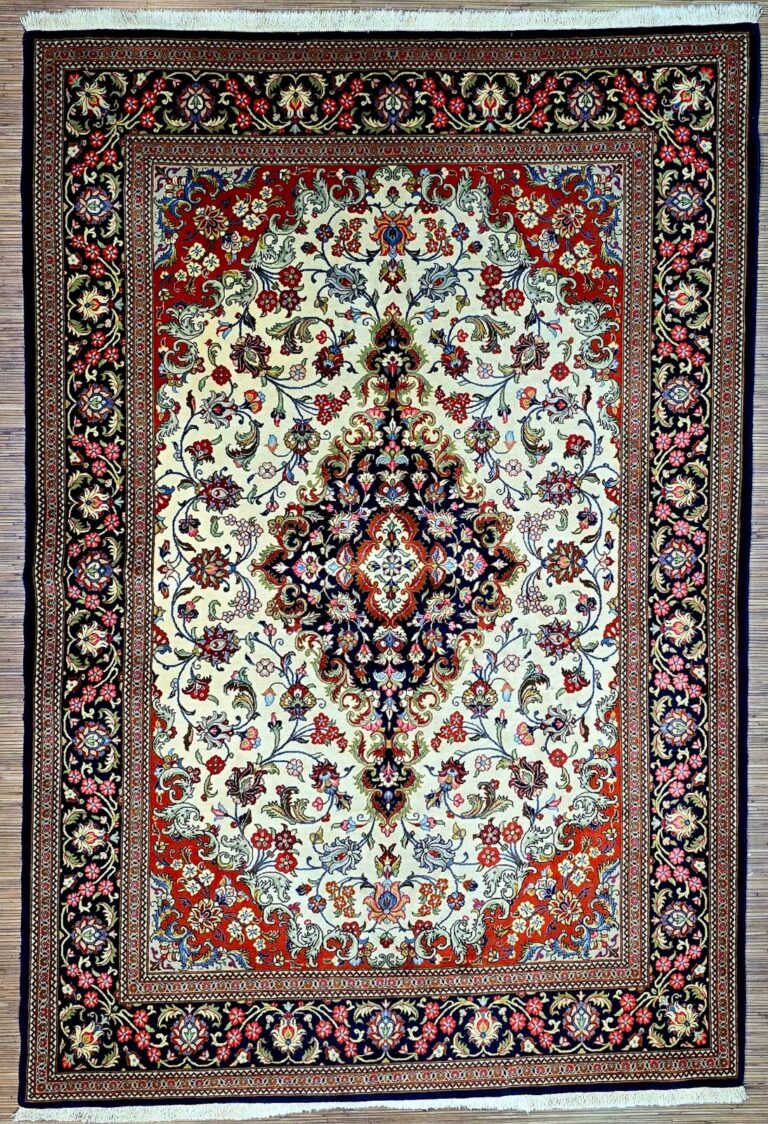
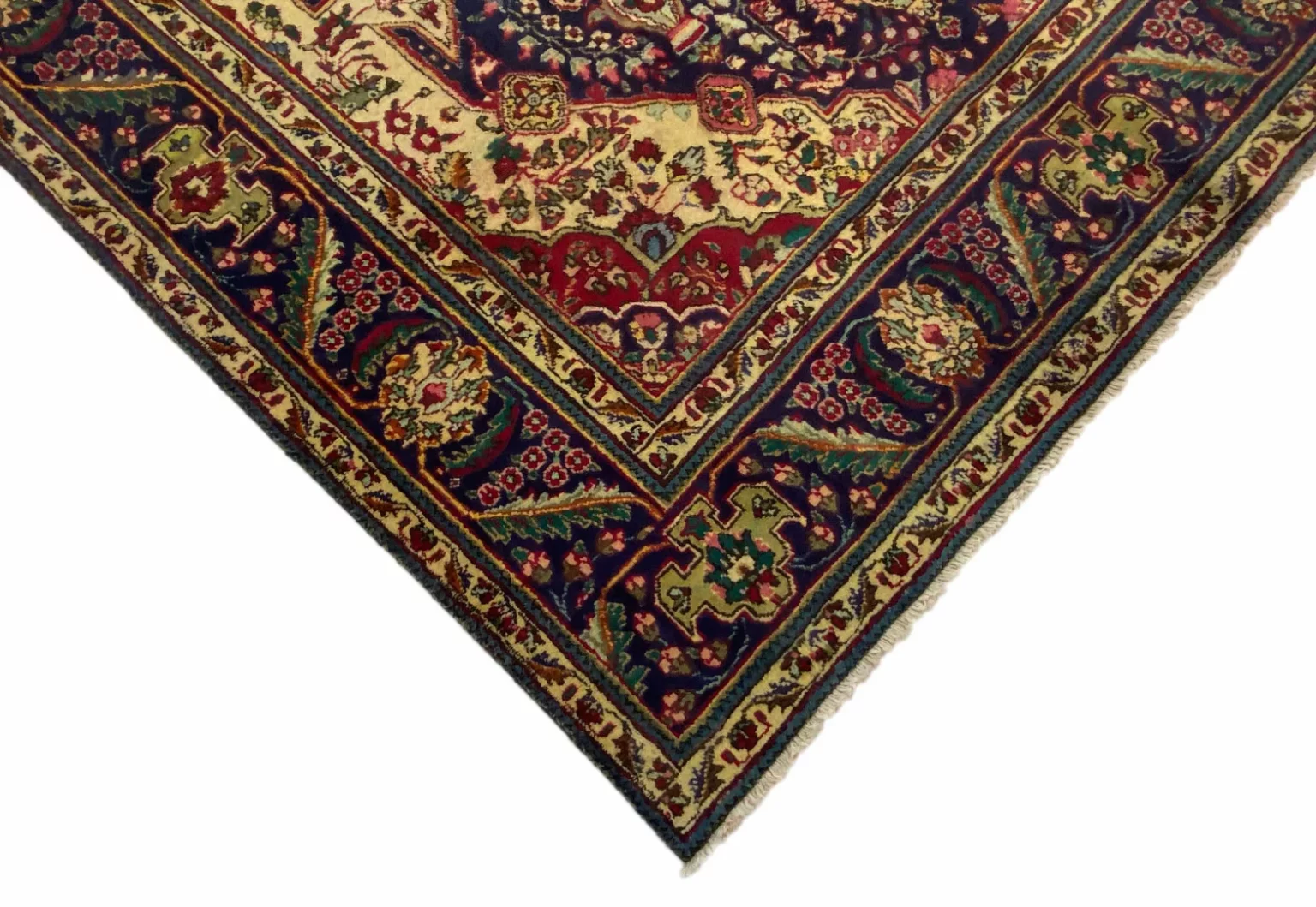
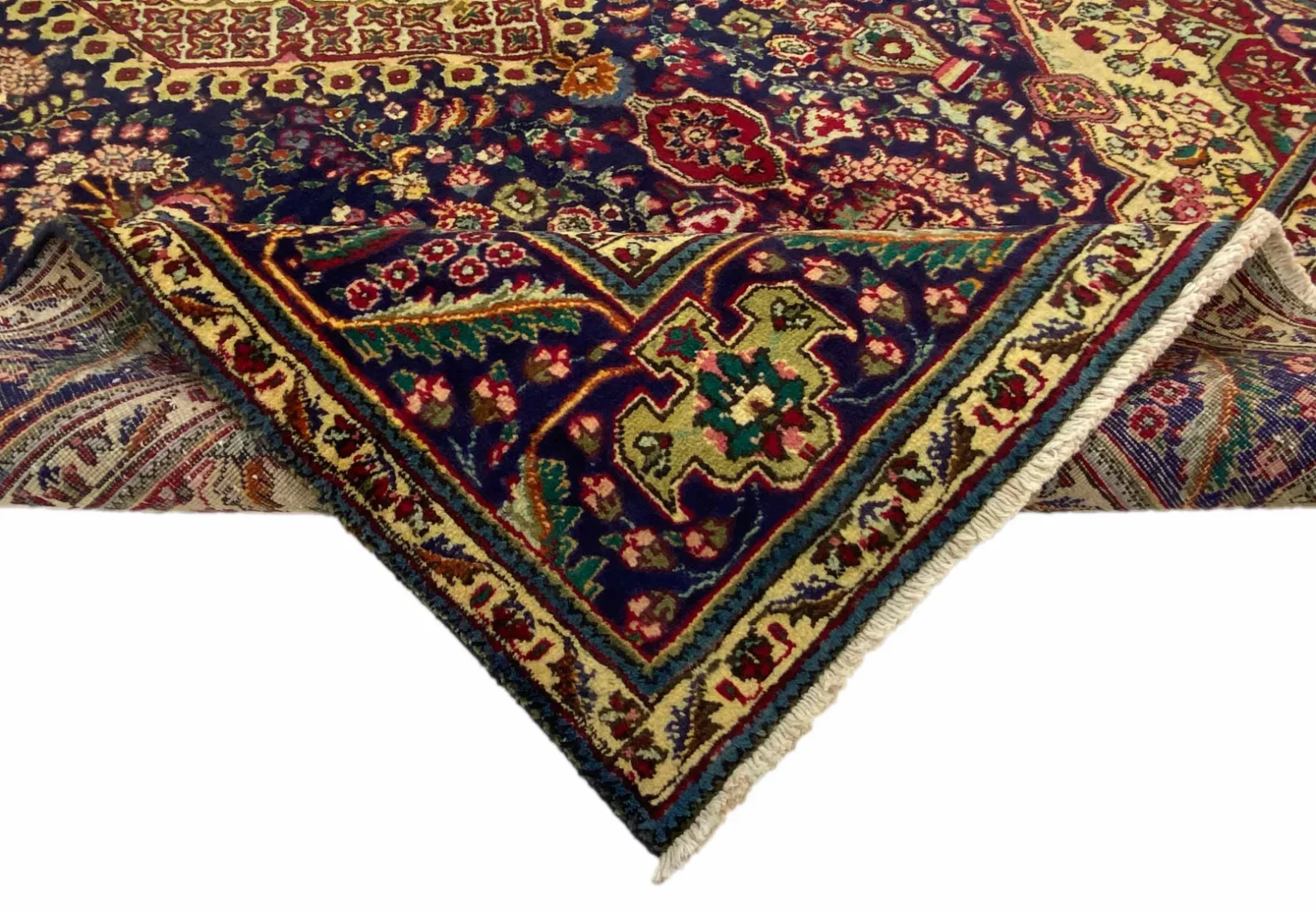
Hand-knotted Tabriz Persian Rug | Knot density: 180.000 / m² | Material: Wool and silk | Size: 325 x 206 cm | Pattern: Traditional Persian designs | Condition: Very good
This Persian rug from Tabriz is hand-knotted and made of wool and silk. The combination of these materials is associated with many refined Tabriz rugs. Wool provides the traditional textile foundation of Persian rug making, while silk has a smoother surface and reflects light with a distinct sheen. The silk lustre is specifically highlighted for this rug. The material description identifies wool and silk, but does not divide them into separate proportions.
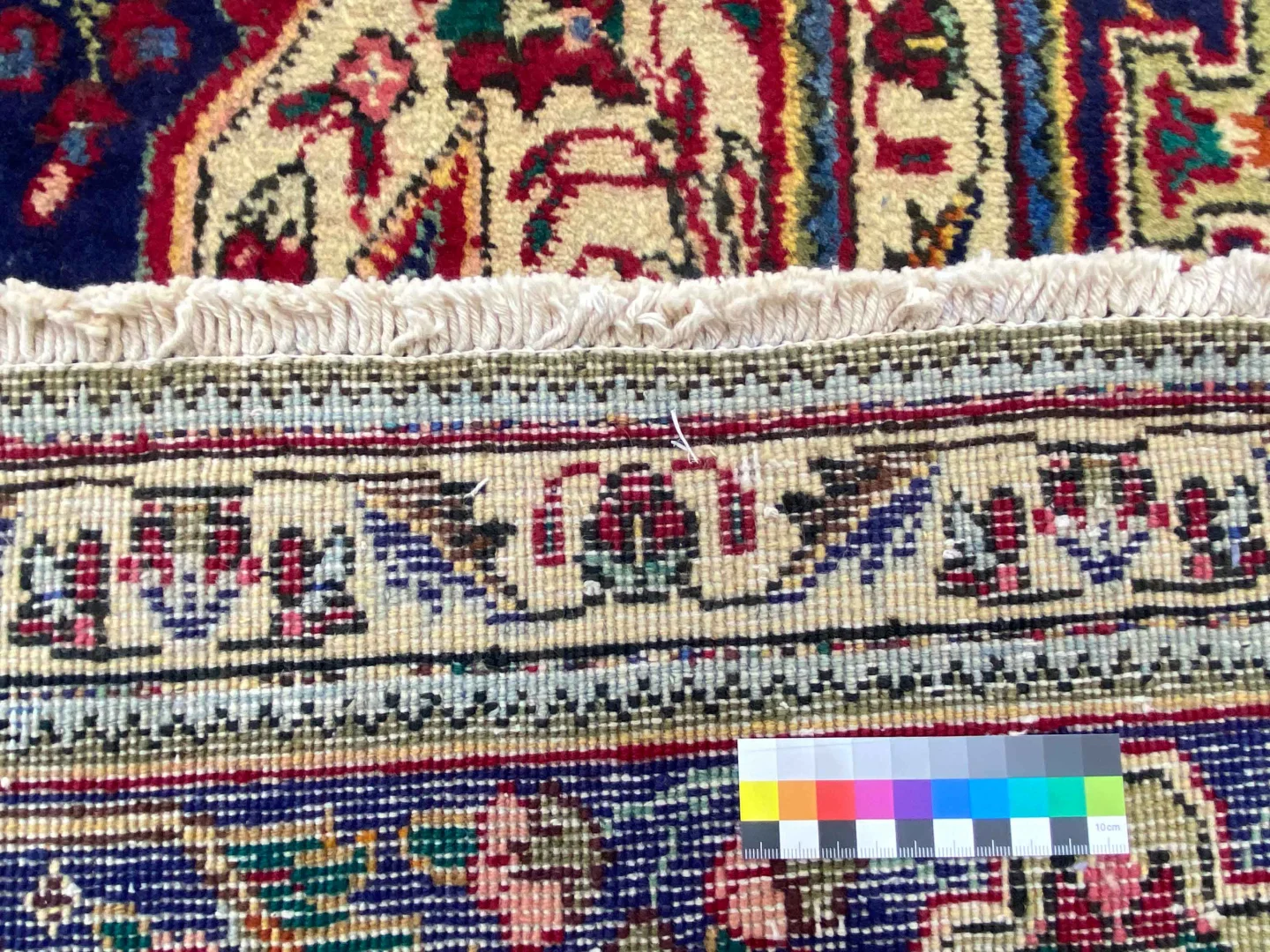
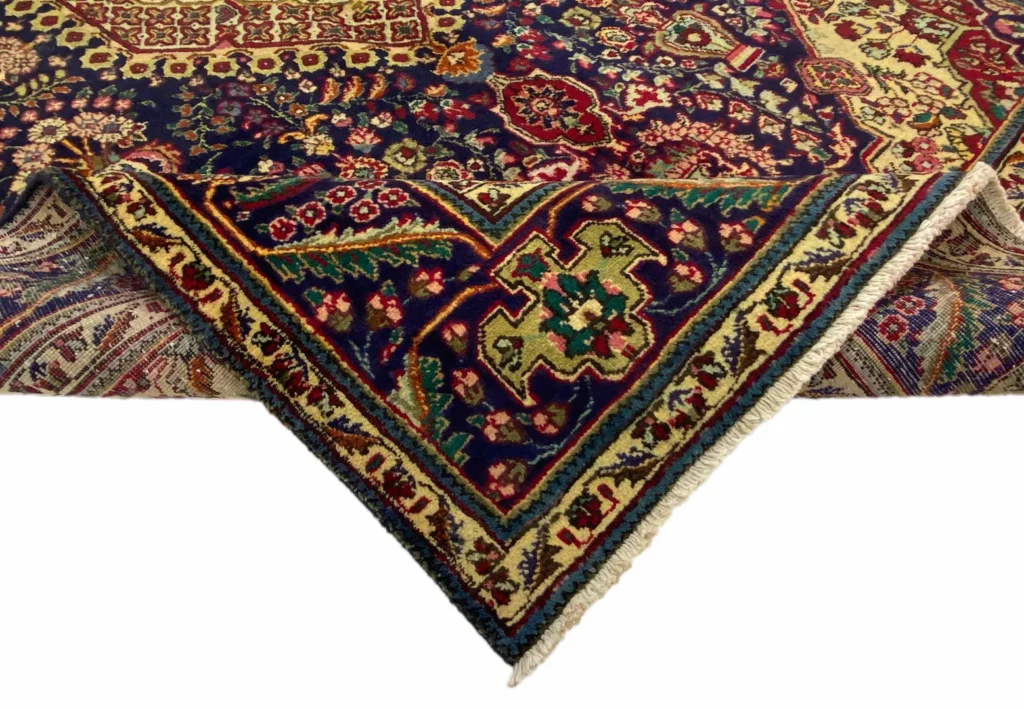
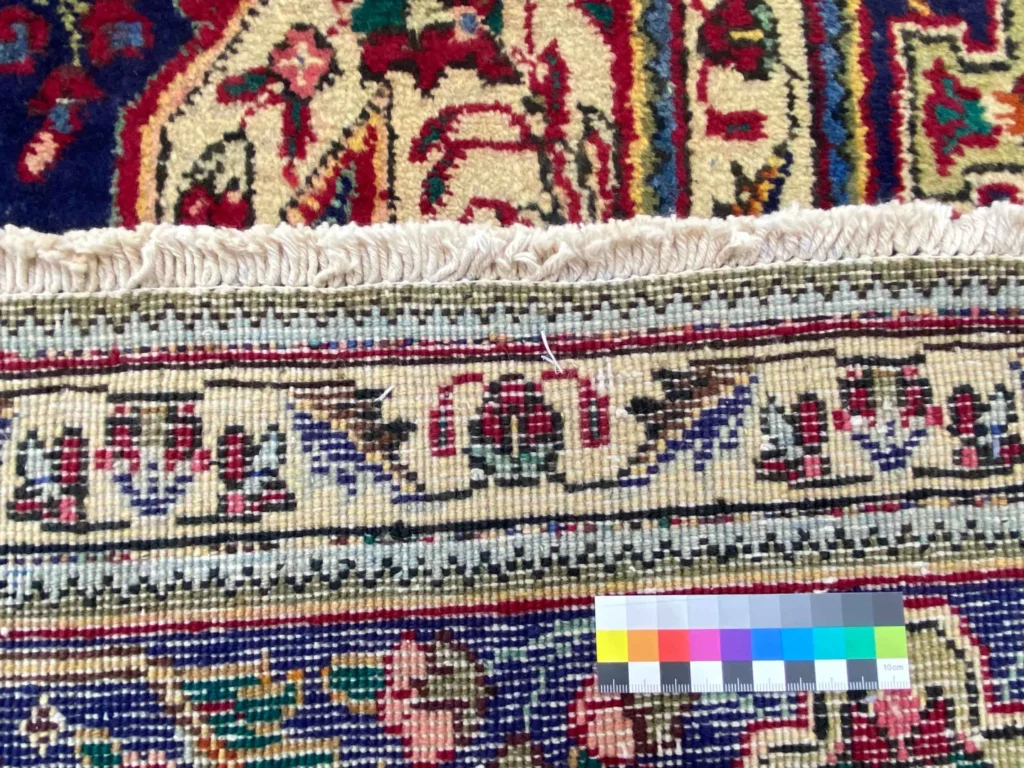
A hand-knotted rug is made by inserting individual knots into a prepared foundation by hand. The knots secure the pile yarn and gradually create the visible surface. Each row requires attention to the intended sequence of colours, lines and contours. This process distinguishes hand-knotted rugs from machine-made floor coverings and gives the finished textile its individual character.
Wool is traditionally used for its resilient and flexible fibre. It can be spun, dyed and worked into a compact pile. Silk has a smoother fibre and responds to light differently, allowing selected areas to appear brighter or more shimmering as the viewing angle changes. The combination of wool and silk therefore brings together a familiar Persian rug material with a particular lustrous effect.
Knot density is a technical term used to describe how closely knots are placed across a surface. It is related to the level of detail that can be rendered in a design. In the Tabriz tradition, fineness is often discussed through the unit Raj. In general, a higher Raj number indicates finer knotting. The knot density for this rug is specified separately in the product information.
Hand-knotting consists of many connected stages. A foundation is prepared, the design is followed row by row, colours are introduced according to the planned composition, and the surface is finished after the knotting is complete. The exact working method may vary between workshops. The defining feature remains the manual placement of the knots. The documented craft details for this rug are its hand-knotted construction and the use of wool and silk.
Origin and Tradition
The rug comes from Tabriz, the capital of East Azerbaijan. Tabriz is one of the recognised centres of Persian rug production and has a weaving tradition that developed over centuries. Rugs from the city and its surrounding area are produced in different quality levels, ranging from straightforward commercial goods to finely executed examples. The name Tabriz therefore identifies an established regional origin within Persian rug culture.
Tabriz lies in the historic north-west of Iran and has long been connected with trade and cultural exchange. Routes linking the Iranian plateau with the Caucasus, Anatolia and other regions passed through the wider area. These connections encouraged the movement of fibres, dyes, design ideas and practical knowledge. The carpet tradition of Tabriz developed within this active environment, combining local continuity with influences encountered through commerce and contact.
Production in Tabriz includes workshops of different sizes and levels of refinement. Some designs are planned for a clear, easily read overall effect, while others rely on very fine details and complex border arrangements. Regional origin alone does not determine the quality of an individual rug. The actual knotting, materials, design execution and condition must always be considered together.
Persian weaving traditions preserve knowledge about preparing the foundation, selecting yarns, combining colours and organising a design. A weaver must understand the structure of the pattern while maintaining the planned relationship between the central field and the borders. In finer compositions, proportion and alignment require particular care. This connection between design planning and manual execution is part of the craft identity associated with Tabriz.
The fineness of a Tabriz rug is often explained through the Raj system. Raj refers to knot density and provides a traditional way of discussing the closeness of the weave. Finer knotting can support a more detailed rendering of small shapes and narrow contours. The finest Tabriz examples are associated with very high densities. Such comparative information explains the regional terminology and is not an additional statement about the exact knot density of this particular rug.
Tabriz belongs to a wider network of Persian weaving centres. Isfahan rugs are known for elaborate compositions and high-quality materials. Kashan rugs are often associated with harmonious colour schemes and floral designs. Nain and Heriz also have established traditions and distinctive design languages. These places provide useful context for Persian rug history, but they do not alter the origin of this rug, which is Tabriz in East Azerbaijan.
The history of the region is visible not only in individual motifs, but also in the way a rug functions as both a practical textile and an expression of craft knowledge. A hand-knotted rug can organise a room, establish a colour relationship and preserve a method of making developed through generations. Tabriz rugs are consequently found in classical as well as contemporary interiors. Their regional identity remains connected to the long history of Persian weaving.
Design and Pattern
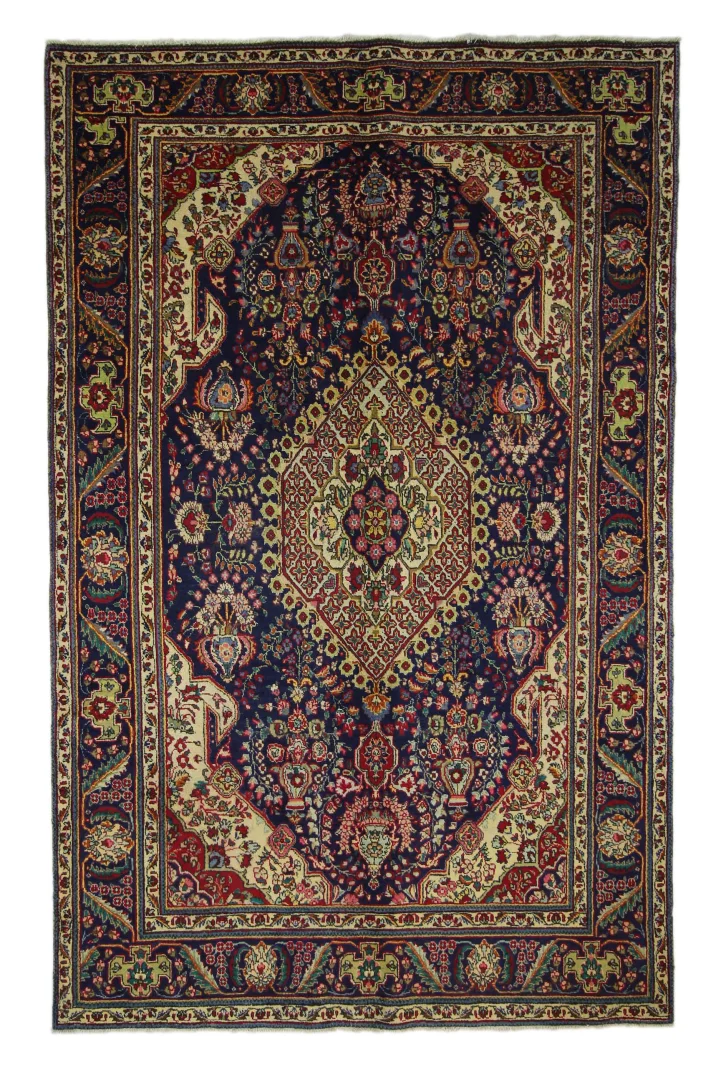
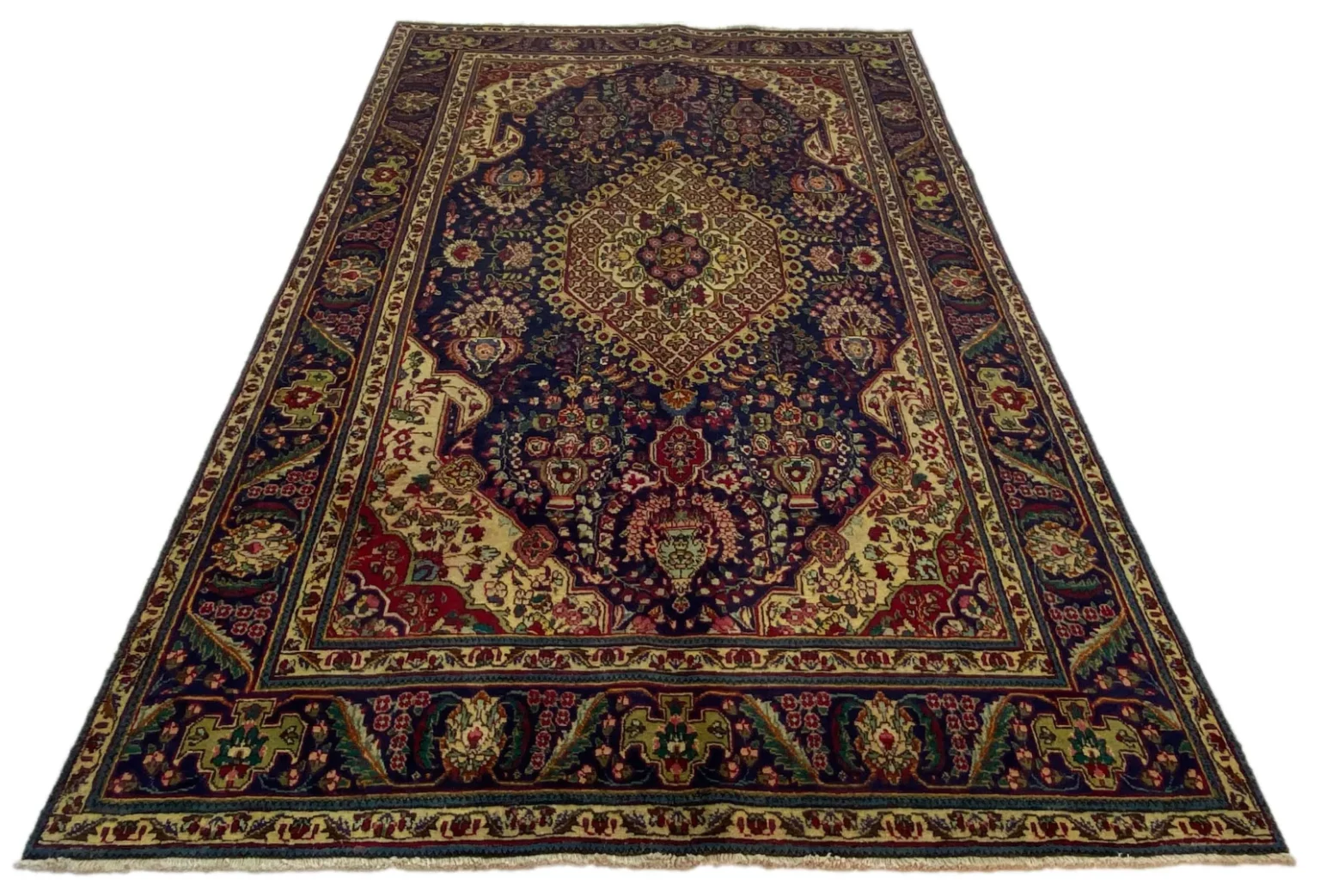
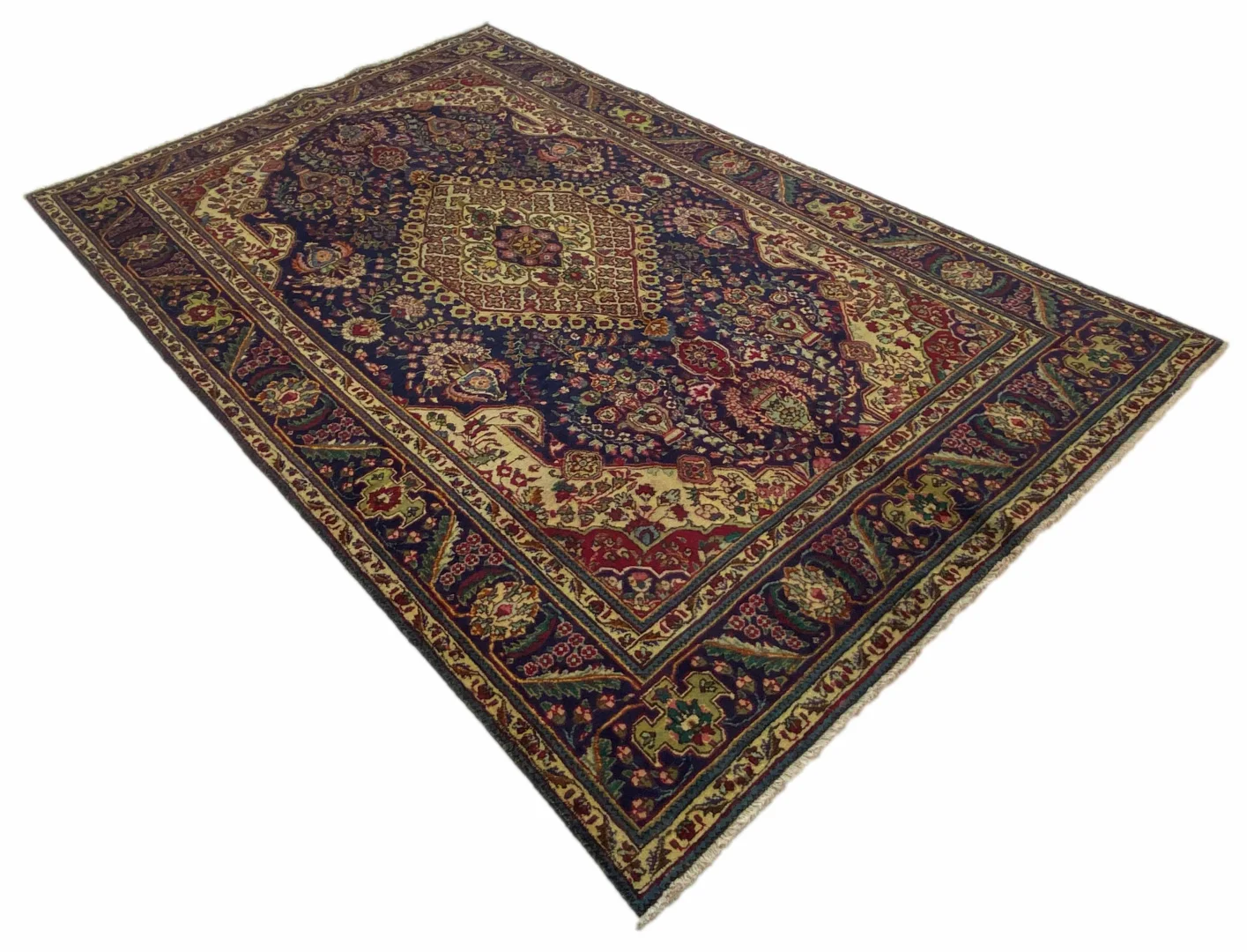
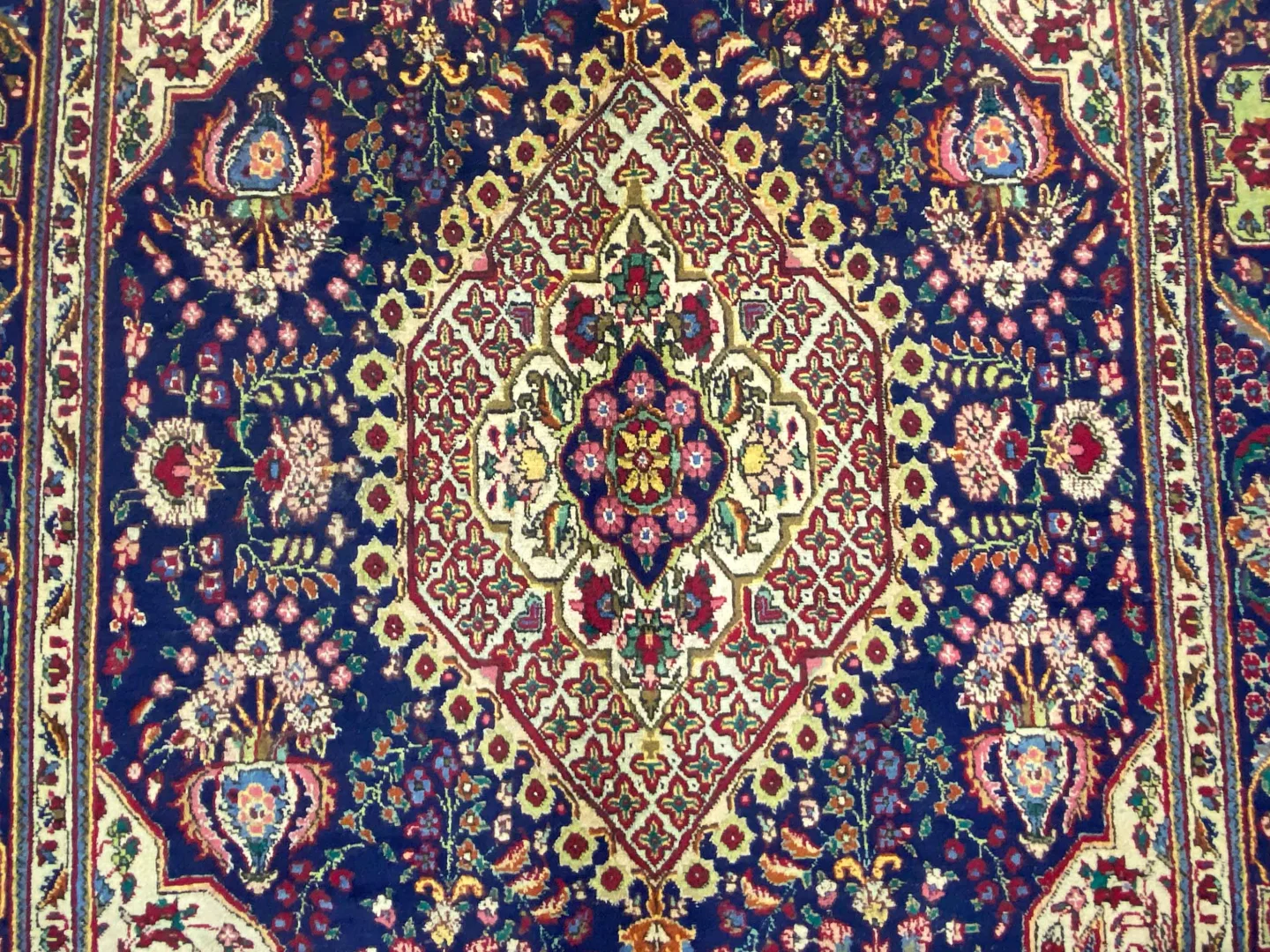
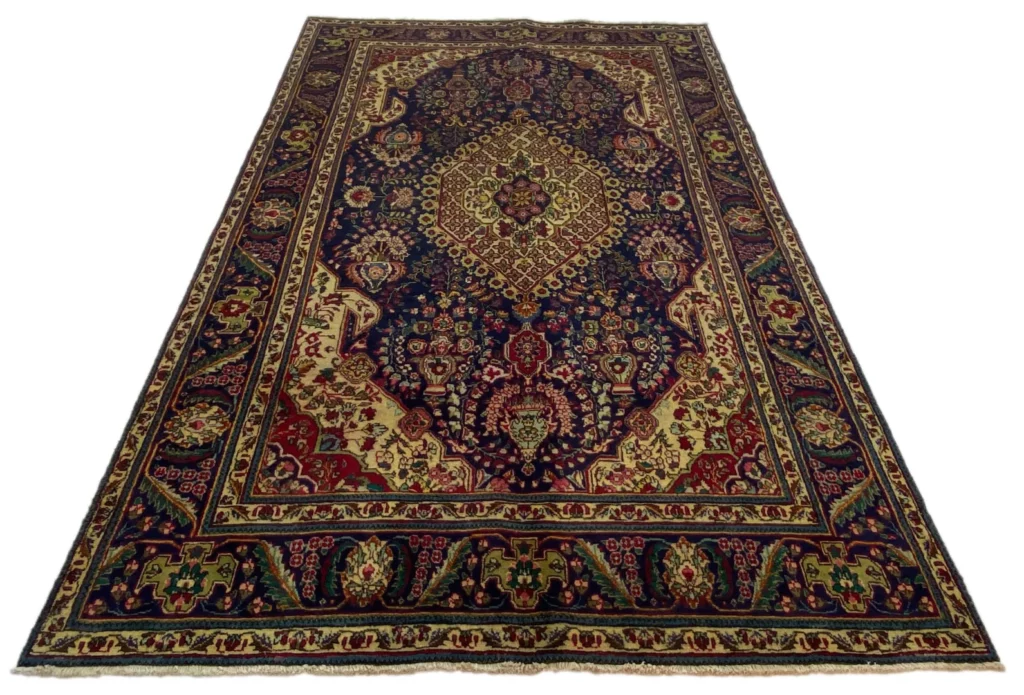
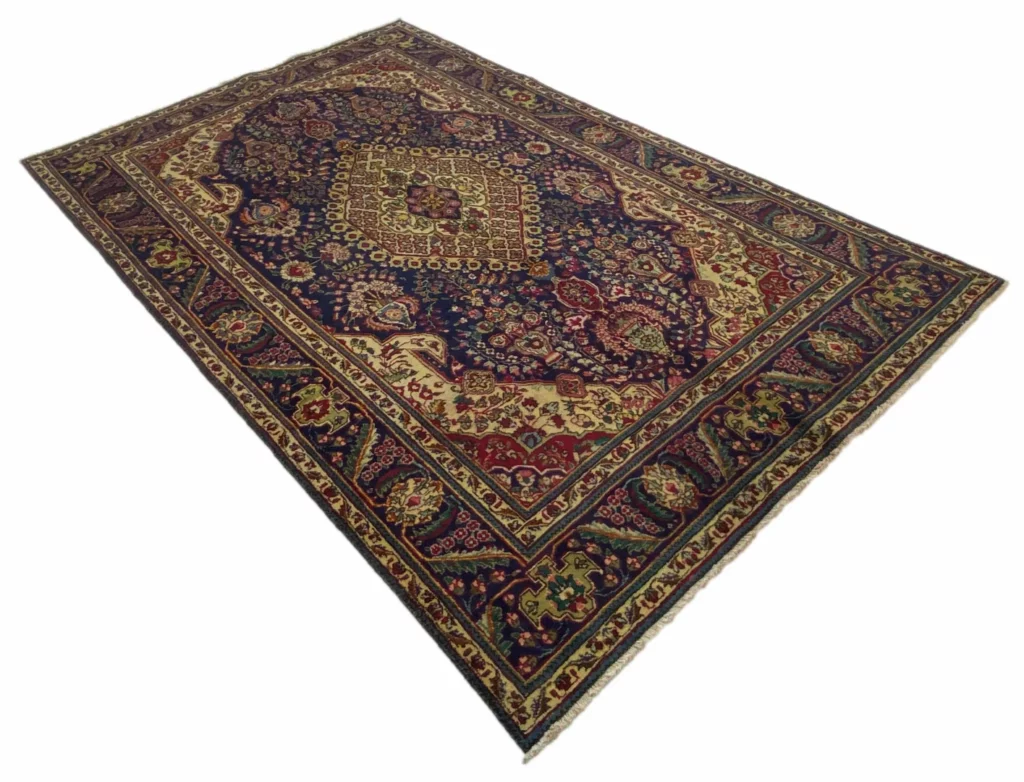
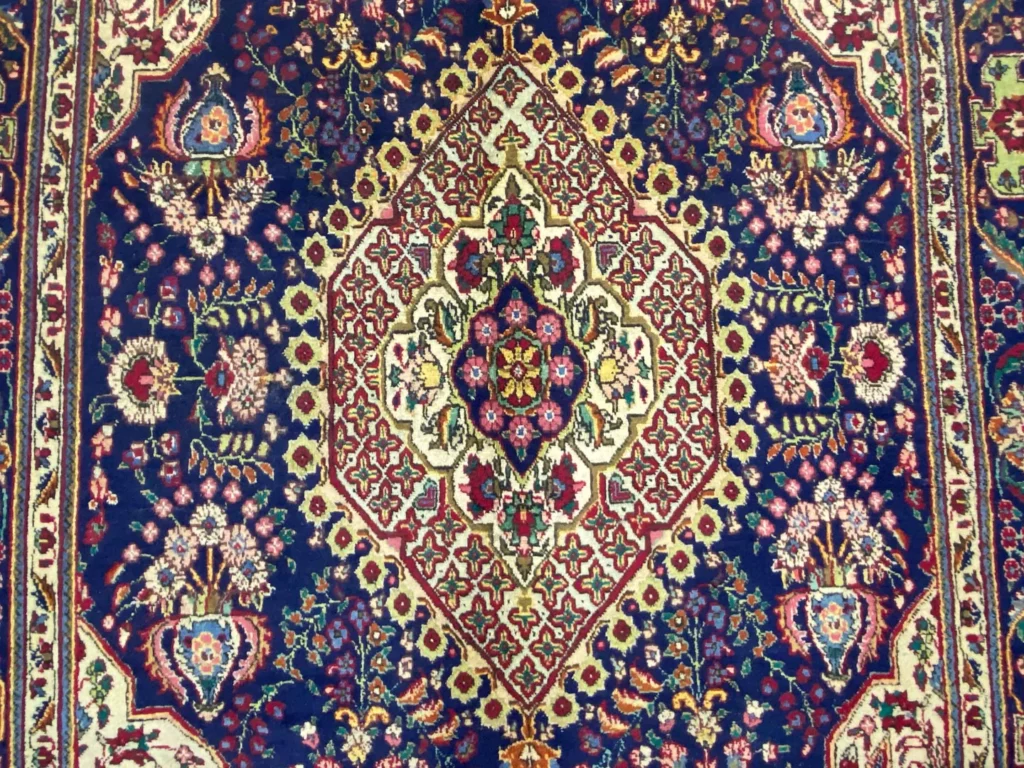
The pattern of this rug is described as traditional Persian designs. Traditional Persian compositions often establish a clear relationship between a central field and surrounding borders. The field may contain a central medallion, repeated vines, floral forms or an ordered geometric arrangement. Borders frame the main composition and create a transition between the design and the outer edge. The prominence of each element depends on the individual design.
Floral and geometric motifs are both common in Tabriz rugs. Floral designs may draw on flowers, leaves, vines and stylised plant forms. These elements can be arranged in a regular repeat or distributed across the field in a more open composition. Geometric designs rely on lines, angles, compartments and symmetrical relationships. The two approaches may also be combined, placing floral details within a structured framework. In every case, the arrangement follows an intentional composition rather than a random distribution.
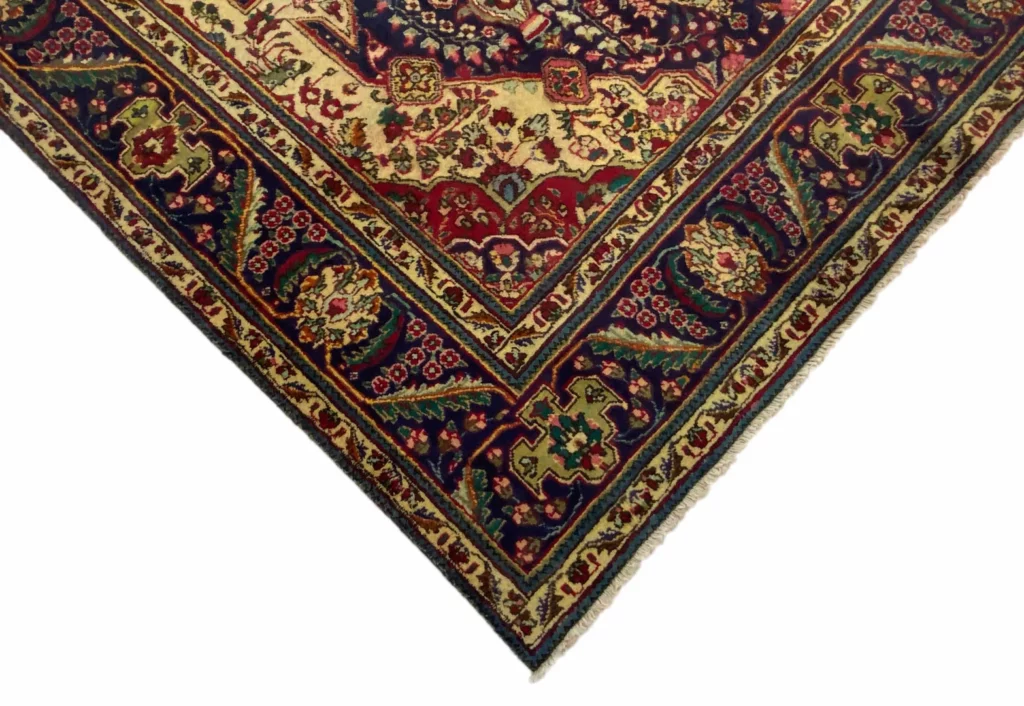
A medallion can serve as the visual centre of a field and may be supported by corner pieces, vines or repeated secondary motifs. In all-over compositions, a continuous repeat takes the place of a single central focus. Borders may consist of a principal border accompanied by narrower guard borders. Their role is not merely to finish the rug visually; they also organise the transition between the central field and the outer edge.
The Tabriz design tradition is known for its range. Plant forms, palmettes, arabesques, vines and more strictly geometric elements can all appear within its vocabulary. These motifs are stylised and arranged according to proportion, repetition and symmetry. They are not intended as literal botanical illustrations. Instead, they form part of an inherited decorative language in which individual shapes are connected into a coherent surface.
A finer knot structure can help render small contours and repeated elements with greater definition. It supports the relationship between primary motifs, secondary details and border work. Knot density is a technical description of the overall knotted structure, not the name of a pattern. In a hand-knotted rug, the clarity of the design results from the interaction of knotting, colour placement and the organisation of the field.
Traditional Persian colour palettes may include red, blue, gold and cream. These tones can be distributed between the field, borders and smaller decorative details. Contrast may separate vines from their ground or give a medallion greater definition. Related colours can also bring separate motifs together and make the full composition read as a unified design. The use of colour depends on the individual pattern and workshop tradition.
Persian motifs are often discussed in relation to symbolic meanings and narrative associations. Plant forms may suggest growth and the ordered character of nature. Repeated shapes can be connected with balance, continuity and the cycle of life. These interpretations belong to the broader visual language of Persian rugs. The specific information for this one-off piece remains the stated description of traditional Persian designs; no more precise medallion or individual motif name is provided.
Silk can influence how a design is perceived because its smoother surface catches light differently from wool. Selected outlines or fields may therefore appear to shimmer. This is a general material effect and does not indicate that a particular motif is made entirely of silk. The rug is described as using wool and silk and as having a luxurious silk sheen. Material, colour and pattern are perceived together across the hand-knotted surface.
Special Features
The distinctive details recorded for this one-off rug are its origin in Tabriz in East Azerbaijan, its hand-knotted construction and its use of wool and silk. Its silk lustre is specifically noted as a visible characteristic. The stated knot density adds a precise technical description. The pattern is identified as traditional Persian designs.
The condition is described as very good. This is a clear condition statement for the offered rug; no individual repairs, restorations or particular signs of wear are specified. Every hand-knotted rug is an individual object because its manual execution and exact design arrangement are not reproduced identically. This observation concerns the method of making and does not add an age or provenance that has not been stated.
The material combination and silk sheen distinguish this rug within the broad Tabriz tradition. Its classification remains precise: it is a hand-knotted Persian rug from Tabriz, with a traditional Persian pattern and a very good condition.
FAQ
How can I assess the quality of a Tabriz Persian rug?
Knot density and materials are important points when assessing a Tabriz Persian rug. Density is often discussed through Raj, with higher Raj numbers generally indicating finer workmanship. Material also matters: wool is a traditional foundation of Persian rug making, while silk can add a fine lustre. This rug is described as being made of wool and silk and as having a specified knot density. The evenness of the structure, the accuracy of the pattern and the condition should also be considered when examining a hand-knotted rug.
What patterns and colours are typical of Tabriz rugs?
Tabriz rugs commonly use floral or geometric patterns. Floral designs may include flowers, leaves and vines, while geometric compositions are built from ordered lines, shapes and symmetrical fields. Traditional colours often include red, blue, gold and cream. Depending on the design, these tones may be used in the central field, the borders or smaller details. This rug is described as having traditional Persian designs; no specific medallion or individual motif name is given.
How should I care for my Tabriz Persian rug?
Regular, careful vacuuming is part of normal care for a Tabriz Persian rug. Direct sunlight should be avoided so that colours and materials are treated gently. Spills should be addressed promptly with a damp cloth, without vigorous rubbing. Professional cleaning is recommended for thorough maintenance. Because this rug is made of wool and silk and is hand-knotted, a specialist familiar with Oriental rugs and sensitive materials is the appropriate choice for cleaning.
To provide the best experiences, we use technologies like cookies to store and/or access device information. Consenting to these technologies will allow us to process data such as browsing behavior or unique IDs on this site. Not consenting or withdrawing consent, may adversely affect certain features and functions.
Functional Always active
The technical storage or access is strictly necessary for the legitimate purpose of enabling the use of a specific service explicitly requested by the subscriber or user, or for the sole purpose of carrying out the transmission of a communication over an electronic communications network.
Preferences
The technical storage or access is necessary for the legitimate purpose of storing preferences that are not requested by the subscriber or user.
Statistics
The technical storage or access that is used exclusively for statistical purposes.The technical storage or access that is used exclusively for anonymous statistical purposes. Without a subpoena, voluntary compliance on the part of your Internet Service Provider, or additional records from a third party, information stored or retrieved for this purpose alone cannot usually be used to identify you.
Marketing
The technical storage or access is required to create user profiles to send advertising, or to track the user on a website or across several websites for similar marketing purposes.
 SECURE PAYMENT
 SHIPPING PARTNERS