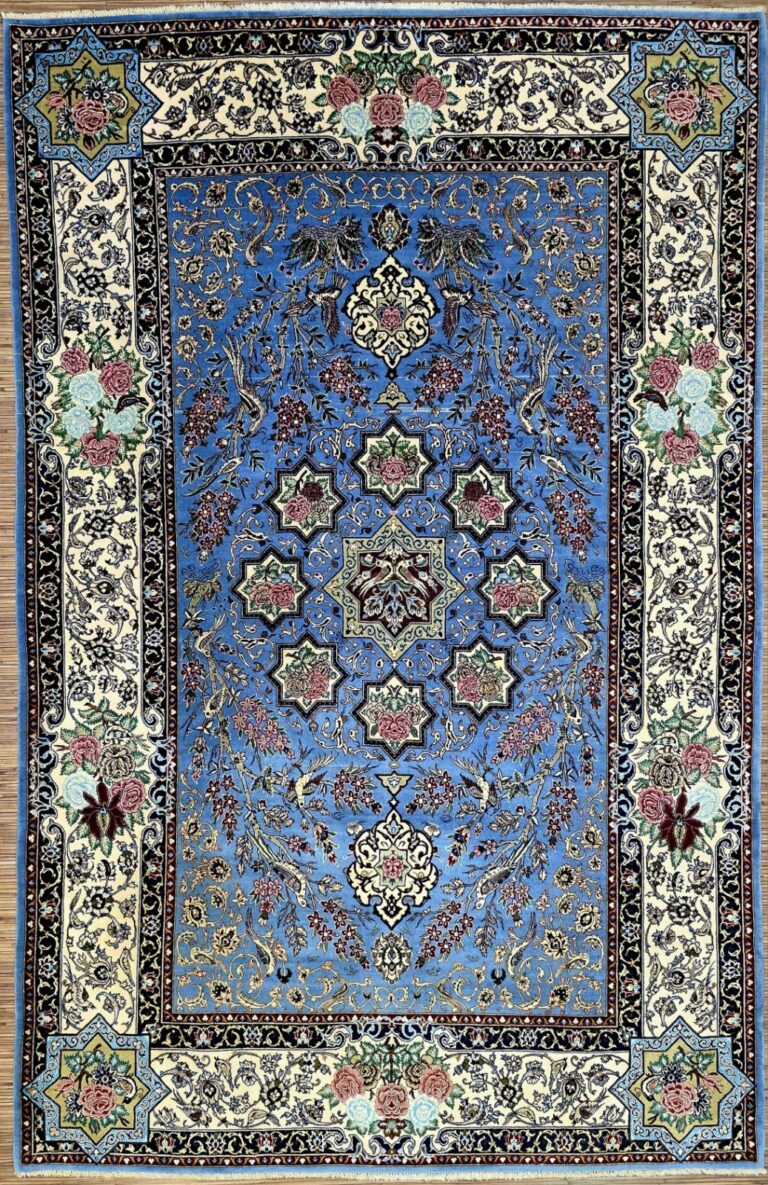
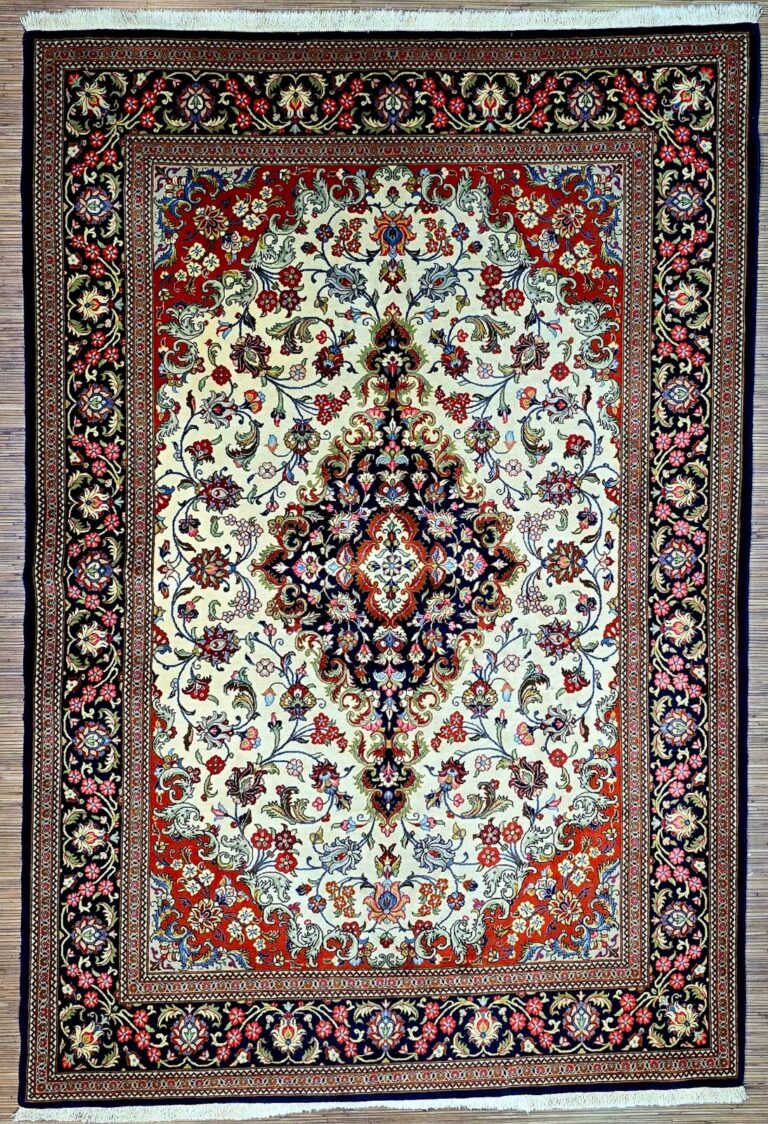
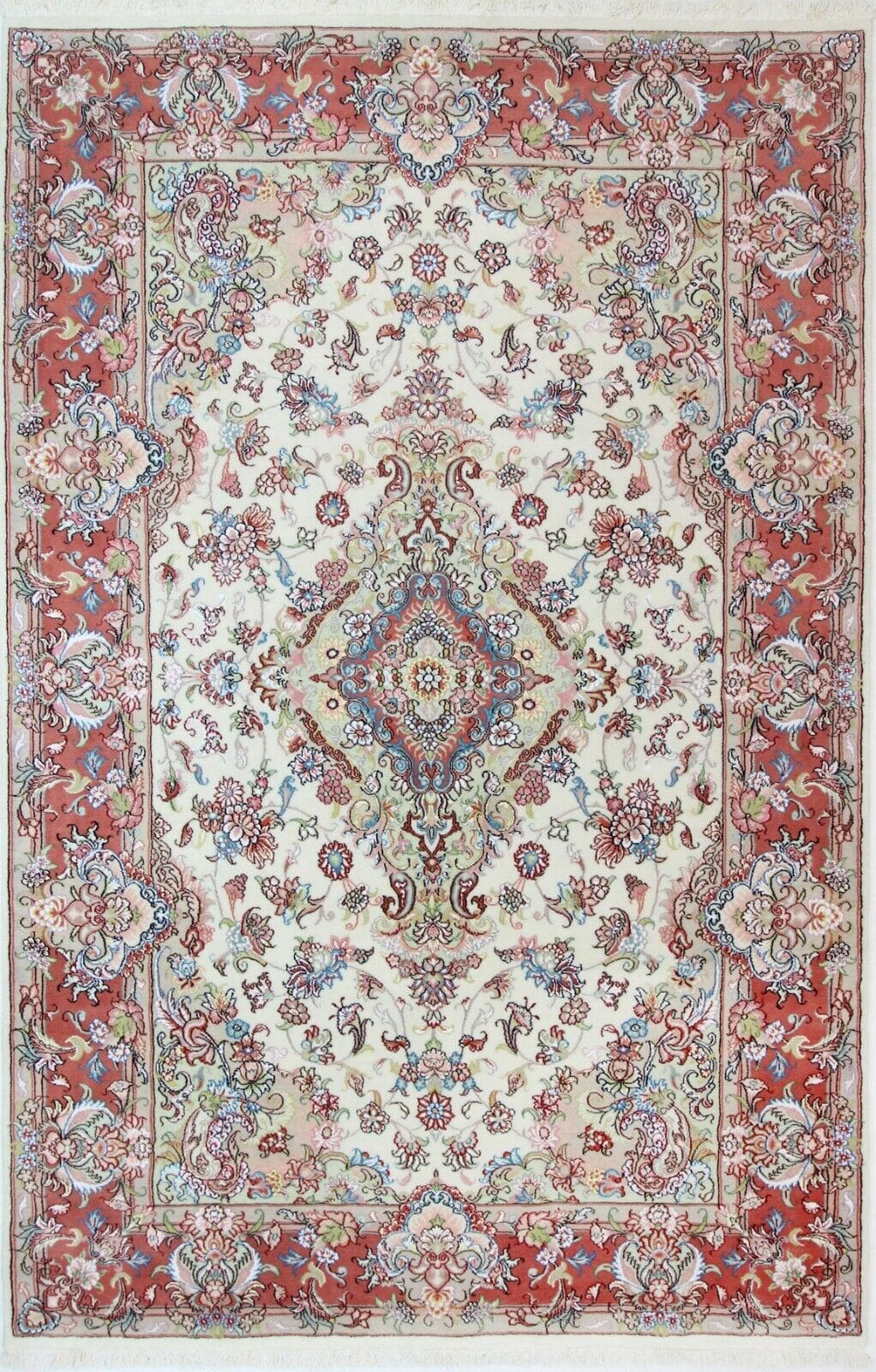
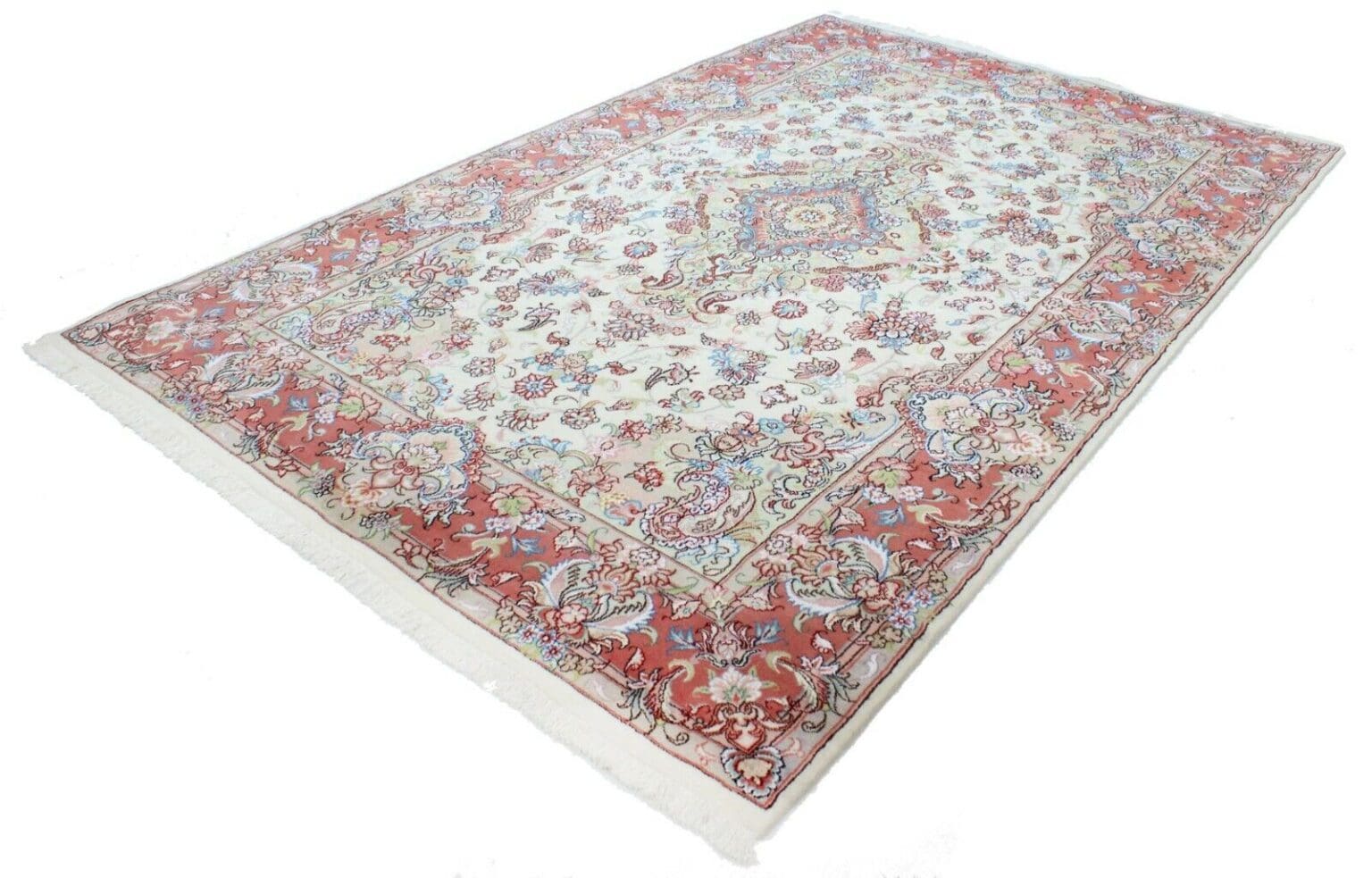
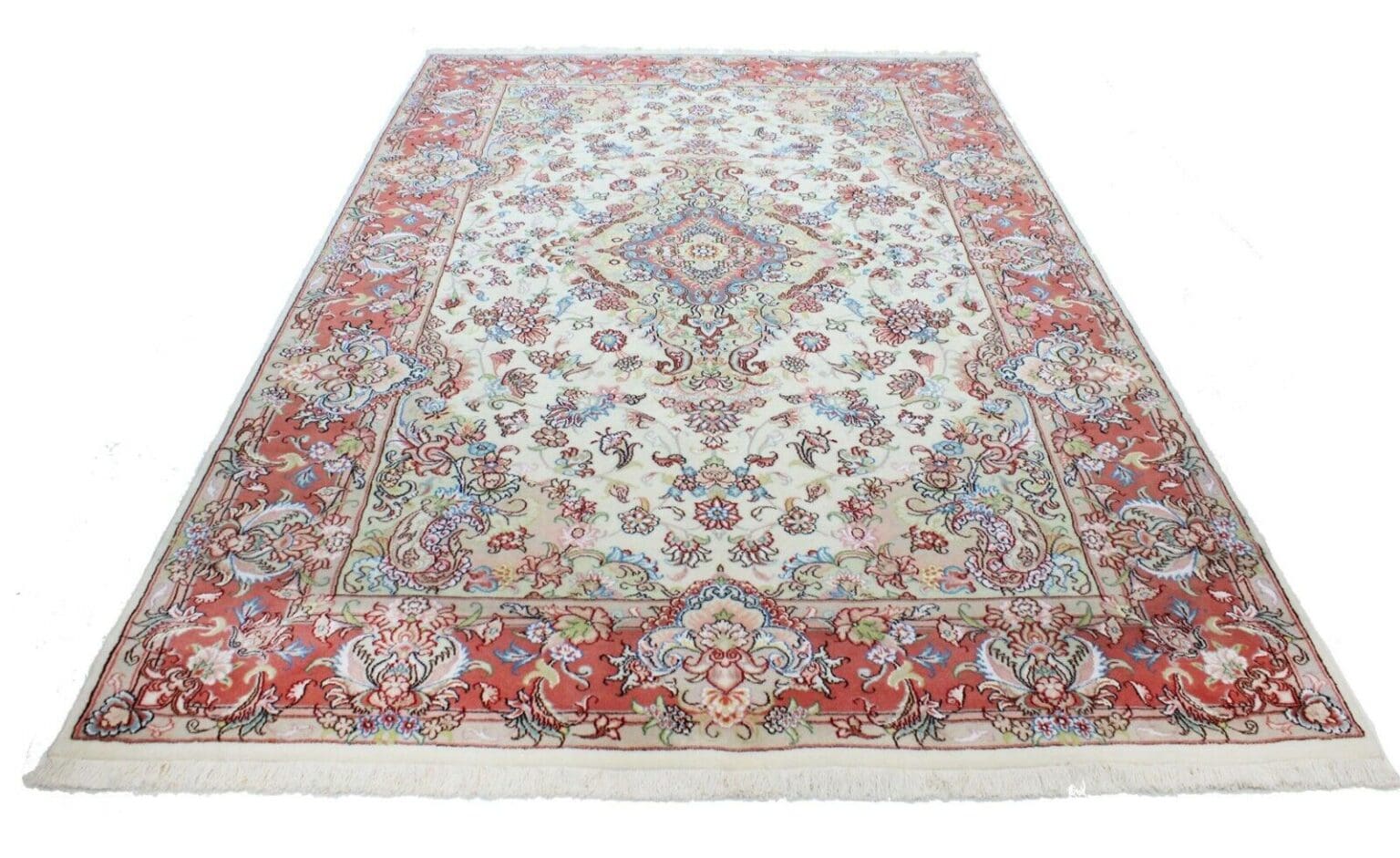
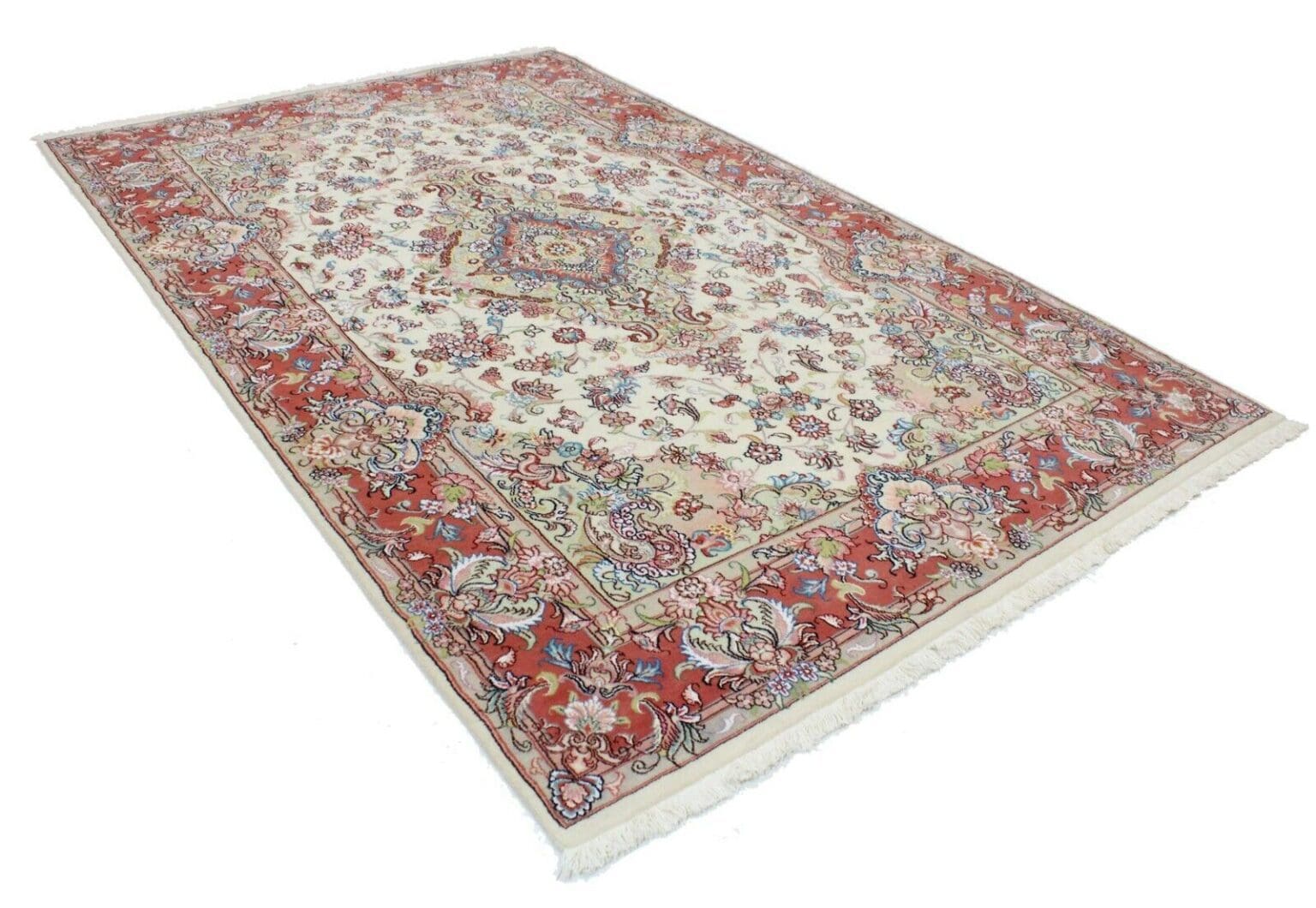
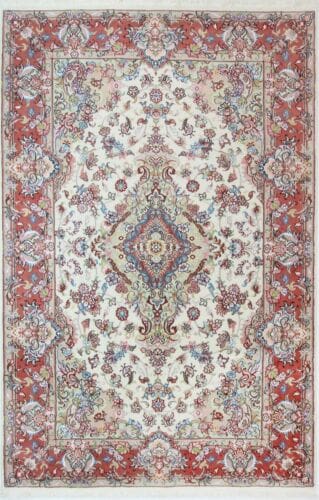
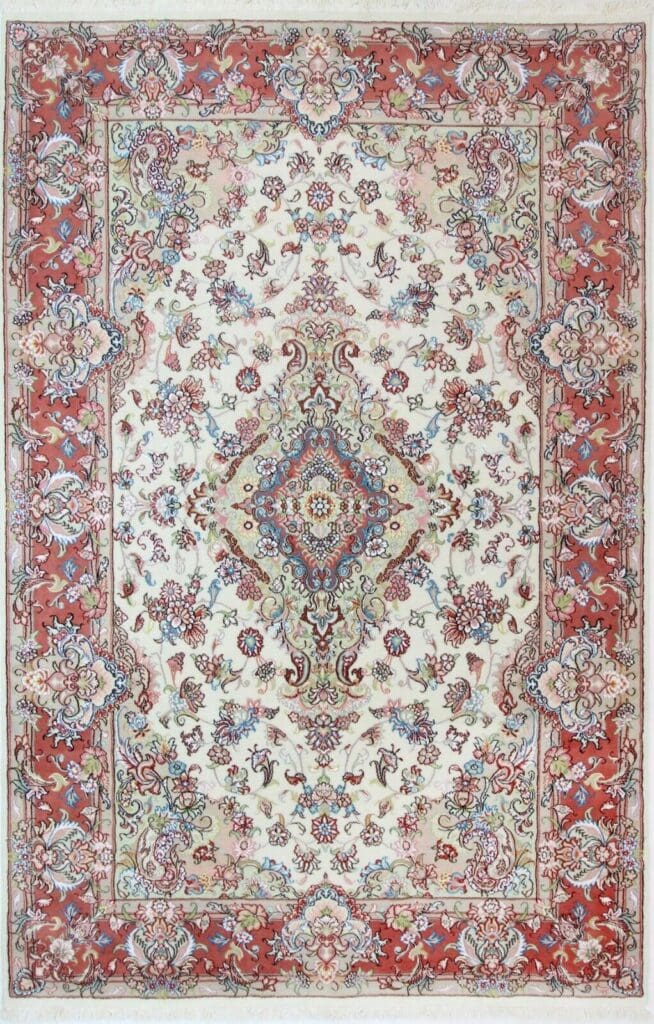
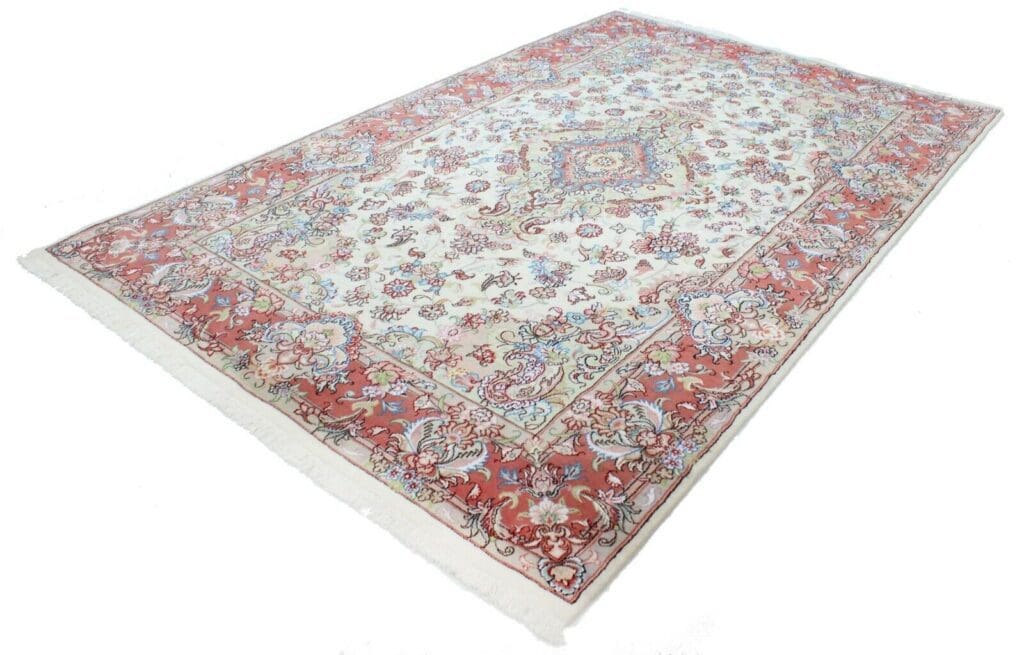
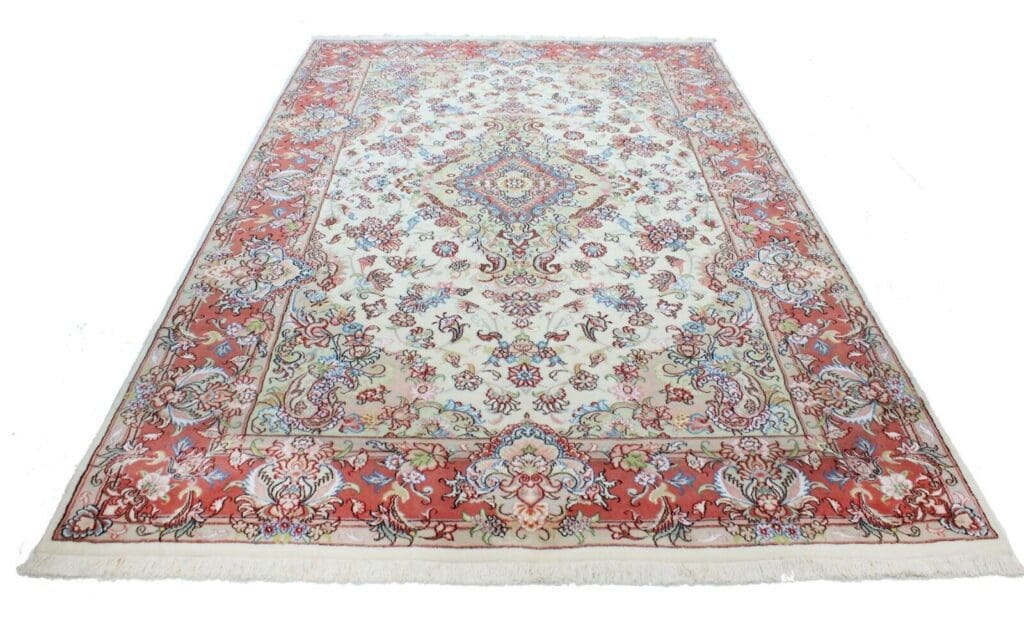
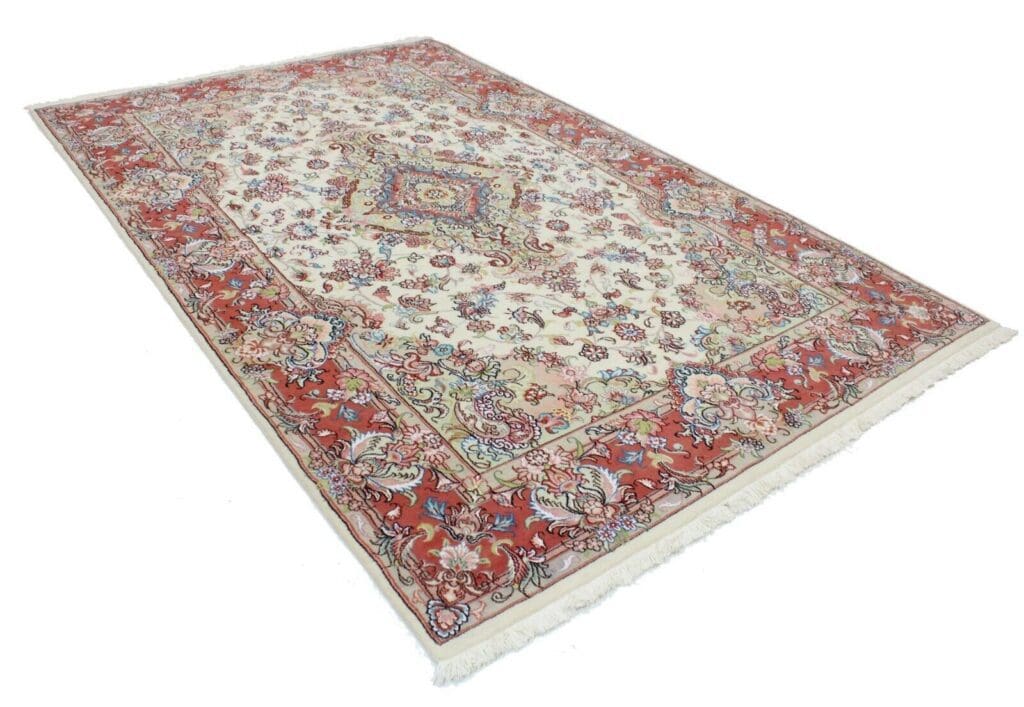
Hand-knotted Tabriz Persian Rug | Knot density: High-quality hand-knotting | Material: Wool and cotton | Size: 308 cm x 196 cm | Pattern: Oriental floral pattern | Condition: New without label, top condition
This Tabriz Persian rug is hand-knotted. Hand-knotting is one of the traditional methods used in oriental rug making. The design is formed knot by knot, followed by further work to even the surface and prepare the rug for use. The materials specified for this piece are wool and cotton. Both have long been established materials in Iranian rug production.
Wool is widely used for hand-knotted rugs because of its pleasant feel and its suitability for a durable textile surface. Cotton is also a longstanding material in traditional rug construction and contributes to a stable textile structure. For this rug, wool and cotton are given as the materials; no additional material information is provided.
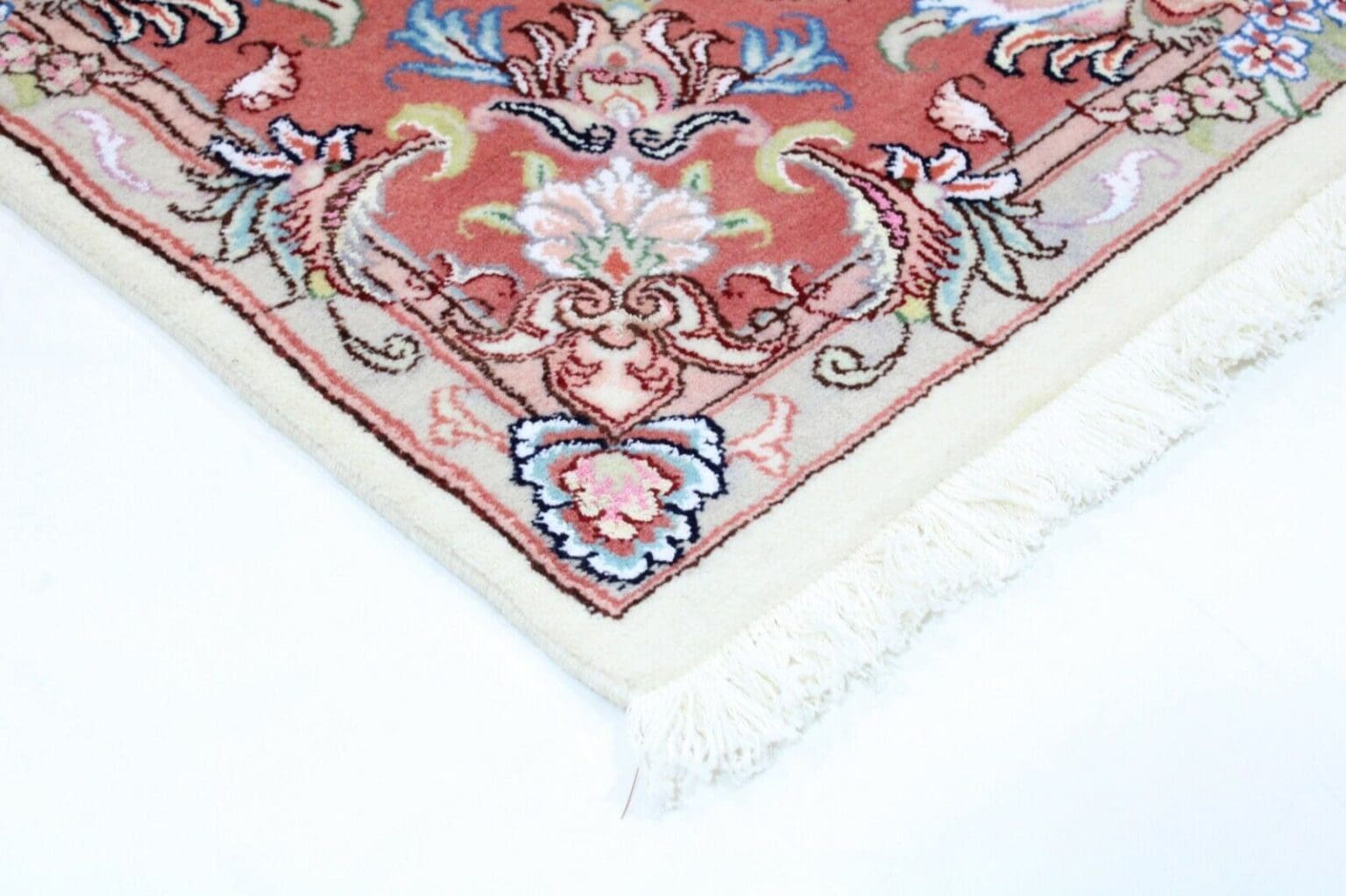
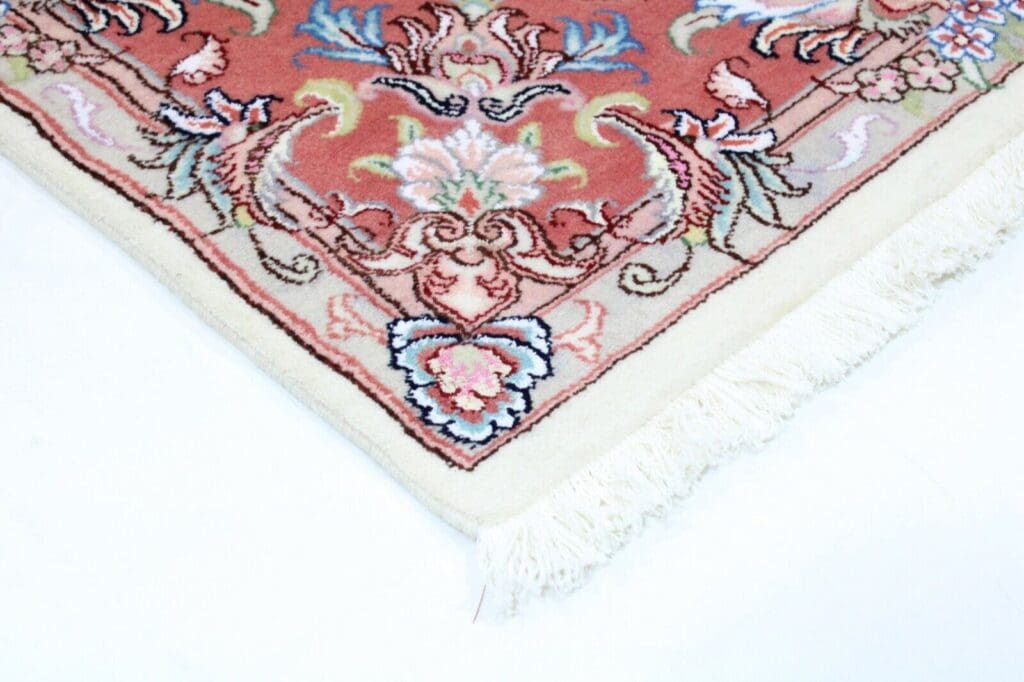
The knot density is described as high-quality hand-knotting. This wording indicates careful workmanship without providing a numerical knot count. The floral design is created through the hand-worked arrangement of the individual decorative elements. Hand production makes rug making a process involving several stages, in which the design, knotting, shearing and finishing work are connected.
Origin and Tradition
The rug comes from Iran and is attributed to Tabriz, also written Täbriz. Tabriz is one of the recognised centres of Persian rug culture. The city lies in north-western Iran and was historically important for trade, arts and crafts, and the exchange of design ideas. This setting helped a varied rug-making tradition develop in the region.
Rugs from Tabriz are often associated within the Persian tradition with precise drawing, clearly organised compositions and carefully worked floral forms. Workshops in the region use inherited principles of proportion, ornament and colour distribution. At the same time, the Tabriz tradition allows for a range of designs. Not every rug from Tabriz has the same structure; the regional name describes a cultural and craft context rather than one single pattern.
Persian rug making combines practical use with a highly developed approach to ornament. A design begins as an overall concept. The individual elements are then transferred into the textile structure by the people doing the knotting. Accurate repetition of small motifs is as important as the balance between field, border and central arrangement. The work requires sustained attention, since each row contributes to the eventual appearance of the rug.
Tabriz is also part of a wider Iranian rug landscape. Isfahan, Kashan, Heriz, Sarough and Bakhtiari, for example, each have their own traditions and recognised design languages. Mentioning these places describes related areas of Iranian rug culture, not the origin of this particular rug. This piece is identified as a Tabriz Persian rug from Iran.
The transmission of patterns and skills across generations is an important part of Persian rug tradition. Hand-knotted rugs therefore represent more than a particular production method: they also connect regional knowledge, design work and practical experience. The origin in Täbriz places this piece within that historical and cultural context.
Design and Pattern
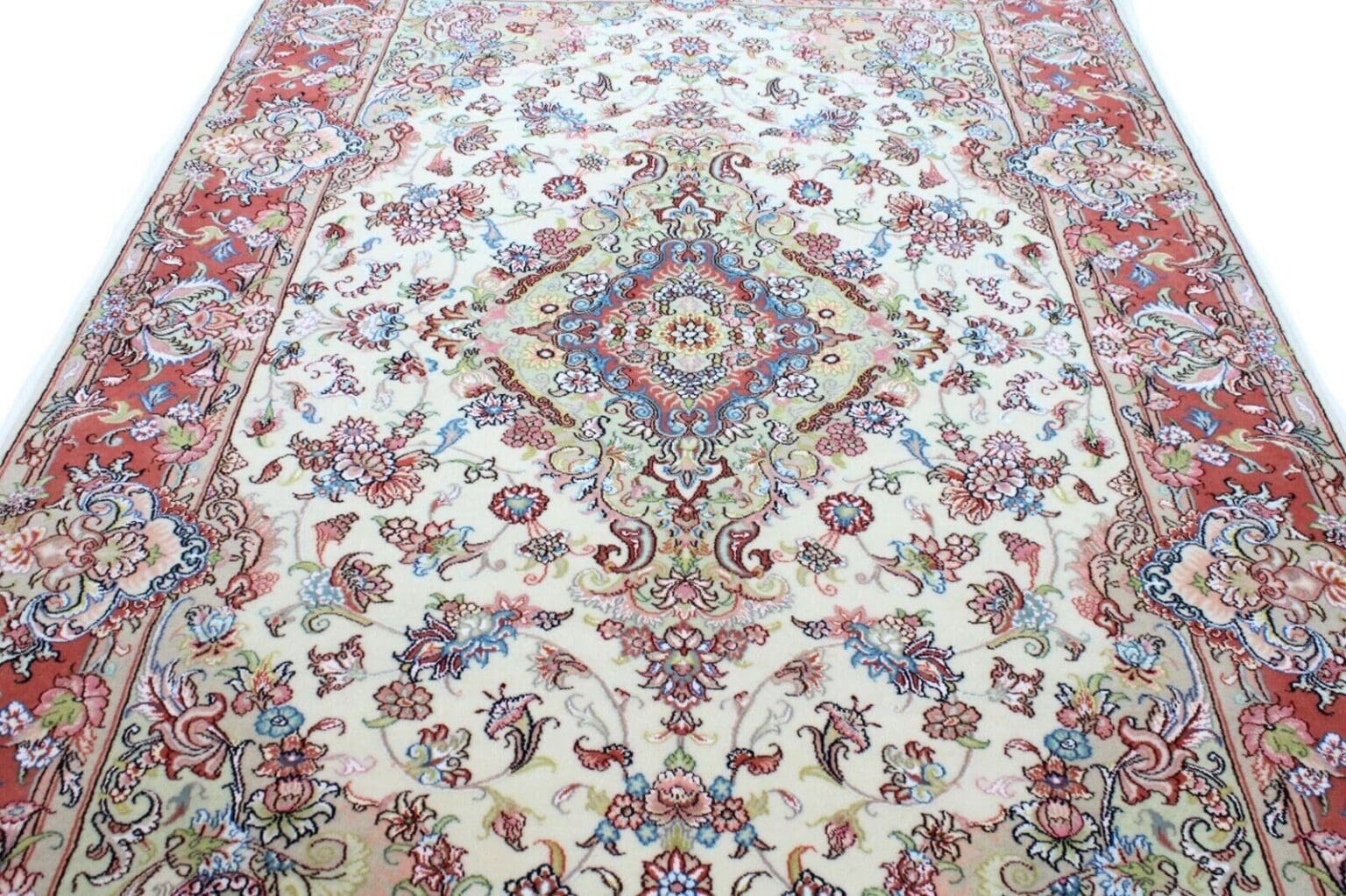
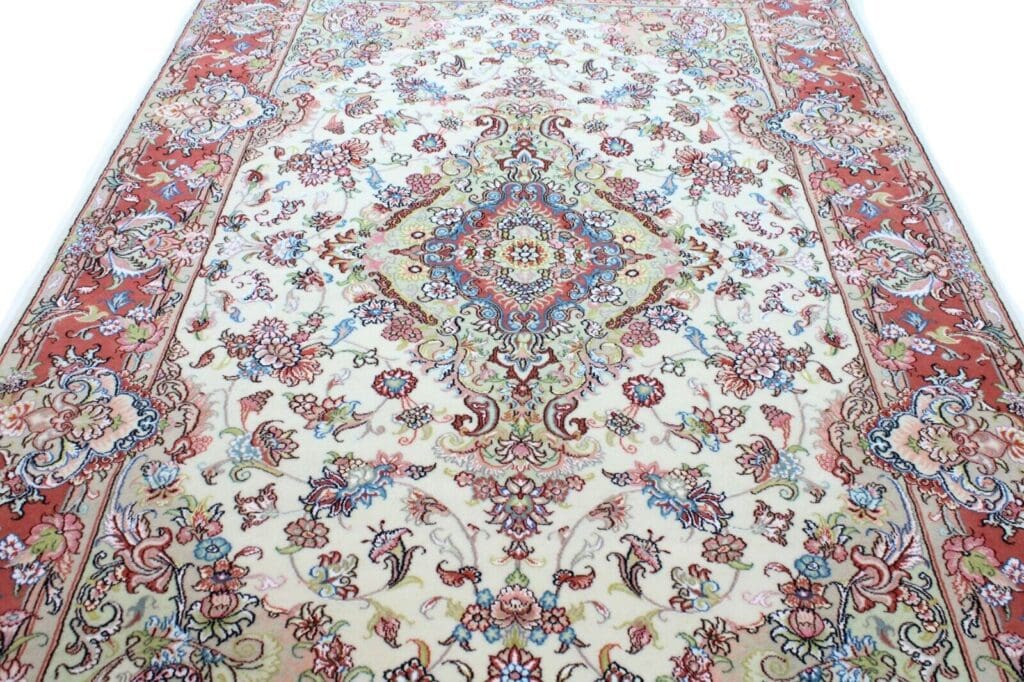
The pattern of this rug is described as an oriental floral pattern. Floral designs are among the defining elements of Persian rugs. Flowers, leaves, vines and connected botanical forms can be arranged into a coherent ornamental field. A floral composition introduces movement across the surface while allowing individual motifs to appear as parts of a larger design.
In Persian ornament, botanical forms are not necessarily intended as literal depictions of nature. They are stylised, ordered and placed in relation to other elements. A single flower may become a repeated motif, while vines can create transitions between different areas of the pattern. This approach creates a dense, rhythmic surface that remains organised and readable.
Oriental floral patterns can be structured in many different ways. Some compositions gather their botanical forms around a medallion, while others distribute them throughout the field or arrange them in regular repetitions. Since this rug is specifically described only as having an oriental floral pattern, no additional claims are made about a medallion, border, colours or individual ornaments. The confirmed description is a floral design with an oriental character.
The effect of a floral pattern comes not only from the flowers themselves. The relationship between larger and smaller forms, fuller and quieter areas, and recurring lines is also important. In a hand-knotted rug, these distinctions are expressed through the sequence of knots and the shaping of the outlines. The design consequently has a textile structure that differs from a printed or mechanically applied decoration.
The Tabriz tradition is known for combining precise drawing with floral ornament. Regional designs can incorporate classical botanical motifs and arrange them within a balanced overall composition. This rug brings together the Tabriz origin stated for it and the explicitly named oriental floral pattern. Its design therefore belongs clearly to the Persian ornamental tradition without requiring any further specific pattern claims.
Special Features
This rug is hand-knotted and offered as a Persian rug from Iran with Tabriz as its stated origin. Wool and cotton are listed as its materials. Its pattern is an oriental floral design. The condition is described as “new without label, top condition”. The rug is also suitable for use with underfloor heating. These details summarise the specific features given for this piece.
The phrase “new without label” describes the stated sales condition. “Top condition” adds to that condition description. No separate age statement or account of signs of use is provided. No signature is mentioned either. The rug is therefore presented with the concrete condition and origin details specified for it.
FAQ
How can I assess the quality of a Persian rug?
Several characteristics can help assess the workmanship of a Persian rug. These include the number of knots per area, the materials used and the fineness of the pattern drawing. A high knot density generally allows small ornaments to be represented in greater detail. Even knotting, clean outlines and a coherent overall composition are also relevant when examining a rug. This rug is described as having high-quality hand-knotting. Wool and cotton are named as its materials. No specific numerical knot count is supplied, so no exact density can be stated.
Are Persian rugs easy to care for?
With regular attention, caring for a Persian rug is manageable. Loose dust and dirt can be removed by careful, regular vacuuming. The surface should not be subjected to unnecessary strain during cleaning. Occasional professional cleaning helps preserve the colours and material, especially when dirt has become embedded. The appropriate cleaning method depends on the fibres and construction. Wool and cotton are specified for this rug. It is also described as suitable for underfloor heating.
How do I choose the right Persian rug for my home?
When choosing a Persian rug, consider the size of the room, the existing furnishings and the colour palette already present. It is also useful to consider how heavily the area is used and what visual role the pattern should have. An oriental floral pattern can complement a room when its lines, shapes and colours work with the surrounding interior. Placement depends on the proportions of the room and the amount of floor coverage desired. This Tabriz Persian rug is described as hand-knotted, with an oriental floral pattern and suitability for underfloor heating.
To provide the best experiences, we use technologies like cookies to store and/or access device information. Consenting to these technologies will allow us to process data such as browsing behavior or unique IDs on this site. Not consenting or withdrawing consent, may adversely affect certain features and functions.
Functional Always active
The technical storage or access is strictly necessary for the legitimate purpose of enabling the use of a specific service explicitly requested by the subscriber or user, or for the sole purpose of carrying out the transmission of a communication over an electronic communications network.
Preferences
The technical storage or access is necessary for the legitimate purpose of storing preferences that are not requested by the subscriber or user.
Statistics
The technical storage or access that is used exclusively for statistical purposes.The technical storage or access that is used exclusively for anonymous statistical purposes. Without a subpoena, voluntary compliance on the part of your Internet Service Provider, or additional records from a third party, information stored or retrieved for this purpose alone cannot usually be used to identify you.
Marketing
The technical storage or access is required to create user profiles to send advertising, or to track the user on a website or across several websites for similar marketing purposes.
 SECURE PAYMENT
 SHIPPING PARTNERS