Persian Rug Tabriz 205 x 150 cm Wool Hand-knotted (Sold)
€ 2033
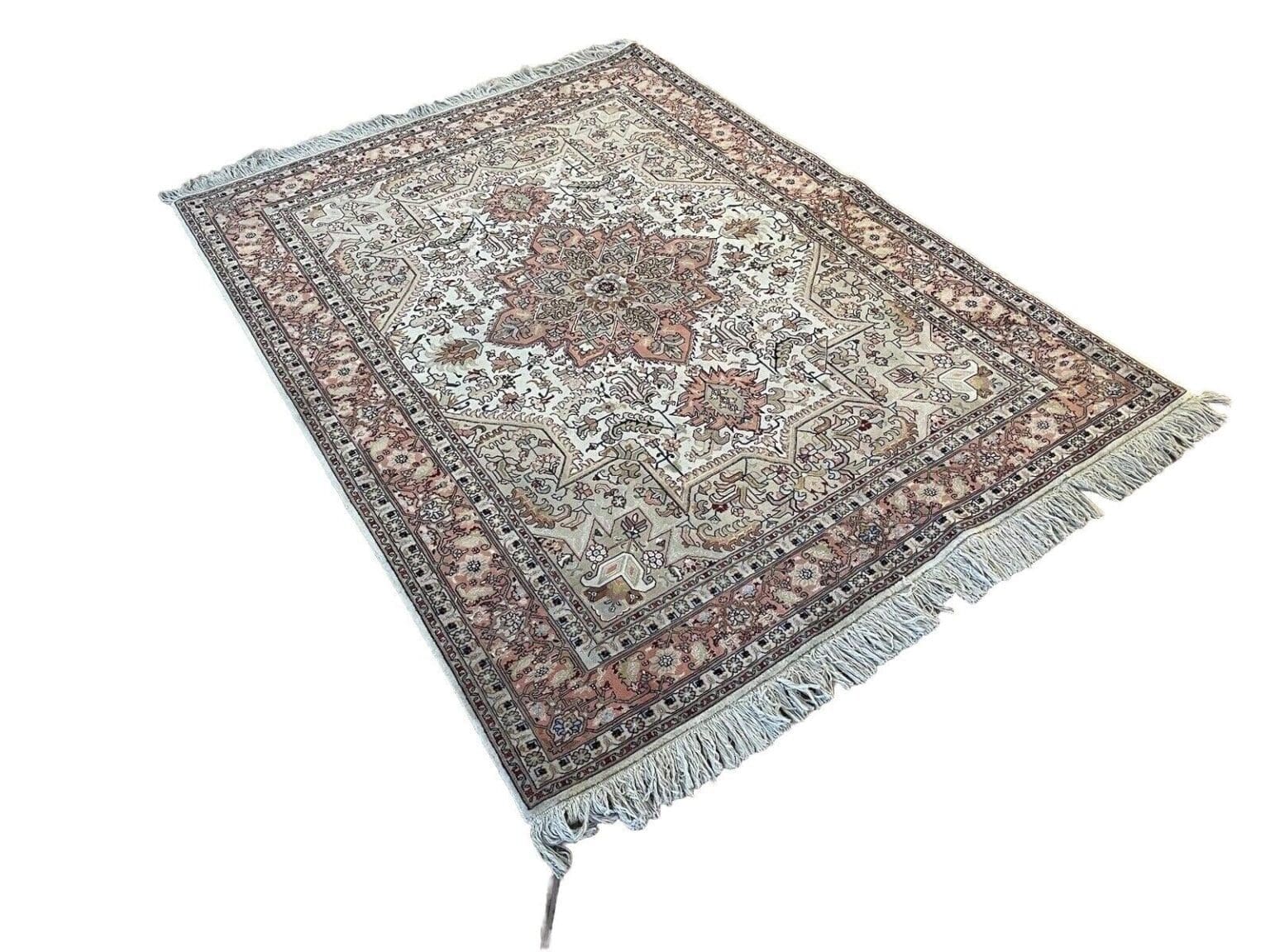
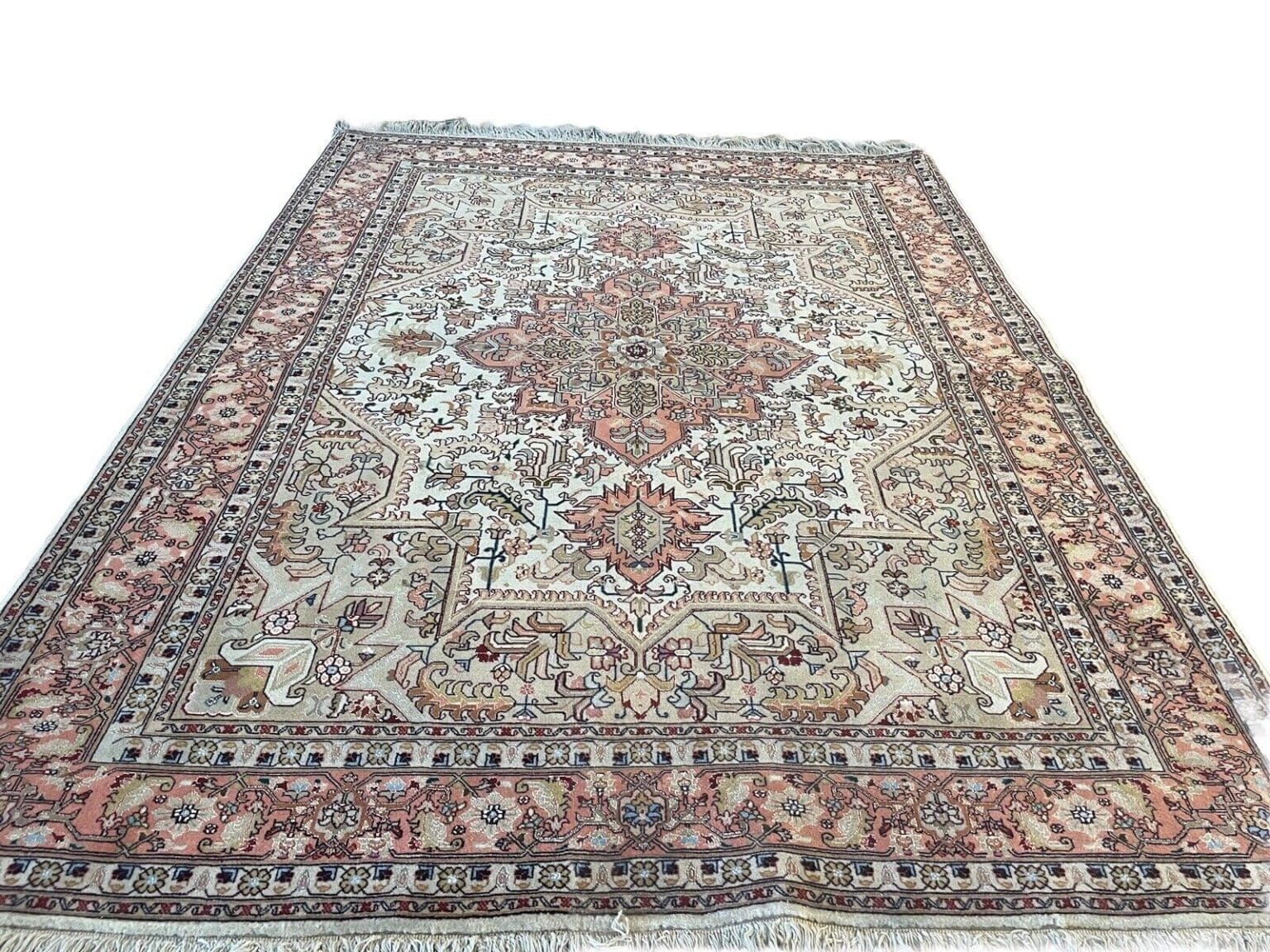
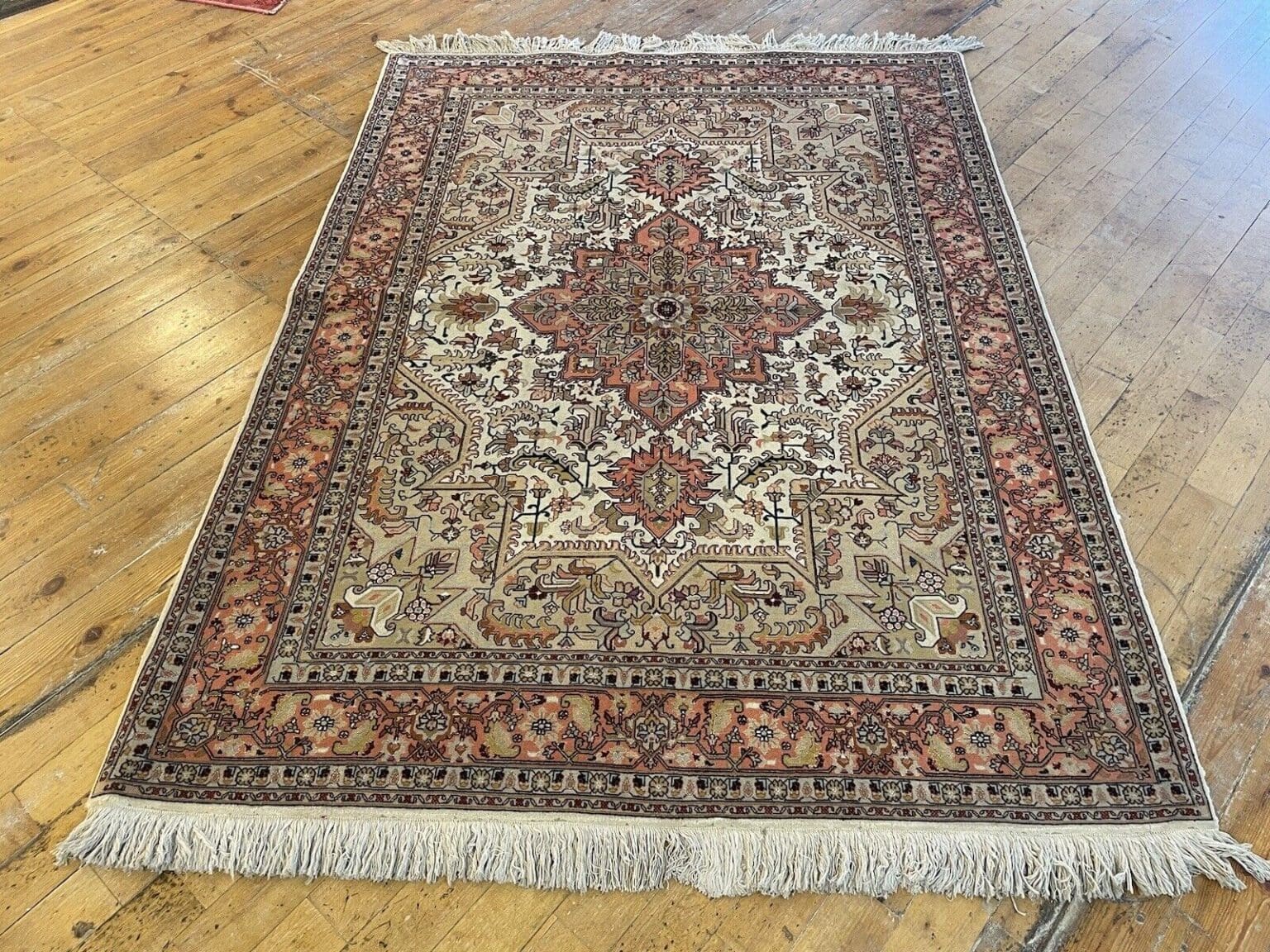
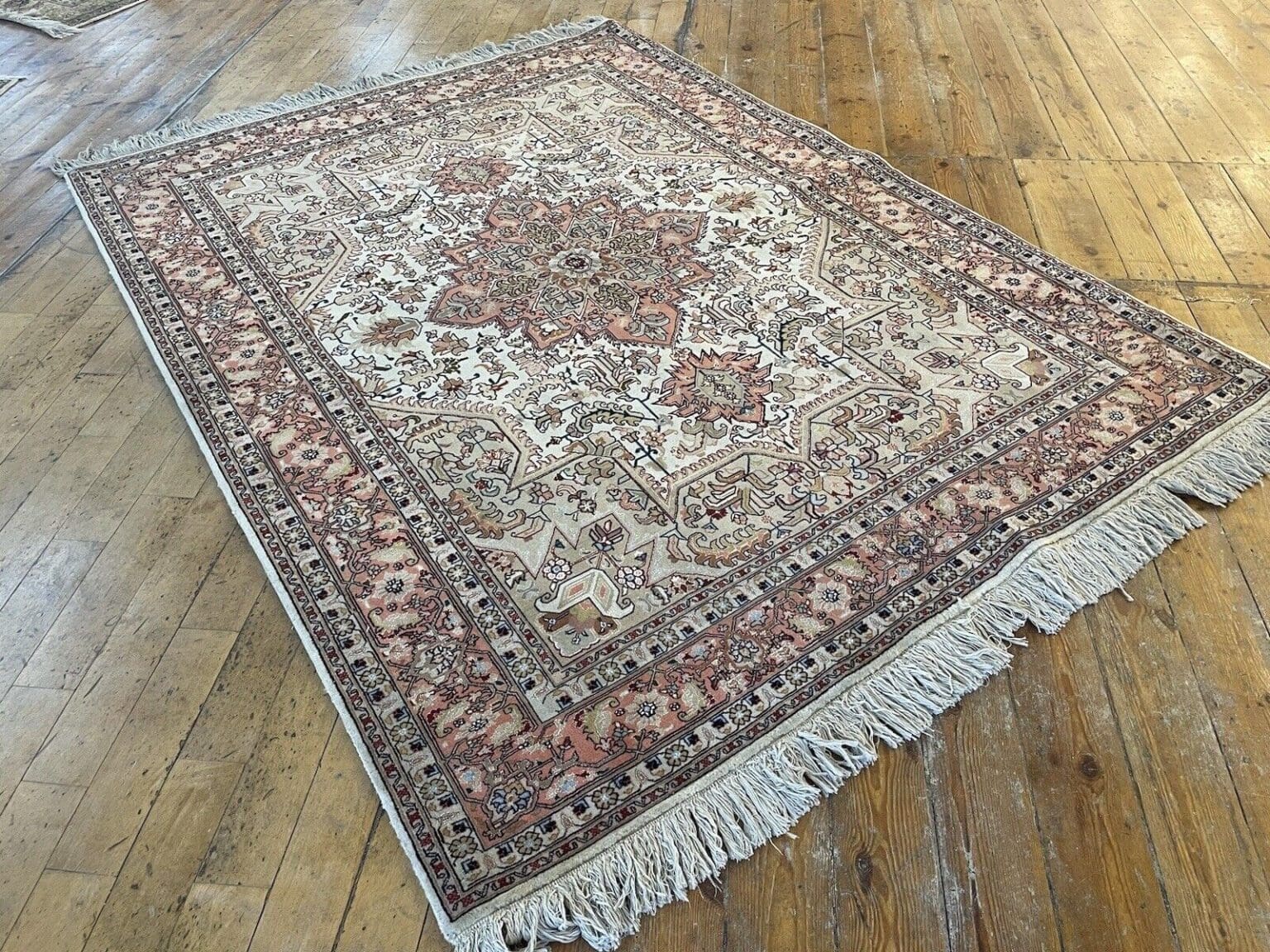
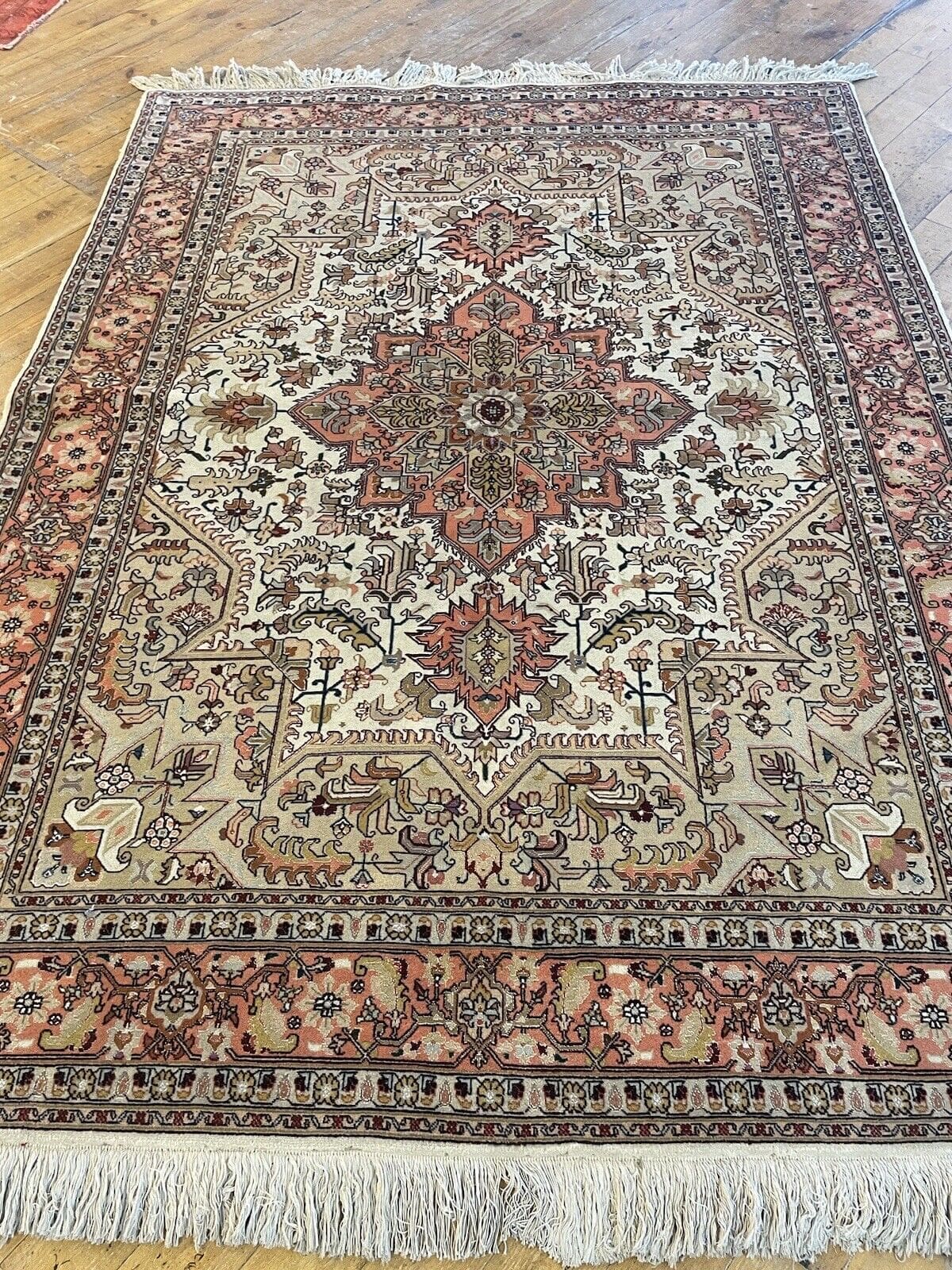
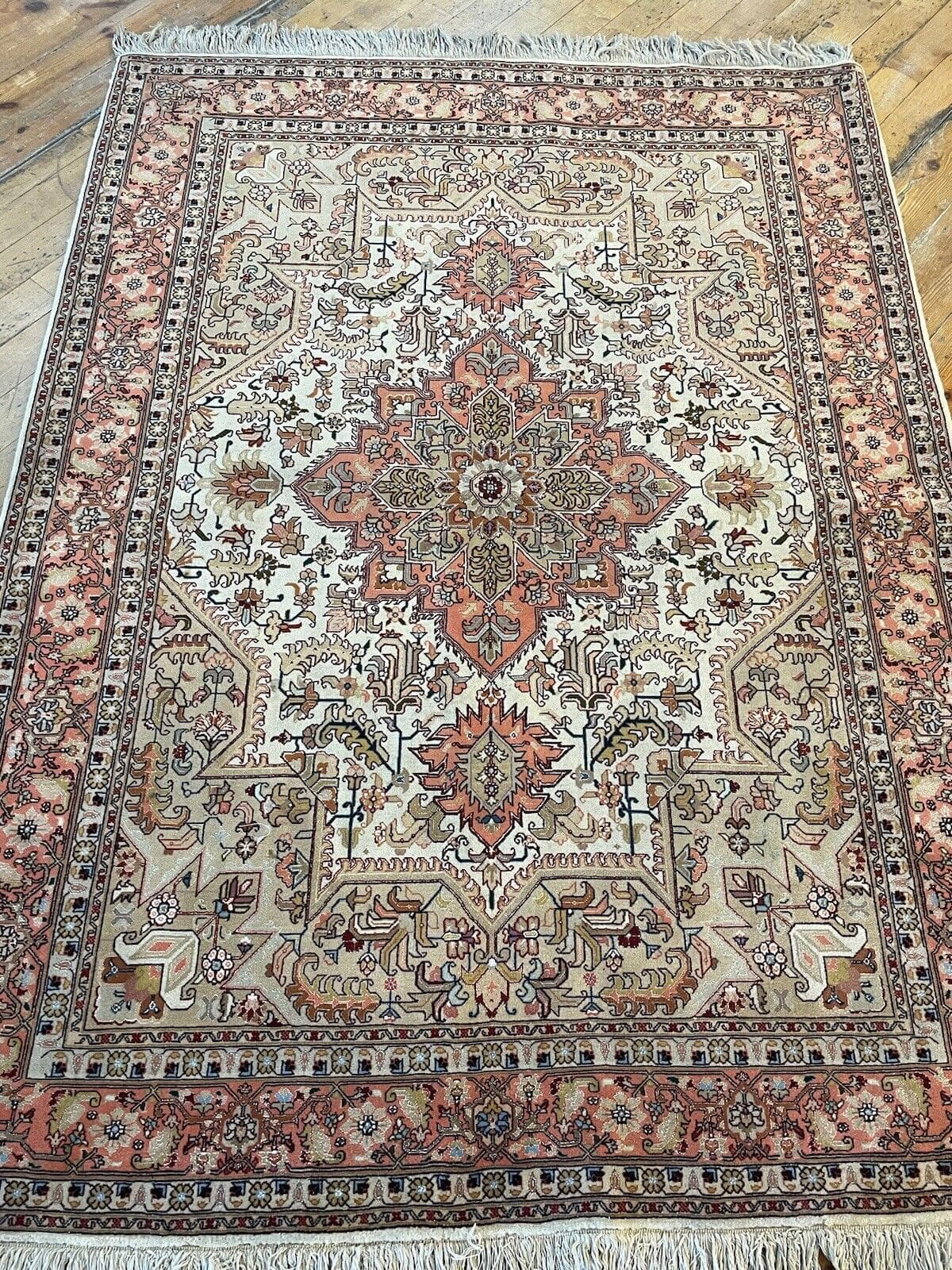
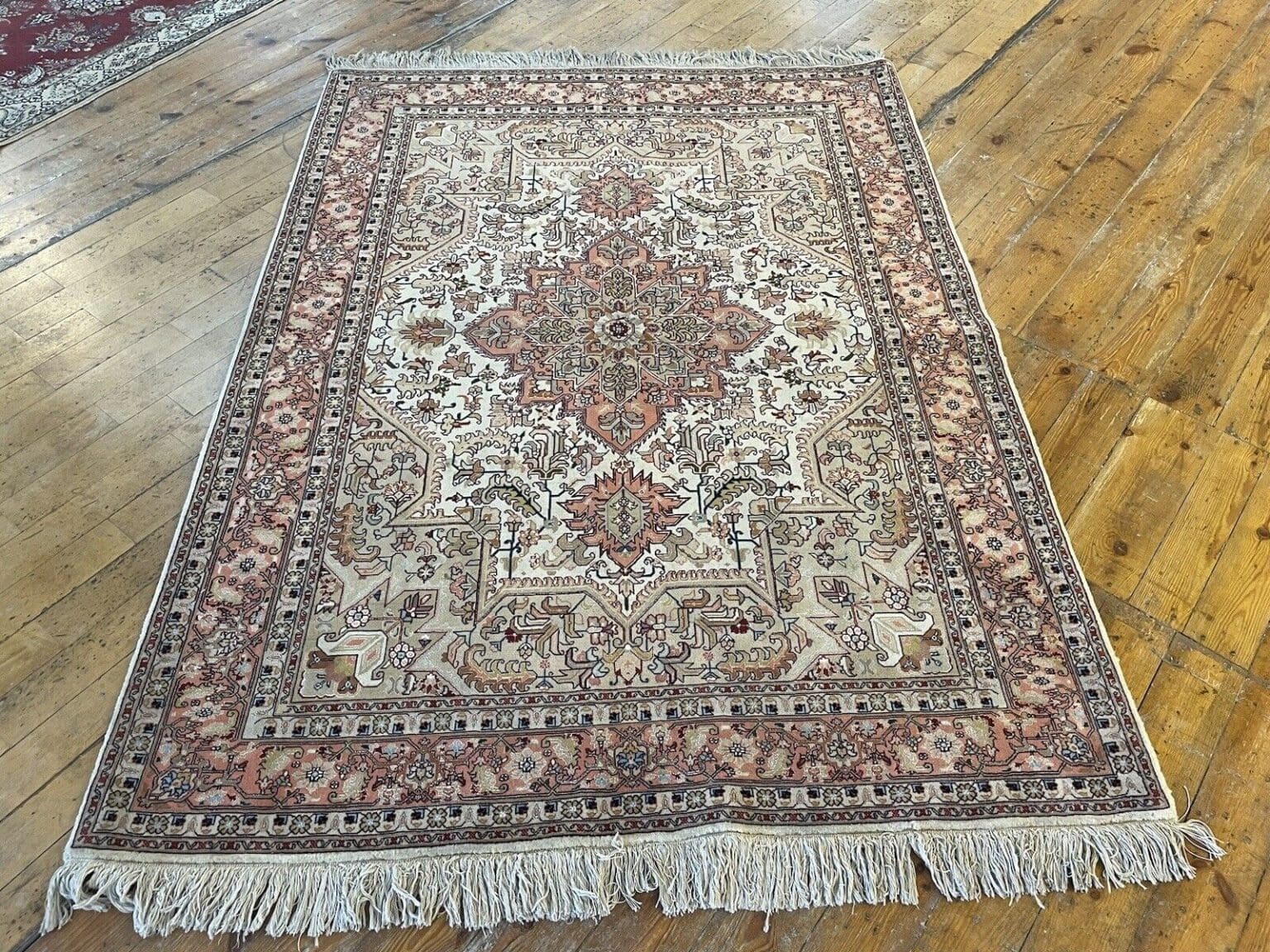
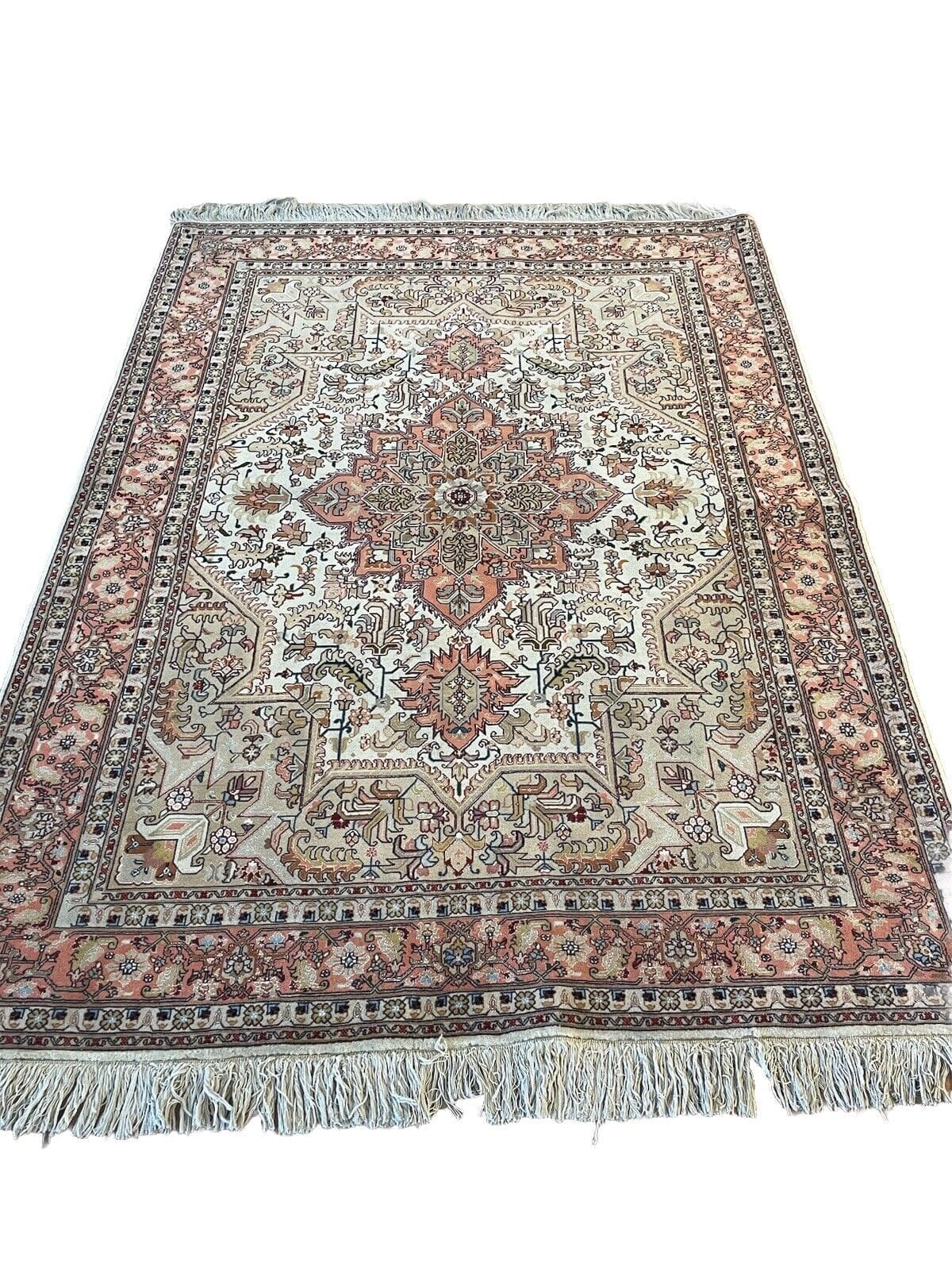
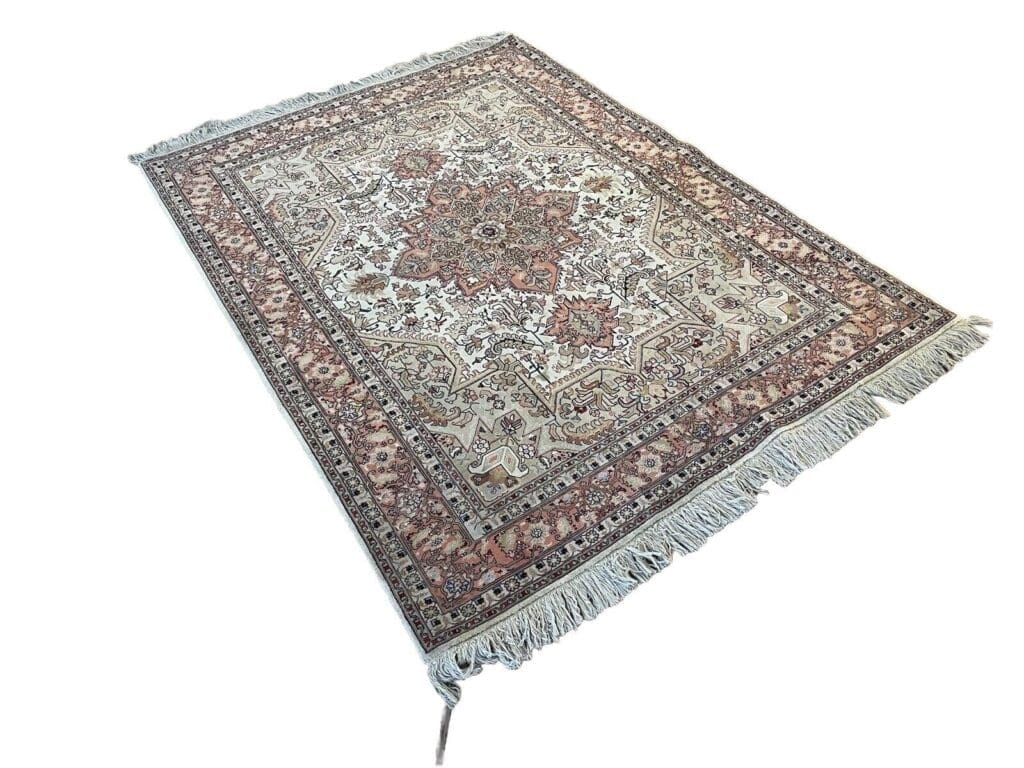
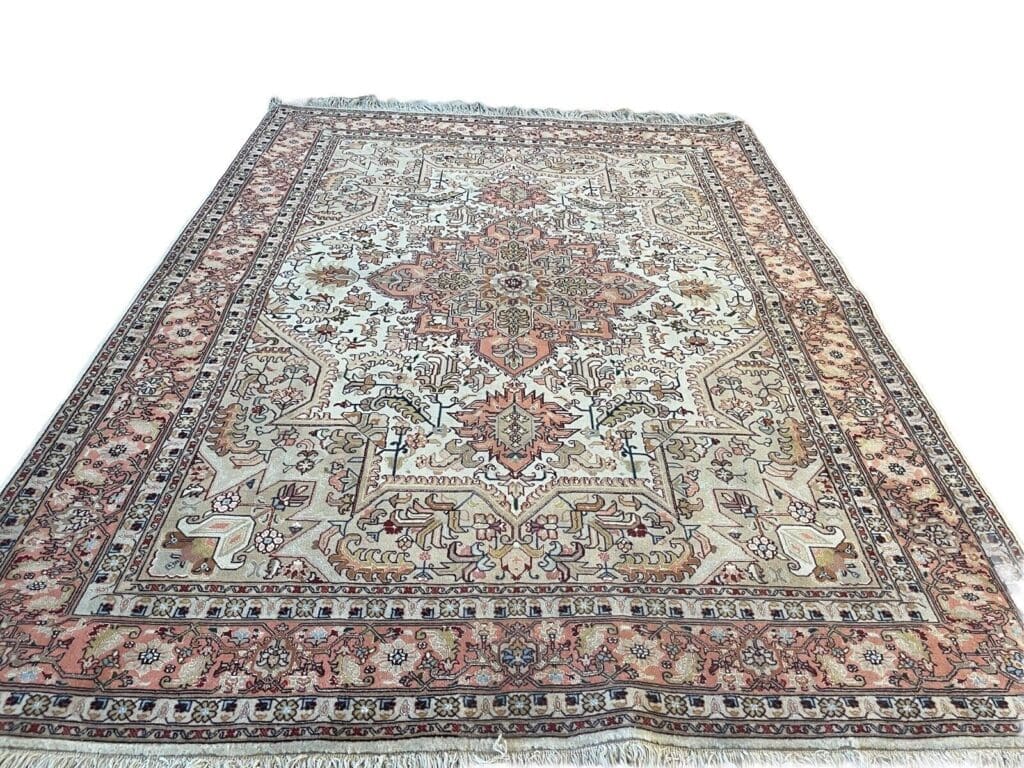
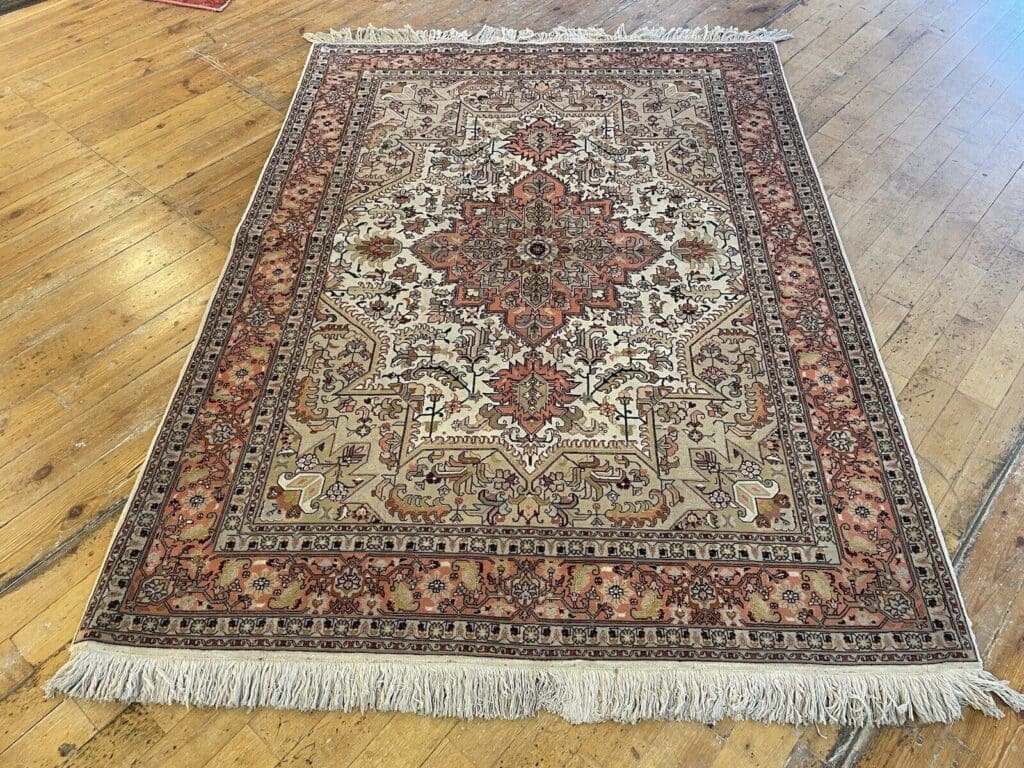
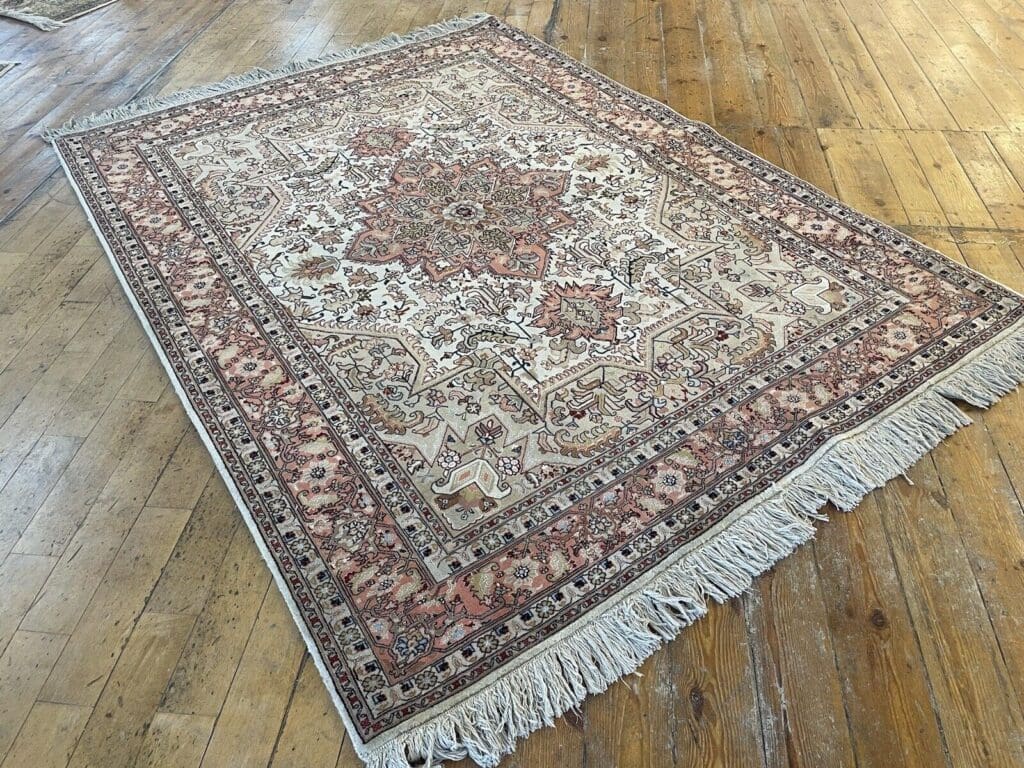
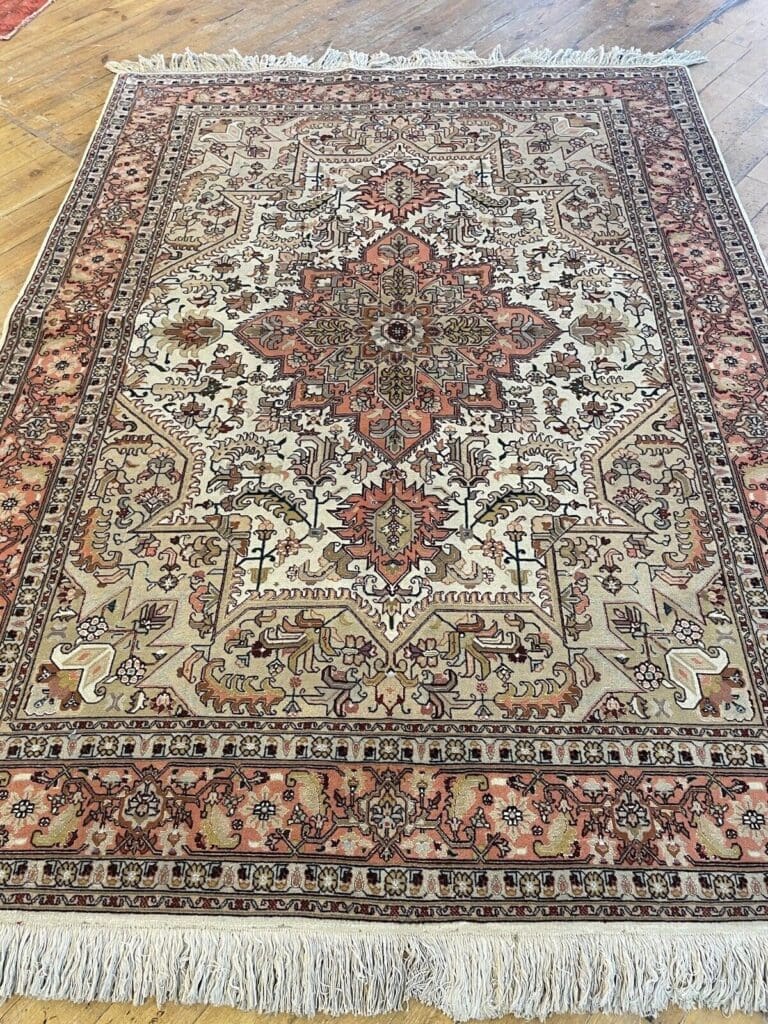
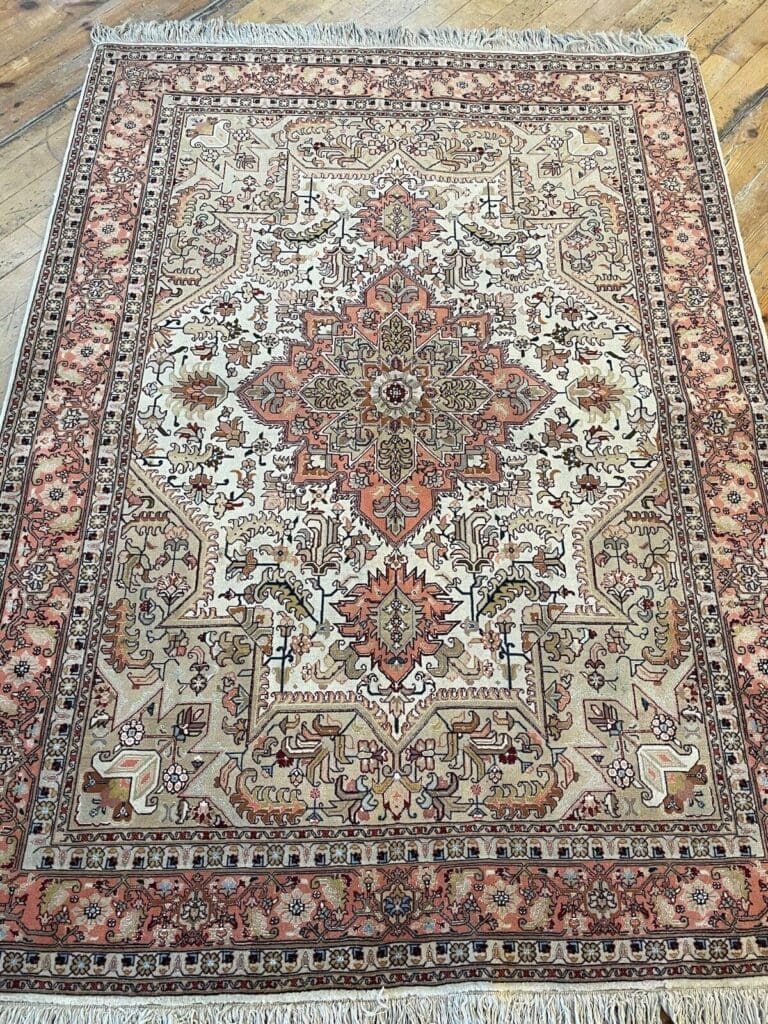
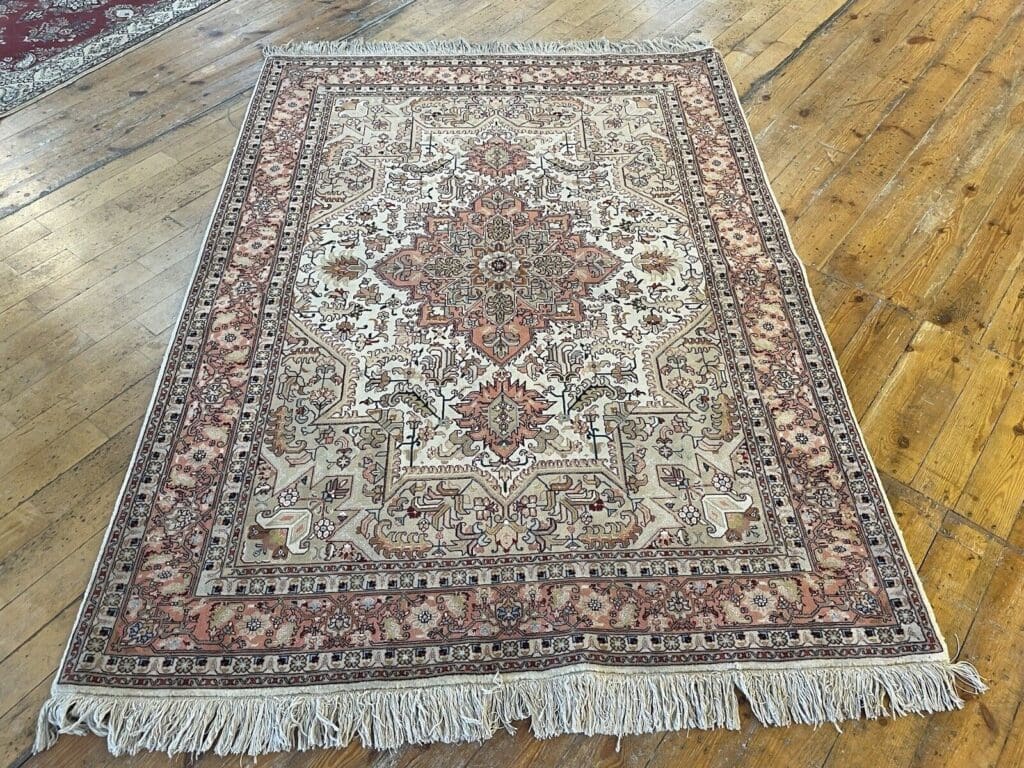
Hand-knotted Tabriz Persian Rug | Knot density: 400-450,000 knots per square metre | Material: pile 100% pure new wool and silk | Size: 205 x 150 cm | Pattern: Tabriz 50 Mahi, traditional Persian design | Condition: perfect
This Tabriz 50 Mahi is hand-knotted and made from 100% pure new wool, with silk also identified as part of its material composition. New wool is valued in rug making because it provides a resilient pile with a natural surface structure. It can hold colour clearly and gives a woven floor covering a substantial, tactile character. Silk, used in Persian rug production, is associated with fine detail and a refined surface. Here it is named alongside the pure new wool in the description of the rug.
The rug has a knot density of 400-450,000 knots per square metre. Knot density describes the number of individual knots used within a defined area of the rug. A high number of knots allows a weaver to render outlines, small colour transitions and closely arranged elements with greater precision. It also contributes to the compact texture for which finely knotted Persian rugs are known. The density stated for this piece places its construction within the fine-knotting tradition of Tabriz.
Hand-knotting is a method in which each pile knot is formed individually around the warp threads and secured as the work progresses. Rows of knots and weft are built up gradually on the loom, while the design is followed from a drawn plan or an established pattern tradition. This process requires sustained manual control. The resulting surface is not produced as a repeated machine image; its structure comes from the separate knots placed by the weaver. The hand-knotted construction is therefore central to the way this rug is made.
The source describes the rug as being in perfect condition. That statement concerns the present condition of this individual piece. It is distinct from the general durability associated with wool or from the historical reputation of Tabriz weaving. Together, the stated materials, the fine knot density and the hand-knotted technique define the technical profile of this one-off rug.
Origin and Tradition
Tabriz is a city in Iran with a long-established reputation for carpet production. Tabriz rugs are part of the Persian weaving tradition and are recognised for carefully organised compositions, detailed drawing and a close attention to the relationship between field, border and ornament. The city has served as an important centre where design ideas, weaving knowledge and commercial exchange have met. This background explains why the name Tabriz is associated with a broad and influential family of Persian carpets.
Persian carpet weaving developed through regional workshops, village production and courtly traditions. Each area formed its own preferences in drawing, colour arrangement, knotting practice and finishing. Tabriz became particularly known for controlled designs that could accommodate intricate floral and medallion arrangements as well as all-over patterns. The weaver’s task is not limited to tying knots. It also involves maintaining proportion, keeping repeated details aligned and preserving the visual rhythm of the composition throughout the work.
The 50 Mahi designation belongs to the Tabriz tradition named for this rug. In Persian carpet vocabulary, Mahi patterns are associated with repeated, finely drawn forms arranged around floral elements and scrolling lines. The name is commonly connected with a fish-like appearance in the repeated ornament, although the pattern is understood as a highly structured design system rather than as a literal pictorial scene. Such arrangements are well suited to fine knotting because the repeated units can be developed with close, precise drawing.
Iranian carpet regions are not interchangeable simply because they share a Persian design vocabulary. Heriz, Qom, Nain, Isfahan, Kerman and Kashan each have their own histories, workshop practices and visual conventions. Tabriz is a separate Iranian origin, and a Tabriz rug should be described through that origin even when its ornament includes elements found elsewhere in Persian design. The source also mentions Heriz and Qom as notable carpet types from the region’s wider context, while Nain and Isfahan are cited as related Iranian carpet traditions. These references do not change the origin of this rug.
Tabriz weaving is also connected with the transmission of technical knowledge between generations. Pattern drawing, colour selection, loom preparation and knotting are skills learned through practice and repetition. A finely knotted carpet reflects the coordination of these separate tasks. The finished surface records both the design tradition and the working method used to realise it. This combination of regional identity and exacting construction is a central feature of the Tabriz name.
Design and Pattern
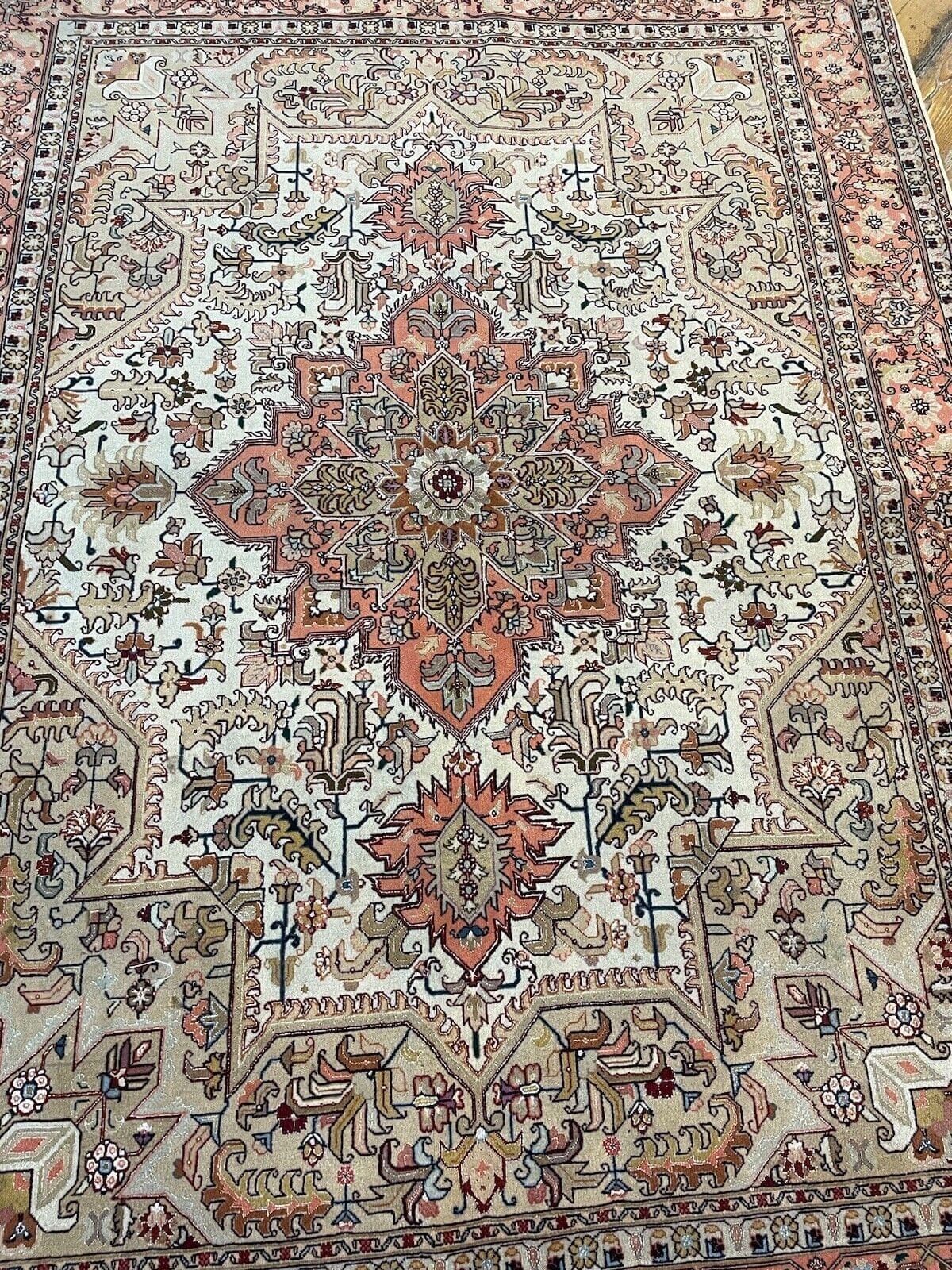
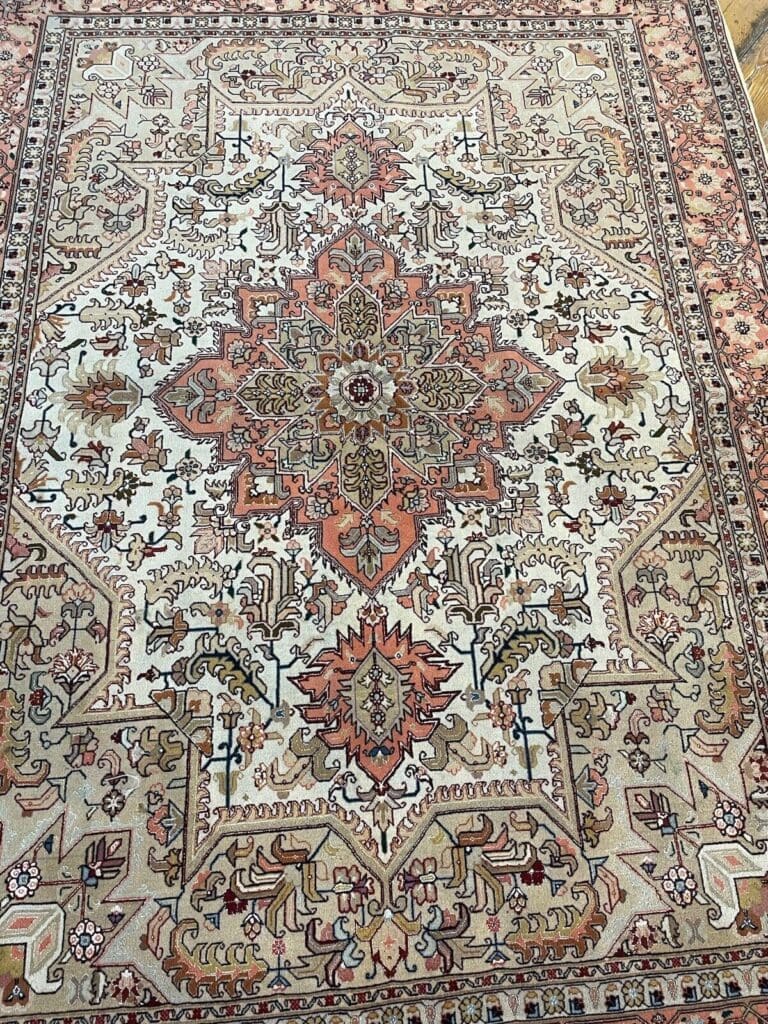
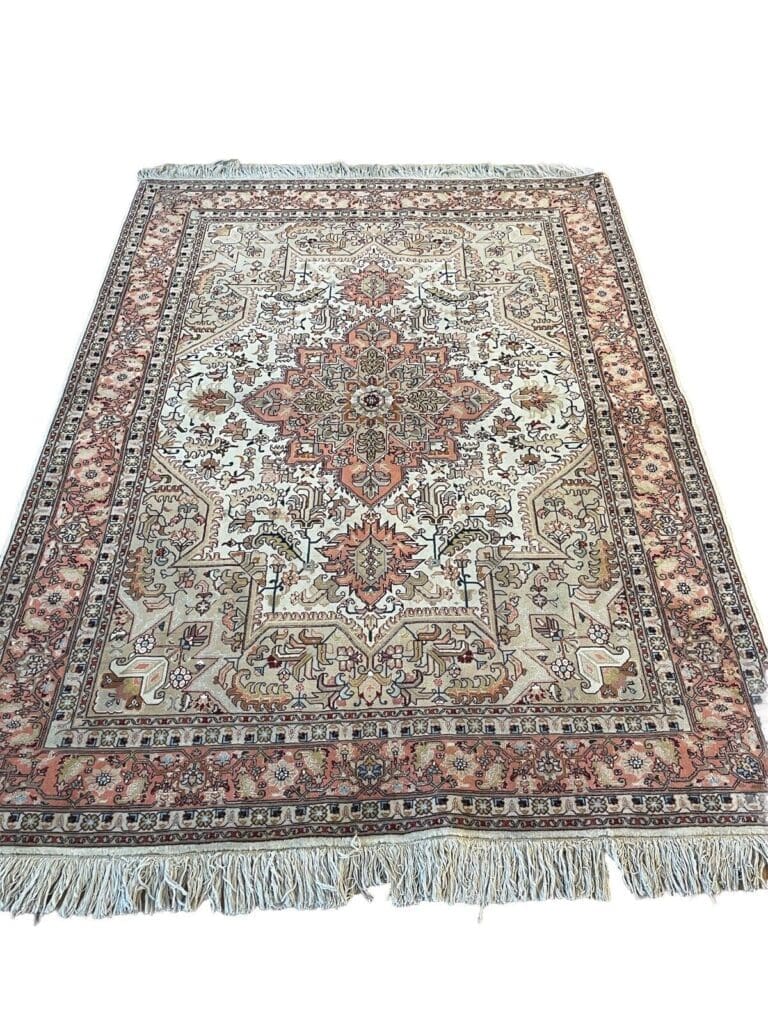
The named design is Tabriz 50 Mahi. It is described as a traditional Persian pattern with fine details, vivid colours and harmonious colour combinations. These qualities belong to the visual description of this rug. The pattern is not presented as a plain field or a minimal modern composition. Instead, it follows the detailed decorative language associated with Persian carpets and with the Tabriz 50 Mahi designation.
In a Mahi arrangement, repeated units create a continuous visual rhythm across the field. Curving stems, small leaves and floral forms may be organised into a network in which one element leads naturally into another. The fish-like repeat that gives the pattern its name is generally integrated into the ornament rather than isolated as a single central image. This kind of structure rewards close viewing: the overall impression is orderly from a distance, while the individual components become more legible as the eye moves nearer to the surface.
Fine drawing is especially important in a dense Tabriz pattern. Narrow outlines help separate adjoining forms, and repeated details must remain sufficiently consistent to preserve the balance of the design. A high knot count provides the technical capacity for such work, allowing the weaver to place small colour areas beside one another without losing the intended contours. It does not replace the design tradition; it gives the design a precise means of expression.
The colour description emphasises vivid tones and harmonious combinations. Harmony in a Persian carpet does not require every colour to be similar. It comes from the way contrasting and related tones are distributed through the field and borders. Accents can draw attention to floral details, while more settled tones can connect separate parts of the composition. On this rug, the stated colour character is part of the overall Tabriz design impression and is described as compatible with different interior styles.
Persian pattern families often travel between regions and workshops, so individual motifs may appear in more than one local tradition. A floral scroll, border system or repeated leaf form is not by itself proof of a different origin. The combination of the named Tabriz origin and the 50 Mahi pattern is what identifies the design context here. Nain and Isfahan are mentioned as Iranian traditions with their own fine colour work and floral decoration, while Kerman and Kashan are noted for distinctive designs and high knot densities. Those comparisons provide context, but this rug remains a Tabriz 50 Mahi.
The design also demonstrates how Persian carpets combine repeat and variation. A repeated unit establishes order, while small changes in colour placement and drawing keep the surface from appearing mechanically uniform. In hand-knotting, these details are built knot by knot. The pattern therefore exists simultaneously as a visual composition and as a record of the technical decisions needed to construct it.
Special Features
This rug brings together several characteristics stated in its description: Tabriz origin, the 50 Mahi pattern designation, hand-knotted construction, a knot density of 400-450,000 knots per square metre, 100% pure new wool and the additional identification of silk. Its condition is described as perfect. The combination gives the piece a clearly defined technical and stylistic profile within the Persian carpet tradition.
The hand-knotted method means that the rug is the result of manual construction rather than industrial repetition. The fine knot density supports the detailed drawing associated with the design, while the wool and silk named in the description account for its stated material character. Tabriz provides the regional context, and Mahi supplies the pattern reference. These are separate aspects of the rug and should be read together rather than treated as interchangeable terms.
FAQ
How should a Tabriz 50 Mahi Persian rug be cared for?
Regular vacuuming without a brush attachment is recommended to help maintain the surface. If a stain occurs, it should be addressed promptly with a damp cloth rather than being left to settle. Professional cleaning every few years may also be appropriate. Specialist cleaning is useful for a hand-knotted rug because the materials and construction require suitable treatment. Care should be carried out gently, with attention to the wool and silk identified in this rug.
Where does the Tabriz 50 Mahi come from?
The Tabriz 50 Mahi comes from the city of Tabriz in Iran. Tabriz is known for its carpet production and for Persian rugs with carefully drawn designs and detailed workmanship. The city’s weaving tradition includes different pattern families and qualities, and the 50 Mahi designation identifies the design context of this particular rug. Its origin is Tabriz; references to other Iranian traditions such as Heriz, Qom, Nain or Isfahan are background comparisons and do not alter that origin.
What are the advantages of a hand-knotted rug?
A hand-knotted rug is built knot by knot, giving it a manually made structure and a design that is not simply reproduced by a machine. Such rugs are valued for quality, durability and individual pattern character. A fine knot density can support detailed drawing, while the materials used here are identified as 100% pure new wool and silk. The Tabriz 50 Mahi also combines this construction with a traditional Persian design and is described as being in perfect condition.
To provide the best experiences, we use technologies like cookies to store and/or access device information. Consenting to these technologies will allow us to process data such as browsing behavior or unique IDs on this site. Not consenting or withdrawing consent, may adversely affect certain features and functions.
Functional Always active
The technical storage or access is strictly necessary for the legitimate purpose of enabling the use of a specific service explicitly requested by the subscriber or user, or for the sole purpose of carrying out the transmission of a communication over an electronic communications network.
Preferences
The technical storage or access is necessary for the legitimate purpose of storing preferences that are not requested by the subscriber or user.
Statistics
The technical storage or access that is used exclusively for statistical purposes.The technical storage or access that is used exclusively for anonymous statistical purposes. Without a subpoena, voluntary compliance on the part of your Internet Service Provider, or additional records from a third party, information stored or retrieved for this purpose alone cannot usually be used to identify you.
Marketing
The technical storage or access is required to create user profiles to send advertising, or to track the user on a website or across several websites for similar marketing purposes.

 SECURE PAYMENT
 SHIPPING PARTNERS


