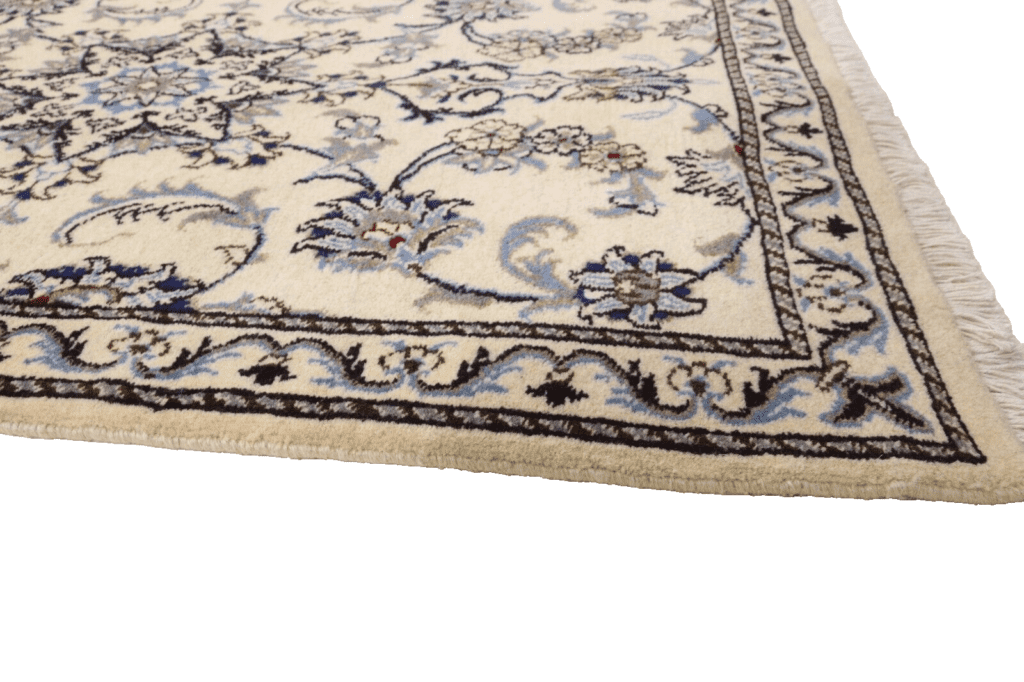
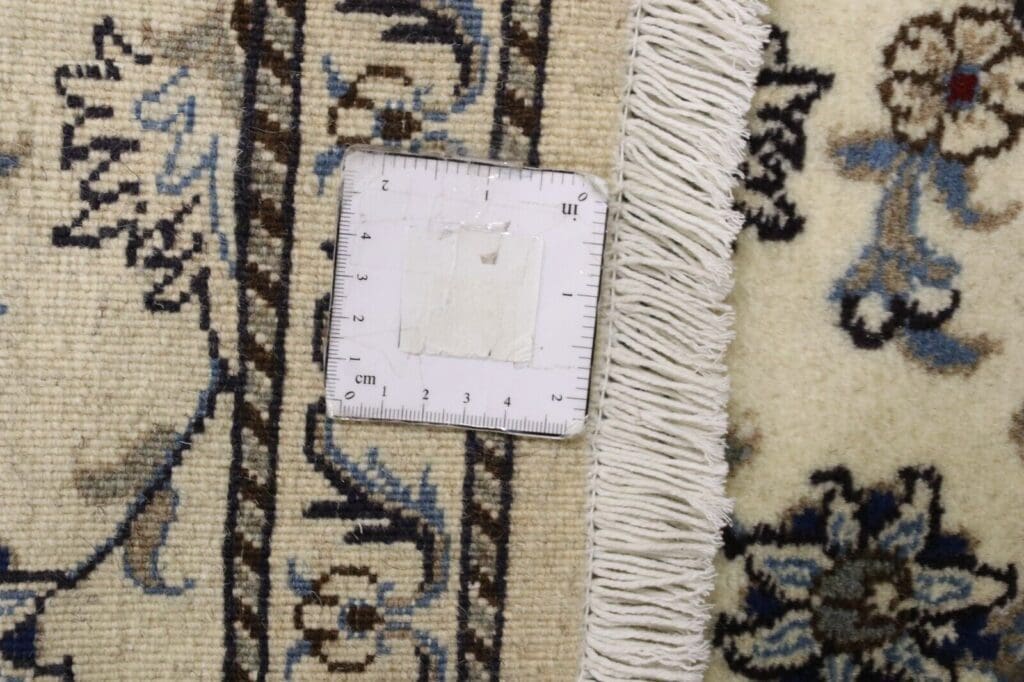
This Super Nain Persian rug is hand-knotted with a pile made of 90% virgin wool and 10% silk. Virgin wool makes up the greater part of the pile and provides a soft, resilient surface. The silk content adds a restrained sheen and supports the finely drawn appearance of the knotting. The warp is made from 100% cotton. It forms the textile foundation of the rug and provides stability while the knots are being tied.
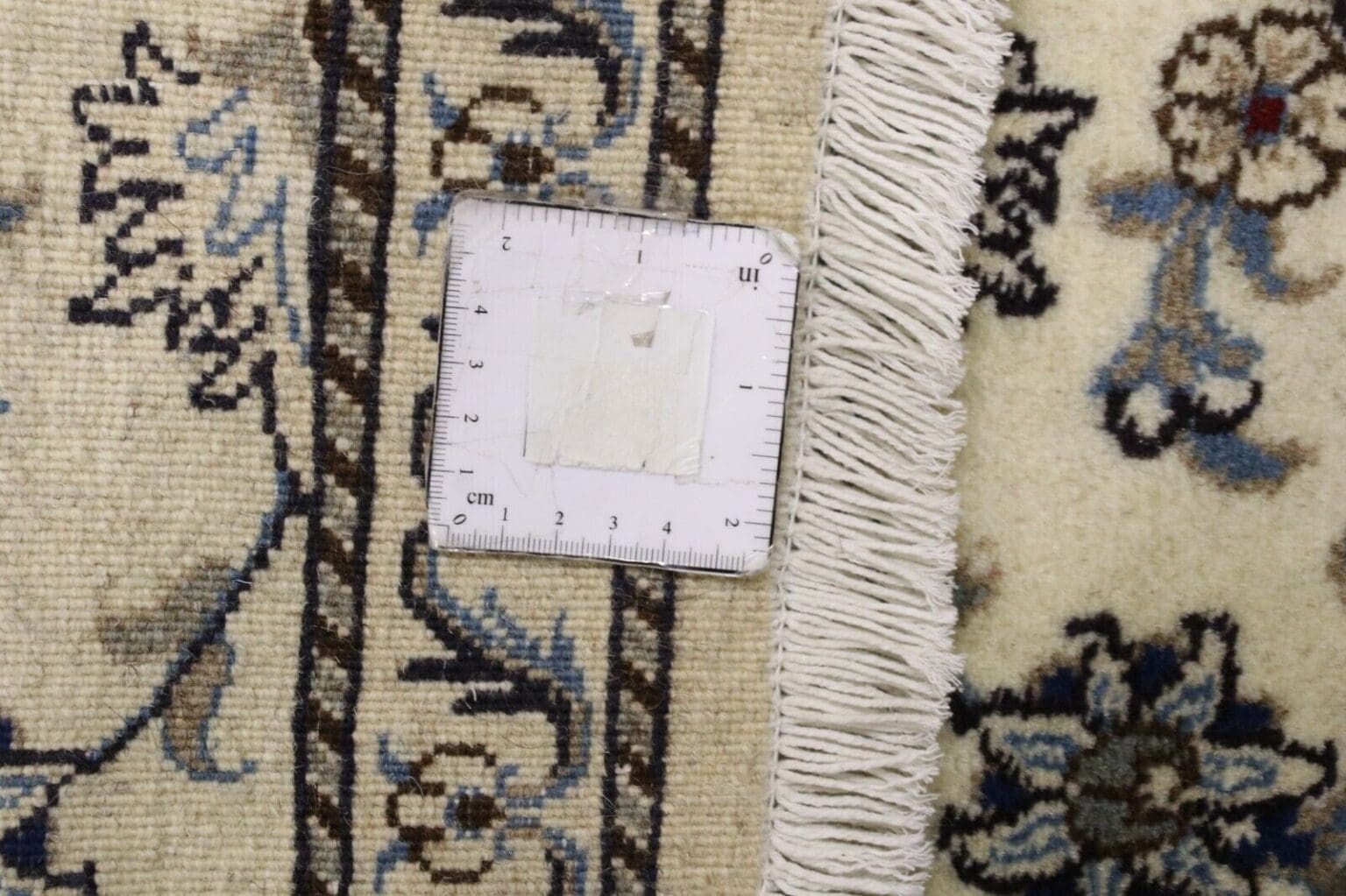
A knot density of approximately 300,000 knots per square metre reflects a finely executed construction. In a hand-knotted rug, the pattern is built knot by knot rather than printed or applied to a finished surface. Each section requires careful alignment of colours, outlines and ornamental details. This method allows delicate floral and geometric forms to be worked into the design with precision. The combination of virgin wool, silk and a cotton warp belongs to the established material vocabulary of fine Oriental rugs.
The rug was newly made and is offered in new condition. It is therefore not a restored or previously used piece, but the result of a new handmade production. The wool and silk pile combines a pleasantly soft handle with the subtle light response associated with silk. Beneath it, the cotton warp provides the supporting textile structure on which the knots are secured.
Origin and Tradition
This rug comes from Persia and belongs to the tradition of Persian carpet weaving. Persian rugs have developed through many regional schools, each with its own approaches to drawing, colour organisation and construction. The designation Super Nain refers to a refined style associated with Nain and with the production of elegant rugs featuring detailed, orderly ornament. The stated origin of this piece is Persia; Nain describes the stylistic and design tradition expressed by the name Super Nain.
Nain is located in central Persia and is known for rugs whose character comes from balanced composition and fine drawing. In this tradition, floral elements are often arranged with a strong sense of order and combined with geometric structure. Knotters work the outlines carefully so that small flowers, tendrils and symmetrical areas remain legible despite their delicacy. A Super Nain style rug therefore represents a meeting of classical Persian ornament and exacting hand craftsmanship.
The history of Persian rugs is closely connected with the transmission of designs, knotting methods and colour knowledge through workshops and families. A pattern is not simply placed on top of the rug. It is built into the textile through knots and coloured areas, making the process one of both design and construction. Experience, patience and an understanding of proportion all contribute to a balanced result. The fine knotting of this rug corresponds to a tradition in which detailed drawing is an important part of the finished surface.
Persian rugs are commonly considered through several related aspects: regional origin, visual language and workmanship. These aspects should remain distinct. This piece is identified as a Persian rug from Persia and carries the style designation Super Nain. The reference to Nain describes the design orientation; it does not replace the stated origin with a different one. The rug can therefore be described clearly as Persian in origin, hand-knotted in construction and guided by the Nain tradition in its style.
The material selection also reflects the relationship between practical textile use and decorative refinement. Wool has long been used for its resilience and comfortable surface. In finely knotted rugs, silk can help define details and give selected areas a more luminous appearance. Cotton is suitable for the warp because it offers a regular, stable base for the knots. These materials show how Persian rug making brings together durability, controlled construction and an ornamental surface.
Design and Pattern
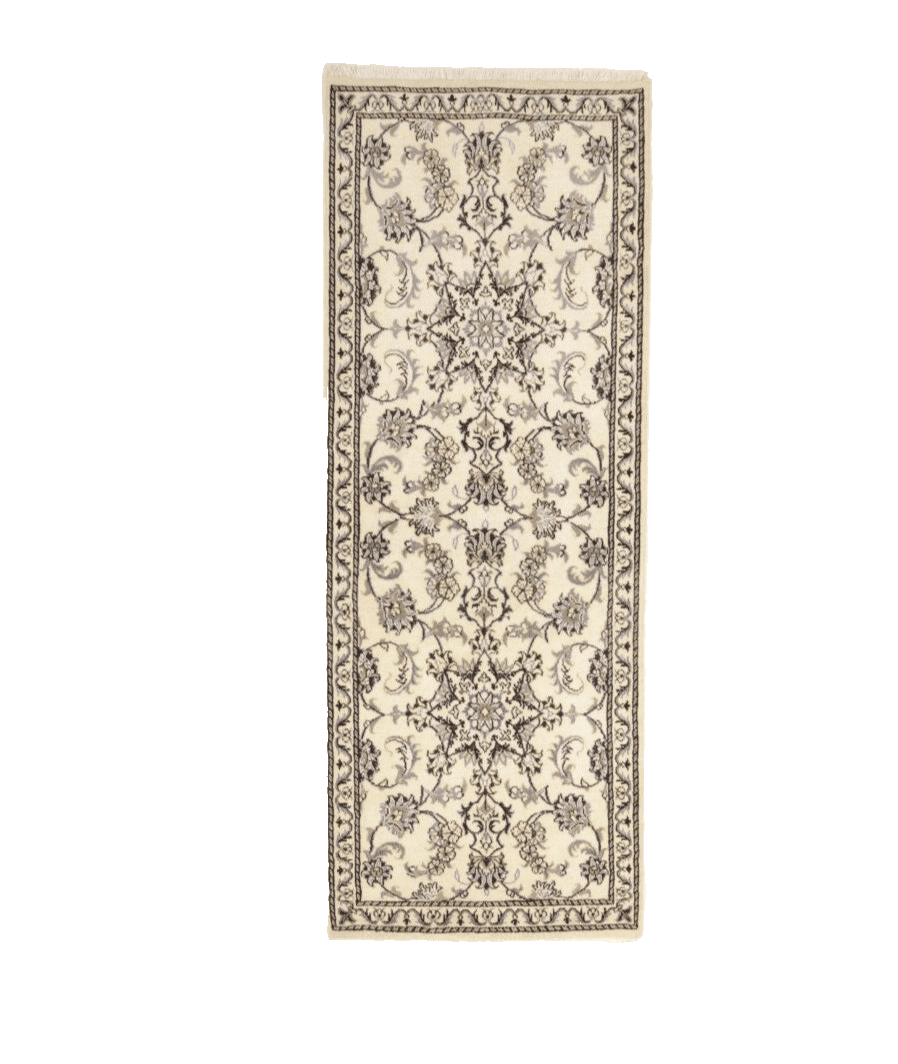
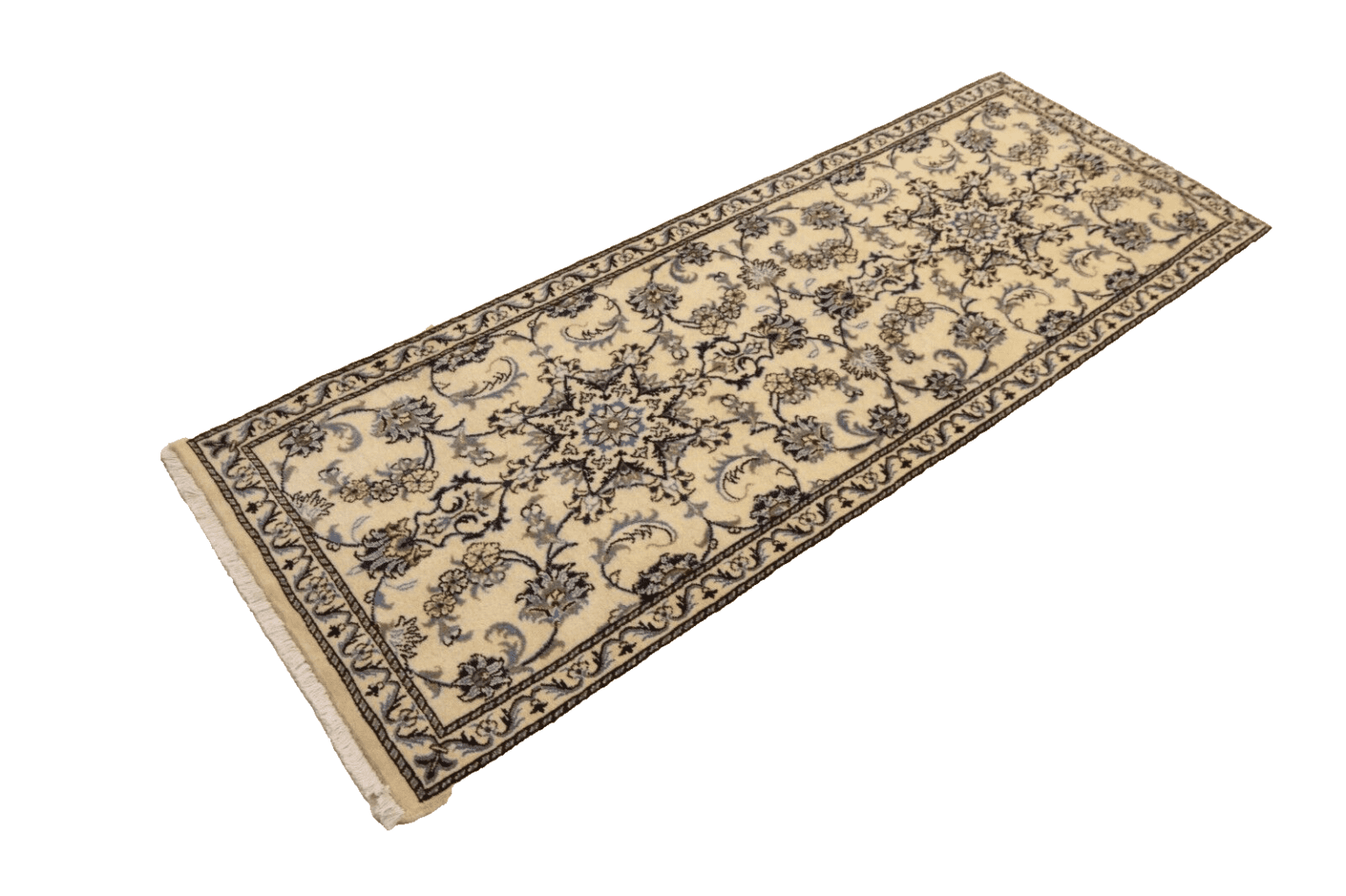
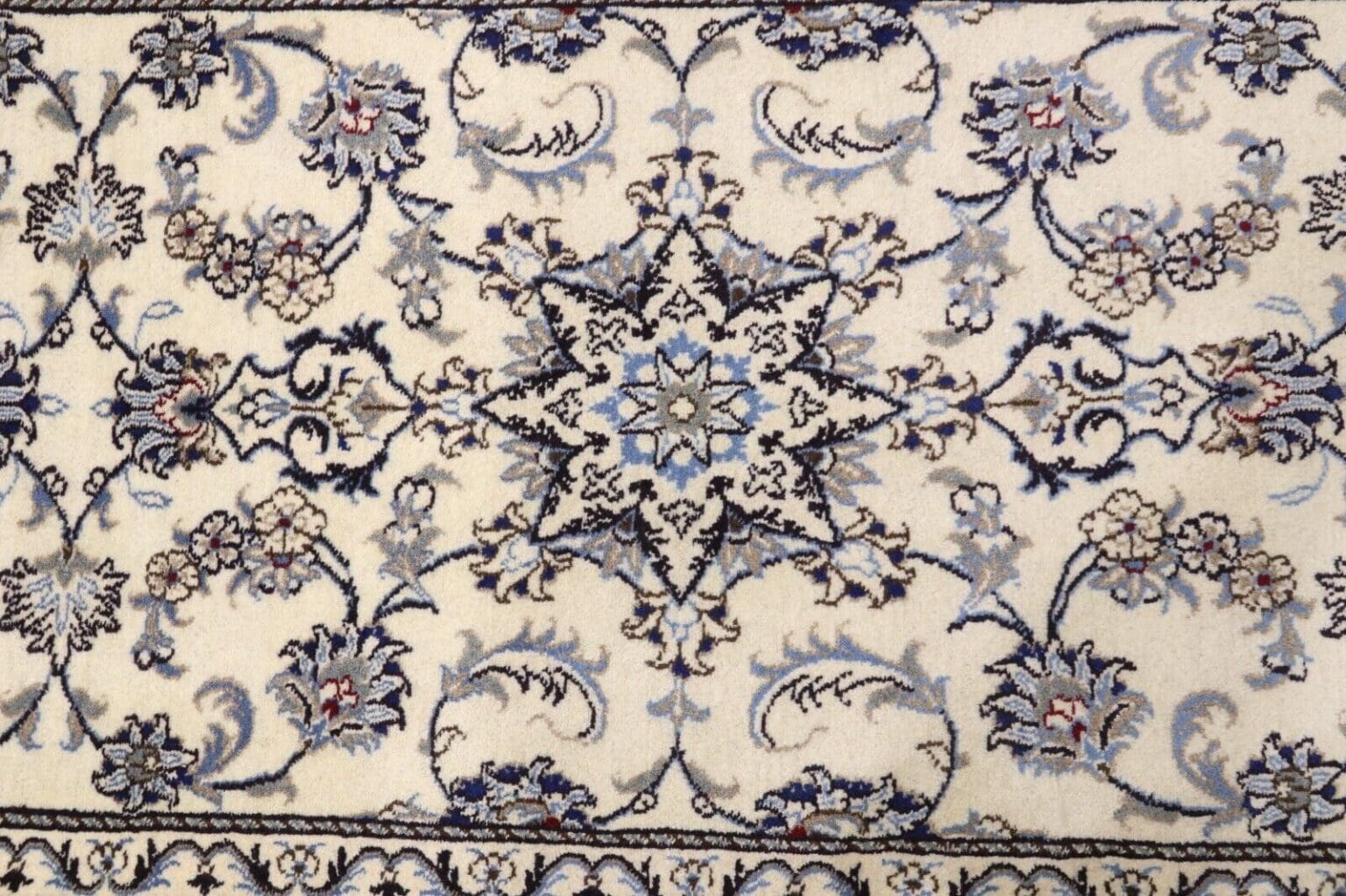
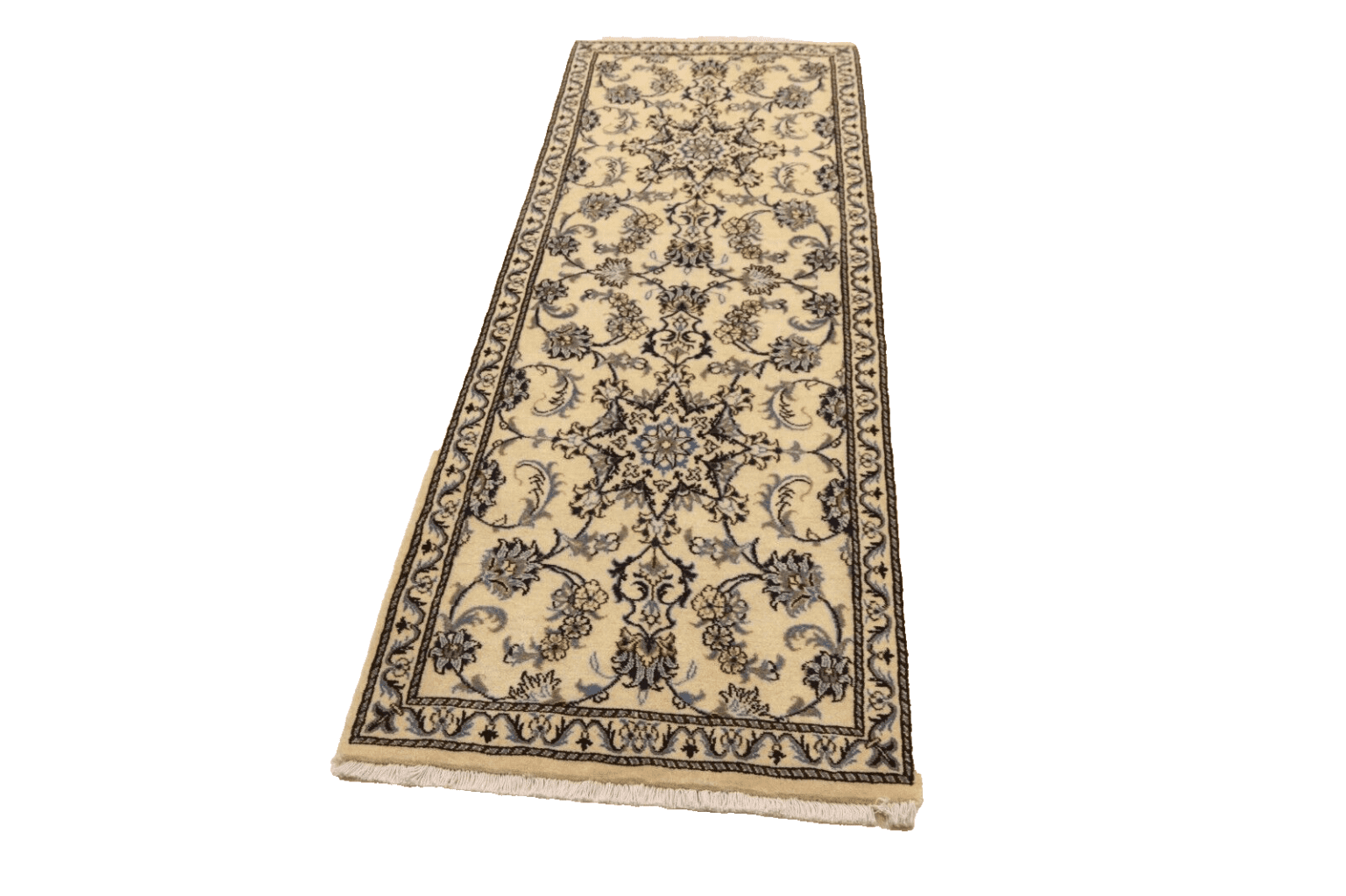
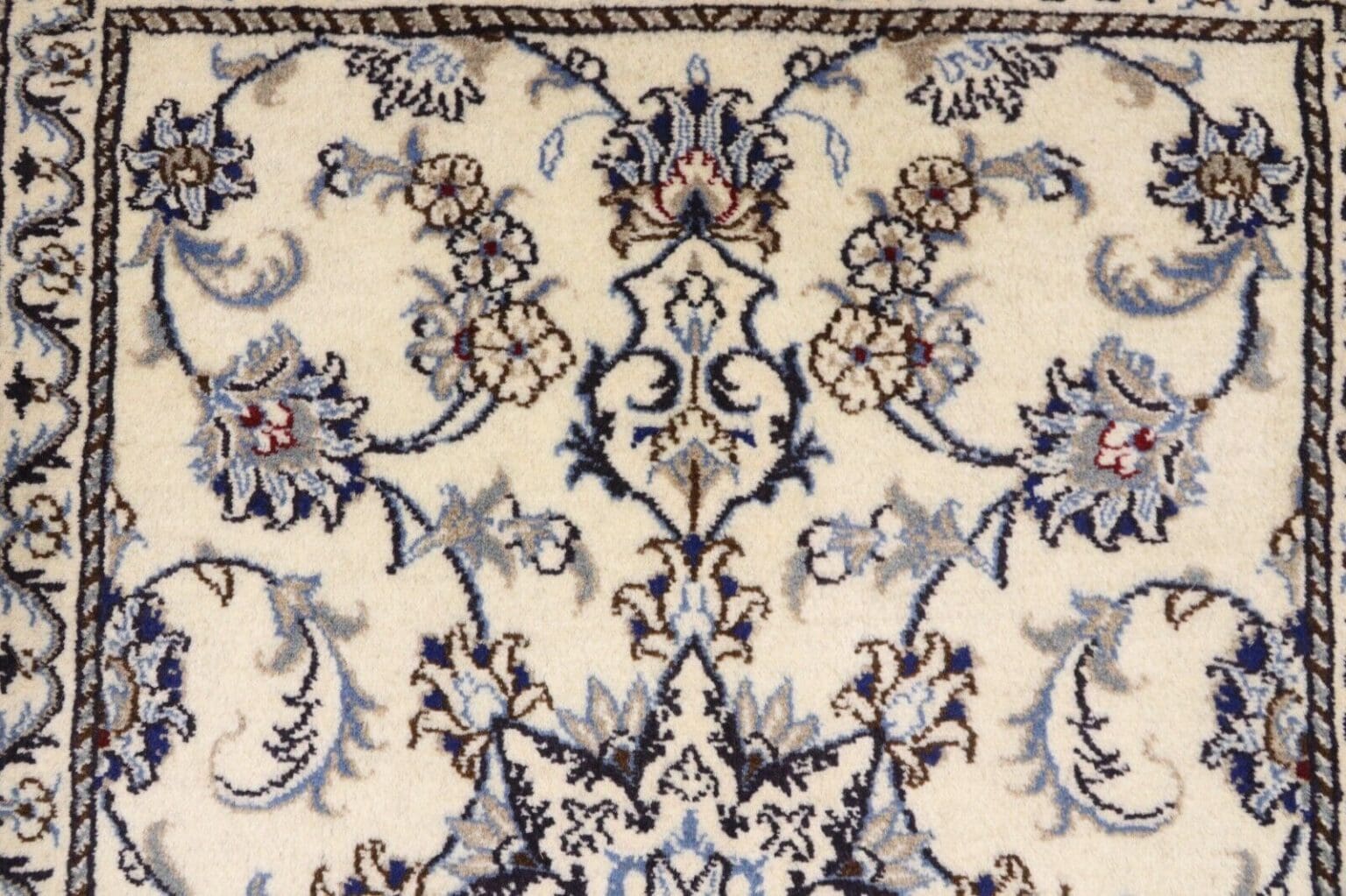
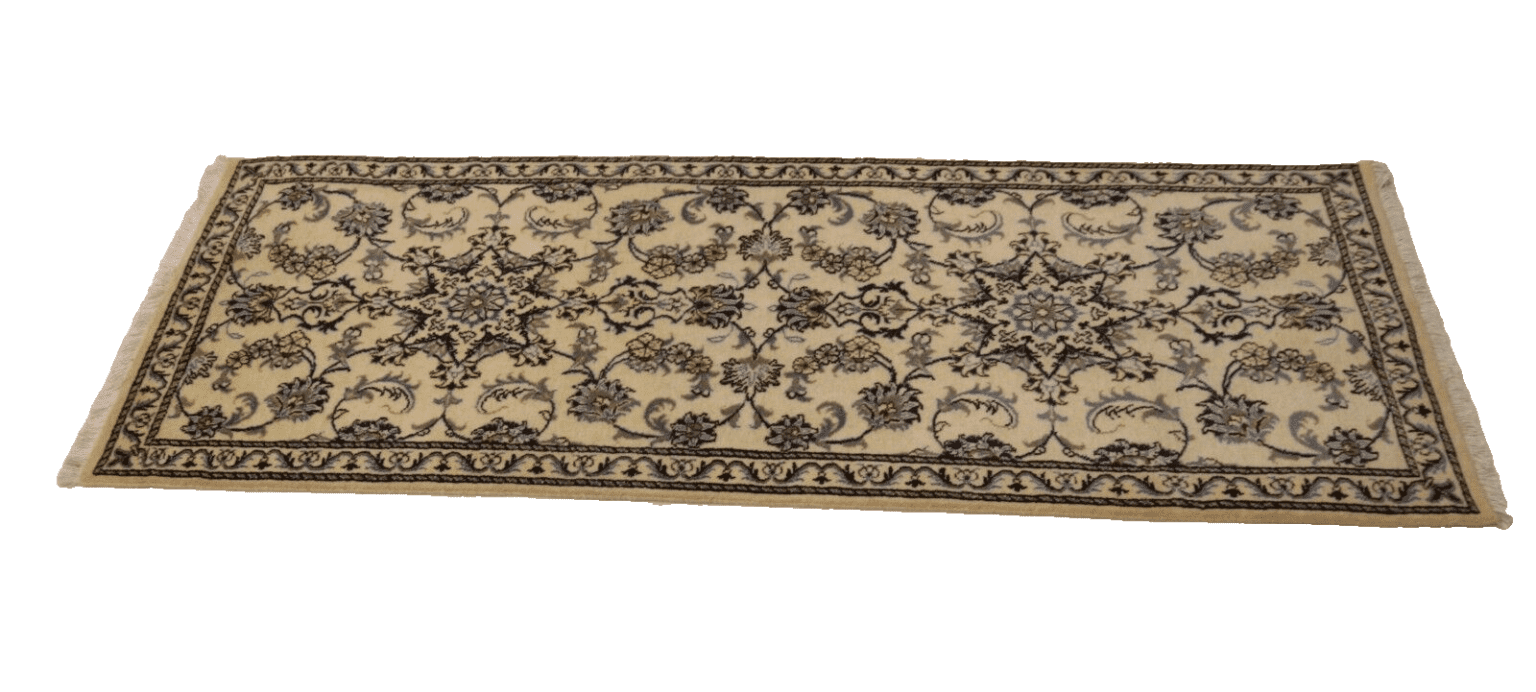
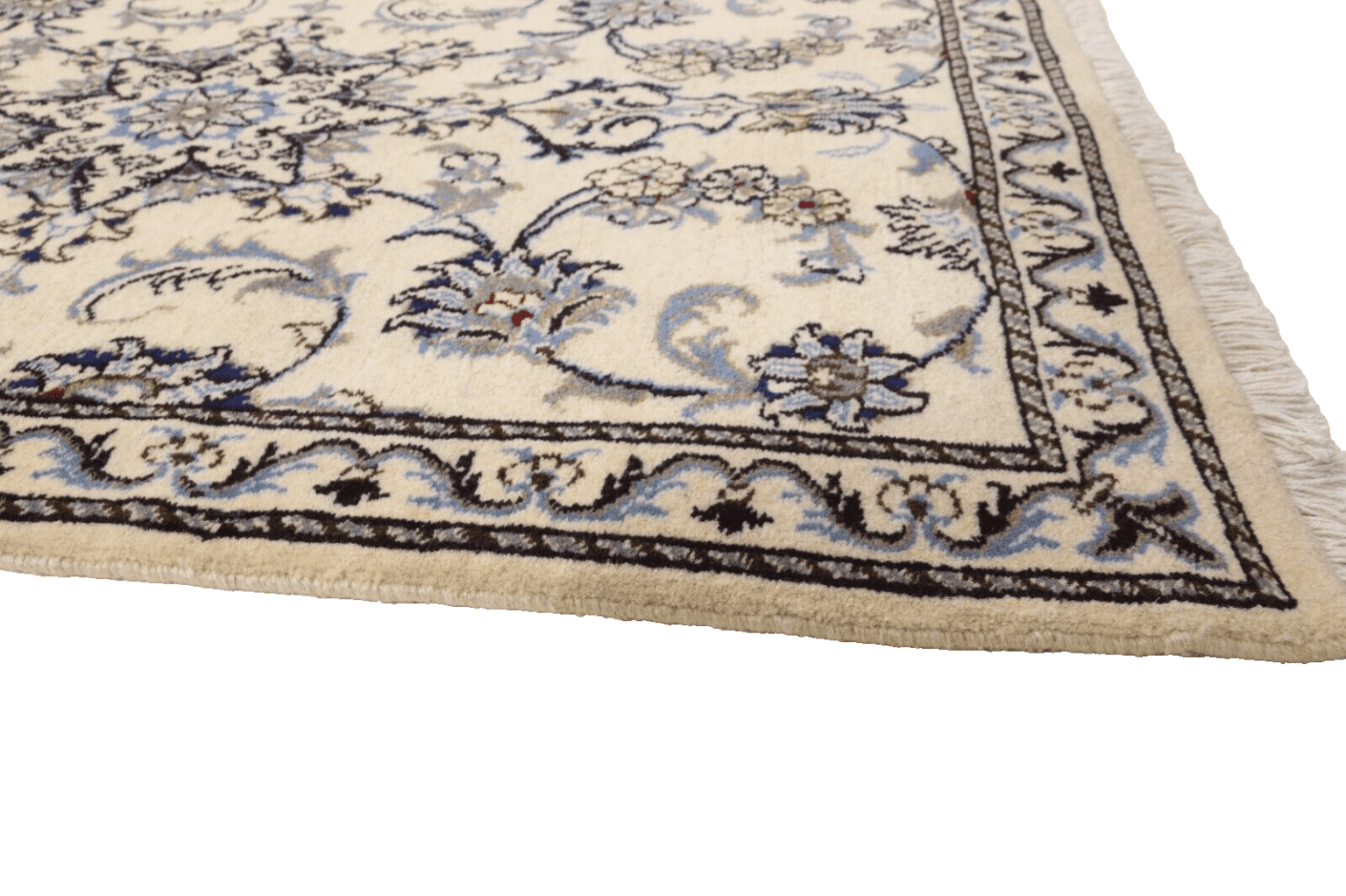
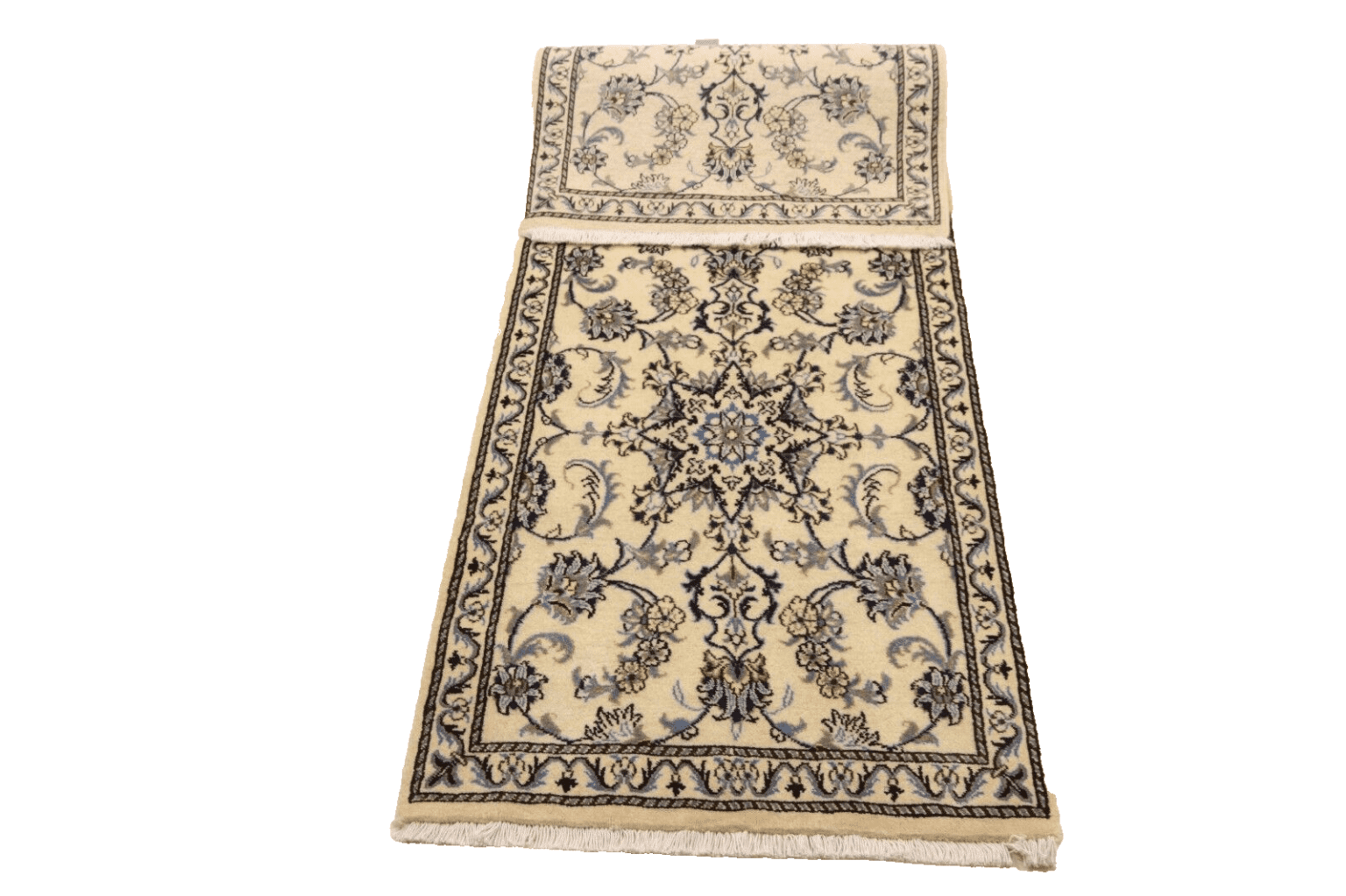
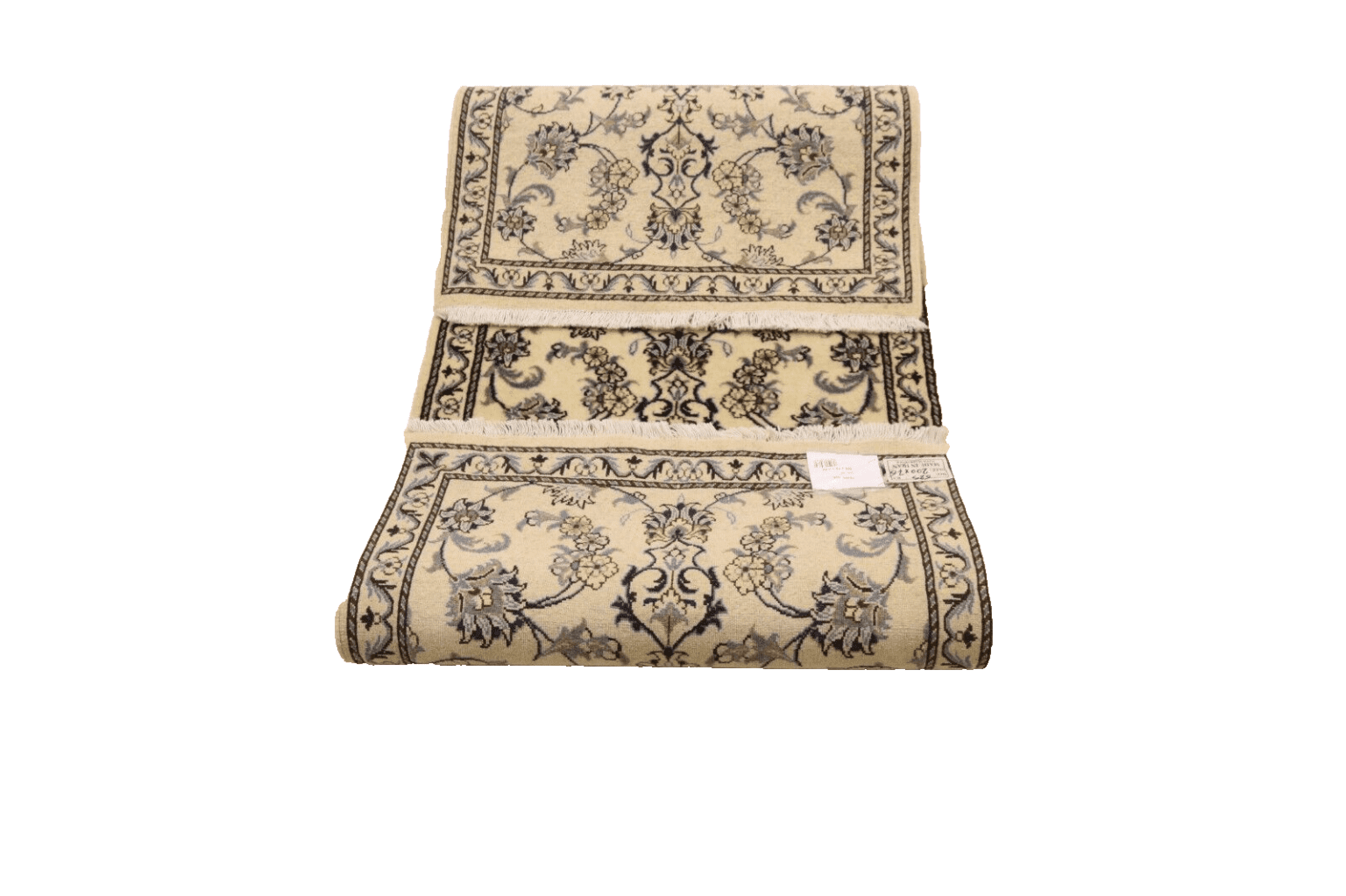
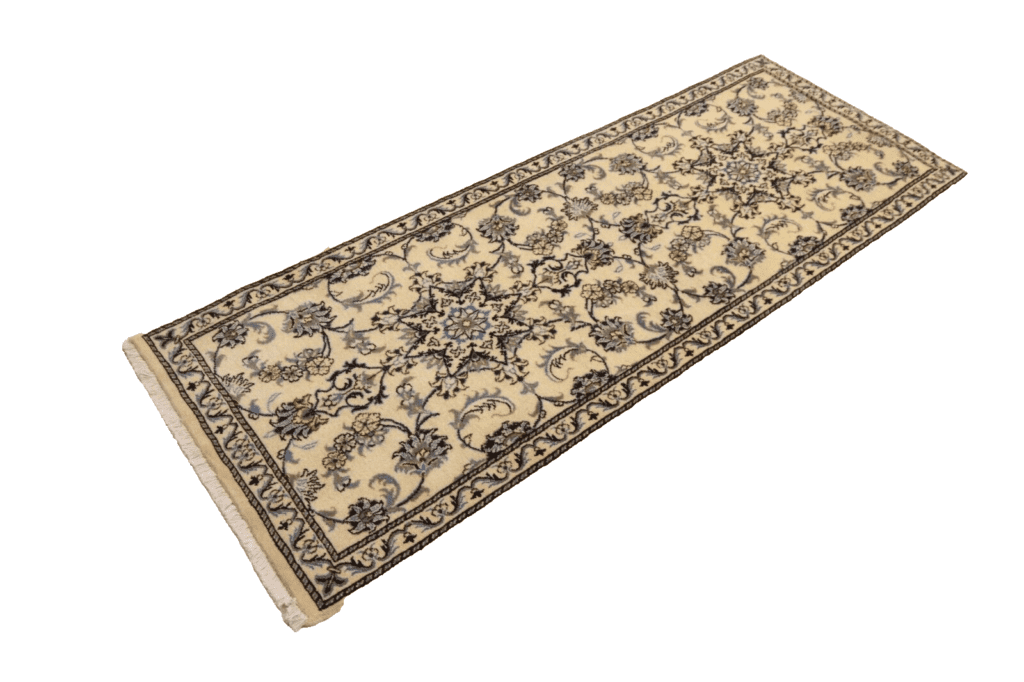
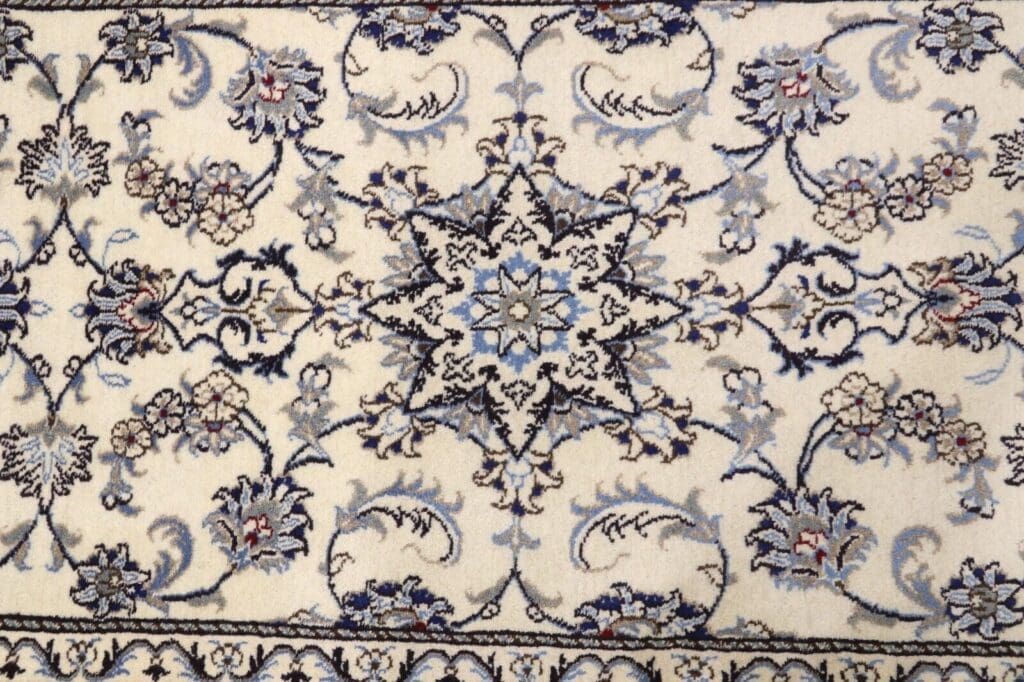
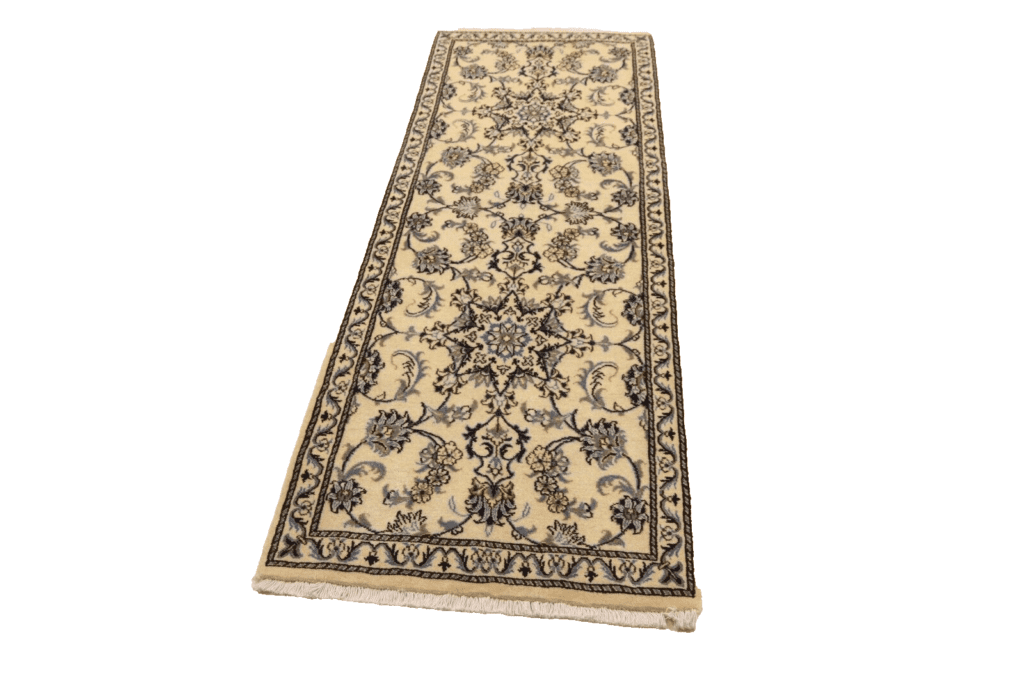
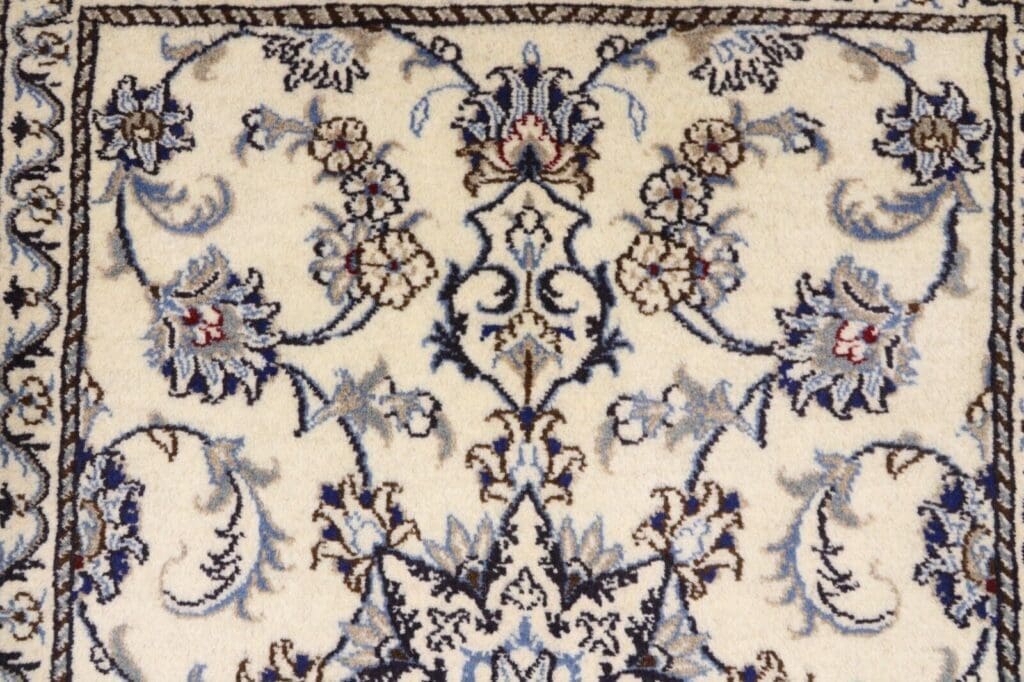
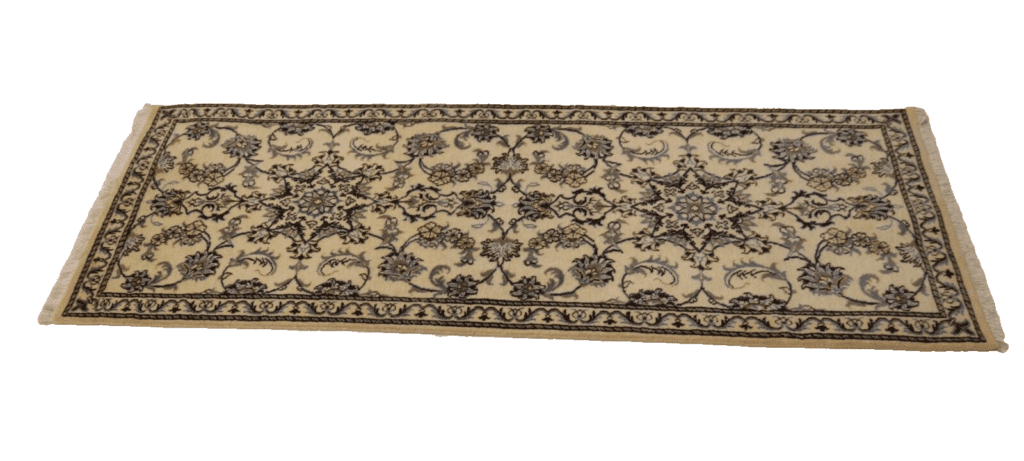
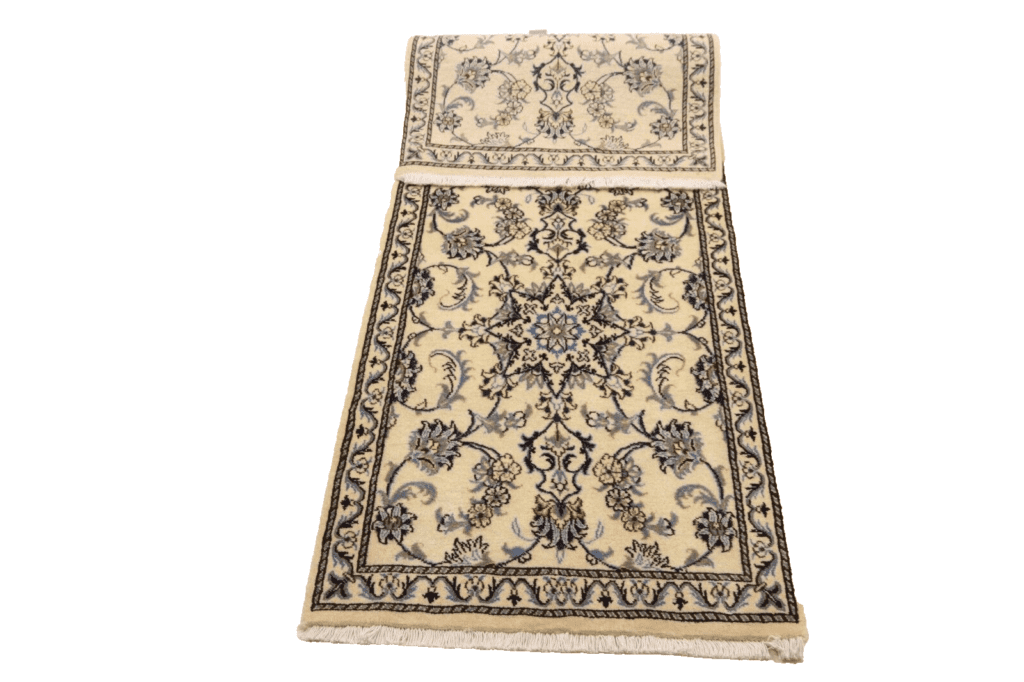
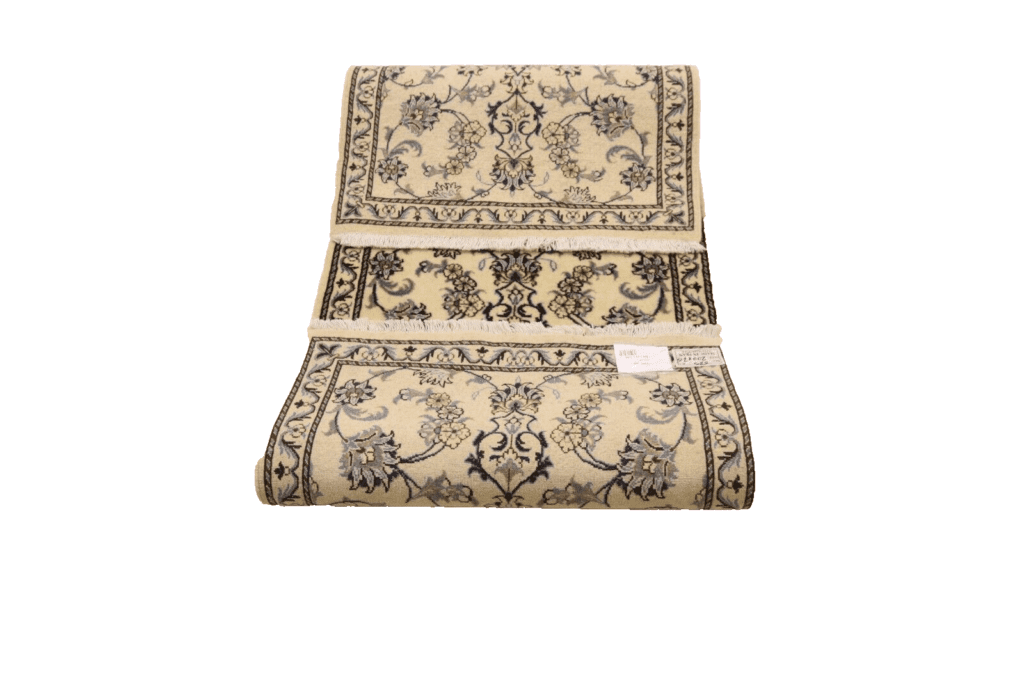
The design of this Super Nain rug is described as traditional Oriental-Persian. Its pattern combines floral and geometric motifs. Floral elements introduce blossoms, scrolling forms and other plant-inspired shapes, while geometric features provide structure and visual order. The result is not a literal botanical image, but an ornamental language in which natural forms are organised through symmetry, repetition and measured spacing.
Fine execution is central to the Nain style. Small motifs are not treated as isolated decorations; they are related to one another and placed within a larger composition. Tendrils can connect separate areas, flowers can establish a rhythm, and geometric boundaries can organise the design. Careful knotting supports this approach because it permits narrow lines and small shapes to be rendered distinctly. The silk in the pile may create a quiet contrast between the softer appearance of wool and the slightly reflective character of silk.
Oriental rug patterns often rely on repetition and correspondence. An ornament may recur in varied form, while an overall balance keeps the different areas connected. Floral and geometric motifs are therefore not random additions. They form a visual system of lines, axes, fields and repeated signs. This system is a central feature of Persian ornamental tradition and helps explain the ordered appearance associated with Super Nain designs.
In rug terminology, Super Nain is used for a particularly fine and detailed expression of the Nain style. The emphasis is on precise pattern development and a closely worked surface. Floral ornament can be combined with geometric organisation, allowing the design to appear both decorative and controlled. For this individual rug, the relevant pattern facts are the floral and geometric motifs stated in the source. Specific colours, an exact border arrangement or additional named motifs are not specified and are not assigned here.
The pattern also offers a versatile way to introduce Persian tradition into an interior. Its Oriental-Persian vocabulary can be read in a classically furnished room or used as a traditional accent within a more restrained setting. The essential feature is the ordered ornament rather than a temporary fashion. The hand-knotted surface gives the design textile depth, while the wool-and-silk pile can distinguish different parts of the drawing through variations in texture and light.
This one-off rug is supplied with a certificate identifying it as a unique piece. The certificate is one of the stated features of the offer. It does not alter the origin or style classification; it accompanies the individual hand-knotted rug as a documented unique item. The result brings together Persian ornamental tradition, careful knotting and the individual-piece character described for this Super Nain.
Special Features
The rug was newly made and is offered as new. Its listed features include suitability for underfloor heating, being pet- and child-friendly, and resistance to moths. These statements are part of the product description. The listed thickness is approximately 8 mm and is included as a product characteristic without drawing additional conclusions about the rug.
The offer also includes a certificate identifying the rug as a unique piece. This accompanies the individual hand-knotted item. Its knot density, its pile of virgin wool and silk, and its cotton warp are described in the material and craftsmanship information. Together with the traditional Super Nain design, they form the stated features of this Persian Oriental rug.
FAQ
What makes the Super Nain Persian rug distinctive?
Its distinguishing features are the fine knot density, hand-knotted construction and pile made from 90% virgin wool and 10% silk. The cotton warp provides the underlying structure. The rug also has a detailed Nain-influenced design with floral and geometric motifs and was newly made. It is described as suitable for underfloor heating, pet- and child-friendly, and moth-resistant. A certificate identifying it as a unique piece is supplied with the rug.
How should I care for the Persian rug?
For regular care, vacuum the rug without using a rotating brush attachment. This removes loose dust while avoiding unnecessary mechanical stress on the pile. Any spill should be dabbed promptly with a damp cloth. Rubbing should be avoided, since it can put additional strain on the affected area. Professional cleaning at suitable intervals is recommended to support long-term care and preserve the textile surface.
Where do the materials for the Super Nain rug come from?
The rug comes from Persia. The source describes virgin wool and silk as traditional materials of the region. Its pile consists of 90% virgin wool and 10% silk. The warp is made from 100% cotton and serves as the durable foundation of the knotting. The rug therefore combines a predominantly wool pile, the subtle lustre of silk and a cotton warp within its hand-knotted construction.
To provide the best experiences, we use technologies like cookies to store and/or access device information. Consenting to these technologies will allow us to process data such as browsing behavior or unique IDs on this site. Not consenting or withdrawing consent, may adversely affect certain features and functions.
Functional Always active
The technical storage or access is strictly necessary for the legitimate purpose of enabling the use of a specific service explicitly requested by the subscriber or user, or for the sole purpose of carrying out the transmission of a communication over an electronic communications network.
Preferences
The technical storage or access is necessary for the legitimate purpose of storing preferences that are not requested by the subscriber or user.
Statistics
The technical storage or access that is used exclusively for statistical purposes.The technical storage or access that is used exclusively for anonymous statistical purposes. Without a subpoena, voluntary compliance on the part of your Internet Service Provider, or additional records from a third party, information stored or retrieved for this purpose alone cannot usually be used to identify you.
Marketing
The technical storage or access is required to create user profiles to send advertising, or to track the user on a website or across several websites for similar marketing purposes.
 SECURE PAYMENT
 SHIPPING PARTNERS


