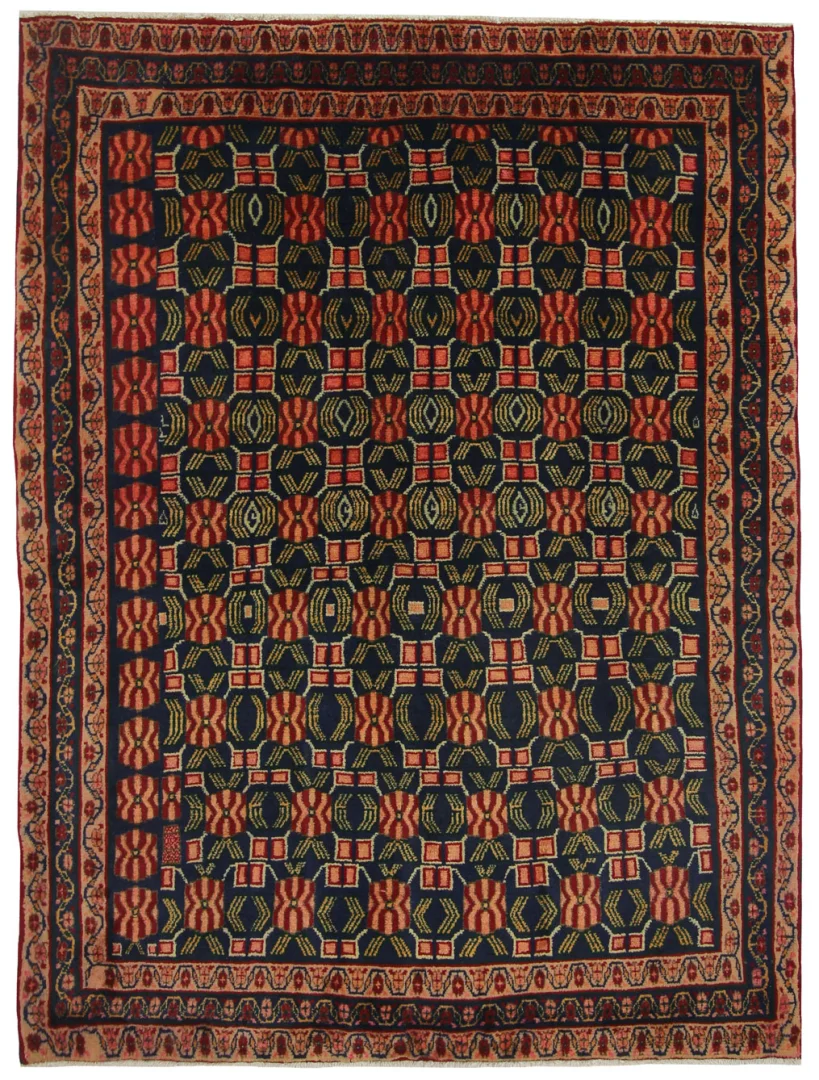
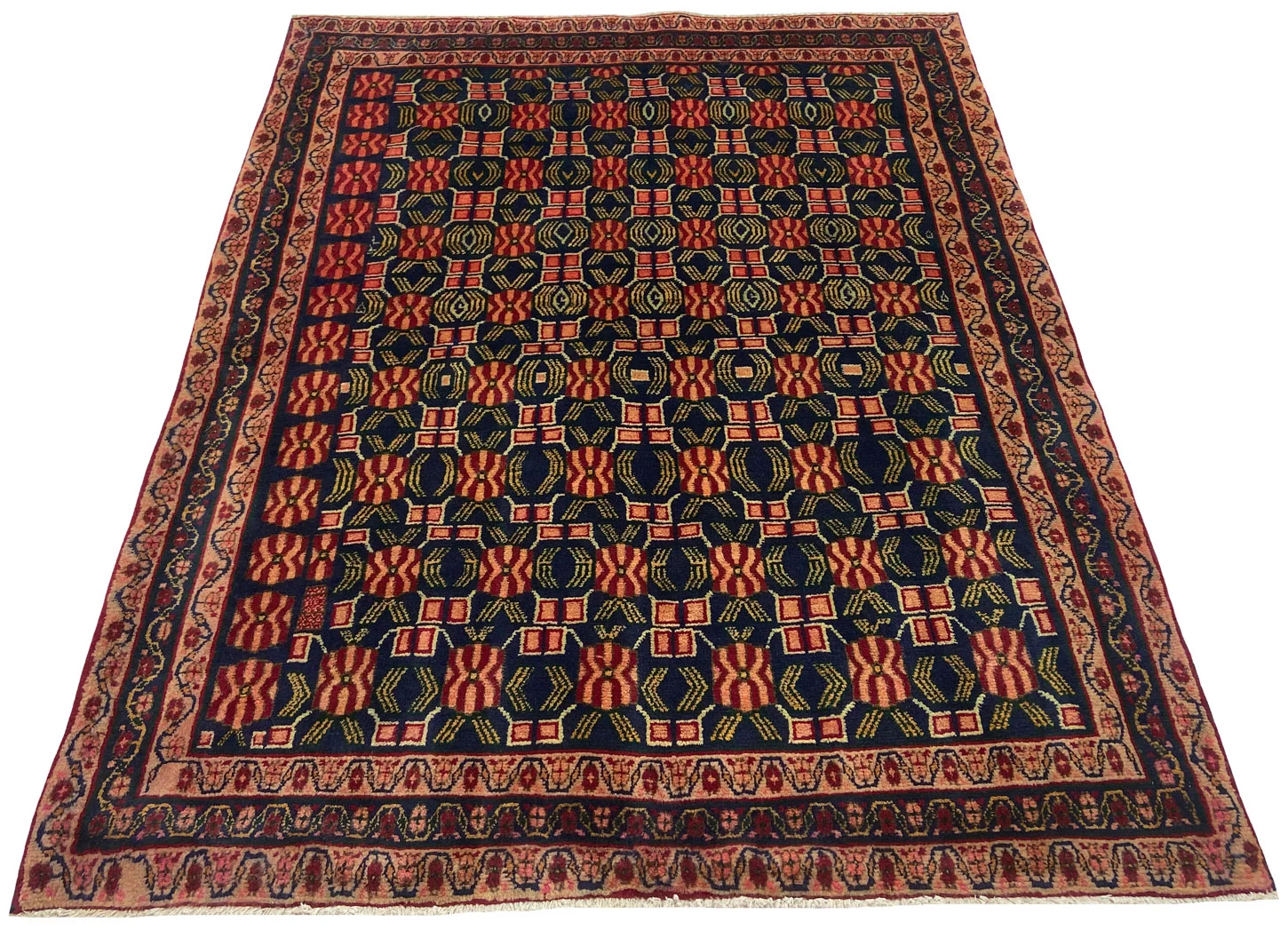
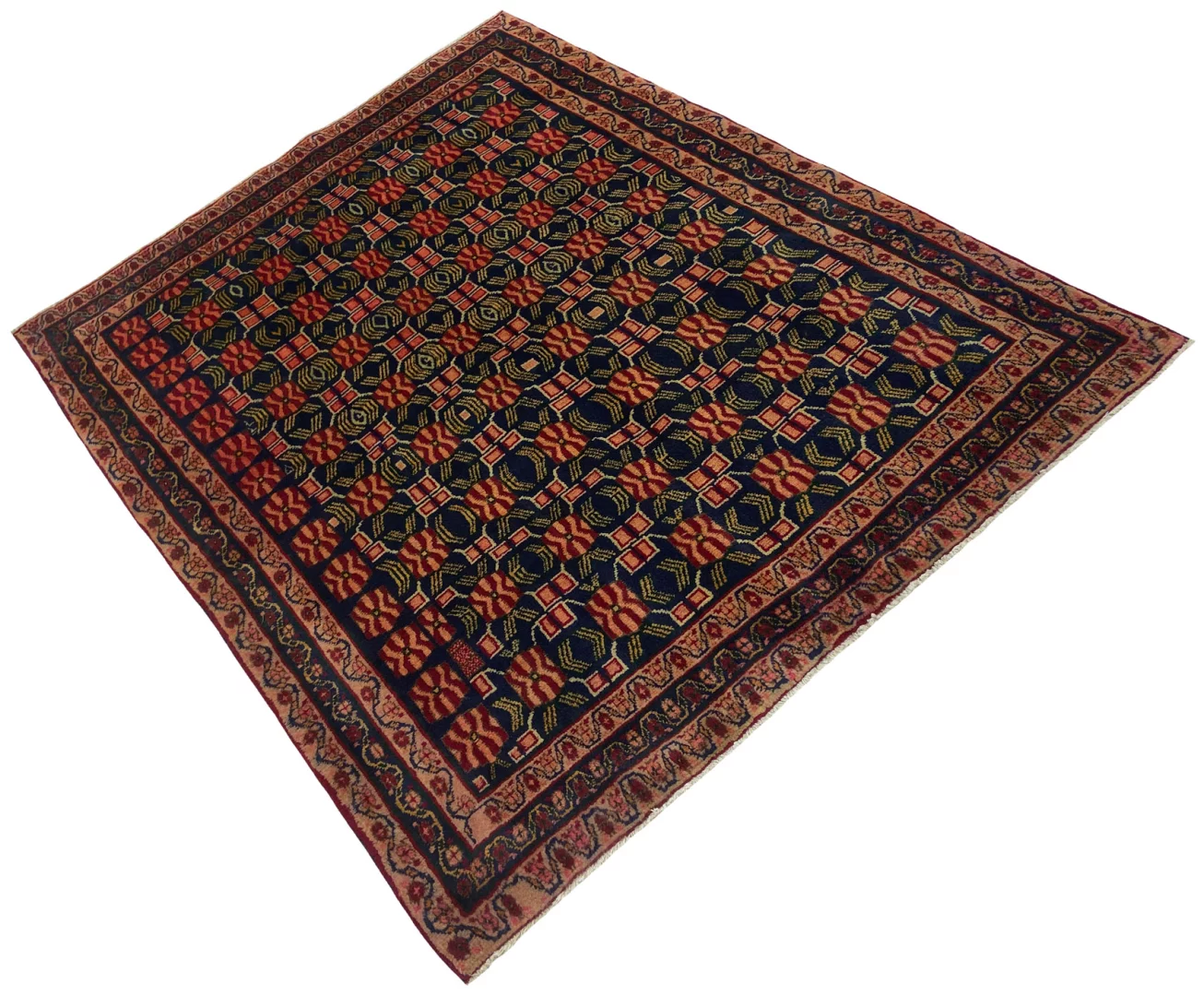
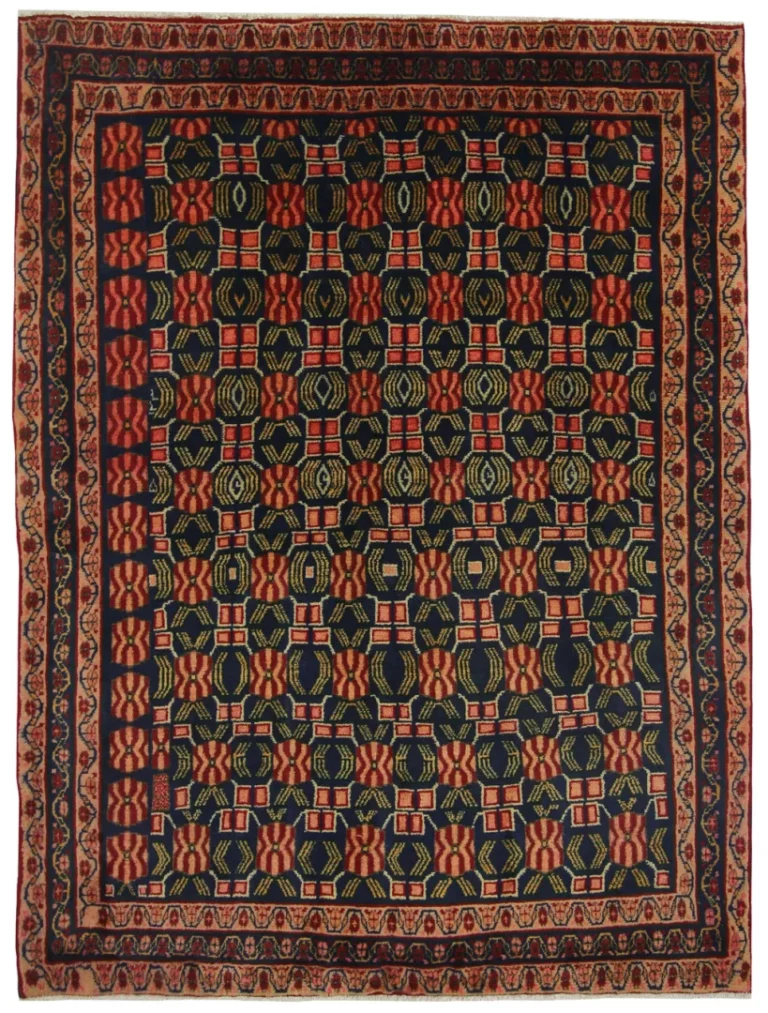
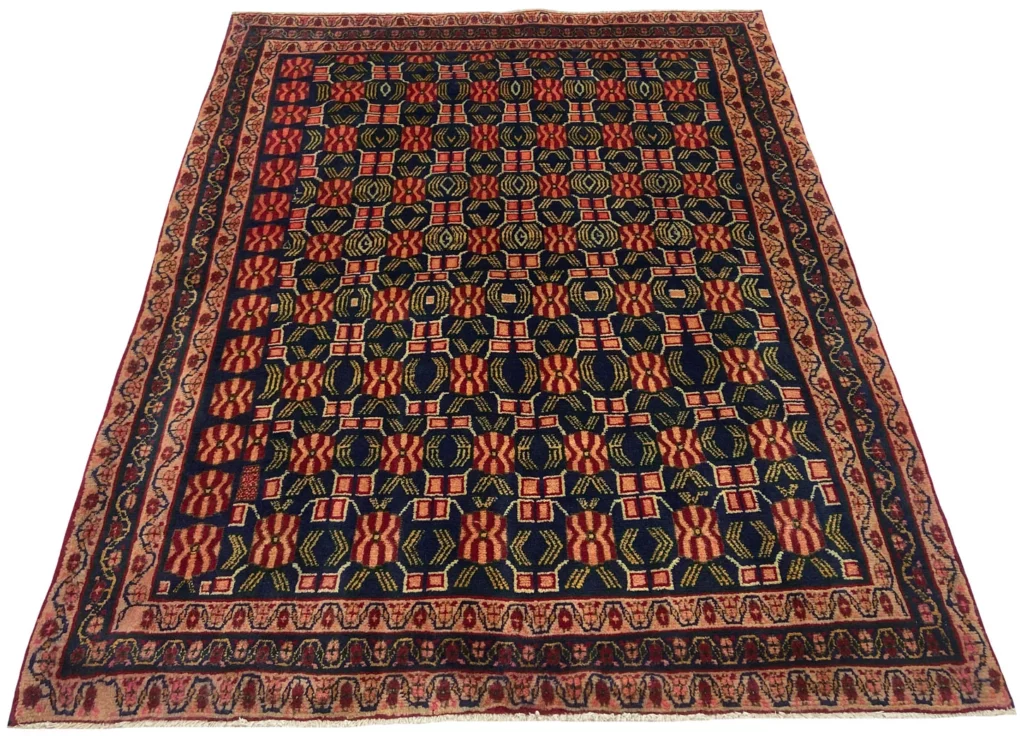
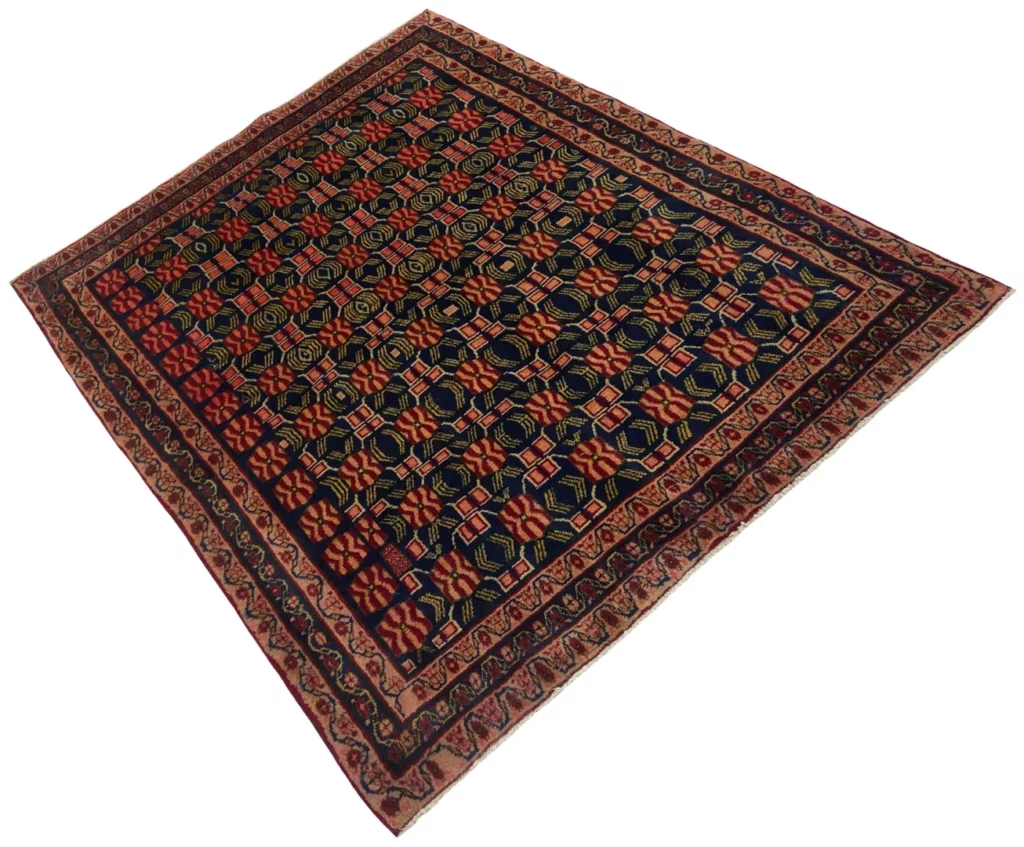
Hand-knotted Sirjan Persian Rug | Knot density: High-pile and low-pile areas | Material: Wool and cotton | Size: 200 x 151 cm | Pattern: Exotic design with a three-dimensional effect | Condition: Very well preserved
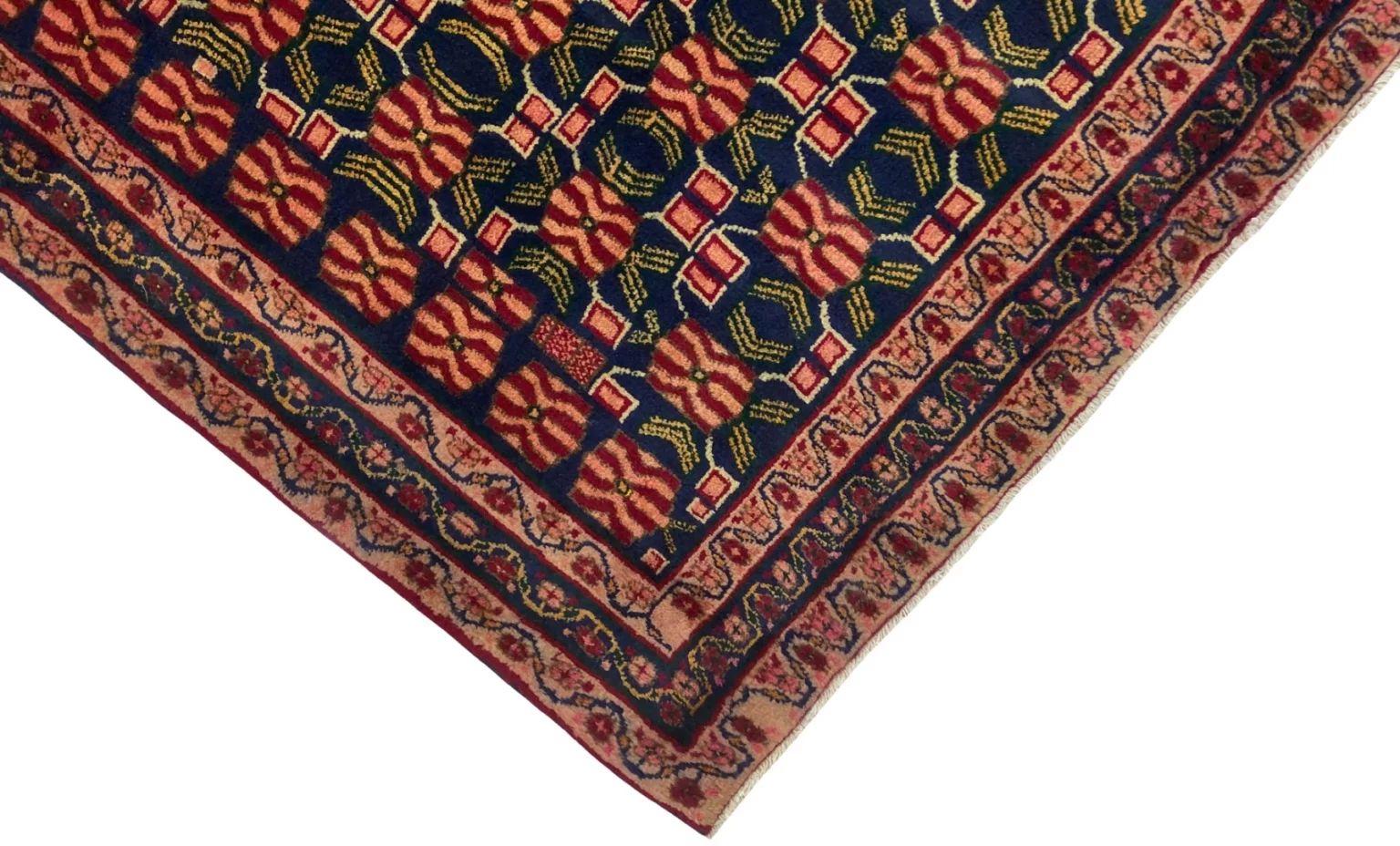
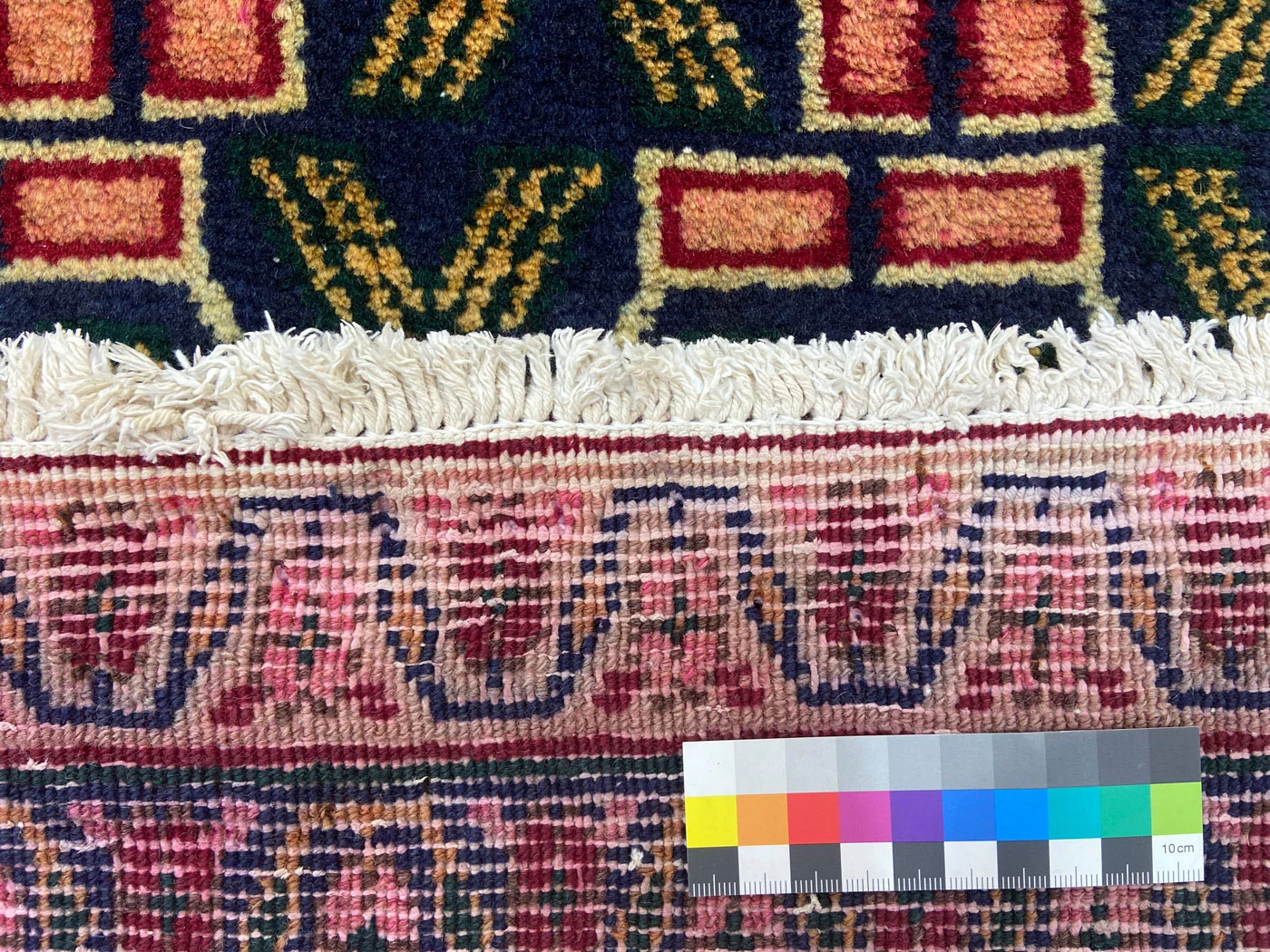
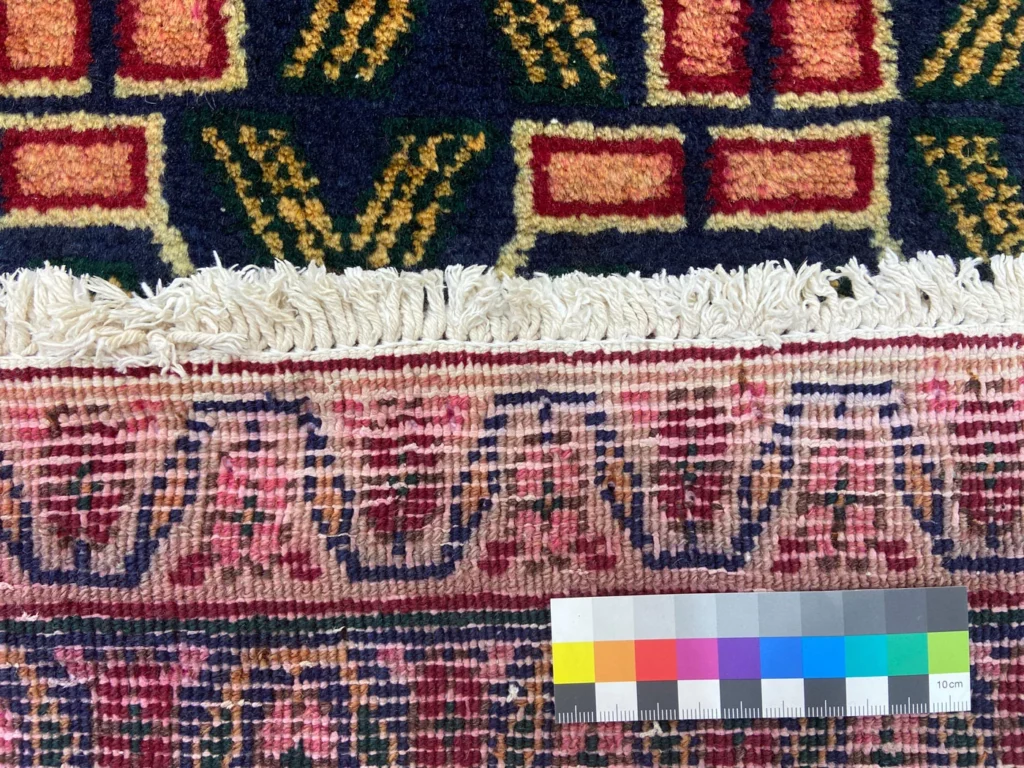
This Sirjan Nimbaf is hand-knotted and combines knotted carpet sections with areas related to the flat-woven Kelim technique. The result is a surface made up of visibly different textile zones. Some parts have a high pile, others a low pile, while further sections have no pile at all. This variation is the defining constructional feature of the Nimbaf and gives the piece a clearly differentiated texture. The rug is made of wool and cotton. Wool is used in hand-made rugs for its tactile textile character and its suitability for regular domestic use. Cotton forms part of the stated material composition as well. Together with the hand-knotting, these materials create the particular appearance of this Sirjan rug. The changing pile levels also influence the way light falls across the surface and how each section feels to the touch.
Origin and Tradition
The rug comes from Sirjan in southern Persia, within the Fars region. Sirjan is known for its carpet production and belongs to a cultural setting where carpet making is closely connected with established textile practices. Fars lies in southern Iran and has a varied carpet tradition. Different forms of knotting and weaving exist alongside one another in the region. Regional pieces may therefore range from finely articulated compositions to designs in which surface and texture play a stronger role. The Sirjan Nimbaf belongs to this context because its visual effect is created not only by a drawn design, but also by the movement between pile and pile-free areas.
The name Sirjan points to a place of production and regional origin rather than merely describing an abstract style. Traditional textile work in Fars includes both knotted rugs and flat-woven textiles. Kelims are woven and do not have a knotted pile. In a Nimbaf, elements associated with this flat-woven appearance are combined with knotted sections. The result is not a uniformly smooth textile, but a surface with changing relief. This combination helps explain the distinct position of Sirjan Nimbaf rugs within the wider carpet culture of the region.
Sirjan carpet production is also part of the broader Persian craft tradition, in which material, construction, surface and design are considered together. A rug is formed not simply by inserting individual knots, but through the interaction of warp, weft, pile and pattern. When high pile, low-pile sections and areas without pile are brought together, this interaction becomes especially visible. Handwork allows the different zones to be arranged within one continuous piece. The regional origin is therefore linked to a method that places several textile techniques in relation to one another rather than treating them as separate categories.
Design and Pattern
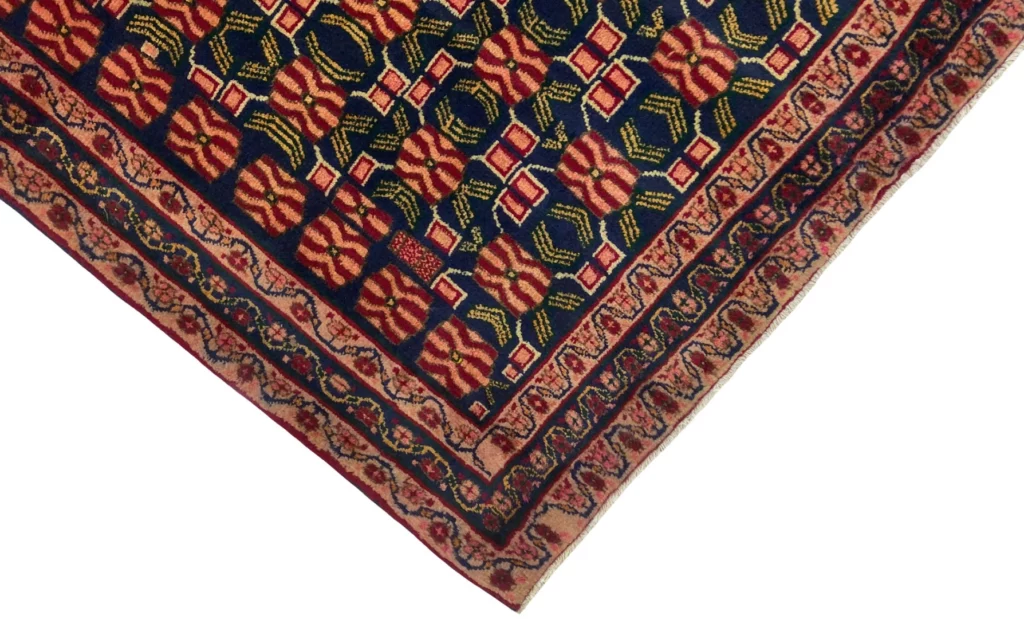
The pattern of this rug is described as an exotic design with a three-dimensional effect. Here, exotic refers to a composition distinguished by an unusual combination of surfaces and by an individual visual character. The three-dimensional impression is produced primarily by the different pile levels and by the pile-free sections. A high-pile passage looks and feels different from a low-pile area. A section without pile appears flatter and more restrained. Together, these contrasts create a relief structure in which the design cannot be understood as a purely two-dimensional drawing.
The Nimbaf character lies in the relationship between shape and material surface. In many rugs, a pattern is read mainly through lines, ornaments and areas of colour. In this Sirjan rug, the surface itself becomes another design element. The separate zones are emphasized by their different textures. Depending on the light, higher sections may appear more prominent while flatter passages recede visually. The difference also remains perceptible when the rug is touched. Textile construction is therefore central to the design rather than being only a technical consequence of production.
Fars carpet traditions include both floral and geometric motifs, often combined with strong or lively colours. For this particular rug, the specified pattern is an exotic design with a three-dimensional effect; individual floral or geometric forms are not defined and are therefore not assigned to it. What is clear is the carefully differentiated surface made up of high pile, low-pile zones and sections without pile. This makes the composition understandable without attributing an unsupported individual ornament and places the hand-made structure at the centre of the description.
Compared with Isfahan rugs, which are often associated with fine detail and the use of silk, Sirjan rugs place greater emphasis on varied texture and a more robust appearance. Gabbeh rugs from Fars are known for simple but expressive designs. Tabriz and Kashan are known for refined patterns and high quality. These examples illustrate the range of Persian carpet traditions without assigning the present piece to another place of origin. The Sirjan Nimbaf remains distinct through its combination of Kelim-related elements and knotted carpet areas.
Special Features
The defining feature of this rug is the combination of different textile techniques and surface levels. High pile, low-pile areas and sections without pile form a relief with a three-dimensional effect. This sets the Sirjan Nimbaf apart from rugs made with one consistent pile height throughout. The limited availability of such rugs in the region is given as a reason for their particular status. This piece is very well preserved. Care consists of regular vacuuming and prompt treatment of stubborn stains with a damp cloth. Direct sunlight should be avoided so that the colours do not fade.
FAQ
How should I care for my Sirjan Nimbaf rug?
Vacuum the rug regularly so that dust does not remain in the different pile zones. Stubborn stains should be treated immediately with a damp cloth, working carefully over the affected area. Direct sunlight should be avoided because it can contribute to fading. These measures take the Nimbaf surface into account, with its high-pile, low-pile and pile-free sections. Regular, gentle care helps preserve the contrast between the textures and the visual effect created by their different levels.
Where can I buy a Sirjan Nimbaf rug?
Sirjan Nimbaf rugs are available from specialist carpet shops and from online stores that focus on hand-made rugs from Iran. A reliable dealer is recommended, particularly one that presents clear information about origin, construction, material and condition. Because this type of rug is not widely available in the region, it may not be offered by every carpet retailer. Specialist sellers are more likely to describe the combination of Kelim-related weaving and knotted areas accurately.
How does the Sirjan Nimbaf differ from other Persian rugs?
The Sirjan Nimbaf combines elements of the Kelim technique with knotted carpet sections. Its surface includes high pile, low-pile areas and sections without pile. This alternation creates the three-dimensional effect and gives the rug a distinctive tactile character. Other Persian rugs may be defined more strongly by an even pile surface, fine detail or particular individual motifs. In the Sirjan Nimbaf, the central feature is the union of different construction methods and the resulting variation in texture.
To provide the best experiences, we use technologies like cookies to store and/or access device information. Consenting to these technologies will allow us to process data such as browsing behavior or unique IDs on this site. Not consenting or withdrawing consent, may adversely affect certain features and functions.
Functional Always active
The technical storage or access is strictly necessary for the legitimate purpose of enabling the use of a specific service explicitly requested by the subscriber or user, or for the sole purpose of carrying out the transmission of a communication over an electronic communications network.
Preferences
The technical storage or access is necessary for the legitimate purpose of storing preferences that are not requested by the subscriber or user.
Statistics
The technical storage or access that is used exclusively for statistical purposes.The technical storage or access that is used exclusively for anonymous statistical purposes. Without a subpoena, voluntary compliance on the part of your Internet Service Provider, or additional records from a third party, information stored or retrieved for this purpose alone cannot usually be used to identify you.
Marketing
The technical storage or access is required to create user profiles to send advertising, or to track the user on a website or across several websites for similar marketing purposes.
 SECURE PAYMENT
 SHIPPING PARTNERS