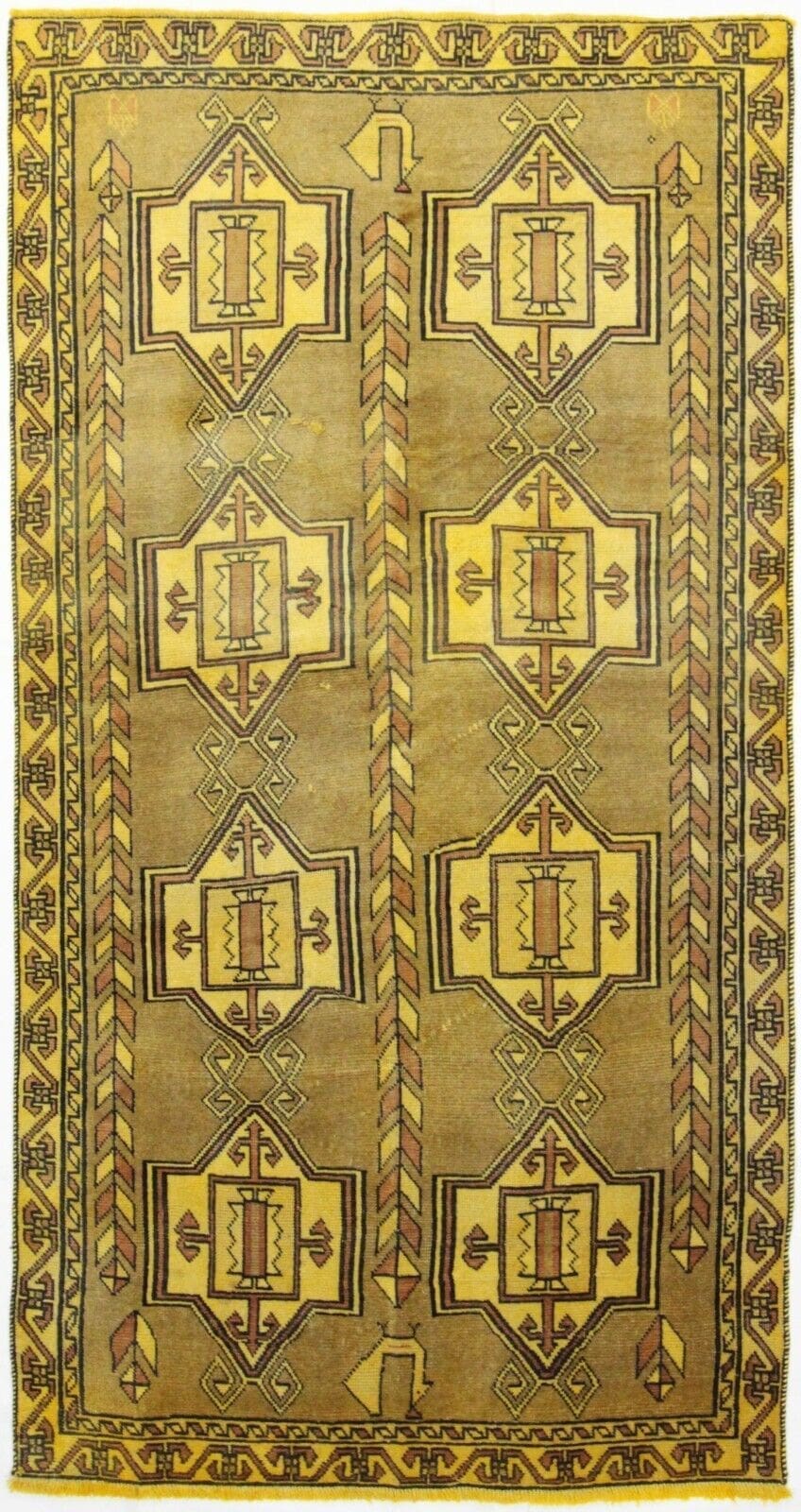
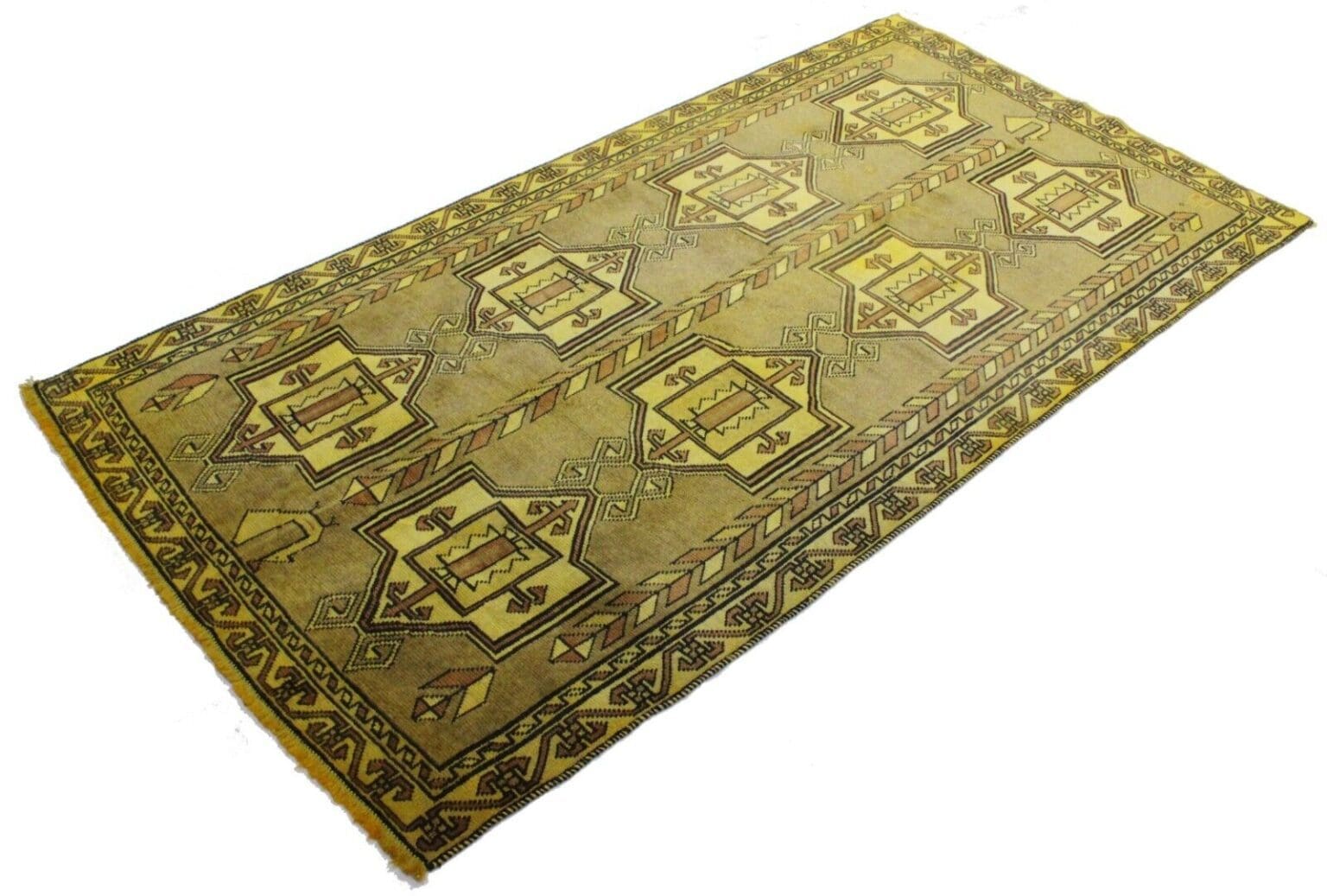
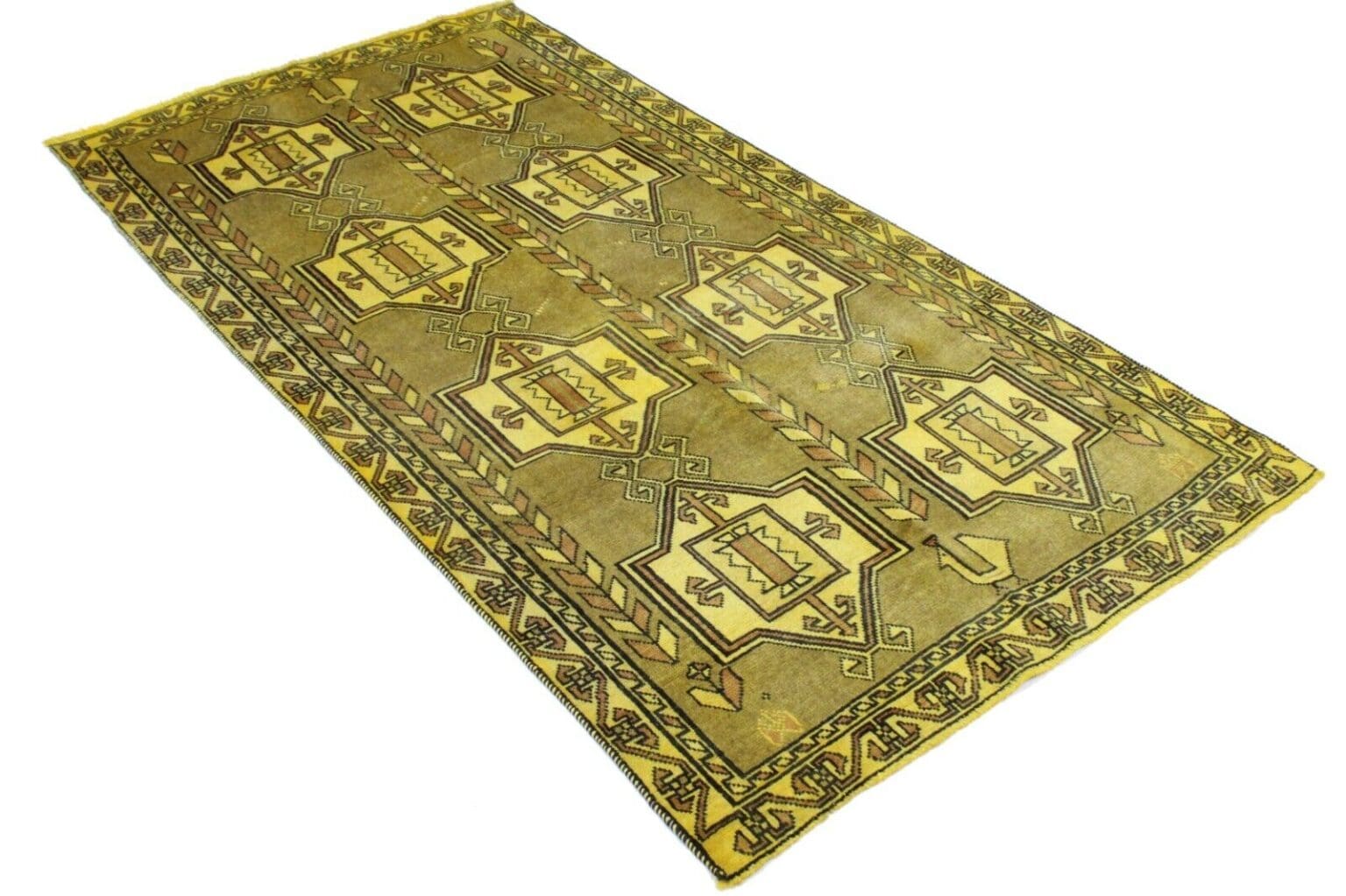
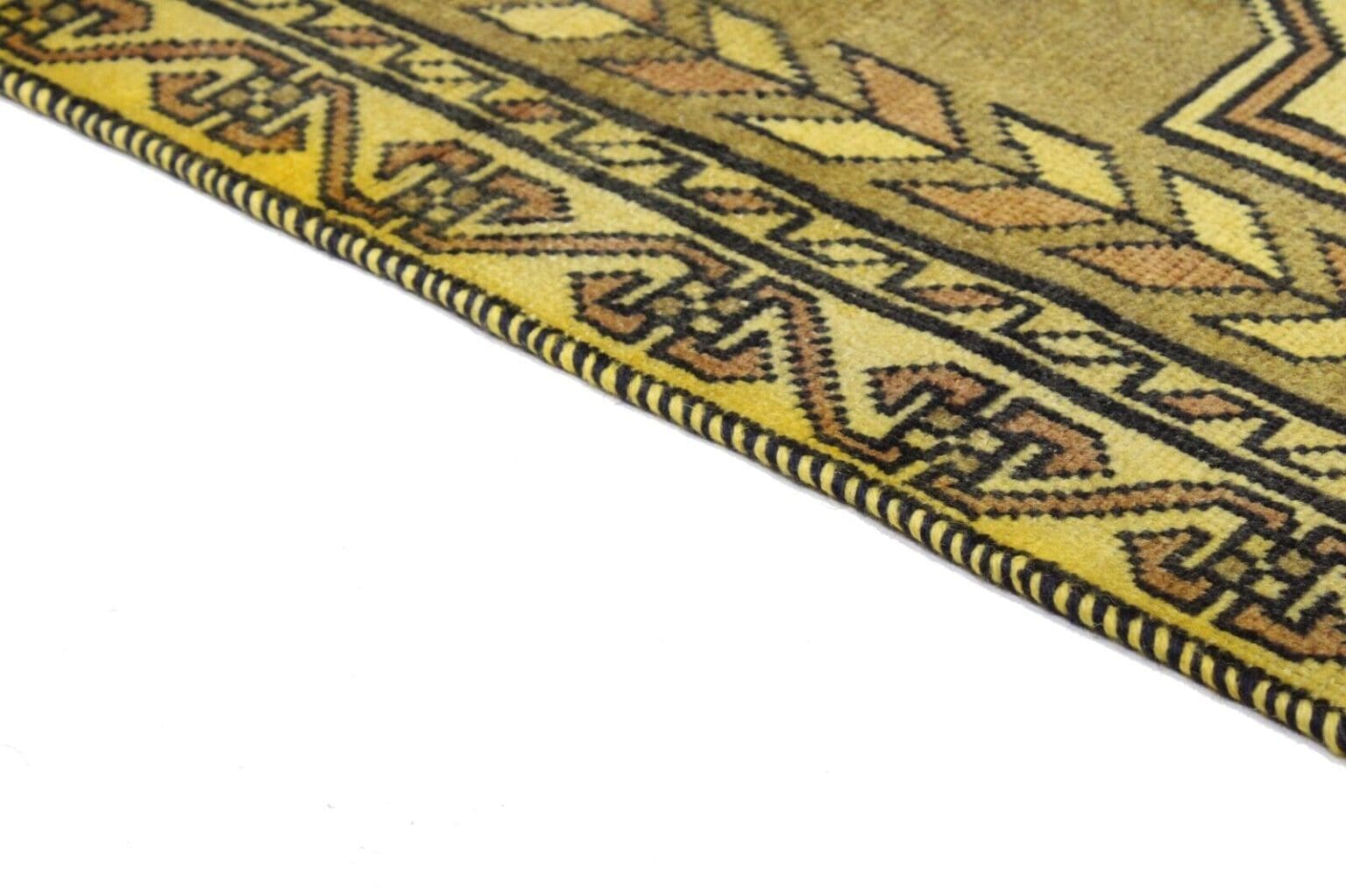
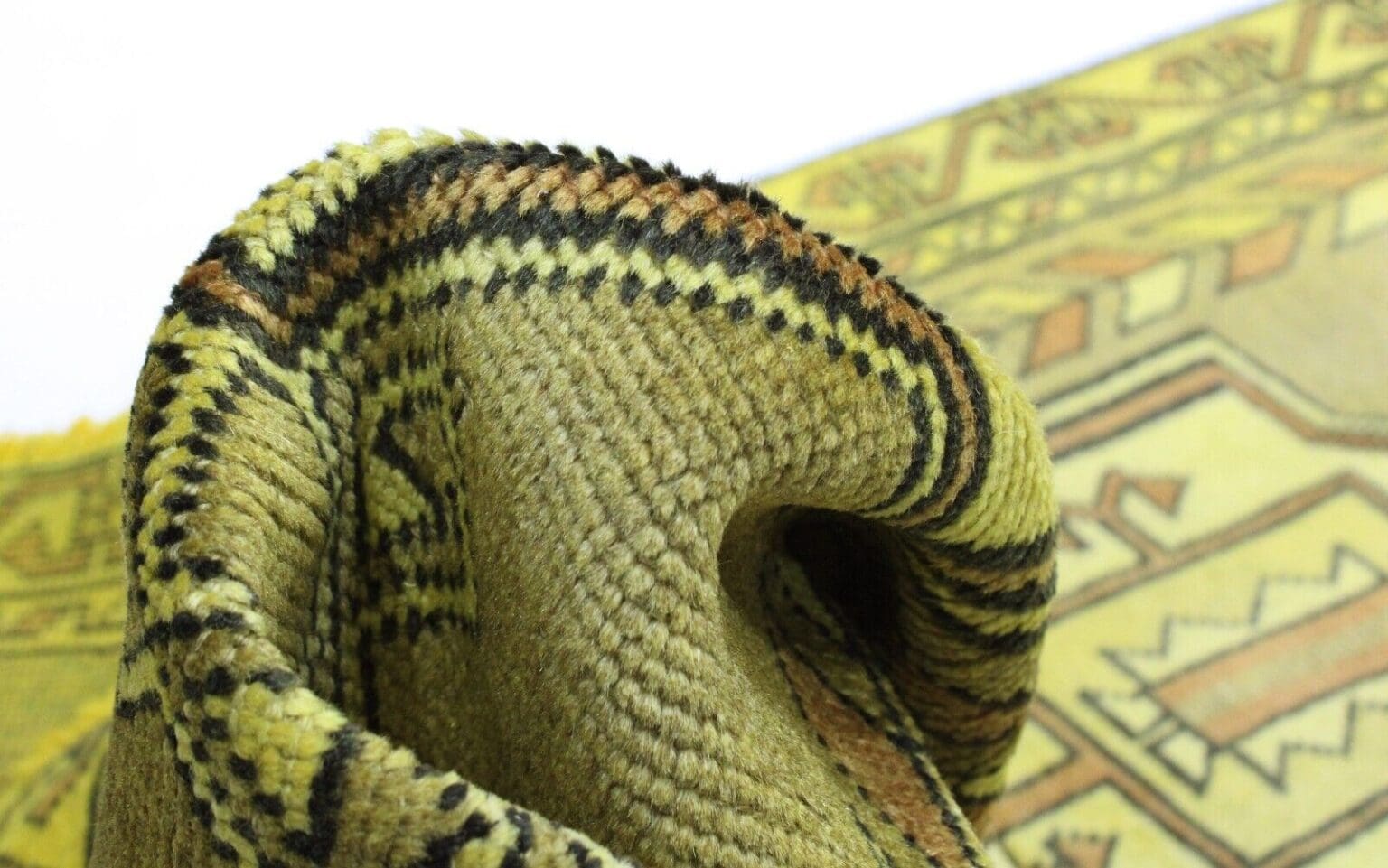
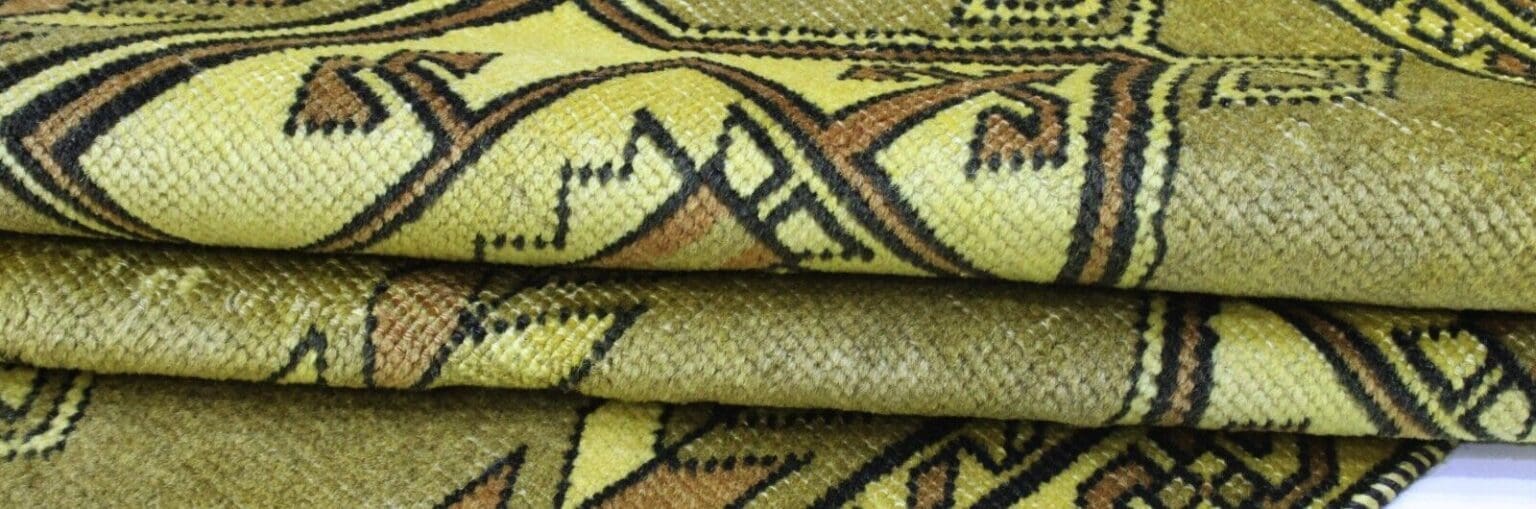
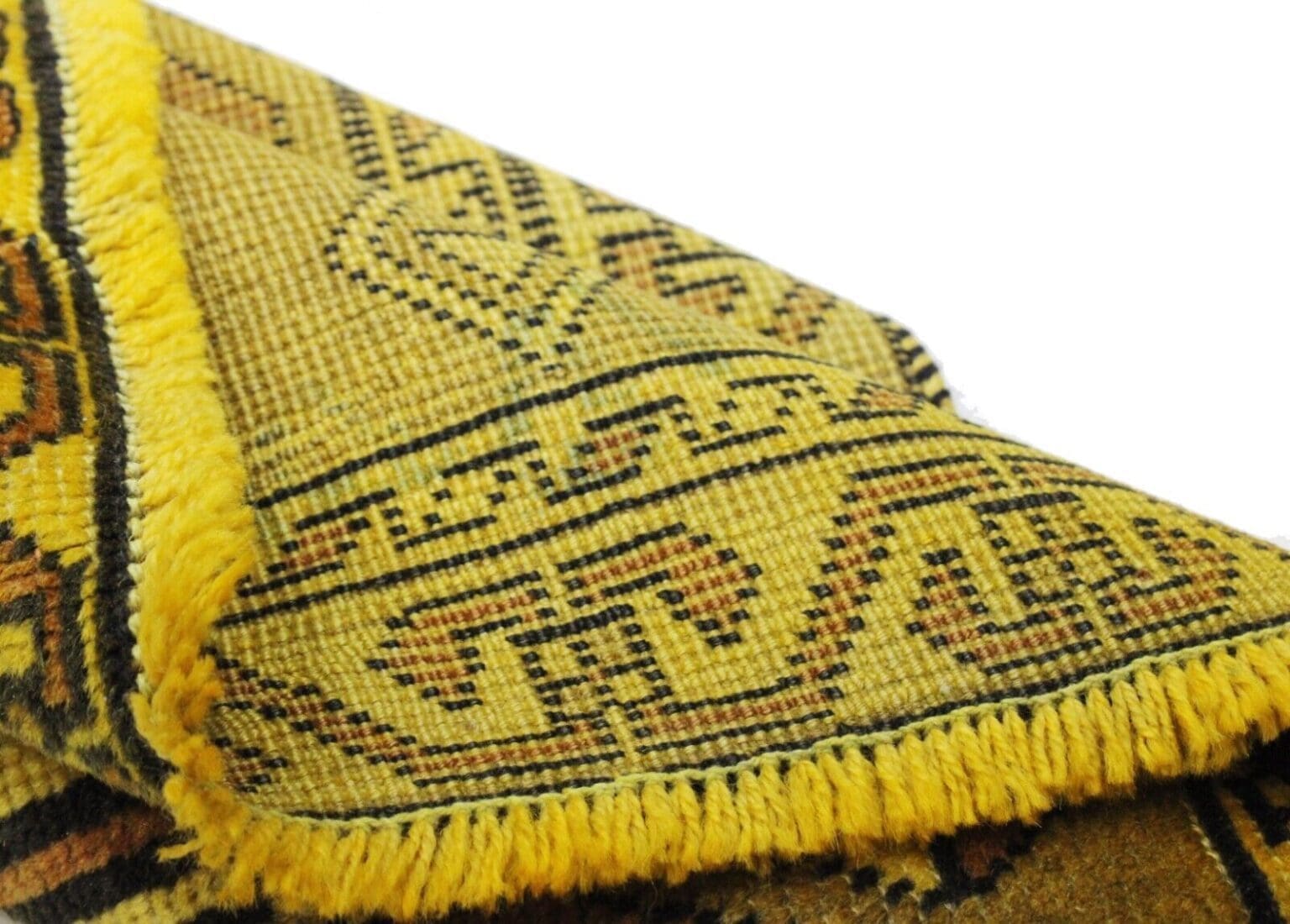
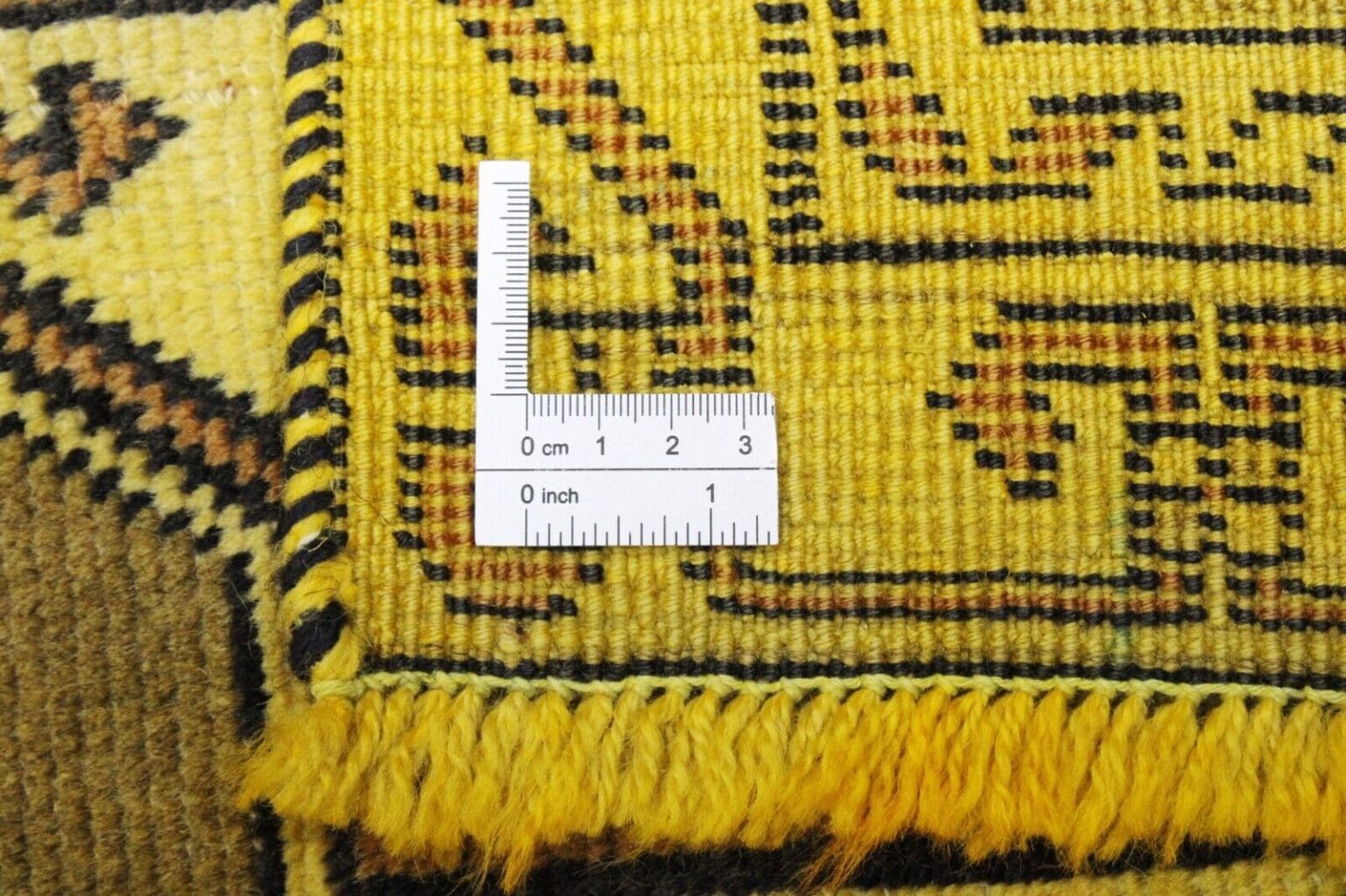
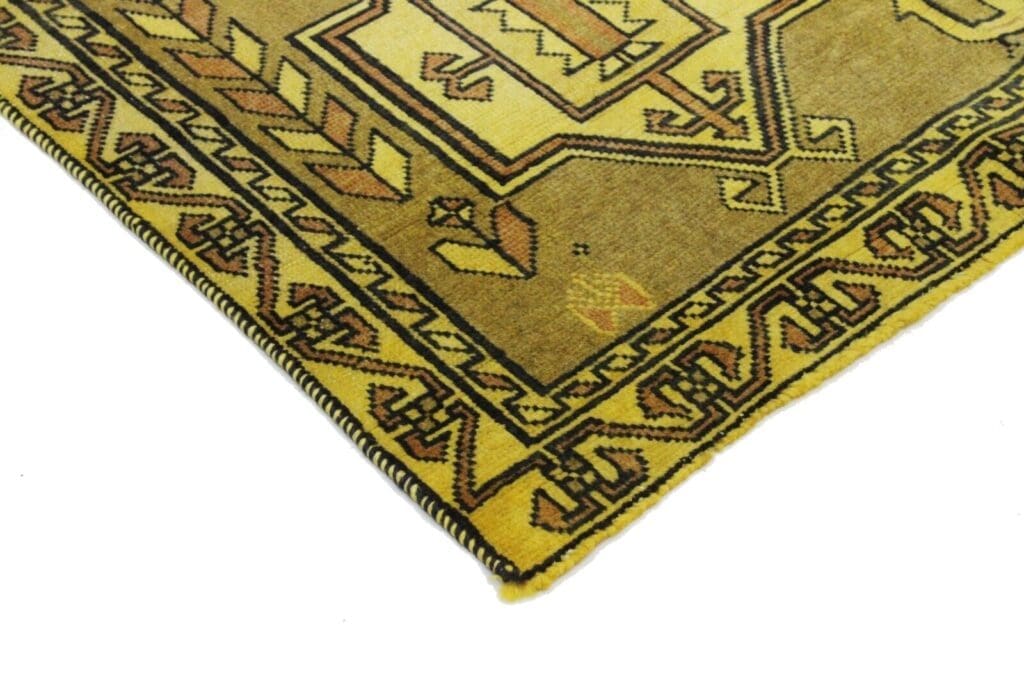
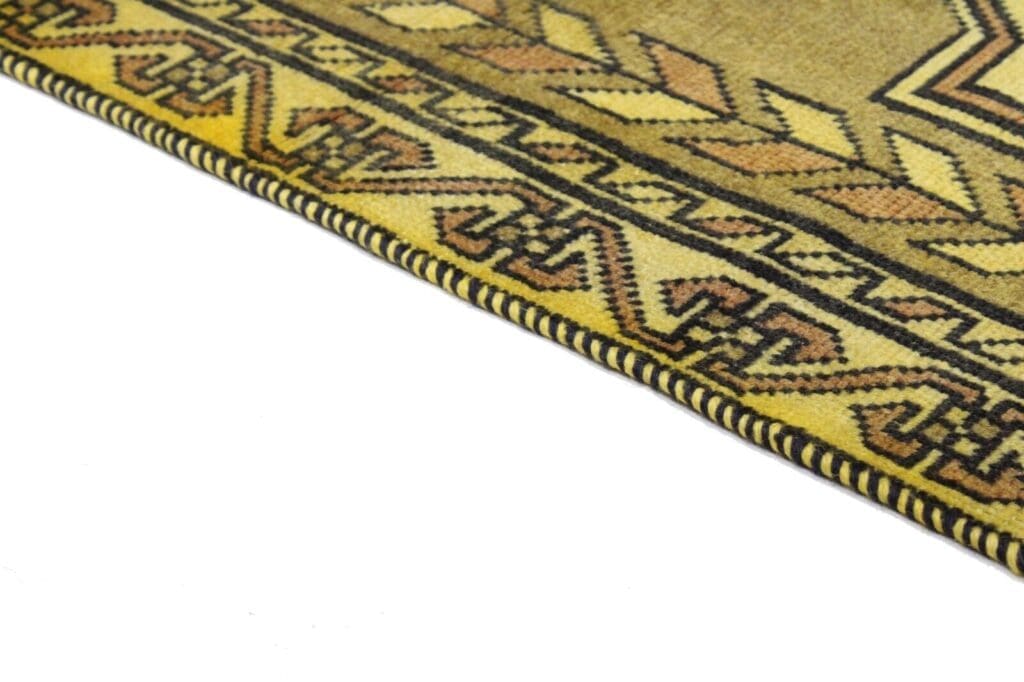
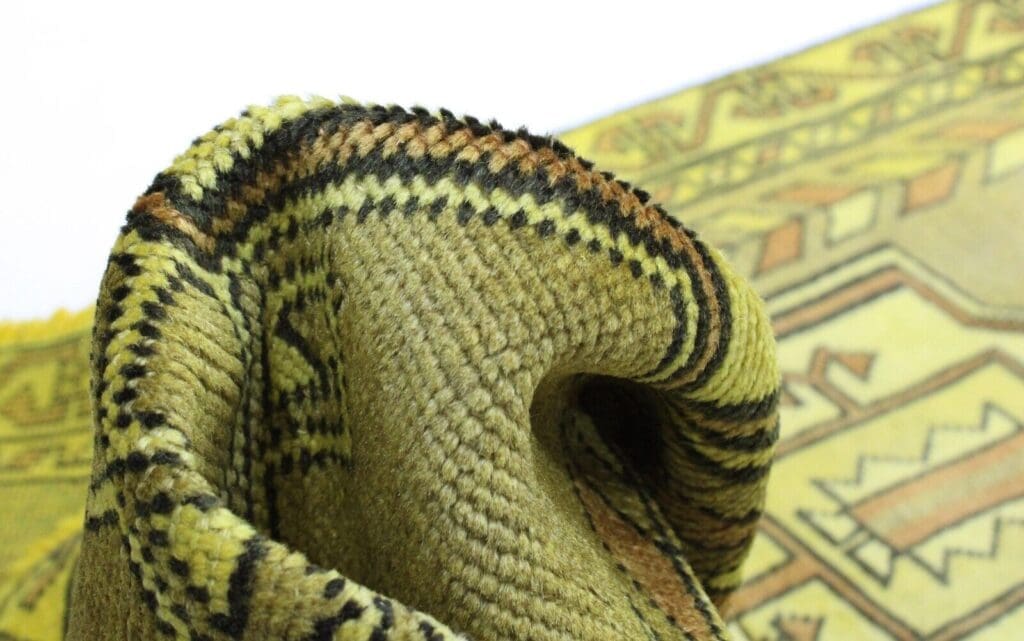
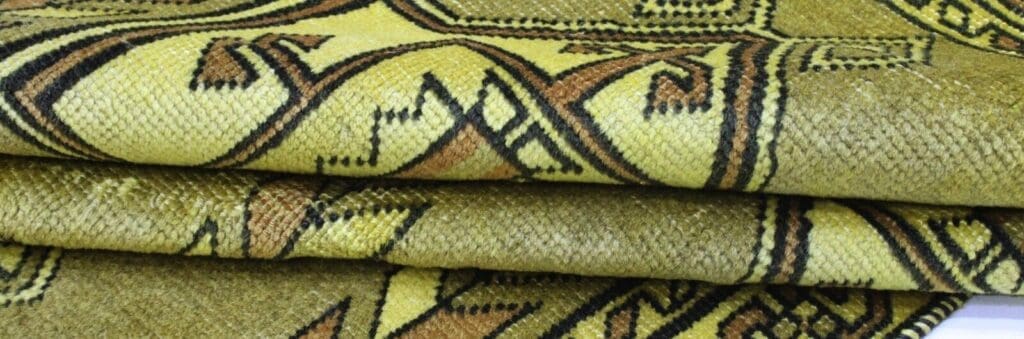
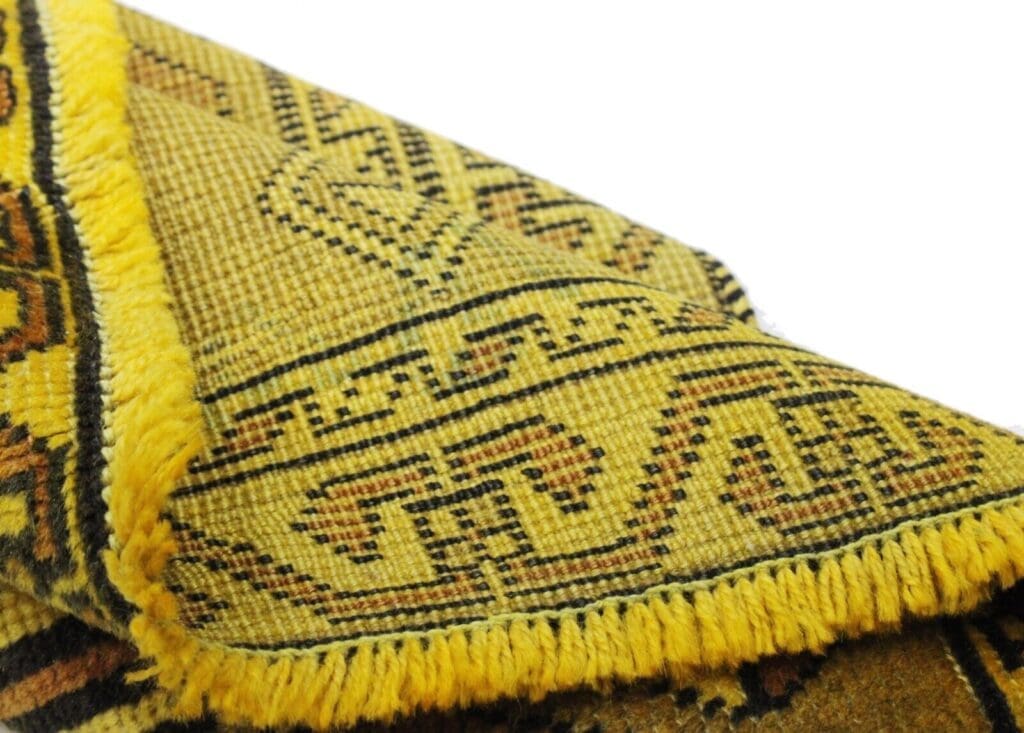
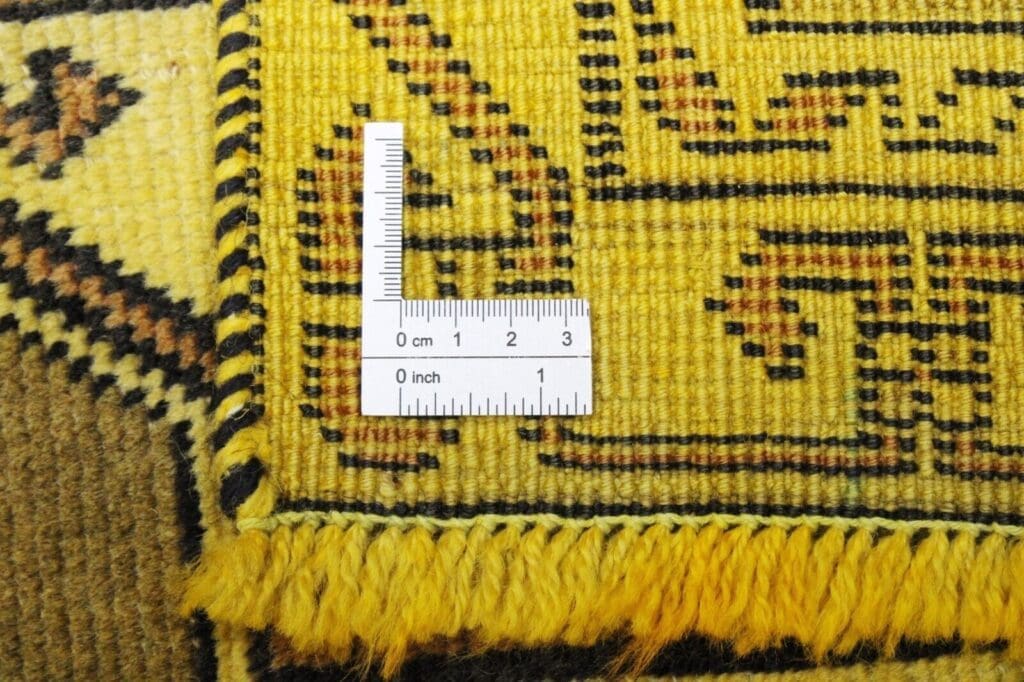
This Shiraz Persian rug is hand-knotted and made of wool. Wool forms the pile and gives the rug the natural textile character associated with this fibre. In hand-knotting, individual knots are worked into the foundation one by one. The result is not a completely uniform industrial surface, but a one-off woven object with its own drawing and texture. Hand production involves a sequence of careful operations: the foundation is prepared, the pile is built knot by knot, and the surface is then finished so that the pattern can be read clearly.
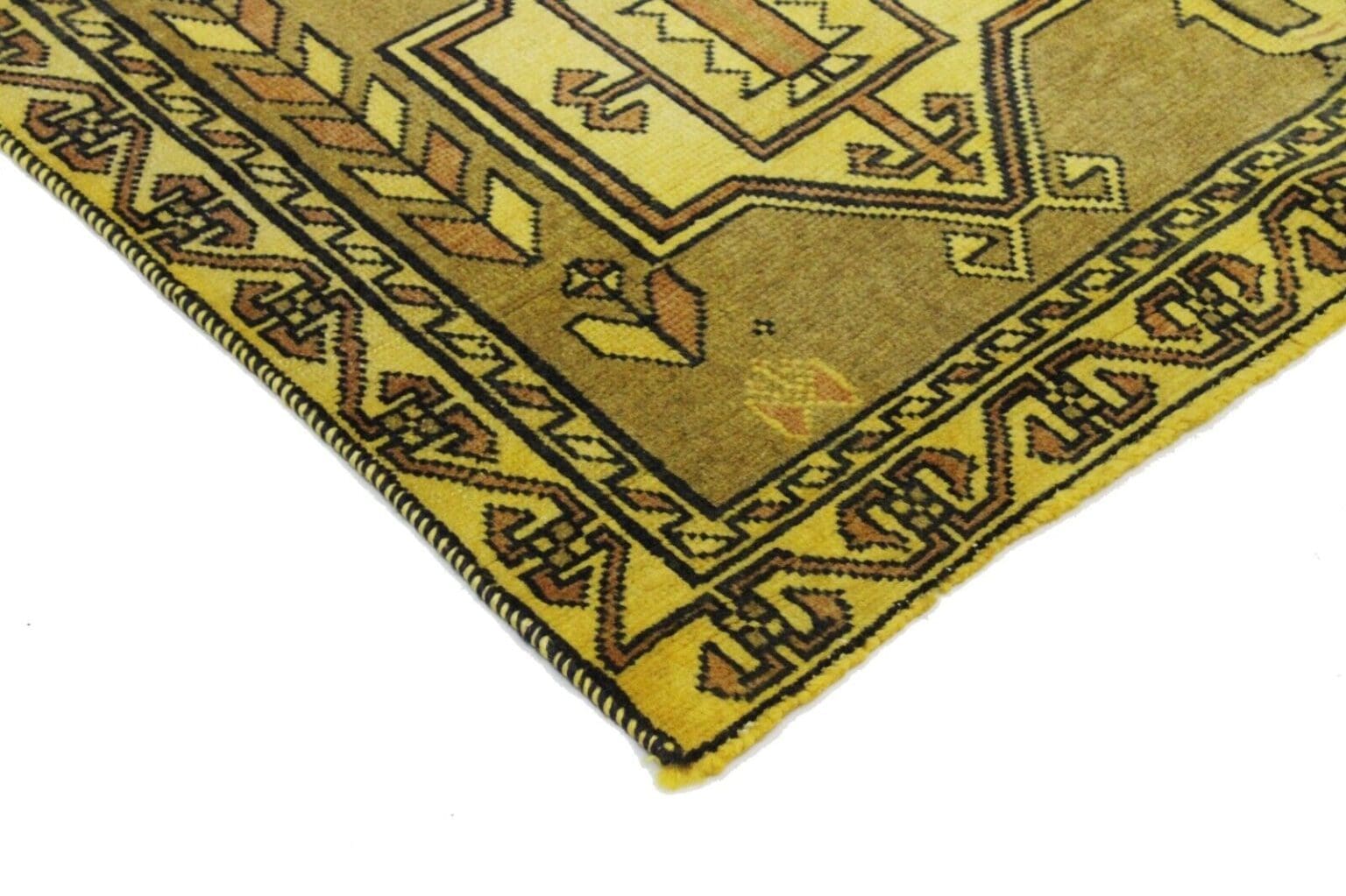
Wool has been used in rug making for centuries because it offers a resilient natural fibre with a pleasantly tactile surface. Depending on how it is prepared, wool can hold colour in different ways and show the relationship between lighter and darker areas of a design. The pile of this rug is described as short. A short pile allows the geometric drawing to appear relatively directly and keeps the contours visible in everyday use. The listed thickness is one centimetre.
The rug has been washed and is described as used but in top condition. These details address both its previous use and its present state. The hand-knotted construction, wool pile and short surface work together: they influence the way the rug feels underfoot, the way its pattern is seen and the way it rests in a room. Its manufacture is explicitly identified as entirely handmade.
Origin and Tradition
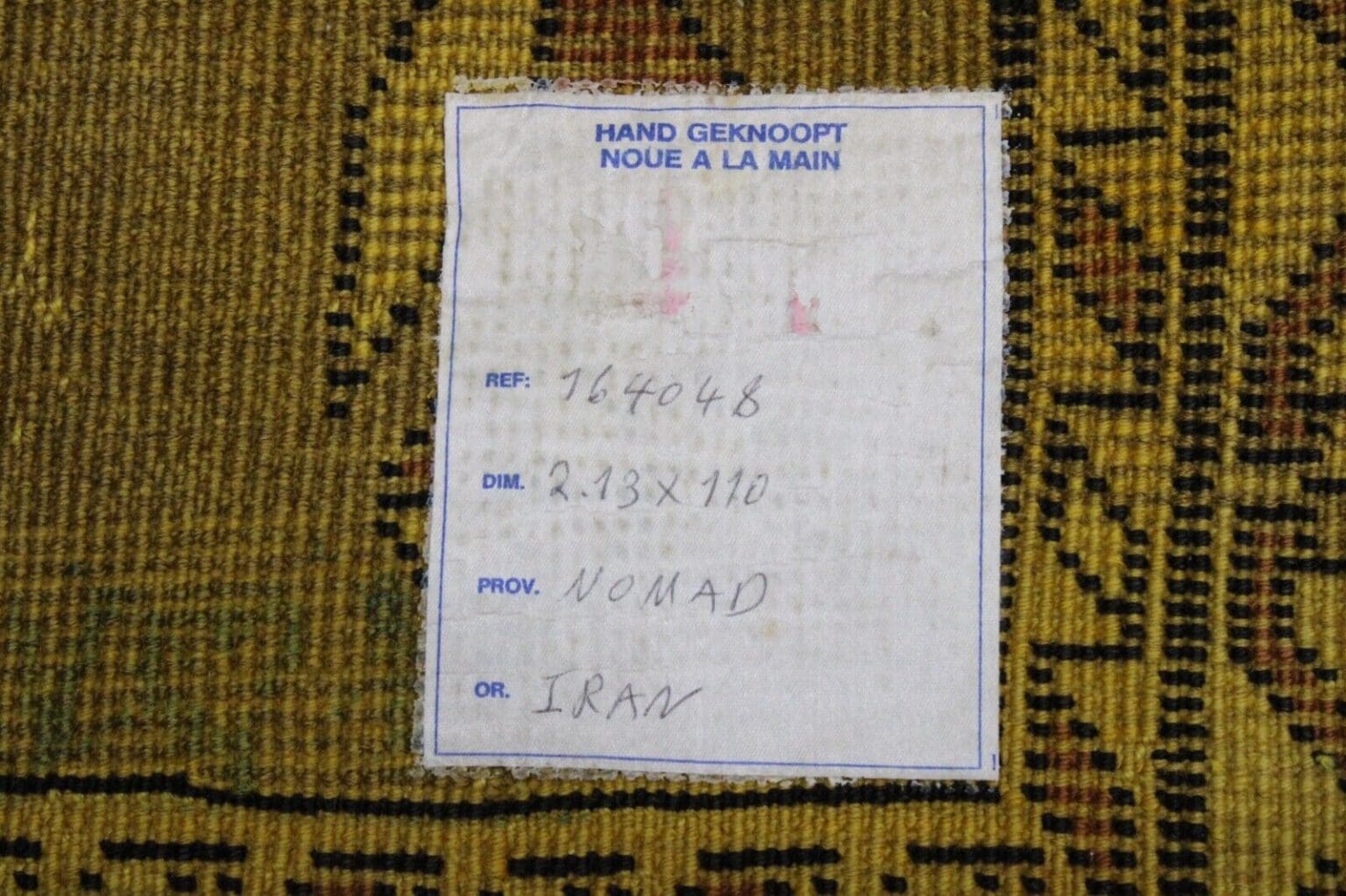
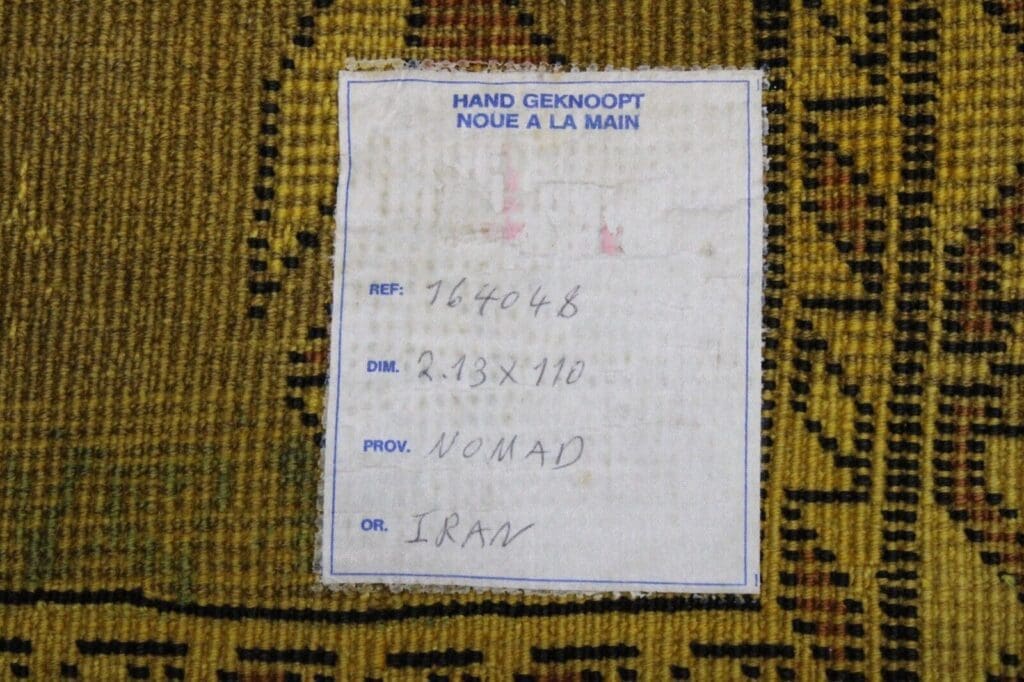
The rug is assigned to the Shiraz region and is identified as Ghashghai in the title. Shiraz, also known as Schiras in German, is a major cultural and trading centre in southern Iran. The wider area is associated with both urban production and nomadic weaving traditions. The name Ghashghai refers to a tradition closely connected with the Qashqai of southern Iran. Within that tradition, hand-knotted rugs, portable textiles and a distinctive geometric visual language have an important place.
Qashqai textile culture developed in circumstances where woven and knotted objects had practical as well as decorative roles. Textiles could be used in daily life, transported and maintained over long periods. This relationship between use and design helped shape a direct, rhythmic approach to ornament. Repeated diamonds, stepped lines, hooked forms and framed fields are among the devices associated with southwestern Iranian nomadic rugs. They are not a rigid formula: individual makers and local groups interpret these elements in different ways.
Shiraz has also long functioned as a centre through which rugs from the surrounding area could be traded and presented. In the rug trade, a Shiraz designation does not necessarily identify the exact village or workshop where a particular piece was made. For this rug, the source names Shiraz as the region and Ghashghai in the title. The appropriate description is therefore a Persian rug connected with the Shiraz context, without adding an unsupported village, workshop or tribal attribution.
Persian rug making includes many regional traditions. The Shiraz vocabulary differs from the traditions associated with Isfahan, Tabriz, Kashan or Nain. Some city rugs are known for highly ordered medallions and finely articulated scrolling vines, while the southwestern context often favours strongly divided fields and an immediate geometric structure. Colour impressions also vary between regions and workshops. This rug is specified in a rich gold colour, linking the regional pattern language with a warm and unified overall effect.
The manufacturing period is given as 1970 to 1979. The rug therefore belongs to the more recent history of Persian rug making while continuing the traditional hand-knotting method. It is not a newly produced piece, but a used one-off with its own history of use. Its regional designation, technique and stated period provide the factual framework for understanding it.
Design and Pattern
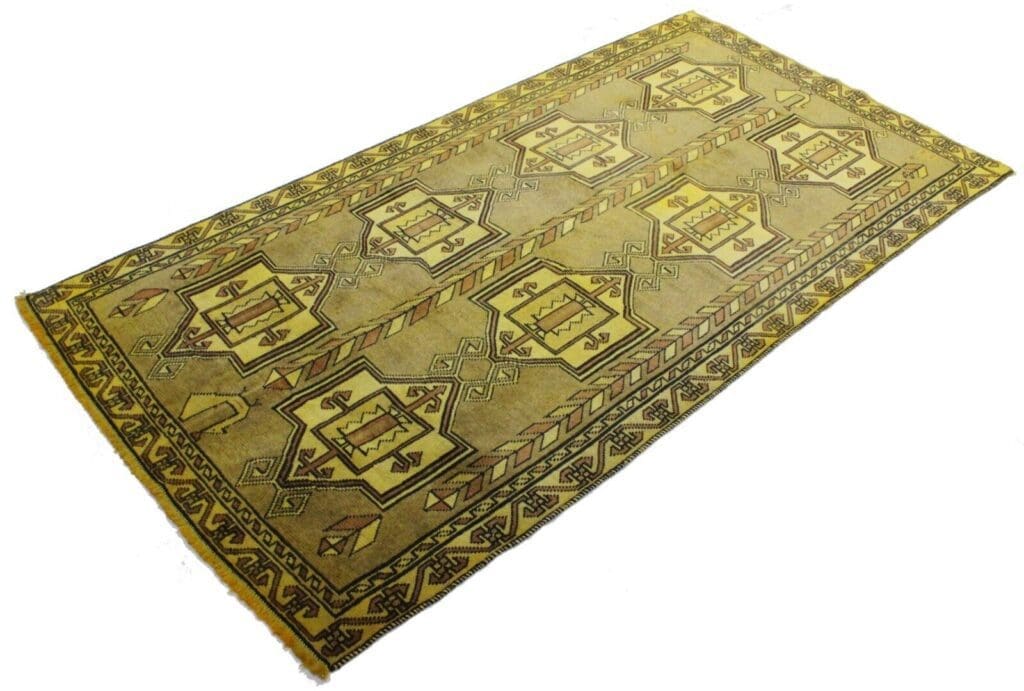
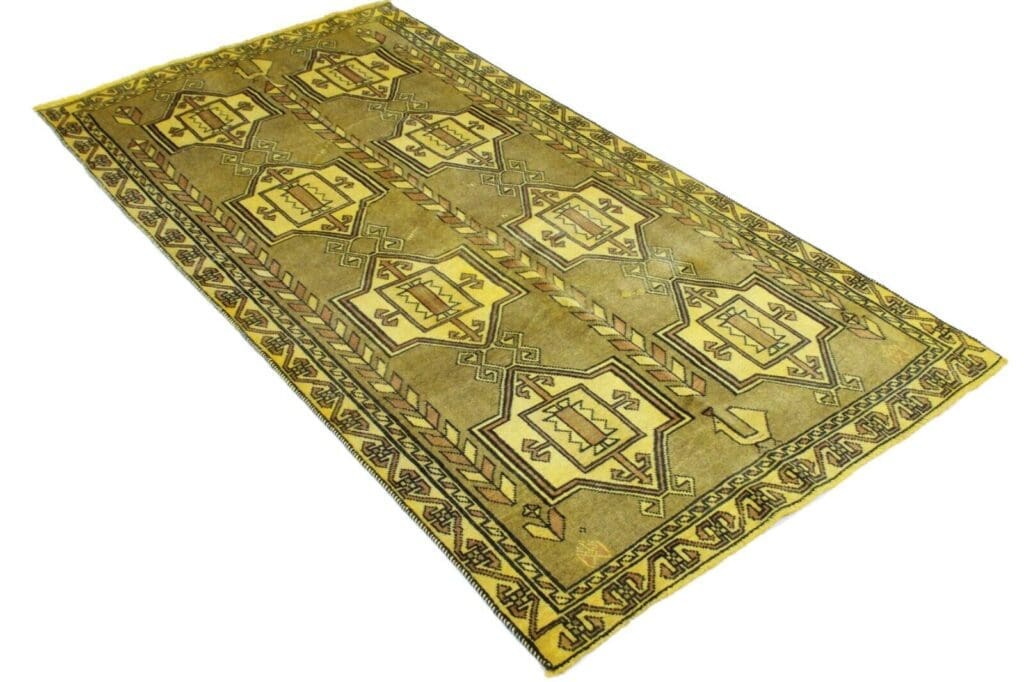
The pattern is identified as geometric, and it is also described as complex, with geometric and floral elements. Geometric designs can be built from lines, angles, diamonds, stepped outlines and repeating fields. Floral forms within this language may be simplified, stylised or set into a firmly organised ornament. Flowers and leaves do not have to be rendered as naturalistic images; they can appear as rhythmic signs within the larger composition.
In a hand-knotted rug, the design is not printed onto a finished surface afterwards. Coloured areas are built during the knotting process. Each shape develops through a sequence of individual knots. Minor differences in execution are part of the handmade origin and can give the drawing its own textile character. The short pile supports a relatively precise reading of the outlines, since the surface does not strongly obscure the separate pattern areas.
The rich gold colouring is one of the central visual characteristics of this rug. Gold can function as a ground, as an accent or as a linking tone between different ornamental areas. A warm gold field can make lighter and darker contrasts appear in different ways and can separate geometric borders from the central design. Here, the gold effect is combined with a complex pattern, so the colour is part of the overall visual structure rather than an isolated decorative detail.
The Shiraz and Ghashghai context is often associated with a clearly organised pattern field. A central area may be enclosed by borders, while smaller signs and ornaments establish a rhythm within it. Diamonds and other polygonal forms provide a stable framework. Floral motifs can soften or complement that framework and create a transition between strict geometry and organic ornament. The exact balance always belongs to the individual rug. For this one-off, the documented description as geometric, complex and partly floral is the relevant basis.
A geometric rug can work in different interiors without losing its regional vocabulary. Clear ordering makes the handwork apparent on closer inspection, while the gold colour creates a coherent surface from a distance. Unlike a Kelim, this rug has a knotted pile rather than a flat-woven structure. That distinction matters to the design, because the pattern is expressed through the texture of a pile surface and not through the construction of a flat weave.
Special Features
The rug is used, washed and in top condition. It is also described as suitable for underfloor heating, slip-resistant, pet-friendly and easy to clean. These stated properties make it suited to an interior where a rug is not only viewed but also walked on regularly. The short pile and wool construction complement this practical description.
Suitability for underfloor heating means that the rug is intended for use in a room with that type of heating. Slip resistance refers to the listed ability to rest more securely on the floor. Pet-friendly describes the stated everyday suitability for a household with animals. Easy cleaning is likewise given as a product characteristic. Even so, prompt treatment of spills and appropriate professional care remain sensible for a hand-knotted wool rug.
As a used rug from the period 1970 to 1979, this one-off has its own textile history. Its washed state and very good condition are explicitly recorded. Together with the gold colour, the complex geometric pattern and the hand-knotted wool construction, these details create a clearly defined profile without claiming an undocumented signature, workshop or additional provenance.
FAQ
How should I care for the Shiraz Persian rug?
Regular vacuuming removes loose dust and everyday debris from the short wool pile. Spills should be addressed promptly with a damp cloth and a mild cleaning product. Vigorous rubbing can affect both the surface and the appearance of the pattern. A professional cleaning every few years is useful when the rug needs a thorough refresh. Since this rug has already been washed, any further washing should take its actual use and condition into account. Appropriate treatment helps preserve the gold colour and the character of the wool surface.
What makes a Persian rug valuable?
Several factors are considered when assessing a Persian rug. They include the quality of the materials, knot density, pattern complexity and origin. The workmanship and condition of an individual piece are also relevant. For this rug, the documented characteristics are wool, hand-knotting, Shiraz as the region, a geometric pattern with floral elements and used condition described as top condition. A general assessment should consider these features together rather than relying only on colour or size.
Can I use the rug outdoors?
Outdoor use is not recommended for Persian rugs. Weather, moisture, direct sunlight and changing temperatures can place stress on natural fibres, colours and the foundation. The Shiraz Persian rug should therefore be used in a protected interior space. There it can retain its textile surface and gold pattern effect. The description states that it is suitable for underfloor heating, but that property concerns indoor use and does not make the rug suitable for exposure to the open air.
To provide the best experiences, we use technologies like cookies to store and/or access device information. Consenting to these technologies will allow us to process data such as browsing behavior or unique IDs on this site. Not consenting or withdrawing consent, may adversely affect certain features and functions.
Functional Always active
The technical storage or access is strictly necessary for the legitimate purpose of enabling the use of a specific service explicitly requested by the subscriber or user, or for the sole purpose of carrying out the transmission of a communication over an electronic communications network.
Preferences
The technical storage or access is necessary for the legitimate purpose of storing preferences that are not requested by the subscriber or user.
Statistics
The technical storage or access that is used exclusively for statistical purposes.The technical storage or access that is used exclusively for anonymous statistical purposes. Without a subpoena, voluntary compliance on the part of your Internet Service Provider, or additional records from a third party, information stored or retrieved for this purpose alone cannot usually be used to identify you.
Marketing
The technical storage or access is required to create user profiles to send advertising, or to track the user on a website or across several websites for similar marketing purposes.
 SECURE PAYMENT
 SHIPPING PARTNERS


