This Persian rug from Shiraz is made of high-quality virgin wool and is hand-knotted. Virgin wool is a traditional natural material in Iranian rug making. It gives the pile its characteristic tactile surface and provides the resilience expected of a material used for floor coverings. In this rug, the wool forms the pile and therefore defines the visible texture as well as the way the surface feels underfoot.
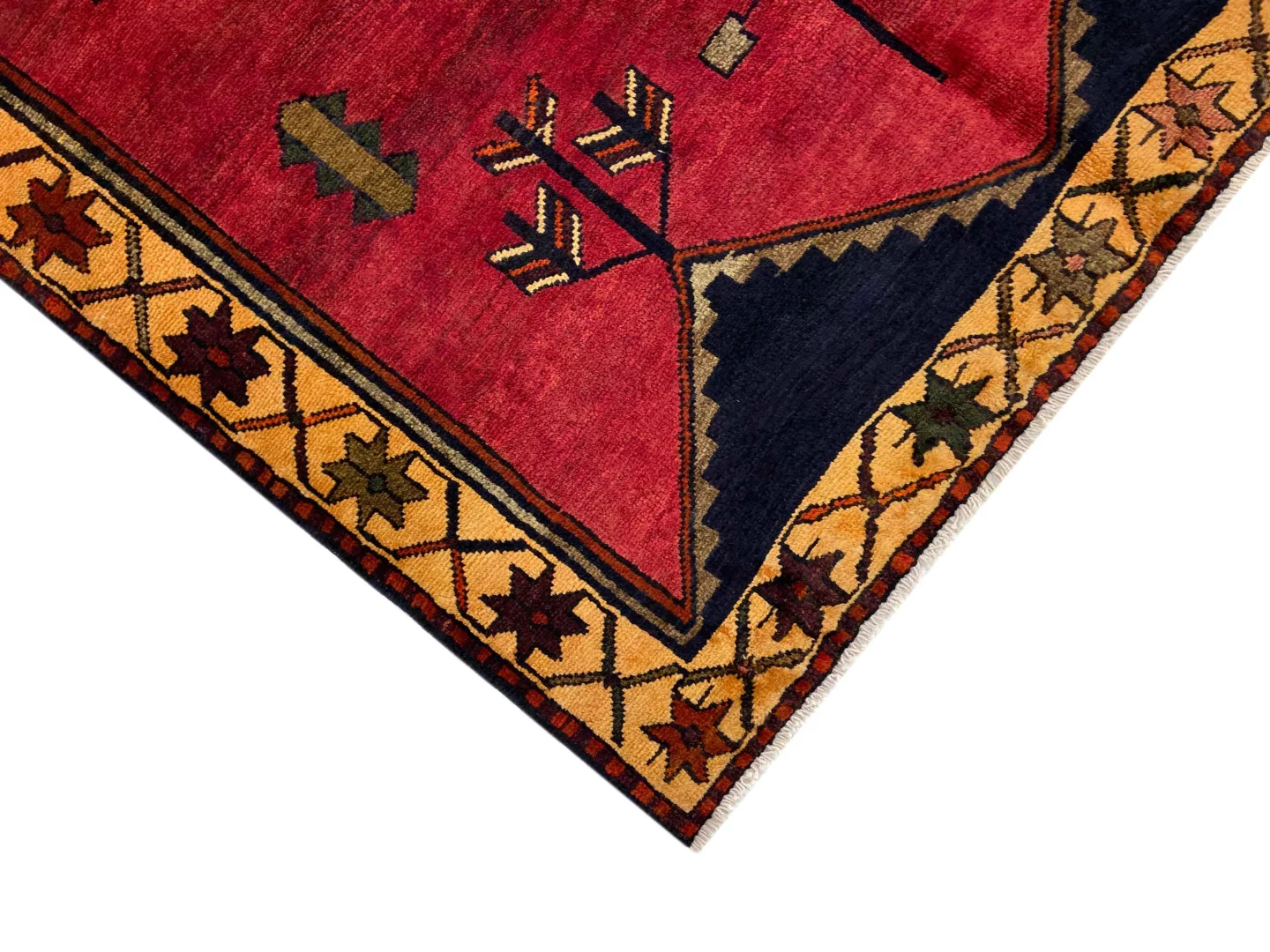
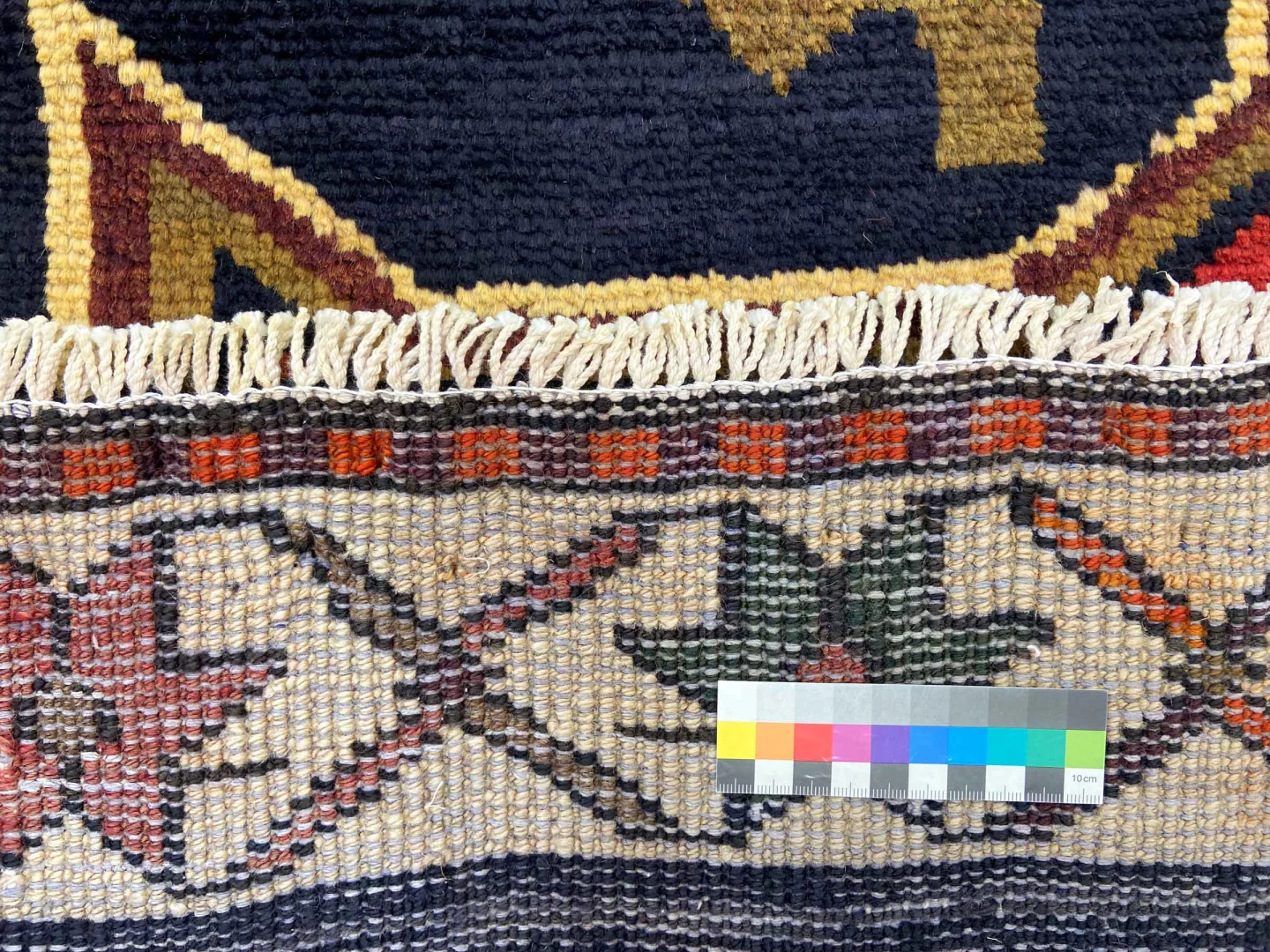
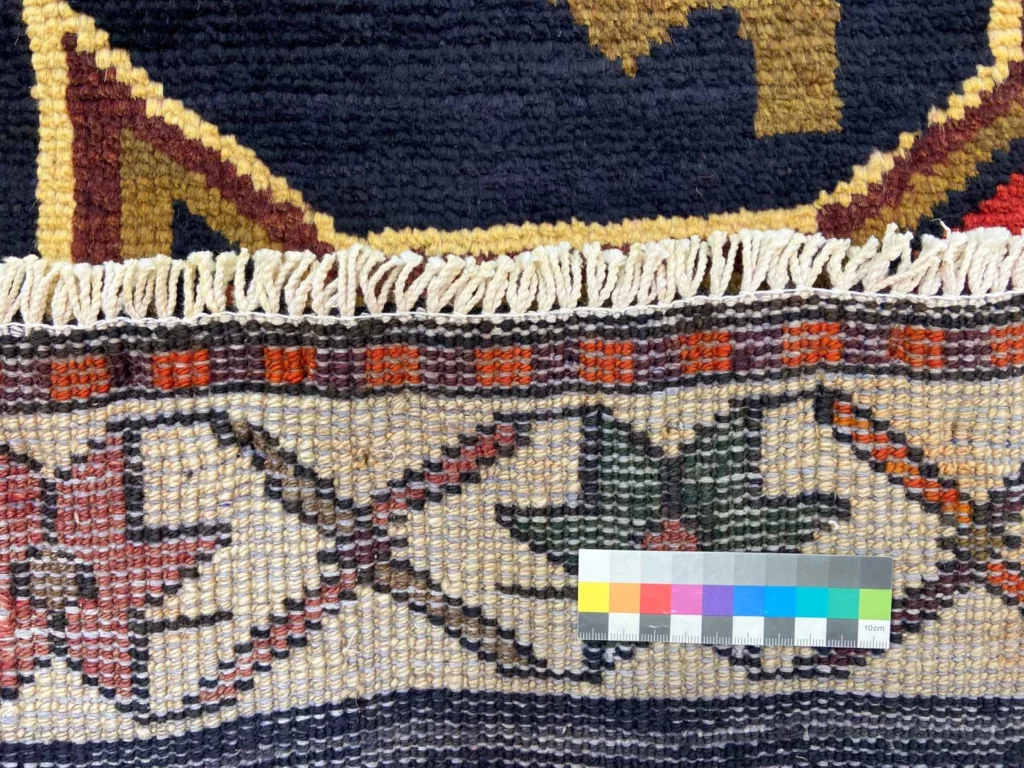
Hand-knotting means that the structure is built knot by knot rather than reproduced by a machine. The pattern is created during the making of the rug, with each knot contributing to the developing field of colour and ornament. The listed knot density ranges from 100.000 to 250.000 knots per square metre. This is a technical indication of the fineness of the construction and relates to the precision with which the geometric design can be rendered.
The rug therefore combines virgin wool with a traditional hand-knotted technique. Its stated material, workmanship and knot density are central to its construction. The condition of this particular piece is excellent. No additional fibre or backing material is specified, so the description remains focused on the wool pile and the hand-knotted structure.
Origin and Tradition
The rug comes from Shiraz in Iran. Shiraz is the capital of Fars Province and an important reference point in the region’s rug culture. Shiraz rugs are often associated with the nomadic traditions of Fars. Their production belongs to a textile environment in which weaving and knotting formed part of everyday life, family knowledge and the cultural history of local communities.
Traditional rugs from the Shiraz area have often been made within nomadic communities. Work could take place in tents or in the open air, close to the mobile way of life of the makers. This setting differs from centralised industrial production and helps explain the individual character associated with many regional rugs. Knowledge of materials, knotting methods and pattern construction was passed down within families and communities over successive generations.
Fars has a varied cultural landscape. Sedentary populations and nomadic groups have contributed different textile habits and visual traditions. This variety means that Shiraz rugs cannot be reduced to one fixed design formula. Many examples do, however, share an association with handcraft, regional wool and strong, clearly organised ornament. The origin name points to a broader tradition rather than to a single standardised pattern.
Shiraz is consequently both a place name and a connection to a living history of making. In a hand-knotted rug, the design is incorporated directly into the structure as the work progresses. The regional background helps explain why Shiraz is linked with the rug production of Fars and with nomadic forms of craftsmanship. It also places this piece within Iranian, rather than industrially anonymous, rug culture.
Other Iranian rug traditions can be found in the wider cultural landscape and are appreciated for their own qualities. Kashan is associated with floral designs and a rich colour range, while Kerman is often known for detailed landscape imagery and complex compositions. Tabriz and Nain likewise have distinct traditions of workmanship and design. These are separate origins, however. This rug is identified as Shiraz and comes from Iran.
Design and Pattern
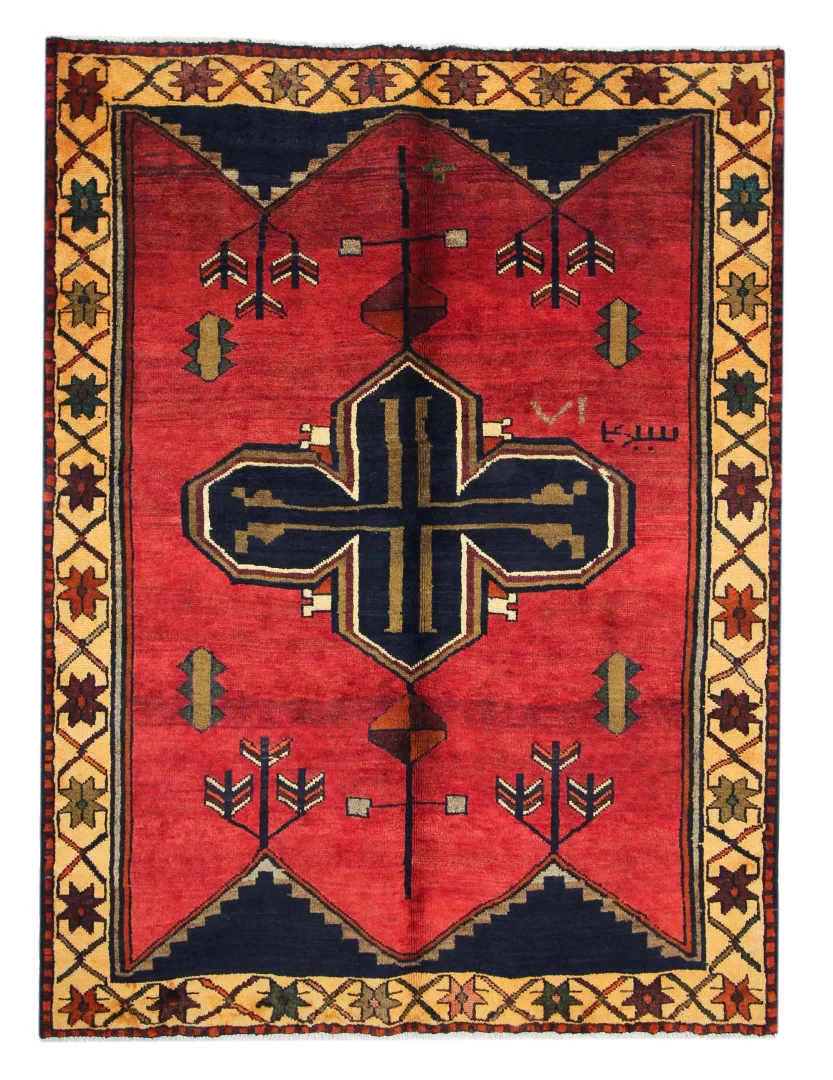
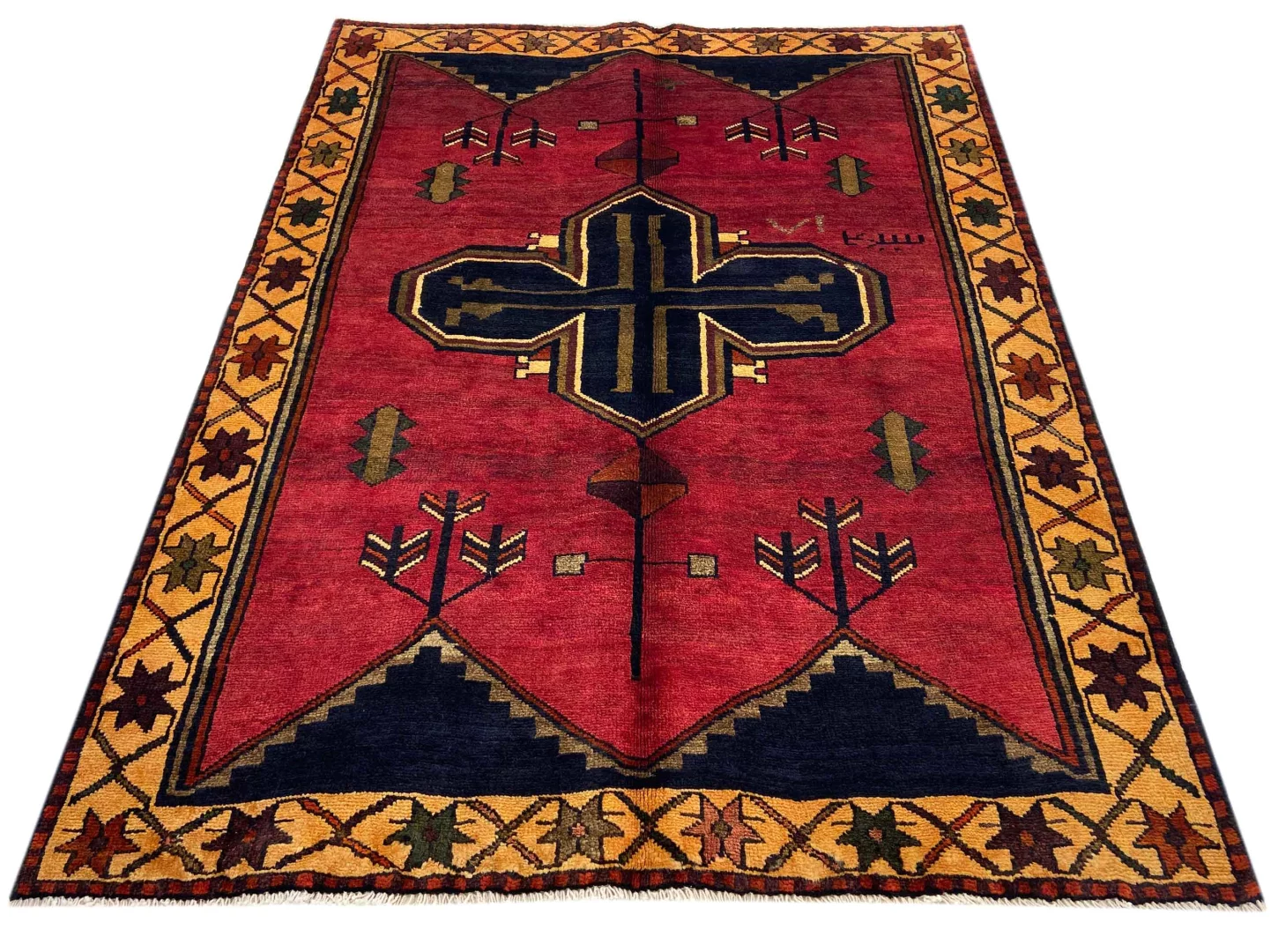
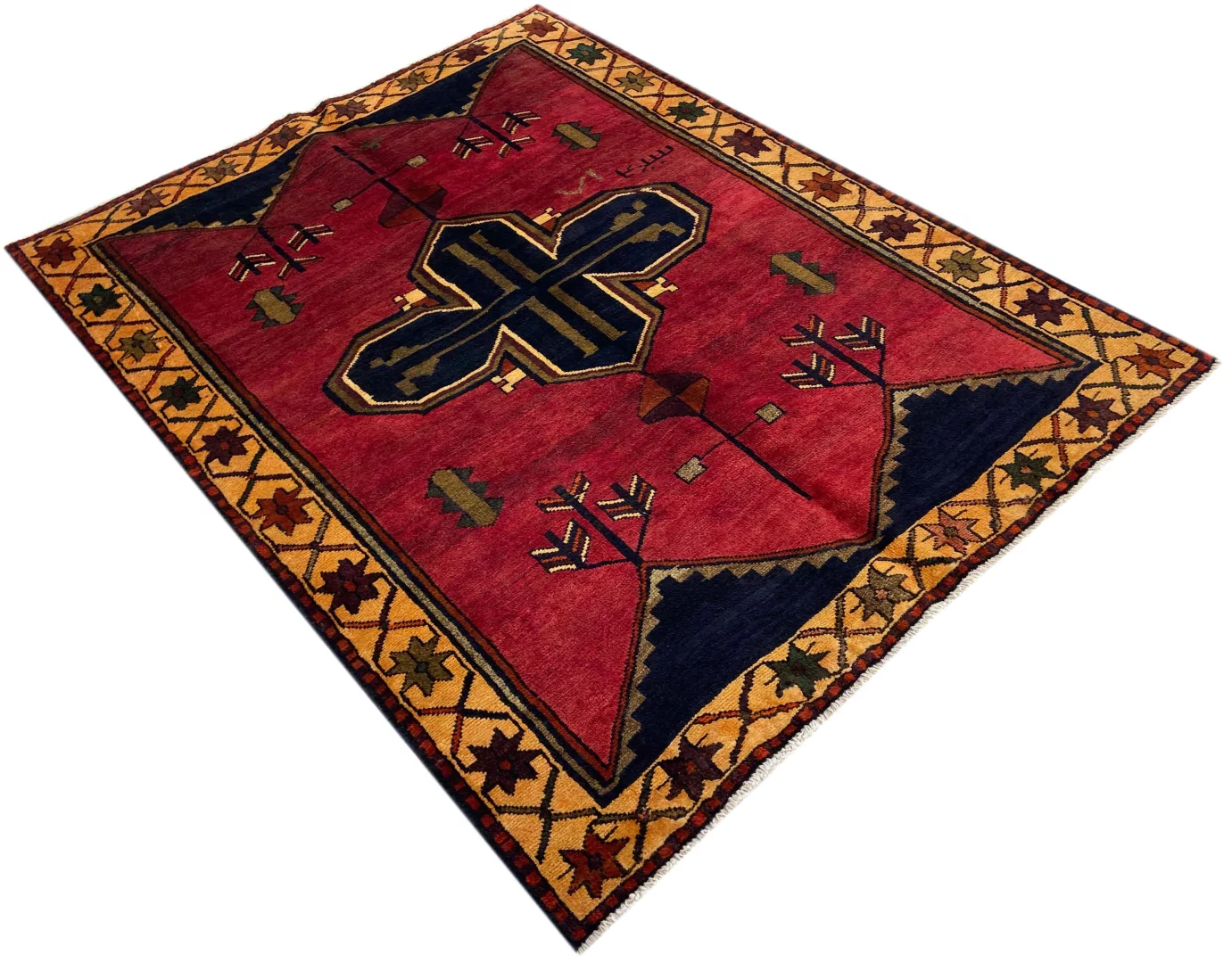
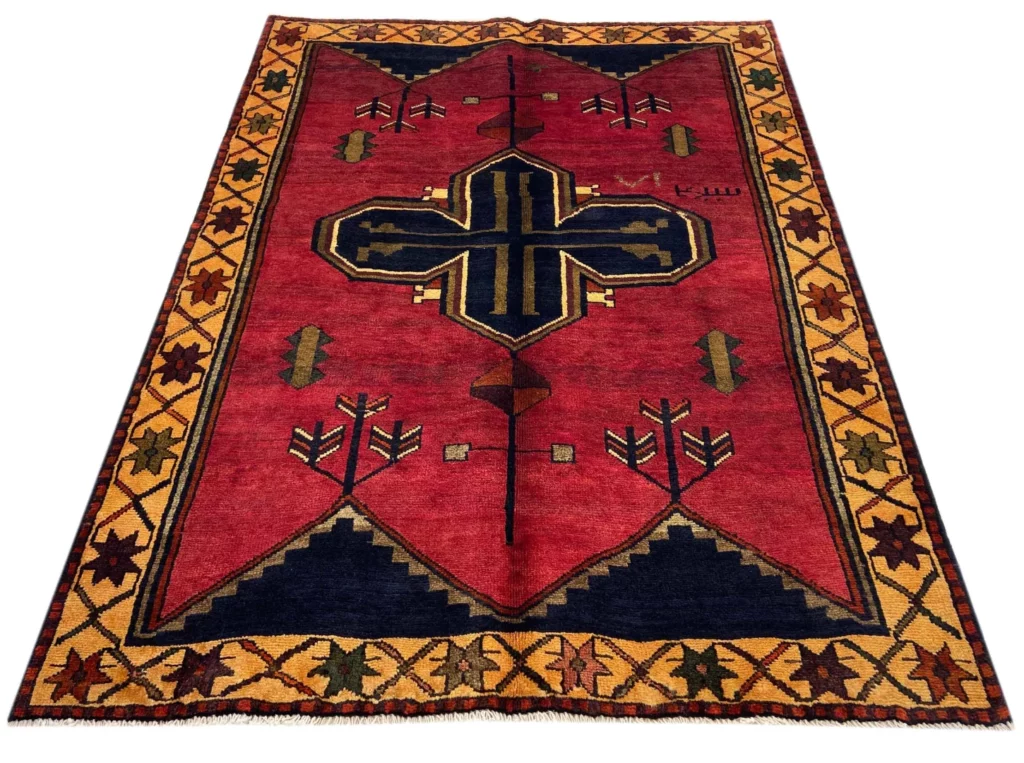
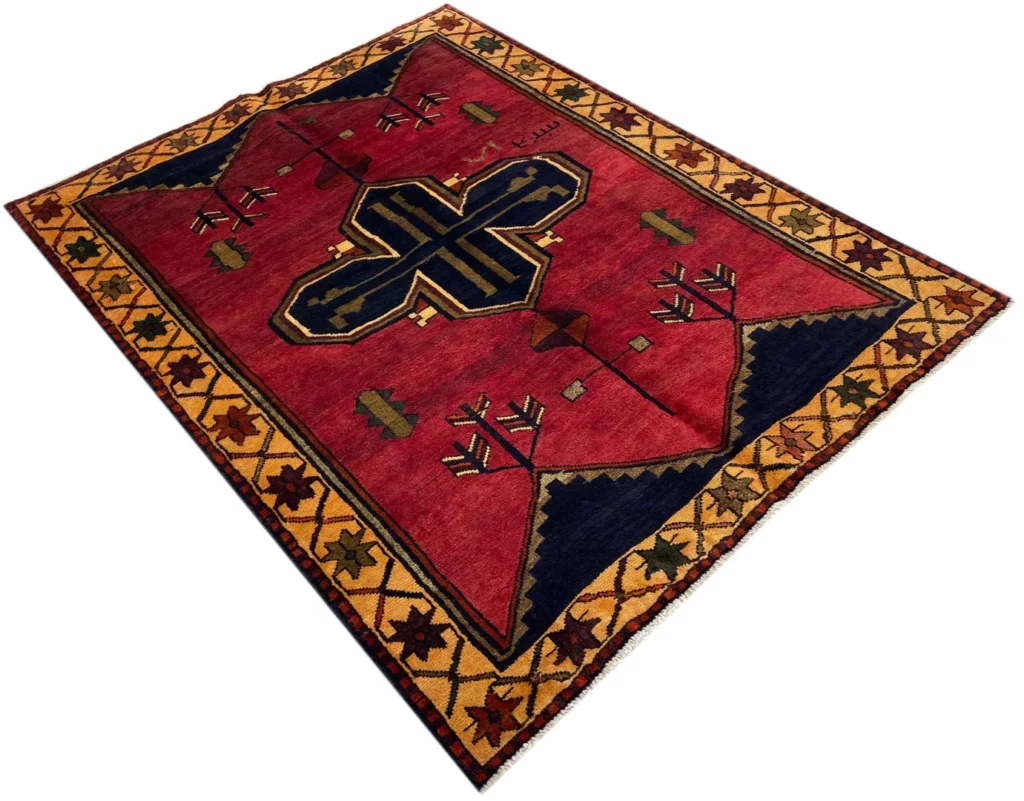
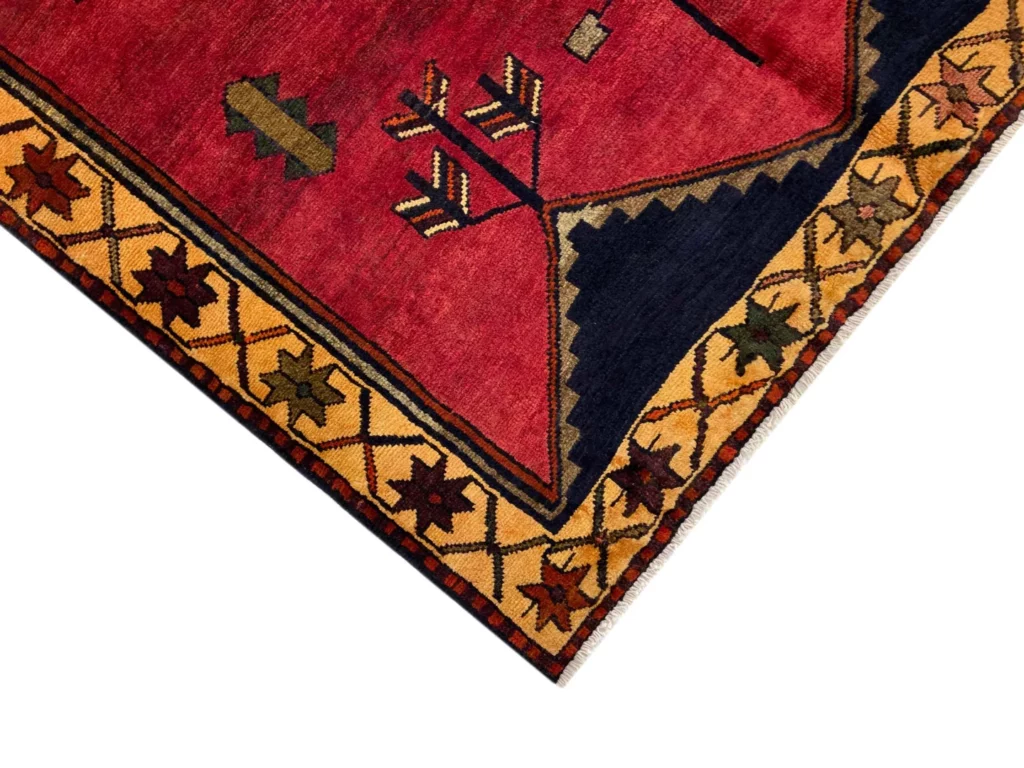
The pattern of this Shiraz Persian rug consists of geometric ornaments. Geometric design is built from lines, angles, axes, repeated units and defined areas. Instead of depicting an object in a naturalistic manner, an ornament of this kind creates its effect through the arrangement and balance of shapes. The relationship between the central field, repeated forms and surrounding borders establishes the visual order of the composition.
Geometric compositions are frequently associated with the nomadic design traditions of Shiraz and Fars. Basic shapes may be mirrored, placed in sequence or repeated to create a larger structure. A simple unit can therefore become part of a rhythm extending across the rug. Because the design is knotted into the pile, the pattern is not applied as a printed image after production. It develops together with the construction of the rug.
The colour character described for Shiraz rugs is predominantly based on reds and browns. Red provides a strong traditional ground or accent, while brown introduces an earthy counterpoint. Together they form a warm palette with clear visual weight. In a geometric pattern, changes between these colours can also define bands, diamonds, angular lines and repeated motifs, making the organisation of the field easier to follow.
Geometric ornaments can be viewed on several levels. An individual motif may stand out as a separate unit, while its repetition creates a connected overall rhythm. Borders can frame the inner field and continue the directional movement of the design along the edges. The exact arrangement of this rug is not further specified; the confirmed design features are its geometric ornaments and the predominantly red and brown colour impression.
Knot density is a construction detail that supports the rendering of pattern, but it is not itself a motif. In a hand-knotted rug, wool, knot placement and colour sequence work together. The wool forms the pile, the knots carry the drawing and the colour changes make the geometric structure visible. This close connection between construction and design is a defining aspect of traditional hand-knotted rug making.
Shiraz rugs are often described through expressive, well-organised pattern languages, while individual pieces can still vary considerably. Regional tradition does not require every rug to repeat the same arrangement. This one is specifically characterised by geometric ornaments. No further individual symbols or named motifs are stated, so none are added to the description.
Special Features
The documented features include the Shiraz origin in Iran, high-quality virgin wool, hand-knotted workmanship and geometric ornament. It is classified as a Shiraz Persian rug, and its condition is excellent. These characteristics bring together a clearly identified Iranian origin, a traditional technique and a defined pattern language.
Hand-knotting connects the making process directly with the individual rug. Unlike a machine-reproduced design, the pattern takes shape as the knots are tied. The listed knot density records an aspect of the technical construction, while the character of the piece comes from the combination of wool, workmanship, ornament and condition. Its special features are therefore clearly stated without requiring additional claims about age, signature or provenance.
FAQ
How should I care for my Shiraz Persian rug?
Vacuum the rug regularly so that everyday dust does not remain in the fibres. Treat stains as soon as possible with a damp cloth and a mild cleaning product. Work carefully and avoid unnecessary rubbing or excessive moisture. Occasional professional cleaning is also recommended when the rug needs a more thorough treatment carried out with suitable attention to its material and hand-knotted construction.
What are the advantages of a hand-knotted Persian rug?
A hand-knotted Persian rug is individually made, with its material, pattern and construction formed together during the knotting process. This traditional workmanship is associated with quality, robustness and long use. Hand-knotted Persian rugs can be more durable than machine-made rugs and may be used across generations. This Shiraz rug combines that technique with high-quality virgin wool and geometric ornament.
Where is the Shiraz Persian rug best used?
The rug is suitable for living rooms, bedrooms and dining rooms. It can serve as a visual focal point or help create a comfortable atmosphere within the room. Its geometric ornaments introduce a clearly defined textile structure, while the red and brown colour character can be coordinated with different interior styles. A Shiraz rug can also be used as a decorative element in another living area where its pattern is intended to remain visible.
To provide the best experiences, we use technologies like cookies to store and/or access device information. Consenting to these technologies will allow us to process data such as browsing behavior or unique IDs on this site. Not consenting or withdrawing consent, may adversely affect certain features and functions.
Functional Always active
The technical storage or access is strictly necessary for the legitimate purpose of enabling the use of a specific service explicitly requested by the subscriber or user, or for the sole purpose of carrying out the transmission of a communication over an electronic communications network.
Preferences
The technical storage or access is necessary for the legitimate purpose of storing preferences that are not requested by the subscriber or user.
Statistics
The technical storage or access that is used exclusively for statistical purposes.The technical storage or access that is used exclusively for anonymous statistical purposes. Without a subpoena, voluntary compliance on the part of your Internet Service Provider, or additional records from a third party, information stored or retrieved for this purpose alone cannot usually be used to identify you.
Marketing
The technical storage or access is required to create user profiles to send advertising, or to track the user on a website or across several websites for similar marketing purposes.

 SECURE PAYMENT
 SHIPPING PARTNERS


