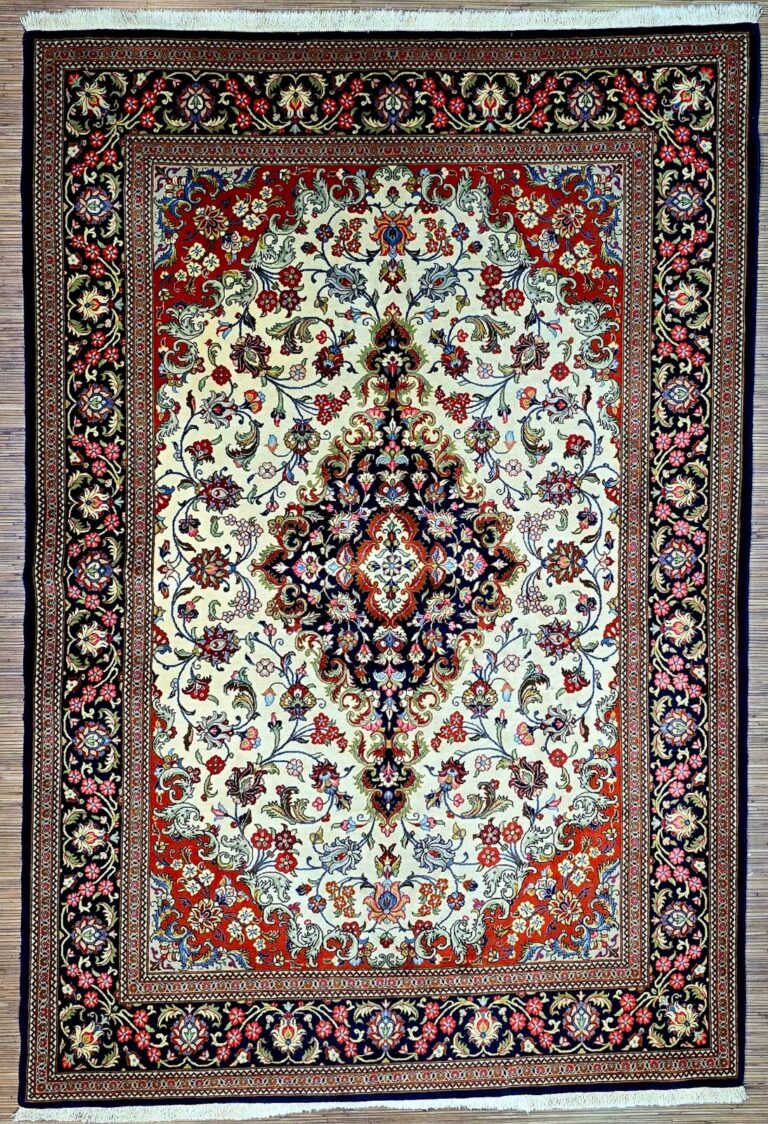
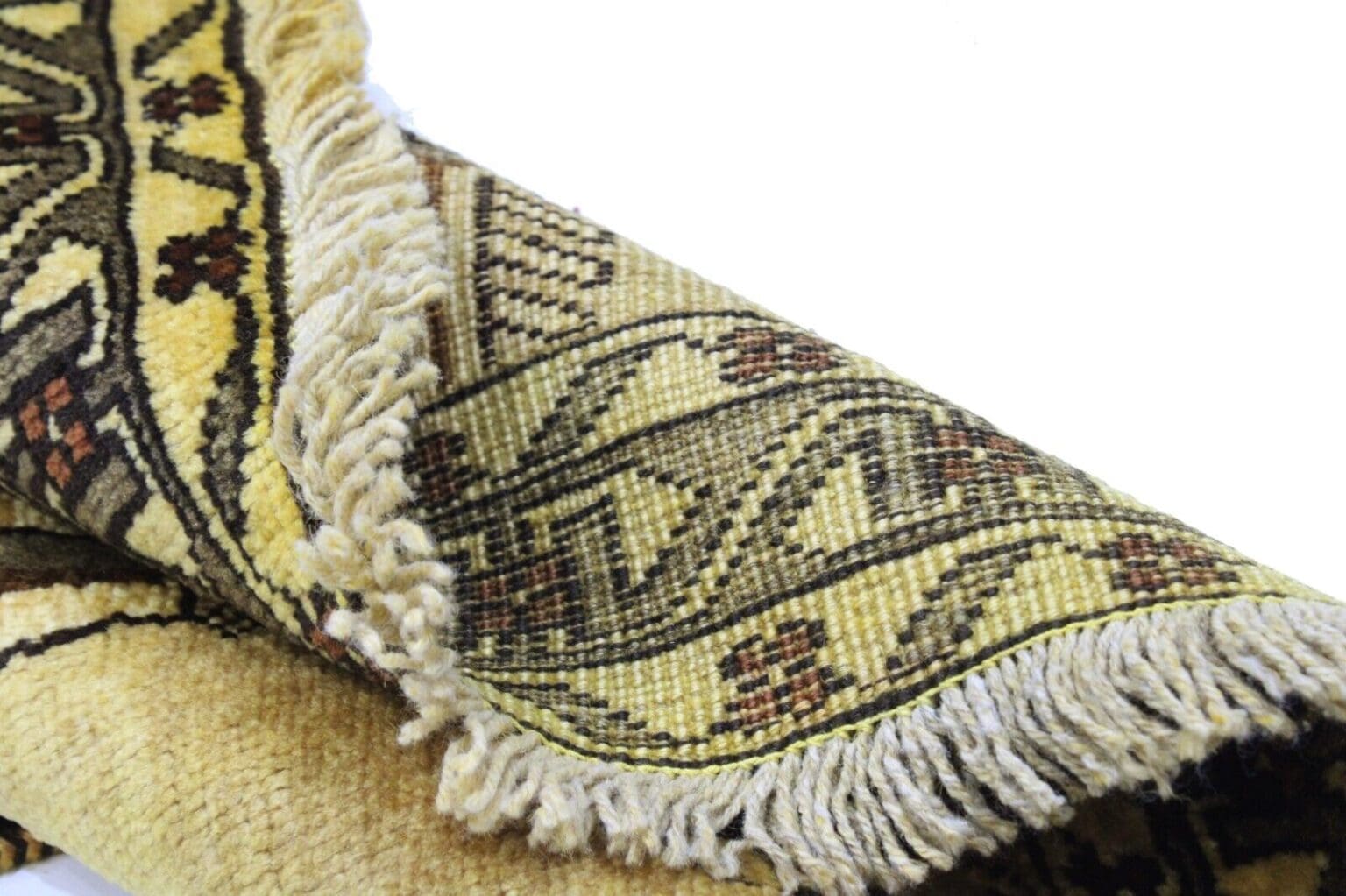
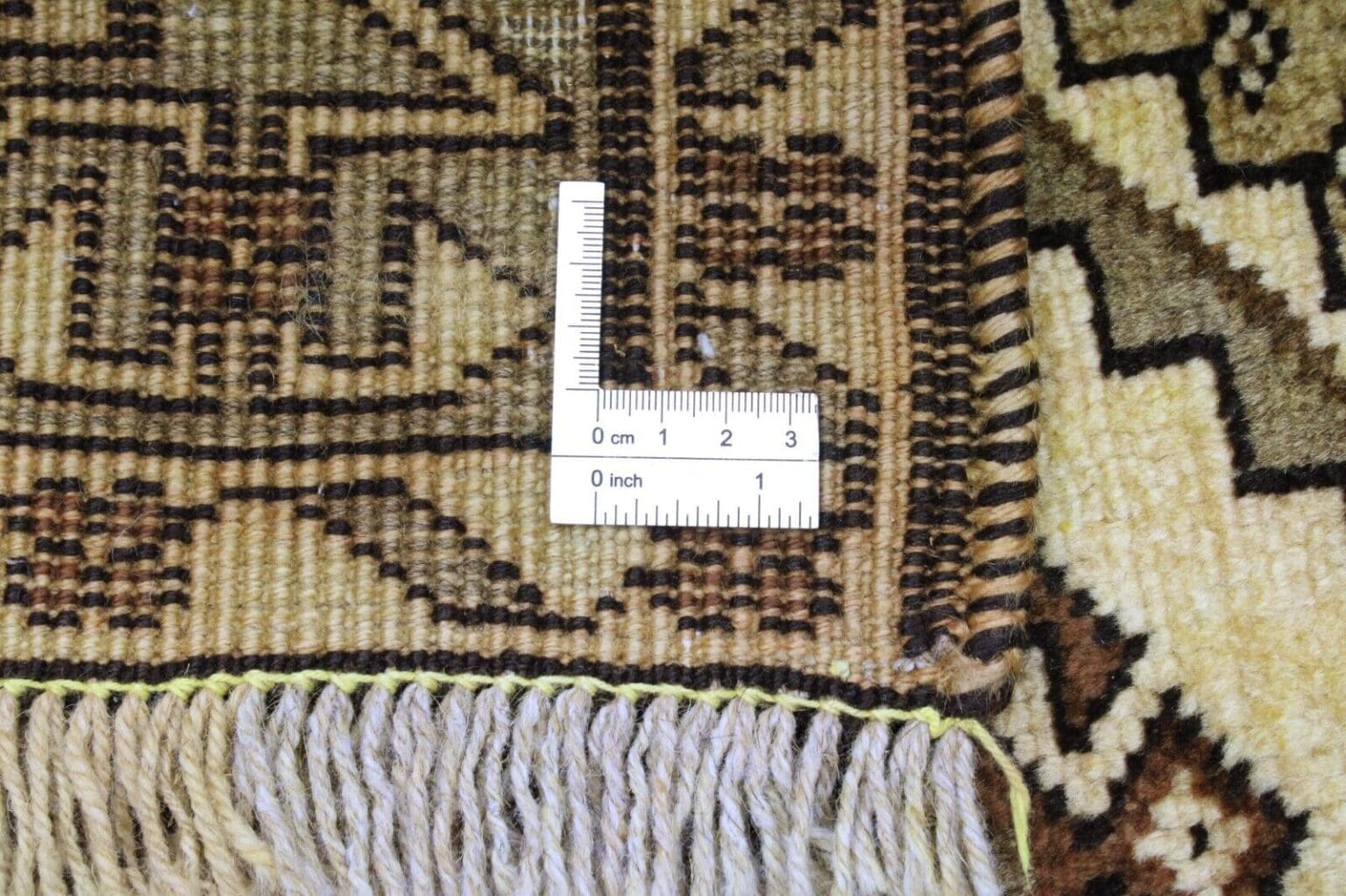
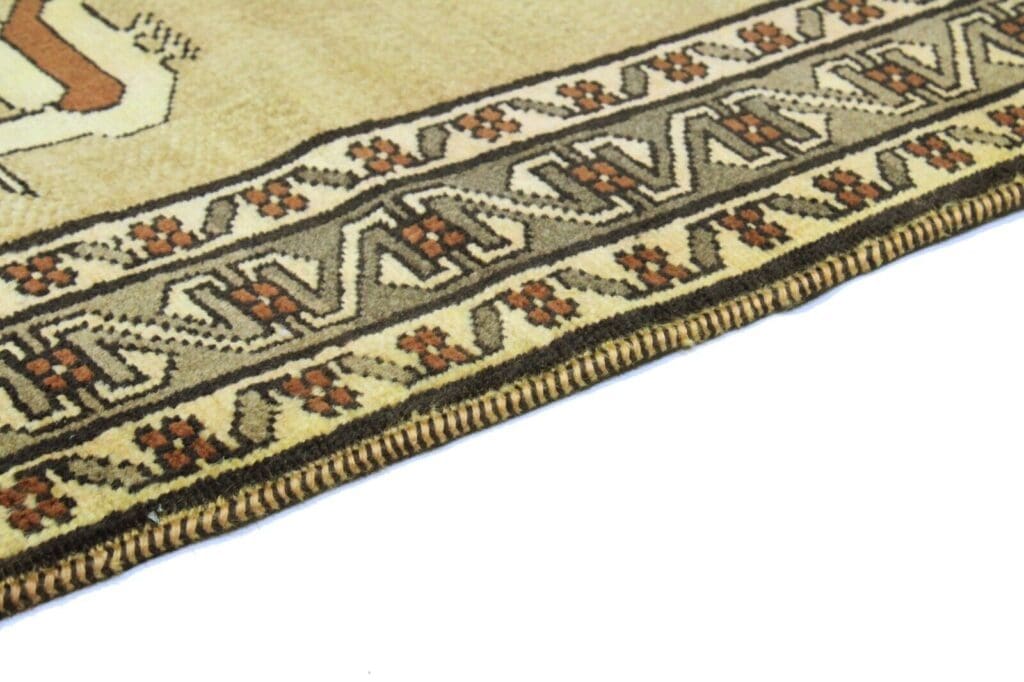
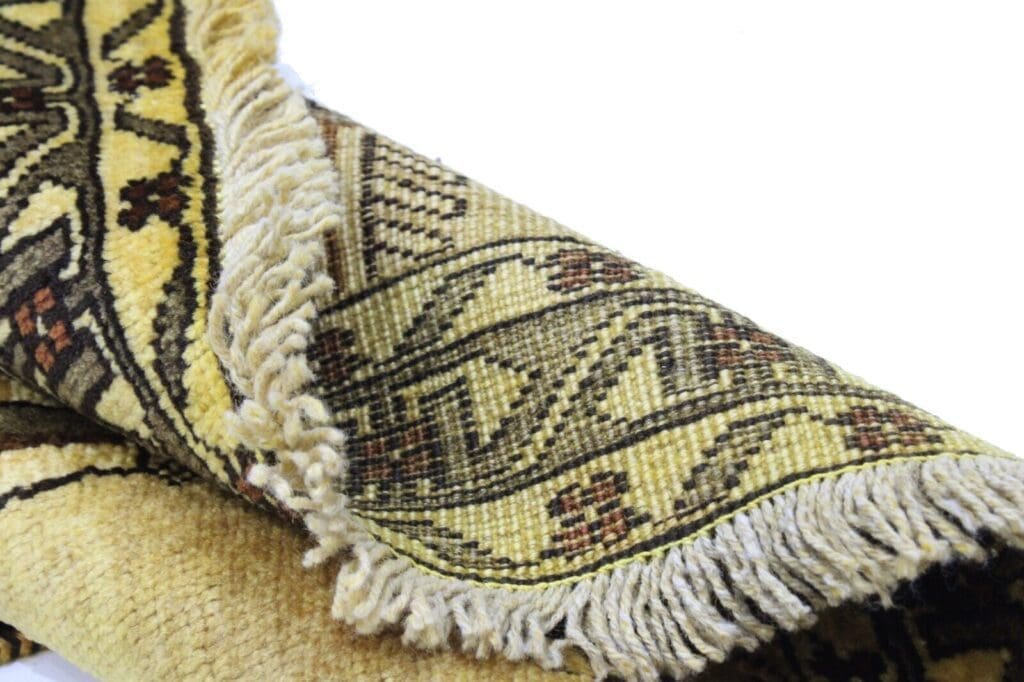
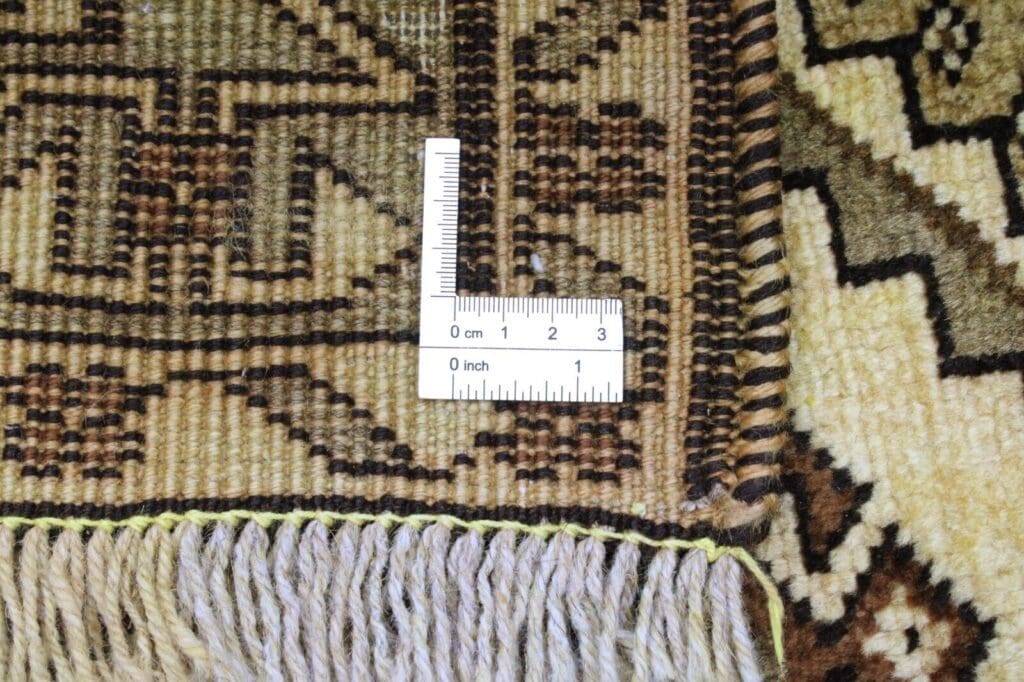
This Shiraz Persian rug is hand-knotted with a pile made from 100% wool. Hand-knotting is one of the established methods of Persian carpet making. Each knot is inserted individually into the textile foundation, so the design is built gradually during the making process. A handmade rug is therefore not simply printed or mechanically applied after completion: its lines, colour fields and ornamental structure develop together with the knotting. The work requires concentration, practical experience and a consistent understanding of the intended pattern.
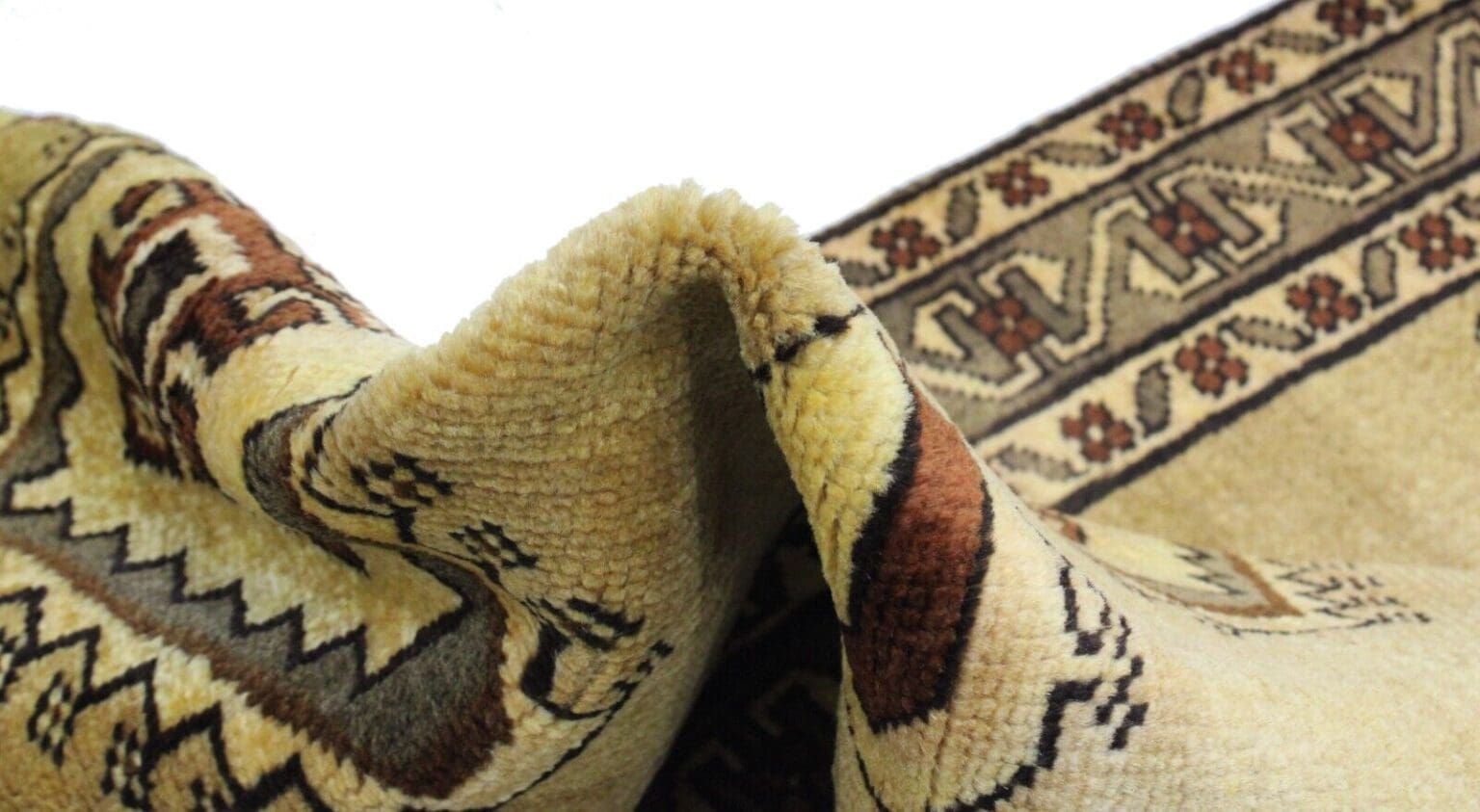
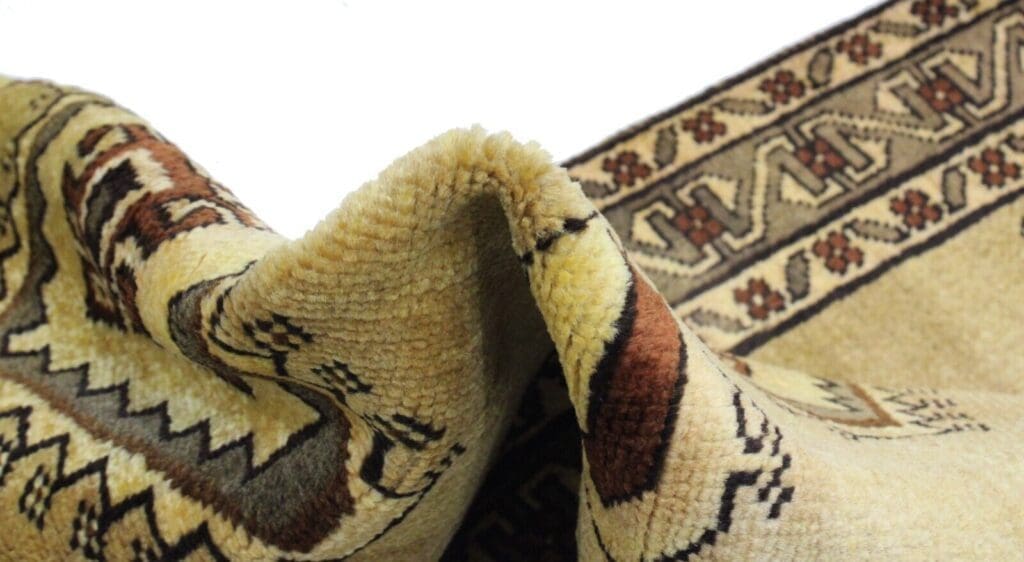
Wool is a traditional carpet fibre because it combines resilience with a naturally tactile surface. It can retain warmth and provides a comfortable textile feel underfoot. A wool pile also gives a design a distinct surface structure, allowing colour and line to be perceived through both the drawing and the texture. The short pile specified for this rug supports a relatively clear reading of its geometric pattern while preserving the characteristic feel of wool.
The description identifies the rug as hand-knotted, made with 100% wool in the pile and produced entirely by hand. These details distinguish it from a flat-woven Kilim and from a machine-made carpet. In hand-knotting, the construction and the visual design are created in close connection. Minor individual variations are a normal part of handmade production and help distinguish one finished rug from another. This is particularly relevant for a one-off piece, where the exact combination of material, colouring, design and condition occurs only once.
Origin and Tradition
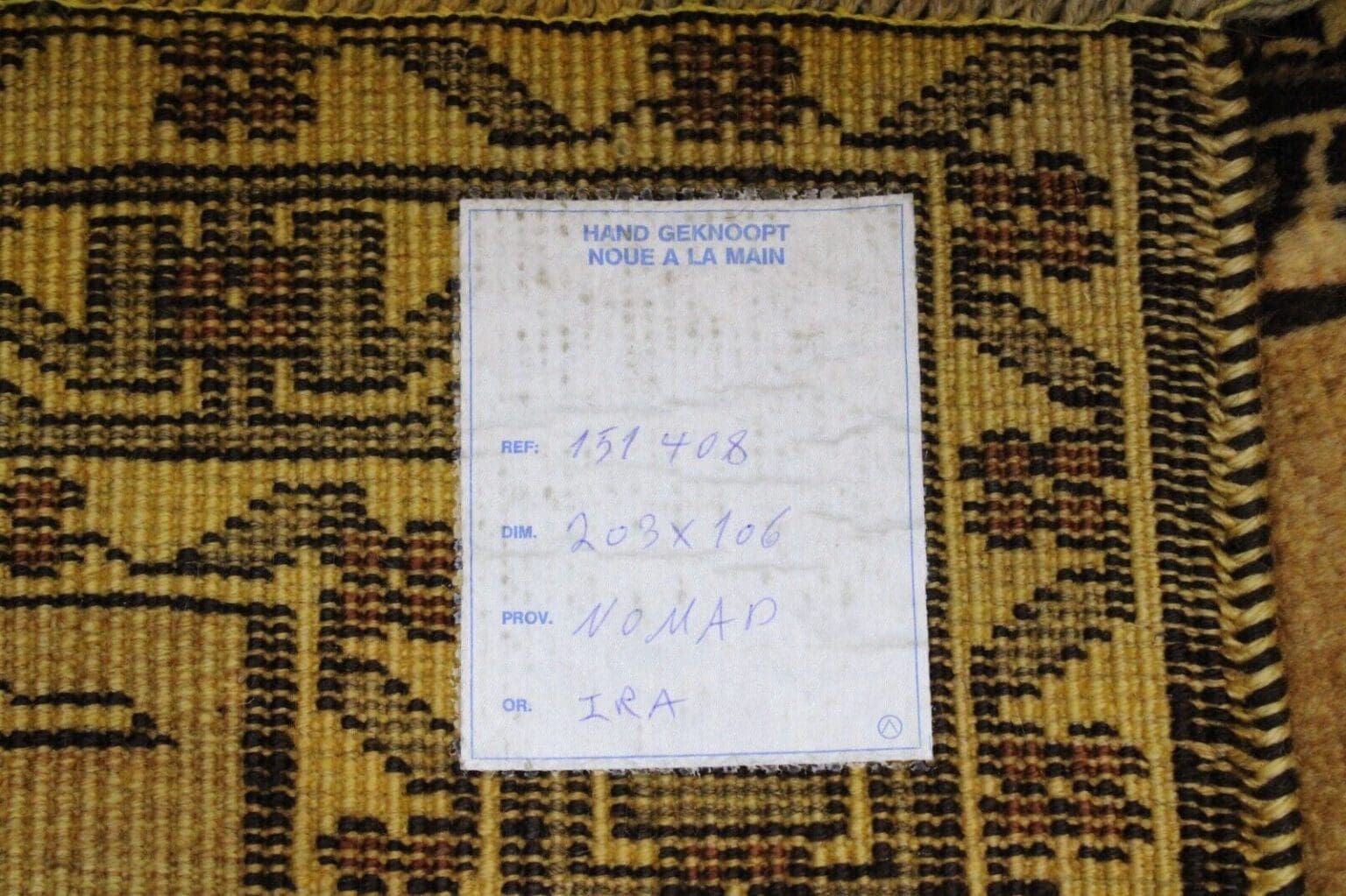
The rug comes from the production region of Schiras, known internationally as Shiraz, and is identified as a Ghashghai Persian rug. Shiraz is located in southern Iran and is an important reference point for carpet traditions associated with Fars, including rural and nomadic forms of craftsmanship. The Ghashghai designation connects the rug with a cultural tradition in which pattern knowledge, hand skills and visual motifs have been transmitted across generations. The stated production region places this particular rug within the southern Iranian carpet landscape.
Persian rugs are made in many parts of Iran, and regional traditions differ in their preferred structures, colours and ornaments. Shiraz is associated with designs in which clear geometric forms and strongly organised compositions play a visible role. A pattern may be remembered and adapted by the maker rather than copied from an inflexible industrial template. This allows inherited motifs to be rearranged, simplified or combined while retaining a recognisable regional character. The result can balance order with the small distinctions that come from individual handwork.
Ghashghai carpet culture is connected with mobile and village-based ways of life. Historically, carpets from this sphere served practical purposes as well as decorative ones. The usefulness of a durable wool surface, a firm construction and a pattern that remains legible across the field was therefore central to the tradition. At the same time, designs could carry family knowledge, local preferences and a shared visual vocabulary. Geometric forms are especially suitable for this kind of transmission because basic shapes can be remembered, repeated and developed into more elaborate borders or central arrangements.
Iranian carpet making includes both urban workshop traditions and work from villages and nomadic communities. City carpets often developed highly planned compositions and carefully detailed drawing systems. Village and nomadic rugs more commonly preserve patterns through practical memory and established variants, with the maker adapting the design to the available field. Shiraz and the surrounding region reflect the interaction of these influences. The present rug is described as Shiraz Ghashghai, placing it within the Persian tradition of Fars rather than assigning it to another named weaving centre.
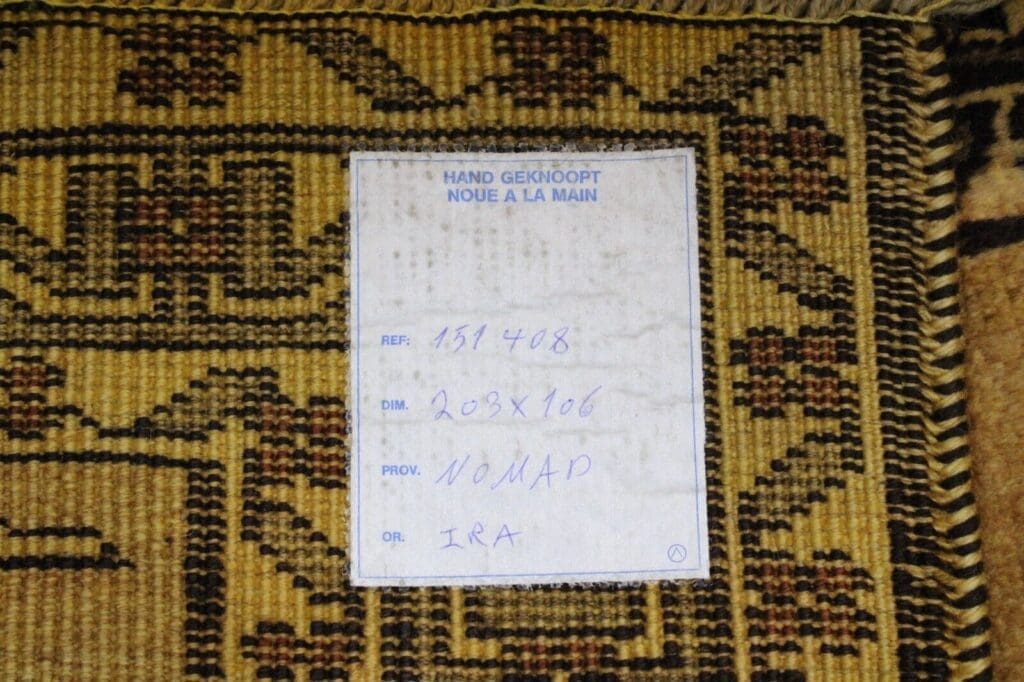
The rug dates from the late twentieth century, specifically the period from 1970 to 1999. Its production therefore combines a traditional hand-knotting method with a modern period in which Persian rugs were widely collected and used in interiors around the world. The term old semi-antique is part of the supplied description and adds a period classification to the piece. It does not replace the more specific origin information: the rug remains a Shiraz Ghashghai Persian rug with the stated late-twentieth-century dating.
Design and Pattern
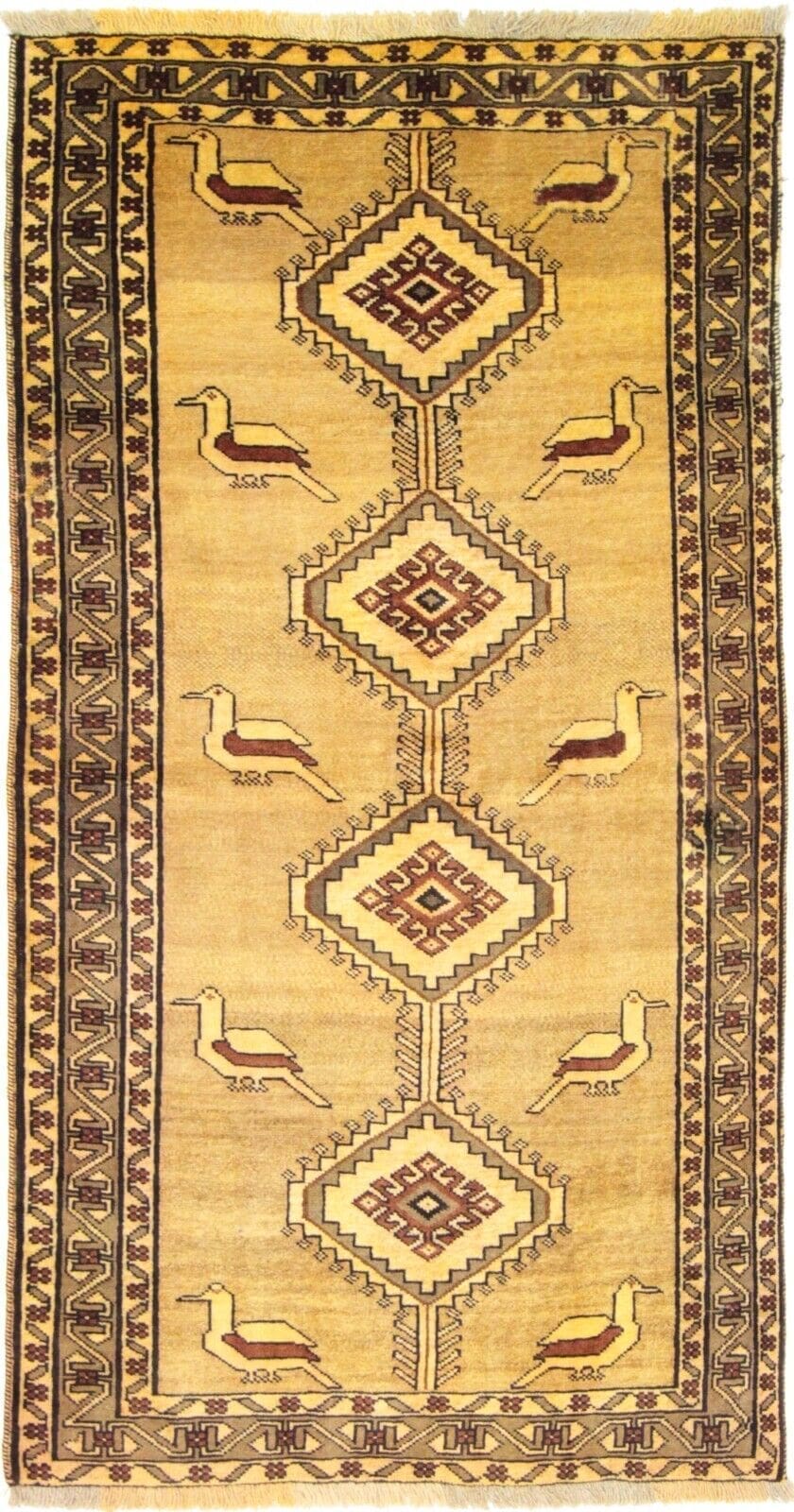
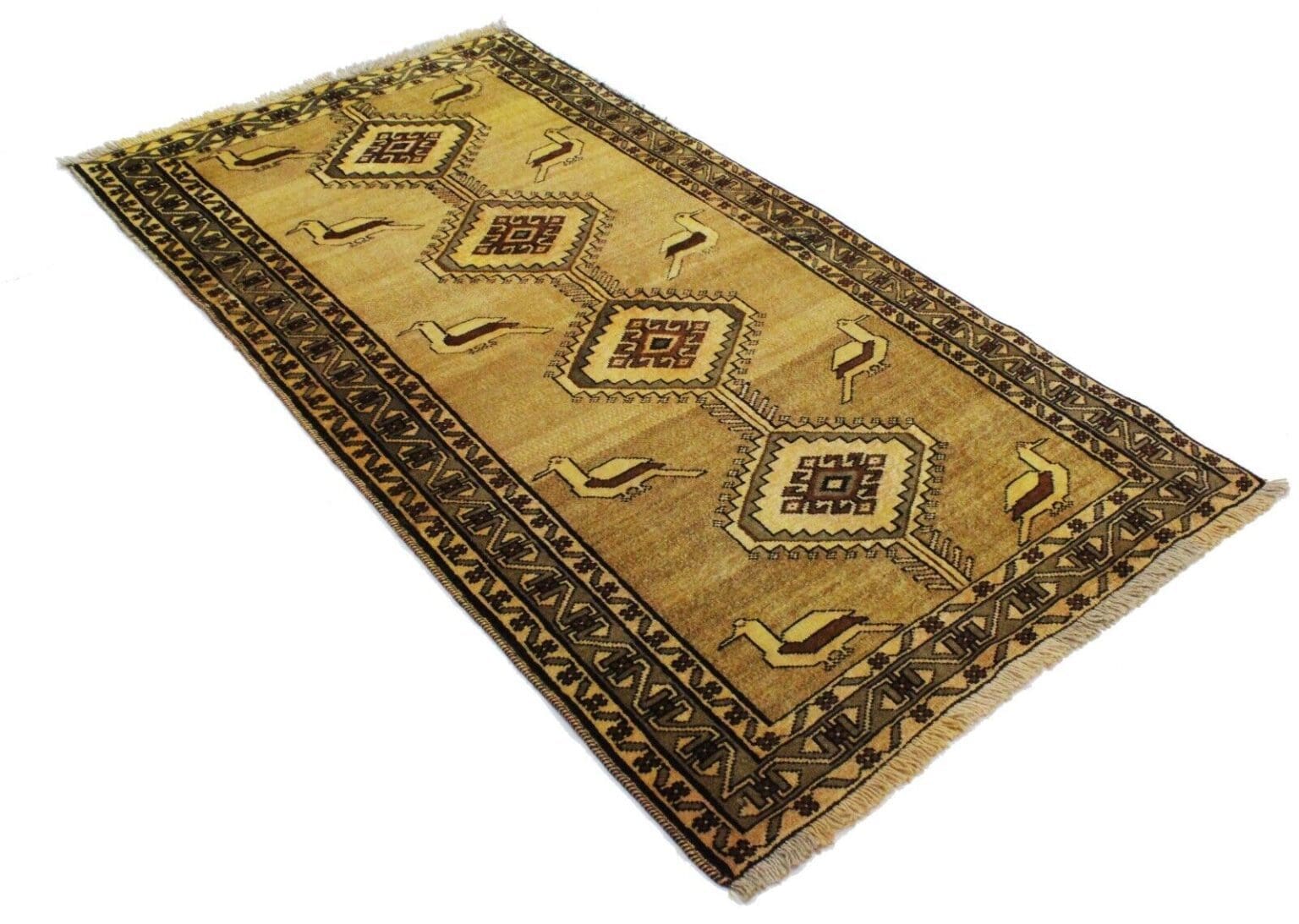
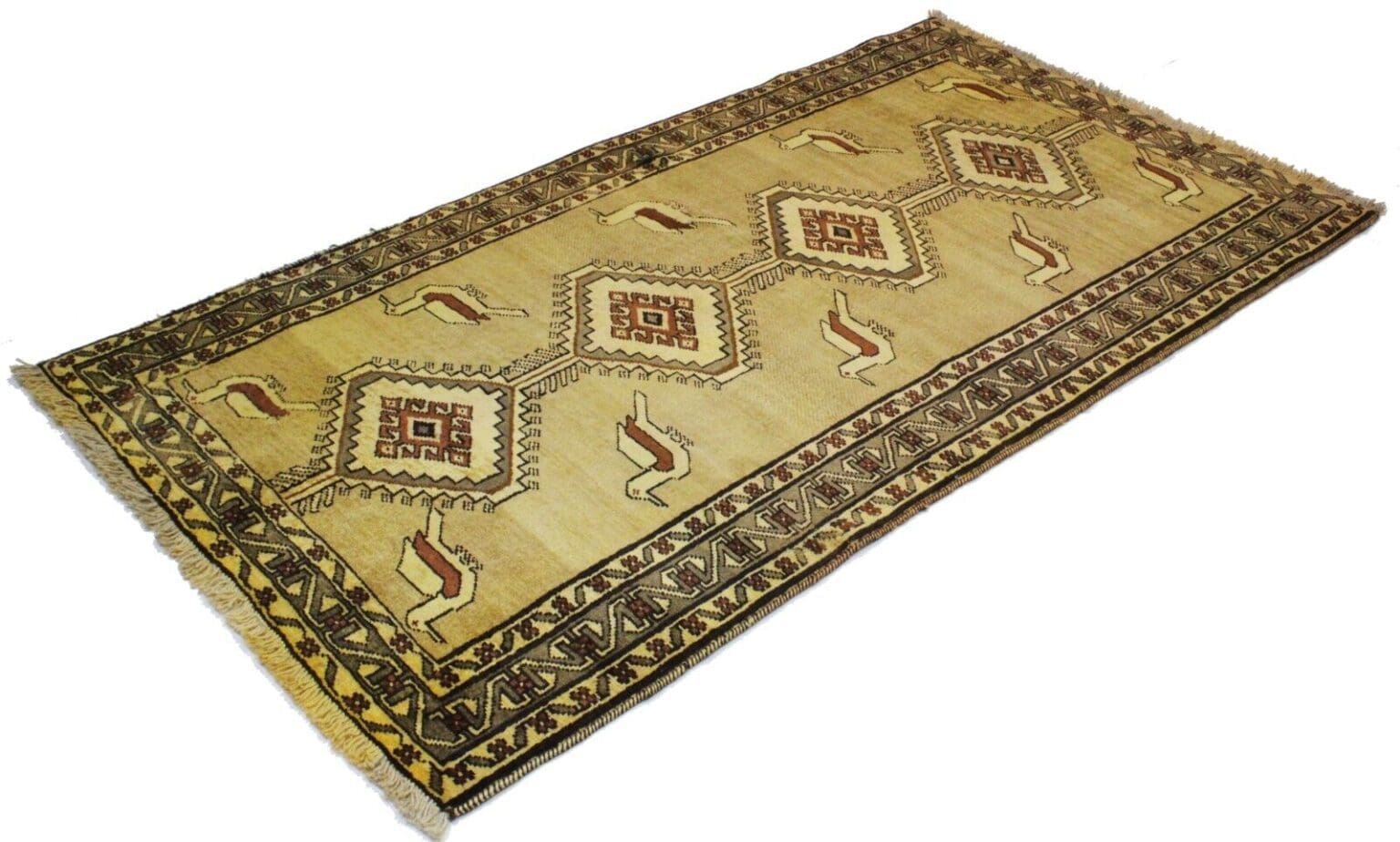
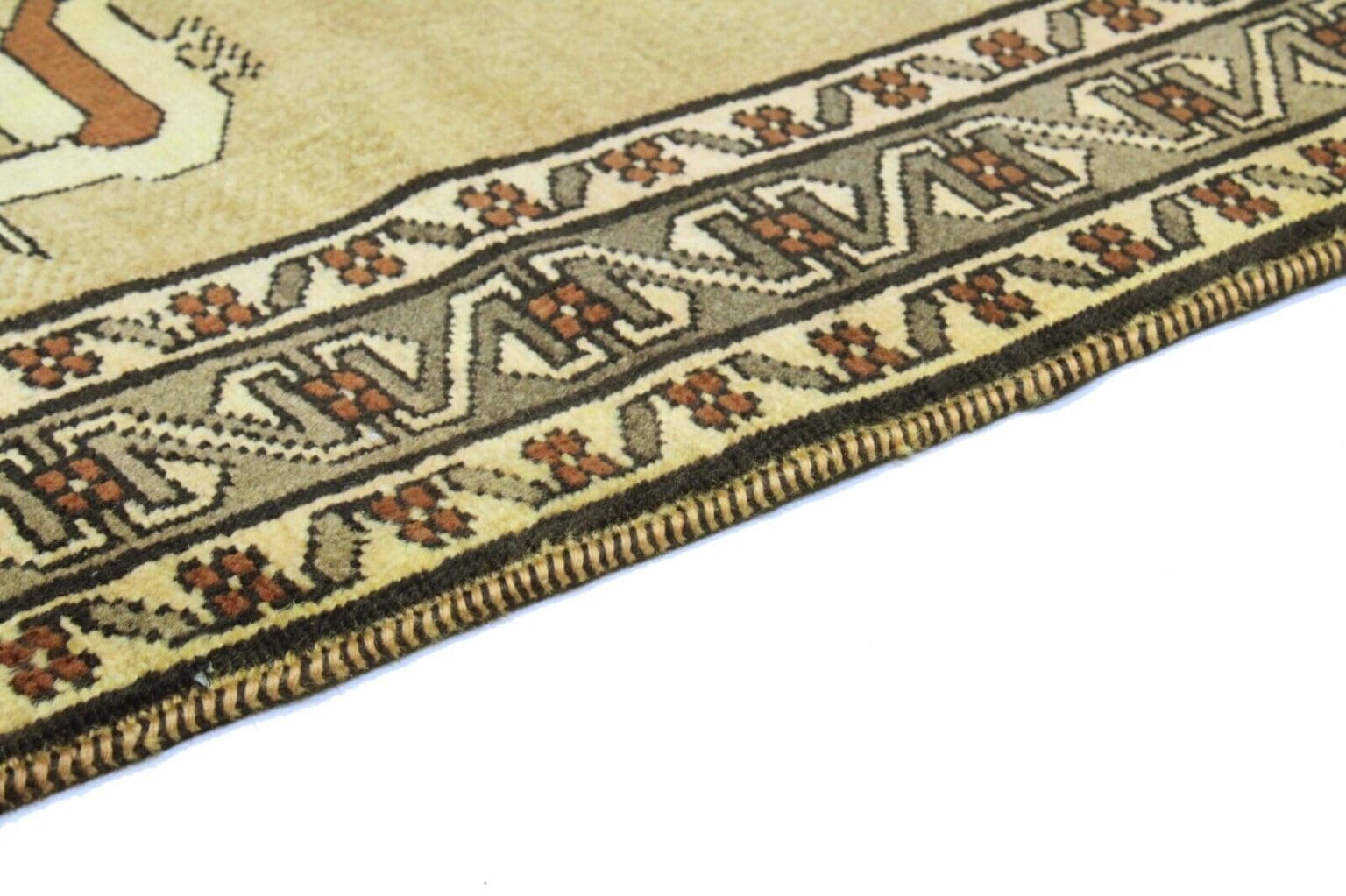
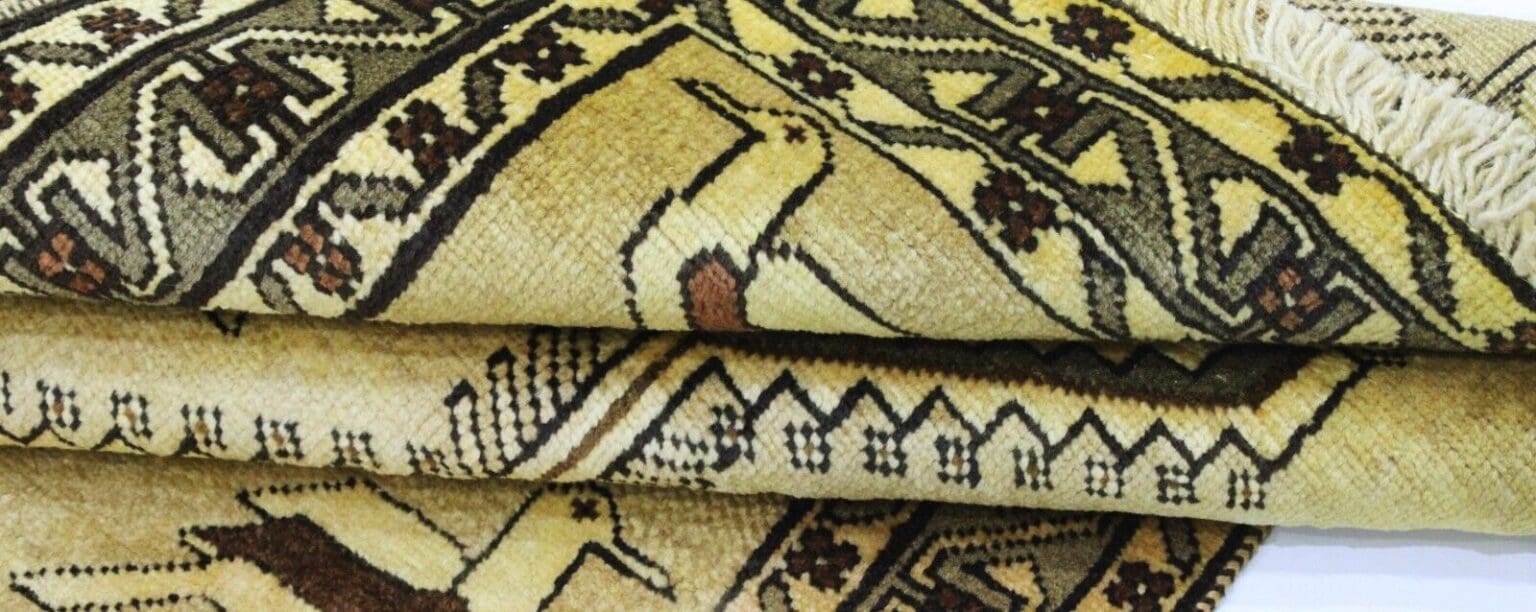
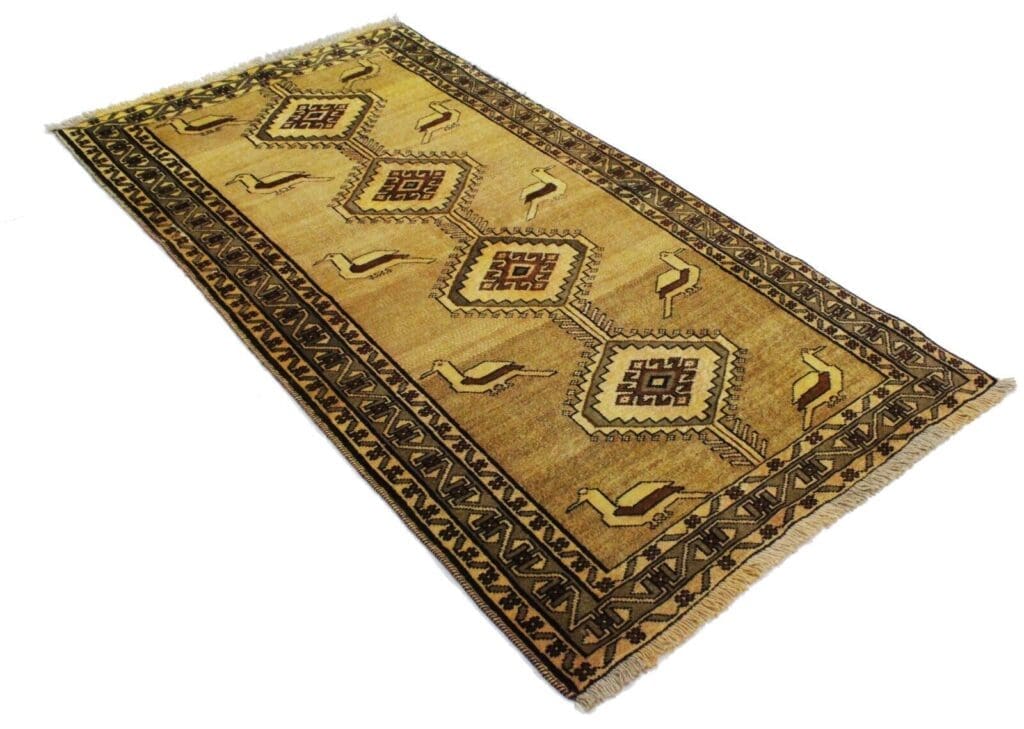
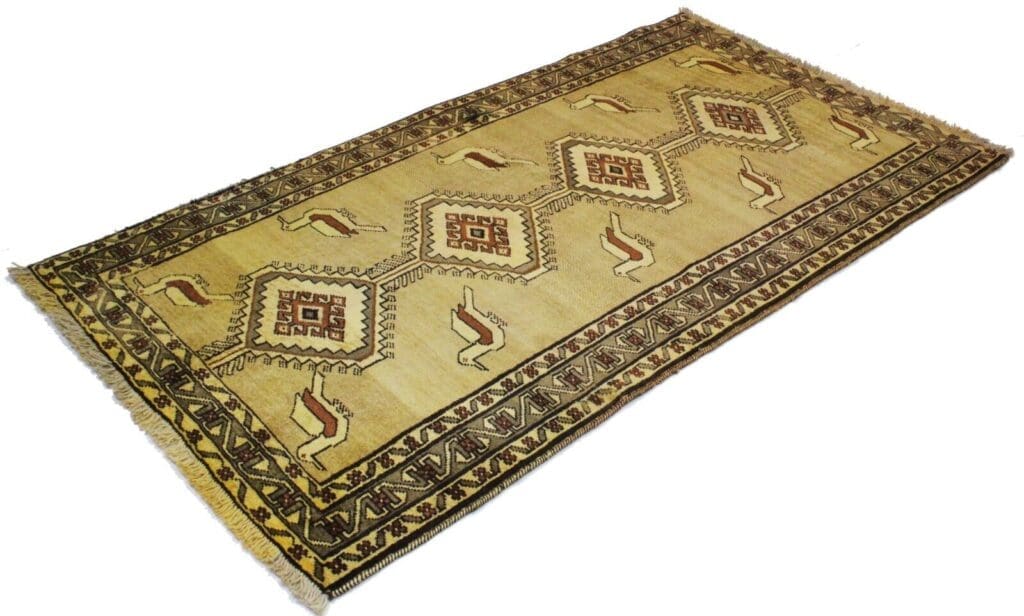
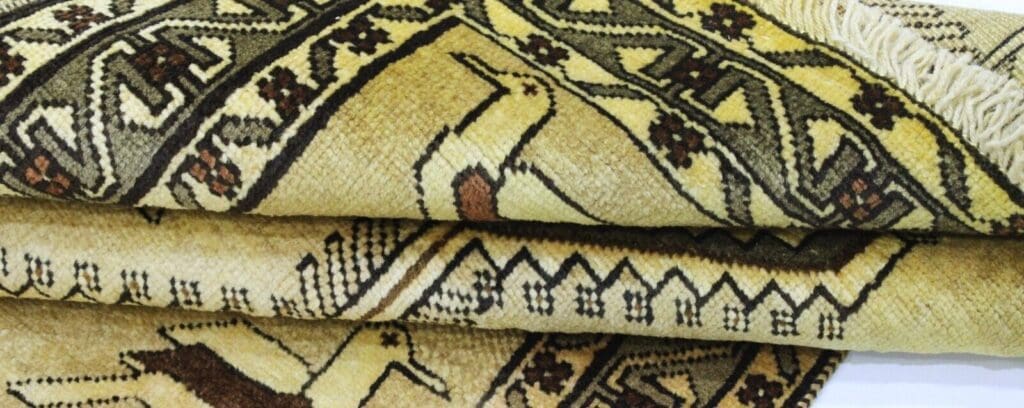
The recorded pattern is geometric. Geometric Persian designs can be built from lines, angles, diamonds, stars, stepped shapes and repeated border units. These elements may be arranged around a central field, set into rows or distributed across the surface in an all-over rhythm. The visual effect depends on repetition, spacing, symmetry and the relationship between the interior field and the surrounding borders. A geometric design can therefore be highly structured without relying on one single emblem.
Within Ghashghai traditions, geometric motifs are often organised through a clear rhythm and strong separation between forms. A basic shape may be divided into smaller units, repeated at different scales or joined with other elements to create a more complex composition. Hand-knotting makes it possible to adjust an inherited design to the actual field as work progresses. This gives the finished rug a balance between a recognisable pattern language and the individual character of manual production.
The source also describes a golden colour scheme and complex patterns. Golden tones may define the general impression of a field or appear as accents within a broader palette. When combined with geometric lines, they create a distinct visual hierarchy between larger areas and finer contours. Complexity can arise from interlocking shapes, layered borders, repeated outlines and the distribution of several colour areas. It does not necessarily mean that every motif is small; it can equally refer to the way different design levels relate to one another.
Persian pattern traditions vary from one region to another. Floral, figurative and geometric vocabularies have been interpreted differently according to local practice and historical preference. In this rug, the supplied pattern description places geometric drawing at the centre of the design. The Shiraz Ghashghai context is consistent with a tradition in which forms are inherited, remembered and adapted. A clearly framed field and the rhythm of the surrounding border are important design principles because they give the composition visual order.
The short pile allows the drawing to remain comparatively distinct, while the wool surface gives the lines a tactile textile quality. The relevant design facts for this individual rug are its Shiraz Ghashghai attribution, its geometric pattern, its golden colouring and the complex patterns named in the title. No specific medallion, floral emblem, animal figure or other individual symbol is stated, so none is assigned here. The design is described through the features that are actually identified rather than through an assumed pattern name.
Special Features
The rug is offered as an original carpet. Its condition is described as top, washed and old semi-antique. It is dated to the late twentieth century. The pile is short and the rug has a thickness of one centimetre. It is also identified as suitable for underfloor heating, non-slip and pet-friendly. Additional stated properties are that it is easy to clean and environmentally friendly.
Its principal characteristics are the hand-knotted construction, the 100% wool pile, the geometric Shiraz Ghashghai design and the golden colour scheme. The washed condition and the old semi-antique classification are part of the individual description as well. Since a hand-knotted rug is made piece by piece, this exact combination of origin, material, pattern, colouring and condition belongs to this one object. These features should be considered together when the rug is placed in a room or compared with other Persian carpets.
FAQ
How should I care for this Persian rug?
Regular, careful vacuuming helps remove dust and loose particles from the short wool pile. The vacuum should be used gently, without an aggressive brush action that could pull at the fibres. Spills are best addressed promptly and without heavy rubbing or excessive moisture. For a deeper clean, a professional service experienced with hand-knotted rugs is appropriate. Prolonged direct sunlight should be avoided where possible so that the golden colour scheme and other shades remain even. The supplied description identifies this rug as washed and easy to clean.
Where does this Persian rug come from?
This Persian rug comes from the production region of Schiras, known in English as Shiraz, in Iran. The Ghashghai designation places it within the related Persian carpet tradition of Fars. Shiraz is associated with handcraft traditions in which geometric designs, clearly organised compositions and hand-knotted wool rugs have an established place. The rug is also described as dating from the late twentieth century, specifically from 1970 to 1999.
How can I recognise a high-quality Persian rug?
When assessing a hand-knotted Persian rug, relevant considerations include the quality and feel of the material, the workmanship, the consistency of the knotting, the clarity of the drawing and the detail of the pattern. Origin, condition and a stated period also contribute to a complete assessment. For this rug, the listed characteristics are a hand-knotted construction, a pile of 100% wool, a geometric design, Shiraz production, and top condition with a washed surface. These documented features form the basis for describing this individual piece.
To provide the best experiences, we use technologies like cookies to store and/or access device information. Consenting to these technologies will allow us to process data such as browsing behavior or unique IDs on this site. Not consenting or withdrawing consent, may adversely affect certain features and functions.
Functional Always active
The technical storage or access is strictly necessary for the legitimate purpose of enabling the use of a specific service explicitly requested by the subscriber or user, or for the sole purpose of carrying out the transmission of a communication over an electronic communications network.
Preferences
The technical storage or access is necessary for the legitimate purpose of storing preferences that are not requested by the subscriber or user.
Statistics
The technical storage or access that is used exclusively for statistical purposes.The technical storage or access that is used exclusively for anonymous statistical purposes. Without a subpoena, voluntary compliance on the part of your Internet Service Provider, or additional records from a third party, information stored or retrieved for this purpose alone cannot usually be used to identify you.
Marketing
The technical storage or access is required to create user profiles to send advertising, or to track the user on a website or across several websites for similar marketing purposes.
 SECURE PAYMENT
 SHIPPING PARTNERS