Persian Rug Sarouk 300 x 200 cm Cork wool Hand-knotted
€ 1243
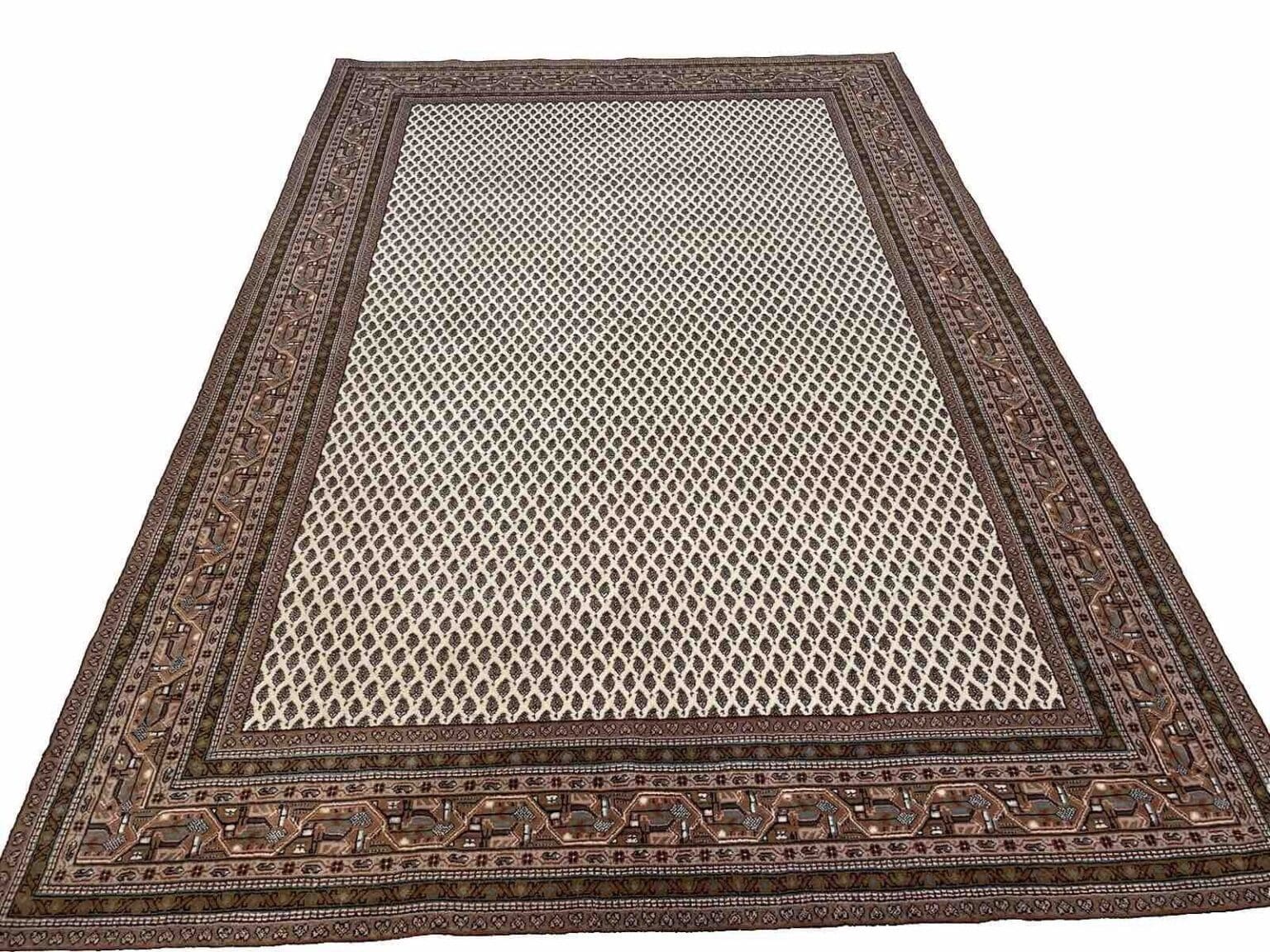
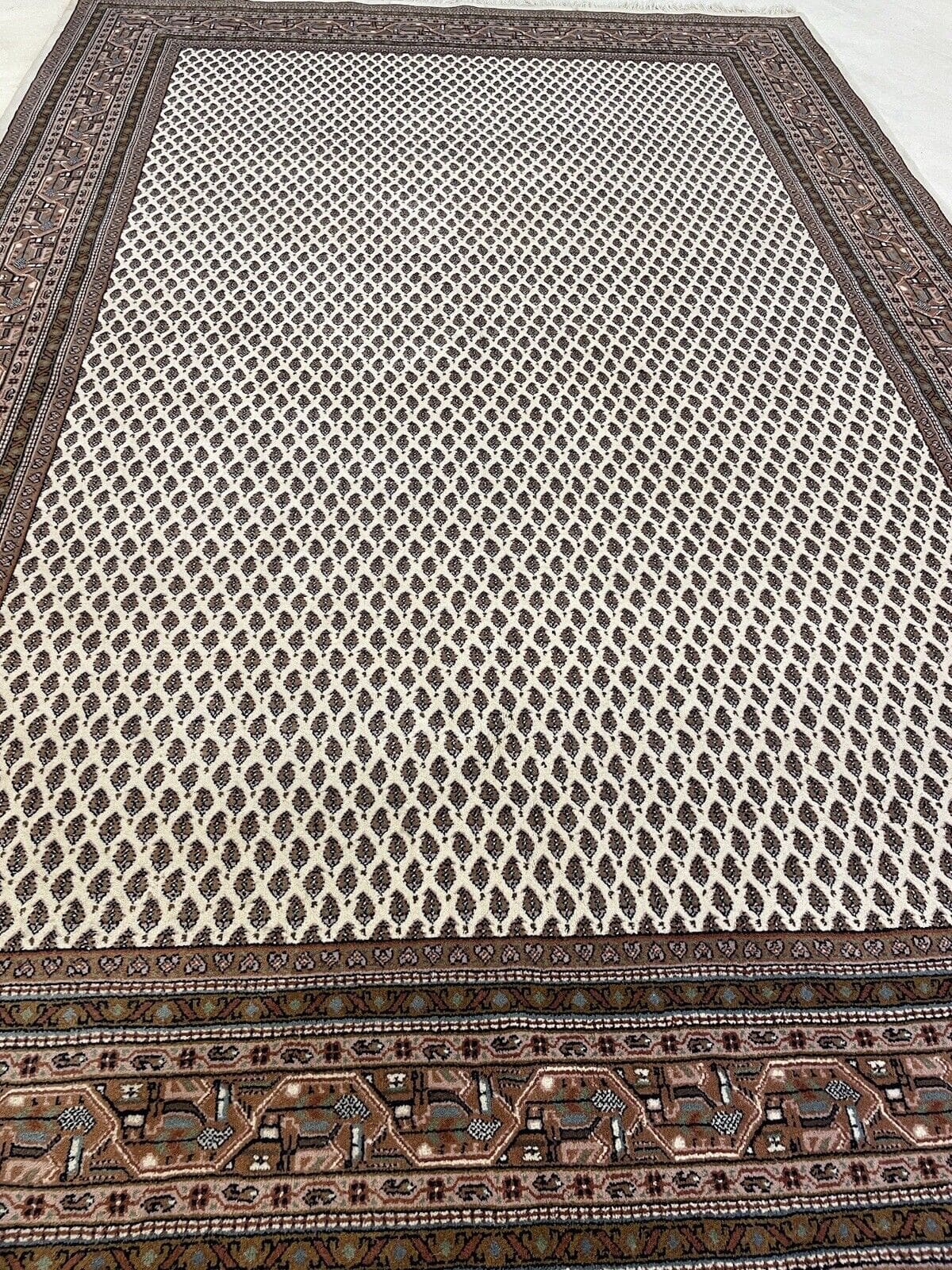
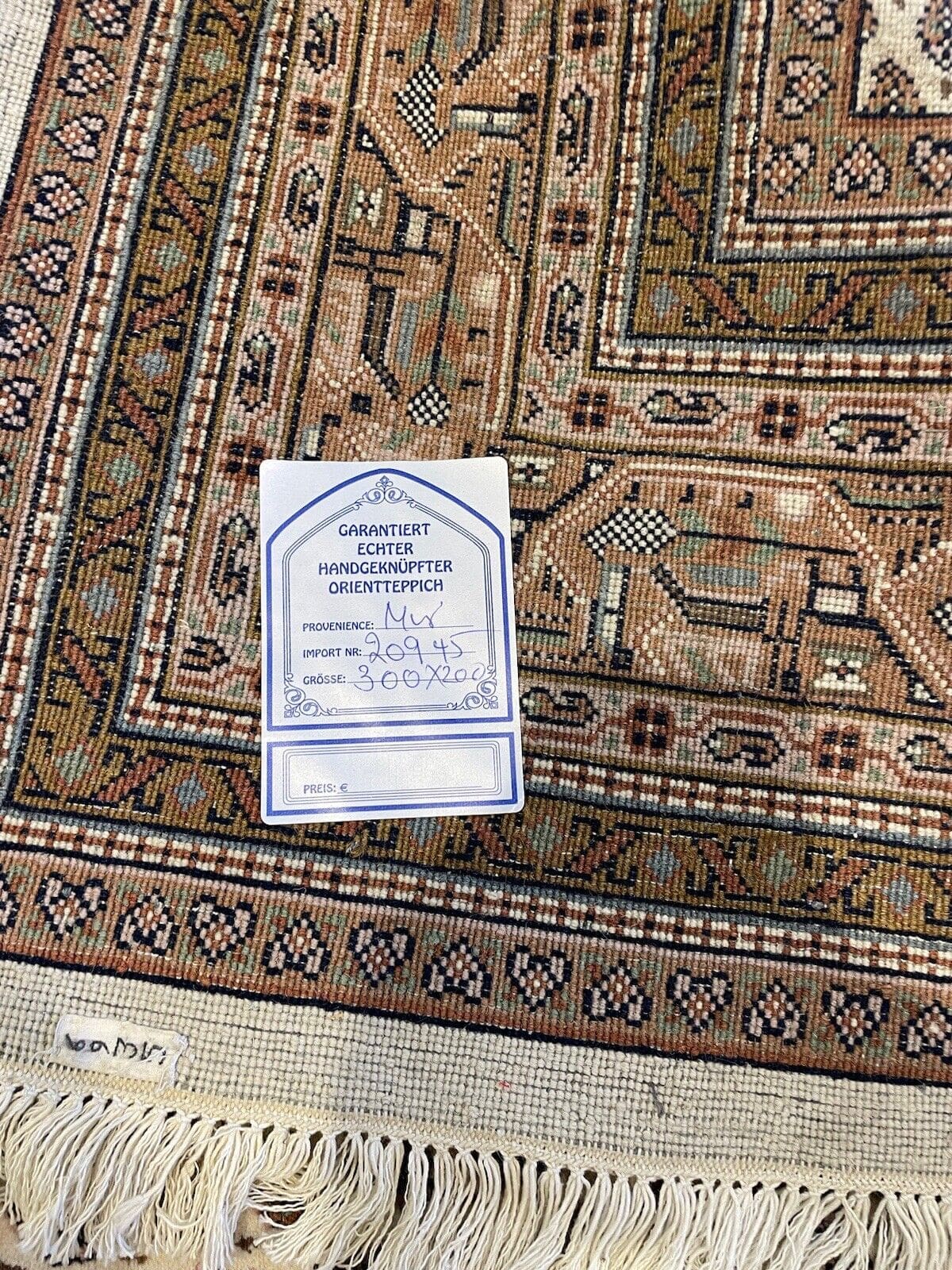
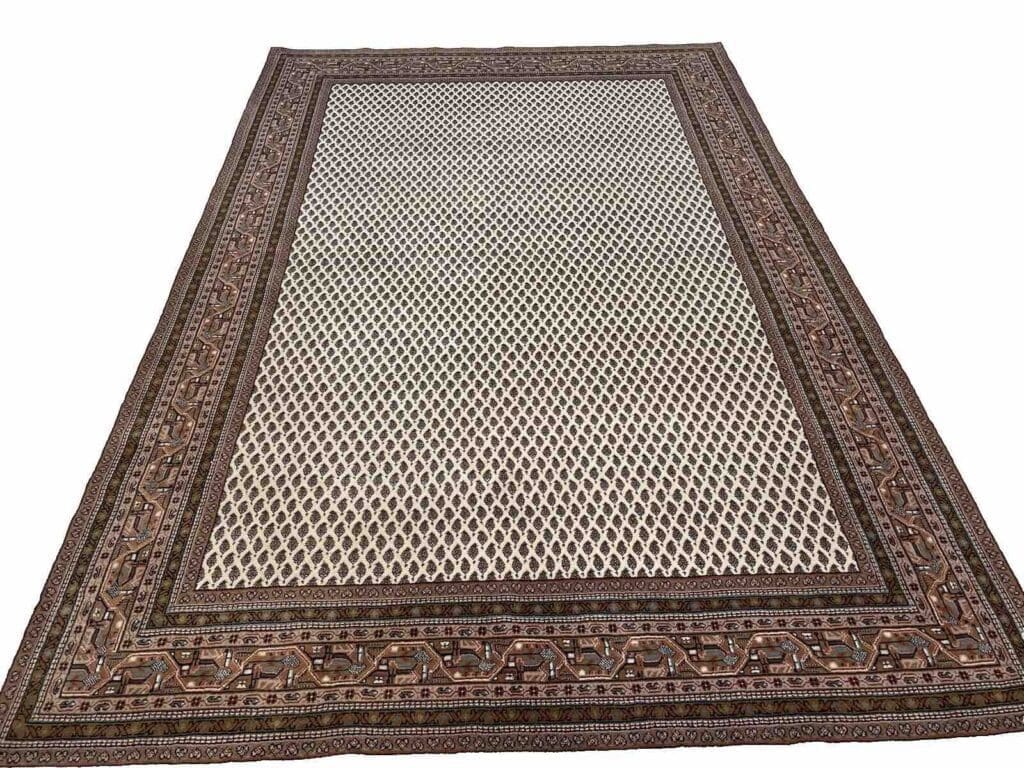
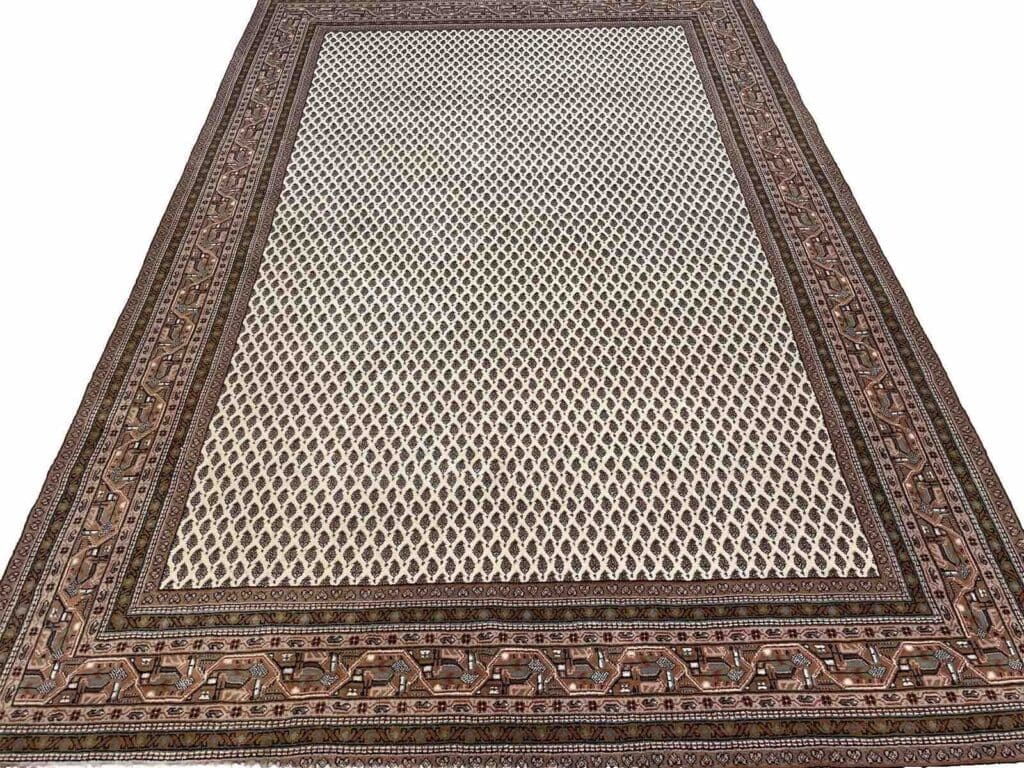
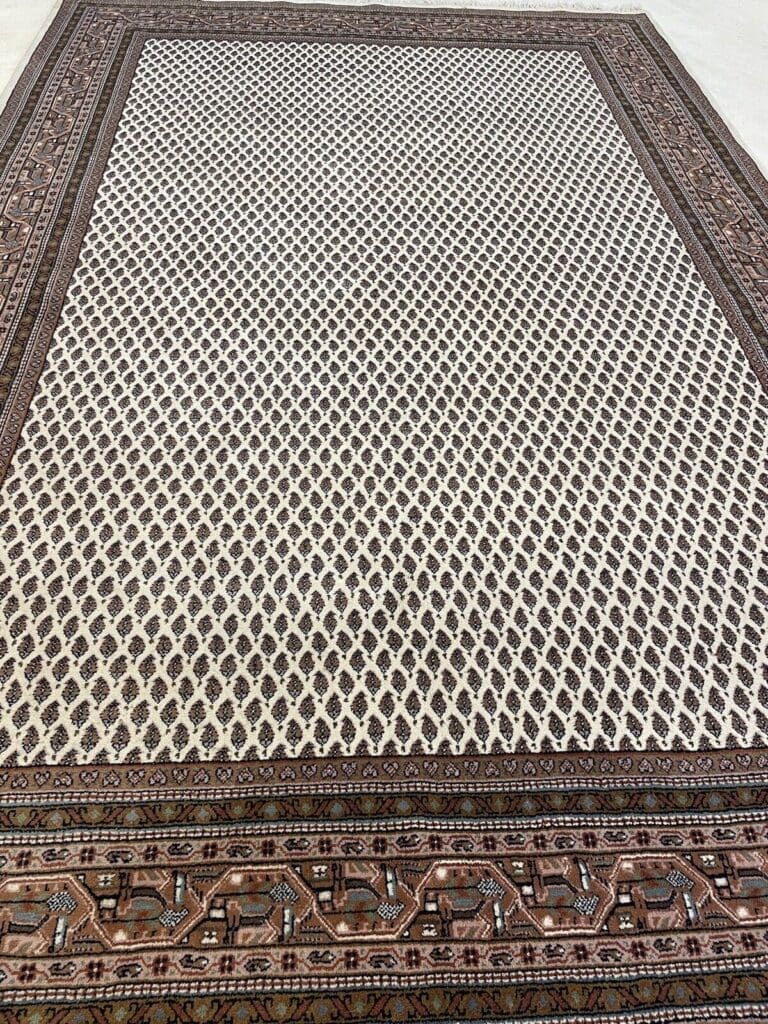
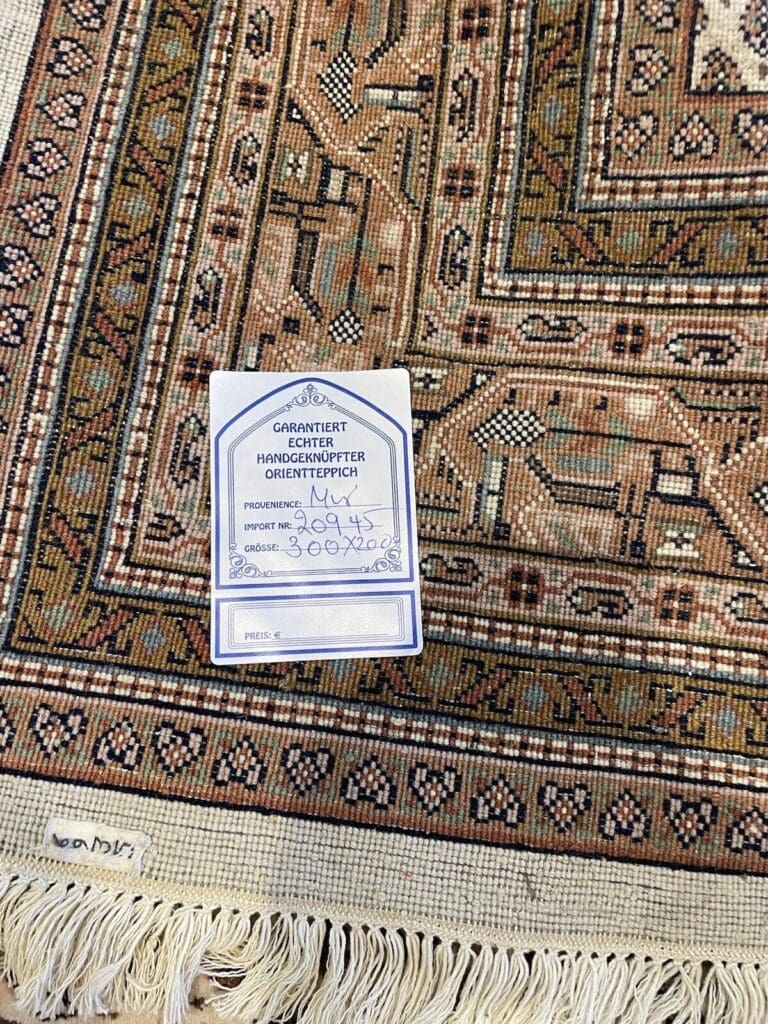
Hand-knotted Sarough Persian rug | Knot density: 380,000 knots/m² | Material: pile 100% cork wool | Size: 200 x 300 cm | Pattern: Classic Mir pattern | Condition: New with tag
This Sarough Persian rug has a hand-knotted construction and a pile made from 100% cork wool. Cork wool is used for its naturally pleasant handle and its durable qualities. The wool fibre gives the surface a soft feel while supporting a resilient carpet structure. The pile height is nine millimetres, providing a tactile surface and allowing the pattern to retain a defined appearance.
Hand knotting means that each individual knot is inserted by hand into the foundation. The process requires patience, consistent tension and close attention to the design being formed. This rug’s very high knot density supports a precise rendering of small motifs and clear transitions between colours and shapes. Rather than being produced as an industrial floor covering, it is made as a handworked one-off.
The combination of cork wool and hand knotting determines much of the rug’s feel and visual character. Its method of production follows a traditional craft process focused on detail. The rug is new and supplied with a tag. The stated construction, material and pile form the practical basis for its surface and appearance.
Origin and Tradition
Sarough is the name of a historic rug-producing region in Iran. Sarough weaving belongs to a Persian tradition in which manual skill, balanced compositions and carefully developed colour arrangements are brought together. Rugs associated with the region can use both floral and geometric ideas, creating a broad design vocabulary rather than a single fixed style. This regional variety is part of the reason Sarough is recognised as a distinct Persian weaving tradition.
The tradition of carpet weaving in Sarough has a long history reaching back to the sixteenth century. Knowledge of fibres, dyes, pattern planning and knotting was passed from one generation to the next within weaving communities. A hand-knotted Sarough therefore represents more than a functional textile: it reflects an inherited method of making in which the design is built gradually across the foundation. The individual hands involved in the work also give every finished rug its own character.
Names of Persian rugs often indicate a historic region and place the object within a particular cultural and technical context. Sarough identifies the Iranian origin in this case; it is not simply a name for a colour or a decorative element. The region’s tradition includes varied compositions, from floral arrangements to geometric structures and richly coloured designs. This makes it possible for Sarough rugs to share a regional identity while still differing in their visible ornament.
The Mir name refers to the classic pattern language used for this rug. Sarough and Mir therefore describe two related but different aspects: Sarough identifies the regional tradition, while Mir identifies the design theme. Traditional knotting brings these aspects together by translating a regional pattern vocabulary into a carefully ordered surface. The result is a rug that can be understood through both its Iranian weaving background and its recognisable ornament.
Persian rug traditions are also connected with the transmission of cultural ideas through pattern. Floral motifs, repeated forms and carefully arranged colour fields can create a visual rhythm across the carpet. These elements do not need to be interpreted as a literal scene; they operate as an organised decorative language. In a Sarough Mir rug, the hand-knotted technique gives that language a material form, with every contour depending on the placement of individual knots.
Design and Pattern
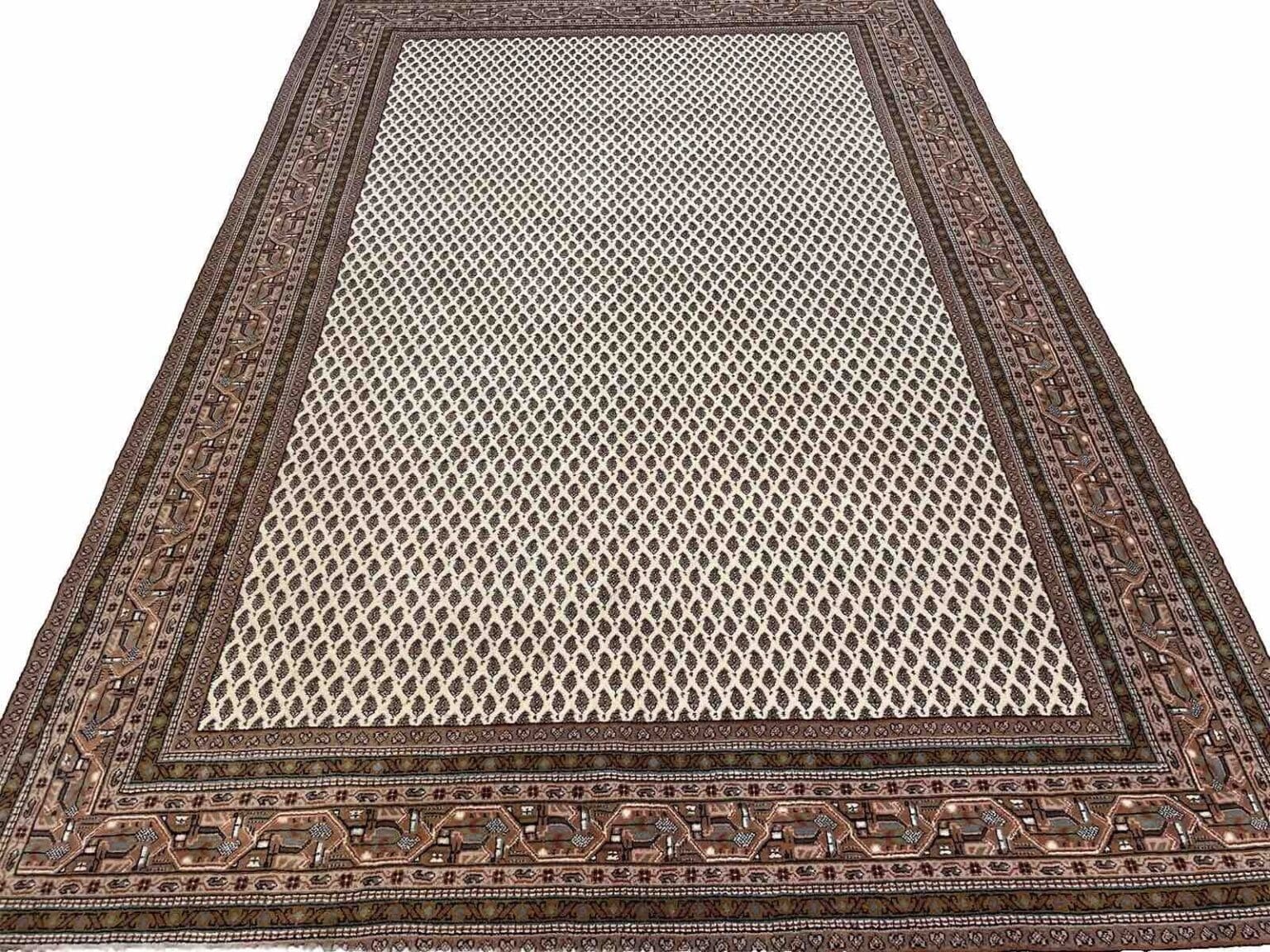
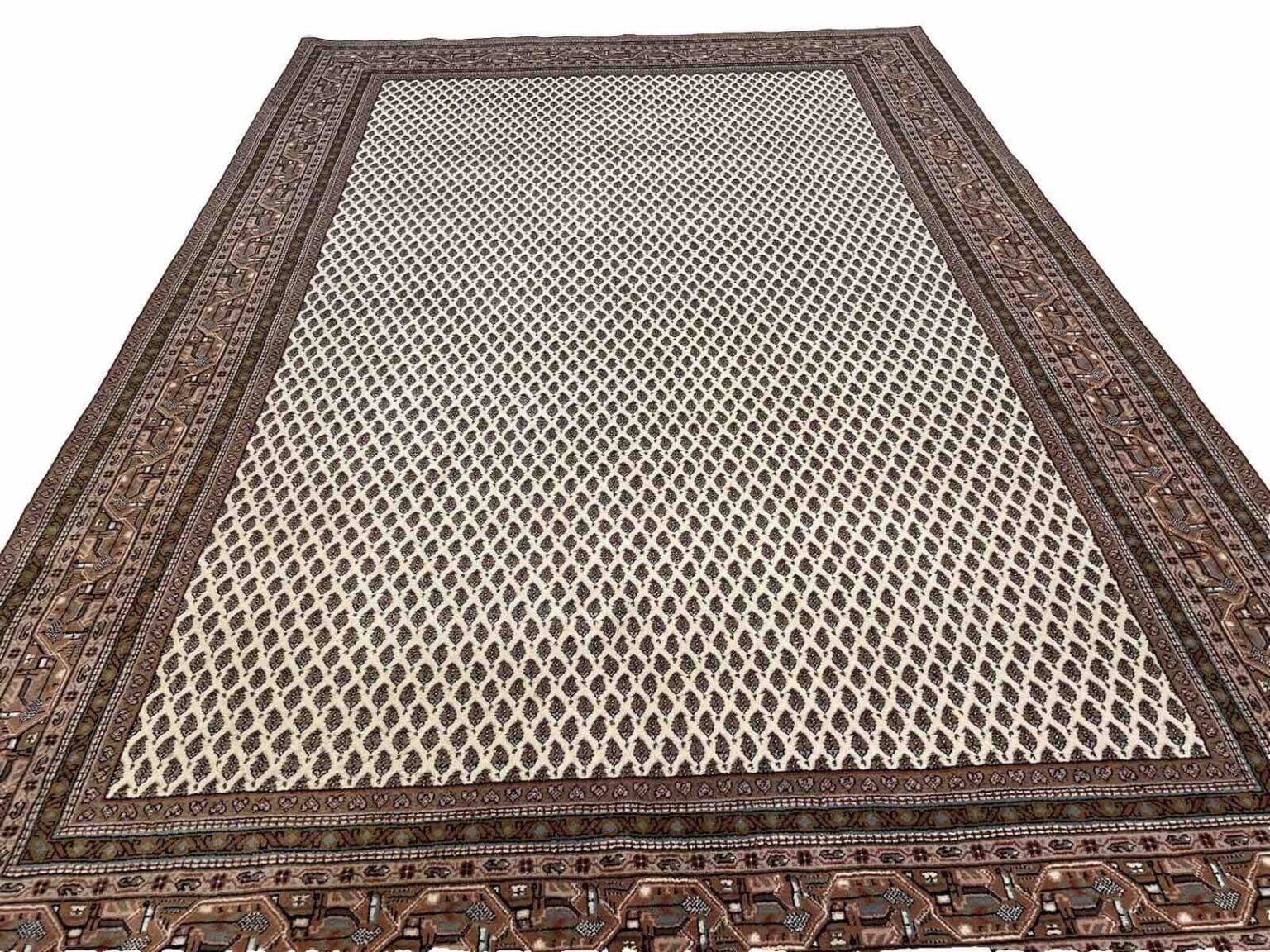
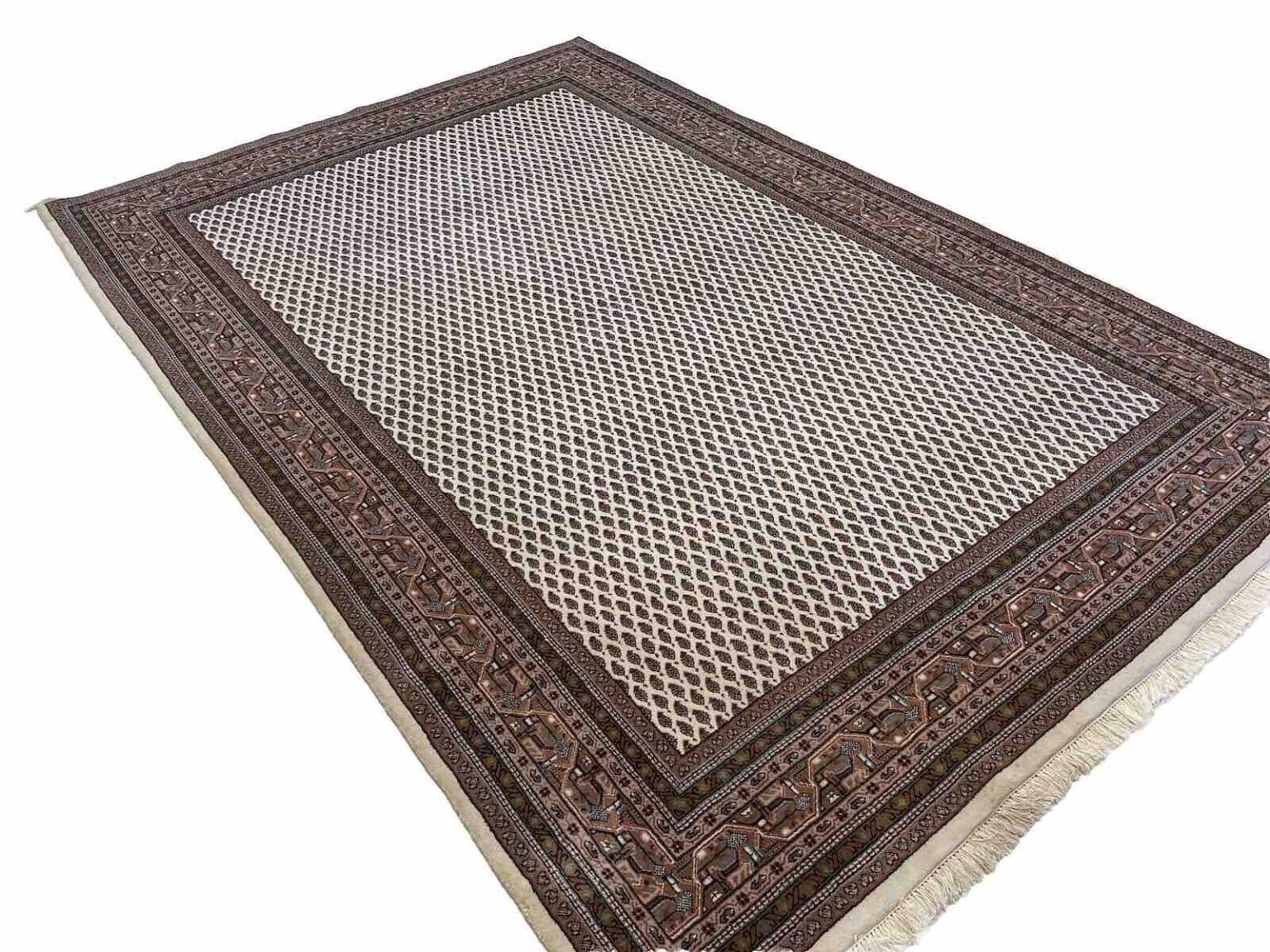
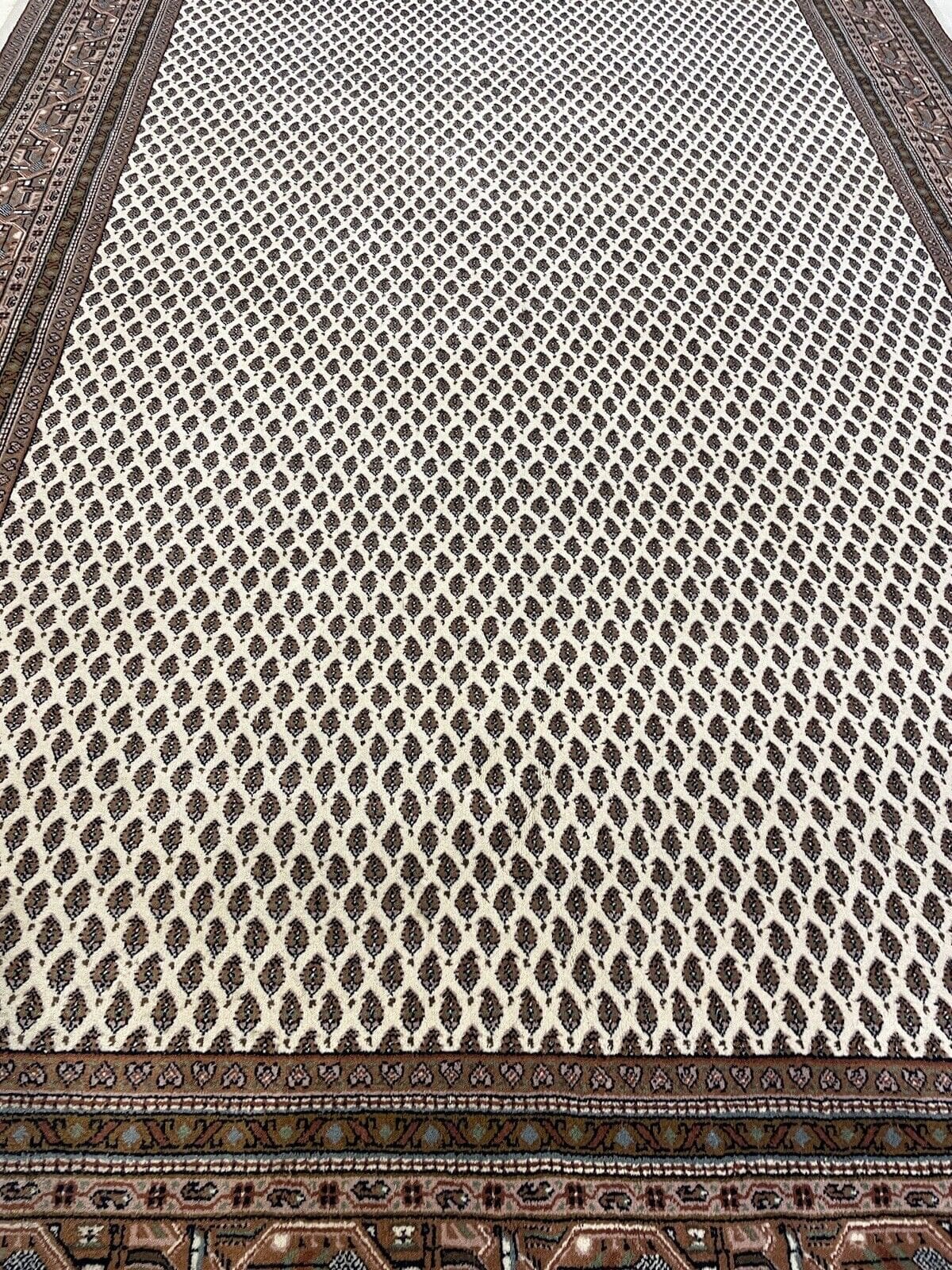
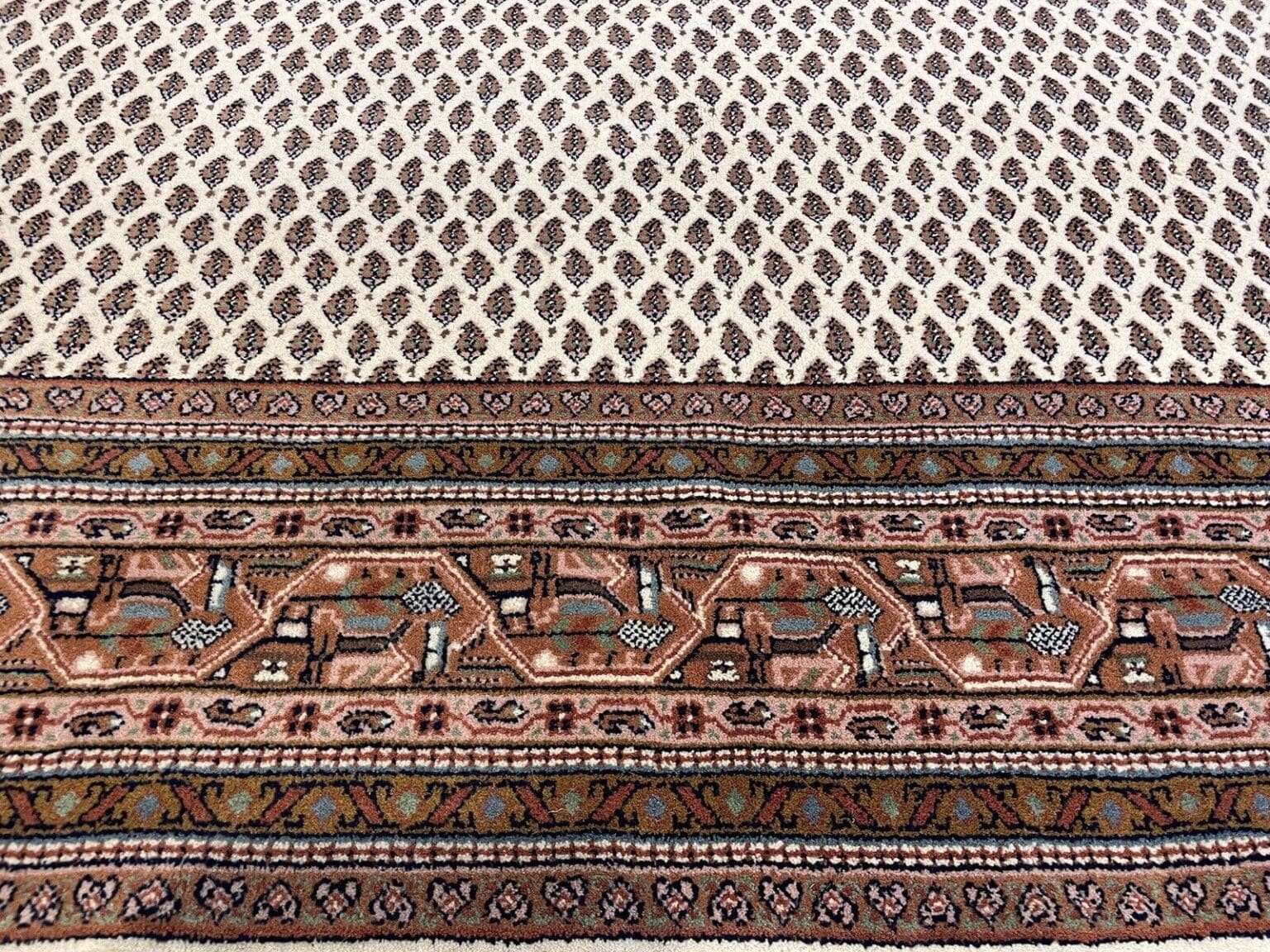
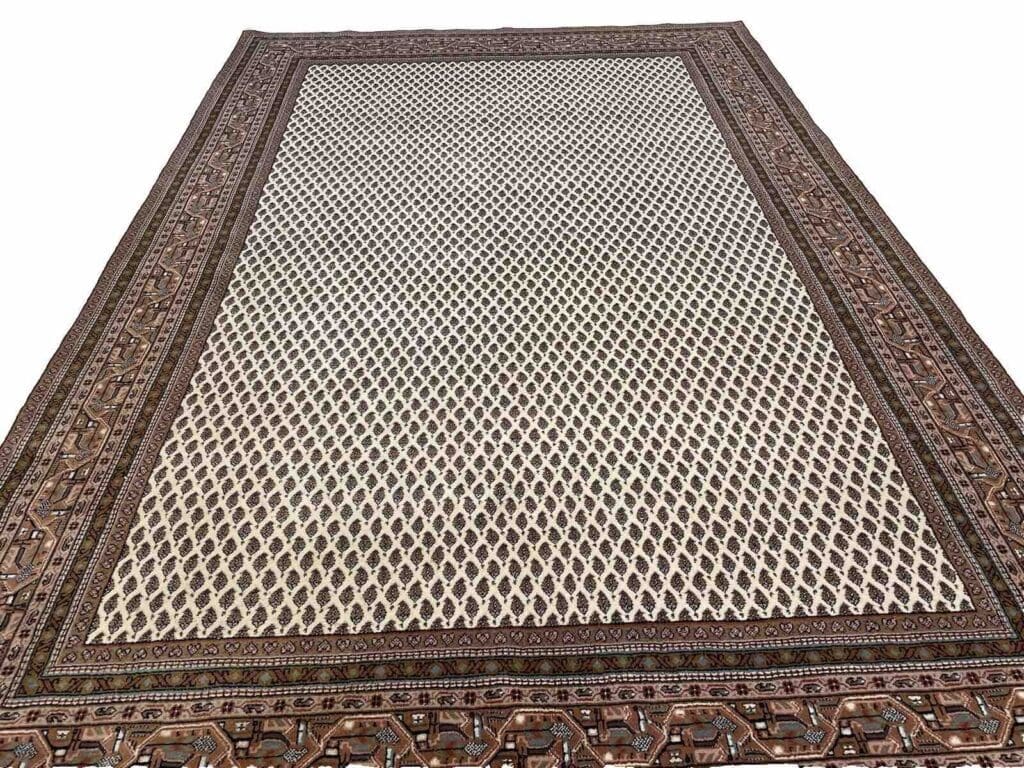
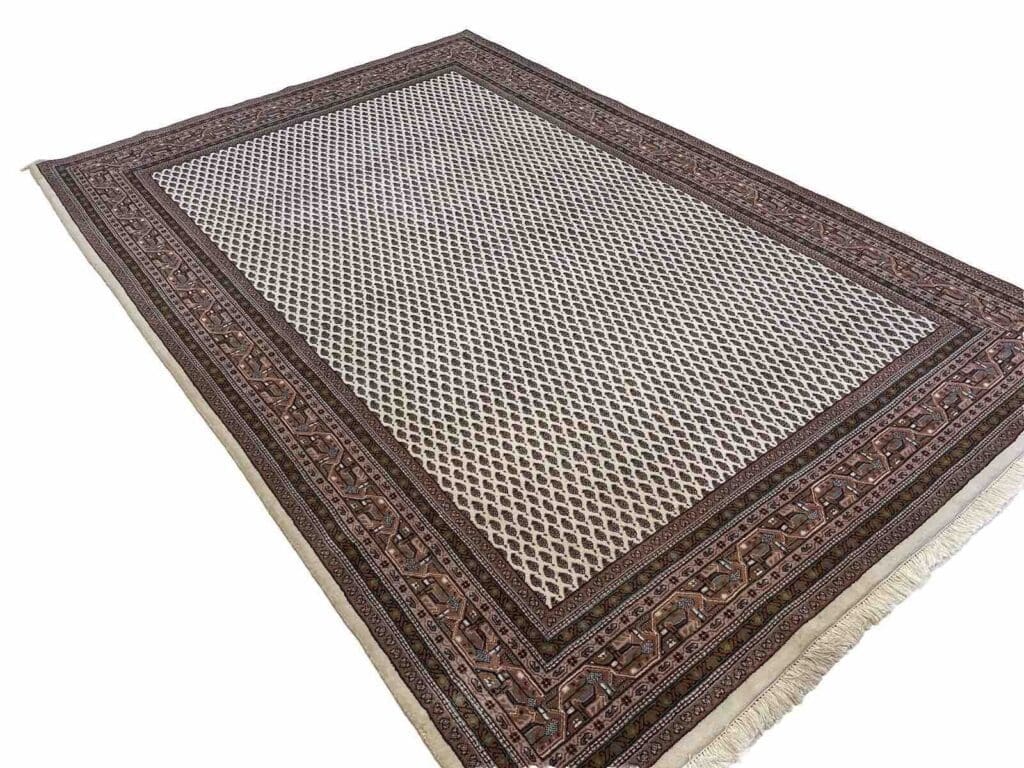
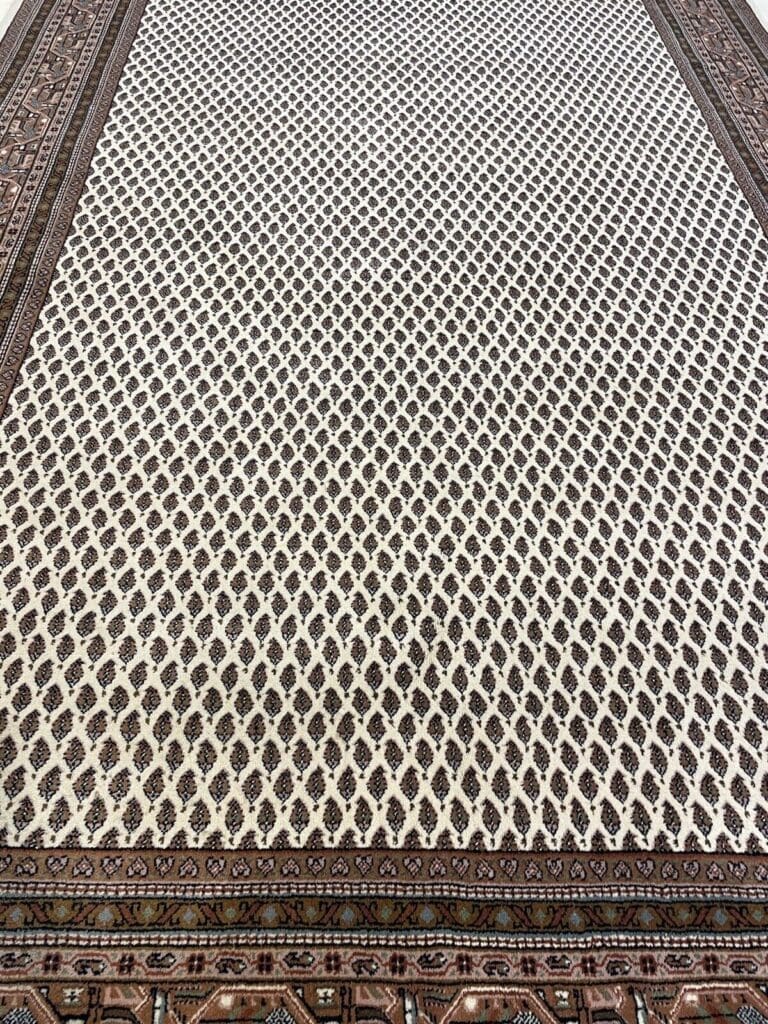
The design of this rug is based on a gentle beige colour scheme. Warm accent colours complement the main tone and add variation to the overall field. Beige can act as a quiet foundation in an interior, allowing the ornament to remain visible without making the colour palette feel heavy. The combination keeps the appearance traditional while making it suitable for both restrained and classically furnished settings.
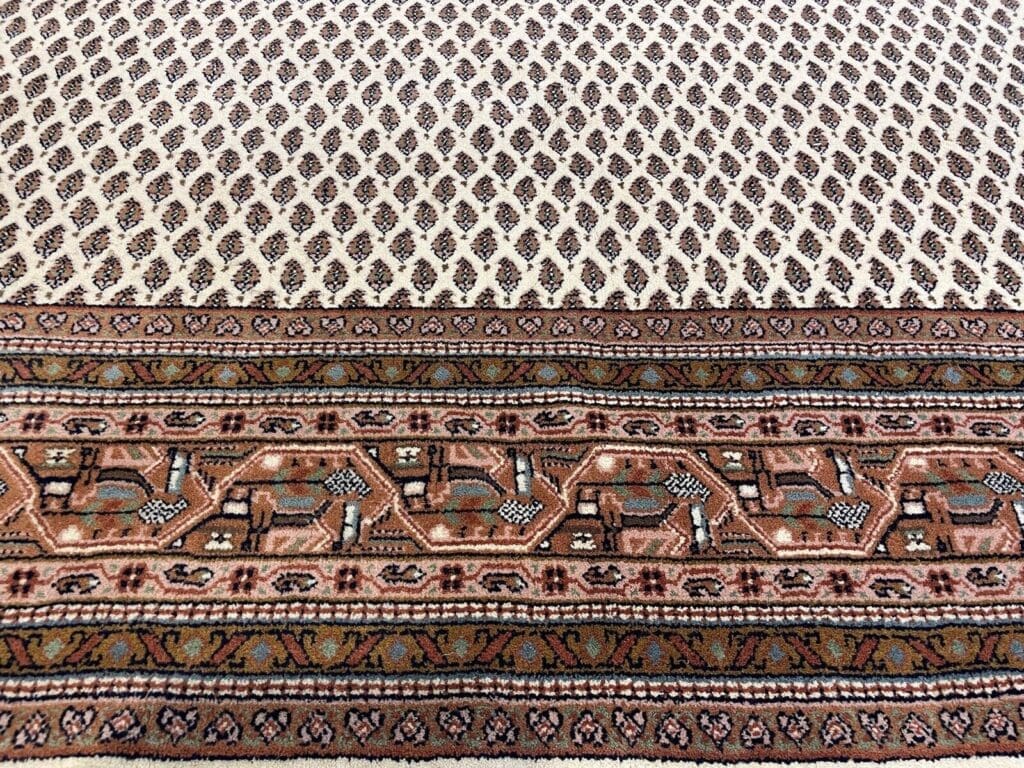
The pattern is identified as a classic Mir pattern. Its character comes from an ordered ornamental structure with recurring forms, a feature often associated with traditional Persian rug design. Floral details can be arranged with smaller repeated elements to create a surface that is richly drawn yet coherent. Because the pattern is knotted rather than printed, its contours are built gradually through the arrangement of coloured knots. A high knot density helps preserve the clarity of these fine details.
Floral motifs run through the composition and are integrated into the overall design rather than appearing as isolated symbols. Warm accents enliven the beige ground while retaining the traditional character of the Mir pattern. The fine structure makes the relationship between ornament, colour placement and craftsmanship especially apparent. Each area of the design contributes to a connected visual rhythm across the rug.
A classic Mir pattern can work in different interior settings because it combines decorative richness with an organised structure. In a traditional room, its floral vocabulary can complement other Persian forms and materials. In a more contemporary setting, the ornament can provide a considered contrast to straight lines and plain surfaces. The neutral colour scheme supports this flexibility, while the pattern continues to give the rug a clear regional and stylistic identity.
The rug is described as traditional in style and as versatile for every room. The named uses include living rooms, dining rooms, hallways and entrance halls. Its beige palette can connect with existing furnishings, while the Mir ornament supplies a distinct decorative focus. It may therefore function as a central textile element or as a pattern that sits within a larger interior scheme.
Special Features
The very high knot density of 380,000 knots per square metre is a defining feature. The description of extreme fineness refers to this detailed construction. A large number of closely placed knots allows the classic Mir ornament to be drawn with precise contours and supports the differentiated appearance of the floral motifs. The fine workmanship can be understood through both the density of the surface and the exactness of the pattern.
This is a hand-knotted one-off. Every knot is created within a manual process, giving the rug an individual character that belongs to its particular making. As a new rug with a tag, it combines a traditional craft technique with a clearly identified new condition.
The use of 100% cork wool in the pile, the hand-knotted construction, the beige colour scheme and the classic Mir pattern together define this Sarough Persian rug. It combines an Iranian regional tradition with a classic design theme and a finely worked surface.
FAQ
How should I care for my Sarough Mir Persian rug?
Regular vacuuming with a soft brush helps remove dust and loose dirt while treating the pile gently. If a spill or mark occurs, dab the area promptly with a damp cloth. Do not rub, as rubbing can affect the pile and the appearance of the colours. Professional cleaning every few years is also recommended. It helps preserve the wool, the fine surface structure and the appearance of this hand-knotted rug.
Where can I use a Sarough Mir Persian rug?
This Sarough Mir Persian rug can be used in living rooms, dining rooms, hallways and entrance halls. Its beige palette works with both modern and traditional interiors. The classic Mir pattern adds an ordered floral structure without tying the rug to one particular furnishing style. It can serve as a decorative focal point or help connect existing furniture and colours within a room.
How can I assess the quality of a Persian rug?
Knot density, material and construction are important points when assessing a Persian rug. A high knot density allows a finer and more detailed rendering of the pattern. Pure wool or cork wool is valued for its pleasant feel and resistance to wear. A hand-knotted rug is made through a demanding manual process and differs from a machine-made floor covering. Origin also matters: Sarough is one of the traditional Iranian rug regions and represents a long-established weaving tradition.
To provide the best experiences, we use technologies like cookies to store and/or access device information. Consenting to these technologies will allow us to process data such as browsing behavior or unique IDs on this site. Not consenting or withdrawing consent, may adversely affect certain features and functions.
Functional Always active
The technical storage or access is strictly necessary for the legitimate purpose of enabling the use of a specific service explicitly requested by the subscriber or user, or for the sole purpose of carrying out the transmission of a communication over an electronic communications network.
Preferences
The technical storage or access is necessary for the legitimate purpose of storing preferences that are not requested by the subscriber or user.
Statistics
The technical storage or access that is used exclusively for statistical purposes.The technical storage or access that is used exclusively for anonymous statistical purposes. Without a subpoena, voluntary compliance on the part of your Internet Service Provider, or additional records from a third party, information stored or retrieved for this purpose alone cannot usually be used to identify you.
Marketing
The technical storage or access is required to create user profiles to send advertising, or to track the user on a website or across several websites for similar marketing purposes.

 SECURE PAYMENT
 SHIPPING PARTNERS


