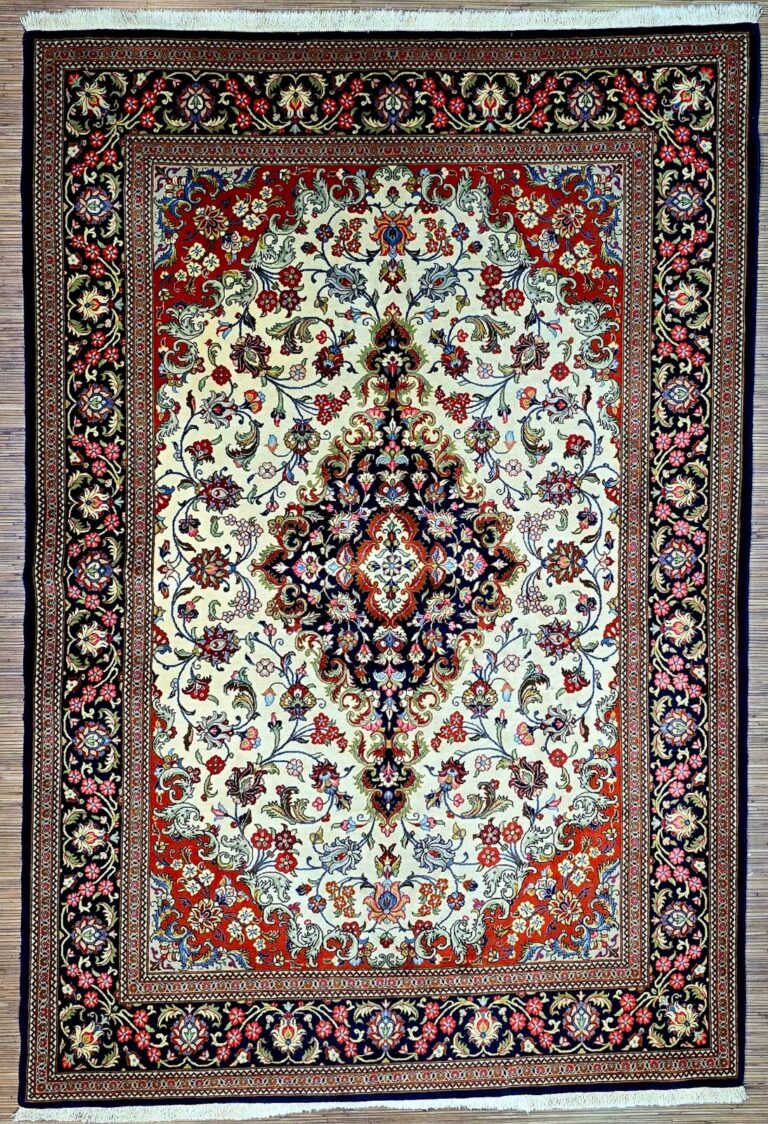
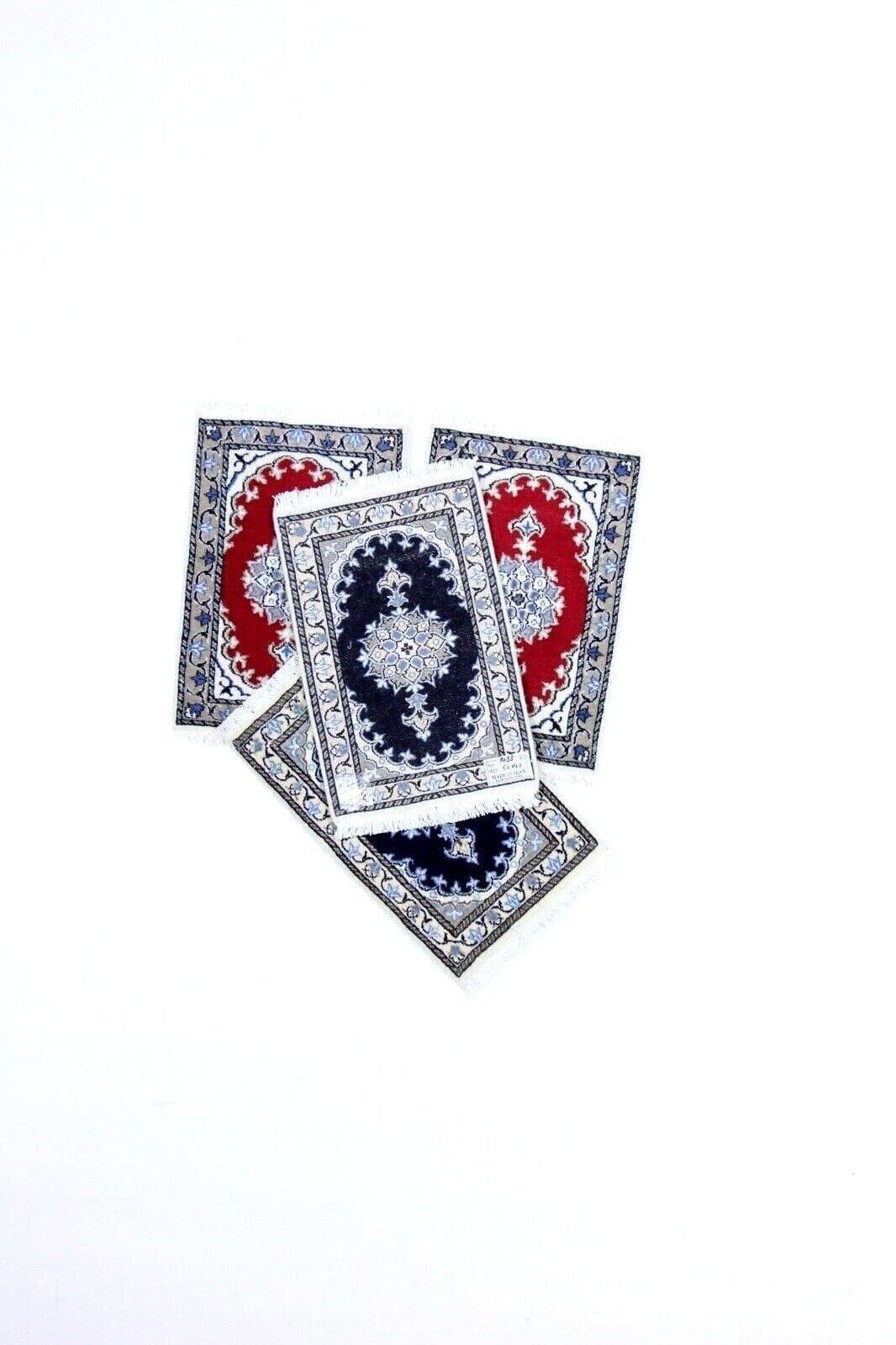
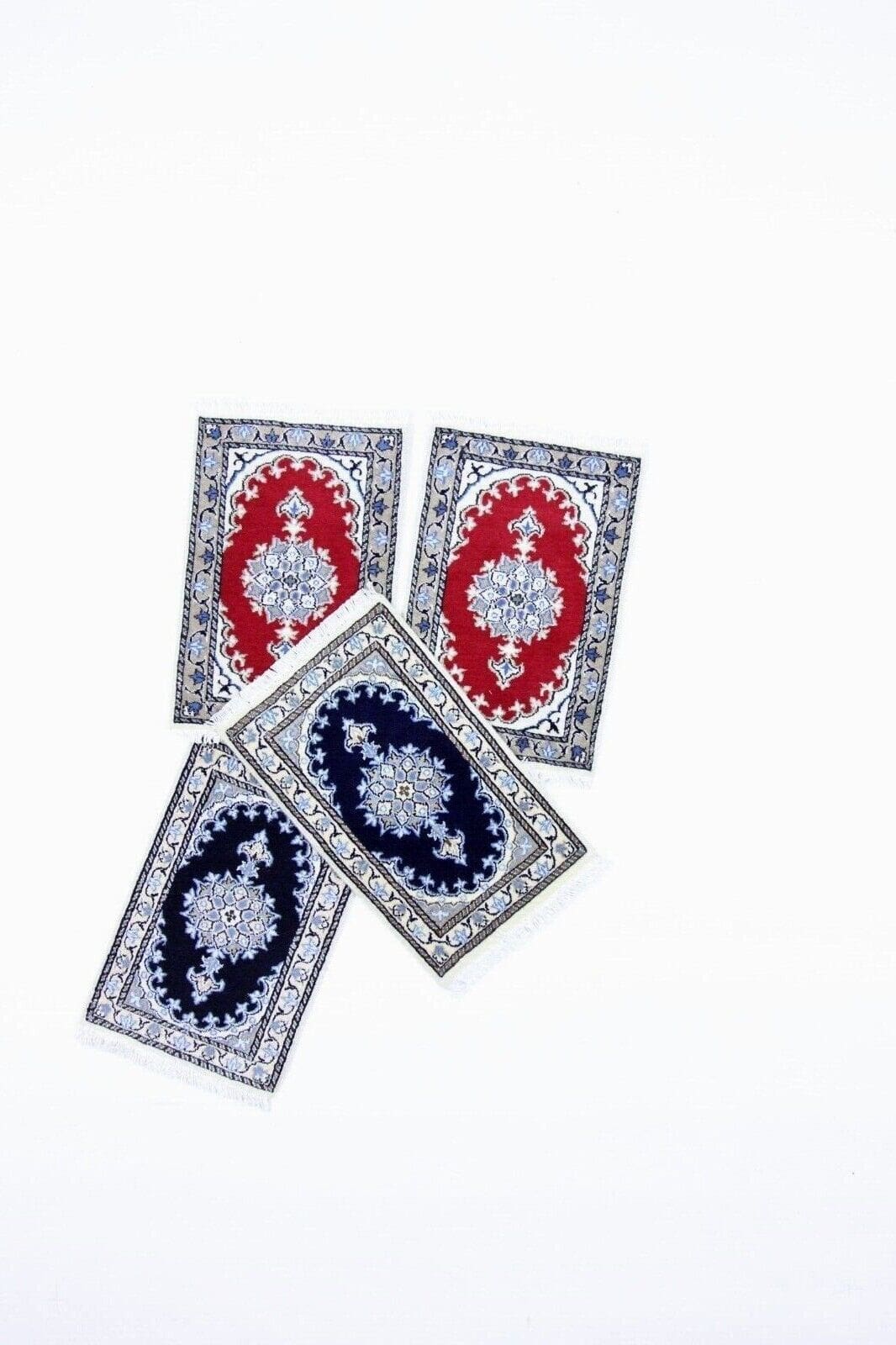
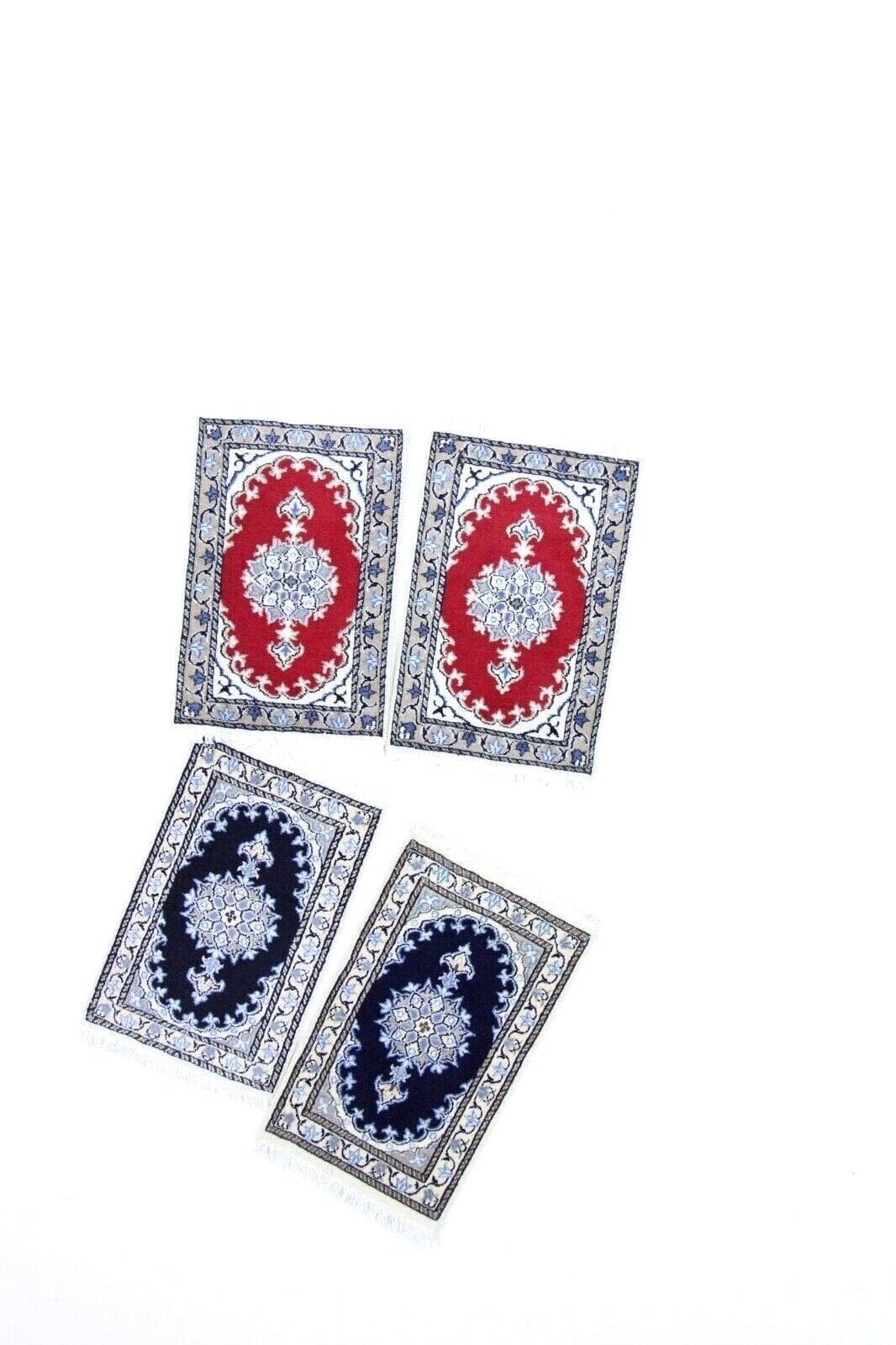
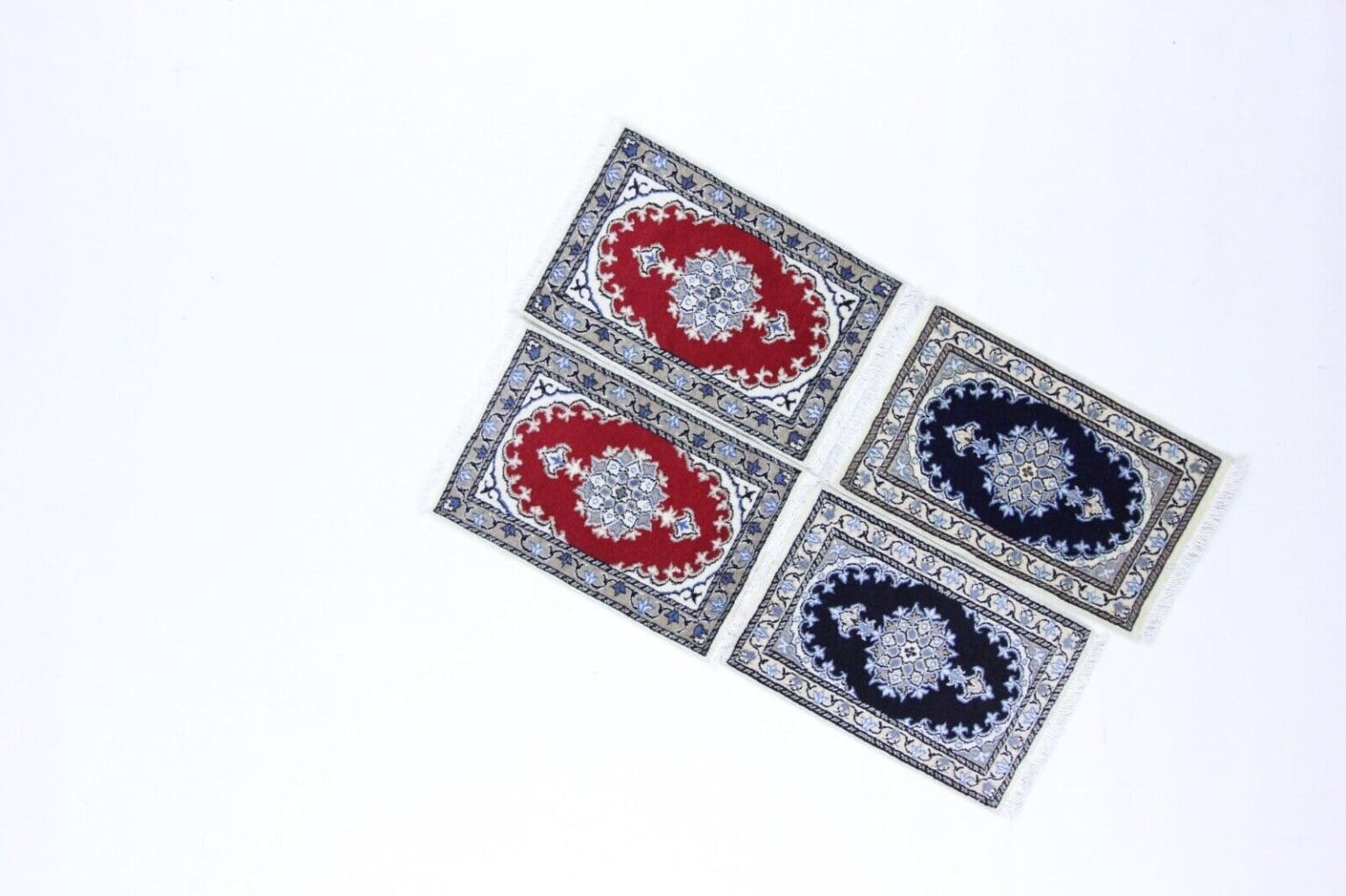
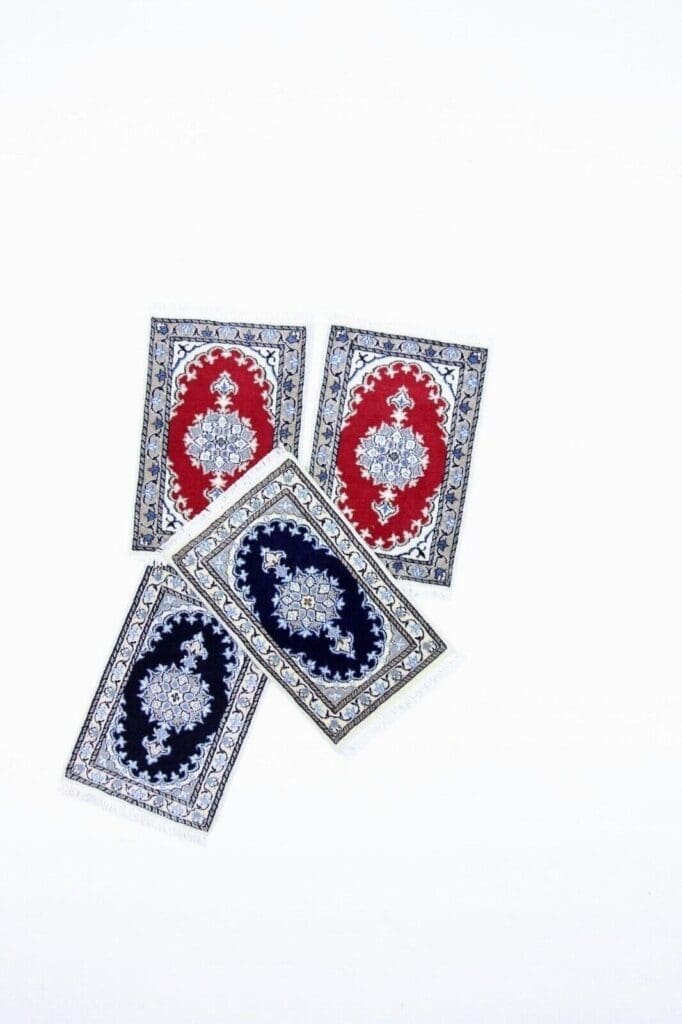
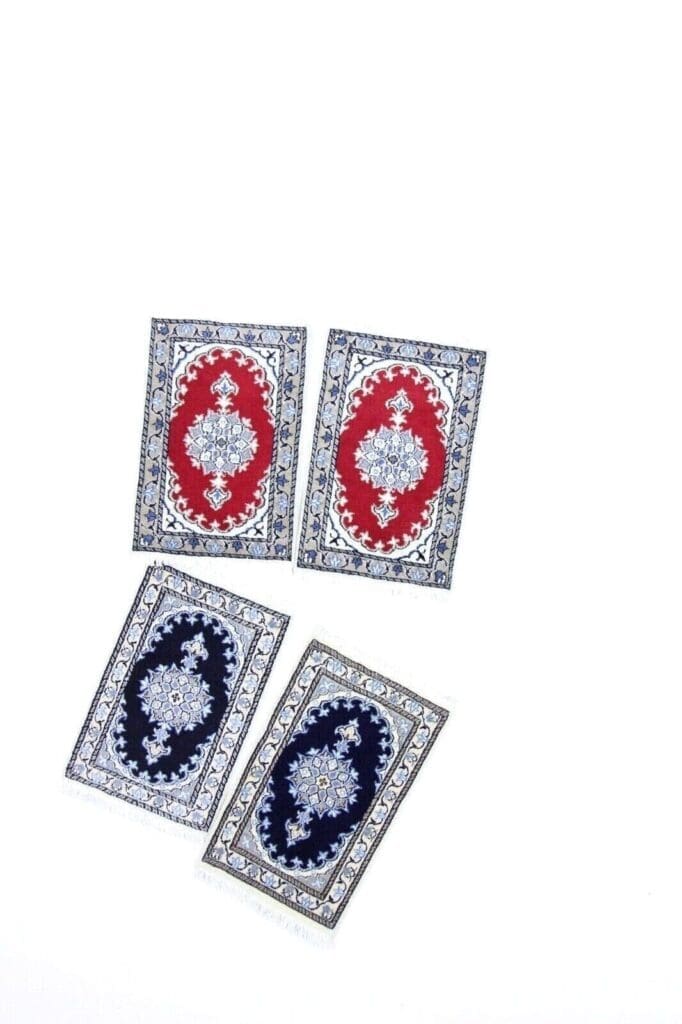
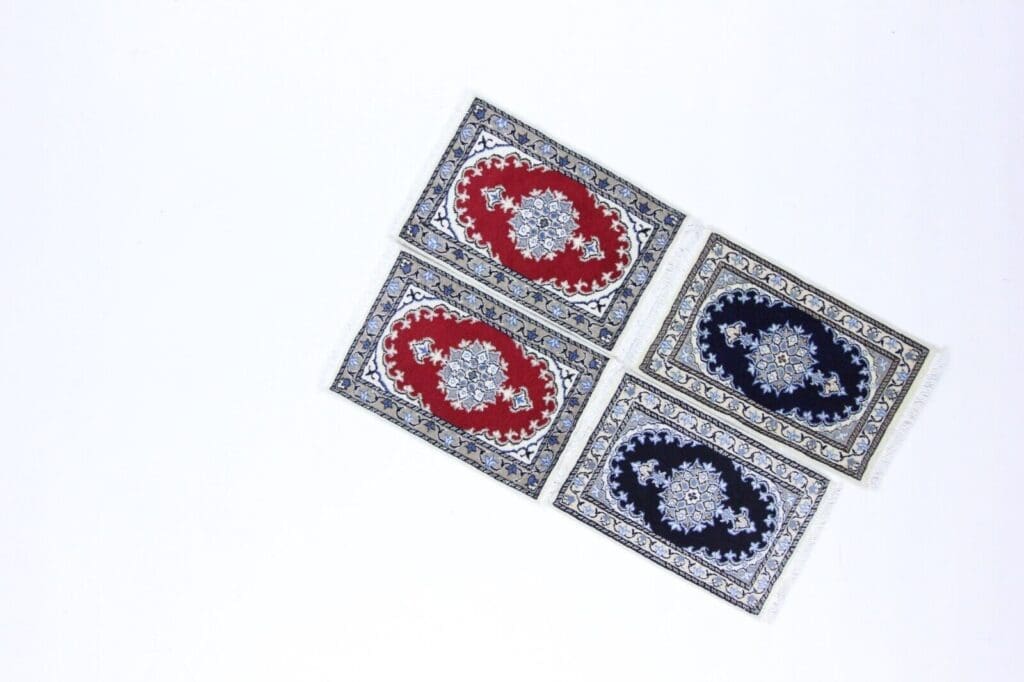
Hand-knotted Nain Persian rug | Knot density: approx. 300,000 knots/m² | Material: pile 100% new wool, warp 100% cotton | Size: 60 x 40 cm | Pattern: floral and geometric elements | Condition: New, very good
This Nain Persian rug is hand-knotted, with a pile made from 100% new wool and a warp made from 100% cotton. The construction combines these two stated materials in distinct roles: wool forms the visible pile, while cotton forms the warp that belongs to the knotted foundation. Hand knotting gives the rug its finely worked textile surface and supports the detailed drawing associated with this type of carpet.
New wool provides a comfortable and warm feel underfoot. It is described as temperature-regulating, remaining warm in winter and cool in summer. This characteristic makes wool suitable for a floor covering intended to be used throughout the year. The description also assigns the hand-knotted wool rugs notable durability and resilience.
The high knot density named for the rug allows patterns to be rendered with fine and precise detail. Knotting translates the design into many individual textile units rather than applying the pattern as a printed surface. Floral lines, geometric forms and small transitions can therefore be arranged with a controlled level of definition. The density is part of the relationship between the material, the technique and the appearance of the rug.
Cotton is used for the warp, while the pile is entirely new wool. Stating the two materials separately gives a clear picture of the construction without treating the cotton foundation as part of the pile. The result is a hand-knotted rug whose tactile surface is determined by wool and whose foundation includes cotton.
The source describes the rug as hand-knotted and also calls it a unique piece or one-off. At the same time, the offer is described as four Nain Persian rugs. The craftsmanship remains individual in character because the construction is performed through knotting rather than industrial production. The finely worked surface and detailed pattern tradition are central features of the stated workmanship.
Origin and Tradition
Nain rugs come from the city of Nain, which lies in Isfahan Province in Iran. This places the rug within the Persian carpet tradition. Nain is therefore an origin designation connected with a named Iranian city and region, not merely a label for a general oriental appearance.
The region is known for a long-established tradition of carpet weaving. The description traces this tradition back to the sixteenth century. Persian weaving centres developed their own approaches to drawing, knotting, materials and colour, and these skills were passed from one generation of weavers to the next. Nain rugs belong to this history of regional craftsmanship.
Nain lies within the cultural sphere of Isfahan, a major centre of Persian art and design. The area’s carpet tradition places particular emphasis on the close relationship between a drawn composition and the technique used to reproduce it. Lines, floral forms and geometric divisions are organised into a coherent field, while the knotting converts that design into a durable textile surface.
Persian carpets are not a single uniform category. Their regional types differ in construction, materials, colour schemes and motif vocabulary. Nain is associated with finely detailed patterns and a high level of precision. This helps explain why knot density is important in the Nain tradition: it creates the technical basis for expressing smaller motifs and more carefully drawn contours.
The history of Nain weaving combines local identity with the broader development of Persian carpet art. A Nain rug can thus be understood through both its place of origin and its method of making. Its regional name refers to the established style and weaving tradition of Nain, while the Iranian origin places it within the wider cultural history of Persian rugs.
The source describes Nain rugs as particularly appealing to collectors and enthusiasts because of their detailed patterns, high knot density and refined quality. These points concern the rug type and its established reputation. They do not add a separate provenance or an unreported history to this individual piece. The stated origin remains Nain in Isfahan Province, Iran.
Design and Pattern
Nain rugs are known for elegant designs, soft colour palettes and complex compositions. The pattern tradition often combines traditional Persian motifs with more modern design approaches. This creates a visual language rooted in established forms while remaining adaptable to different interior settings.
The pattern elements named in the description are floral and geometric. Floral motifs may suggest blossoms, foliage, vines or other plant-based forms. Geometric elements establish structure through balanced lines, repeated shapes and ordered divisions. When these two families of motifs appear together, the design can combine flowing organic details with a clearly organised framework.
The hand-knotted technique and high knot density support the detailed character of Nain patterning. A design is broken down into individual knots and colour changes, allowing contours to be drawn with precision. Smaller details can be placed within the overall composition, and transitions between motifs can be handled more gradually than in a coarser construction.
The patterns of Persian rugs are often understood as more than surface decoration. The description states that many designs carry symbolic meaning and convey mystical or cultural stories. The specific symbolism of this rug is not identified. What can be said about the Nain tradition is that its floral and geometric vocabulary may connect decorative order with inherited cultural references.
Soft colours and intricate patterning give Nain rugs a composed and restrained design character. This is a description of the type rather than an assertion about an unstated individual colour palette. The source identifies the Nain tradition with gentle colour schemes and complex designs, and it identifies the pattern elements as floral and geometric. The precise colours and the exact arrangement of motifs are not separately specified.
The combination of traditional Persian motifs and contemporary design ideas allows Nain rugs to function in different furnishing contexts. Their patterns can be read as a complete composition as well as through individual details. In a hand-knotted rug, the drawing is integrated into the pile, so the design is experienced through both the visual arrangement and the texture created by the knots.
Special Features
The offer is described as four Nain Persian rugs. The source also refers to the rugs as unique pieces or one-offs. Their condition is stated as new and very good. These are the specific product details given for the condition and character of the offer.
The rug is suitable for use with underfloor heating. Nain rugs made from new wool are described as suitable for this purpose, and wool is identified as an excellent thermal insulator. The rug remains comfortable when the heating is switched on. This practical feature connects the traditional hand-knotted construction with contemporary residential use.
Durability is another stated characteristic. The workmanship that goes into each rug is described as helping the pieces retain their beauty and integrity even after decades of use. Regular cleaning and appropriate care are recommended to preserve the colours and patterns over many years. The rug is therefore described not only as a decorative floor covering but also as a lasting furnishing element.
FAQ
How should I care for my Nain Persian rug?
Vacuum the rug regularly to remove dirt and dust. The description also recommends having it professionally cleaned at regular intervals. Professional cleaning helps prevent stains and maintain the colours. Proper, consistent care supports the long-term preservation of the rug’s pattern, appearance and durability.
Are Nain rugs suitable for underfloor heating?
Yes. Nain rugs made from new wool are suitable for use with underfloor heating. Wool is described as an excellent thermal insulator, and the rug remains comfortable when the heating is on. Suitability for underfloor heating is listed as one of the special features of this offer.
What distinguishes Nain rugs from other Persian rugs?
Nain rugs are distinguished by their high knot density, fine materials and characteristic designs. Their patterns often include floral and geometric elements. Other Persian rugs may use different knotting techniques, materials and motif systems. The combination of Nain origin, hand-knotted construction, new-wool pile and finely detailed pattern tradition defines this type.
To provide the best experiences, we use technologies like cookies to store and/or access device information. Consenting to these technologies will allow us to process data such as browsing behavior or unique IDs on this site. Not consenting or withdrawing consent, may adversely affect certain features and functions.
Functional Always active
The technical storage or access is strictly necessary for the legitimate purpose of enabling the use of a specific service explicitly requested by the subscriber or user, or for the sole purpose of carrying out the transmission of a communication over an electronic communications network.
Preferences
The technical storage or access is necessary for the legitimate purpose of storing preferences that are not requested by the subscriber or user.
Statistics
The technical storage or access that is used exclusively for statistical purposes.The technical storage or access that is used exclusively for anonymous statistical purposes. Without a subpoena, voluntary compliance on the part of your Internet Service Provider, or additional records from a third party, information stored or retrieved for this purpose alone cannot usually be used to identify you.
Marketing
The technical storage or access is required to create user profiles to send advertising, or to track the user on a website or across several websites for similar marketing purposes.
 SECURE PAYMENT
 SHIPPING PARTNERS