Persian Rug Nain 300 x 200 cm Cork Wool Hand-knotted
€ 6779
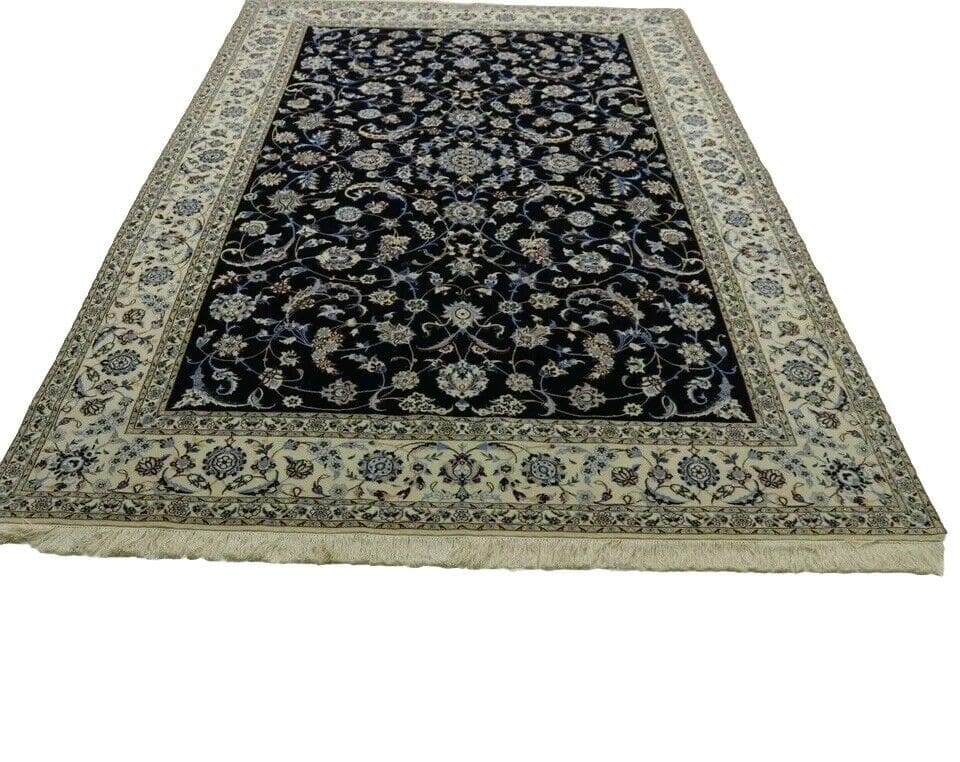
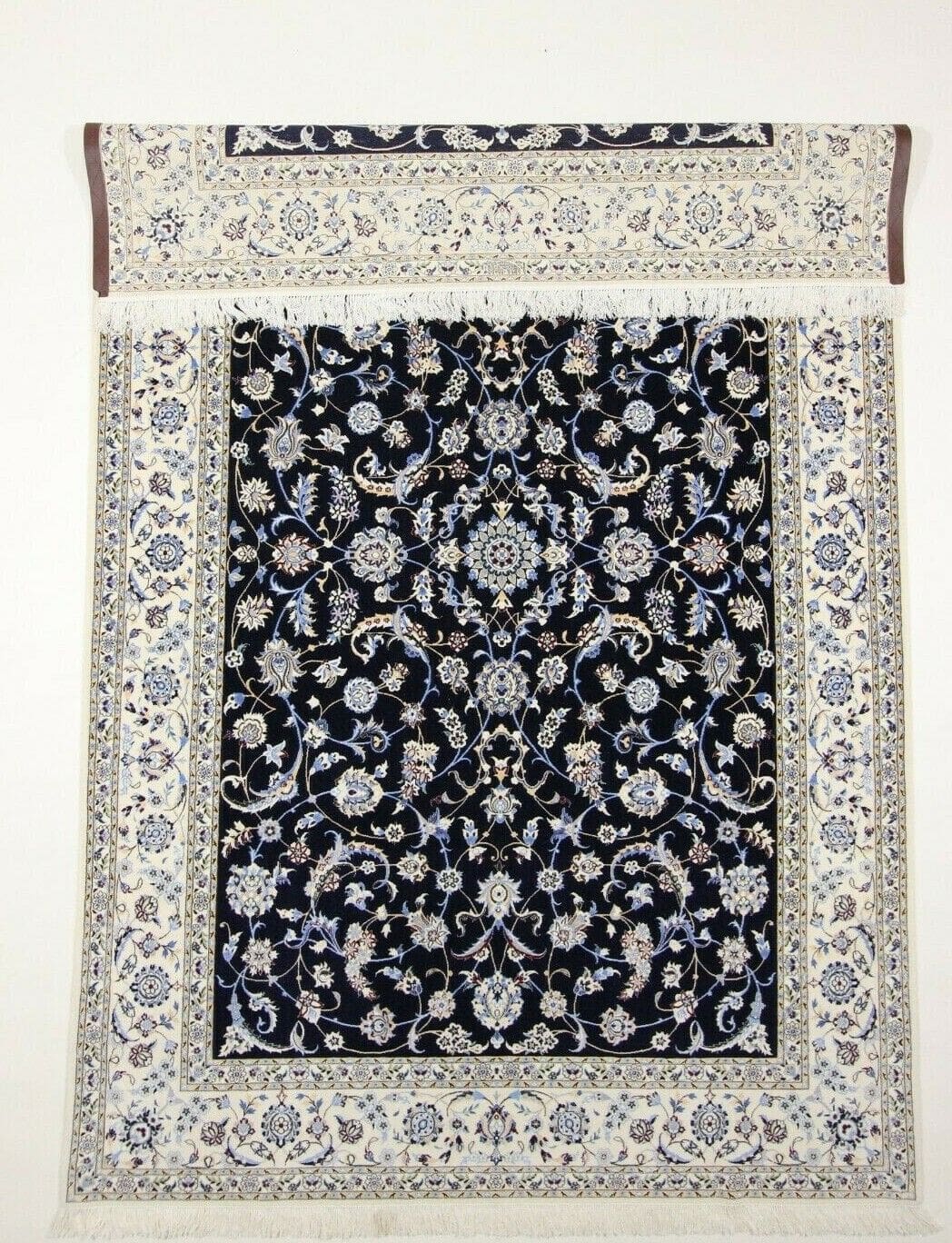
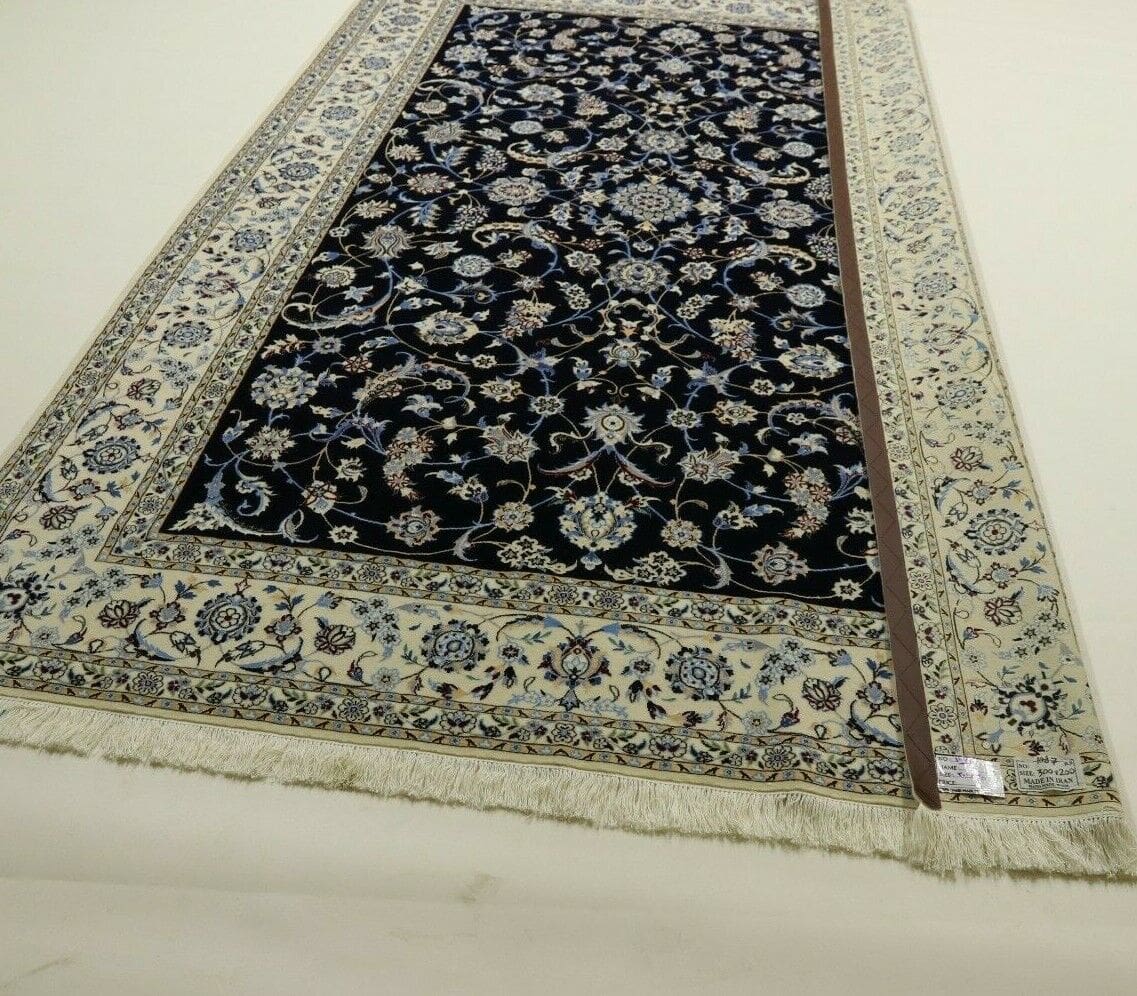
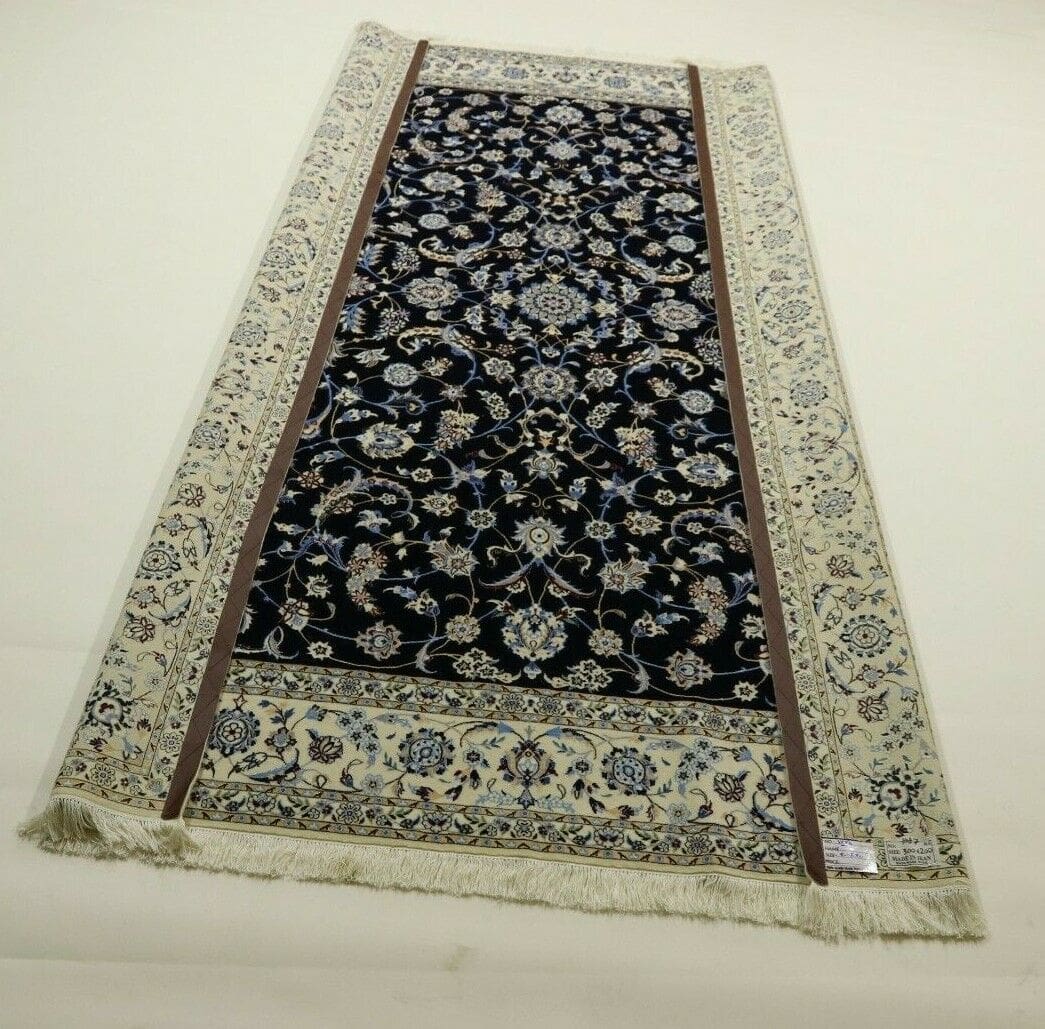
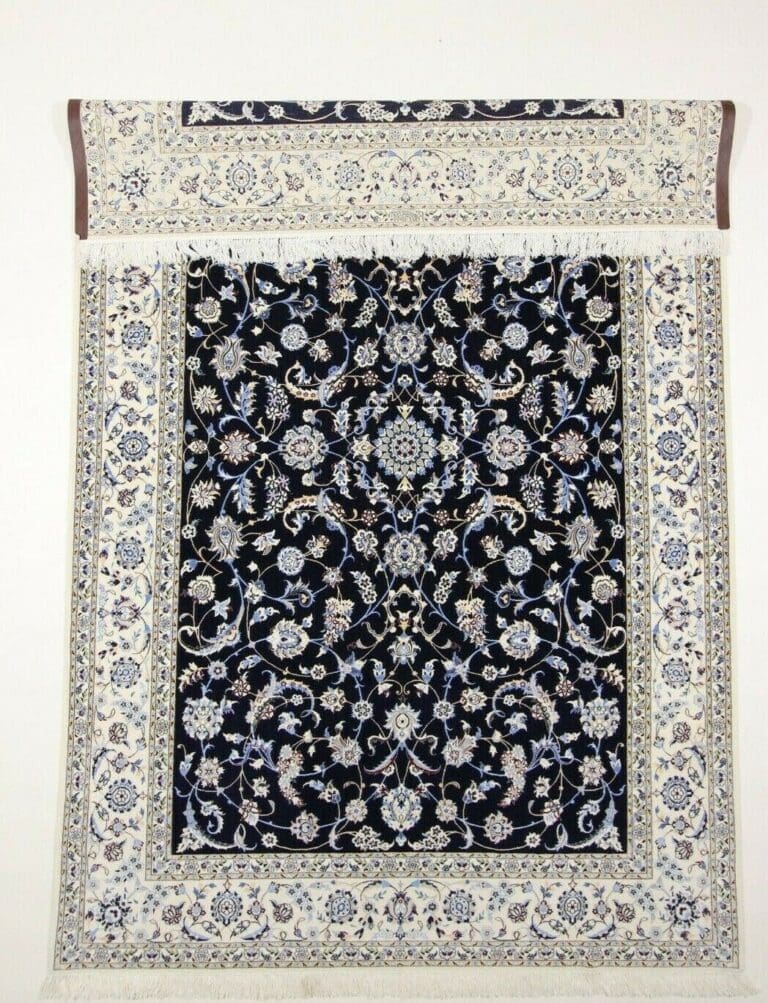
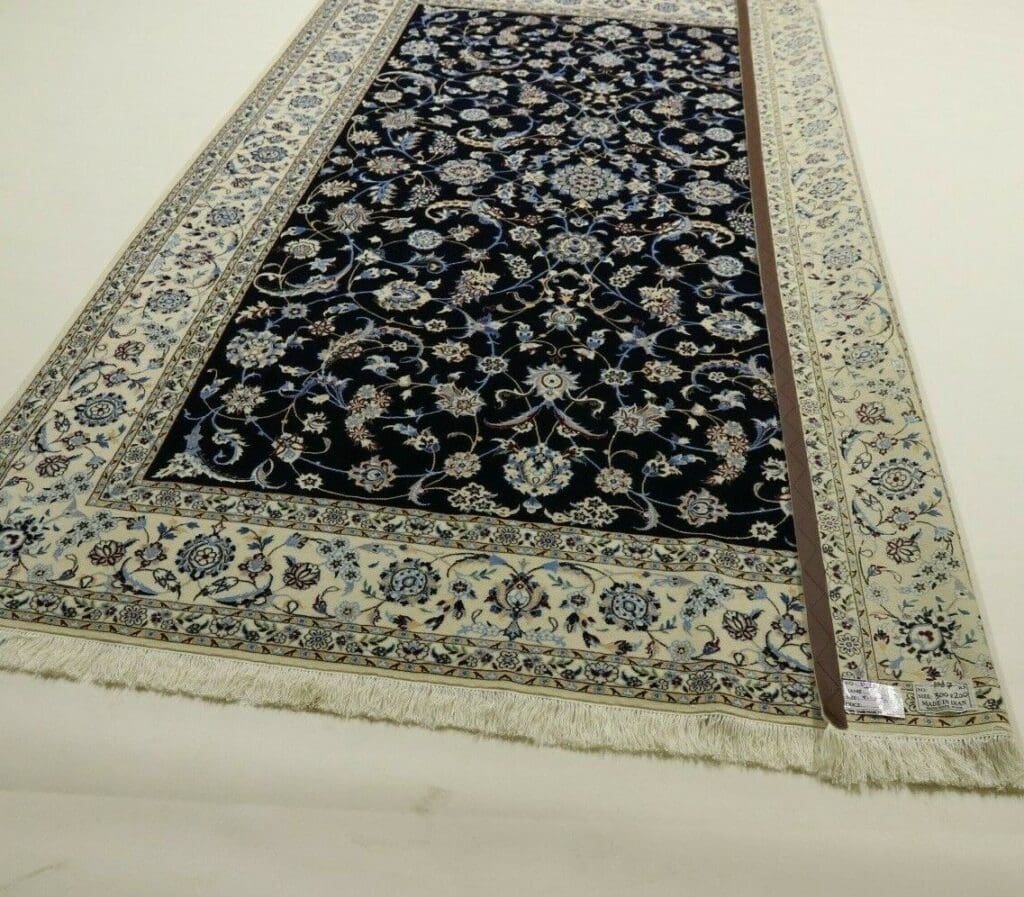
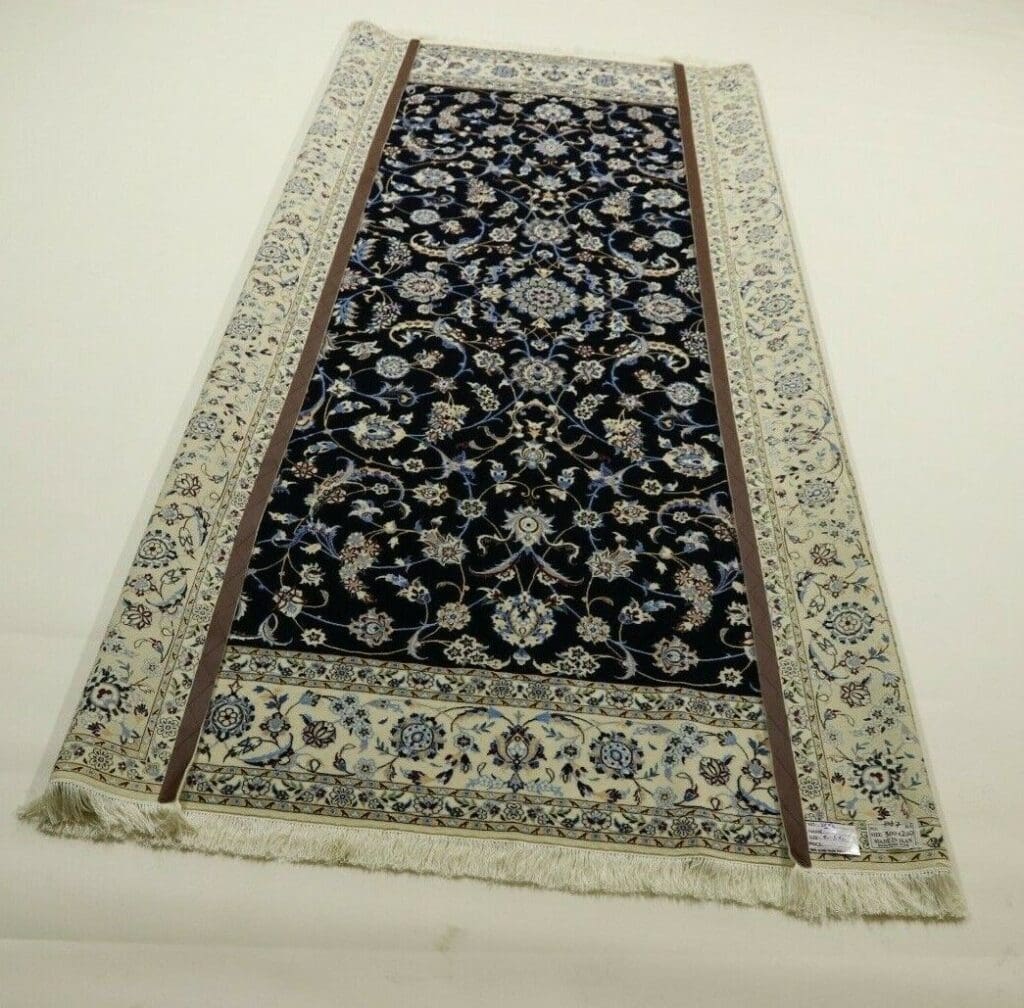
Hand-knotted Nain Persian Rug | Knot density: 850,000 to 1,000,000 knots/m² | Material: 80% cork wool, 20% natural silk | Size: 300 x 200 cm | Pattern: floral and geometric elements | Condition: New, very good
The Super Nain 6 La is entirely hand-knotted. Its surface is created knot by knot through traditional manual work rather than by machine or by printing a design onto a finished textile. During knotting, each coloured section is built into the structure according to the pattern. The regularity of the work and the precision of the individual knots are therefore important parts of the finished rug. A knot density of 850,000 to 1,000,000 knots per square metre is given for this rug. Fine knotting provides the technical basis for closely drawn outlines and detailed ornament.
The pile is made of 80% cork wool and 20% natural silk. Cork wool denotes a particularly fine wool quality used in Nain rugs for its soft handle and dense textile feel. Wool gives a hand-knotted rug a warm, resilient surface and forms the principal fibre in the pile. Natural silk has a smooth, fine structure and is used in Persian rug making where delicate detail and a refined surface are required. The stated combination brings together the textile body of wool and the fine character of silk. No other pile material is specified.
In a hand-knotted rug, the pattern is formed as the rug is made. It is not added afterwards as a printed image. Every area of colour results from the placement of individual knots and the relationship between adjoining rows. A high knot density allows small shapes, narrow lines and carefully controlled transitions to be incorporated into the design. Technique and appearance are consequently closely connected. The rug is described as fully hand-knotted and made to a very high standard.
The name 6 La forms part of the product designation Super Nain 6 La. The rug is described as new and in very good condition. The source also gives a thickness of approximately five millimetres. These are the stated details of this individual piece. The material composition is 80% cork wool and 20% natural silk, and the construction is hand-knotted throughout.
Origin and Tradition
This rug comes from Persia and is identified as a Nain rug. Nain is a city in Iran known for carpet production over many centuries. Its name is associated with a regional tradition of fine hand-knotted carpets in which close knotting, carefully selected fibres and orderly design are brought together. The place name therefore refers not only to geography but also to a particular history of textile craftsmanship.
Nain has a carpet-making tradition reaching back to the sixteenth century. As in other Iranian weaving centres, knowledge of preparing fibres, organising patterns, choosing colours and handling the knotting process has been carried through craft practice over generations. A hand-knotted rug is the result of several connected stages. The foundation is prepared, knots are placed in rows, and the developing surface is checked as the work progresses. Finishing work gives the pile and the outlines their final form.
Nain rugs are especially associated with fine knotting. A closely knotted structure makes it possible to draw intricate lines and to separate small floral details from geometric boundaries. Knot density is not the only element that determines the character of a rug. The fibres, the distribution of colour, the structure of the pattern and the consistency of the workmanship also matter. In the Nain tradition, these technical and visual aspects are treated as parts of one design process.
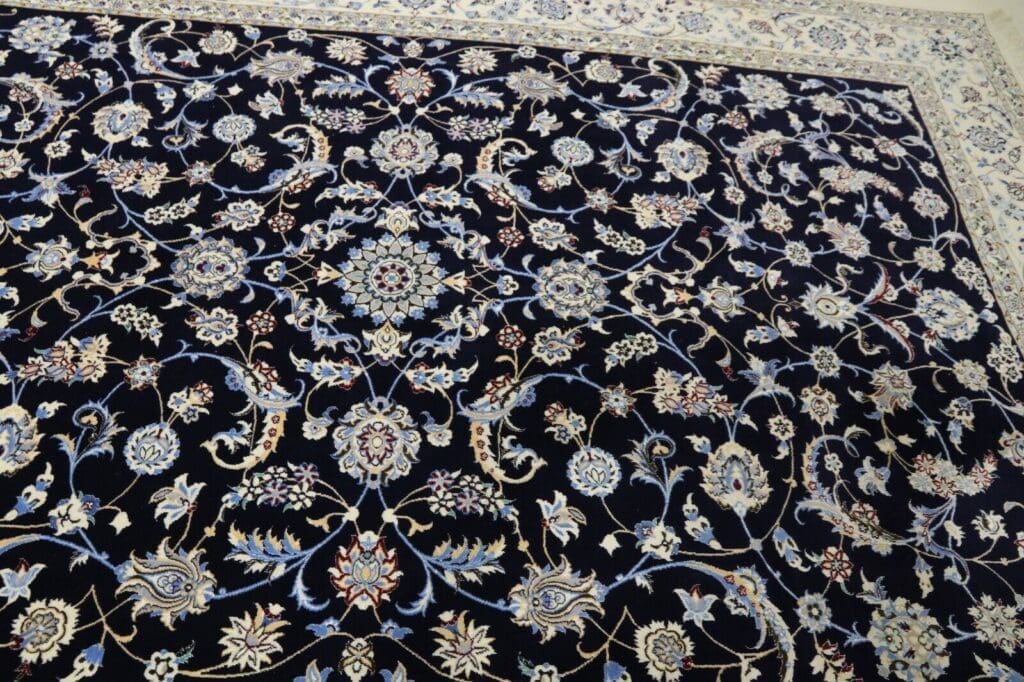
Traditional Nain rugs are often linked with floral patterns, medallion-like motifs and complex geometric designs. Such compositions may use symmetry, a central organisation and supporting ornaments around the main field. The motifs are usually stylised rather than intended as literal botanical pictures. Flowers, leaves and scrolling forms can be repeated, mirrored and connected to create a coherent textile surface. Their arrangement reflects the pattern knowledge of Persian carpet making.
Iranian carpet traditions contain many regional pattern languages. Nain is commonly connected with controlled drawing and detailed execution. A design may be organised around a central medallion or may extend through continuously linked ornaments. Floral scrolls can connect separate areas, while geometric elements establish boundaries and rhythm. These forms may be read as carrying spiritual or historical associations within the wider culture of Persian carpets. Such background belongs to the tradition of the rug type and does not assign a specific story to this individual piece.
The designation Super Nain 6 La places this rug within the Nain tradition and points to its fine execution. It does not alter the stated origin: the rug is a Persian rug from Persia identified as Nain. Its classification rests on the combination of Iranian origin, hand-knotted construction, the stated wool and silk composition, high knot density and Nain-related design language. These are the features through which Nain rugs are understood within the study and trade of oriental carpets.
Hand-knotted carpets have long served in Iranian culture as useful textiles, decorative objects and carriers of inherited patterns. The knowledge required to follow a drawn design, count or organise knots and maintain symmetry is passed on through practical training. The work demands patience and close attention. The finer the intended drawing, the more important the regularity of the knotting and the controlled placement of each line become.
The Nain tradition is also associated with a balance between restraint and detail. A carefully ordered composition may appear calm when viewed as a whole, while a closer look reveals numerous individual ornaments. This relationship between distant structure and near detail is part of the way finely made rugs are experienced. It explains why Nain rugs are linked both to technical precision and to a clearly organised visual language.
Design and Pattern
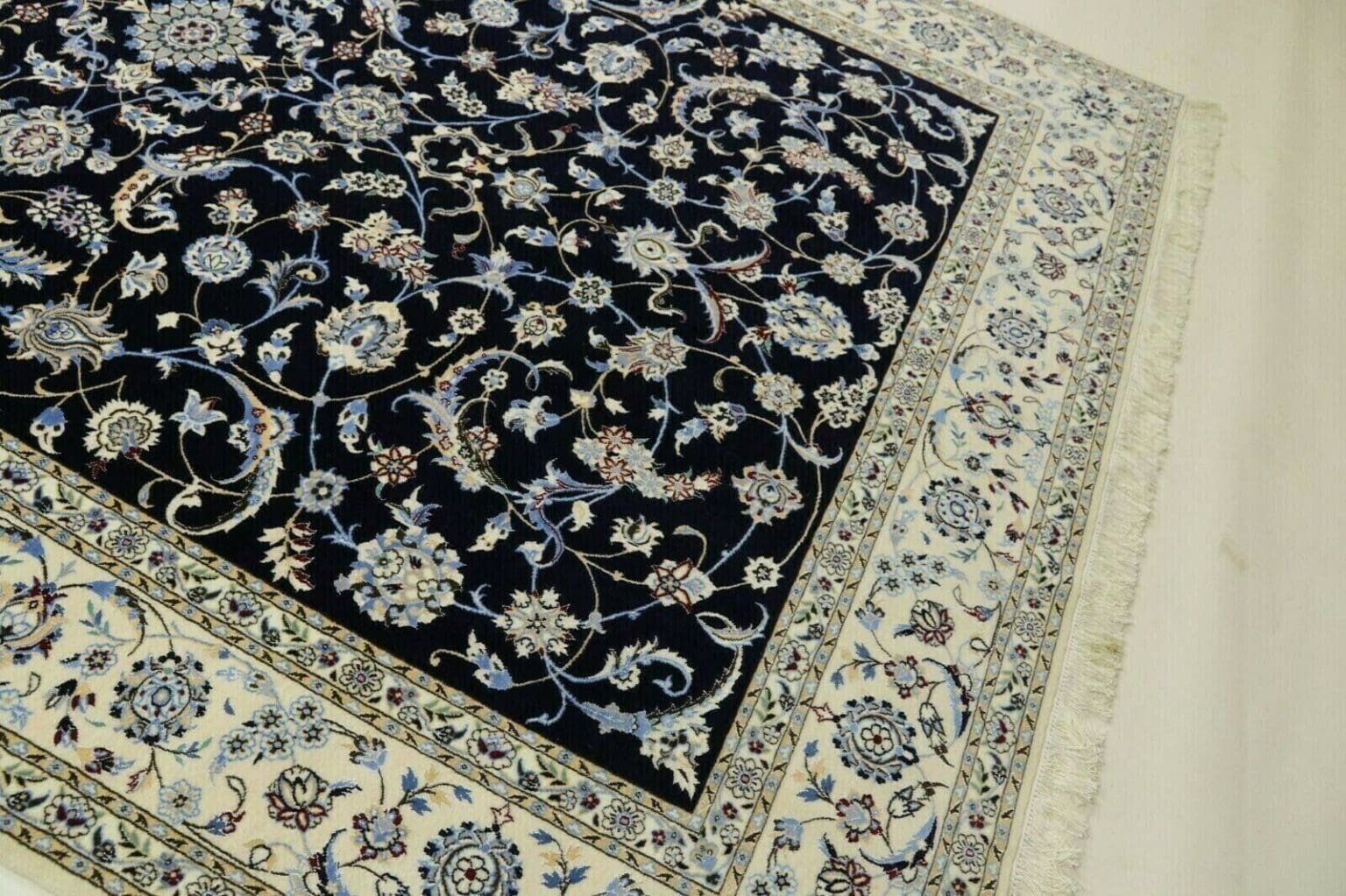
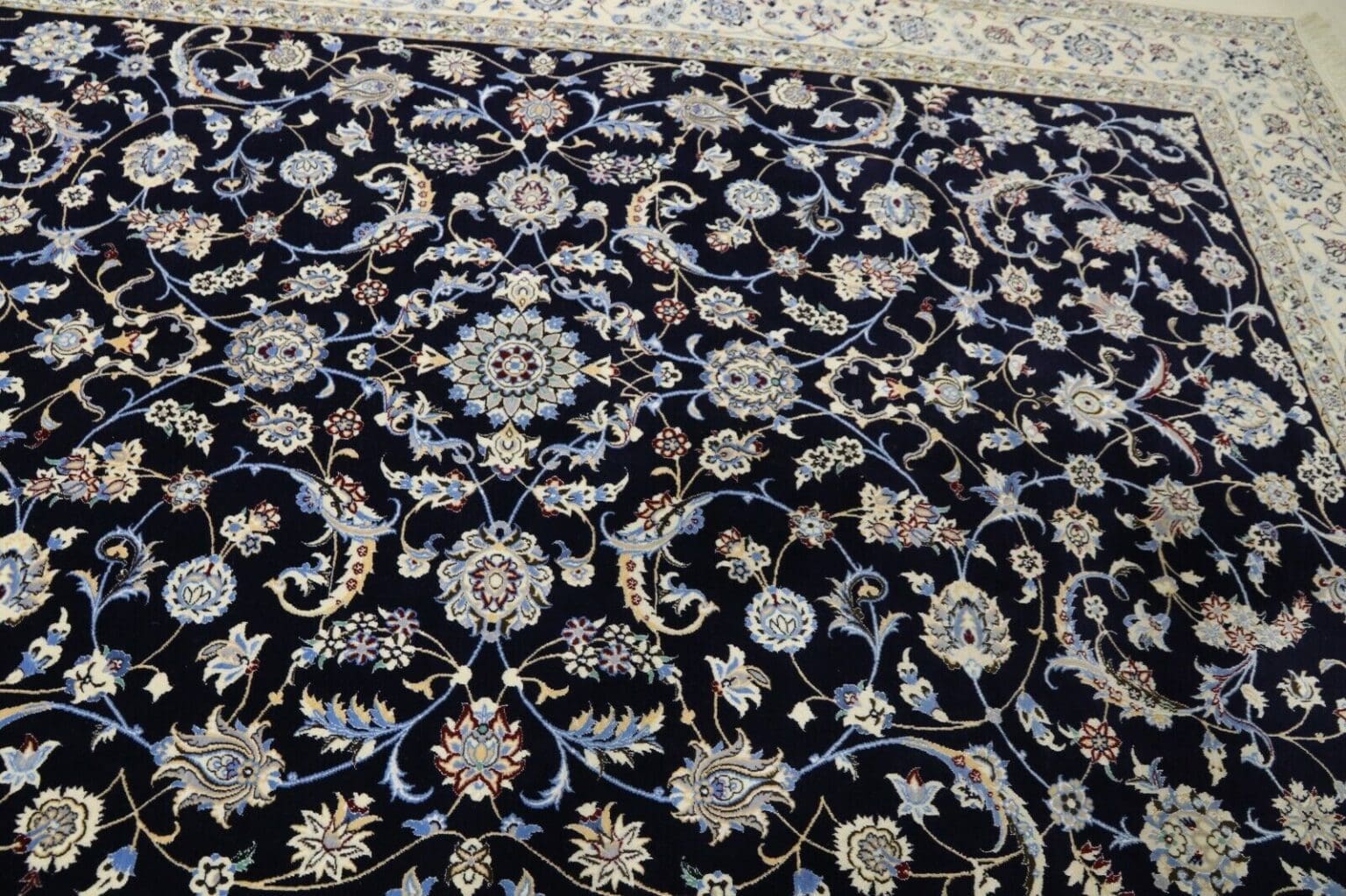
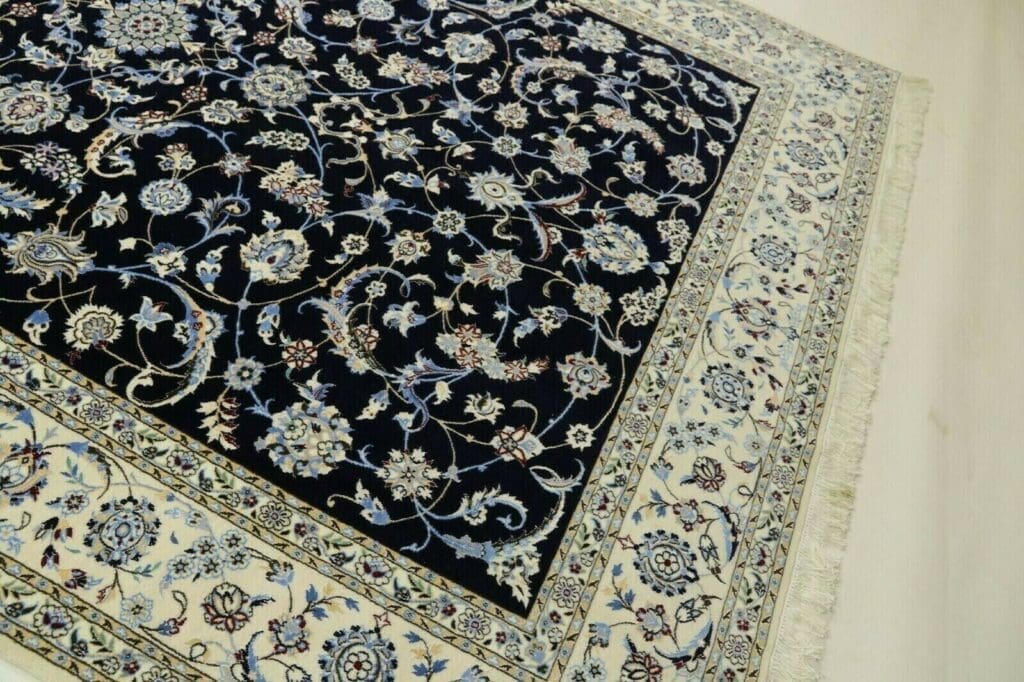
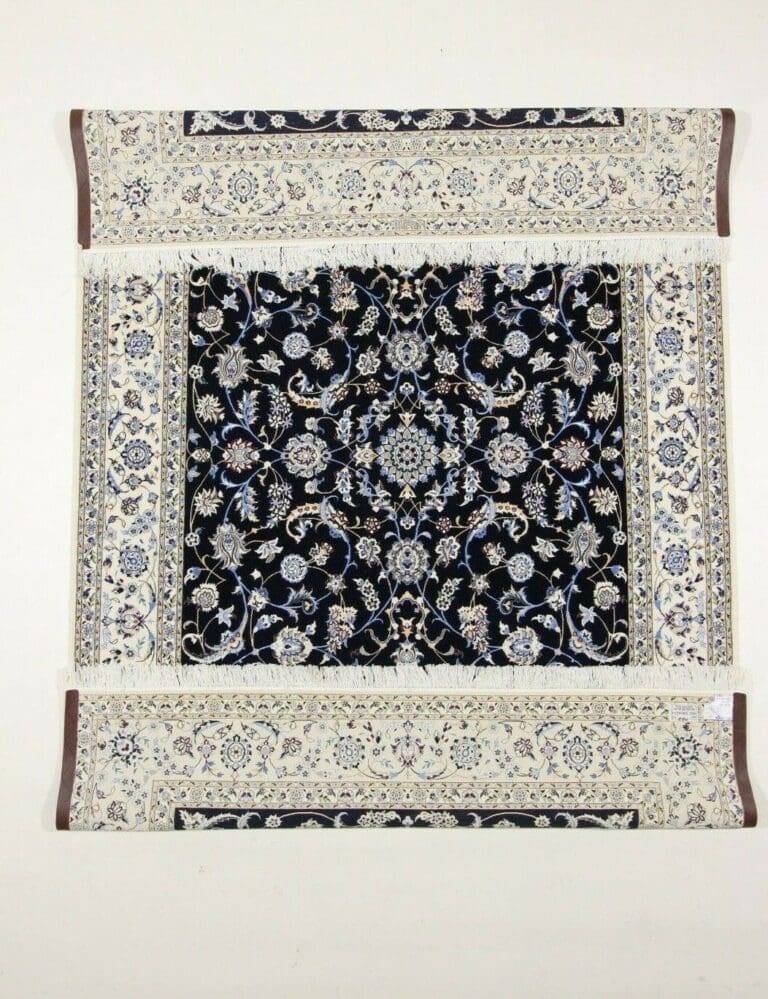
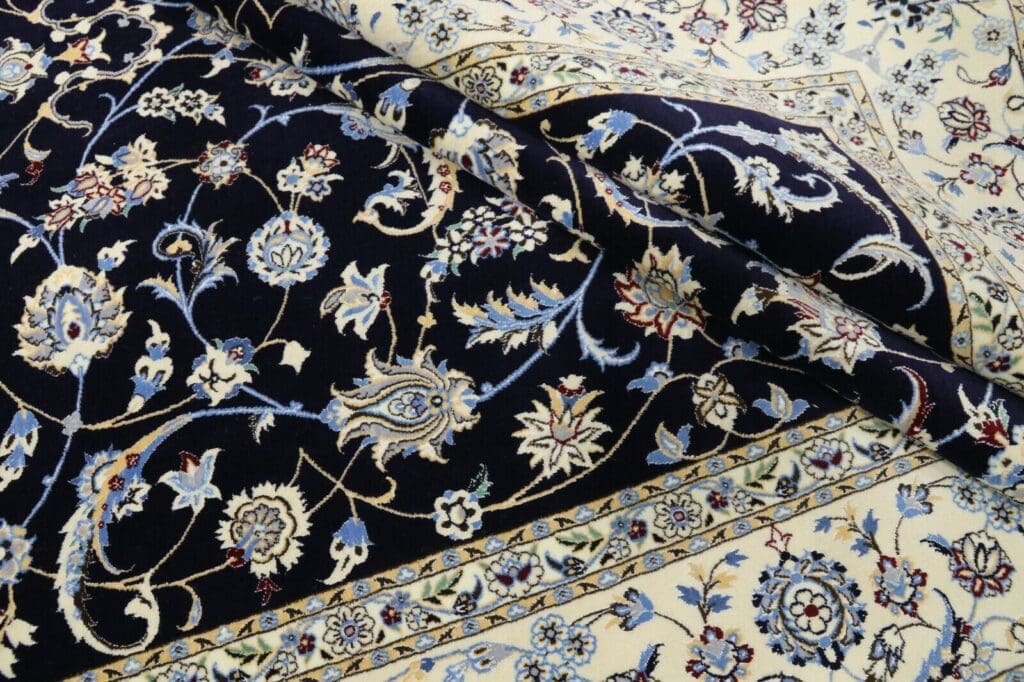
The design of this rug is described through harmonious colour combinations and detailed patterning. The source names floral elements and geometric forms as motifs found in the rug. These two approaches work together within the broader Nain vocabulary. Floral motifs contribute curved lines, leaves, blossoms and scrolling movement. Geometric elements introduce angles, repetition, spacing and distinct boundaries. Their combination provides both organic detail and formal structure.
Floral ornament is one of the central motif groups in Persian carpets. It is often built from simplified plant forms rather than from exact botanical studies. A flower may be represented through a small number of lines, while leaves and vines are repeated across the field. Symmetry and recurrence transform separate elements into a planned composition. Depending on the arrangement, the motifs may form connected scrolls, balanced clusters or an ordered pattern that extends across the whole surface.
Geometric forms add a framework of axes, intervals and recognisable contours. They can appear as small details within a floral field or as larger structures that divide the composition. Medallion-like designs are often used in Persian carpets to establish a centre. Additional ornaments may be arranged around that centre, linking the main field with surrounding sections. Repeated shapes create visual rhythm, while clear boundaries help the viewer read the relationship between the different areas of the design.
Complex patterning also demonstrates the possibilities of fine knotting. Small knots allow narrower lines and more closely spaced details than a coarser construction would permit. The design can therefore be translated into the textile with greater definition. Knot density should not be considered separately from the pattern: it is part of the technical means by which the pattern is expressed. In Nain rugs, careful drawing and fine construction are commonly discussed together.
The balanced effect of a rug pattern depends on the relationship between field, colour, repetition and detail. A single floral motif has a different effect from a complete arrangement of linked ornaments. Geometric divisions can give scrolling forms a measured frame, while repeated flowers can soften a strictly linear structure. Nain designs often bring these elements into a composed whole. The source description presents the design of this rug as calm and welcoming.
Persian carpet motifs can also carry symbolic associations. Floral forms are often connected in general interpretation with nature, growth and the ordered image of a garden. Geometric structures may suggest balance, repetition and formal order. These are broad cultural readings of Persian ornament, not claims about a particular historical narrative represented by this rug. For this piece, the stated design information is limited to harmonious colour combinations, detailed patterning, floral elements and geometric forms.
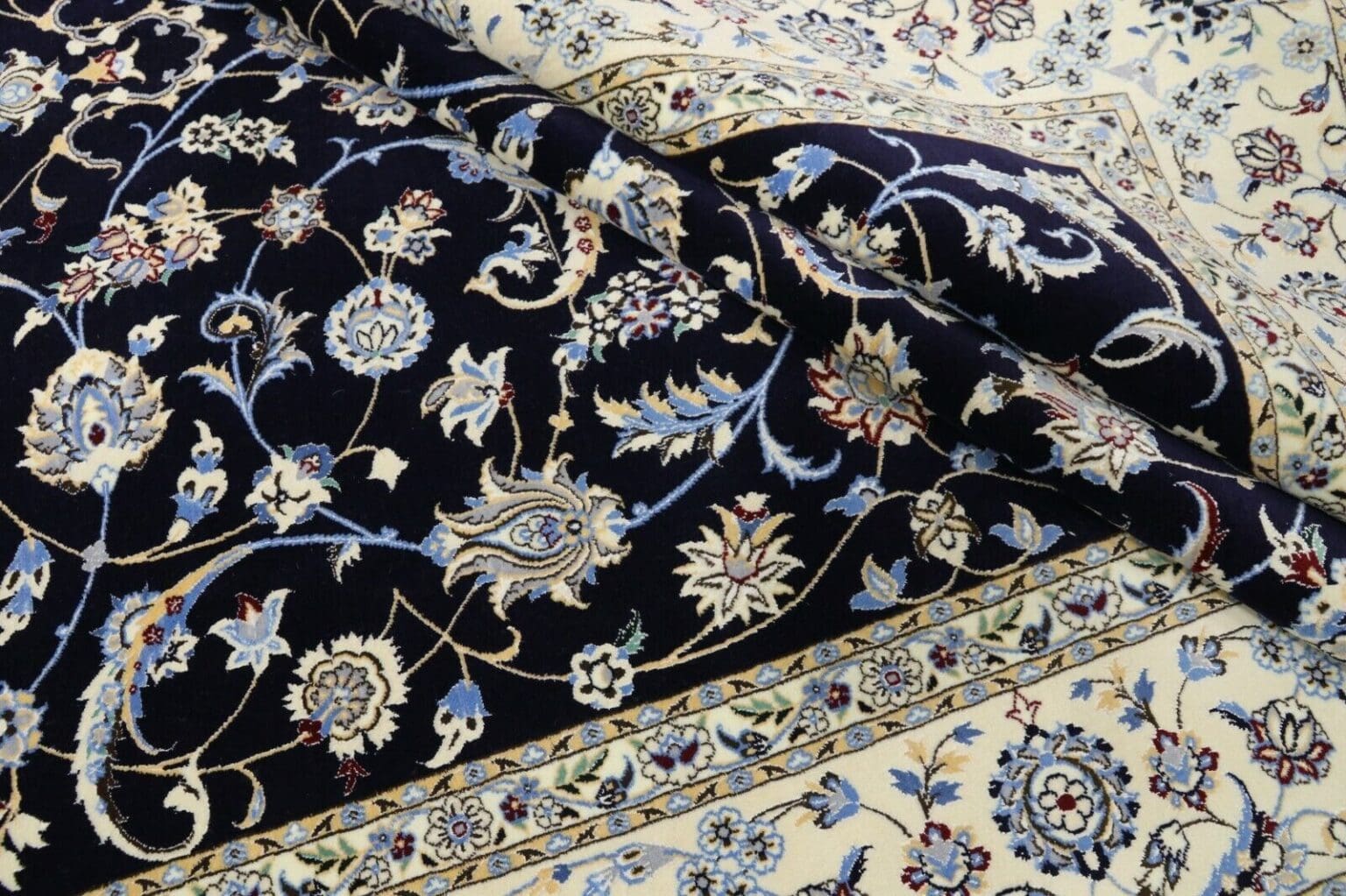
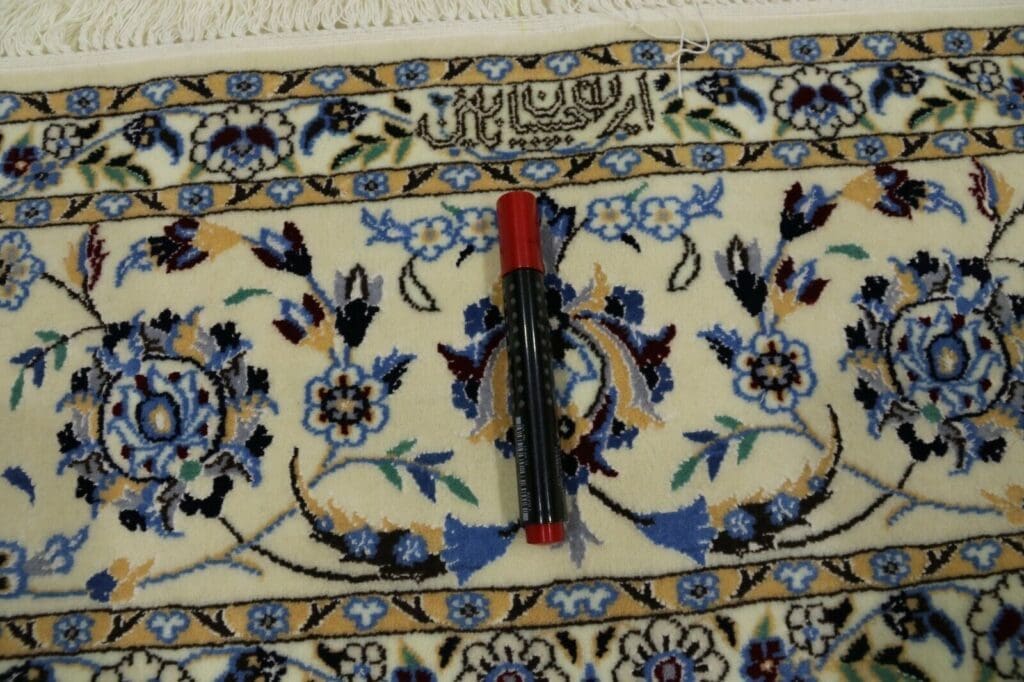
At close range, the viewer can notice the small ornament lines and the details produced by the hand-knotting. From farther away, the overall balance of the composition becomes more prominent. This two-level effect is common to finely worked rugs: individual details reward closer inspection, while the complete arrangement creates a coherent visual field. The combination of cork wool and natural silk contributes to the differentiated textile surface and supports the precise appearance of the pattern.
The Super Nain 6 La therefore brings together a regional design tradition and a precise hand-knotted technique. Its appearance is not defined by one isolated motif, but by the interaction of floral and geometric elements, harmonious colour combinations and detailed execution. These characteristics connect the design with the wider visual and technical tradition of Nain rugs.
Special Features
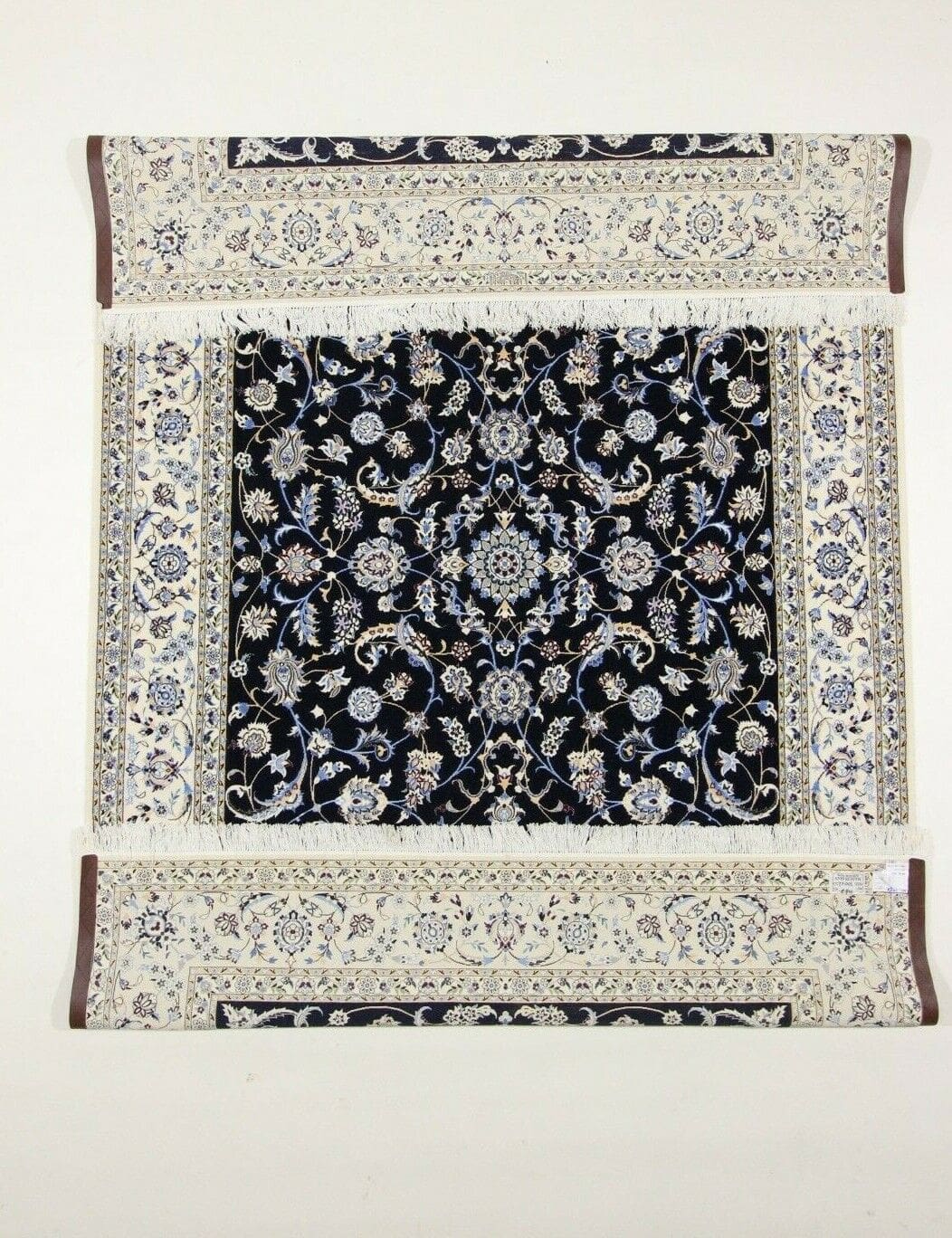
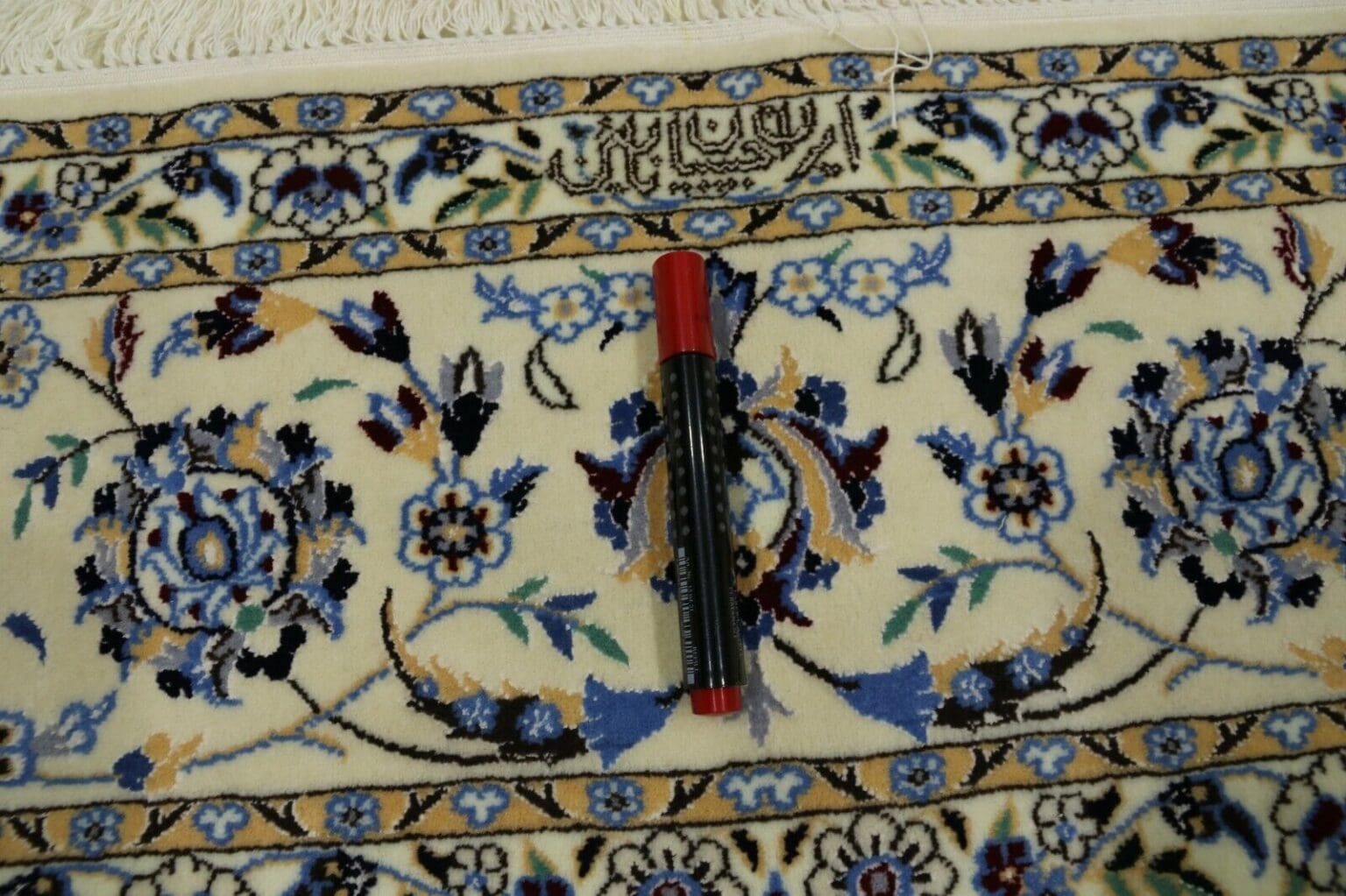
A distinctive feature of this rug is its signature. It identifies the piece as a signed example. The Super Nain 6 La is also described as having a high knot density of 850,000 to 1,000,000 knots per square metre. The source connects this fine construction with durability and resistance to wear. The rug is new and in very good condition. A thickness of approximately five millimetres is also stated.
Regular vacuuming is recommended to remove dust and loose particles. Professional rug cleaning is advised when dirt has settled more deeply into the textile. A stain should be treated as soon as possible with lukewarm water and a mild cleaning product. Direct sunlight should be avoided so that the colours do not fade. These care instructions apply to preserving the appearance and textile condition described for the rug.
FAQ
How long does a hand-knotted Persian rug last?
With proper care, a hand-knotted Persian rug can last for several decades. Its service life in everyday use depends on careful handling, suitable cleaning and protection from unnecessary stress. Hand-knotted rugs are often kept for many years and, when treated carefully, can be passed from one generation to the next. They may then become valuable family heirlooms. The Super Nain 6 La combines fully hand-knotted construction with a high knot density and a pile made of cork wool and natural silk. Regular gentle vacuuming, prompt treatment of stains and professional cleaning when necessary help preserve the textile surface. Protection from direct sunlight is also part of the recommended care.
How should I clean my Persian rug?
The rug should be vacuumed carefully as part of regular maintenance. This removes dust and loose dirt without placing unnecessary strain on the surface. When soiling has penetrated more deeply, professional rug cleaning is recommended. If a stain occurs, it should be treated promptly with lukewarm water and a mild cleaning product. Harsh detergents, excessive rubbing and unsuitable cleaning methods should be avoided because they can affect fibres and colours. The rug should also be protected from direct sunlight to reduce the risk of fading. If the correct treatment is uncertain, a professional cleaner is the appropriate choice for the hand-knotted textile.
What makes Nain rugs special?
Nain rugs are known for high knot density, fine materials and complex designs. These features combine the technical precision of Iranian handwork with a clear and balanced ornamental language. Floral elements, medallion-like motifs and geometric forms are among the design approaches commonly associated with Nain. In the Super Nain 6 La, fully hand-knotted construction, 80% cork wool, 20% natural silk and high knot density come together. The signature is an additional distinctive feature of this individual piece. The rug is also described as new and in very good condition. Its place within the Nain tradition is defined by the relationship between Persian origin, material, technique and pattern.
To provide the best experiences, we use technologies like cookies to store and/or access device information. Consenting to these technologies will allow us to process data such as browsing behavior or unique IDs on this site. Not consenting or withdrawing consent, may adversely affect certain features and functions.
Functional Always active
The technical storage or access is strictly necessary for the legitimate purpose of enabling the use of a specific service explicitly requested by the subscriber or user, or for the sole purpose of carrying out the transmission of a communication over an electronic communications network.
Preferences
The technical storage or access is necessary for the legitimate purpose of storing preferences that are not requested by the subscriber or user.
Statistics
The technical storage or access that is used exclusively for statistical purposes.The technical storage or access that is used exclusively for anonymous statistical purposes. Without a subpoena, voluntary compliance on the part of your Internet Service Provider, or additional records from a third party, information stored or retrieved for this purpose alone cannot usually be used to identify you.
Marketing
The technical storage or access is required to create user profiles to send advertising, or to track the user on a website or across several websites for similar marketing purposes.

 SECURE PAYMENT
 SHIPPING PARTNERS


