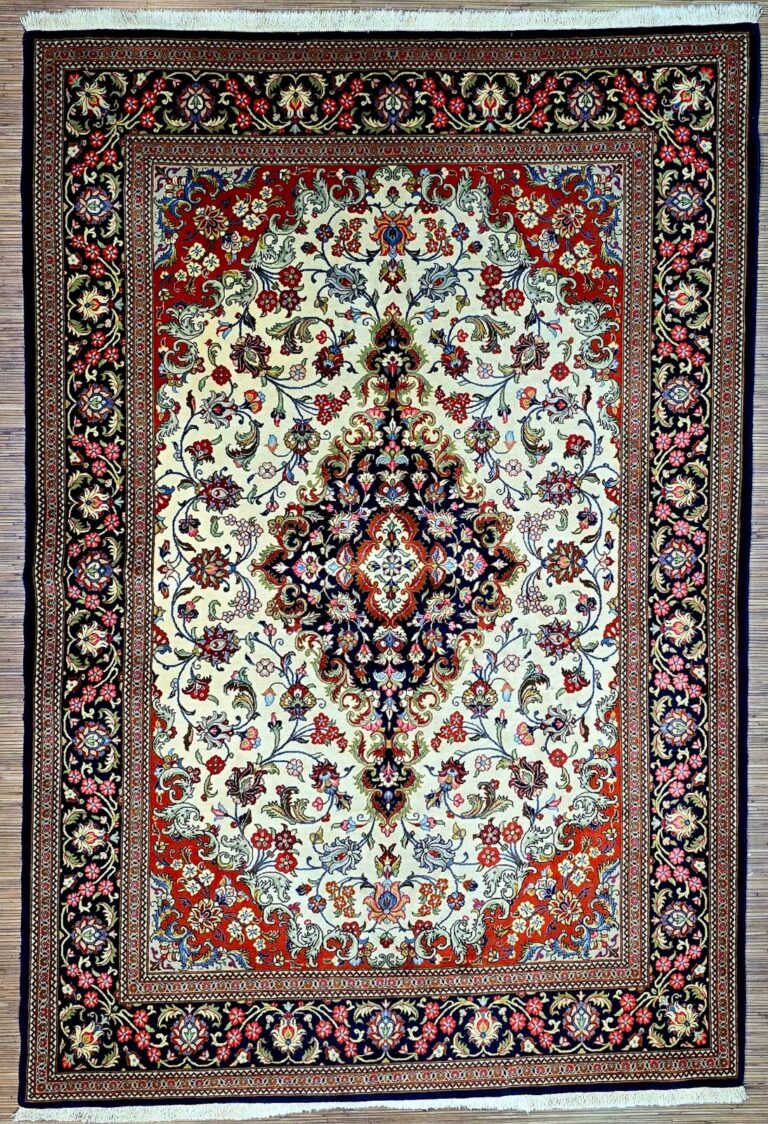
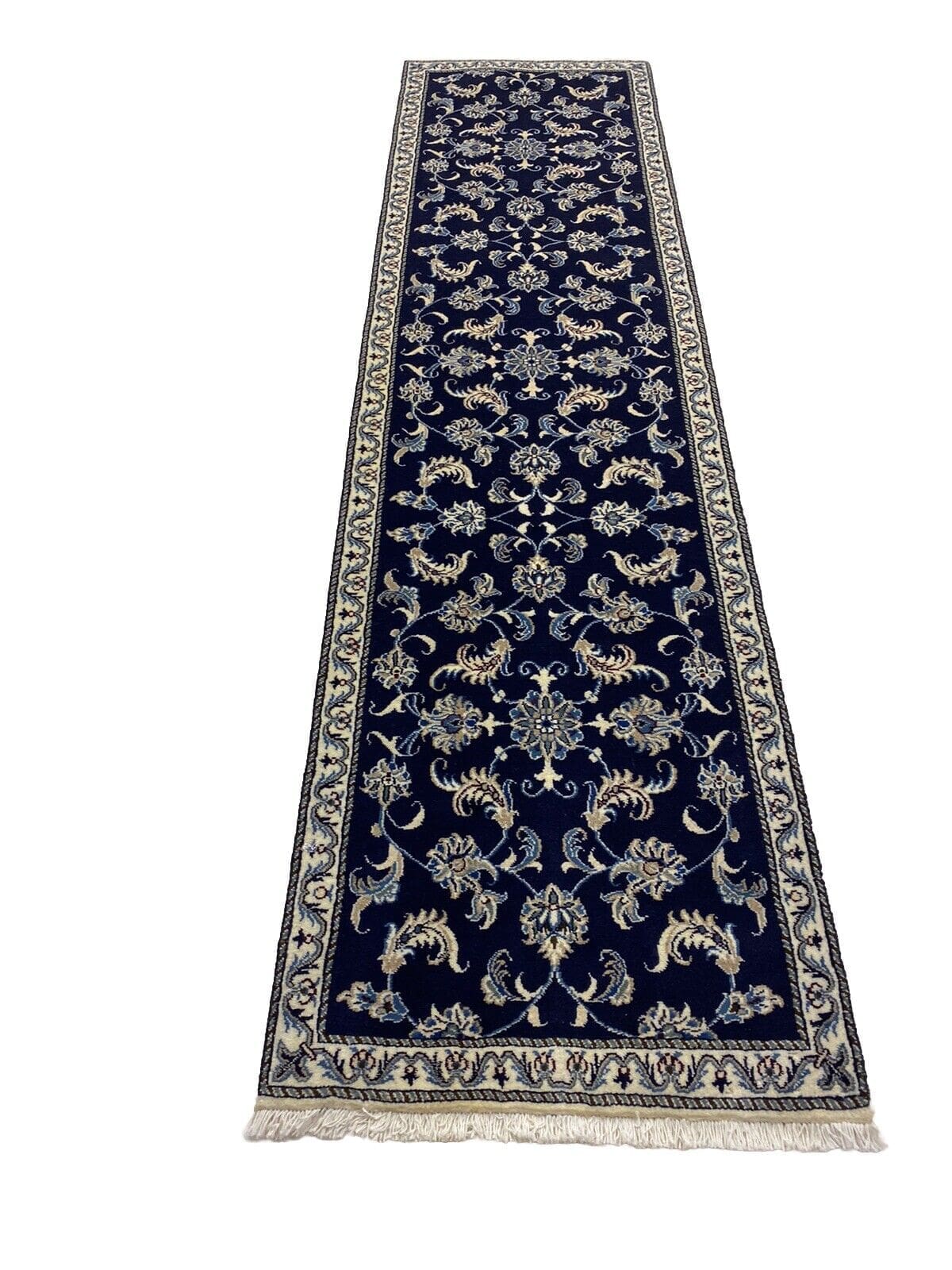
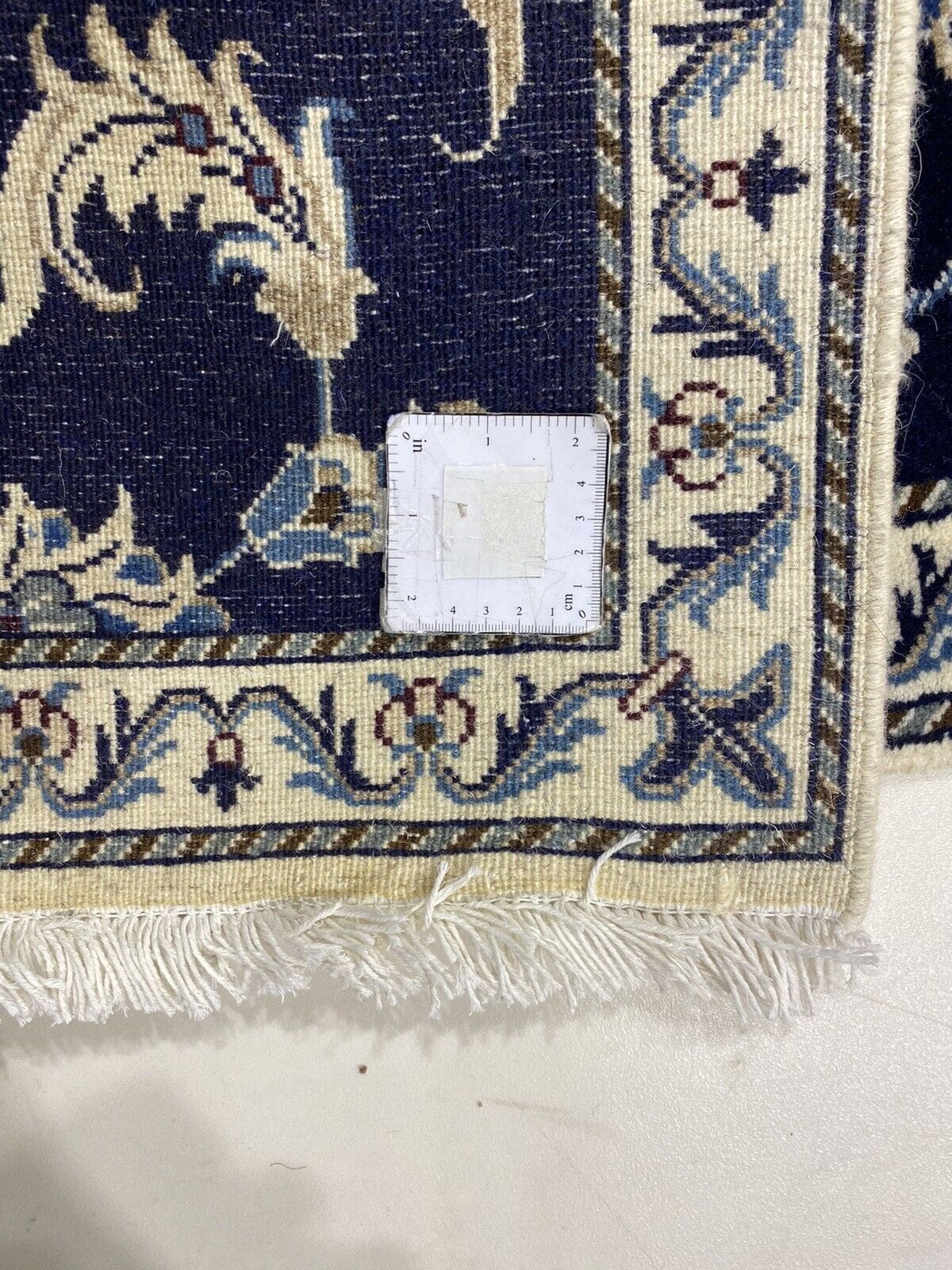
This Super Nain is a hand-knotted Persian rug from Persia. Its pile consists of 90% virgin wool and 10% silk, while the warp is made of 100% cotton. The composition therefore combines a predominantly woollen pile with a silk component and a cotton foundation. Virgin wool supplies the main textile surface, and silk adds a finer fibre to the pile. The cotton warp forms the structural basis into which the knots are worked.
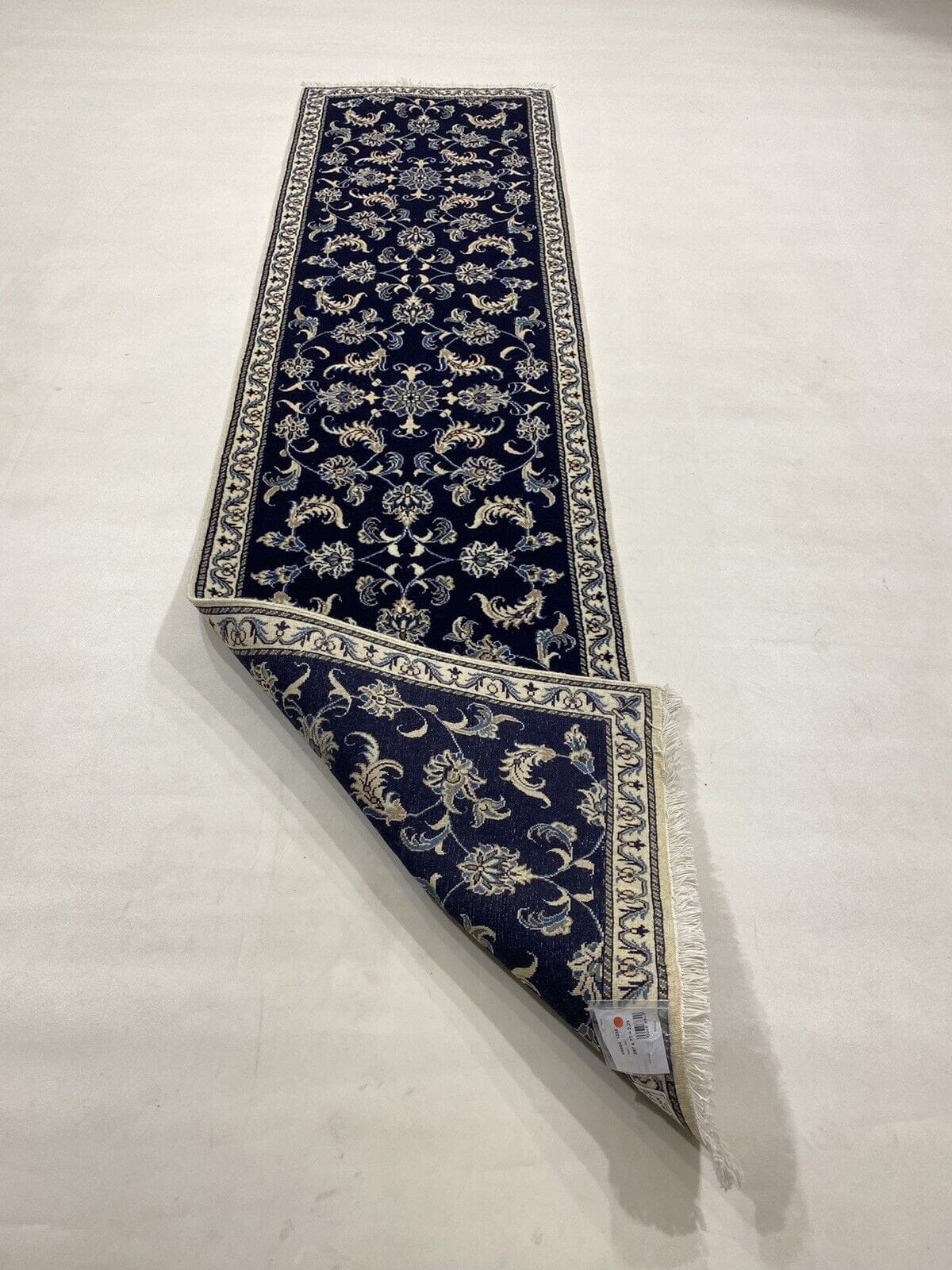
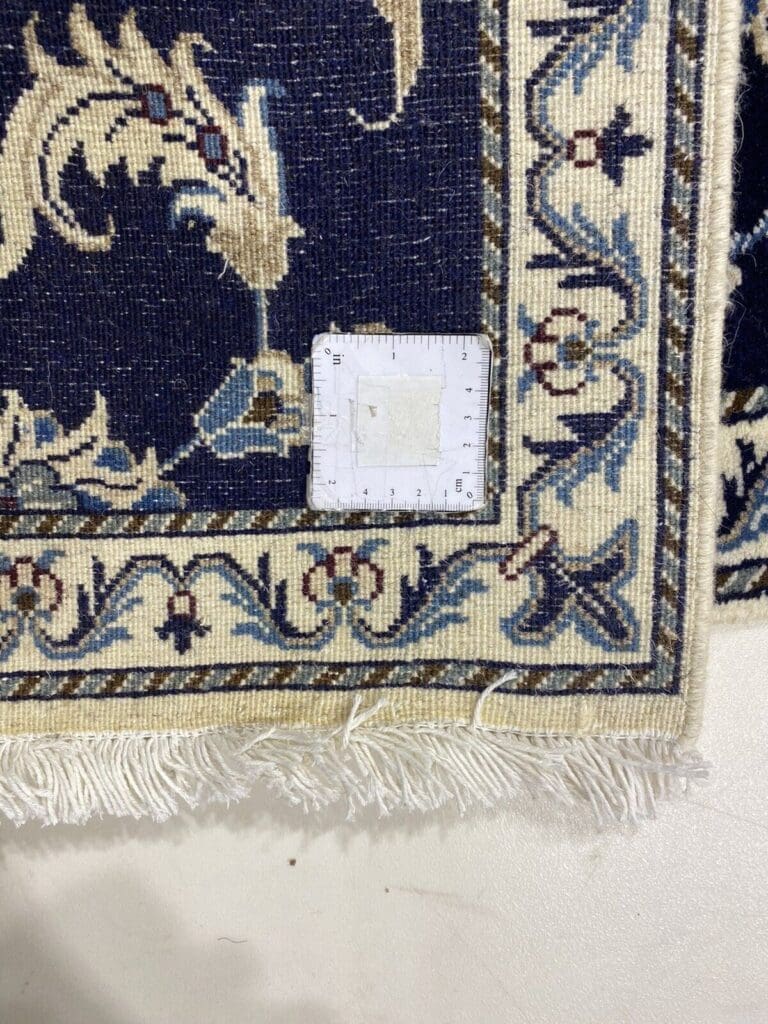
Hand knotting sets this rug apart from a machine-made floor covering. Individual knots are placed into the foundation one row at a time, and the pile is built up gradually as the work progresses. The design is created through the arrangement of those knots rather than printed onto a finished surface. A Super Nain is associated with finely worked decoration, and this rug has an indicated density of approximately 300,000 knots per square metre.
The pile height is approximately 8 mm. This gives the surface a defined textile character in which delicate lines and small details can remain legible. Wool provides a soft, substantial feel, while silk can introduce a restrained sheen into the pile. Cotton serves as the warp material and supports the knotted construction. The rug is new and in very good condition.
The rug is also described as a unique piece and a one-off. It is therefore not presented as a repeated production model. Its hand-knotted construction, wool-and-silk pile, cotton warp and fine knot density define its documented workmanship. No additional construction details are assigned to it beyond these stated characteristics.
Origin and Tradition
The rug comes from Persia and is identified as a Super Nain. Nain rugs form part of the Persian weaving tradition and are associated with carefully ordered, finely drawn compositions. Nain is a city in central Persia, a region with a distinctive history of carpet making. Designs from this tradition are often recognised for precise outlines, balanced fields and a controlled relationship between larger ornaments and smaller details.
The Nain tradition developed within the broader history of Persian carpet weaving and knotting. A hand-knotted rug is made through a deliberate sequence of work: the foundation is prepared, knots are inserted row by row, the pile is trimmed, and the design is gradually brought into view. A dense knot structure allows a weaver to reproduce small curves, narrow contours and closely spaced elements with greater definition. The process requires time and consistent handling throughout the rug.
Persian rugs have traditionally served practical and cultural purposes at the same time. They cover floors, define areas within a room and carry established design knowledge from one generation to the next. Their layouts usually follow a planned relationship between field, border and ornament. A central arrangement may provide the focus, while surrounding elements create balance and guide the eye toward the edges. Nain designs are commonly connected with clarity and a fine level of detail.
Material selection is part of this regional tradition. Virgin wool is used for its textile body and practical qualities, while silk may be included in the pile to create finer lines or a subtle change in surface reflection. Cotton is widely used as a foundation material in Persian knotting. For this rug, the pile is specifically given as 90% virgin wool and 10% silk, and the warp as 100% cotton. These material facts belong to this piece; the wider background explains their place in Persian craftsmanship.
The term Persian rug indicates Persian origin rather than merely a decorative style. Nain, Kerman, Tabriz and Isfahan represent different regional traditions within Persian carpet art. They may differ in structure, ornament, colour arrangements and the way a composition is organised. This rug is identified as a Super Nain and comes from Persia. References to other places describe related traditions for comparison only and do not change the stated origin of this rug.
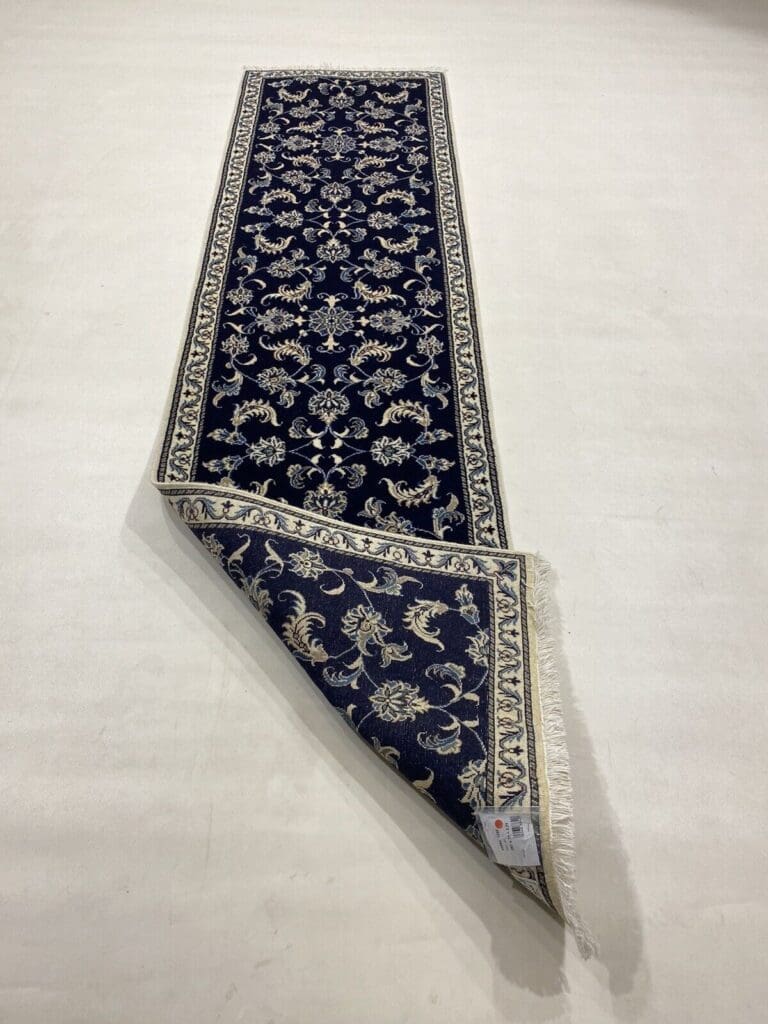
Persian carpets continue to be used in both traditional and contemporary interiors. A hand-knotted design can sit among classical furnishings or provide a patterned textile element in a more restrained room. A long, narrow rug may accompany a hallway, organise a passage or define space beside furniture. Its use is not limited to one particular room. The regional tradition remains visible through the construction and design language, regardless of the surrounding interior.
Design and Pattern
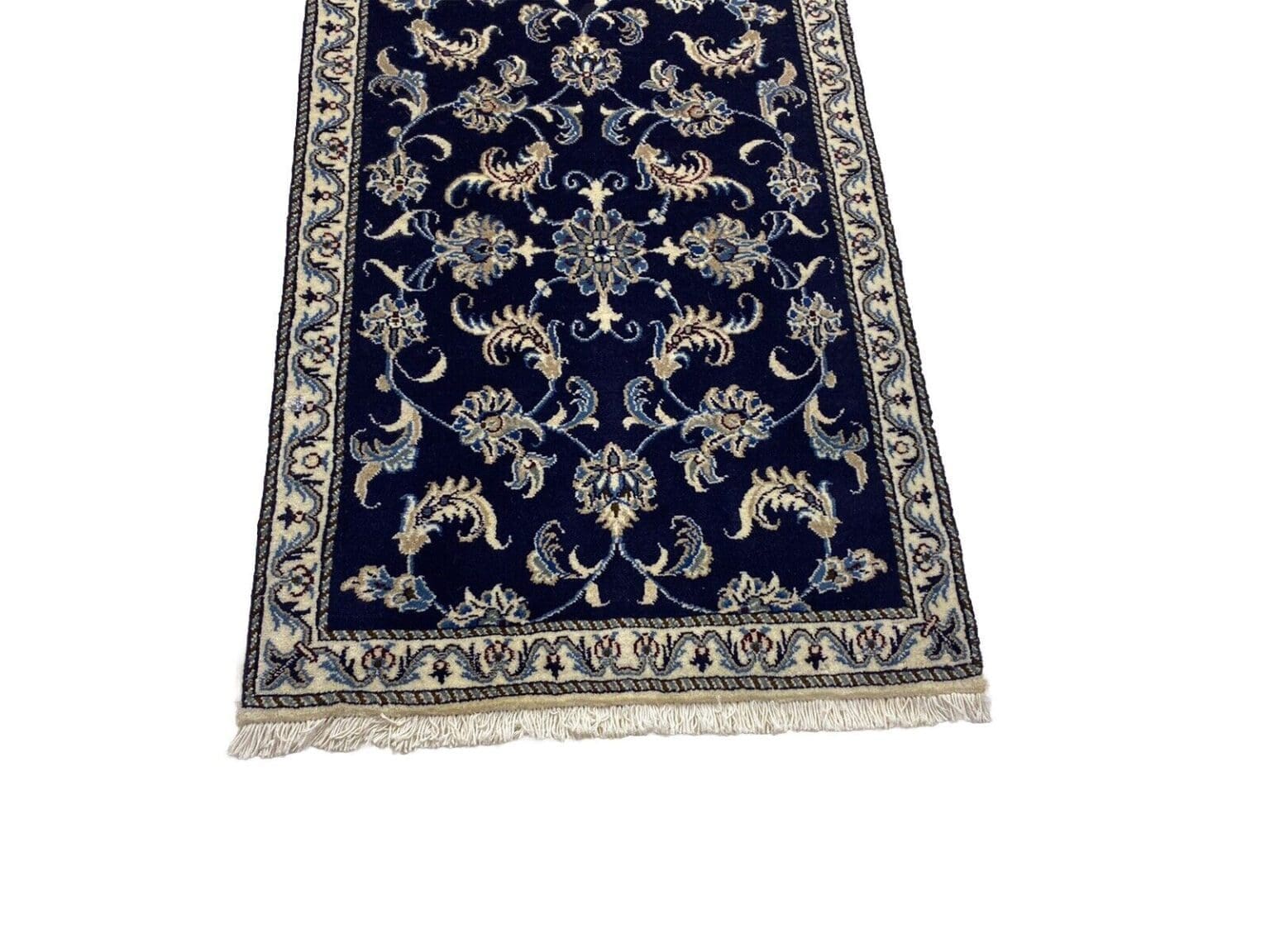
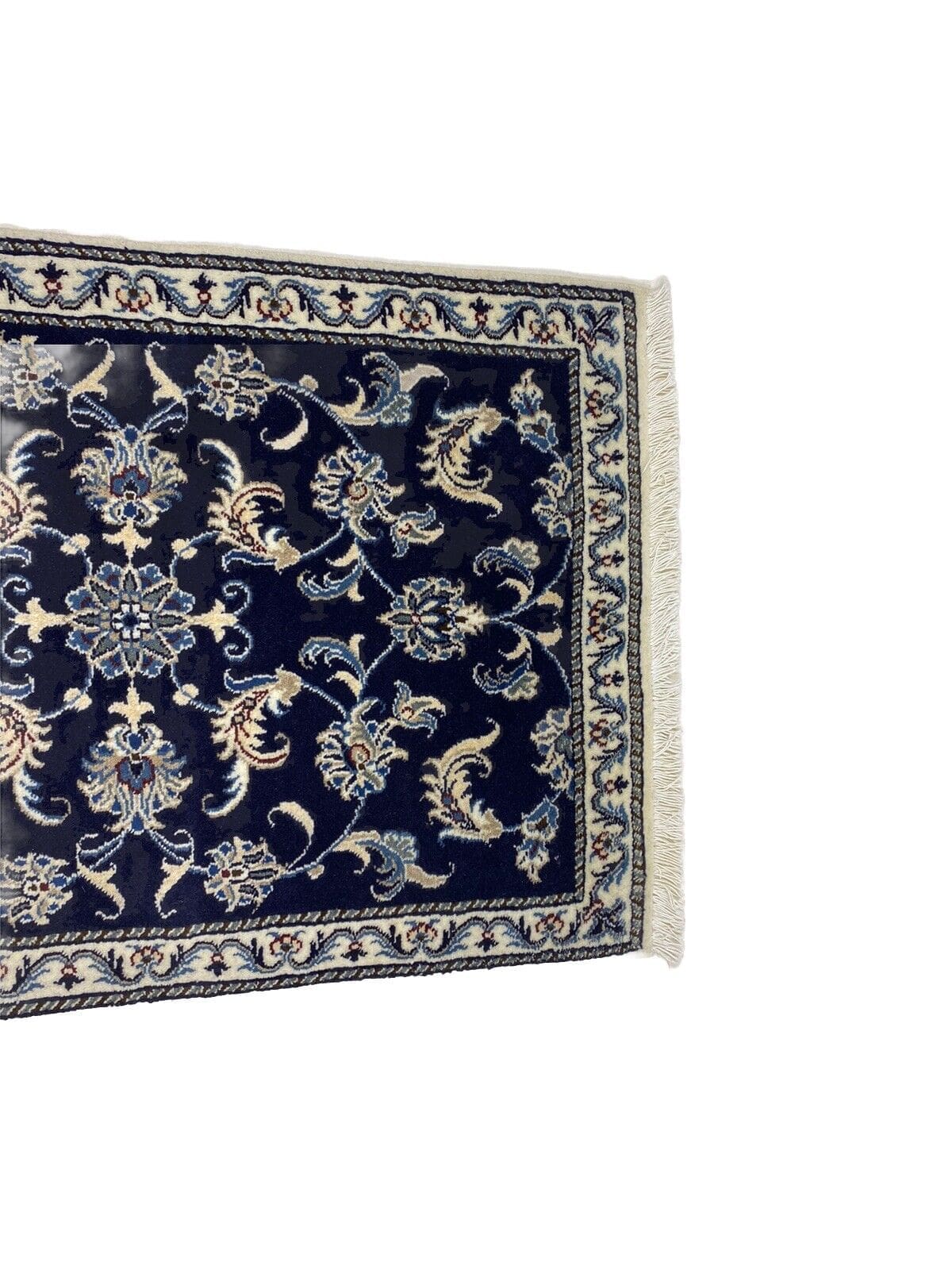
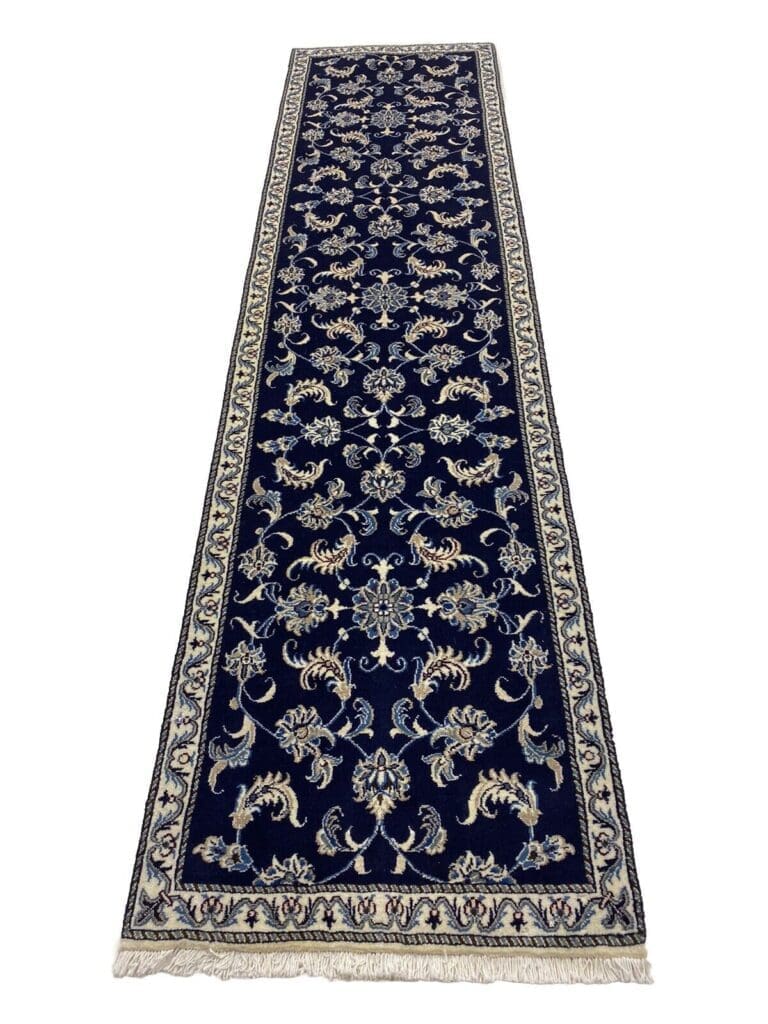
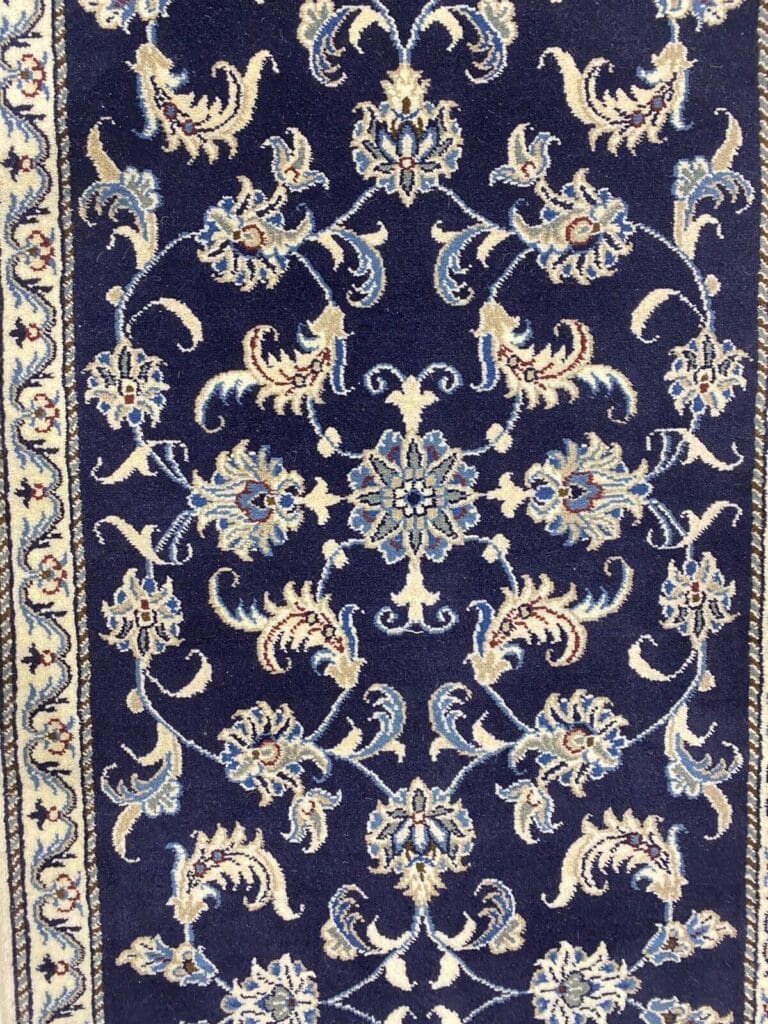
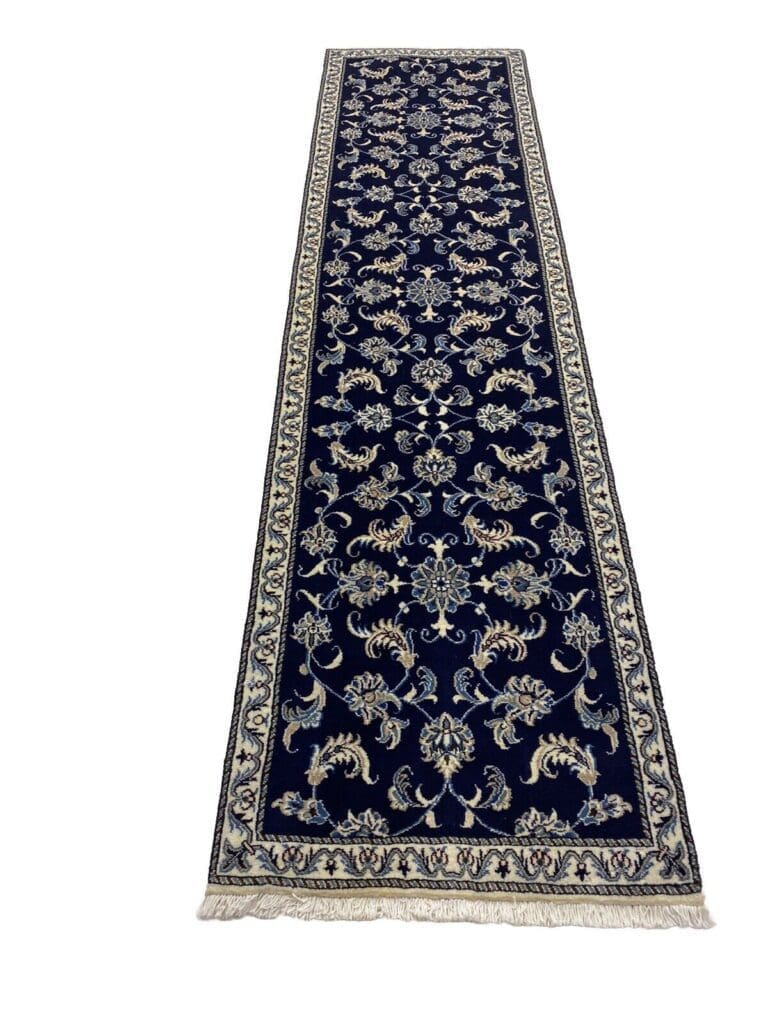
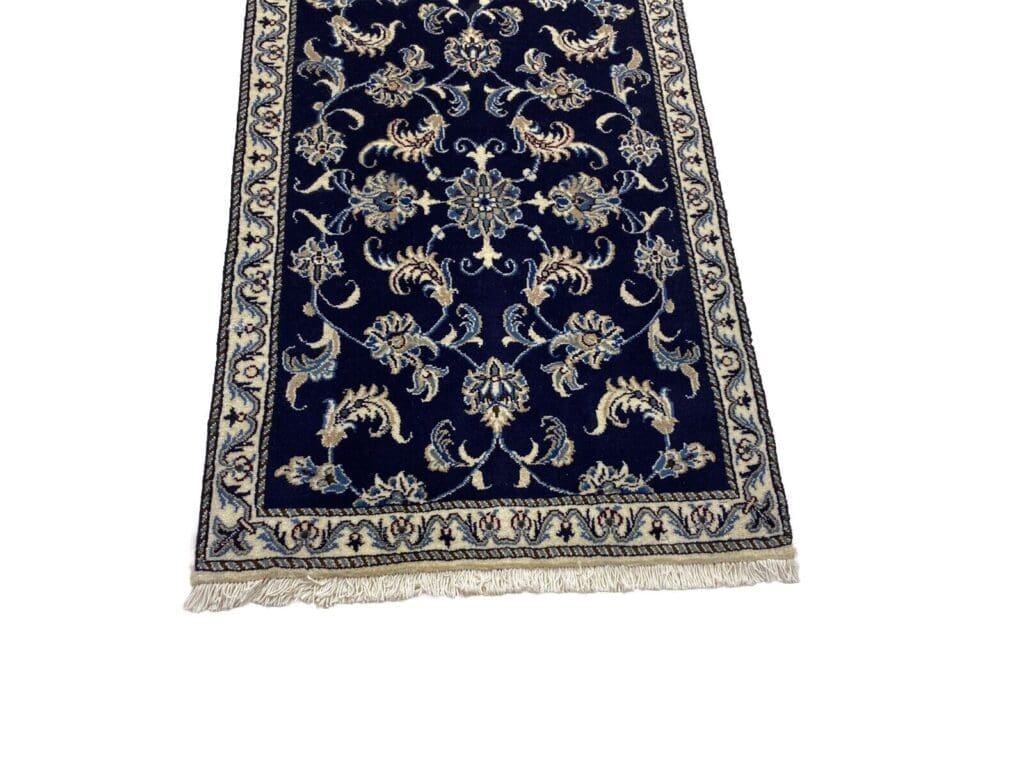
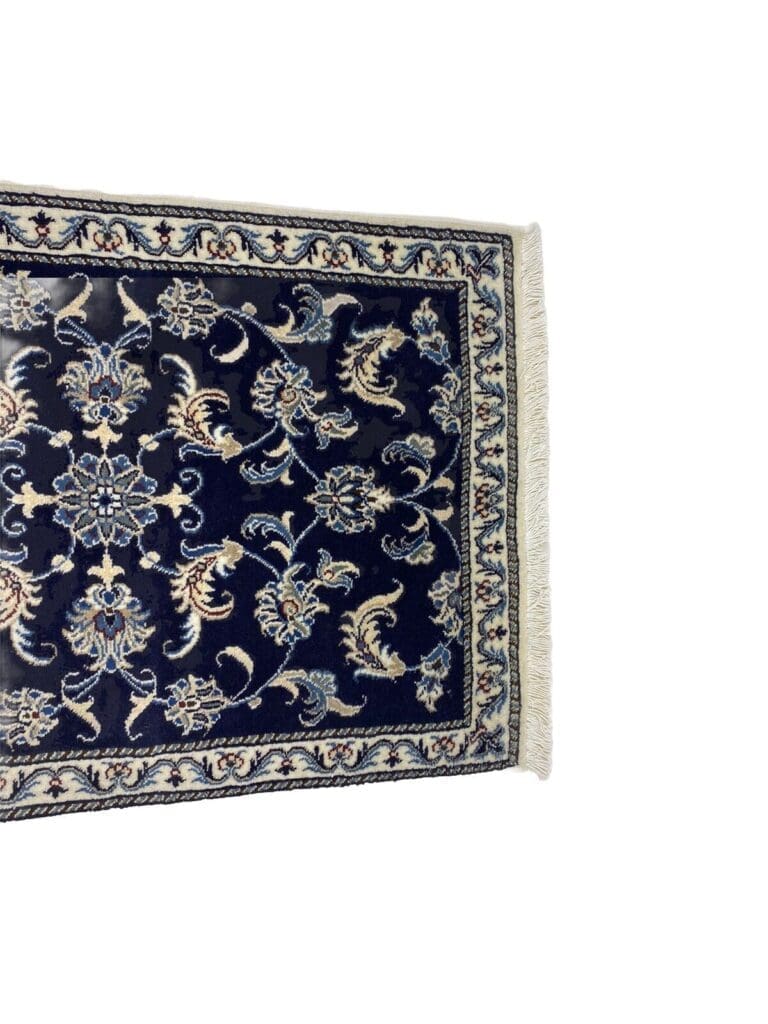
The pattern of this rug is described as traditional Oriental and Persian. The name Super Nain indicates a design tradition in which finely drawn decoration is important. Nain compositions are often built around a clear order of motifs, with a central field, surrounding details and framing borders working together as a whole. Specific individual motifs and exact colour names are not provided for this one-off, so the description remains with the documented traditional Persian character.
The visual order of a Persian rug is created through the relationship between lines, areas of colour and repeated ornaments. Curving branches may lead the eye through a field, while smaller floral or foliate forms can fill the spaces between larger elements. Medallions, corner arrangements and borders are established devices in Persian carpet design, but they cannot be assigned as exact features of this rug without a source statement. They are useful as general context for the pattern tradition, not as an inventory of this individual design.
Fine patterning depends on controlled knot placement. This rug has an indicated density of approximately 300,000 knots per square metre, a feature that supports the detailed character associated with Super Nain designs. Silk in the pile can catch light differently from wool and may make selected lines or areas appear more finely defined. The source does not specify where the silk is placed within the design, so no particular motif or border is attributed to it.
Many Persian compositions are planned as a hierarchy of spaces. The main field has its own rhythm, the border encloses it, and transitional elements connect the centre with the edges. Symmetry can bring visual steadiness, while variations in scale help distinguish principal and secondary ornaments. Nain designs are often discussed in connection with precise drawing and a measured arrangement of detail. That general design history explains the style classification without adding unrecorded motifs to this rug.
Colour perception also depends on the material surface. The direction of the pile, the density of the knots and the presence of silk can create slight changes in how light is reflected. Wool generally gives a more textile, subdued appearance, whereas silk can produce a finer sheen. This rug is described as having vivid colours and a harmonious colour composition, but no specific shades are named. The accurate description is therefore a traditional Persian design with finely worked details and a balanced colour effect.
A traditional Persian pattern can work in different interior settings. In a classic room it can relate to existing ornament and natural wood surfaces. In a simpler setting it can establish a defined textile focus. The rug may be used in a living room, bedroom or hallway, as the source describes, while its particular placement remains a furnishing decision. The design tradition, hand-knotted technique and Persian origin remain the same in each setting.
Special Features
The rug is new and in very good condition. It is offered as a unique piece and one-off. Its specifically stated practical features include suitability for underfloor heating and the description as pet-friendly and child-friendly. These details make it suitable for households with different requirements for a textile floor covering, without limiting its use to one particular type of room.
The pile combines 90% virgin wool with 10% silk, and the warp is 100% cotton. The hand-knotted construction and fine knot density are further defining features. Together with the traditional Oriental and Persian design, they create a clear profile: a new Super Nain from Persia with a wool-and-silk pile and a cotton warp. The rug is also described as approximately 8 mm thick in pile height.
Care should include regular cleaning and vacuuming to remove dust. Direct sunlight should be avoided in order to help preserve the rug’s appearance. If a spill occurs, it should be addressed immediately with a damp cloth so that lasting damage can be avoided. These are general care instructions for the rug; difficult stains may require professional treatment rather than an untested cleaning product.
FAQ
What makes the Super Nain rug distinctive?
Several stated characteristics define this Super Nain. It is hand-knotted, has an indicated density of approximately 300,000 knots per square metre and uses a pile made from 90% virgin wool and 10% silk. The warp is 100% cotton. The rug is from Persia and has a traditional Oriental and Persian pattern. Silk introduces a finer fibre and can create a subtle surface sheen, while the high knot density supports the detailed character associated with the design. The new, very good condition and the fact that it is offered as a unique piece and one-off are also part of its description.
How should I care for my Persian rug?
The rug should be cleaned regularly and vacuumed carefully to remove dust. It should also be protected from direct sunlight, which helps preserve the appearance of the fibres and colours. Spills should be treated immediately with a damp cloth so that they do not become lasting stains. Vigorous rubbing or an unsuitable cleaning agent can put unnecessary stress on the pile, particularly where silk is present. For substantial or uncertain stains, professional rug cleaning is the safer approach. These care measures support the rug’s stated new and very good condition, but they do not replace specialist advice for a particular type of damage.
Is the rug suitable for underfloor heating?
Yes. The Super Nain is expressly described as suitable for rooms with underfloor heating. It can therefore be used over a heated floor and provide a textile surface underfoot. Its pile is made from virgin wool and silk, its warp from cotton, and the pile height is approximately 8 mm. Heat should be distributed evenly, and the rug should be monitored in accordance with the heating system’s normal operating guidance. Suitability for underfloor heating does not restrict the rug to one setting; it may also be used in a living room, bedroom or hallway as described.
To provide the best experiences, we use technologies like cookies to store and/or access device information. Consenting to these technologies will allow us to process data such as browsing behavior or unique IDs on this site. Not consenting or withdrawing consent, may adversely affect certain features and functions.
Functional Always active
The technical storage or access is strictly necessary for the legitimate purpose of enabling the use of a specific service explicitly requested by the subscriber or user, or for the sole purpose of carrying out the transmission of a communication over an electronic communications network.
Preferences
The technical storage or access is necessary for the legitimate purpose of storing preferences that are not requested by the subscriber or user.
Statistics
The technical storage or access that is used exclusively for statistical purposes.The technical storage or access that is used exclusively for anonymous statistical purposes. Without a subpoena, voluntary compliance on the part of your Internet Service Provider, or additional records from a third party, information stored or retrieved for this purpose alone cannot usually be used to identify you.
Marketing
The technical storage or access is required to create user profiles to send advertising, or to track the user on a website or across several websites for similar marketing purposes.
 SECURE PAYMENT
 SHIPPING PARTNERS