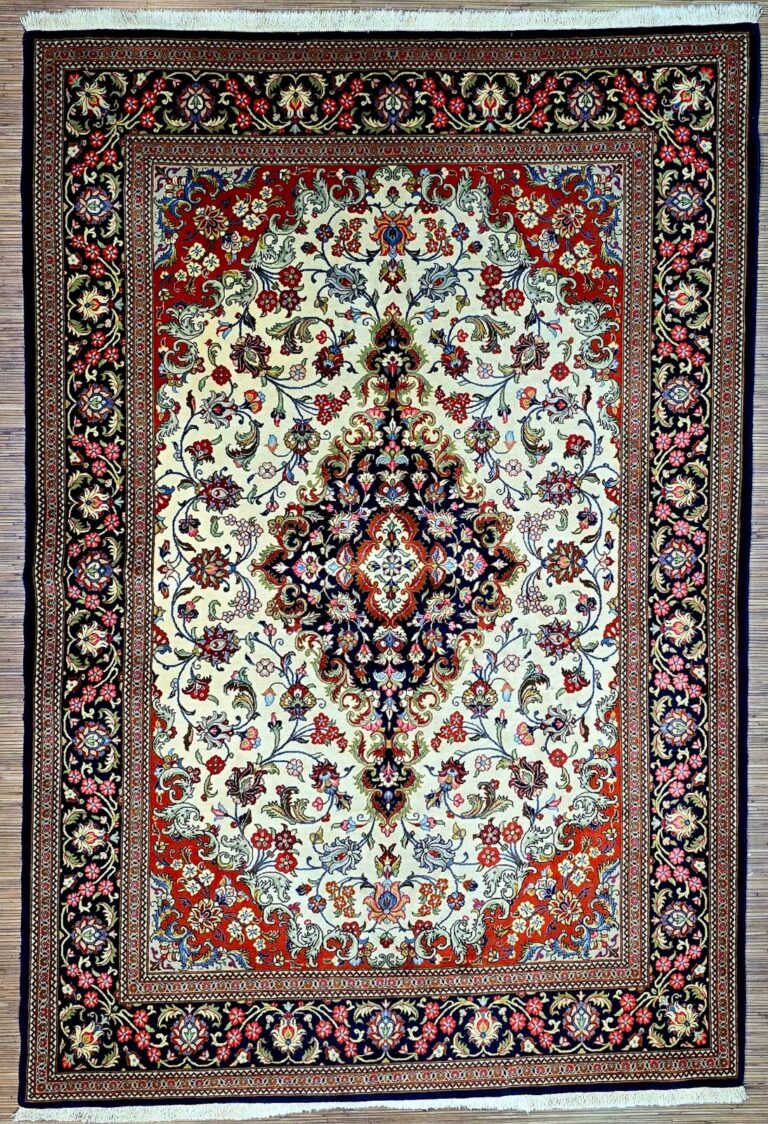
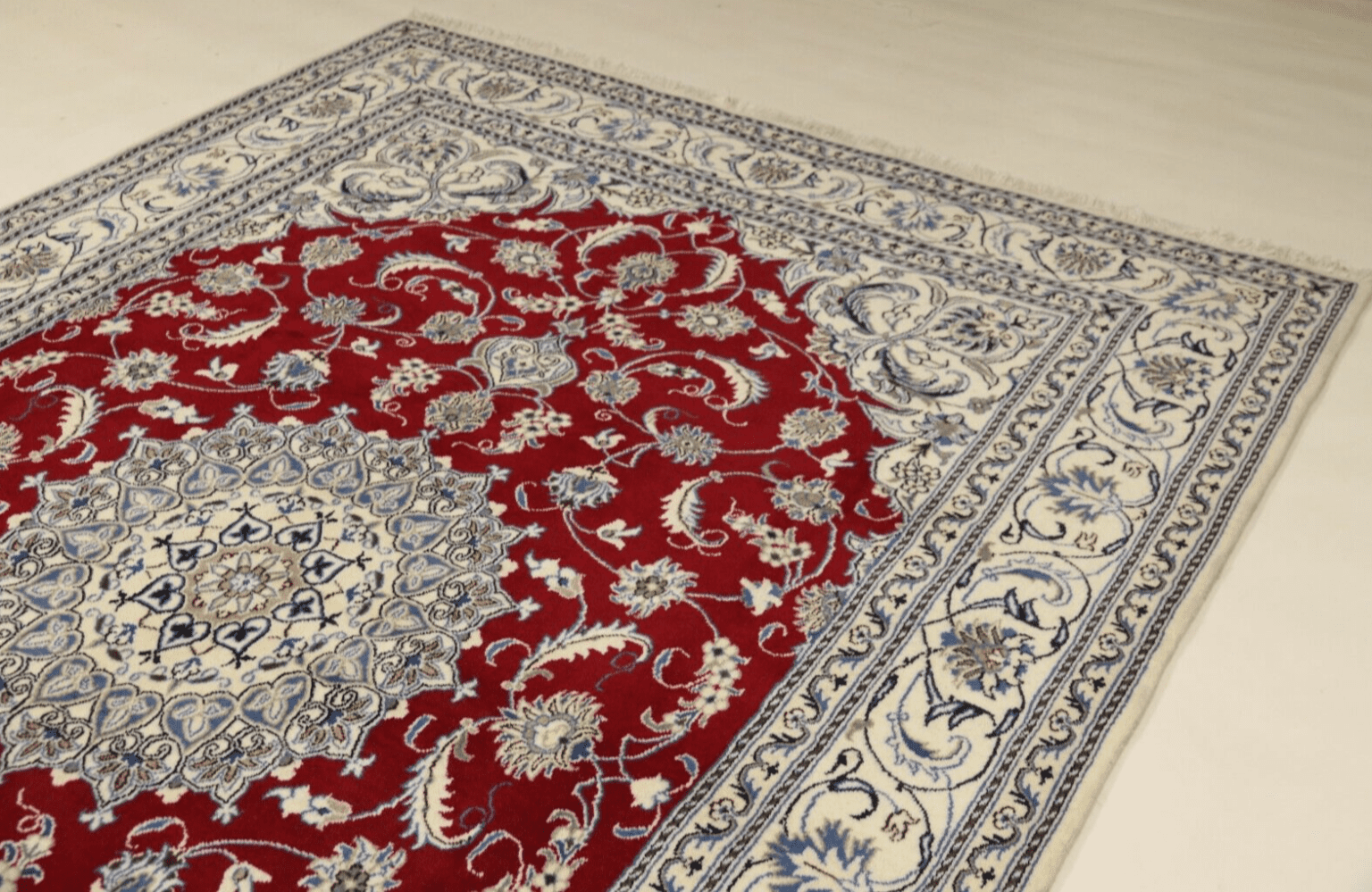
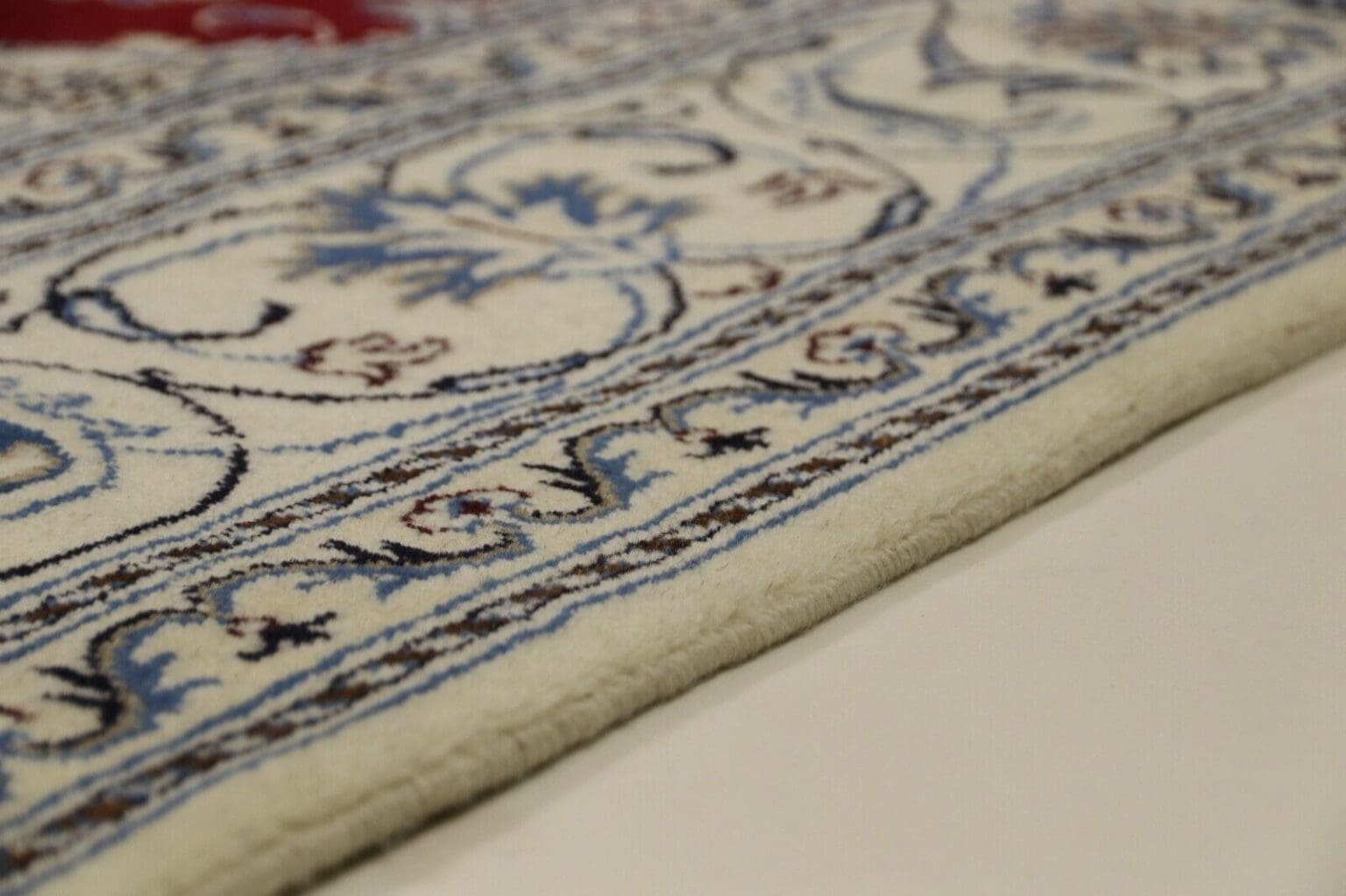
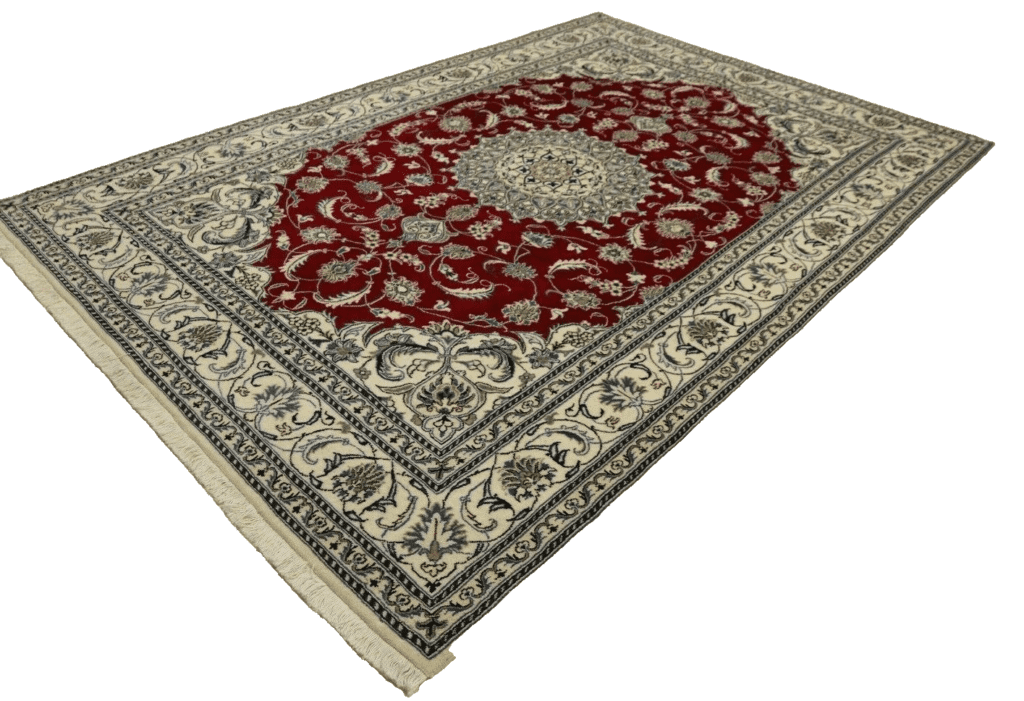
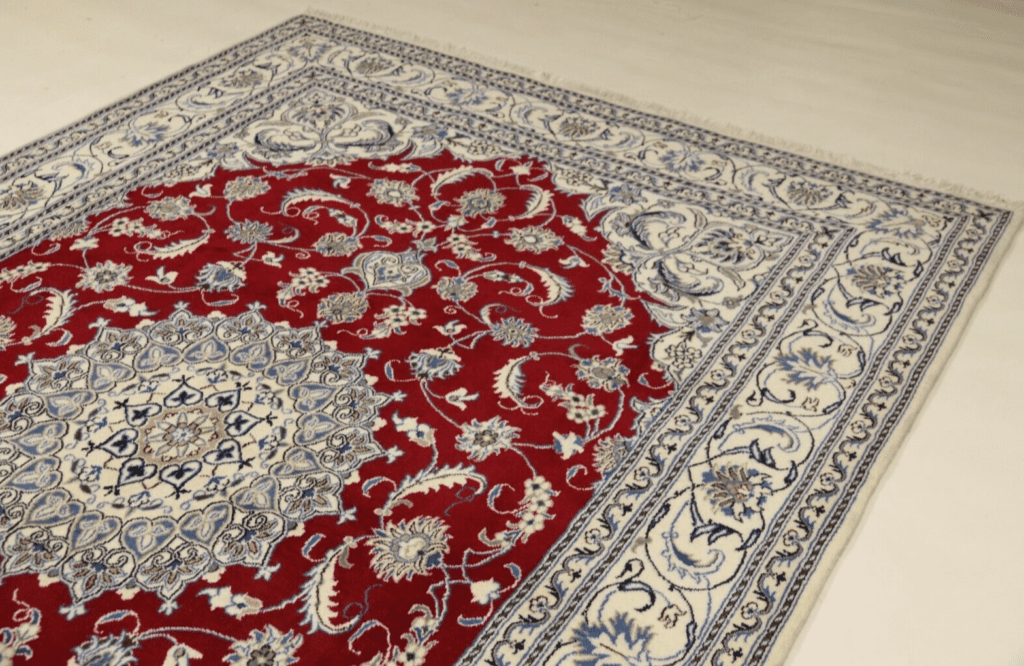
This Nain Persian rug is hand-knotted from a combination of 90% virgin wool and 10% silk. Virgin wool is valued in rug making for its warmth, resilience and pleasant natural handle. In this rug, wool forms the main material and gives the pile a substantial, durable character. It is also associated with a comfortable feel underfoot and with the ability to create a welcoming indoor climate.
The silk content adds a different quality to the wool. Silk is known for its smooth surface, gentle touch and light-reflecting appearance. Used together with wool, it creates a balance between a robust textile foundation and a finer, more lustrous finish. The material composition therefore combines the practical qualities associated with wool with the visual refinement and softness associated with silk.
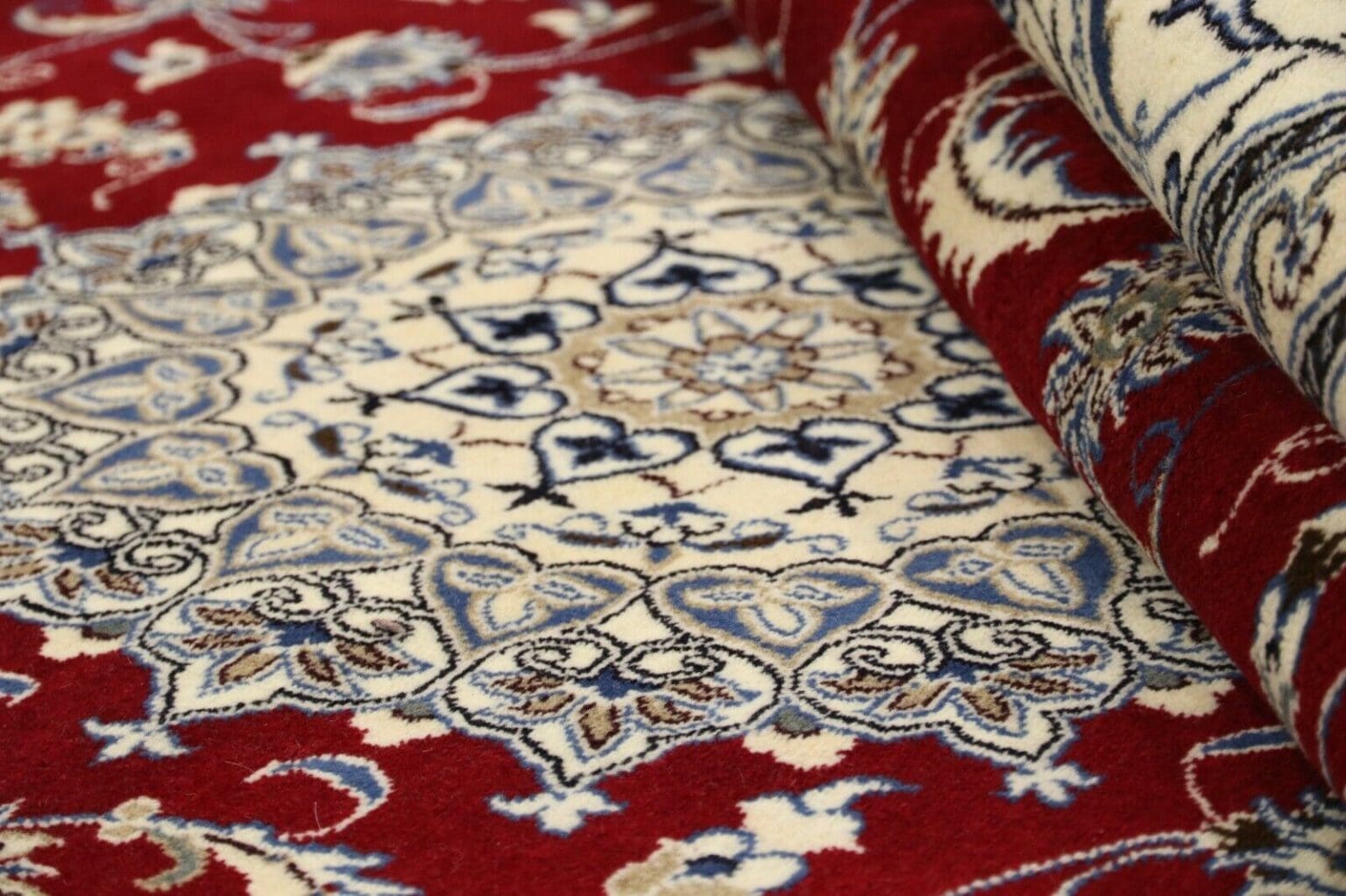
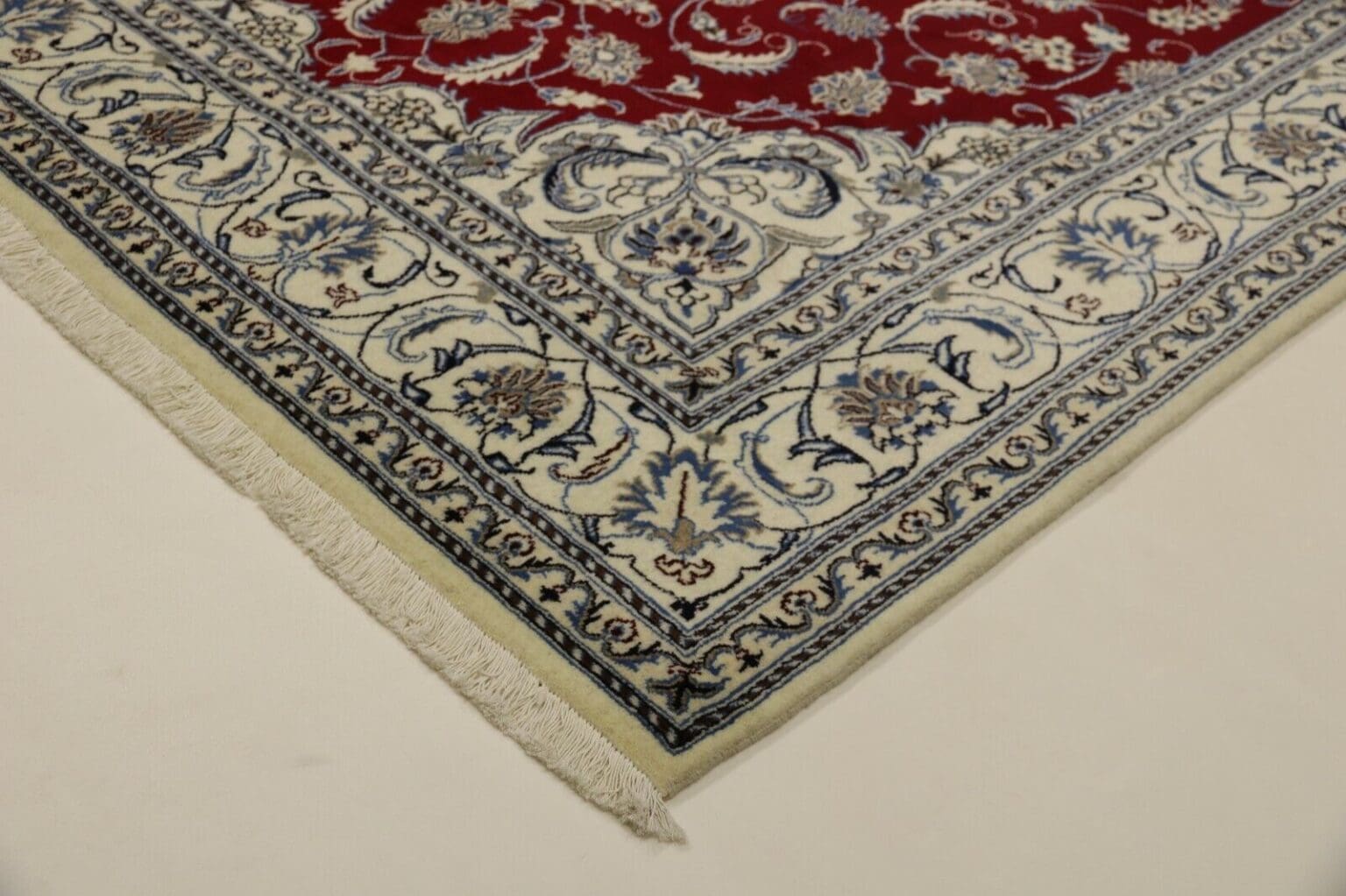
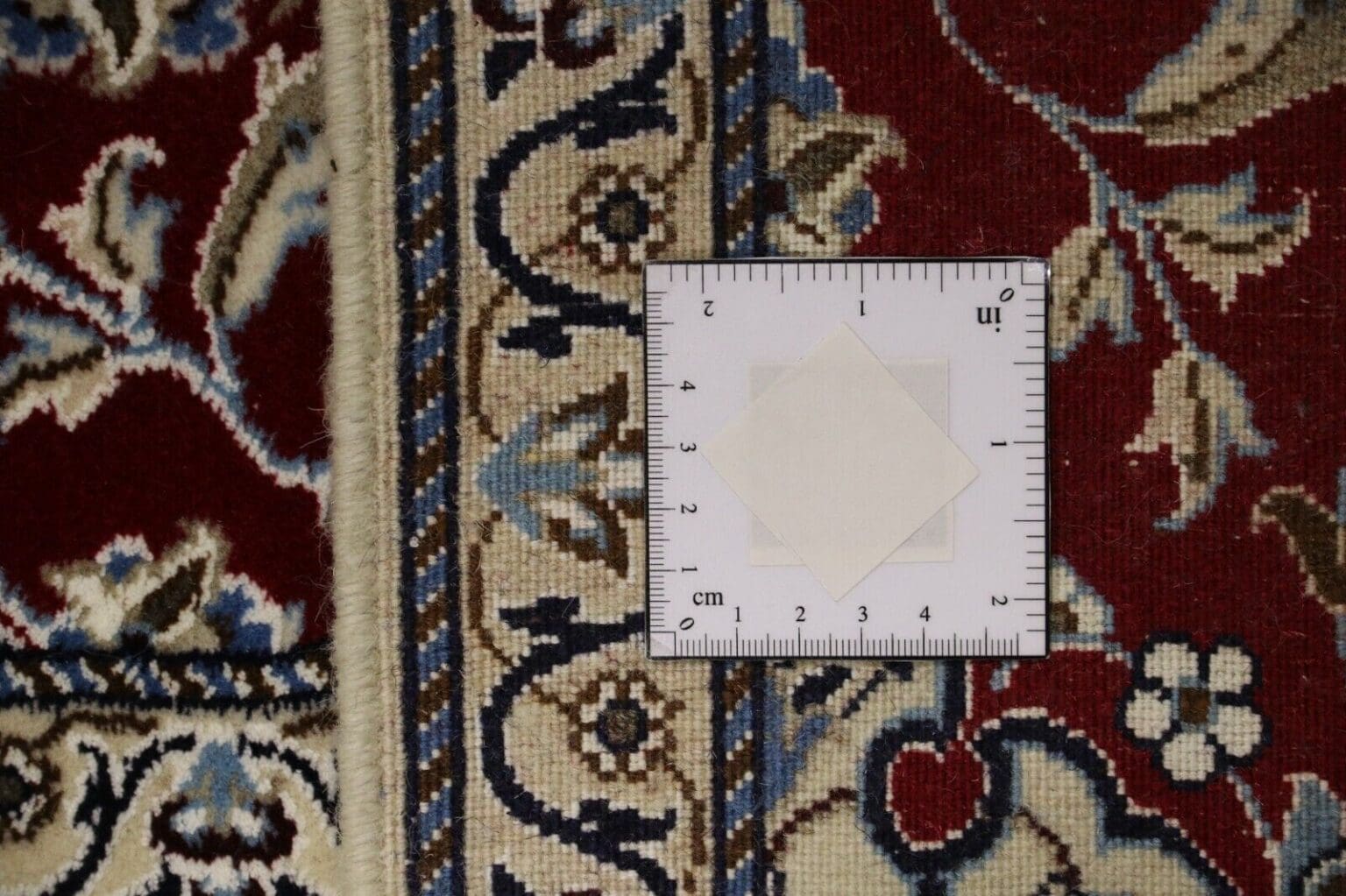
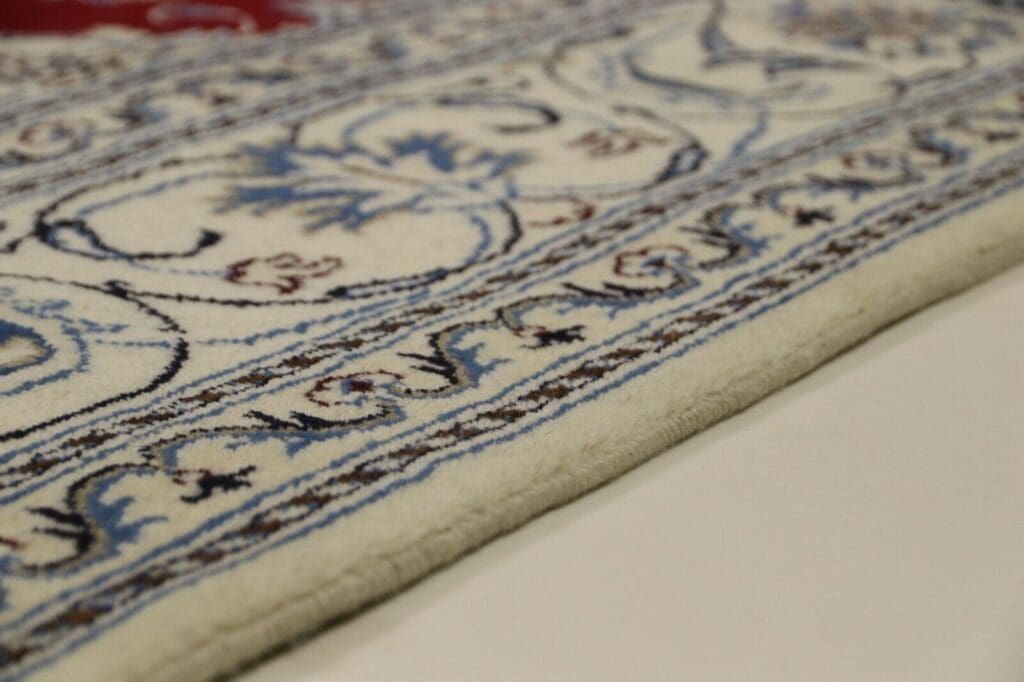
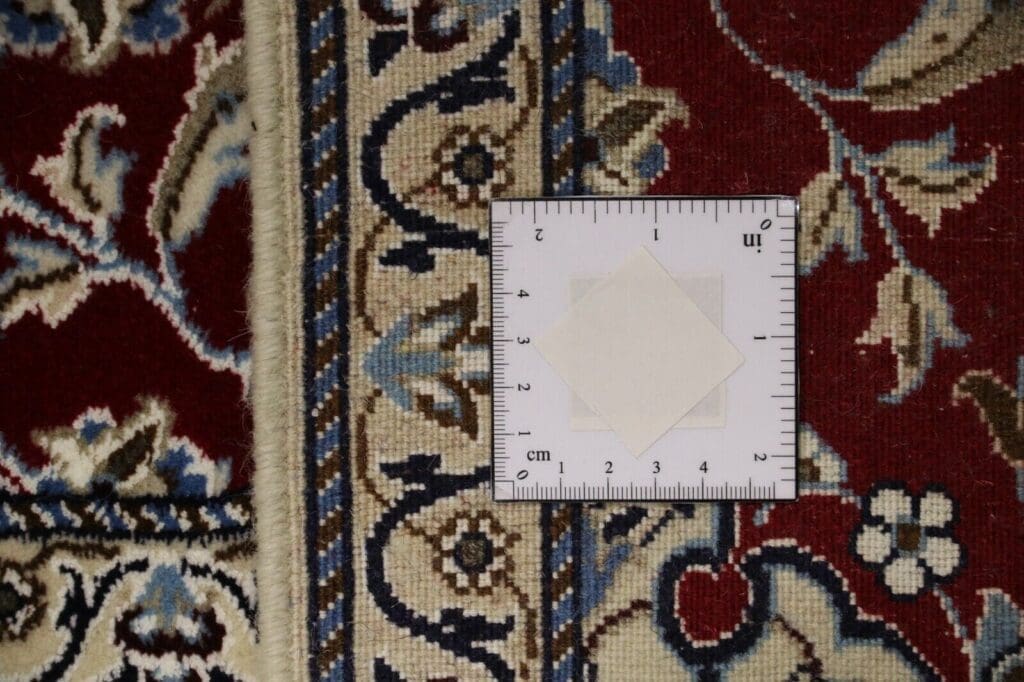
Every knot in a hand-knotted rug is made individually. This process requires time, concentration and practiced manual skill, because the structure develops row by row rather than being produced mechanically as a single surface. The rug has an approximate knot count of 300,000. Its knot density reflects the detailed work involved in producing a finely worked textile and supports the precision of the floral drawing.
Hand-knotting also gives each finished rug its own character. Minor variations are part of the nature of an individually made textile and distinguish it from a factory-produced floor covering. Here, the combination of hand-knotting, virgin wool and silk defines the stated construction of the piece. The source describes the rug as carefully made and as a work that brings together durability, softness and a restrained sheen.
Origin and Tradition
The rug comes from Nain, a city in Iran known for the production of Persian rugs. Nain lies in the centre of the country and has a long weaving tradition reaching back to the nineteenth century. The region is associated with carefully executed rugs, refined materials and designs in which precision is an important part of the visual result.
Nain rug making belongs to the wider history of Iranian carpet production. In this tradition, a rug is planned as both a functional textile and a composed work of pattern. The weaver must maintain the intended drawing while building the structure knot by knot. This connection between design and construction is central to the identity of hand-knotted Persian rugs: the image is not simply placed on top of the rug, but develops together with its woven foundation.
The craft of carpet making in Nain has been passed from one generation to the next. Such continuity allows established skills to remain in use while designs can be adapted and refined over time. Experienced weavers contribute knowledge of materials, tension, knotting and colour arrangement, while the design tradition leaves room for a contemporary interpretation of familiar floral forms. The result is a regional practice in which proven methods and evolving visual ideas exist side by side.
Nain is particularly associated with Persian rugs that place emphasis on fine execution and noble materials. The use of wool with a proportion of silk belongs to this material language, in which the surface can combine body with delicacy. The silk catches the light differently from wool, while the wool provides the fuller textile presence. This contrast is not separate from the craft tradition; it is part of how material choice can influence the appearance and handling of an Iranian rug.
The history of Nain weaving also illustrates the importance of regional identity in Persian carpet culture. A Nain rug is recognised not only by the place name, but by the relationship between the local weaving tradition, the disciplined execution and the organised use of ornament. The city’s carpet production forms part of Iran’s broader heritage of rural, urban and workshop weaving, where patterns and techniques are preserved through practical knowledge rather than through one fixed design alone.
In this context, the present rug is identified as a Nain Persian rug. Its provenance is Nain in Iran, while its hand-knotted construction and wool-and-silk composition connect it with the technical and material traditions for which Iranian carpets are known. The regional name describes its origin and tradition; it does not require every Nain rug to have an identical design. Variation within a shared regional language is an important part of handmade carpet production.
Design and Pattern
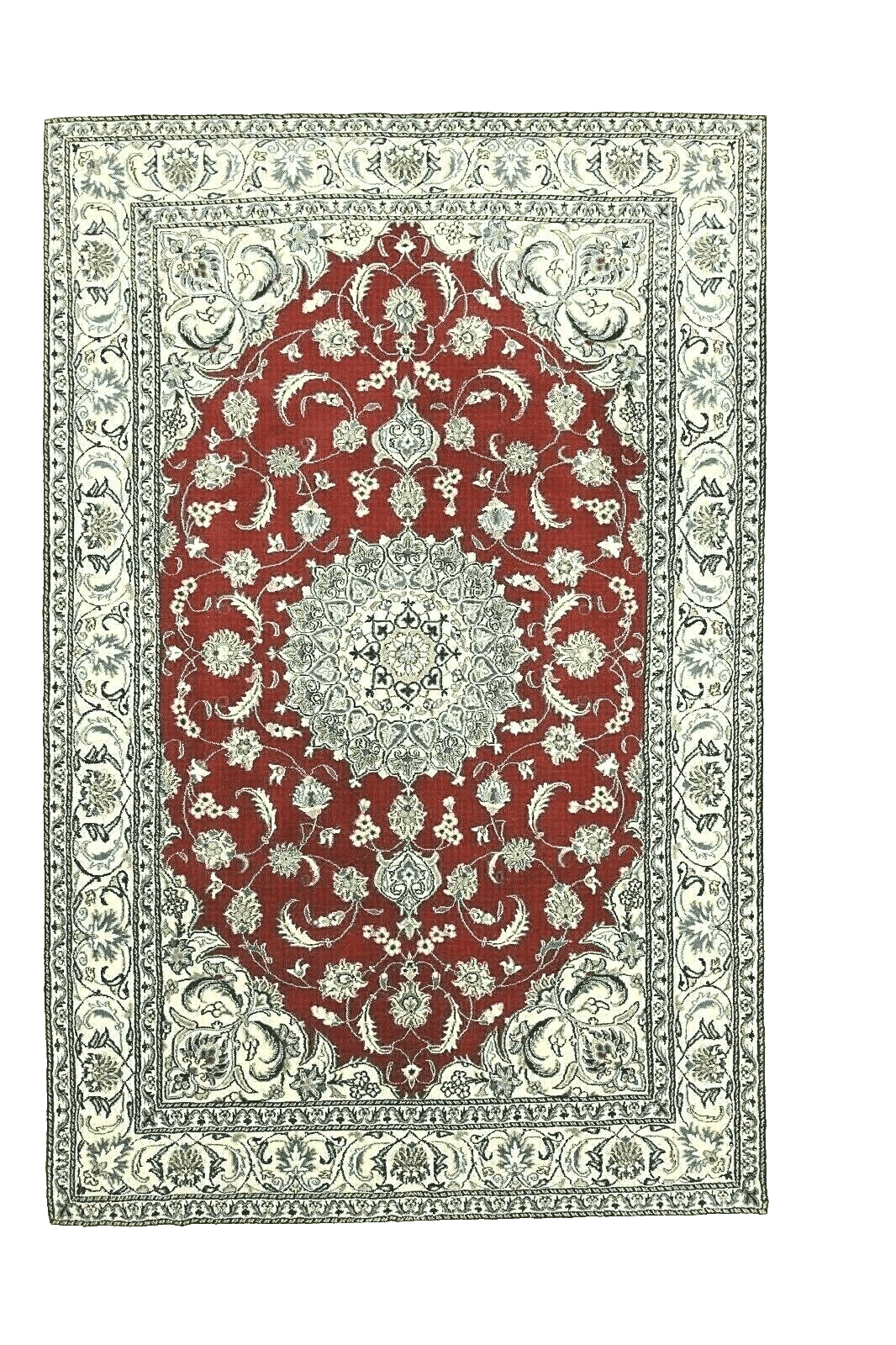
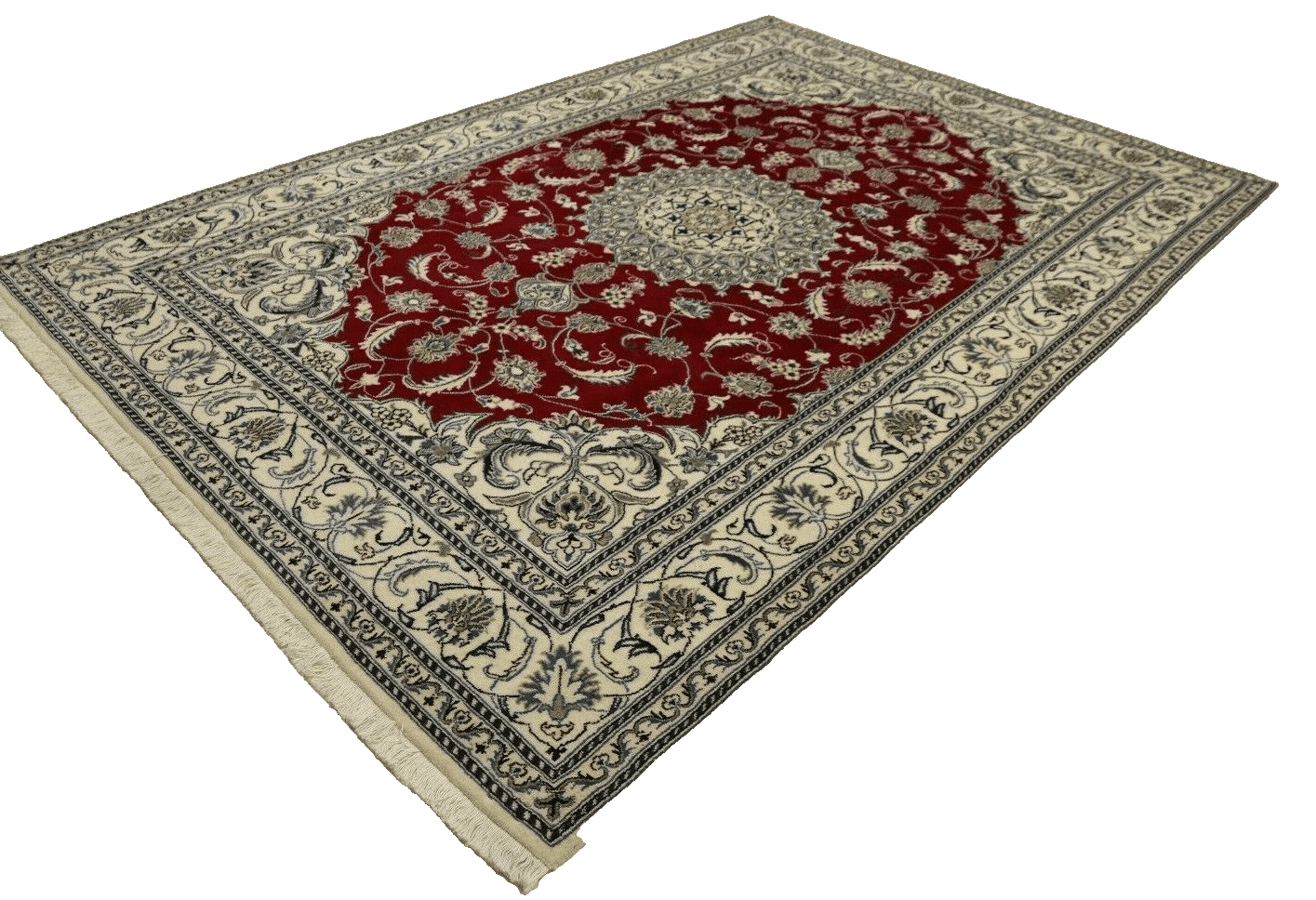
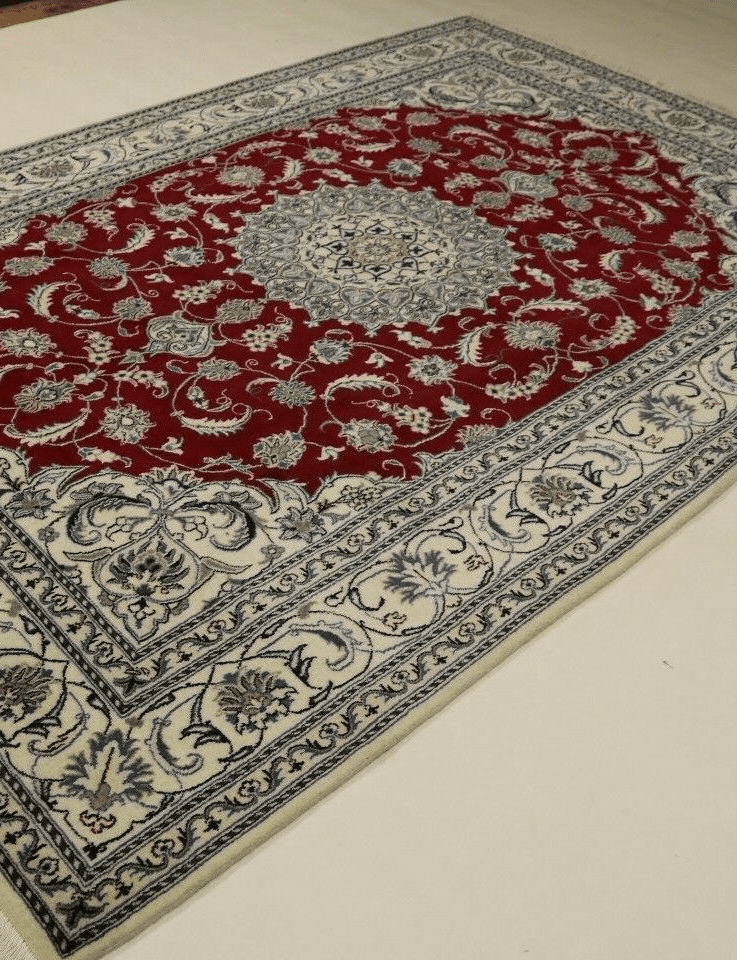
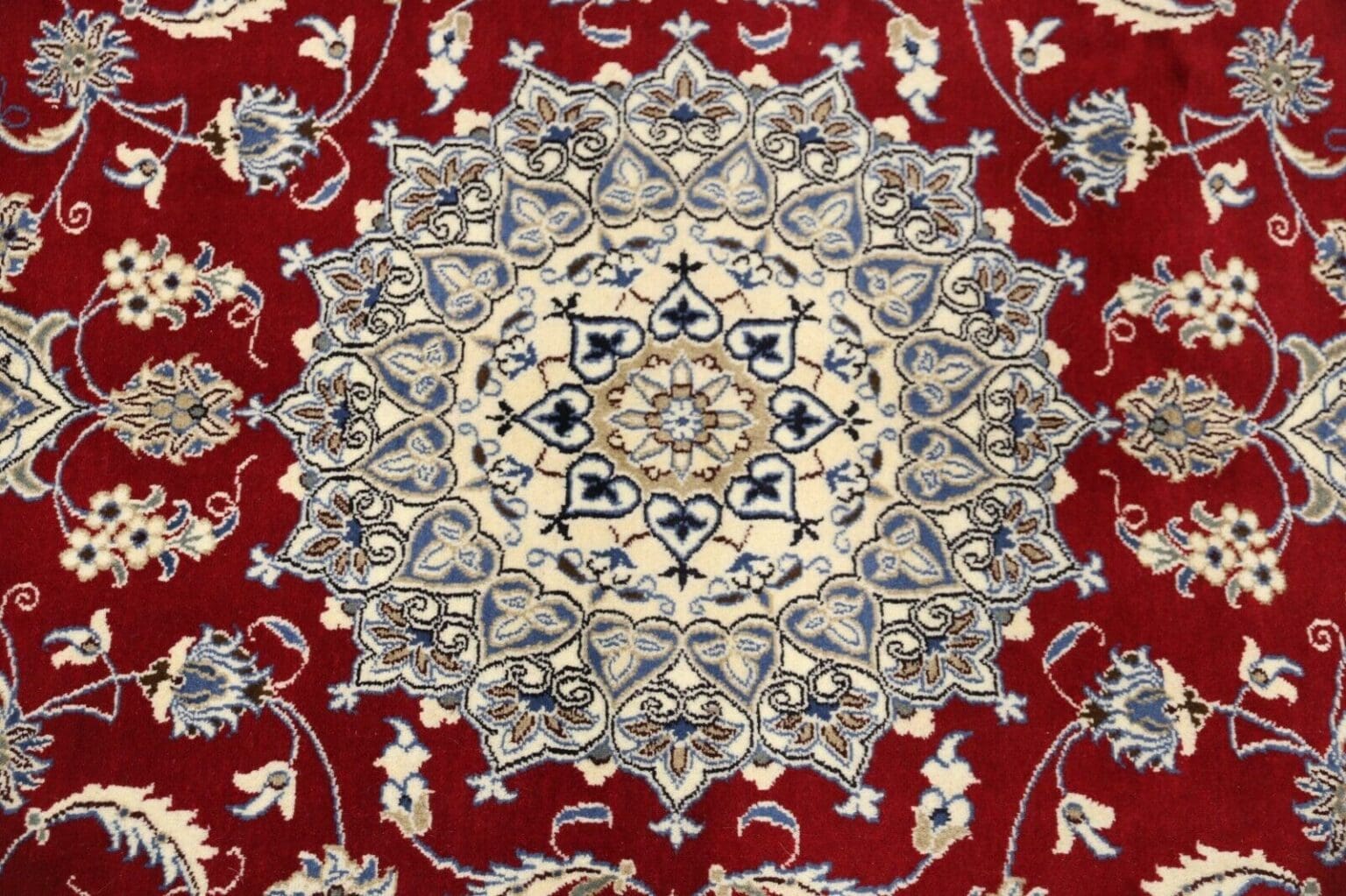
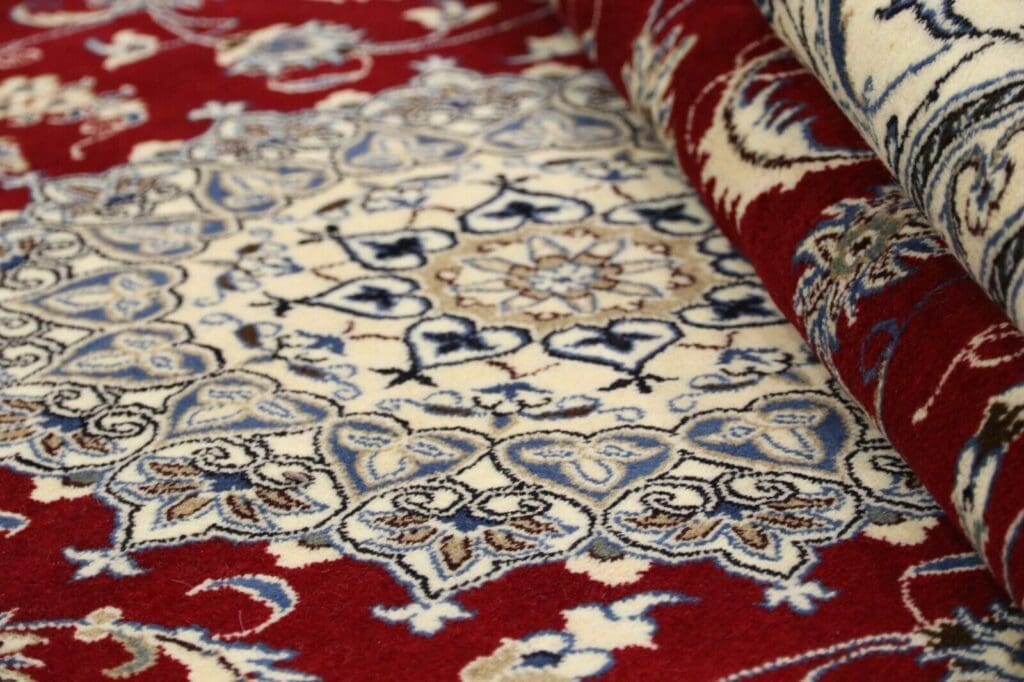
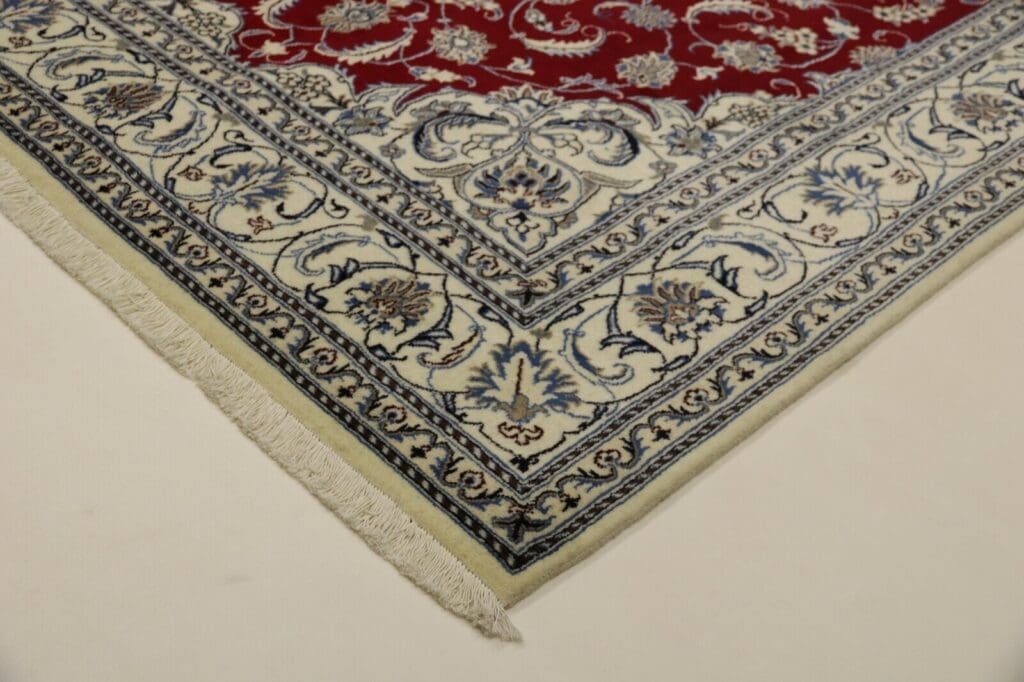
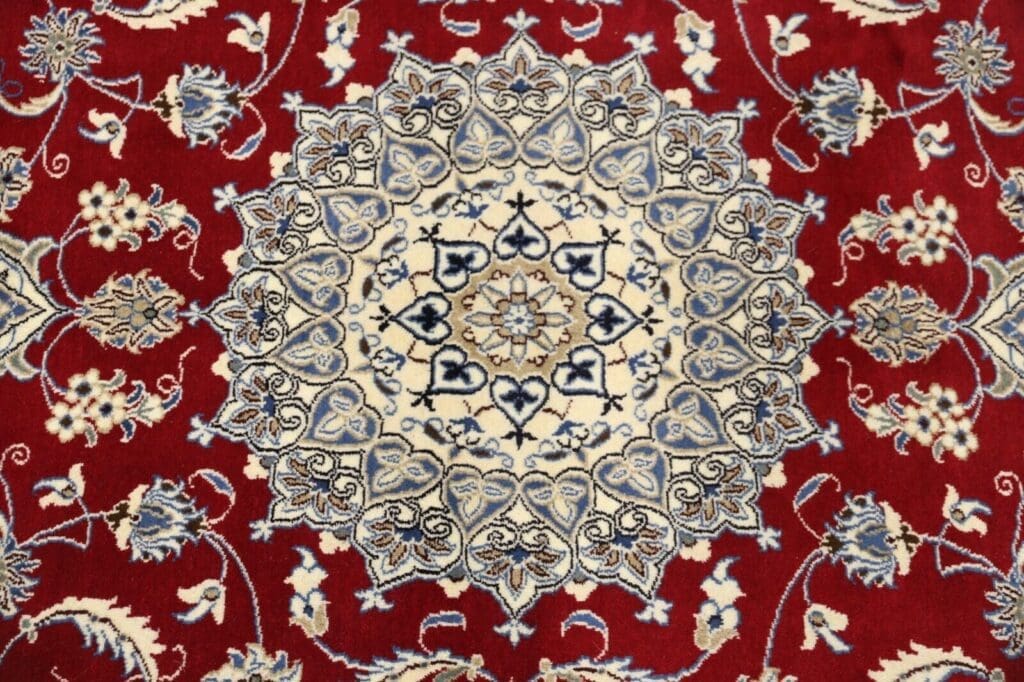
The rug has a fine floral pattern. Floral ornament is one of the enduring languages of Persian carpet design. Plants, blossoms, leaves and scrolling forms can be arranged to create rhythm across a field, turning botanical references into a carefully balanced surface. In a hand-knotted rug, these elements are built from individual knots, so the clarity of the drawing depends on the coordination of design and technique.
The floral design described here symbolises nature and the beauty of Persian culture. Botanical motifs in Persian carpets are not limited to a literal representation of a garden. They may be organised into repeating structures, connected branches or balanced groupings, allowing the pattern to operate as an overall composition. The reference to regional flora gives such ornament a connection to the natural world while the ordered arrangement reflects the discipline of Persian decorative art.
Fine floral patterning requires the weaver to work with attention to proportion and continuity. A small flower, leaf or curved stem must relate to the surrounding forms so that the pattern remains coherent across the surface. Dense knotting can support the execution of delicate details, although the visible appearance always depends on the relationship between knot structure, wool, silk and colour. In this rug, the approximate knot count and the stated fine floral design belong to the same description of a carefully executed textile.
The colours are described as harmonious, with soft and at the same time strong tones. This combination creates contrast without removing unity from the composition. Softer tones can give the floral field a calm foundation, while stronger accents help define individual botanical shapes and establish visual rhythm. The balance between these qualities is more important than any single colour, because it allows the pattern to remain legible as a complete design.
Persian floral ornament has a long history of combining natural references with formal order. A flower can suggest growth and renewal, while repeated placement gives the design a measured structure. Leaves and stems guide the eye from one motif to the next, and balanced spacing prevents the surface from becoming visually disjointed. These principles explain why a floral rug can work in different interiors without depending on one particular room arrangement.
The design is suitable for settings such as a living room, dining room or study because its character comes from the balance of fine ornament and harmonious colour. That statement concerns the described visual language rather than a prescribed use. A hand-knotted Nain rug with floral decoration can be read as a decorative textile, a functional floor covering and an example of regional craft. Its pattern connects Persian botanical tradition with the individual execution of this one piece.
Special Features
The rug is described as unique, hand-knotted and made from 90% virgin wool with 10% silk. Its approximate knot count of 300,000 expresses the amount of manual work involved in its construction. The wool-and-silk combination gives the piece two complementary material qualities: wool contributes warmth and resilience, while silk contributes softness and a refined sheen.
The stated knot density, material selection and fine floral design make the rug an example of the relationship between technical work and visual effect. The construction reflects the patience and skill of the craftspeople, while the pattern gives that construction a decorative form. The source also describes the rug as combining history and craftsmanship and as retaining its original character over centuries.
Care should be carried out with consideration for both wool and silk. Regular vacuuming without a brush attachment helps remove dust and loose dirt without unnecessarily working the surface. If more extensive cleaning is needed, professional rug cleaning is recommended. Direct contact with water should be avoided in order to reduce the risk of damage.
FAQ
How should a Nain Persian rug be cleaned?
Regular vacuuming without using a brush attachment is recommended for removing ordinary dust and dirt. The vacuum should be used in a way that treats the surface gently, since the rug is hand-knotted and contains both virgin wool and silk. Direct contact with water should be avoided, as moisture can damage the textile or affect its appearance. When a deeper cleaning is required, professional carpet cleaning is the appropriate option. Professional treatment is particularly useful when the rug needs more than routine surface care, because the combination of wool, silk and hand-knotted construction deserves a method suited to the materials.
How can the life of the rug be extended?
Regular cleaning helps prevent dust and dirt from remaining in the pile. The rug should also be protected from direct sunlight, since prolonged exposure can cause discolouration. Furniture should not be pushed across the surface. Instead, it should be lifted when it needs to be moved, reducing the risk of damage to the hand-knotted structure. These simple measures support the condition of the wool-and-silk pile and help preserve the visual balance of the floral pattern. Gentle handling, appropriate cleaning and protection from strong sunlight are the main care points given for extending the rug’s service life.
What makes a hand-knotted rug special?
A hand-knotted rug is made one knot at a time, with each knot created by hand rather than formed as part of a fully mechanical production process. This method demands patience and practical skill and allows a detailed range of designs and patterns. It also gives each rug an individual character, because the finished textile is the result of a particular sequence of manual decisions and work. A higher knot density is generally associated with a more detailed construction and with durable, high-quality carpet goods. The technique has been refined by generations of weavers and remains closely connected with the diversity of Persian carpet design.
To provide the best experiences, we use technologies like cookies to store and/or access device information. Consenting to these technologies will allow us to process data such as browsing behavior or unique IDs on this site. Not consenting or withdrawing consent, may adversely affect certain features and functions.
Functional Always active
The technical storage or access is strictly necessary for the legitimate purpose of enabling the use of a specific service explicitly requested by the subscriber or user, or for the sole purpose of carrying out the transmission of a communication over an electronic communications network.
Preferences
The technical storage or access is necessary for the legitimate purpose of storing preferences that are not requested by the subscriber or user.
Statistics
The technical storage or access that is used exclusively for statistical purposes.The technical storage or access that is used exclusively for anonymous statistical purposes. Without a subpoena, voluntary compliance on the part of your Internet Service Provider, or additional records from a third party, information stored or retrieved for this purpose alone cannot usually be used to identify you.
Marketing
The technical storage or access is required to create user profiles to send advertising, or to track the user on a website or across several websites for similar marketing purposes.
 SECURE PAYMENT
 SHIPPING PARTNERS