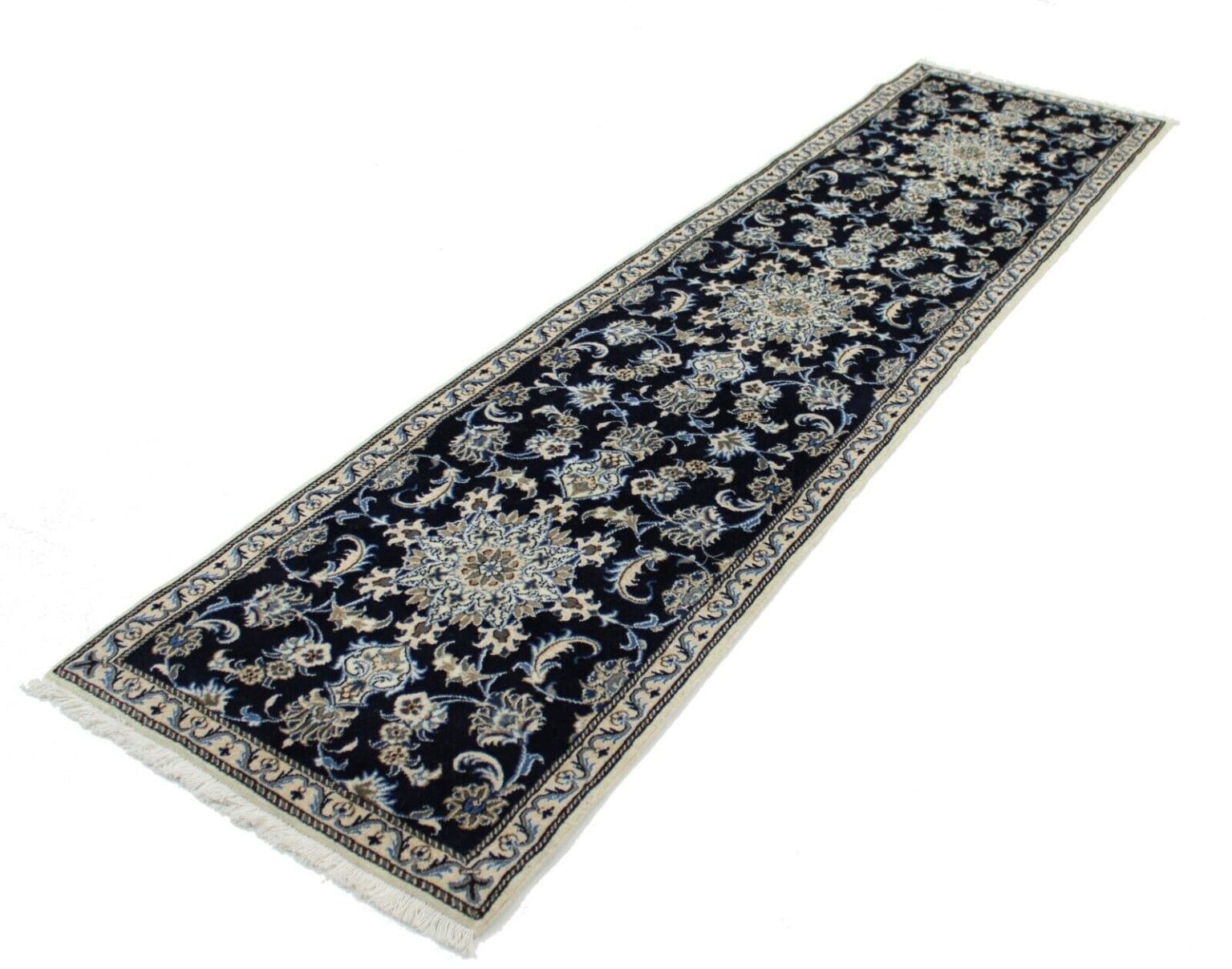
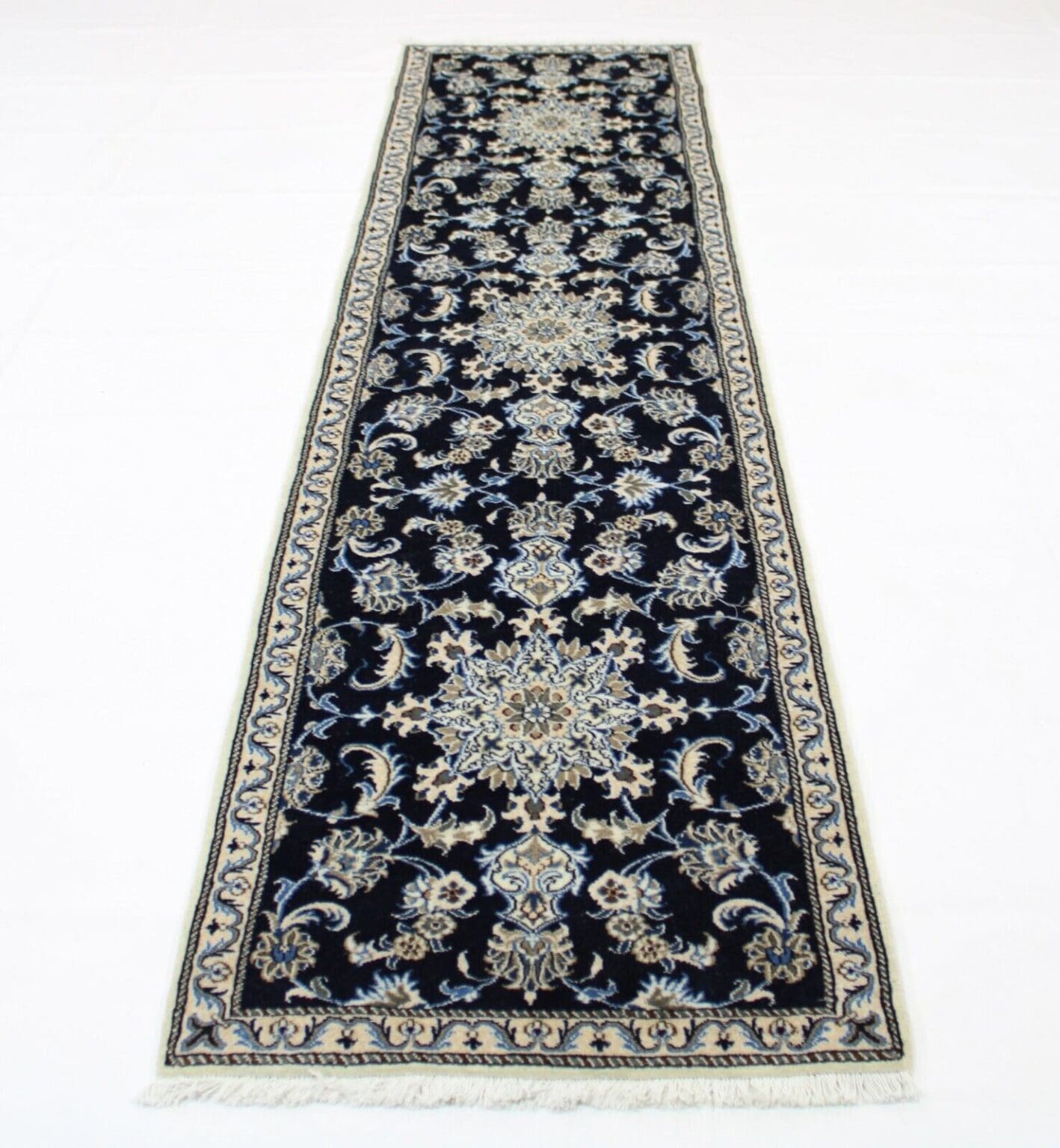
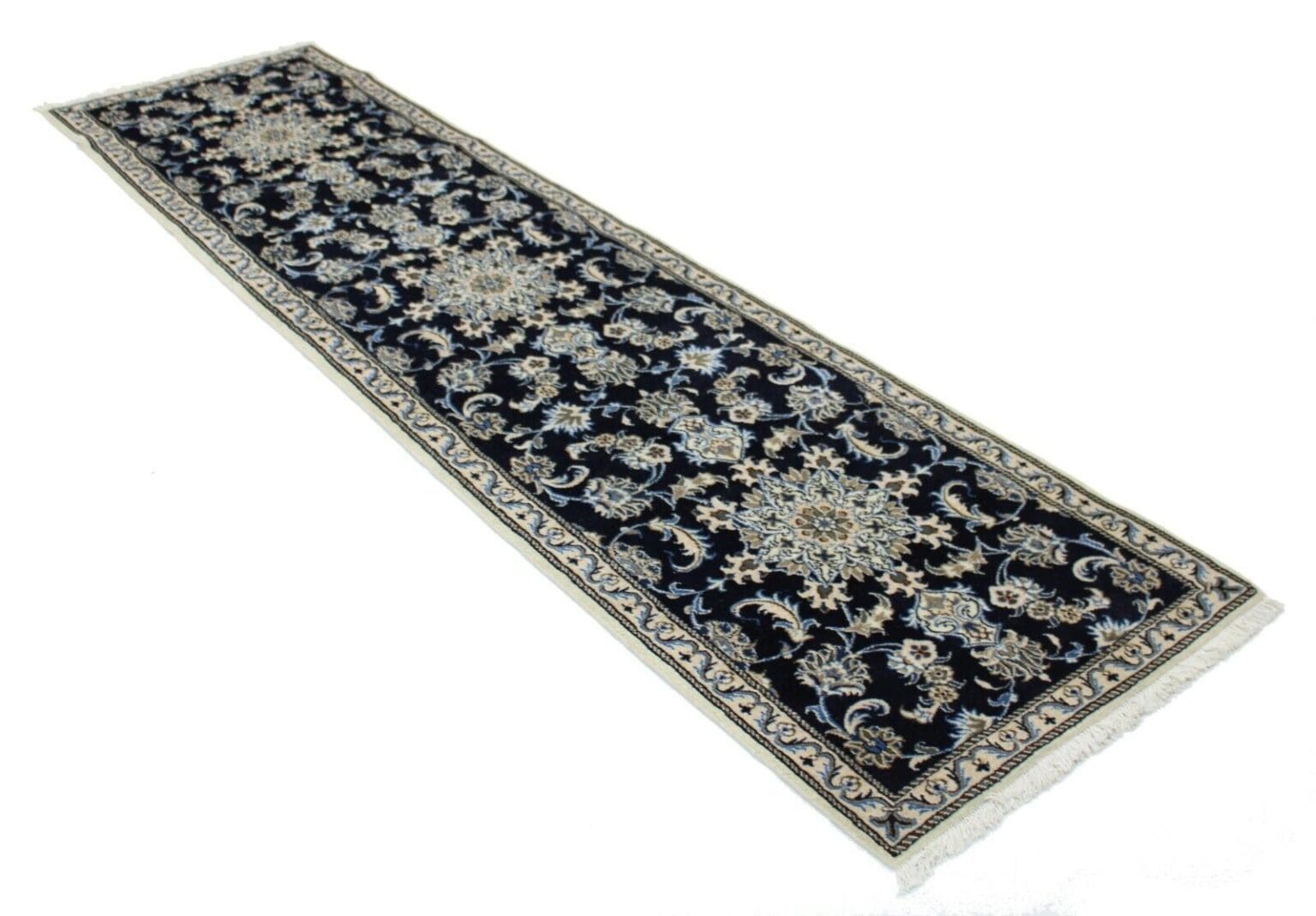
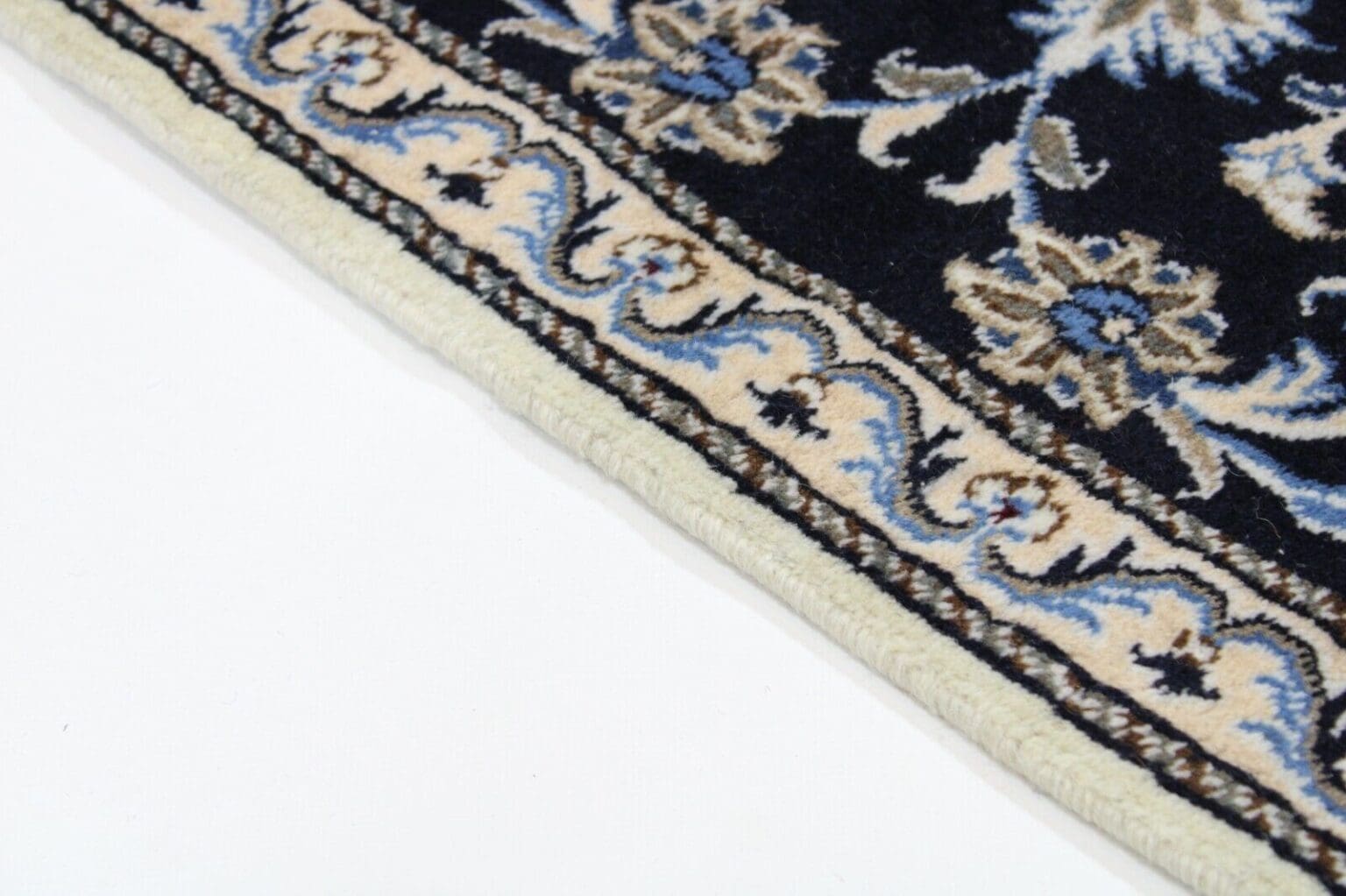
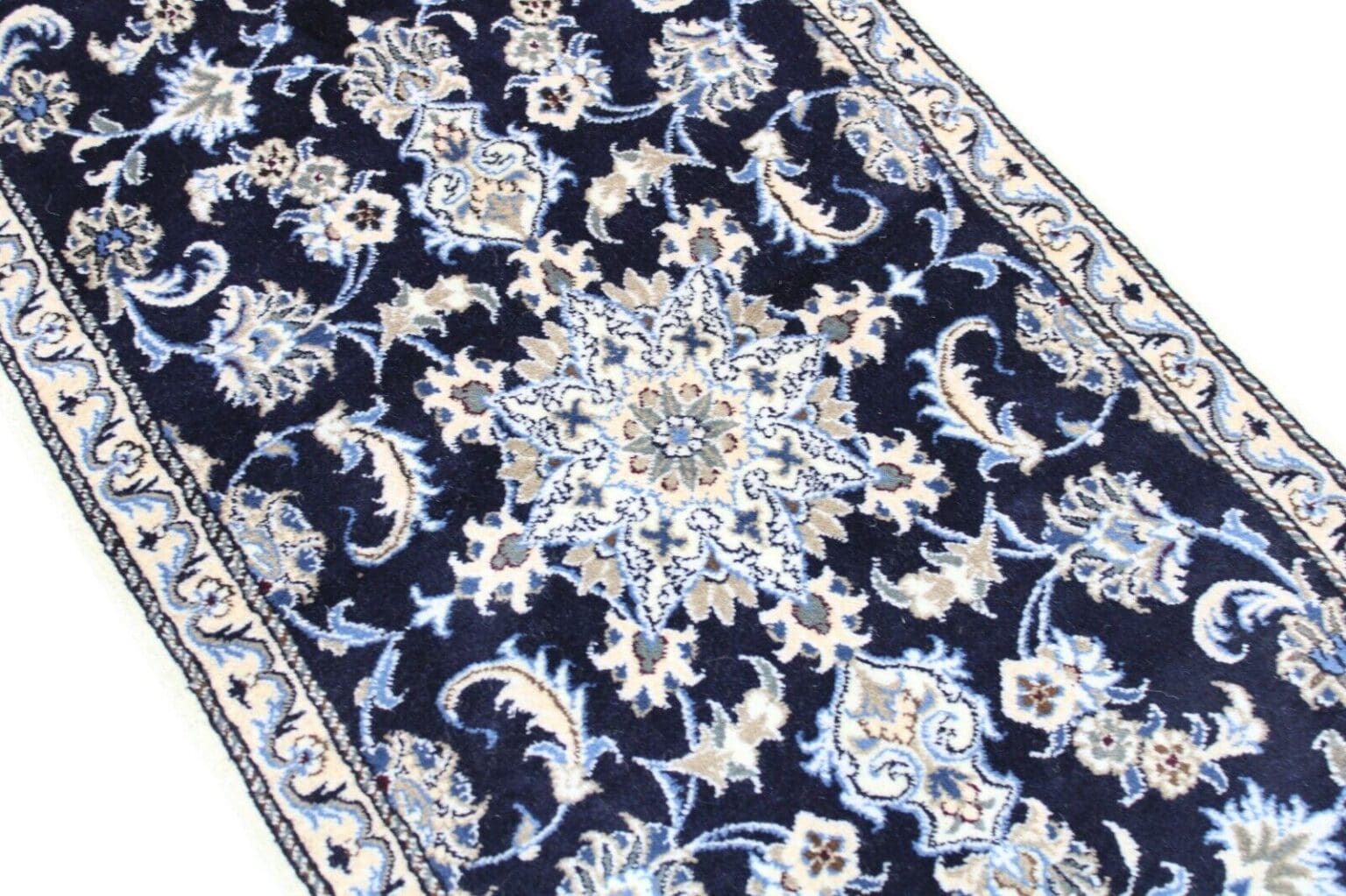
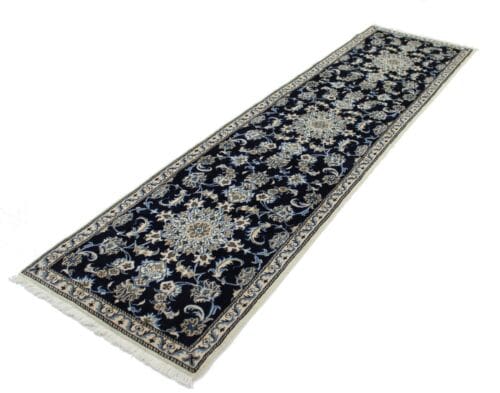
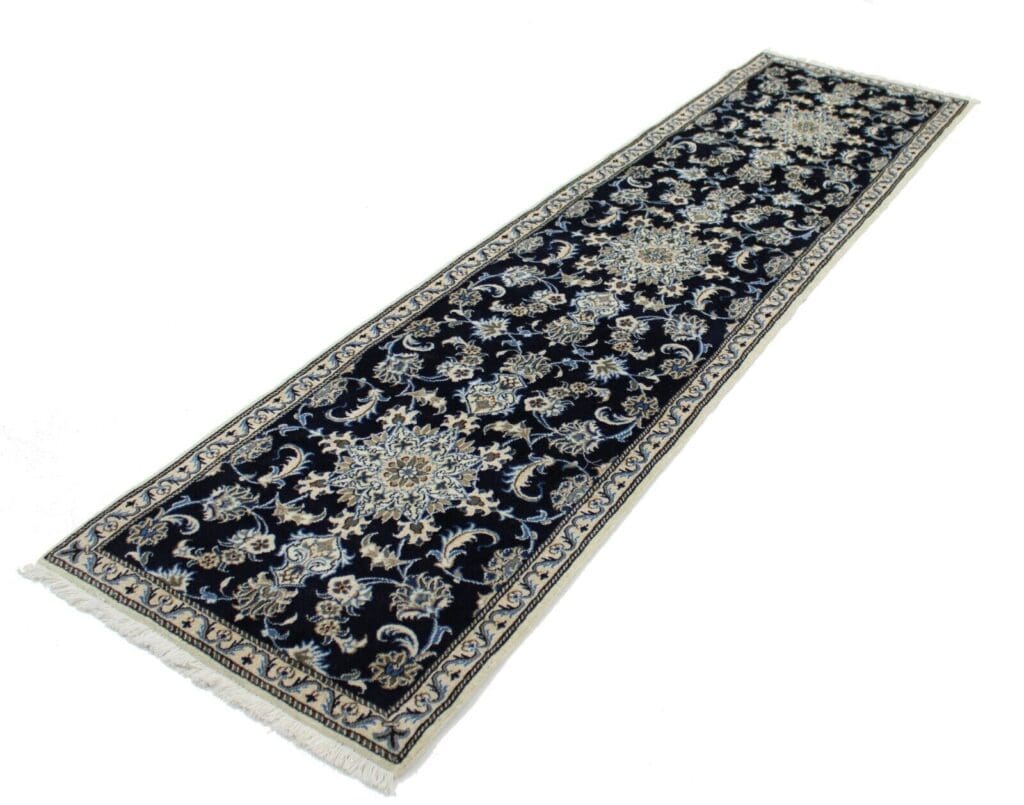
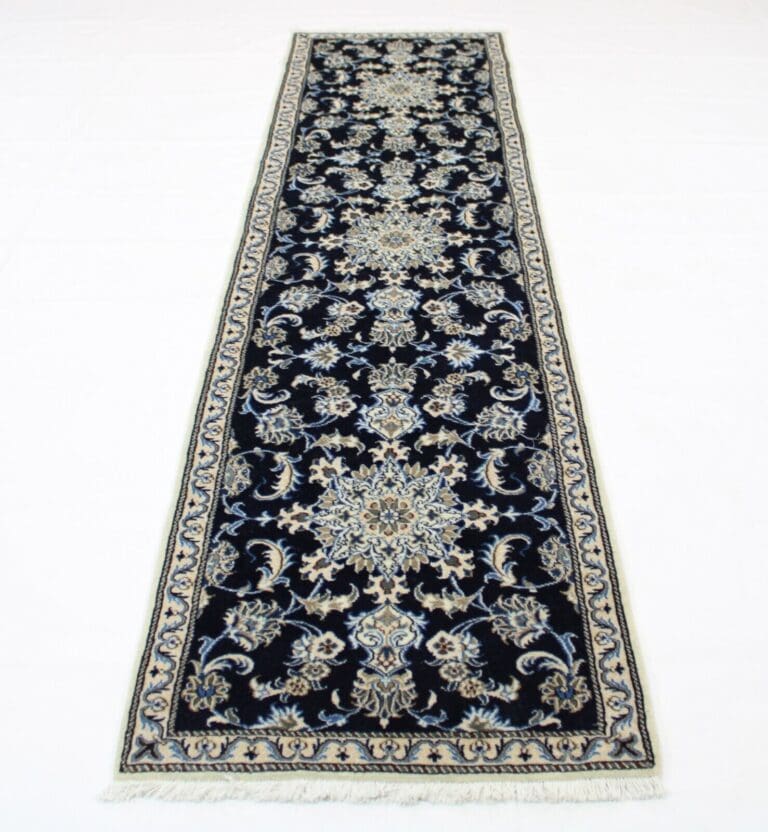
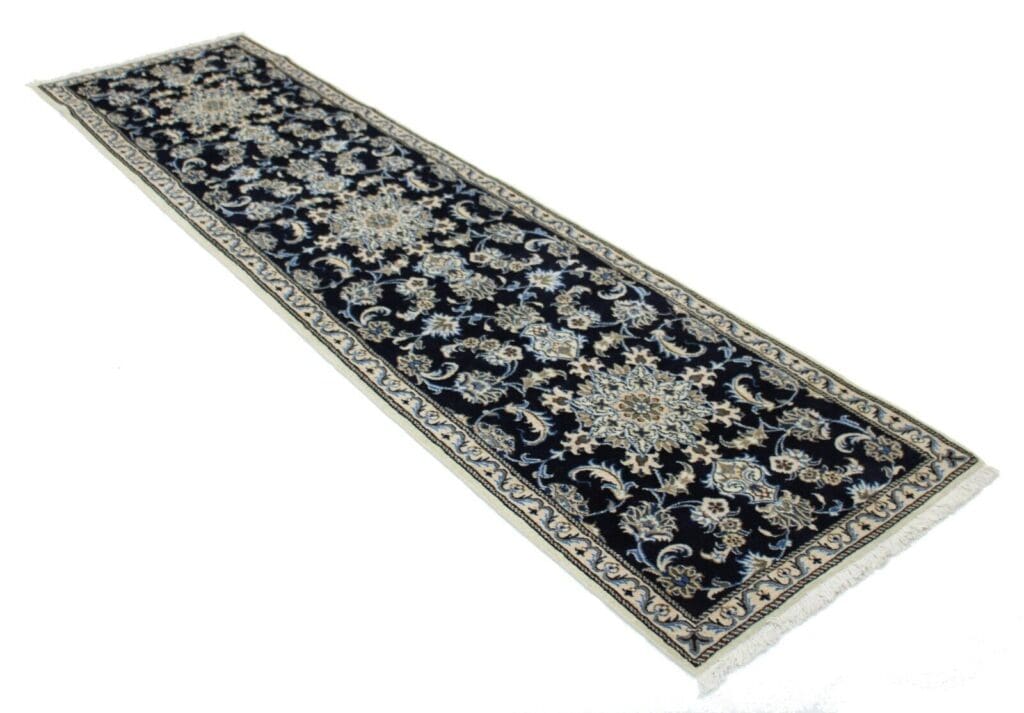
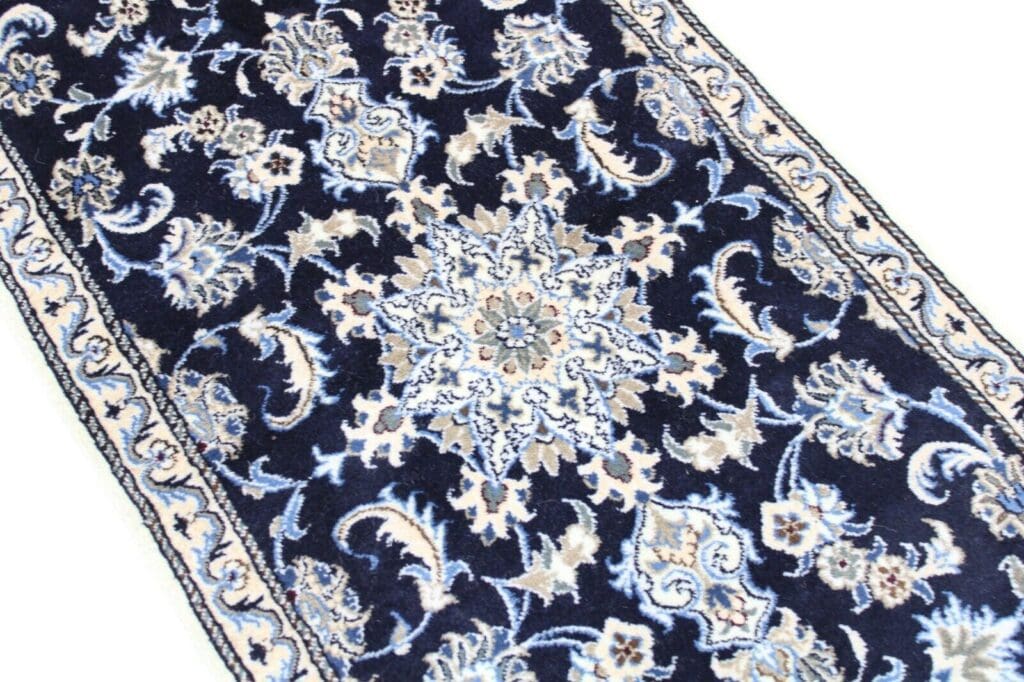
Hand-knotted Nain Persian Rug | Material: Wool and cotton | Size: 295 x 76 cm | Pattern: Oriental with floral motifs | Condition: New without label, top condition | Origin: Iran
This Nain Persian rug originates in Iran and is hand-knotted. The listed materials are wool and cotton. Wool forms the rug’s characteristic pile, while cotton is named as an additional material in its construction. These two natural fibres have long been part of Persian textile making. Wool is valued for its resilient, flexible structure and for the comfortable handle it gives a rug. Cotton has a firm, even fibre structure and has traditionally been used for supportive textile elements. Together, the materials provide the basic textile foundation described for this individual rug.
Hand-knotting builds the surface knot by knot. The pattern is not printed onto a finished textile; it is formed as the knotting progresses. After rows of knots are made, the structure is compacted and aligned, and the pile is finished to create a coherent surface. This process requires the design to be transferred into separate groups of coloured knots. It also means that a hand-knotted rug is an individual textile object rather than an industrially identical surface.
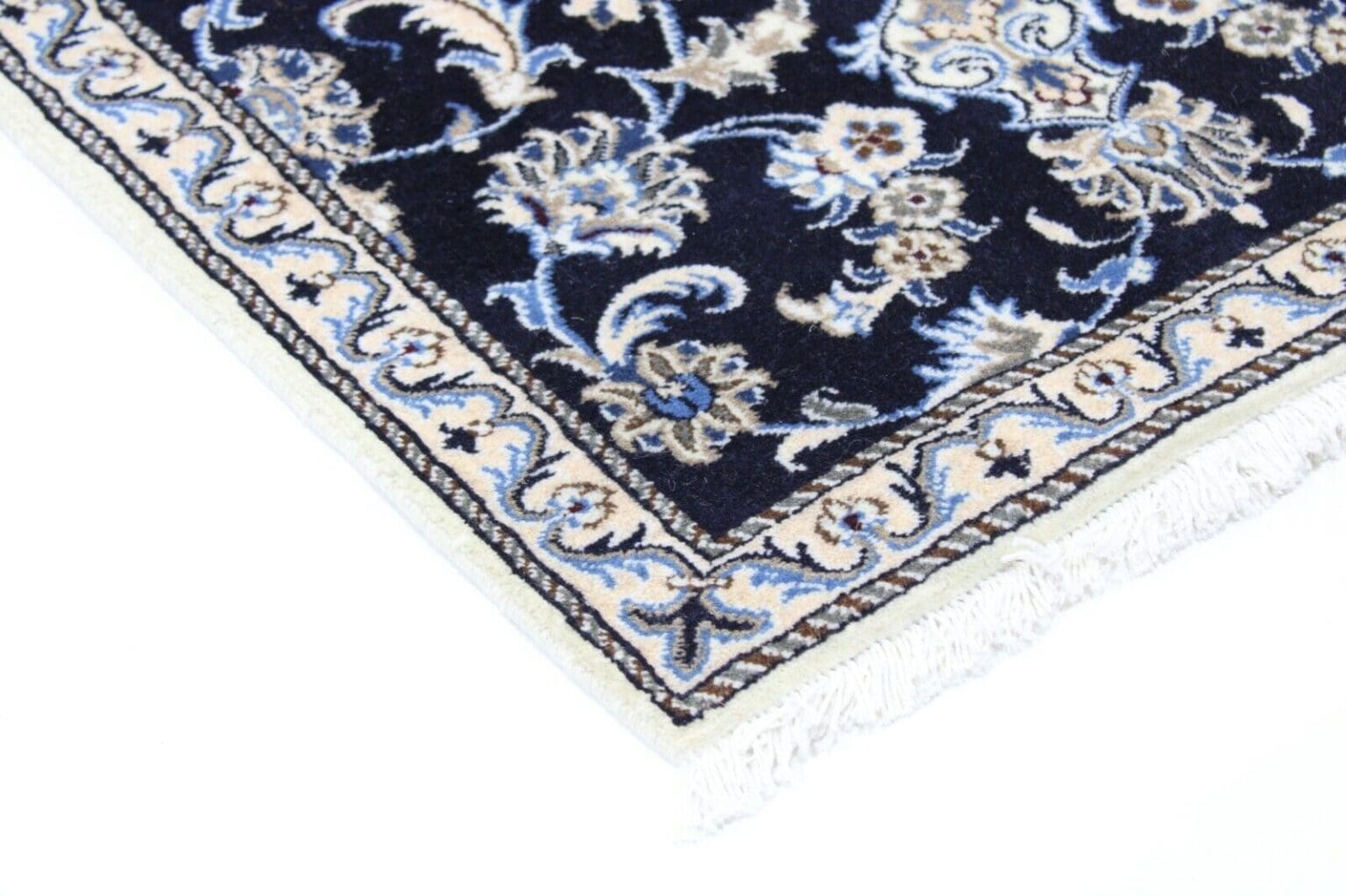
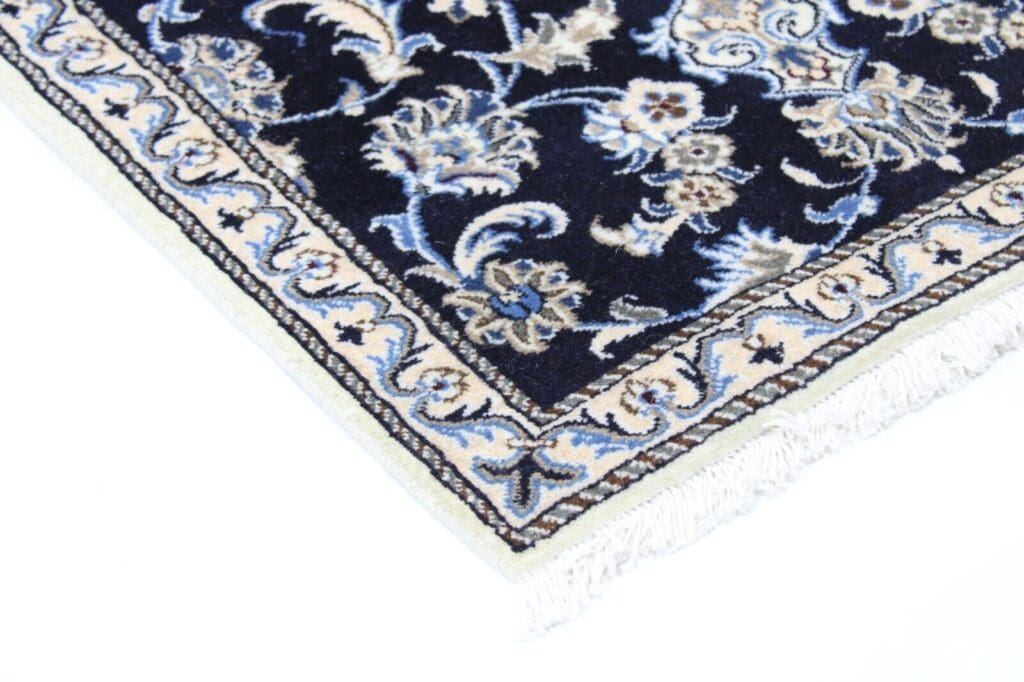
The pile of this rug is described as high pile. A higher pile changes both the touch and the visual presence of the surface. Wool appears fuller, and the texture can be felt more clearly underfoot. This is different from the flat surface of a hand-woven Kelim. The rug is specifically a hand-knotted piece with a pronounced pile. It is suitable for underfloor heating, and its stated use includes all rooms, so the description does not restrict it to one particular living area.
The condition is described as new without a label and as top condition. These details distinguish the present condition from the absence of an attached label. The information confirms wool, cotton, hand-knotting and high pile as features of this rug. No silk, percentage breakdown, signature or other material detail is supplied, so none is added here.
Origin and Tradition
Nain is a recognised name within the Persian carpet tradition. The city lies in Iran’s central region, in Isfahan Province and in a dry landscape east of the city of Isfahan. Nain rugs are traditionally associated with carefully ordered compositions and detailed ornament. Their designs often bring together a central organisation, scrolling foliage, flowers and a surrounding border. These are elements of the wider Nain vocabulary and its history; they should not be read as unreported technical details of every individual rug.
Iranian carpet production developed over many centuries in different towns, villages and workshops. Each area formed its own preferences for ornament, colour relationships, pile, structure and the division of a field. Nain belongs to a tradition in which drawing and controlled line work are especially important. Floral elements may be arranged with regular spacing, while vines and borders give the field a sense of order. The result is usually based on a planned relationship between the central field and its surrounding areas rather than on a random scattering of motifs.
The history of hand-knotted carpets is also a history of skilled transmission. A design must be converted into individual colour areas and rows of knots. The maker follows the intended contours while keeping stems, leaves and flowers in proportion. Repetition is combined with visual judgement: a line may be repeated many times, but it still has to meet the neighbouring line accurately. This relationship between a plan and manual execution is one reason why hand-knotted carpets are treated as individual works of textile craft.
Persian rugs from Iran are commonly discussed through their regional traditions. Kerman, Isfahan and Tabriz are other well-known names, each associated with its own historical and design vocabulary. Gabbeh rugs are often connected with a coarse structure and vivid colours, while Tabriz rugs are known for complex patterns and fine detail. Nain occupies a separate place within this wider landscape. Here, Nain is the origin designation of the rug, not merely the name of a decorative motif. The fact that the rug carries floral ornament does not change its Iranian Nain classification.
Persian carpet traditions have been sustained through the continuing use of inherited forms. Floral scrolls, borders, balanced fields and repeated ornaments can be adapted to different interiors while retaining their historical identity. A traditional rug can therefore be placed in a room with classic furnishings, a restrained contemporary arrangement or a more rustic setting. Its effect depends on the relationship between the pattern, the room’s colours, the pile and the surrounding surfaces. Tradition supplies the visual language; each hand-knotted rug presents that language in its own textile form.
Design and Pattern
The pattern of this rug is described as oriental with floral motifs. Flowers are among the most established design elements in Persian carpet art. They may appear as individual blossoms, as parts of scrolling vines or within a carefully organised overall composition. Leaves and curved stems connect separate elements and create transitions across the field. Repetition and symmetry help the ornament read as one connected design rather than as a collection of unrelated marks.
Floral motifs can perform several functions in a Persian design. Small blossoms may fill spaces between larger forms, while larger flowers can provide visual points of emphasis. Vines connect the components and guide the eye from one area to the next. A border can frame the central field and give the composition a defined edge. These design principles explain why floral Persian rugs may look both richly detailed and orderly. They describe the broader tradition behind the pattern, not additional visual facts that have not been specified for this particular rug.
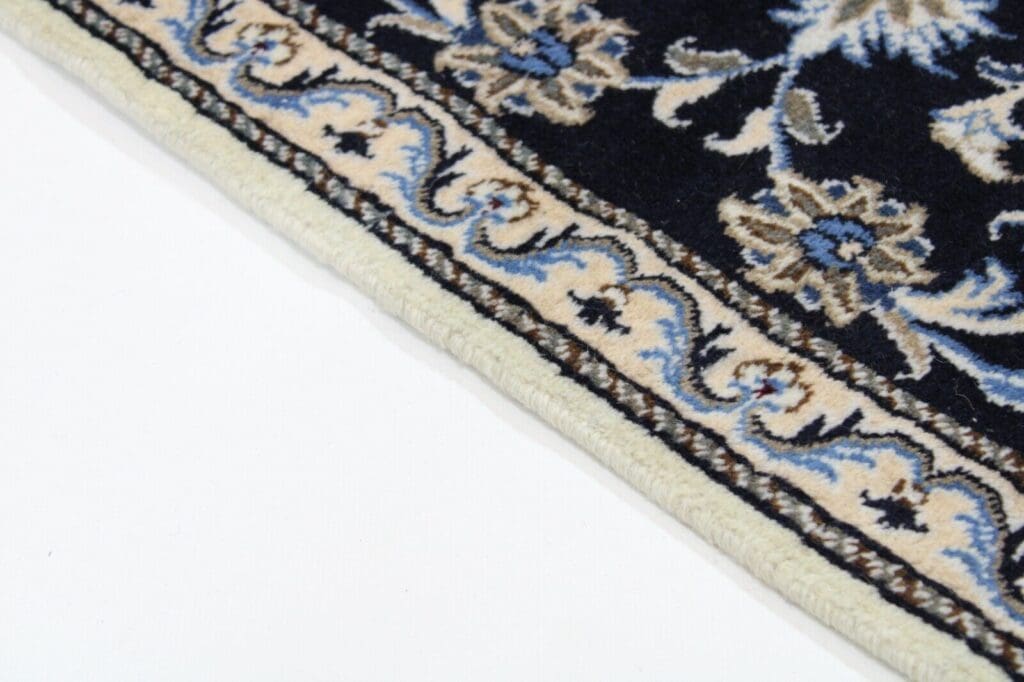
Oriental rug design often depends on the relationship between a central field and one or more border zones. The field carries the main ornament, while the border creates a transition toward the outer edge. In a floral composition, this gives the design a readable hierarchy: the overall arrangement is visible first, followed by details such as flowers, leaves and fine lines. Hand-knotting gives the ornament a textile dimension because the colours are built from individual knots rather than applied as a flat printed image.
Persian colour traditions range from quiet natural combinations to strong contrasts. The exact colours of this rug are not specified in the product information, so no additional palette is assigned to it. Its documented design feature is the oriental floral pattern. Such a pattern can be coordinated with traditional, modern or rustic interiors, with the room’s existing colours influencing the final impression. The pattern description remains precise without claiming shades that have not been provided.
The Nain designation and the floral design describe two different aspects of the rug. Nain places it within an Iranian regional tradition, while the floral motifs explain the visible decorative language. A regional name should not be confused with a pattern label. Together, the origin and the design provide a clear, factual classification: an Iranian Nain Persian rug made by hand and decorated with oriental floral ornament.
Special Features
The stated special features are the Iranian origin, hand-knotted construction, wool and cotton materials and high pile. The rug is described as new without a label and as being in top condition. It is suitable for underfloor heating and is listed as suitable for all rooms. These points cover both the rug’s textile character and its intended use. They also distinguish this individual item from a flat-woven Kelim or from a rug made solely from a different fibre.
Nain gives the rug a place within a recognised Persian origin tradition, while the floral design gives it its decorative identity. Because a hand-knotted rug is formed through manual textile work, the relationship between pile, material and ornament belongs to the individual piece. A signature, production date, exact knot count and more detailed provenance are not listed and are therefore not claimed.
FAQ
How should I care for my Persian rug?
Regular, careful vacuuming removes loose dust from the high pile and helps keep the surface clean. The vacuum head should be moved without an aggressive brushing action, since unnecessary friction can stress the fibres. Spilled liquids should be absorbed promptly rather than rubbed into the pile. For deeper treatment, professional cleaning is advisable because wool and a hand-knotted structure require appropriate handling. Prolonged, direct sunlight should be avoided to reduce the risk of colour fading. Heavy furniture should not press the same part of the pile indefinitely. Since this rug is suitable for underfloor heating, it can also be used in rooms fitted with that type of heating, while normal textile care remains important.
Where do the best Persian rugs come from?
No single region can be declared the source of all the best Persian rugs. Iran has numerous carpet traditions, each with its own approach to drawing, materials, colours and knotting. Kerman, Isfahan and Tabriz are frequently cited for their established craftsmanship and artistic designs. Nain is another distinct Iranian origin with an important place in Persian carpet history. When assessing one rug, the regional name is only one part of the picture; the actual construction, materials, pattern and condition also matter. This rug originates in Iran, is identified as Nain and has an oriental floral pattern. That combination gives it a clear regional and decorative classification without ranking one tradition above every other.
How can I recognise the quality of a Persian rug?
Quality is normally assessed through several characteristics together. Knot density can indicate the fineness of a drawing and the amount of work involved when a precise figure is available. Materials, the evenness of the knotting, the clarity of the pattern and the condition of the pile are also relevant. Wool is valued for durability and a comfortable handle, while cotton can contribute firmness to the supporting construction. For this rug, the documented features are wool and cotton, hand-knotting, high pile and a new condition without a label. No specific knot count or percentage composition is provided, so those measures cannot be used for a more exact assessment. The available characteristics should instead be considered together with the visible condition and the execution of the floral design.
To provide the best experiences, we use technologies like cookies to store and/or access device information. Consenting to these technologies will allow us to process data such as browsing behavior or unique IDs on this site. Not consenting or withdrawing consent, may adversely affect certain features and functions.
Functional Always active
The technical storage or access is strictly necessary for the legitimate purpose of enabling the use of a specific service explicitly requested by the subscriber or user, or for the sole purpose of carrying out the transmission of a communication over an electronic communications network.
Preferences
The technical storage or access is necessary for the legitimate purpose of storing preferences that are not requested by the subscriber or user.
Statistics
The technical storage or access that is used exclusively for statistical purposes.The technical storage or access that is used exclusively for anonymous statistical purposes. Without a subpoena, voluntary compliance on the part of your Internet Service Provider, or additional records from a third party, information stored or retrieved for this purpose alone cannot usually be used to identify you.
Marketing
The technical storage or access is required to create user profiles to send advertising, or to track the user on a website or across several websites for similar marketing purposes.
 SECURE PAYMENT
 SHIPPING PARTNERS


