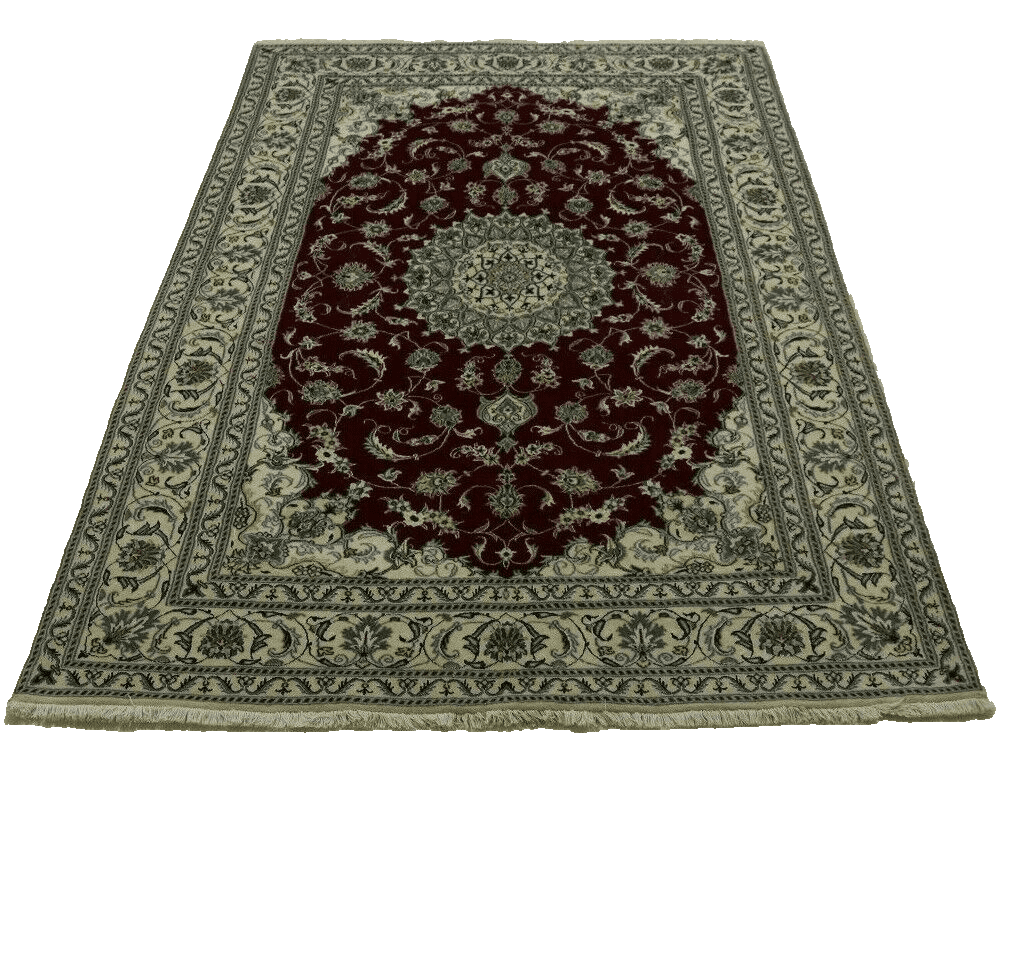
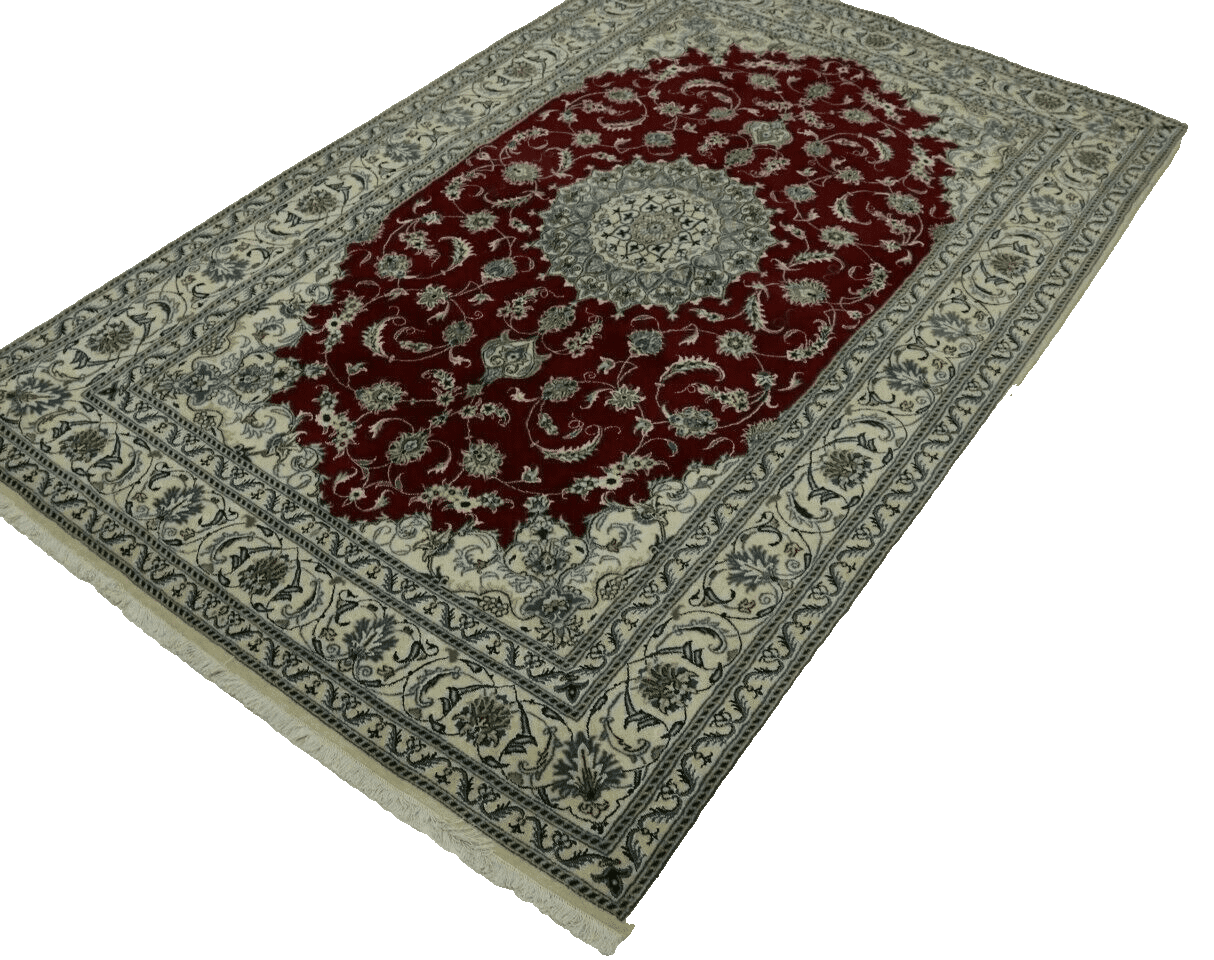
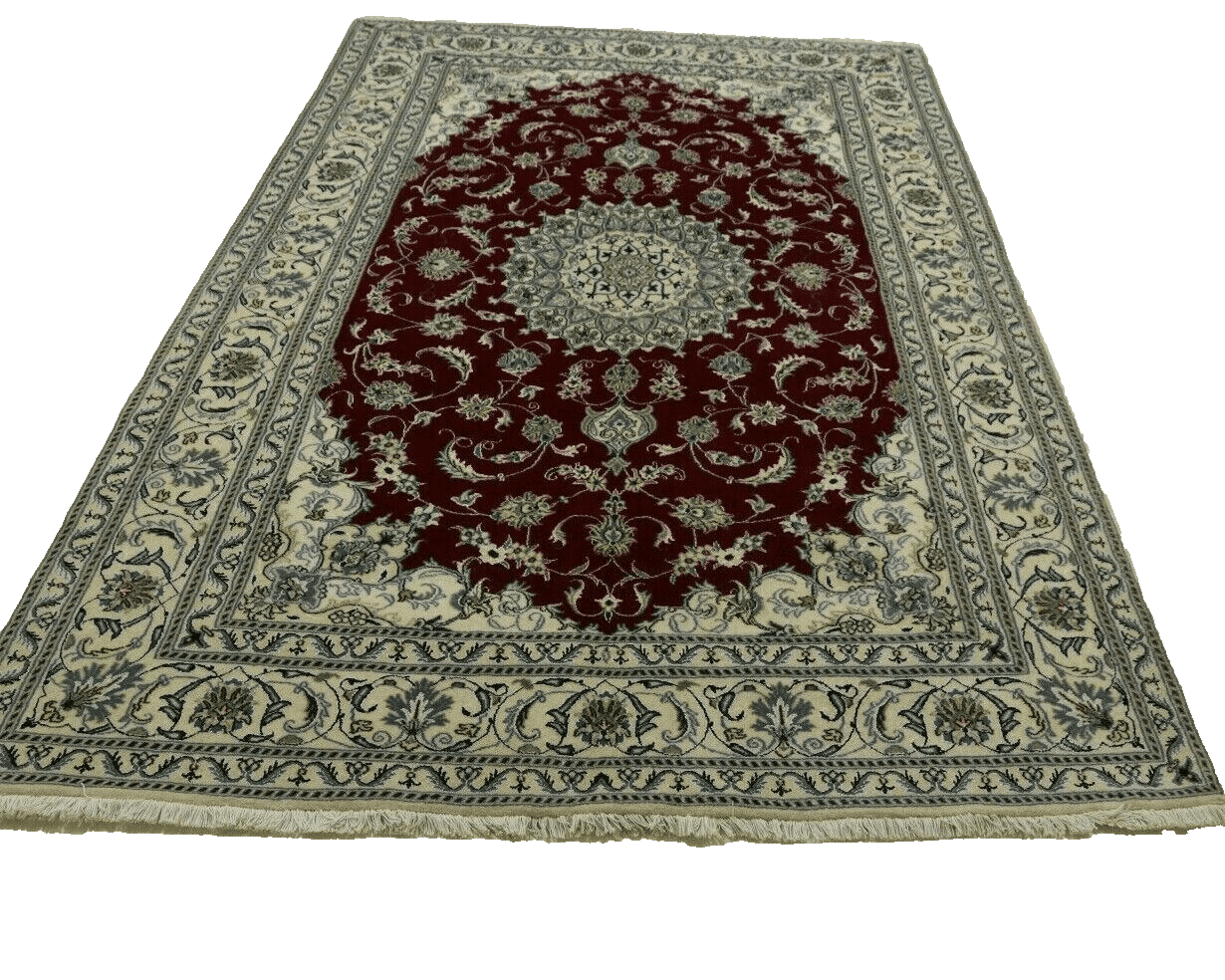
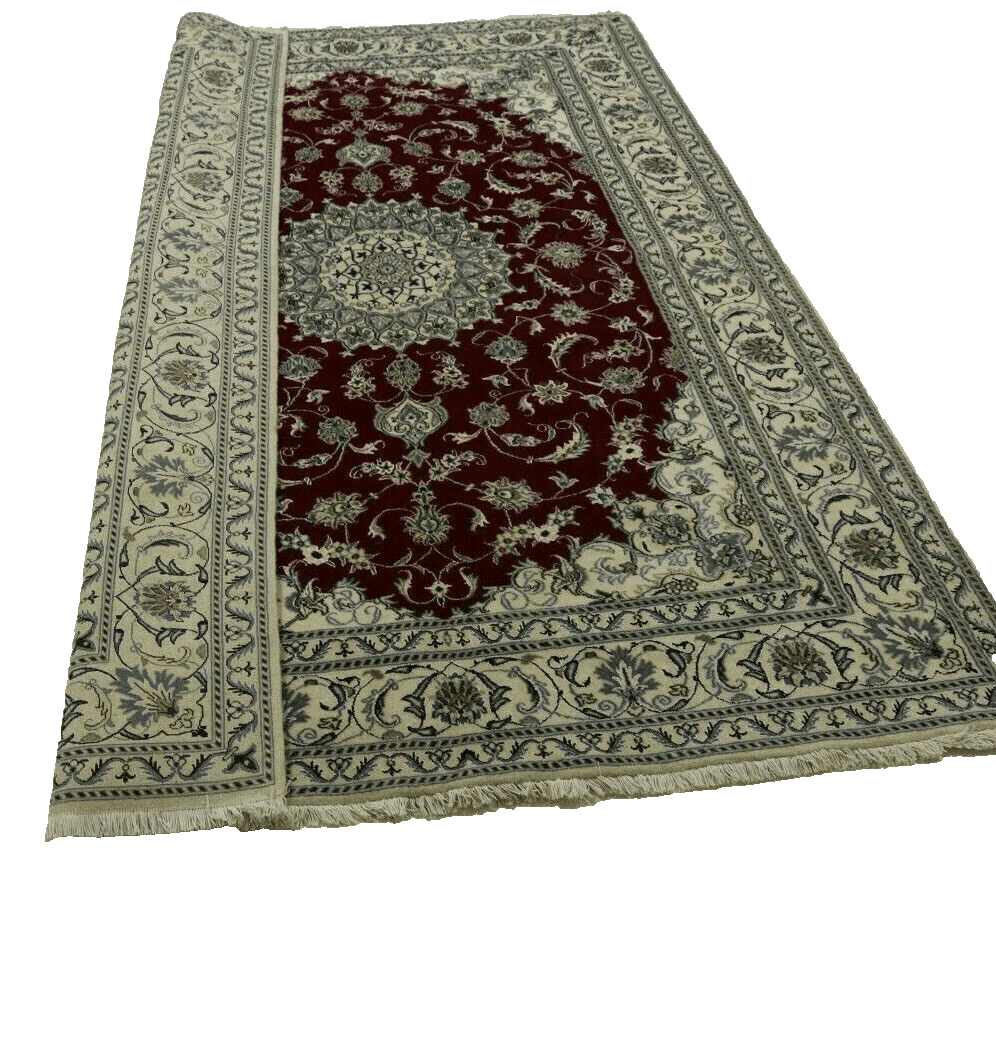
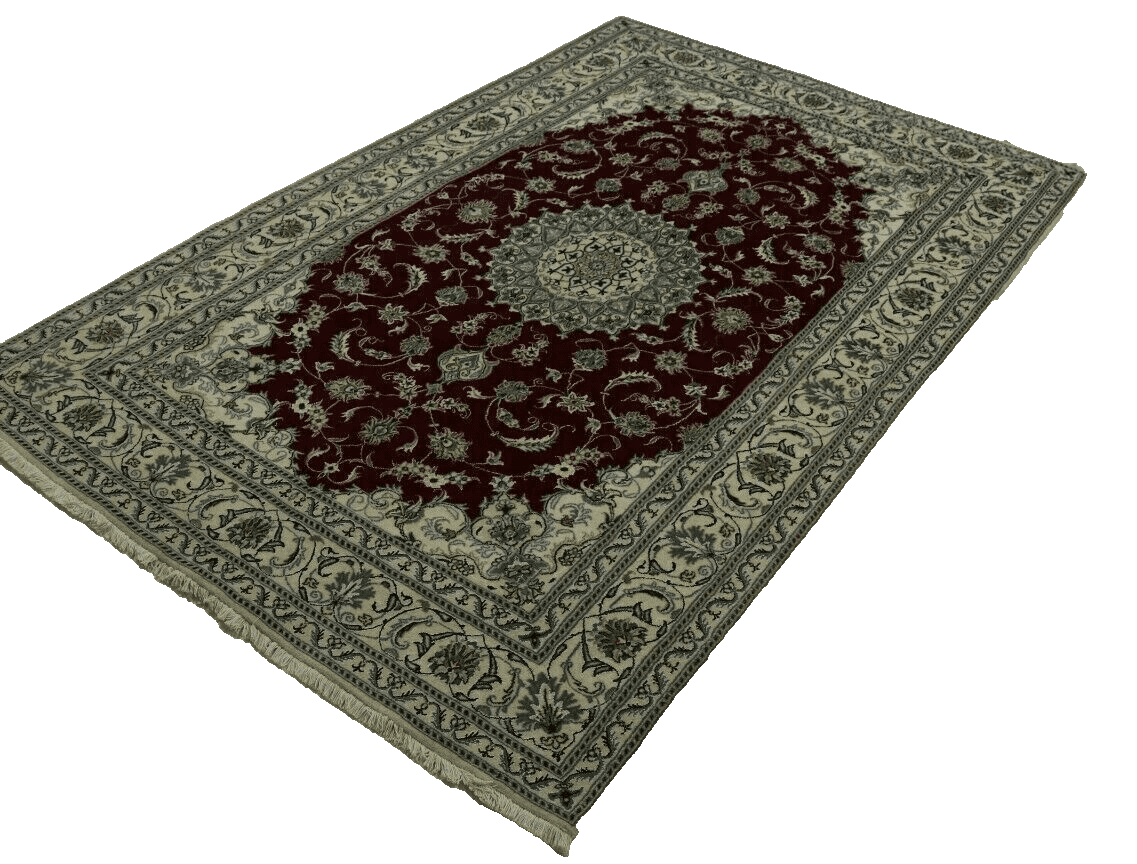
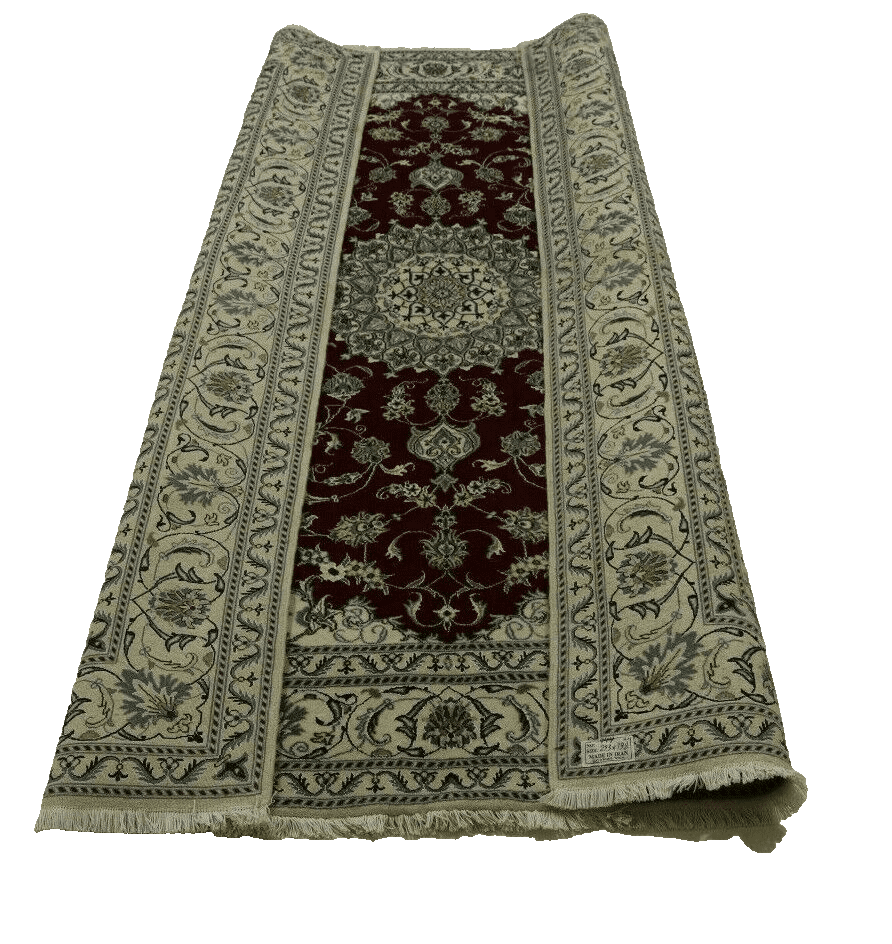
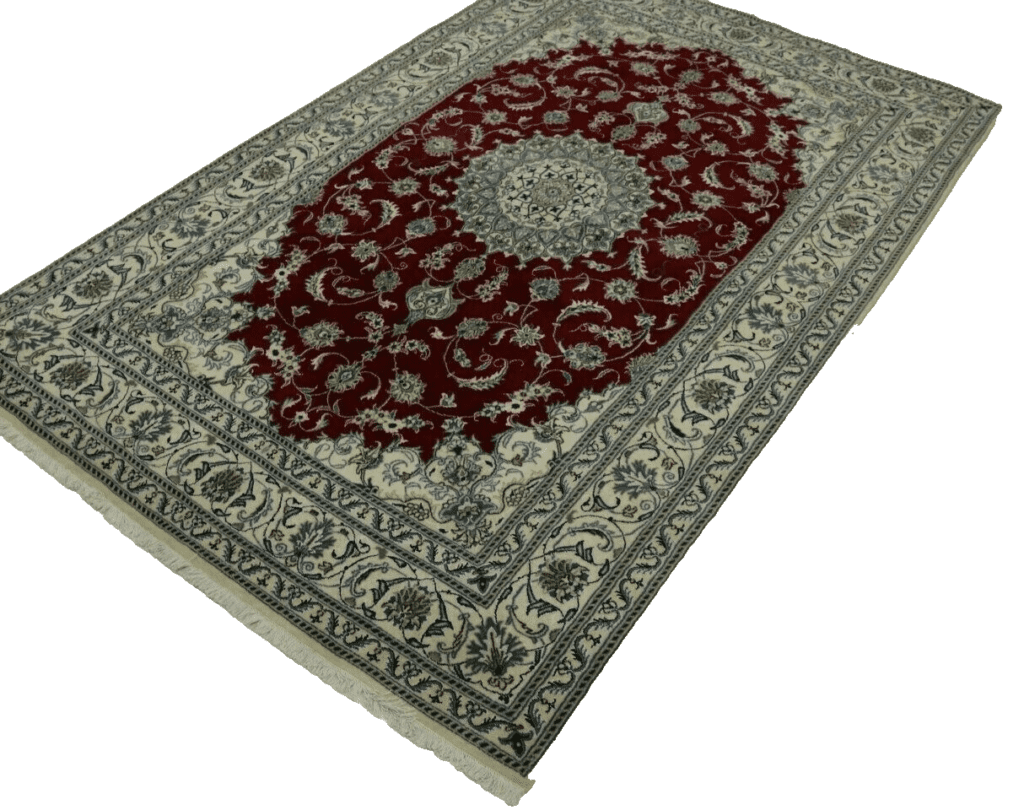
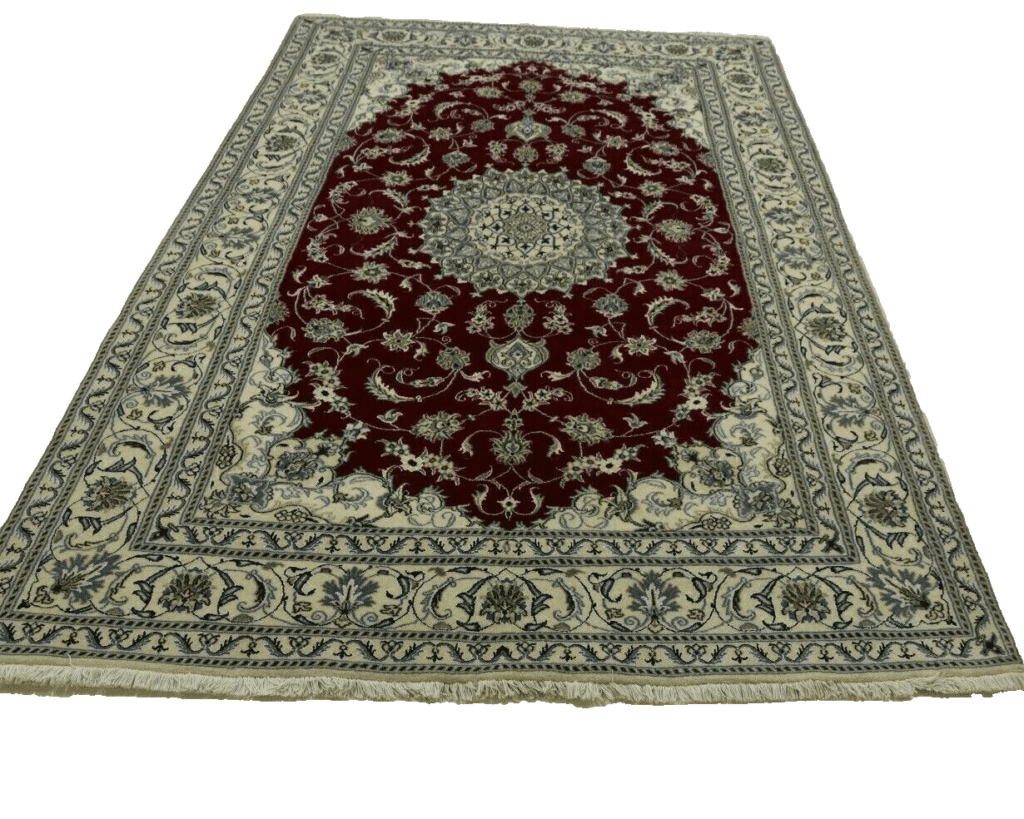
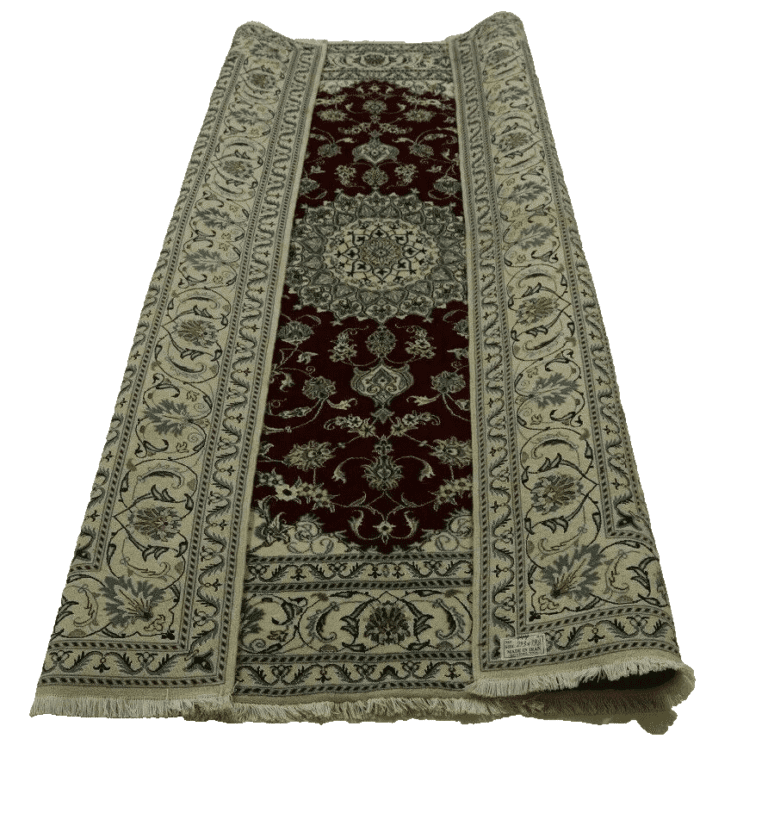
Hand-knotted Nain Persian rug | Knot density: approx. 300,000 knots/m² | Material: pile 90% virgin wool, 10% silk | Size: 293 x 198 cm | Pattern: Traditional Oriental, white / red | Condition: New, very good
This Nain Persian rug is made from 90% virgin wool and 10% silk. The combination brings together the substantial character of wool and the fine surface quality associated with silk. Virgin wool forms the larger part of the pile and provides a resilient textile foundation. Silk adds a smooth handle and a subtle sheen to the surface. Together, the two fibres give the rug a varied tactile and visual character.
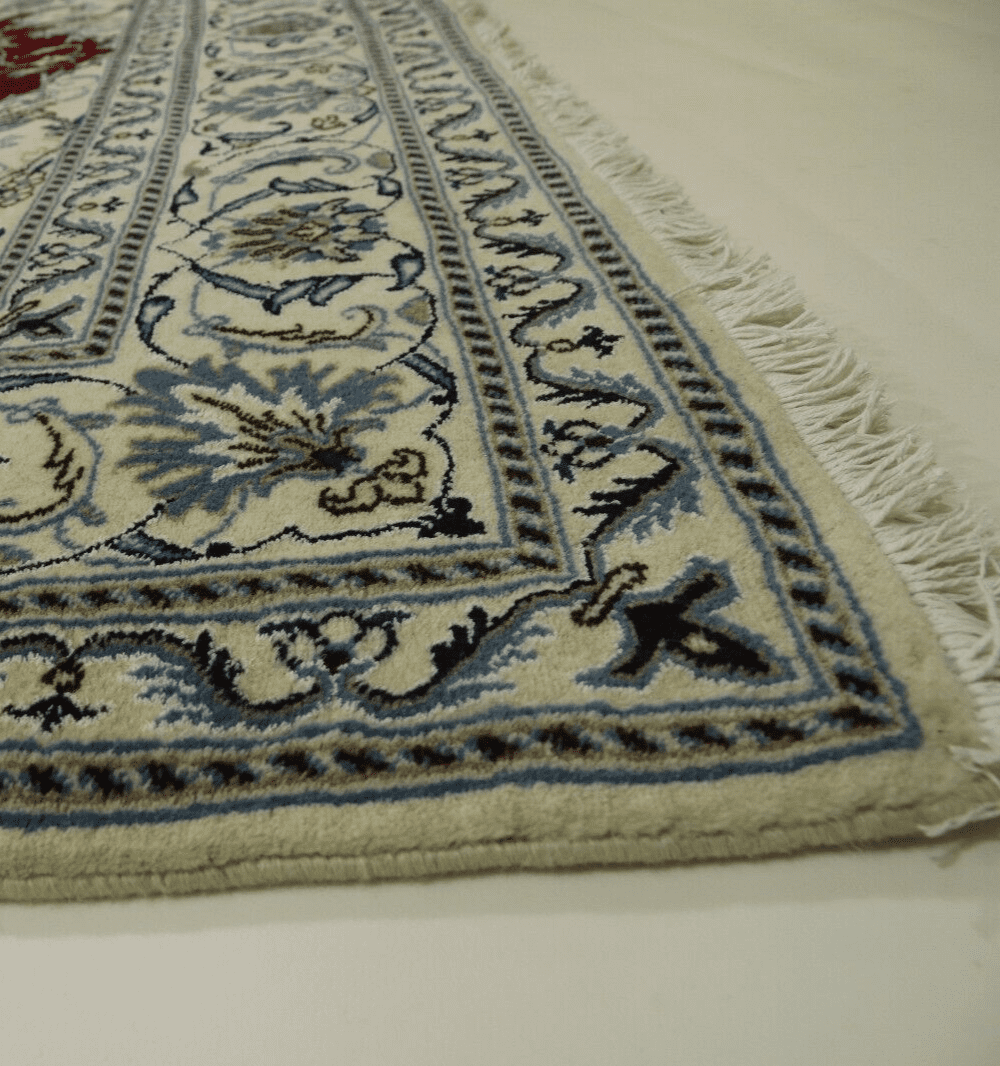
The rug is hand-knotted. In this method, individual knots are placed by hand during a carefully controlled sequence of work. Each knot contributes to the final surface and to the definition of the design. Hand-knotting allows fine lines, detailed contours and small ornamental elements to be worked into the rug. It also gives the pile the structured appearance that distinguishes a hand-knotted piece from a mechanically produced floor covering.
The wool and silk are brought together through this traditional knotting process. Wool supplies the predominant material character, while silk contributes a refined smoothness and a light-catching effect. The source describes the rug as new and in very good condition. Its high knot density is another stated feature and supports the precise appearance of the pattern. The result is a single hand-crafted piece rather than a mass-produced item.
Origin and Tradition
Nain is a recognised centre of Persian rug weaving in Iran. The town is associated with rugs that combine fine materials, pale colour schemes and detailed workmanship. Nain weaving developed a distinctive approach to precise ornamentation, allowing floral and geometric elements to be arranged with clarity. This rug is identified as a Nain Persian rug and its origin is given as Persia or Iran.
The weaving tradition of Nain reaches back several centuries. Knowledge of preparing fibres, constructing a rug and arranging a design was passed from one generation of weavers to the next. These accumulated skills made it possible to produce finely drawn patterns with carefully controlled outlines. A dense knot structure is particularly useful for this kind of work because it permits small forms and narrow transitions to be rendered with greater definition.
Many Nain rugs are known for light and pastel colour impressions. This piece is specified in white and red. The light ground establishes a clear visual field, while red provides a distinct contrasting accent. Colour in a Persian rug is closely related to the organisation of the design: it separates areas, reinforces outlines and gives the eye a way to follow the composition. The stated palette therefore forms part of the rug’s identifiable appearance.
Nain represents more than a place label. It refers to a regional weaving culture shaped by repeated practice, technical knowledge and established design traditions. The work is built through numerous manual stages, from handling the fibres to tying the knots and completing the surface. A hand-knotted Nain rug retains that connection to traditional craftsmanship. At the same time, its restrained and detailed visual language can be used in a variety of interior settings.
Persian rugs from Nain are often connected with a balance between a light overall impression and elaborate drawing. Floral forms may be carefully stylised rather than copied directly from nature, while geometric organisation gives the composition order. The relationship between these elements is part of the regional tradition. Here, the Nain designation is combined with a wool and silk pile, hand-knotted construction and a traditional Oriental style.
The rug is described as a one-off, or unique single piece. That status is consistent with the nature of hand-knotted production: even rugs made within the same tradition can have individual details in their drawing and execution. The regional identity remains clear, while the particular arrangement and finish belong to this one rug. Its origin in Persia or Iran places it within the history of Iranian rug making and specifically within the Nain tradition.
Design and Pattern
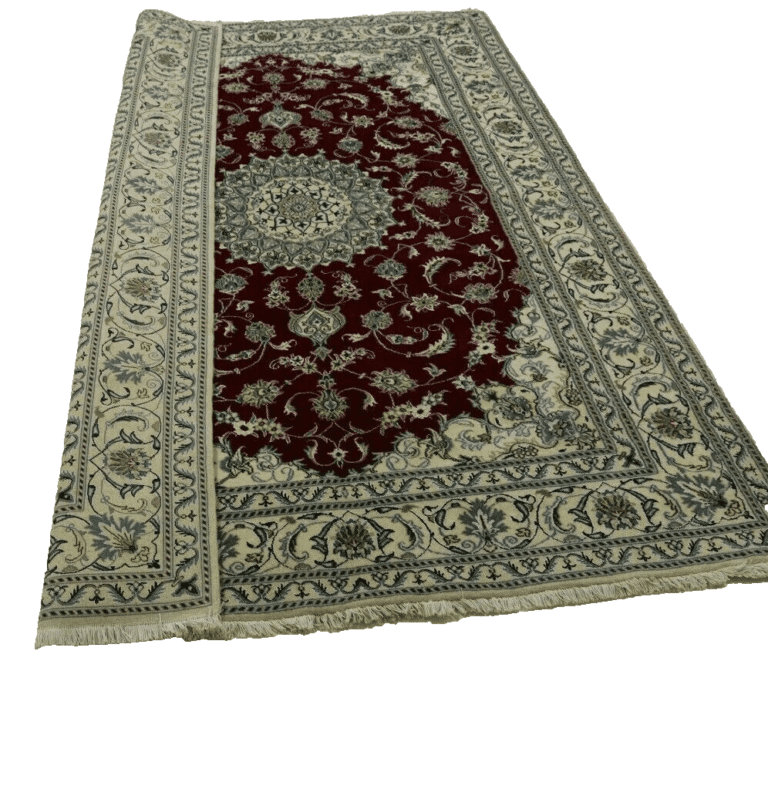
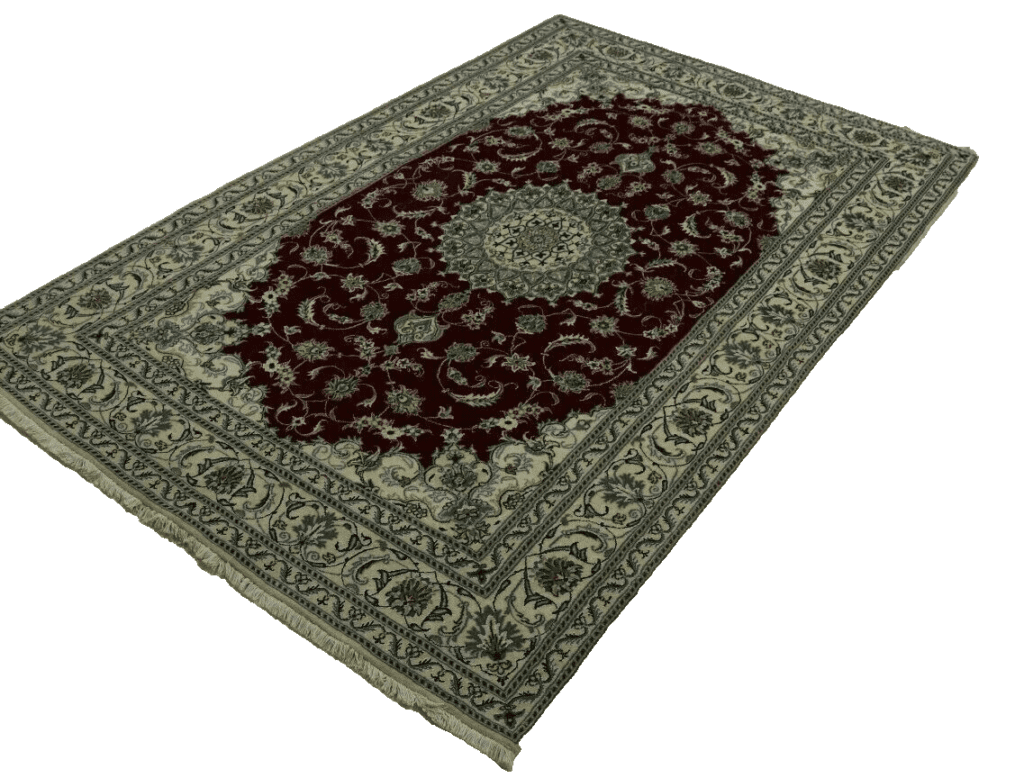
The design is described as traditional Oriental. Its colours are white and red, creating a defined relationship between a light field and a stronger accent. A pale ground can make fine drawing easier to read, while red can mark selected forms or provide visual emphasis. Traditional Oriental rug design uses colour as part of its structure, not only as surface decoration. The stated palette therefore works together with the detailed hand-knotted construction.
Floral motifs and geometric forms are typical elements associated with Nain rugs. Floral motifs may take the form of stylised blossoms, leaves, vines or other plant-based shapes. Geometric elements can establish symmetry, direction and order through repeated lines or balanced compartments. These two design languages can be combined within one composition. Their interaction creates a pattern that is decorative while still being carefully organised.
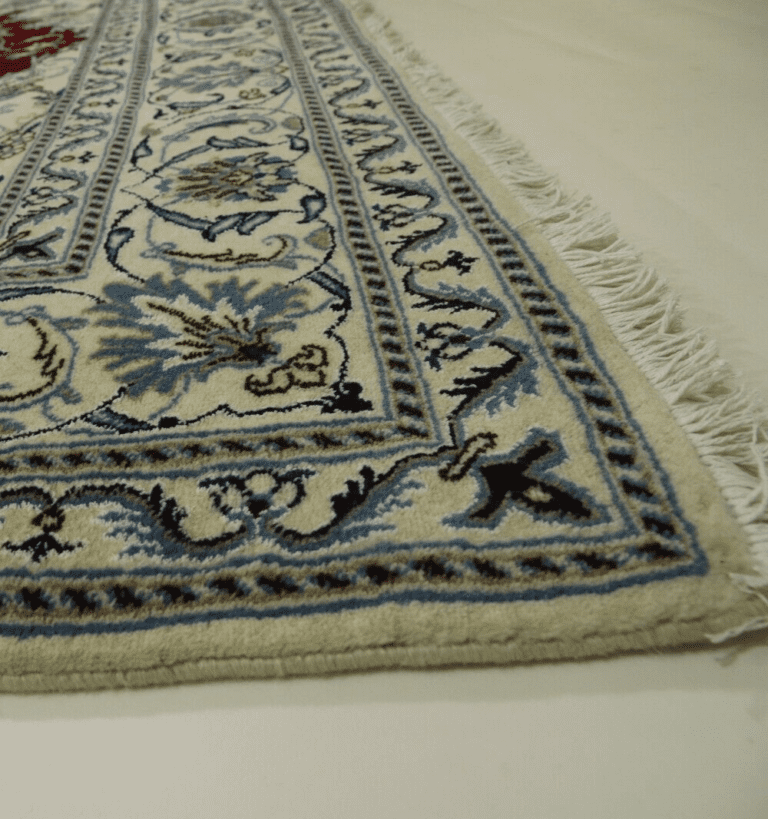
Fine knotting is important when a design contains small motifs and precise outlines. The pattern is built progressively, with each hand-tied knot contributing to the visible image. Narrow borders, delicate curves and changes in form require close attention during production. The high knot density specified for this rug is consistent with the detailed character associated with Nain weaving. It helps the design maintain definition across the surface.
Balance is a central idea in the Nain design tradition. Motifs are arranged in relation to a wider composition rather than appearing as unrelated isolated symbols. Repetition, symmetry and framing can guide the eye through the field. Floral details may be supported by geometric order, while borders can give the whole design a clear edge. The source identifies this rug’s style as traditional Oriental and its colours as white and red; those are the defining design facts for this individual piece.
A traditional Oriental design can sit within a classic interior or provide a patterned counterpoint in a more contemporary room. The light-and-red palette gives the rug a clear presence without changing its regional character. The pattern carries the visual vocabulary of Persian weaving, while the hand-knotted surface preserves the evidence of manual work. Its design is therefore connected both to the Nain tradition and to the particular execution of this one-off rug.
Because this is a unique single piece, its exact arrangement is not presented as a repeated industrial pattern. Small variations in hand-knotted motifs are possible, and these variations belong to the making of the rug. The result combines a recognised regional style with an individual execution. White, red, floral references and geometric structure all contribute to the traditional Oriental identity stated for the piece.
Special Features
This rug is a hand-knotted one-off. It is described as new and in very good condition. The pile material consists of 90% virgin wool and 10% silk, with silk providing a fine accent within the predominantly wool construction. The high knot density and the careful handwork are stated features of the rug. Together, they describe a detailed Nain piece made within the Persian rug tradition.
The traditional Oriental design is presented in white and red. The colour combination, the fine material mix and the hand-knotted surface allow the rug to be used in a living room, bedroom or study. Since it is a single unique piece, this precise combination of origin, material, colours and execution is available only in this rug.
FAQ
What is the best way to care for a Nain Persian rug?
Vacuum the rug regularly and use a nozzle without an attaching brush. This helps clean the surface while avoiding unnecessary strain on the pile. If a spill or mark occurs, dab it promptly with a damp cloth rather than rubbing it. Rubbing can work the stain further into the fibres and place extra stress on the surface. Mild carpet cleaners are suitable for spot treatment. Professional cleaning every few years is also recommended. Care should take the wool and silk material combination into account.
Can a Nain rug be used in a high-traffic area?
Yes. Its high knot density and robust materials make this hand-knotted Nain rug suitable for areas that receive frequent use. Regular, gentle care remains important so that the pile and colours are kept in good condition. If the rug is exposed to direct sunlight, a suitable pad or underlay is recommended. This helps protect the colours against fading. The cleaning routine can be adjusted to the room and the amount of traffic, while harsh brushing should be avoided.
Can the pattern vary because the rug is hand-knotted?
Small differences in pattern details can occur in hand-knotted rugs. The individual stages are carried out by hand, so minor deviations in outlines or ornamental details are possible. This remains true when a rug follows a recognised regional tradition and a traditional design language. This particular rug is also described as a one-off or unique single piece. Its individual execution is therefore part of its hand-crafted character and distinguishes it from an industrially repeated floor covering.
To provide the best experiences, we use technologies like cookies to store and/or access device information. Consenting to these technologies will allow us to process data such as browsing behavior or unique IDs on this site. Not consenting or withdrawing consent, may adversely affect certain features and functions.
Functional Always active
The technical storage or access is strictly necessary for the legitimate purpose of enabling the use of a specific service explicitly requested by the subscriber or user, or for the sole purpose of carrying out the transmission of a communication over an electronic communications network.
Preferences
The technical storage or access is necessary for the legitimate purpose of storing preferences that are not requested by the subscriber or user.
Statistics
The technical storage or access that is used exclusively for statistical purposes.The technical storage or access that is used exclusively for anonymous statistical purposes. Without a subpoena, voluntary compliance on the part of your Internet Service Provider, or additional records from a third party, information stored or retrieved for this purpose alone cannot usually be used to identify you.
Marketing
The technical storage or access is required to create user profiles to send advertising, or to track the user on a website or across several websites for similar marketing purposes.
 SECURE PAYMENT
 SHIPPING PARTNERS


