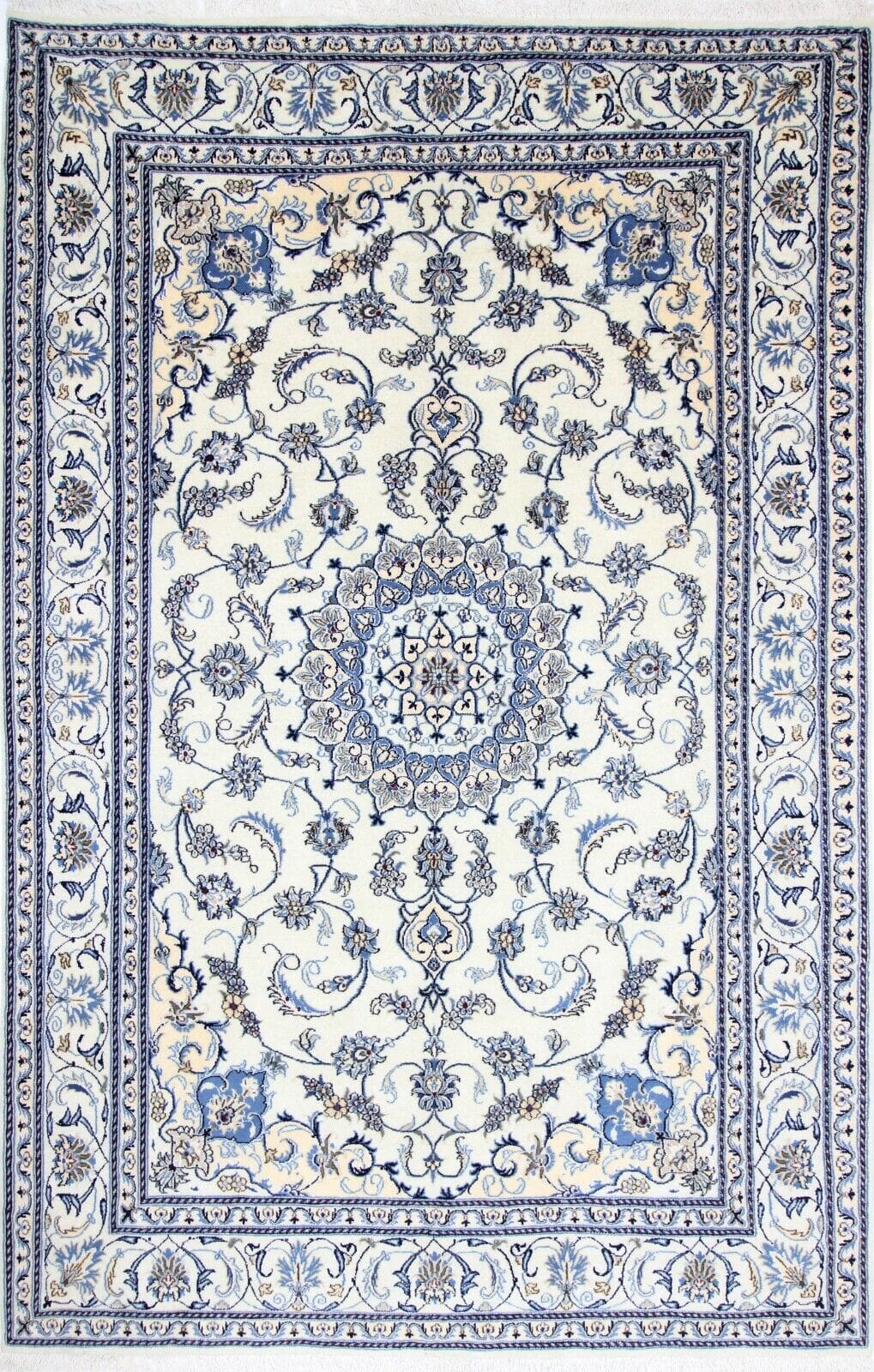
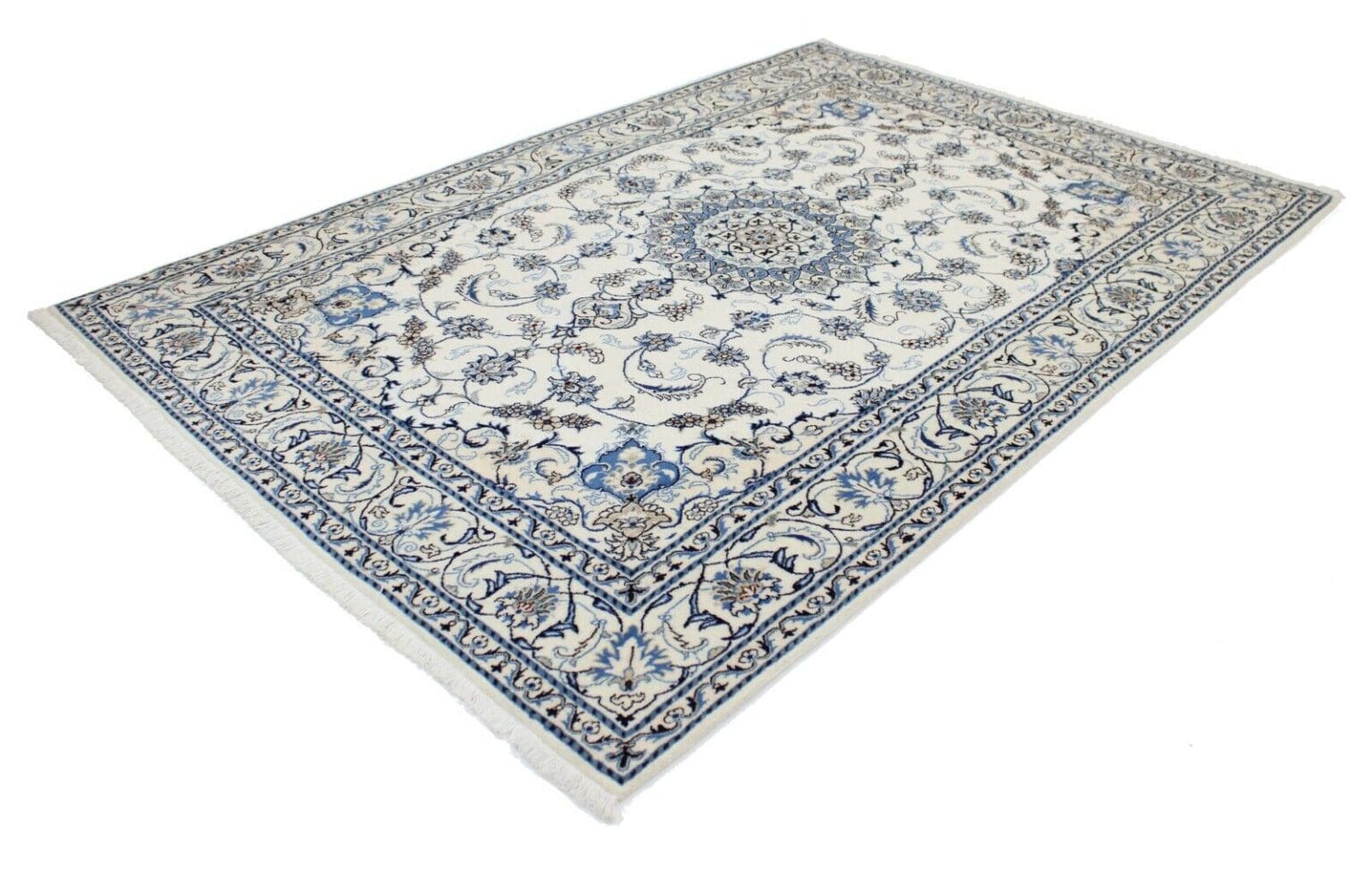
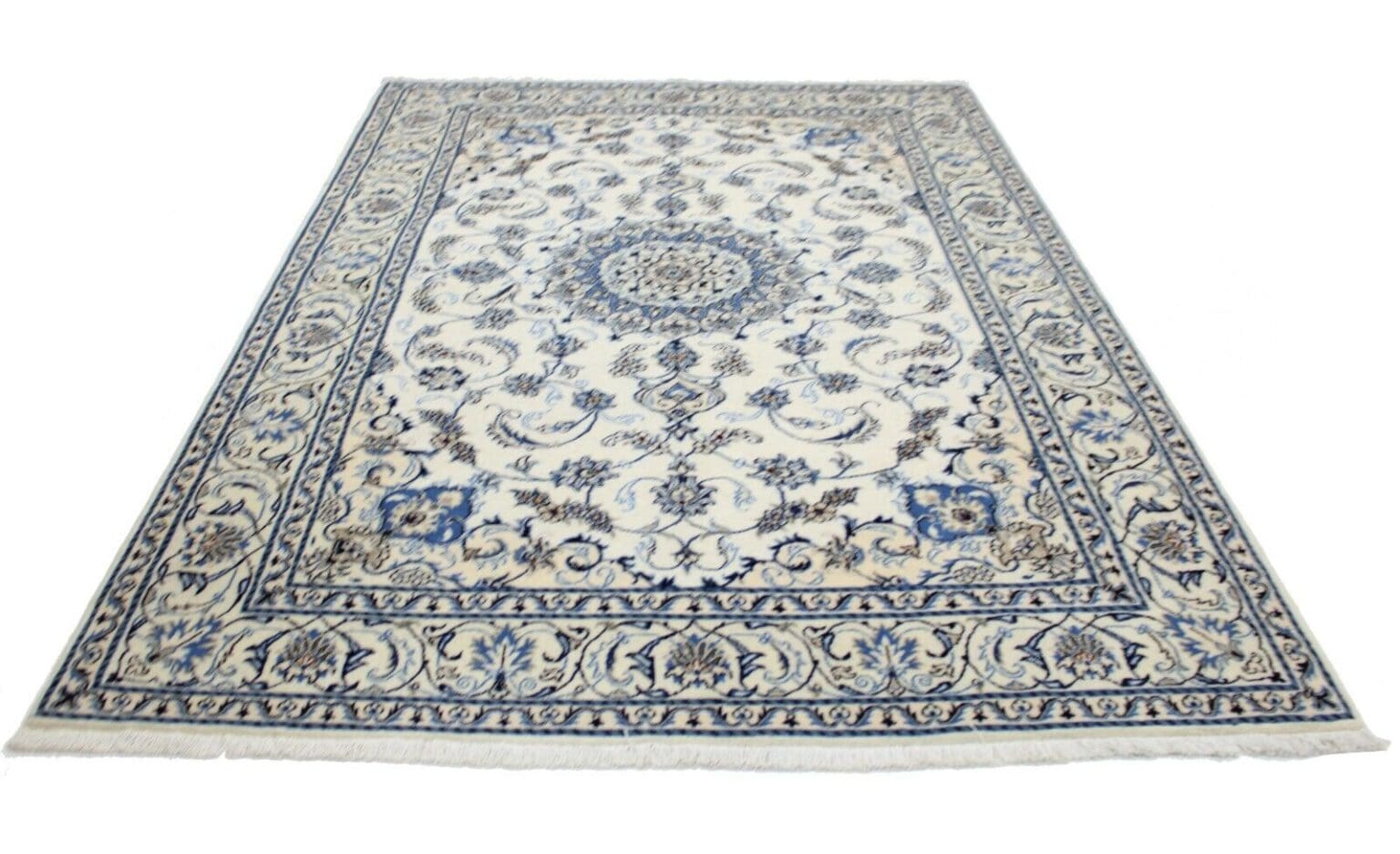
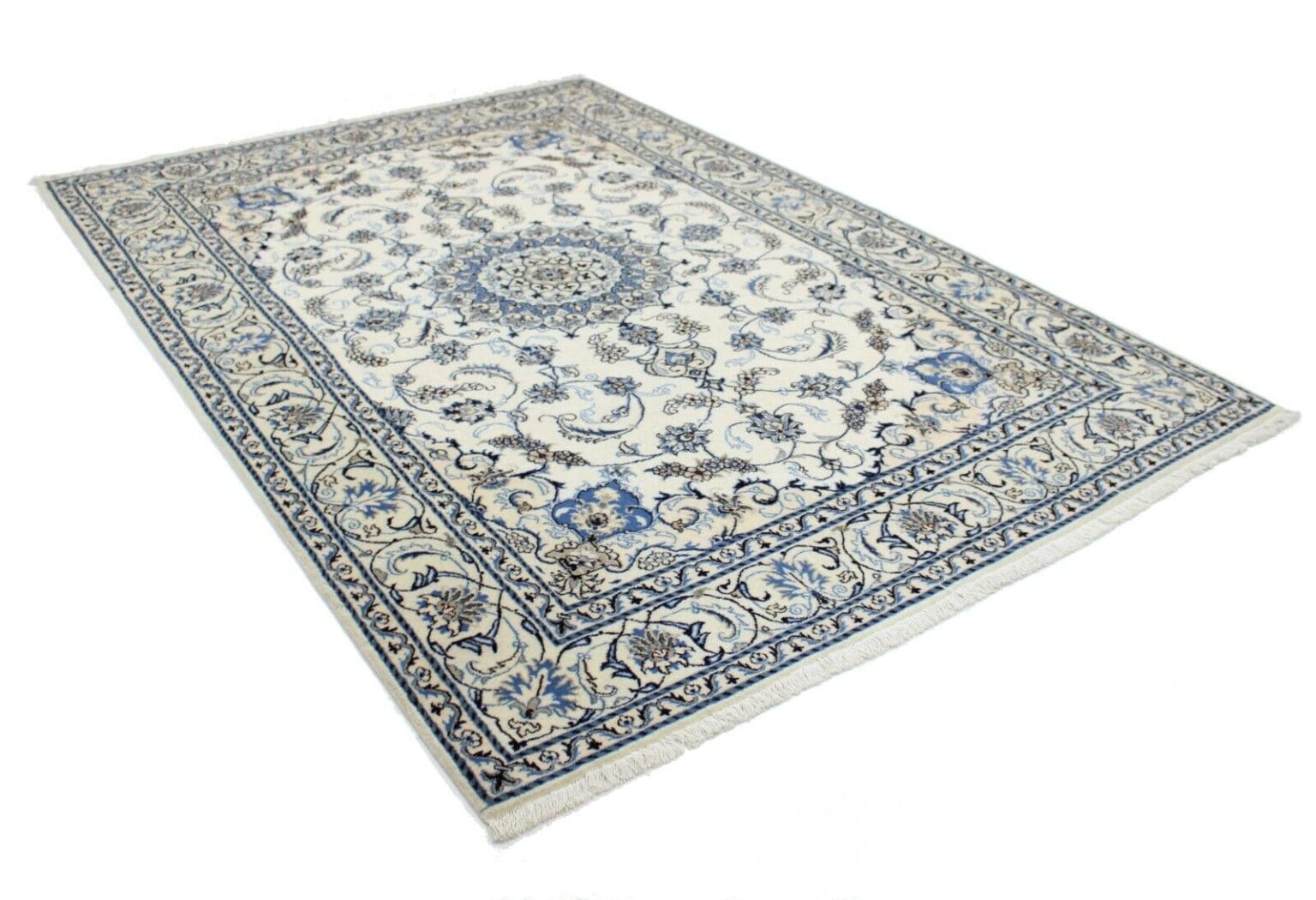
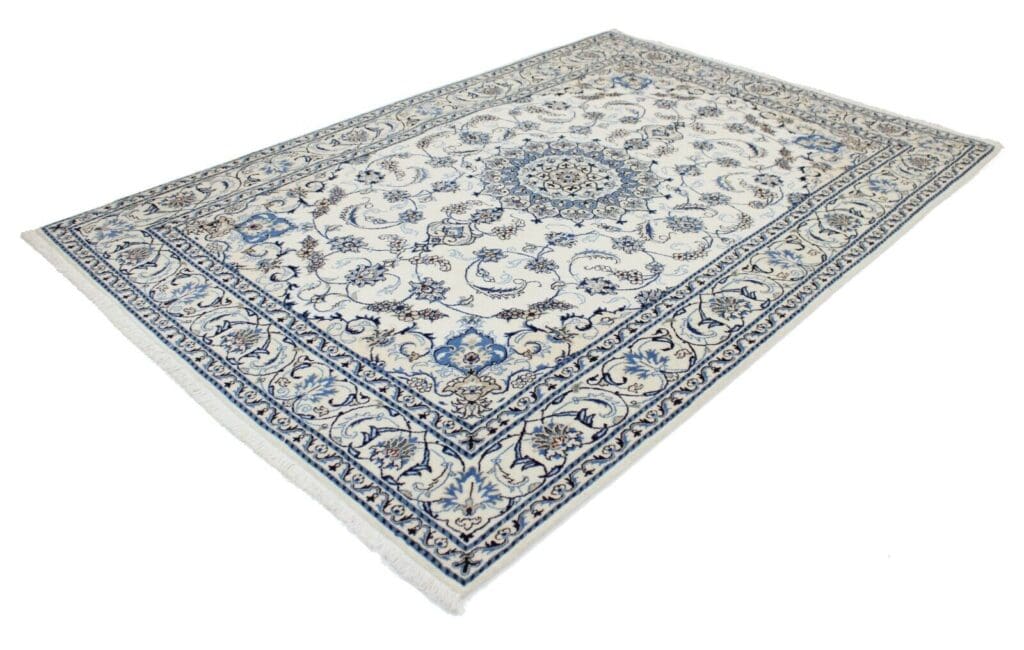
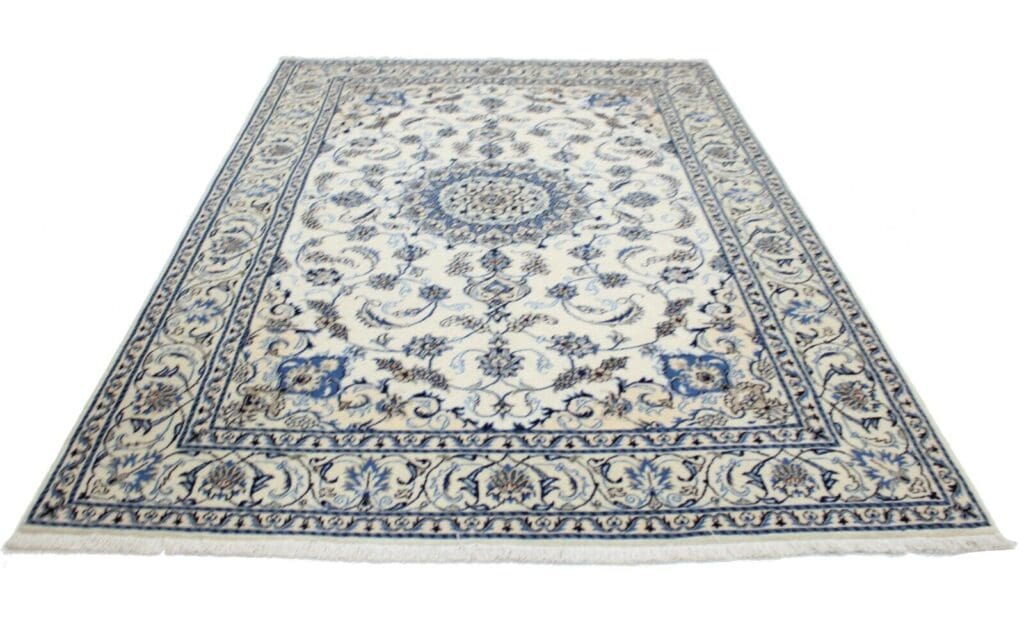
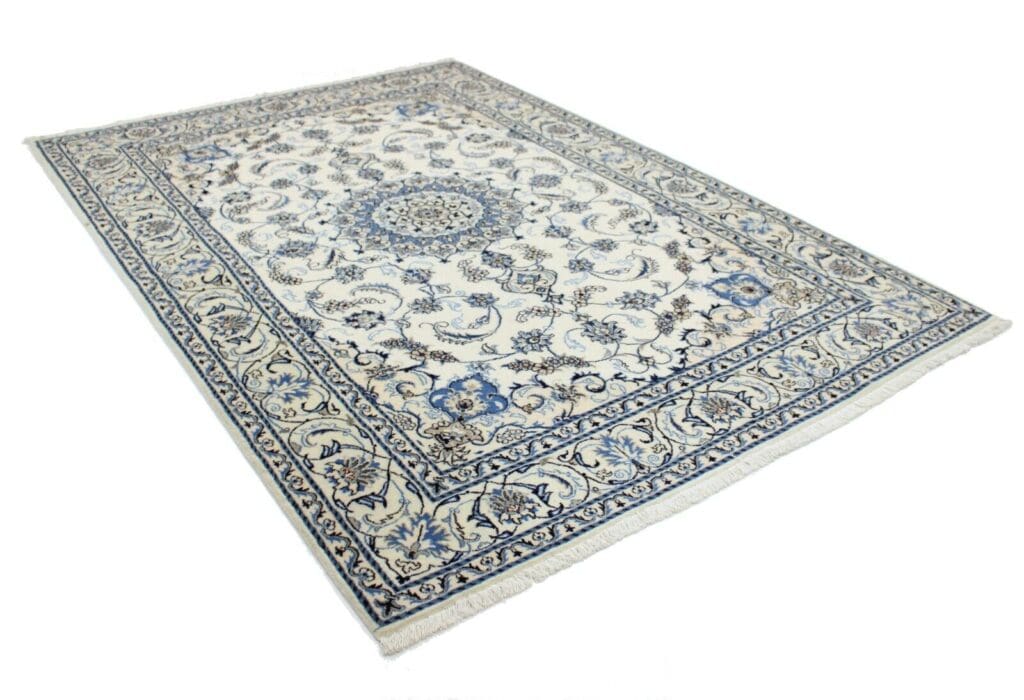
Hand-knotted Nain Persian Rug | Knot density: Hand-knotted | Material: Wool and cotton | Size: 288 x 198 cm | Pattern: Oriental with floral motifs | Condition: New without label, top condition
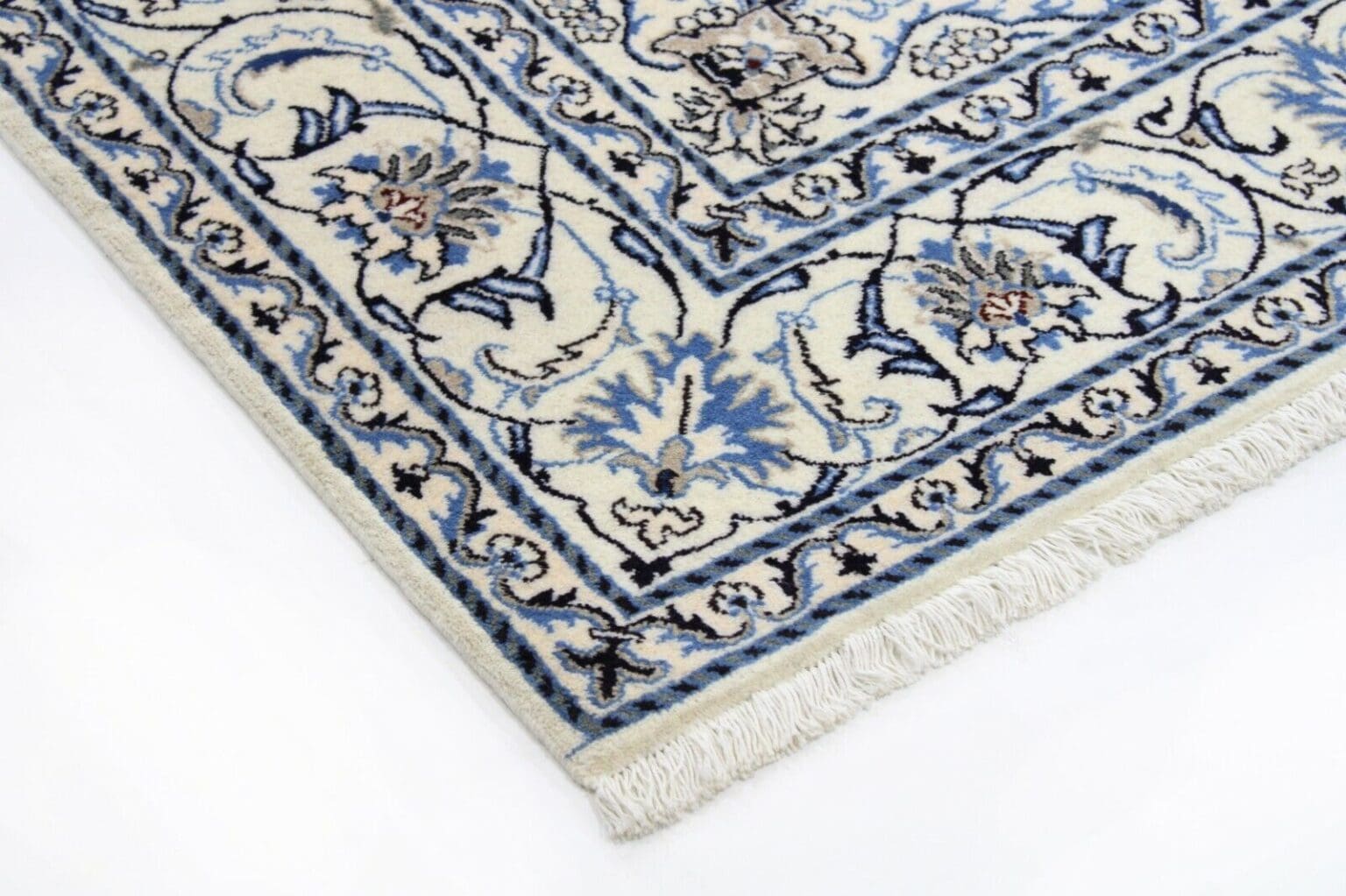
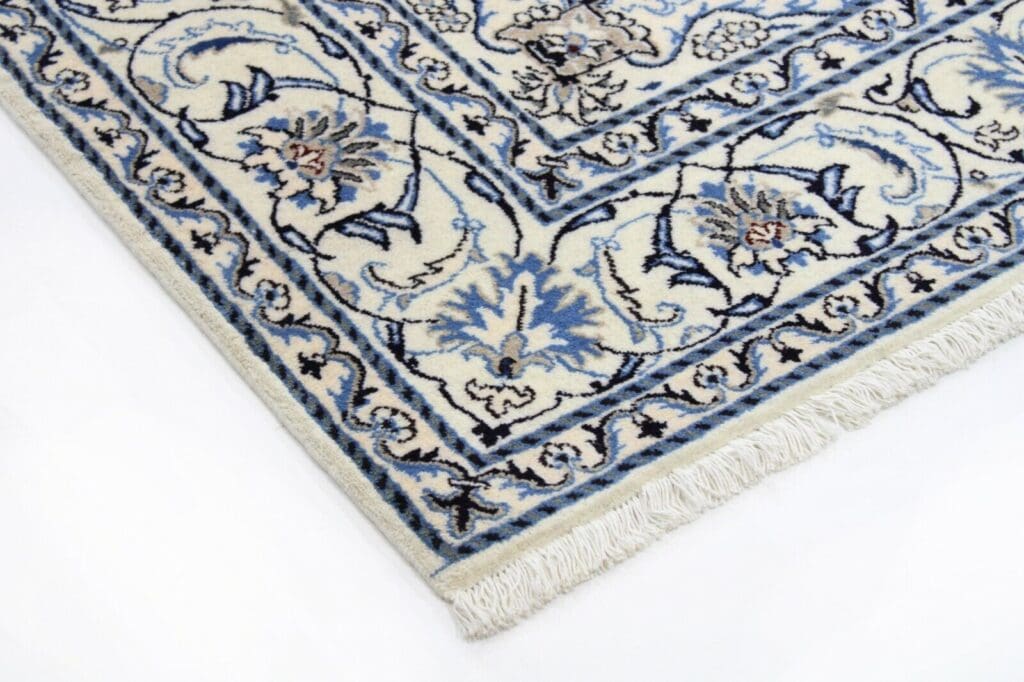
This Nain Persian rug is hand-knotted. Its construction is linked to an Iranian craft tradition in which the design is built gradually through individual knots rather than applied to a completed surface. The listed materials are wool and cotton. In Persian rug making, wool is traditionally used for a visible pile because it can be formed into a resilient and tactile surface. Cotton is commonly used as a stable textile foundation. Both materials are specified for this rug, without adding a more detailed division of their roles. The pile is described as high pile. That gives the surface a pronounced textile texture and can lend the floral drawing a visible sense of depth. Hand-knotting also means that the rug is made as an individual textile piece rather than as an identical machine-produced article. It is described as new without a label and in top condition. The rug is suitable for underfloor heating and is intended for use in all rooms. These are the stated details concerning this individual rug’s materials, construction, condition and use.
Origin and Tradition
The rug comes from Iran and is identified as a Nain Persian rug. Nain is one of the recognized carpet centres of Iran and gives its name to a distinct direction within Persian weaving. The city is situated in central Iran, in an area whose textile traditions developed within a long cultural history and a dry regional climate. Nain rugs are generally associated with carefully organized compositions, fine ornament and controlled use of colour. Those points describe the broader tradition of the type, not additional measurements or workshop details for this particular rug.
Persian rug making developed over centuries in many Iranian cities and regions. Each centre formed its own approaches to drawing, knotting, colour arrangement and finishing. For that reason, the term Persian rug covers a wide range of regional practices rather than one uniform appearance. Nain, Tabriz, Kashan and Isfahan are used as separate regional or stylistic designations. Such a name connects a rug with a weaving tradition and with patterns that have been passed on and adapted over time. Iran and Nain are the origin references given for this piece. Other locations associated with Persian carpet history are not presented as its origin.
Nain’s weaving tradition is often recognized for compositions in which a clearly organized field is framed by borders and refined ornament. The making of such a rug brings together a drawn design, selected colours, knotting and the later treatment of the pile. The pattern is not simply printed onto a finished textile; it is formed as the rug is knotted. This makes the visual language inseparable from the craft process. The name Nain therefore refers both to a place in Iran and to a recognizable branch of Persian carpet culture.
Persian rugs have long served two purposes at once. They are functional floor textiles, but they are also woven images whose patterns carry regional knowledge. The tradition is maintained through workshops, family skills and the continued use of established design principles. Handwork, natural textile materials and ordered ornament recur throughout this history. The rug described here brings those general features together with a hand-knotted construction and a Nain designation. Iran provides the national origin, while Nain identifies the regional and stylistic context. No age, workshop, signature or individual maker is added to that context.
Persian carpet design also reflects exchange between regions. Borders, plant forms and methods of arranging a field could be developed in one place, adapted in another and then reinterpreted by later weavers. A motif appearing in more than one region does not by itself change the origin of a particular rug. Here, Nain in Iran remains the stated origin and designation. The wider history explains why Persian patterns can share certain visual ideas while still belonging to different local traditions. It also explains why a hand-knotted rug is read as both a useful household textile and part of a continuing cultural practice.
Design and Pattern
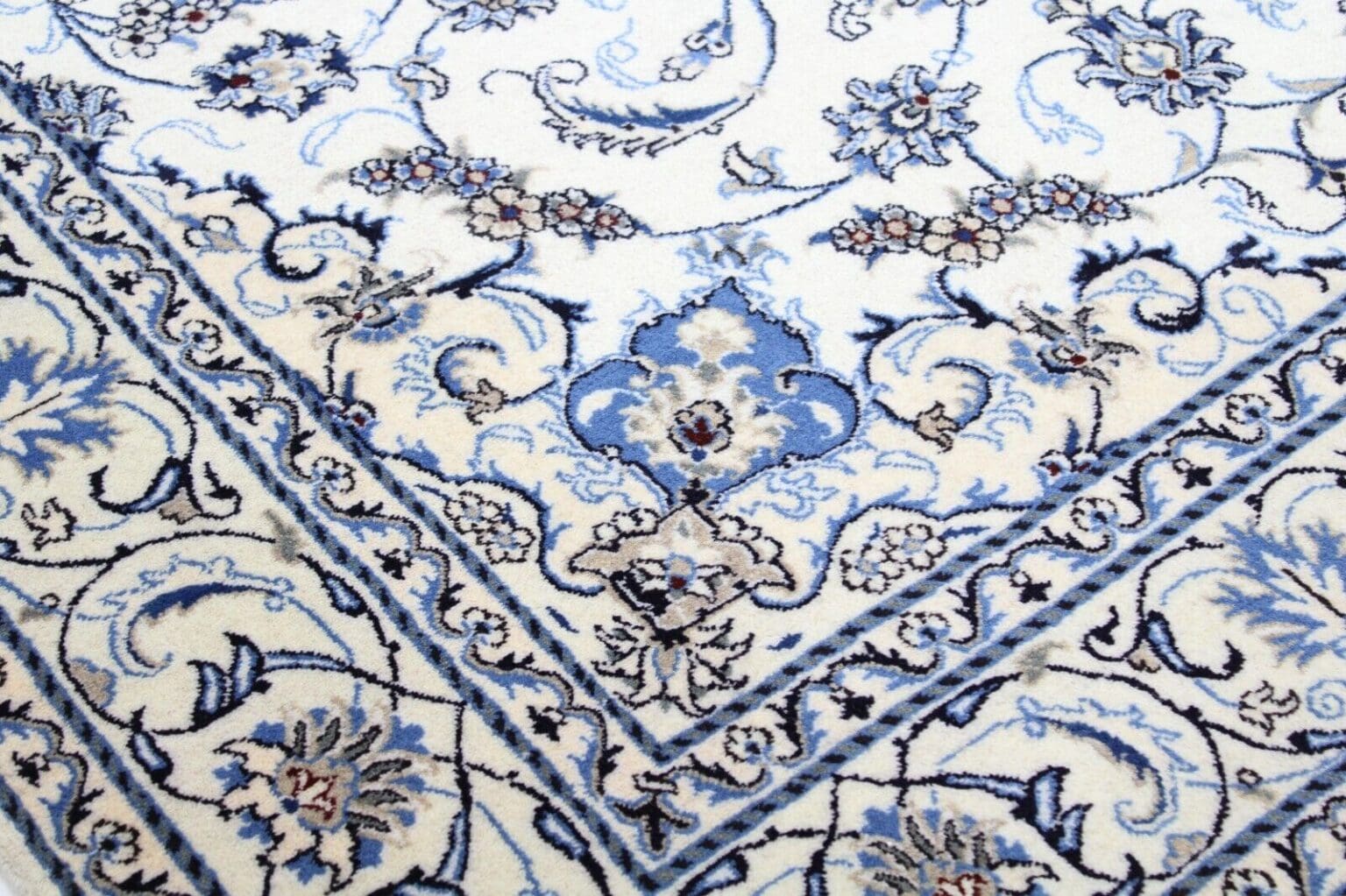
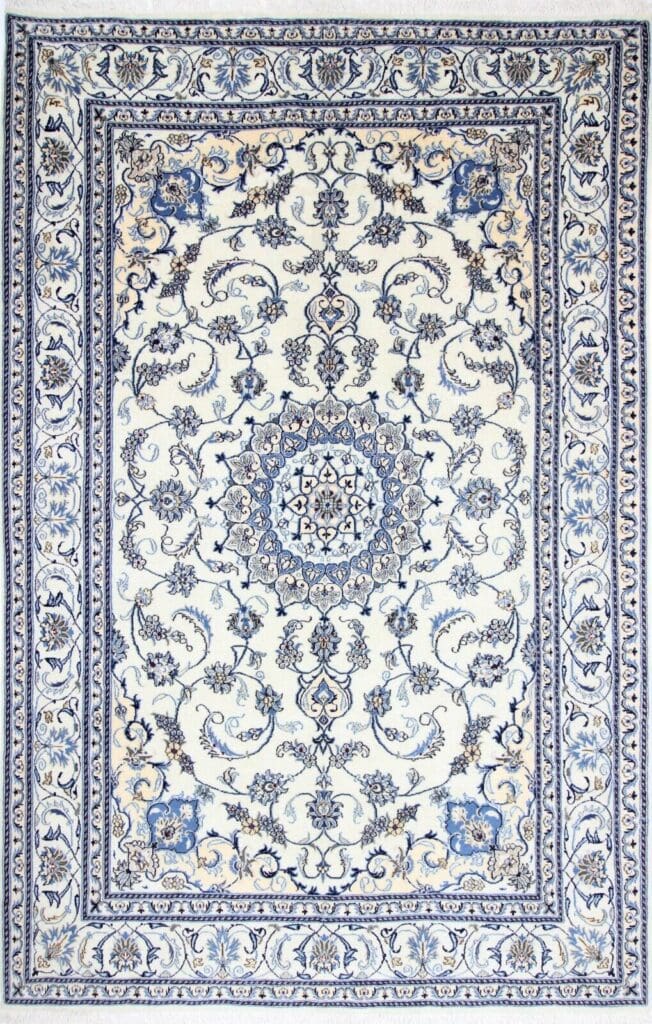
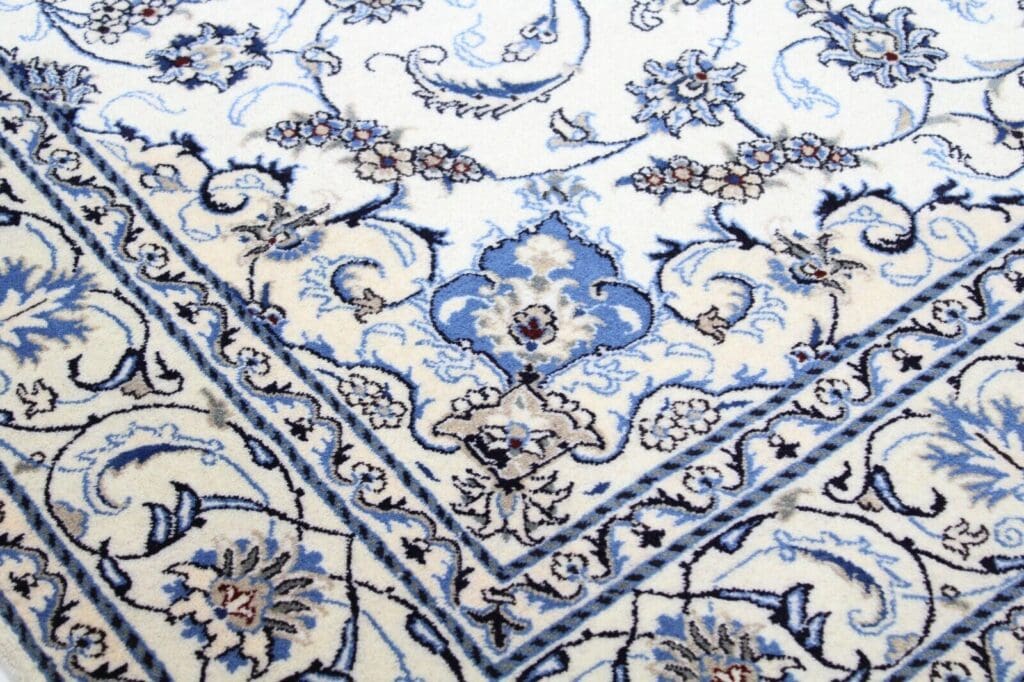
The pattern is described as oriental with floral motifs. Floral ornament is one of the recurring languages of Persian rug design. Flowers, leaves and scrolling forms may be stylized, repeated or arranged into connected branches, allowing natural shapes to become a disciplined textile composition. In Persian ornament, plants are usually transformed into lines and shapes suited to knotting rather than copied as a literal botanical image. The description of this rug establishes an oriental floral design, but it does not specify a particular colour, medallion, border arrangement or individual flower. Those details are therefore not added here.
Within the Nain tradition, floral ornament is often organized into a coherent field with carefully related borders. A central area may be linked by scrolling forms, while framed bands create a visual edge. Symmetrical or radial arrangements are also part of the broader vocabulary of Persian carpet design. These devices help a pattern remain legible across a woven surface. They explain the regional design background without turning general Nain conventions into unsupported claims about this particular rug. What is stated for this piece is its oriental character and its use of floral motifs.
Plant forms have played an important role in Persian textile art for many generations. Flowers and vines can be understood as decorative signs of order, growth and the relationship between nature and human craftsmanship. In a rug, those forms are translated into a durable surface through knots and woven foundation threads. Repeated elements establish rhythm, while the hand-made process gives the textile its individual character. On a hand-knotted Nain rug, the visible lines therefore result from the sequence of craft decisions made while the pattern is being built, not from a later printed image.
The oriental quality of the design lies in the combination of decorative plant forms, controlled repetition and an ornamentally structured surface. A floral rug can function as a calm background within a room or as a clearly visible textile composition, depending on the surrounding furnishings and light. The product information does not state the exact palette, the degree of symmetry, the presence of a central medallion or the precise arrangement of the borders. It is consequently more accurate to retain the broader description: an oriental pattern with floral motifs in a traditional Persian style.
Design and construction are closely connected in a hand-knotted rug. The high pile gives the surface a distinct tactile character, while the knot structure carries the drawn ornament as part of the textile itself. Persian weavers traditionally coordinate the intended lines with the available materials, knotting method and later pile finishing. This relationship between image and technique helps explain the persistence of regional patterns. It also means that the floral design is not merely a surface decoration; it is integrated into the way the rug is made. The stated pattern, Nain designation and hand-knotted construction together place the piece within that wider design tradition.
Special Features
The stated special features of this rug are its hand-knotted construction, high pile, wool and cotton materials, suitability for underfloor heating and intended use in all rooms. Its condition is described as new without a label and in top condition. The Nain designation and Iranian origin place it within Persian carpet tradition, while the oriental floral pattern identifies its decorative direction. These facts describe the piece without adding an age, signature, exact knot count, colour palette or restoration history. A hand-knotted rug is an individual textile object, so its construction remains part of its identity as well as its practical use.
Regular, gentle vacuuming is appropriate for a rug of this type, with attention to the high-pile surface. Strong direct sunlight should be avoided where possible to help protect the colours. If deeper cleaning is required, professional rug cleaning is the suitable option. These are general care principles and do not change the stated material, condition or origin of this individual Nain rug.
FAQ
What are the advantages of a hand-knotted Persian rug?
A hand-knotted Persian rug is built knot by knot, so its design is part of the textile structure rather than a surface print. This method supports detailed ornament and makes each rug an individual piece. Hand-knotted Persian rugs are traditionally valued for their craftsmanship, their distinctive designs and their ability to serve as both floor coverings and decorative textiles. In this case, the hand-knotted construction is combined with high pile and wool and cotton materials. The floral Nain design can therefore be understood as the result of a craft process in which drawing and structure are developed together. Hand-knotting alone does not establish a specific age, knot count or monetary value, so those points should not be inferred without separate information.
How should I care for my Persian rug?
Vacuum the rug regularly and gently, taking the high pile into account. If something is spilled, absorb the liquid promptly rather than rubbing the surface vigorously. For substantial soiling or a thorough wash, professional rug cleaning is recommended because the cleaner can take the construction and materials into account. Avoid prolonged direct sunlight where possible, as strong light can affect colours over time. The rug is suitable for underfloor heating and intended for all rooms, but the level of traffic and the high-pile surface should still guide everyday care. Harsh cleaning agents and uncontrolled soaking are not advisable for a hand-knotted rug. Careful maintenance helps preserve the textile surface without making any additional claim about age or durability beyond the information given for this piece.
Where do the best Persian rugs come from?
Persian rugs come from Iran, where different cities and regions have developed their own weaving traditions. Nain, Tabriz, Kashan and Isfahan are among the well-known names in Iranian carpet culture. They represent different approaches to drawing, proportion, colour and craftsmanship. There is no useful universal ranking that makes every rug from one place better than every rug from another; the individual construction and condition also matter. This rug is identified as a Nain Persian rug from Iran. Its regional context is therefore Nain, together with the hand-knotted technique and oriental floral design. Tabriz, Kashan and Isfahan are mentioned only as examples of the wider Iranian tradition, not as origins of this particular rug.
To provide the best experiences, we use technologies like cookies to store and/or access device information. Consenting to these technologies will allow us to process data such as browsing behavior or unique IDs on this site. Not consenting or withdrawing consent, may adversely affect certain features and functions.
Functional Always active
The technical storage or access is strictly necessary for the legitimate purpose of enabling the use of a specific service explicitly requested by the subscriber or user, or for the sole purpose of carrying out the transmission of a communication over an electronic communications network.
Preferences
The technical storage or access is necessary for the legitimate purpose of storing preferences that are not requested by the subscriber or user.
Statistics
The technical storage or access that is used exclusively for statistical purposes.The technical storage or access that is used exclusively for anonymous statistical purposes. Without a subpoena, voluntary compliance on the part of your Internet Service Provider, or additional records from a third party, information stored or retrieved for this purpose alone cannot usually be used to identify you.
Marketing
The technical storage or access is required to create user profiles to send advertising, or to track the user on a website or across several websites for similar marketing purposes.
 SECURE PAYMENT
 SHIPPING PARTNERS


