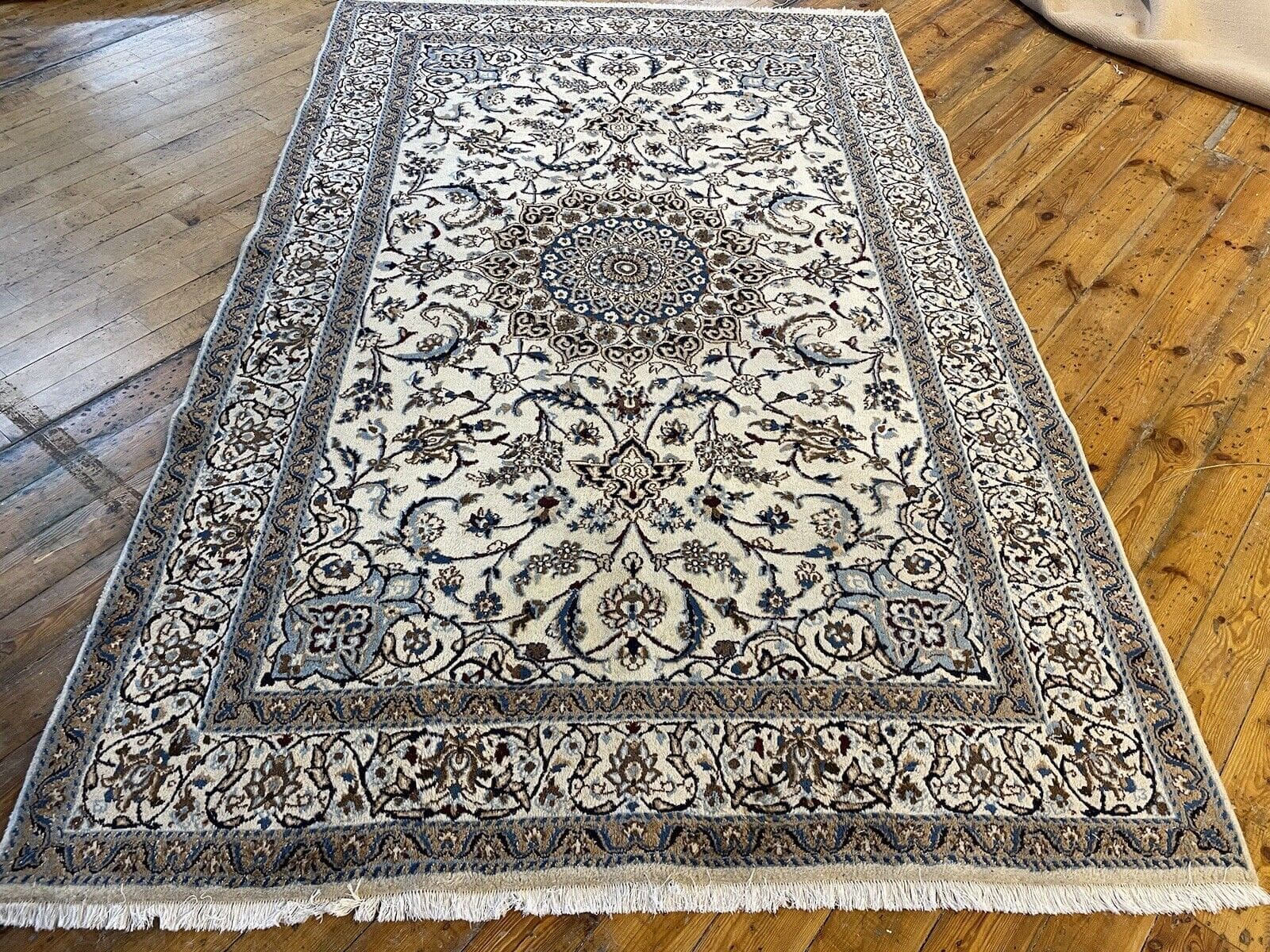
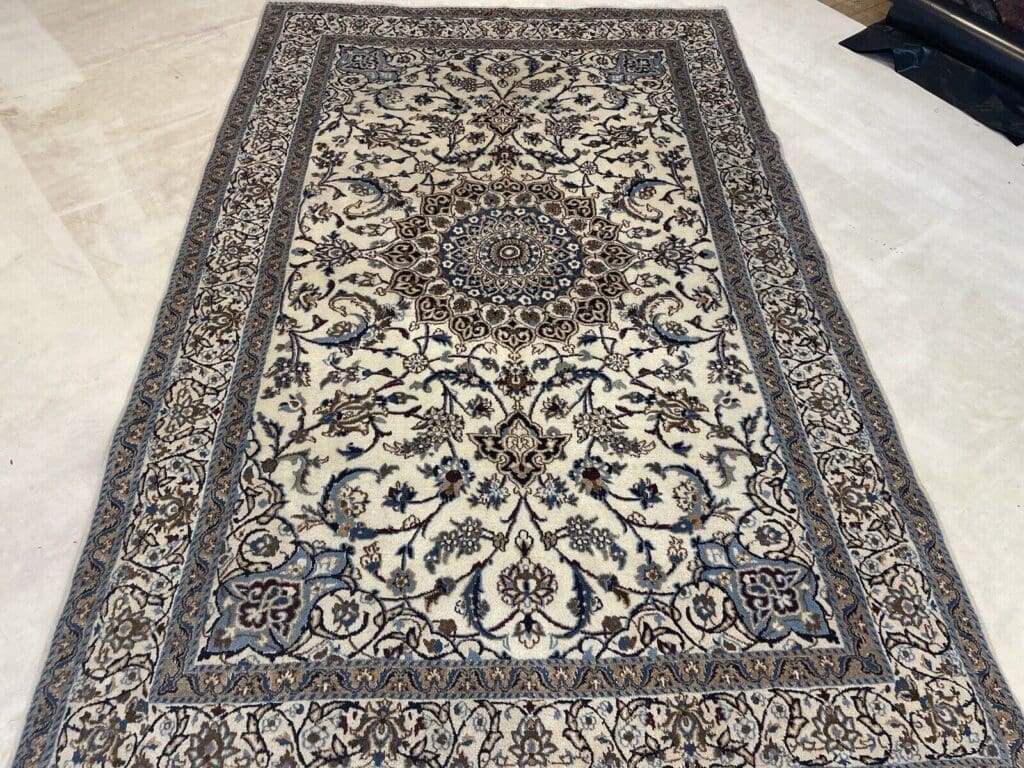
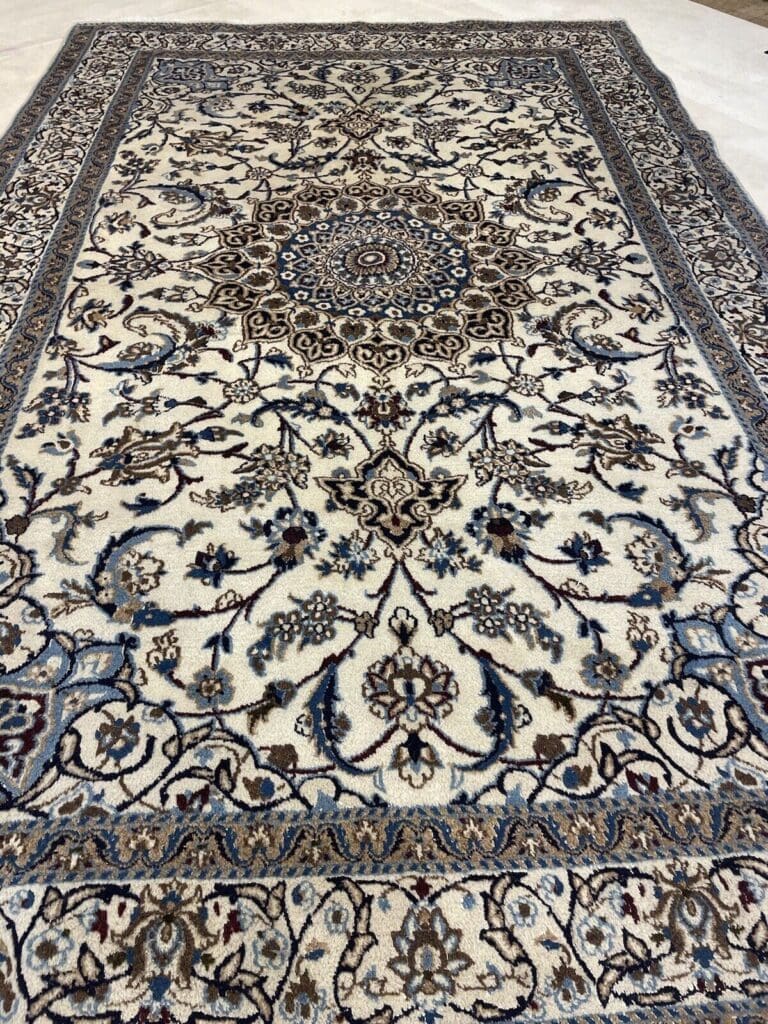
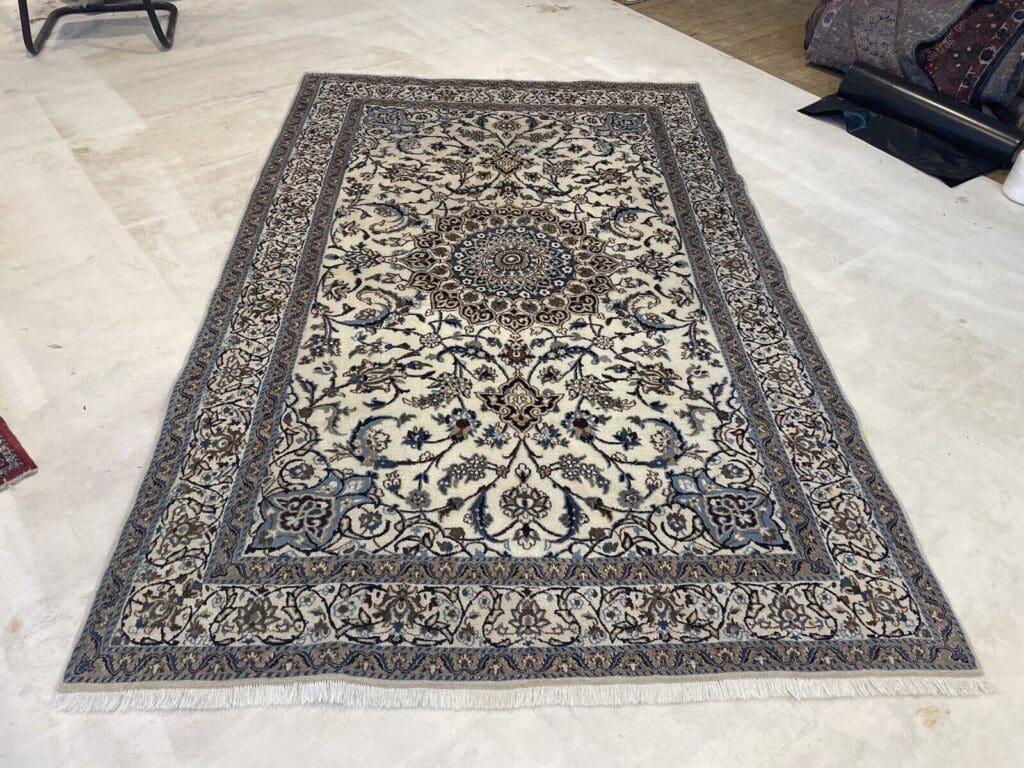
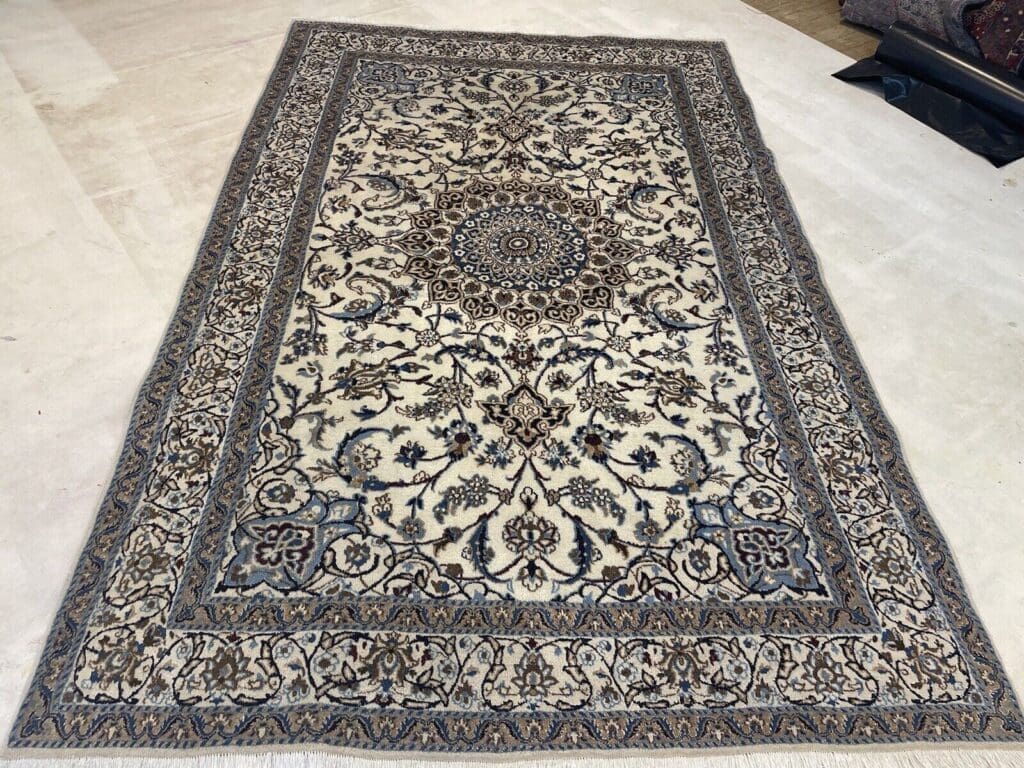
This Nain Persian rug is hand-knotted from wool and cotton, with silk also used in its construction. Each material contributes a different quality to the finished surface. Wool is a natural fibre valued for durability and a comfortable feel underfoot. Cotton is appreciated for its softness and breathable character. The silk adds a fine sheen and supports the refined appearance associated with this beige rug.
Hand-knotting means that the rug is built knot by knot rather than produced as a machine-made textile. The process requires time, patience and knowledge of the traditional technique. Every part of the design has to be transferred into the structure by hand, so the finished rug carries the character of an individual piece of craftsmanship. The combination of wool, cotton and silk brings together a resilient foundation, a soft touch and a subtle lustre.
The pile height is given as 8 mm. It determines the tactile height of the pile and contributes to the comfortable feel of the rug. The rectangular shape is suited to use as a defined textile floor covering. The rug is described as new with its tag. It is also specified as suitable for underfloor heating, making it intended for use in rooms equipped with that type of heating.
Origin and Tradition
Nain is a city in Iran and an important centre of Persian rug weaving. Rugs from Nain are particularly known for fine and elegant workmanship. The local tradition of rug making reaches back several centuries. Over time, weavers in Nain developed a recognisable regional style in which technical precision is combined with a restrained decorative effect. The name Nain therefore identifies both a place in Iran and a long-established craft tradition.
Traditional Nain weaving is carried out by artisans whose knowledge is passed from one generation to the next. This continuity preserves working methods, familiar motifs and an understanding of balanced proportions. At the same time, each generation can interpret established designs within the recognised Nain language. The hand-knotted construction of this rug belongs to a method in which experience, patience and careful execution work together to create the final textile.
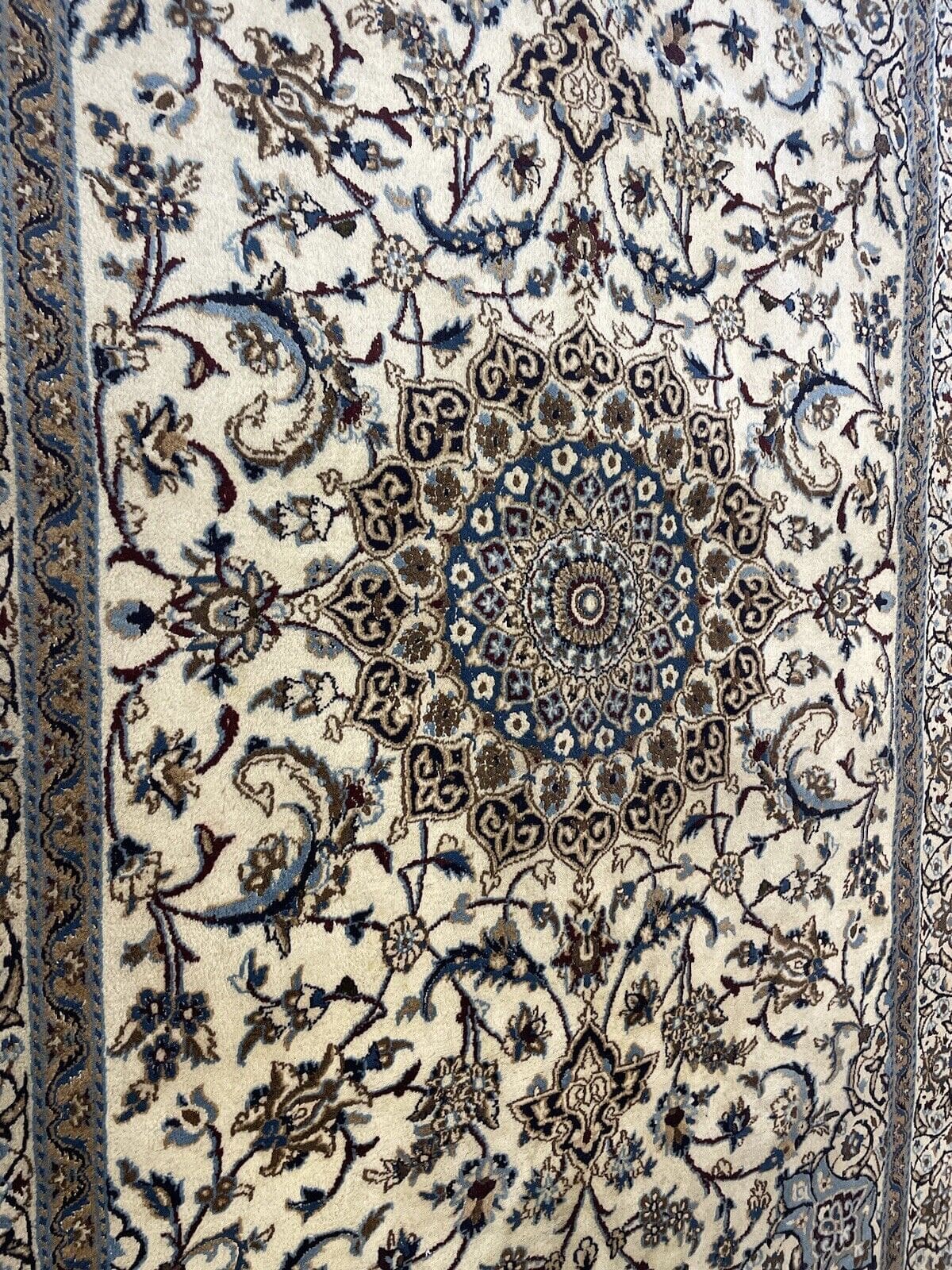
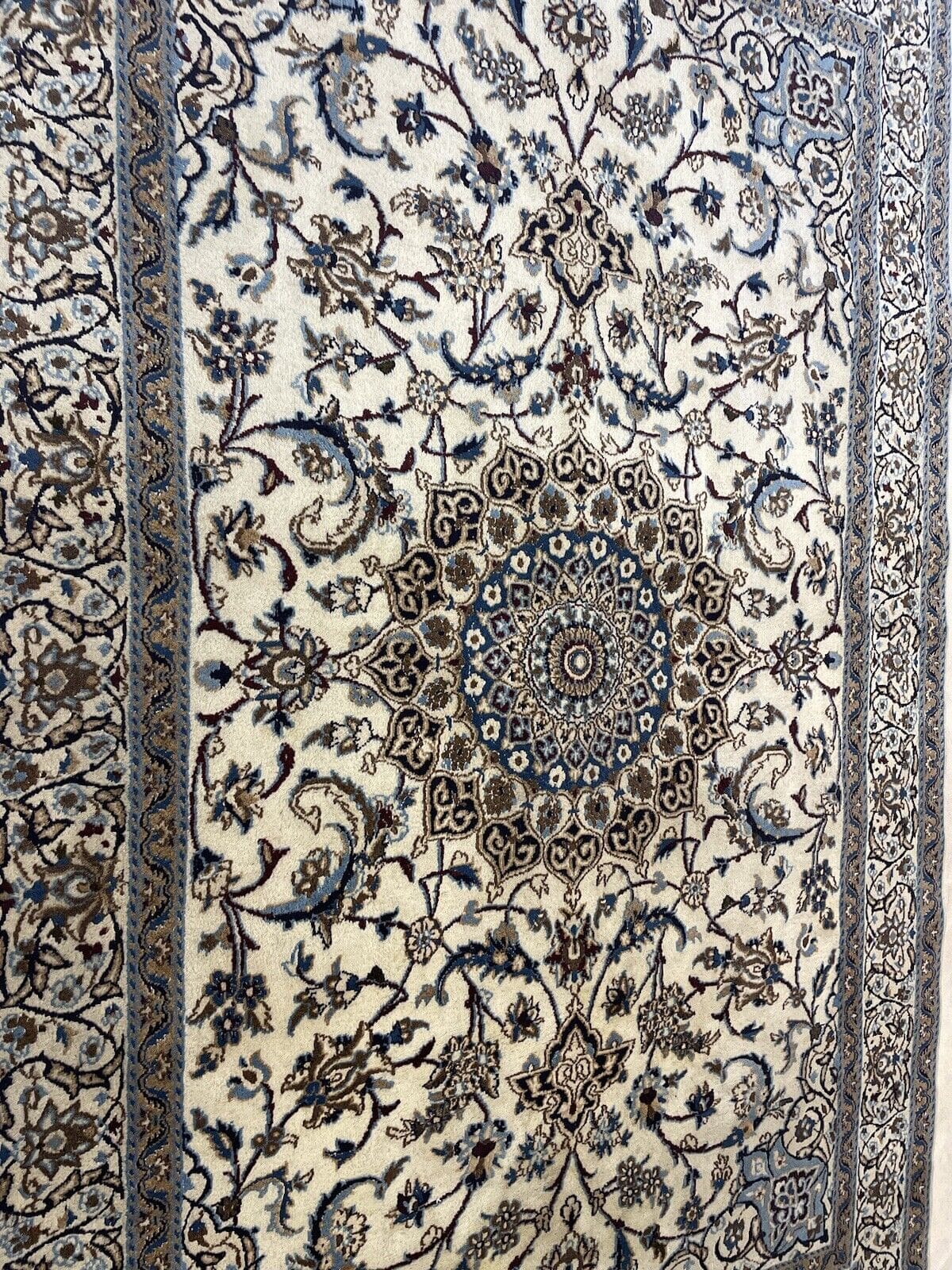
Nain Persian rugs are often associated with delicate floral motifs, geometric forms and harmonious colour palettes. These features have made the style widely recognisable. Floral ornament may appear as continuous vines, individual blossoms or part of a larger overall composition. Geometric details provide structure and establish clear relationships between the different areas of the design. Colour is equally important, since the palette influences whether the pattern reads as calm, balanced and finely coordinated.
Making a Nain rug combines practical handwork with artistic composition. A design must be translated into a sequence of knots so that lines, fields and ornaments remain proportionate across the rectangular format. The weaver carries out the composition step by step, maintaining the connection between material and pattern. This relationship between technical skill and visual expression is central to the tradition for which Nain is known.
The term Persian rug is appropriate here because the source identifies the rug with Iran and Nain. Nain is one of the recognised Iranian weaving centres and has a distinct place within Persian textile history. This regional description does not assign a specific historical age to the individual rug. Instead, it explains the cultural and technical setting in which the Nain style developed and continues to be practised.
Design and Pattern
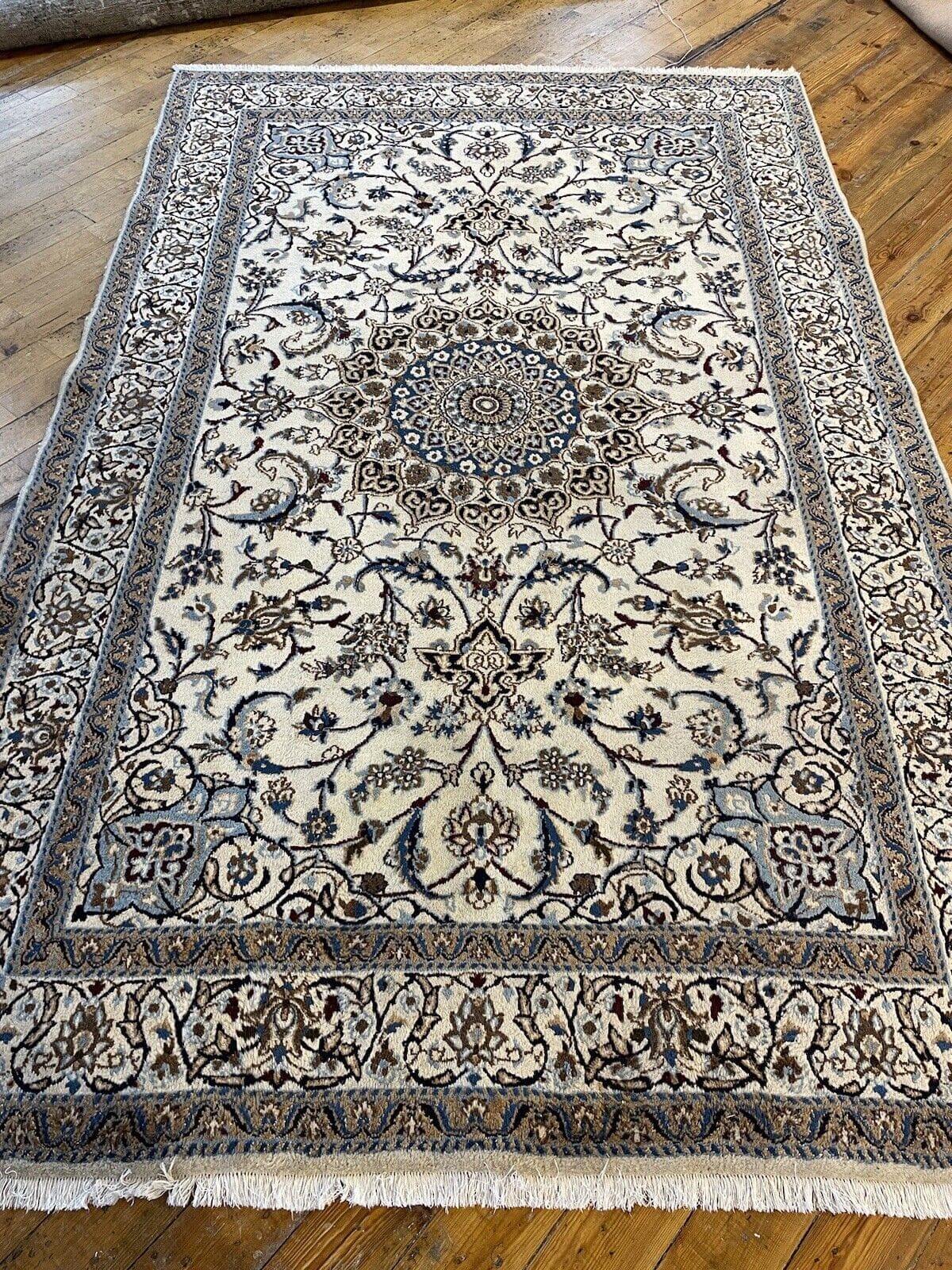
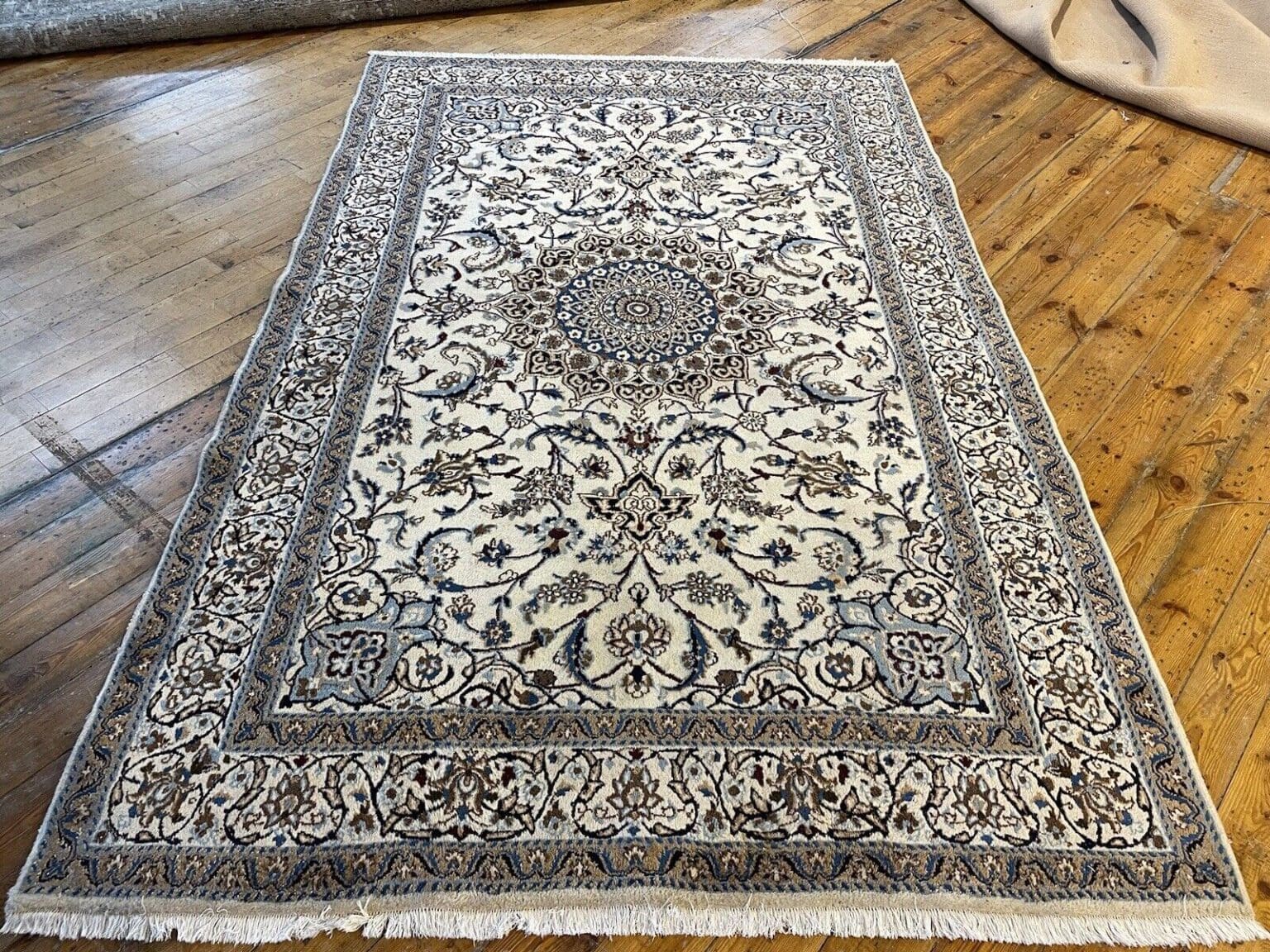
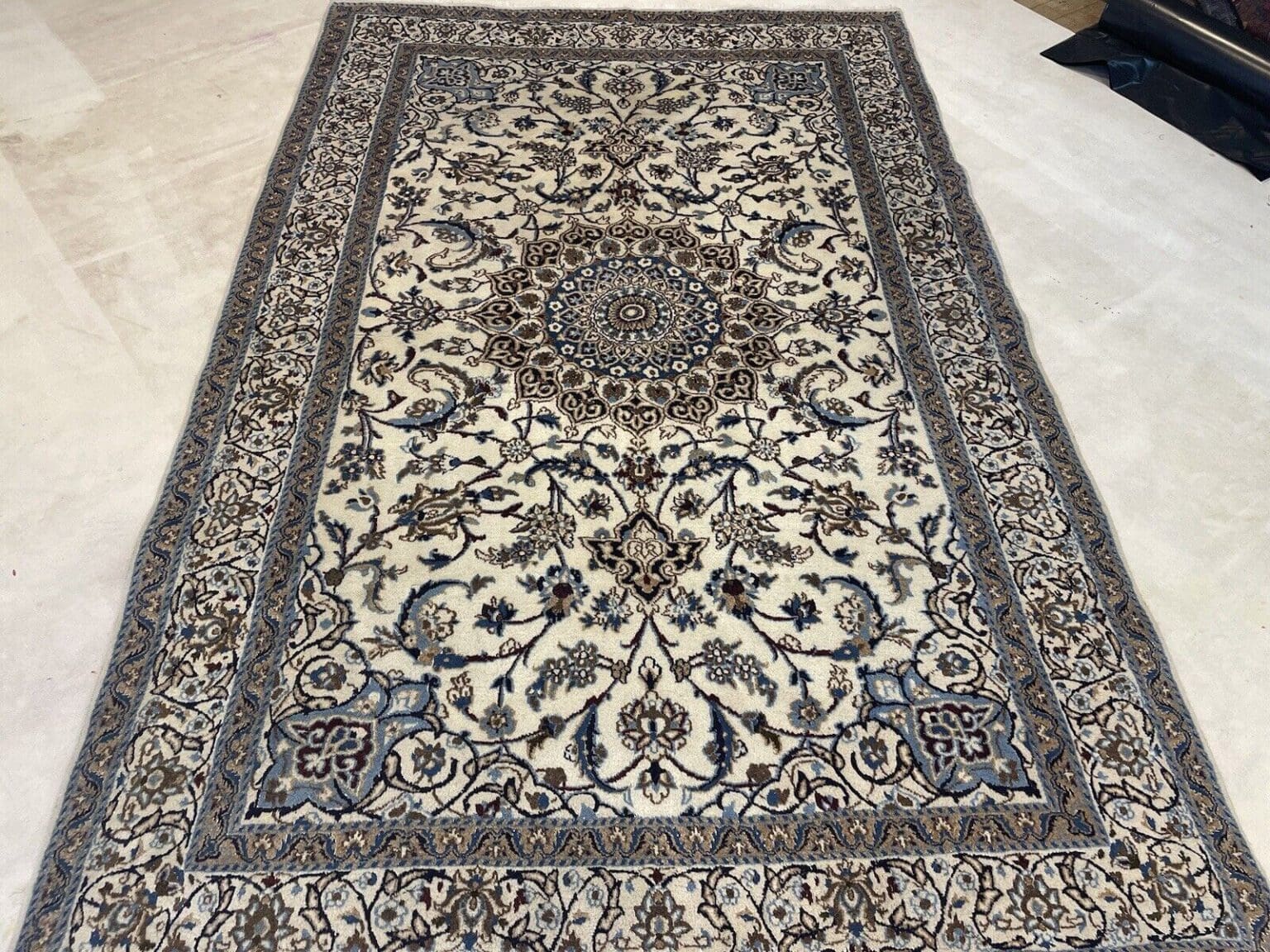
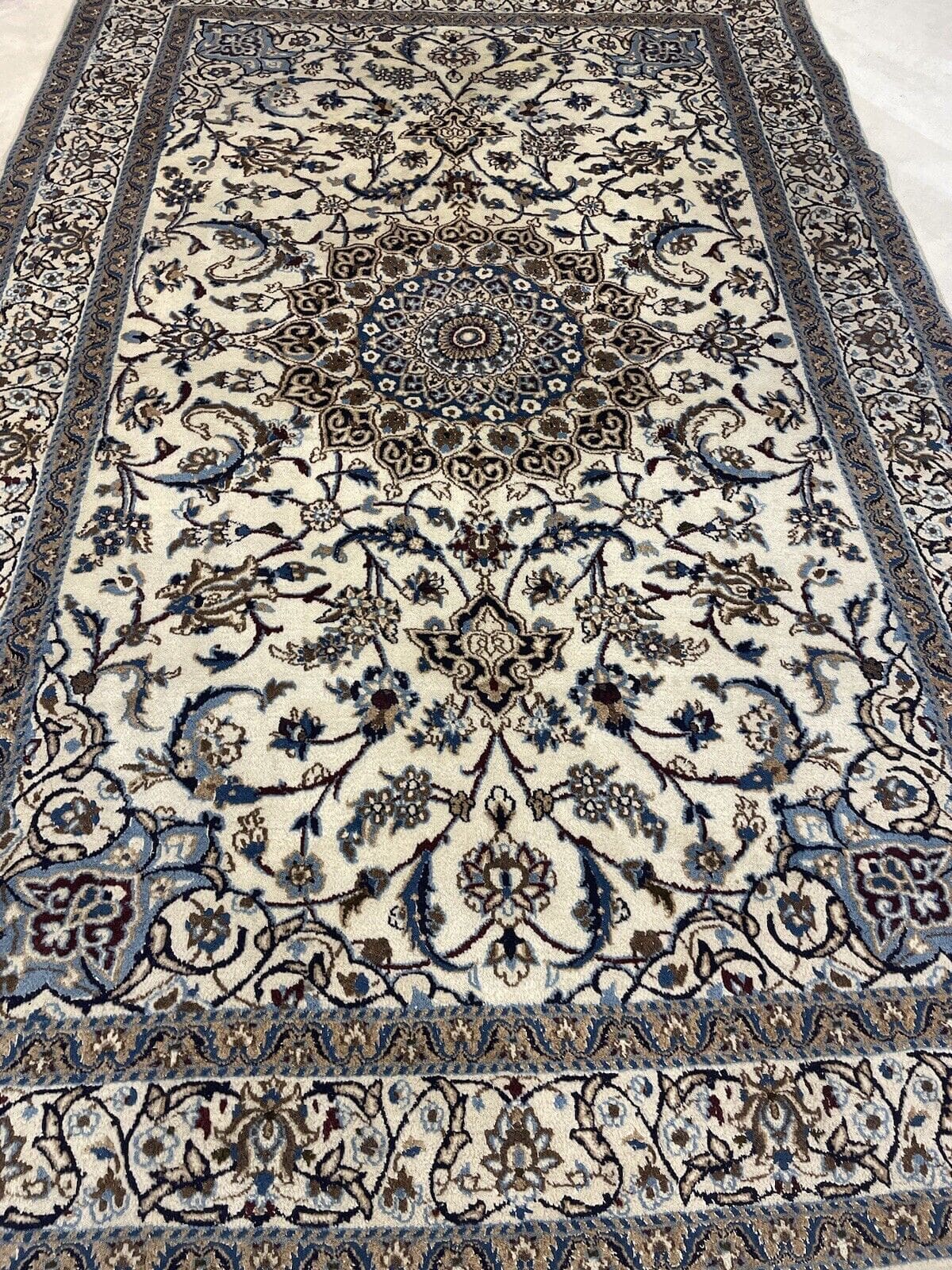
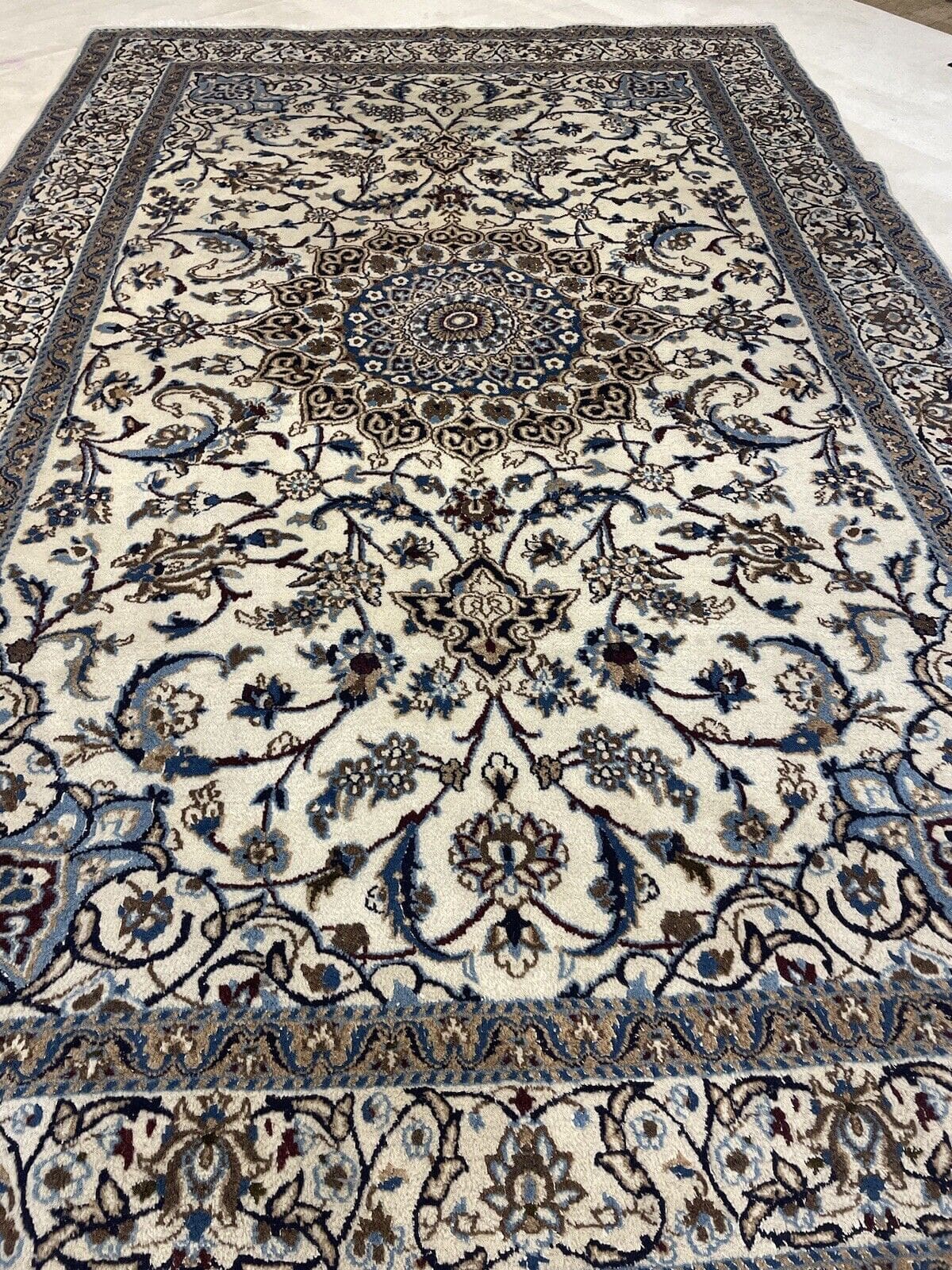
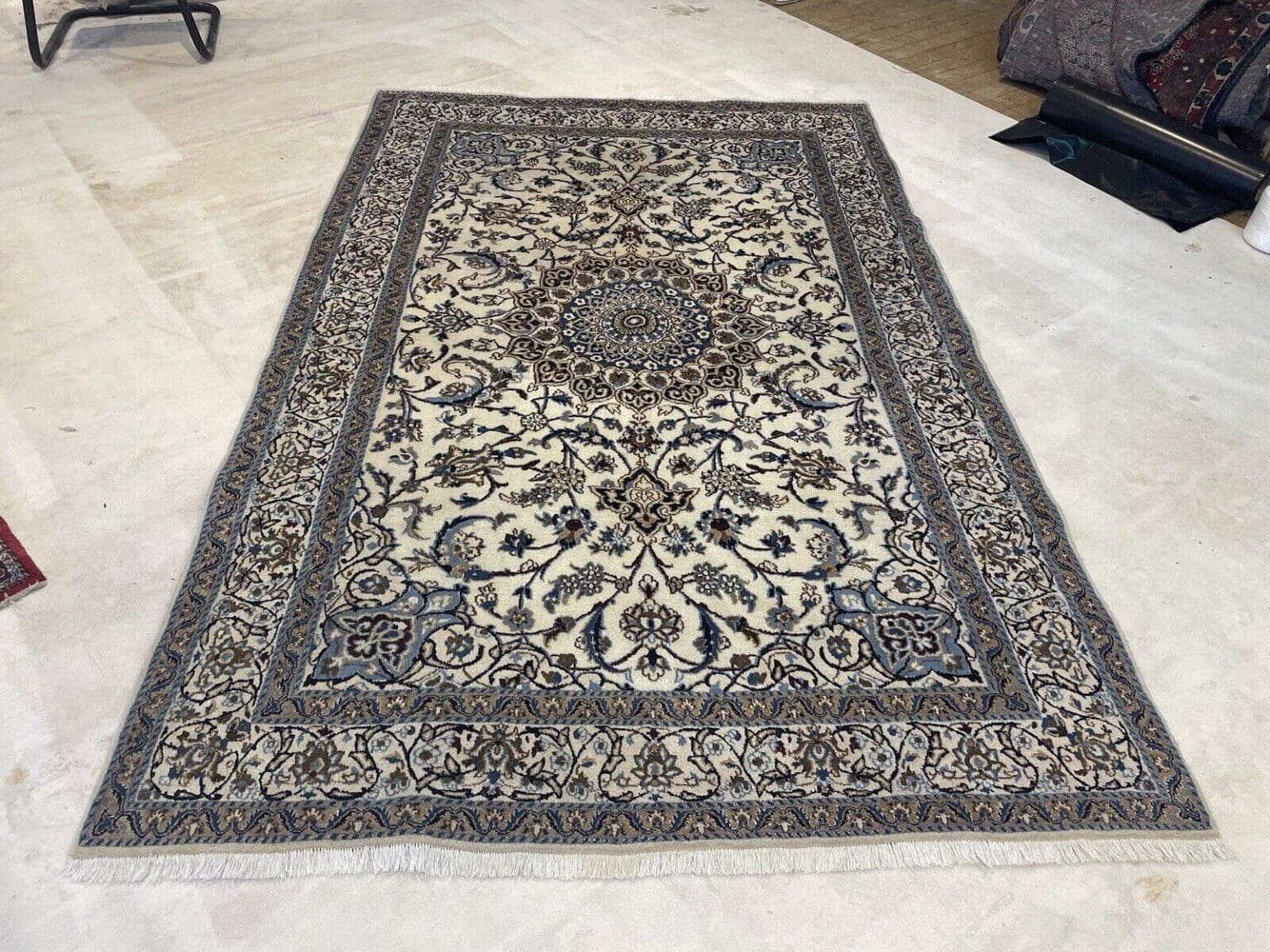
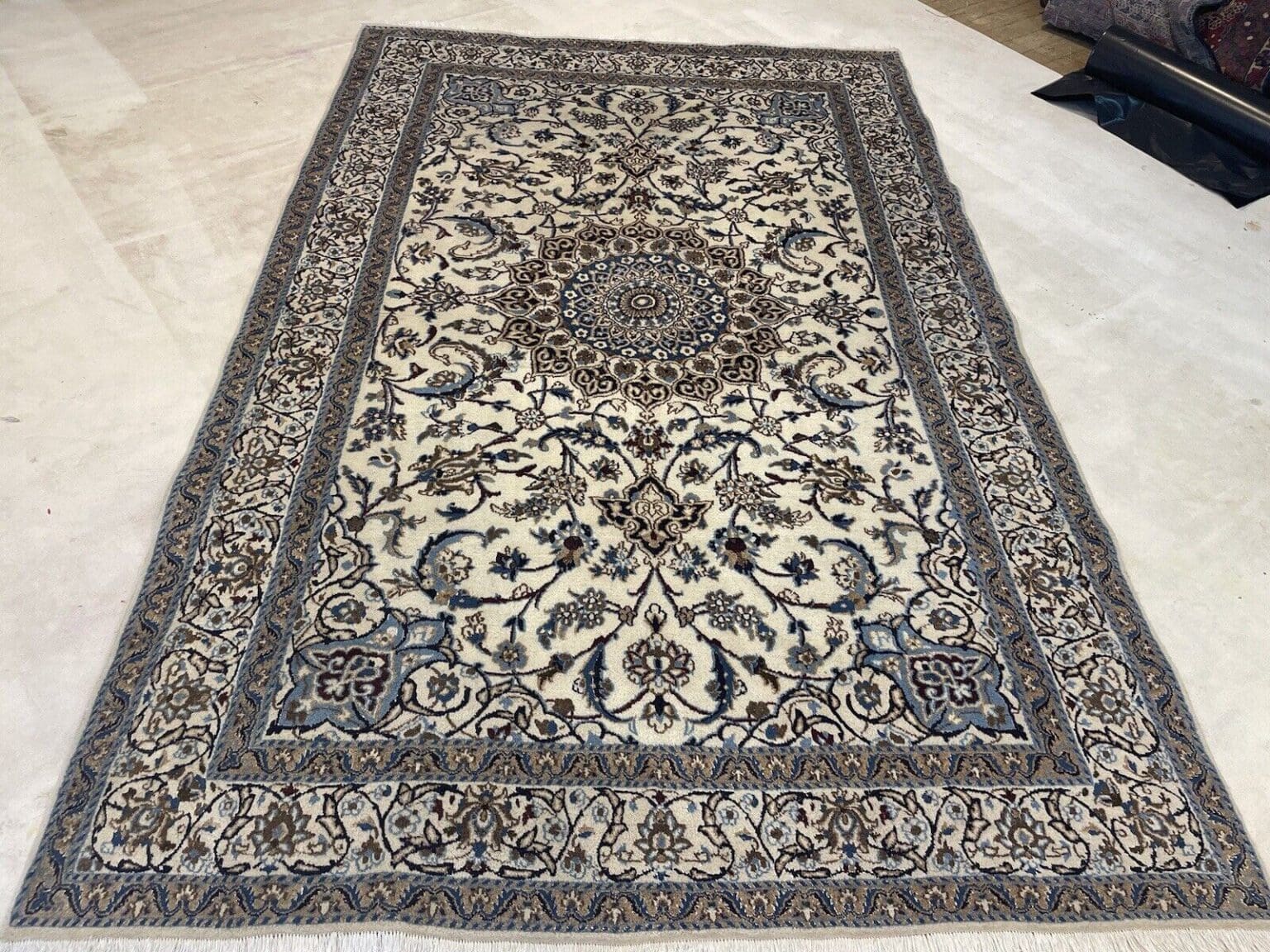
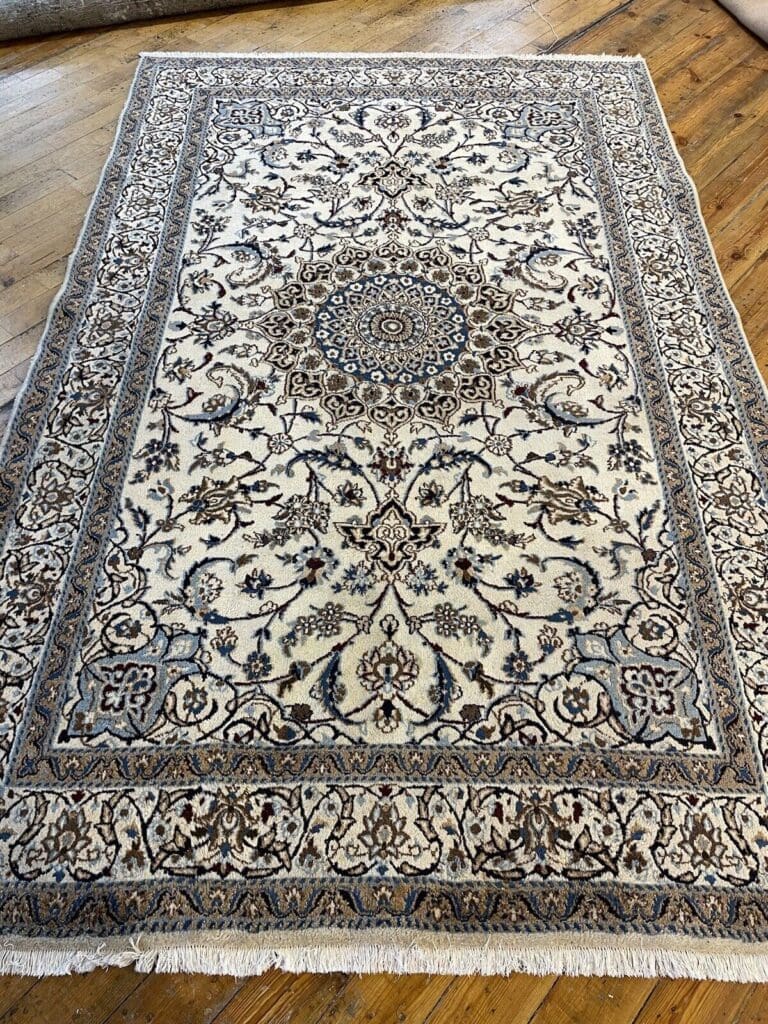
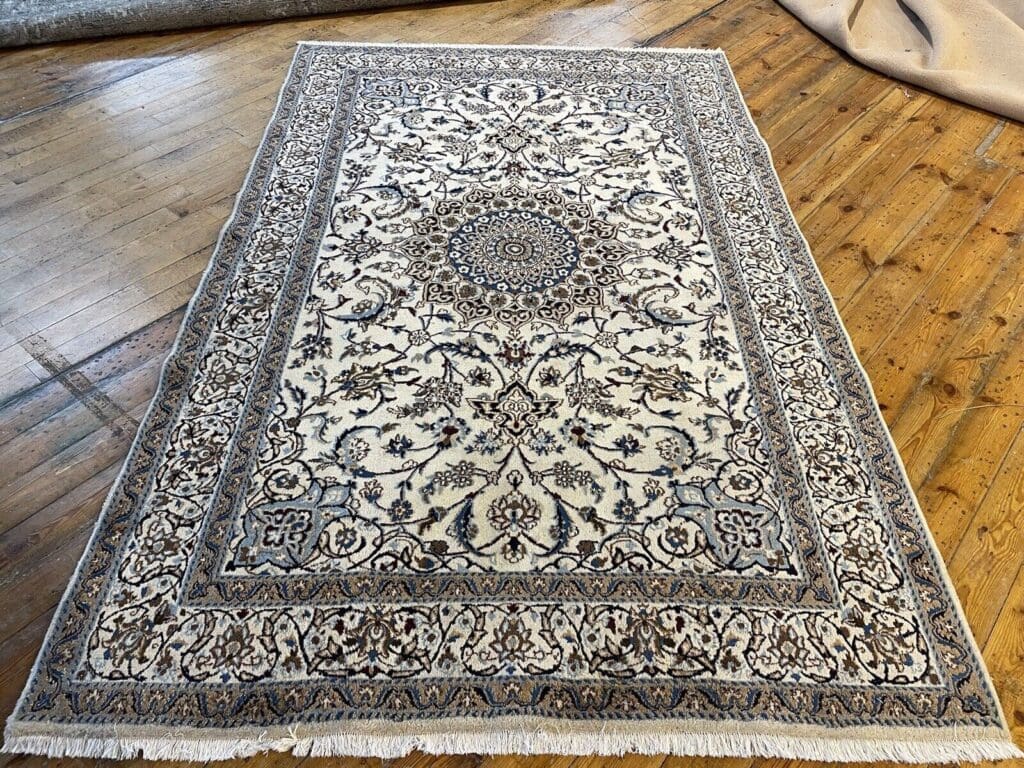
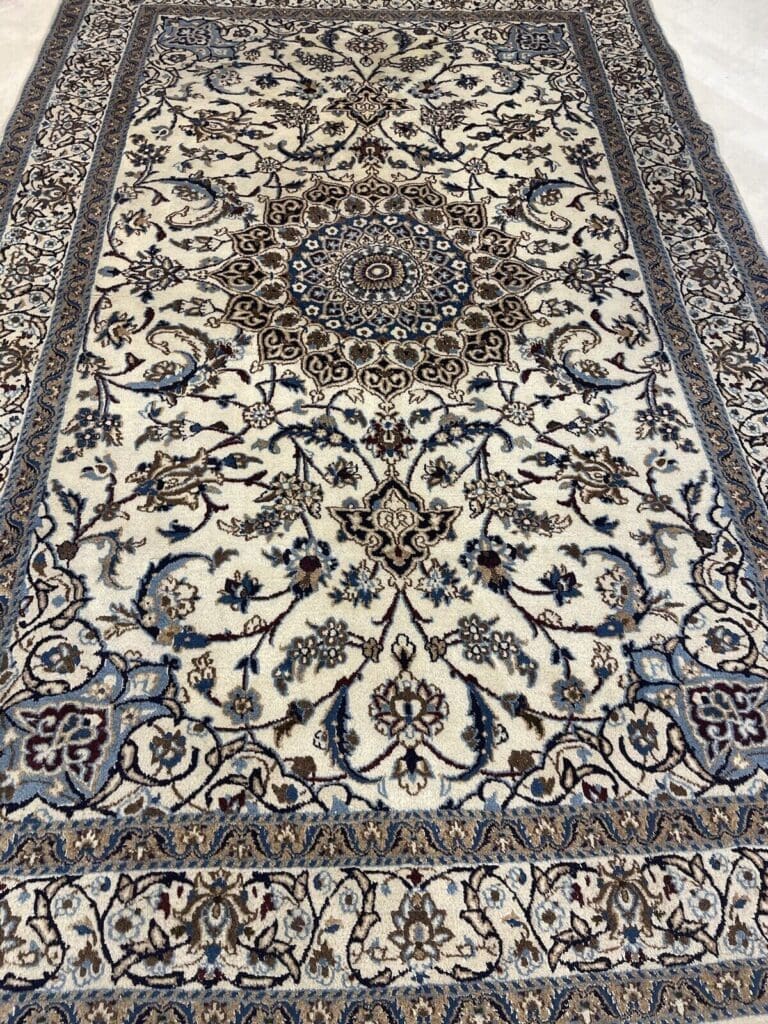
The design is described as Oriental and traditionally Persian or Oriental. Beige is the defining colour of this rug and gives the composition a quiet, balanced basis. A restrained ground colour can allow floral and ornamental details to remain visible without making the overall surface appear restless. In Persian rug design, the relationship between the background and the decoration is essential to the sense of order, and the beige palette supports that relationship here.
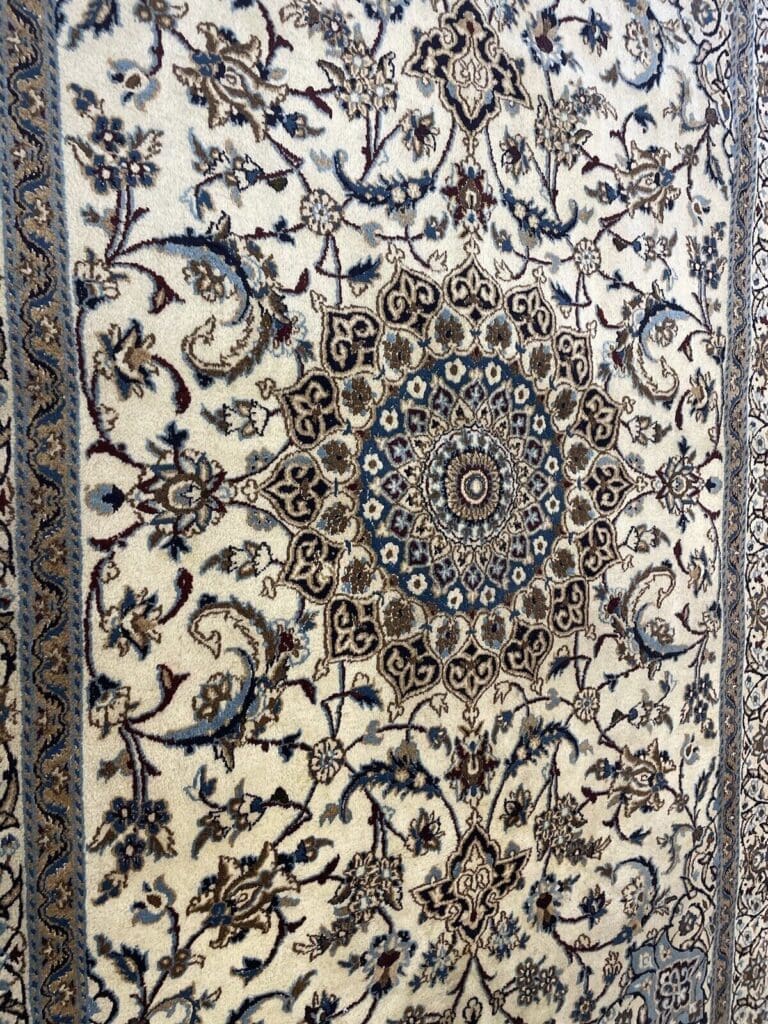
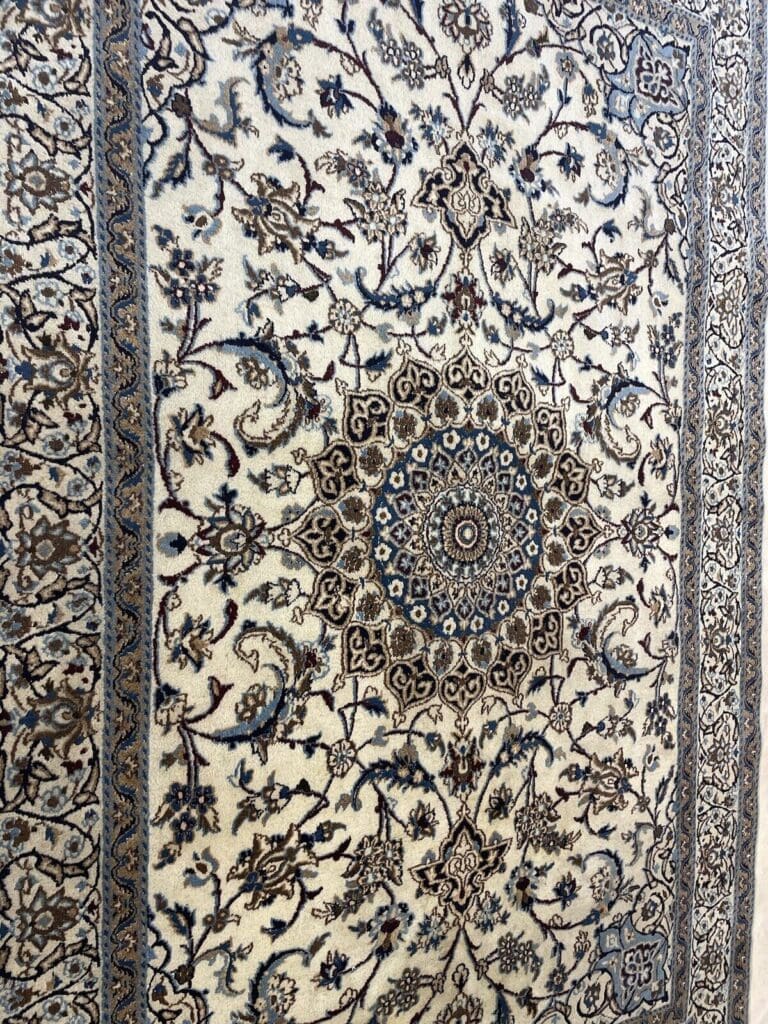
Typical Nain designs include floral motifs and ornamental elements. Vines, blossoms and stylised plant forms may be arranged into a continuous decorative system. Such motifs are generally placed within an ordered composition rather than scattered without structure. Geometric forms can reinforce that order and divide the design into related areas. The interaction of flowing botanical lines with clearer shapes is a recurring feature of Oriental rug design and suits the established visual language of Nain.
In a hand-knotted rug, every line and detail has to be represented through the placement of individual knots. Fine contours depend on many precise decisions made during the weaving process. The clarity of floral and geometric elements is therefore connected with the technical demands of the construction. The product description refers to fine details and precise knotting, while it does not provide a numerical knot density for this particular piece.
Oriental rug patterns are often understood as more than surface decoration. Their wider cultural interpretation may include references to nature, prayer and spirituality. Floral forms can evoke plants and gardens, while repeated ornaments suggest continuity and an ordered visual world. These associations belong to the general symbolism often connected with Oriental patterns. They provide cultural context for the design tradition and are not an additional claim about a particular named motif in this rug.
The rug can be placed within both traditional and modern interiors. In a classically furnished room, its Persian character can complement other traditional elements. In a simpler setting, the beige colour can connect furniture, textiles and the surrounding floor. The rectangular format creates a clearly defined textile area. The overall effect comes from the combination of the neutral colour, Oriental pattern and the fine appearance of the chosen materials.
Nain design brings together elegance, floral ornament, geometric order and coordinated colour. This rug presents that tradition in beige. Its pattern is formed by the relationship between the ground and the decoration, while the hand-knotted surface gives the composition its textile depth. The result remains recognisably Oriental without depending on an excessively vivid or crowded colour scheme.
Special Features
The rug is new with its tag and is hand-knotted. Its listed materials are wool and cotton, complemented by silk. The pile height of 8 mm and suitability for underfloor heating are expressly stated. These features combine a traditional craft method with use in heated living spaces. The rectangular shape, beige colour and Oriental pattern are additional defined characteristics of this individual rug.
Its traditional Persian or Oriental style allows the Nain rug to be considered for different interior concepts. Beige can be coordinated with a broad range of room colours, while the hand-knotted construction gives the piece an individual handcrafted character. The stated suitability for underfloor heating describes its intended function in a living area; proper installation and suitable care remain important for everyday use.
FAQ
How should I care for my Nain Persian rug?
Vacuum the rug regularly to remove dust and loose dirt from the surface. If a spill occurs, dab the affected area with a dry cloth rather than rubbing it. Rubbing can spread the mark or place unnecessary stress on the pile. When a more thorough treatment is needed, professional rug cleaning can be considered. Careful handling helps preserve the materials, the appearance and the hand-knotted structure of the rug.
Is this rug suitable for rooms with underfloor heating?
Yes. This Nain Persian rug is described as suitable for use over underfloor heating. Its stated pile height of 8 mm contributes to a comfortable feel underfoot, while the listed materials provide warmth and insulation. The rug should be laid correctly on the intended floor so that it remains secure and the heating system can operate as designed.
Is the rug environmentally friendly?
The rug is made from natural materials including wool and cotton, and it is traditionally hand-knotted. Compared with machine-made rugs, this type of production involves fewer industrial manufacturing steps. For that reason, it is described as an environmentally friendly and sustainable choice. This statement concerns the named natural materials and the hand-knotted method. Silk is also included in the material description and complements the wool and cotton used in the rug.
To provide the best experiences, we use technologies like cookies to store and/or access device information. Consenting to these technologies will allow us to process data such as browsing behavior or unique IDs on this site. Not consenting or withdrawing consent, may adversely affect certain features and functions.
Functional Always active
The technical storage or access is strictly necessary for the legitimate purpose of enabling the use of a specific service explicitly requested by the subscriber or user, or for the sole purpose of carrying out the transmission of a communication over an electronic communications network.
Preferences
The technical storage or access is necessary for the legitimate purpose of storing preferences that are not requested by the subscriber or user.
Statistics
The technical storage or access that is used exclusively for statistical purposes.The technical storage or access that is used exclusively for anonymous statistical purposes. Without a subpoena, voluntary compliance on the part of your Internet Service Provider, or additional records from a third party, information stored or retrieved for this purpose alone cannot usually be used to identify you.
Marketing
The technical storage or access is required to create user profiles to send advertising, or to track the user on a website or across several websites for similar marketing purposes.
 SECURE PAYMENT
 SHIPPING PARTNERS


