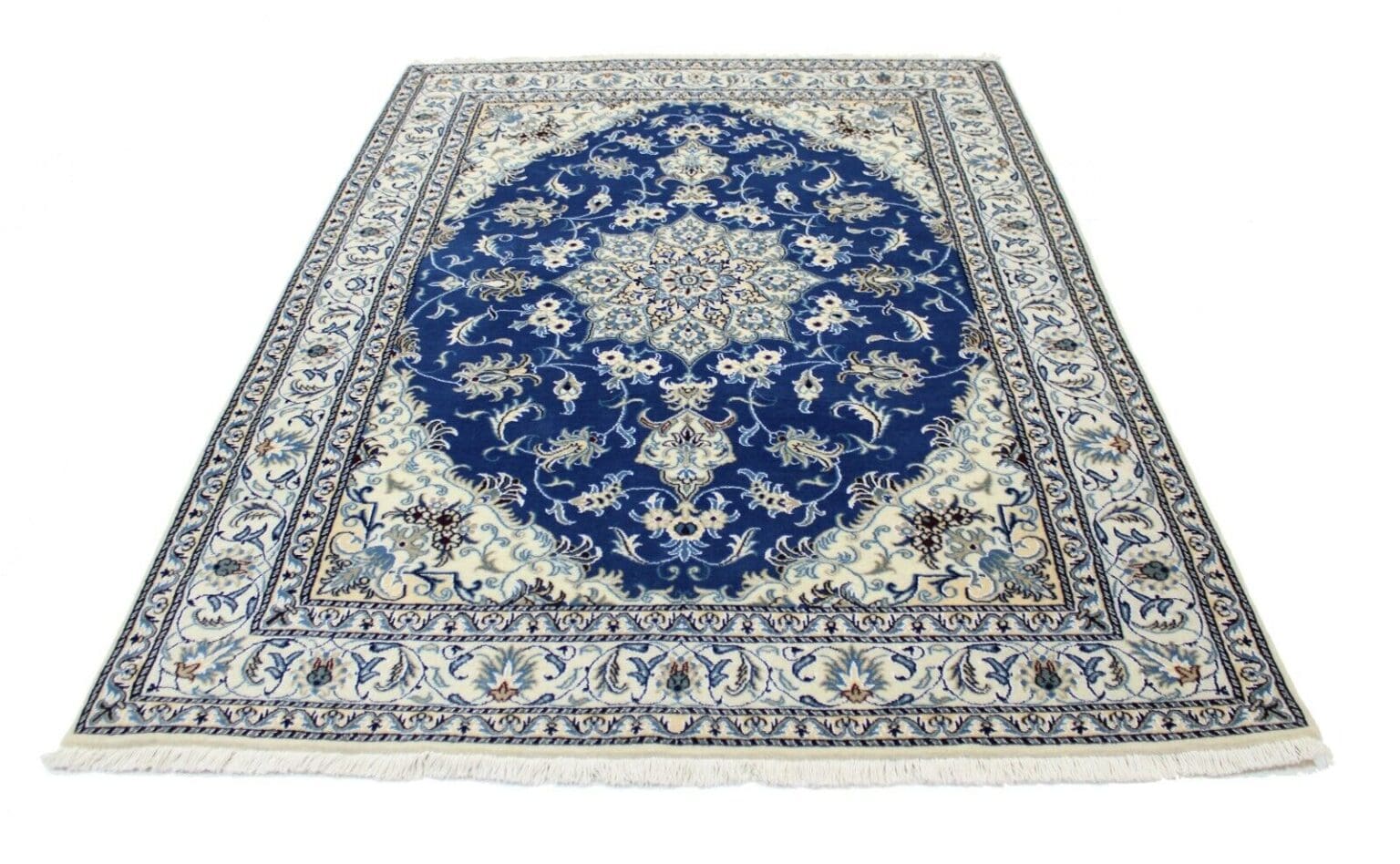
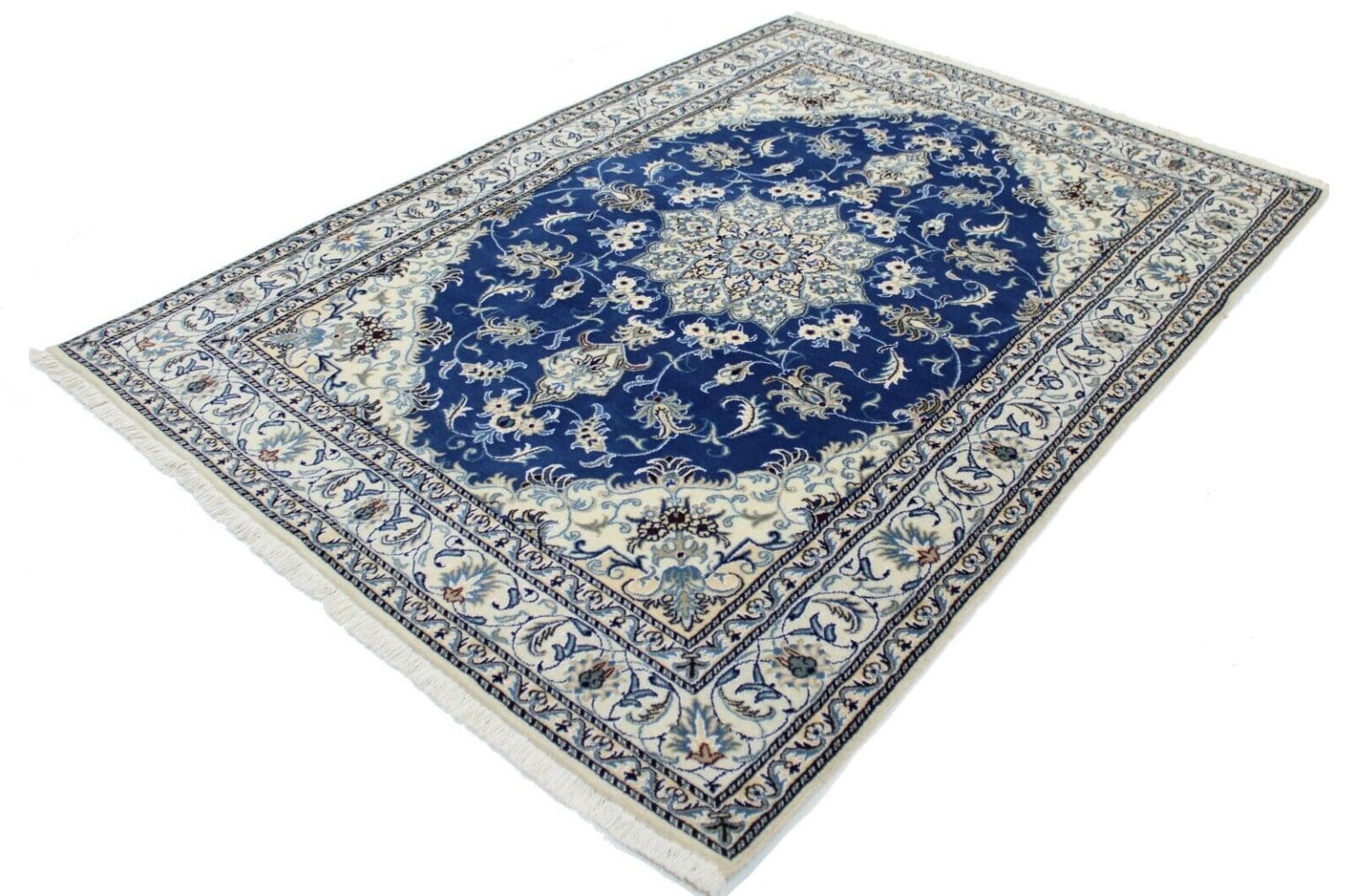
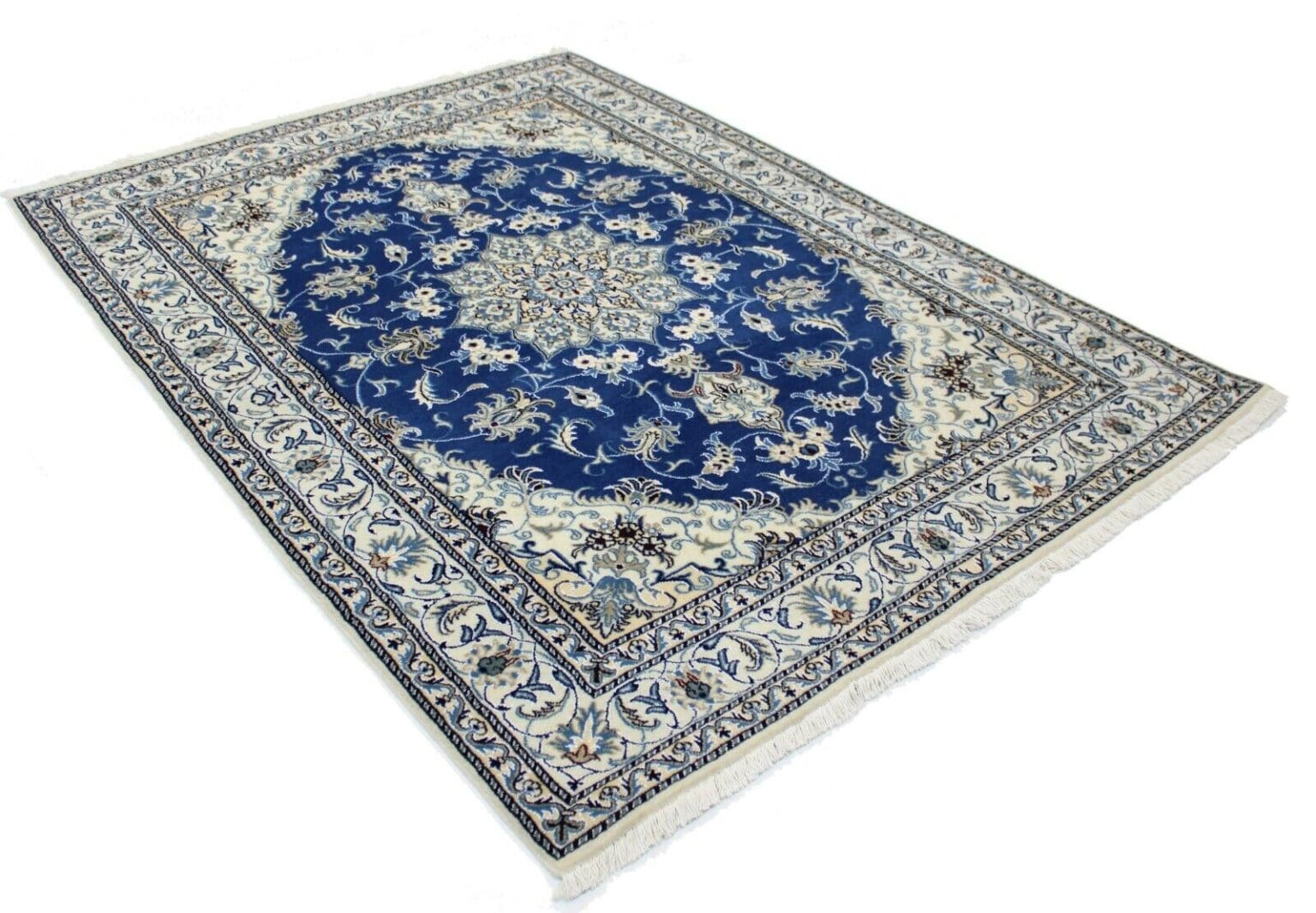
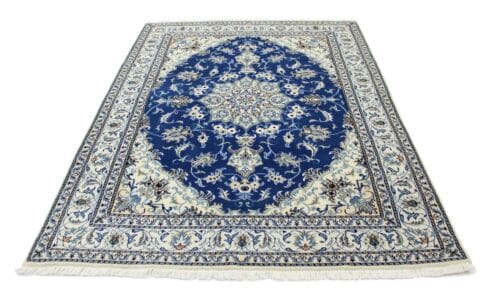
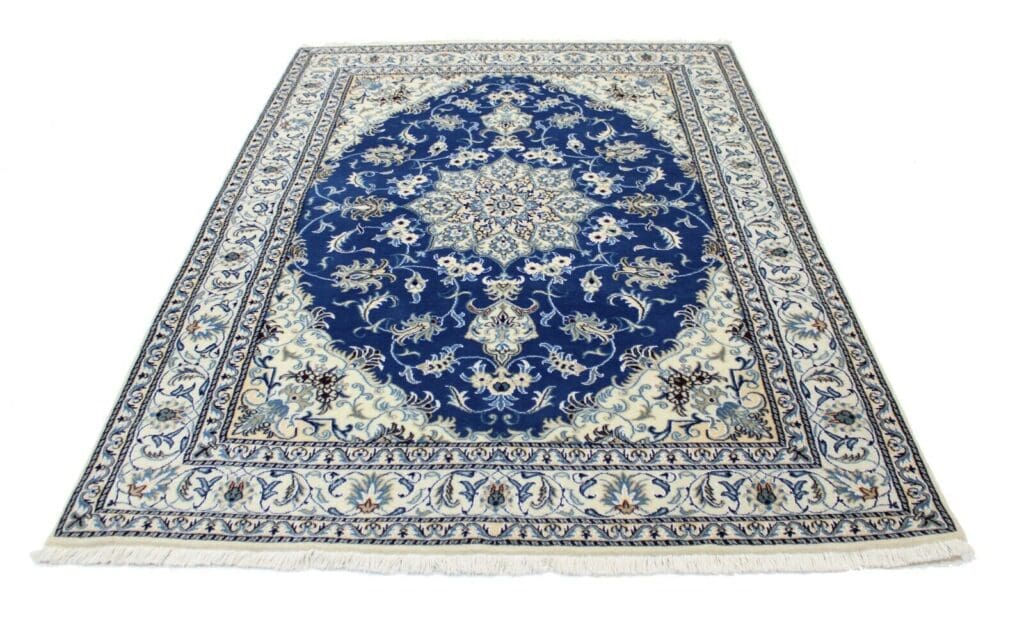
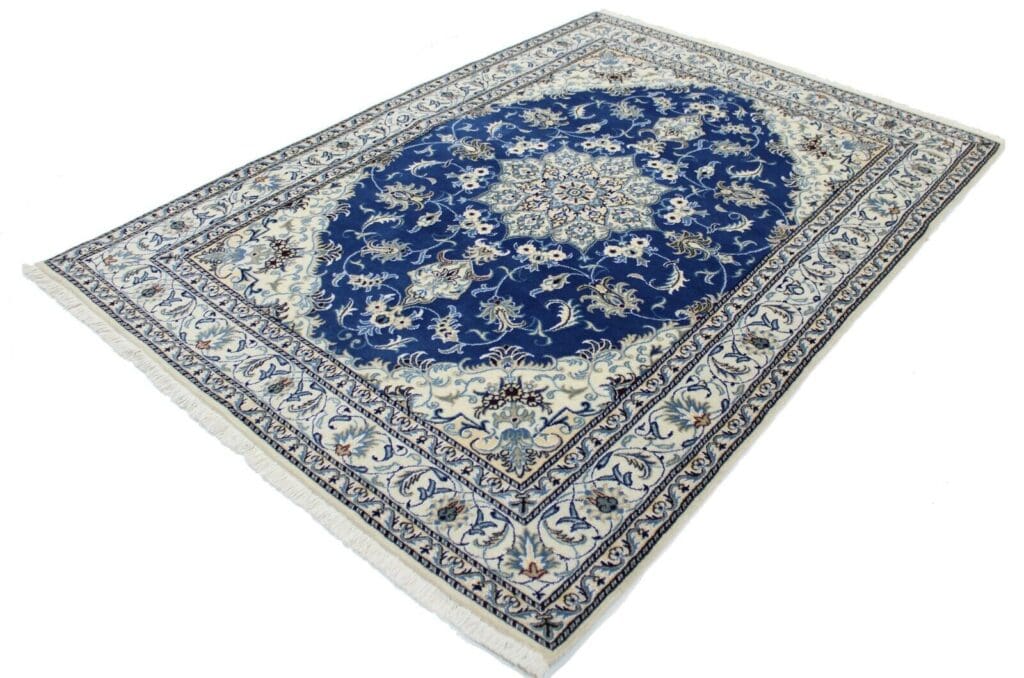
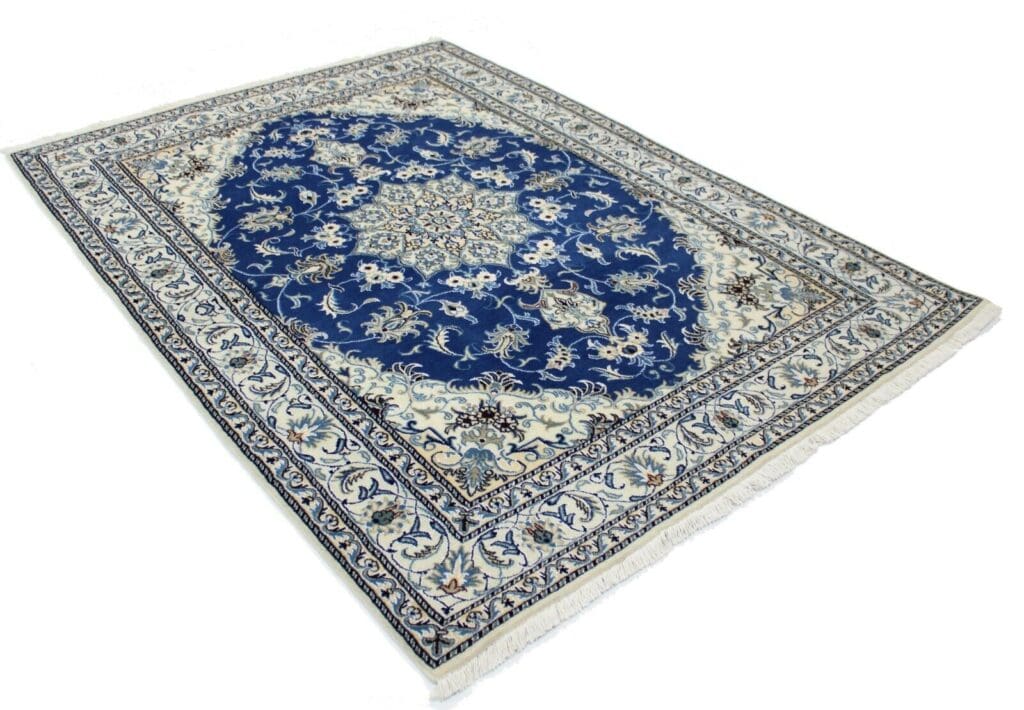
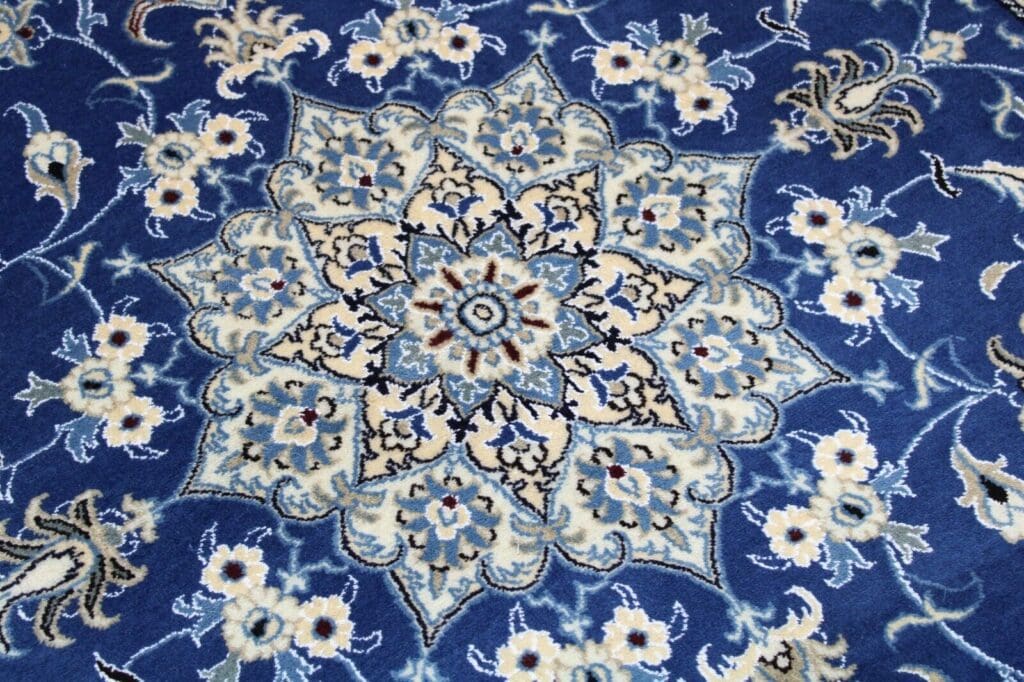
Hand-knotted Nain Persian Rug | Knot density: Hand-knotted | Material: Wool and cotton | Size: 237 x 170 cm | Pattern: Oriental with floral motifs | Condition: New without label, top condition
This Nain Persian rug is hand-knotted. In this method, individual knots are tied into a prepared textile foundation, building the pile and the design at the same time. The rug is described as using high-quality wool and cotton. The detailed description identifies the wool as 100% high-quality wool, while cotton is also listed among the materials. These are the material facts provided for this piece.
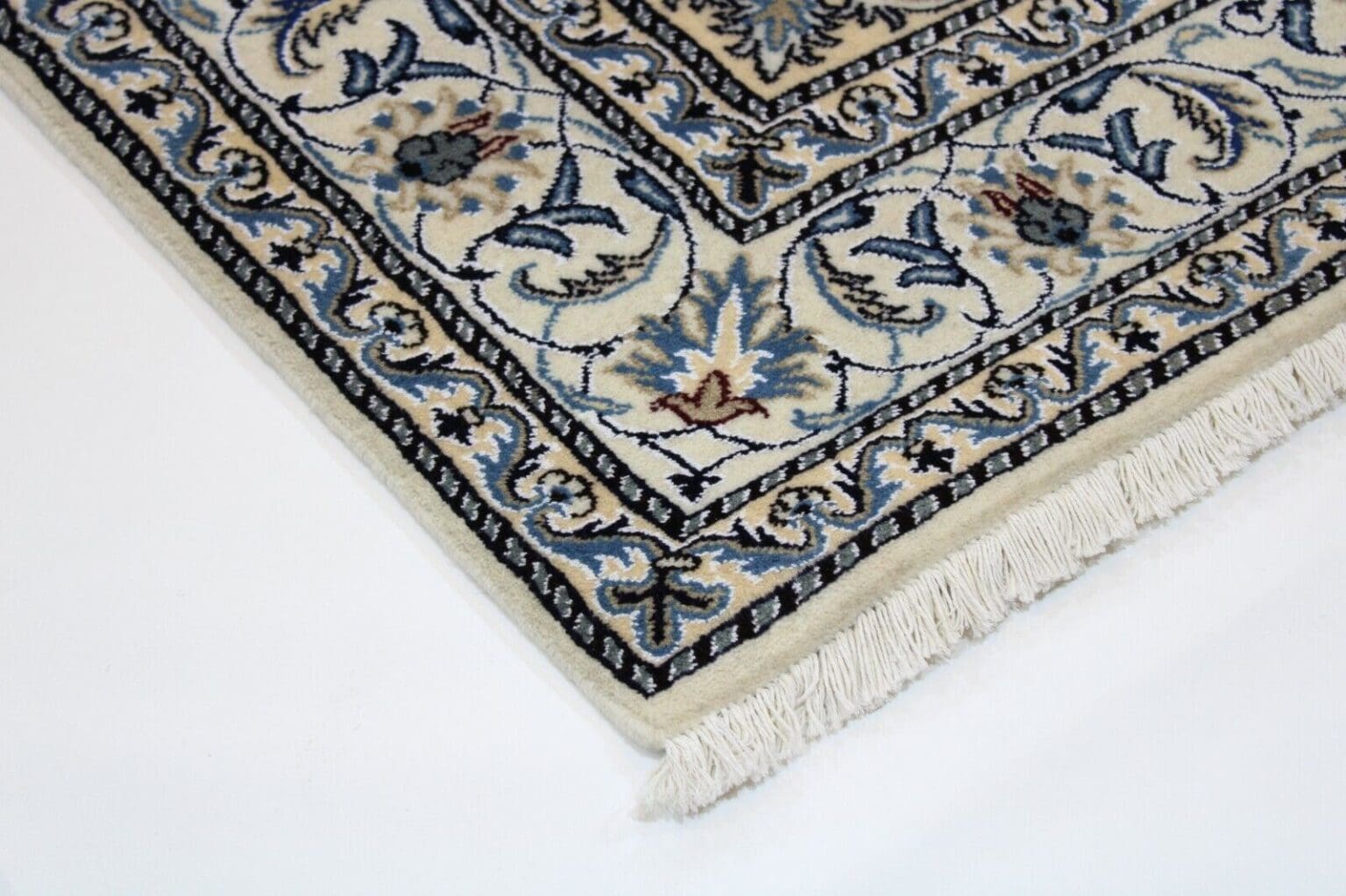
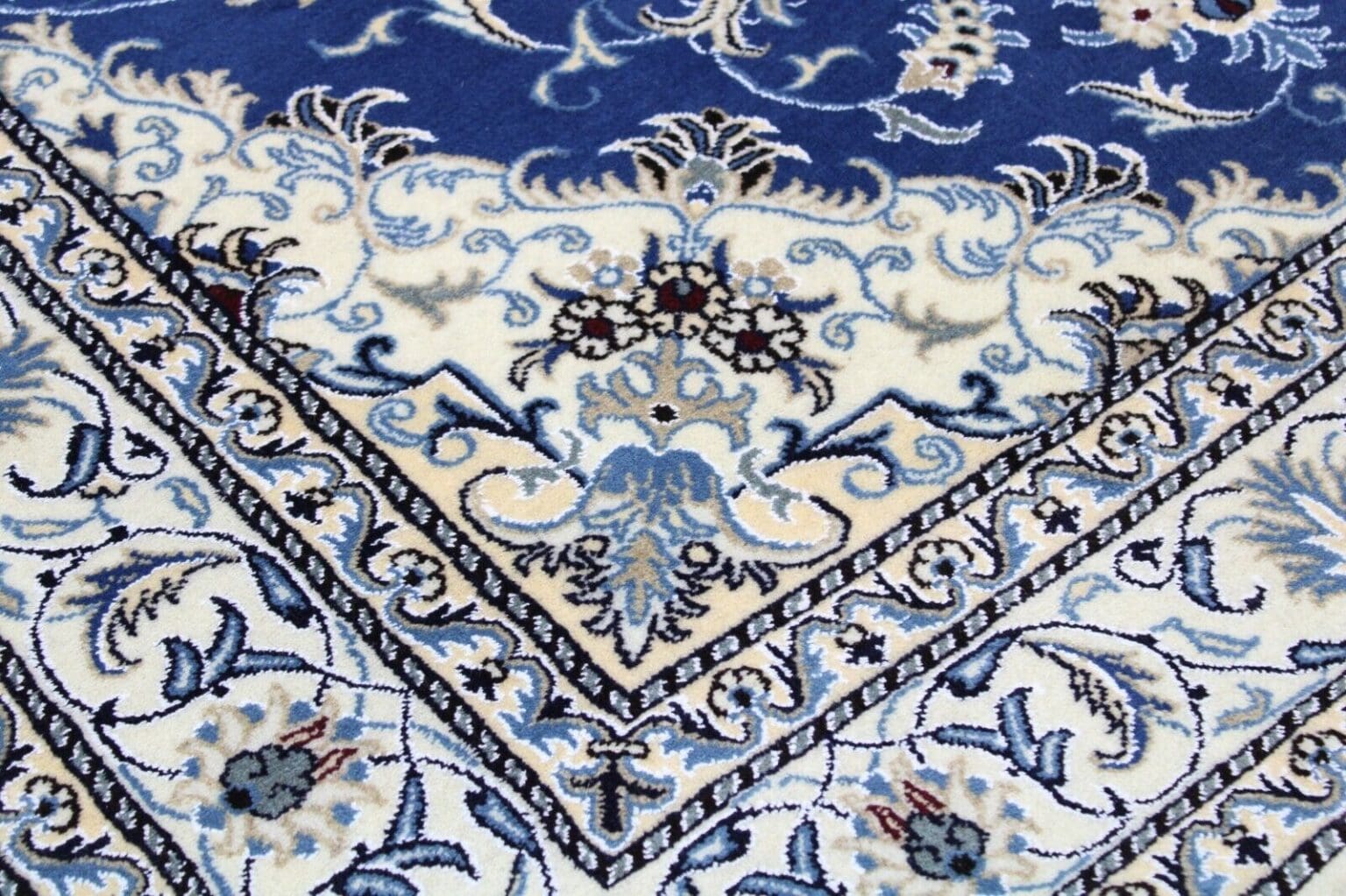
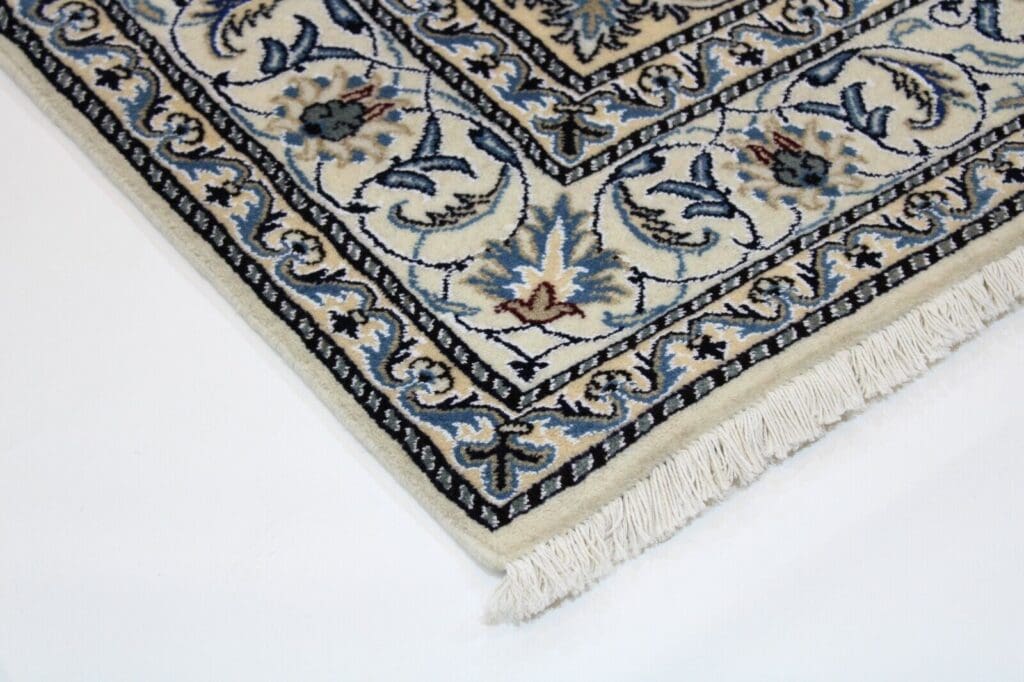
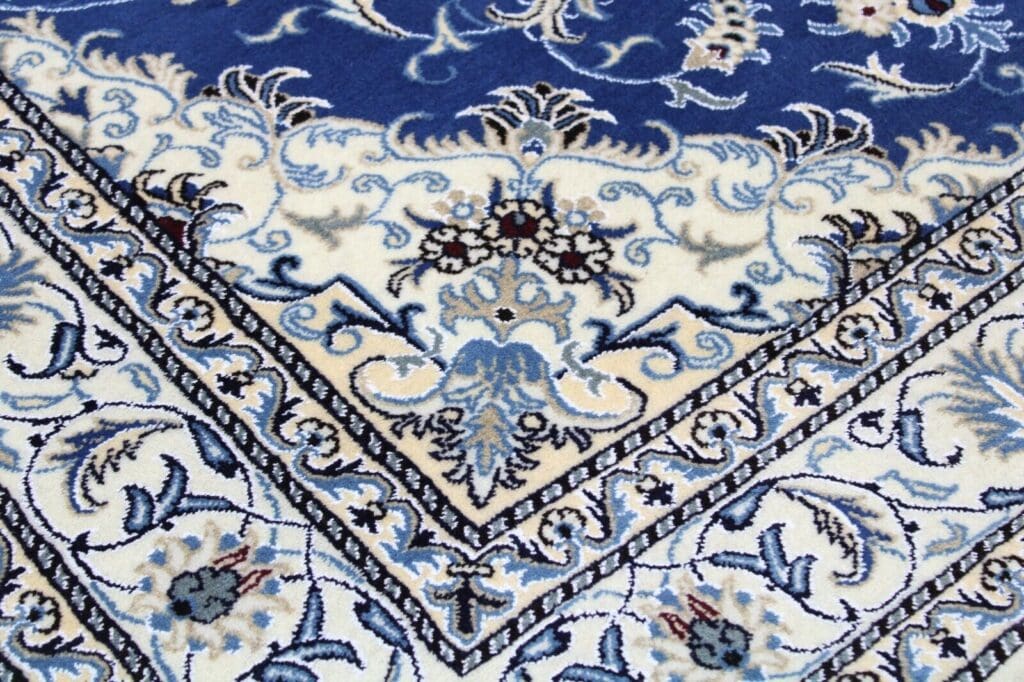
The pile is described as high pile. A high pile has longer fibres than a low pile and gives the surface a pronounced textile structure. Its appearance results from the length of the fibres and the way they are worked into the foundation. In a hand-knotted rug, the knots form the basis of the visible surface: they hold the pile in place and create the lines, colour areas and ornaments that make up the design.
Hand-knotting is a manual construction process rather than a printed finish applied to a completed textile surface. The pattern is built knot by knot through the selected materials and colours. The description also refers to fine workmanship and high-quality wool. It places the production within the traditional carpet-making culture of Iran. No numerical knot count or measured knot density is provided; the product information identifies the construction as hand-knotted.
Origin and Tradition
This rug comes from Iran and is offered as an original Nain Persian rug. Nain is one of the established names in Iranian carpet making and represents a distinct design tradition within Persian weaving. Carpets associated with Nain are generally known for carefully controlled drawing, balanced compositions and a connection between manual technique and established ornament. Here, the stated origin is Iran and the stated rug designation is Nain.
Iranian carpet culture developed over many centuries across a range of cities and regions. The description mentions Isfahan, Tabriz and Kashan as examples of recognised carpet centres. Their traditions are often discussed through different design and workshop characteristics. Tabriz is commonly associated with detailed drawing and a rich use of colour. Kashan is often known for elegant floral compositions, while Isfahan has a strong tradition of carefully developed designs and workshop production. These references describe the broader Persian carpet landscape; they do not change this rug’s stated origin as Nain from Iran.
Persian rugs have traditionally been made in varied formats for many kinds of interiors. Their role is practical, but the craft also preserves motifs, working methods and design principles passed through generations. In a hand-knotted carpet, knowledge of fibres, a steady knotting rhythm and a planned drawing work together. The result is a functional textile that also belongs to the field of decorative arts.
The product description places this rug within the traditional Persian style. That classification corresponds to its Iranian origin, its Nain designation and its oriental floral pattern. No individual workshop and no additional city of origin are specified for this particular piece. The origin should therefore remain Iran, with Nain as the named carpet type. Isfahan, Tabriz and Kashan are relevant as general examples of Persian weaving traditions, not as claims about this rug’s provenance.
Design and Pattern
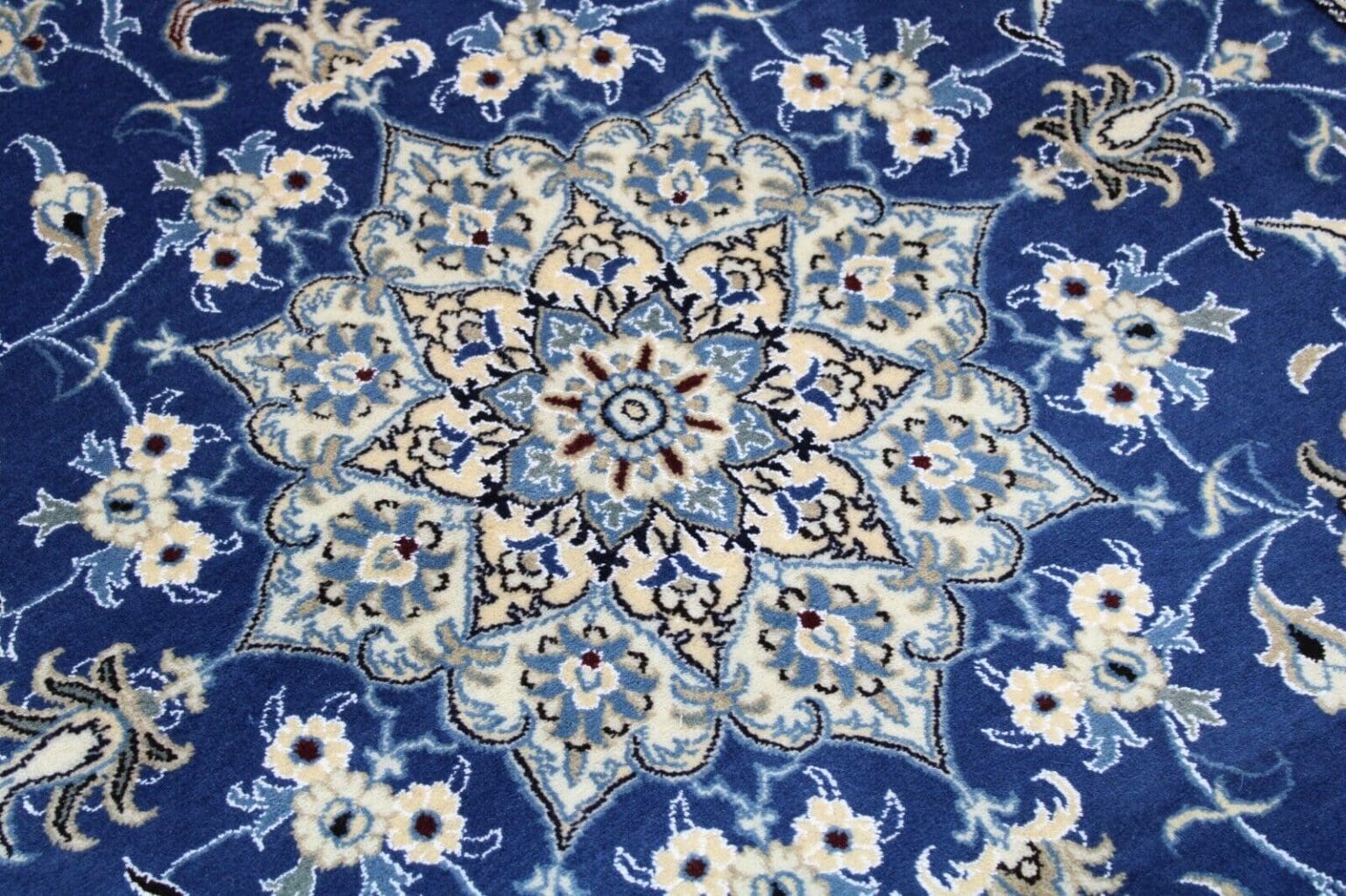
The pattern is described as oriental with floral motifs. Flowers, leaves and scrolling forms are among the enduring elements of Persian carpet design. They may be arranged in a repeating rhythm, organised around a central field or linked through flowing lines. Floral ornament can also help define the relationship between the central area and surrounding borders. In this rug, the confirmed design description is an oriental composition with floral motifs.
The longer description refers to historic designs known for complex patterns and symbolic associations. It mentions both floral and geometric motifs as elements found in Persian carpet design. Floral lines can guide the eye across the field, while geometric shapes can establish order, repetition and clear boundaries. The source does not identify the exact individual ornaments or layout used on this rug. Those details are therefore not added here.
Colour is an important structural tool in Persian weaving. Different colours can separate design zones, clarify outlines and establish contrast between ornament and ground. The description characterises the colours as lively and the patterns as detailed, but it does not name a specific palette or individual shades. For that reason, no additional colour claim is made for this piece. Its documented visual character remains the lively colour effect together with floral and geometric design references.
Traditional Persian compositions often use a central field, surrounding borders or repeated ornaments to give a design visual order. These principles help explain how a floral rug can appear either densely arranged or more open while retaining a coherent rhythm. Nain as a rug designation is also associated in general with precise and balanced drawing. That background explains the design tradition, but it is not a substitute for a description of details that the source does not provide. The specific pattern here remains oriental with floral motifs.
A traditional Persian design can be used with both classical and contemporary interiors. The description names the living room, dining room and bedroom as suitable settings. In such spaces, a floral rug may act as a central decorative element or as a textile layer that supports the existing furnishings. Its precise effect depends on the room, the light and the surrounding colours, so no single room placement is required.
Special Features
The rug is described as new without a label and in top condition. It is also stated to be suitable for underfloor heating. This makes the specification relevant to rooms equipped with that type of heating system. The care guidance includes regular vacuuming and occasional beating. Professional cleaning may be used when needed. Direct sunlight should be avoided so that the textile surface and its colour effect receive appropriate protection.
The combination of hand-knotting, high pile, high-quality wool and a traditional Nain design brings together construction and visual characteristics. No numerical knot density, production date, signature or further usage history is supplied. Those details are not added to the description.
FAQ
How can the quality of a Persian rug be assessed?
Fine knotting, the quality of the wool and the precision of the pattern are commonly considered important indicators. A level pile and clear colour definition are also useful points to examine. For this rug, hand-knotting is specified, but no numerical knot count is given. The description identifies high-quality wool, high pile and an oriental floral design.
How should a Persian rug be cared for?
Regular, gentle vacuuming helps remove loose dirt from the pile. The rug should also be kept away from direct sunlight. The supplied care guidance recommends occasional beating as well. If more thorough treatment is needed, professional cleaning can be arranged. This approach helps protect the textile surface and maintain it through normal use.
Which room is suitable for a Persian rug?
A Persian rug can be used in several living areas. The living room, dining room and bedroom are specifically named as suitable spaces. In any of them, it can serve as a focal point or work as a complementary textile within the furnishings. Its stated suitability for underfloor heating also allows use in rooms equipped with that system.
To provide the best experiences, we use technologies like cookies to store and/or access device information. Consenting to these technologies will allow us to process data such as browsing behavior or unique IDs on this site. Not consenting or withdrawing consent, may adversely affect certain features and functions.
Functional Always active
The technical storage or access is strictly necessary for the legitimate purpose of enabling the use of a specific service explicitly requested by the subscriber or user, or for the sole purpose of carrying out the transmission of a communication over an electronic communications network.
Preferences
The technical storage or access is necessary for the legitimate purpose of storing preferences that are not requested by the subscriber or user.
Statistics
The technical storage or access that is used exclusively for statistical purposes.The technical storage or access that is used exclusively for anonymous statistical purposes. Without a subpoena, voluntary compliance on the part of your Internet Service Provider, or additional records from a third party, information stored or retrieved for this purpose alone cannot usually be used to identify you.
Marketing
The technical storage or access is required to create user profiles to send advertising, or to track the user on a website or across several websites for similar marketing purposes.
 SECURE PAYMENT
 SHIPPING PARTNERS


