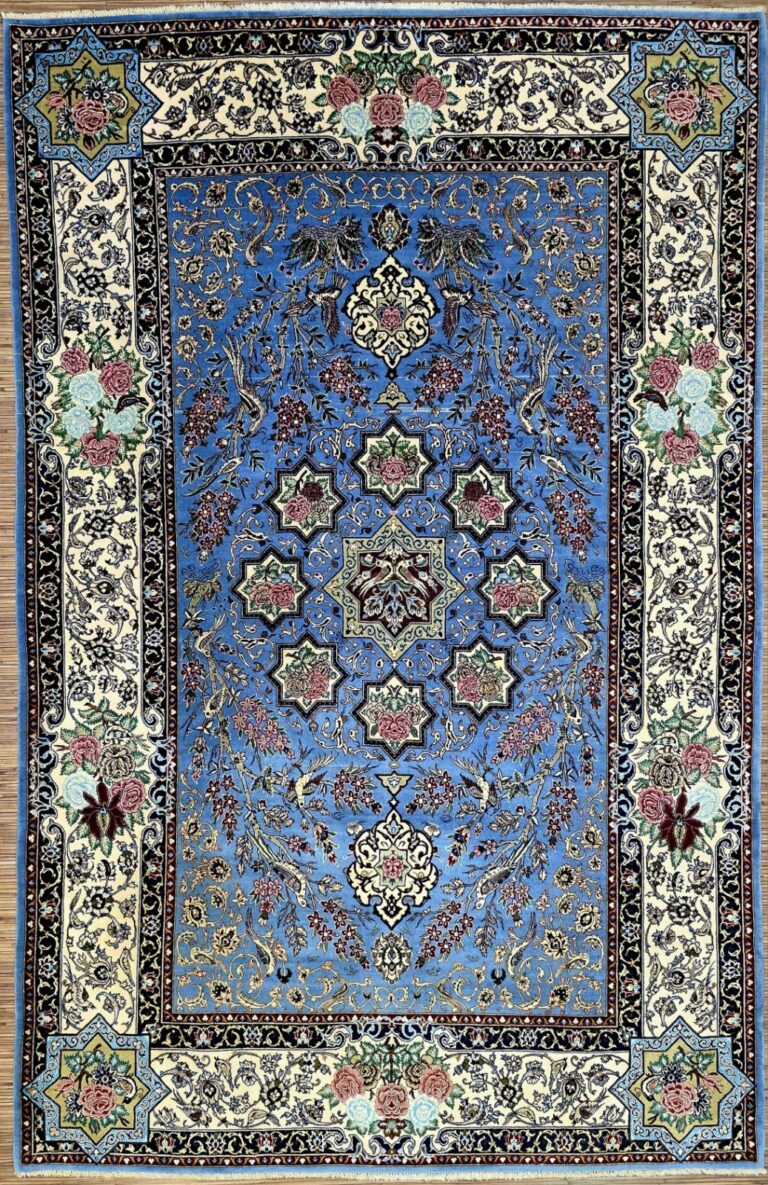
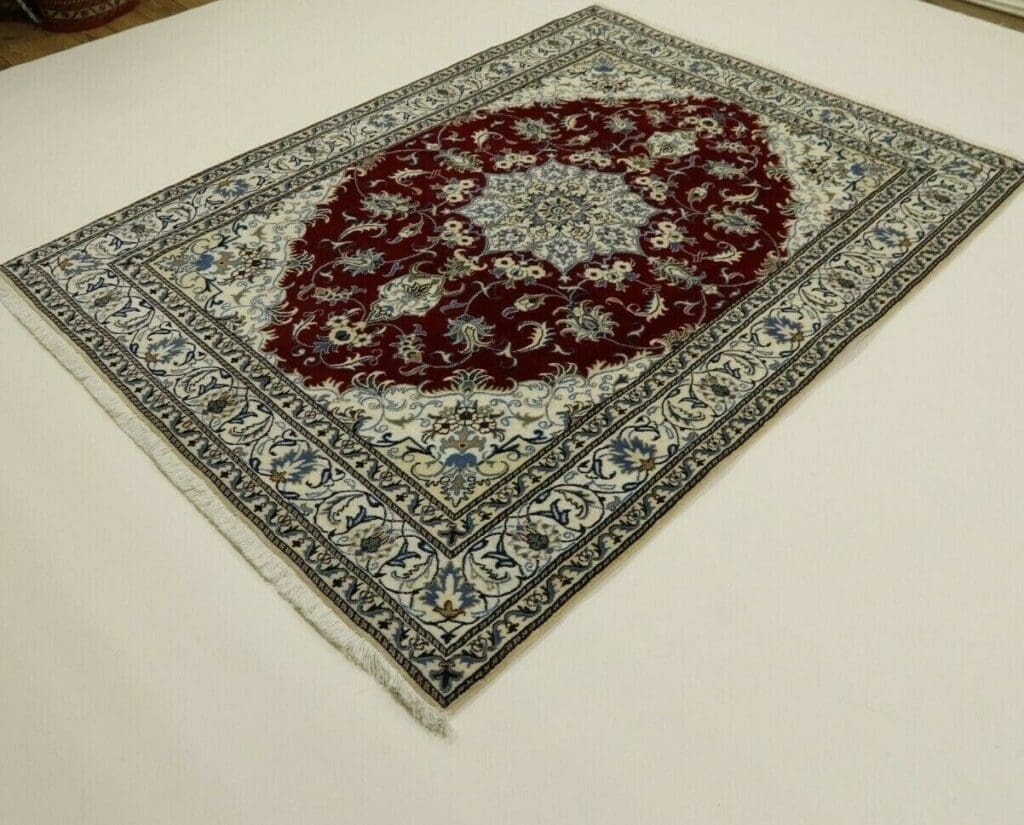
This Nain Persian rug is hand-knotted and has a pile made of 90% virgin wool and 10% silk. The stated fibre composition combines the practical character of wool with the smoother qualities associated with silk. Wool forms the larger part of the pile and is a natural animal fibre with resilience and a degree of elasticity. It can absorb and release limited amounts of moisture from the surrounding air, while its spring-like structure helps the pile recover after ordinary pressure.
The silk content contributes a different surface character. Silk fibres are smooth and can reflect light more distinctly than wool. In a wool-and-silk pile, that difference may give selected areas a finer appearance and produce subtle changes as the viewing angle or lighting changes. Silk is not described as the principal pile material here; it is the specified secondary component of the pile. Together, the two fibres create a textile surface in which wool provides the dominant structure and silk adds a more reflective element.
The rug has a stated density of approximately 300,000 knots per square metre. Fine knotting requires controlled work and allows a design to be rendered with closely spaced outlines and small ornamental details. In hand-knotting, the pile is built one knot at a time on a loom. Rows are secured as the work progresses, the knots are compacted, and the pile is trimmed to form an even surface. The result is directly connected to the individual work of the weaver rather than to a repeated industrial process.
Hand-knotted wool-and-silk rugs benefit from careful maintenance. Vacuuming at a low setting helps remove loose particles without placing unnecessary stress on the pile. A more extensive wash should be entrusted to a specialist familiar with hand-knotted rugs and mixed natural fibres. The listed thickness of this rug is approximately 9 mm, and its condition is described as new, very good. These details belong to this particular piece; the broader maintenance principles apply to its materials and construction.
Origin and Tradition
This rug is identified as a Nain rug from Persia, or Iran. Nain is located in central Iran, in an area shaped by an arid environment and historic routes linking different parts of the country. The town became an important centre of carpet production during the modern development of the Persian carpet trade. Nain carpets gained recognition for their controlled drawing, carefully ordered compositions, and precise execution.
Nain belongs to the wider tradition of Persian carpet weaving. Within that tradition, a rug is both a useful textile and a carefully planned composition of colour, line, and rhythm. Production involves more than tying the knots. The design must be prepared, yarns selected and dyed, the loom set up, and the finished surface trimmed and checked. Skills are passed through workshops and families, while regional habits remain visible in the way motifs are arranged and details are repeated.
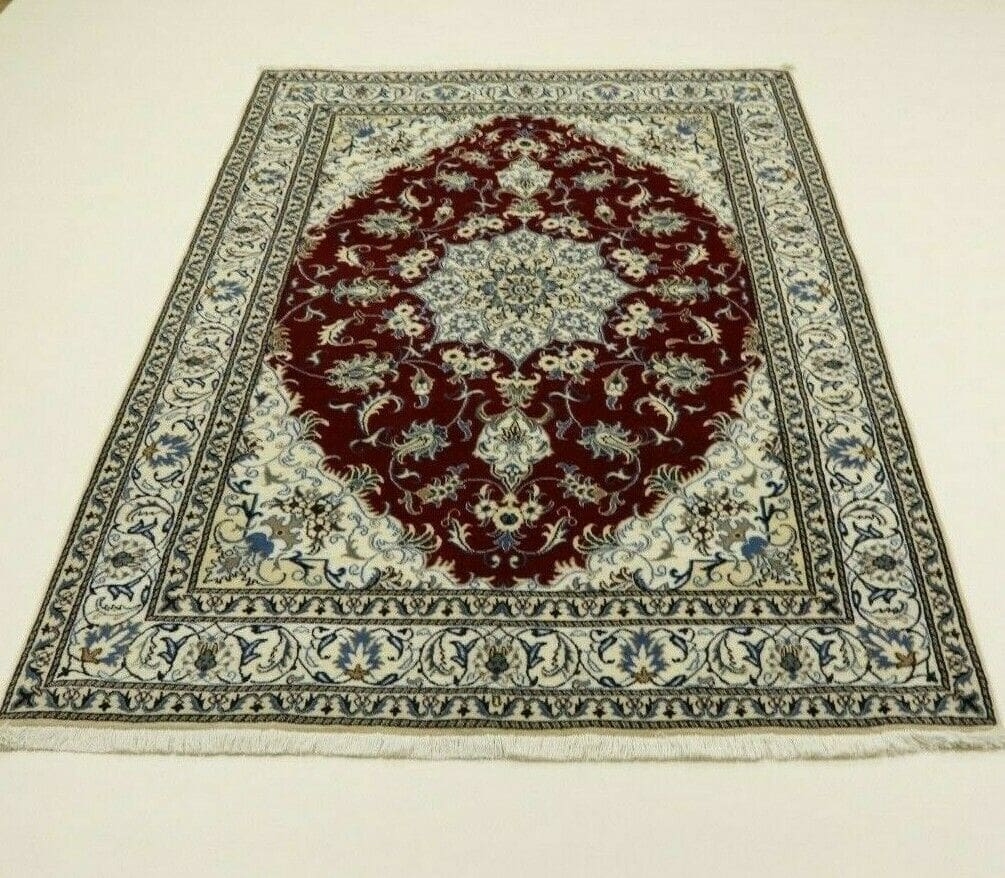
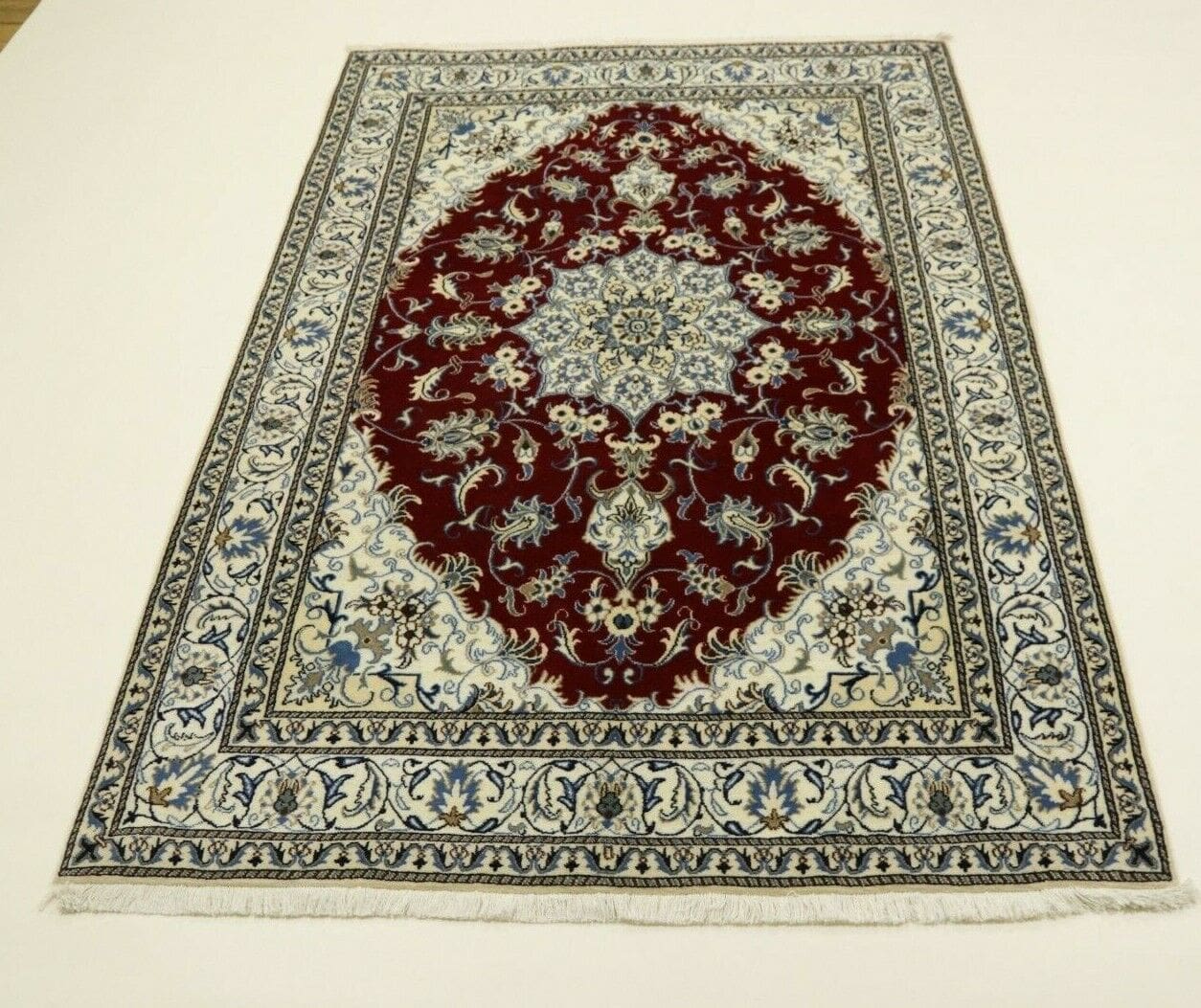
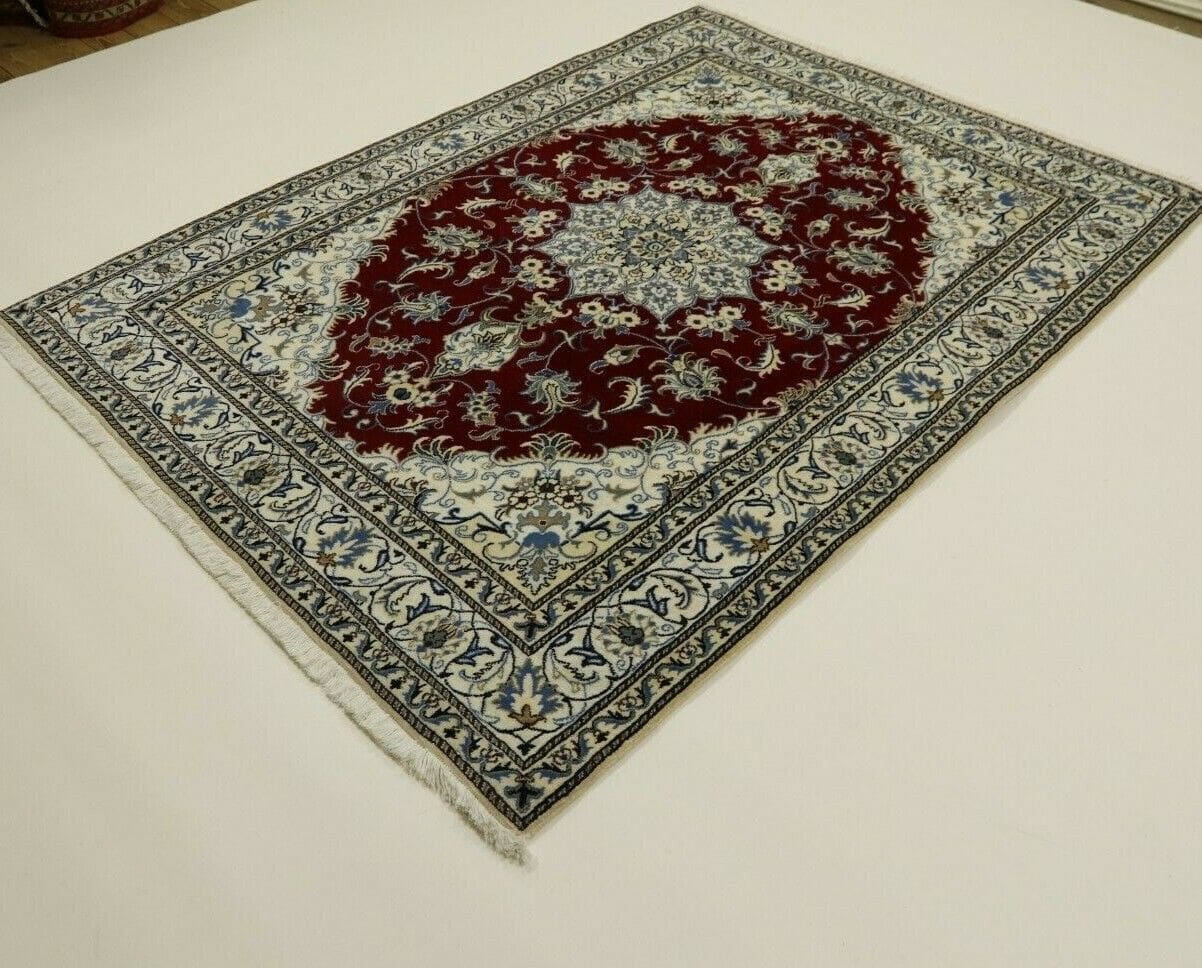
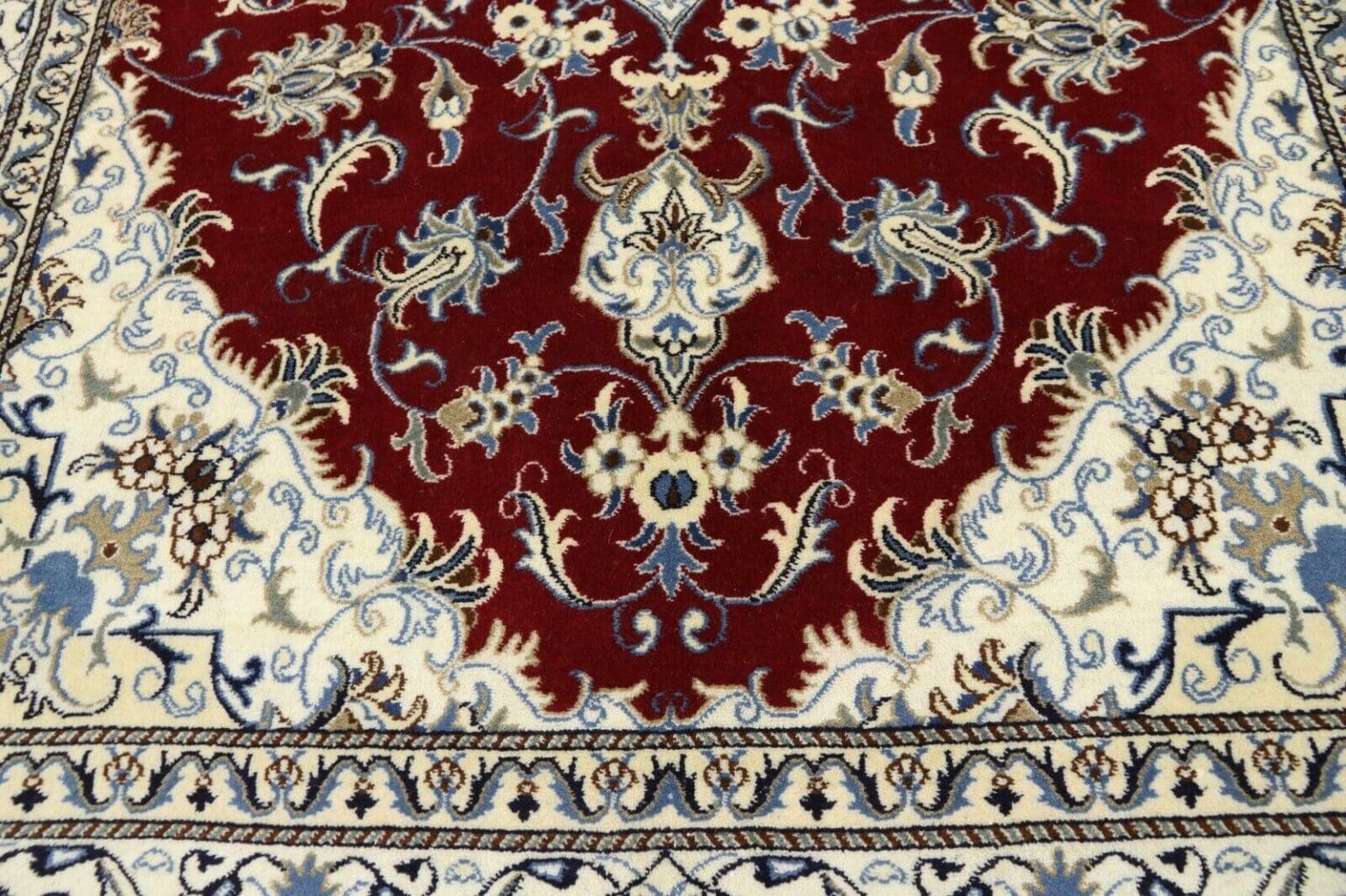
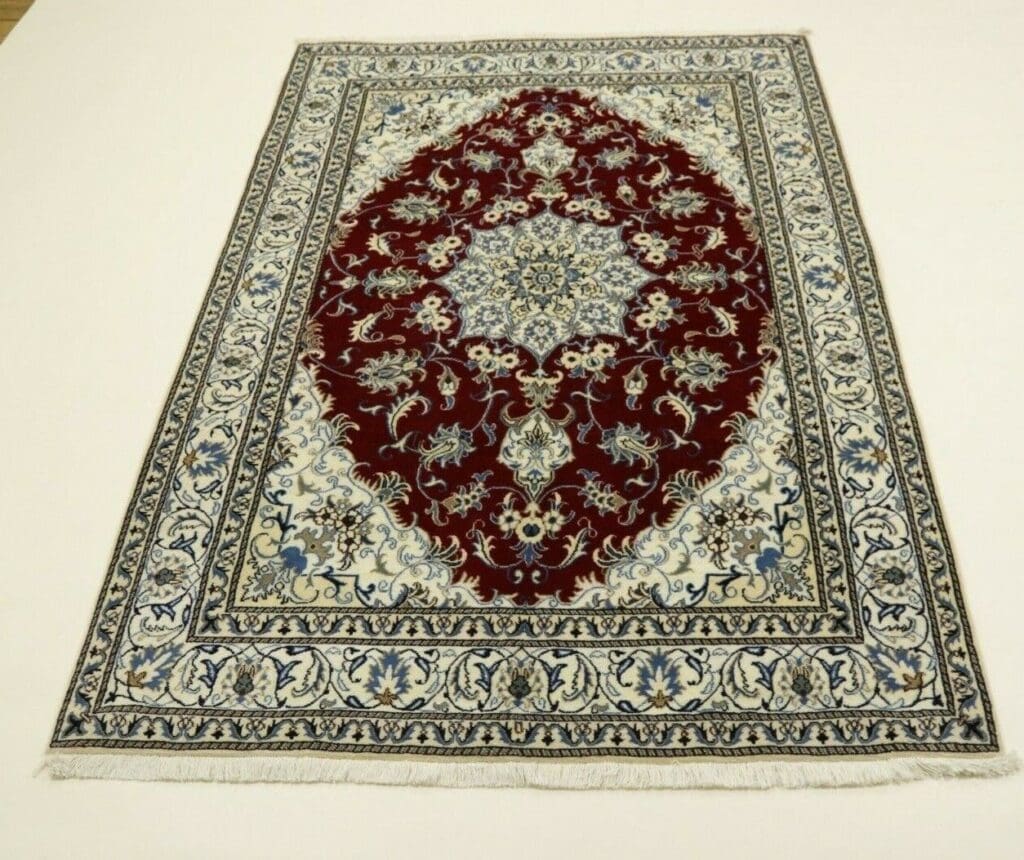
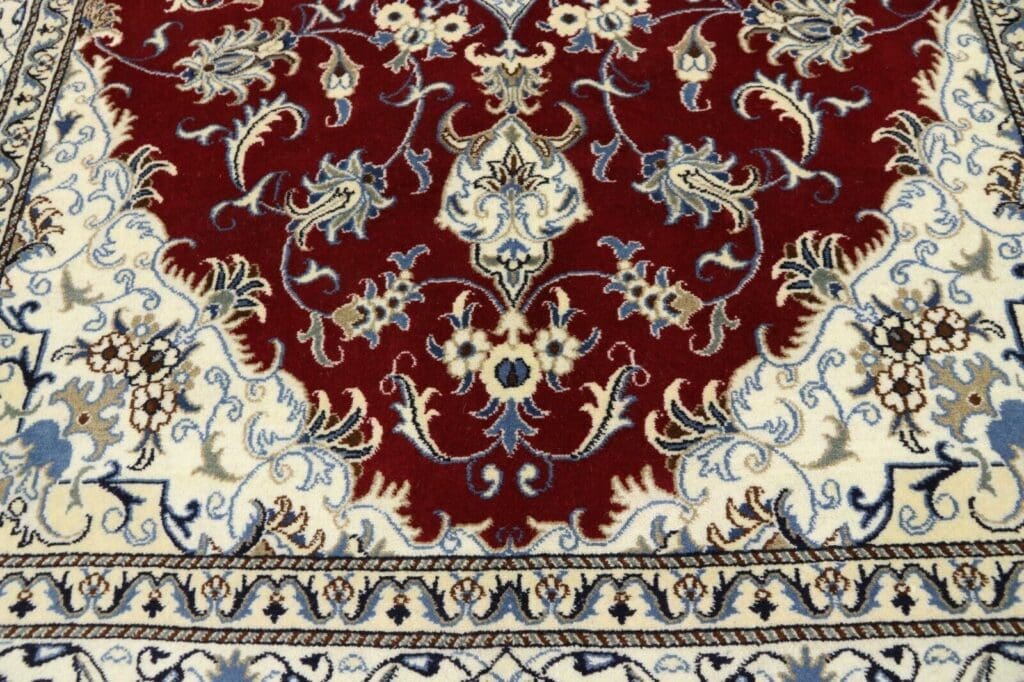
Many Nain carpets are organised around a clear central structure. Some use a medallion, while others fill the field with a continuous arrangement of vines, flowers, and arabesques. Symmetry and balance are important principles, whether the design is strictly mirrored or uses a more flowing repeat. These are characteristics of the Nain tradition as a whole and explain why finely drawn Nain designs can remain legible even when they contain numerous small elements.
The preparation of a Nain design traditionally requires close coordination between the drawing and the knotting process. A pattern plan indicates the placement of colours and the sequence of forms. The weaver follows the plan row by row, maintaining the proportions of the field and the relationship between the central area and the borders. Fine knotting supports accurate contours, but it also demands patience and regular checking. The density specified for this rug is therefore relevant to the type of detailed craft associated with Nain weaving.
Nain carpets also show how an established regional language can function in contemporary interiors without losing its Persian identity. Traditional floral vocabulary, measured borders, and balanced fields can be adapted to different proportions and settings. The designation Nain refers to a carpet tradition from Iran, not simply to a generic Oriental appearance. This individual rug is identified as a Persian rug from Persia or Iran, and its listed style is traditional Oriental/Persian.
Regional carpet traditions are also shaped by the materials available to the workshop and by the expectations of the market. Wool is used for its practical strength and workable pile, while silk may be introduced to refine selected visual effects or the feel of the surface. The exact balance varies from rug to rug. In this case, the documented composition is predominantly virgin wool with a smaller silk component, joining a familiar Persian material vocabulary to the Nain format.
Design and Pattern
The listed style of this rug is traditional Oriental/Persian. That description refers to a design language built from organised fields, repeating ornaments, and a considered relationship between the central area and the surrounding border. In Persian carpet design, the pattern is planned as a complete textile structure rather than as an isolated decoration. The placement of the main motif, secondary forms, and framing elements gives the surface its visual order.
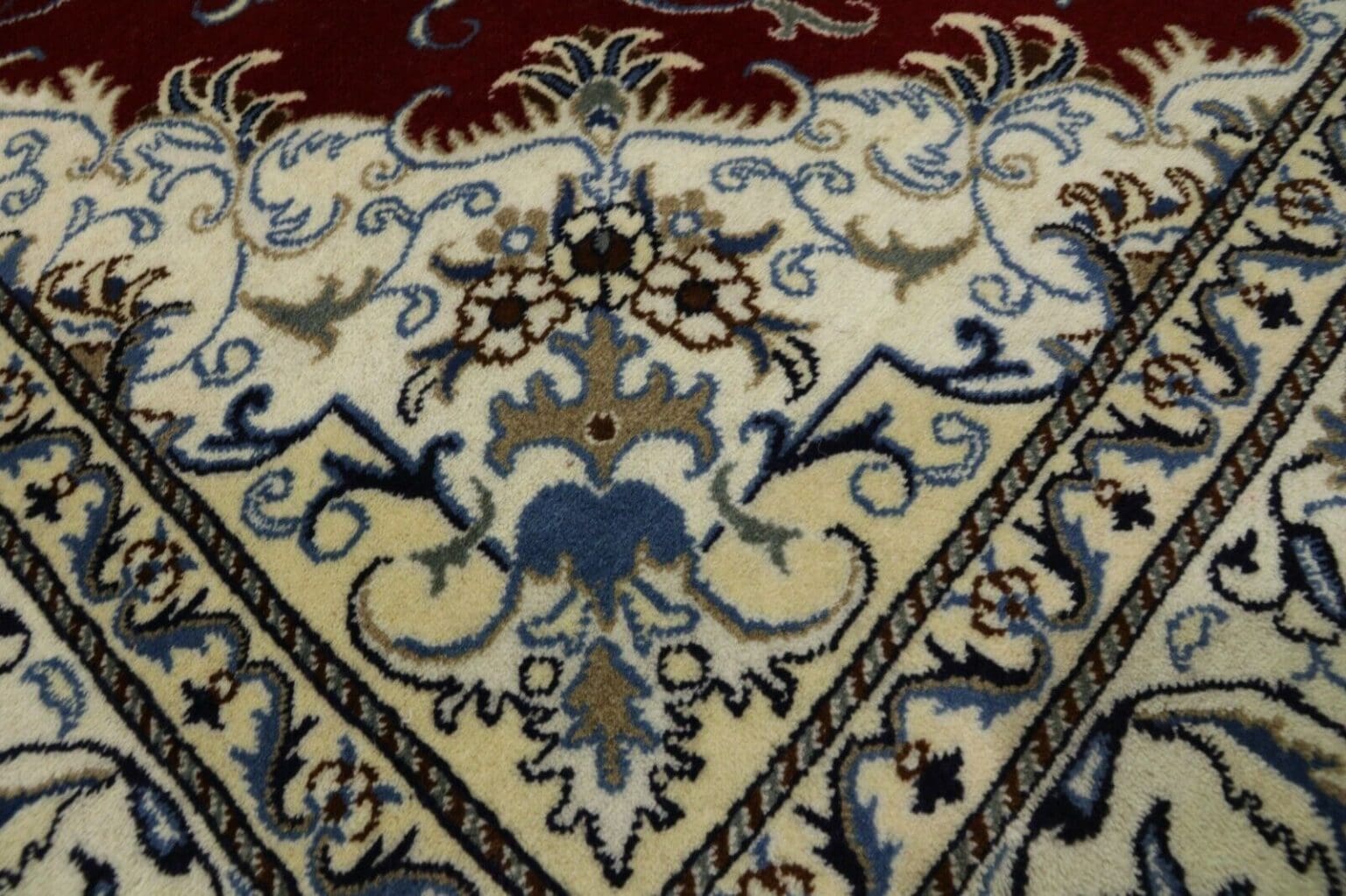
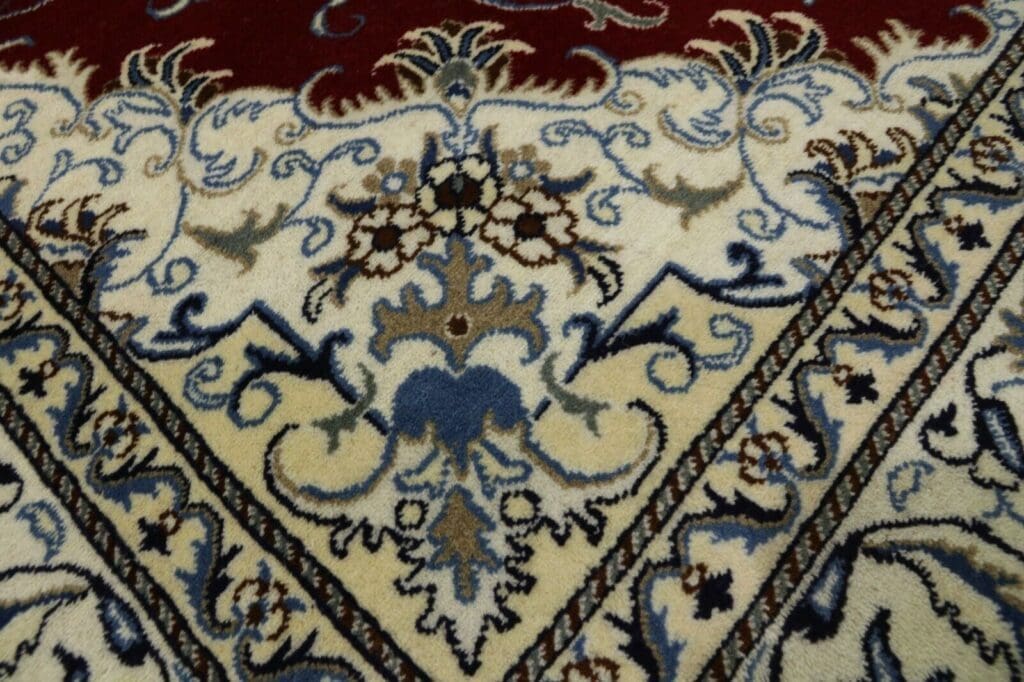
Floral and geometric principles frequently appear in Nain designs. Flowers, leaves, tendrils, and arabesques may be linked into a continuous network or arranged around a central medallion. Geometry often appears through symmetry, repeated axes, measured spacing, and the clear separation of border zones. These elements work together through rhythm and proportion. A motif is not only recognised by its outline; its scale, repetition, and position within the field also determine how the composition is read.
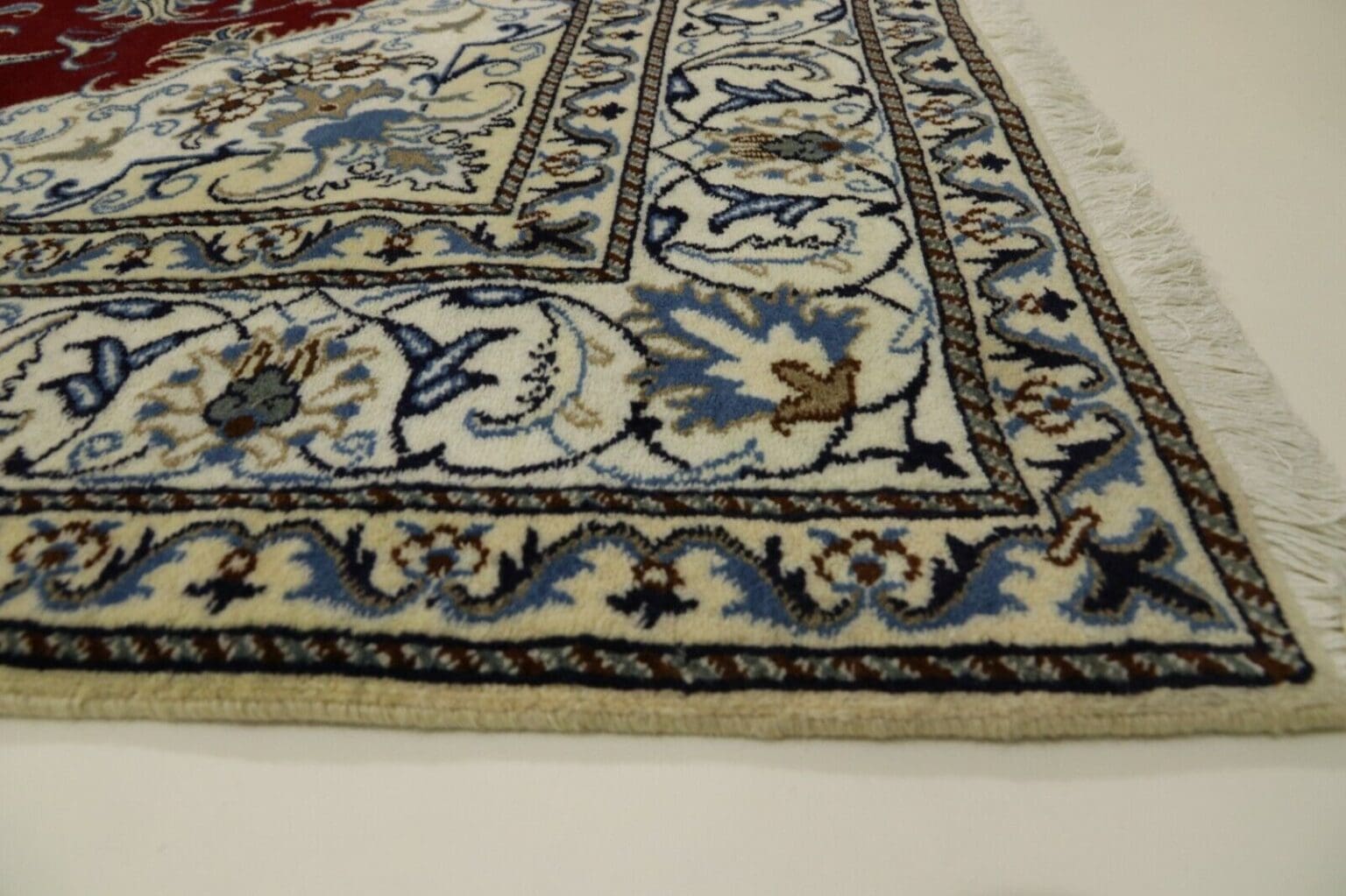
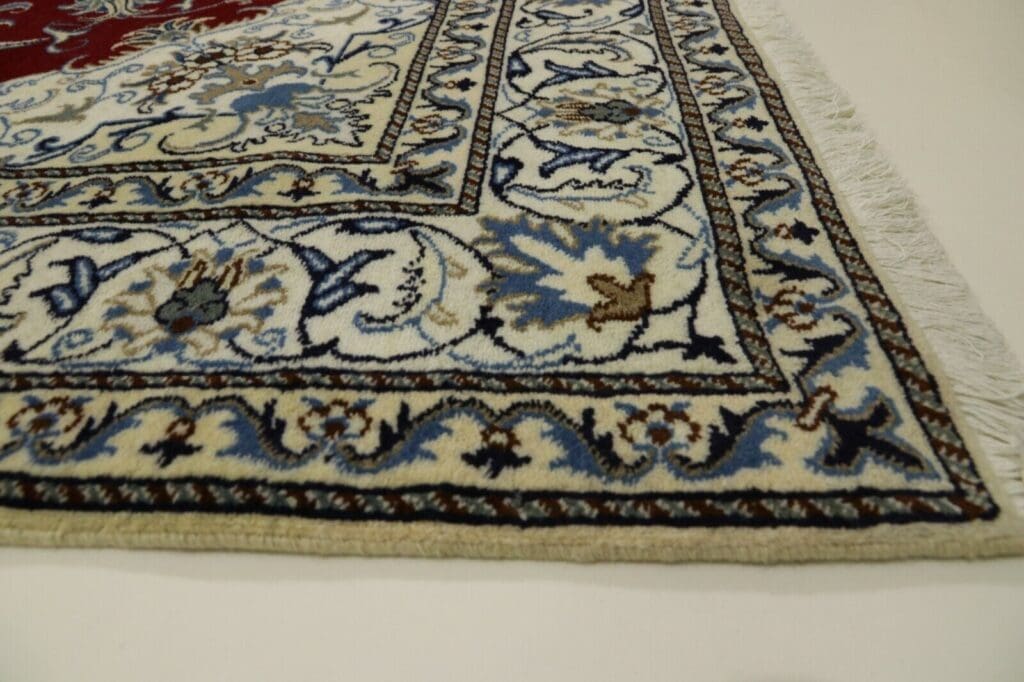
The border performs both a practical and a visual function. It frames the inner field and establishes a transition between the rug and the surrounding floor. A wider main border may be accompanied by narrower side borders, with the different bands coordinated through repeated colours or related ornaments. In the Nain tradition, fine line work can make these transitions precise without making the overall design appear disconnected. The carefully knotted surface provides the technical basis for rendering small contours and closely spaced details.
The wool-and-silk pile affects how the pattern is perceived. Wool generally diffuses light and gives the surface a softer, more subdued appearance. Silk can reflect light more directly, so areas containing it may appear more luminous as the light moves across the pile. This is a general optical effect of the fibre combination, not a separate pattern element. It can nevertheless make fine outlines and small accents easier to notice under changing daylight or interior lighting.
Persian pattern traditions often rely on a planned relationship between ground colour, outlines, and accents. Darker lines may define the edges of leaves or arabesques, while lighter areas open the composition and give individual forms room to breathe. The precise colours of this rug are not stated in the product information and are therefore not specified here. What is established is its Nain classification and its traditional Oriental/Persian style. The design should consequently be understood within that regional vocabulary rather than as a claim about an unrecorded individual motif.
Hand-knotting gives the pattern a physical structure. The image is formed by coloured knots beneath the pile surface, not printed onto a finished textile. Once the pile is trimmed, the drawing is read from the exposed arrangement of fibres. Small differences in tension, knot placement, or trimming can occur in handmade work. Such variations are part of the technique and help distinguish a one-off hand-knotted rug from a mechanically reproduced design.
A Nain composition can also be viewed in layers. The field establishes the main visual space, the central arrangement provides orientation, and the borders give the design a concluding edge. Repeated leaves or floral units create movement across the surface, while areas of open ground prevent the pattern from becoming visually compressed. This balance between detail and order is one reason Nain is associated with refined, carefully drawn Persian carpet design. It provides a useful context for the traditional style recorded for this rug without adding undocumented details about its exact ornament.
Special Features
The recorded special features of this rug are its hand-knotted construction, the high stated knot density, and its pile composition of 90% virgin wool and 10% silk. It is described as a unique one-off piece, and an authenticity certificate is included. These points concern the identity and manufacture of this particular rug rather than a general description of all Nain carpets.
The combination of wool and silk brings together a resilient wool base and the smoother, more light-reflective character of silk. Its listed thickness is approximately 9 mm. The condition is new, very good. To preserve the surface, the rug should be vacuumed gently and professionally cleaned when necessary. Care should be matched to both natural fibres and to the hand-knotted construction.
FAQ
How should I clean my Nain Persian rug?
For routine care, vacuum the rug gently at a low setting to remove loose dust and particles. Avoid vigorous brushing, harsh chemicals, and excessive rubbing, as these can stress the pile and are particularly unsuitable for a wool-and-silk surface. Spills should not be aggressively soaked or worked into the fibres. For a full cleaning, use a professional cleaner experienced with hand-knotted rugs and mixed natural fibres. Such a specialist can select a method appropriate to the pile, colours, and construction.
How can I identify an authentic Persian rug?
A hand-knotted rug can often be examined from the back, where the knot structure and the reverse side of the design remain visible. Machine-made rugs generally show a more uniform, mechanically repeated backing. Materials, pile structure, drawing, and finishing should be considered together rather than judged from a single feature. This rug is supplied with an authenticity certificate. If a further assessment is required, a qualified rug specialist can examine its origin, technique, and fibres in combination.
Is this Nain rug suitable for underfloor heating?
The product description identifies this Nain rug as suitable for underfloor heating. Wool naturally provides some thermal insulation, while the listed construction does not automatically prevent heat from passing through. The heating system should still be operated without excessive temperatures, and the rug should lie flat so that heat is distributed evenly. If the floor system has special installation requirements, consult the heating manufacturer or a qualified installer before use.
To provide the best experiences, we use technologies like cookies to store and/or access device information. Consenting to these technologies will allow us to process data such as browsing behavior or unique IDs on this site. Not consenting or withdrawing consent, may adversely affect certain features and functions.
Functional Always active
The technical storage or access is strictly necessary for the legitimate purpose of enabling the use of a specific service explicitly requested by the subscriber or user, or for the sole purpose of carrying out the transmission of a communication over an electronic communications network.
Preferences
The technical storage or access is necessary for the legitimate purpose of storing preferences that are not requested by the subscriber or user.
Statistics
The technical storage or access that is used exclusively for statistical purposes.The technical storage or access that is used exclusively for anonymous statistical purposes. Without a subpoena, voluntary compliance on the part of your Internet Service Provider, or additional records from a third party, information stored or retrieved for this purpose alone cannot usually be used to identify you.
Marketing
The technical storage or access is required to create user profiles to send advertising, or to track the user on a website or across several websites for similar marketing purposes.

 SECURE PAYMENT
 SHIPPING PARTNERS