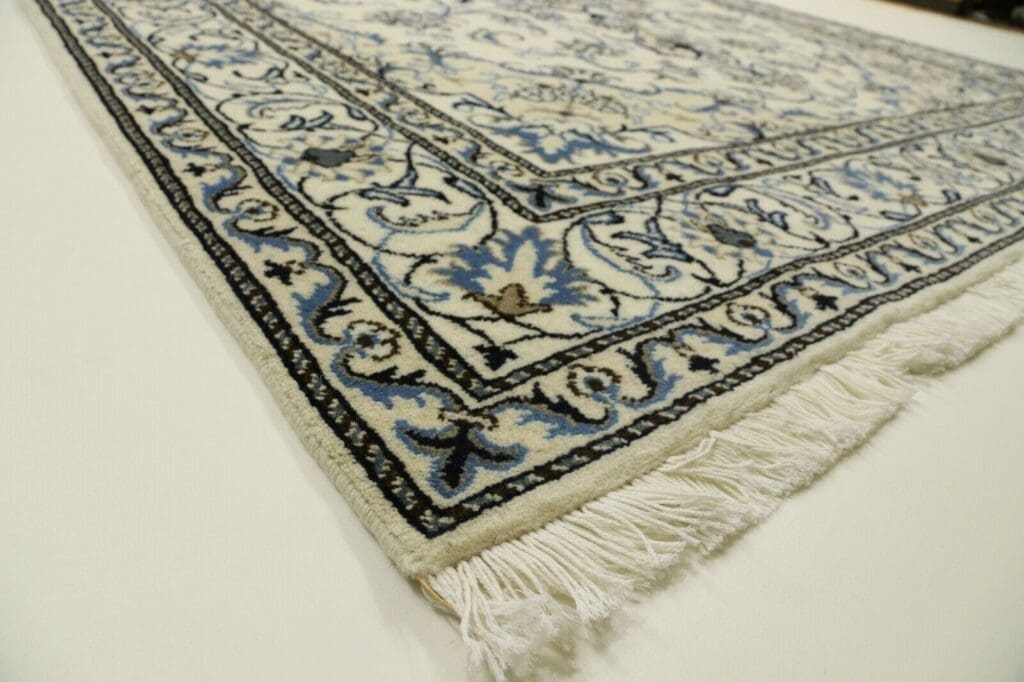
This Nain Persian rug is hand-knotted. Its pile consists of 90% virgin wool and 10% silk, while the warp is made from 100% cotton. These fibres contribute different qualities to the finished surface. Wool provides softness, warmth and body, while silk adds a smooth touch and a characteristic sheen. The cotton warp forms the structural foundation into which the knots are tied.
Virgin wool has been used in rugs for generations because it can retain warmth and has naturally dirt-resistant qualities. It gives the pile a soft but substantial feel that is comfortable underfoot. Silk is used in Nain rugs to introduce finer accents and a more reflective surface. Because silk catches light differently from wool, parts of the pattern can appear more luminous depending on the direction of the pile and the surrounding light.
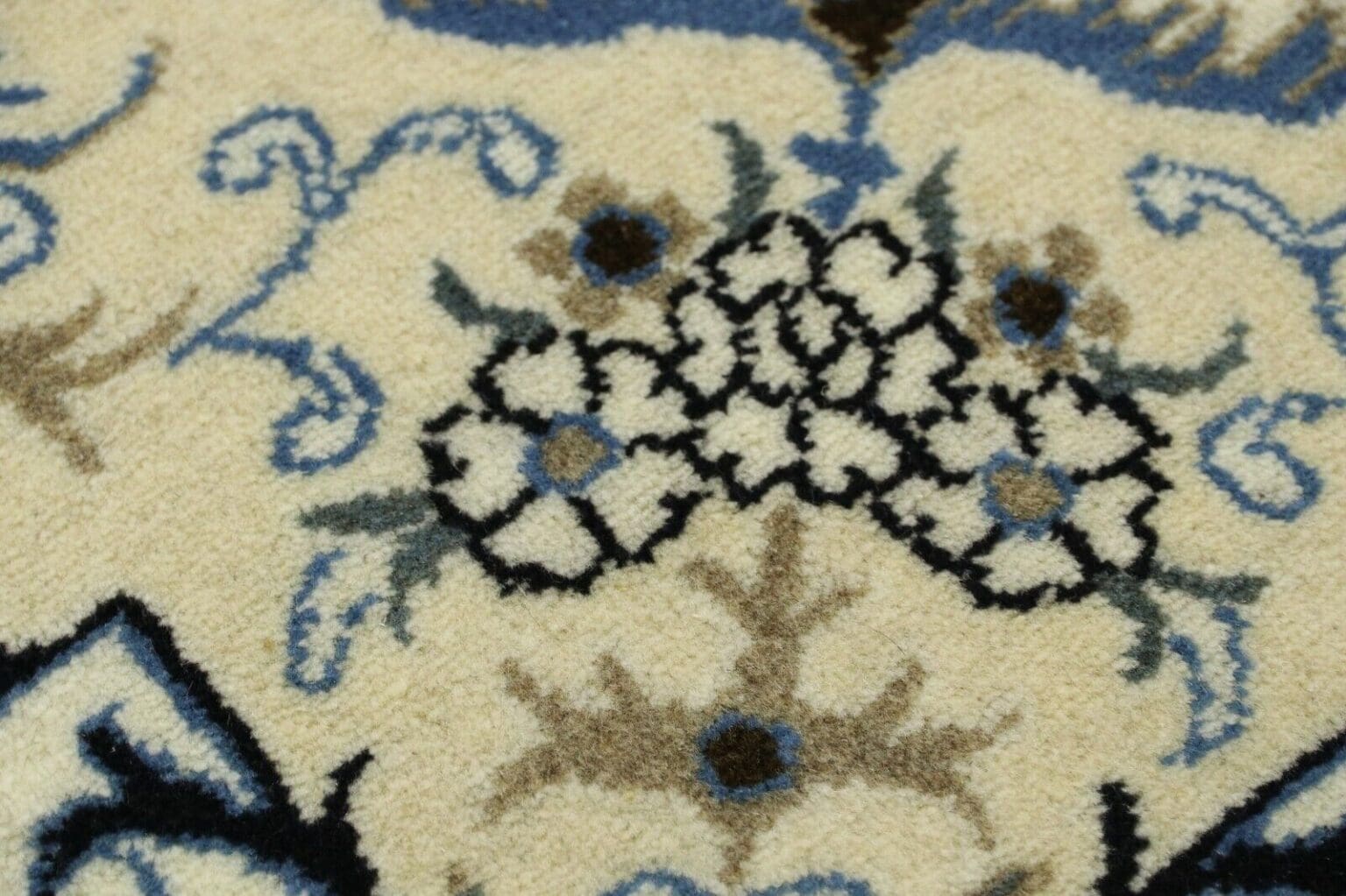
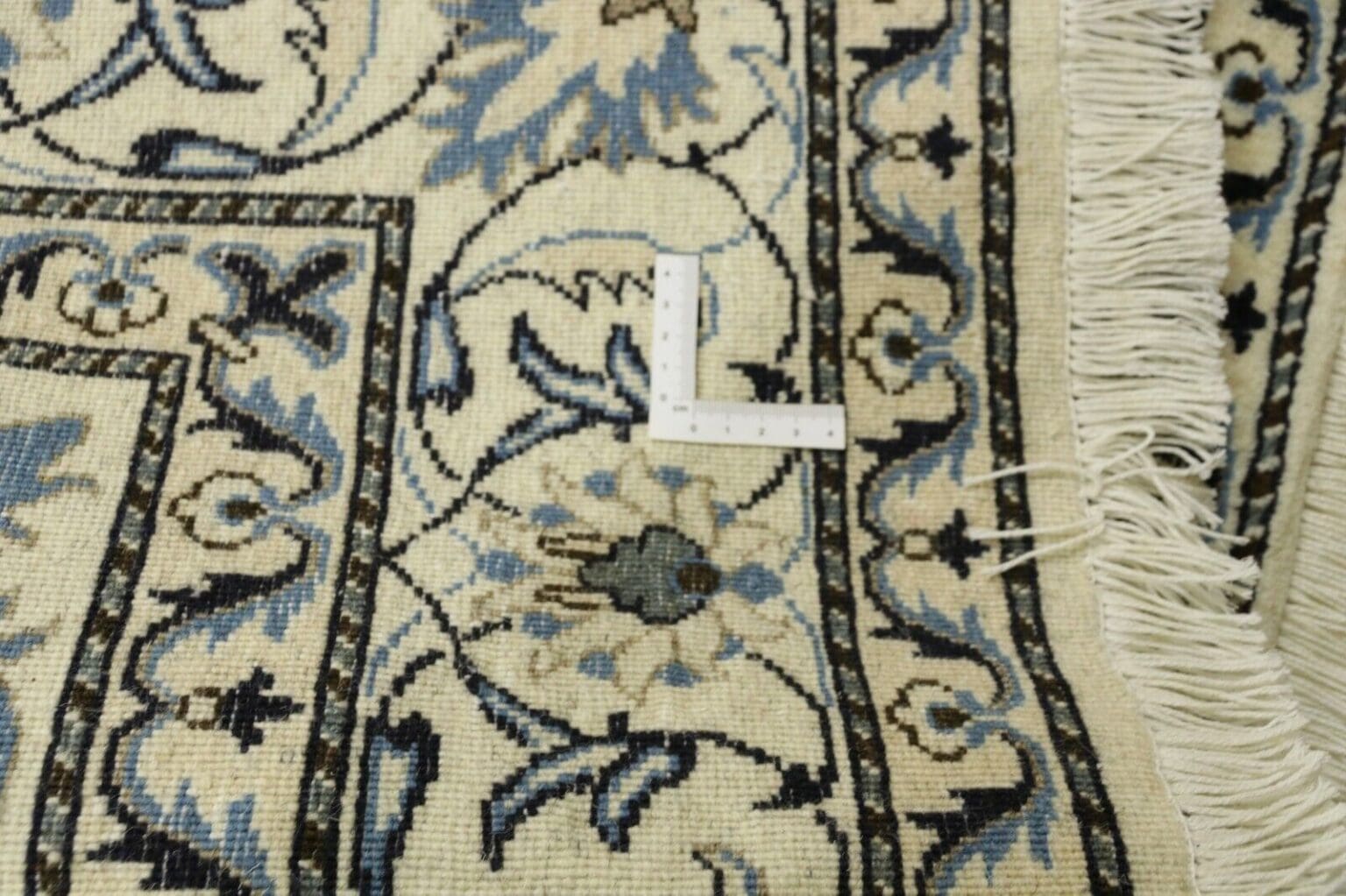
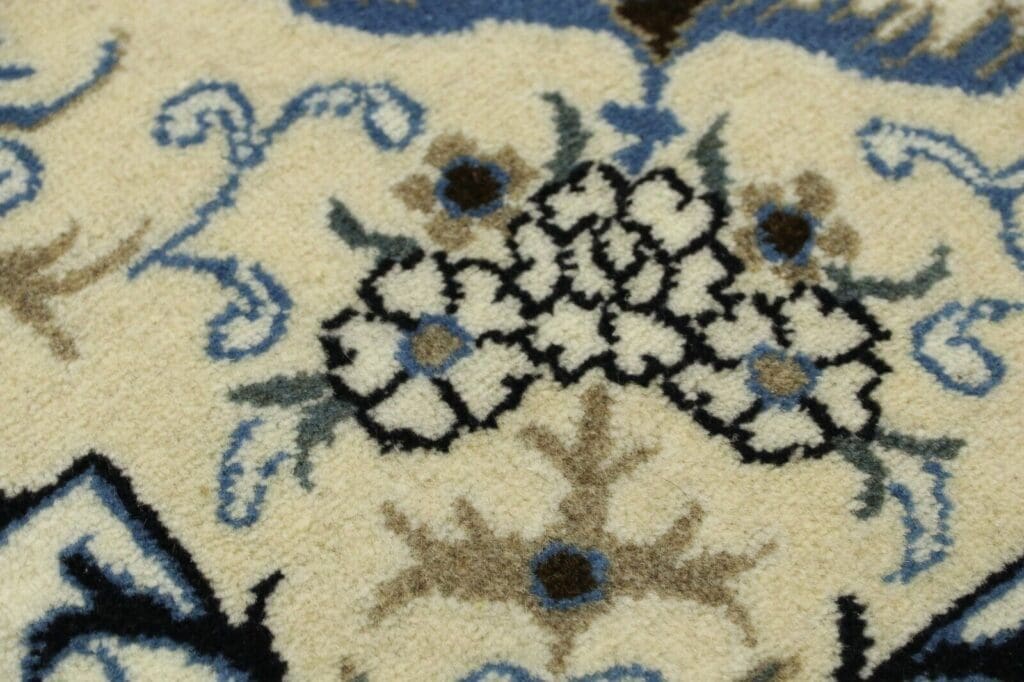
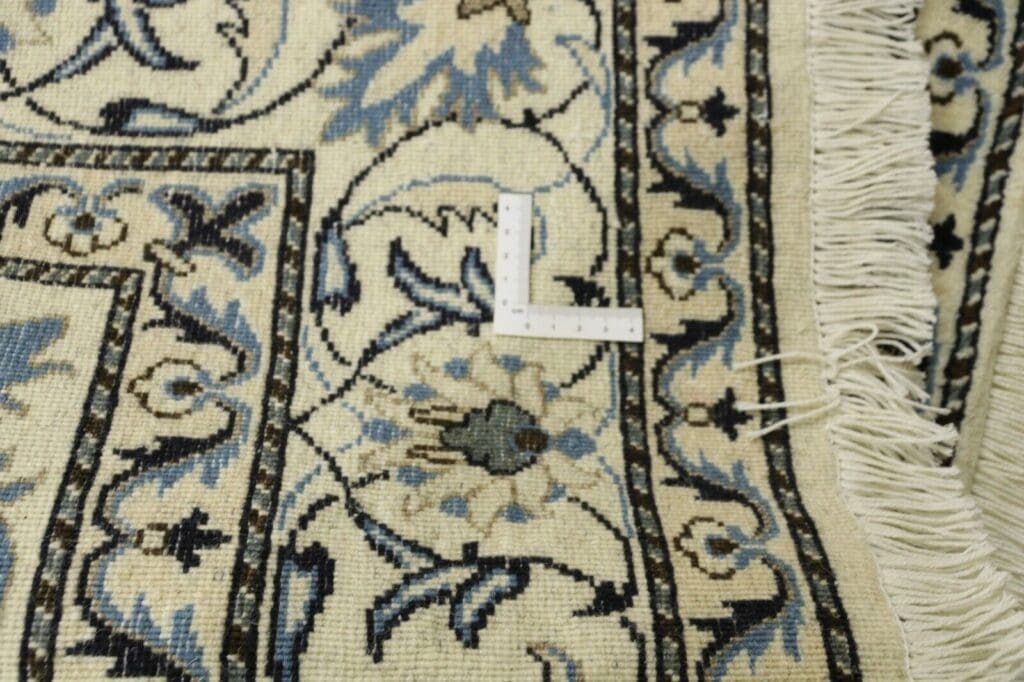
Hand-knotting is a method in which every knot is inserted manually into the warp. The knots are arranged in rows, compacted and shaped into a continuous pile as the work progresses. This differs from machine production, where the structure is repeated mechanically. Hand production requires concentration, control of tension and familiarity with the intended pattern. The knot density of approximately 300,000 knots per square metre allows the surface to be worked with considerable detail.
The warp is the underlying framework of a knotted rug. It provides the lines around which the knots are secured, while weft threads help stabilise the rows. Much of this inner construction is hidden once the pile has been completed, but it remains essential to the rug’s shape and strength. Cotton provides an orderly basis for the knotting process and supports the regular development of the surface.
The use of wool together with silk is particularly characteristic of Nain rugs. Wool supplies volume, softness and warmth, while silk creates finer highlights and a light-catching effect. This combination therefore influences both the tactile and visual character of the rug. The hand-knotted structure adds another dimension: the surface is built through individual manual actions, making each piece a distinct textile work.
During production, a design is translated into a sequence of colours, shapes and individual knots. The maker follows the planned arrangement while maintaining the tension and alignment of the construction. Once the knotting is complete, the pile is treated and brought into shape. These stages require time and care. The character of a hand-knotted rug results from the interaction of its fibres, warp, knotting, row construction and finishing work.
Origin and Tradition
Nain is a city in the Iranian highlands, at the southern edge of that region, and is known for its fine rugs. Rug production in Nain has a long tradition reaching back to the nineteenth century. Within Persian rug culture, the city developed a recognisable approach associated with careful knotting, fine materials and balanced ornament. This regional background is part of the identity traditionally attached to Nain rugs.
The history of Nain belongs to the wider development of Iranian craft centres. Across the country, knowledge of preparing fibres, working with colour, planning motifs and tying knots was passed on through practical experience. A rug is therefore connected to a broader craft environment rather than being the result of one isolated technique. Regional habits provide the basis, while individual makers and workshops interpret that basis through the particular rug they produce.
Nain rugs are generally associated with precise construction and a refined selection of materials. Wool and silk are especially characteristic of this type. Wool provides the softer and more substantial foundation of the pile, while silk can be used to mark details and give selected areas a luminous quality. This pairing reflects both a visual preference and a longstanding method of creating finely worked Persian textiles.
Persian rug making has developed over many centuries through the preservation and adaptation of designs, techniques and working knowledge. Different regions became known for particular combinations of colour, ornament, construction and fibre. Nain occupies a place within this history through its fine workmanship and its controlled, clearly organised designs. The tradition is expressed through the relationship between the drawing of the pattern and the precision with which it is transferred into knots.
Knowledge in rug making is transmitted mainly through practice. Learning includes preparing and tensioning the warp, understanding knot placement, keeping rows aligned and reading the sequence of colours. It also includes the ability to maintain the intended proportions of a design while the work advances. These skills cannot be separated from one another. A carefully planned pattern needs equally careful execution if its structure is to remain visible on the finished surface.
Persian rugs have traditionally served practical and cultural purposes at the same time. They cover the floor, define areas within a room and provide a comfortable textile surface. They also carry colours and motifs associated with regional craft traditions. In many contexts, Oriental rugs are linked with hospitality, prosperity and the preservation of inherited values. Nain rugs express this wider relationship through their handwork, fine materials and organised decorative language.
The combination of silk and wool has a particular place in this tradition. Silk can distinguish small flowers, outlines or other areas of a design through its reflective quality. Wool creates a softer and more muted ground. The contrast between the two fibres gives the surface variation without requiring a change in the basic structure. It also explains why Nain rugs are often recognised for a balance between tactile warmth and visual delicacy.
A hand-knotted rug is built gradually. The warp must be prepared before the knots can be inserted, and the pattern develops row by row. Every knot contributes to the final drawing, while small manual decisions influence the exact appearance of the surface. This is one reason hand-knotted rugs are regarded as individual works of textile craftsmanship. The tradition determines the materials, methods and visual vocabulary, but the completed piece remains singular.
Nain rugs are often connected with gentle, elegant colours and a carefully balanced composition. Their identity does not depend on one isolated feature. It comes from the combination of fine knotting, wool and silk, floral or geometric ornament and a measured approach to arranging the field. These characteristics place Nain within the established traditions of Persian carpet making while giving the type a distinct visual profile.
Design and Pattern
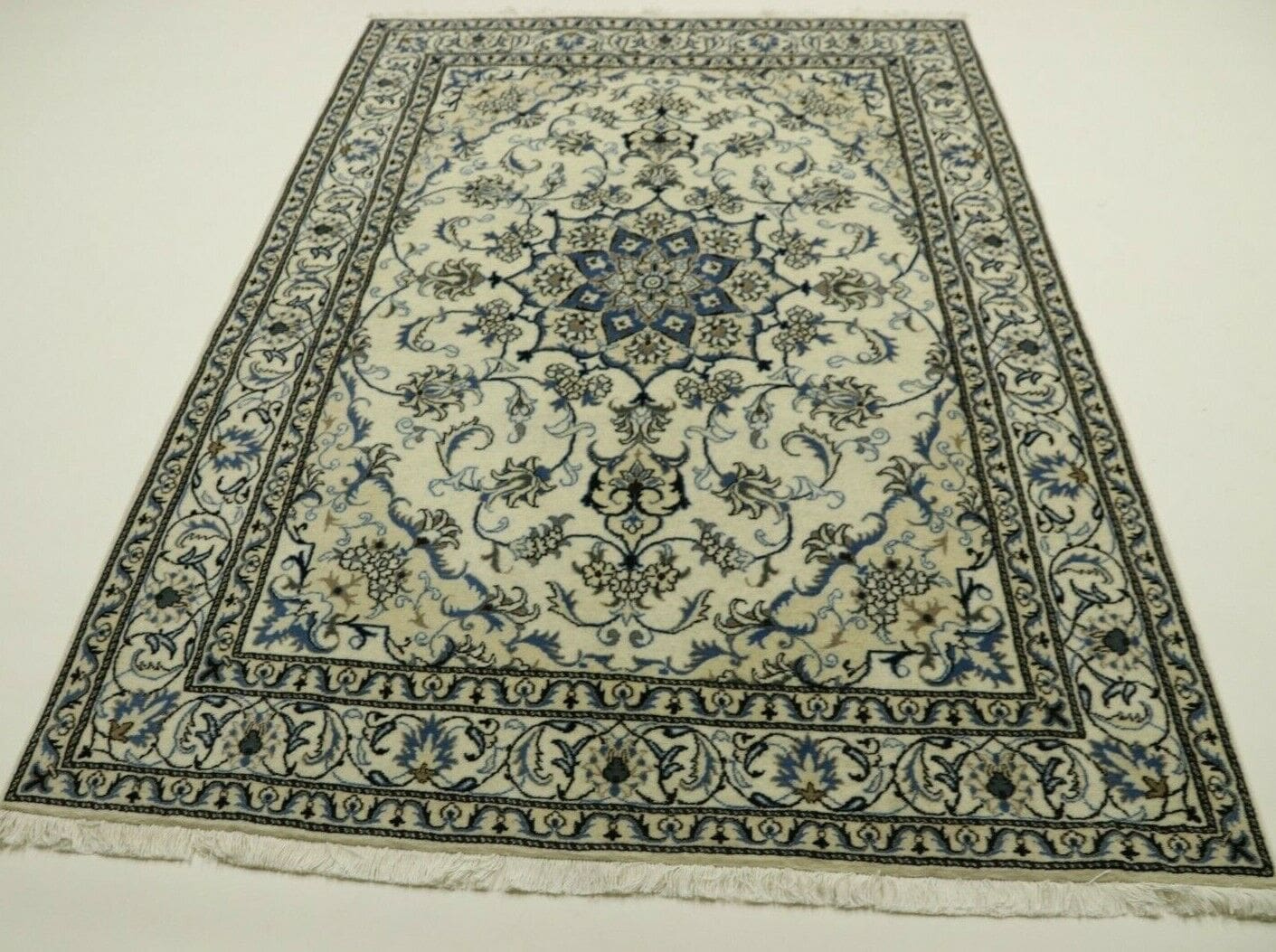
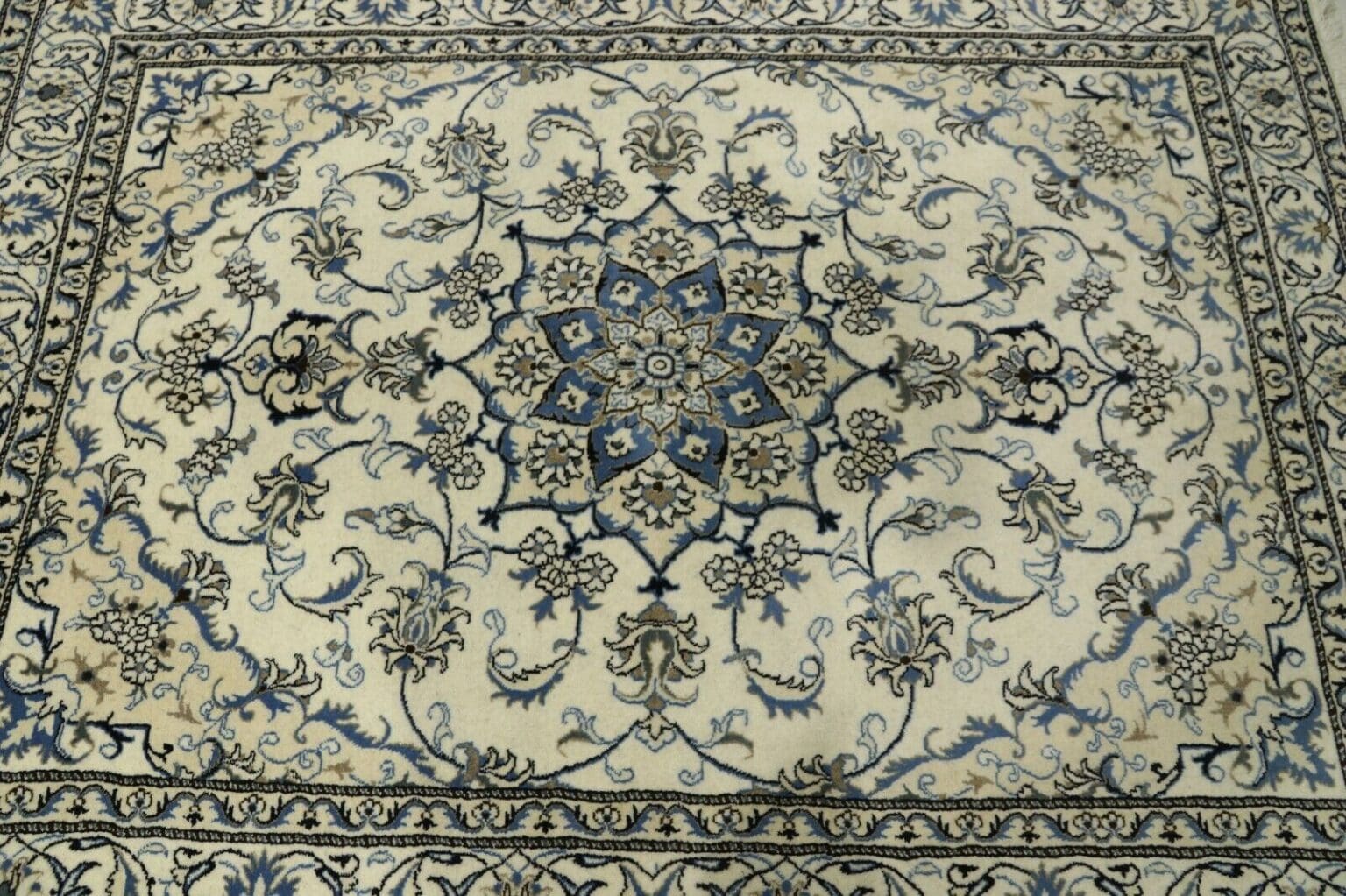
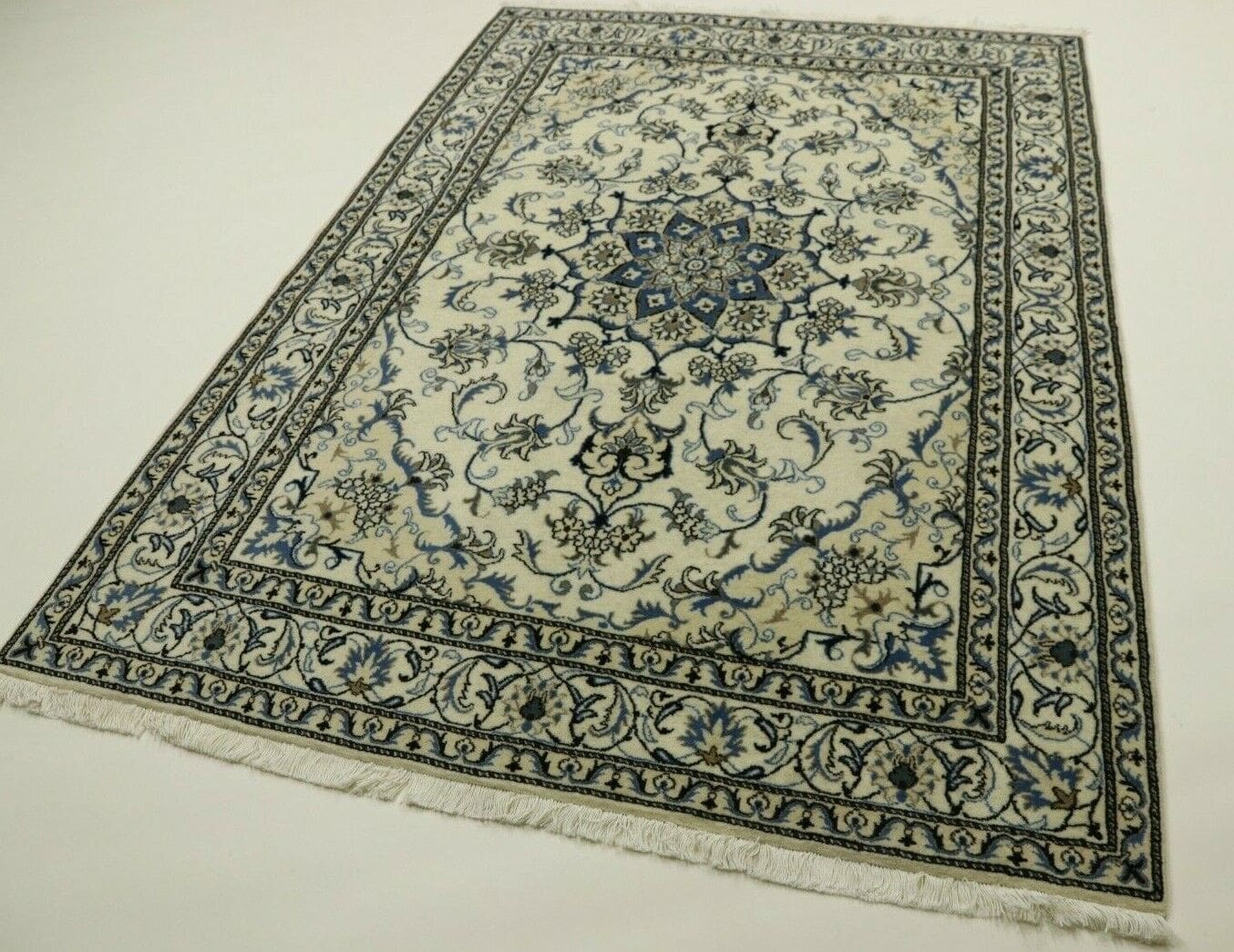
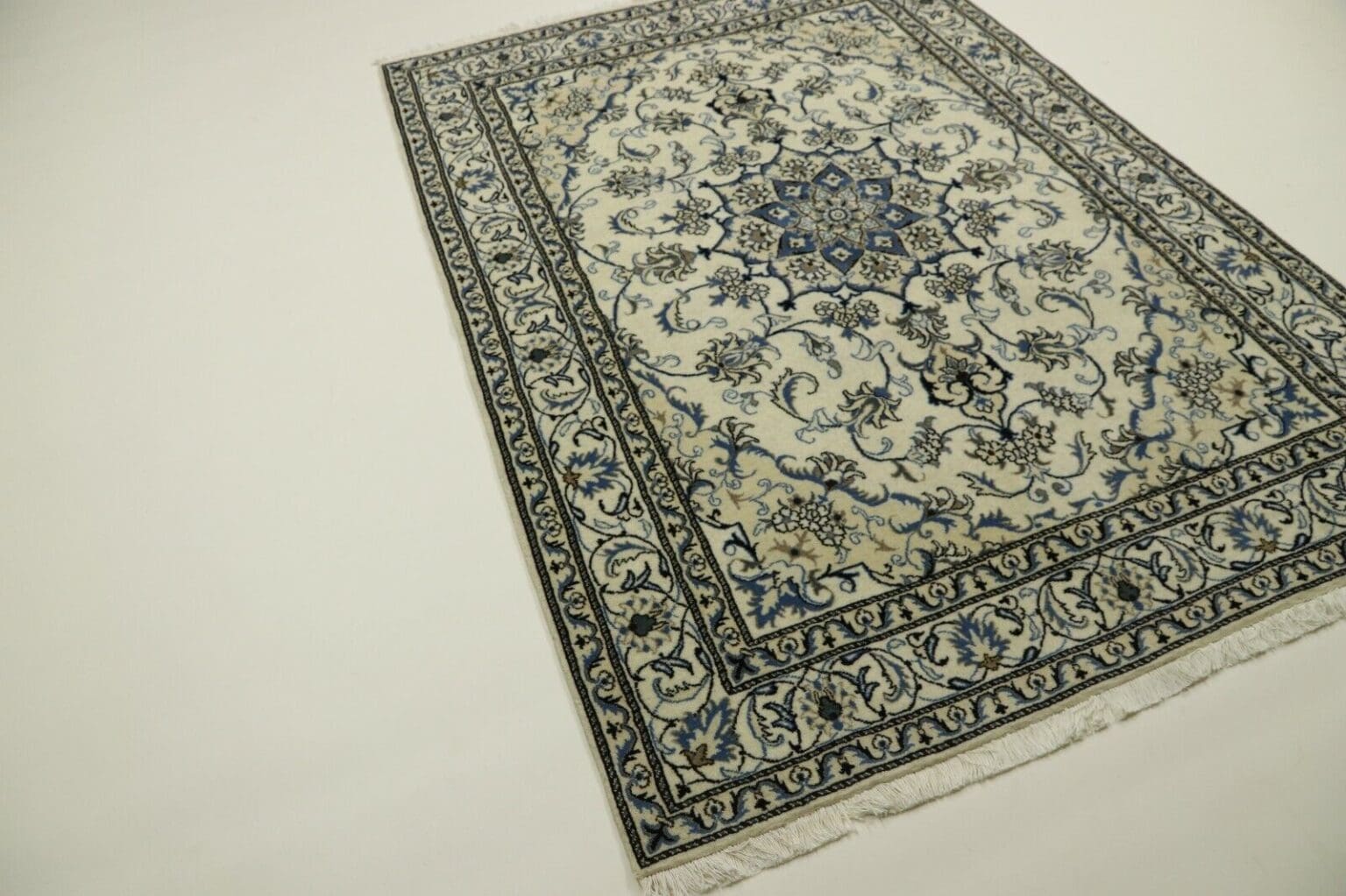
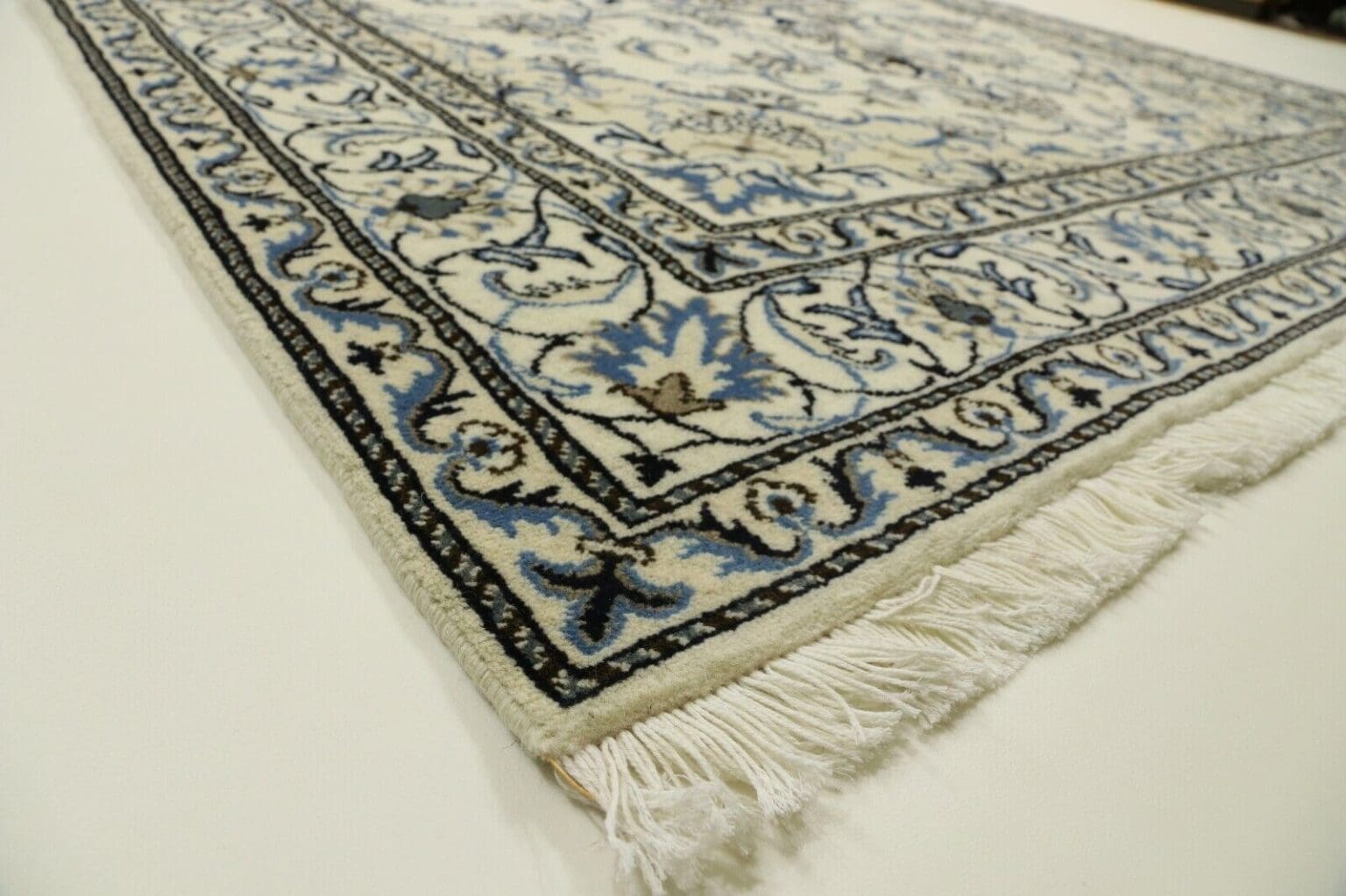
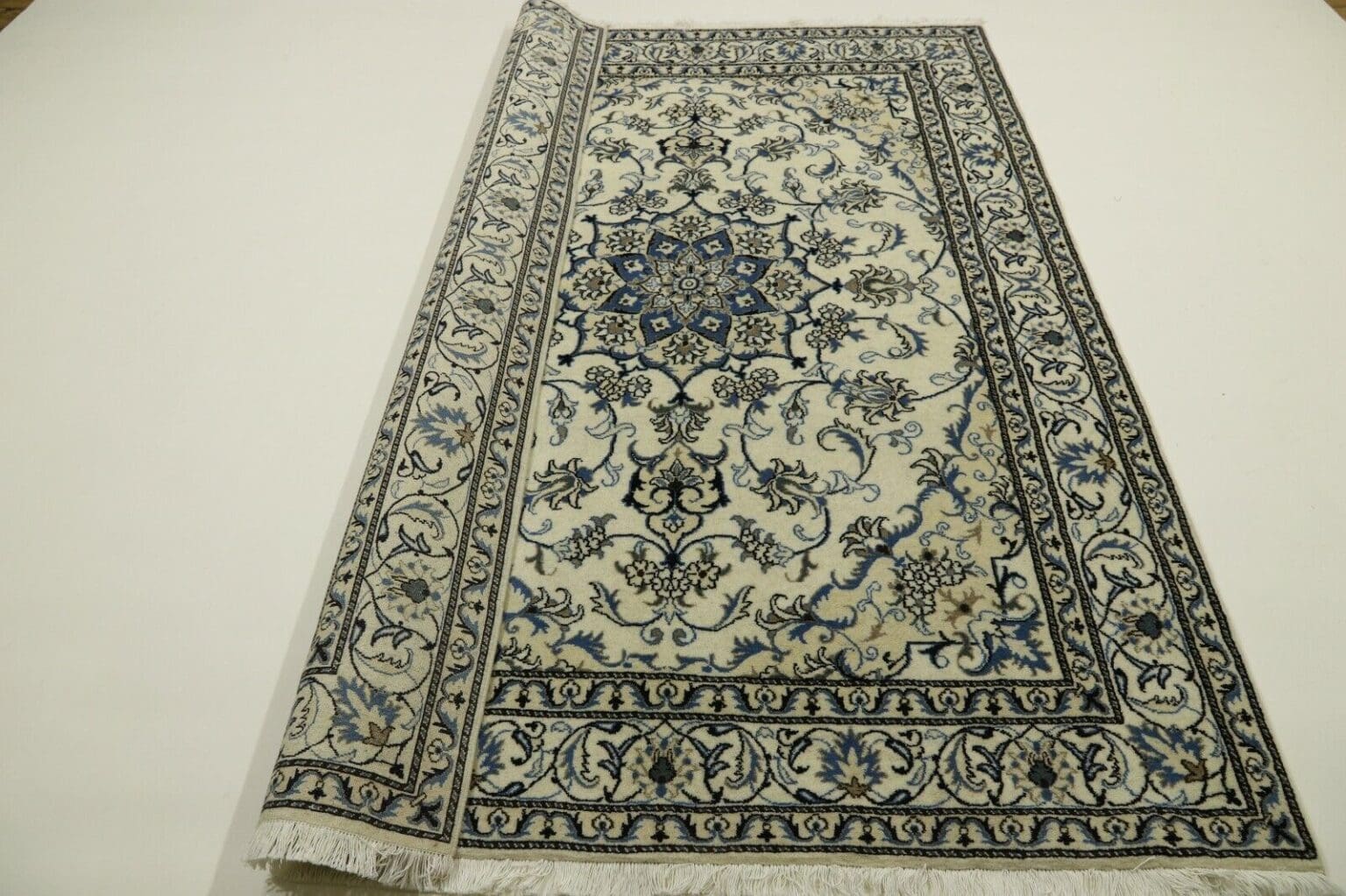
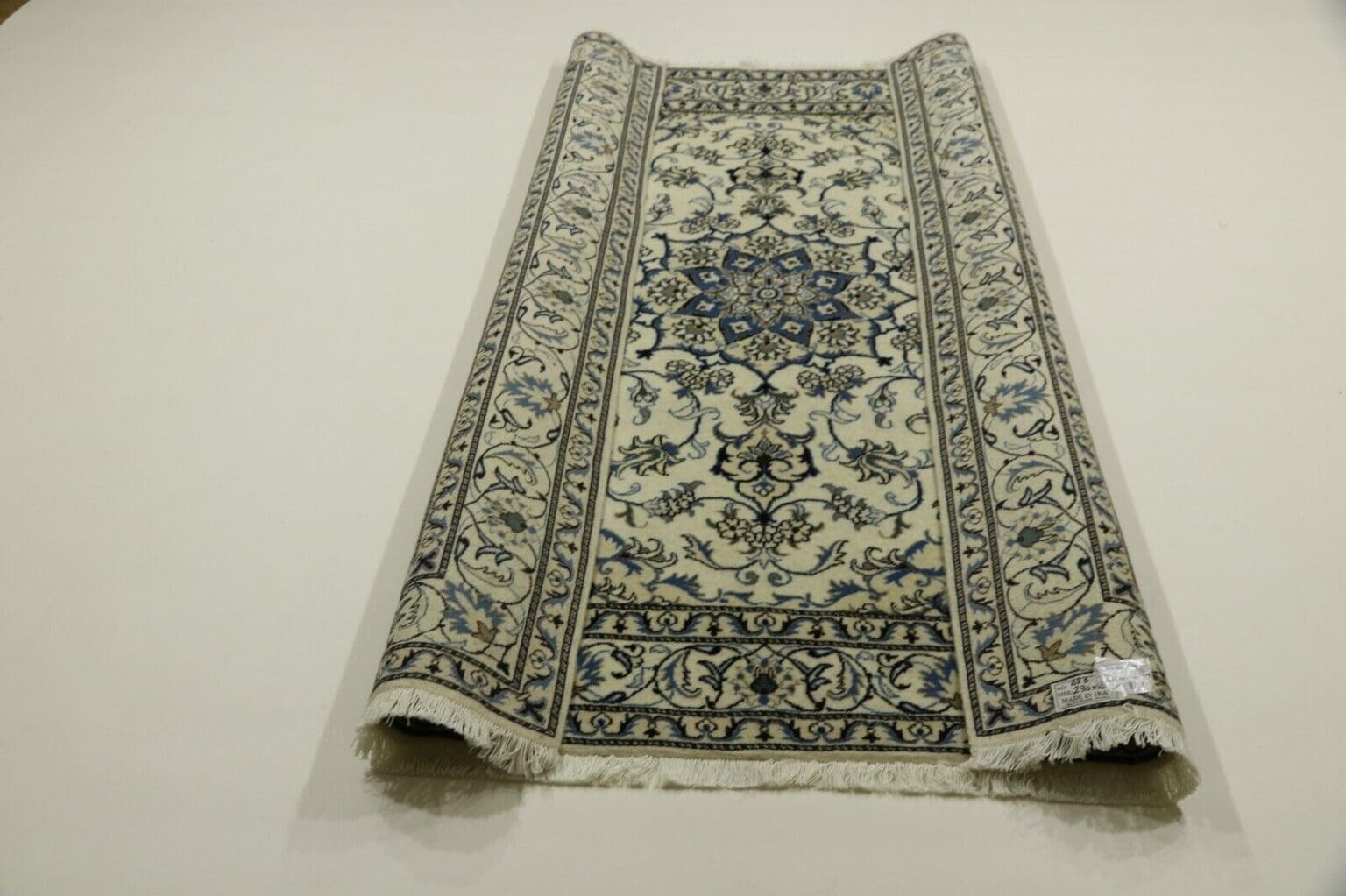
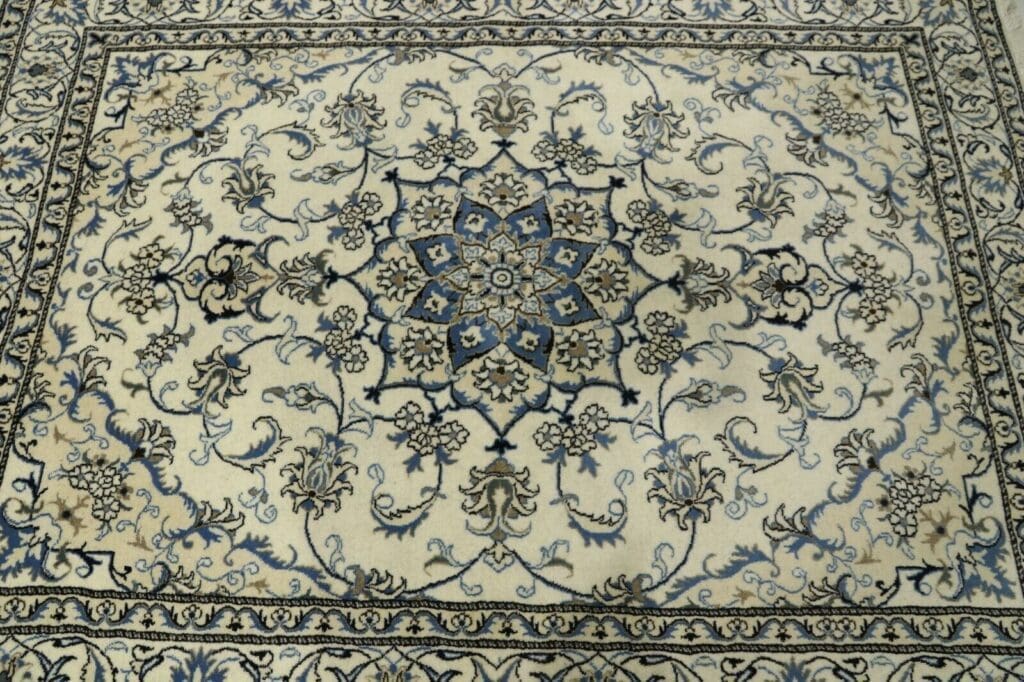
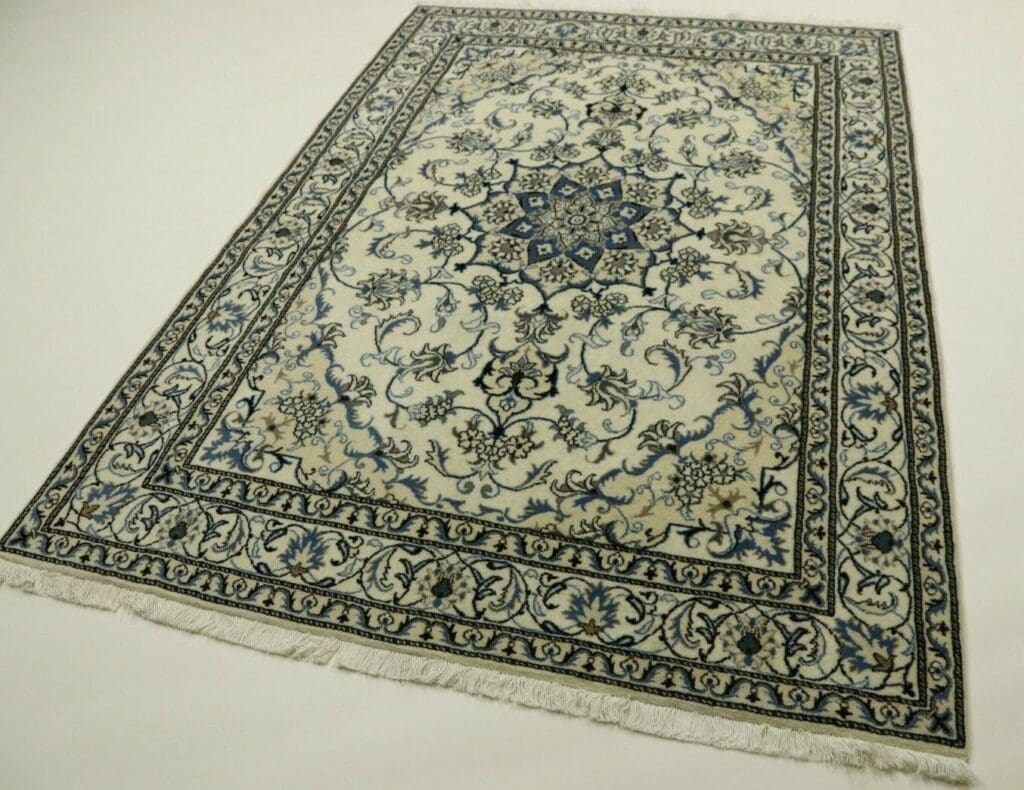
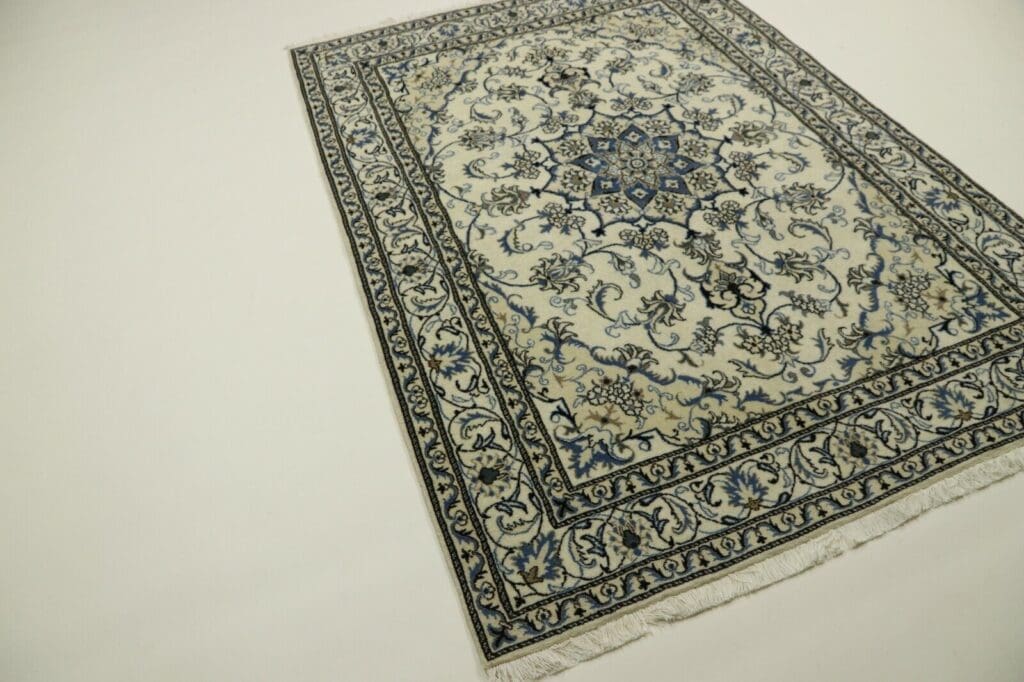
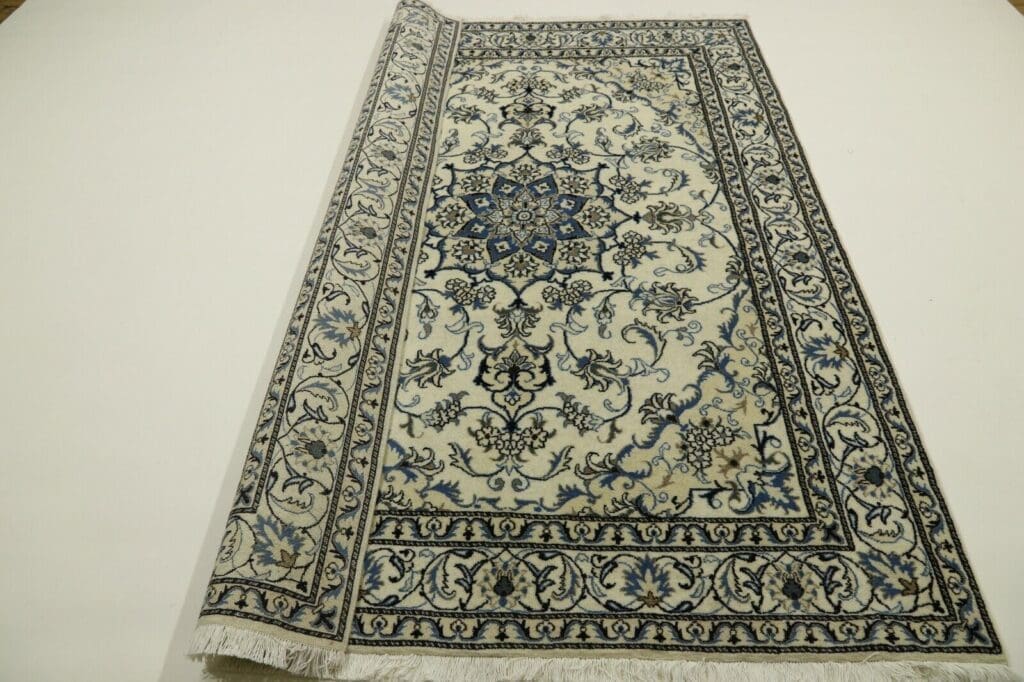
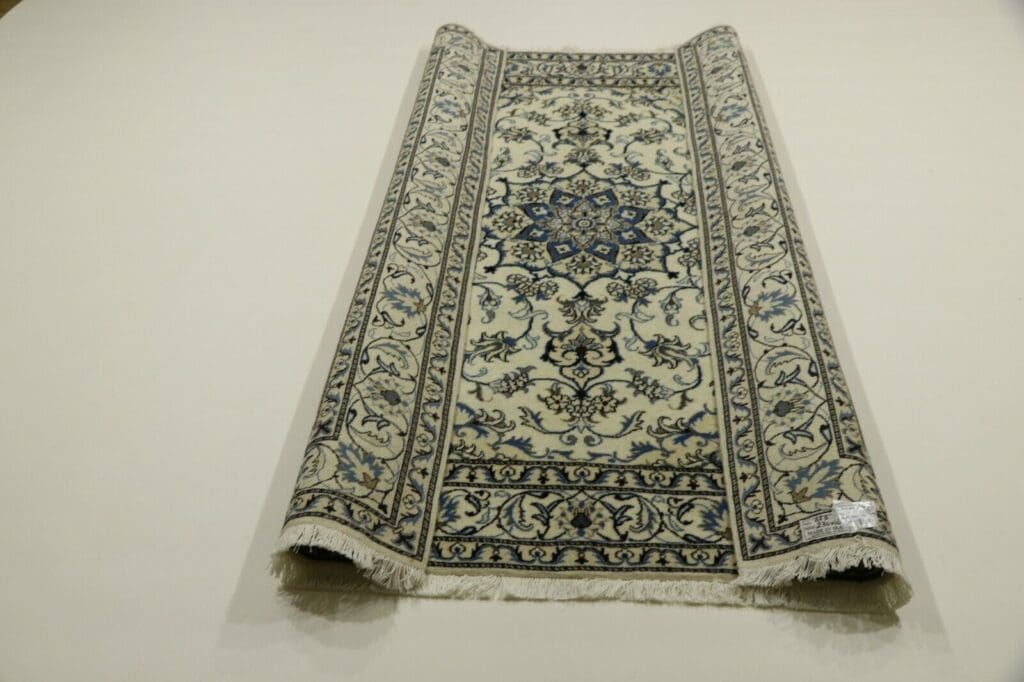
The design of this Nain rug follows the classically elegant language associated with the region. Floral motifs and refined geometric designs are typical elements of Nain patterning. They may be distributed across the field in a balanced relationship, allowing separate ornaments to form one coherent composition. Repetition, symmetry and considered spacing help guide the eye through the design.
Floral ornament draws on leaves, blossoms and scrolling branches. In Persian rug design, these forms are usually stylised rather than copied directly from nature. Their purpose is to create rhythm and movement across the surface. Curved lines can introduce softness, while repeated leaves and blossoms divide the field into connected areas. The resulting botanical language is decorative and structured at the same time.
Geometric elements provide an underlying framework. Lines, axes, repeated shapes and balanced intervals make the organisation of the design easier to follow. In Nain rugs, geometric and floral motifs can support each other rather than competing for attention. Straight lines may frame or organise flowing ornament, while curved branches soften the regularity of geometric sections.
The colour scheme uses soft beige tones together with lively accents. Beige establishes a quiet ground on which the ornament remains clear. The livelier accents add definition and prevent the composition from appearing flat. Silk can strengthen this effect because it reflects light differently from wool. As a result, certain parts of the colour arrangement may appear brighter or more subdued as the viewing angle changes.
Persian carpet patterns are often associated with symbolic ideas. Floral forms may suggest nature, growth and renewal, while balanced geometry can evoke harmony and order. The meaning of a motif depends on its context, and individual ornaments do not necessarily have one fixed interpretation in every rug. Their significance emerges from the relationship between the field, borders, repeated forms, colours and the overall arrangement.
The visual language of Nain often depends on a balance between calmness and detail. A well-organised field allows small ornaments to be appreciated without making the composition confusing. Fine knotting supports the precise rendering of these details. At the same time, wool keeps the surface soft and substantial, while silk can highlight selected contours and colour areas. The materials therefore participate directly in the appearance of the pattern.
A rug design is not applied as a printed image. It is constructed from individual knots, each placed as part of a sequence. Colours are introduced according to the planned arrangement, and lines emerge from the relationship between neighbouring knots. The drawing is therefore inseparable from the textile construction. At close range, the knot structure can be seen; from farther away, the separate details merge into the unified floral and geometric composition.
The classically elegant design can be used in several types of interior. The rug is suitable for living rooms, dining rooms and bedrooms. In a refined setting, its ornament can complement furniture and other materials while retaining its traditional identity. The beige foundation and lively accents can work with quieter interiors as well as with rooms that contain stronger visual structure. Its regional character remains present through the pattern vocabulary and the hand-knotted surface.
The patterns of Persian rugs developed over long periods and were interpreted differently from one weaving centre to another. Nain formed its own relationship between fine materials, controlled drawing and careful construction. A Nain rug is therefore defined not only by the presence of floral or geometric motifs. The way those motifs are arranged, coloured and translated into a knotted surface is equally important. This connection between design and technique gives the type its recognisable character.
Special Features
The special features of this rug include its knot density of approximately 300,000 knots per square metre, its pile of 90% virgin wool and 10% silk, and its warp of 100% cotton. The fine knotting supports detailed surface work. Wool gives a warm and pleasant feel underfoot, while silk contributes sheen and helps the colours appear lively. The rug is described as new and in very good or perfect condition.
The rug is suitable for rooms with underfloor heating. The materials used are permeable and allow heat to pass through without impairing the quality of the rug. The heating should not be set to excessively high temperatures. The rug is also described as pet-friendly. It can be used in living rooms, dining rooms and bedrooms, although areas exposed to particularly heavy wear should be avoided.
Its hand-knotted construction makes each piece one of a kind. Individually placed knots are part of its identity, as are the Nain design tradition and the wool-and-silk surface. Together these features provide a handcrafted structure, a comfortable tactile quality and a classically Persian ornamental character. The rug’s particular qualities arise from the combination of material, construction, pattern and intended use.
FAQ
How should I care for my Nain rug?
Regular vacuuming with a machine fitted with a gentle brush helps remove loose dirt from the pile. The surface should not be treated with unnecessary pressure. Spills can be handled carefully with a damp cloth and a suitable carpet-cleaning product. Vigorous rubbing may stress the fibres and disturb the pile. Direct sunlight should be avoided to reduce the risk of fading. For extensive or delicate soiling, professional rug cleaning is advisable.
Where is the best place to use the Nain rug?
The Nain rug is suitable for living rooms, dining rooms and bedrooms. Its classically elegant ornament can be combined with refined furnishings and can help connect furniture with the floor area. It is best placed where it will not be exposed to consistently excessive wear. In a living room it can help define a seating area, in a dining room it can provide a textile foundation, and in a bedroom it can offer a pleasant surface underfoot.
Is the rug suitable for underfloor heating?
Yes, the rug is suitable for rooms with underfloor heating. The materials are permeable, allowing heat to pass through without affecting the quality of the rug. The heating should not be set too high. Moderate and even warmth supports careful use of the wool-and-silk surface. When positioning the rug, it should also be laid flat and kept away from conditions that would subject it to unnecessary strain.
To provide the best experiences, we use technologies like cookies to store and/or access device information. Consenting to these technologies will allow us to process data such as browsing behavior or unique IDs on this site. Not consenting or withdrawing consent, may adversely affect certain features and functions.
Functional Always active
The technical storage or access is strictly necessary for the legitimate purpose of enabling the use of a specific service explicitly requested by the subscriber or user, or for the sole purpose of carrying out the transmission of a communication over an electronic communications network.
Preferences
The technical storage or access is necessary for the legitimate purpose of storing preferences that are not requested by the subscriber or user.
Statistics
The technical storage or access that is used exclusively for statistical purposes.The technical storage or access that is used exclusively for anonymous statistical purposes. Without a subpoena, voluntary compliance on the part of your Internet Service Provider, or additional records from a third party, information stored or retrieved for this purpose alone cannot usually be used to identify you.
Marketing
The technical storage or access is required to create user profiles to send advertising, or to track the user on a website or across several websites for similar marketing purposes.
 SECURE PAYMENT
 SHIPPING PARTNERS


