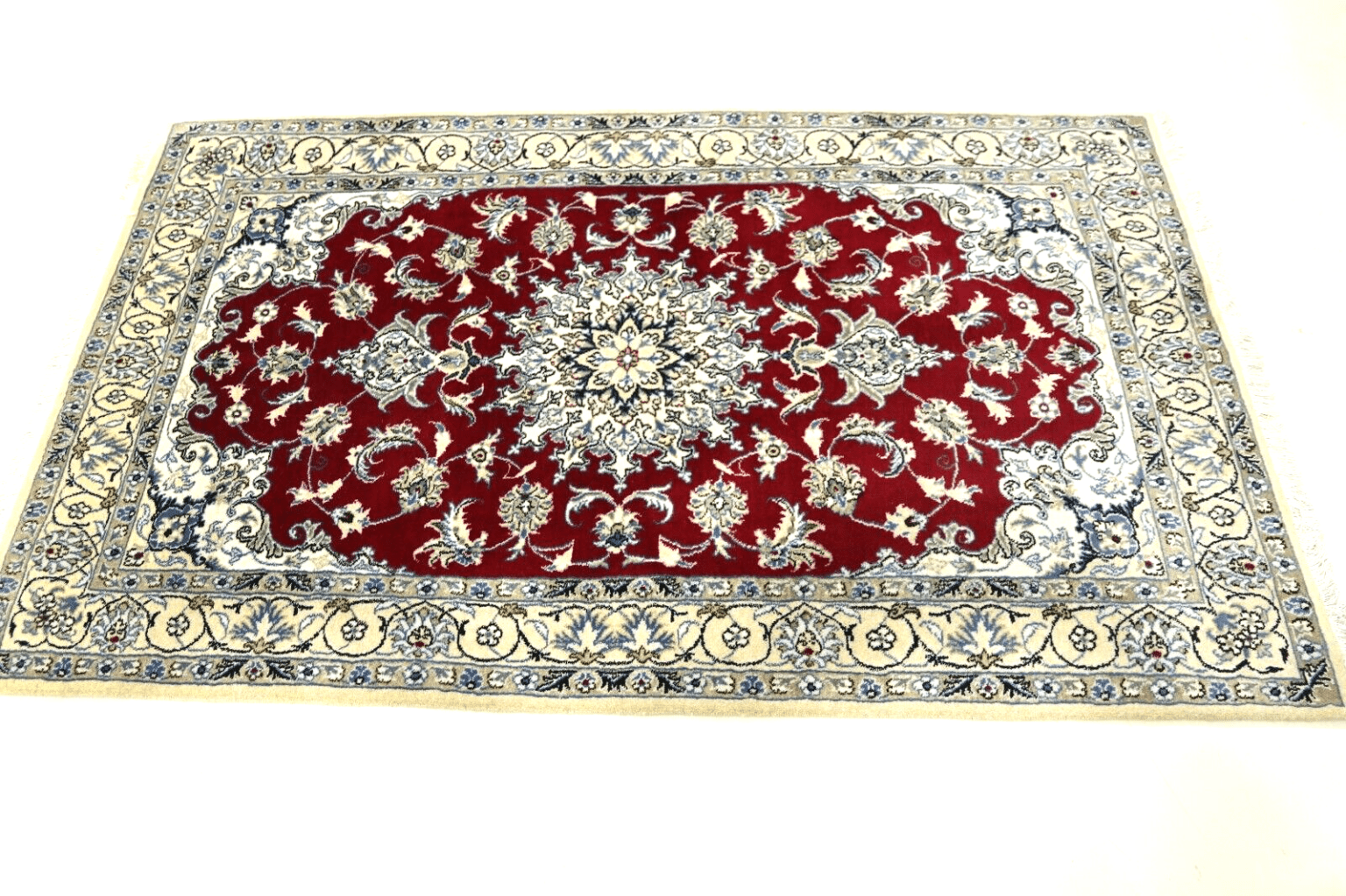
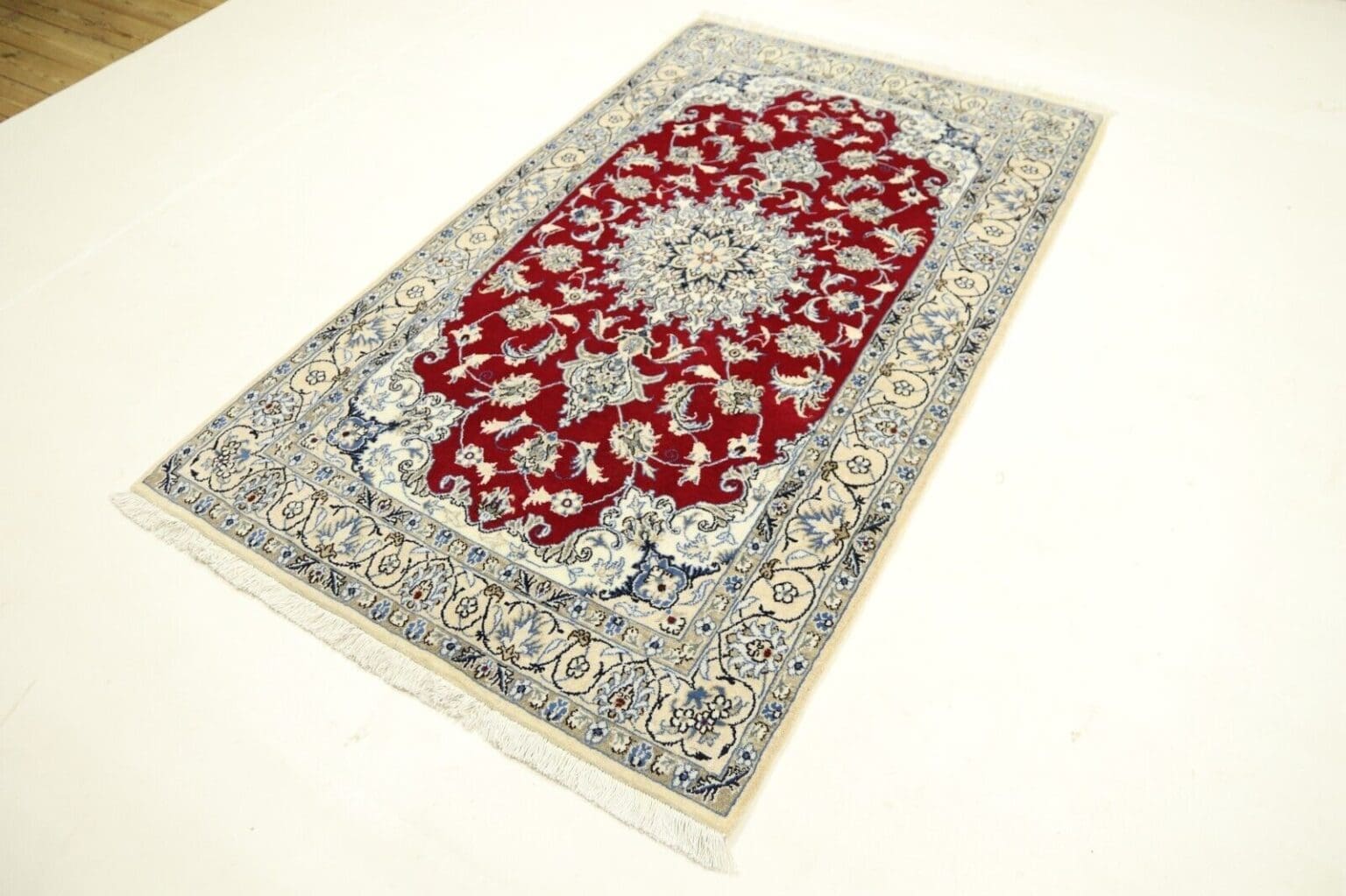
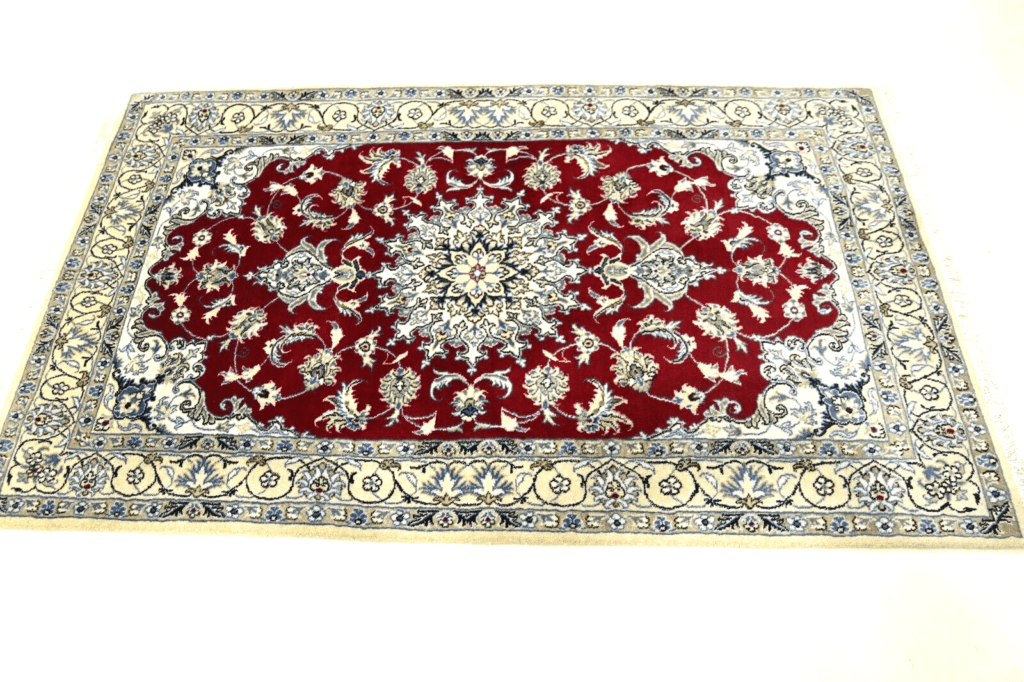
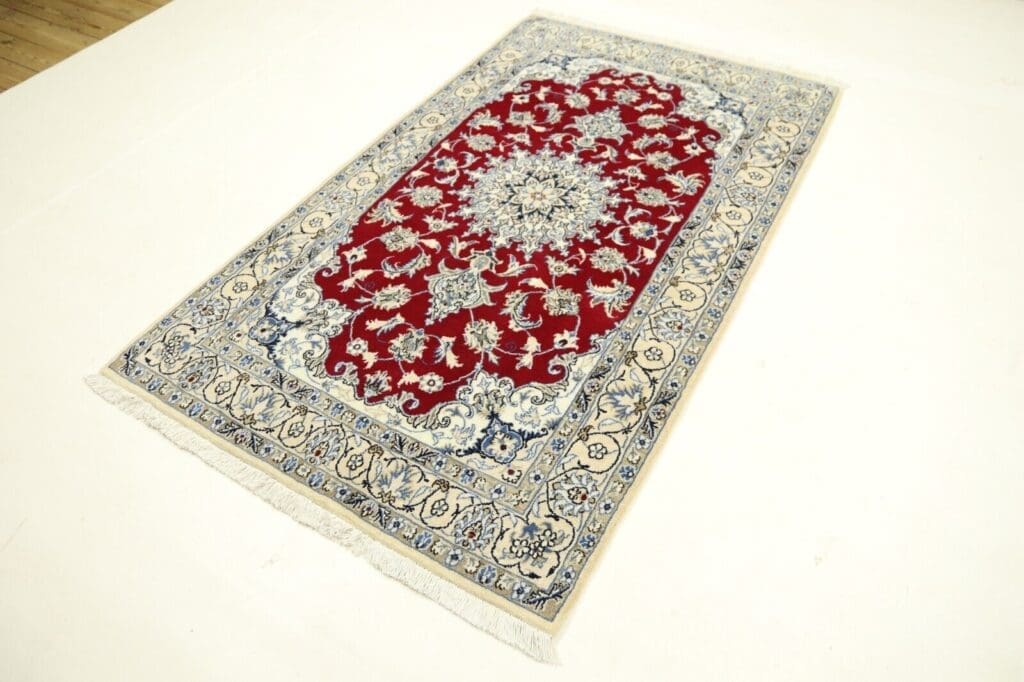
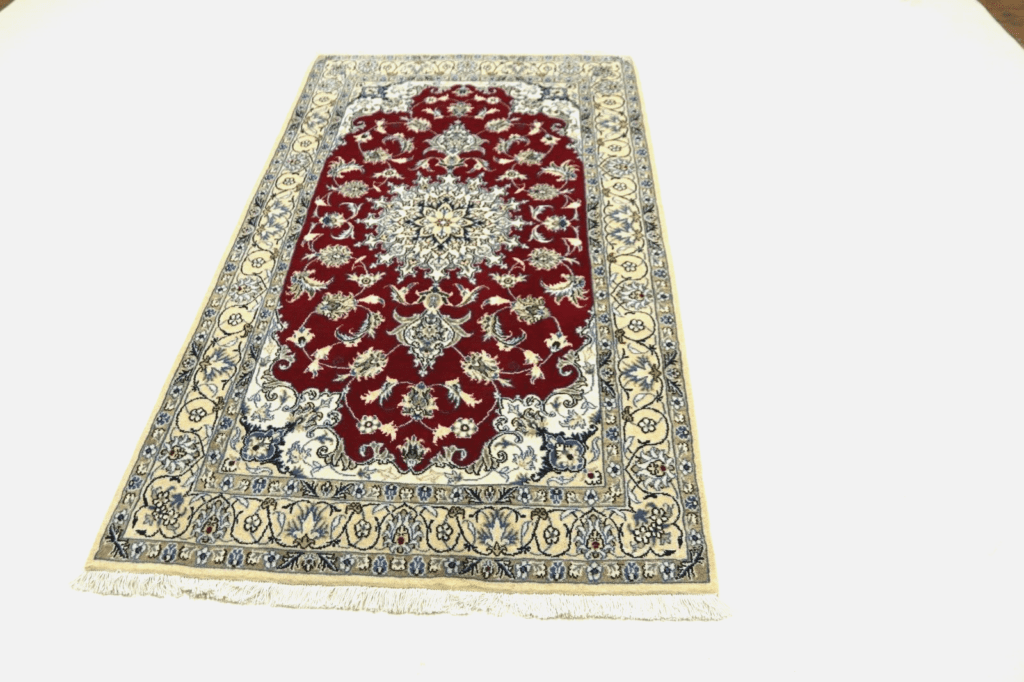
Hand-knotted Nain Persian Rug | Knot density: approx. 300,000 knots/m² | Material: pile 90% virgin wool, 10% silk | Size: 203 x 145 cm | Pattern: traditional Oriental and Persian | Condition: new, very good
This Nain Persian Rug is made from 90% virgin wool and 10% silk. Virgin wool provides the main material character of the pile, with the soft, tactile quality associated with wool textiles. Silk adds a fine and smooth component to the surface. Used together, these two materials shape the rug’s feel and contribute to the way its traditional Oriental and Persian design is presented.
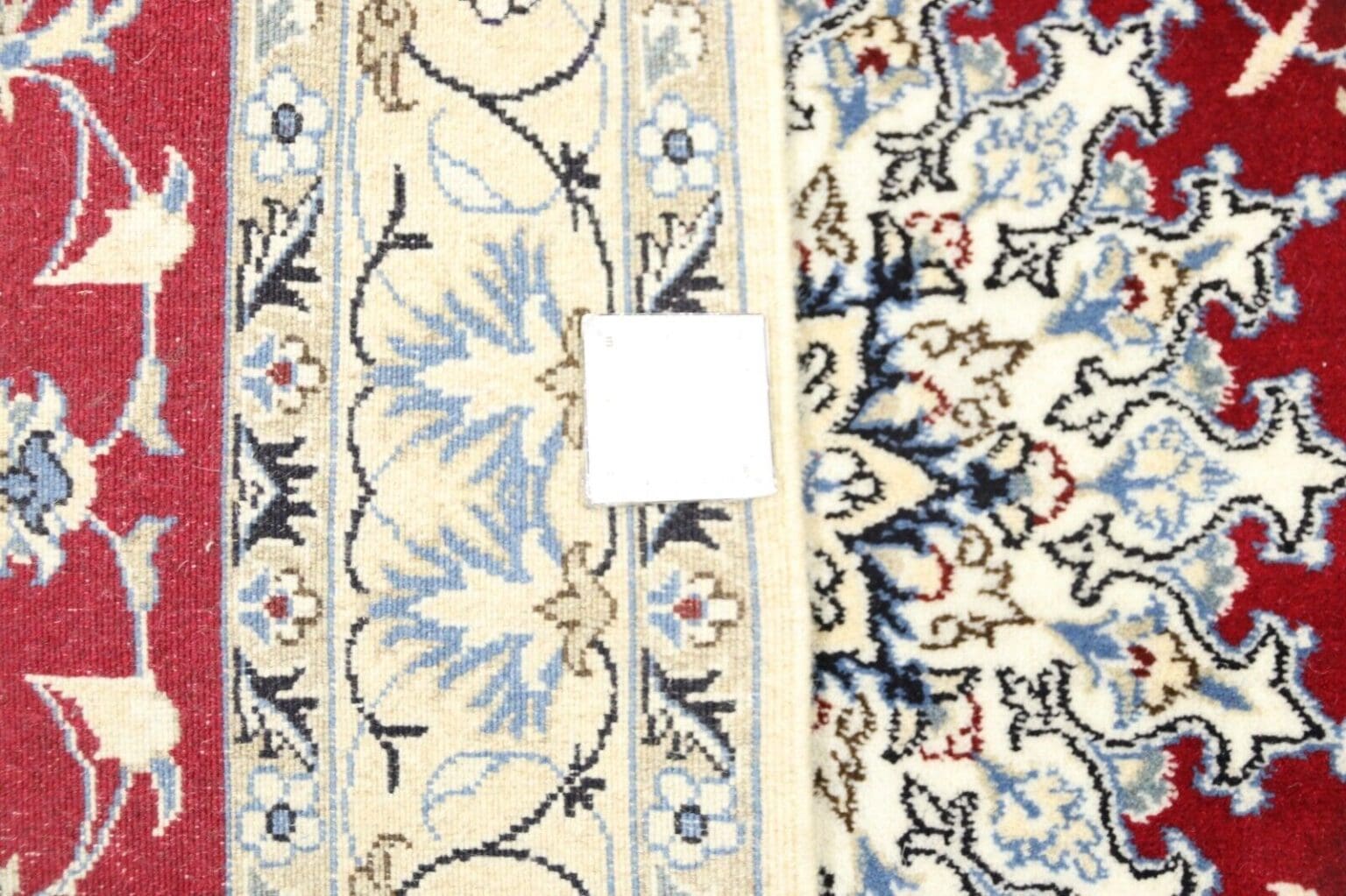
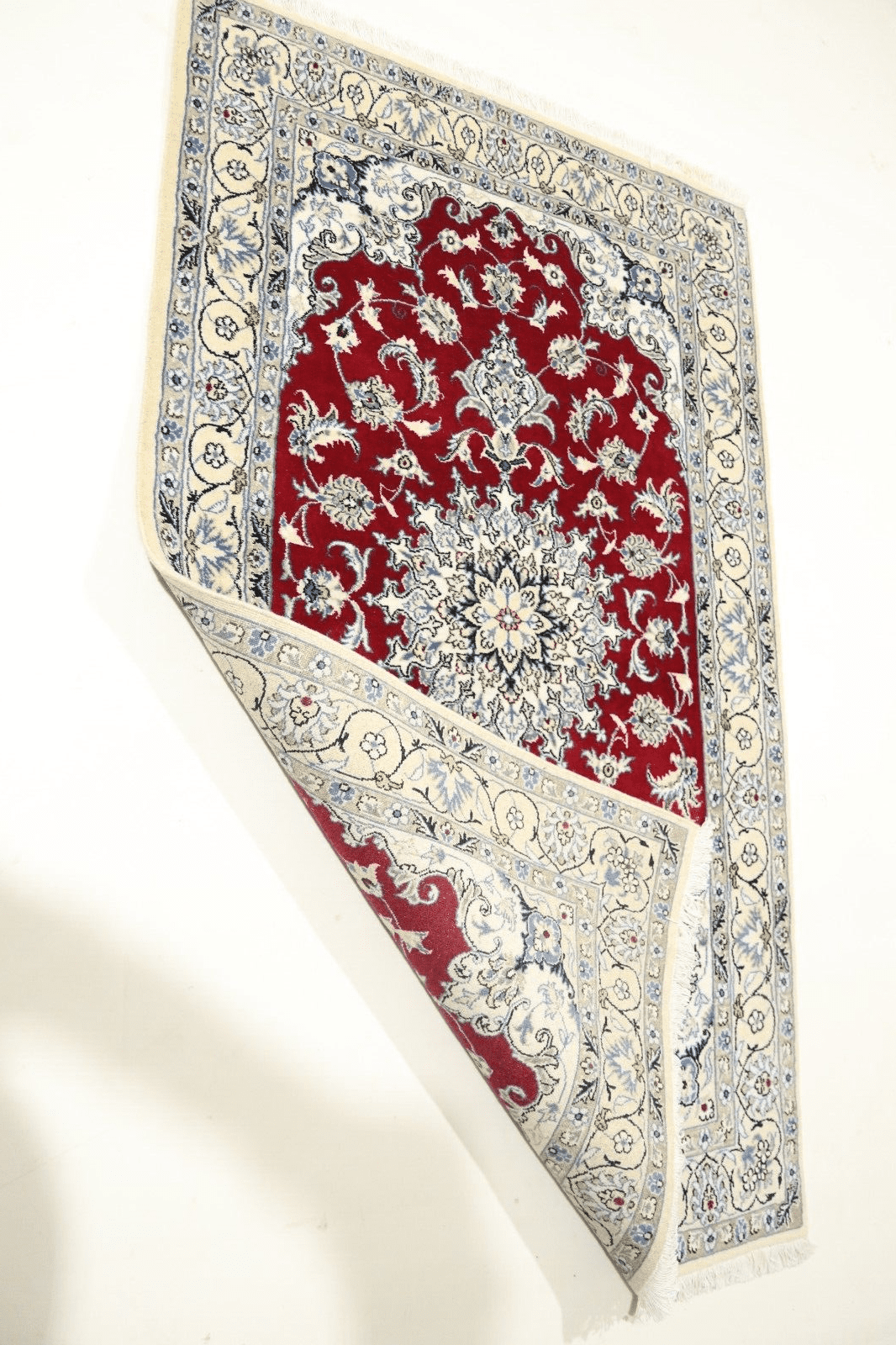
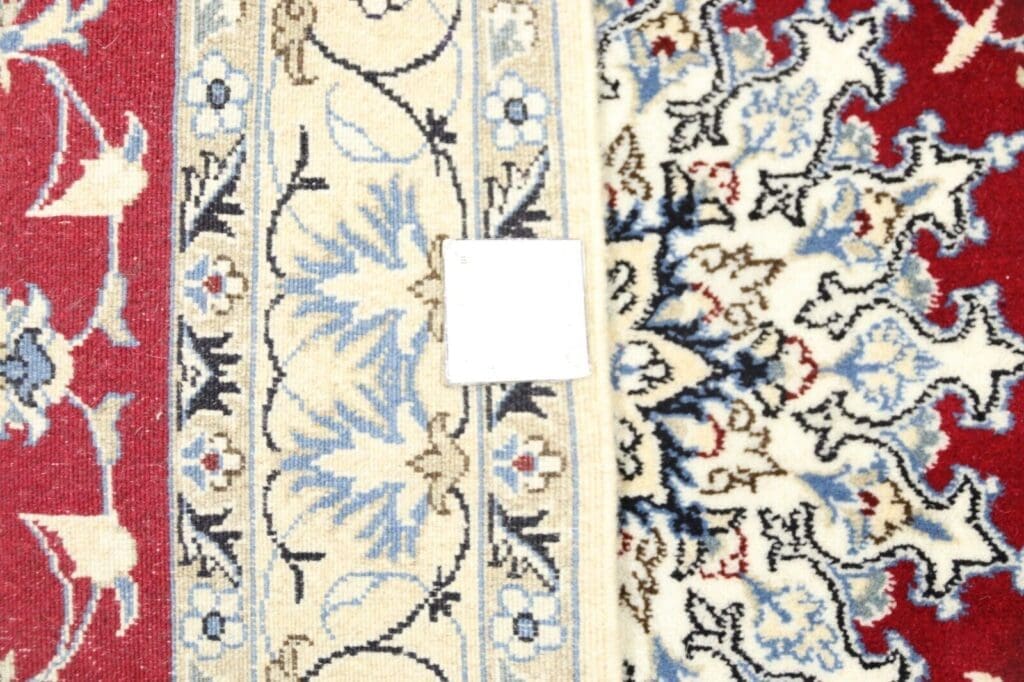
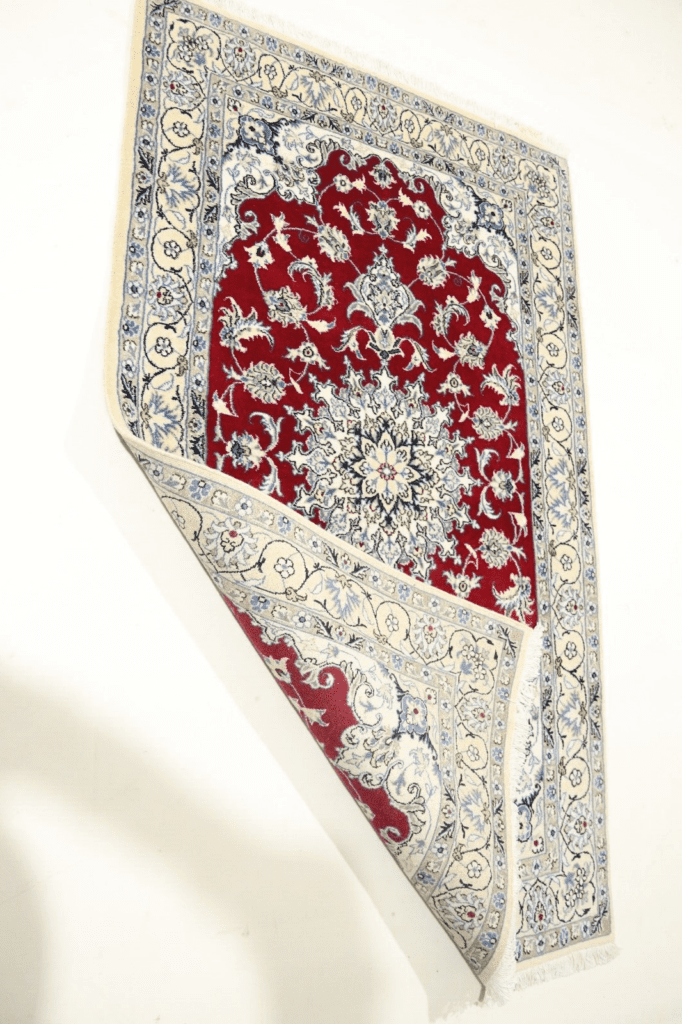
The rug is hand-knotted. In this method, individual knots are placed by hand into the prepared foundation, one working movement at a time. The process requires concentration, practical knowledge and consistent execution. It differs from machine production because the finished piece is created through manual work throughout the knotting process. This rug is described as unique and is therefore an individual one-off.
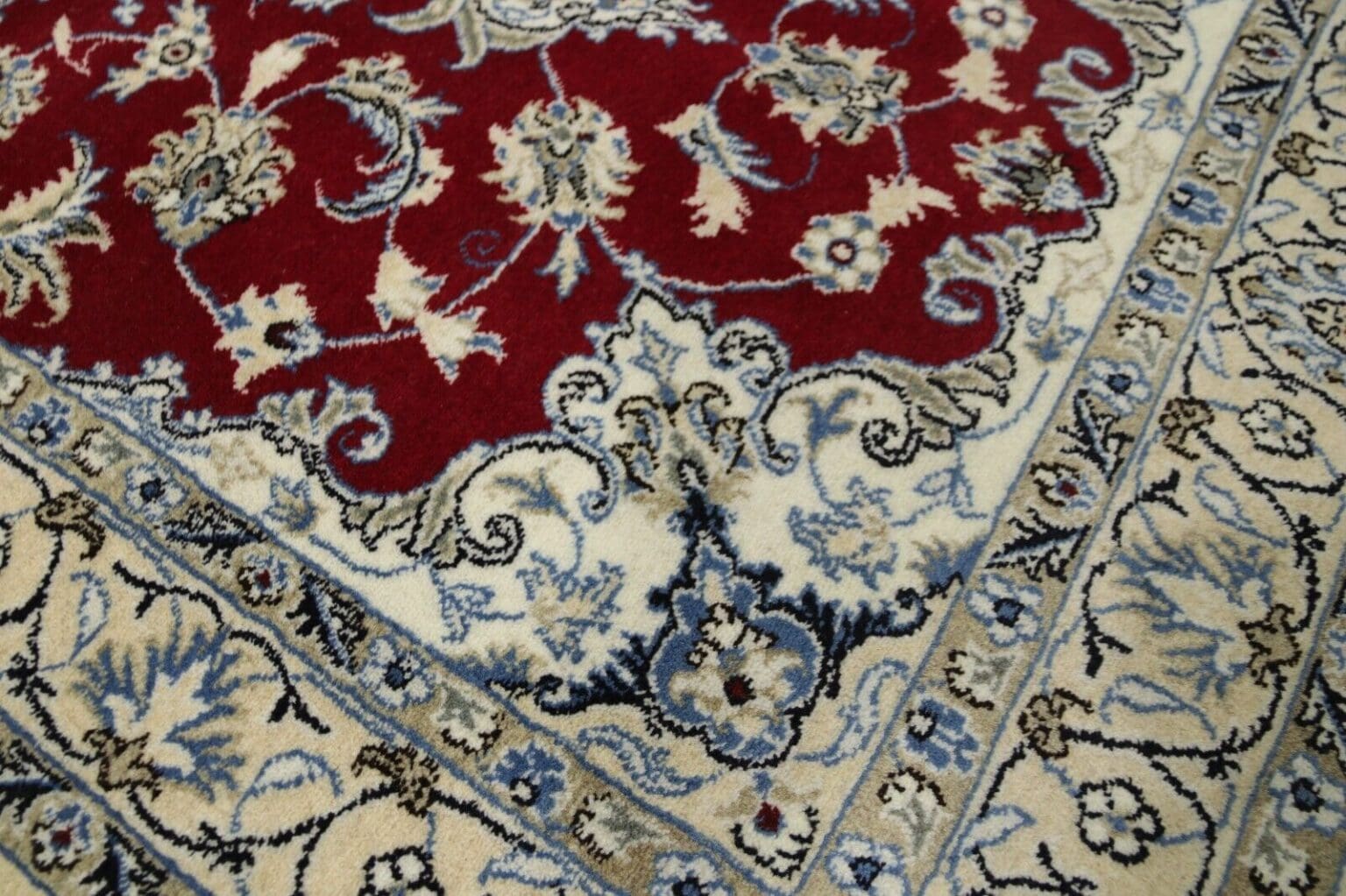
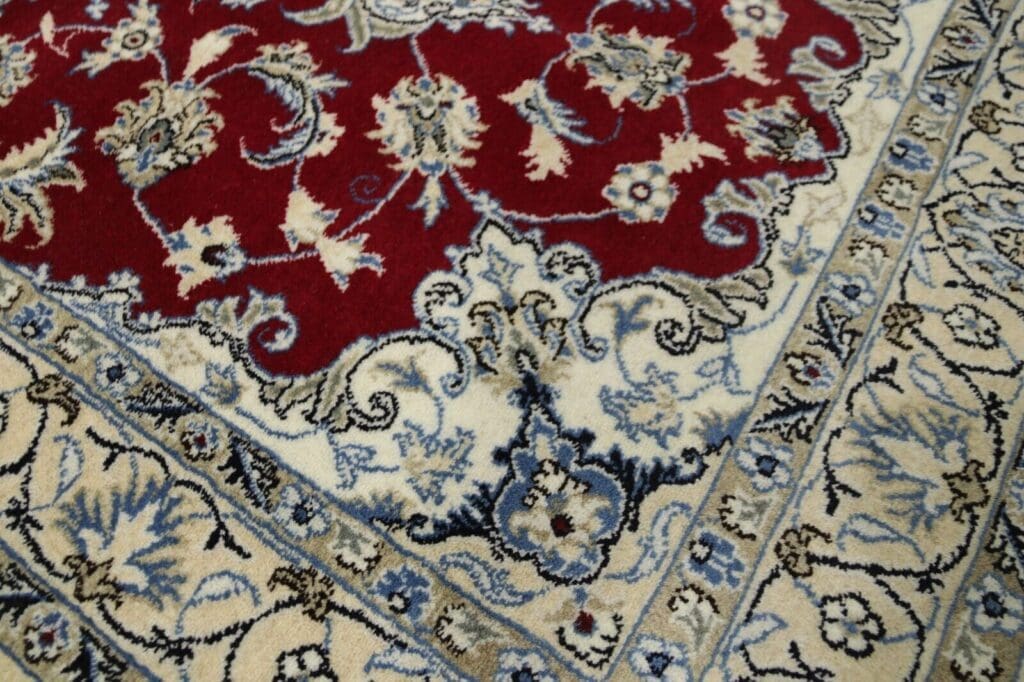
Its knot density is approximately 300,000 knots per square metre. In general, a dense knot structure allows lines, fields and ornamental details to be rendered with precision. Here, that structure is combined with virgin wool and silk. Hand-knotting is part of the established Nain tradition and makes the technical labour behind the rug an important part of its character.
The rug is new and in very good condition. It is suitable for use with underfloor heating and is described as pet-friendly. These practical details complement its traditional construction and define how it can be used in a living space.
Origin and Tradition
The rug comes from Persia and is identified as a Nain rug. Nain is an Iranian city known for its carpet weaving. Its tradition brings together careful hand production, fine materials and a precise ornamental vocabulary. Within Oriental carpet culture, Nain rugs are often associated with controlled designs and a calm, balanced visual structure.
Weaving knowledge in Nain has been passed from one generation to the next. It includes preparing the foundation, building the pile, placing the knots and finishing the surface. In a hand-knotted rug, these stages depend on one another. The final result is shaped not only by the drawn design but also by the accuracy with which each section is executed.
Persian rugs developed in many different regions, each with its own workshop practices and visual conventions. Nain is associated with the relationship between fine materials, disciplined knotting and orderly ornament. The place name therefore indicates more than a geographical point: it also identifies a living craft tradition. Nain rugs are connected with a precise style of weaving in which the surface and pattern may be worked out with considerable care.
Nain lies in a region where carpet weaving has long been embedded in local culture and daily life. Inherited designs, established working methods and knowledge of how different fibres behave provide a common foundation for the craft. Carpet making functions both as skilled manual work and as a form of cultural expression. A hand-knotted Nain rug continues that tradition in the form of one individual piece.
The designation Persian Rug refers here to the rug’s Persian origin. At the same time, it belongs to the wider world of Oriental rugs, whose appearance is shaped by regional traditions, inherited motifs and varied weaving techniques. Calling it a Nain rug makes its connection with the Iranian city and its carpet culture specific.
Design and Pattern
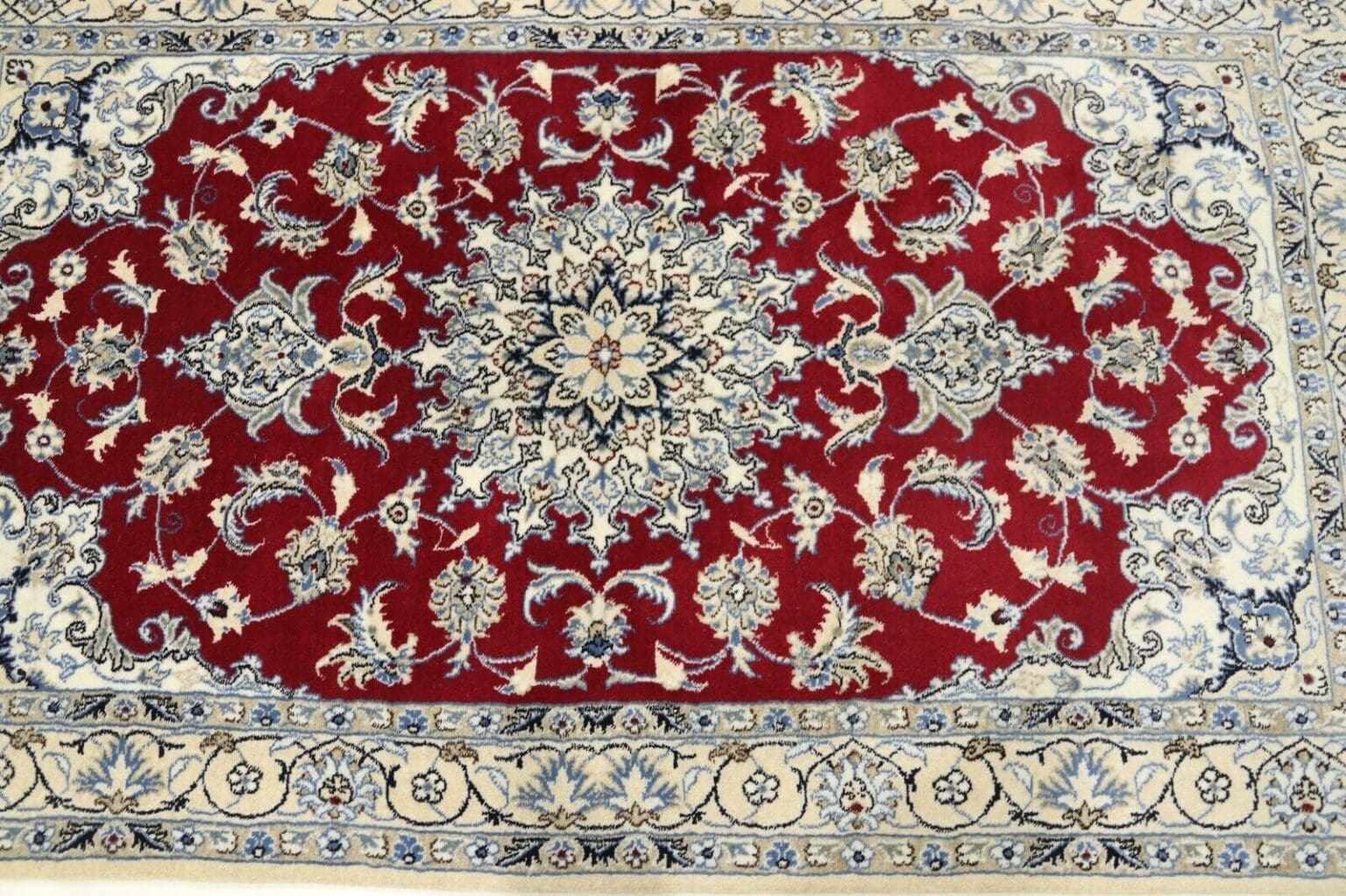
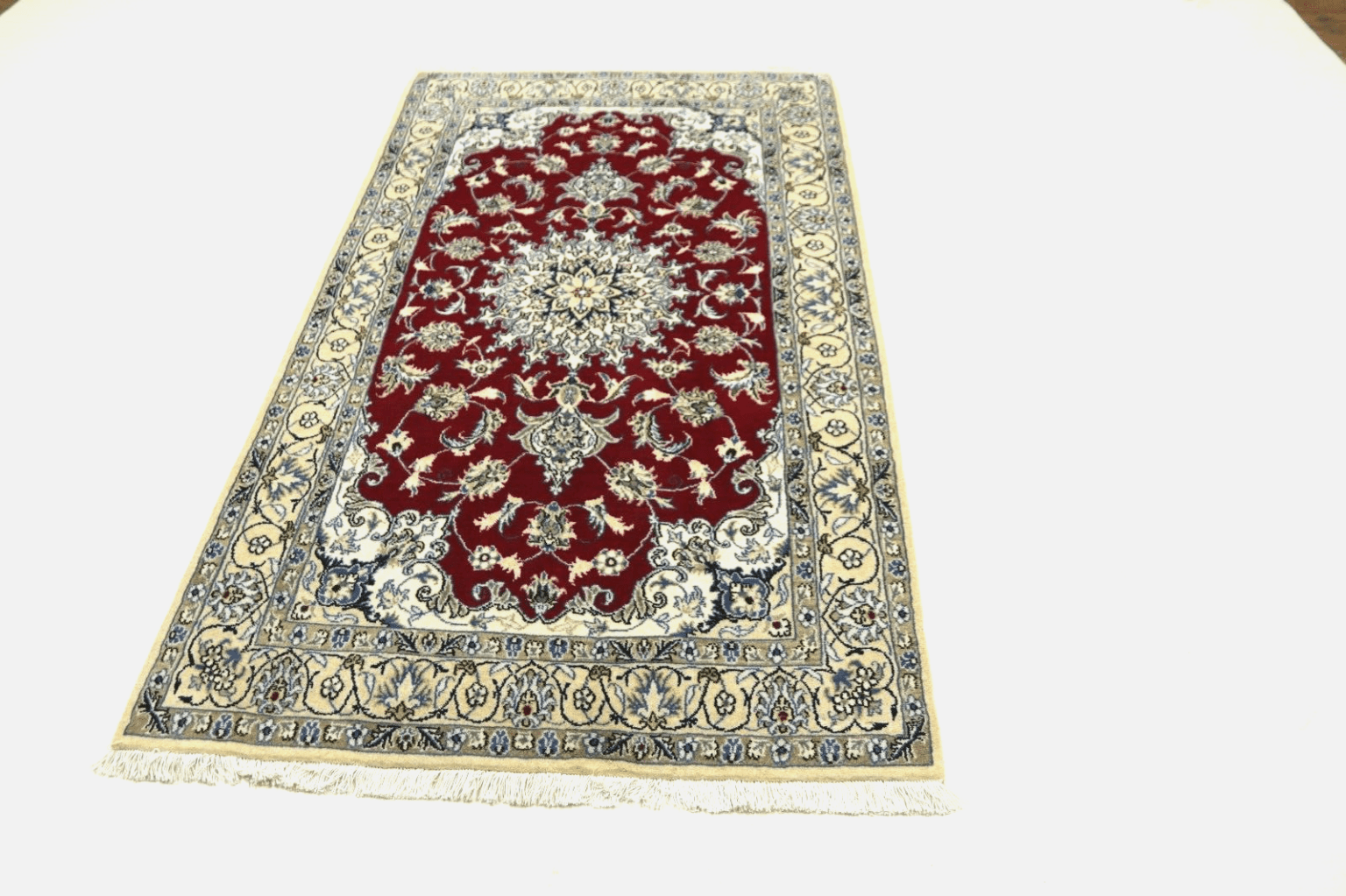
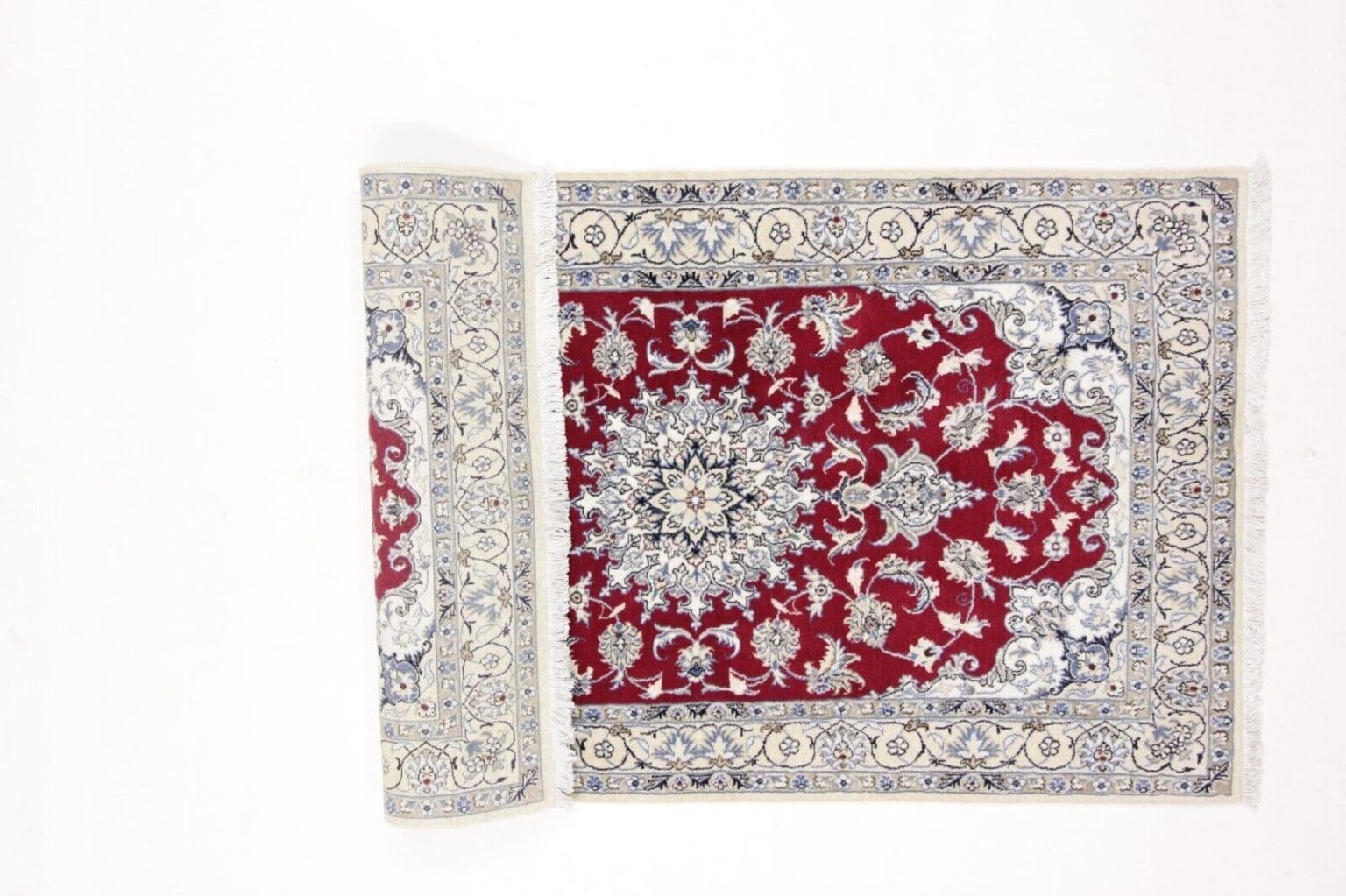
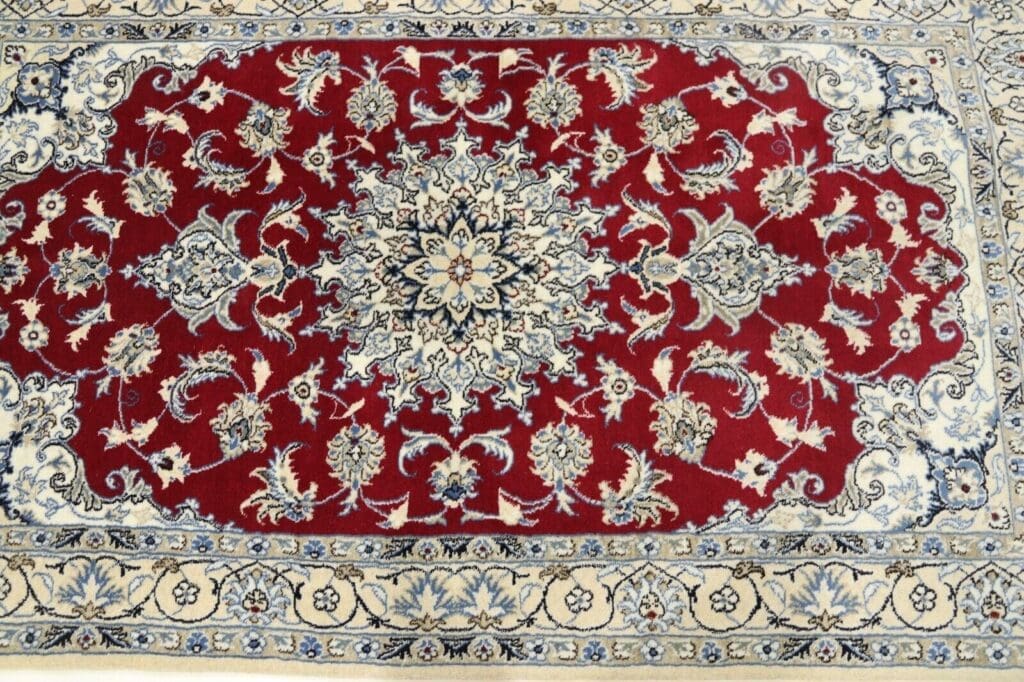
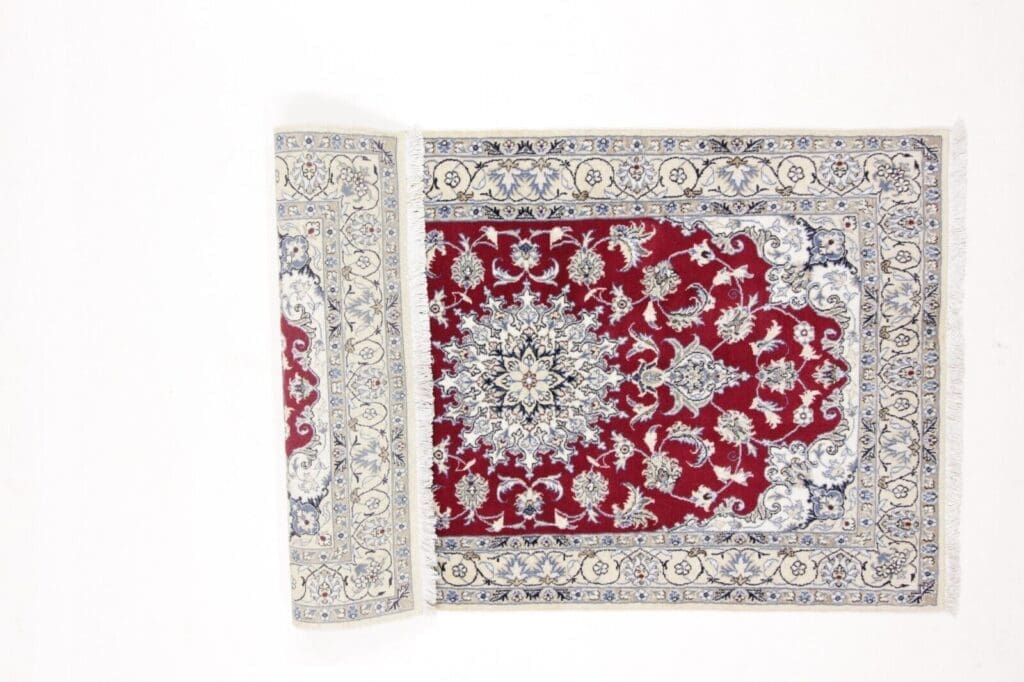
The rug is classified in a traditional Oriental and Persian style. Nain designs commonly include floral motifs, medallions and geometric forms. These elements may be used separately or combined in an ordered composition. Floral motifs introduce curved lines and references to plants, while geometric forms create defined edges and a more structured arrangement.
In Persian carpet design, a medallion can act as the visual centre of a composition. Secondary motifs and borders are then often arranged around it. Other designs distribute ornament across the entire field instead. The Nain tradition allows for both approaches: a concentrated central structure and a finely divided all-over surface. In either case, the relationship between field, border and individual motifs is essential to the overall balance.
Nain rugs are often associated with soft, harmonious colour schemes. Such a palette allows floral lines, medallions and geometric contours to remain connected without becoming visually disjointed. Wool and silk also respond differently to colour. Wool gives larger areas a textile depth, while silk can accent selected passages with a smoother surface and a subtle sheen.
The high knot density supports the detailed treatment of this type of design. Small changes in direction, narrow lines and fine contours can be expressed distinctly within a dense knotted structure. The pattern is not printed onto a finished cloth; it is built from many individual knots. This connection between drawn composition and manual construction is central to the character of Oriental rugs.
Oriental motifs are more than surface decoration. They belong to a long visual language in which plant forms, geometric order and repeating borders are arranged in relation to one another. Depending on the composition, a rug can consequently appear calm, symmetrical or rhythmically structured. This Nain rug’s traditional Persian style draws on that inherited language and joins it to carefully executed handwork.
Special Features
A defining technical feature is the knot density of approximately 300,000 knots per square metre. It is one of the main specifications of this rug and represents a finely worked knotted structure. Together with the hand-knotted construction, it supports the detailed appearance of the pattern. The combination of 90% virgin wool and 10% silk brings together a pleasant wool pile and the qualities of a fine silk component.
The rug is a one-off, new and in very good condition. It can be used in rooms with underfloor heating and is described as pet-friendly. In this way, its traditional origin and hand craftsmanship are combined with the stated practical properties. Its individual production also distinguishes it from industrially manufactured floor coverings.
FAQ
How should I clean my Nain Persian Rug?
For routine care, gentle vacuuming with a soft brush attachment is recommended. Chemical cleaning products should be avoided. For persistent stains, a professional carpet cleaner experienced with hand-knotted rugs is the appropriate choice. Professional treatment can take account of the combination of virgin wool and silk as well as the structure created by hand knotting.
How can I assess the quality of a hand-knotted rug?
Knot density, the materials used and the precision of the pattern are important points of reference. This rug uses virgin wool and silk. A higher knot density can allow a finer and more detailed rendering of the design. The hand-knotted construction is another distinguishing feature, showing that the rug was not produced as a uniform machine-made floor covering.
Is the Nain Persian Rug suitable for every type of floor?
The rug can be used on most types of flooring. A non-slip underlay is recommended to provide additional grip and protect the rug. It can help prevent the rug from sliding or developing folds. Its suitability for underfloor heating is expressly stated, adding to the range of possible uses in a living space.
To provide the best experiences, we use technologies like cookies to store and/or access device information. Consenting to these technologies will allow us to process data such as browsing behavior or unique IDs on this site. Not consenting or withdrawing consent, may adversely affect certain features and functions.
Functional Always active
The technical storage or access is strictly necessary for the legitimate purpose of enabling the use of a specific service explicitly requested by the subscriber or user, or for the sole purpose of carrying out the transmission of a communication over an electronic communications network.
Preferences
The technical storage or access is necessary for the legitimate purpose of storing preferences that are not requested by the subscriber or user.
Statistics
The technical storage or access that is used exclusively for statistical purposes.The technical storage or access that is used exclusively for anonymous statistical purposes. Without a subpoena, voluntary compliance on the part of your Internet Service Provider, or additional records from a third party, information stored or retrieved for this purpose alone cannot usually be used to identify you.
Marketing
The technical storage or access is required to create user profiles to send advertising, or to track the user on a website or across several websites for similar marketing purposes.

 SECURE PAYMENT
 SHIPPING PARTNERS


