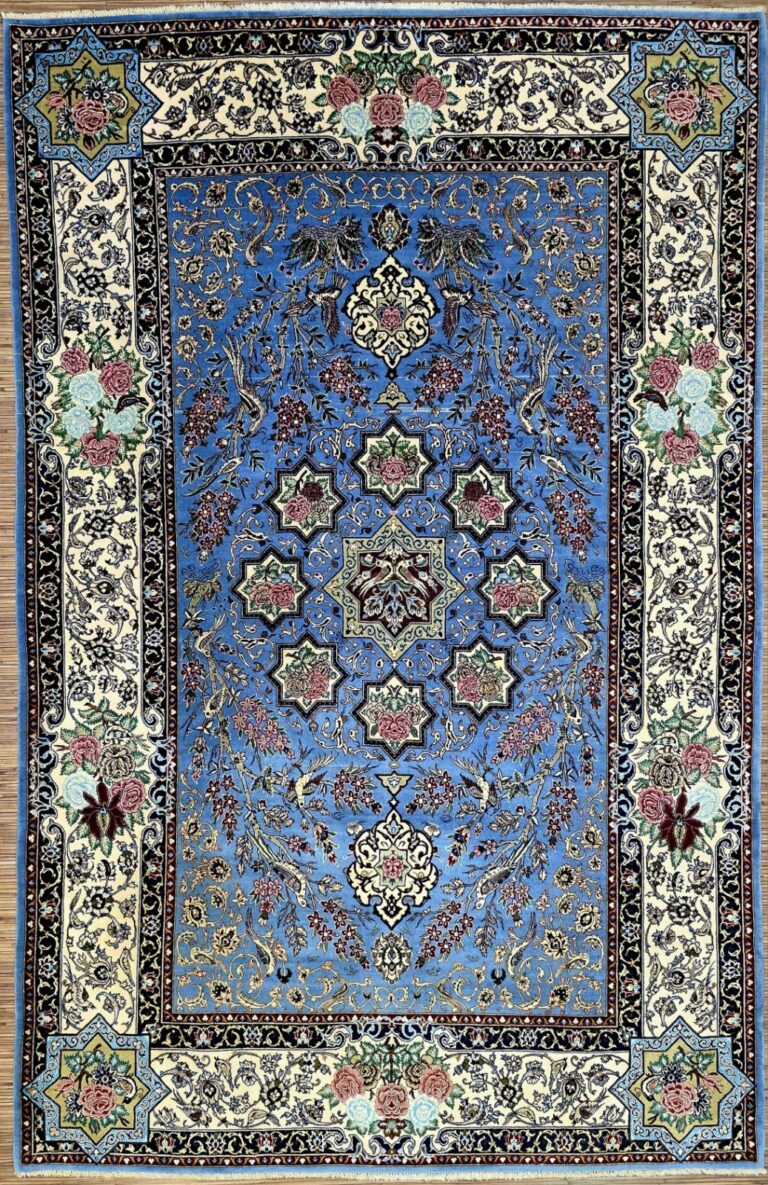
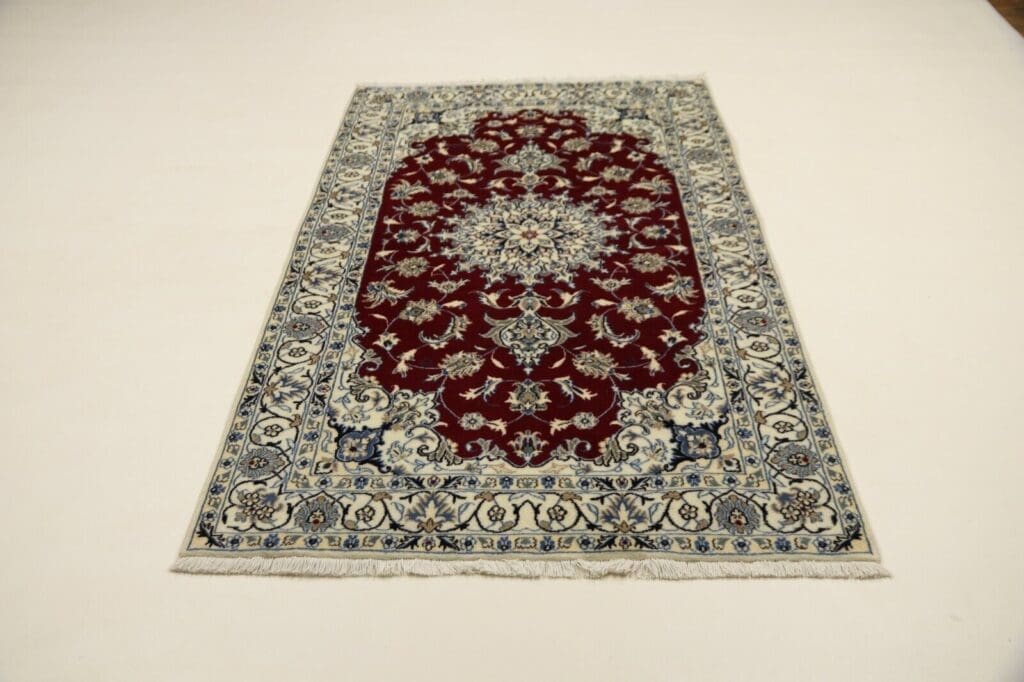
This hand-knotted Nain Persian rug is made from a combination of virgin wool and silk. The wool provides the principal material of the pile, while the silk is incorporated as a refined complementary fibre. Together, these materials give the rug a soft surface and a subtle sheen. Wool is traditionally valued in rug making for its resilient character and its ability to form a firm, comfortable pile. Silk is known for its smooth handle and its capacity to reflect light gently, adding definition to finely worked areas and bringing out differences in the surface as the light changes.
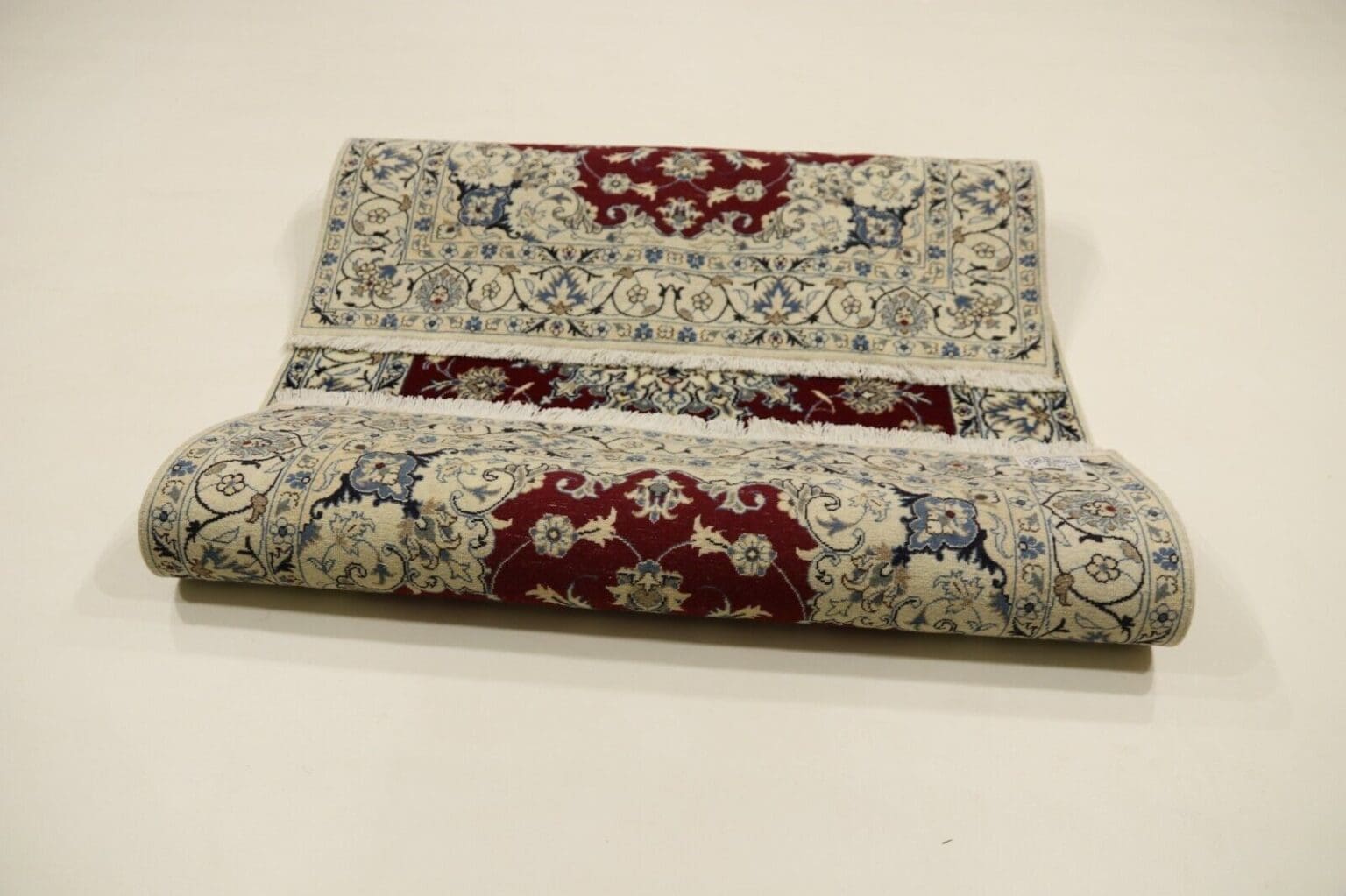
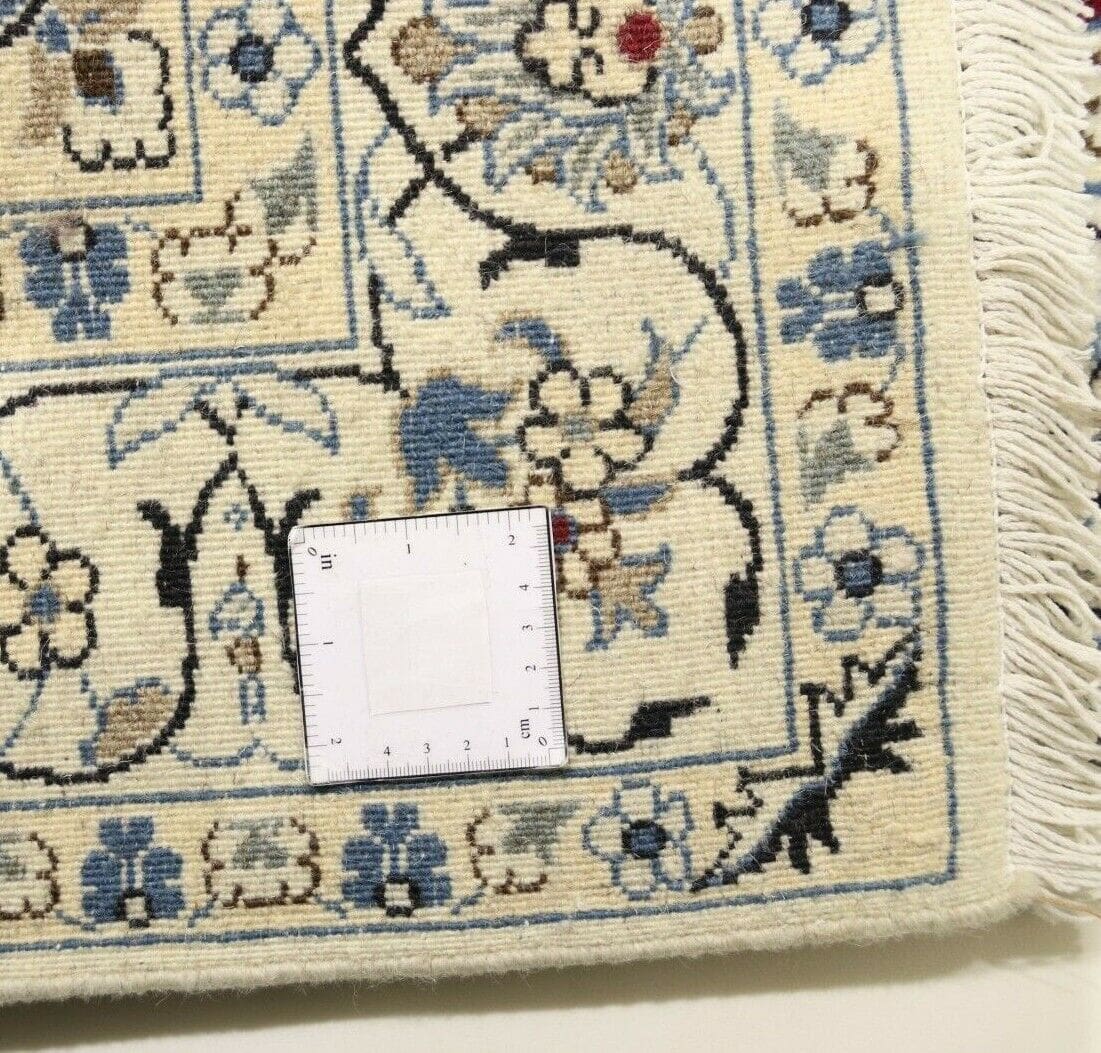
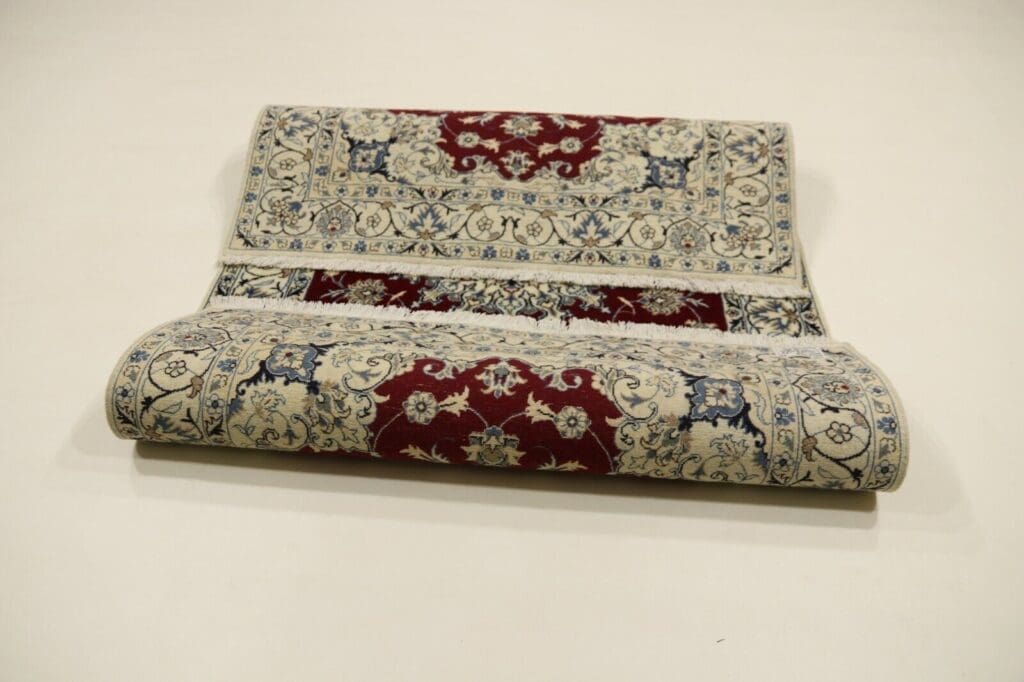
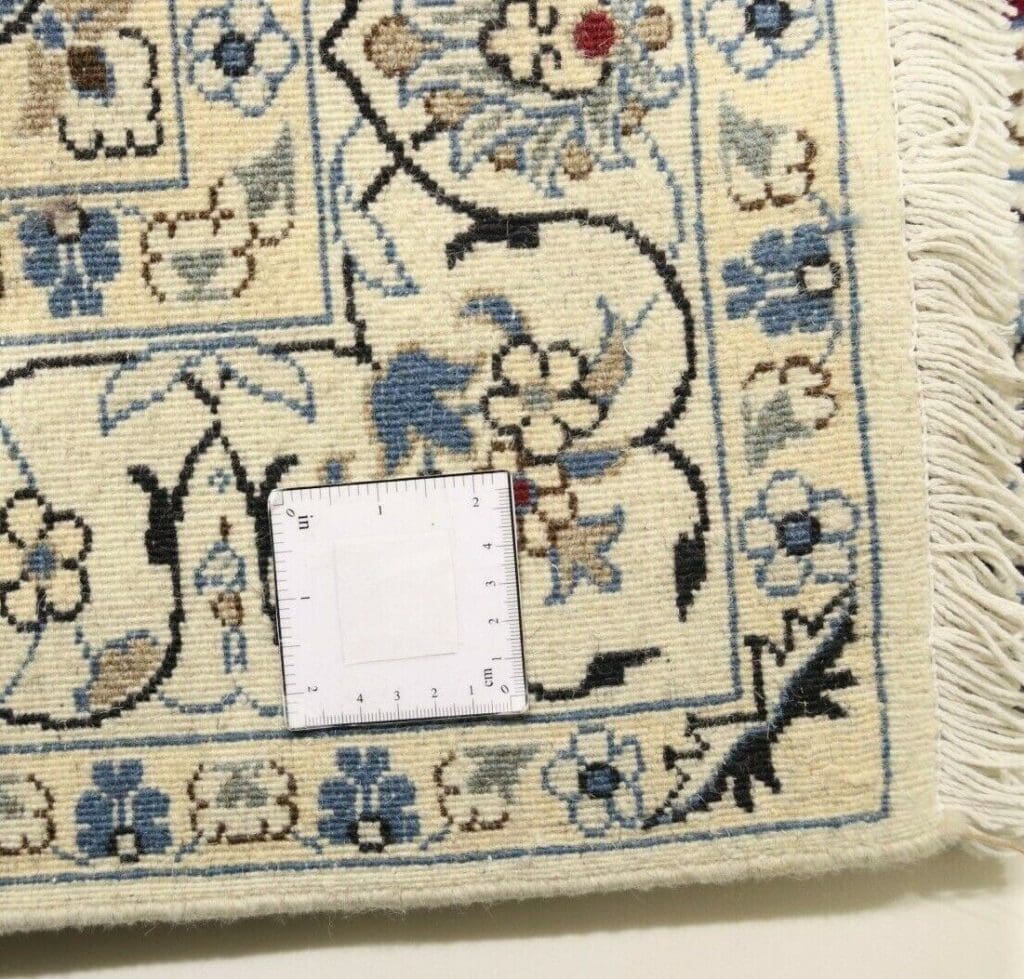
The rug is made by hand, with each knot tied individually rather than produced by a machine. Hand knotting is a time-intensive form of textile craftsmanship that allows a design to be built gradually row by row. The knotting process gives the weaver control over the arrangement of colour, outline and ornament. In a finely knotted rug, small floral and curving details can be rendered with greater clarity than in a coarse construction. The dense construction recorded for this rug is therefore consistent with the detailed character described for its design.
The combination of wool and silk also creates a contrast between practical pile material and finer decorative accents. Wool gives the surface a substantial, pleasant feel, while silk contributes a smoother texture and a restrained luminous effect. The source describes the rug as durable, with a soft surface that can be used comfortably in the home. Its craftsmanship is visible not only in the completed pattern but also in the regularity and patience required to complete a hand-knotted textile.
Origin and Tradition
Nain is a city in Iran with an established tradition of Persian carpet weaving. Nain carpets are associated with carefully composed designs, fine materials and a measured ornamental language. The name refers to a weaving tradition and design family connected with the city, rather than to a generic decorative category. This rug is identified as a Super Nain and as a Persian rug, placing it within the Iranian tradition of hand-knotted carpets.
The history of Persian carpet weaving is shaped by the interaction of local workshops, inherited patterns and the knowledge of individual weavers. In Nain, carpets are recognised for their ordered compositions and for the close attention given to the relationship between field, border and ornament. The tradition developed within a broader Iranian culture in which carpets served both practical and artistic purposes. A woven floor covering could define an interior, provide warmth and also preserve a visual vocabulary passed from one generation of makers to the next.
Nain designs are often associated with elegant floral arrangements and balanced colour combinations. Their appearance is usually based on a clear structure rather than an improvised distribution of isolated motifs. Floral branches, leaves and other plant forms may be arranged around a central organisation, allowing the eye to move through the field while retaining a sense of order. The use of fine materials and detailed knotting supports this approach, since delicate contours and small ornamental elements depend on careful execution.
Persian rugs from Nain belong to the wider history of Iranian textile arts. Their tradition reflects the importance of drawing, proportion, repeated pattern and skilled handwork in Persian weaving. The regional identity of Nain is not limited to one single pattern; it includes a range of compositions that share an emphasis on refinement, controlled ornament and a finely worked appearance. This rug represents that tradition through its Nain designation, hand-knotted construction, wool and silk composition, and detailed floral character.
The knowledge behind such carpets is transmitted through practice. A weaver must understand how a drawn design is converted into rows of knots, how colours interact across a field and how borders frame the central composition. The finished carpet is the result of many connected decisions rather than of a single manufacturing step. That relationship between design and manual execution is central to the identity of Persian carpets and explains why Nain remains recognised internationally as a weaving centre.
Design and Pattern
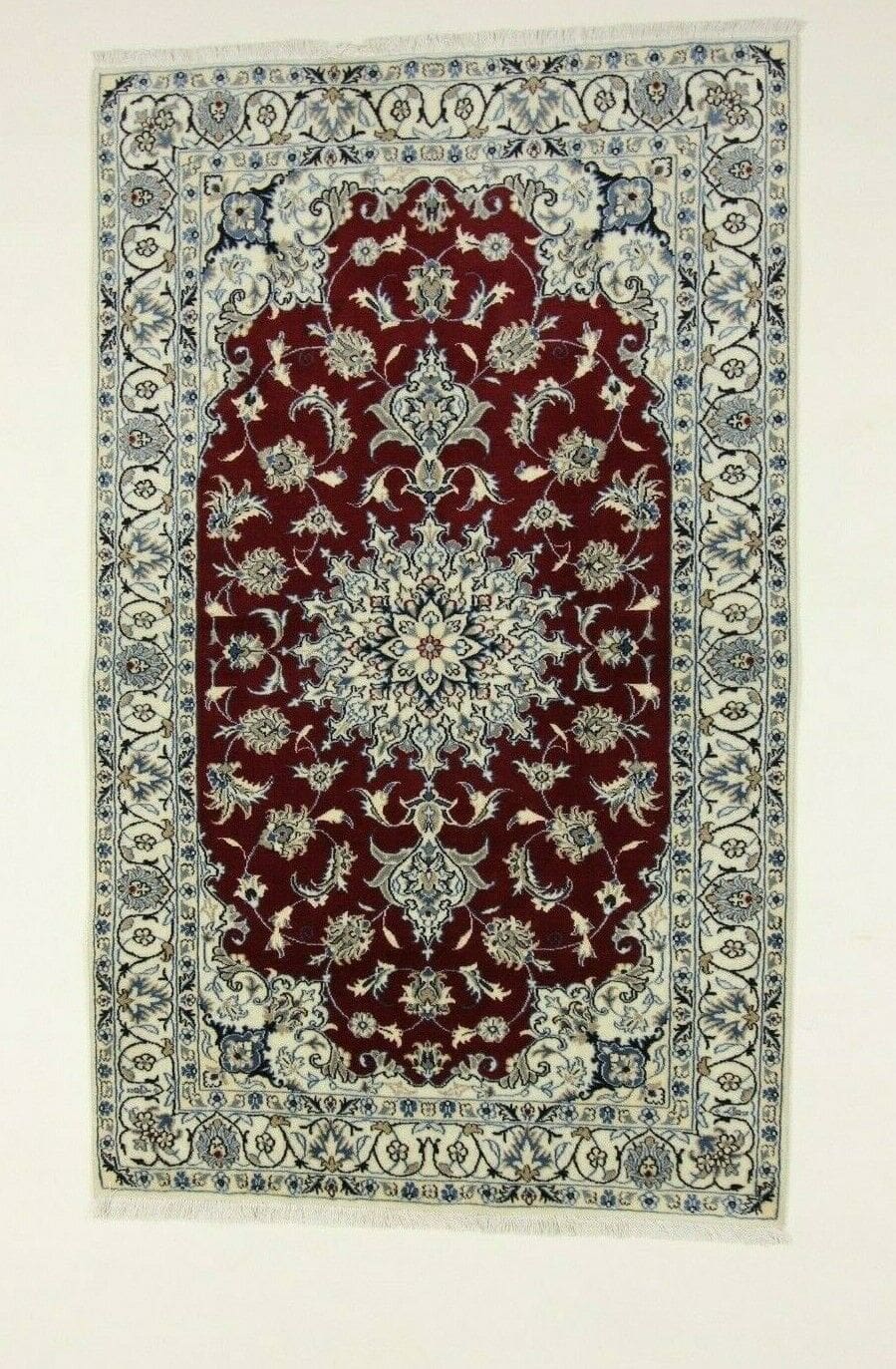
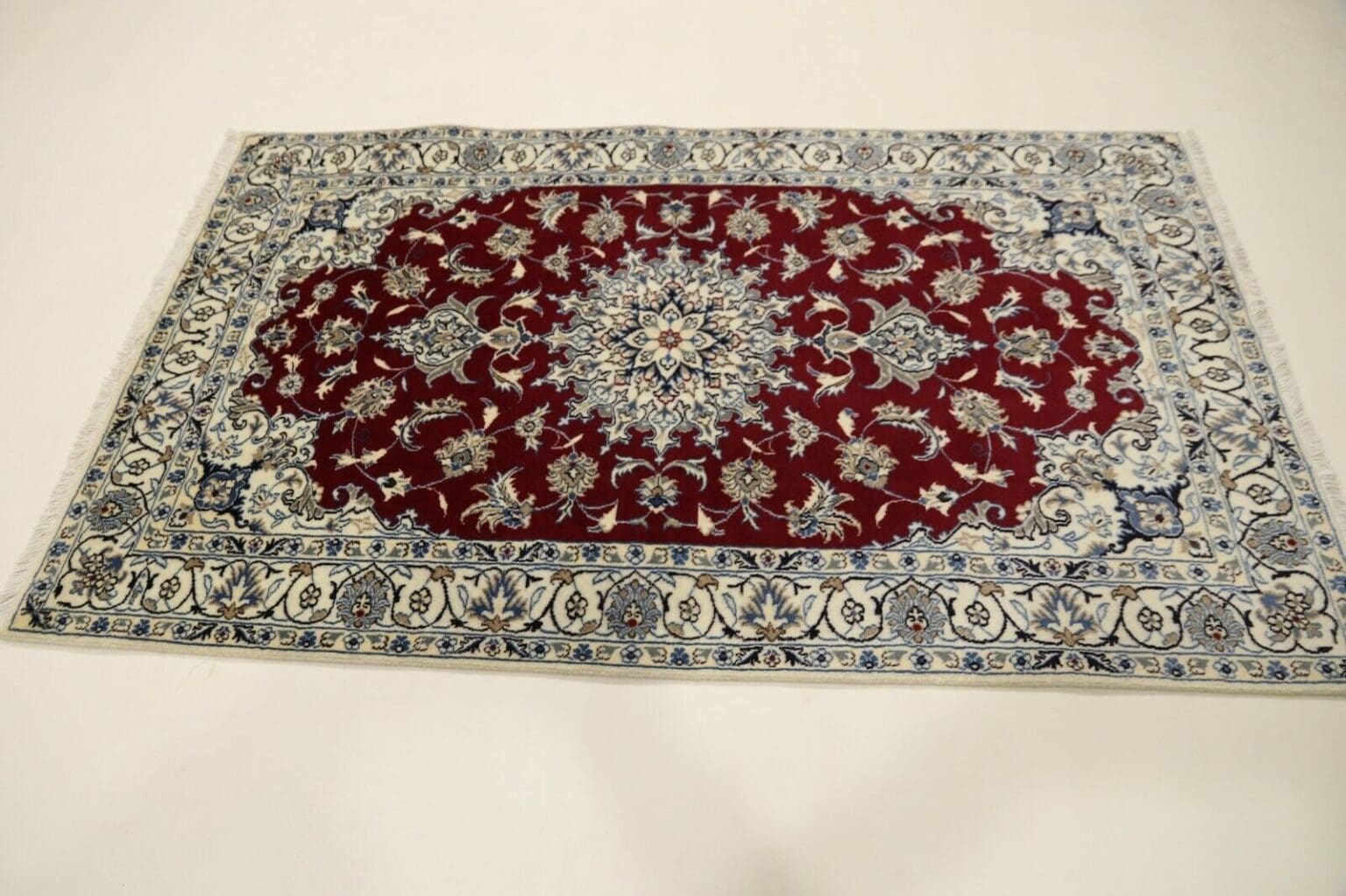
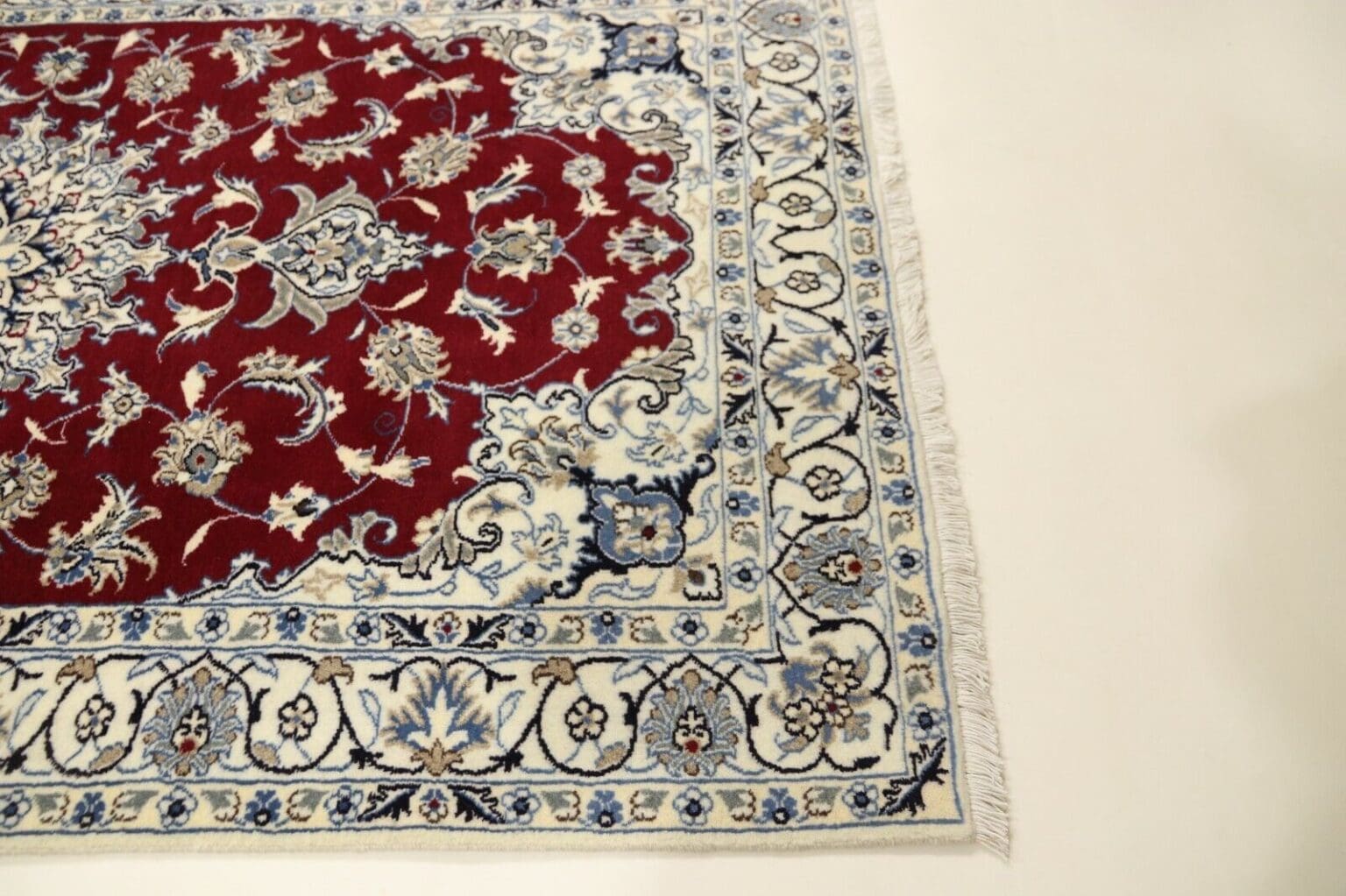
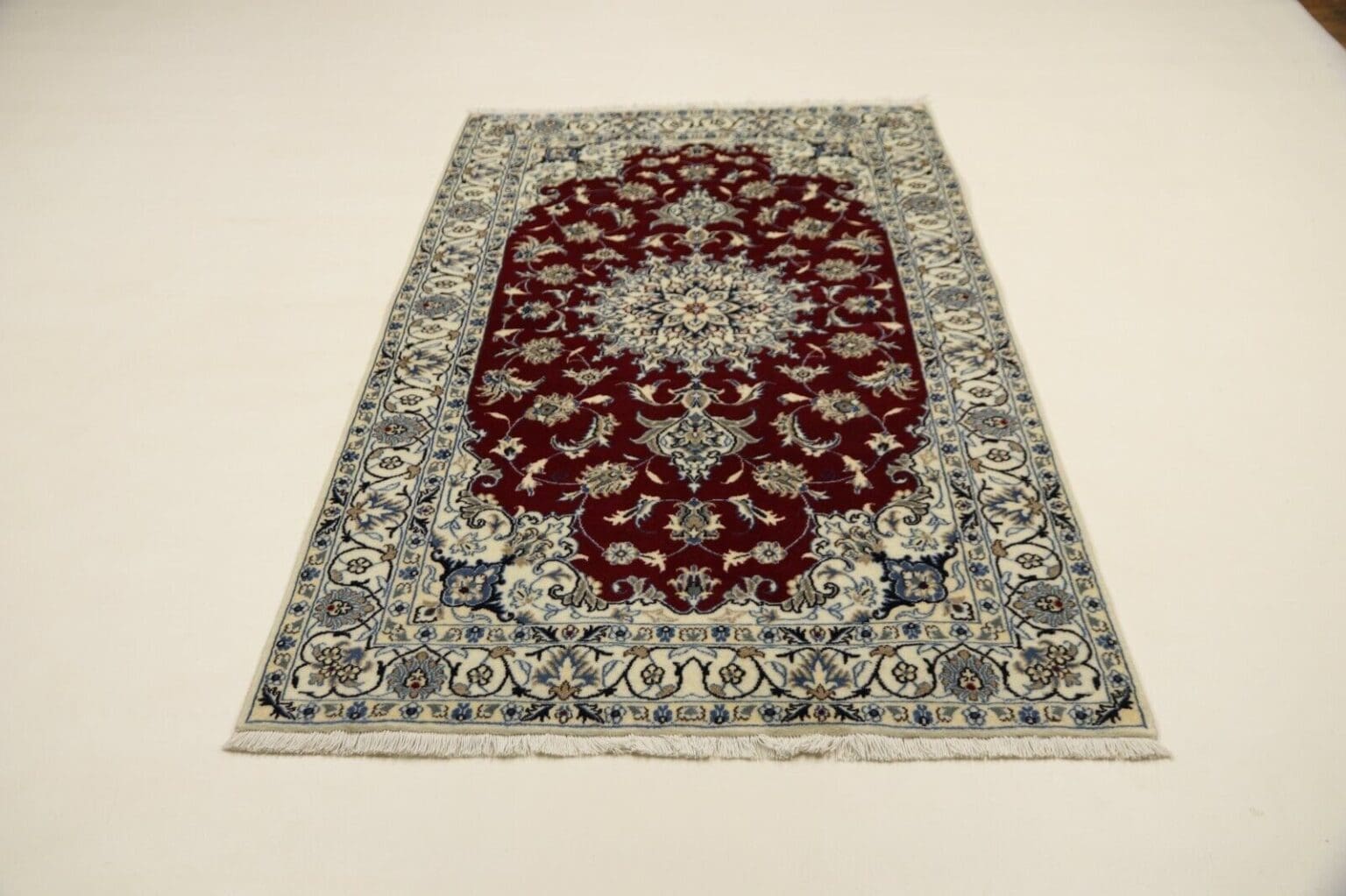
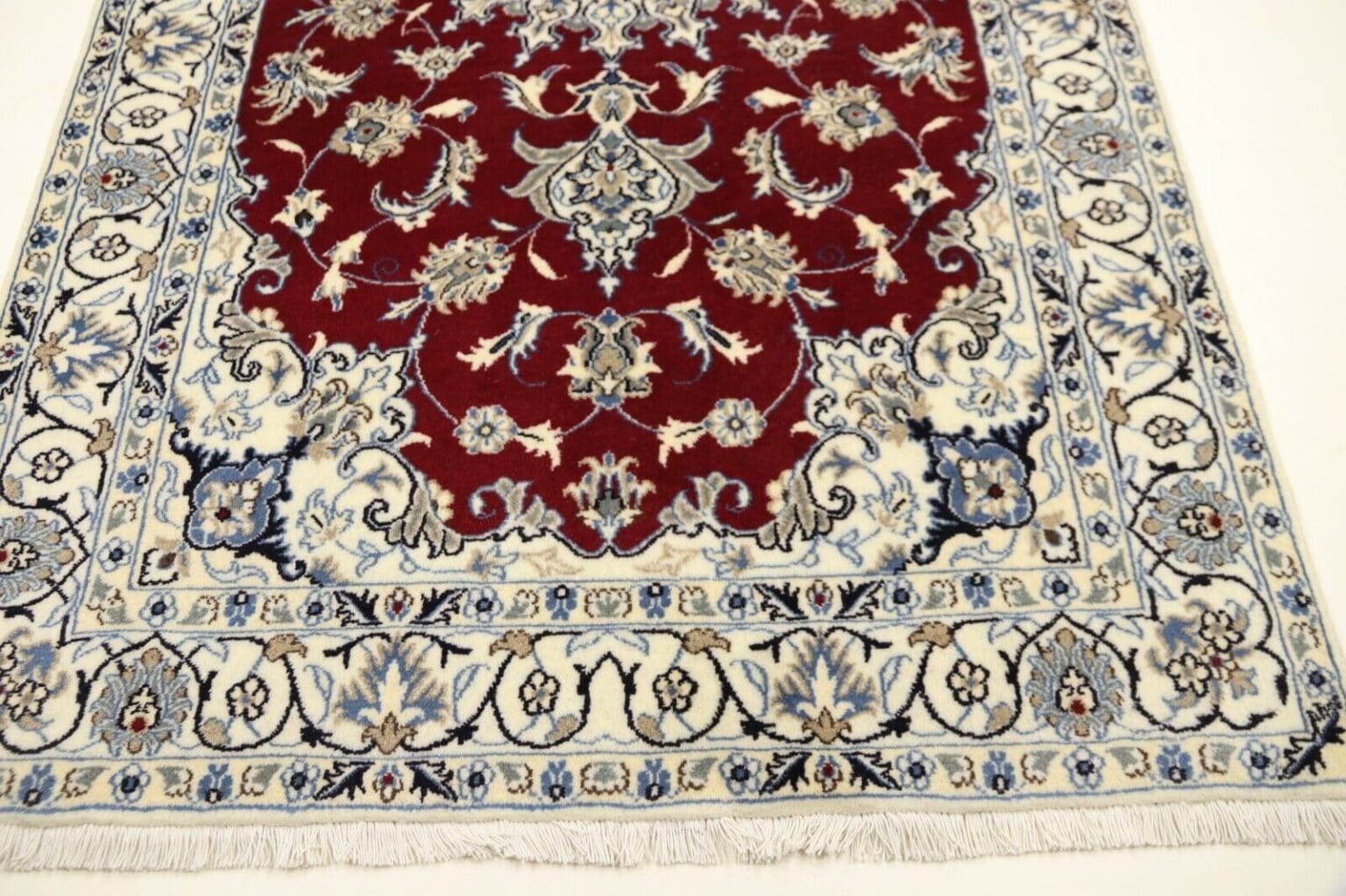
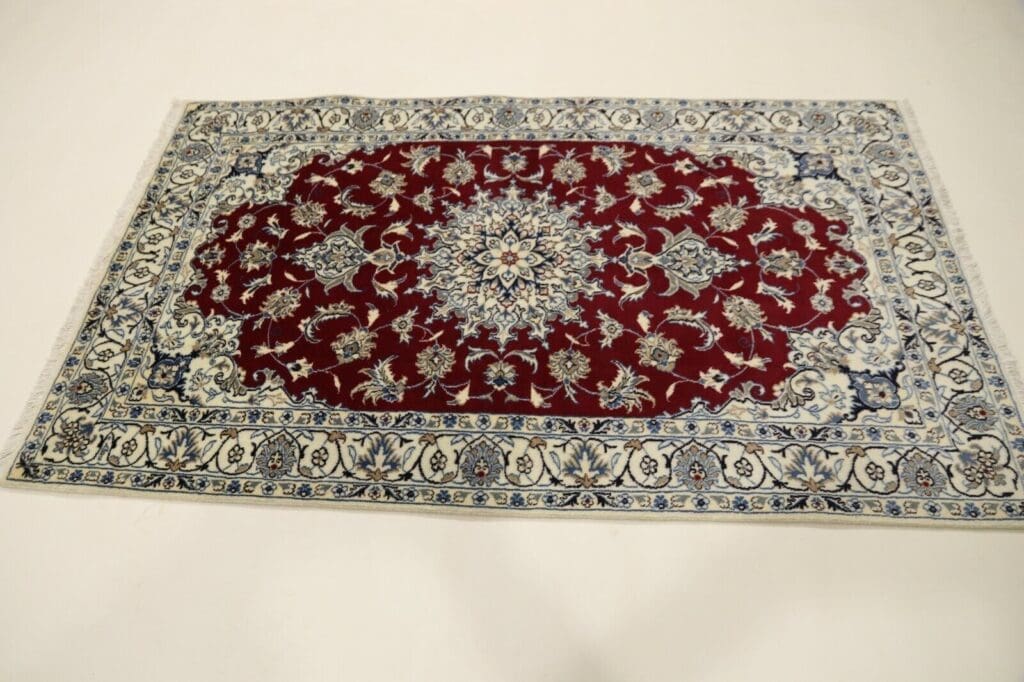
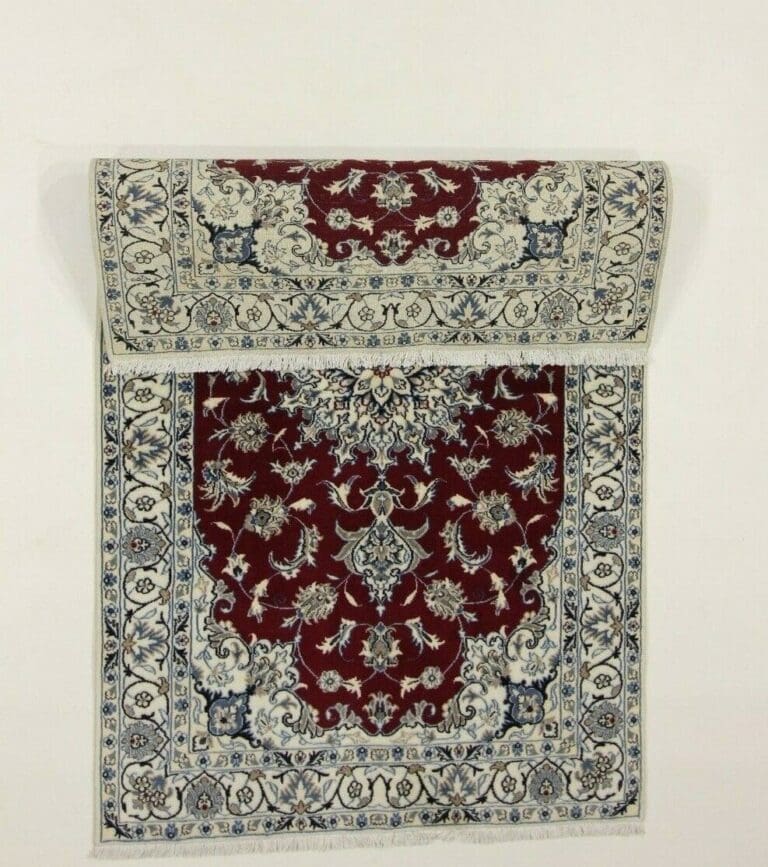
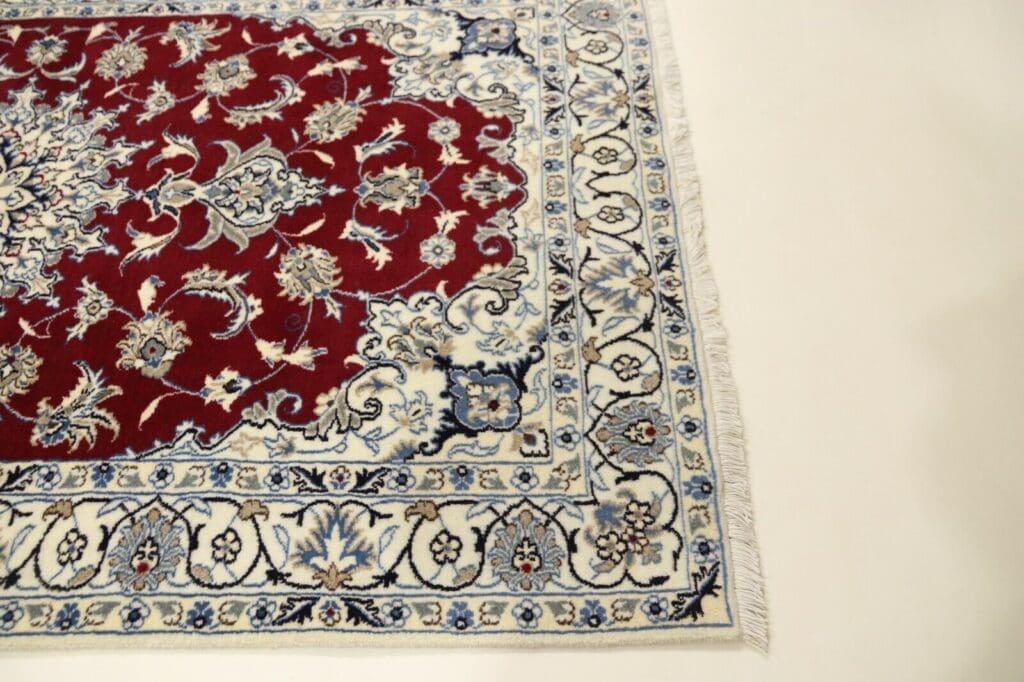
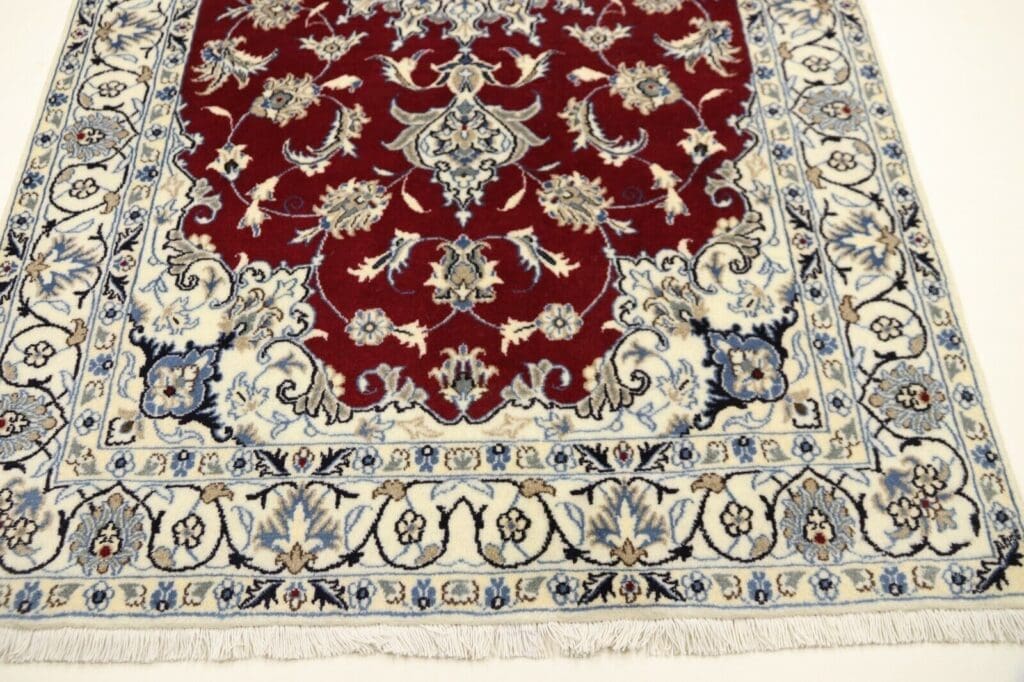
The Super Nain design described here is detailed and artistic, combining classical Persian ornament with a more contemporary sense of presentation. Floral motifs are a central feature of the pattern language associated with this rug. Plant-inspired forms provide curved lines, repeated rhythm and visual movement, while the overall arrangement remains composed and balanced. The design is therefore decorative without depending on a purely geometric structure.
Floral ornament has a long history in Persian carpet design. Leaves, blossoms, stems and scrolling branches can be used to connect separate areas of a composition and to create continuity across the field. Such motifs are not simply copied from nature; they are stylised through drawing, repetition and proportion. Their placement gives the pattern its structure, and their scale influences whether the surface appears open, compact or highly detailed. In a Nain setting, this vocabulary is commonly treated with precision and restraint.
The rug’s colour arrangement is described as harmonious. Colour in a Persian carpet is not only a matter of selecting individual shades; it also establishes hierarchy between the main field, the border and the smaller motifs. Contrasts can make floral outlines legible, while related tones can create visual links between different parts of the design. The combination of wool and silk adds another layer of variation, because the two fibres can respond differently to light and can make selected details appear more or less luminous.
A hand-knotted design can show different facets under changing illumination. The direction of the pile, the reflective quality of silk and the relationship between darker and lighter areas all influence how the pattern is perceived. This does not alter the design itself, but it can bring different contours and surface effects forward at different times. The rug can consequently work with both traditional and contemporary interiors, where its floral composition provides a defined decorative element.
The pattern is intended to function as a complete composition rather than as a collection of unrelated details. Classical elements connect the rug with Persian carpet history, while the balanced presentation allows it to sit within a modern room. Floral motifs give the surface an organic character, and the carefully coordinated colours support a calm, ordered appearance. The detailed knotting makes it possible for the design to retain fine outlines and small variations across the woven field.
Special Features
A defining feature of this rug is its recorded knot density of approximately three hundred thousand knots per square metre. This density is associated with the finely detailed appearance described for the piece and reflects the amount of manual work involved in its construction. The surface is described as pleasantly soft, while the wool gives it a substantial character. Silk contributes a gentle shine that can be noticed as the rug is viewed from different directions or in changing light.
The rug is suitable for use in living rooms, bedrooms or as an accent in an elegant office. These settings correspond to the source description and reflect the way a detailed floral Persian rug can be integrated into domestic and professional interiors. Regular vacuuming is recommended as part of routine care, while professional cleaning can be used when a deeper cleaning is needed. Direct sunlight should be avoided to help reduce the risk of colour fading.
FAQ
How should this Nain Persian rug be cared for?
Regular vacuuming is an appropriate part of everyday care. It helps remove loose dust and surface particles before they can accumulate in the pile. When more intensive cleaning is required, the rug should be given to a professional cleaner with experience in hand-knotted Persian rugs and in wool and silk textiles. Professional treatment is preferable to improvised wet cleaning because the materials and hand-knotted construction require appropriate handling. Direct sunlight should also be avoided, since prolonged exposure can cause colours to fade. Positioning the rug away from strong, continuous sunlight and maintaining it with gentle, regular care helps preserve its surface and appearance.
Where can the rug be used?
The rug can be placed in a living room, a bedroom or an elegant office as an accent. In a living room, its floral design can establish a clear decorative focus without requiring the surrounding furnishings to follow the same pattern. In a bedroom, the wool and silk surface brings a soft textile element to the room. In an office, it can be used where a Persian design is intended to add structure and visual distinction. The most suitable position depends on the room arrangement, the available light and the need to protect the rug from unsuitable conditions or unnecessarily intense sunlight.
Is the rug suitable for people with allergies?
The source describes this rug as a good choice for allergy sufferers because it is made from natural materials. Its wool and silk composition is also described as helping dust and allergens remain less easily attached within the fibres. As with any textile in an interior, regular cleaning remains important, since dust can collect on the surface over time. Vacuuming and appropriate professional cleaning support a clean environment, while ventilation and sensible placement also contribute to general indoor comfort. Individual allergies differ, so personal sensitivity should always be considered when selecting a floor covering.
To provide the best experiences, we use technologies like cookies to store and/or access device information. Consenting to these technologies will allow us to process data such as browsing behavior or unique IDs on this site. Not consenting or withdrawing consent, may adversely affect certain features and functions.
Functional Always active
The technical storage or access is strictly necessary for the legitimate purpose of enabling the use of a specific service explicitly requested by the subscriber or user, or for the sole purpose of carrying out the transmission of a communication over an electronic communications network.
Preferences
The technical storage or access is necessary for the legitimate purpose of storing preferences that are not requested by the subscriber or user.
Statistics
The technical storage or access that is used exclusively for statistical purposes.The technical storage or access that is used exclusively for anonymous statistical purposes. Without a subpoena, voluntary compliance on the part of your Internet Service Provider, or additional records from a third party, information stored or retrieved for this purpose alone cannot usually be used to identify you.
Marketing
The technical storage or access is required to create user profiles to send advertising, or to track the user on a website or across several websites for similar marketing purposes.
 SECURE PAYMENT
 SHIPPING PARTNERS