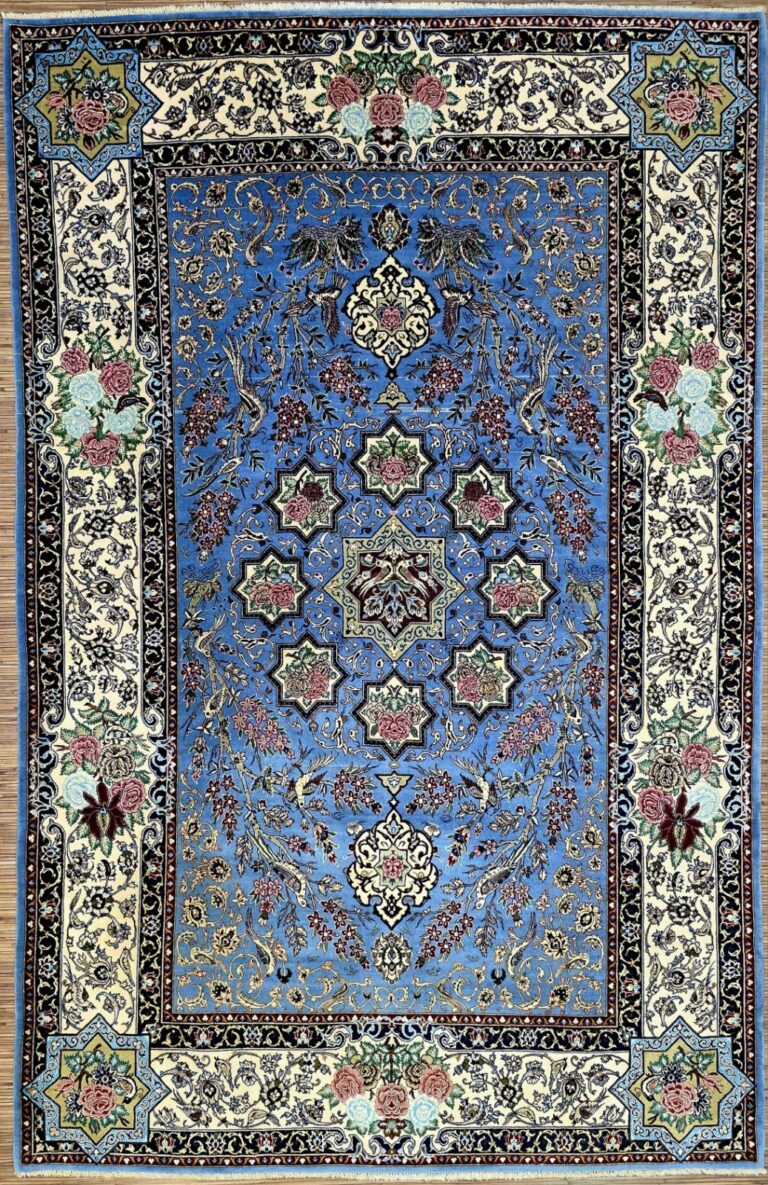
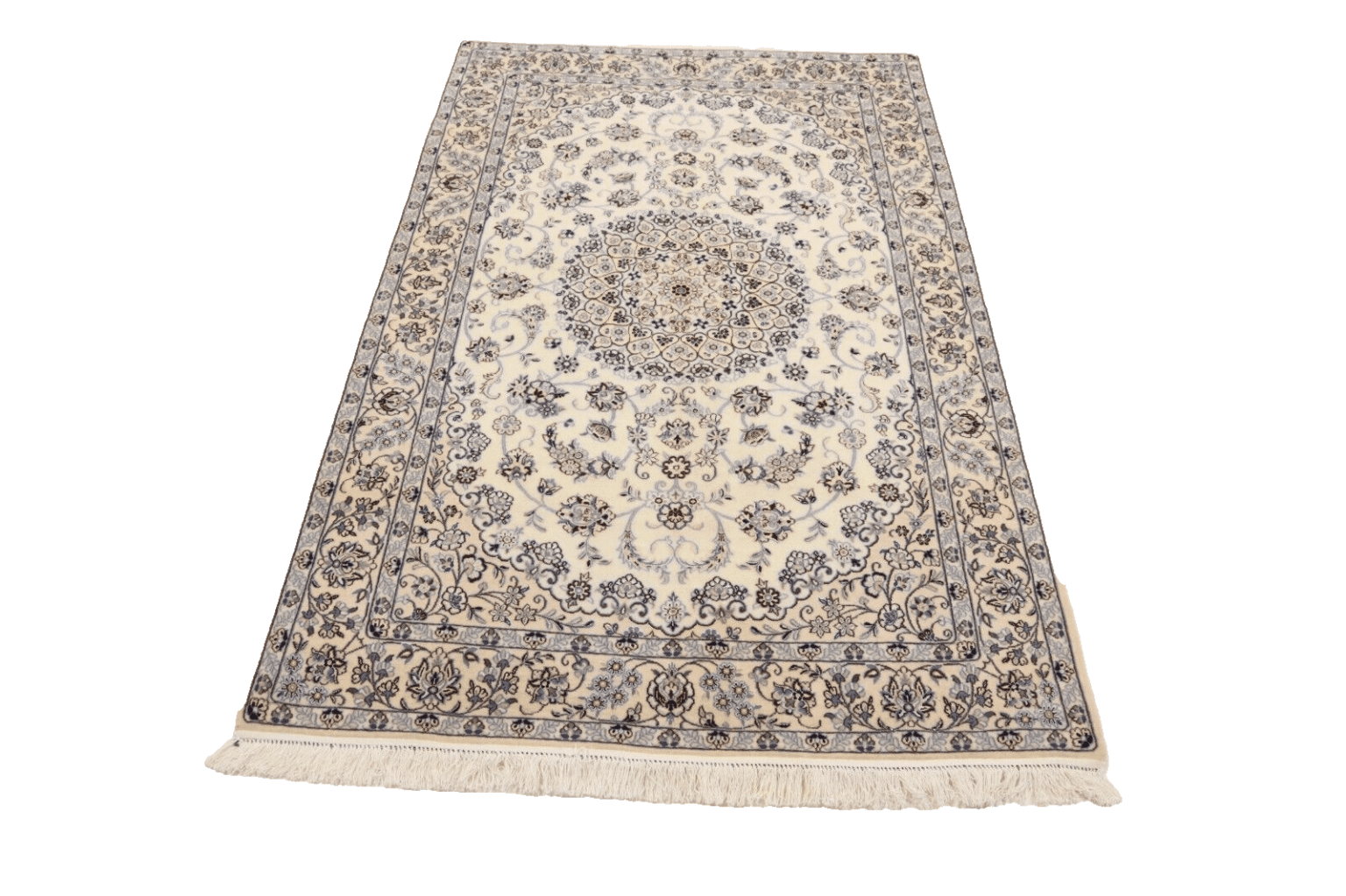
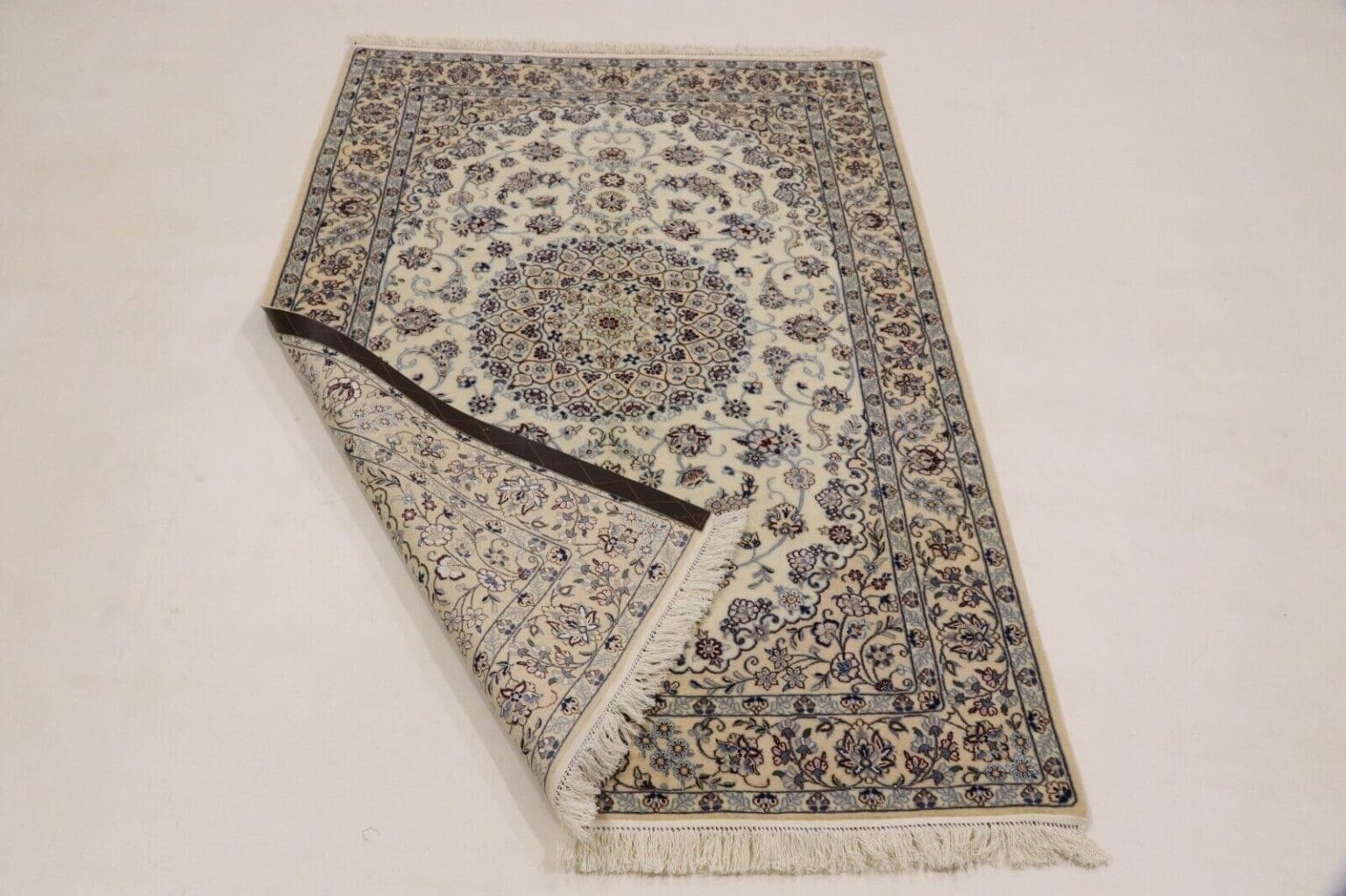
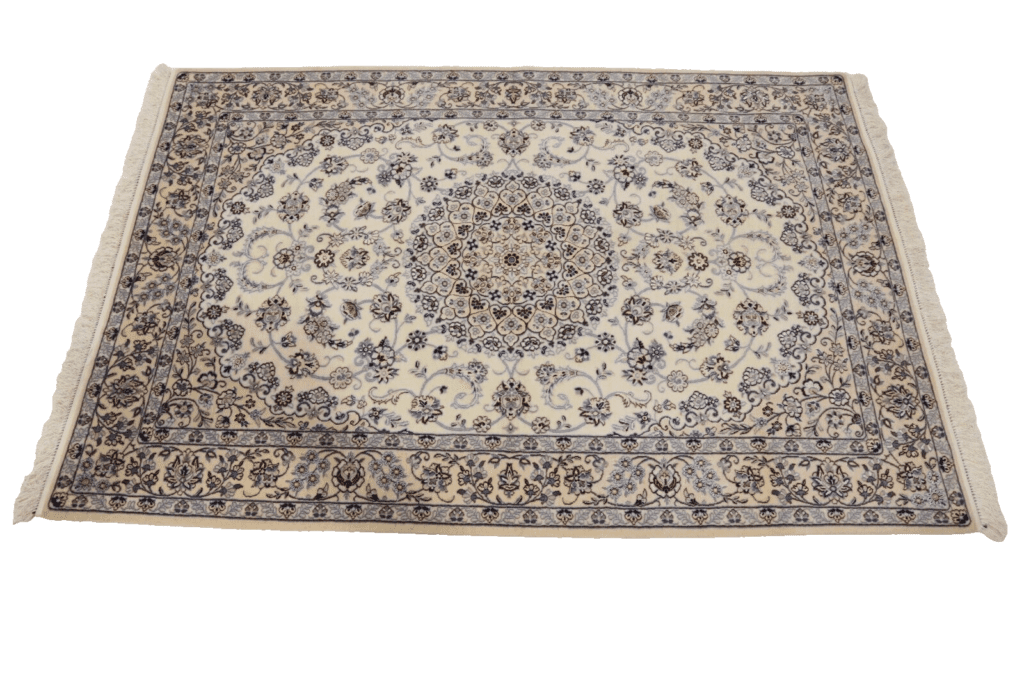
This Nain Persian rug is hand-knotted. Its pile is described as 80% cork wool and 20% natural silk. Cork wool gives the surface a soft, pleasant feel, while natural silk contributes a fine lustre and subtle variation in the way the pile reflects light. The warp is made from 100% cotton. Together, wool pile, silk and a cotton warp provide the textile basis for a finely made hand-knotted rug.
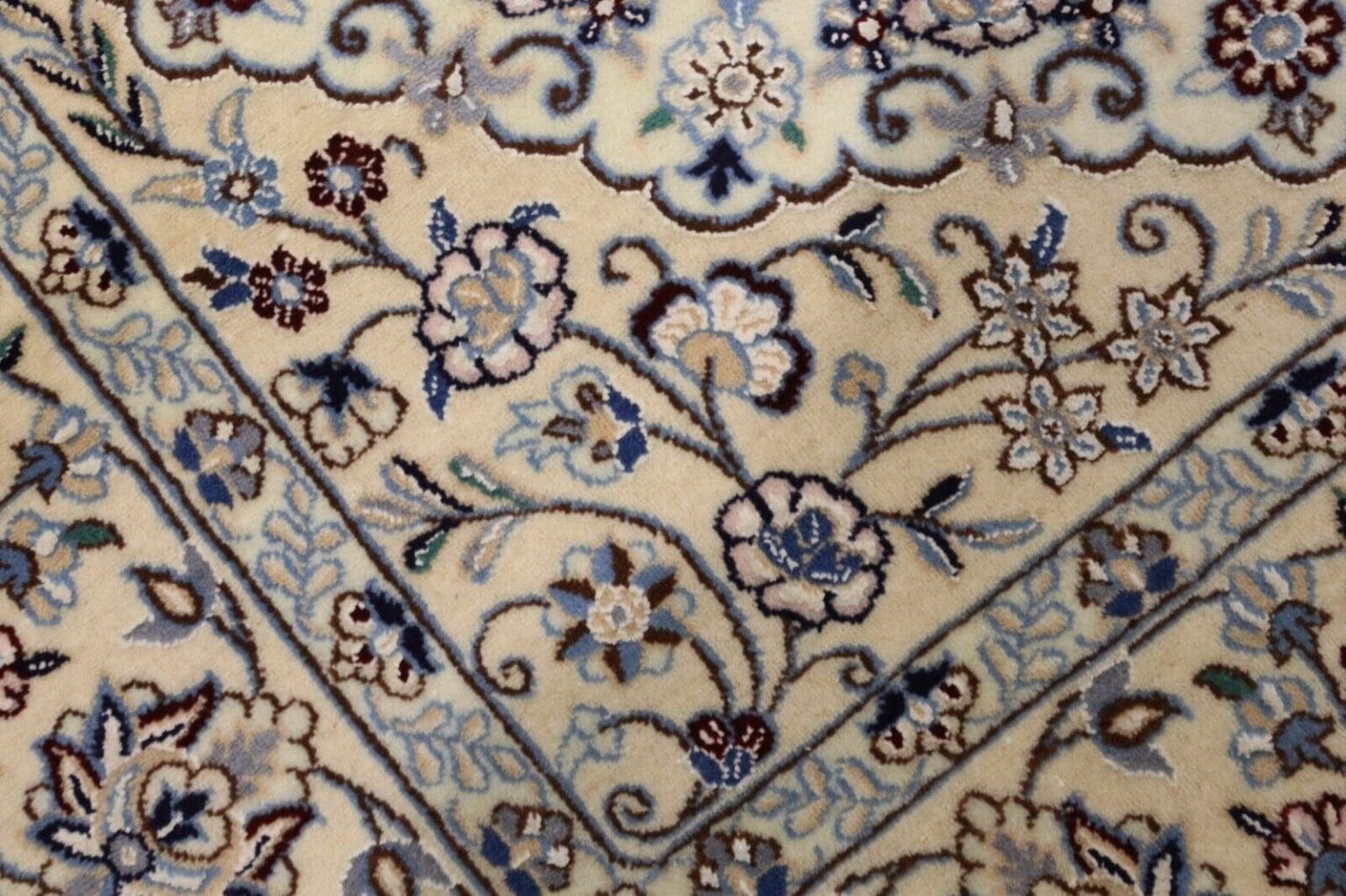
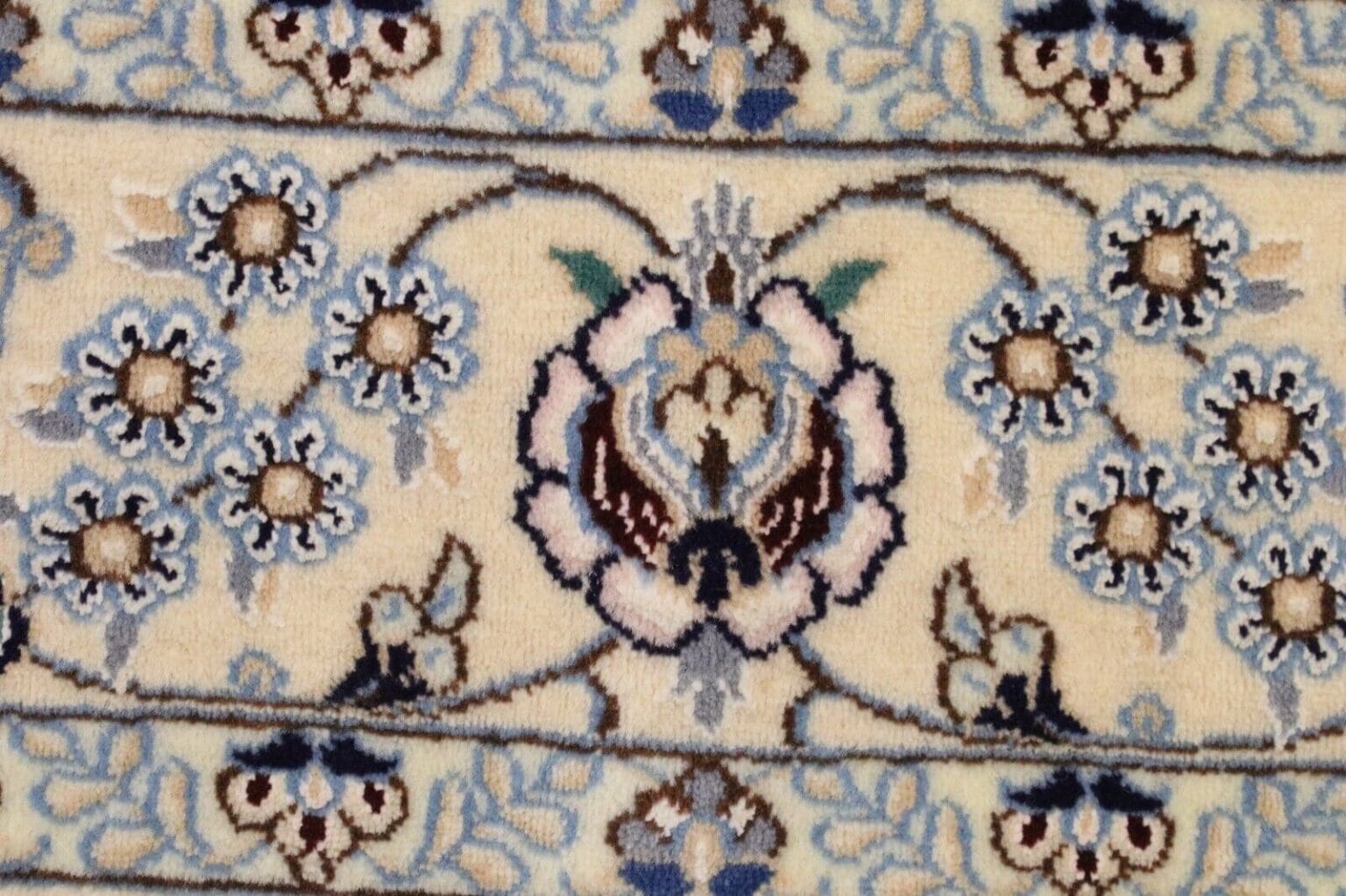
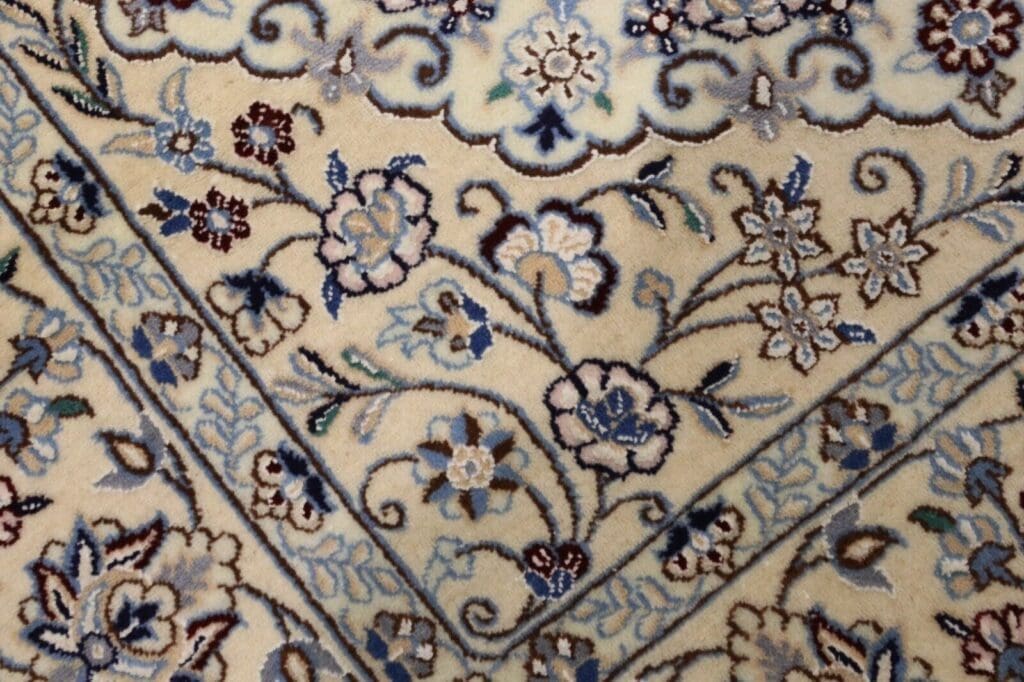
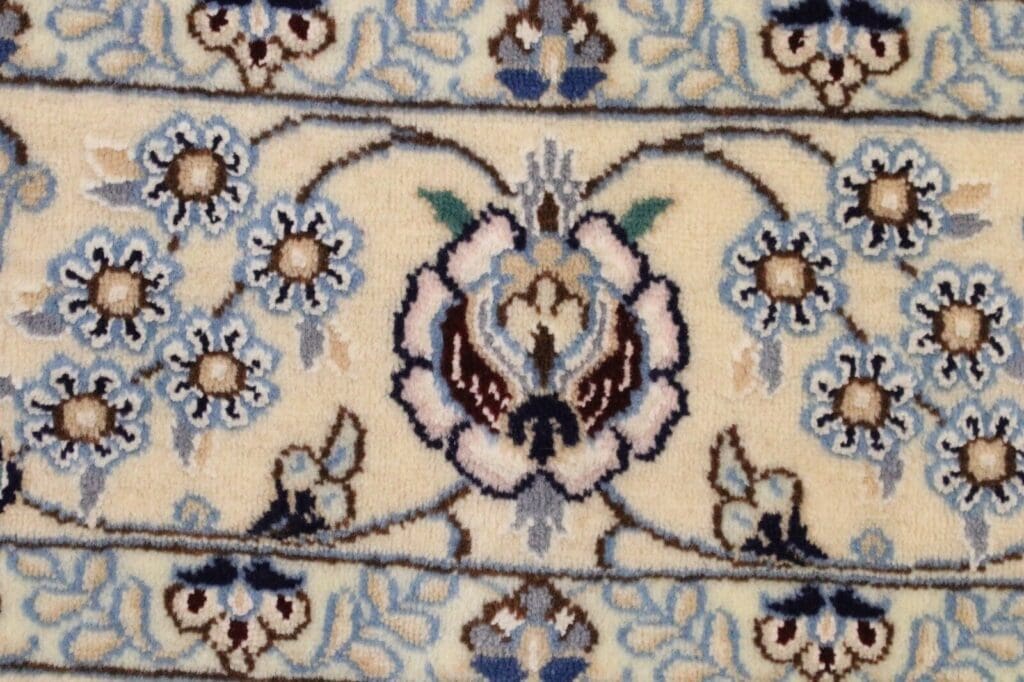
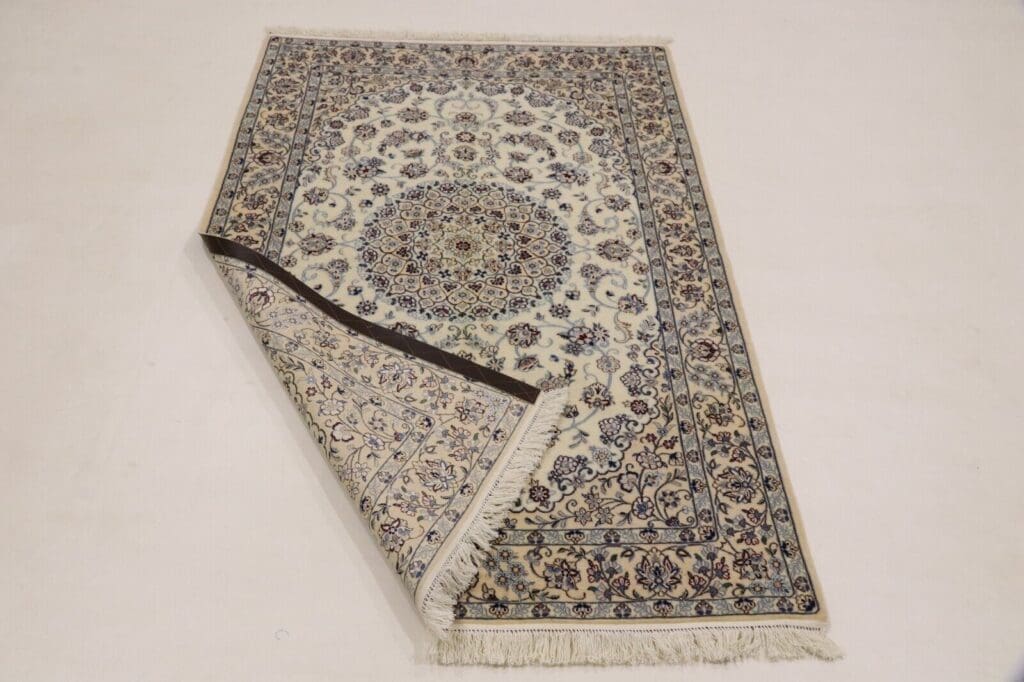
The listed knot density is approximately 1,000,000 knots per square metre. A dense knot structure allows small forms, narrow outlines and delicate transitions to be rendered with precision. In hand knotting, each knot is tied individually around the warp and secured by the following weft. The design is therefore built gradually at the loom rather than printed onto a finished surface.
The Nain 6 La is made with a fine and detailed visual effect in mind. Wool and silk have different surface qualities and respond differently to light, so their combination can give a restrained colour field a lively textile character. The cotton warp provides the supporting foundation for the knotting. The rug is described as robust enough for everyday use while also being easy to handle.
Origin and Tradition
This rug comes from the Nain region of Iran. Nain is recognised for hand-knotted Persian rugs in which careful workmanship, fine materials and balanced composition are brought together. The city and its surrounding area belong to central Iran, a part of the country with a long history of textile production and skilled craft. Nain rugs are regarded internationally as a distinct group within Persian carpet art.
The Nain tradition developed through the refinement of local weaving and textile skills. Experience with wool, cotton and precise knotting techniques created a recognisable form of Persian rug. Its visual language commonly combines an orderly overall structure with carefully worked detail. Production remains dependent on the loom, the skill of the knotters and the accurate transfer of the chosen design.
Warp preparation is important in Nain weaving. An evenly tensioned cotton warp establishes the basis for a regular field of knots. Pile fibres of wool, or a combination of wool and silk, are then worked into this foundation. The knotter follows a drawn design and proceeds row by row. Once the knotting is complete, the pile is finished so that contours, fields and transitions can be read clearly. The result depends on the quality of the materials as well as on the consistency of every stage of production.
The designation Nain 6 La places the rug within a recognised Nain tradition and is used in the trade to identify a particular type associated with the region. It relates to the fineness and design language of this Nain group. Whatever the detailed classification, this piece combines an Iranian origin with the hand-crafted method that defines Persian Oriental rugs.
Persian rugs from different regions vary in their materials, knotting methods, colour systems and design traditions. Isfahan is associated with highly differentiated floral compositions, Tabriz with a broad range of layouts and Kerman with finely structured ornamental designs. Kashan also has a major rug-making tradition. Nain occupies its own place within this wider cultural landscape. Its designs are often ordered and finely drawn, while the craftsmanship supports a precise and detailed appearance.
Origin in Nain is therefore more than a geographical label. It describes a developed regional vocabulary of rug making: carefully arranged ornament, controlled colour and the use of fine materials. This rug belongs to that tradition and is offered as a Persian rug from the Nain region in Iran.
Design and Pattern
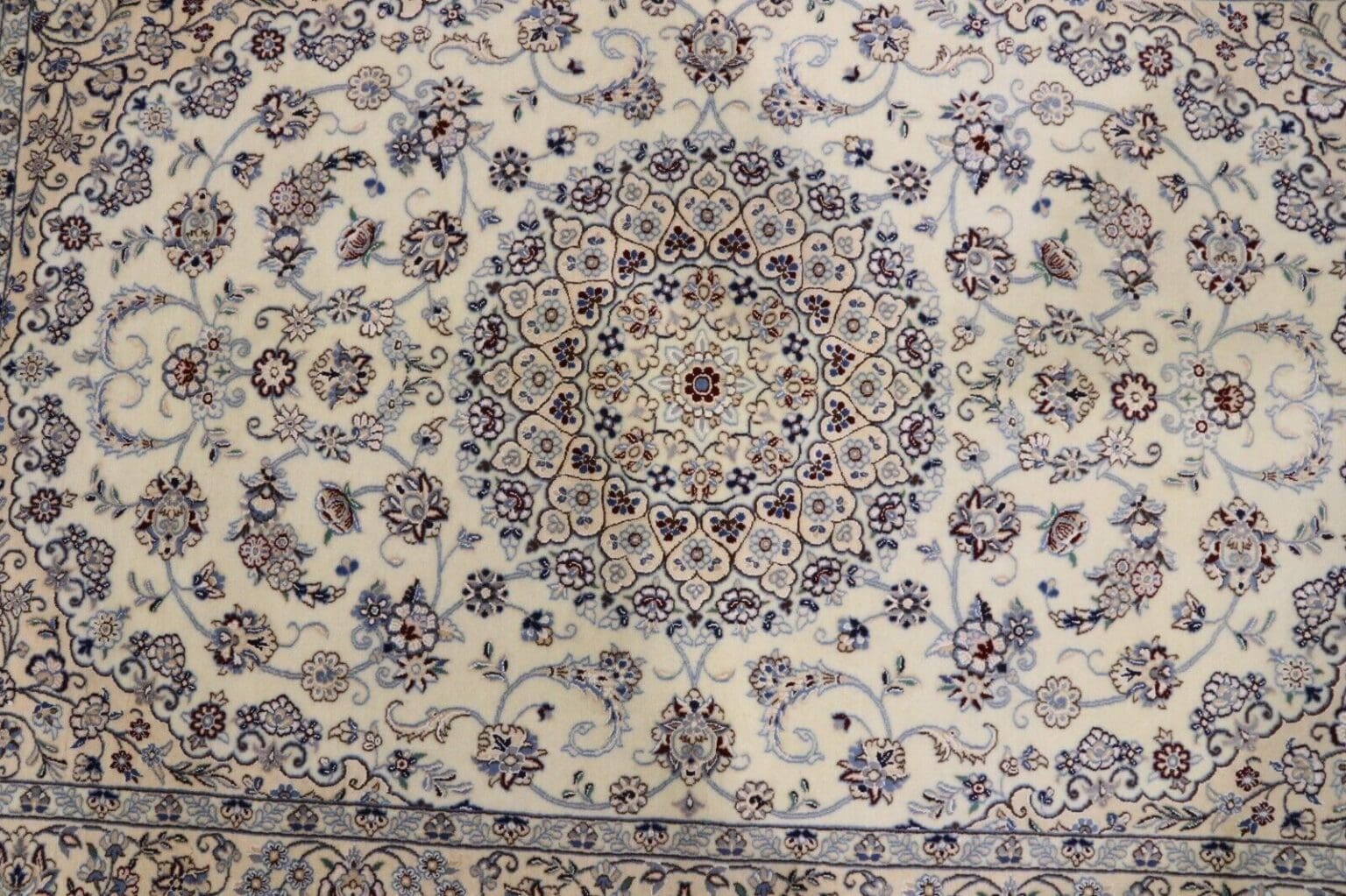
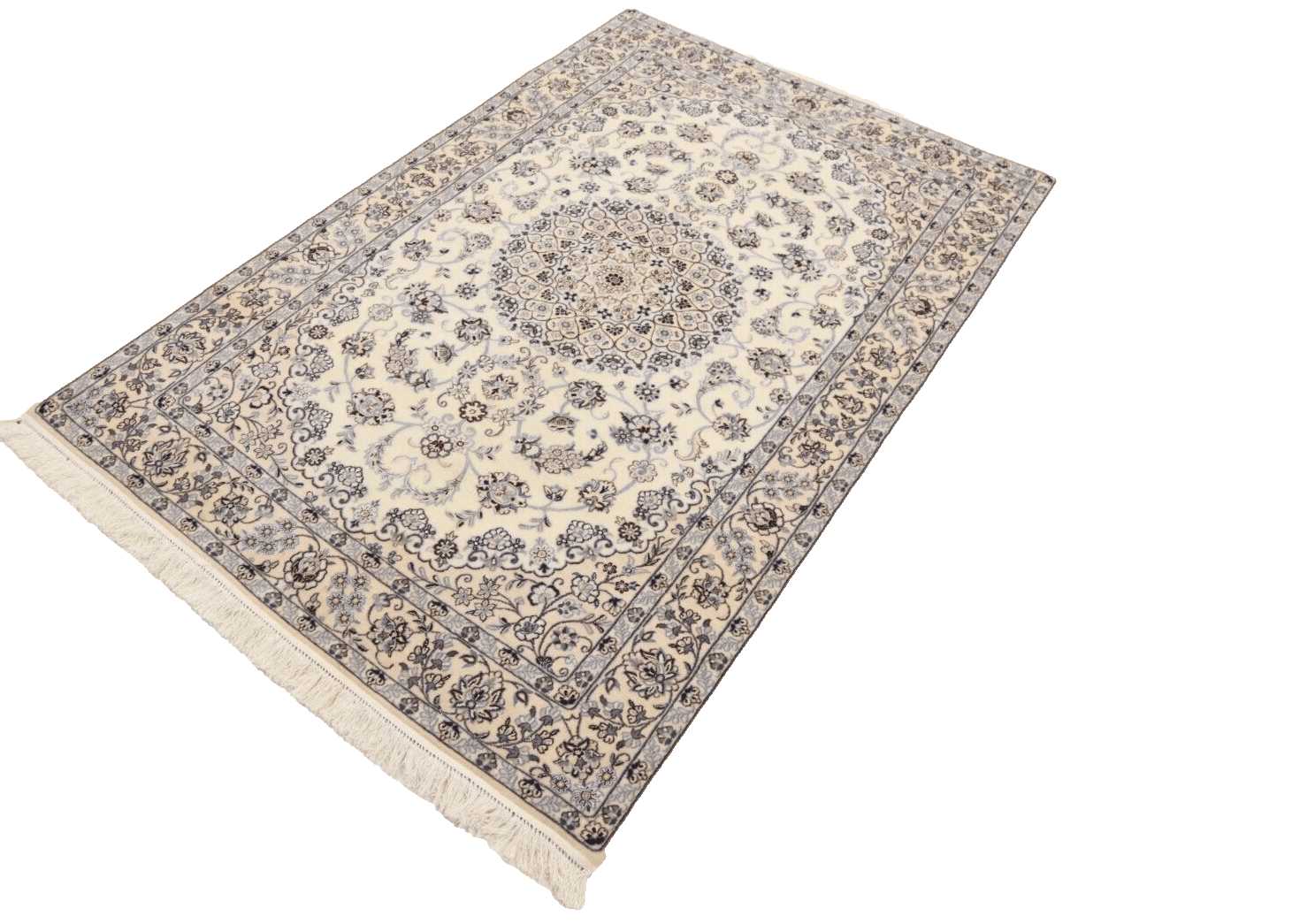
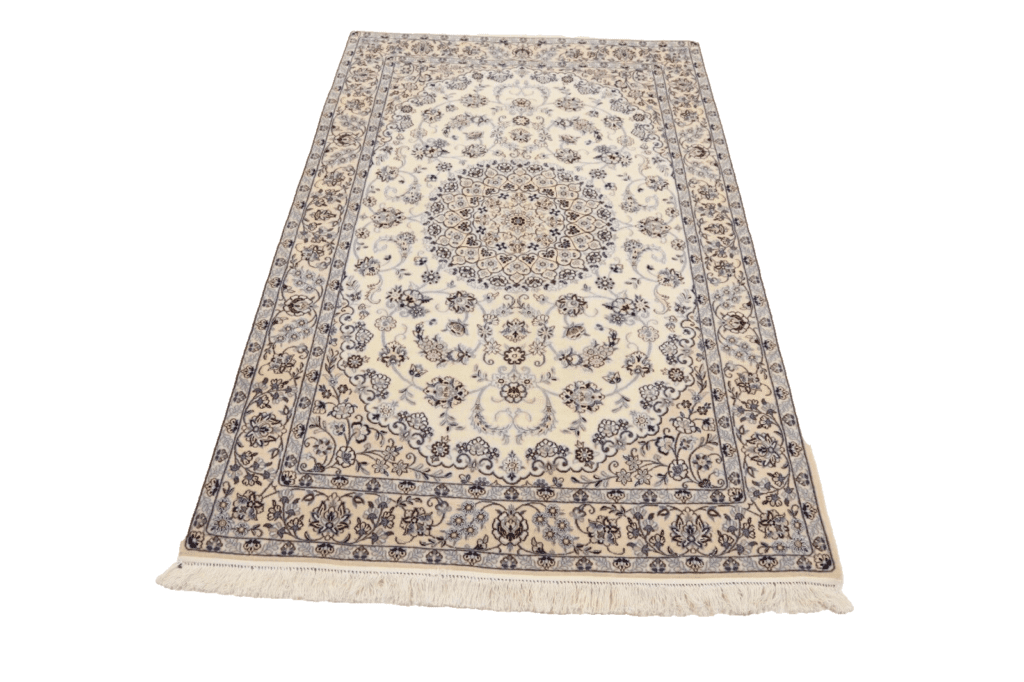
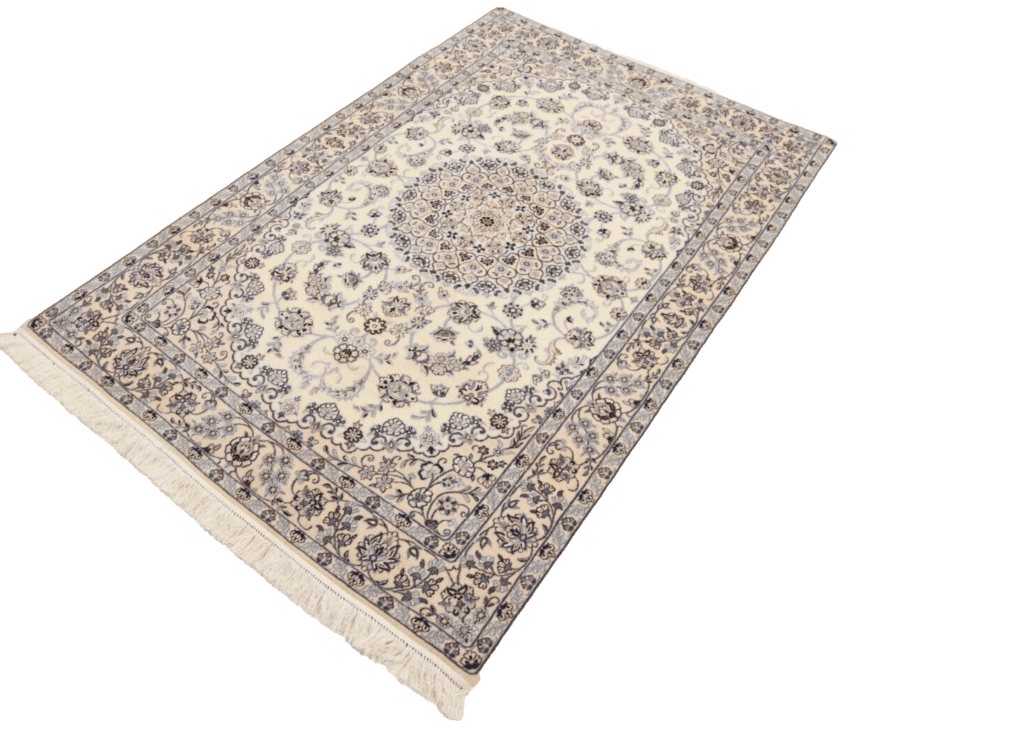
The pattern is described as traditional Oriental and Persian. Nain is known for complex, detailed designs. These compositions are based on a planned order in which principal forms, smaller ornaments and connecting lines are coordinated. The design is not improvised freely during production; it is translated from a drawn plan into a regular woven structure.
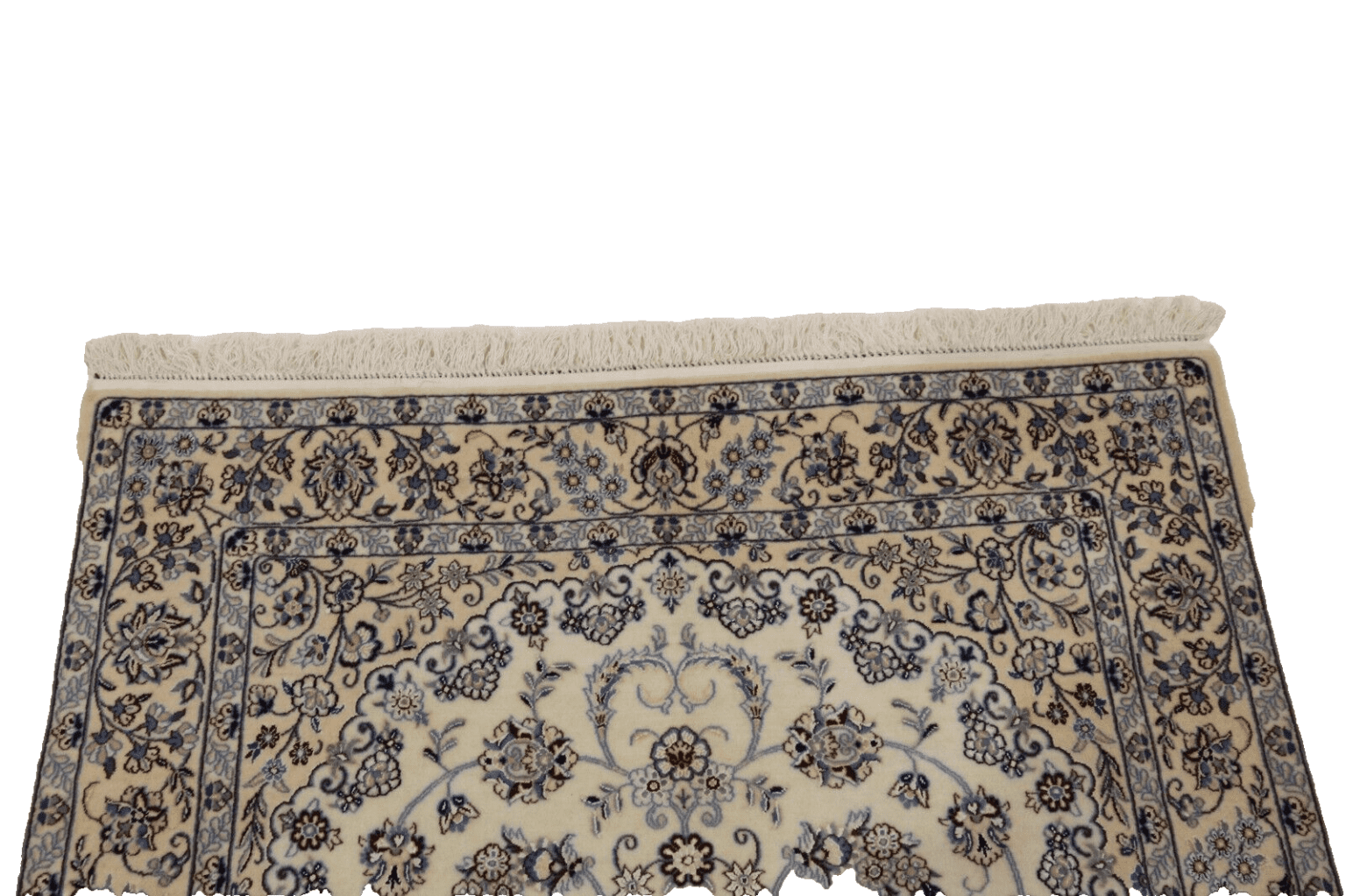
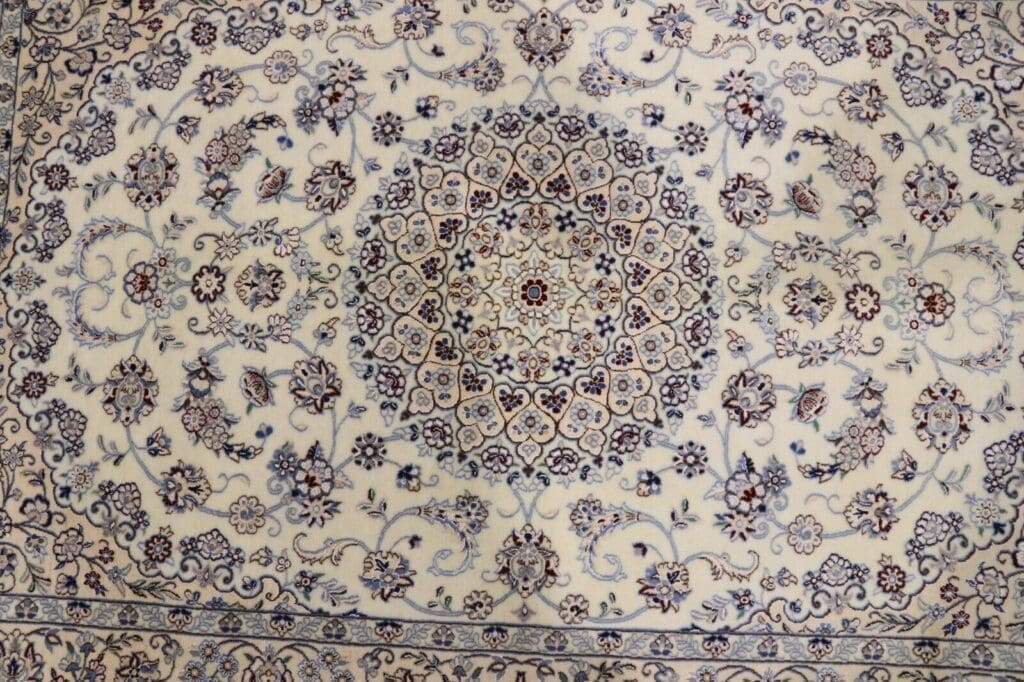
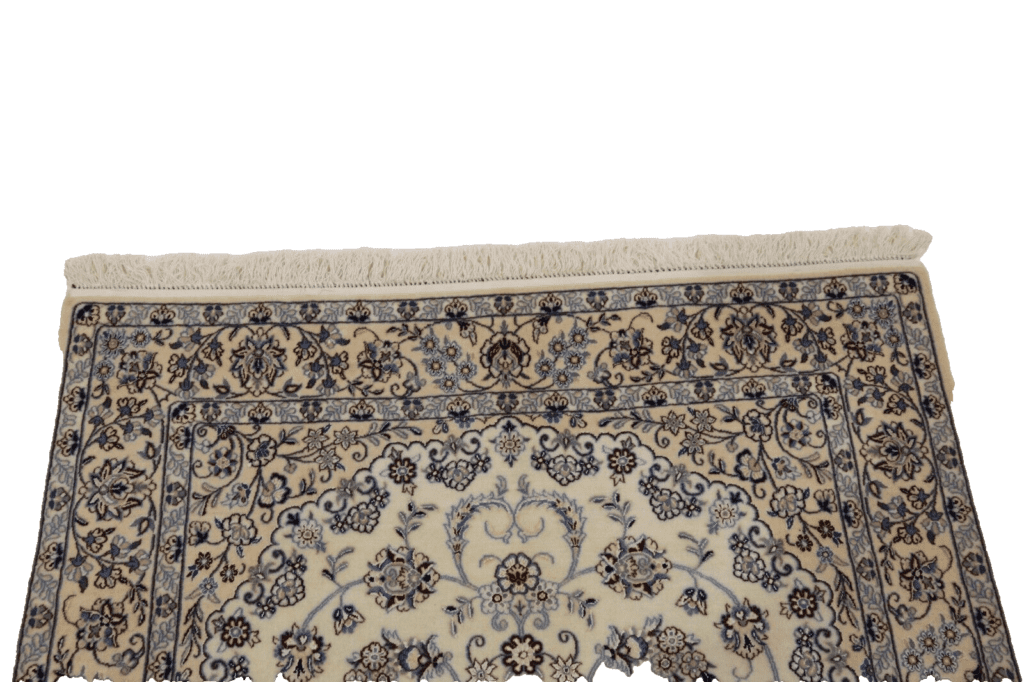
Nain pattern traditions often include floral forms, stylised leaves, scrolling branches and finely divided ornaments. Such elements may be arranged in a central composition or organised through repetition across the field. The important feature is the relationship between open space, contour and rhythm rather than any single motif. Fine lines create transitions, while broader areas give the arrangement visual calm. A dense knot structure helps the maker render small details and maintain clean boundaries.
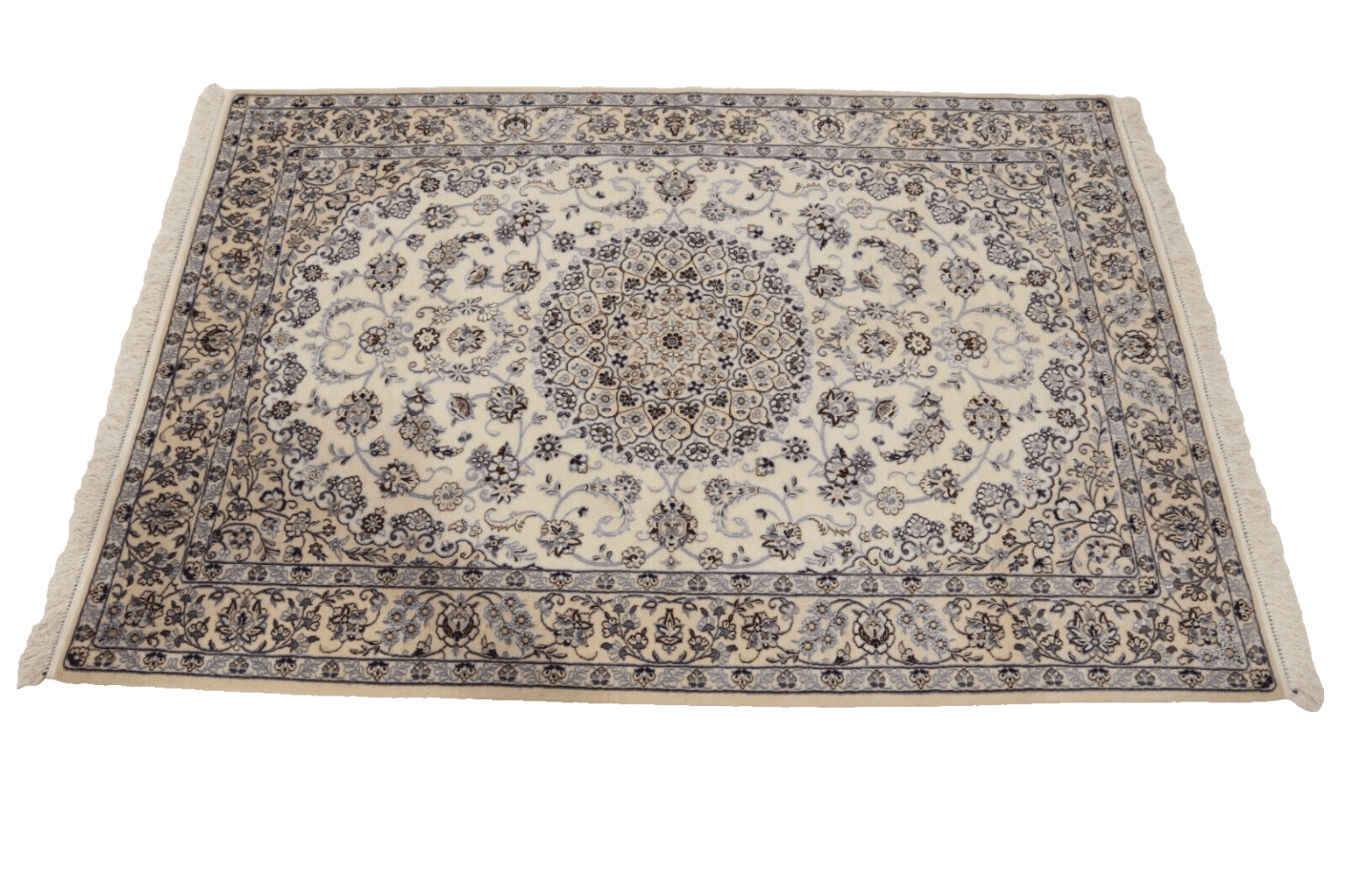
The colour of this rug is stated as white. In a Nain composition, white can serve as a light ground or as a defining part of the overall effect. Combined with natural silk, it may show subtle differences between matte and gently reflective areas as the light changes. The harmonious palette mentioned in the description brings the motifs together into a balanced view.
Oriental rug designs are often intended to remain legible both at close range and from farther away. At close range, the individual knots, small ornaments and transitions between forms become visible. From a greater distance, the larger composition comes forward. In a Nain rug, this effect is created through controlled repetition, carefully aligned lines and clear relationships between the design elements.
The name Nain 6 La identifies a recognised Nain design tradition without limiting the rug to one fixed motif. Rugs from Nain can use different compositions within the same regional language. They share an orientation toward Persian ornament, attention to detail and careful execution. This rug is described as detailed and harmonious; particular individual motifs are not specified.
Its traditional Oriental and Persian character allows the light design to work with different interior settings. In a living room it can form a calm textile foundation, while in a dining room or hallway it presents the same connection to Persian weaving tradition. These possible placements describe the design’s versatility and do not assign the rug to one particular room.
Special Features
The rug is described as new and in perfect condition. It is ready for use and, according to the description, requires no care or restoration work before being placed. A carpet certificate is included; it documents the rug’s authenticity and origin. The combination of cork wool, natural silk and a cotton warp, together with the hand-knotted construction, forms the set of specifically stated features.
For regular care, vacuuming without a brush attachment is recommended. A stain should be treated promptly with a damp cloth and a mild cleaning product. Professional rug cleaning is also given as an option for preserving the rug’s service life. These instructions are general care guidance for a hand-knotted wool and silk rug and do not replace a specialist assessment of a particular stain.
FAQ
How should I care for the Nain 6 La?
Vacuum the rug regularly without using a brush attachment. If a stain appears, treat it immediately with a damp cloth and a mild cleaning product. Professional rug cleaning can be used when a thorough, material-appropriate treatment is needed. These measures help keep the cork wool and natural silk pile in good condition.
Where does the Nain 6 La come from?
The Nain 6 La comes from the Nain region of Iran. Nain is known for high-quality hand-knotted Persian rugs made with fine materials and detailed patterns. This origin connects the rug with an established regional tradition of Persian carpet making.
What makes this Nain 6 La distinctive?
Its distinctive features are the hand-knotted construction, the use of cork wool and natural silk in the pile and the cotton warp. The fine knotting, harmonious design and new, perfect condition are also stated characteristics. A carpet certificate documents its authenticity and origin.
To provide the best experiences, we use technologies like cookies to store and/or access device information. Consenting to these technologies will allow us to process data such as browsing behavior or unique IDs on this site. Not consenting or withdrawing consent, may adversely affect certain features and functions.
Functional Always active
The technical storage or access is strictly necessary for the legitimate purpose of enabling the use of a specific service explicitly requested by the subscriber or user, or for the sole purpose of carrying out the transmission of a communication over an electronic communications network.
Preferences
The technical storage or access is necessary for the legitimate purpose of storing preferences that are not requested by the subscriber or user.
Statistics
The technical storage or access that is used exclusively for statistical purposes.The technical storage or access that is used exclusively for anonymous statistical purposes. Without a subpoena, voluntary compliance on the part of your Internet Service Provider, or additional records from a third party, information stored or retrieved for this purpose alone cannot usually be used to identify you.
Marketing
The technical storage or access is required to create user profiles to send advertising, or to track the user on a website or across several websites for similar marketing purposes.

 SECURE PAYMENT
 SHIPPING PARTNERS