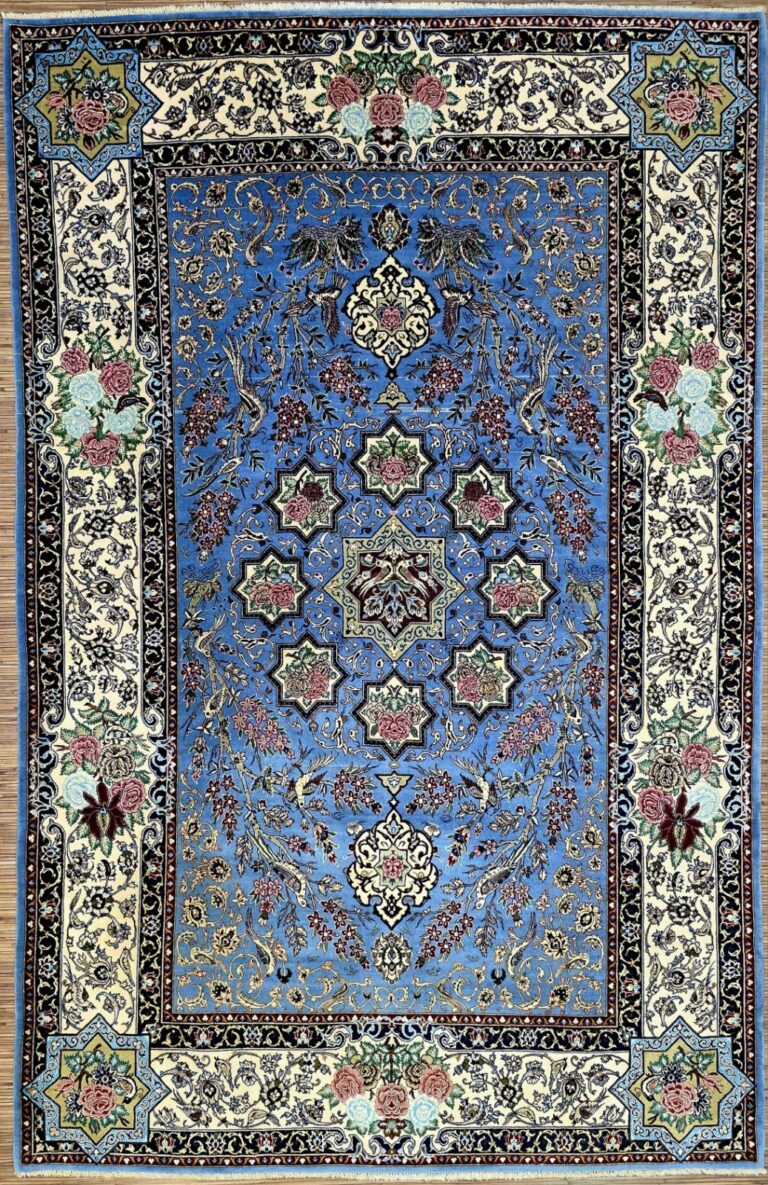
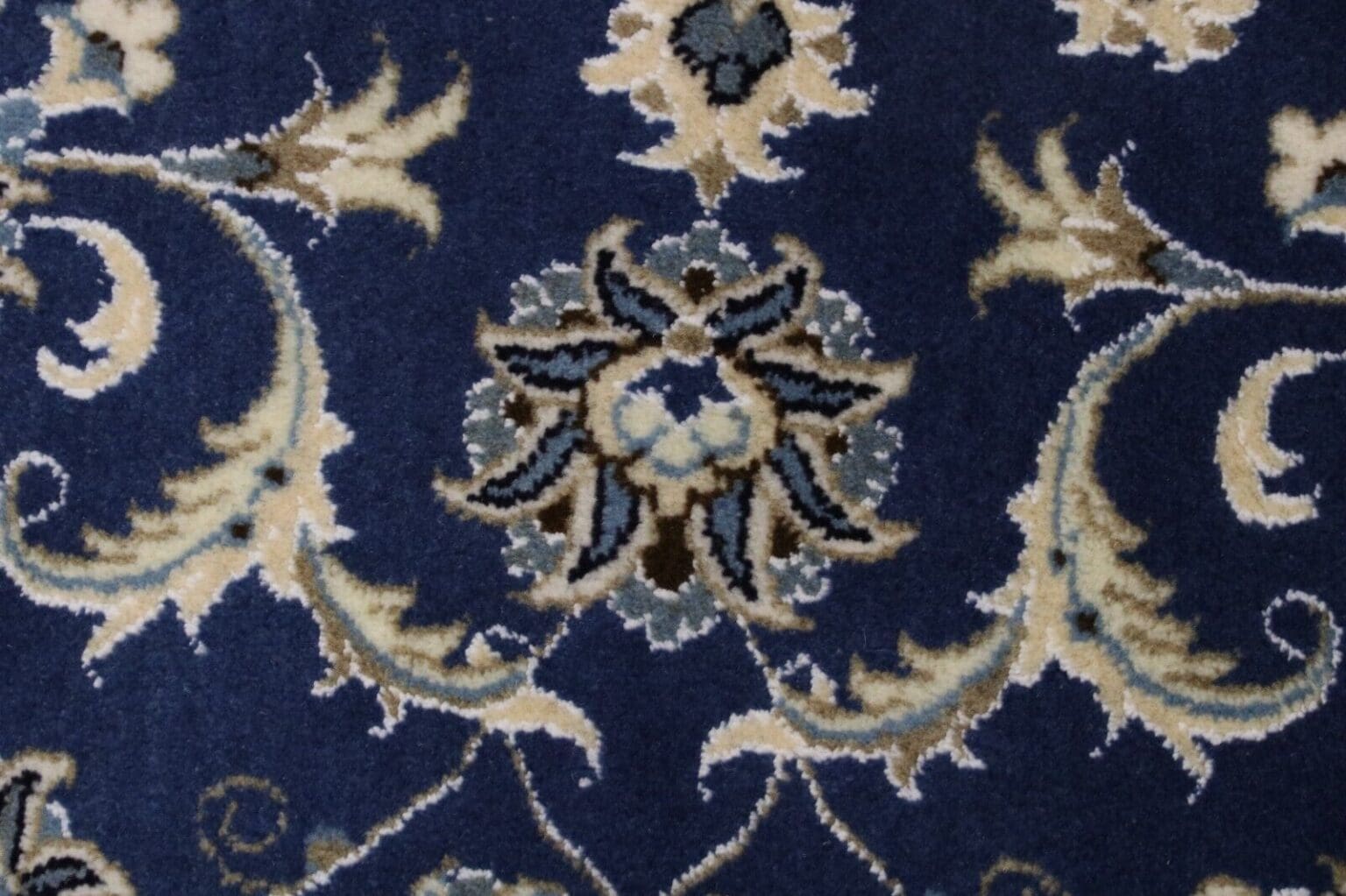
This Nain Persian rug is hand-knotted. Its pile consists of 90% virgin wool and 10% silk, while the warp is made from 100% cotton. The combination of wool and silk is associated with finely made Oriental rugs because the two fibres offer different tactile and visual qualities. Virgin wool gives the pile a naturally soft yet substantial surface. Wool can absorb and release moisture from the surrounding air and is also known for its thermoregulating properties, which can contribute to a balanced indoor climate.
Silk adds a smoother fibre structure and a gentle sheen to the wool pile. When the two materials are used together, the surface can respond to light in different ways, giving the colours a lively appearance as the viewing angle or illumination changes. The cotton warp forms the foundation to which the knots are attached. A properly tensioned warp is important for the stability and shape of a hand-knotted rug.
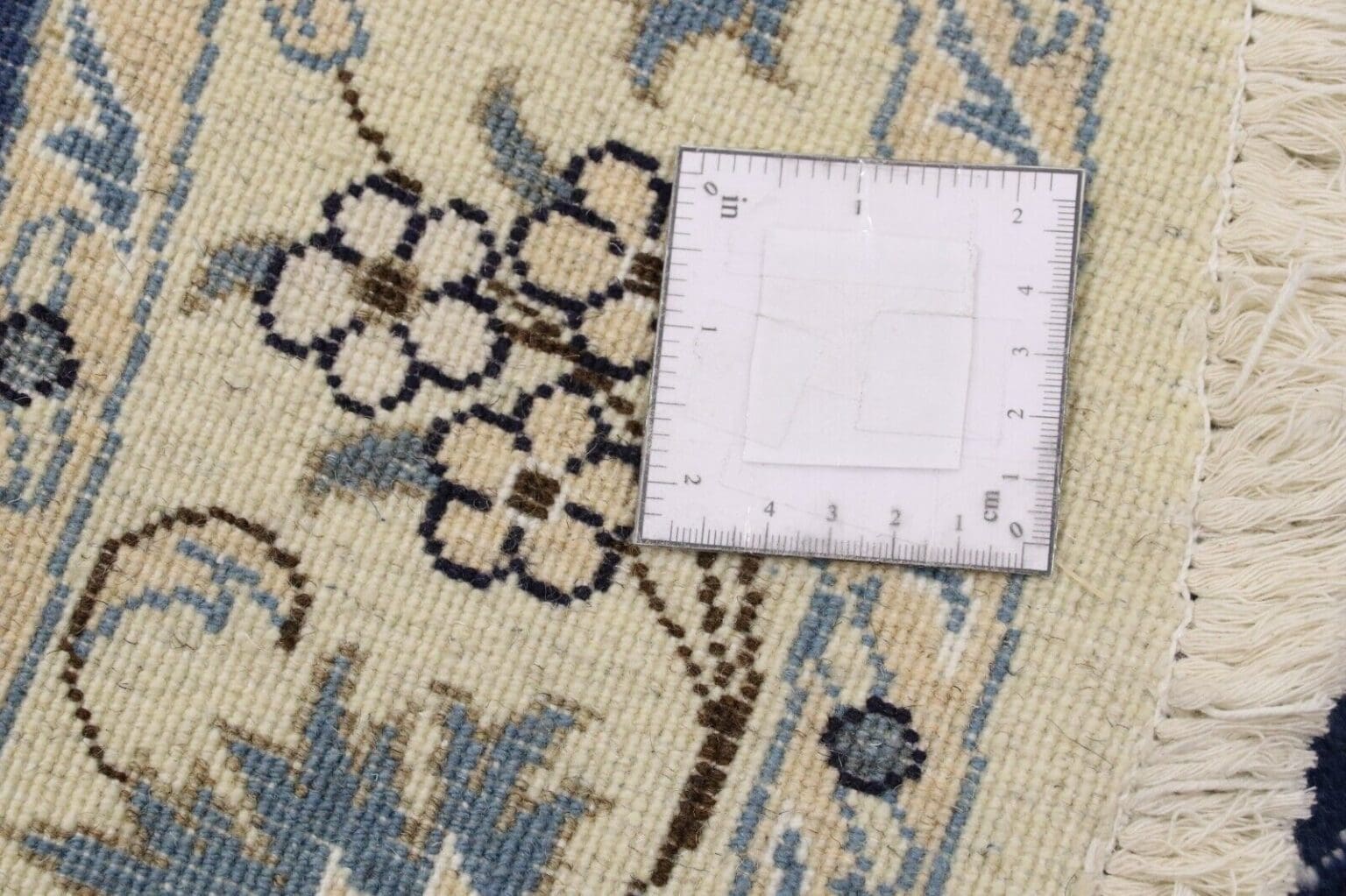
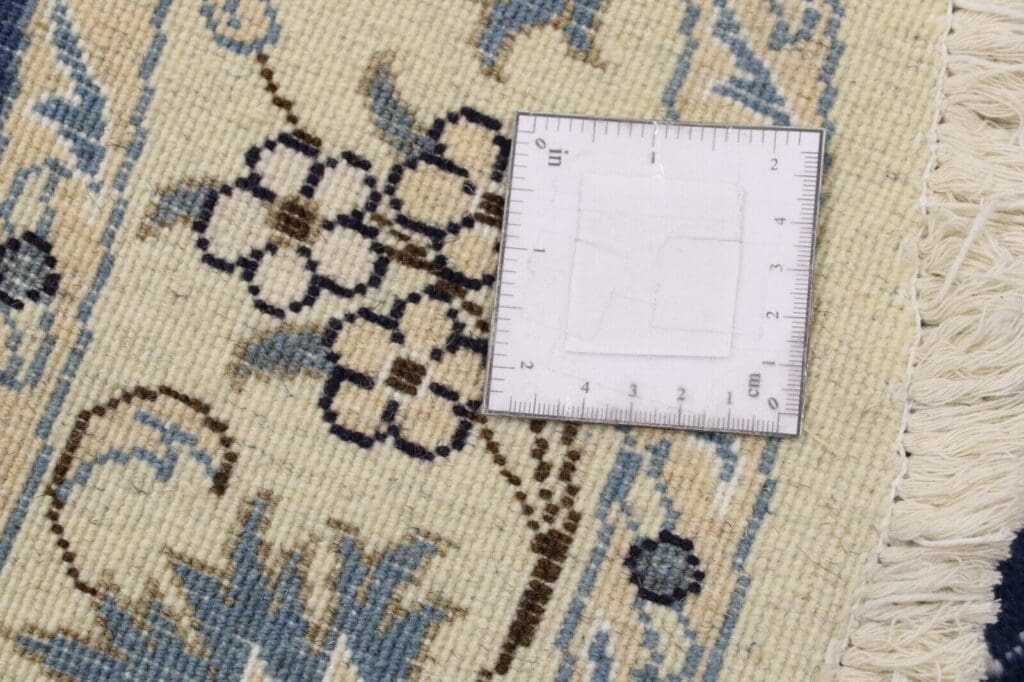
Hand-knotting builds the rug knot by knot. The design is not produced by a machine repeating a fixed surface; it is formed directly through the work of the knotter. The listed density of approximately 300,000 knots per square metre indicates a fine construction capable of carrying delicate and closely arranged details. A dense knot structure allows contours, floral elements and geometric accents to be coordinated with precision. At the same time, the rug retains the individual character that belongs to manual production.
Wool and silk combine a soft handle with a durable pile. The described material blend is intended to provide comfort as well as vivid colour effects. Because this is a hand-knotted piece, small individual variations in lines and transitions belong to its method of manufacture rather than indicating industrial uniformity. Every completed rug reflects the sequence of manual decisions made during knotting and finishing.
Origin and Tradition
Nain is one of Iran’s recognised carpet centres and is associated with finely made Persian rugs. The city lies in central Iran, within a region whose carpet culture developed its own visual identity. The tradition of carpet weaving in Nain reaches back to the eighteenth century. Knowledge about preparing the warp, placing the knots, refining outlines and working with wool and silk has been passed through generations of craftspeople.
Nain rugs are traditionally connected with carefully organised compositions and precise drawing. The knotters pay close attention to the regularity of the rows and to the transitions between the main field and its supporting forms. In a fine quality, the design must remain legible even when it contains many small details. The work therefore involves more than tying individual knots: it also requires the accurate execution of a planned arrangement across the whole surface.
The Nain tradition forms part of the wider history of Iranian carpet making. Persian rugs vary from one city and region to another in their composition, colour handling, knotting practices and preferred materials. Nain is commonly associated with fine floral elements set within a controlled overall structure. Wool and silk support this tradition by offering contrasting surface qualities that can clarify the drawing and add restrained changes in reflection.
A hand-knotted Persian rug is not created through a completely automated process. Each knot is inserted into the stretched warp and secured through the subsequent stages of making. The pattern grows gradually across the rug, with the craftsperson maintaining the relationship between repeated elements and larger structural lines. This explains why two rugs in the same regional tradition are not perfectly identical. Nain weaving combines an established local language with the particular execution of the individual maker.
The Persian or Iranian origin is central to the classification of this rug. Nain identifies both the origin and the associated regional tradition, rather than merely describing a decorative theme. The name refers to a place known for fine drawing, carefully selected materials and exacting handwork. This rug therefore belongs to the tradition of Iranian craftsmanship and Persian domestic culture, where a floor covering can also function as a composed textile design.
The history of Nain rugs is also connected with the exchange of technical knowledge within Iranian weaving communities. Motifs, colour relationships and construction methods were refined over time rather than appearing as isolated inventions. The result is a recognisable family of designs that can still allow variation from one workshop and one hand-knotted piece to another. Regional identity is expressed through recurring principles: controlled organisation, fine outlines, floral vocabulary and a careful balance between filled and open areas.
Design and Pattern
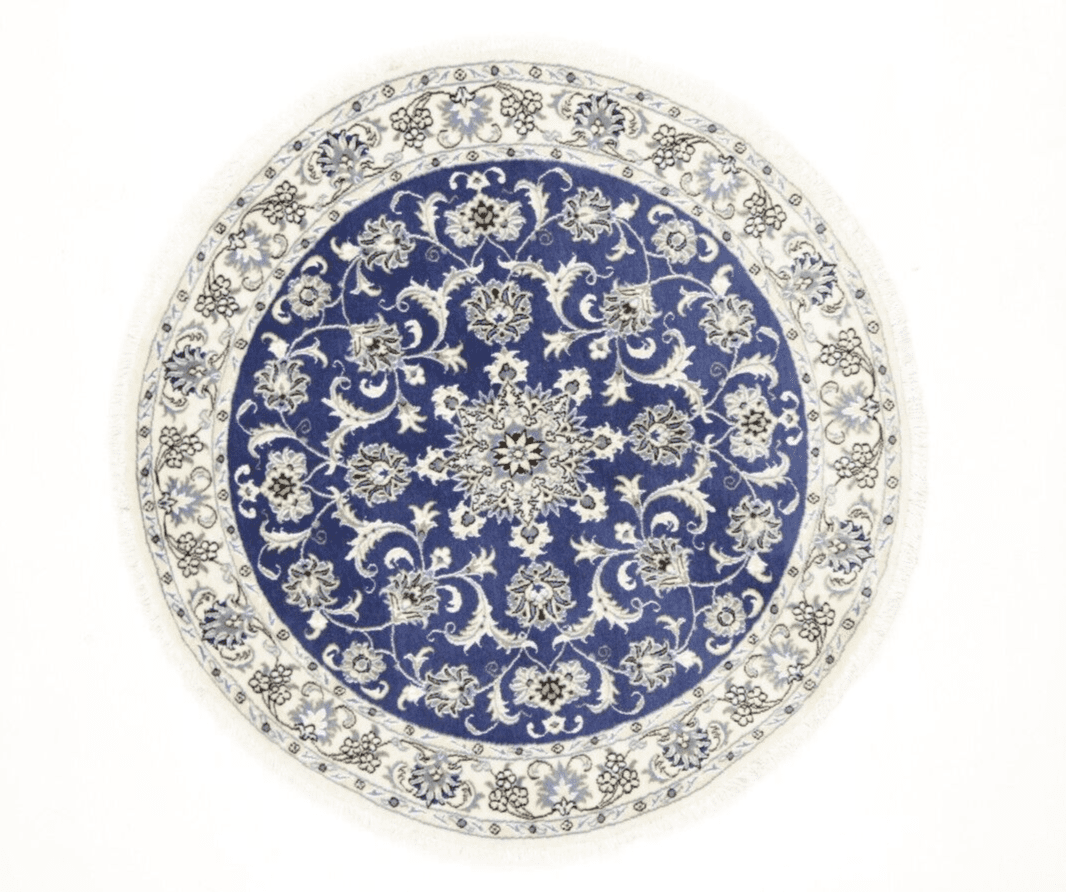
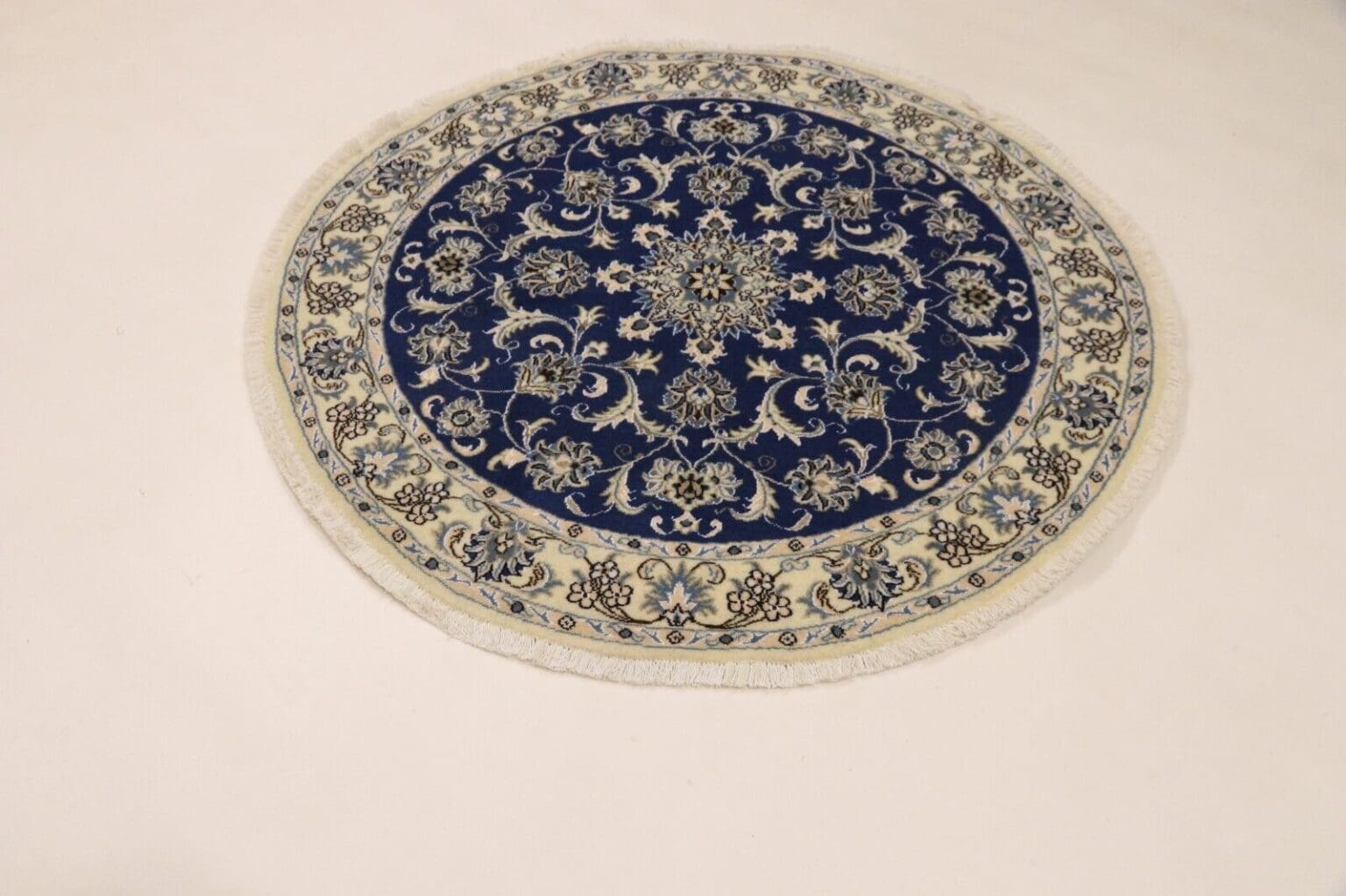
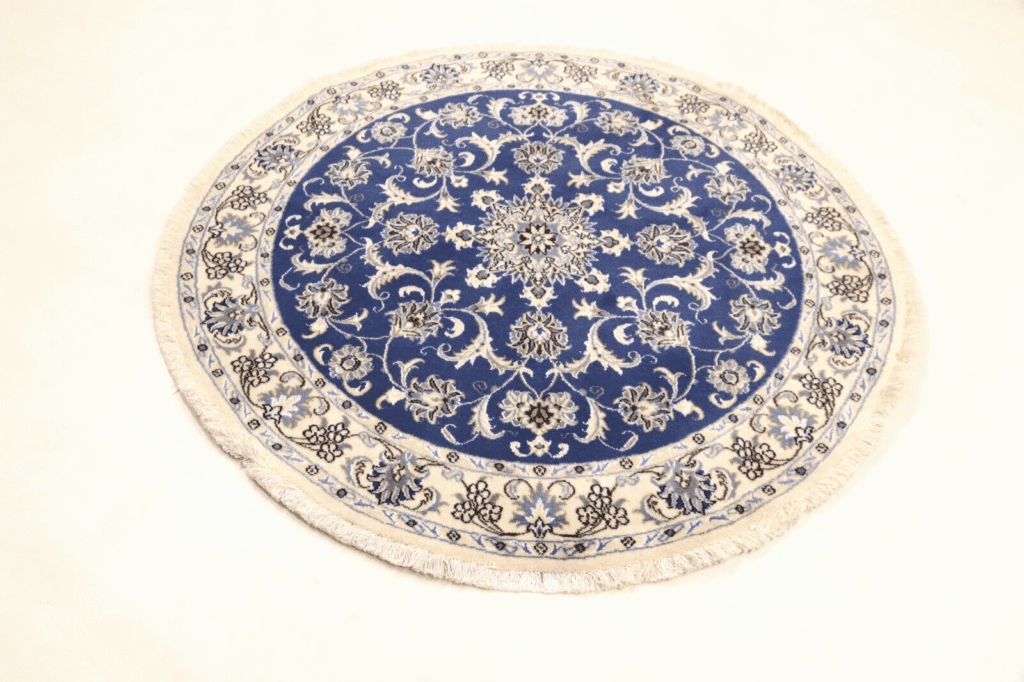
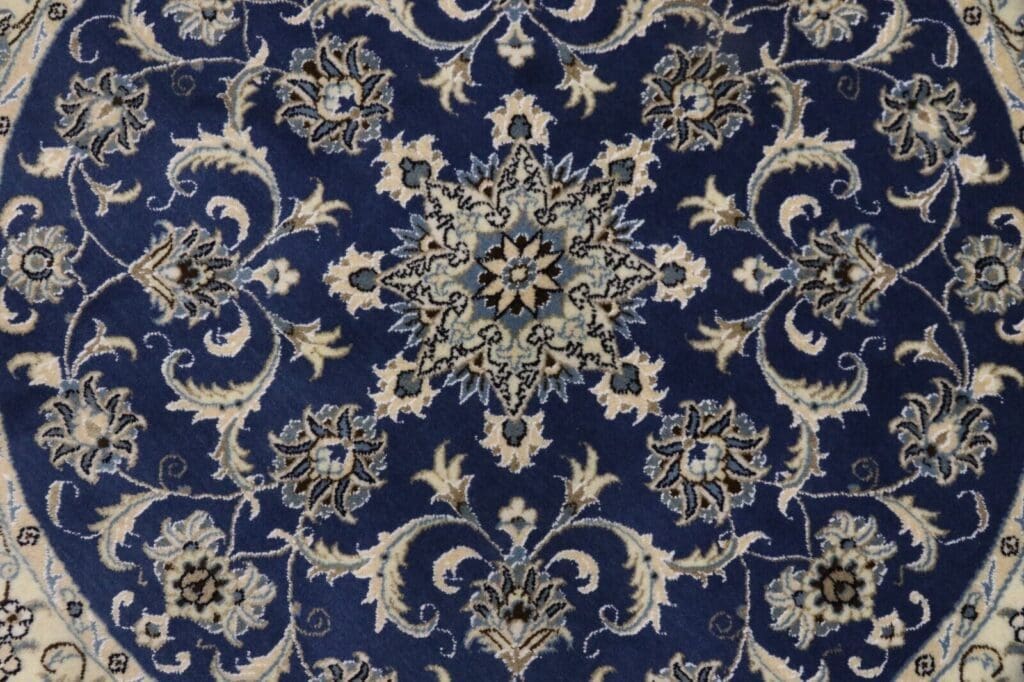
The rug is described in a traditional Oriental and Persian style and displays patterns typical of the Nain region. Designs in this tradition frequently use floral motifs together with geometric forms. Flowers, leaves and scrolling branches may be arranged within a disciplined composition, while geometric lines establish boundaries and visual order. These two languages are often combined: geometry provides structure, and botanical forms bring movement and detail to the field.
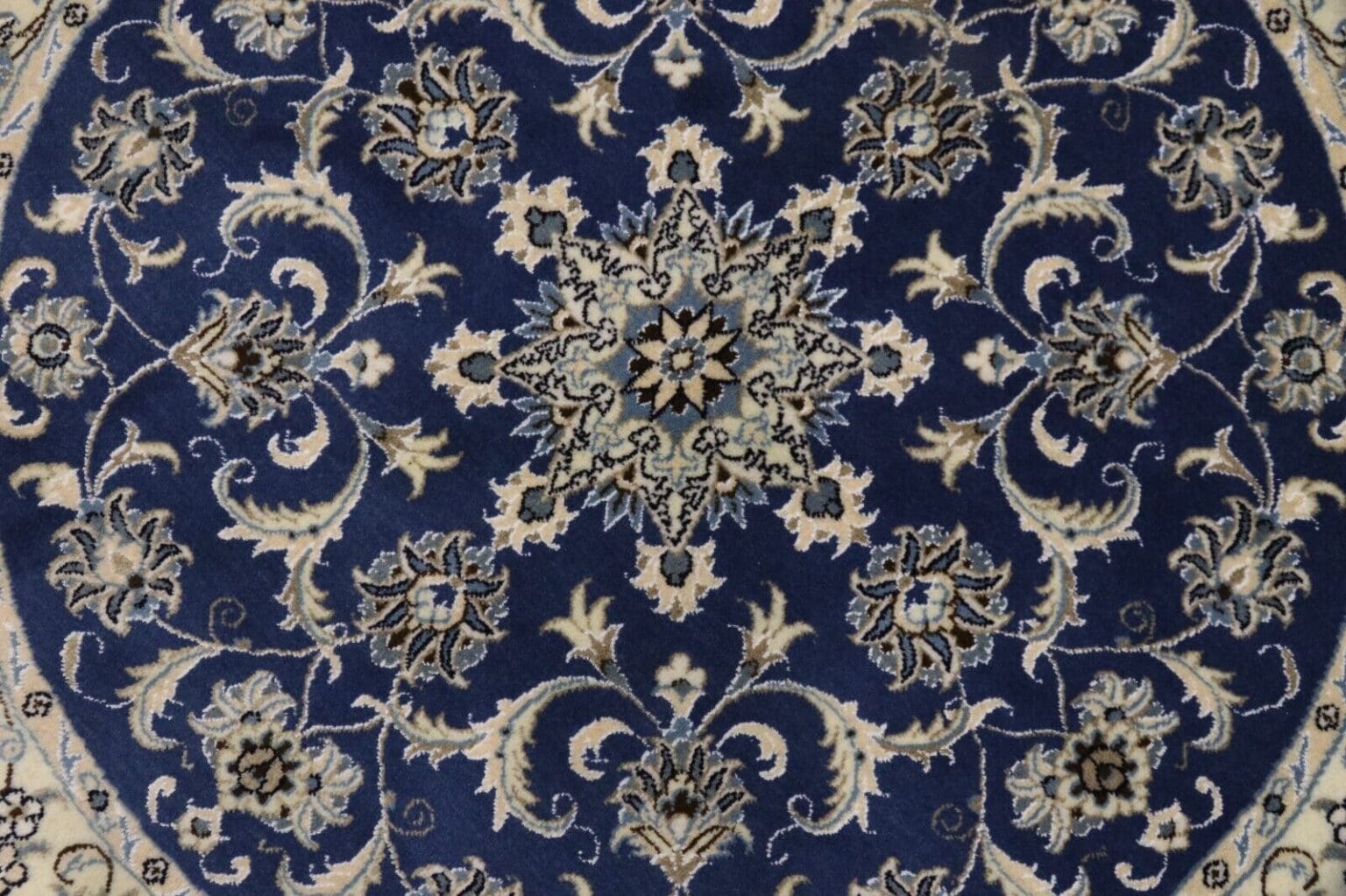
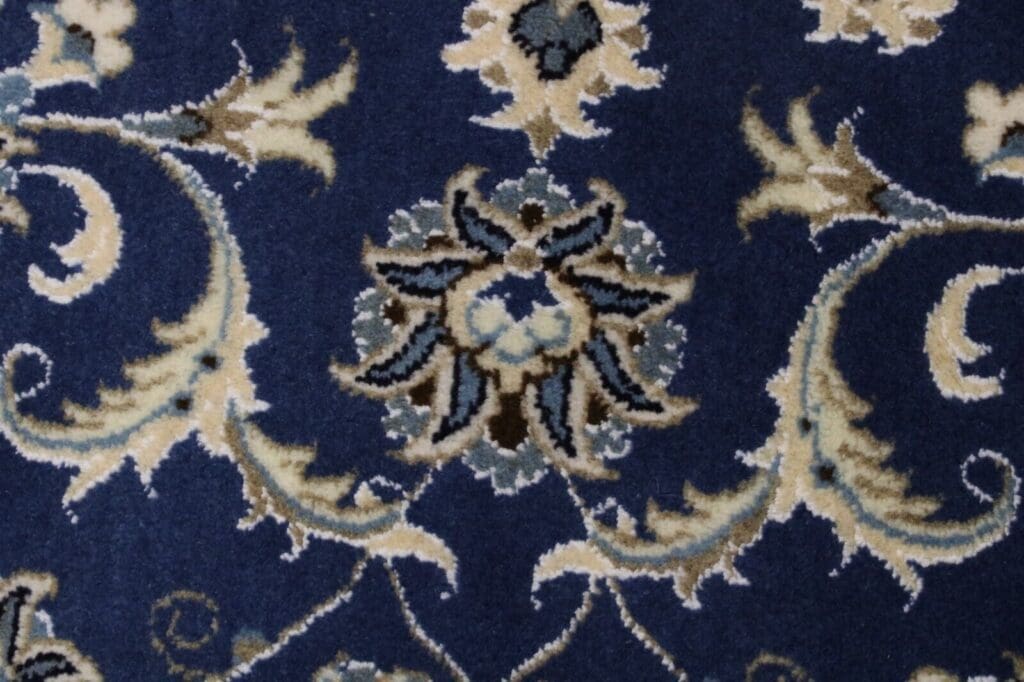
The drawing is typically built from many elements that are carefully related to one another. Fine contours define leaves and blossoms, while recurring lines guide the eye through the composition. Geometric accents can reinforce the order of a floral field or frame individual areas within it. The effect comes not from one isolated large image but from the relationship among numerous small components. Precise handwork is essential when such a design is transferred into knots.
Nain carpets are often linked with soft, harmonious colours. Such a palette allows slender lines and small floral details to remain visible without making the composition appear disjointed. Wool and silk can reflect light differently, which may create subtle changes in the surface impression under different lighting conditions. These variations are part of the material effect and do not alter the underlying organisation of the pattern.
Oriental carpet design is not purely ornamental. The arrangement of floral and geometric forms reflects a Persian tradition in which a rug is planned as a balanced field. Symmetry, repetition and clear relationships between centre, border and secondary elements are common principles in regional carpet art. With a fine knotting technique, these principles can be worked into very small details, allowing the pattern to remain coherent from a distance and carefully articulated on closer inspection.
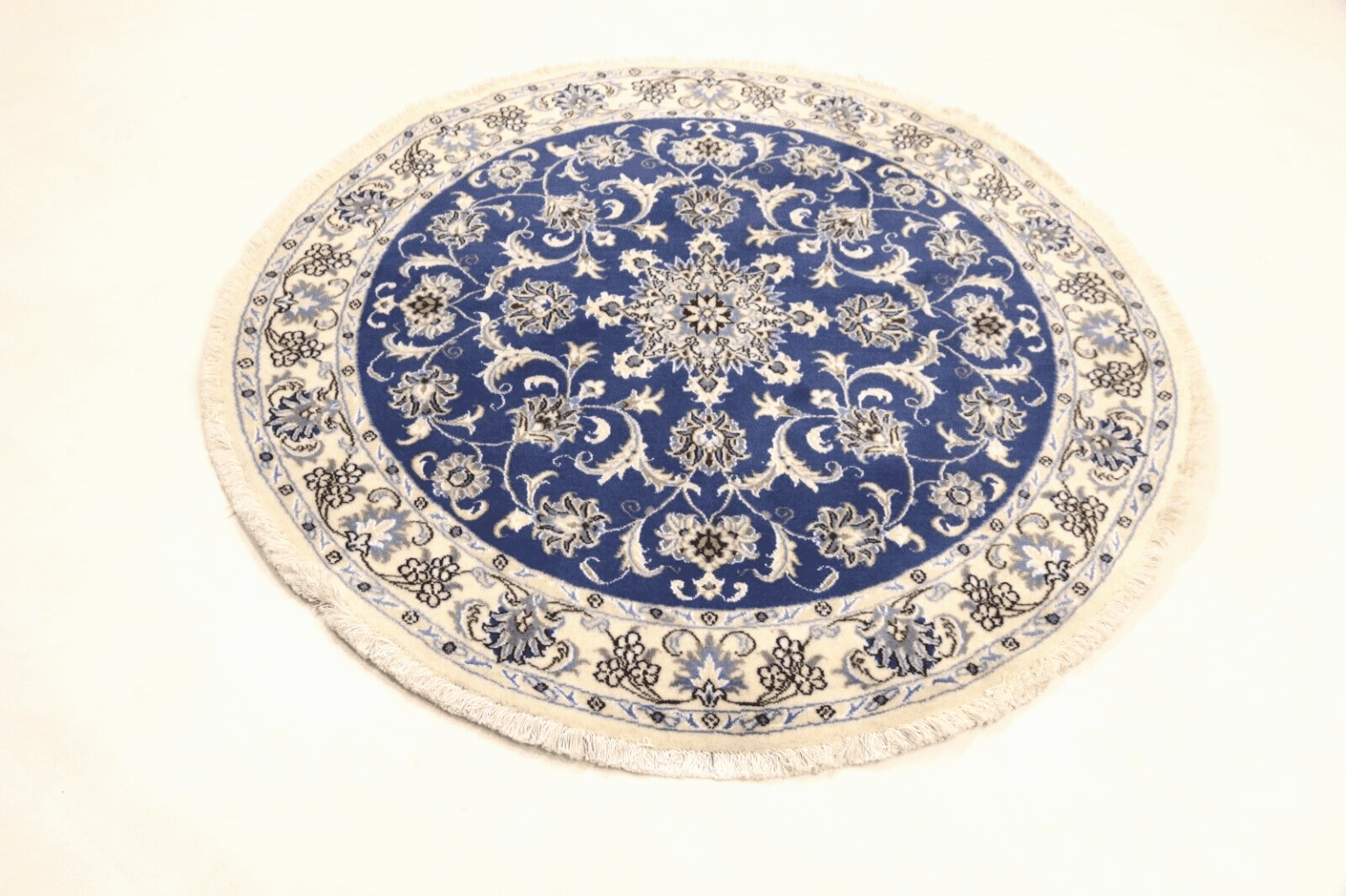
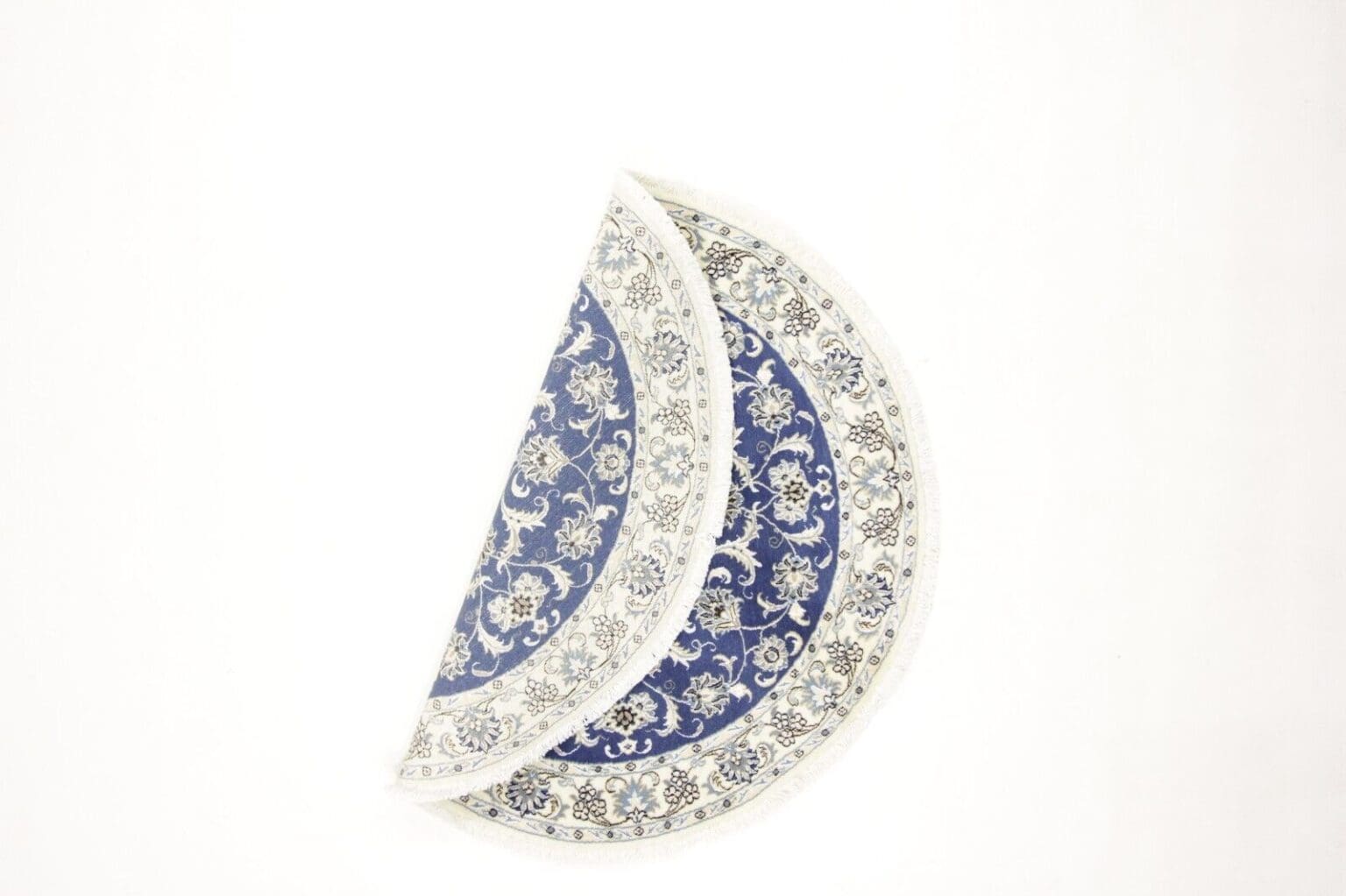
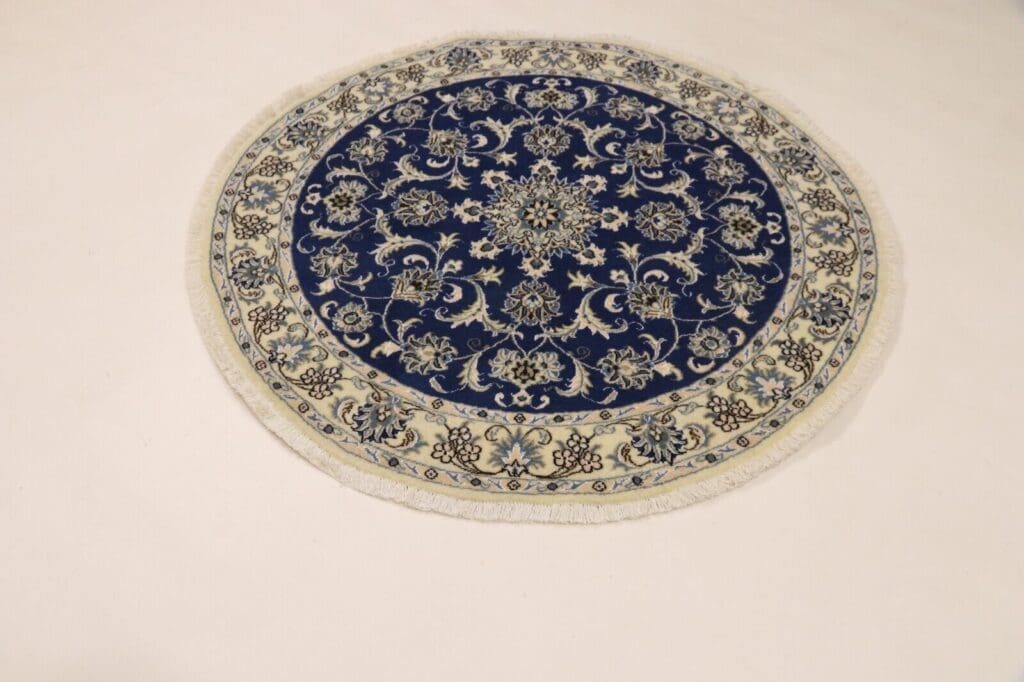
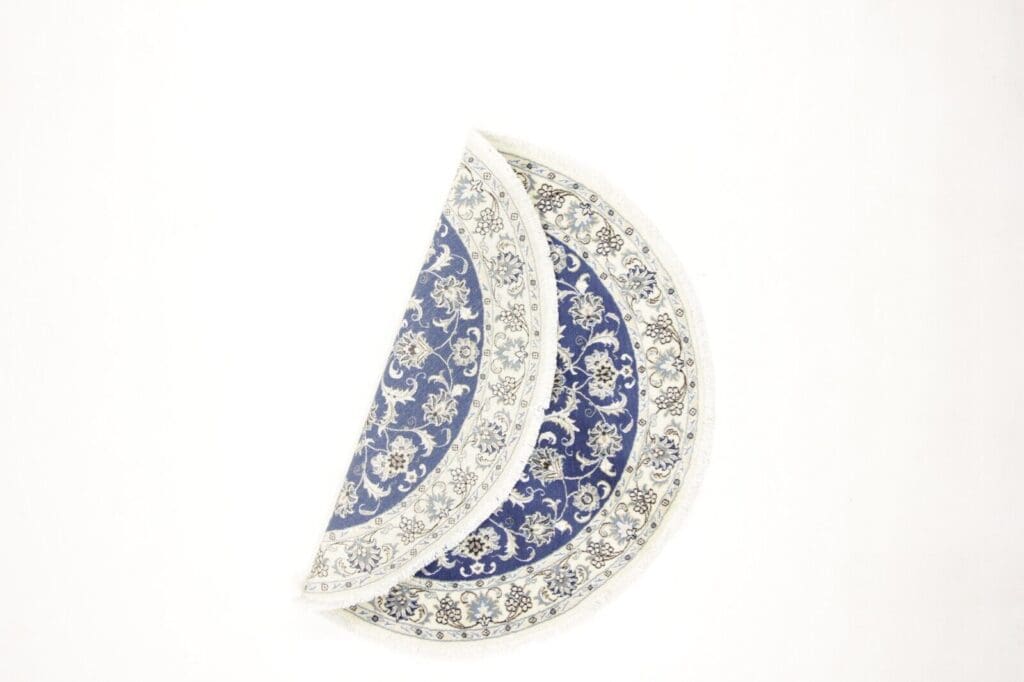
This rug is round, an explicitly stated feature that distinguishes its presentation from the more familiar rectangular carpet format. A circular outline changes how the pattern is perceived because the composition is read as a continuous, enclosed form. The Oriental and Persian character remains visible through the use of floral and geometric design principles. The round shape therefore places a regional pattern tradition within a less conventional field arrangement.
Nain design should not be understood as one single fixed motif. Within the regional vocabulary, floral elements, scrolling forms, geometric structures and colour gradations can be combined in different ways. What links the tradition is the fine execution, measured organisation and precision of the drawing. These characteristics explain why Nain rugs are identified through both their craftsmanship and their regional design language.
The interaction between pattern and material is also important. Wool gives the field a more tactile presence, while silk can sharpen selected visual transitions through its smoother surface and restrained lustre. In a hand-knotted rug, the design is inseparable from the construction: the scale of a motif, the clarity of an outline and the rhythm of repeated forms all depend on the way the knots are placed. The Nain approach uses this relationship to create a finely articulated textile surface.
Special Features
A defining feature of this rug is its blend of virgin wool and silk. The materials provide a soft texture, a lively colour effect and a gentle sheen. Hand-knotting makes every rug unique, since no two individually knotted pieces are exactly alike. The particular lines, transitions and small variations in the drawing carry the marks of manual work rather than factory repetition.
The rug is described as new and perfect. It is suitable for rooms with underfloor heating and is listed as pet-friendly. Its shape is round. Living rooms, dining rooms and hallways are given as suitable locations. On a light-coloured floor, the pattern and colours can stand out clearly. Direct sunlight should be avoided because prolonged exposure can cause colours to fade over time.
FAQ
How should the Nain Persian rug be cared for?
Regular vacuuming removes dust and loose dirt from the pile and is part of basic rug care. The vacuum should be used with a suitable setting and without unnecessarily aggressive brushing, so that the surface is not strained. If liquid is spilled, it should be absorbed as soon as possible rather than rubbed deeply into the pile. Professional cleaning at longer intervals provides a more thorough treatment. Wool and silk should not be exposed to harsh household cleaners. A specialist cleaning process can take the more delicate silk fibre, the wool pile and the hand-knotted construction into account.
Can this rug be used with underfloor heating?
Yes. The Nain Persian rug is suitable for rooms with underfloor heating. Wool has insulating and thermoregulating qualities while remaining breathable, so it can be used above a heated floor without losing its natural material character. An evenly heated, dry and clean base is generally sensible. The rug should lie flat and be cared for regularly so that dust does not accumulate between the pile and the floor. Its suitability for underfloor heating is one of the stated practical features of this piece.
Where is the round rug best placed?
The rug is suitable for living rooms, dining rooms and hallways. Its round outline works well wherever a continuous, non-rectangular textile area is desired. A light-coloured floor can make the pattern and colours particularly clear. When choosing a position, use a level surface and avoid direct sources of sunlight, since prolonged sunlight can fade colours. The rug is also described as pet-friendly and can therefore be used in a household with pets. Regular vacuuming remains useful in such rooms because it removes everyday dust and dirt from the pile.
To provide the best experiences, we use technologies like cookies to store and/or access device information. Consenting to these technologies will allow us to process data such as browsing behavior or unique IDs on this site. Not consenting or withdrawing consent, may adversely affect certain features and functions.
Functional Always active
The technical storage or access is strictly necessary for the legitimate purpose of enabling the use of a specific service explicitly requested by the subscriber or user, or for the sole purpose of carrying out the transmission of a communication over an electronic communications network.
Preferences
The technical storage or access is necessary for the legitimate purpose of storing preferences that are not requested by the subscriber or user.
Statistics
The technical storage or access that is used exclusively for statistical purposes.The technical storage or access that is used exclusively for anonymous statistical purposes. Without a subpoena, voluntary compliance on the part of your Internet Service Provider, or additional records from a third party, information stored or retrieved for this purpose alone cannot usually be used to identify you.
Marketing
The technical storage or access is required to create user profiles to send advertising, or to track the user on a website or across several websites for similar marketing purposes.
 SECURE PAYMENT
 SHIPPING PARTNERS