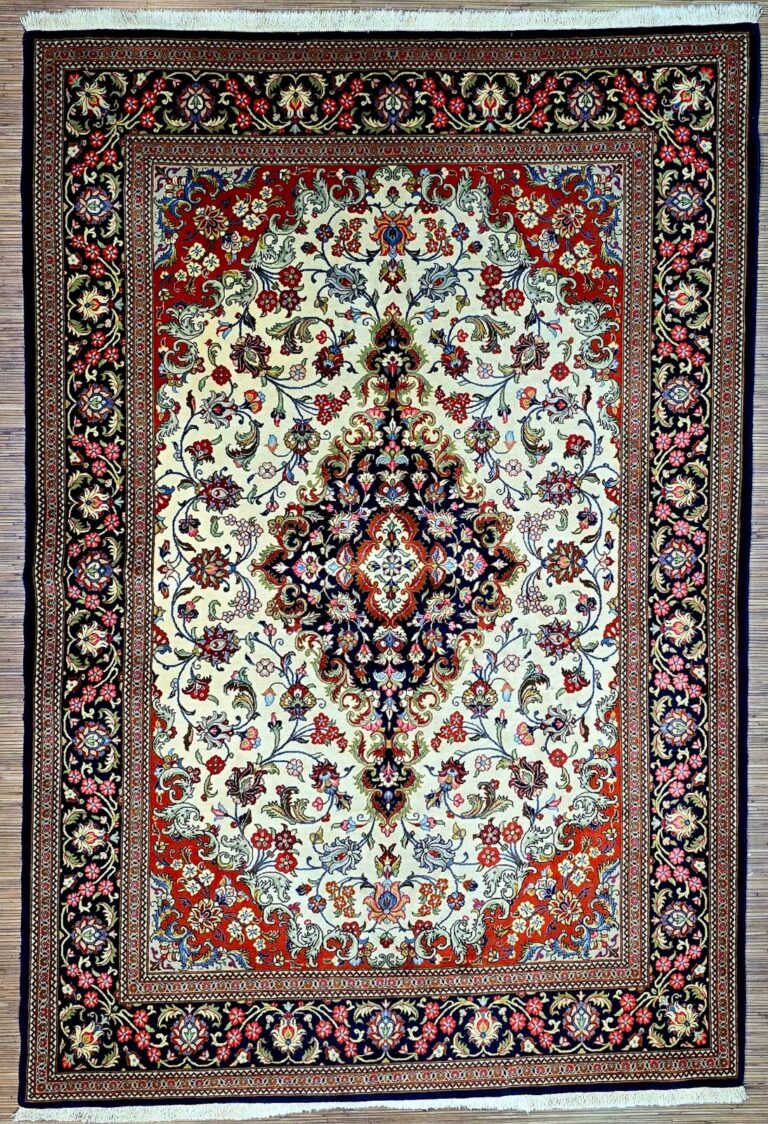
This Persian rug from Nain is hand-knotted. Its pile is made from 100% new wool, while the warp is made from 100% cotton. These materials describe the rug’s basic construction: the wool forms the visible pile and the cotton provides the foundation into which the knots are secured. New wool is used in rug making for its natural resilience, elasticity and pleasant feel. It can retain warmth and gives a wool-pile rug a comfortable tactile character.
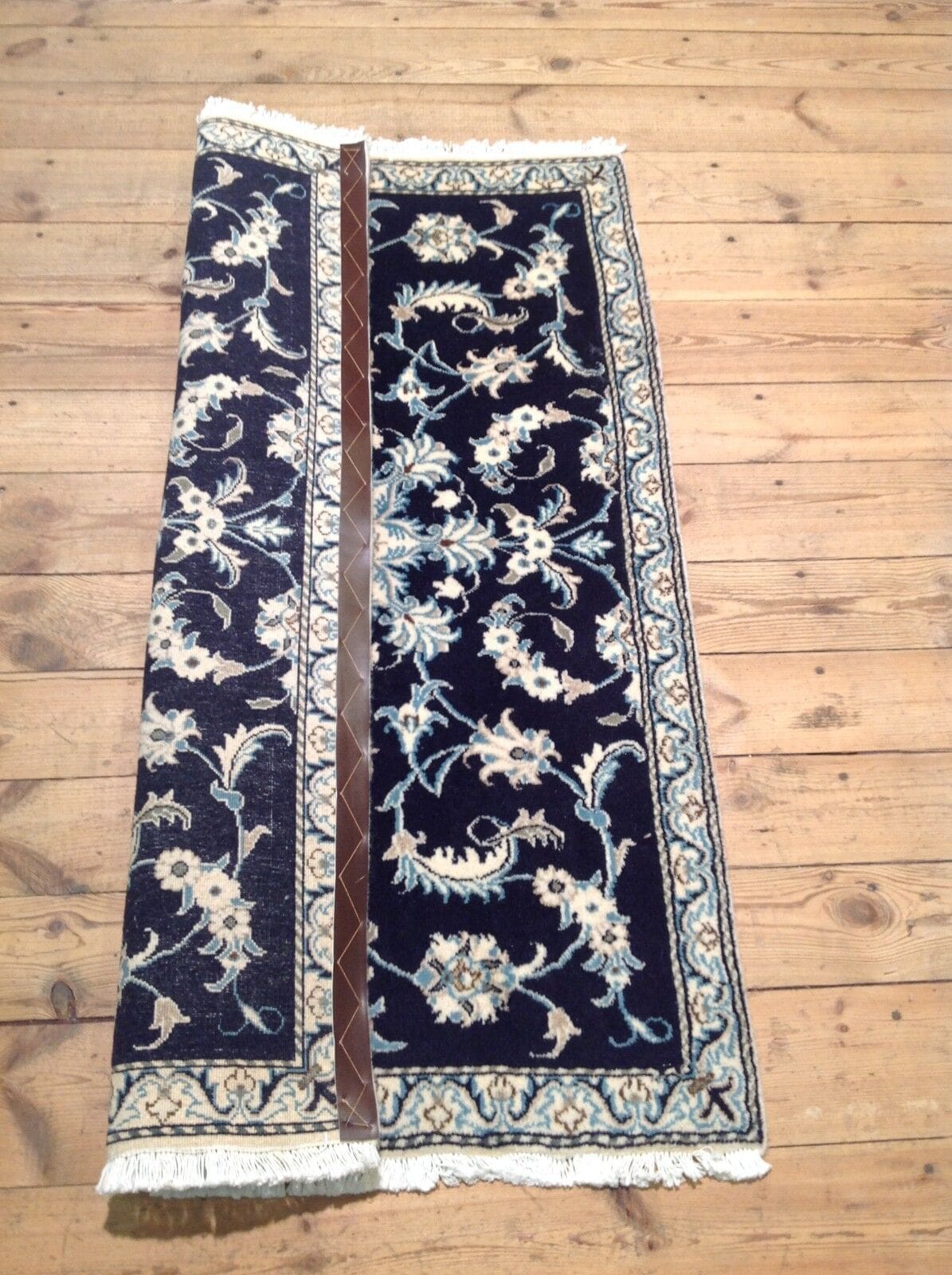
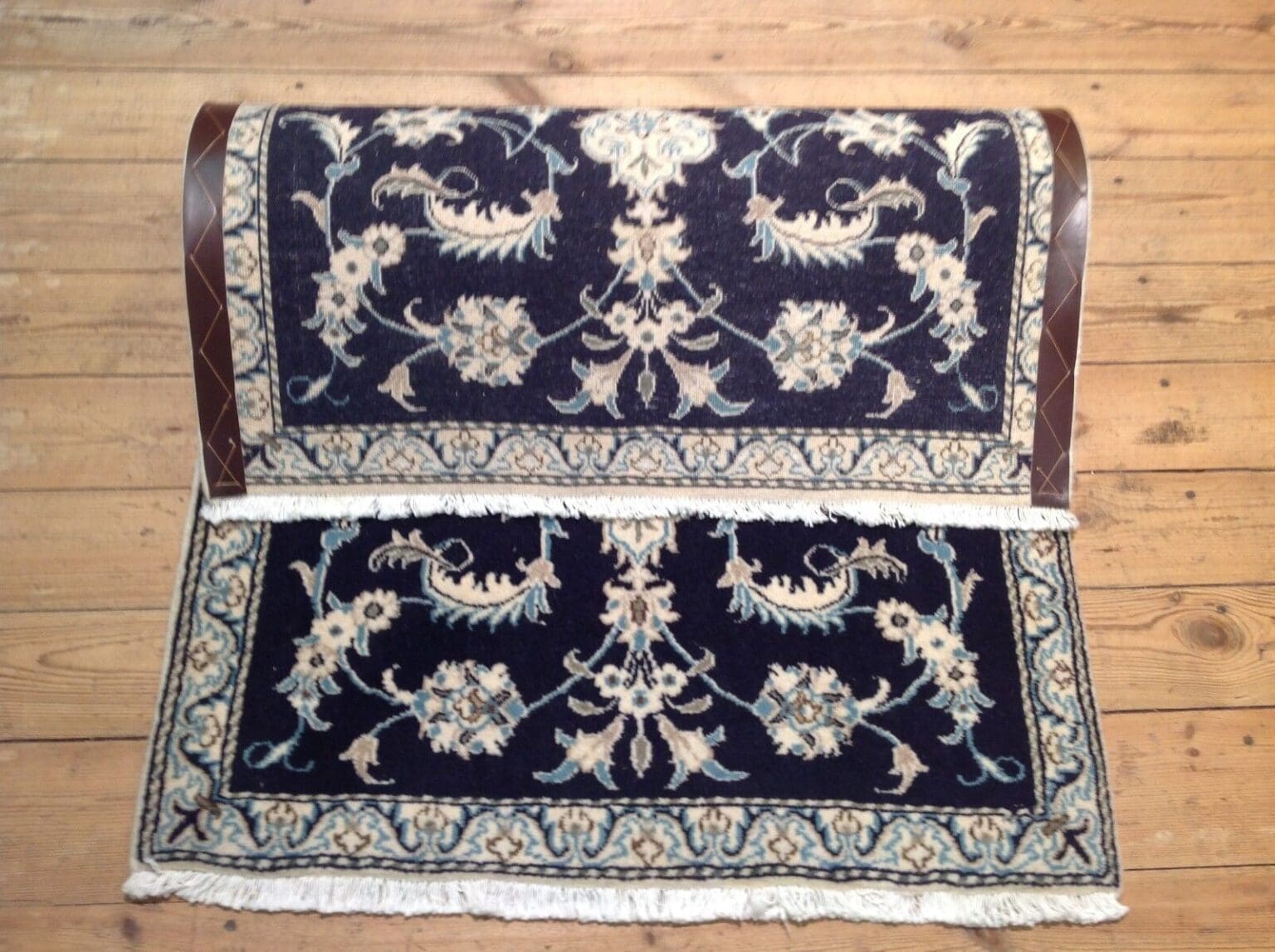
Hand-knotting is carried out knot by knot. The pile is attached to the warp by hand rather than being produced as a fully industrial surface. This process gives each individual rug its own character. The high knot density specified for this piece supports the precise rendering of lines, outlines and smaller pattern details. Minor variations can occur in a hand-knotted rug and are characteristic of manual workmanship rather than evidence of a machine-made product.
Wool combines a soft surface with a resilient fibre structure. Its natural elasticity allows the pile to respond to use and helps it recover after being compressed. Wool is also known for its warmth-retaining properties and comfortable handle. The cotton warp forms the structural basis of the rug, holding the rows of knots in place. The two fibres therefore have distinct roles within the construction described for this piece.
The rug is listed as new. Its appearance is shaped by the hand-knotted technique, the wool pile and the fine knotting. Hand-knotted is not merely a description of production; it also refers to the individual surface structure created when a weaver transfers the design into the rug by hand. This makes the workmanship an essential part of how the piece is made and perceived.
The combination of a wool pile and cotton warp is also practical within traditional rug construction. The pile provides the visible texture and colour field, while the warp supports the knot structure. Preparing, tensioning and working these elements requires care and experience. The stated materials are therefore part of both the tactile impression and the technical identity of the rug.
Origin and Tradition
Nain is located in northeastern Persia and in Iran’s Isfahan province. The city is known for its rug weaving and has developed a distinct place within Persian carpet culture. Nain is associated with careful workmanship, fine wool qualities and an orderly approach to design. This piece is offered as a Persian rug from Nain and therefore belongs to the Iranian Persian tradition of hand-knotted rugs.
The weaving tradition of Nain is part of a craft culture that has developed over centuries. Knowledge of fibres, knotting, proportions, drawing and finishing is passed through workshop practice. Making a rug involves more than repeating individual knots. The warp must be prepared, the pile material selected, the design divided across the field and the drawing translated into a sequence that can be woven. Each stage depends on patience and an understanding of how structure and ornament work together.
Nain’s position in the Iranian highlands forms part of the cultural setting of its weaving tradition. Nain rugs are often associated with clear outlines, balanced areas and a controlled arrangement of ornament. Floral and geometric elements may be combined within an organised composition. These are general characteristics of the regional tradition, not additional claims about a particular motif that is not named for this rug. They explain the design language commonly connected with the place of origin.
Different centres within Persian carpet making have developed their own working methods and visual vocabularies. Nain is particularly connected with fine knotting and carefully drawn patterns. The tradition depends on the interaction of planning and handwork: a design is arranged according to a system of proportions, then transferred into the pile one knot at a time. This creates a relationship between the workshop’s technical knowledge and the inherited decorative language of the region.
Persian rugs serve both a practical and a cultural purpose. They cover and organise a floor, contribute warmth and define a part of an interior. At the same time, they preserve patterns, techniques and regional ideas of balance. In Nain weaving, this relationship is commonly expressed through fine contours, repeated structures and a measured relationship between ground and ornament. Origin therefore refers not only to a location but also to a network of materials, skills and traditions.
Hand-knotting makes every rug an individual woven object. Even when established motifs and compositional principles are used, their exact execution depends on the person weaving, the knot density and the particular interpretation of the drawing. Nain consequently identifies a recognised area of Persian rug culture rather than a purely serial industrial product. The origin, technique and design tradition remain connected throughout the making process.
The history of Nain weaving can also be understood through its emphasis on refinement and order. A regional style is maintained through repeated knowledge, yet it is not identical from one rug to another. Weavers work within a tradition while producing a separate piece. This balance between continuity and individual execution is one reason the place name Nain carries both geographical and craft-related meaning in Persian rug terminology.
Design and Pattern
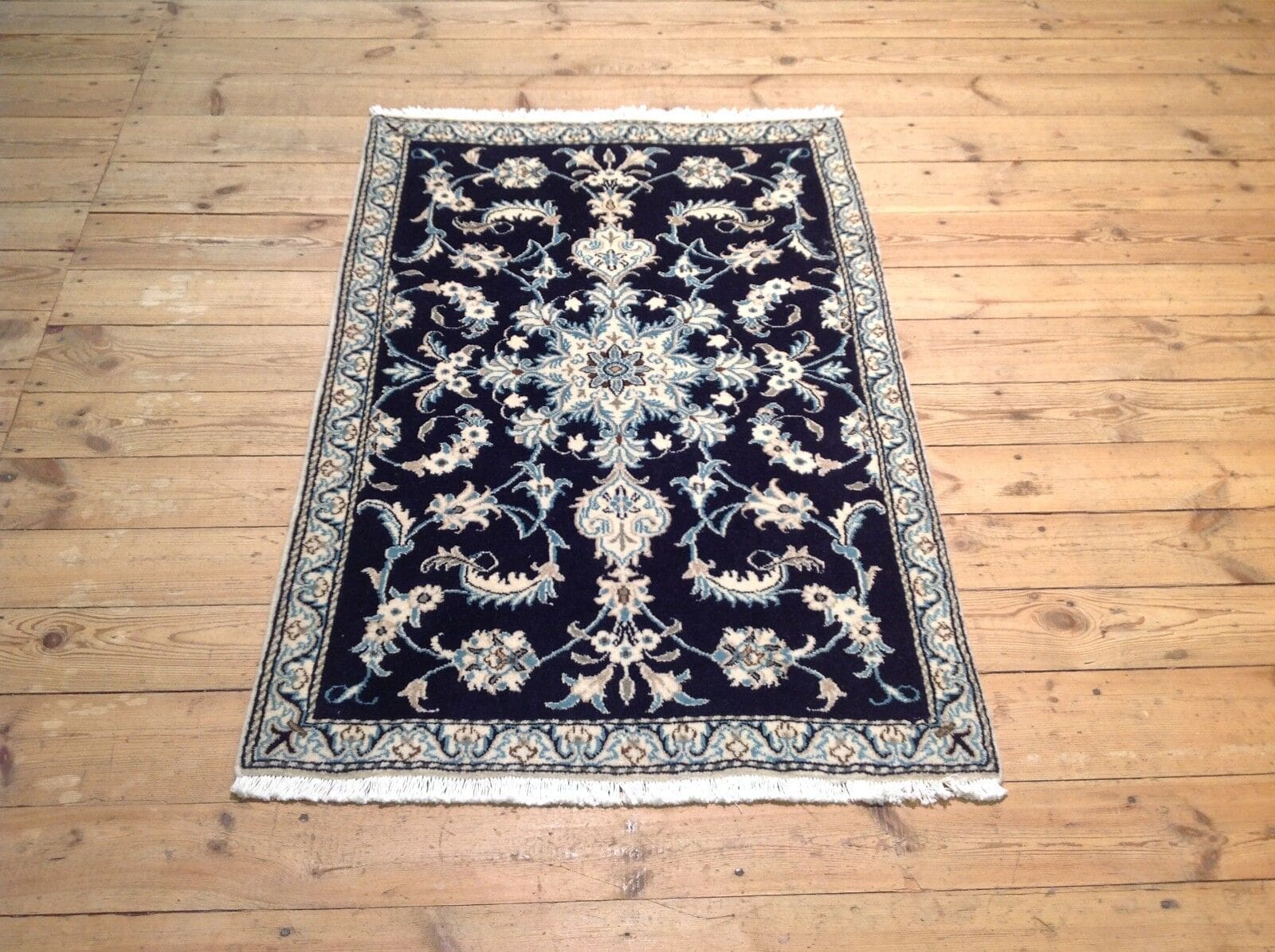
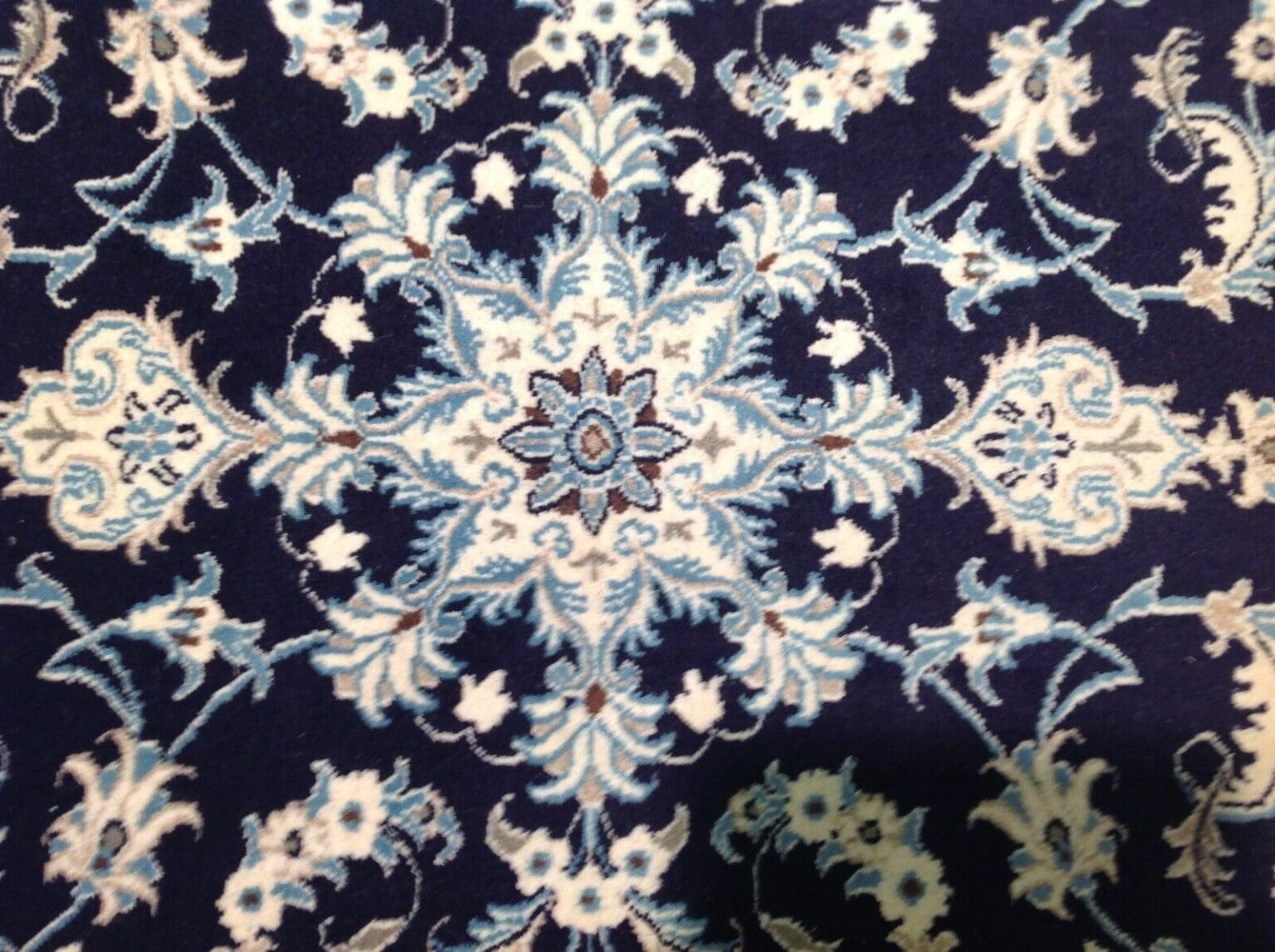
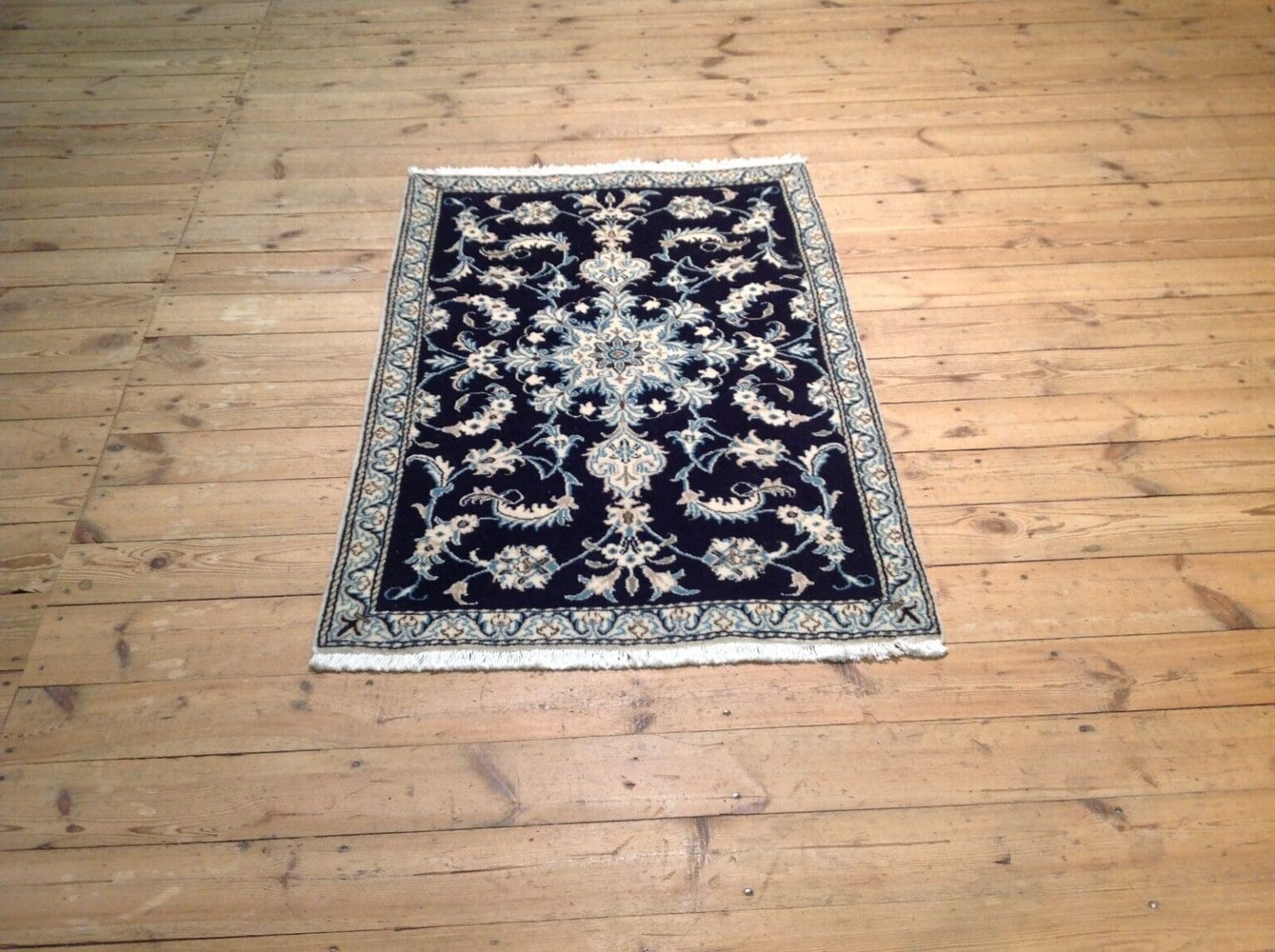
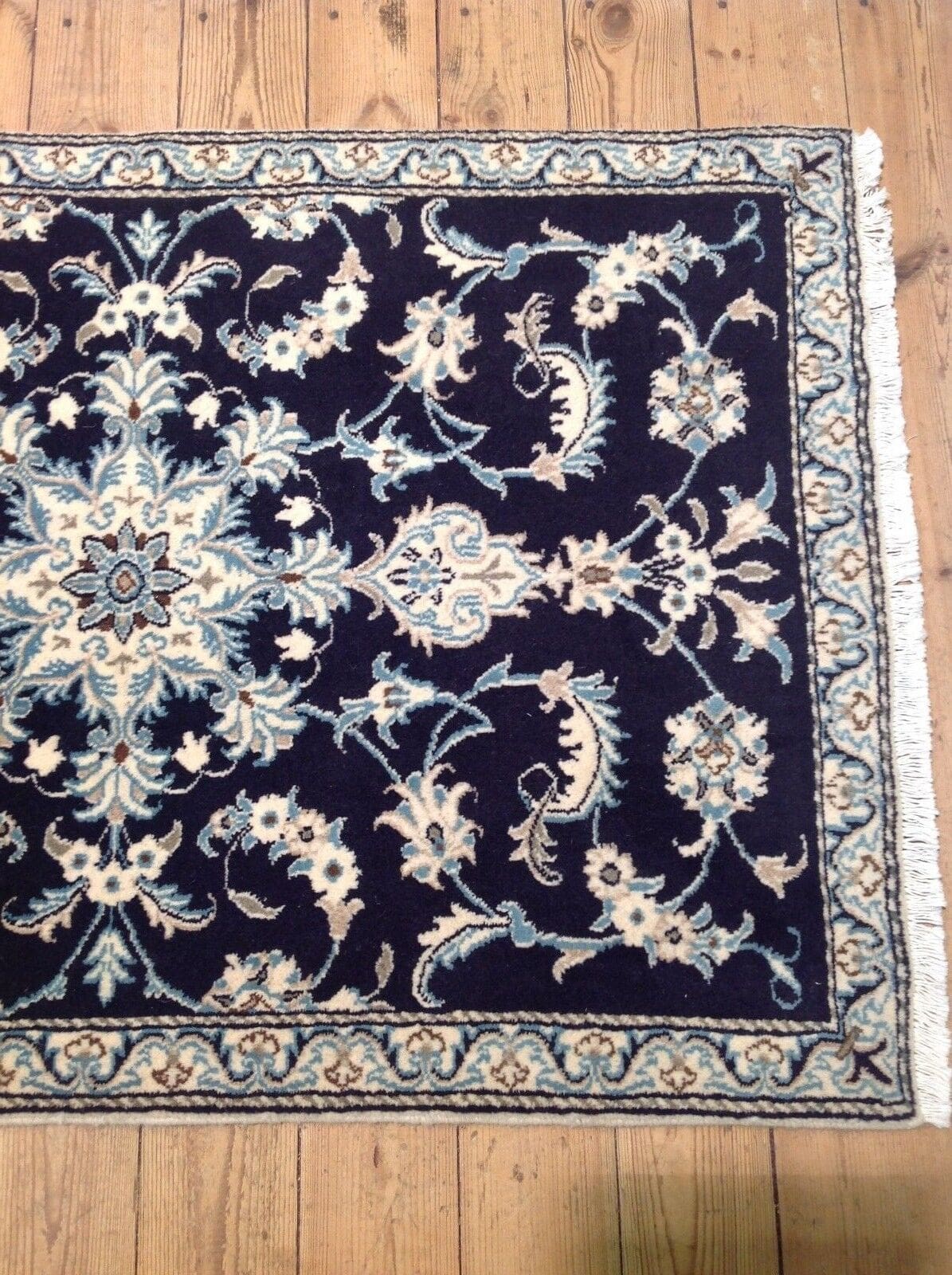
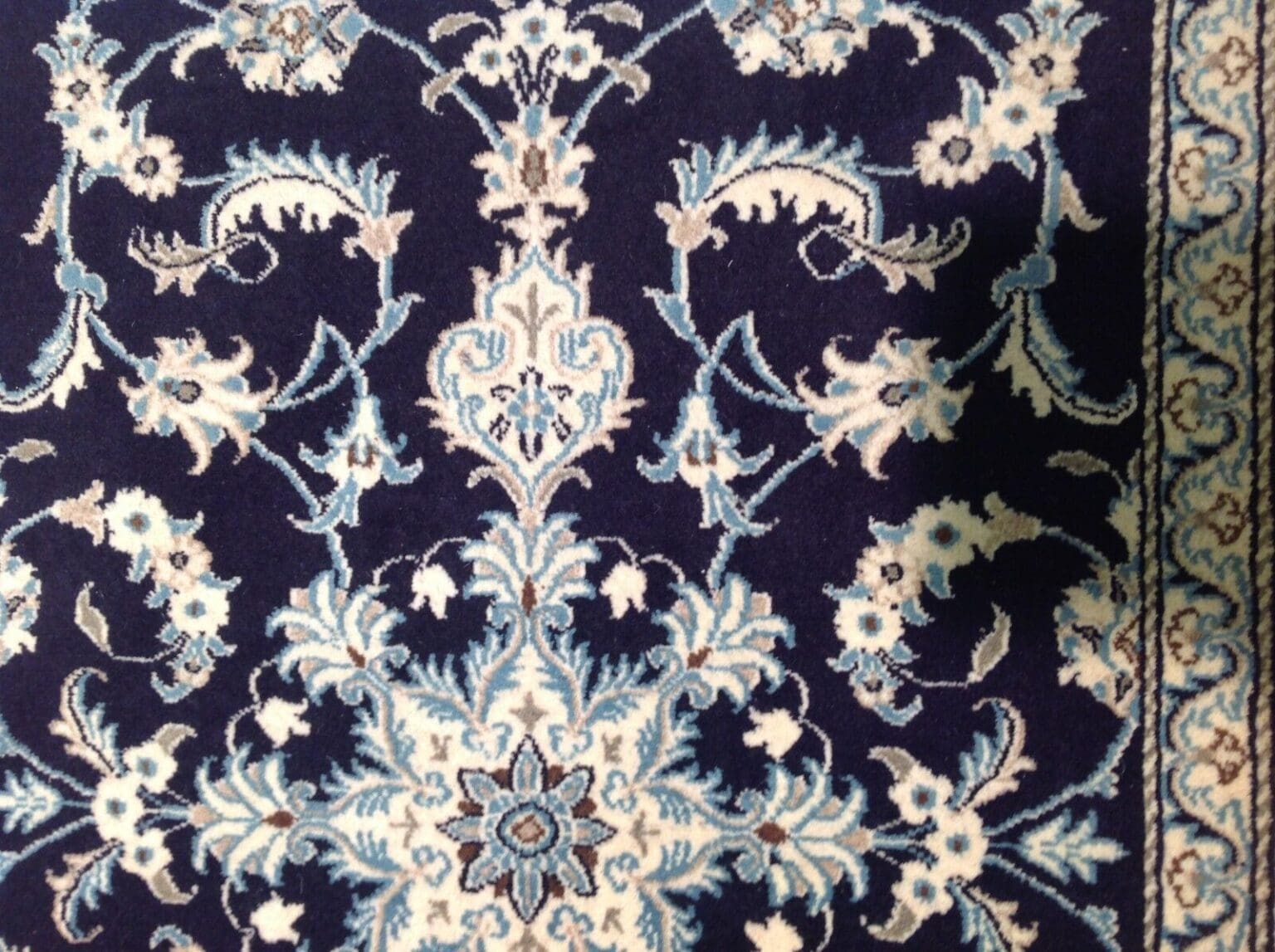
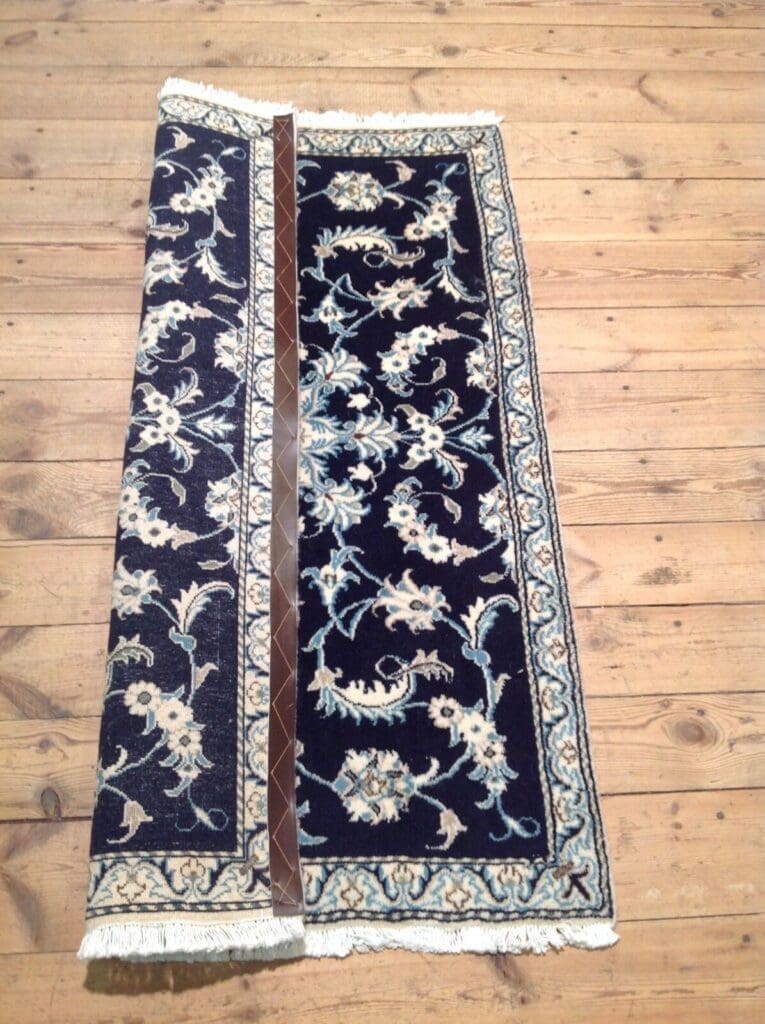
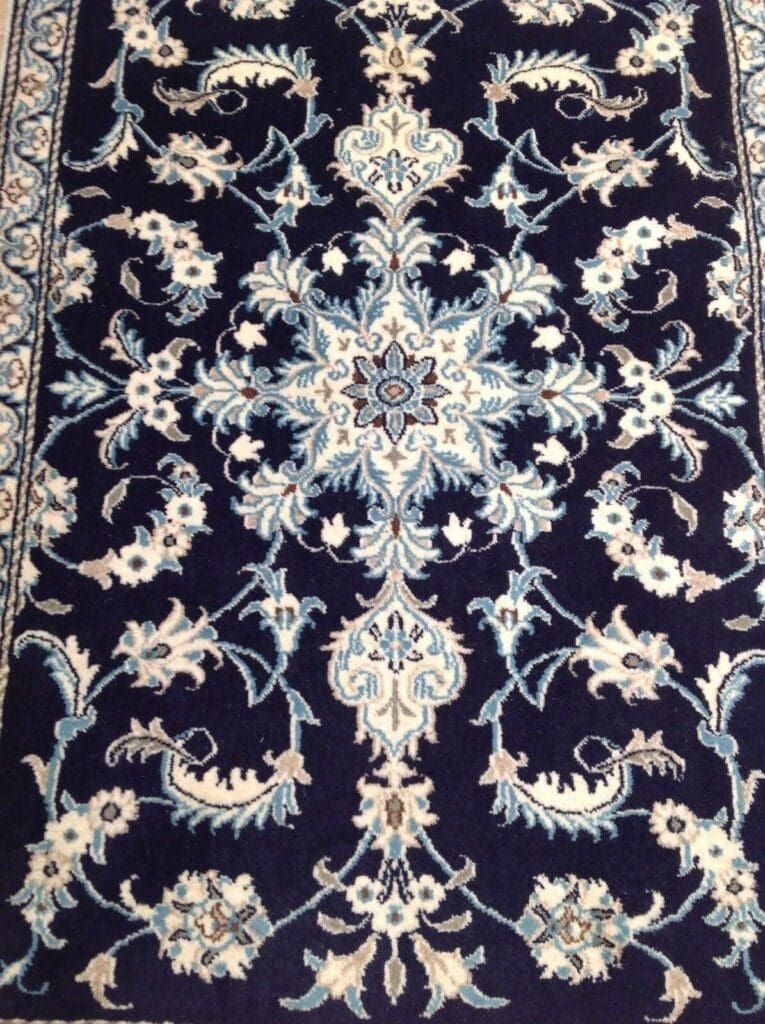
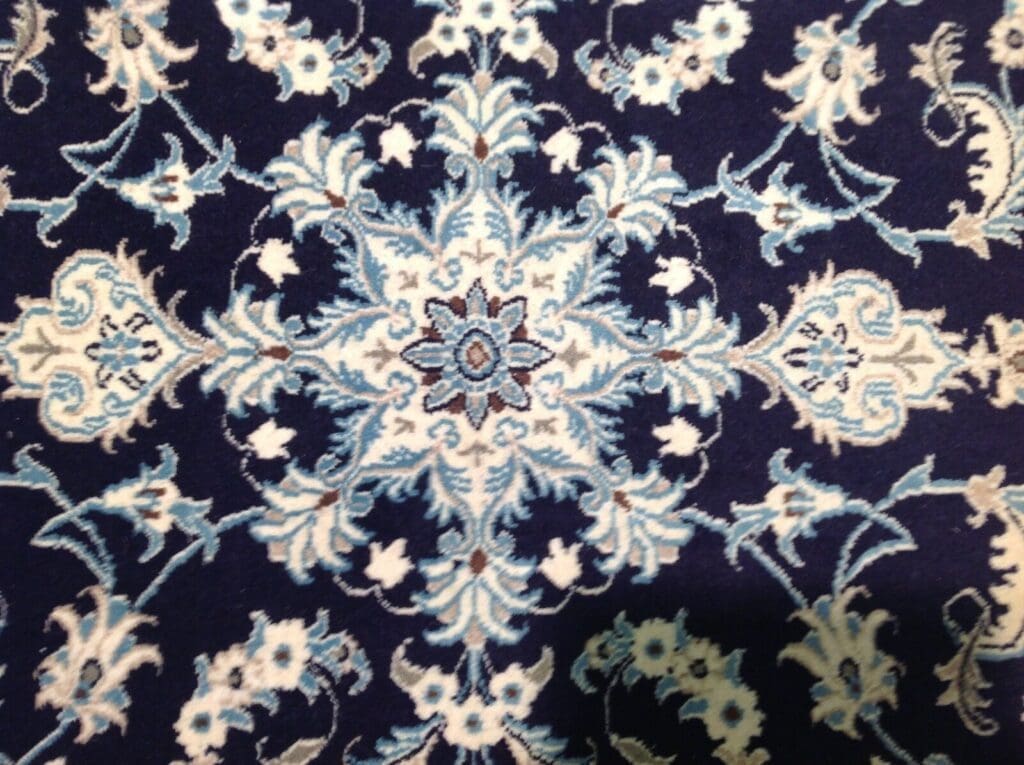
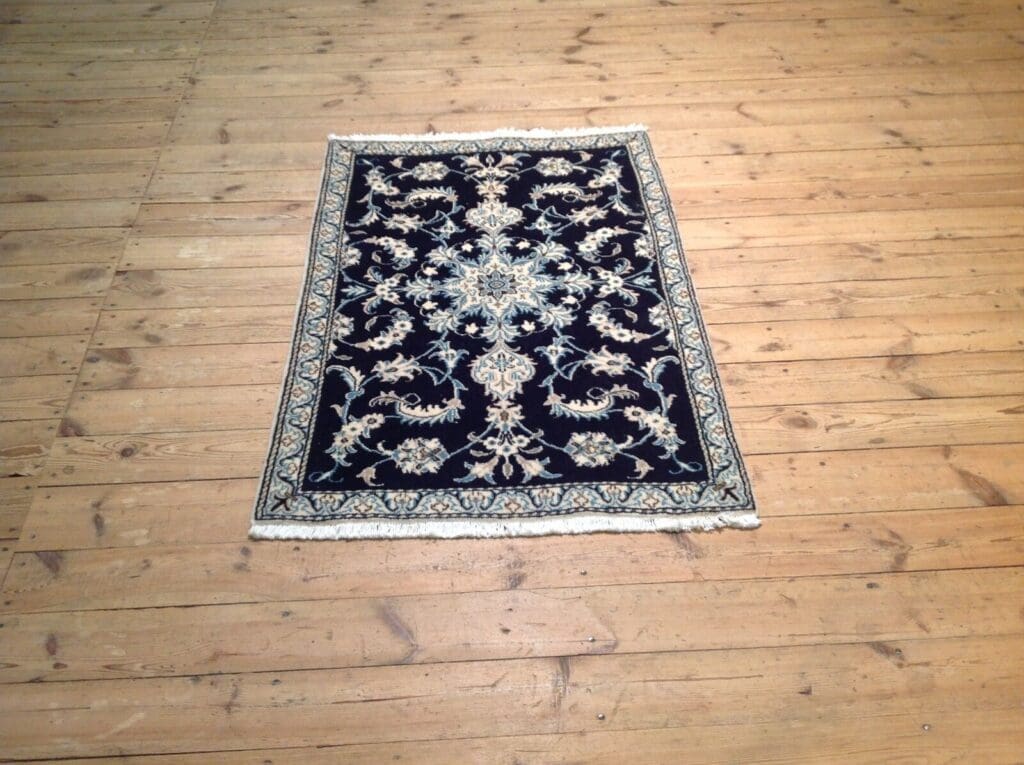
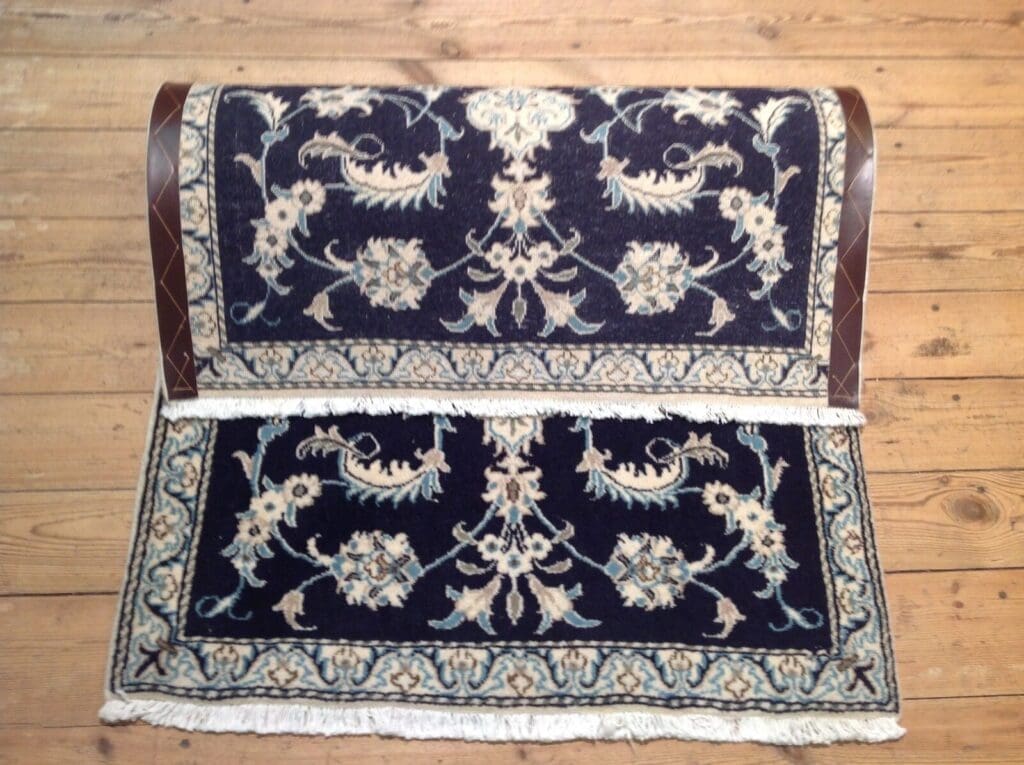
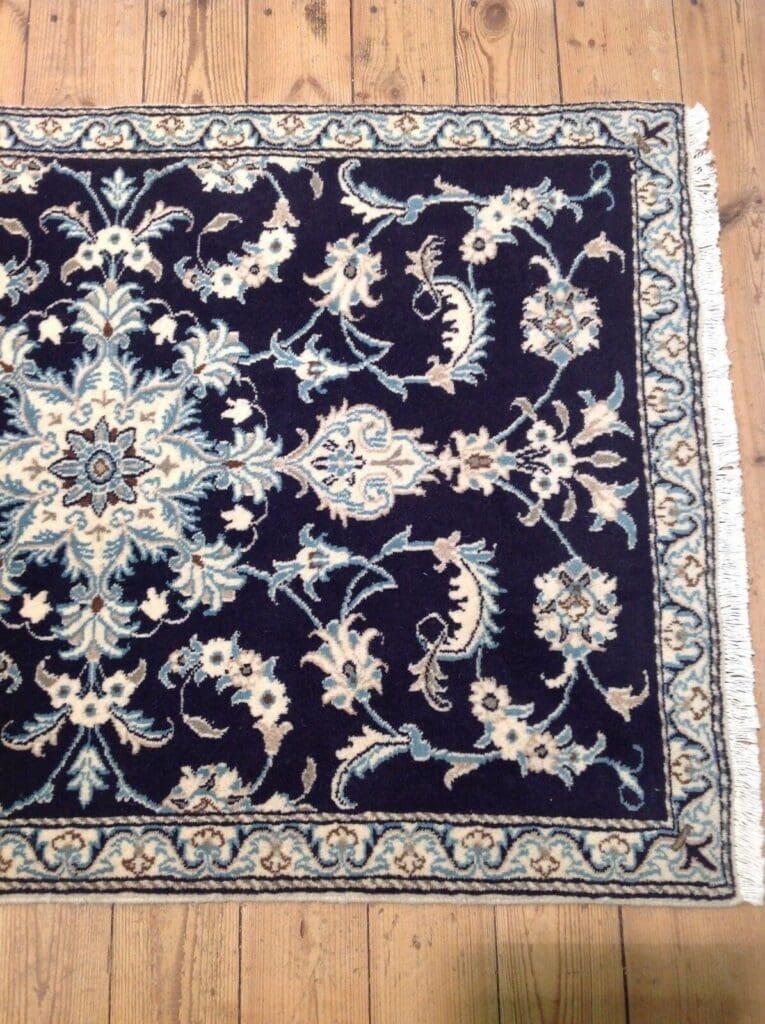
The pattern of this rug is described as Oriental, and its style is identified as Traditional Oriental/Persian. Its colour is stated as dark blue. The result is a traditional decorative direction combined with a deep, visually defining colour. The colour description establishes the rug’s visible character without adding colours, borders or individual motifs that are not specified.
Nain design traditions are often recognised for clear lines, balanced fields and a regular relationship between ornament and background. Floral forms may draw on leaves, blossoms and scrolling branches, while geometric elements create structure through axes, repetition and symmetry. These forms belong to the broader vocabulary of Nain weaving. They help explain the regional design context without assigning a specific named motif to this individual rug.
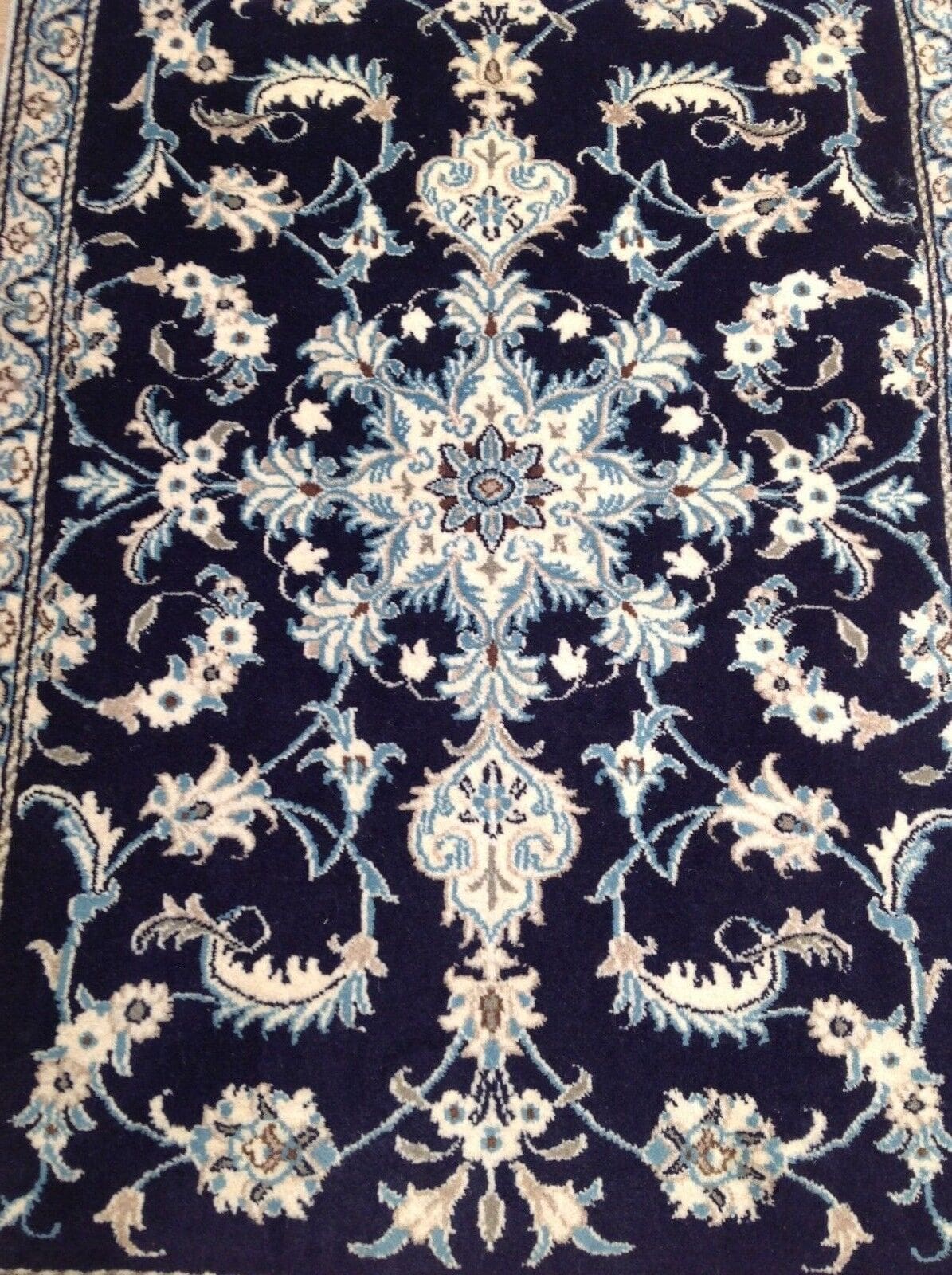
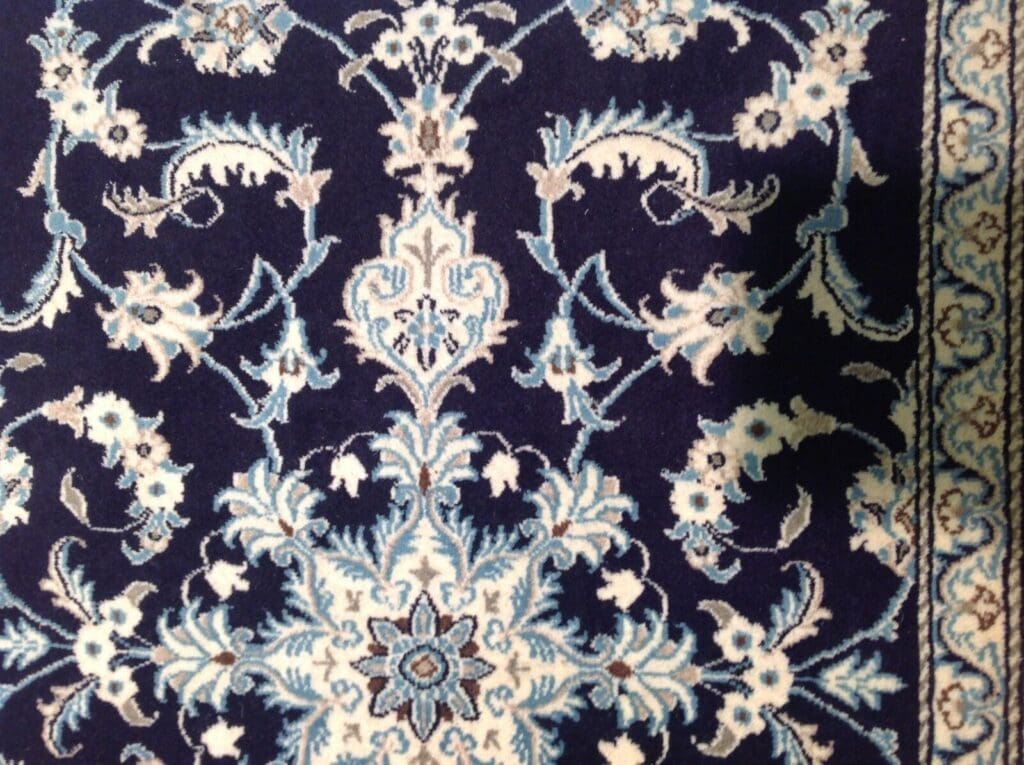
Traditional Oriental patterning depends on the relationship between the ground and the ornament. A design may guide the eye, organise a central area or frame the outer parts of a composition. Repeated forms create continuity, while finer lines articulate transitions between larger elements. In a hand-knotted rug, this drawing is translated directly into rows of knots. A high knot density can support the rendering of fine contours and smaller details by providing more individual points with which to reproduce the structure.
Dark blue has a strong presence in Persian rug design. A deep ground can make ornaments stand out and can lend a composition visual depth. Depending on the arrangement, it may create a calm, enclosed impression or give greater definition to areas that are drawn against it. Dark blue is the colour named for this rug; further statements about contrasting colours, a medallion or a particular border would go beyond the supplied information.
The Nain visual language is based on an ordered distribution of forms. Central and side areas are often designed to relate to one another, while floral drawing can be arranged in controlled branches or repeated units. Geometric structures can stabilise the composition and clarify its rhythm. The important feature is not only the isolated ornament but also the relationship between neighbouring shapes, lines and spaces.
The high knot density also affects the way a pattern can be executed. Finer knotting allows curved lines to be followed with greater control and permits small distinctions within an ornament to be worked out. It does not replace the design itself; it supports the translation of that design into the pile. In this rug, the Nain origin, the traditional Oriental/Persian style, the dark-blue colour and the hand-knotted construction therefore form a connected visual and technical identity.
Oriental patterns are part of an inherited decorative language. Plant forms, repeated rhythms and geometric arrangements are used as a vocabulary whose exact treatment varies between weaving centres. Nain is known for a fine, clear and balanced interpretation of this vocabulary. That general background places the rug within its regional design tradition without claiming an unlisted symbol, story or specific ornament for the individual piece.
The visual order of a traditional rug also depends on proportion. Larger forms establish the composition, while smaller details give definition to its edges and transitions. Hand-knotting makes this relationship visible in the pile because the drawing is built progressively rather than printed onto a finished surface. The pattern is consequently connected with the making process as well as with the decorative tradition of Nain.
Special Features
The rug is listed as new and is hand-knotted. Its notable stated features are its origin in Nain, its pile of 100% new wool, its cotton warp and its high knot density. New wool is described as durable, warm and comfortable. Its natural elasticity and resistance make it suitable for use in different living areas. Wool is also described as relatively easy to care for and able to retain its qualities over time when treated appropriately.
Regular vacuuming without a beater or brush attachment is recommended. If a spill occurs, it should be treated promptly with a damp cloth and a mild cleaning product. Professional rug cleaning is also advisable. Gentle care is appropriate for a hand-knotted rug because it takes account of the pile, knots and material rather than treating the piece like an entirely industrial floor covering.
The description also states that the rug can be used in rooms with underfloor heating. Wool provides good thermal insulation and can distribute warmth evenly. As with any hand-knotted rug, careful placement and suitable maintenance remain sensible ways to preserve its pile and colour.
FAQ
How should I care for my Nain Persian rug?
Vacuum the rug regularly, but do not use a brush attachment. Treat stains promptly with a damp cloth and a mild cleaning product. Professional rug cleaning is also recommended. Gentle cleaning is appropriate for the hand-knotted construction and the new-wool pile.
Can I use the rug with underfloor heating?
Yes. The new-wool rug is suitable for rooms with underfloor heating. Wool offers good thermal insulation and can distribute warmth evenly. Correct placement and normal gentle care remain advisable for a hand-knotted rug.
How can I distinguish a genuine Persian rug from an imitation?
A genuine Persian rug such as this Nain piece is hand-knotted, has a high knot density and may show small irregularities characteristic of handmade work. The material is another indication to consider: high-quality wool is an additional sign when assessing authenticity. For this rug, hand-knotting, knot density and the new-wool pile are important observable criteria.
To provide the best experiences, we use technologies like cookies to store and/or access device information. Consenting to these technologies will allow us to process data such as browsing behavior or unique IDs on this site. Not consenting or withdrawing consent, may adversely affect certain features and functions.
Functional Always active
The technical storage or access is strictly necessary for the legitimate purpose of enabling the use of a specific service explicitly requested by the subscriber or user, or for the sole purpose of carrying out the transmission of a communication over an electronic communications network.
Preferences
The technical storage or access is necessary for the legitimate purpose of storing preferences that are not requested by the subscriber or user.
Statistics
The technical storage or access that is used exclusively for statistical purposes.The technical storage or access that is used exclusively for anonymous statistical purposes. Without a subpoena, voluntary compliance on the part of your Internet Service Provider, or additional records from a third party, information stored or retrieved for this purpose alone cannot usually be used to identify you.
Marketing
The technical storage or access is required to create user profiles to send advertising, or to track the user on a website or across several websites for similar marketing purposes.
 SECURE PAYMENT
 SHIPPING PARTNERS