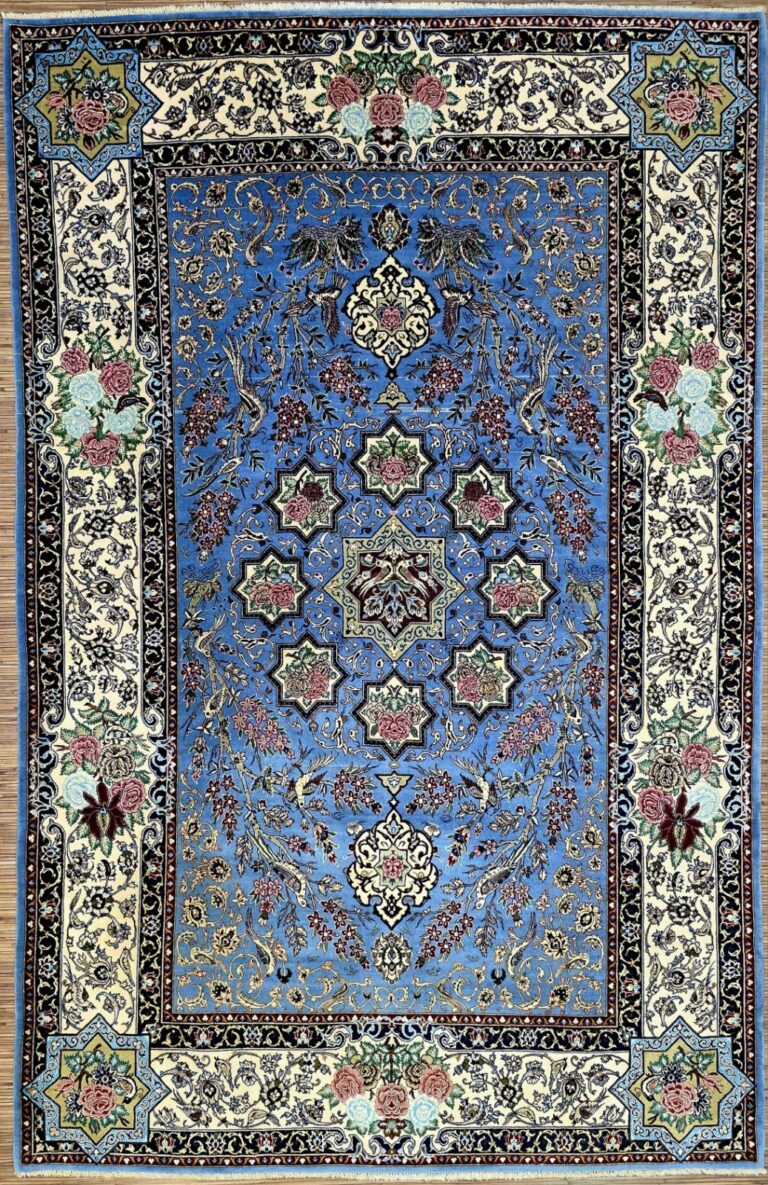
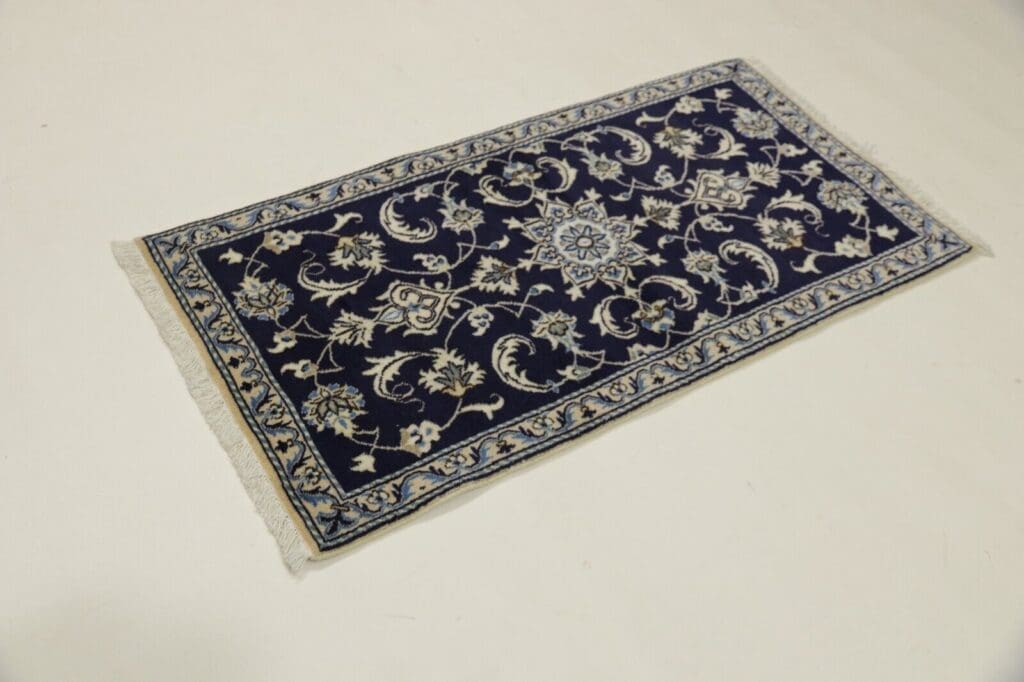
This Nain Persian rug is hand-knotted with a pile made from 100% virgin wool. The warp is specified as 100% cotton. Virgin wool is a natural textile fibre valued for its combination of softness and durability. Wool can absorb and release moisture, helping to moderate the atmosphere in a room while retaining a warm and tactile surface. Its natural insulating quality also makes it suitable for interiors in different seasons.
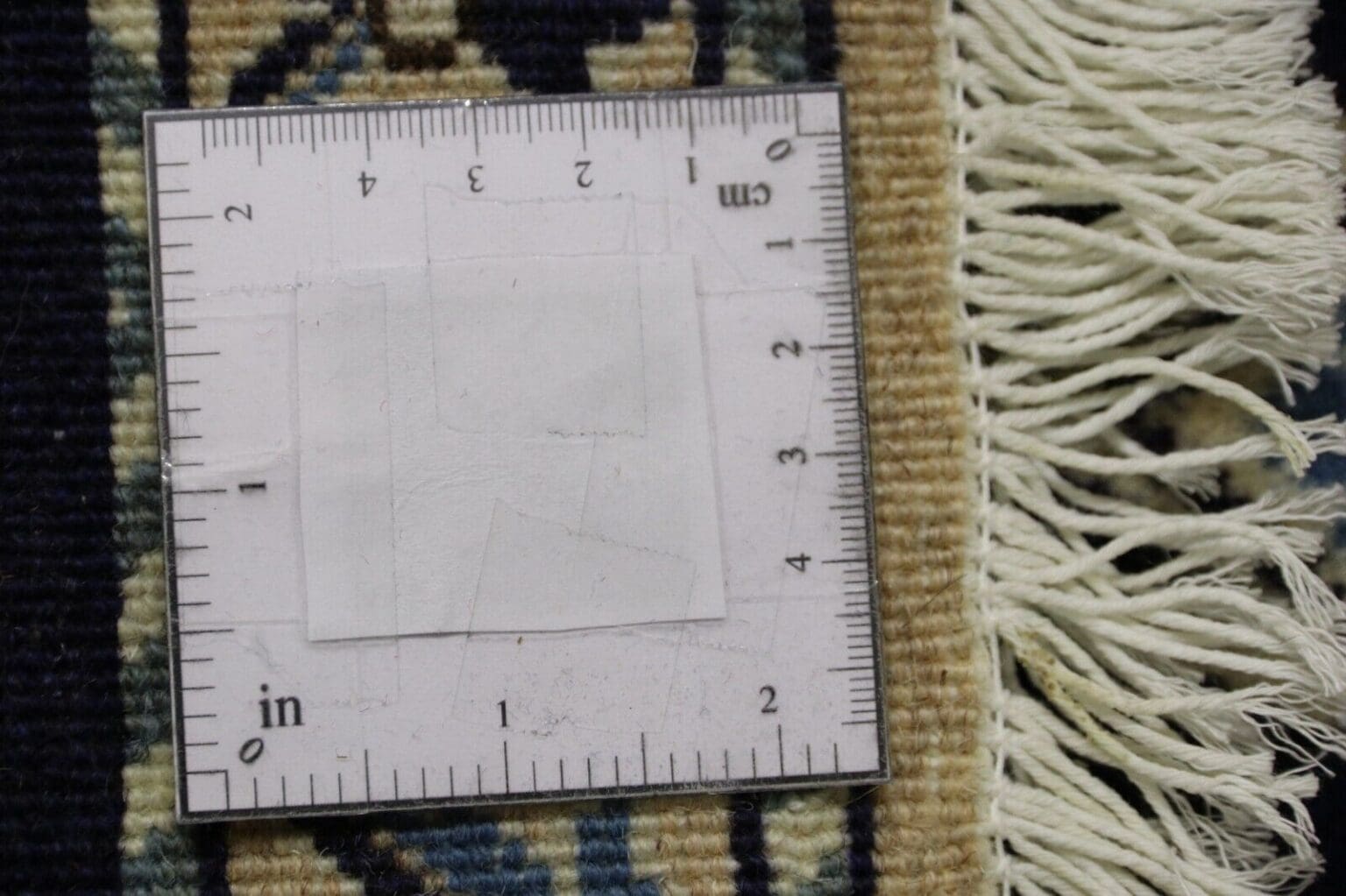
The cotton warp forms the longitudinal foundation into which the pile knots are secured. In a hand-knotted rug, the pile is not produced by a machine-made loop or printed surface. Individual knots are inserted into the prepared foundation, while rows of weft help hold the structure together. The pile is then brought to an even finish so that the design can be read across the surface. This process connects the rug’s construction directly with the work of the knotter.
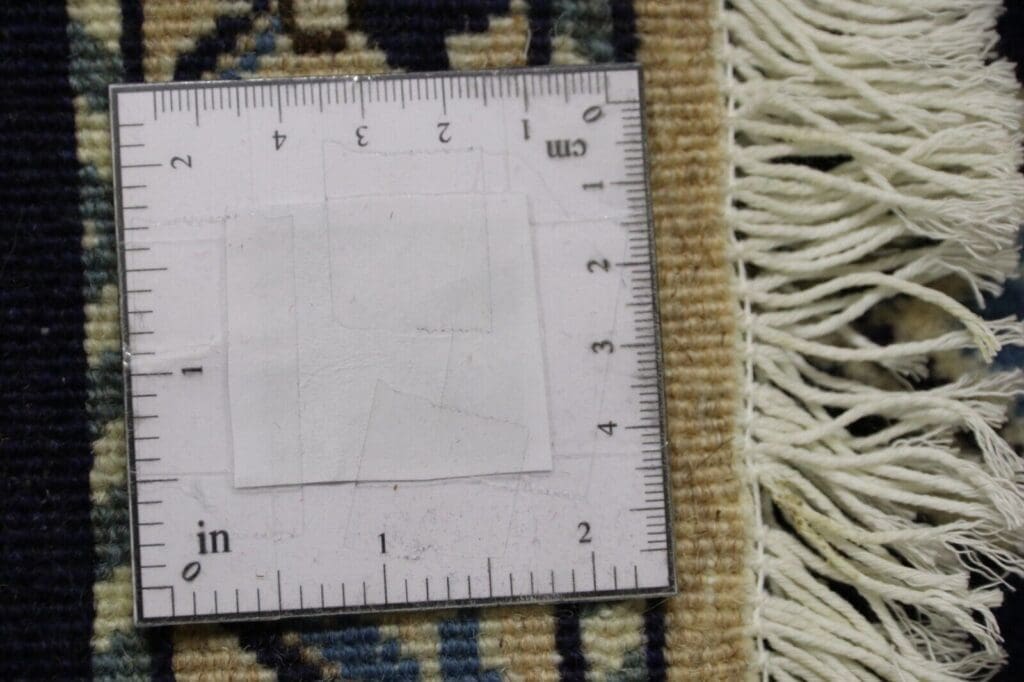
The stated density of approximately 300,000 knots per square metre indicates a finely worked construction. A dense field of knots allows outlines, transitions and small ornaments to be set out with greater differentiation. Knot density is one aspect of craftsmanship and should be considered alongside the wool pile, cotton warp, construction and condition. Hand knotting requires a continuous sequence of knotting, securing the rows and checking the developing drawing.
The rug is new and unused. Its combination of a virgin-wool pile with a cotton warp gives it a soft walking surface supported by a textile foundation. Because the work is carried out by hand, the piece is unique. Small variations in knotting and individual colour blends are part of the character of a hand-made rug and can be visible in the way its pattern develops.
Origin and Tradition
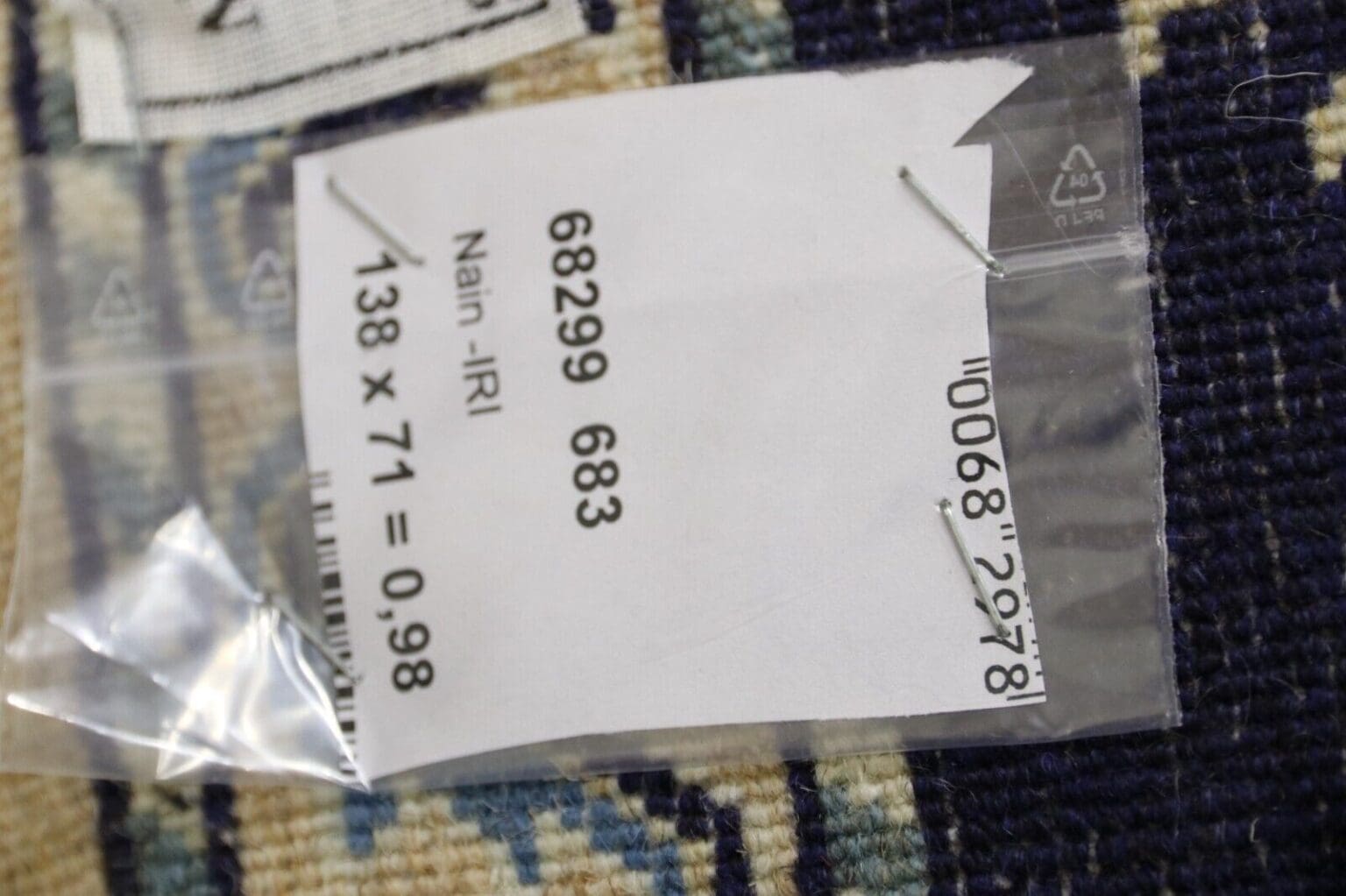
The rug is identified as a Nain from Persia. Nain is one of the recognised rug-making traditions of Iran. The city lies in central Iran, in a dry landscape between historic cultural and trading areas. Nain weaving became particularly established as a distinct form during the twentieth century. The regional tradition is commonly associated with carefully organised drawing, fine detail and a balanced arrangement of colour.
The Nain tradition belongs to the broader Persian art of carpet weaving. A Persian rug is created through an inherited system of design, yarn selection, colour planning, foundation building and knotting. The design is usually understood as an organised composition in which a field, borders and connecting ornaments must work together. This relationship between a planned drawing and manual execution is central to the history of Persian rugs.
Different Iranian regions developed their own approaches to materials, colours, structures and ornament. Nain forms part of this larger tradition while retaining a recognisable regional identity. The area also had a history of other textile crafts before rug making became an important local activity. Knowledge was passed through families and workshops, including the preparation of wool, the stretching of the warp, the reading of a design and the even placement of knots.
In a Persian knotted rug, the warp supplies the lengthwise structure. Pile yarn is tied into it, and weft threads help secure the rows and compact the foundation. The surface therefore grows through a succession of small manual operations. Hand knotting is not merely a production method; it is also part of the cultural history of the weaving region. Construction and decoration are developed together rather than being separate stages.
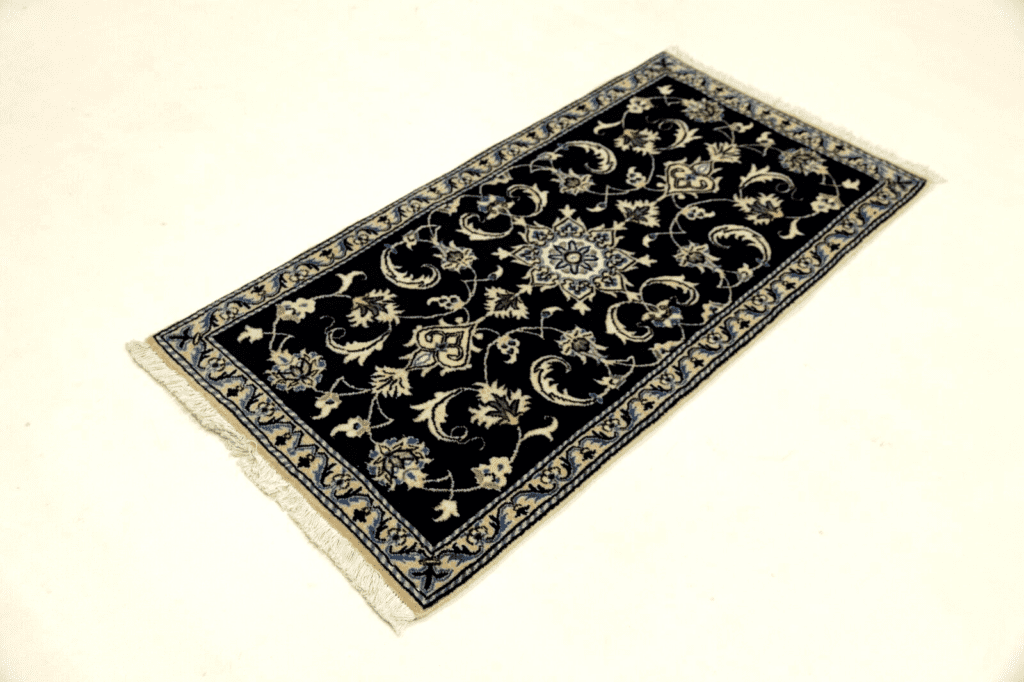
Nain rugs are often associated in the wider tradition with light grounds and finely arranged floral forms. Medallion layouts and all-over compositions also belong to the broader vocabulary of Persian weaving. The precise arrangement depends on the individual design. This rug is described as Oriental in pattern and as traditional Oriental and Persian in style. Those terms place it within a Persian design tradition without assigning any additional specific motif that is not named in the source.
The history of Persian rugs also reflects exchange between cities and regions. Designs travelled, were rearranged in workshops and adapted to local preferences. Floral scrolls, geometric borders and symmetrical structures can therefore appear in more than one weaving centre, even when their execution differs. Nain represents one regional expression within this wider history, with an emphasis traditionally associated with clarity, balance and detail.
Design and Pattern
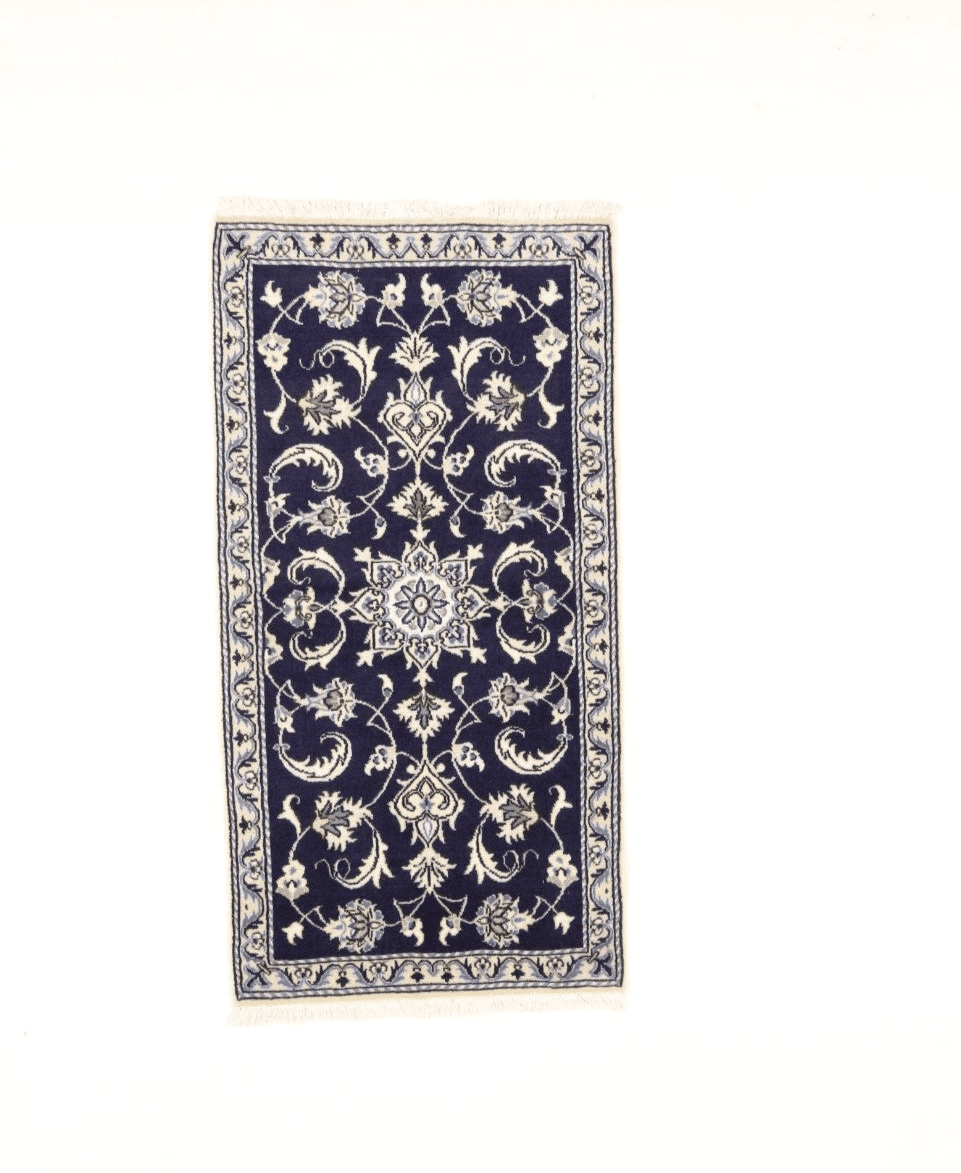
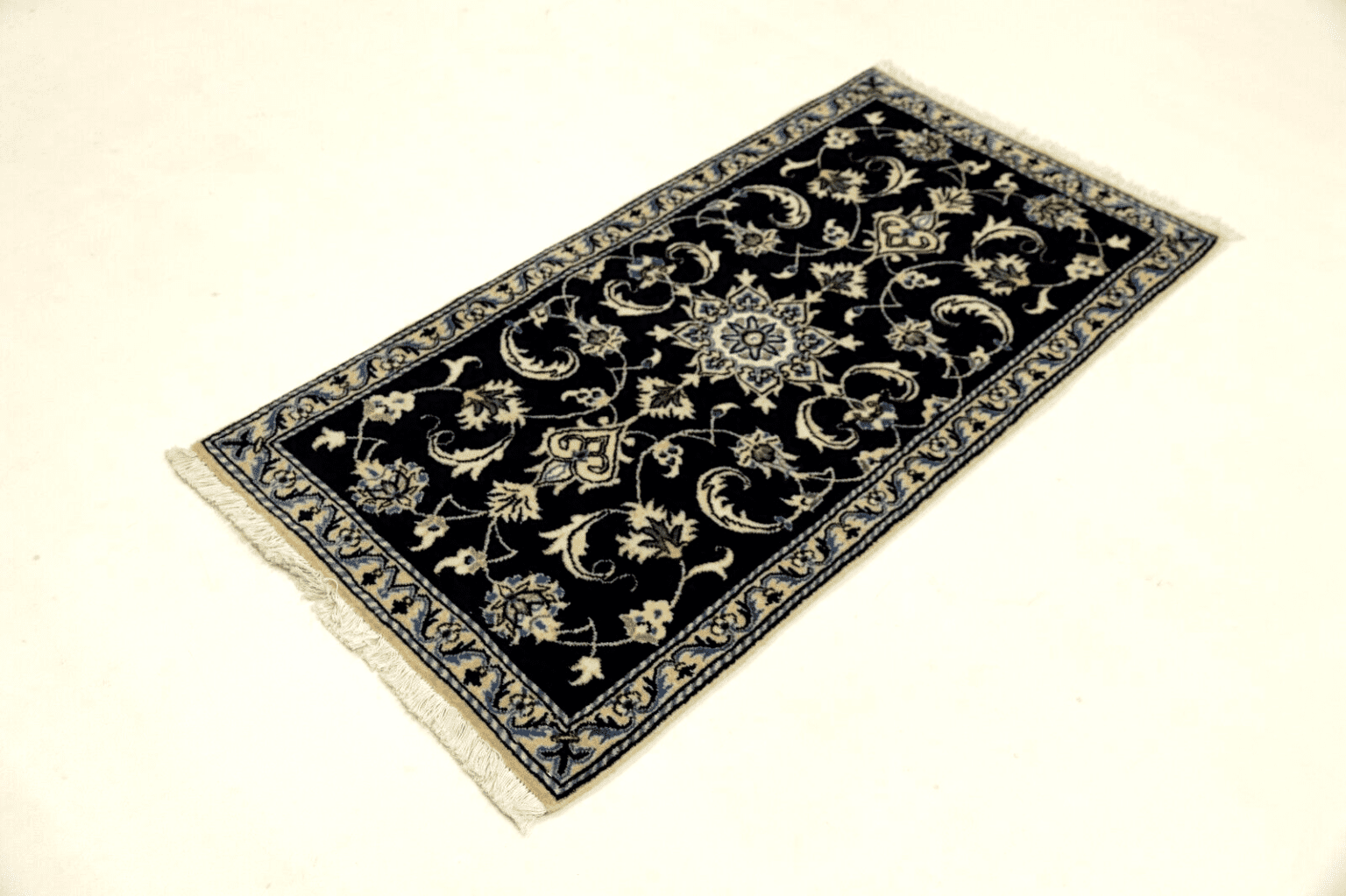
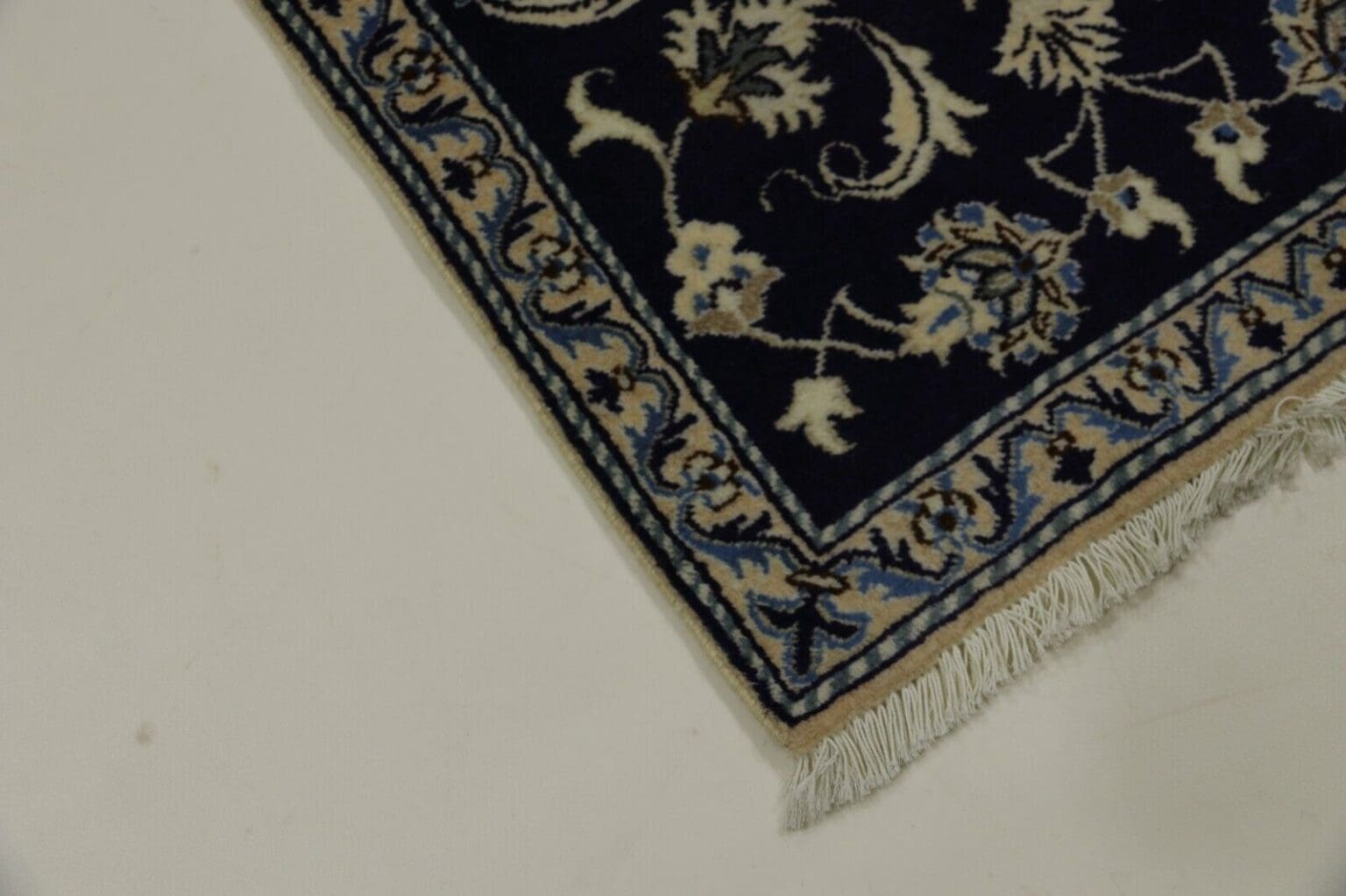
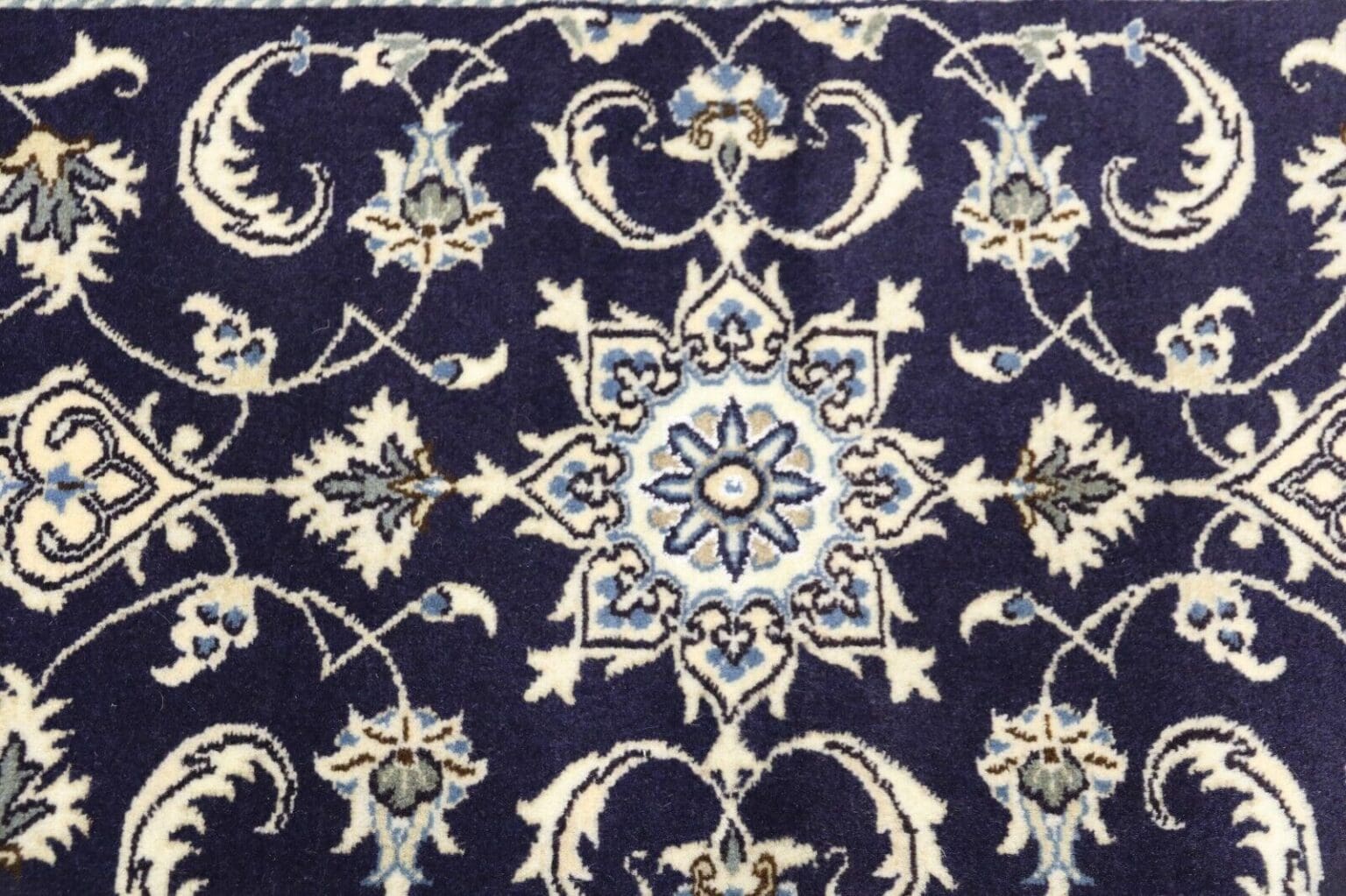
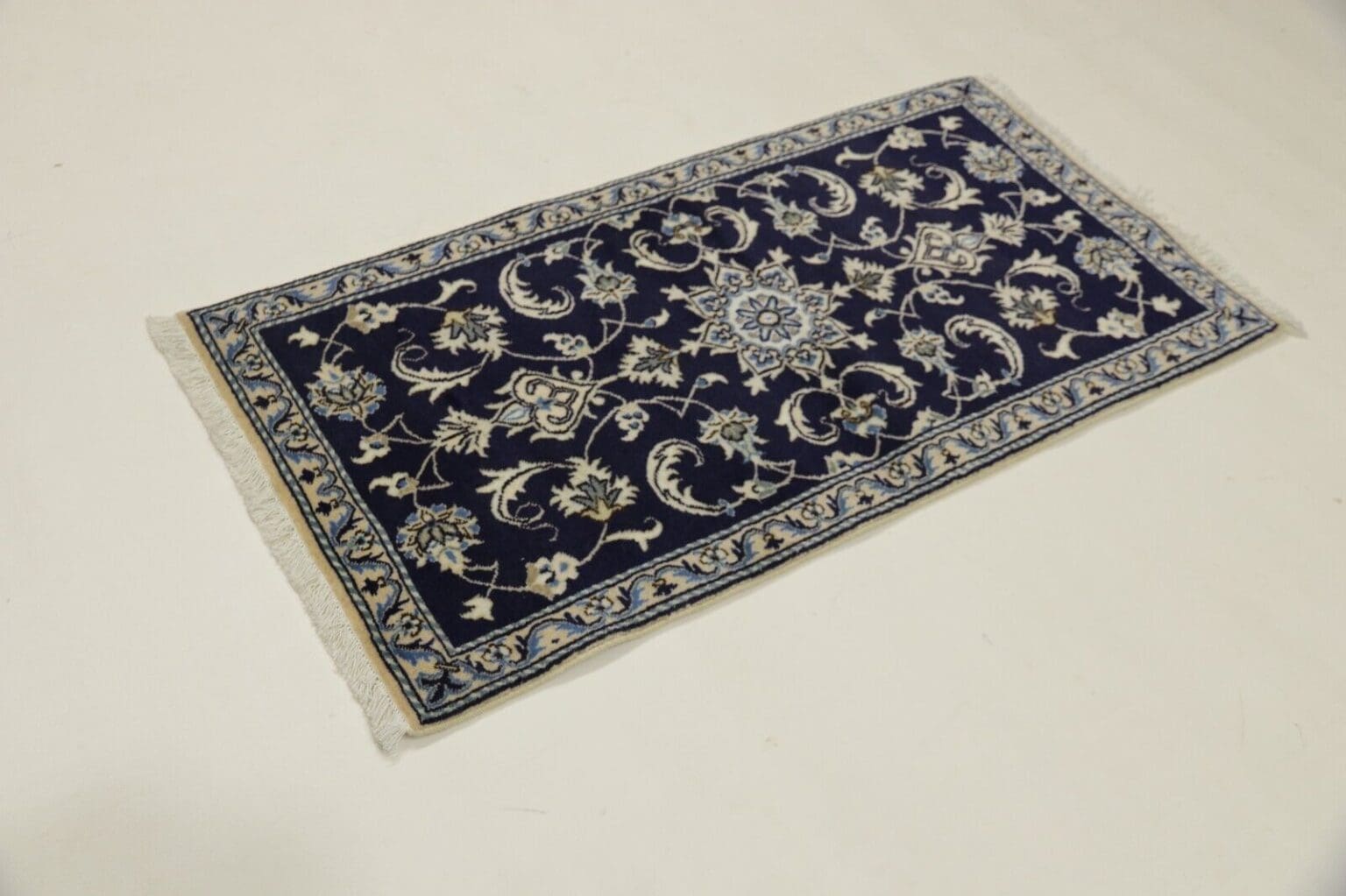
The pattern is described as Oriental, while the style is given as traditional Oriental and Persian. These terms indicate an ordered composition with recurring ornaments and the visual language associated with classic Oriental rugs. The source describes the design through harmonious colours and complex geometric and floral patterns. Geometric lines can give the layout structure, while floral forms introduce movement and variation across the field.
Many Persian designs organise the surface through a central field enclosed by one or more borders. Other compositions use an all-over arrangement or a central medallion. Nain rugs are often discussed in connection with clear symmetry and finely articulated drawing. This is background on the regional design language, not an additional claim about a particular motif on this rug. The specific pattern information supplied for this piece remains Oriental, with a traditional Oriental and Persian character.
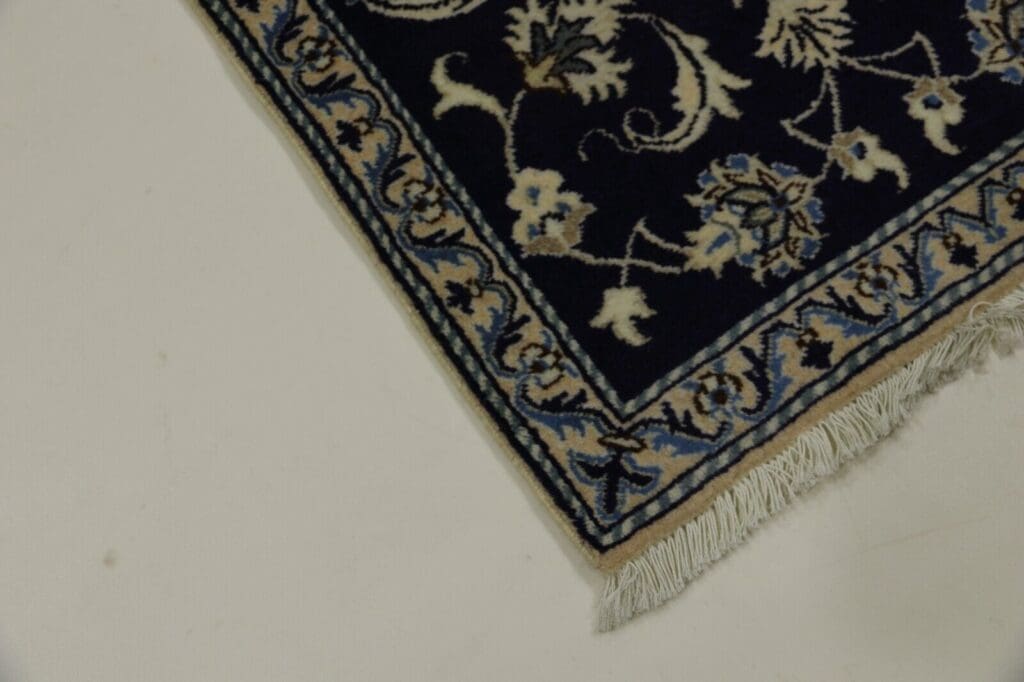
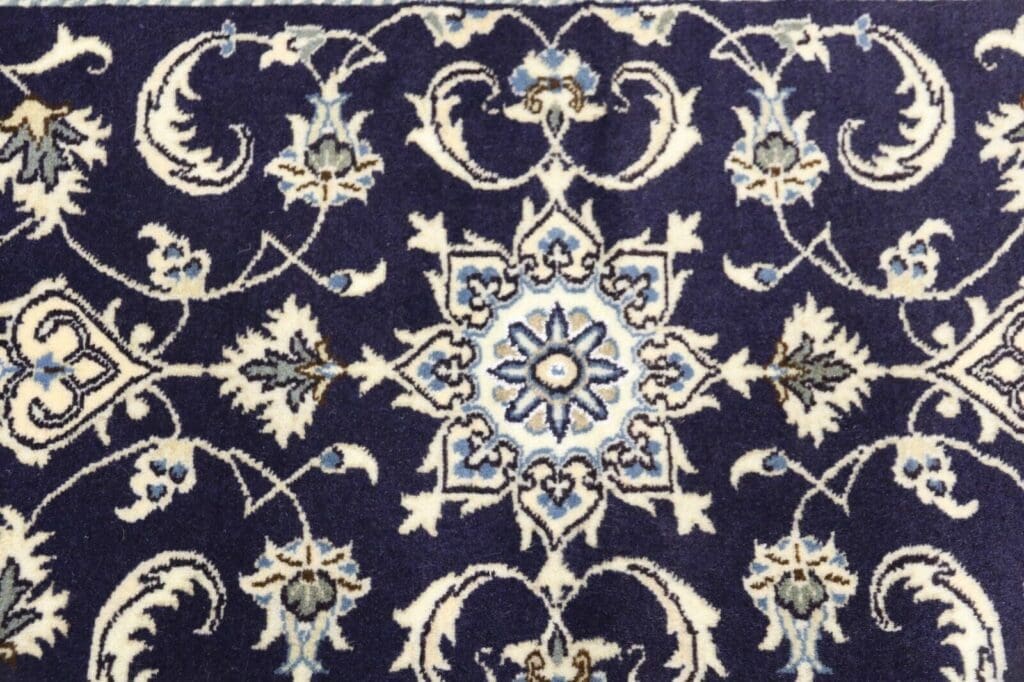
Floral ornament is one of the principal devices in Persian rug design. Vines, leaves and blossoms may be linked into a continuous rhythm, allowing the eye to move through the composition. Geometric forms provide boundaries, repetition and direction. Differences in scale create a relationship between dominant and secondary elements. In a hand-knotted rug, these features are built knot by knot, so that even a fine contour consists of many small coloured areas.
Colour affects how the complete design is perceived. A restrained ground can make the ornament stand out, while contrasting tones separate scrolls, outlines and geometric divisions. The source characterises the colours as harmonious and refers to the use of natural dyes in the design tradition. In Persian weaving, colours are generally considered in relation to one another rather than as isolated shades. Their effect comes from the balance between ground, outline and detail.
Symbols in Oriental rugs can carry meanings beyond decoration. Flowers, animals and geometric forms may represent growth, protection, good fortune, abundance or life in different regional traditions. The interpretation of a symbol depends on its shape, its position and the cultural context in which it is used. For that reason, a single reading should not be imposed without knowing the complete design. Here the supplied pattern description is Oriental; no individual symbolic interpretation is specified.
Hand craftsmanship gives a planned design a distinct textile quality. Minor differences in knot placement and individual colour mixtures may mean that a line is not mechanically uniform. This does not contradict the order of the composition; it reflects the manual origin of the surface. The overall pattern remains coherent while the close view can reveal the sequence of individual knots from which it was made.
A traditional Persian rug can serve in different interior settings because its visual language is not limited to one room. The combination of harmonious colours with geometric and floral forms can be read as an independent textile composition. This rug is suitable for use over underfloor heating and is described as pet-friendly. Those practical details complement the pattern description without changing the stated origin or the Oriental and Persian style.
Special Features
The specific features of this piece are its hand-knotted construction, a pile of 100% virgin wool, a 100% cotton warp and its new, unused condition. Its knot density is given as approximately 300,000 knots per square metre. The rug is also described as suitable for underfloor heating and pet-friendly. These points concern the offered piece and stand alongside its identification as a Nain from Persia.
Every hand-knotted rug is unique. Even when a design follows a regional tradition, manual work creates individual differences in knot placement and colour blending. The source expressly identifies such variations as a feature of the rug. At the same time, the piece is described as having a traditional Oriental and Persian design. Its new and unused condition means that it does not carry the marks associated with previous use.
The combination of natural wool, manual construction and traditional design defines the factual character of this rug. The source also presents it as suitable for collectors and people interested in Oriental art and culture. It mentions the possibility that the rug may gain value over time. Such development depends on factors including preservation, demand, origin and workmanship, so it should not be understood as a guarantee.
FAQ
What is the best way to clean an Oriental rug?
Careful, regular vacuuming helps remove loose dust and dirt from the rug. The surface should not be subjected to unnecessary force. Fresh stains should be treated as soon as possible with a soft, slightly damp cloth. Rubbing can put stress on the fibres and affect the appearance of the colours, so gentle dabbing is the safer approach. More substantial soiling should be handled by a professional rug cleaner. A specialist can take the wool pile, dyeing and hand-knotted structure into account and reduce the risk of damage. This is particularly relevant for a hand-knotted virgin-wool rug, since unsuitable wet cleaning can affect both the textile foundation and the visible surface.
How can I assess the quality of an Oriental rug?
Several characteristics should be considered together when assessing an Oriental rug. These include knot density, material and construction. A high knot density can allow finer outlines and more detailed ornaments, but it is not the sole measure of quality. The evenness of the knotting, the execution of the design, the condition of the pile and warp, and the overall preservation also matter. For this piece, the supplied details are approximately 300,000 knots per square metre, a 100% virgin-wool pile, a 100% cotton warp and hand-knotted construction. Origin is another part of the classification: the rug is identified as a Nain from Persia. Quality should therefore be understood as the interaction of material, structure, design and condition rather than as one isolated number.
Can I use the rug outdoors?
An Oriental rug is not recommended for outdoor use. Rain, persistent moisture, direct sunlight, dirt and changing temperatures can place stress on natural fibres and colours. A hand-knotted rug with a durable wool pile is intended for protected interior use rather than prolonged exposure to weather. It can be placed in living spaces, a bedroom or a hallway. The rug is suitable for underfloor heating and is described as pet-friendly; these usage details apply to an indoor setting. It should not be left outside on a permanent basis. Keeping it in a dry, sheltered interior environment helps preserve its material, construction and pattern in its new, unused condition.
To provide the best experiences, we use technologies like cookies to store and/or access device information. Consenting to these technologies will allow us to process data such as browsing behavior or unique IDs on this site. Not consenting or withdrawing consent, may adversely affect certain features and functions.
Functional Always active
The technical storage or access is strictly necessary for the legitimate purpose of enabling the use of a specific service explicitly requested by the subscriber or user, or for the sole purpose of carrying out the transmission of a communication over an electronic communications network.
Preferences
The technical storage or access is necessary for the legitimate purpose of storing preferences that are not requested by the subscriber or user.
Statistics
The technical storage or access that is used exclusively for statistical purposes.The technical storage or access that is used exclusively for anonymous statistical purposes. Without a subpoena, voluntary compliance on the part of your Internet Service Provider, or additional records from a third party, information stored or retrieved for this purpose alone cannot usually be used to identify you.
Marketing
The technical storage or access is required to create user profiles to send advertising, or to track the user on a website or across several websites for similar marketing purposes.
 SECURE PAYMENT
 SHIPPING PARTNERS