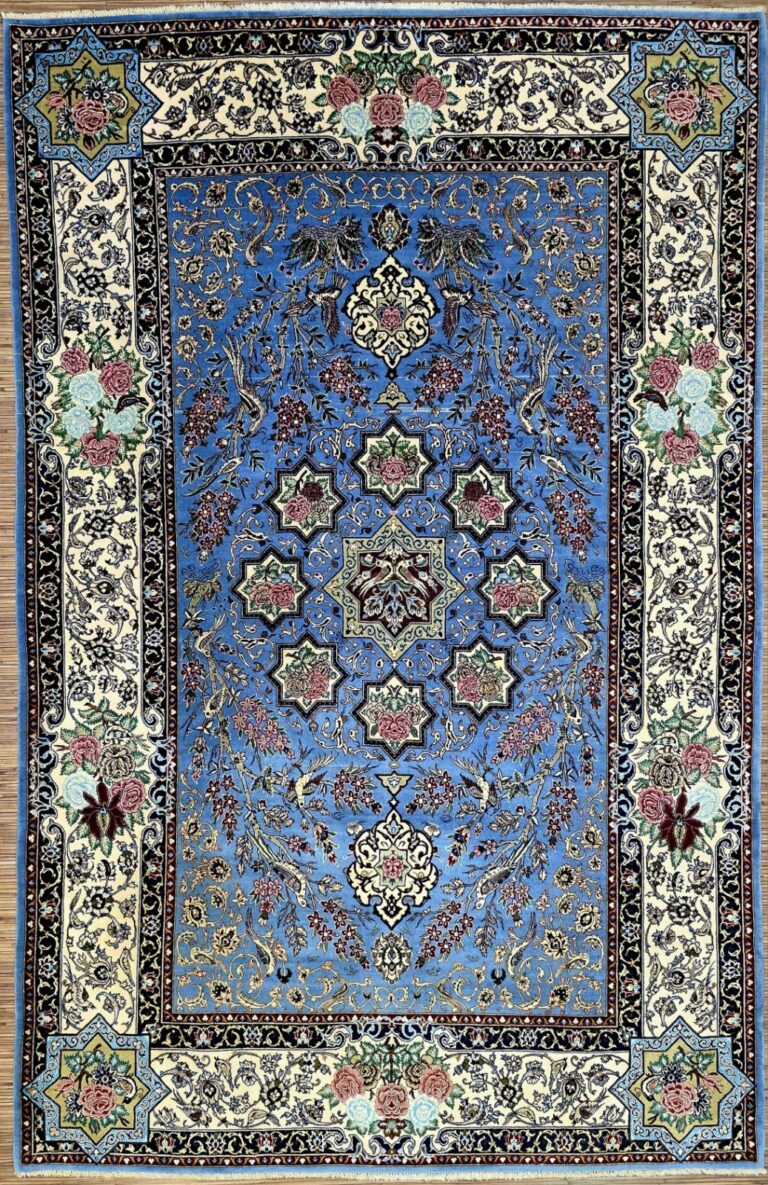
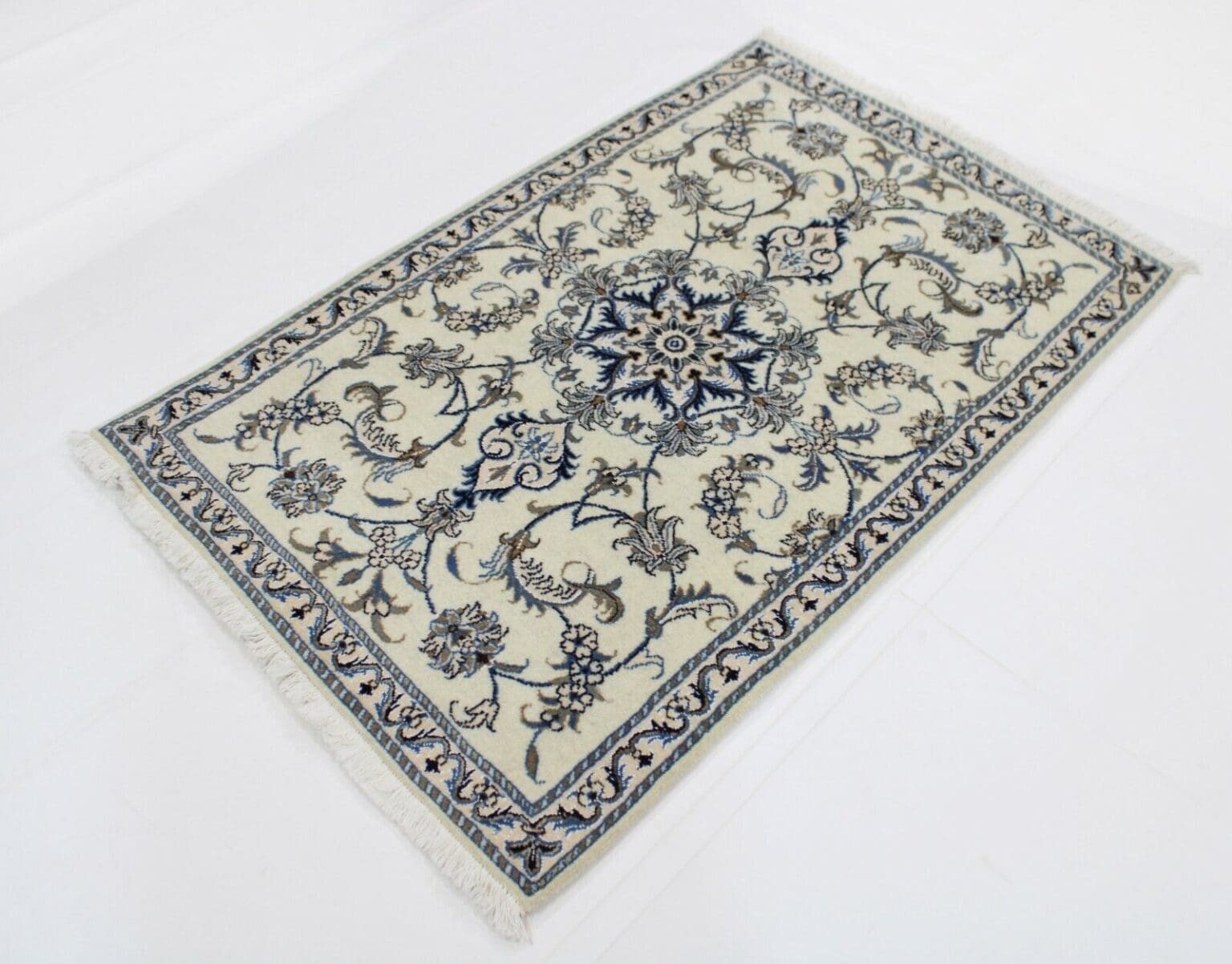
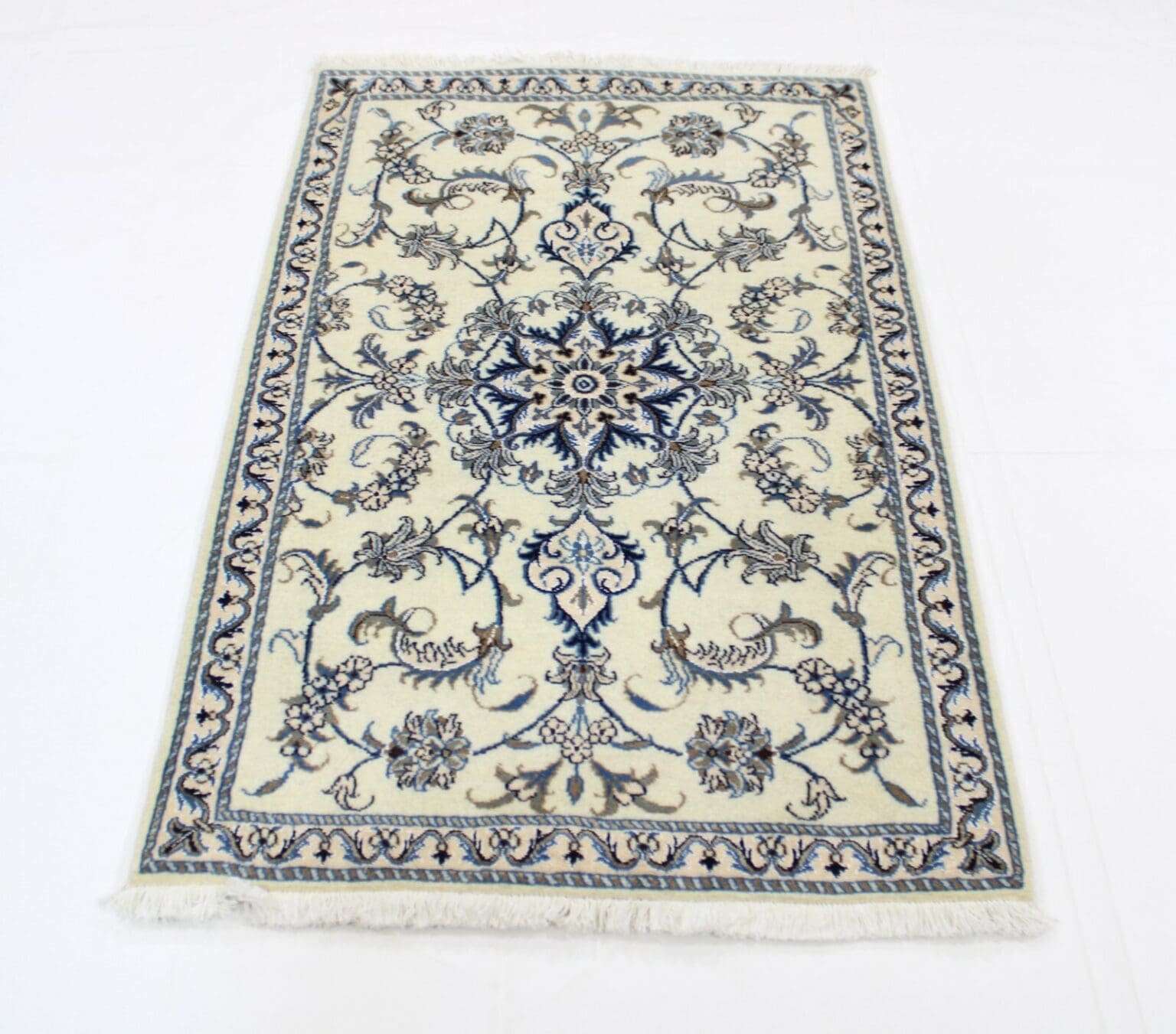
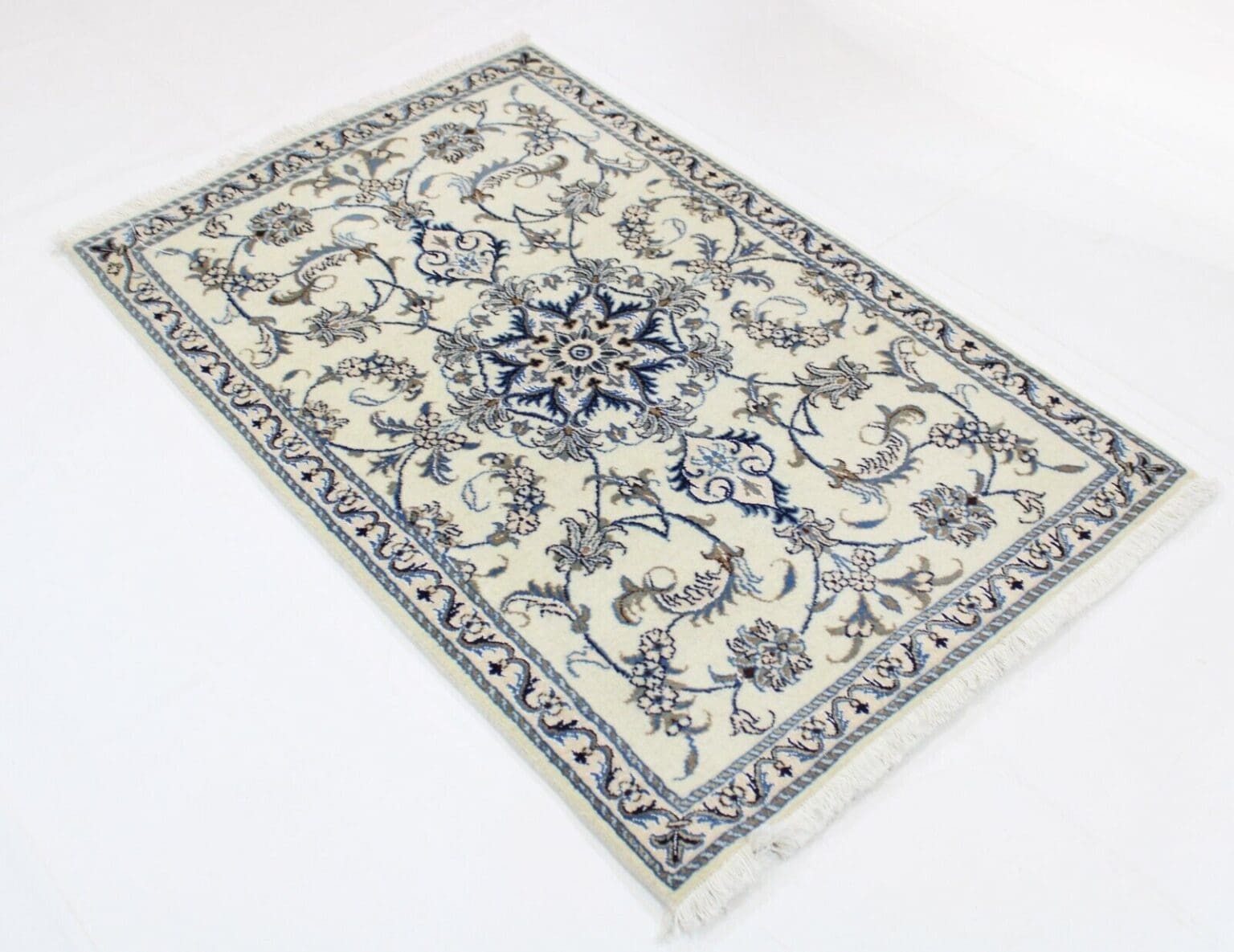
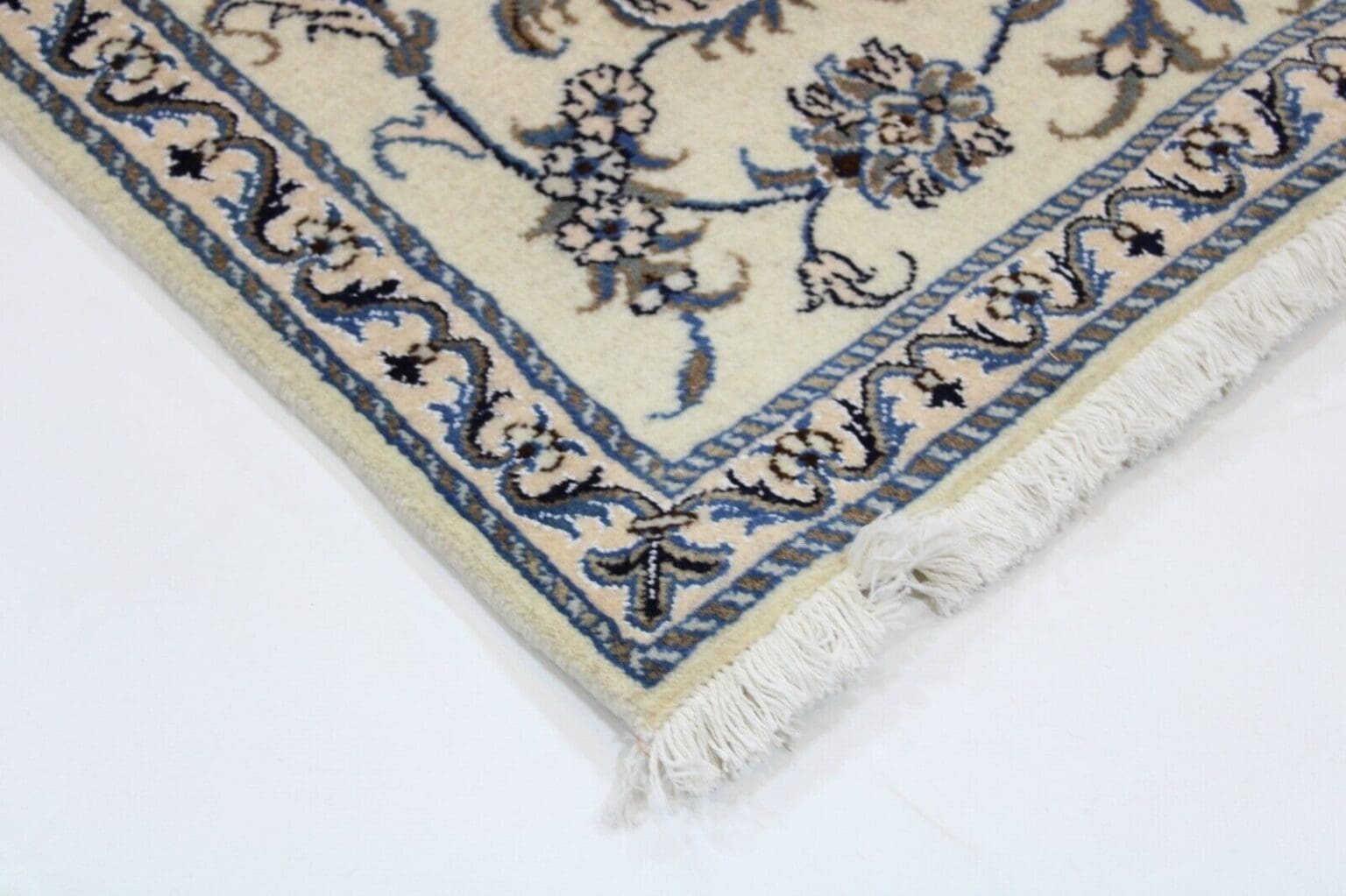
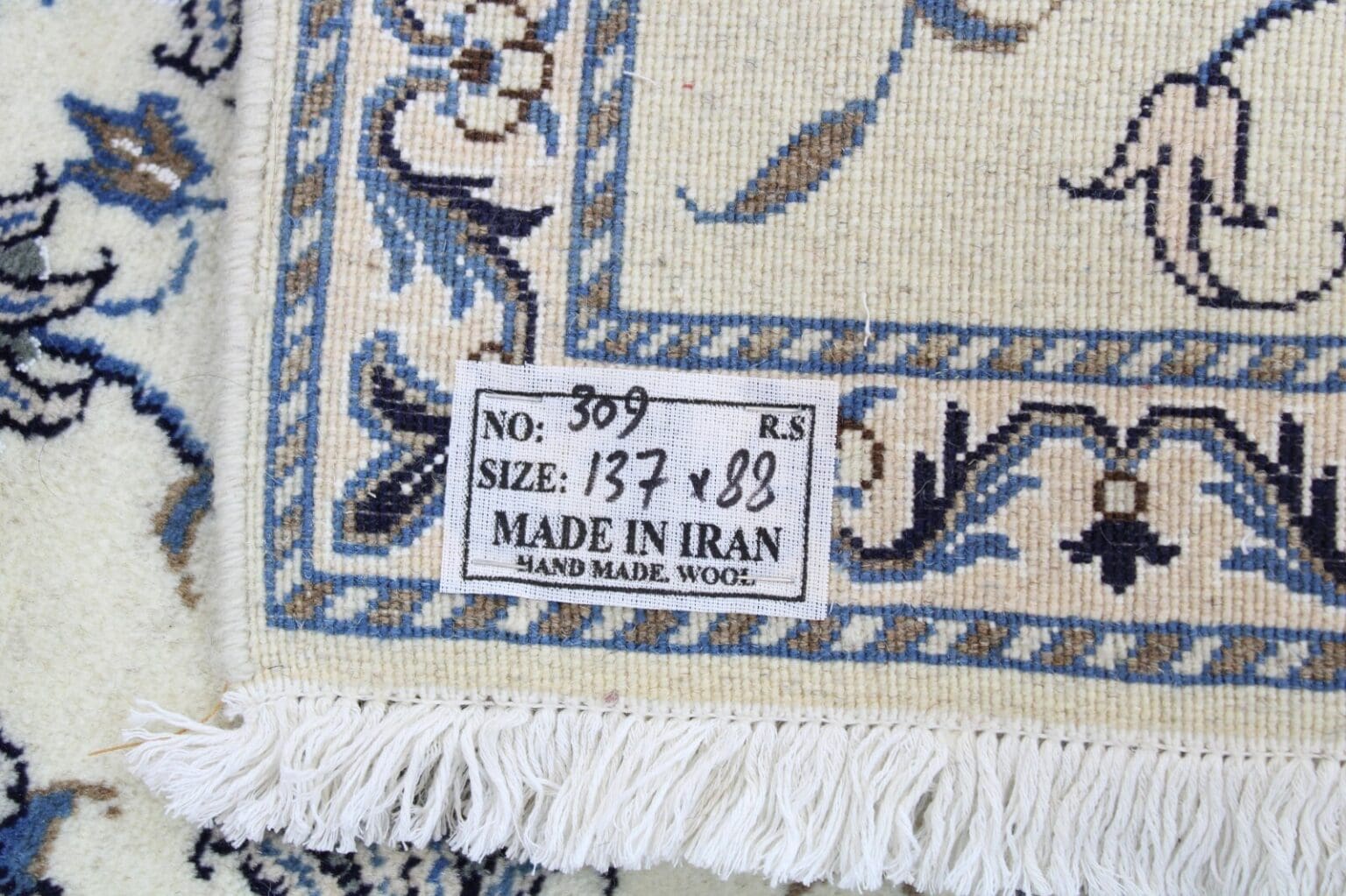
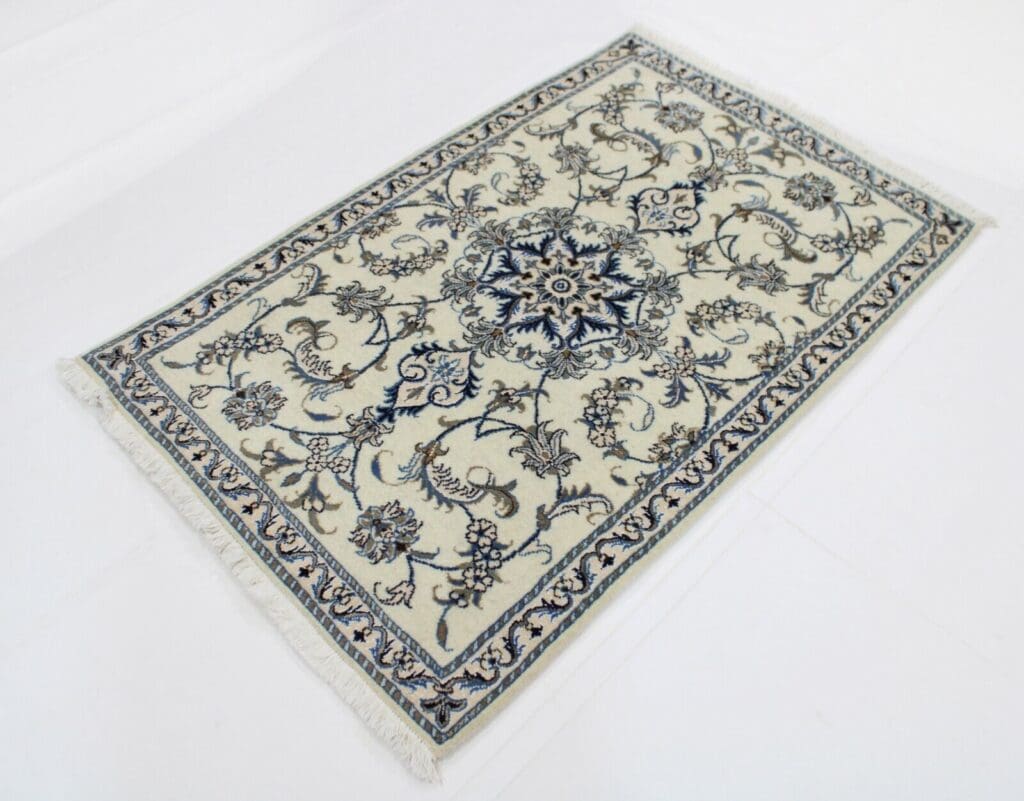
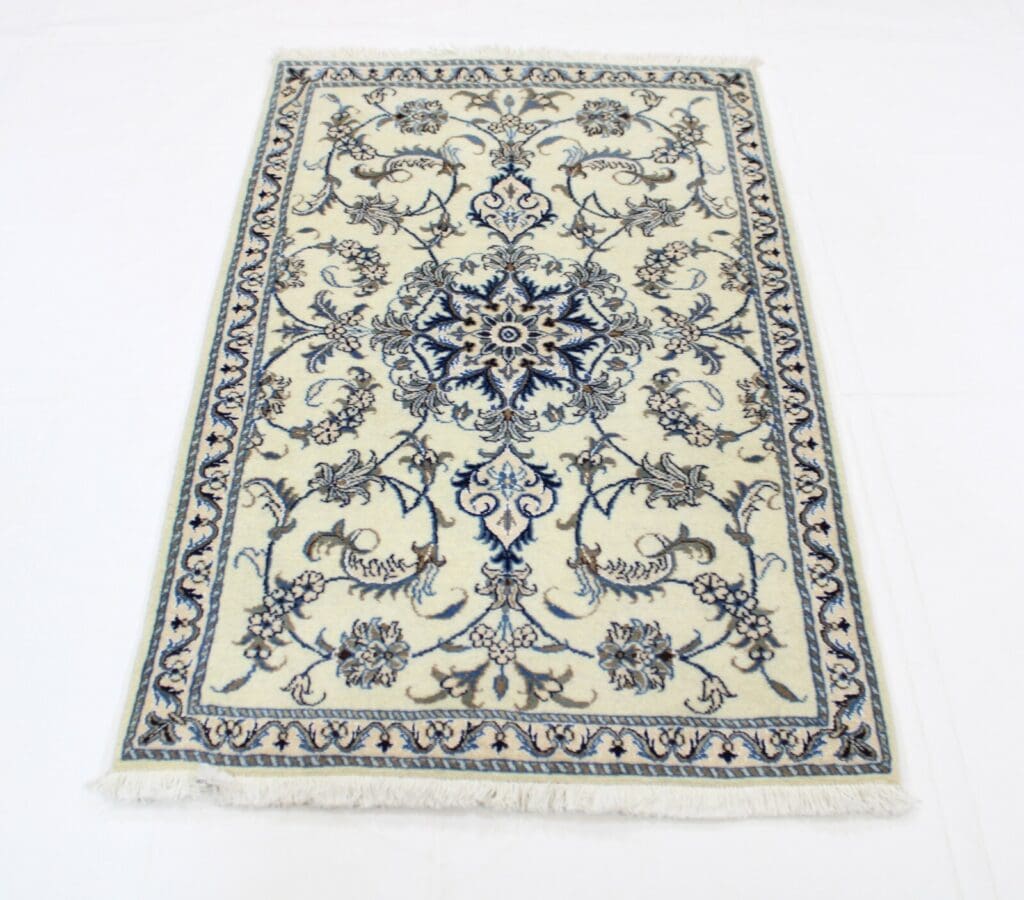
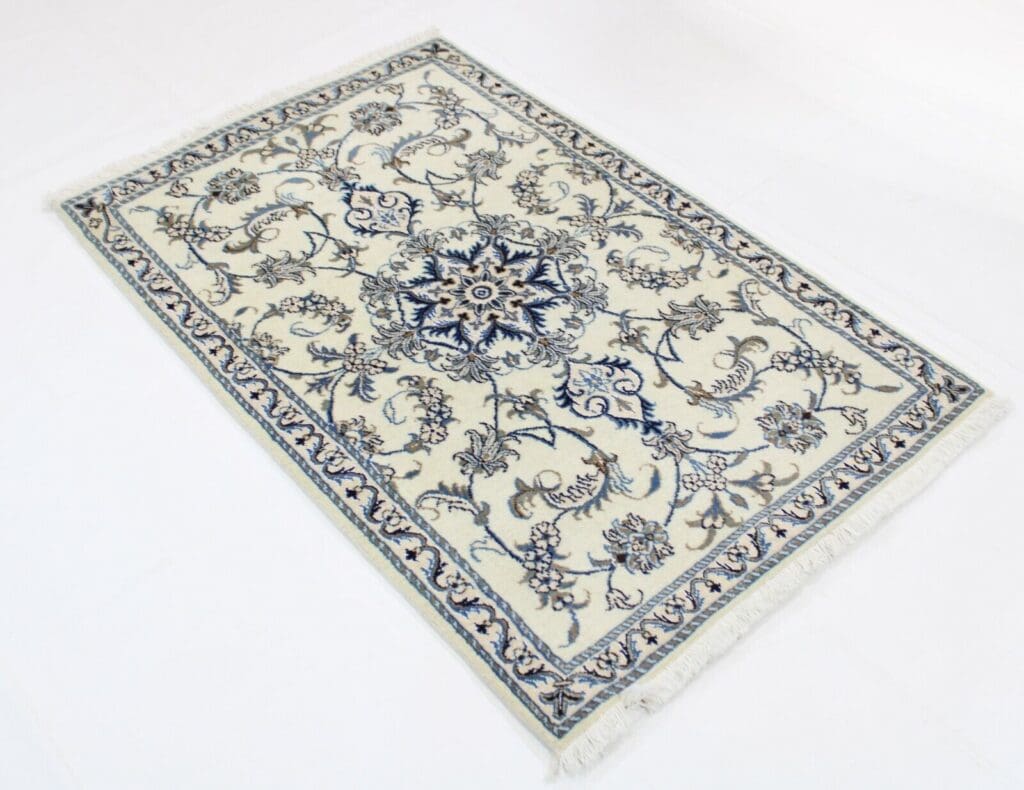
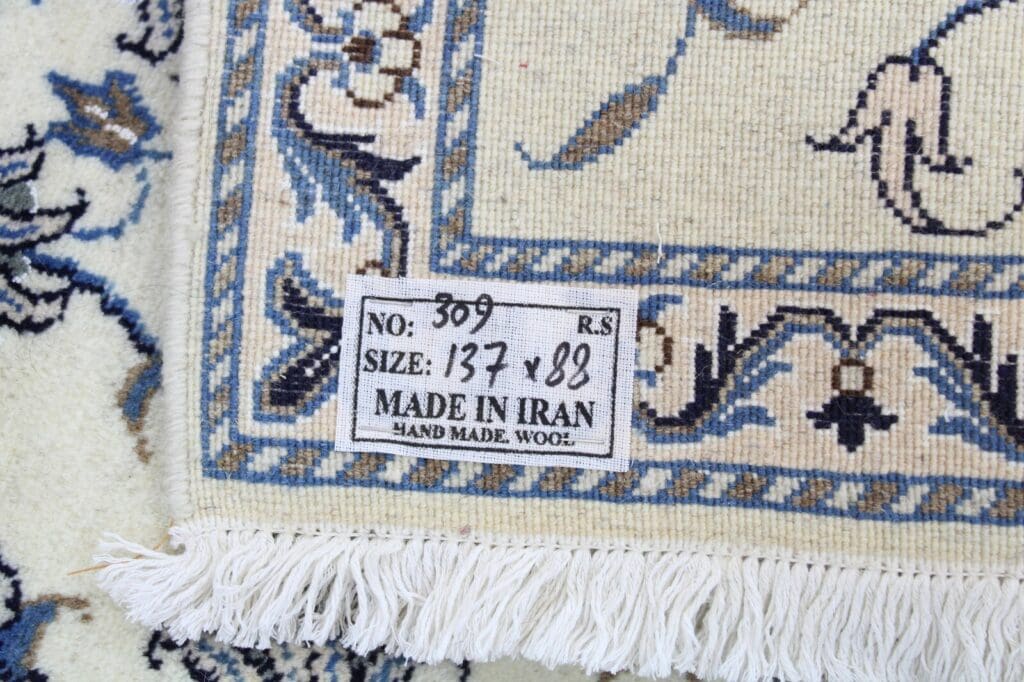
Hand-knotted Nain Persian rug | Knot density: hand-knotted | Material: wool and cotton | Size: 137 cm x 88 cm | Pattern: oriental, floral | Condition: new without tag, top condition
This Persian rug from Nain is made of high-quality wool and cotton. Both materials have a long place in Persian rug making. Wool is traditionally valued for a resilient and tactile surface, while cotton is often used as a firm foundation in knotted textiles. The source identifies wool and cotton for this rug, but does not assign each fibre to a particular structural part. No additional fibre composition is therefore stated here.
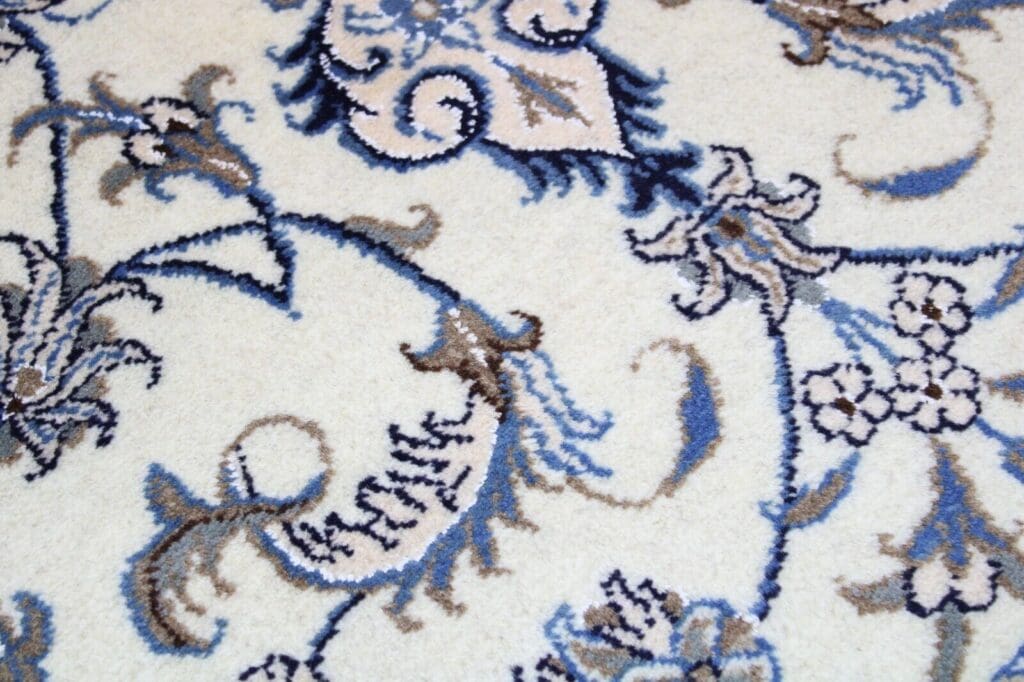
The rug is hand-knotted. In this method, individual knots are worked by hand into a stretched foundation, building the textile surface row by row. Unlike a machine-made floor covering, a hand-knotted rug develops through the repeated manual placement of knots, followed by processes that even and finish the surface. The listing describes the knot density as hand-knotted, but gives no numerical knot count.
Wool is a traditional rug material because its fibres are resilient and flexible. Cotton can contribute to a firm and stable foundation. The final character of a rug also depends on factors such as the weave, pile, colours, and use. Those technical details are not provided for this particular piece and are not added to the description.
The rug is stated to be suitable for underfloor heating. Proper installation on an even surface supports practical use. As with hand-knotted rugs generally, care should be adapted to the fibres, the setting, and the amount of everyday traffic.
Origin and Tradition
This rug comes from Iran and is identified as a Nain Persian rug. Nain is a recognised Persian rug centre in central Iran, with a textile tradition associated with carefully organised designs and skilled handwork. The name Nain refers here to the stated regional origin and rug type, rather than merely describing a decorative appearance.
Persian rugs represent a wide range of regional traditions. Different weaving centres developed their own approaches to colour, ornament, repeat, and construction. Nain rugs are often associated with precise, orderly compositions and floral decoration. That background explains the place of Nain within Persian rug culture; it does not establish a particular workshop, weaver, or family provenance for this individual rug, none of which is given.
Rug making in Iran brings together design, material selection, colour preparation, and manual execution. A design is not simply printed onto a completed surface. It is created through the arrangement of coloured knots and rows, with the weaver following a planned composition while working. Traditional patterns may be passed on through generations, while individual makers and later periods can adapt them to changing interiors and preferences.
This rug is described as dating from the twenty-first century. It therefore belongs to the continuing modern production of Persian rugs rather than to an unspecified antique period. Contemporary Nain rugs can retain established floral conventions and hand-knotting methods while being made for present-day homes. Their description should distinguish the broad history of the region from the verified characteristics of the individual piece.
Its Iranian origin is why the rug is called a Persian rug. That term should not be confused with the broader category of oriental rugs from other countries. Iran includes many important rug regions, including Nain, Isfahan, Tabriz, Kerman, and others, each with its own development. This rug is described as Nain from Iran, not as a rug from another named centre.
Design and Pattern
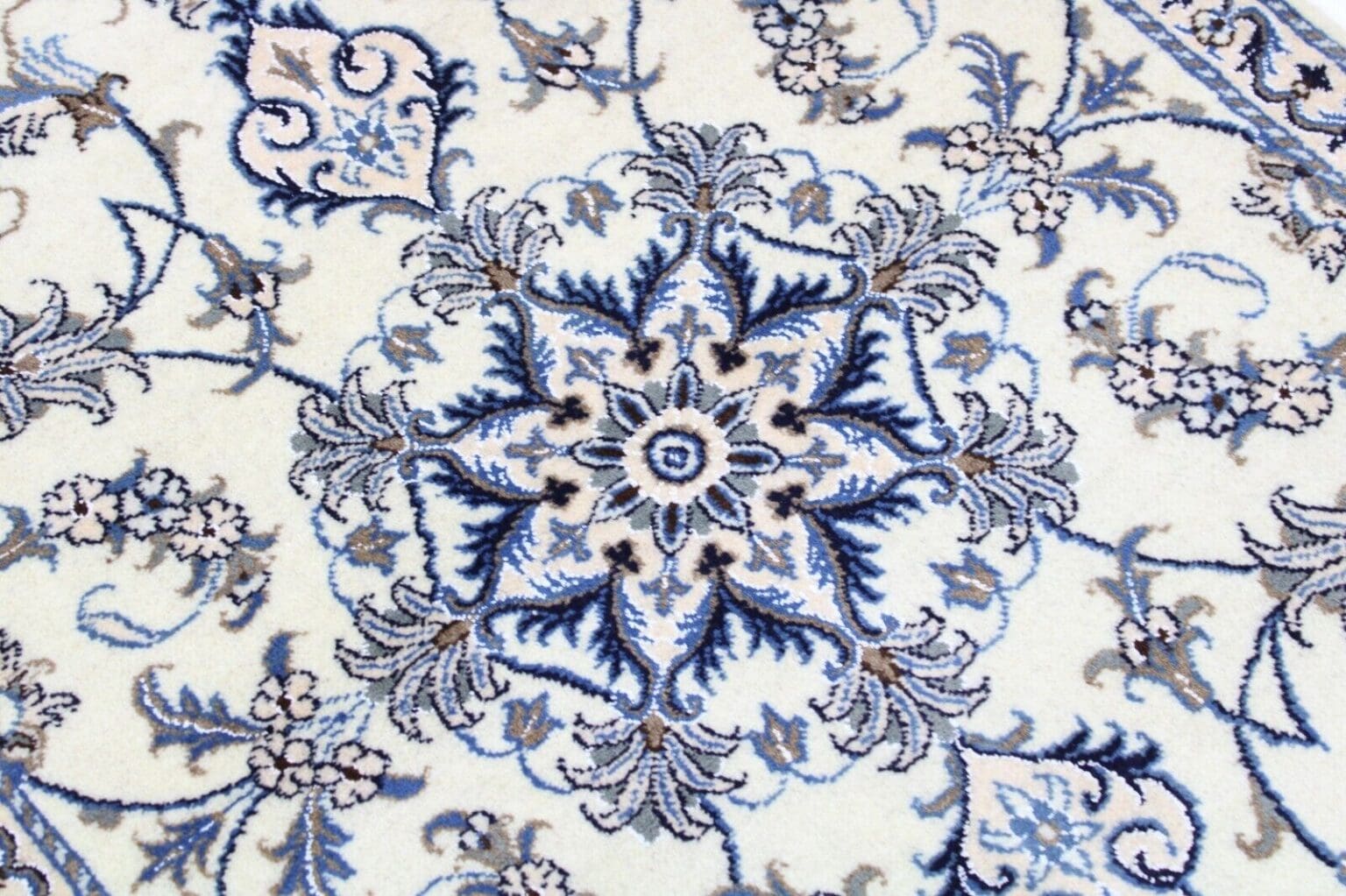
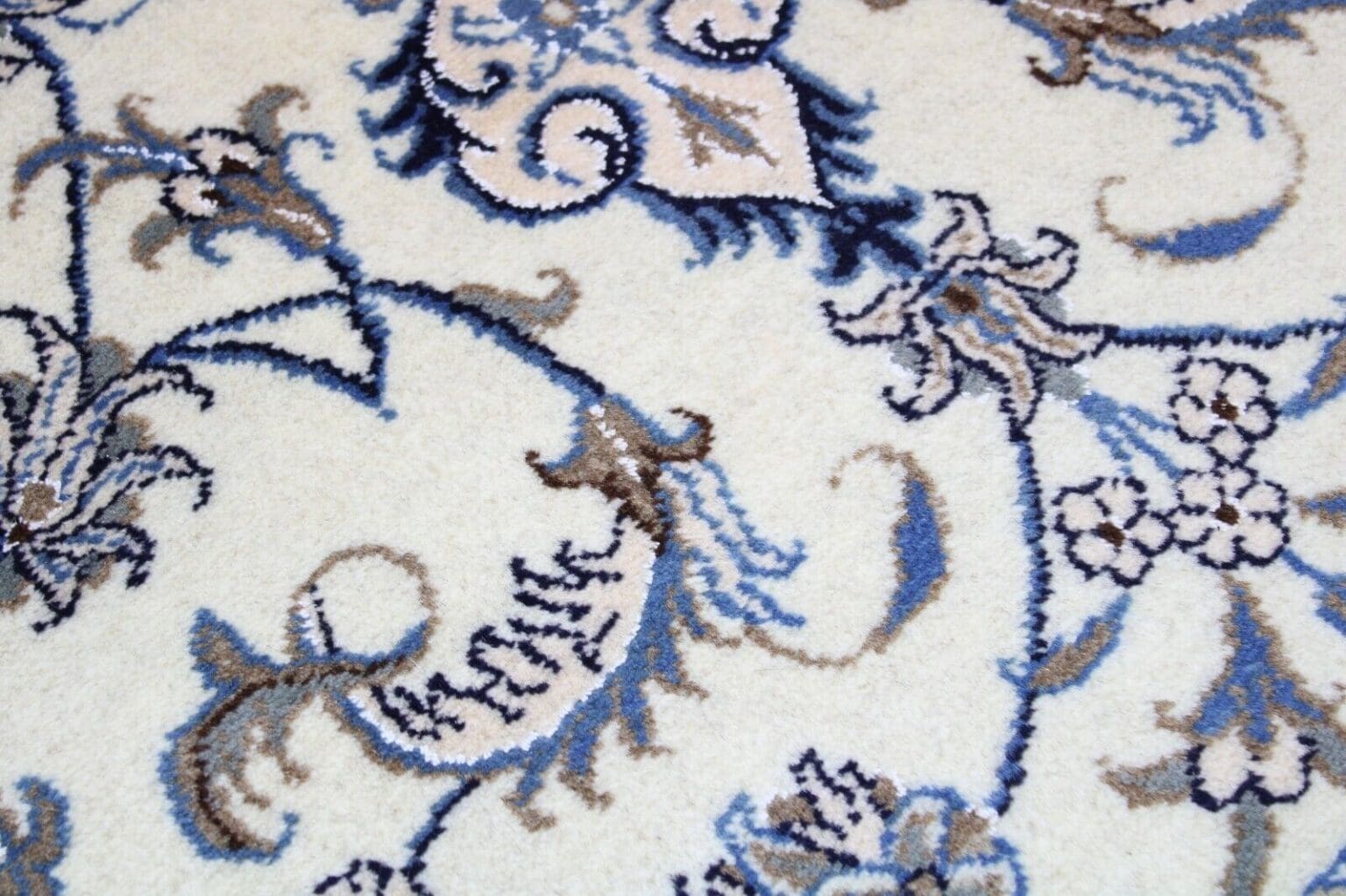
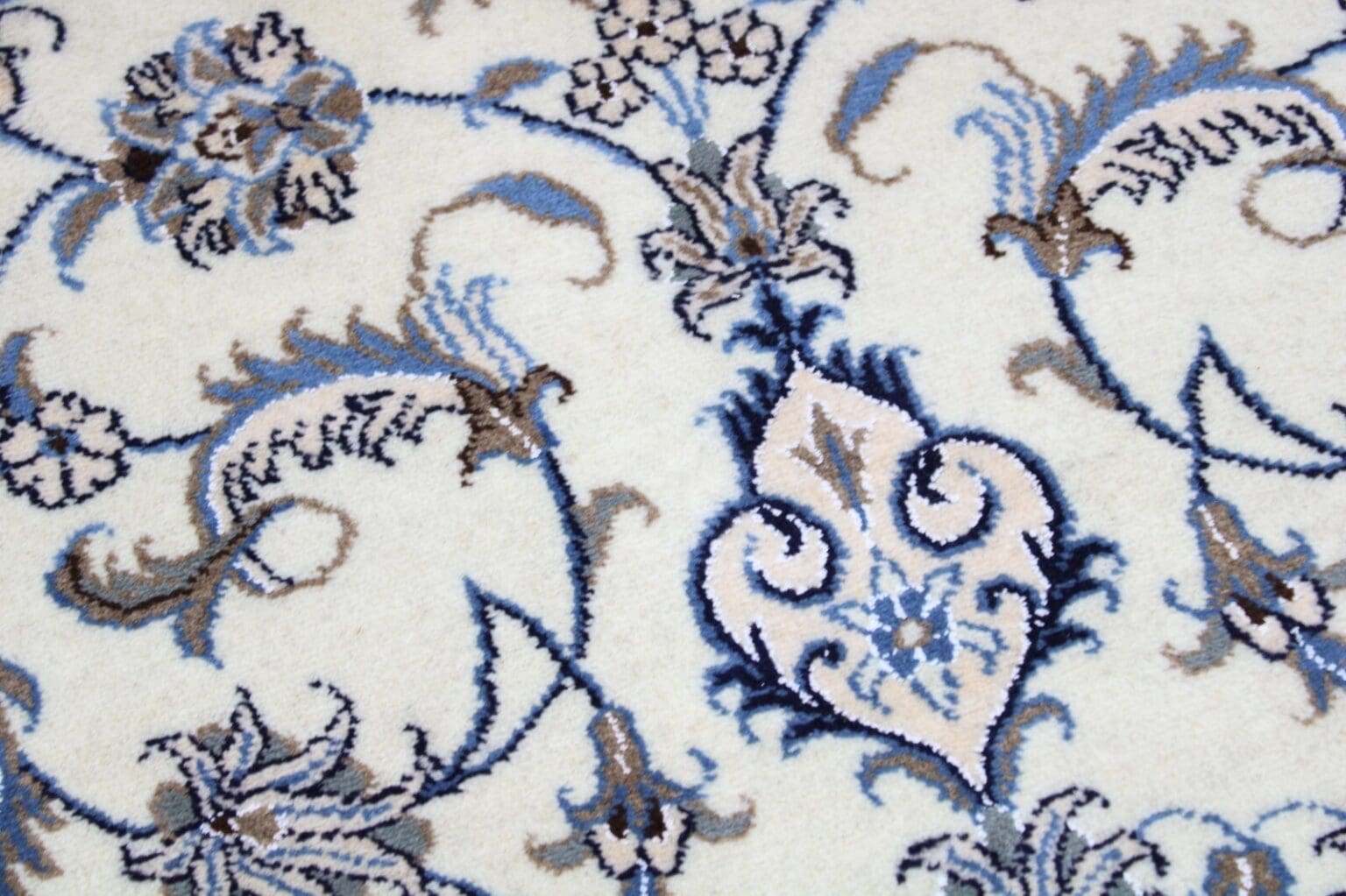
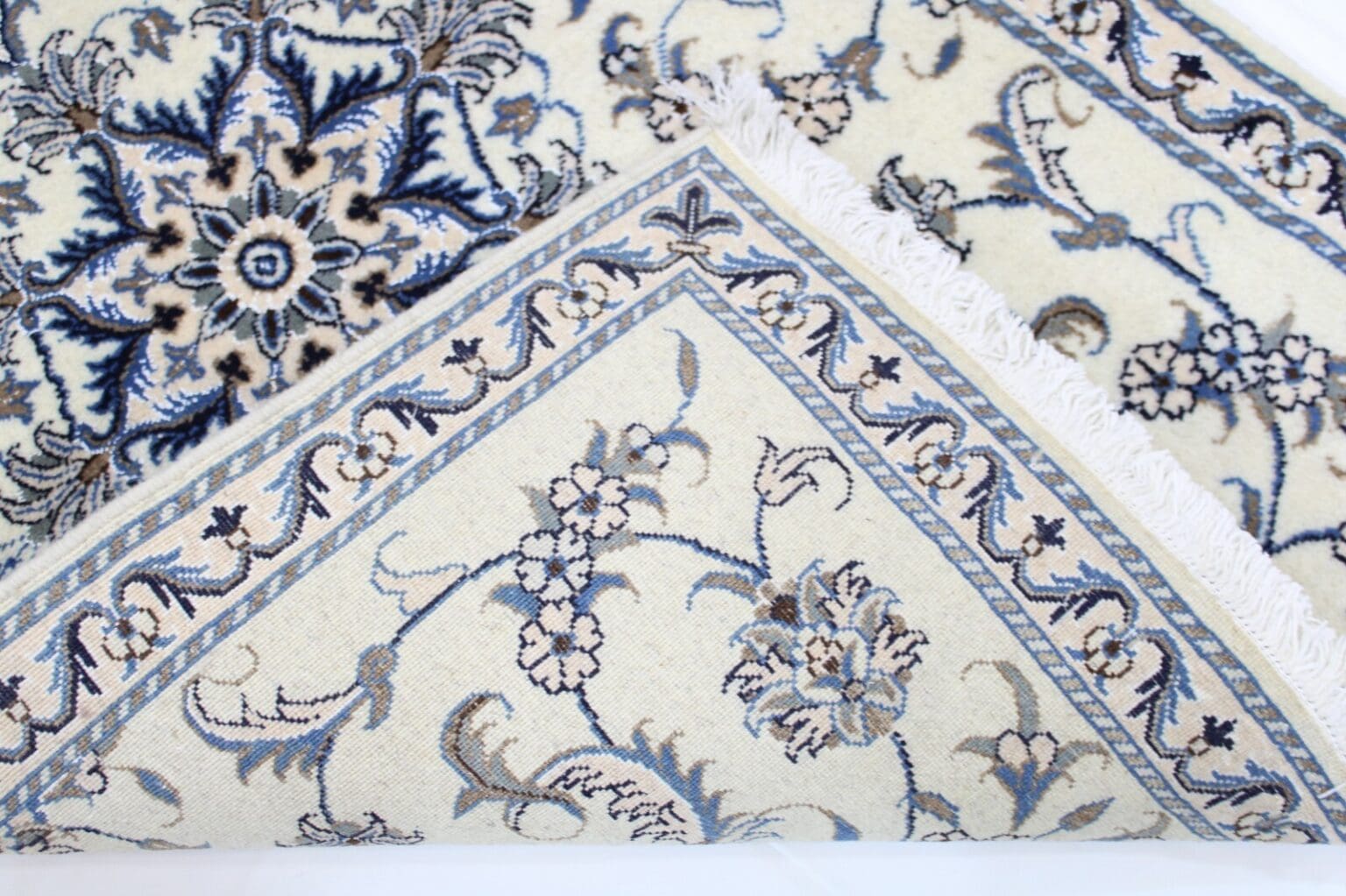
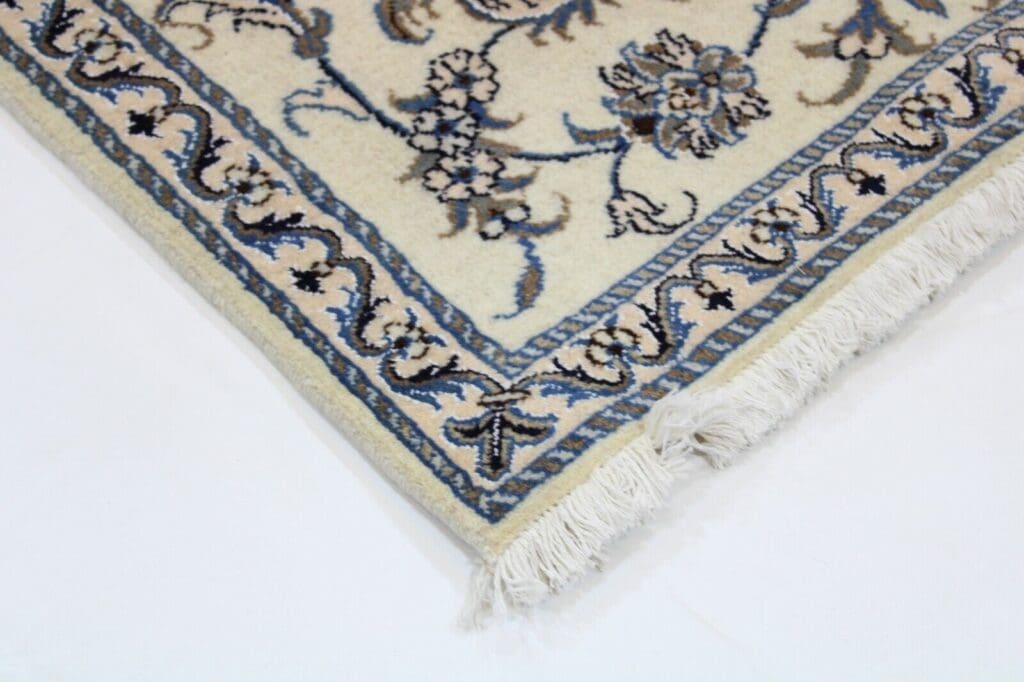
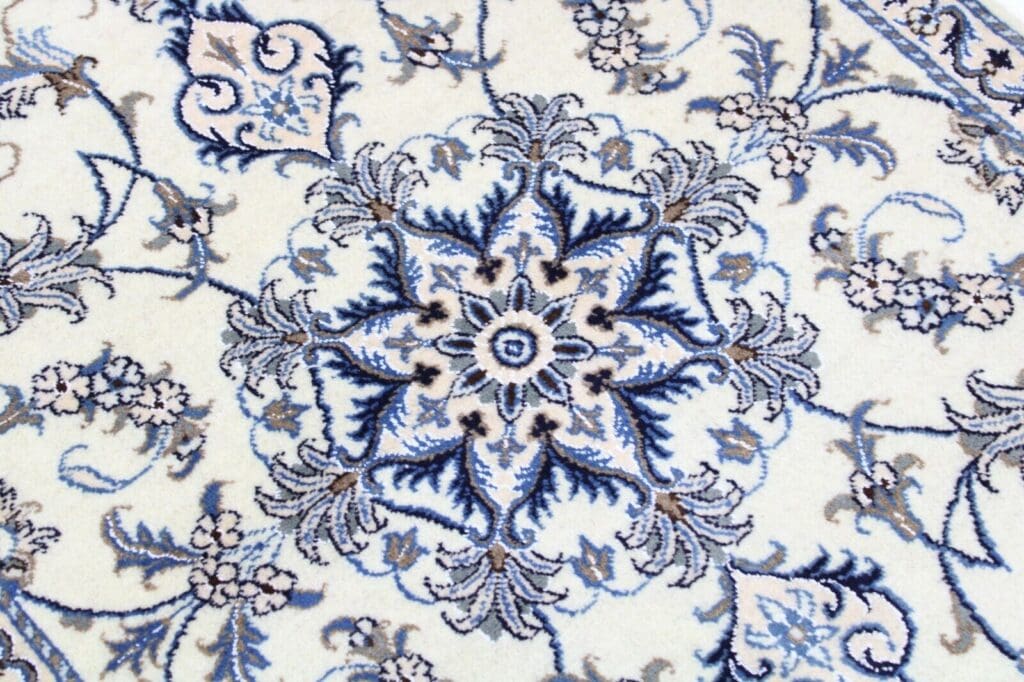
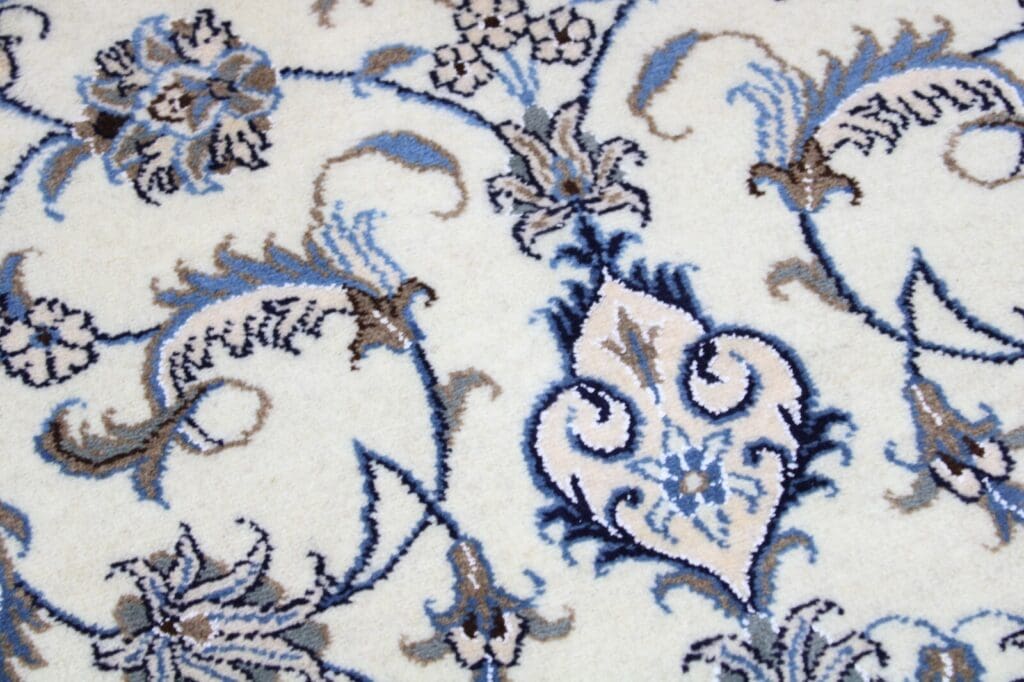
The pattern is described as oriental and floral. Flowers, leaves, and connecting vines are recurring elements in Persian rug design. In a hand-knotted rug, such imagery is formed from coloured knots arranged into rows, allowing a decorative field to emerge through the weaving process rather than through surface printing.
Floral ornament introduces a stylised idea of nature into a textile composition. Vines can connect separate motifs, leaves can create rhythm, and blossoms can provide points of emphasis. Persian floral designs commonly transform natural forms into ordered ornaments. They may balance repetition and symmetry with the small variations that result from manual work, rather than attempting to reproduce a botanical image literally.
In this listing, the word oriental describes the visual character of the pattern. It does not provide an additional statement about origin. The origin is Iran and the regional designation is Nain. The floral description places the rug within a broad Persian ornament tradition without adding an unrecorded medallion, border arrangement, designer, or exact pattern repeat.
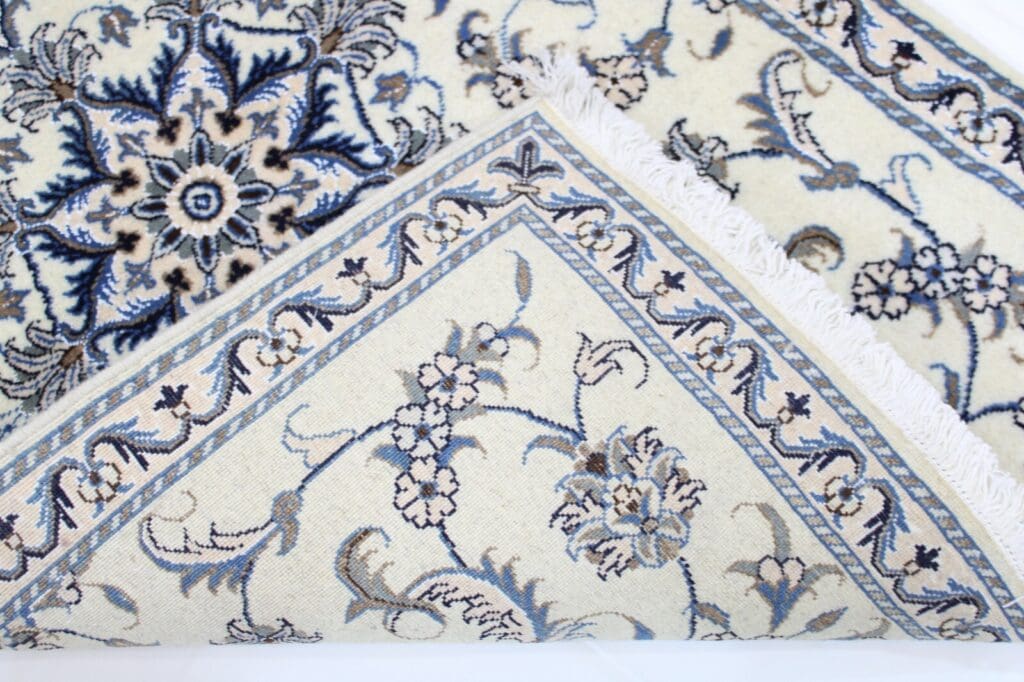
Nain designs are often discussed in connection with clear structure and finely organised floral detail. Regional compositions may include a central field, surrounding borders, and repeated plant forms. Such components are not automatically present in every Nain rug, however. For this rug, the confirmed design information is limited to an oriental floral pattern, while the precise internal arrangement is not specified.
Colour is an important part of any rug pattern, but no particular colours are recorded for this rug. They are therefore not named here. There is also no information about a medallion, a specific border, pile height, or a formal repeat. Keeping those details open preserves the distinction between general knowledge of Nain design and facts about this one piece.
Floral Persian patterns can work with traditional or contemporary furnishings, but their effect depends on the surrounding light, furniture, flooring, and maintenance. The pattern gives the rug a recognisably ornamental character; it does not by itself establish a specific interior style beyond the oriental and floral classification supplied for the rug.
Special Features
The rug is described as new without a tag and in top condition. This is a direct condition statement about the offered piece. Even a rug in new condition should be placed carefully and protected from unnecessary moisture, abrasive dirt, and prolonged direct sunlight.
Its stated suitability for underfloor heating is a practical feature. The rug should be laid on a clean, level surface, with doors and walking areas checked before use. Gentle, regular vacuuming can remove loose dust. If a deeper cleaning is needed, a professional service should select a method suitable for wool and cotton.
The principal characteristics are its Iranian origin, Nain designation, floral oriental pattern, wool and cotton material, and hand-knotted construction. No signature, exact knot count, workshop attribution, internal place of manufacture, or restoration history is provided. Those omissions are left open rather than replaced with assumptions.
FAQ
What makes a Persian rug special?
A Persian rug brings together regional design traditions and manual textile work. In this case, the relevant features are its Iranian origin, Nain designation, floral oriental pattern, hand-knotted construction, and stated wool and cotton materials. Its character comes from the way a design is built into the textile through individual knots, rather than being printed onto a finished surface. It is both a functional floor covering and a patterned textile rooted in Iranian rug culture. No additional quality claim is needed to describe those documented characteristics.
How should I care for my Persian rug?
Gentle regular vacuuming helps remove dry dust and loose particles before they become embedded. Excessive rubbing, persistent moisture, and unsuitable cleaning products should be avoided. For a thorough cleaning, a professional cleaner familiar with wool and cotton can select an appropriate process. Strong direct sunlight should be limited so that the colours remain as even as possible. Spills should not be aggressively scrubbed; they should be addressed promptly and, when necessary, treated professionally.
Can a Persian rug be used in any room?
Persian rugs can be used in a range of living and working areas, including sitting rooms, bedrooms, and offices. The right placement depends on traffic, the floor beneath the rug, and routine care. This rug is specifically described as suitable for underfloor heating. A level base and sufficient clearance around doors and walkways help make everyday use safe. In heavily used areas, regular inspection and gentle cleaning can help protect the hand-knotted textile structure over time.
To provide the best experiences, we use technologies like cookies to store and/or access device information. Consenting to these technologies will allow us to process data such as browsing behavior or unique IDs on this site. Not consenting or withdrawing consent, may adversely affect certain features and functions.
Functional Always active
The technical storage or access is strictly necessary for the legitimate purpose of enabling the use of a specific service explicitly requested by the subscriber or user, or for the sole purpose of carrying out the transmission of a communication over an electronic communications network.
Preferences
The technical storage or access is necessary for the legitimate purpose of storing preferences that are not requested by the subscriber or user.
Statistics
The technical storage or access that is used exclusively for statistical purposes.The technical storage or access that is used exclusively for anonymous statistical purposes. Without a subpoena, voluntary compliance on the part of your Internet Service Provider, or additional records from a third party, information stored or retrieved for this purpose alone cannot usually be used to identify you.
Marketing
The technical storage or access is required to create user profiles to send advertising, or to track the user on a website or across several websites for similar marketing purposes.
 SECURE PAYMENT
 SHIPPING PARTNERS