This Nain rug is made from 95% virgin wool and 5% silk. Wool accounts for the main share of the composition and gives the pile its substantial textile character. In traditional rug making, wool is valued for its resilient fibres, natural elasticity and ability to absorb colour. These qualities can produce a surface that feels both soft and practical, while allowing the woven and knotted structure to remain clearly defined.
The silk content introduces a finer fibre to the predominantly woollen construction. Silk is used in rug making where a smoother surface, sharper detailing or a restrained sheen is wanted. It can reflect light differently from wool, allowing selected lines and areas to appear more finely articulated. Here, the larger wool content is complemented by a smaller silk content, bringing together a full textile handle and more delicate visual accents.
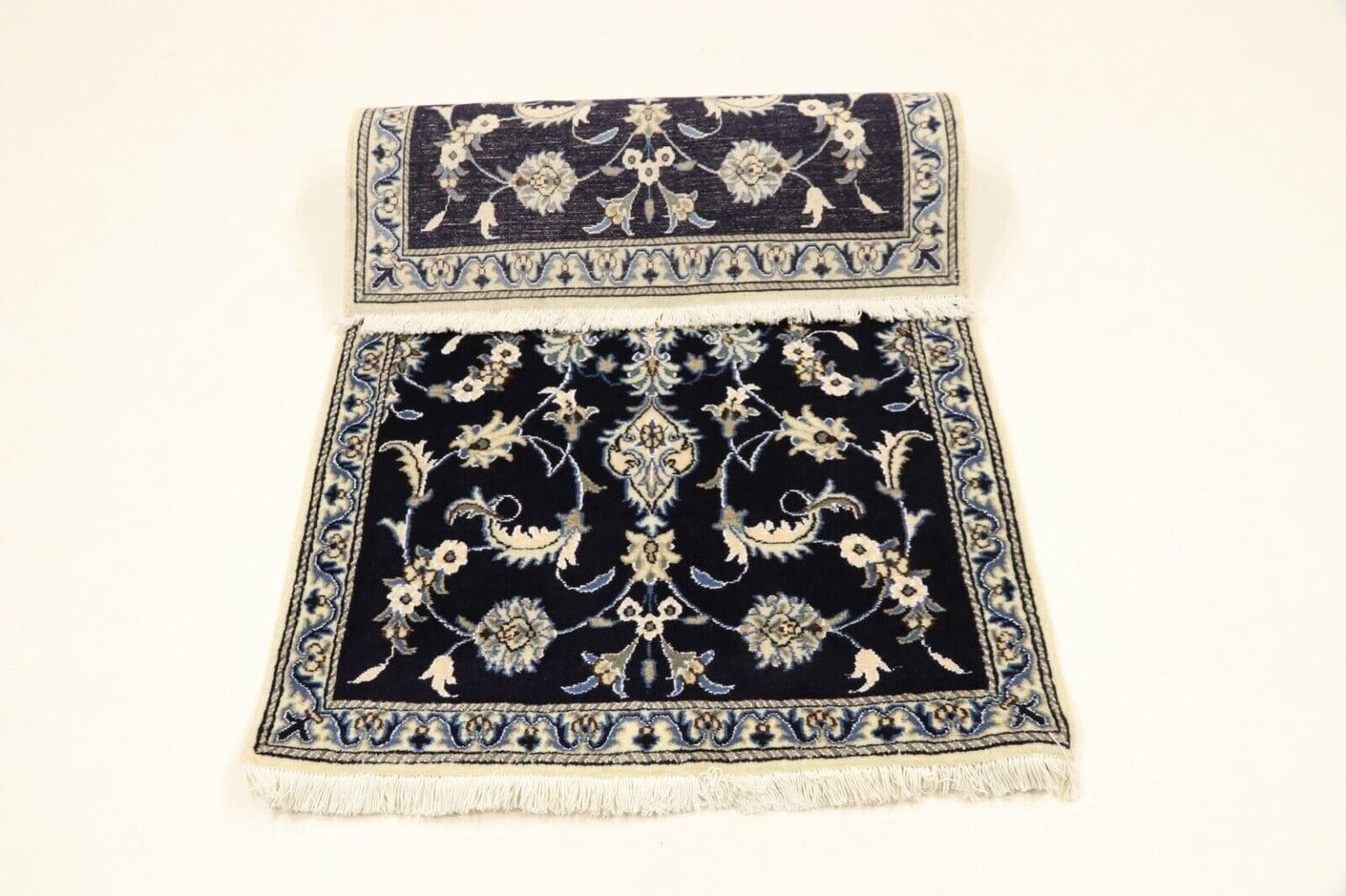
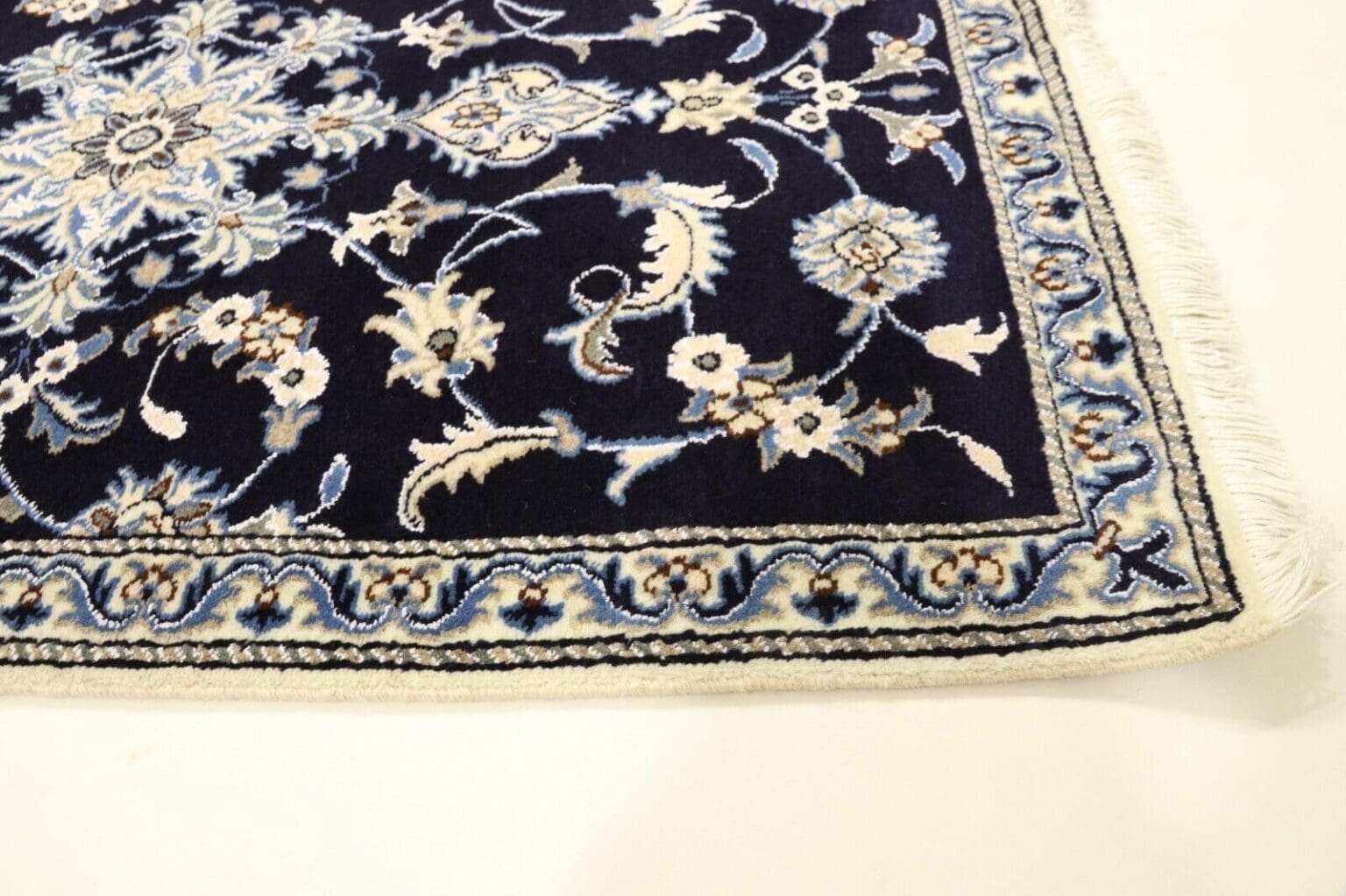
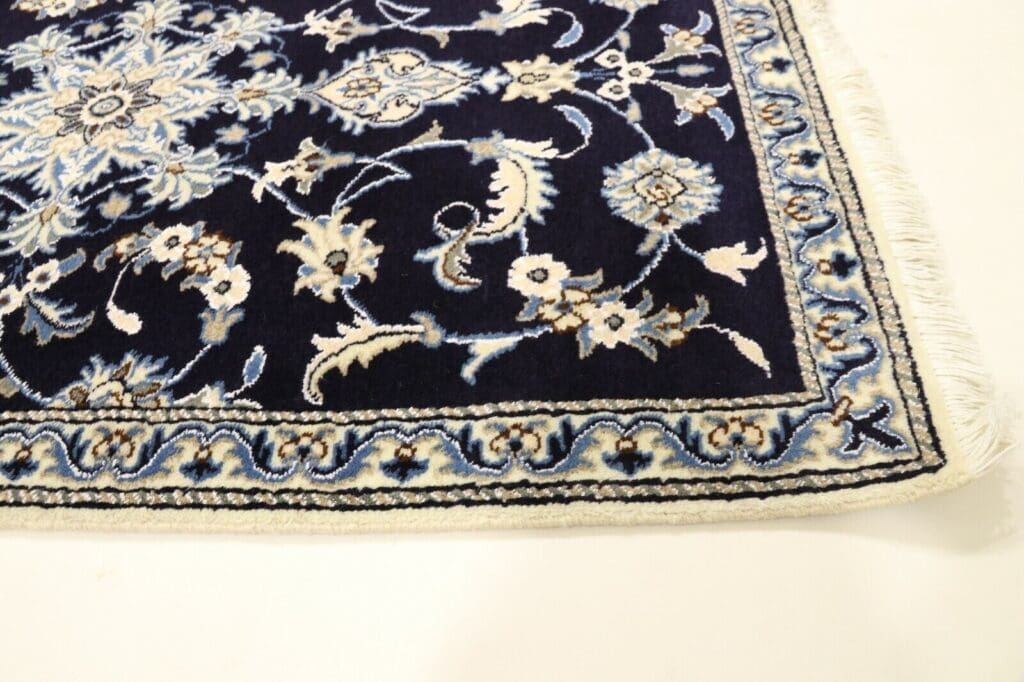
The rug is 100% hand-knotted. With this method, individual knots are tied by hand and inserted into the foundation in a traditional sequence. The process is not a printed image applied to a finished surface; the pattern is built as the knotting progresses. The approximate density of 300,000 knots per square metre allows for a finely differentiated drawing, including narrow outlines, small ornamental areas and controlled transitions between colours.
Hand knotting requires sustained manual work and attention to the relationship between knot, pile and design. In a Nain rug, accuracy of execution is an important part of the regional craft tradition. The wool provides the principal surface structure, while the silk can make selected passages look finer and more reflective. This rug is new and in very good condition.
Origin and Tradition
Nain is a traditional city in Iran and a recognised centre of Persian rug making. Nain rugs are associated with fine workmanship, orderly compositions and carefully drawn classical ornament. The city developed a distinctive weaving tradition in which technical precision, balanced colour and a clear pattern structure are brought together. The name Nain therefore refers not only to a place in Iran, but also to a regional approach to designing and making hand-knotted rugs.
Persian rug making combines a useful textile object with an elaborate visual language. In Nain, this relationship developed into a style known for controlled proportions and finely organised decoration. Producing such a rug requires knowledge of knotting, colour placement and pattern construction. These skills have been passed through workshops and generations, preserving methods that allow a design to remain balanced even when it contains many small elements.
Regional rug traditions are shaped by local practice as well as by the exchange of motifs across Persia. Nain weavers have worked with a vocabulary that can include floral arrangements, scrolling vines, medallion structures and geometric borders. A central medallion may organise the field, while surrounding branches and blossoms provide a measured transition towards the border. Other compositions distribute the ornament across the entire field. Both approaches belong to the wider Persian design tradition and can be associated with Nain weaving.
The cultural history of Persian carpets is reflected in the way ornament, symmetry and colour are used together. A balanced layout may create a sense of order, while repeated floral forms connect separate parts of the design. The patterns are also part of a long decorative tradition in which natural forms are stylised rather than copied literally. Nain weaving retains this connection between a recognisable regional identity and a disciplined, finely drawn surface.
Because the rug is hand-knotted, the regional tradition is present in the method as well as in the appearance. A weaver follows a pattern plan or an established arrangement and places the coloured knots in sequence. The density of the knotting makes it possible to express narrow contours and small changes in the design. The finished surface is therefore the result of repeated manual decisions, combining an inherited design language with the particular execution of one individual piece.
Nain rugs are often discussed in connection with careful finishing and refined pattern work. This does not mean that every rug follows one single layout. Regional identity can be expressed through different combinations of field, border, floral detail and medallion structure. What links these variations is the emphasis on clarity, proportion and the controlled use of traditional Persian ornament.
Design and Pattern
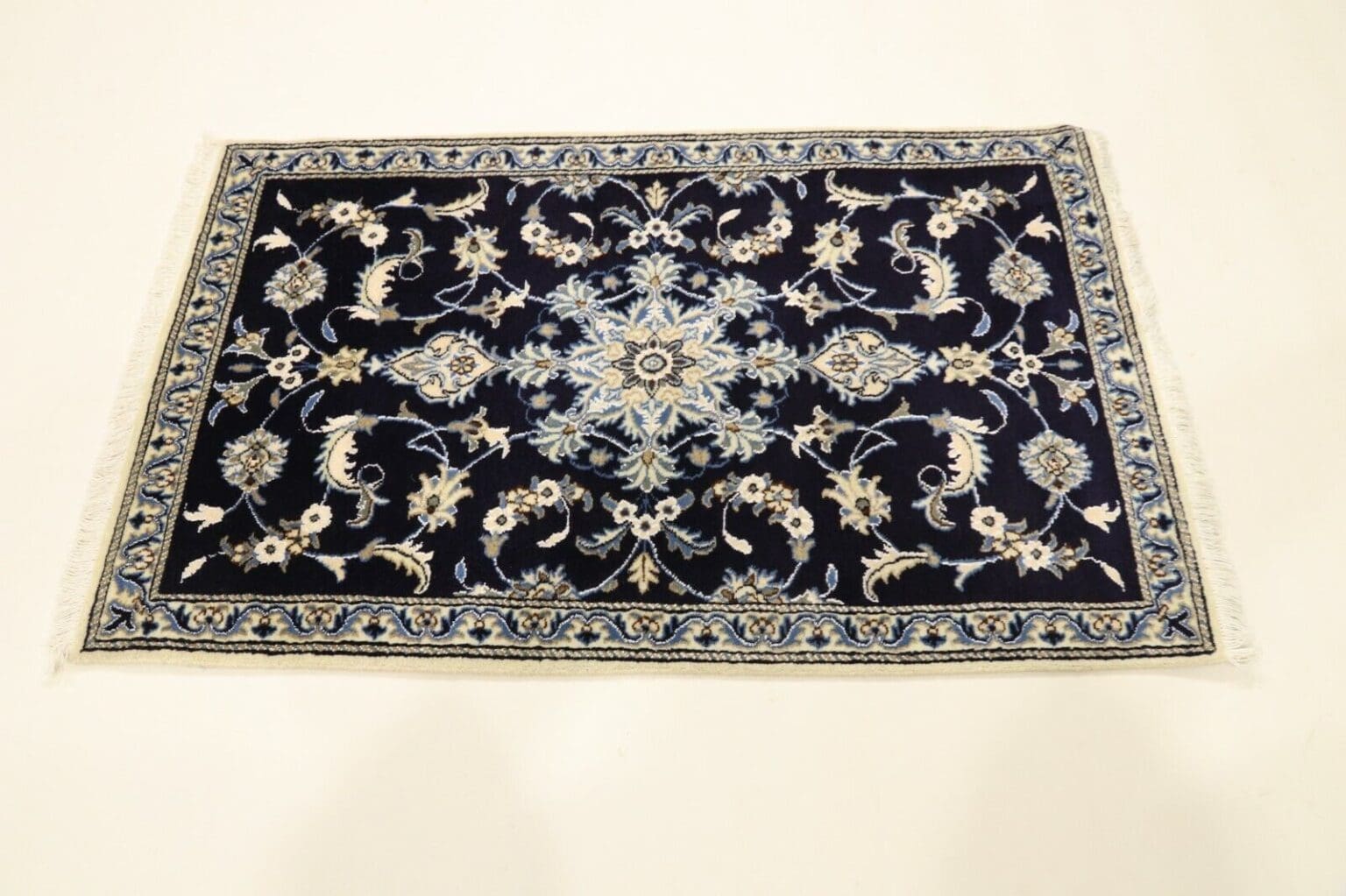
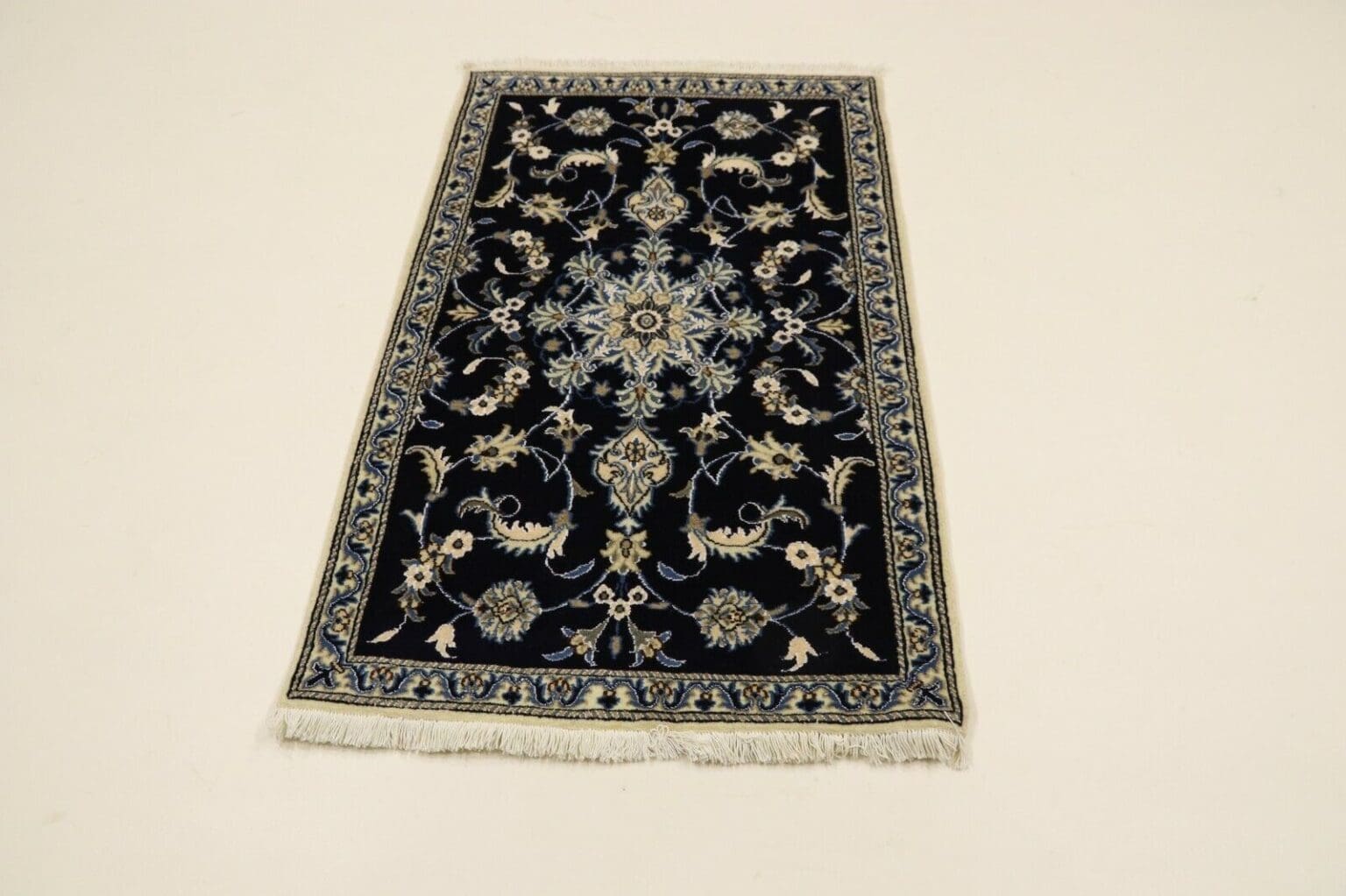
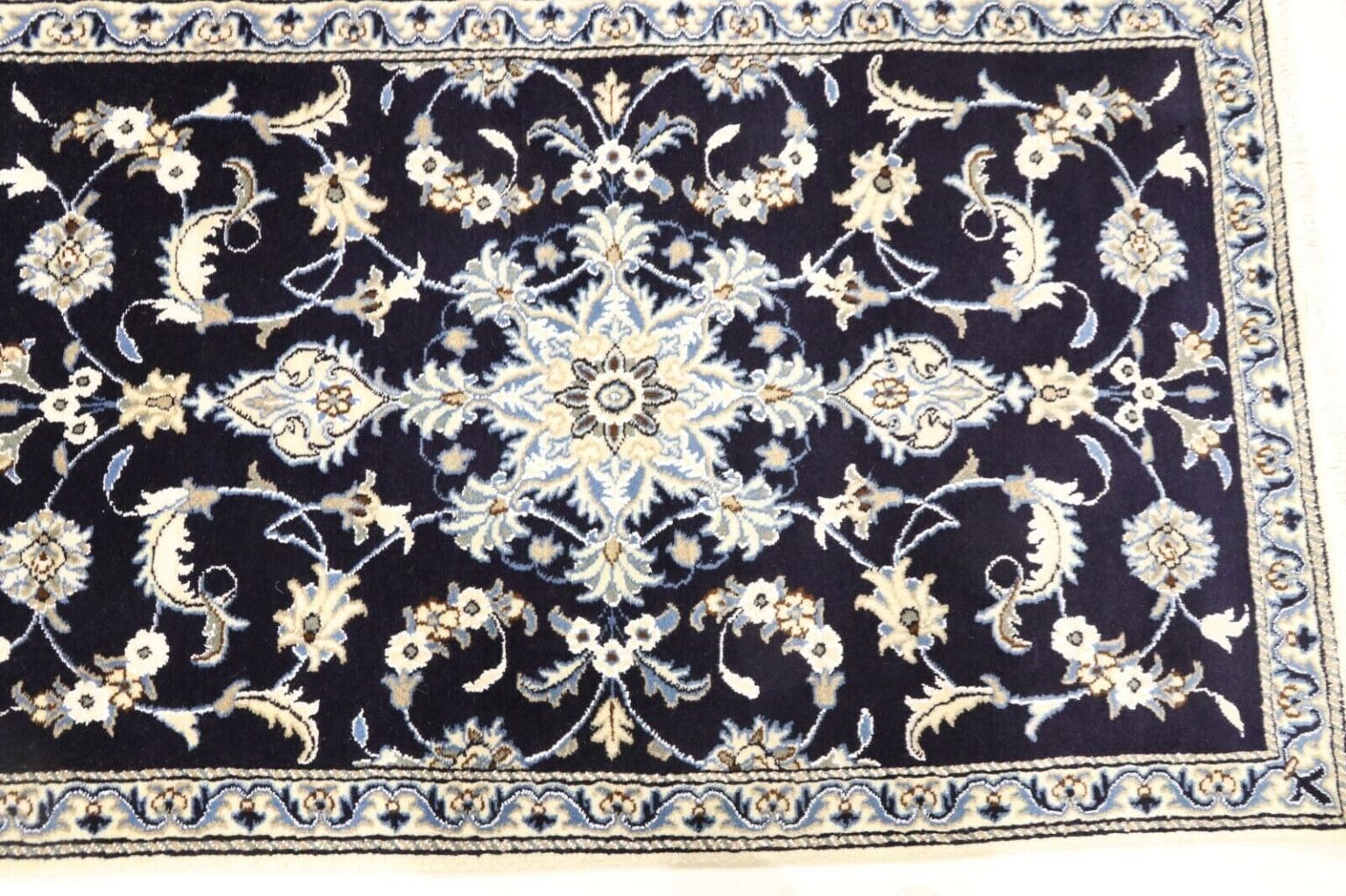
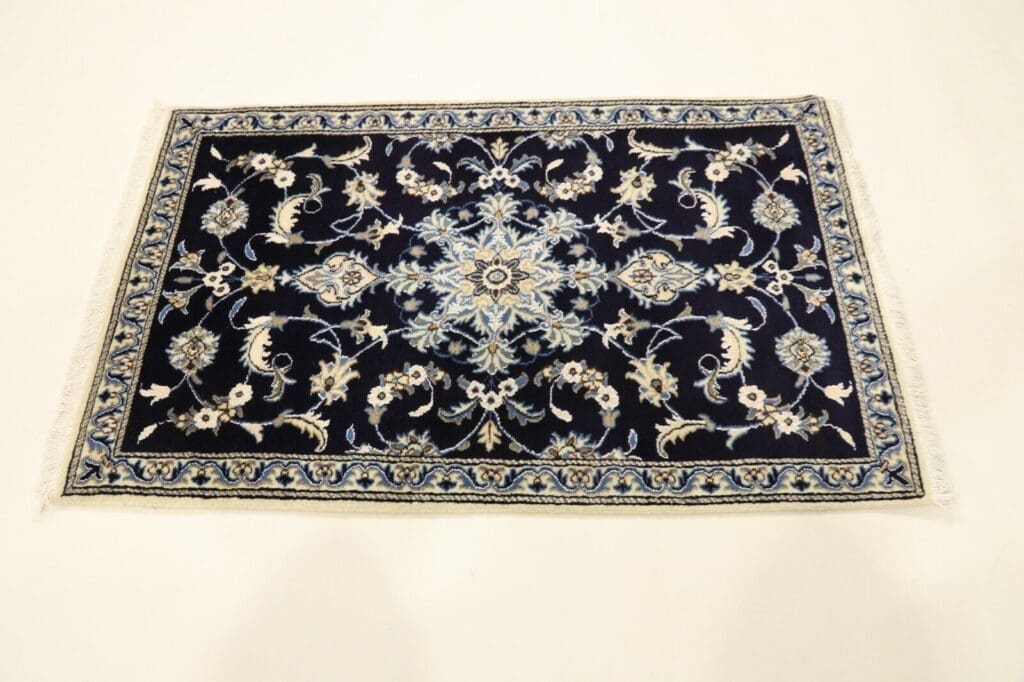
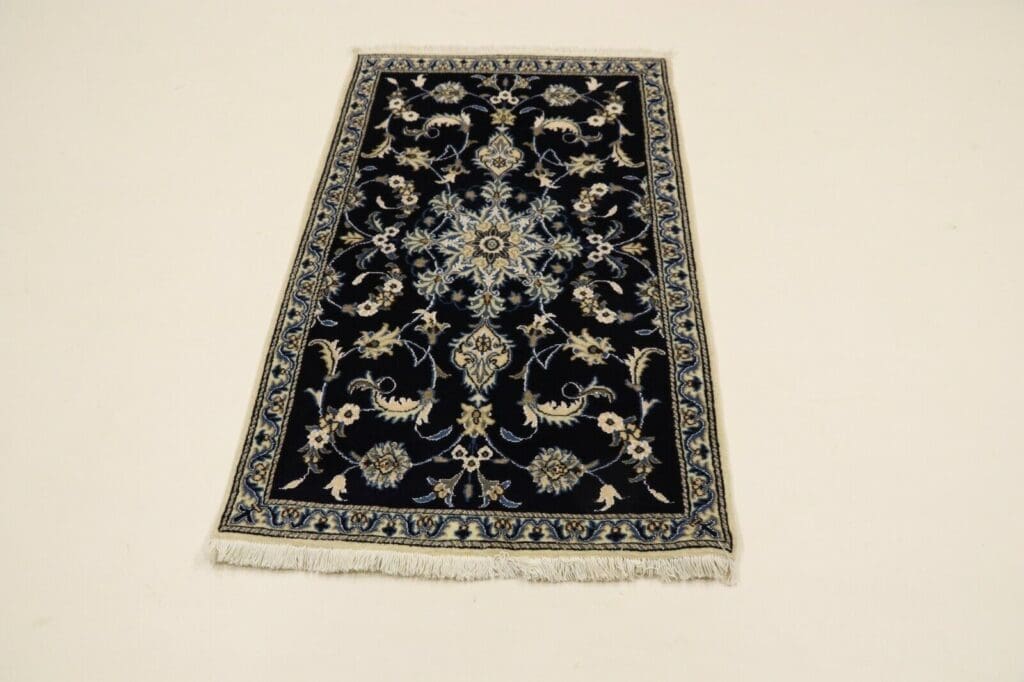
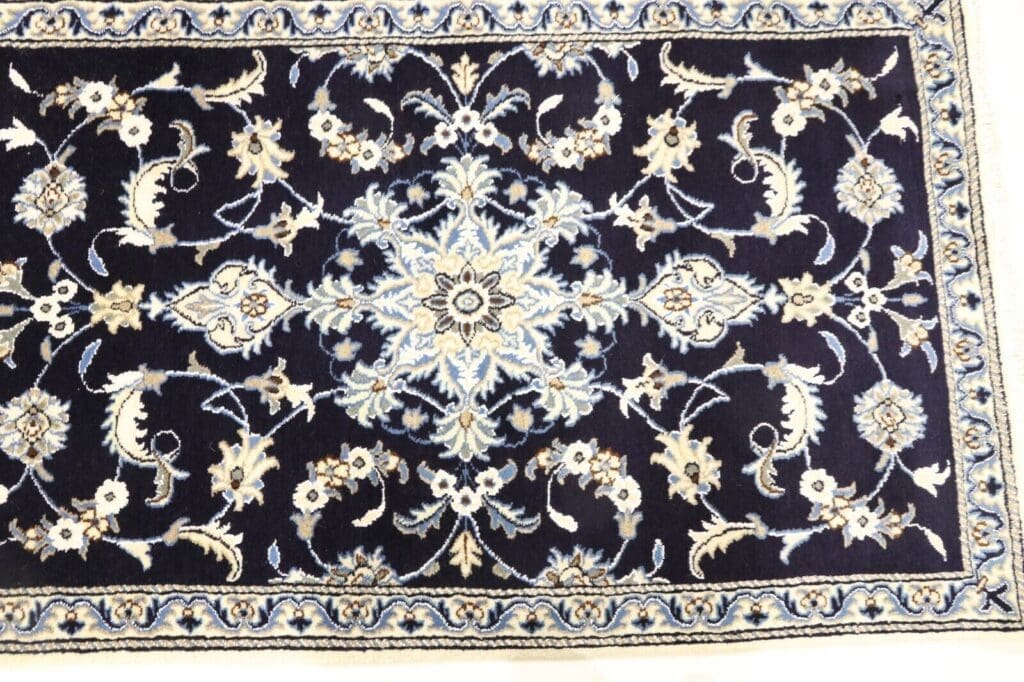
The pattern of this rug is described as Oriental. This places its design within the broad field of traditional decorative rug ornament. Floral motifs, scrolling vines, blossoms and geometric lines are frequently combined in Persian compositions. They can organise the central field, define a transition between field and border, or frame a medallion with repeated and symmetrical details.
Nain design gives particular importance to visual order. A medallion may function as the centre of the composition, with matching motifs extending towards the sides and ends. In an all-over arrangement, the ornament is distributed more evenly across the field. Vines can connect floral elements, while geometric lines establish a measured rhythm. Organic and geometric forms work together to make the surface decorative without losing its overall structure.
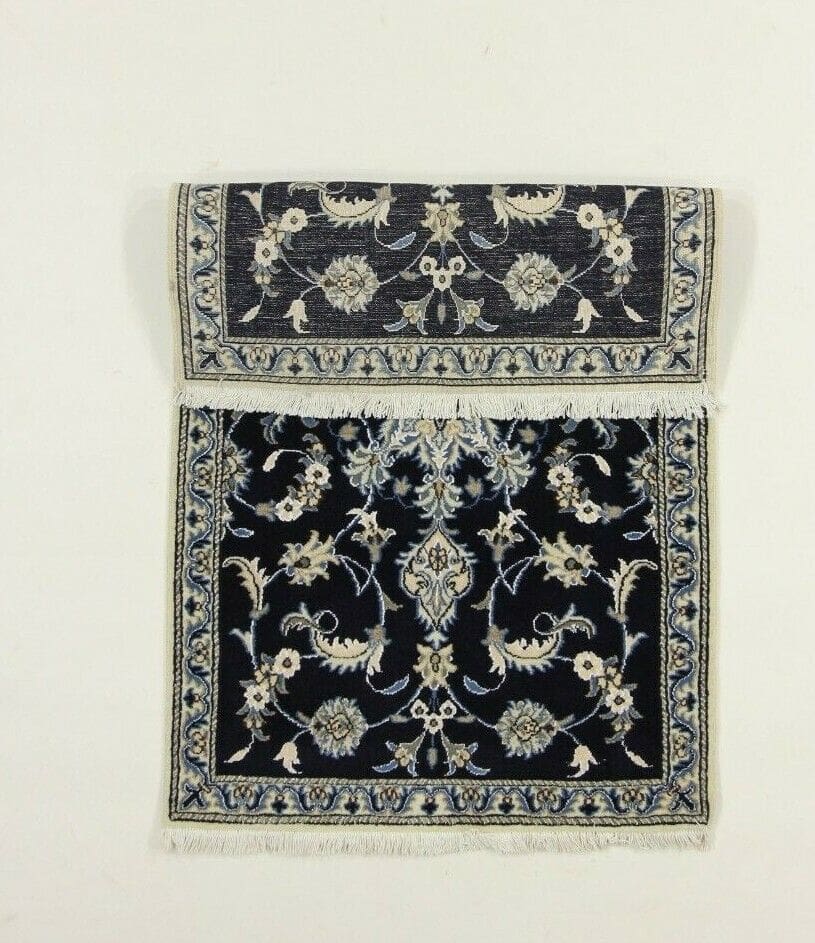
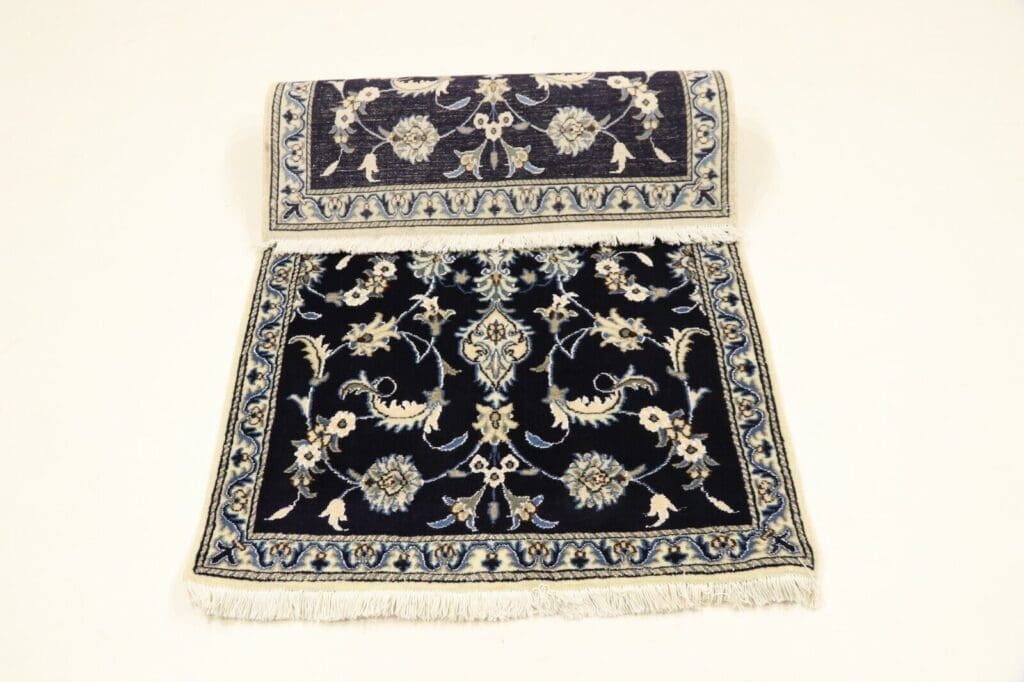
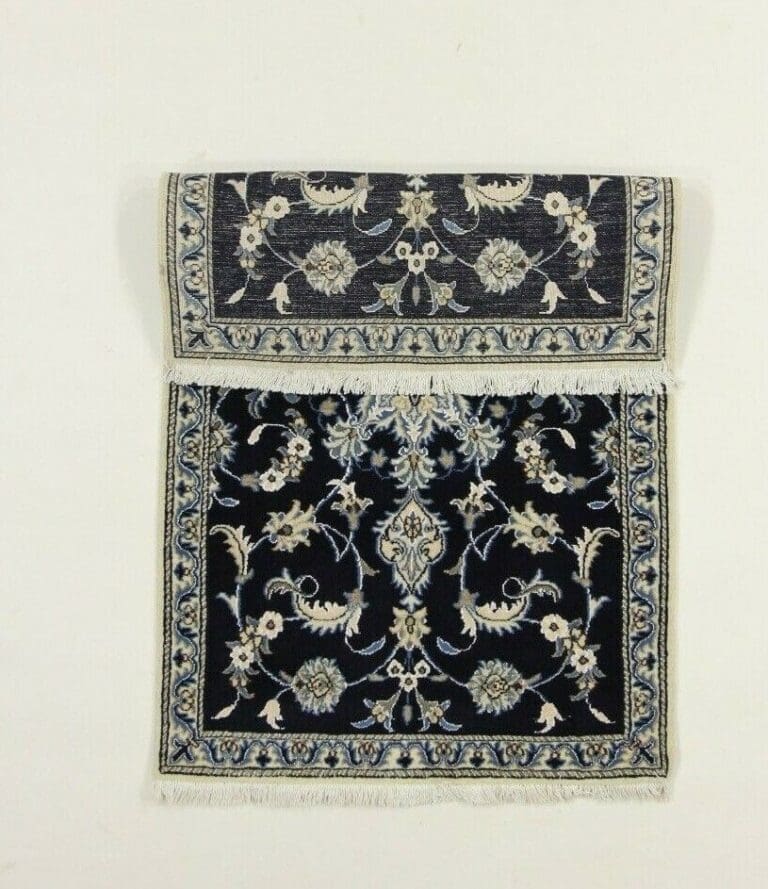
The colours of this rug are dark blue and white. Dark blue can serve as a defining ground or accent within a Persian composition, while white provides a light contrast for outlines and ornament. The opposition of a deep shade and a pale shade helps separate pattern zones and makes the drawing easier to read. The wool and silk fibres may also respond differently to light, so that particular passages can show subtle variations in surface reflection.
Traditional rug motifs are often understood as more than simple surface decoration. Floral forms may refer to nature and its recurring order, while symmetry and balance can suggest harmony and connection. These interpretations belong to the broader cultural background of Oriental and Persian ornament. They describe the language of the tradition and do not add a separate, unrecorded motif to this particular rug.
A fine knotting supports detailed pattern work. When many knots are used within a given area, outlines can be drawn more closely and small colour fields can be separated with greater precision. This is useful for floral curves, narrow stems, geometric accents and the measured transitions found in classical rug layouts. The design nevertheless remains a hand-knotted construction, with every section formed through the sequence of individual knots rather than through industrial printing.
The result is a Nain rug with an Oriental pattern designation, a dark-blue and white palette and a classical relationship between fine ornament and ordered structure. Nain designs can be placed alongside traditional furnishings as well as contemporary interiors because their visual language is based on proportion and pattern. That general adaptability does not prescribe a specific room for this individual piece.
Special Features
A defining feature of this one-off rug is its material combination of 95% virgin wool and 5% silk. Wool determines the main textile character, while silk can add finer accents and a restrained lustre. The rug is also fully hand-knotted in the Nain tradition. Its approximate density of 300,000 knots per square metre indicates a finely worked construction capable of supporting detailed ornament.
The condition is new and very good. The rug is suitable for use with underfloor heating. For care, regular vacuuming with a soft brush is recommended, while aggressive cleaning products should be avoided. If deeper cleaning is needed, dry cleaning or a specialised rug cleaner can be used. Gentle maintenance is appropriate for a surface made from both virgin wool and silk.
This rug is an individual one-off piece. Its specific features are the Nain origin, the fully hand-knotted technique, the wool-and-silk composition, the dark-blue and white colouring, and the Oriental pattern description.
FAQ
How should I care for the Nain rug?
Regular vacuuming with a soft brush helps remove dust and loose dirt from the surface. Avoid aggressive detergents, as they can affect the fibres and the appearance of the colours. When more thorough cleaning is required, the rug can be dry-cleaned or treated with a specialised rug-cleaning product. A gentle approach is particularly suitable for this combination of virgin wool and silk, helping preserve the pile, colour effect and the subtle sheen that silk can provide.
What is the difference between wool and silk in rugs?
Wool is used for its resilience, natural elasticity and substantial textile feel. It makes up 95% of this rug and therefore defines most of its surface character. Silk is a finer, smoother fibre that can provide a restrained lustre and help selected outlines or pattern areas appear more delicate. The combination of 95% virgin wool and 5% silk therefore joins a predominantly durable wool structure with finer visual accents and a different response to light.
Where are Nain rugs commonly used?
Nain rugs are often placed in living rooms, dining rooms and offices, where their ornamental design can function as a textile element within the interior. Their classical pattern tradition can be combined with both traditional and modern furnishings. This individual rug is also suitable for use with underfloor heating. The appropriate placement depends on the room layout and the intended use of the space.
To provide the best experiences, we use technologies like cookies to store and/or access device information. Consenting to these technologies will allow us to process data such as browsing behavior or unique IDs on this site. Not consenting or withdrawing consent, may adversely affect certain features and functions.
Functional Always active
The technical storage or access is strictly necessary for the legitimate purpose of enabling the use of a specific service explicitly requested by the subscriber or user, or for the sole purpose of carrying out the transmission of a communication over an electronic communications network.
Preferences
The technical storage or access is necessary for the legitimate purpose of storing preferences that are not requested by the subscriber or user.
Statistics
The technical storage or access that is used exclusively for statistical purposes.The technical storage or access that is used exclusively for anonymous statistical purposes. Without a subpoena, voluntary compliance on the part of your Internet Service Provider, or additional records from a third party, information stored or retrieved for this purpose alone cannot usually be used to identify you.
Marketing
The technical storage or access is required to create user profiles to send advertising, or to track the user on a website or across several websites for similar marketing purposes.

 SECURE PAYMENT
 SHIPPING PARTNERS


