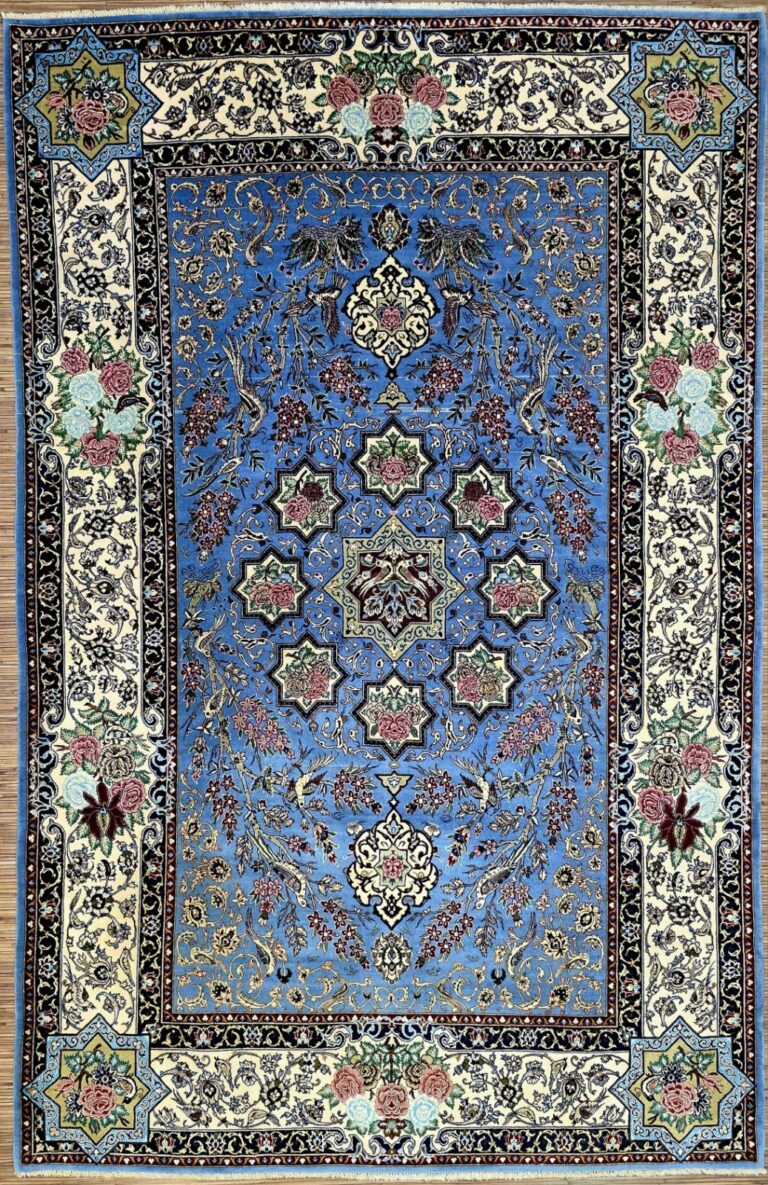
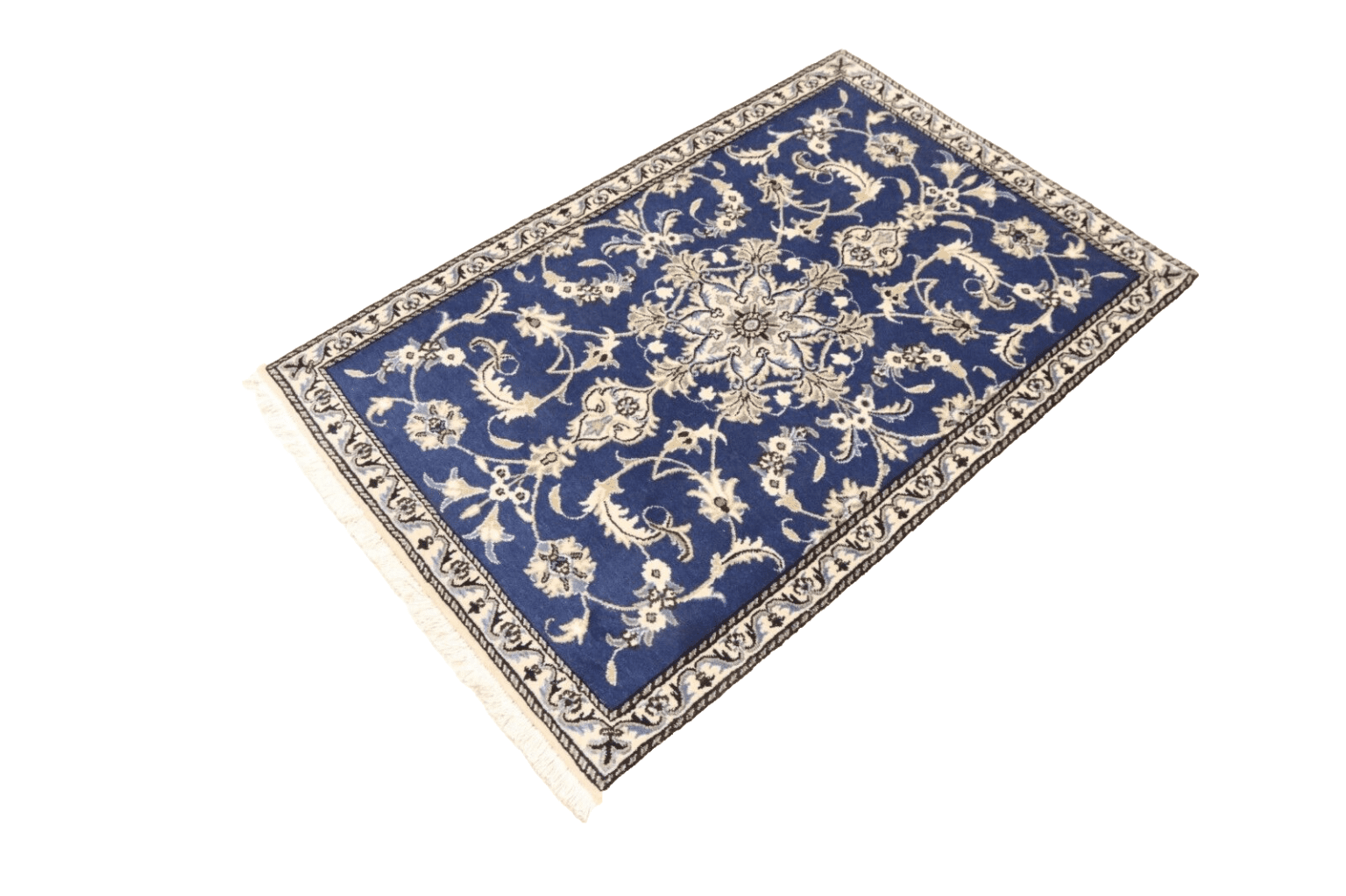
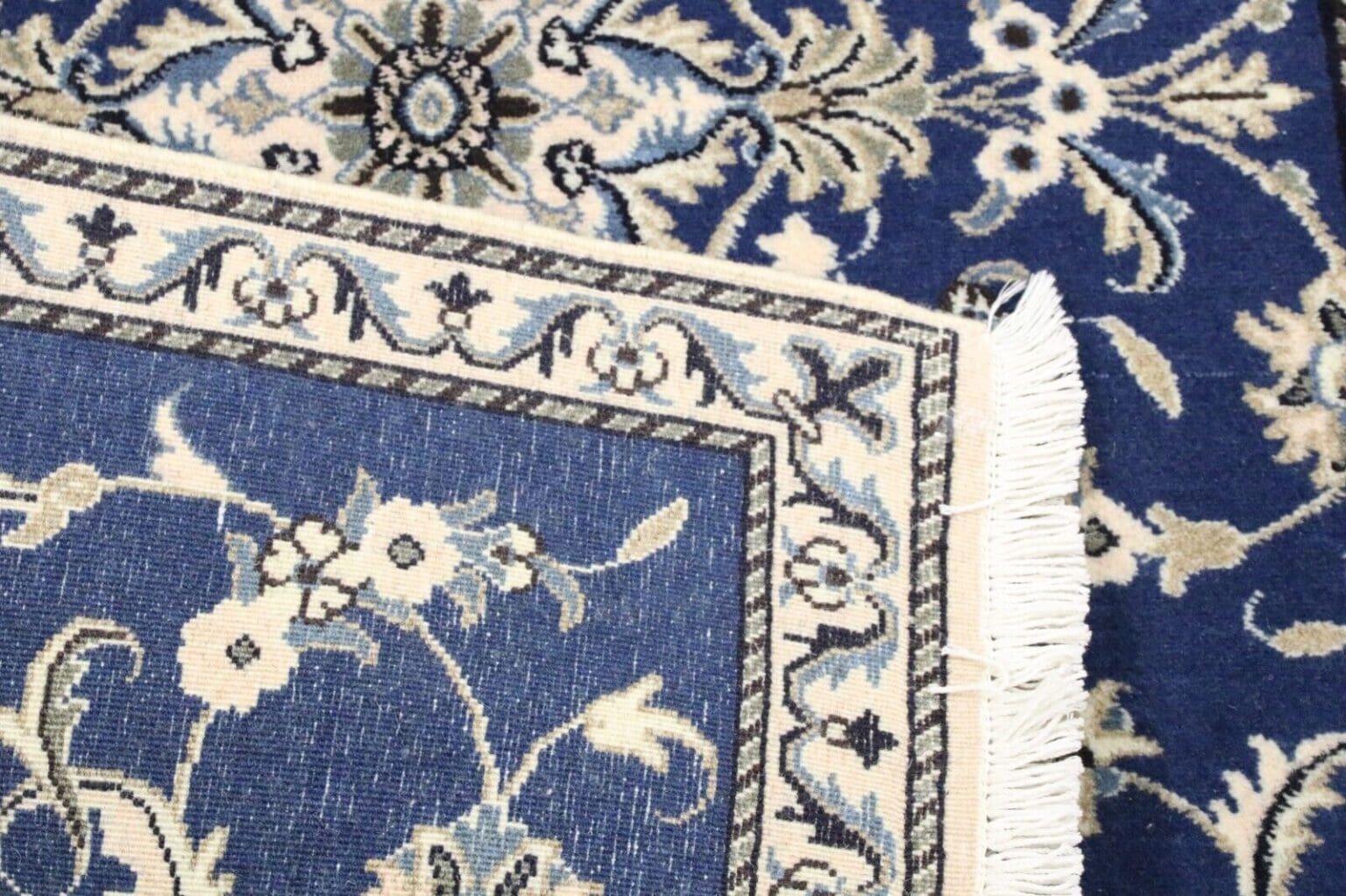
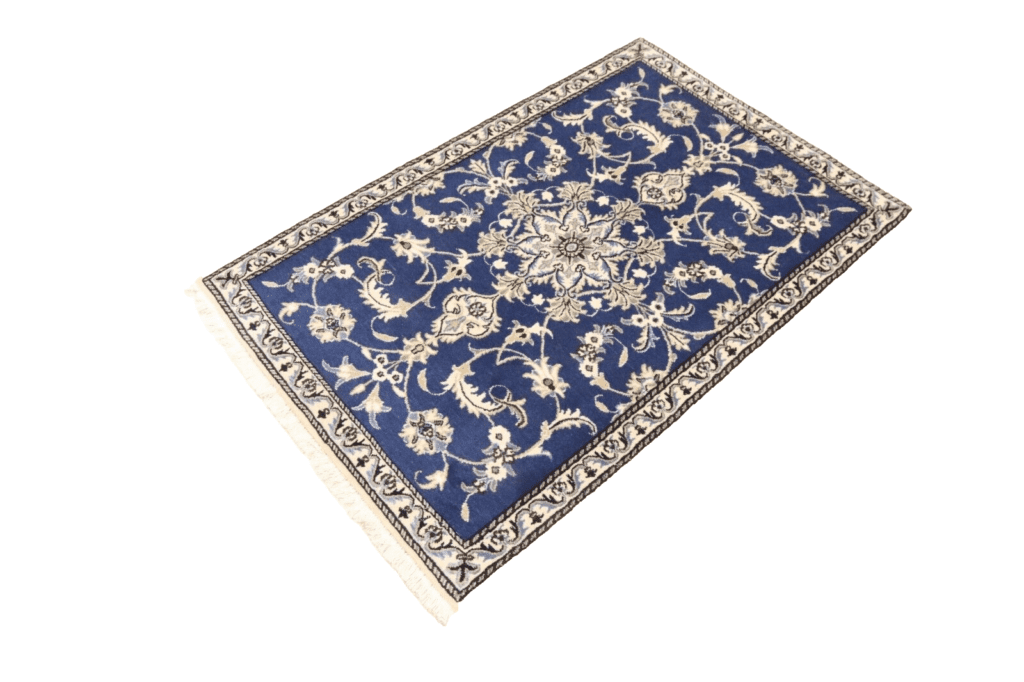
This Nain Persian rug is hand-knotted and combines virgin wool with silk. The pile consists of 90% virgin wool and 10% silk. Wool forms the principal part of the pile, while silk is used as a complementary fibre. The two materials bring different qualities to the surface: wool provides a soft and resilient pile, while silk contributes a subtle sheen and a smoother appearance. This combination belongs to the established material tradition associated with finely made Nain rugs.
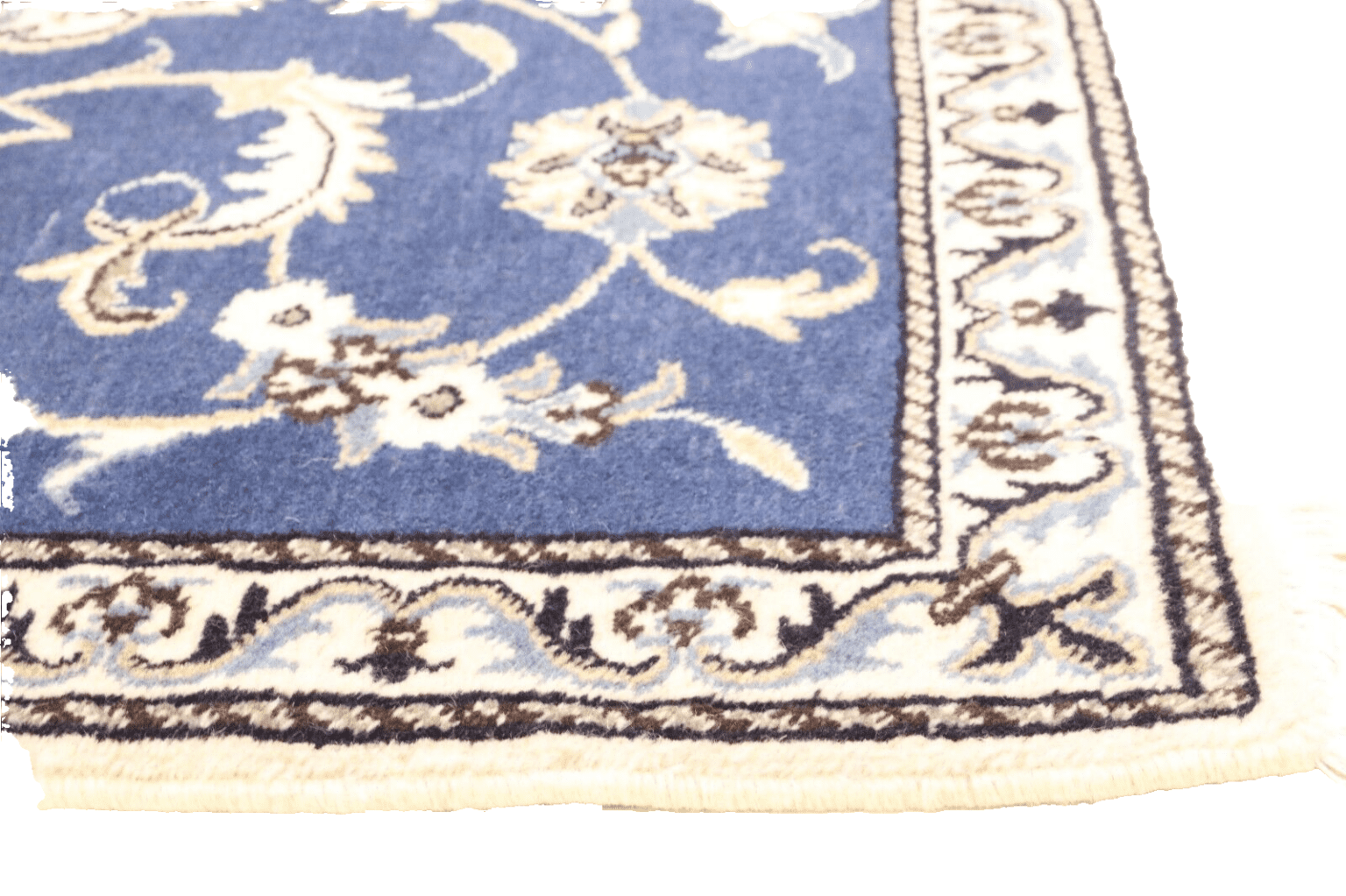
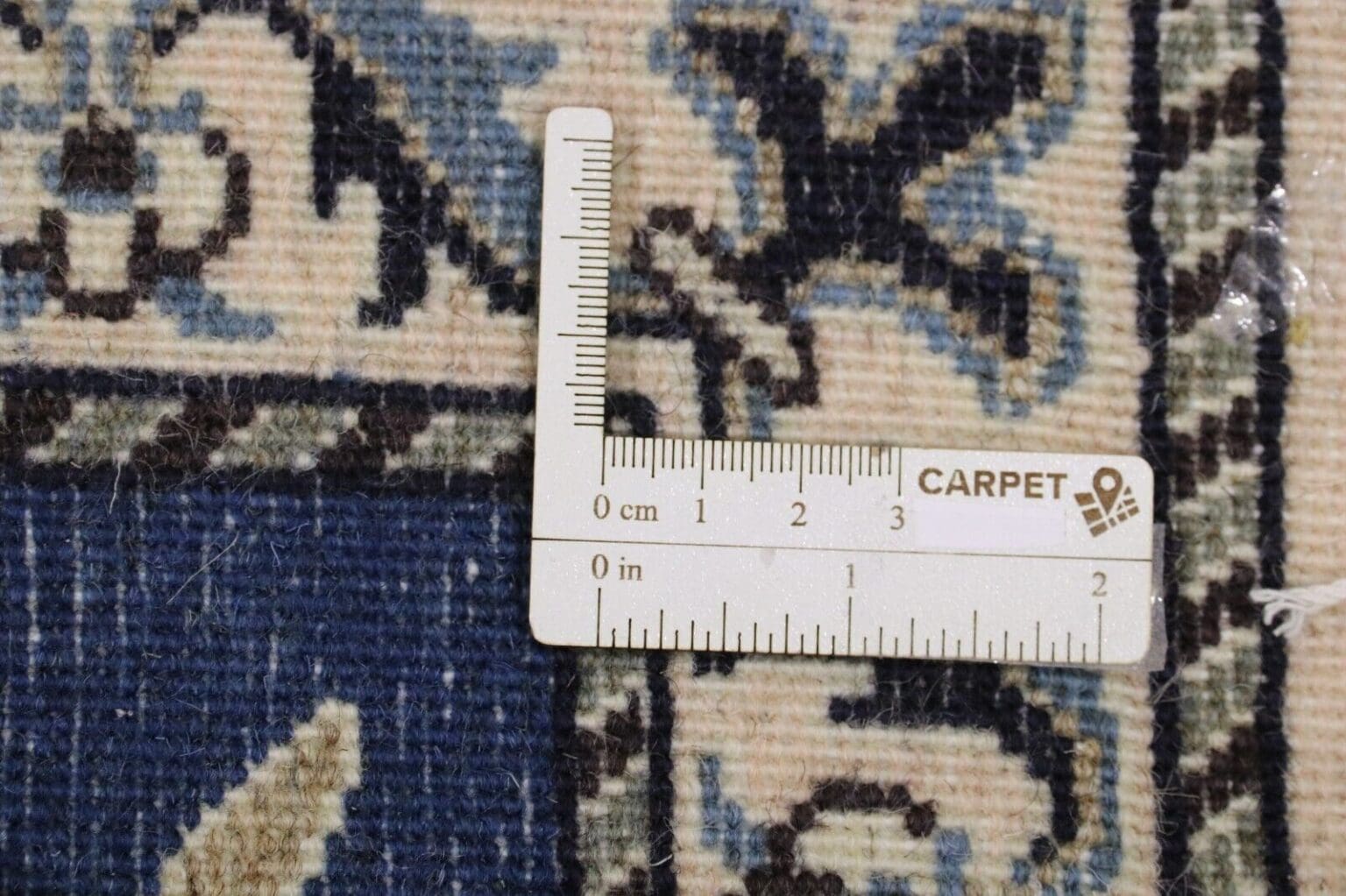
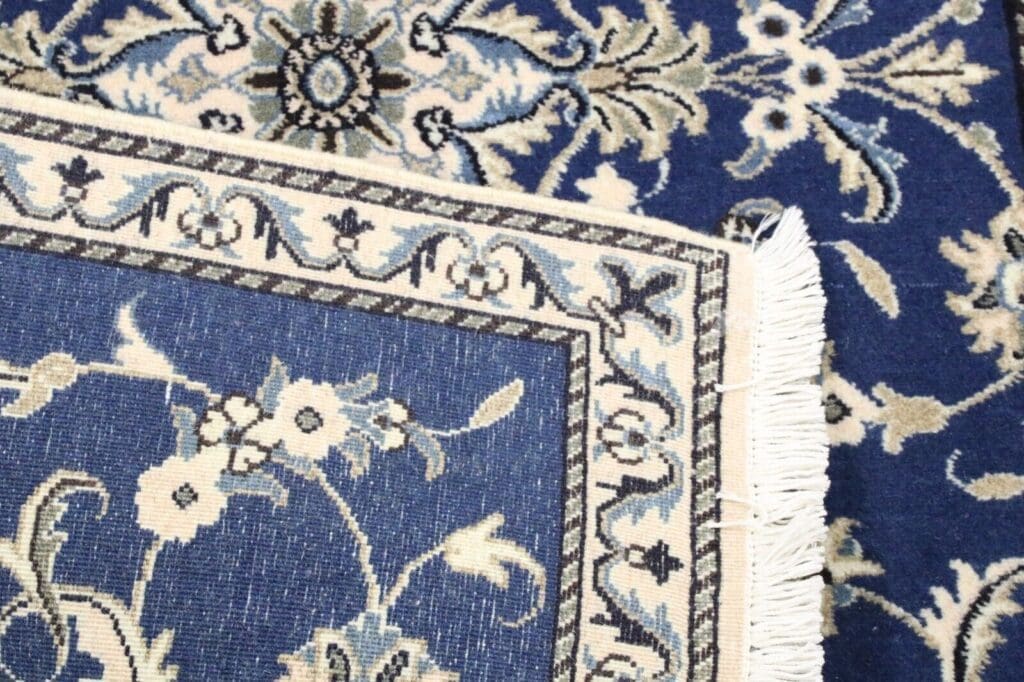
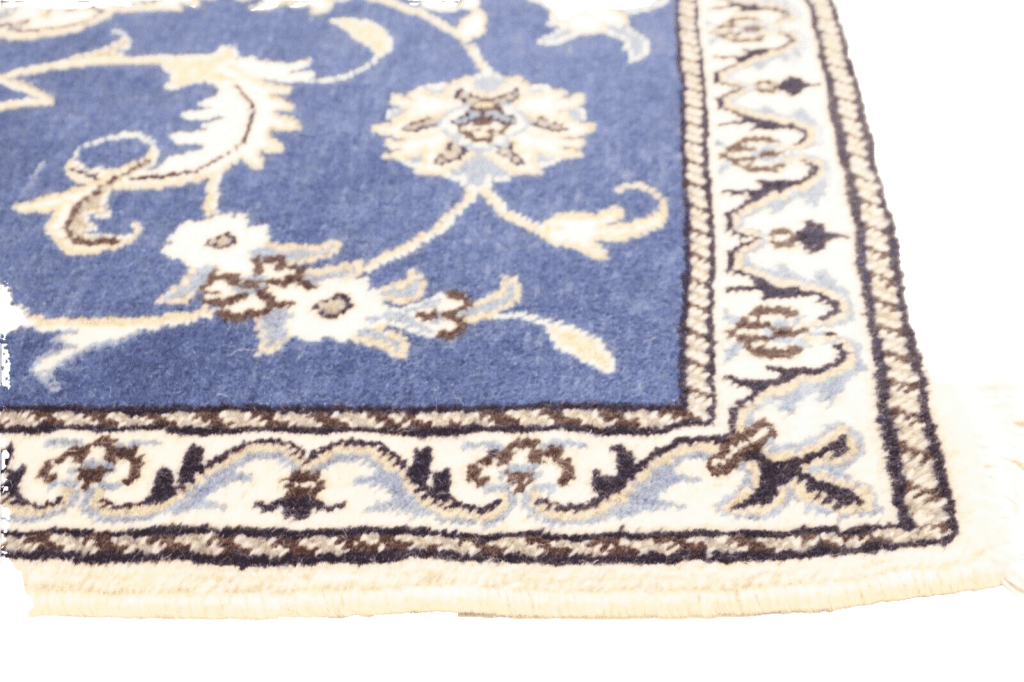
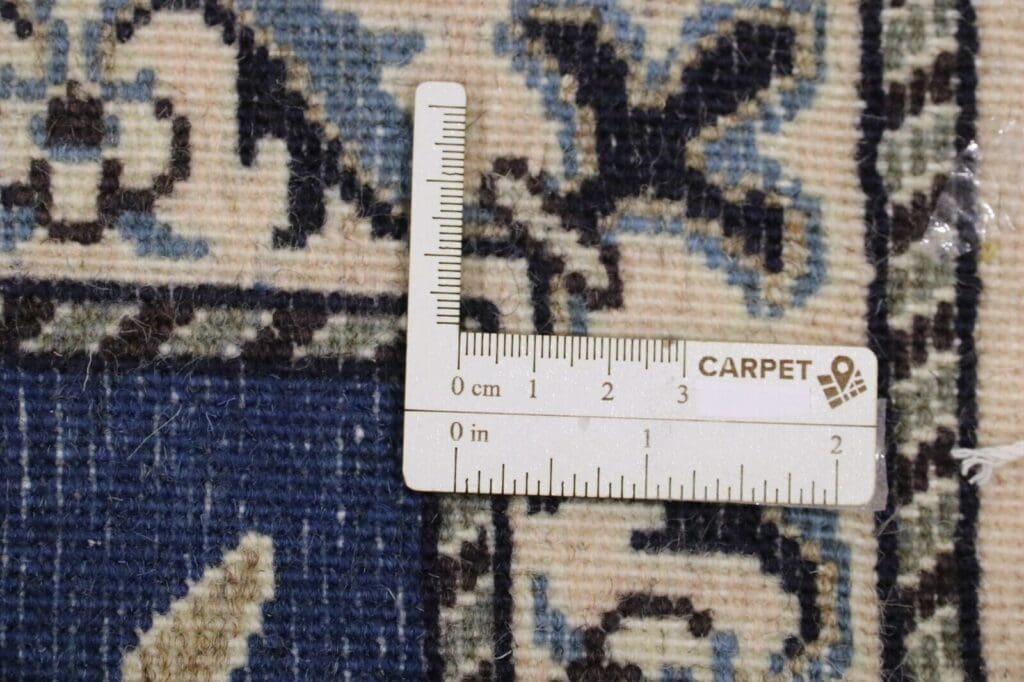
The rug is made by hand. In hand-knotting, individual knots are tied into the foundation one at a time. Row by row, these knots create the textile surface, while the design emerges directly from the arrangement of coloured yarn. Once the knotting is complete, the pile is clipped and finished to create an even appearance. This method requires careful control throughout the process and explains the precise character of the detailed drawing. Each hand-knotted rug is therefore a distinct textile object.
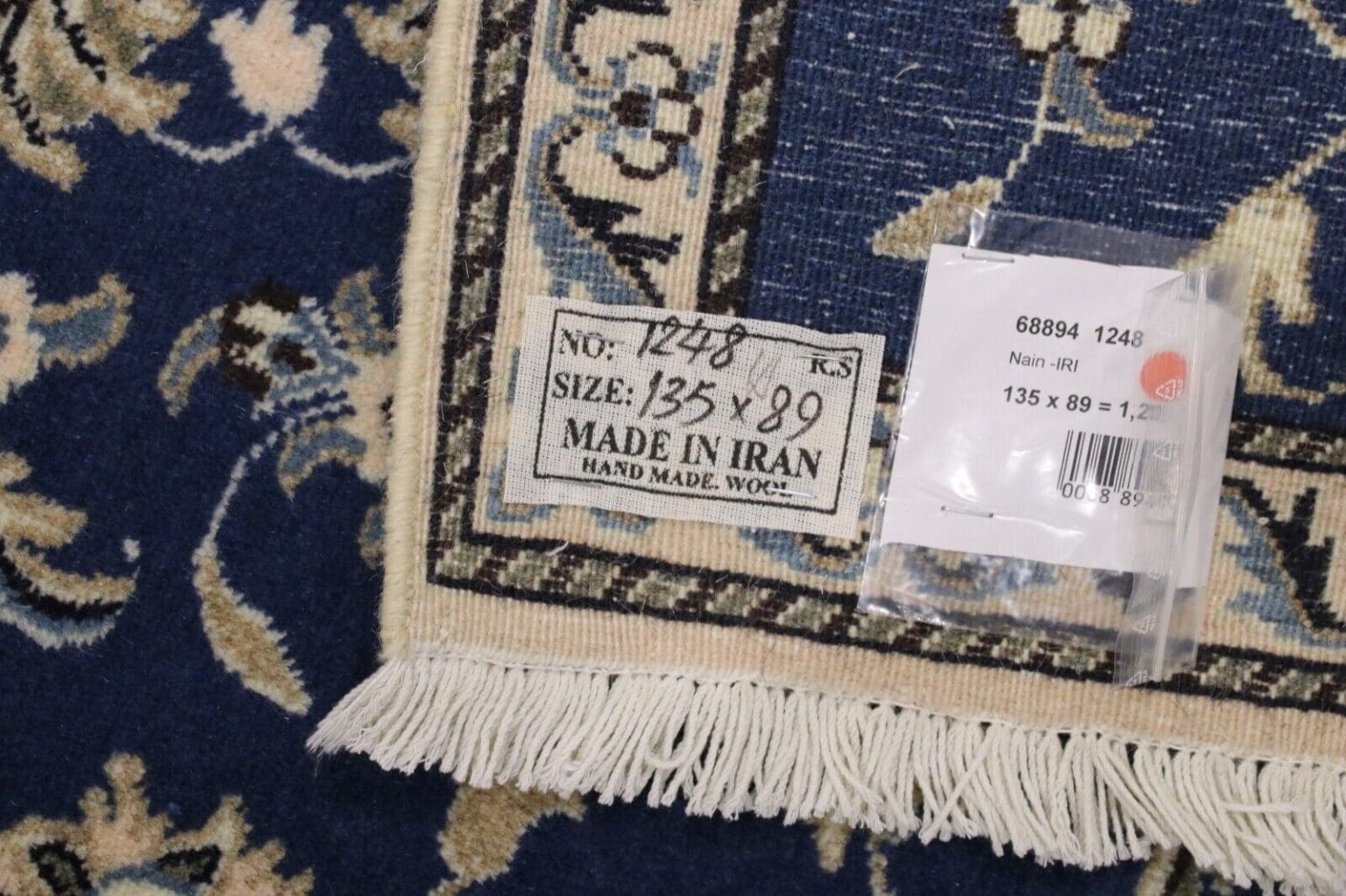
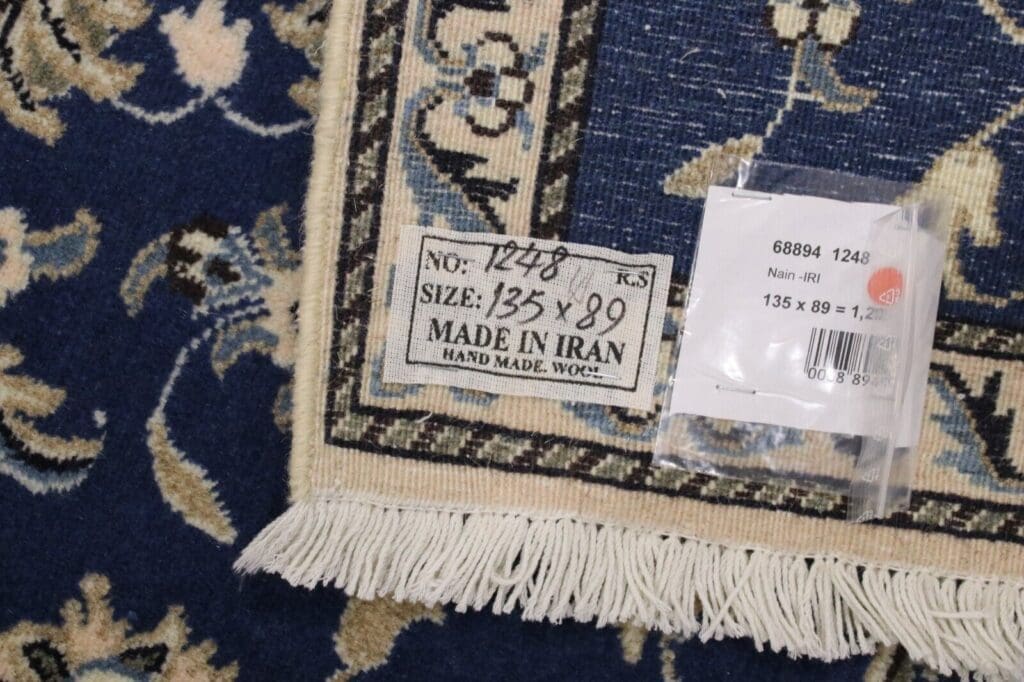
This rug is described as new and in perfect condition. It is a one-off piece, meaning that this particular rug is available as a single item. An authenticity certificate is included. The certificate accompanies the rug as documentation of its authenticity and confirms its origin and the quality of the materials used.
Origin and Tradition
The rug comes from Nain in Iran, which the description identifies as being in the north-east of Persia. Nain is both a place of origin and the name of a recognisable Persian weaving tradition. Its carpets are associated with carefully controlled knotting, refined compositions and the use of wool together with silk. The focus is on precise workmanship and an organised ornamental structure rather than on a coarse or simplified surface.
The Nain tradition developed within a regional craft culture in which design, materials and execution are closely connected. A carpet is not defined by its colours alone. The structure of the field, the relationship between the central area and the borders, the movement of scrolling forms and the balance of the ornament all contribute to its identity. A drawn design is transferred into a regular field of knots by experienced weavers. This requires concentration, knowledge of proportions and an understanding of how a pattern behaves across a woven surface.
Persian rugs are commonly identified by their place of origin or by the style associated with a particular weaving centre. Nain therefore refers to more than a decorative look; it points to a specific Persian carpet tradition. Individual motifs can appear in more than one Iranian weaving region, but the regional designation remains important. For this rug, Nain is the stated origin and the name of the carpet type.
Persian carpet making combines practical use with a developed visual language. Knowledge of knotting, yarn preparation, pile finishing, colour and pattern transfer has been passed down through generations. In a fine rug, tradition can be seen in the controlled scale of the ornament and in the relationship between the main field and its surrounding details. The surface is not printed and it is not produced as a machine-made textile. It is assembled through many individual acts of knotting and finishing.
Nain belongs to the wider Iranian carpet landscape alongside recognised centres and traditions such as Isfahan, Tabriz, Gabbeh and Qom. These names are not interchangeable. Isfahan is associated with highly composed artistic designs, Gabbeh often with a more reduced visual language, Tabriz with a broad range of finely worked patterns, and Qom especially with delicate silk rugs. This particular item, however, is identified as a Nain Persian rug from Iran.
Design and Pattern
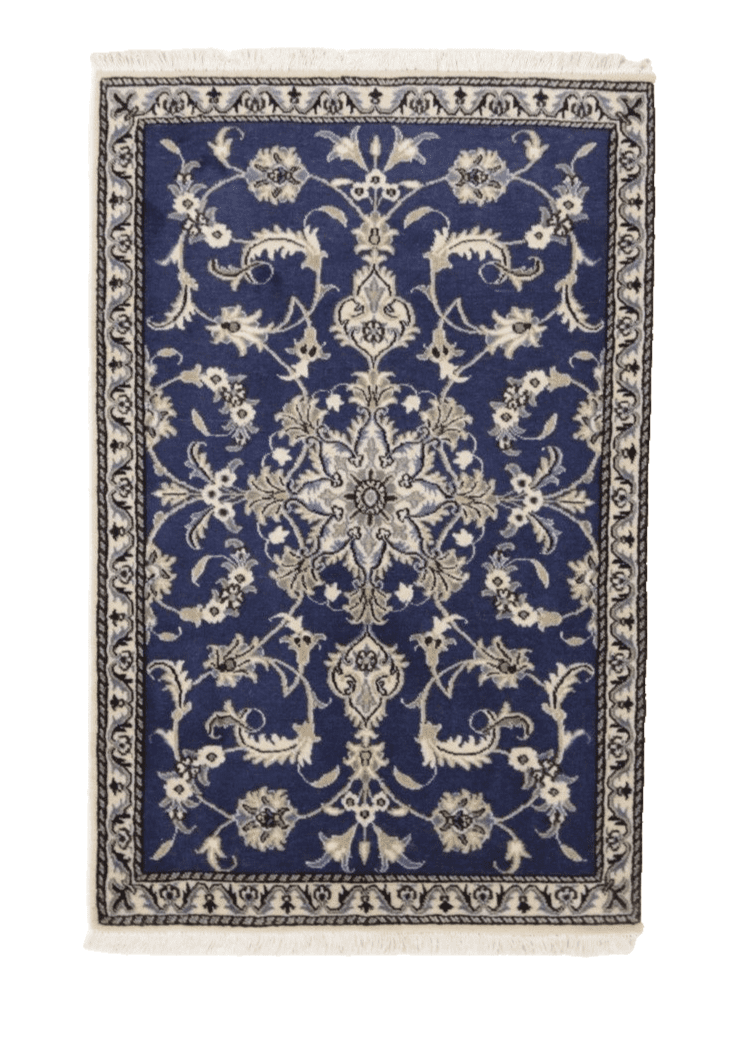
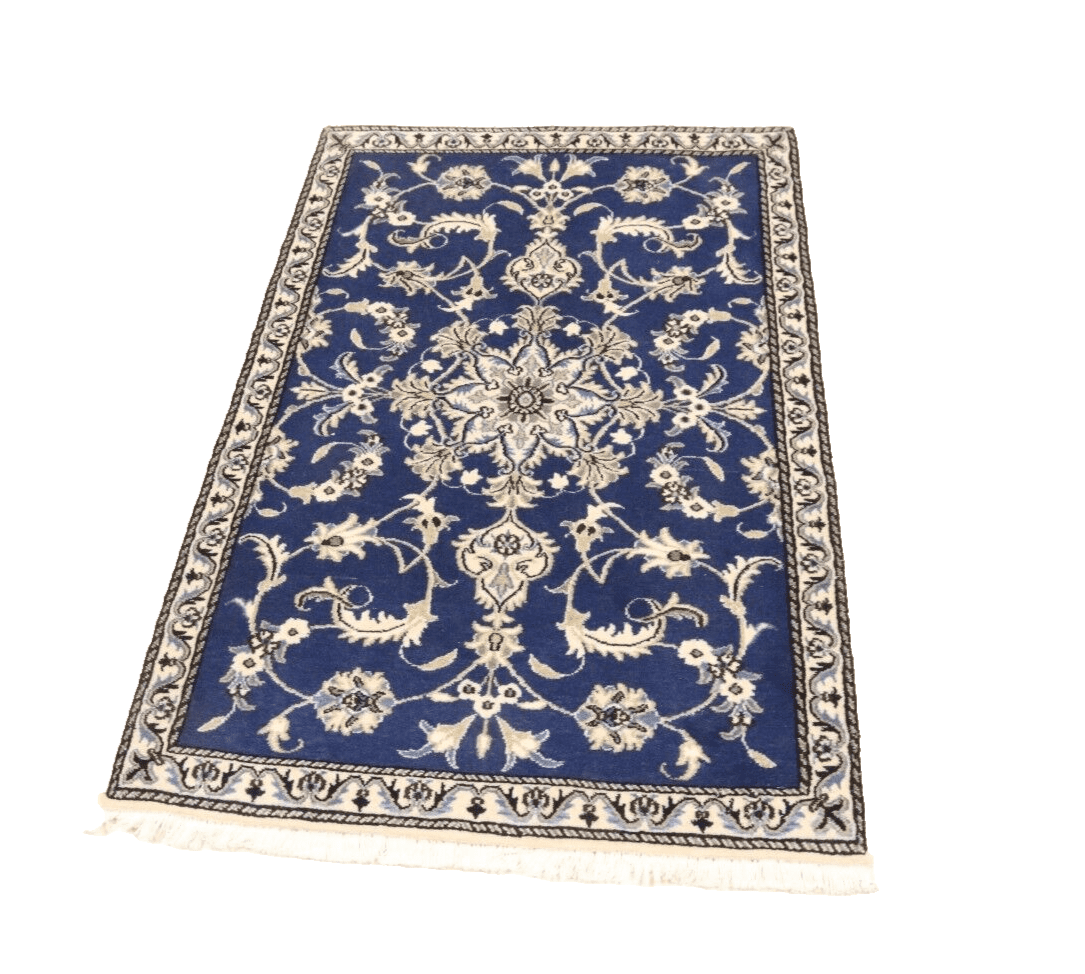
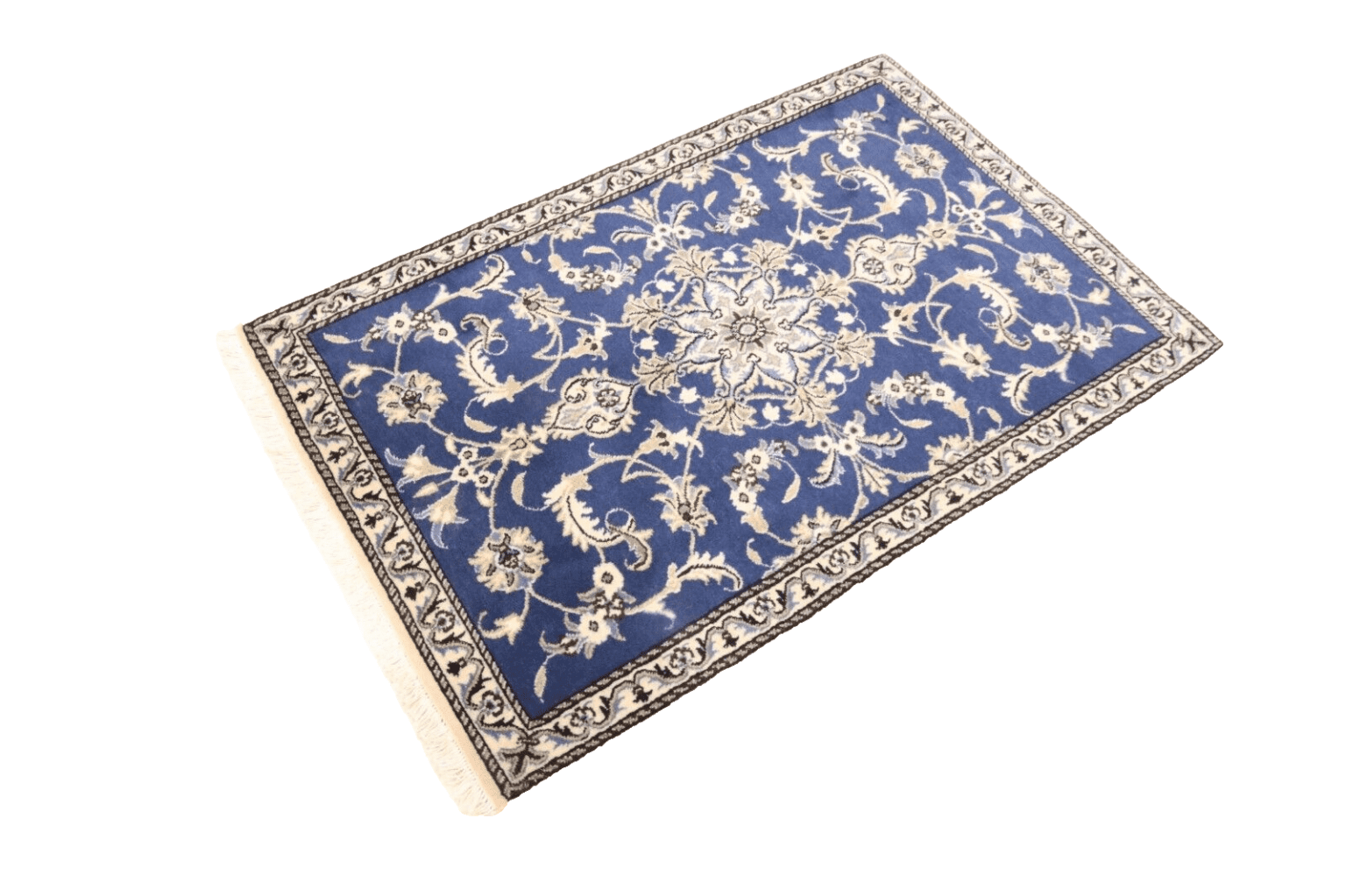
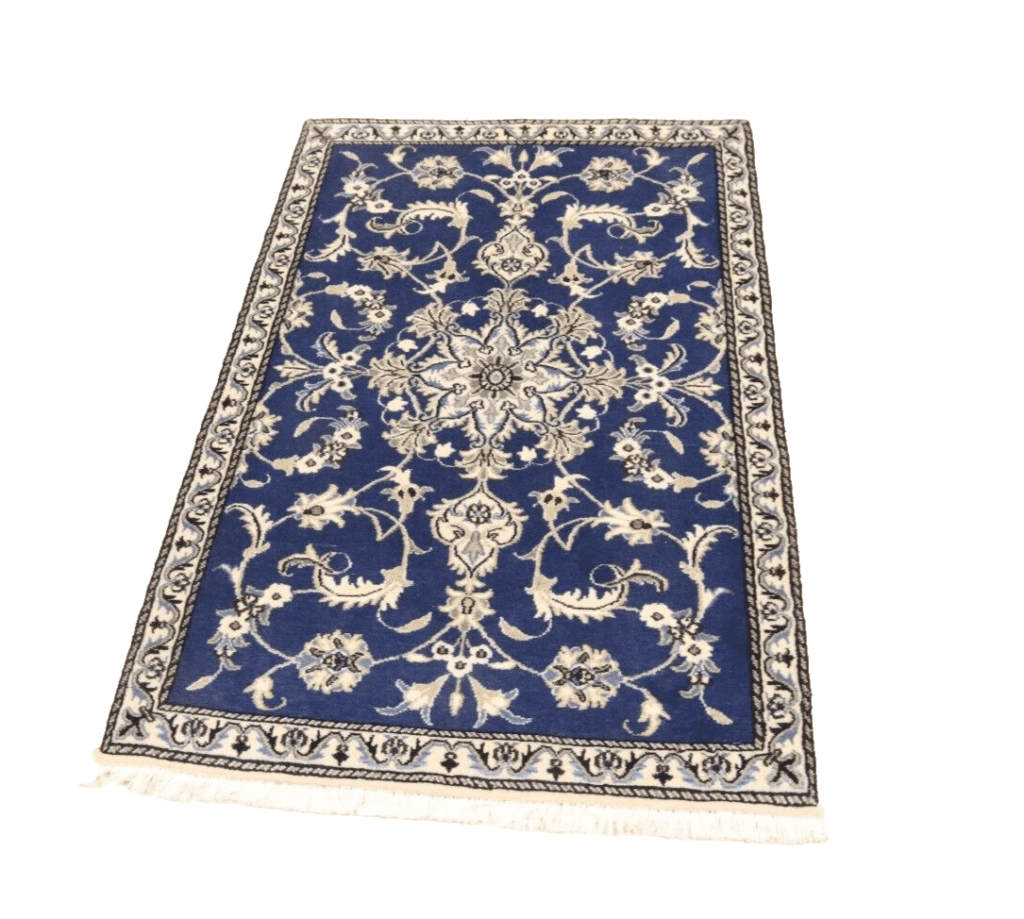
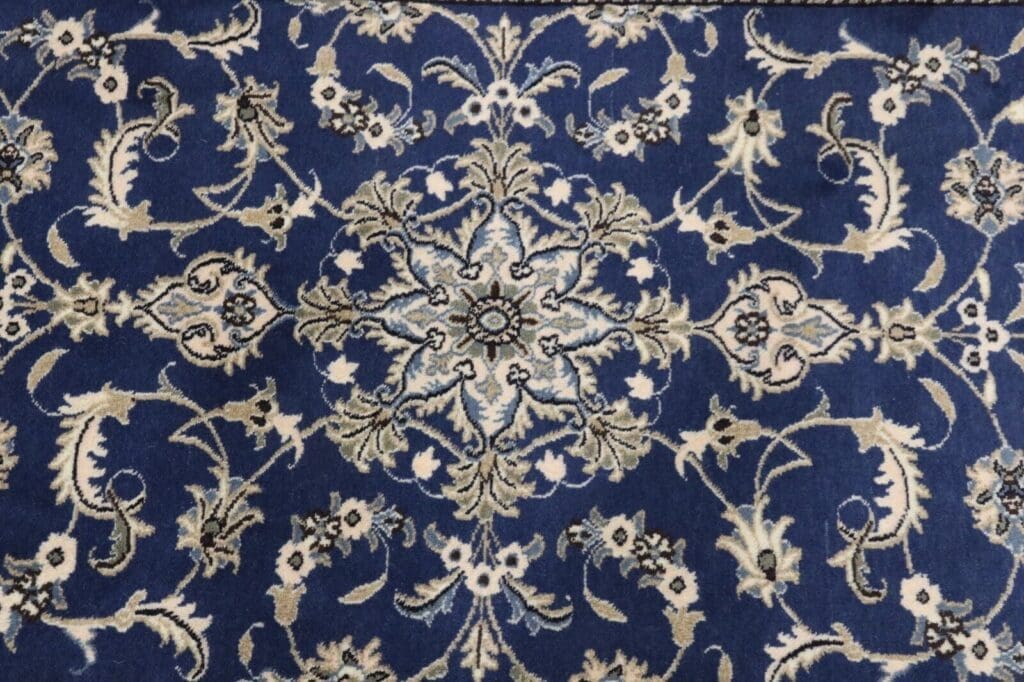
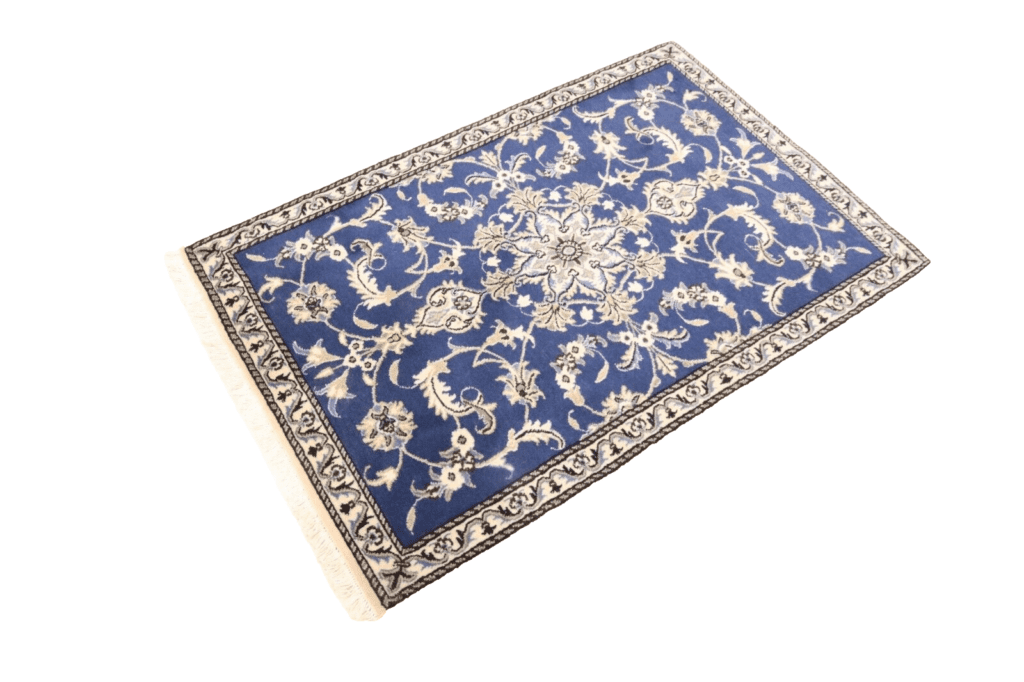
The pattern is described as traditional Oriental. Its stated characteristics are harmonious colour combinations and finely drawn motifs. The design is detailed and ordered, with artistic forms brought together in a unified composition. Small ornaments and scrolling elements are arranged so that they support the overall structure rather than appearing as isolated decorations. This fine articulation is one of the features associated with the Nain style.
Traditional Nain compositions often rely on a clear relationship between a central field and a carefully organised border system. Scrolling branches, leaves, blossoms and other stylised forms may move through the design in a measured rhythm. These motifs are not intended as literal botanical illustrations. They are transformed into ornamental shapes whose lines, repetitions and spacing create continuity. The effect depends on how the elements relate to one another across the entire field.
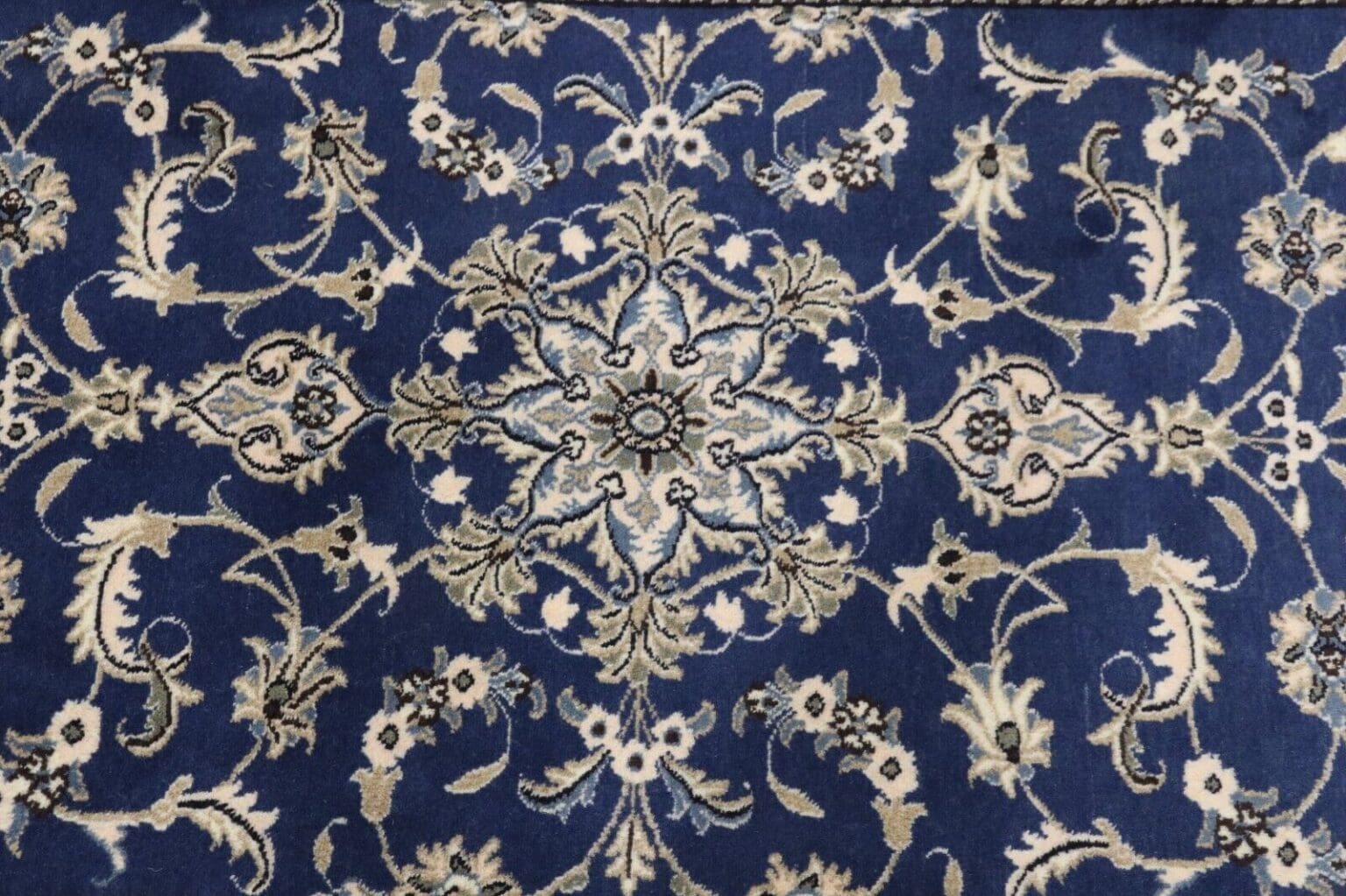
Fine patterns require the precise placement of many small details. A dense knot structure can support narrow lines, close transitions and differentiated ornament, although refinement depends on the complete execution rather than on density alone. The aim is not simply to include as many details as possible. The details must remain legible and must contribute to a balanced whole. A well-organised composition guides the eye from the centre through the scrolling forms and toward the borders without allowing any single element to overpower the design.
Harmonious colours are another stated part of the rug’s appearance. Colour can distinguish the ground from the ornament, clarify the border and establish a hierarchy between larger and smaller forms. In Persian ornament, colours are selected for their relationships as much as for their individual identity. The effect comes from the interaction of the ground, the pattern colours and the transitions between adjoining tones. This creates a coherent visual field rather than a collection of unrelated accents.
The traditional character of the pattern allows it to be read in both classic and contemporary interiors. In a classic room, the ornament can relate to other decorative elements. In a more modern setting, the rug can provide a defined textile composition against simpler surroundings. This is a stylistic observation about the design language; it does not alter the rug’s stated Iranian origin, its Nain designation or its hand-knotted construction.
The combination of wool and silk also contributes to the way the design is perceived. Wool forms the textile body of the pile, while silk has a smoother surface and reflects light differently. Individual details can consequently appear with a delicate change in surface effect. In Nain weaving, the relationship between material and ornament is part of the craft tradition. The visual result therefore comes from both the drawn motifs and the way the fibres receive and return light.
Special Features
This one-off rug is distinguished by its hand-knotted construction, its pile of 90% virgin wool and 10% silk, and its finely detailed traditional Oriental pattern. It is new and in perfect condition. The rug is offered as a single, unique piece, so this exact item is not a repeated production model. An authenticity certificate is included and documents the rug’s origin and the quality of its materials.
The product description also gives a shop price of approximately 900.00 euros. This price is presented in connection with the hand craftsmanship, the material combination and the classification as a Nain Persian rug. Other Iranian carpet traditions, including Isfahan, Gabbeh, Tabriz and Qom, provide useful points of comparison in terms of regional design and material practice, but they are not alternative names for this rug. Its stated identity remains Nain, from Iran.
FAQ
How should I care for my Nain Persian rug?
Vacuum the rug regularly and gently. A careful setting helps avoid unnecessary stress on the pile during routine cleaning. If something is spilled, blot the spot promptly with a damp cloth rather than rubbing it vigorously. Rubbing can work the substance further into the fibres and may place additional strain on the surface. Professional rug cleaning is recommended for deeper or more persistent soiling. A specialist can take the combination of virgin wool and silk into account and select a suitable cleaning method. Prompt attention to spills and restrained everyday cleaning are the basic measures described for preserving the rug’s appearance.
Can the rug be used with underfloor heating?
Yes, this Persian rug can be used in rooms with underfloor heating. Its high-quality materials and hand-knotted construction are suitable for this type of room. The heating should not be set to an excessively high temperature. Moderate, even warmth supports careful everyday use. The manufacturer’s instructions for the heating system should be followed when choosing the exact setting. It is also sensible to avoid an unnecessarily dry indoor environment, since natural fibres respond to the conditions around them. The stated suitability does not remove the need for appropriate temperature control.
What makes a Nain rug distinctive compared with other Persian rugs?
A Nain rug combines fine hand-knotting with a pile made from virgin wool and silk. It is also associated with finely drawn motifs and harmonious colour combinations, which are the regional design characteristics described for this piece. Its distinctiveness lies in the combination of origin, technique, materials and ornament rather than in one isolated feature. The rug functions as a floor covering while also presenting a carefully structured textile design. As a new one-off item supplied with an authenticity certificate, this particular Nain rug represents the connection between Persian craftsmanship and traditional Oriental pattern making.
To provide the best experiences, we use technologies like cookies to store and/or access device information. Consenting to these technologies will allow us to process data such as browsing behavior or unique IDs on this site. Not consenting or withdrawing consent, may adversely affect certain features and functions.
Functional Always active
The technical storage or access is strictly necessary for the legitimate purpose of enabling the use of a specific service explicitly requested by the subscriber or user, or for the sole purpose of carrying out the transmission of a communication over an electronic communications network.
Preferences
The technical storage or access is necessary for the legitimate purpose of storing preferences that are not requested by the subscriber or user.
Statistics
The technical storage or access that is used exclusively for statistical purposes.The technical storage or access that is used exclusively for anonymous statistical purposes. Without a subpoena, voluntary compliance on the part of your Internet Service Provider, or additional records from a third party, information stored or retrieved for this purpose alone cannot usually be used to identify you.
Marketing
The technical storage or access is required to create user profiles to send advertising, or to track the user on a website or across several websites for similar marketing purposes.
 SECURE PAYMENT
 SHIPPING PARTNERS