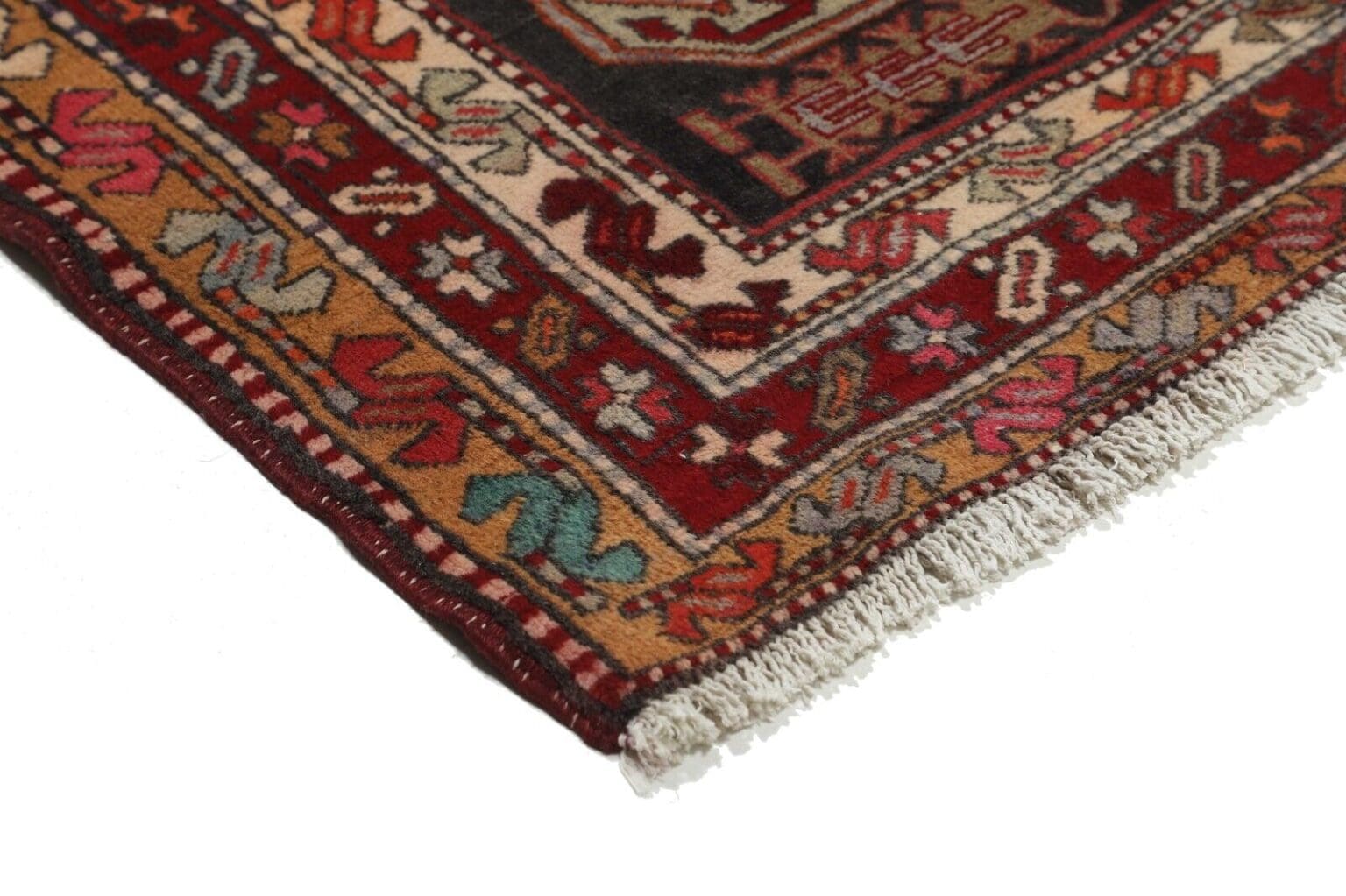
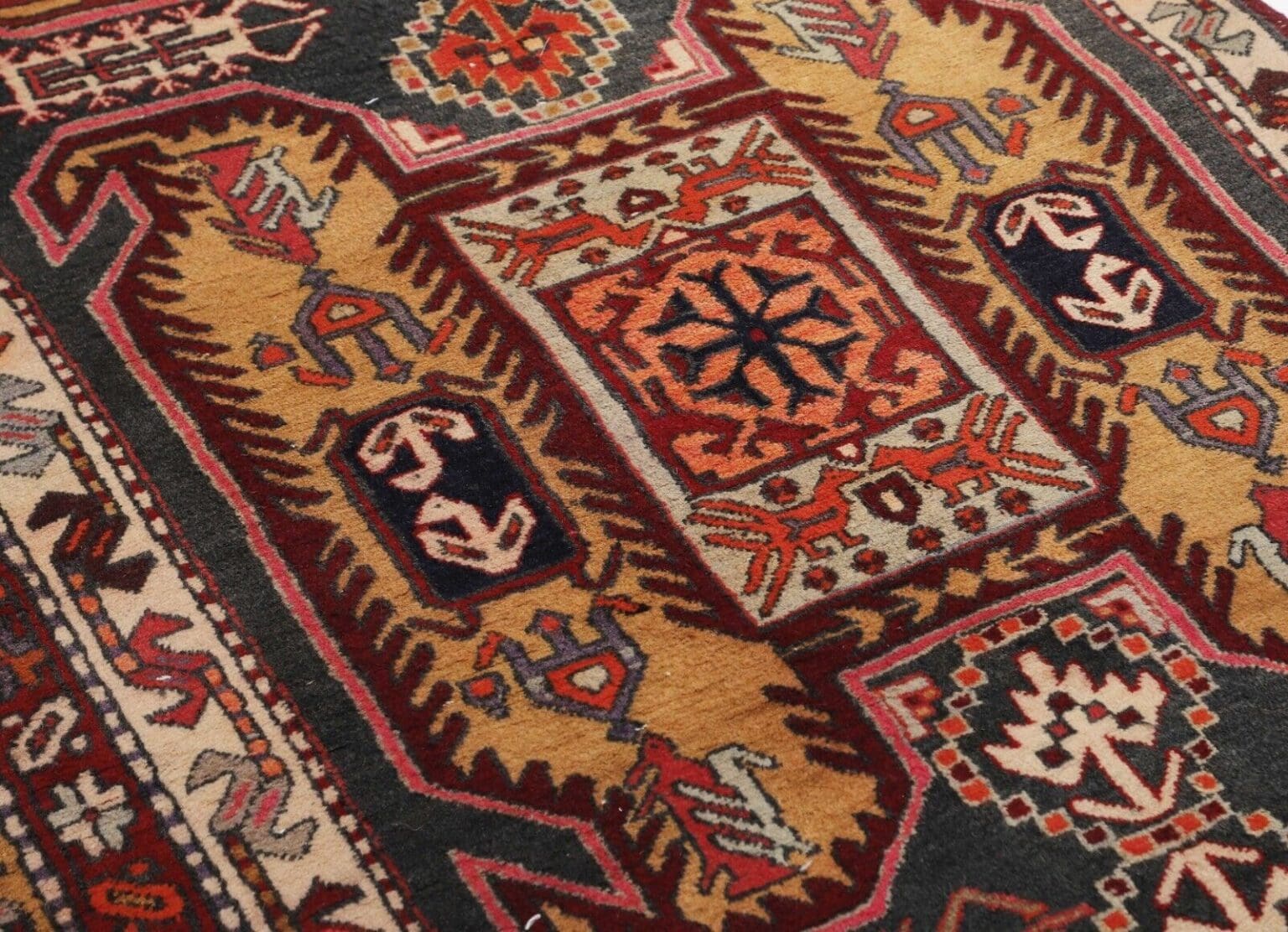
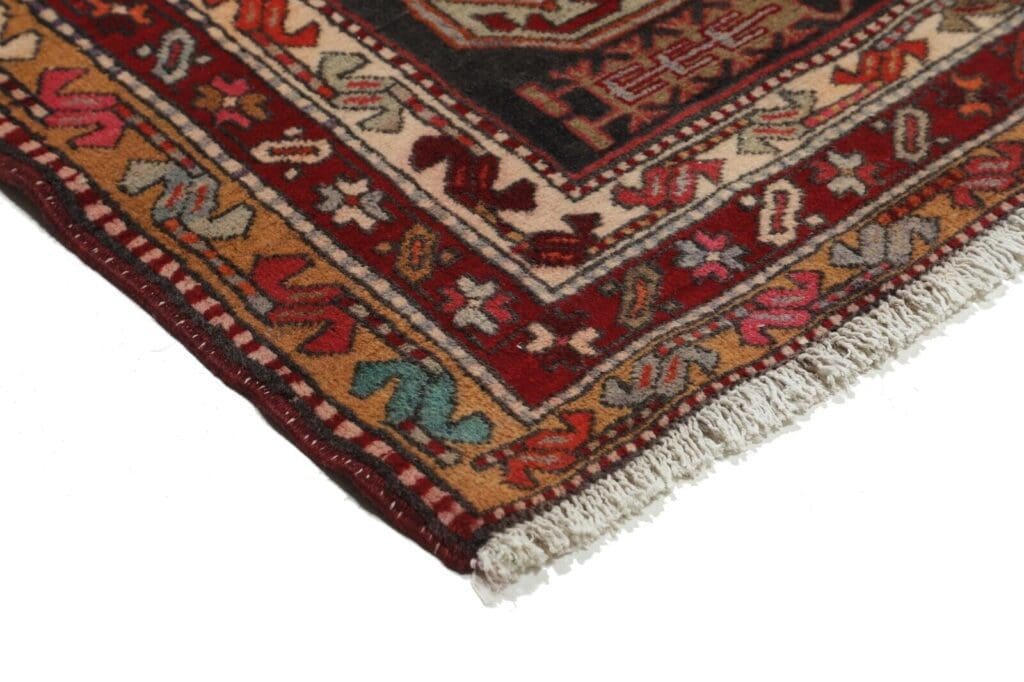
This Persian rug is hand-knotted, a traditional process in which individual knots are tied by hand around the warp and then secured through successive rows. The method allows patterns to be built gradually and gives the weaver direct control over the placement of every area of colour and detail. Hand-knotting is distinct from machine production because the structure is created knot by knot rather than reproduced mechanically. It is also different from flat weaving, where the pile is absent and the design is formed through interlaced threads.
Persian rugs are commonly made with natural materials. Wool is valued for its resilience, practical use and soft surface, while silk is appreciated for its fine texture and reflective quality. The source description names wool and silk as materials frequently used for Persian rugs, but it does not identify a particular pile material for this individual piece. A cotton foundation may also be used in rug construction, although no specific warp material is stated here. The construction, material choice and knot density all influence the character of a hand-knotted rug, yet only the hand-knotted technique is specified for this rug.
The hand-knotting tradition also explains why each piece has its own presence. Small variations can occur naturally when a textile is made by hand, while the overall design remains carefully composed. A hand-knotted rug is therefore the result of a lengthy craft process rather than a printed or mechanically repeated surface. This Meschkin Ardebil rug is identified as a one-of-a-kind piece, and its individuality belongs to the handmade character described for it.
Origin and Tradition
The rug is identified as a Persian rug from the Meschkin Ardebil tradition. Persian carpet making is associated with Iran and with a weaving culture that has developed over centuries. Across the country, rugs have been produced in cities, towns and tribal communities, with local working methods, drawing conventions and colour preferences contributing to regional distinctions. The name connected with a rug is therefore more than a decorative label: it can point to a particular carpet culture and to the inherited knowledge of its weavers.
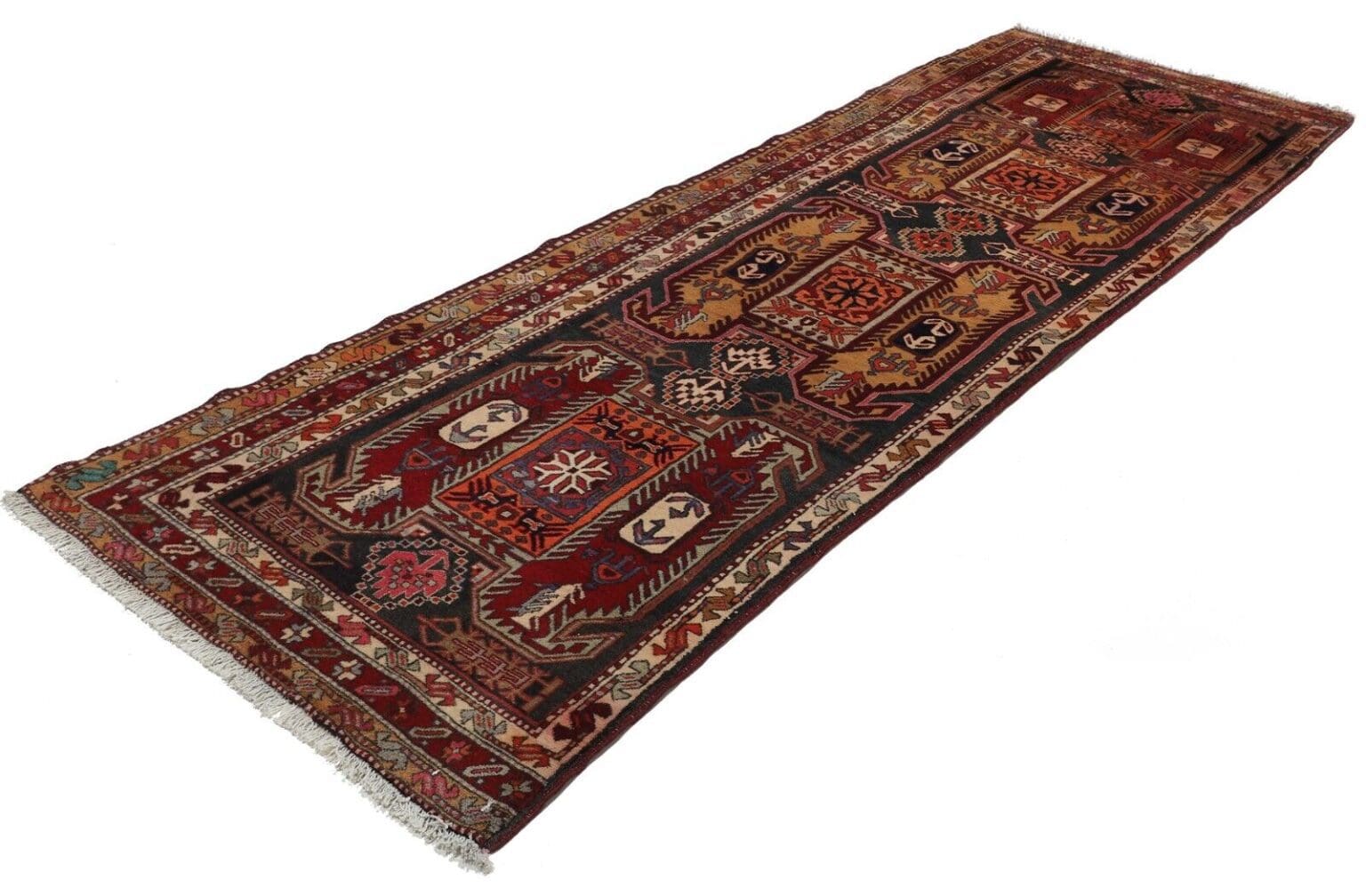
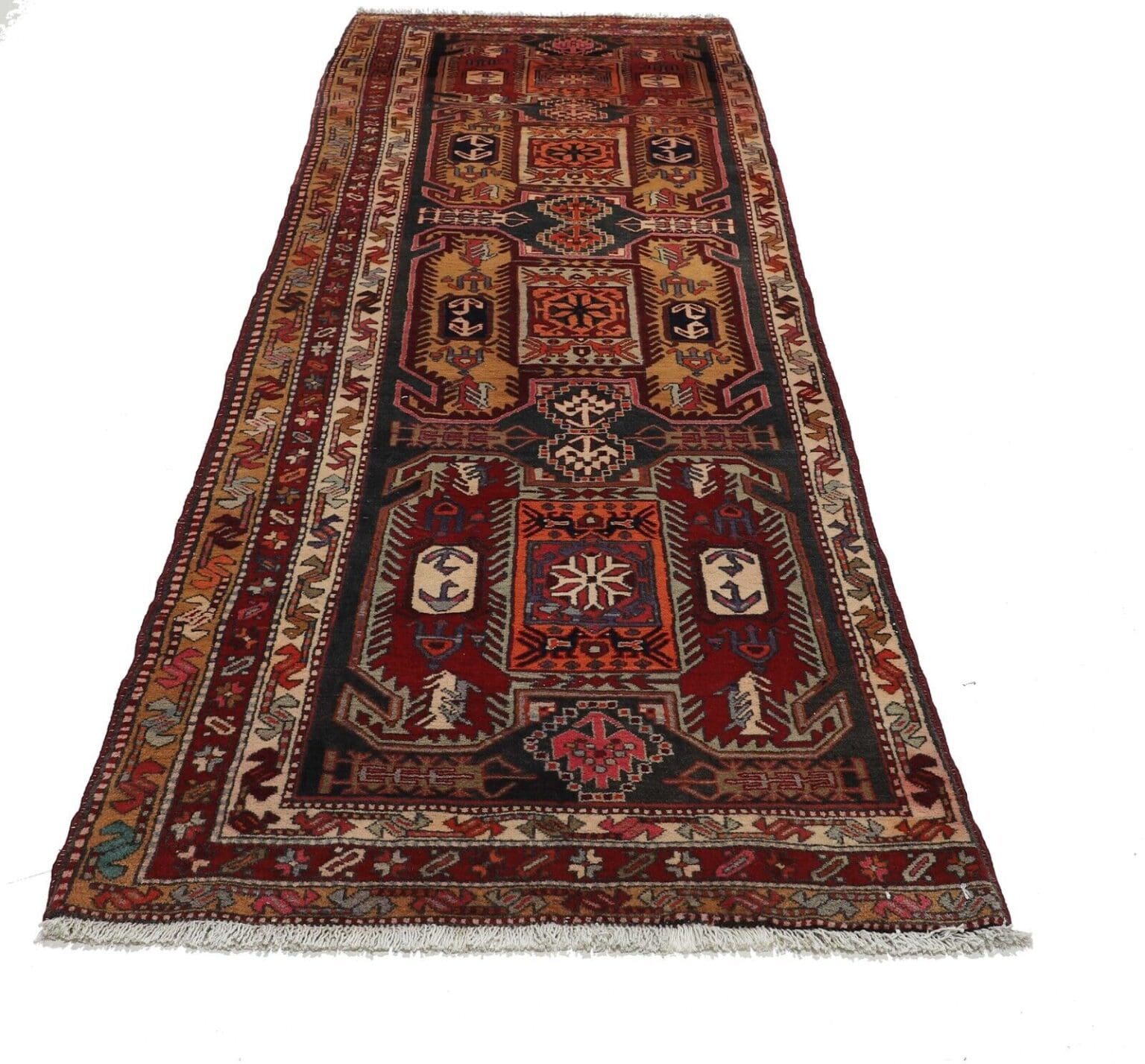
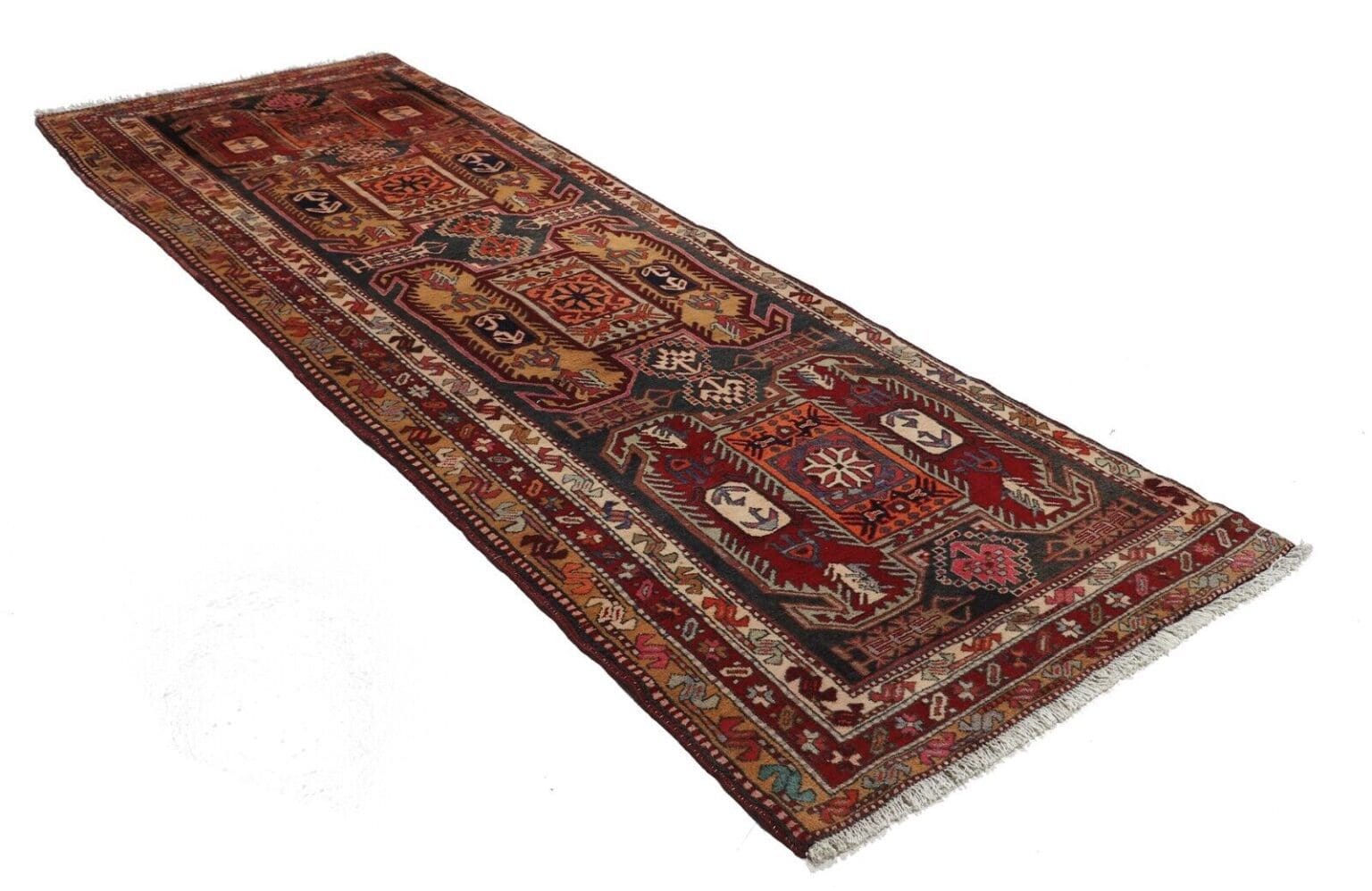
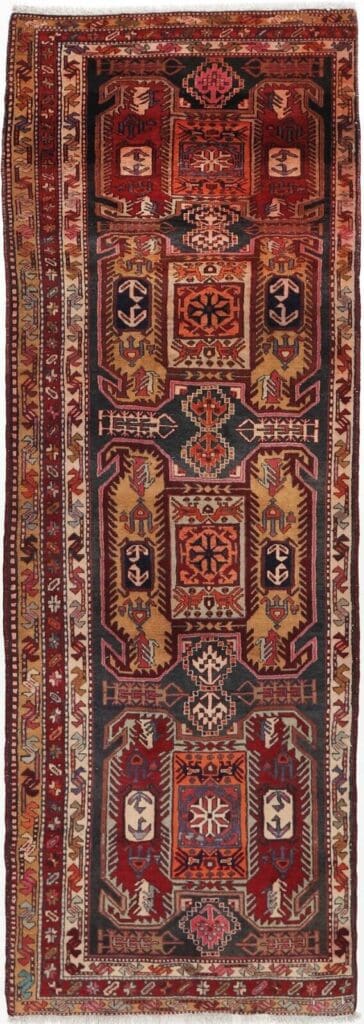
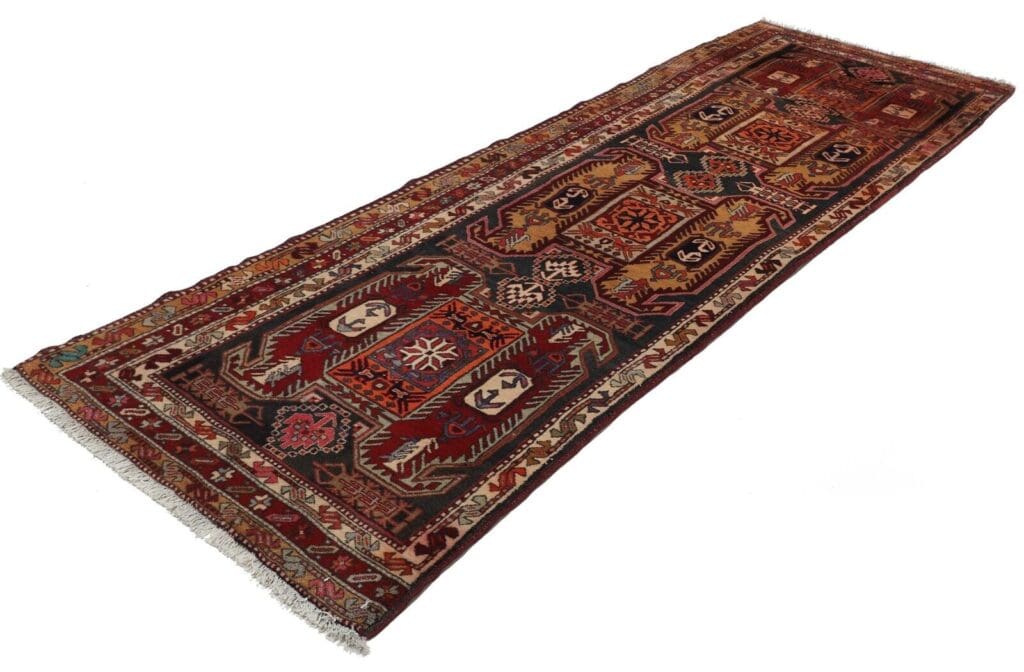
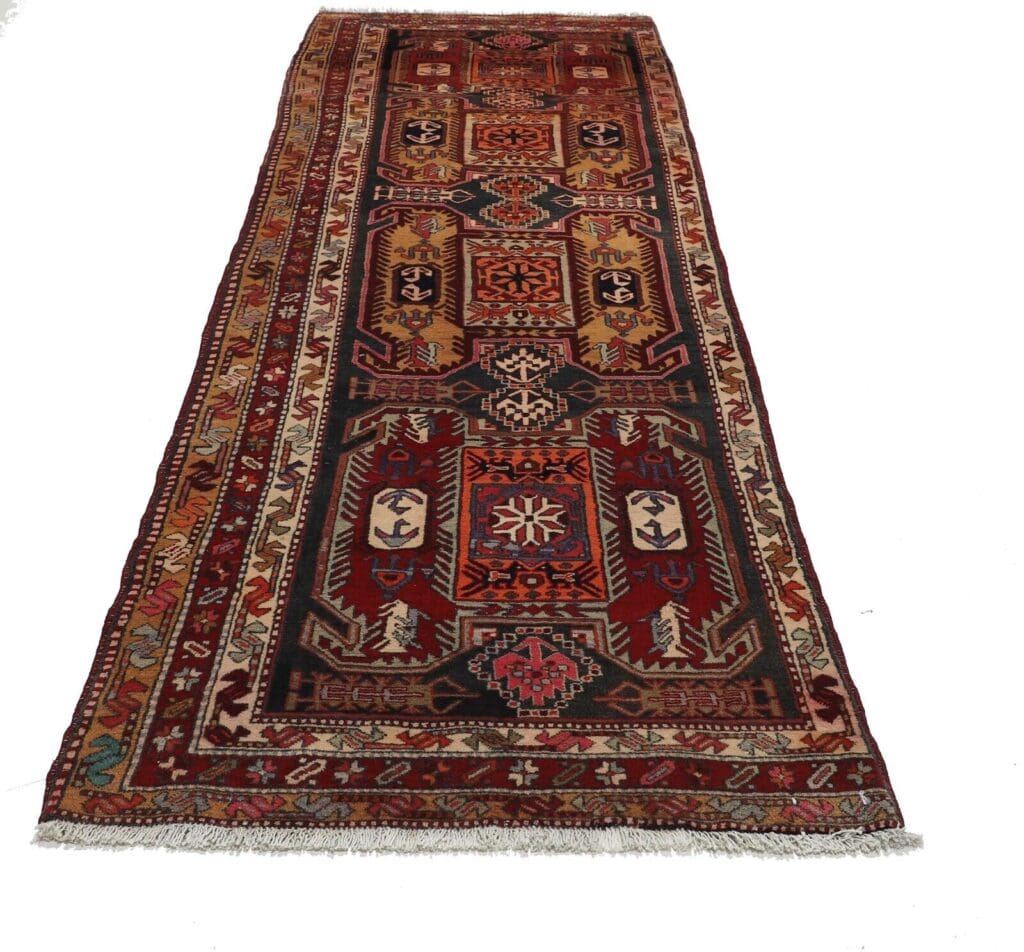
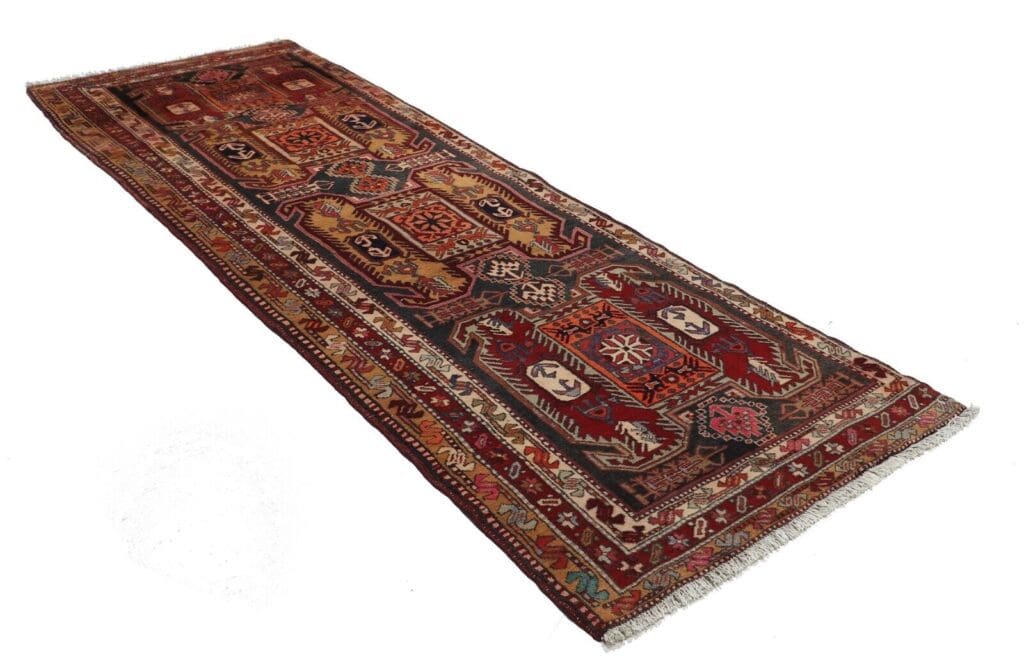
Iranian carpet traditions encompass a wide range of formats and visual languages. Some rugs are created for use as runners, while others are made for larger floor areas. The runner format is especially suited to passageways and elongated spaces, where the design is viewed along a narrow field. This rug is described as a runner, linking its practical format with the wider Persian tradition of producing textiles for different architectural settings. Its dimensions are provided separately in the product information and are not repeated in this description.
Meschkin Ardebil belongs to the geographical vocabulary of northwestern Iranian carpet culture. Ardebil is known in the history of Persian weaving, and regional carpet production in this part of Iran forms part of a broader exchange between urban workshops, village production and travelling weaving communities. Such traditions are not uniform. They may differ in the way motifs are arranged, in the balance between field and border, and in the types of colours selected. These differences are why Persian rugs from separate regions can be recognised as related yet not identical.
Other well-known Iranian carpet centres named in the source include Isfahan, Tabriz and Kashan. Their carpets are associated with carefully developed designs and, in many cases, fine knotting. Nain and Qum are also mentioned as places whose manufacturers are known for refined workmanship and the use of fine materials such as silk. These references describe the variety of Persian carpet production as a whole and do not change the Meschkin Ardebil identification of this rug. Each regional name should remain connected to its own tradition rather than being used interchangeably with another origin.
Persian rugs also occupy an important place in the history of domestic textiles. They combine a practical floor covering with a visual record of craft knowledge, because the structure, colour and arrangement of motifs are passed through established methods. A hand-knotted rug can remain in use for many years when it is cared for appropriately. Natural materials and repairable construction have helped Persian rugs remain part of households across generations, while their cultural significance extends beyond their everyday function.
Design and Pattern
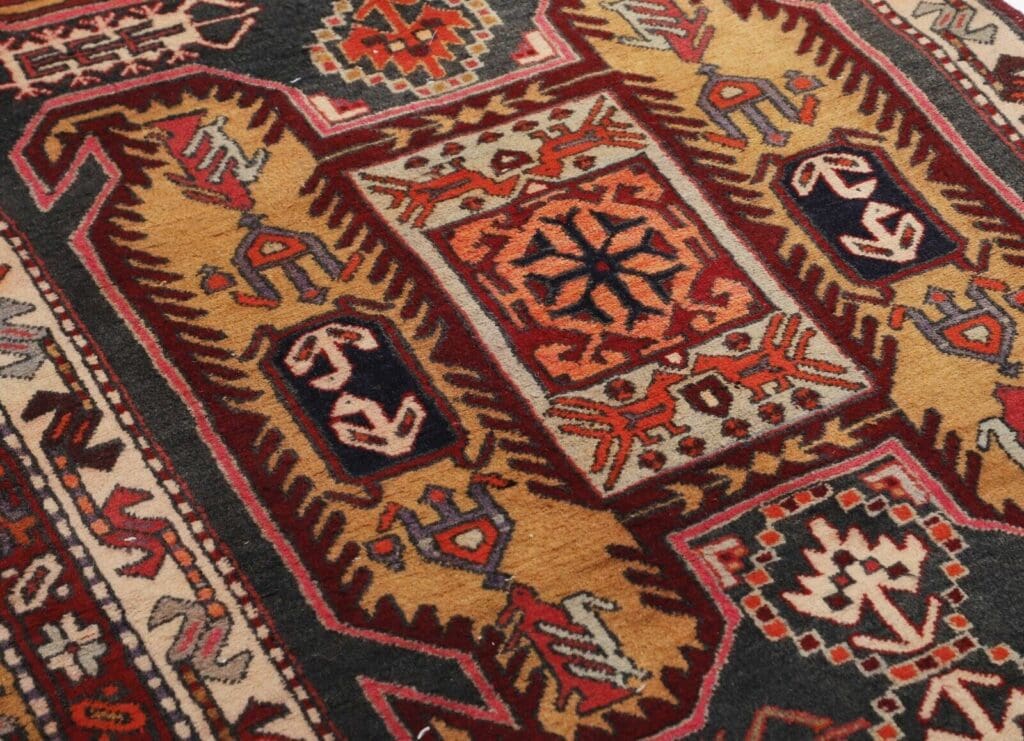
The source describes Persian rug designs in general as ranging from geometric compositions to floral arrangements. Geometric designs use controlled shapes, repeated forms and measured relationships between the central field and the surrounding border. Floral designs can include stylised blossoms, leaves, vines and branching forms. In Persian carpet art, these elements are usually interpreted rather than copied directly from nature, allowing a flower or leaf to function as part of a carefully ordered ornamental system.
No specific motif or colour scheme is stated for this Meschkin Ardebil rug, so its individual pattern should not be assigned to a named design without further evidence. The regional designation provides context for its carpet tradition, but it does not by itself establish whether the rug has a floral, geometric, medallion or all-over composition. This distinction matters because Persian weaving includes many overlapping design vocabularies. A motif associated with one place may also appear in rugs made elsewhere, while the place name remains an indication of origin or tradition only when it is explicitly given as such.
In a hand-knotted rug, pattern development is closely connected with the structure. The weaver follows a design plan while tying rows of knots, building the field, borders and secondary details in sequence. Repetition creates rhythm, while changes in scale and spacing provide visual hierarchy. Borders often frame the central area, and smaller connecting motifs can guide the eye between the main field and the edge. These principles are common to Persian carpet design, but they do not define the unstated pattern of this individual rug.
Colour plays a similarly important role in Persian textiles. Traditional palettes may bring together deep reds, blues, ivory, greens, browns or other natural-looking tones, while the exact combination varies between regions, workshops and individual designs. Colour can separate a border from a field, clarify the outline of a motif or create balance across the surface. The source confirms that Persian rugs are available in varied colours, but it does not record the colours used here. For that reason, no particular palette is attributed to the Meschkin Ardebil piece.
Comparisons with other rug types can help explain the design context. Gabbeh rugs are often recognised for simpler patterns and strong colours, while Kilim rugs are flat-woven and do not have the same knotted pile structure. These are related areas of Oriental textile production, not alternative names for this hand-knotted Persian rug. The design of a rug should be read together with its construction and stated regional identity, rather than inferred from a general resemblance to another category.
Special Features
The defining characteristics recorded for this individual rug are its hand-knotted construction, its identification with Meschkin Ardebil, its Persian origin designation, its runner format and its one-of-a-kind status. These points describe the piece without adding an unstated material, knot density, pattern or condition. A one-off rug is not a standardised series product; it is offered as a singular textile with its own combination of handmade structure and regional designation.
The runner format also gives the rug a clear functional context. Runners can be used in hallways, entrances or other elongated areas, where their proportions support movement through a room. Placement and care should take account of ordinary household use, direct sunlight and moisture. The source does not provide a condition report for this particular rug, so no separate statement about wear or preservation is made.
Persian rugs are also described as a sustainable choice because they are made from natural materials and can last for many years with suitable care. This is a general characteristic of the rug type, not a claim about an unstated material composition of this piece. Its individual distinction remains the combination of its named Meschkin Ardebil tradition and its hand-knotted, one-of-a-kind character.
FAQ
How should a hand-knotted Persian rug be cared for?
Regular vacuuming helps remove loose dust and everyday dirt. Spills should be treated promptly so that moisture or staining does not remain in the fibres. Care should be carried out gently and in accordance with the materials and construction of the rug. Professional cleaning every few years is recommended in the source description. For a valuable hand-knotted textile, specialist cleaning is preferable to aggressive household treatment, especially when a stain has penetrated deeply or the rug requires repair.
What distinguishes Persian rugs from other rug types?
Persian rugs are traditionally associated with hand-knotting, natural materials and a broad range of carefully developed designs. Their construction allows detailed patterns to be formed knot by knot, while regional traditions contribute different ways of arranging motifs and colours. Machine-made rugs are produced by a different process and generally do not offer the same hand-built structure or the same type of detail. Flat-woven Kilims are also constructed differently because they do not contain a raised knotted pile.
How can the quality of a Persian rug be assessed?
Important points include the knot density, the materials and the clarity of the design. A higher knot count can permit finer detail, although it should always be considered together with the quality of the workmanship and the balance of the composition. Wool and silk are identified in the source as important Persian rug materials, with each having different characteristics. A careful assessment also examines the evenness of the structure, the definition of the motifs and the overall condition. The source does not provide a knot density or material specification for this individual rug, so those properties are not assigned to it here.
To provide the best experiences, we use technologies like cookies to store and/or access device information. Consenting to these technologies will allow us to process data such as browsing behavior or unique IDs on this site. Not consenting or withdrawing consent, may adversely affect certain features and functions.
Functional Always active
The technical storage or access is strictly necessary for the legitimate purpose of enabling the use of a specific service explicitly requested by the subscriber or user, or for the sole purpose of carrying out the transmission of a communication over an electronic communications network.
Preferences
The technical storage or access is necessary for the legitimate purpose of storing preferences that are not requested by the subscriber or user.
Statistics
The technical storage or access that is used exclusively for statistical purposes.The technical storage or access that is used exclusively for anonymous statistical purposes. Without a subpoena, voluntary compliance on the part of your Internet Service Provider, or additional records from a third party, information stored or retrieved for this purpose alone cannot usually be used to identify you.
Marketing
The technical storage or access is required to create user profiles to send advertising, or to track the user on a website or across several websites for similar marketing purposes.

 SECURE PAYMENT
 SHIPPING PARTNERS


