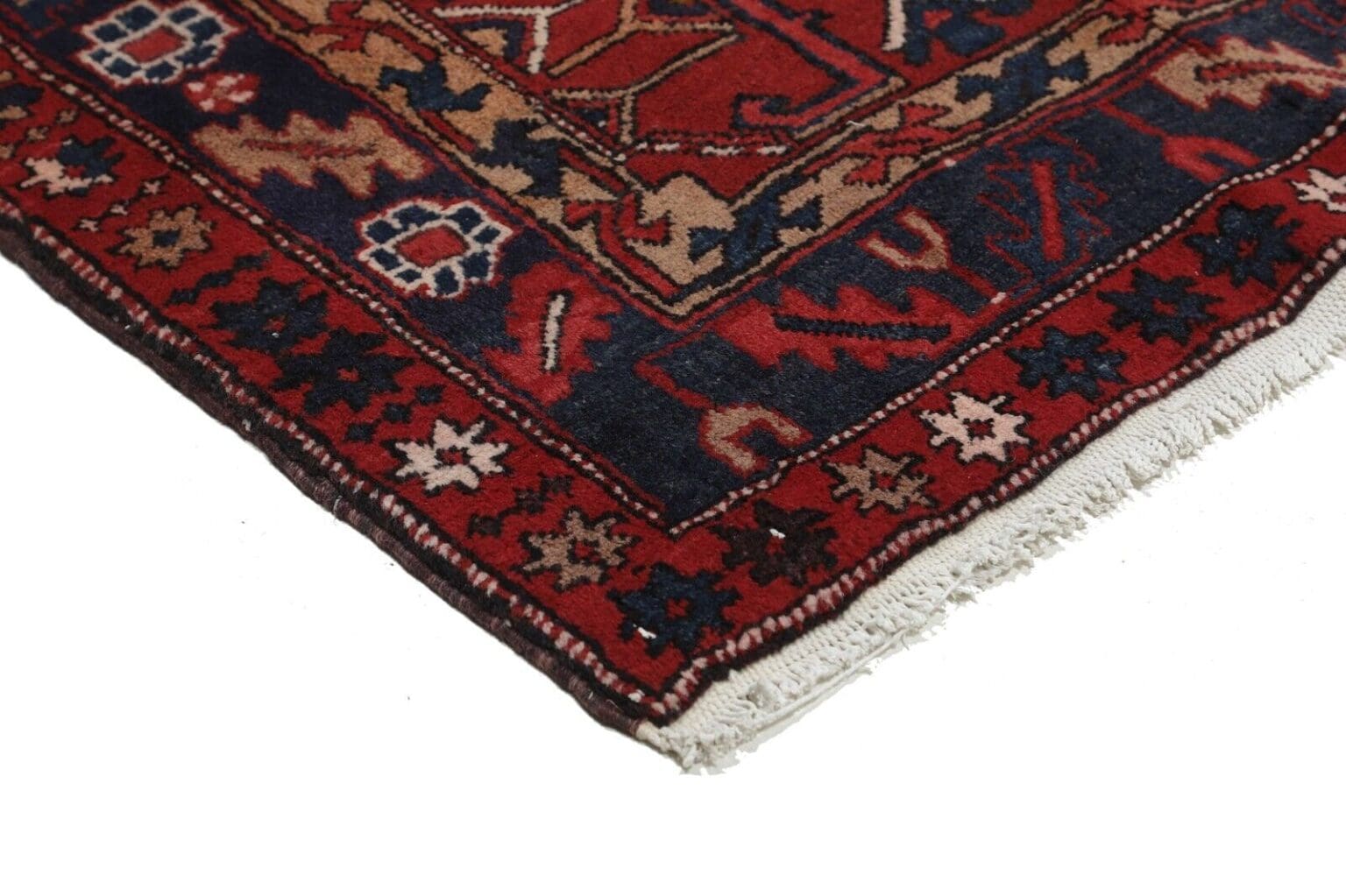
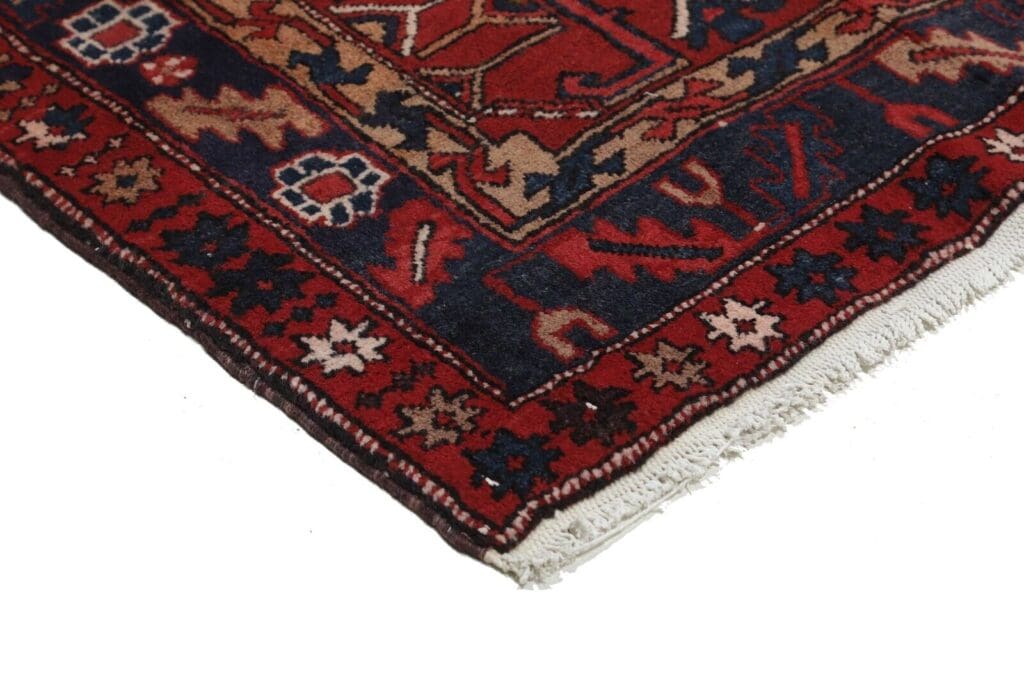
This Persian rug is hand-knotted, with wool forming the pile and cotton used for the warp. That combination is a familiar construction in Iranian rug making. The warp establishes the vertical foundation of the textile, while the pile is built knot by knot and secured with weft rows during the weaving process. The surface therefore comes from a sequence of individual manual operations rather than from a printed or mechanically repeated design.
The pile height is described as normal, and the rug’s thickness is described as perfect. These details place the piece within a practical hand-knotted construction with an even surface profile. The craft lies in maintaining tension, placing each knot in the intended position, and keeping the pattern legible as the work progresses. In a geometric design, the knot rows translate lines, angles, fields, and repeated units into a durable textile surface.
The rug is described as used, washed, and top quality. These statements identify its present product condition: it has had previous use, has been washed, and is offered with a top-quality classification. No additional information is provided about individual marks of wear, repairs, or the precise age of the rug. Those points are therefore not added to its description.
Wool is a traditional pile fibre for Persian rugs because it can form a resilient, tactile surface. Cotton in the warp provides the underlying structure specified for this piece. The hand-knotted method allows the pile and the drawing to be created together. Every row contributes both to the construction and to the appearance, which is why a hand-knotted rug remains an individually made textile object.
Origin and Tradition
The rug comes from Iran and is identified as a Meschkin Ardebil Persian rug. Ardebil is one of the established rug-producing areas of north-western Iran. Its textile history includes village and workshop traditions in which rugs were made for everyday use as well as for more formal interiors. Meschkin, also written Meshkin in some contexts, belongs to the wider regional setting of Ardebil and is associated with a grounded, local approach to hand-knotting.
Iranian rug production is not a single uniform style. Each area has developed preferences concerning structure, drawing, colour relationships, scale, and the balance between field and border. These distinctions grew through local practice, trade, and the movement of ideas between communities. A regional name such as Meschkin Ardebil places a rug within that larger history without turning it into a generic example of every Iranian tradition.
Traditional rug making begins by preparing and tensioning the warp. Knotting then proceeds across the foundation, with wefts helping to lock the rows into place. The pile is trimmed and levelled as the work advances or when the rug is completed. This process requires careful counting, visual control, and repeated manual effort. A geometric composition is especially suited to being built in stages, since its order can be expressed through recurring shapes and clearly defined transitions.
The Ardebil region is part of the north-western Iranian cultural landscape, where practical weaving knowledge and decorative design have long existed side by side. Rugs made in such settings could serve a household purpose while also carrying a distinct regional vocabulary. The craft was shaped by the available materials, the demands placed on a floor covering, and the designs known within the local community. Hand-knotting preserves that link between function, technique, and visual structure.
Regional rug traditions also influenced one another. Motifs and methods travelled through markets, neighbouring settlements, and the work of individual weavers. As a result, a design may share broad principles with rugs from other Iranian areas while retaining a separate regional identity. This is why the name Meschkin Ardebil is relevant to the origin of this rug, whereas the separate description “geometric” refers to its pattern language.
Persian rugs are part of a wider history of domestic textiles in Iran. Urban workshops often developed highly organised drawings, while village production could place greater emphasis on repeatable forms and direct, practical construction. These categories overlap, and a regional label should not be stretched into claims about a specific workshop or weaving family when such information is not available. What can be stated here is the Iranian origin, the Meschkin Ardebil designation, and the hand-knotted technique.
The rug is dated to the twenty-first century in the product information. That places it in a contemporary period of an old craft tradition. Modern Persian rugs may continue established methods while being made for present-day homes and uses. Their historical value is therefore connected to the continuation of handwork rather than to an assumed earlier date. This distinction keeps the regional tradition and the stated age period clear.
Design and Pattern
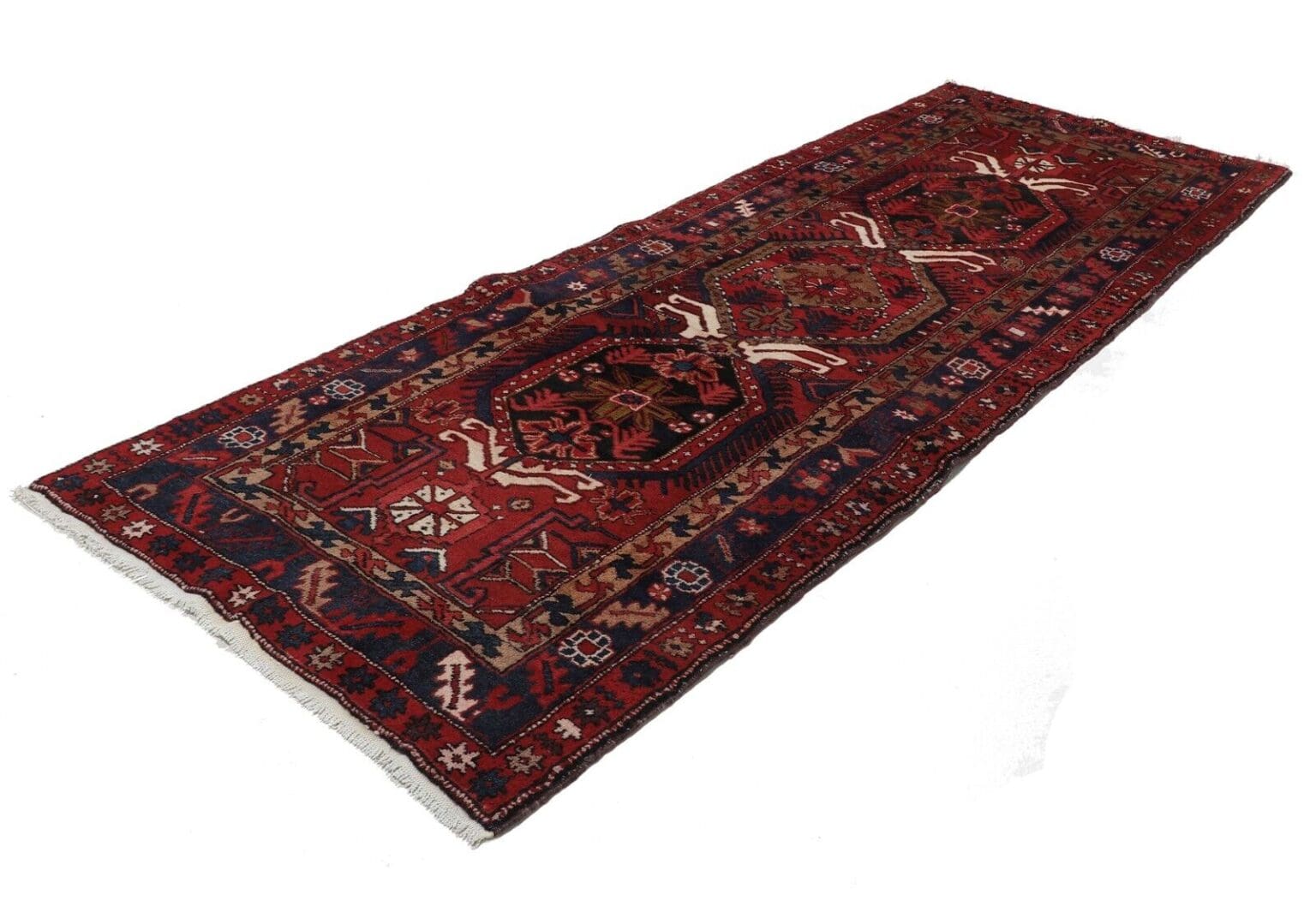
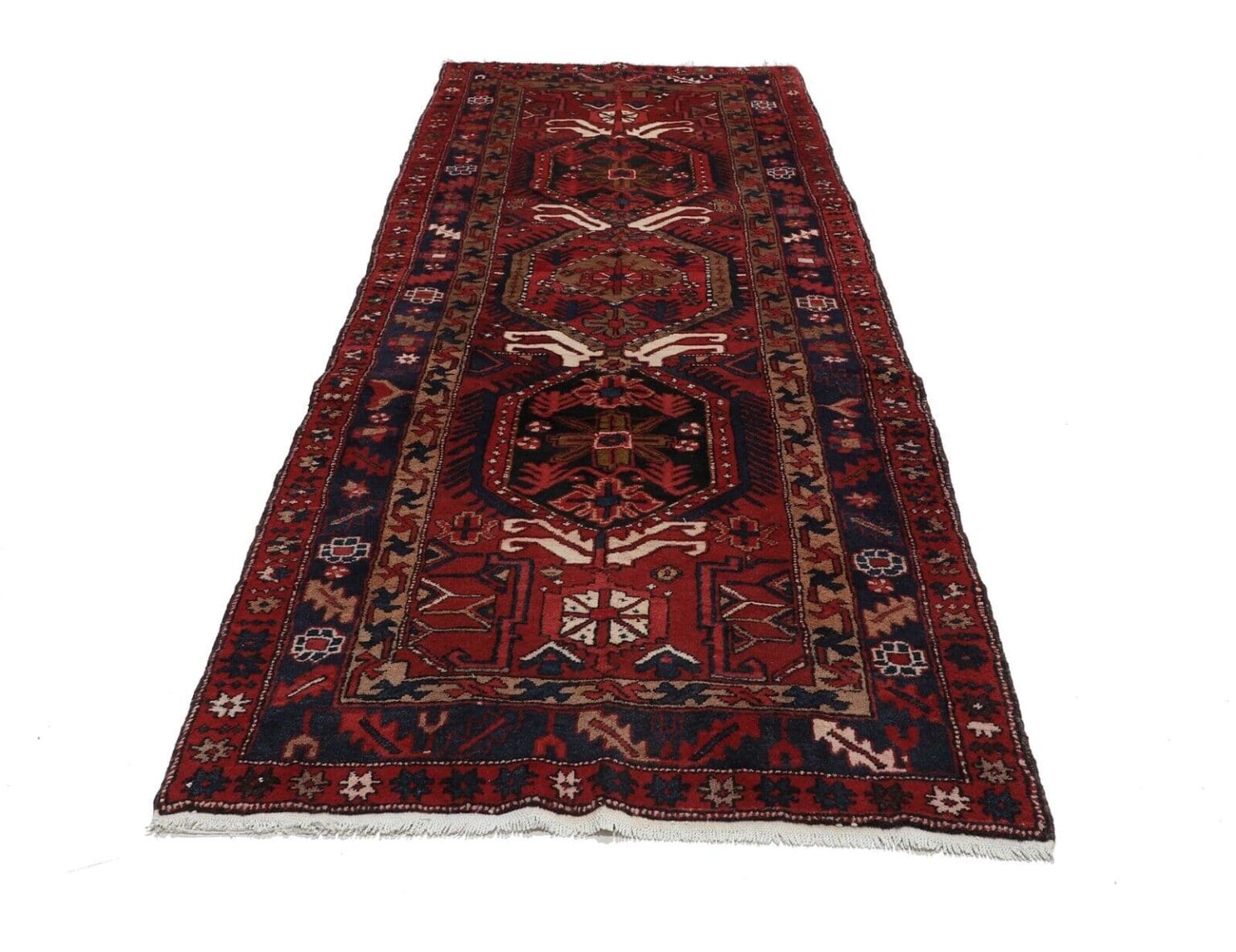
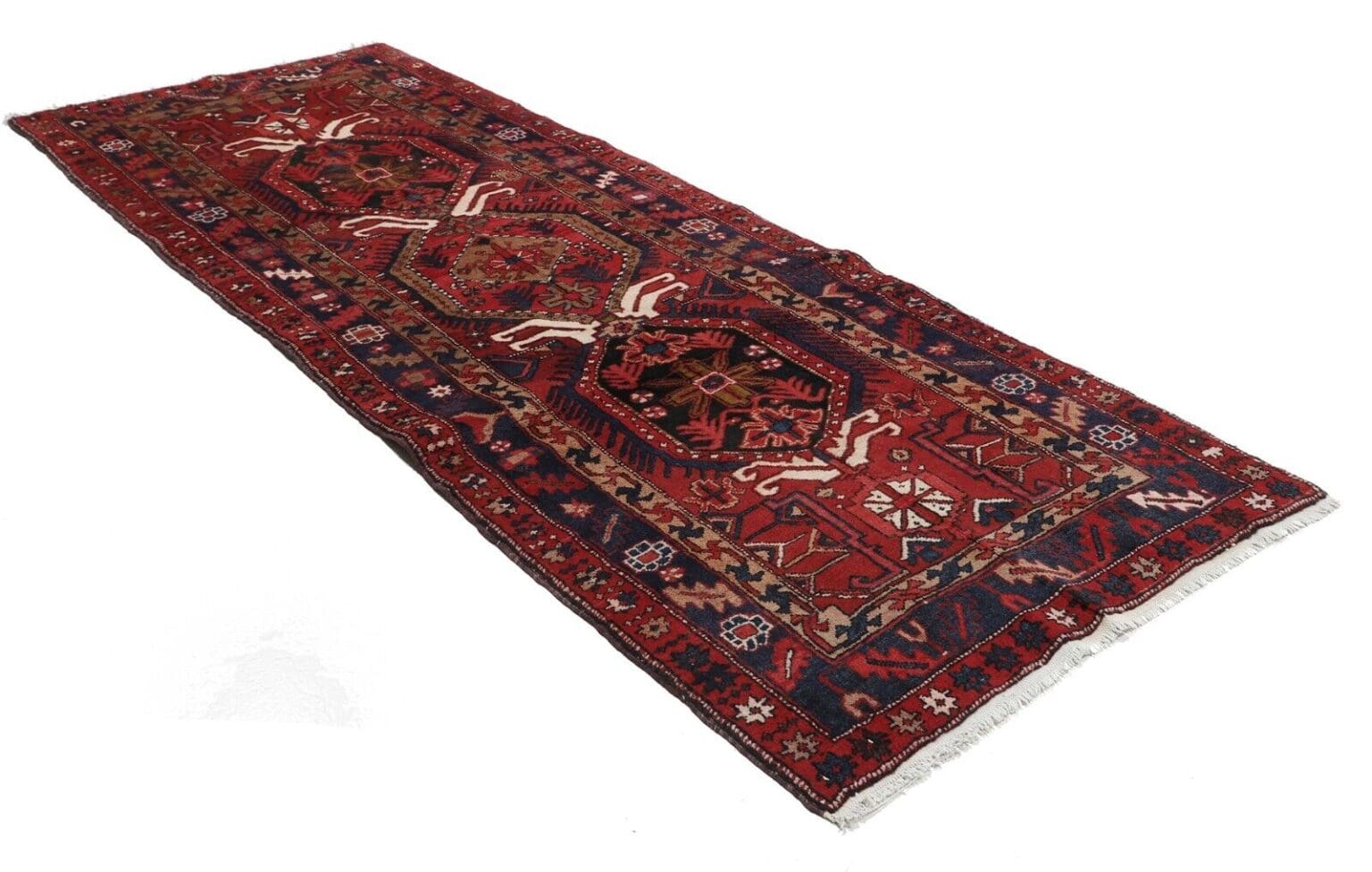
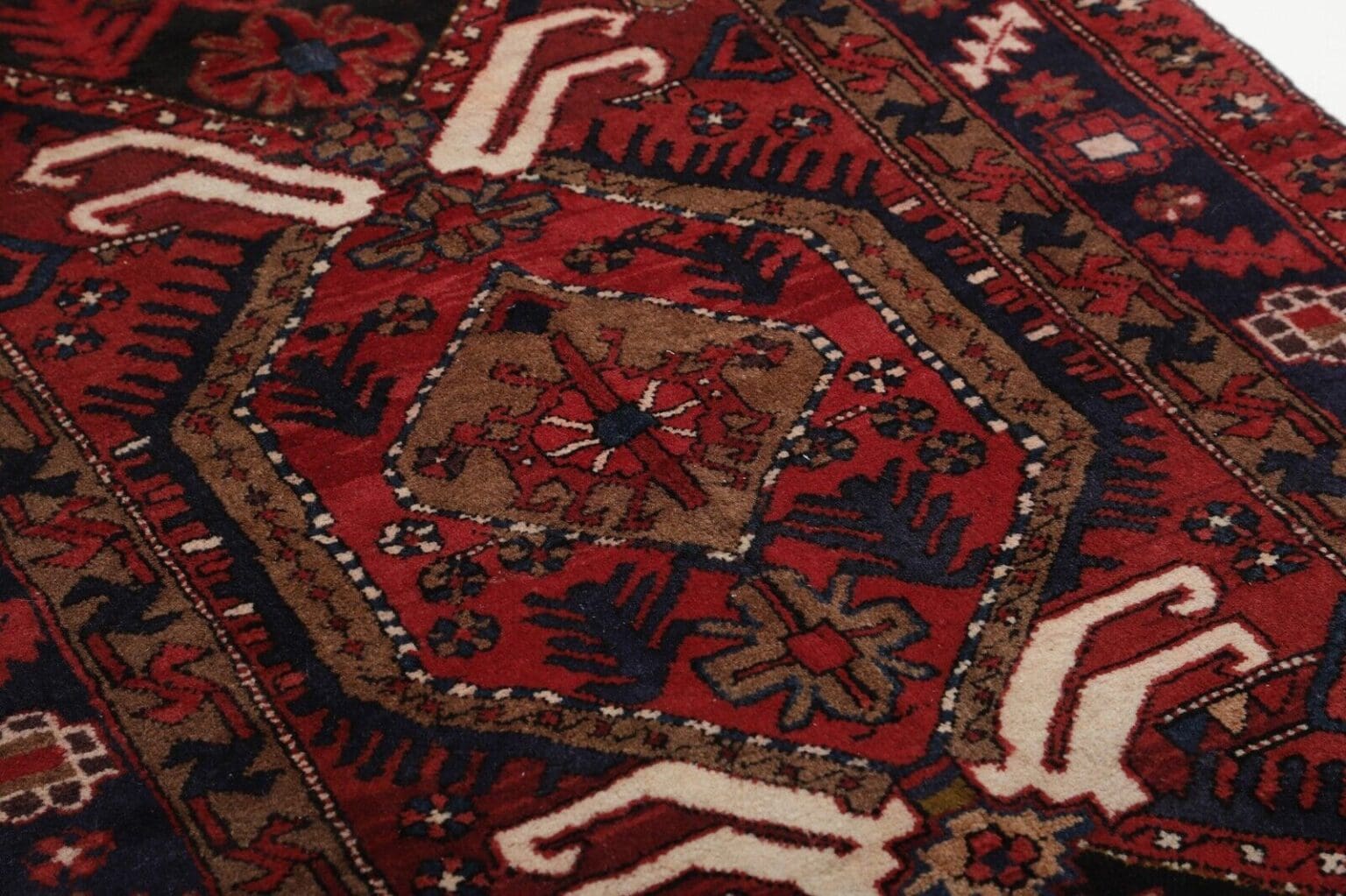
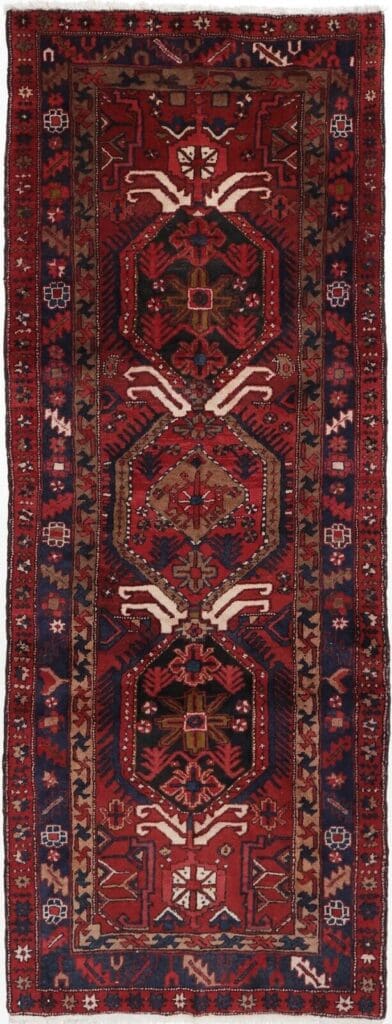
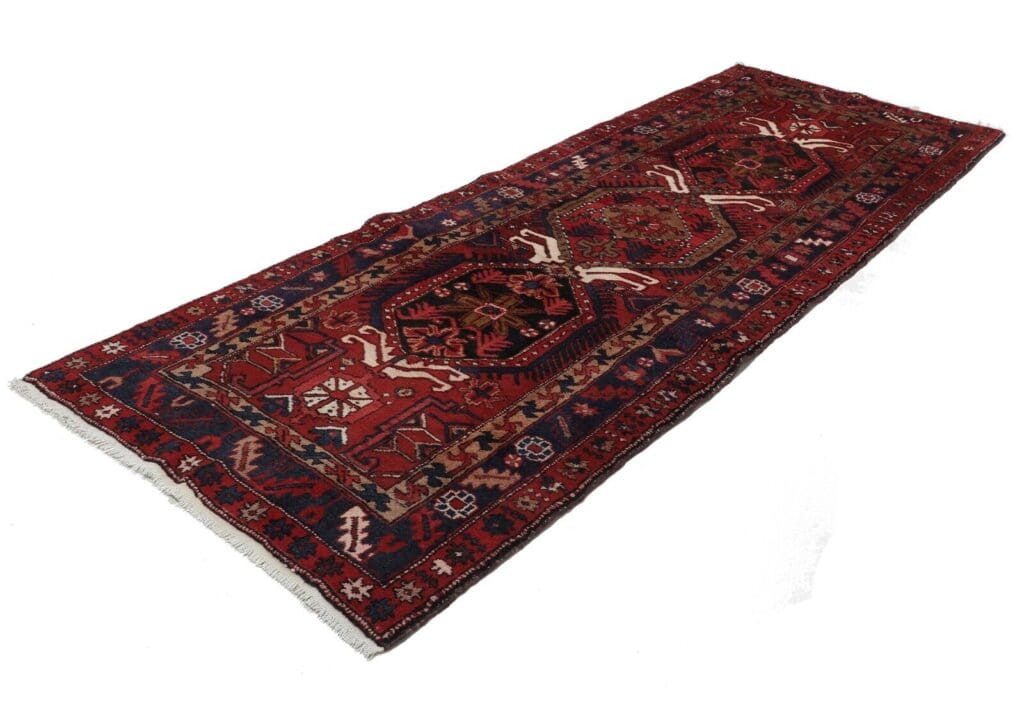
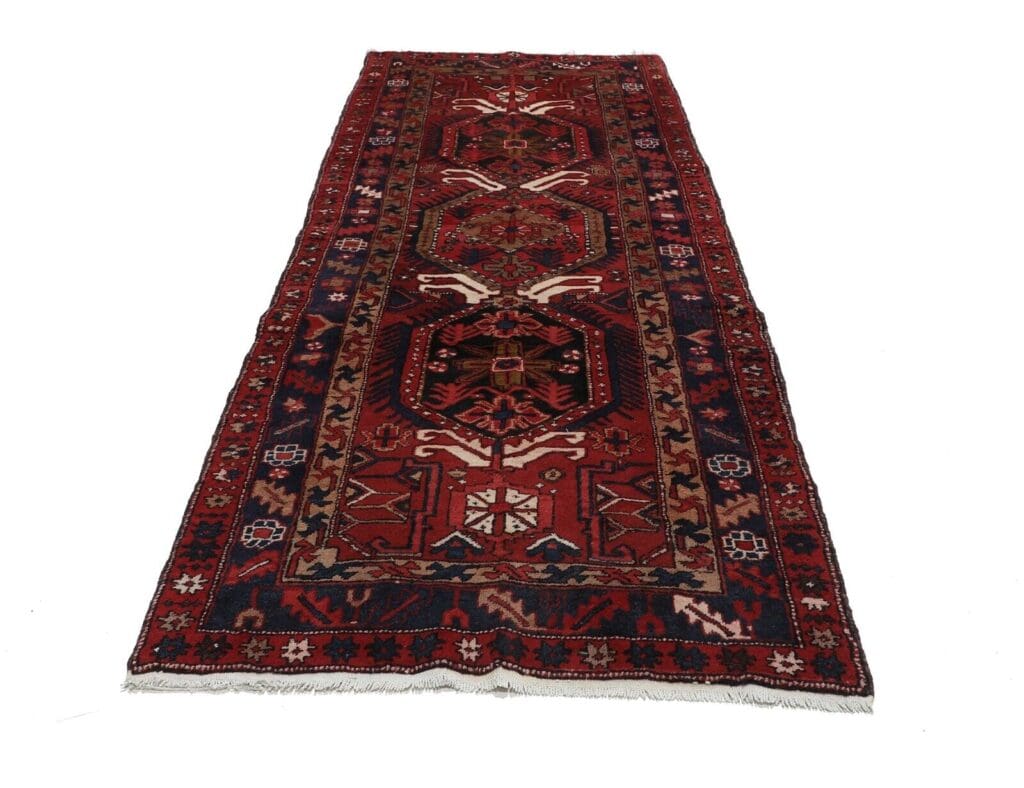
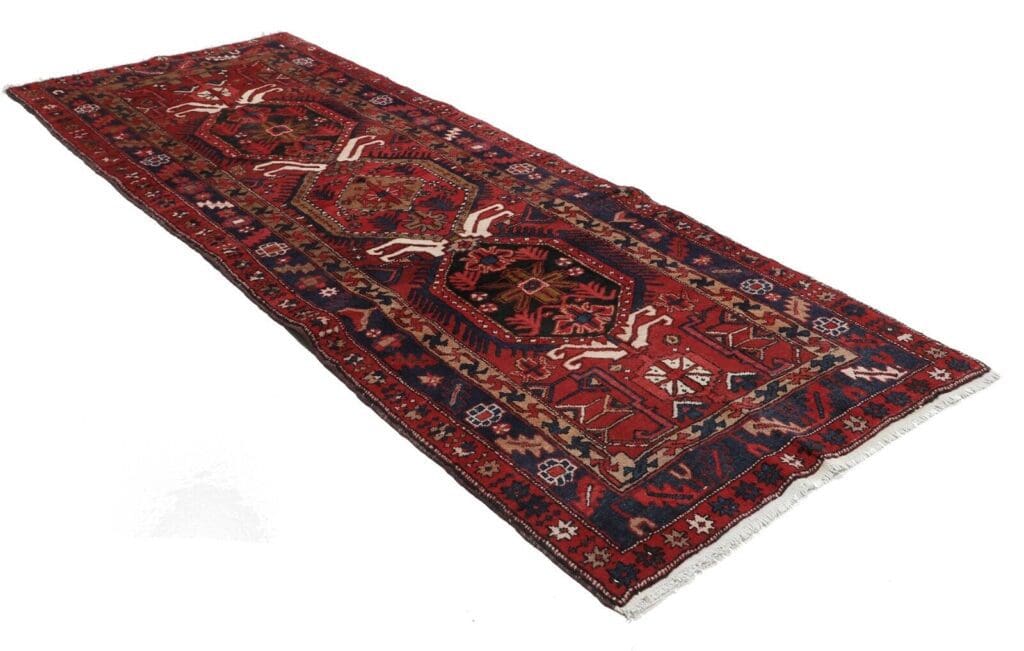
The pattern is geometric. Geometric rug design is based on organised shapes rather than on a naturalistic scene. Lines, stepped contours, angular outlines, diamonds, zigzags, framed areas, and repeated units are common possibilities within this broad language. The source identifies the pattern category but does not specify which individual forms or colours appear on this particular rug, so no more detailed visual claim is made here.
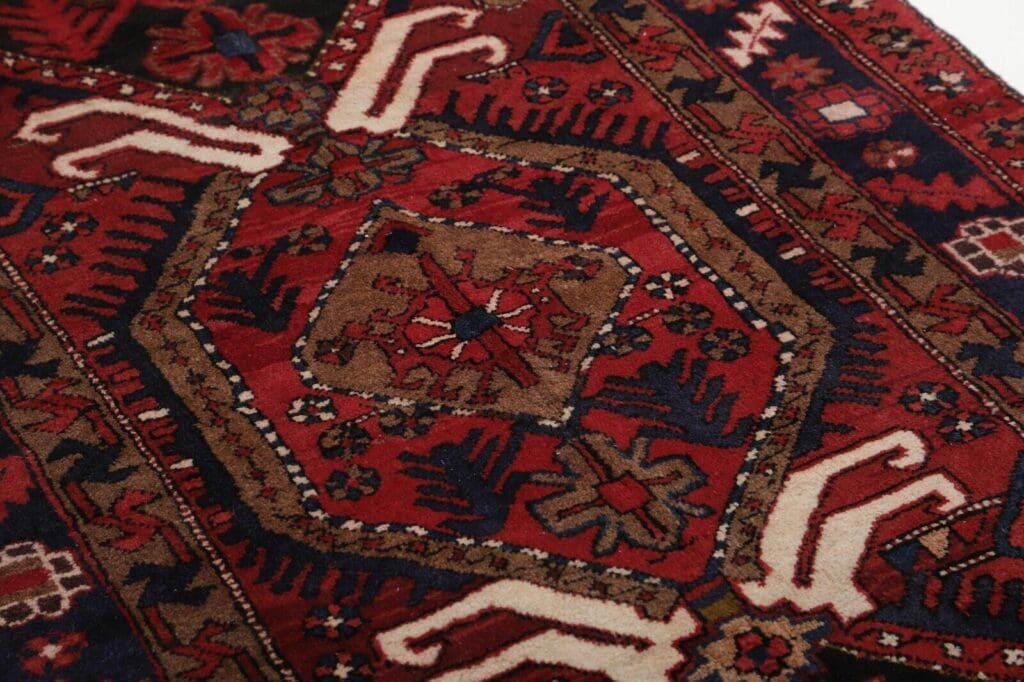
Geometric drawing has a close relationship with the mechanics of knotting. A design can be divided into sections and followed row by row, with each knot contributing to an edge, a corner, or a repeated shape. The structure of the drawing helps the weaver maintain rhythm across the field. At the same time, manual production means that the finished piece is not a machine-made duplicate. The pattern is built through the physical decisions involved in making the textile.
Across Iranian rug traditions, geometric compositions may be arranged as a central field, an all-over repeat, or a sequence of framed areas. Borders can establish an edge around the design, while internal units can create rhythm and visual balance. These are general design principles rather than a description of undocumented details on this rug. The available pattern information remains geometric, and its specific colour scheme is not stated.
The name Meschkin Ardebil should not be confused with a motif name. It identifies the rug’s regional context, while the word geometric describes the way its pattern is organised. Iranian design traditions have often allowed familiar forms to travel between regions and to be adapted by local weavers. A similar angular principle can therefore appear in more than one area without making the rugs identical or changing the stated origin of this piece.
Geometric designs are also practical in the sense that they can be planned through repeatable units. A weaver may use a visual sequence to maintain proportion and continuity while working across the foundation. The result can be read as a connected field even though it is assembled from many small knots. This relationship between repeated structure and individual handwork is central to the character of traditional knotted rugs.
The oriental style noted for this rug places it within a broad family of decorative floor textiles from Asia and the Middle East. The more precise description is an Iranian Persian rug from the Meschkin Ardebil tradition with a geometric pattern. Keeping these levels separate is useful: “oriental” gives the wider stylistic context, “Persian” identifies the Iranian origin, and “geometric” names the visible design category.
Because the pattern has been made through knotting rather than applied afterwards, its lines are part of the textile’s structure. The wool pile carries the drawing, while the cotton warp supports the construction underneath. This makes the design inseparable from the craft process. It also explains why the rug is presented as a one-off hand-made piece rather than as one item from an identical industrial series.
Special Features
The rug is listed as used, washed, and top quality. Its pile height is normal, and its thickness is described as perfect. It is also identified as allergy-friendly, anti-slip, and suitable for underfloor heating. These are the practical specifications given for the piece. They complement its hand-knotted construction and its geometric design.
The material information is specific: wool is used for the pile and cotton for the warp. The rug is from Iran, belongs to the Meschkin Ardebil designation, follows an oriental style, and is assigned to the twenty-first century. No signature, knot density, exact production year, or repair history is provided. Those details are left open rather than inferred.
FAQ
How should a wool Persian rug be cared for?
Regular, gentle vacuuming helps remove dust and loose dirt from the pile. Spills should be absorbed promptly rather than rubbed deeply into the fibres. Strong chemicals and rough treatment can affect a hand-knotted surface, so cleaning agents should be used with care. For extensive soiling, professional rug cleaning is the appropriate option. This rug is already described as washed. Since it is a used piece, any further care should take account of its actual pile, edges, and overall condition.
What does Meschkin Ardebil mean for this rug?
Meschkin Ardebil is the regional designation attached to the rug within the Iranian Persian-rug tradition. Ardebil is in north-western Iran, an area with a long history of hand-knotted textile production. The designation refers to origin and regional context, not automatically to one particular motif. The pattern is separately identified as geometric. These two descriptions work together while retaining different meanings: one concerns where the rug belongs, and the other concerns how its design is organised.
What makes this Persian rug distinctive?
Its distinctive combination is the hand-knotted construction, wool pile, cotton warp, and Meschkin Ardebil designation within Iran. The rug has a geometric pattern and is described as used, washed, and top quality. It is also listed as allergy-friendly, anti-slip, and suitable for underfloor heating. The style is oriental, and the rug belongs to the twenty-first century. Together, these stated features describe an individually made regional textile with clearly identified materials, technique, pattern category, and practical specifications.
To provide the best experiences, we use technologies like cookies to store and/or access device information. Consenting to these technologies will allow us to process data such as browsing behavior or unique IDs on this site. Not consenting or withdrawing consent, may adversely affect certain features and functions.
Functional Always active
The technical storage or access is strictly necessary for the legitimate purpose of enabling the use of a specific service explicitly requested by the subscriber or user, or for the sole purpose of carrying out the transmission of a communication over an electronic communications network.
Preferences
The technical storage or access is necessary for the legitimate purpose of storing preferences that are not requested by the subscriber or user.
Statistics
The technical storage or access that is used exclusively for statistical purposes.The technical storage or access that is used exclusively for anonymous statistical purposes. Without a subpoena, voluntary compliance on the part of your Internet Service Provider, or additional records from a third party, information stored or retrieved for this purpose alone cannot usually be used to identify you.
Marketing
The technical storage or access is required to create user profiles to send advertising, or to track the user on a website or across several websites for similar marketing purposes.

 SECURE PAYMENT
 SHIPPING PARTNERS


