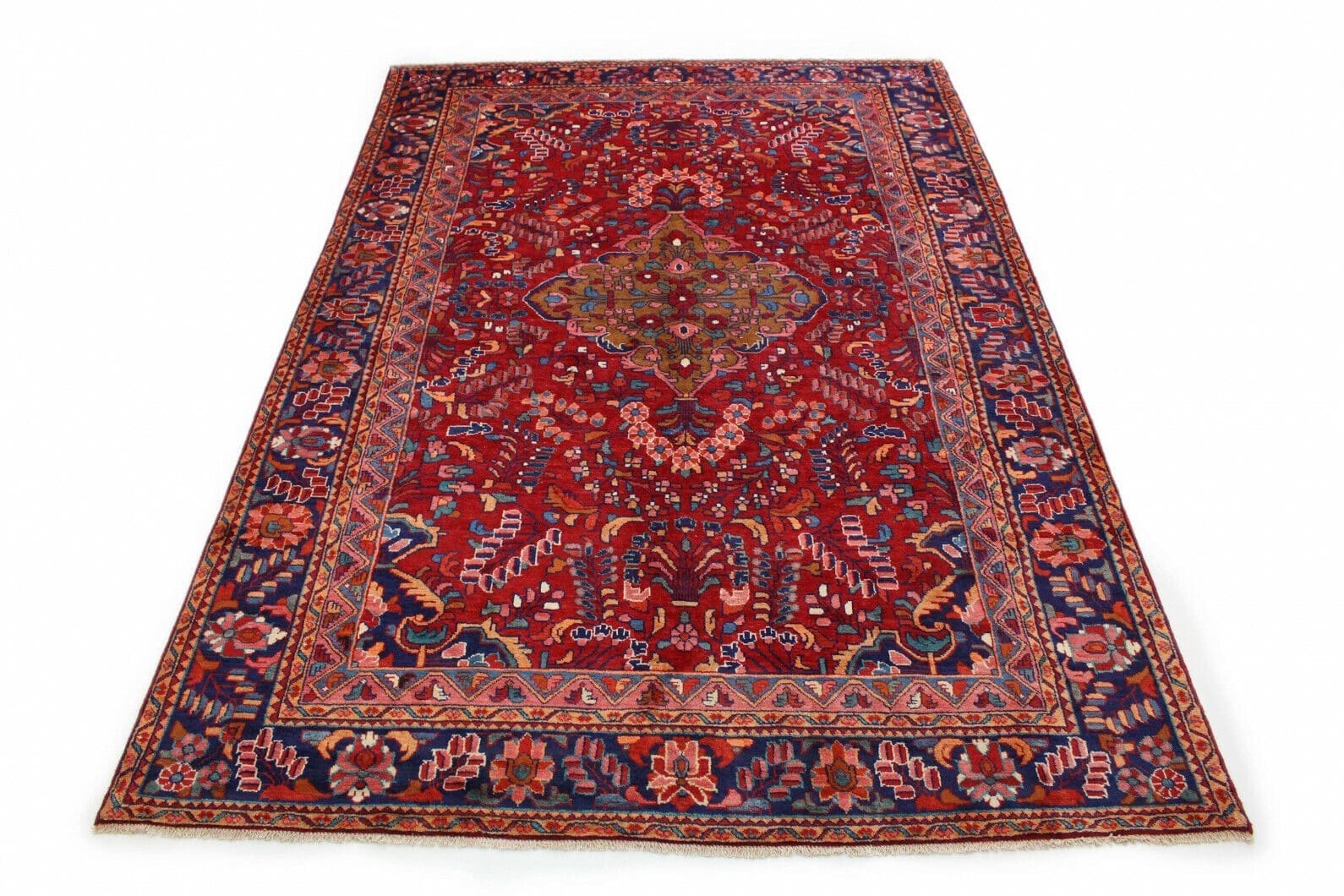
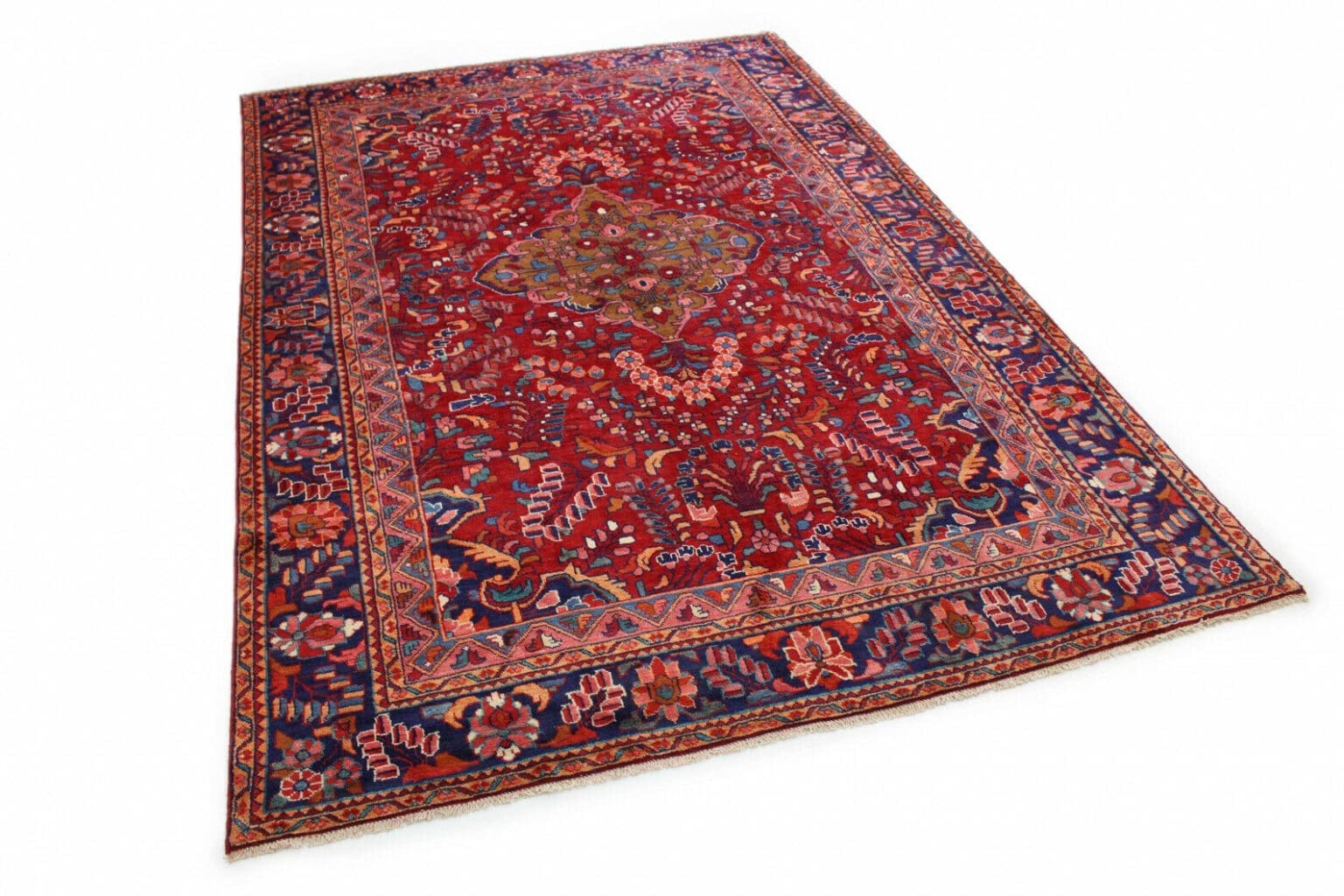
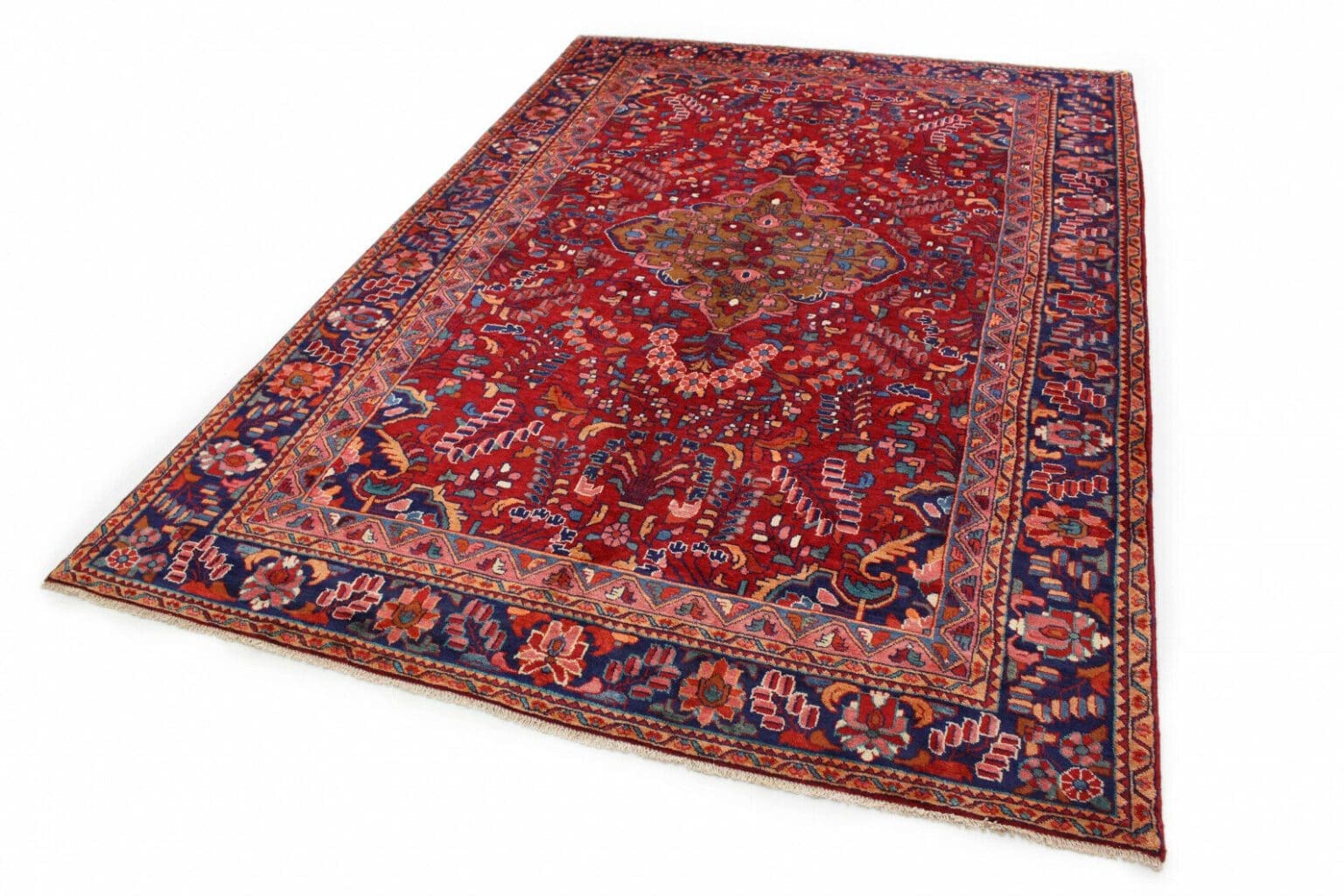
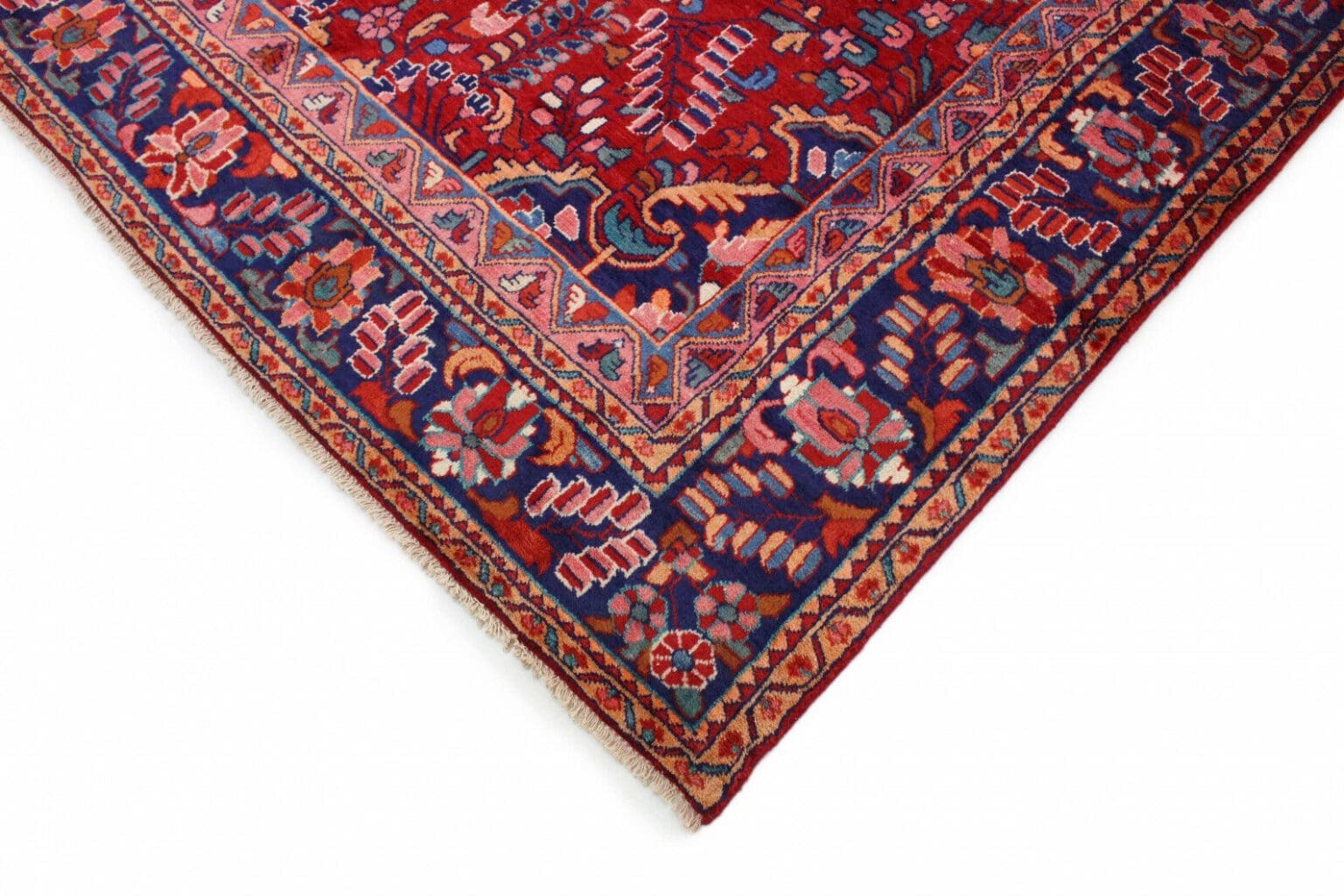
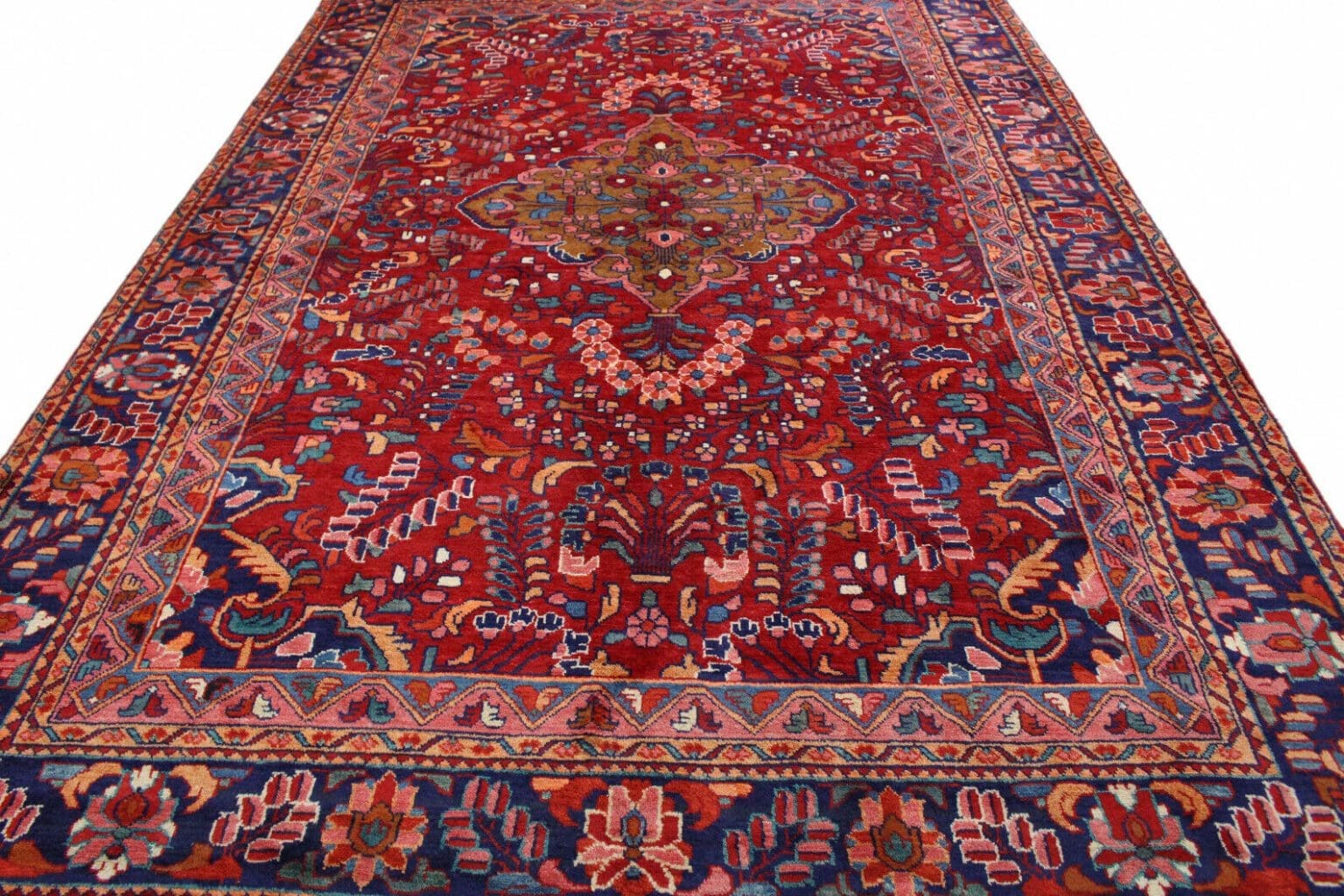
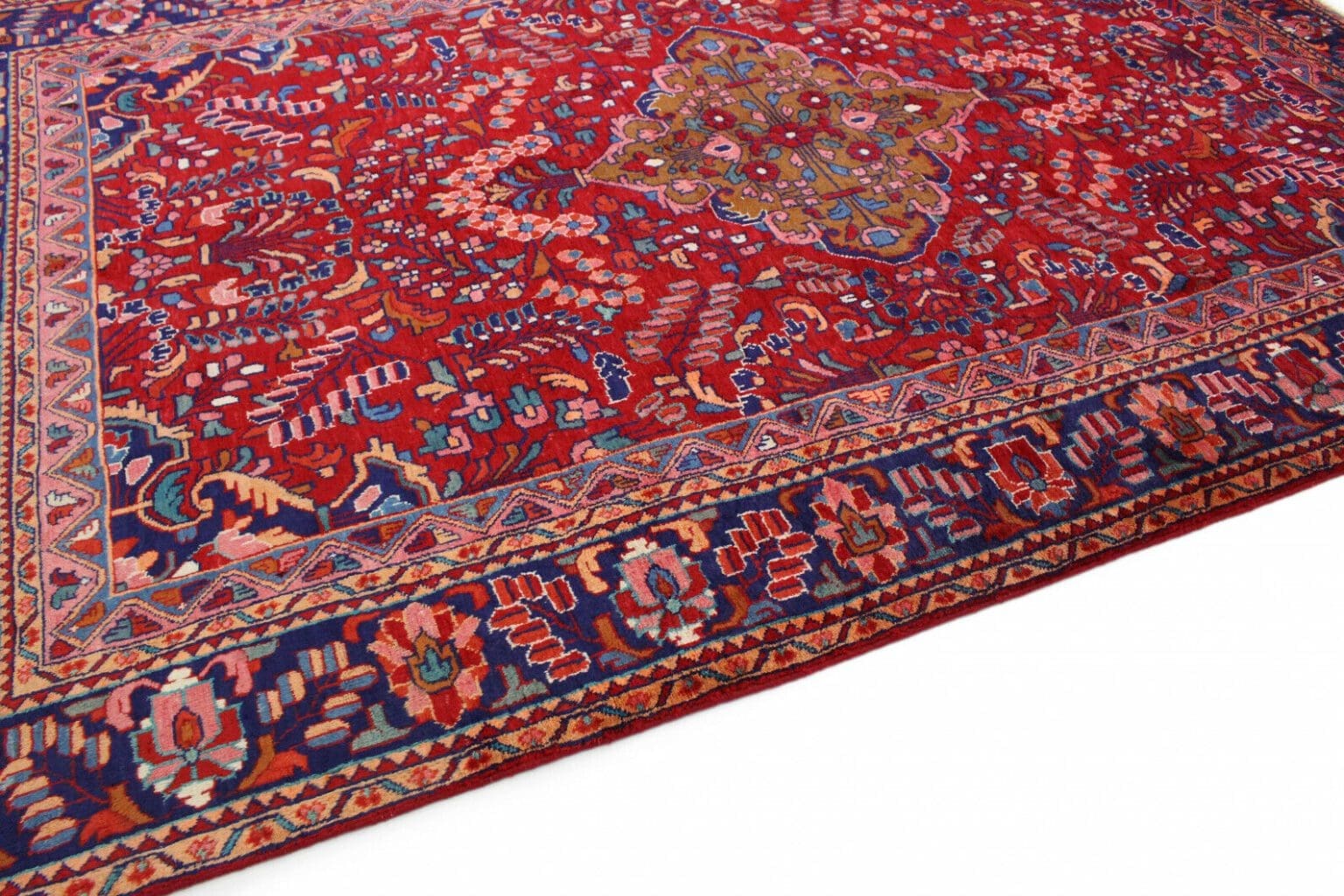
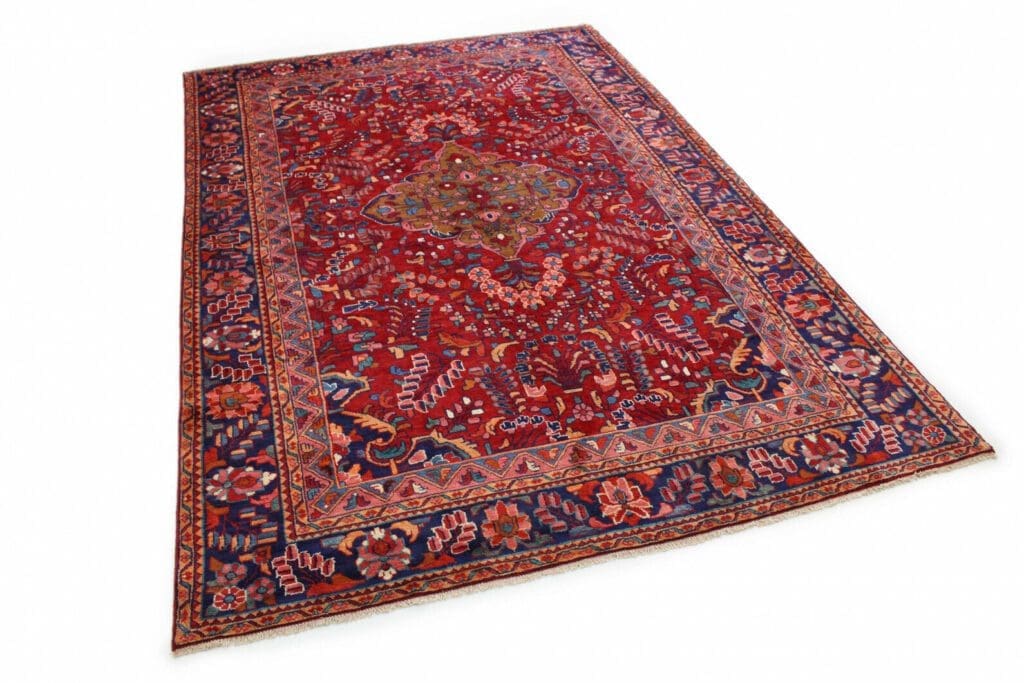
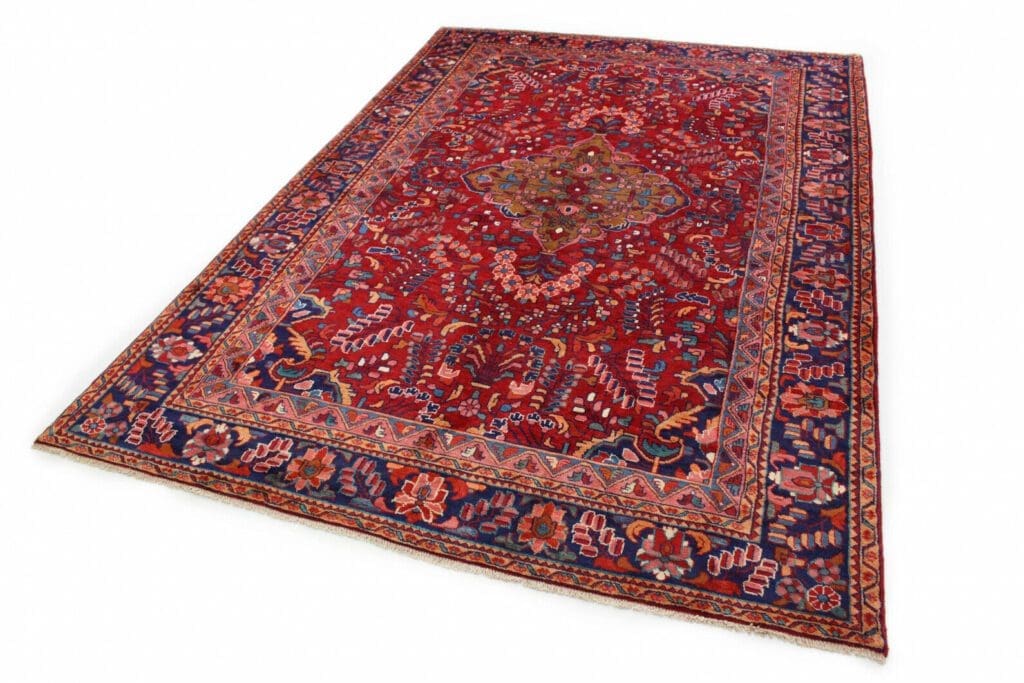
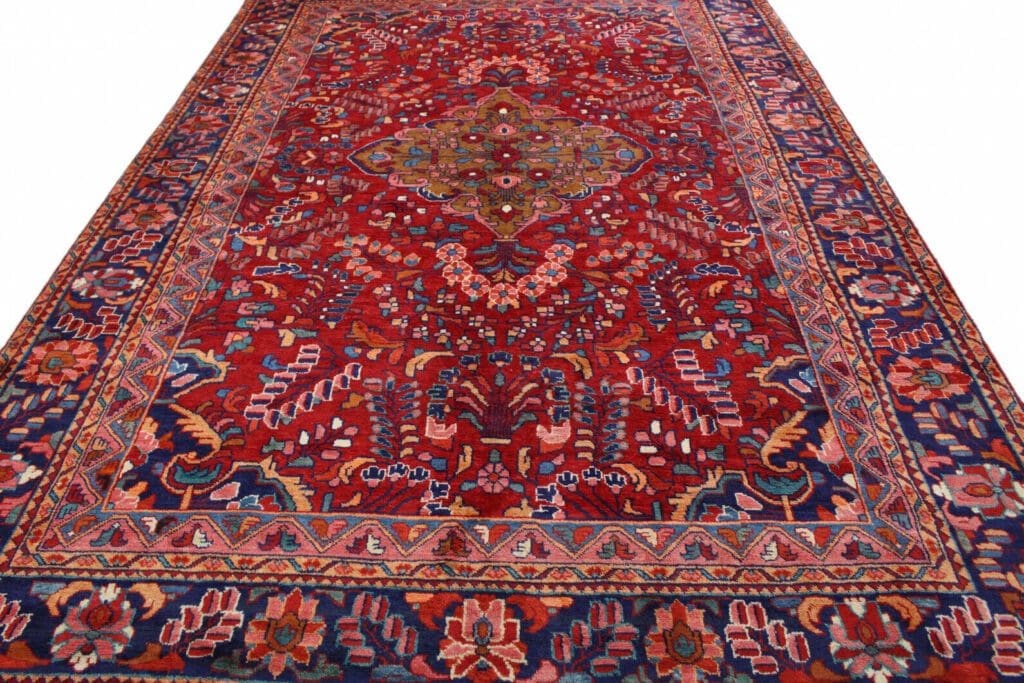
Hand-knotted Lilian Persian rug | Knot density: high | Material: pile wool, warp cotton | Size: 345 x 240 cm | Pattern: floral design with central medallion and decorated corners | Condition: used, refurbished
This Lilian Persian rug is hand-knotted. Its construction is made knot by knot by hand, allowing the floral design, central medallion and decorated corners to be built into the surface of the rug. The pile is made of wool, while cotton is specified for the warp. Wool is a traditional pile material for oriental rugs because it provides a distinct texture and a resilient surface. It also gives the floral forms a tactile presence rather than making them part of a flat printed fabric.
The knot density is described as high. In general, a high knot density provides the technical basis for drawing small floral details, defined contours and nuanced areas of colour. In a hand-knotted rug, the pattern is created through the arrangement of individual knots and not applied afterward as a print. The pile height is given as 1 to 3 cm. This gives the rug a noticeable wool surface in which the red and blue areas of the design can be clearly experienced.
The combination of wool pile and cotton warp is familiar in traditional rug construction. The warp runs lengthwise through the foundation and provides the structure to which the knots are attached. The wool pile forms the visible face and determines much of the hand and appearance. Hand-knotting and the stated high knot density therefore describe the making of this particular rug. They also explain why its floral composition is part of the woven construction rather than a separate decorative layer.
Hand-knotting is a gradual process. The weaver works across the foundation, securing each group of knots with the structural elements of the rug before moving to the next row. The pile is then finished so that the drawing can be read across the surface. This method permits a design to combine a central field with carefully placed surrounding motifs. The material details remain specific: wool is used for the pile and cotton for the warp. No other fibre is added to this description.
Origin and Tradition
The rug is described as a classic Lilian oriental rug and as a Persian rug. Its exact place of origin within Iran is not specified. It is therefore not assigned to a particular Iranian city or province. Lilian is the designation used for this rug in the product description, and no additional place of manufacture is supplied. The Persian classification does establish its connection with the Iranian tradition of hand-knotted rugs, while the precise provenance of this individual piece remains unstated.
Iranian rug making has developed over many centuries through different weaving centres, workshops and regional design languages. Areas such as Isfahan, Kerman and Tabriz are associated with recognised traditions, but mentioning those traditions does not identify this Lilian as coming from any of them. Persian rugs can differ considerably in drawing, scale, colour and structure while sharing a commitment to a knotted pile and an organised ornamental surface. The present rug belongs to that broad Persian context without a more specific origin claim.
A traditional hand-knotted rug begins with a stretched foundation of warp threads. Knots are inserted around the warp and held in place by the structure of the rug. Weft threads help secure successive rows, while the pile gradually builds the visible field. This process is both constructive and decorative: the same sequence that forms the rug also creates the pattern. A medallion, floral details and corner ornaments are therefore integrated into the making of the textile.
Persian design traditions often organise a rug around a central field and a surrounding border system. The centre may be marked by a medallion, while corner pieces help frame the field and guide the transition toward the edges. Floral forms can be repeated, balanced and connected through stems or other ornamental relationships. These are general principles of Persian carpet design. They explain the visual vocabulary of this rug without assigning it to a workshop, date or locality that has not been provided.
The term Persian rug is used here because the source classifies the piece in that way. It is also called an oriental rug, reflecting its traditional category. There is no stated year of manufacture, signature, exact workshop, or more precise provenance. Those details are not required to describe the construction and design that are given: a Lilian designation, hand-knotting, wool pile, cotton warp, high knot density, a floral medallion composition, red and blue colouring, and decorated corners.
Design and Pattern
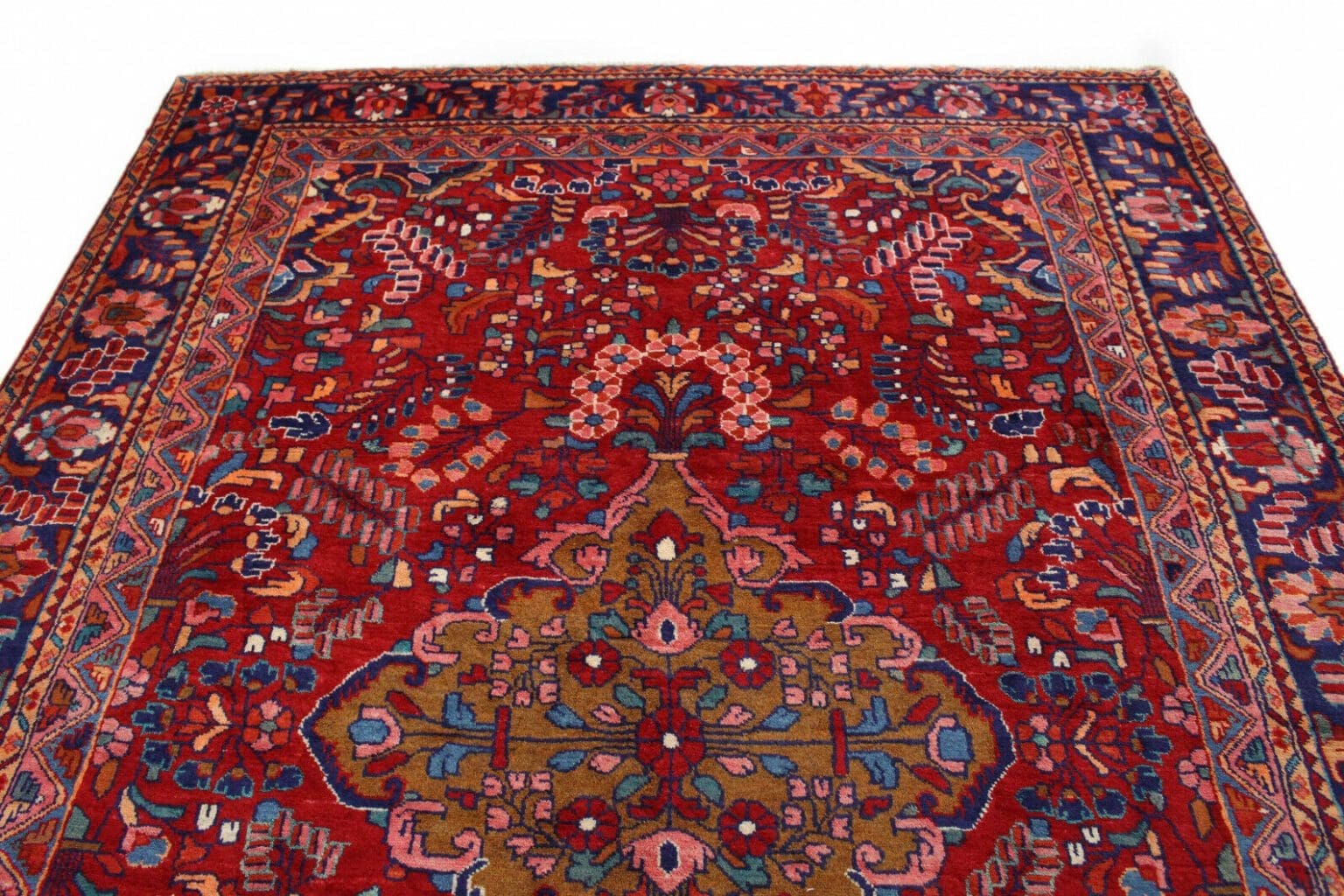
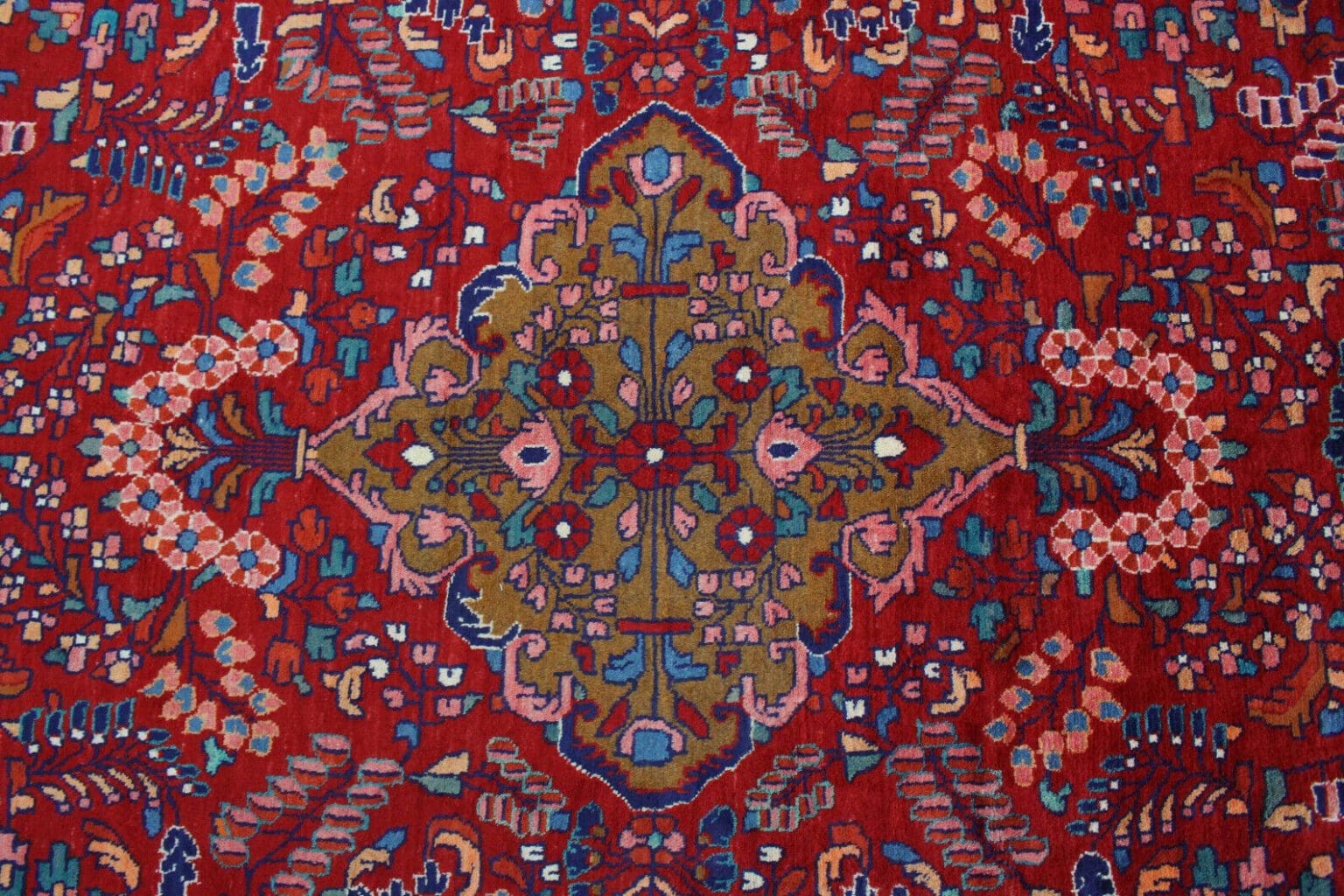
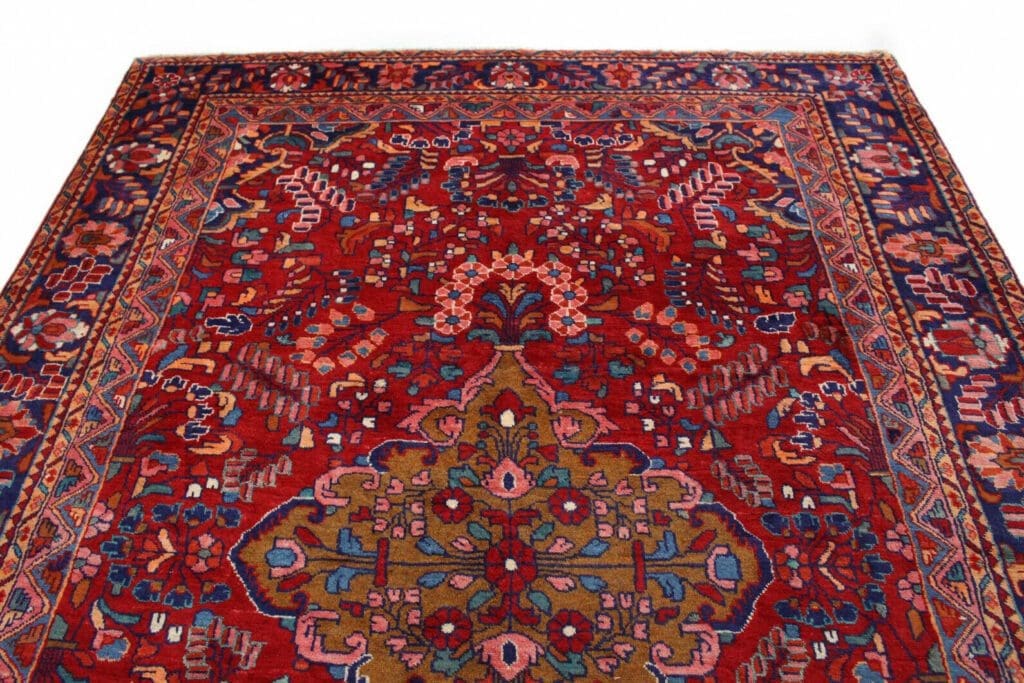
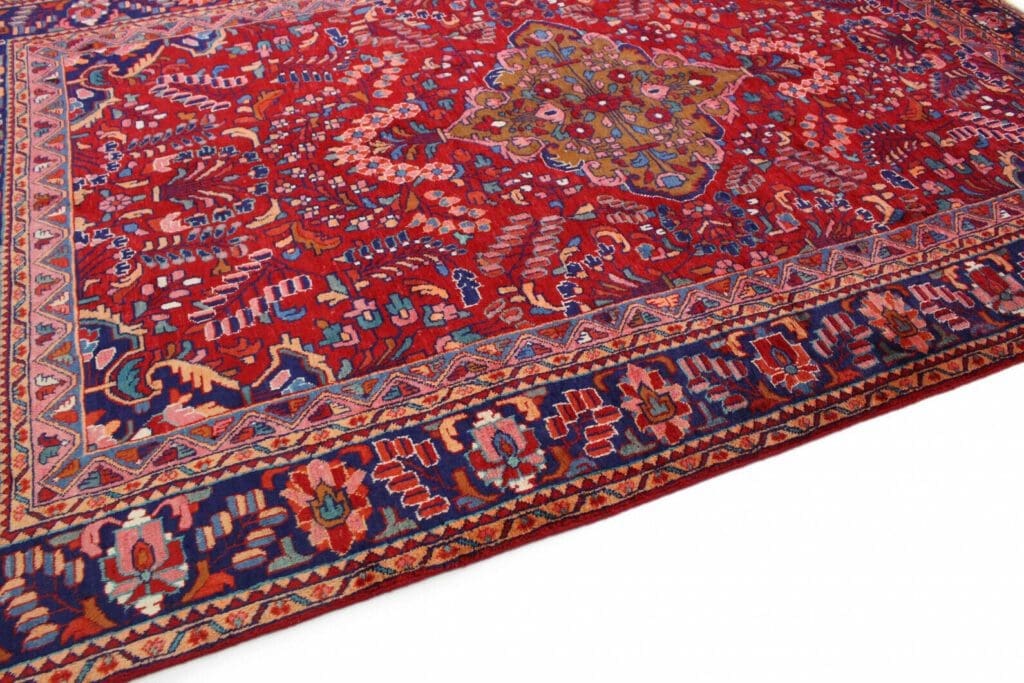
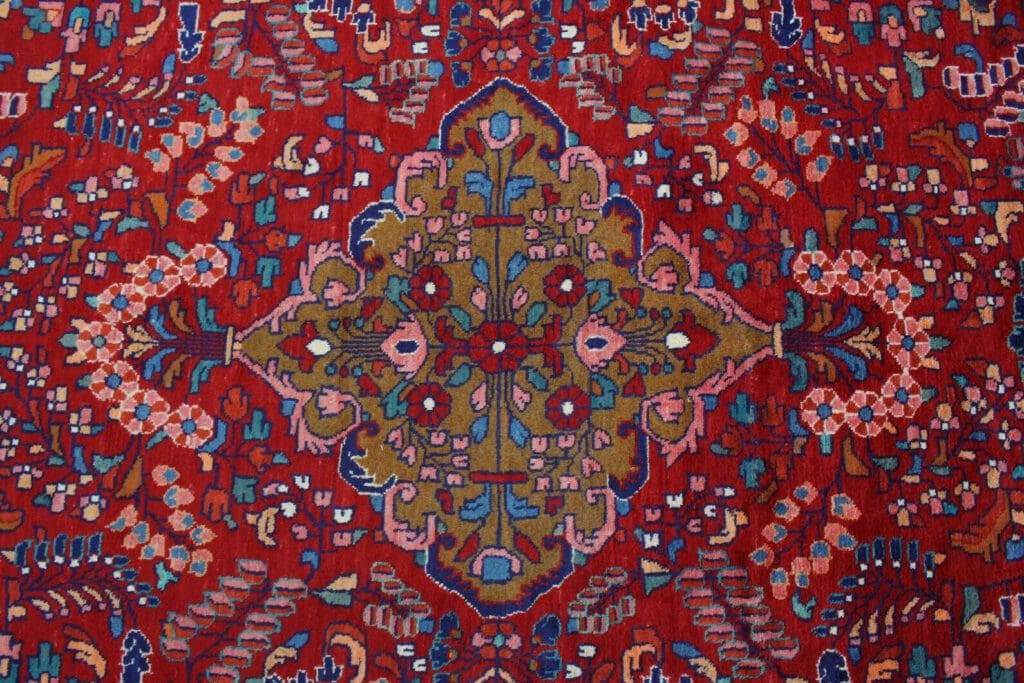
The design is floral and centres on a medallion. In a classical rug composition, a medallion establishes a visual point of focus within the field. It gives the surrounding ornament a clear relationship to the middle and can organise the composition around a balanced axis. On this rug, the central medallion is accompanied by floral elements. The resulting arrangement combines a recognisable centre with decorative detail across the surrounding field.
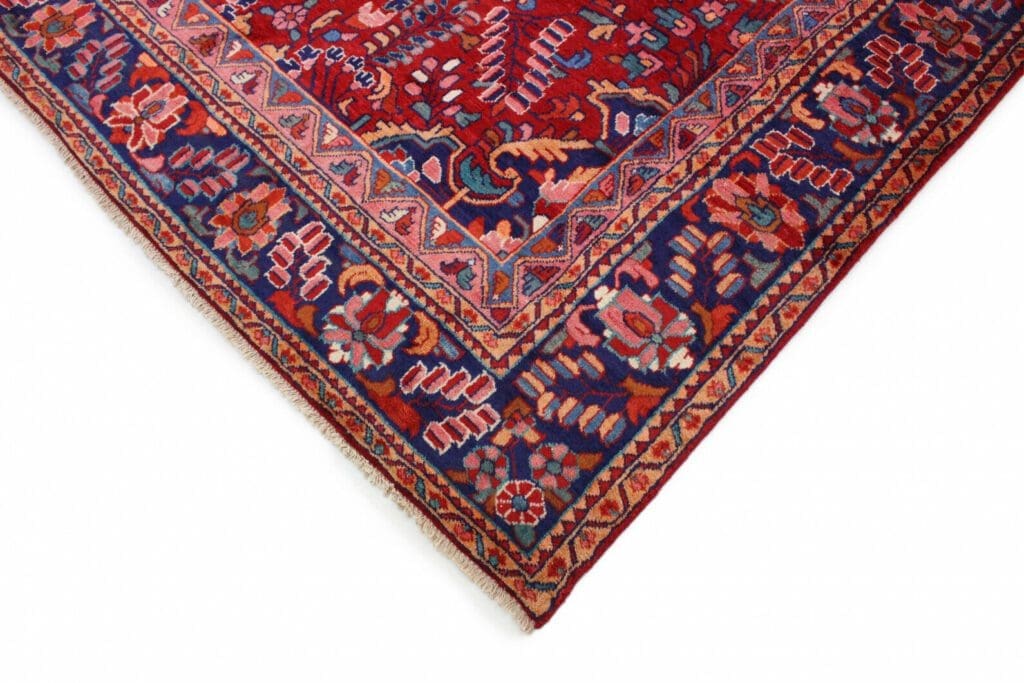
The corners are decorated and form part of the overall composition. Corner ornaments are important in many classical rug designs because they frame the central field and connect it visually with the outer areas. They can reinforce symmetry and provide a transition between the medallion and the edges. For this Lilian, the decorated corners are named as a specific feature alongside the floral design and medallion. No further border motif or individual flower type is specified, so the pattern is described without adding one.
Red and blue define the stated colour scheme. Red gives the composition a warm and prominent base, while blue provides a contrasting cooler colour. Together they can help separate floral forms and make the centre easier to read. The description does not specify dyes, colour codes, or additional shades. The colour statement therefore remains with the two named colours, red and blue, rather than suggesting tones or pigments that are not recorded.
Floral ornament is one of the established languages of classical Persian rugs. Leaves, flowers and scrolling forms may be arranged in repeated rhythms or balanced around a central element. The degree of symmetry, the scale of the motifs and the relationship between field and border vary from one design to another. In this case, the documented elements are a floral design, a central medallion and decorated corners. These features provide the basis for the pattern description without claiming any unlisted motif.
The orderly centre and framed corners allow the rug to work visually in both traditional and contemporary interiors. Its pattern is specifically described as traditional Persian and oriental, rather than abstract or purely geometric. The red and blue palette gives the surface a distinct presence, while the medallion helps establish orientation across the rug. The design can therefore be understood through its stated structure and colours, without relying on a more detailed attribution.
Special Features
The condition is given as used and refurbished. This means the rug is not presented as unused; it has been used and subsequently refurbished. Care should consequently be gentle and appropriate for a hand-knotted wool pile. Regular vacuuming without a brush attachment is recommended so that the pile is not unnecessarily stressed. For stains, use a mild cleaning product and rub carefully rather than treating the area aggressively.
The rug is suitable for use with underfloor heating. The heating temperature should not be set too high in order to treat the material with care. Good ventilation is also recommended so that moisture does not remain trapped beneath the rug. The stated uses include dining rooms, living rooms and bedrooms. It can also be used in an entrance area or as an accent in an office. The hand-knotted construction, wool pile and traditional floral arrangement are the practical features described for this piece.
Strong direct sunlight should be avoided to help protect the colours. In everyday use, this calls for regular but restrained cleaning and a suitable position in the room. No information is provided about repairs, age, signature or workshop, so those details are not added. The special features remain the documented refurbished condition, suitability for underfloor heating, named room uses and the care instructions connected with wool and hand-knotting.
FAQ
How should I care for the Lilian Persian rug?
Vacuum the rug regularly, preferably without a brush attachment, so the wool pile is not unnecessarily disturbed. If a stain appears, use a mild cleaning product and work carefully instead of rubbing forcefully. Limit direct sunlight to help preserve the red and blue colours. Moisture should be used sparingly and should not be left beneath the rug. Because this piece is used and refurbished, a gentle approach is particularly appropriate for its hand-knotted surface.
Which rooms are suitable for this rug?
The product description names dining rooms, living rooms and bedrooms as suitable locations. It can also be placed in an entrance area or used as a decorative accent in an office. The floral arrangement with a medallion and decorated corners can sit within both classic and modern interiors. Red and blue create a clear visual feature, while the traditional Persian classification gives the pattern a structured decorative character. A level, well-maintained floor and regular gentle care are advisable.
Can the rug be used over underfloor heating?
Yes. The Lilian rug is generally suitable for use with underfloor heating. Keep the temperature moderate rather than setting it too high, so the material is treated carefully. Make sure the area beneath the rug remains well ventilated and that moisture does not collect there. These precautions support the careful use of a hand-knotted wool rug on a heated floor and should be followed during ordinary use.
To provide the best experiences, we use technologies like cookies to store and/or access device information. Consenting to these technologies will allow us to process data such as browsing behavior or unique IDs on this site. Not consenting or withdrawing consent, may adversely affect certain features and functions.
Functional Always active
The technical storage or access is strictly necessary for the legitimate purpose of enabling the use of a specific service explicitly requested by the subscriber or user, or for the sole purpose of carrying out the transmission of a communication over an electronic communications network.
Preferences
The technical storage or access is necessary for the legitimate purpose of storing preferences that are not requested by the subscriber or user.
Statistics
The technical storage or access that is used exclusively for statistical purposes.The technical storage or access that is used exclusively for anonymous statistical purposes. Without a subpoena, voluntary compliance on the part of your Internet Service Provider, or additional records from a third party, information stored or retrieved for this purpose alone cannot usually be used to identify you.
Marketing
The technical storage or access is required to create user profiles to send advertising, or to track the user on a website or across several websites for similar marketing purposes.
 SECURE PAYMENT
 SHIPPING PARTNERS


