This Keshan Persian rug is hand-knotted. Its pile is made from high-quality sheep wool, while cotton is used for the warp. The combination of a wool pile and cotton warp forms the material structure described for this rug. Sheep wool has long been used for hand-knotted rugs because it combines resilience with a supple surface. It creates a durable pile while retaining the tactile quality associated with a traditionally made wool rug.
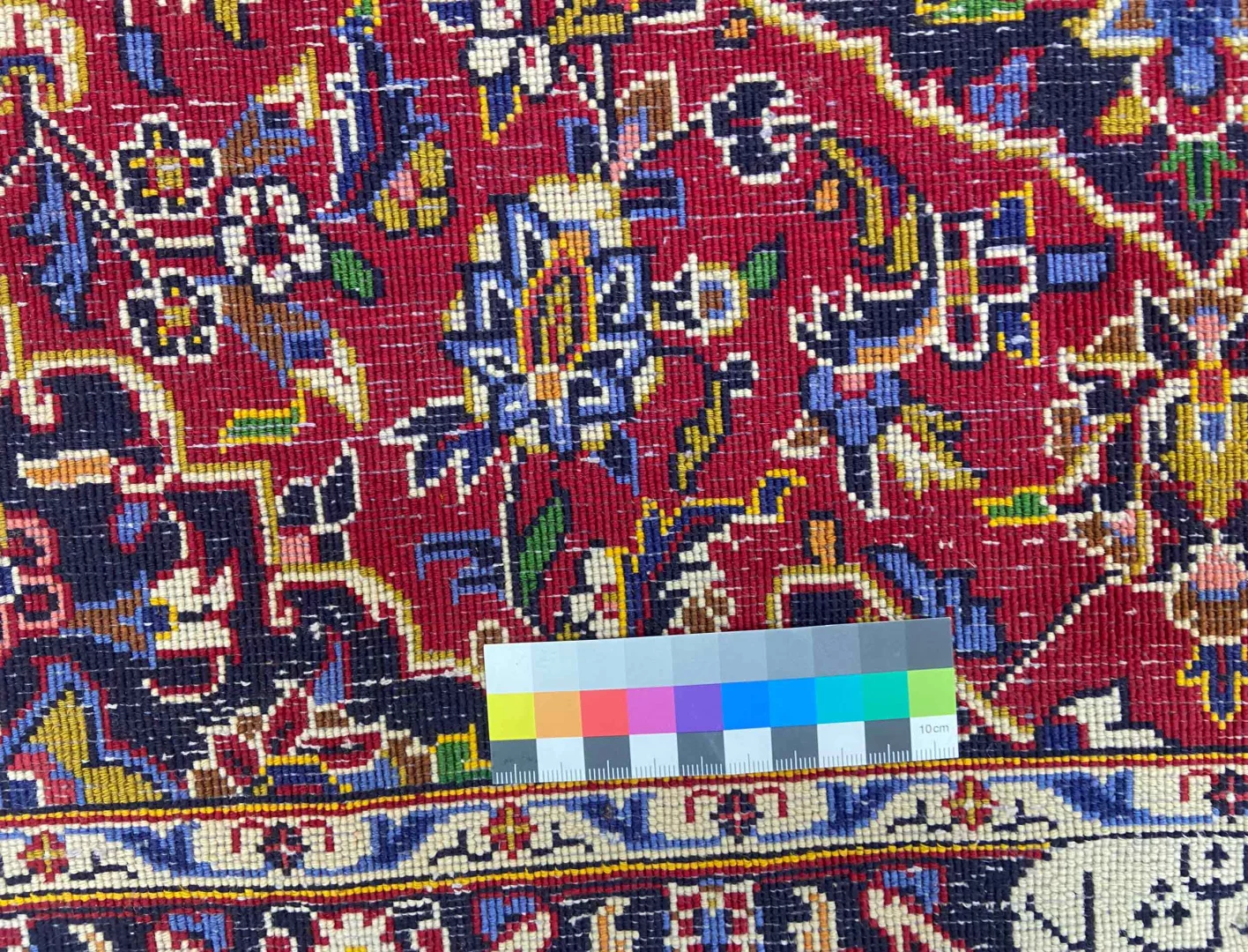
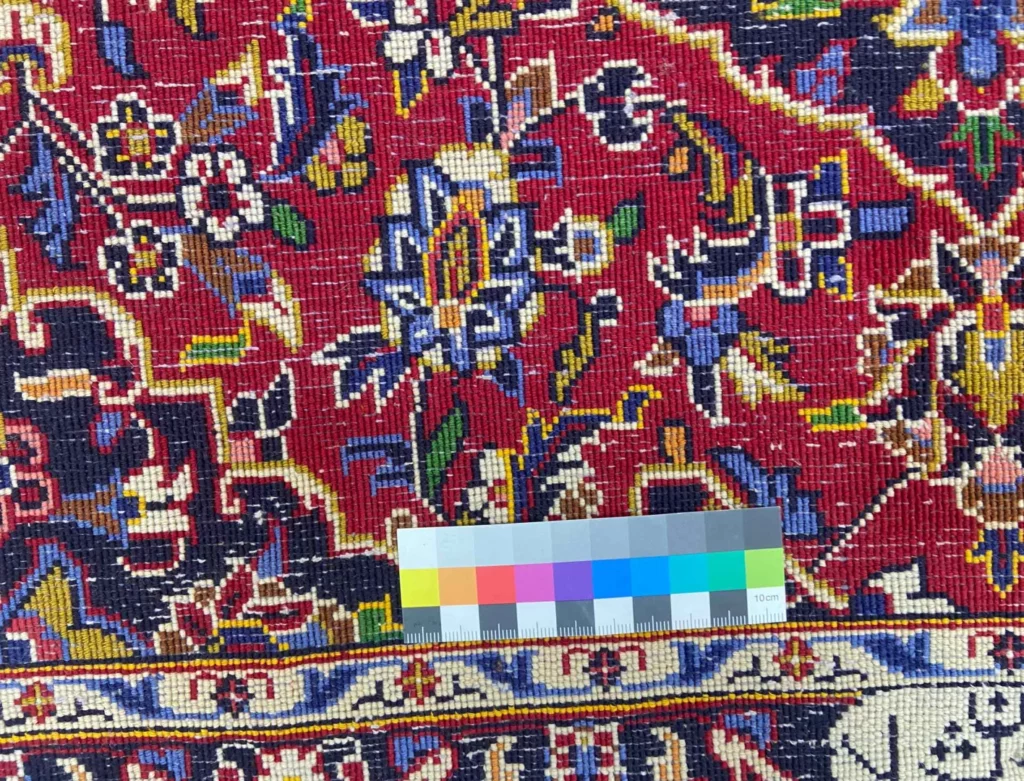
The knot density is 150,000 to 300,000 knots per square metre. A dense knot structure supports a closely formed surface and allows intricate designs to be rendered with clarity. In hand-knotting, each knot is placed individually around the prepared warp. The work is then built up row by row, with the pile being trimmed and finished as the rug progresses. This process directly connects the rug’s material, construction and pattern.
The cotton warp provides the framework into which the individual knots are tied. It helps establish the stability of the foundation and supports the shape of the finished textile. The wool pile contributes the combination of durability and softness associated with Keshan rugs. Together, the stated materials and the hand-knotted construction are intended for sustained use. The condition of this particular rug is described as excellent.
Origin and Tradition
This Keshan Persian rug comes from Iran and belongs to the carpet-making tradition of Keshan. Keshan, also written Kashan, is a city in central Iran whose name is closely associated with a distinct Persian rug tradition. Rugs from the area have become known for careful handwork, compact knotting and developed ornamental compositions. Keshan therefore identifies more than a place: it also refers to an established design and craft tradition within Iranian carpet production.
Persian carpet making brings together practical weaving knowledge and inherited systems of design. A rug is not made simply by preparing yarn and tying knots. The foundation must first be planned and stretched, and the arrangement of the field, borders and ornaments must be considered before the pattern is carried out. The knotter then follows that structure knot by knot. This method allows a traditional design to be reproduced with precision while preserving the individual character that comes from manual work.
The Keshan tradition is part of the wider history of hand-knotted rugs made in Iran. Skills such as preparing and tensioning the warp, selecting wool, building the pile and organizing a pattern have been passed through workshops and families over generations. These skills cover both the technical and visual sides of production. The result is a textile in which the regional tradition is expressed through construction as well as through ornament.
Keshan can be viewed alongside other important Iranian carpet traditions. Isfahan and Tabriz are also associated with hand-knotted rugs and carefully developed patterns. Nain and Kashan are known for refined designs and for traditions involving wool and silk. Each place has its own emphasis in terms of craft and appearance, yet all belong to the diverse culture of Iranian carpet making. Regional names help distinguish these traditions without separating them from the larger history of Persian rug production.
Persian rugs made in Iran can serve as useful textiles as well as carriers of cultural continuity. Their arrangements of colour, borders and motifs preserve visual ideas that have developed over long periods. A Keshan rug continues this tradition in a hand-knotted form intended for use in an interior. Its Iranian origin and its Keshan designation describe the regional basis of the type, while the handwork connects the individual piece to the broader history of Persian carpet craftsmanship.
Design and Pattern
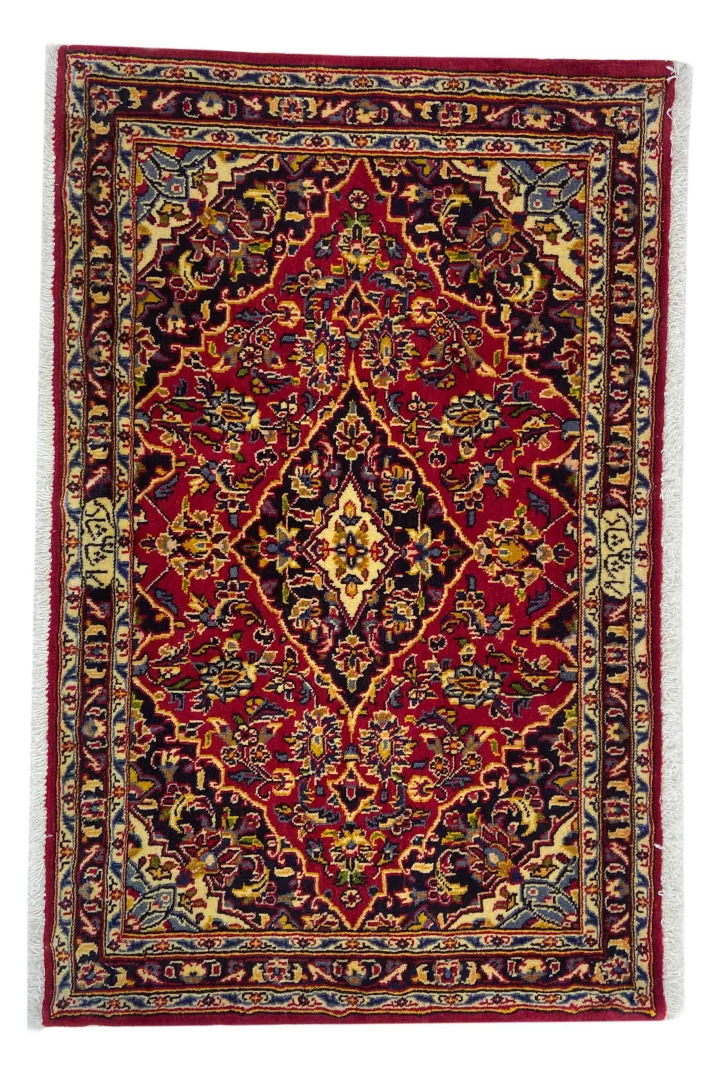
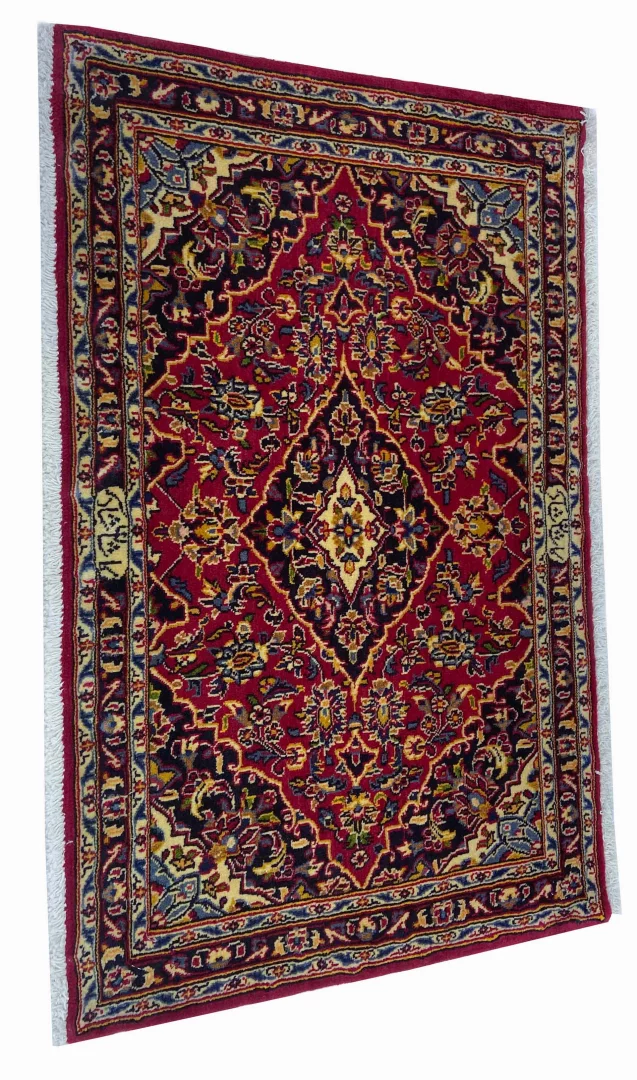
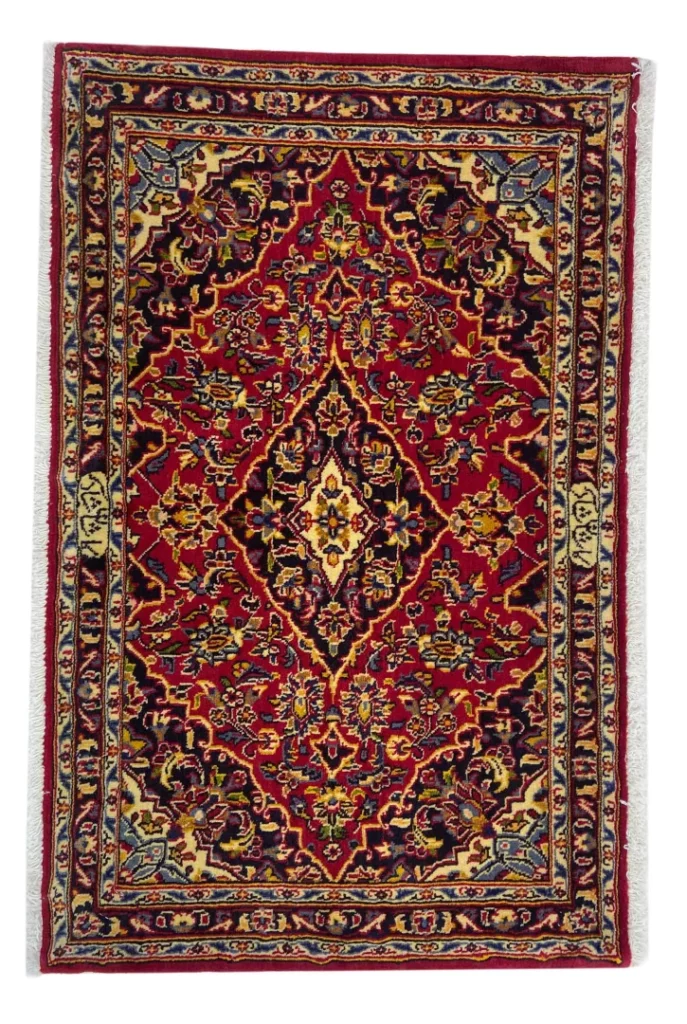
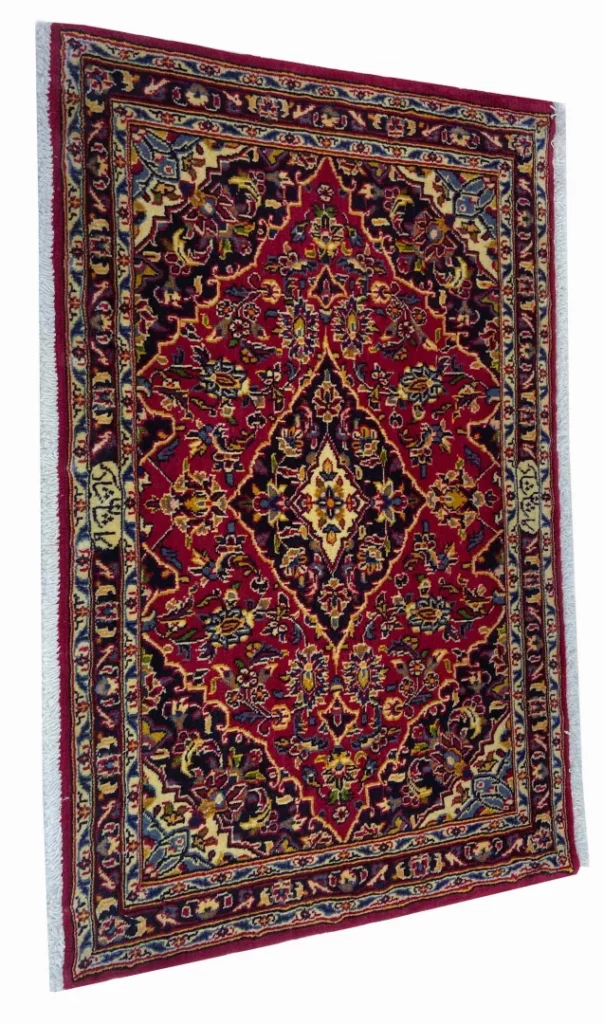
The pattern of this rug is described as classic and timeless. Keshan rugs are traditionally associated with rich colours and carefully worked designs. Their compositions often bring floral and geometric motifs together. Floral elements may suggest blossoms, leaves, vines or stylised plants. Geometric details introduce order, define transitions and give the composition a measured framework.
A classical Persian rug design commonly establishes a clear relationship between the central field and the surrounding border. The field carries the main visual arrangement, while one or more borders contain and frame it. This structure creates balance and prevents the ornaments from appearing as unrelated elements. In Keshan compositions, plant forms may be distributed across the field or organized into a symmetrical arrangement. Geometric accents can support the flowing lines of the floral motifs and clarify the overall design.
A high knot density is important when a design includes intricate details. Closely placed knots allow small motifs, narrow outlines and subtle changes in form to be represented more precisely. This does not mean that a Keshan pattern is made only from tiny elements. Large, clearly arranged forms can be combined with finer ornament, so that the design has both a recognizable overall structure and a detailed surface. The dense hand-knotting gives the pattern a precise textile expression.
Colour is an essential part of the visual language of Persian rugs. It separates the principal motifs from the ground and borders, creates hierarchy and guides the eye through the composition. In a classic design, colours work together as fields, outlines and accents rather than appearing as isolated tones. The rich colours and artistic patterns associated with Keshan rugs belong to the established tradition of the type. Their purpose is to support the organization of the design and the distinction between its various elements.
A timeless design draws on an established vocabulary instead of relying on short-lived furnishing trends. This allows a Keshan rug to be placed in different interiors while retaining its regional identity. The combination of floral movement and geometric order creates a visual balance between organic lines and structured form. Because the design is executed by hand, the pattern is not separate from the rug’s construction: every motif is formed through the placement of knots within the woven foundation.
Special Features
The particular features of this rug are its hand-knotted construction, sheep-wool pile, cotton warp and dense knotting. Its condition is stated as excellent. The combination of careful workmanship and high-quality materials reflects the durability and longevity for which Keshan rugs are valued. It can therefore be understood both as a decorative element and as a practical textile for an interior.
Care consists of regular vacuuming and occasional professional cleaning. Direct sunlight should be avoided because it can cause the colours to fade. Gentle, consistent care helps preserve the pile and the appearance of the colours. Collectors and rug enthusiasts also value Keshan rugs for their craft tradition, their patterns and the quality of the materials used in their making.
FAQ
How should I care for my Keshan Persian rug?
Vacuum the rug regularly so that dust and loose dirt do not remain in the pile. Occasional professional cleaning is also recommended. Keep the rug out of direct sunlight, since prolonged exposure can fade its colours. Care should be carried out gently and consistently to preserve the surface, the colour impression and the excellent condition described for this hand-knotted rug.
What sizes are available for Keshan Persian rugs?
Keshan Persian rugs are made in a range of sizes. The selection extends from small runners to large room-sized rugs, allowing them to be used in different interior settings. The appropriate size depends on the room and the intended placement. The Keshan origin, hand-knotted construction and classic design tradition remain characteristics of the rug type regardless of the format.
What makes a Keshan Persian rug particularly valuable?
Keshan rugs are valued for the combination of high-quality wool, dense knotting and traditional hand craftsmanship. Their construction supports detailed patterns and contributes to durability. For collectors, the age and quality of an individual rug can also be significant. Well-preserved examples are therefore appreciated not only for their appearance, but also for the craft knowledge, material quality and cultural tradition represented by them.
To provide the best experiences, we use technologies like cookies to store and/or access device information. Consenting to these technologies will allow us to process data such as browsing behavior or unique IDs on this site. Not consenting or withdrawing consent, may adversely affect certain features and functions.
Functional Always active
The technical storage or access is strictly necessary for the legitimate purpose of enabling the use of a specific service explicitly requested by the subscriber or user, or for the sole purpose of carrying out the transmission of a communication over an electronic communications network.
Preferences
The technical storage or access is necessary for the legitimate purpose of storing preferences that are not requested by the subscriber or user.
Statistics
The technical storage or access that is used exclusively for statistical purposes.The technical storage or access that is used exclusively for anonymous statistical purposes. Without a subpoena, voluntary compliance on the part of your Internet Service Provider, or additional records from a third party, information stored or retrieved for this purpose alone cannot usually be used to identify you.
Marketing
The technical storage or access is required to create user profiles to send advertising, or to track the user on a website or across several websites for similar marketing purposes.
 SECURE PAYMENT
 SHIPPING PARTNERS


