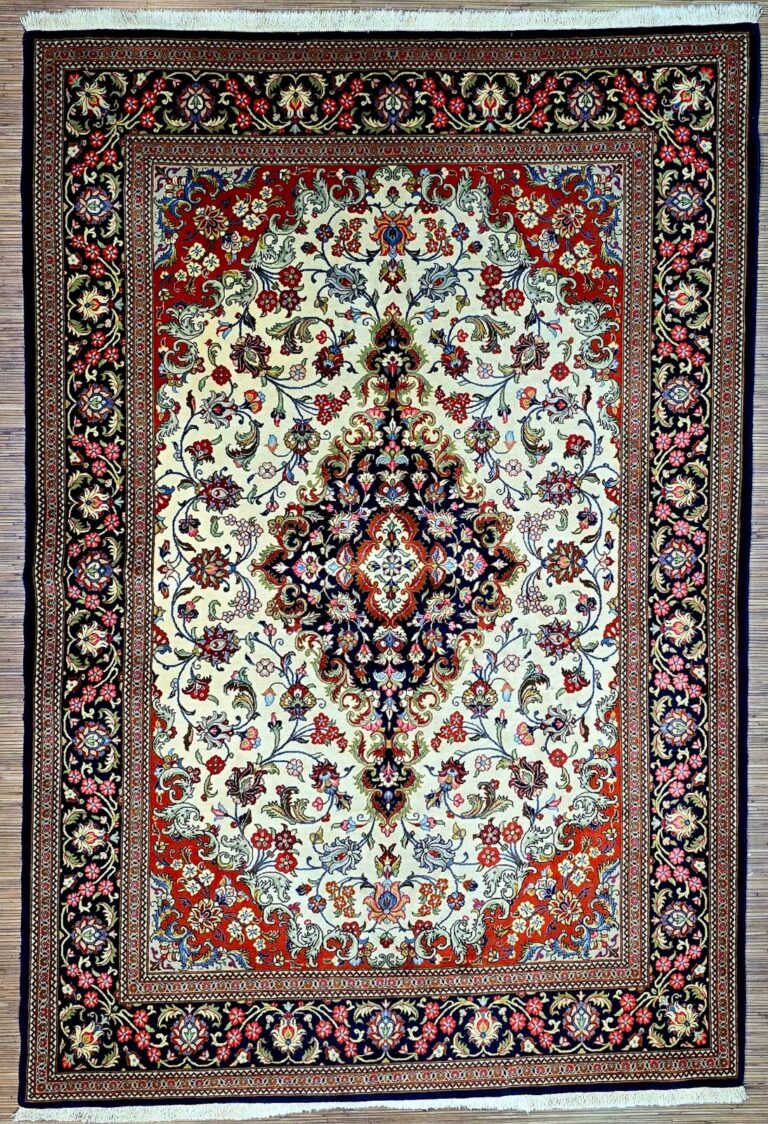
This Keshan Persian rug is hand-knotted. Its pile is made from high-quality sheep wool, while cotton is used for both the warp and the weft. This combination belongs to the established material traditions of Persian rug making. Wool gives the visible surface a resilient, tactile character, while cotton provides a stable textile foundation within the construction. Together, the materials create a clearly structured rug with a natural hand.
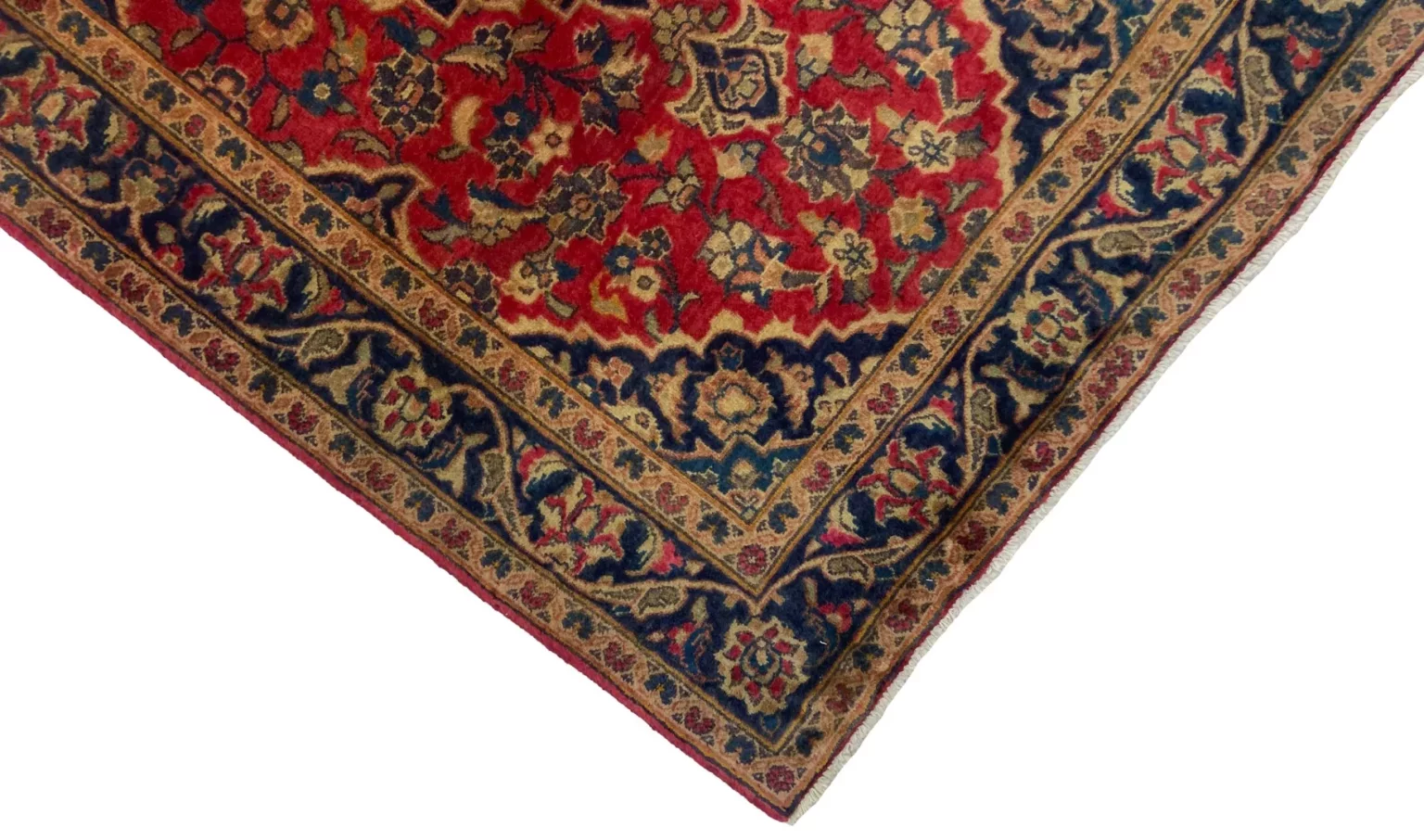
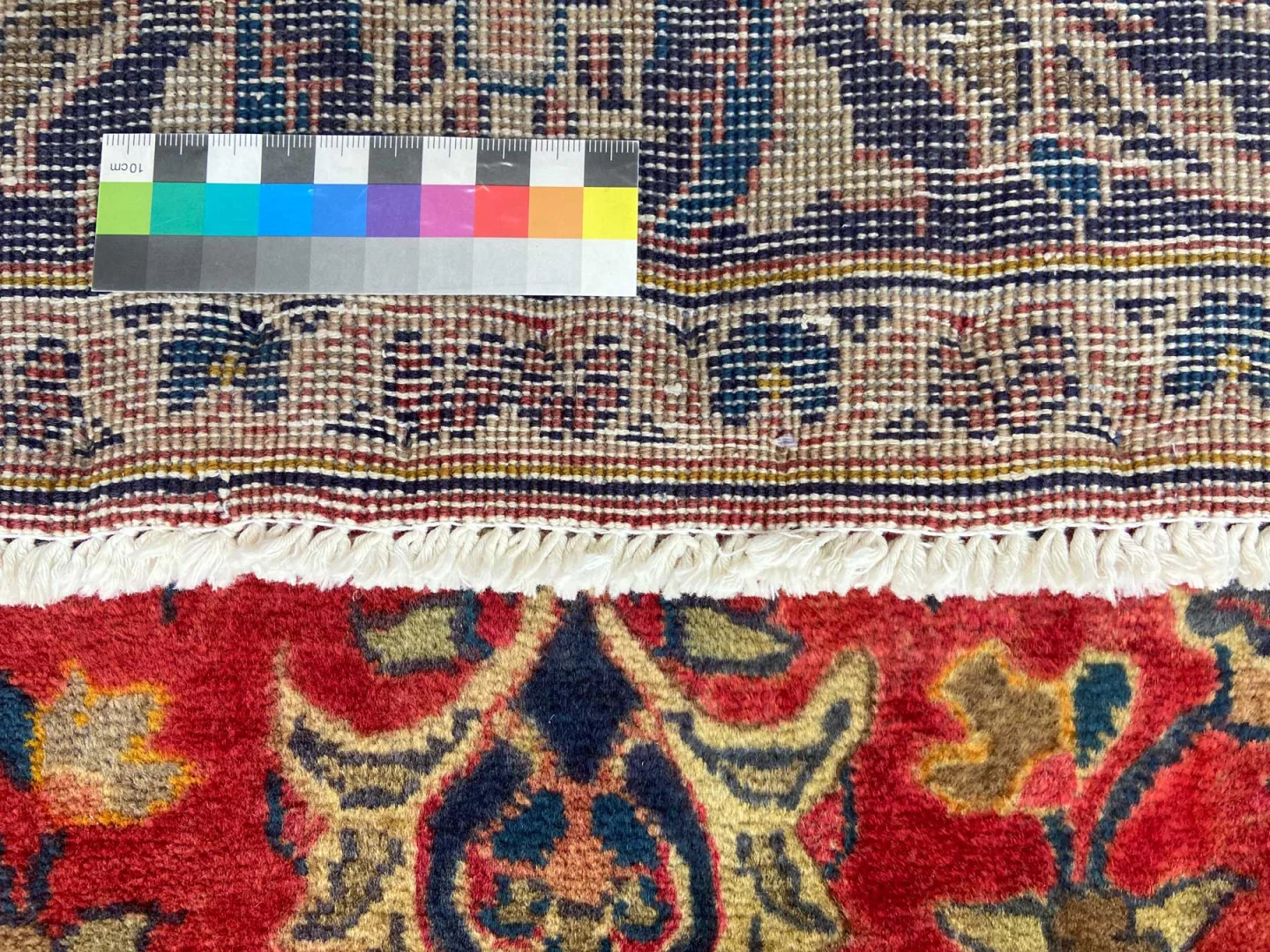
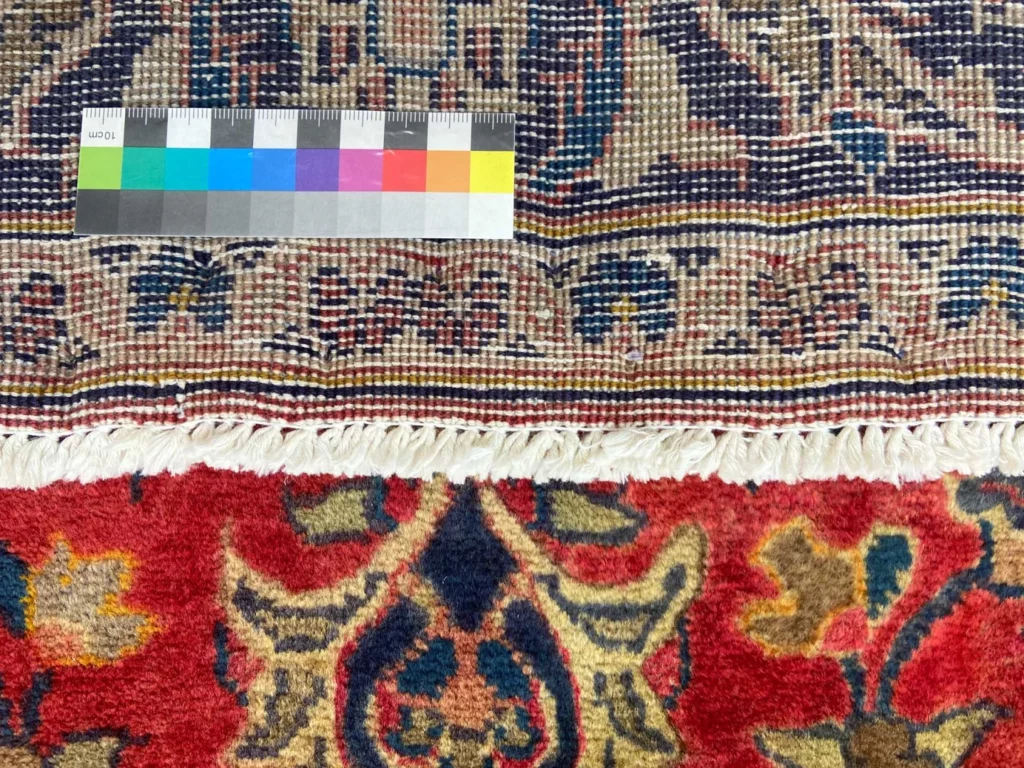
The knot density of this rug is between 150,000 and 300,000 knots per square metre. In hand-knotting, each knot is placed individually around the prepared warp threads and secured through the insertion of weft. This method allows outlines, small ornaments and transitions between colour areas to be worked out with precision. It also gives a hand-knotted surface its distinctive textile structure, which differs from that of a mechanically produced floor covering.
The sheep wool is specified for the pile, and cotton is specified for the warp and weft. Wool is well suited to receiving colour and can produce a surface with subtle changes in appearance as the pile catches the light. Cotton is commonly used for the structural threads of Persian rugs because it provides an even basis for knotting. In this rug, therefore, a woollen pile is combined with a cotton foundation in a traditional construction.
The rug is described as hard-wearing and very well preserved. These statements concern the condition and stated character of this individual piece. Its hand-knotted construction, wool pile and cotton foundation are the principal material features. They also explain why the rug can combine a practical textile structure with a carefully detailed design.
Origin and Tradition
Keshan is a region in Iran associated with a long-established tradition of Persian rug making. The name Keshan refers to this regional tradition. In its workshops, rugs have been made across generations as useful household textiles as well as carefully designed works of craftsmanship. The knowledge involved includes preparing the warp, planning colour relationships, transferring the design and finishing the pile after the knotting is complete.
A Persian rug is not created simply by placing knots in isolation. The process begins with a stretched warp that forms the framework of the piece. Weft is then inserted, and coloured pile threads are knotted according to the planned design. Row by row, the image takes shape. Once knotting has finished, the pile is worked so that the drawing becomes legible and the surface gains an even textile appearance.
The Keshan tradition demonstrates how technical discipline and ornament can be joined in one object. A design is organised through fields, borders, repeated motifs and directional lines. The weaver must transfer that order into the scale of the rug while maintaining spacing, alignment and colour balance. This is particularly important in detailed compositions, since a small change in the placement of a knot can affect the continuity of a contour or the rhythm of a repeated ornament.
Persian rug culture developed in many different regions, each with preferences in colour, composition and technique. Keshan is one of the recognised names within that wider culture. Keshan rugs are commonly associated with balanced compositions and carefully elaborated ornament. This regional background describes the tradition of the rug type; it does not add any separate claim about the particular materials, condition or individual design beyond the information given for this rug.
The history of Persian rugs also includes many different settings and uses. Rugs have been used to organise living areas, define seating spaces and furnish formal interiors. Their patterns are not merely surface decoration: they express the visual vocabulary of the region in which they were made. Hand-knotting continues to be valued as a form of textile heritage, with the basic relationship between warp, weft, knot and pile remaining central to the craft.
Other well-known Persian rug centres show the breadth of this tradition. Tabriz is often associated with detailed drawing and lively colour. Isfahan is known for finely worked rugs and is frequently connected with the use of silk. Nain and Kashan also represent important strands of Persian rug making. These names refer to separate regional traditions and are not additional origins for this Keshan rug.
Design and Pattern
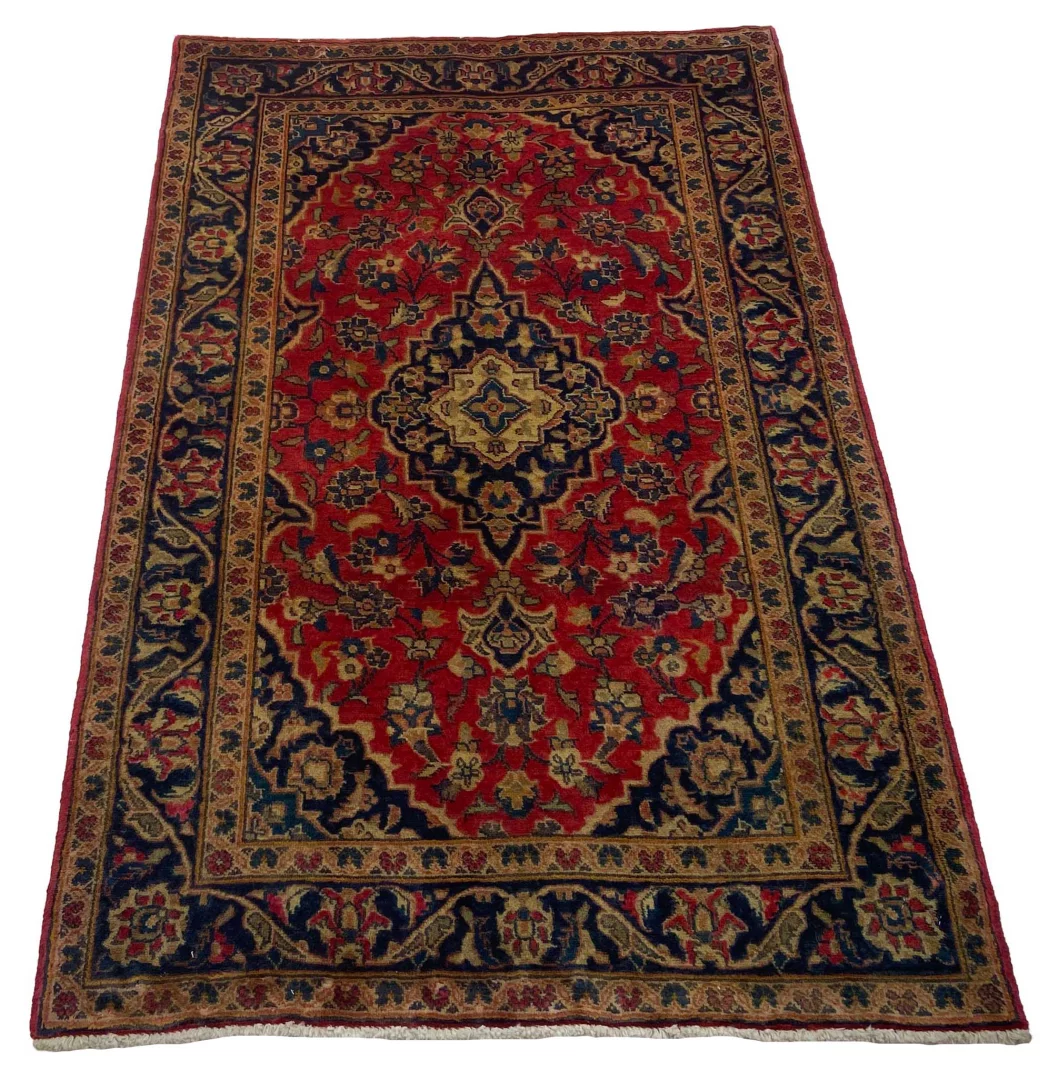
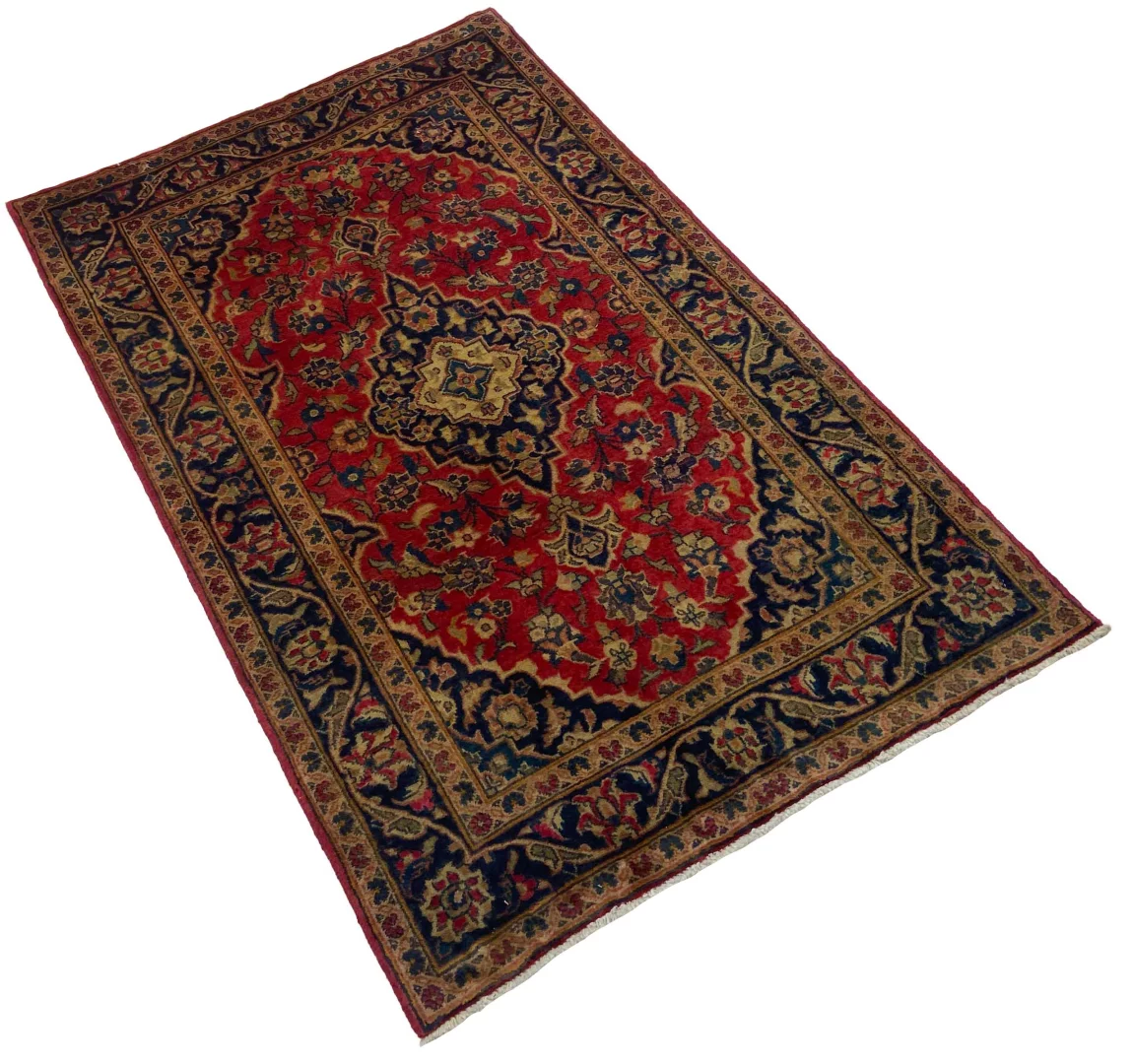
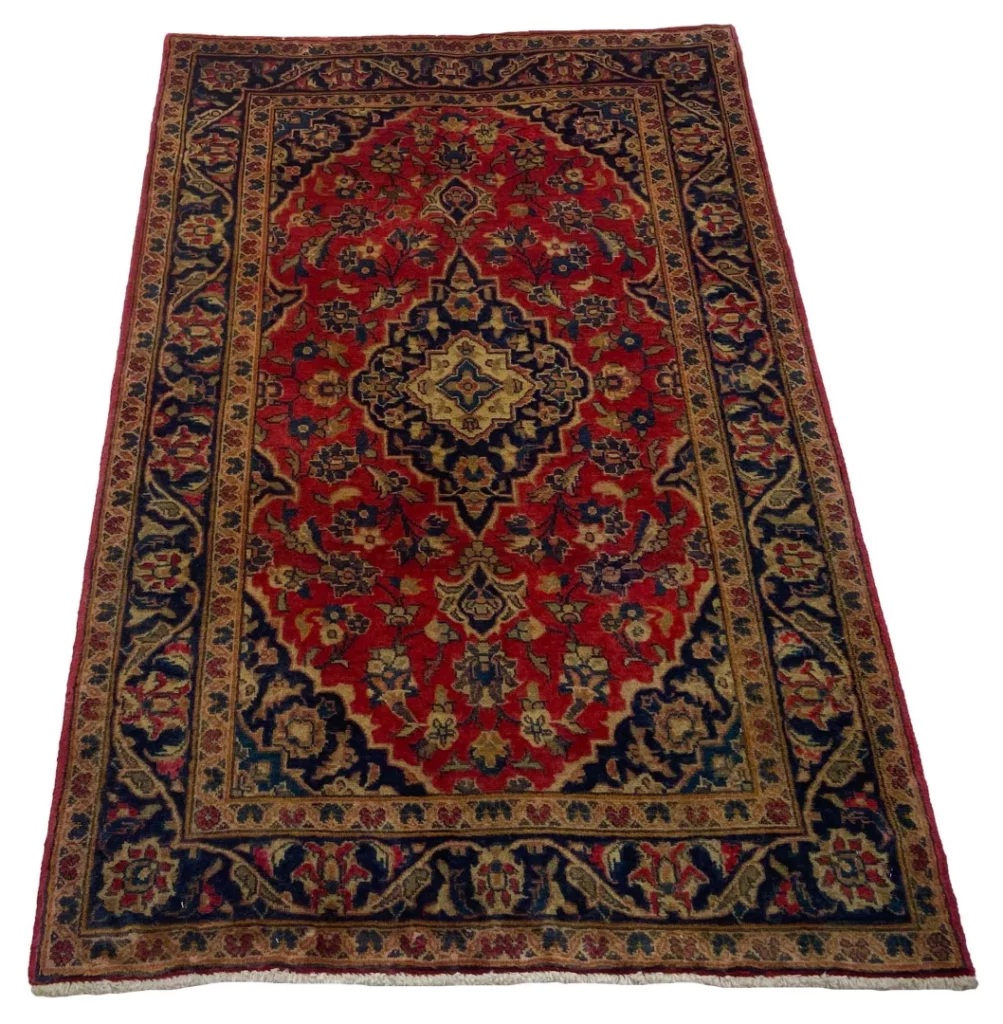
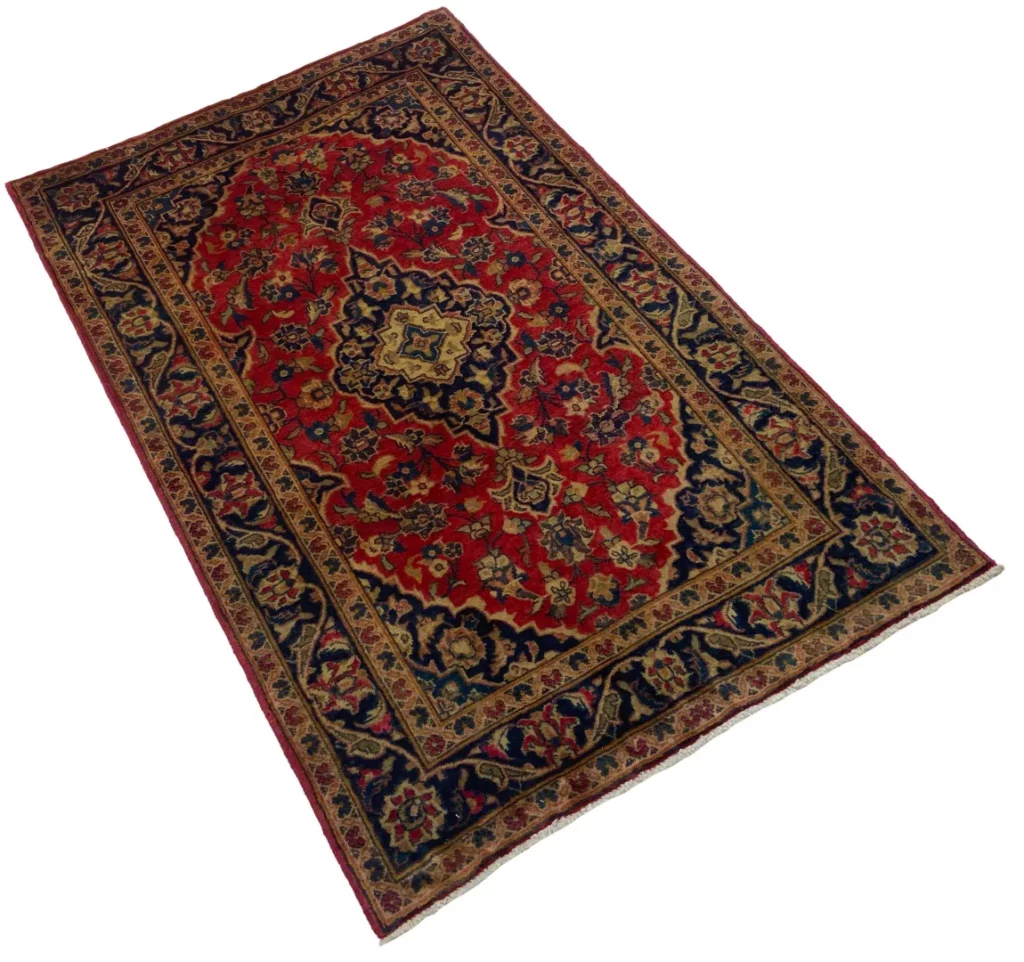
The pattern of this rug is described as classic and detailed. Keshan rugs are traditionally associated with floral and geometric motifs. Floral forms may include leaves, blossoms, vines and stylised plant shapes. Geometric elements establish clear axes, repetition and boundaries. These two visual languages can work together within one composition, creating a surface that is ordered while still richly articulated.
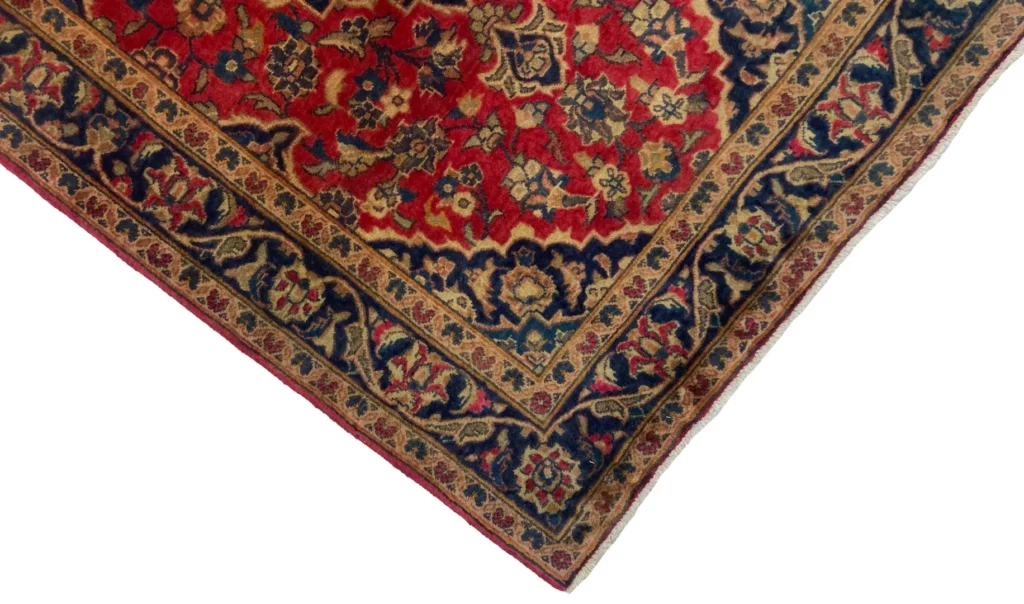
In classic Persian rug design, the division between the central field and the border is important. The field forms the main area of the composition, while one or more borders frame it and continue the ornamental language along the edges. Depending on the design, medallions, scrolling vines, floral arrangements or regularly repeated geometric forms may guide the structure. Detailed drawing emerges from the interaction of many small knots and carefully coordinated colour outlines.
Floral ornaments in Persian rug design are generally stylised interpretations of nature rather than scientific botanical representations. Leaves can accompany a vine, blossoms can provide visual accents, and fine lines can connect separate parts of the pattern. Geometric motifs add repetition, symmetry and visual control. The result is a decorative vocabulary in which natural forms and measured arrangement support one another.
Colour relationships are traditionally planned with care in Persian rugs. Keshan designs are often described through warm tones, deep red, soft blue and touches of gold. These colour directions belong to the general visual tradition associated with the described Keshan type. They can make floral motifs more legible, distinguish the field from the borders and give the composition a coherent order. The wool pile also affects the colour impression because its surface reflects light with a natural variation rather than as a completely flat plane.
A detailed pattern requires an accurate transfer from the design into the knotting process. Contours need to remain connected across successive rows, repeated ornaments need consistent spacing, and small colour areas must close at the intended points. The stated knot density supports the rendering of fine details in this type of rug. This does not mean that the design is read knot by knot; rather, the clarity of the image results from the combined placement of many individual knots.
Classic Keshan designs therefore bring together decorative order and a regional design vocabulary. They can structure an interior without being reduced to one isolated motif. For this piece, the relevant description is its classic, detailed Keshan pattern with the floral and geometric language associated with the tradition. No further individual symbol or precise composition is specified, so none is added here.
Special Features
The notable features of this rug are its hand-knotted construction, its high-quality sheep-wool pile and the cotton used for the warp and weft. The stated knot density ranges from 150,000 to 300,000 knots per square metre. Together, these characteristics connect a traditional making process with a carefully detailed pattern.
The rug is described as hard-wearing and very well preserved. In keeping with its stated condition, it can be used in regularly occupied rooms. Care should take account of the wool pile and the hand-knotted structure. Regular gentle vacuuming and occasional wiping with a damp cloth are recommended. For more extensive treatment, professional cleaning is appropriate because it can take the wool, colours and construction into consideration.
The identity of this Persian rug comes from the combination of Keshan tradition, classic ornament and the material relationship between wool and cotton. Origin, craftsmanship, pattern and condition remain distinct parts of the description, and together they define the particular piece offered here.
FAQ
How should I clean a Keshan Persian rug?
A Keshan Persian rug should be vacuumed gently on a regular basis so that dust and loose particles do not remain in the pile. The surface can occasionally be wiped with a damp cloth. Moisture should be used sparingly, and the pile should not be scrubbed aggressively. For a thorough cleaning, professional rug cleaning is recommended because it can account for the properties of sheep wool, the colours and the hand-knotted construction.
Where do Keshan Persian rugs come from?
Keshan Persian rugs come from the Keshan region of Iran. Traditional knotting techniques have been practised there for centuries. The regional production is associated with experienced craftspeople, carefully chosen materials and an established design vocabulary. The name Keshan therefore identifies a Persian rug tradition with its own history of pattern and workmanship.
What makes a Keshan Persian rug distinctive?
Distinctive features include the combination of high-quality sheep wool in the pile and cotton in the warp and weft, the hand-knotted construction and the stated knot density. Classic, detailed designs using floral and geometric motifs are also part of its recognised visual character. This particular rug is additionally described as hard-wearing and very well preserved.
To provide the best experiences, we use technologies like cookies to store and/or access device information. Consenting to these technologies will allow us to process data such as browsing behavior or unique IDs on this site. Not consenting or withdrawing consent, may adversely affect certain features and functions.
Functional Always active
The technical storage or access is strictly necessary for the legitimate purpose of enabling the use of a specific service explicitly requested by the subscriber or user, or for the sole purpose of carrying out the transmission of a communication over an electronic communications network.
Preferences
The technical storage or access is necessary for the legitimate purpose of storing preferences that are not requested by the subscriber or user.
Statistics
The technical storage or access that is used exclusively for statistical purposes.The technical storage or access that is used exclusively for anonymous statistical purposes. Without a subpoena, voluntary compliance on the part of your Internet Service Provider, or additional records from a third party, information stored or retrieved for this purpose alone cannot usually be used to identify you.
Marketing
The technical storage or access is required to create user profiles to send advertising, or to track the user on a website or across several websites for similar marketing purposes.

 SECURE PAYMENT
 SHIPPING PARTNERS