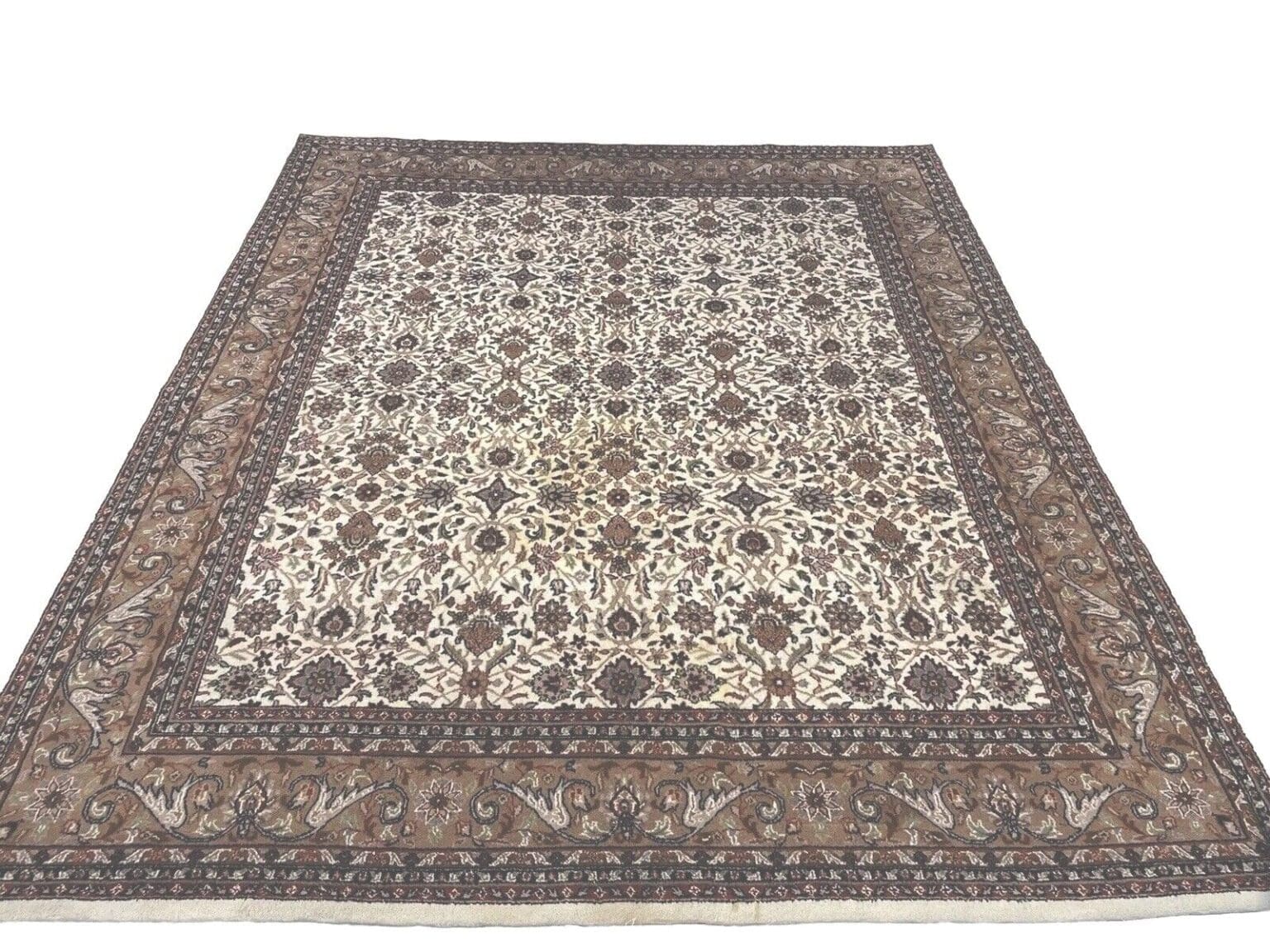
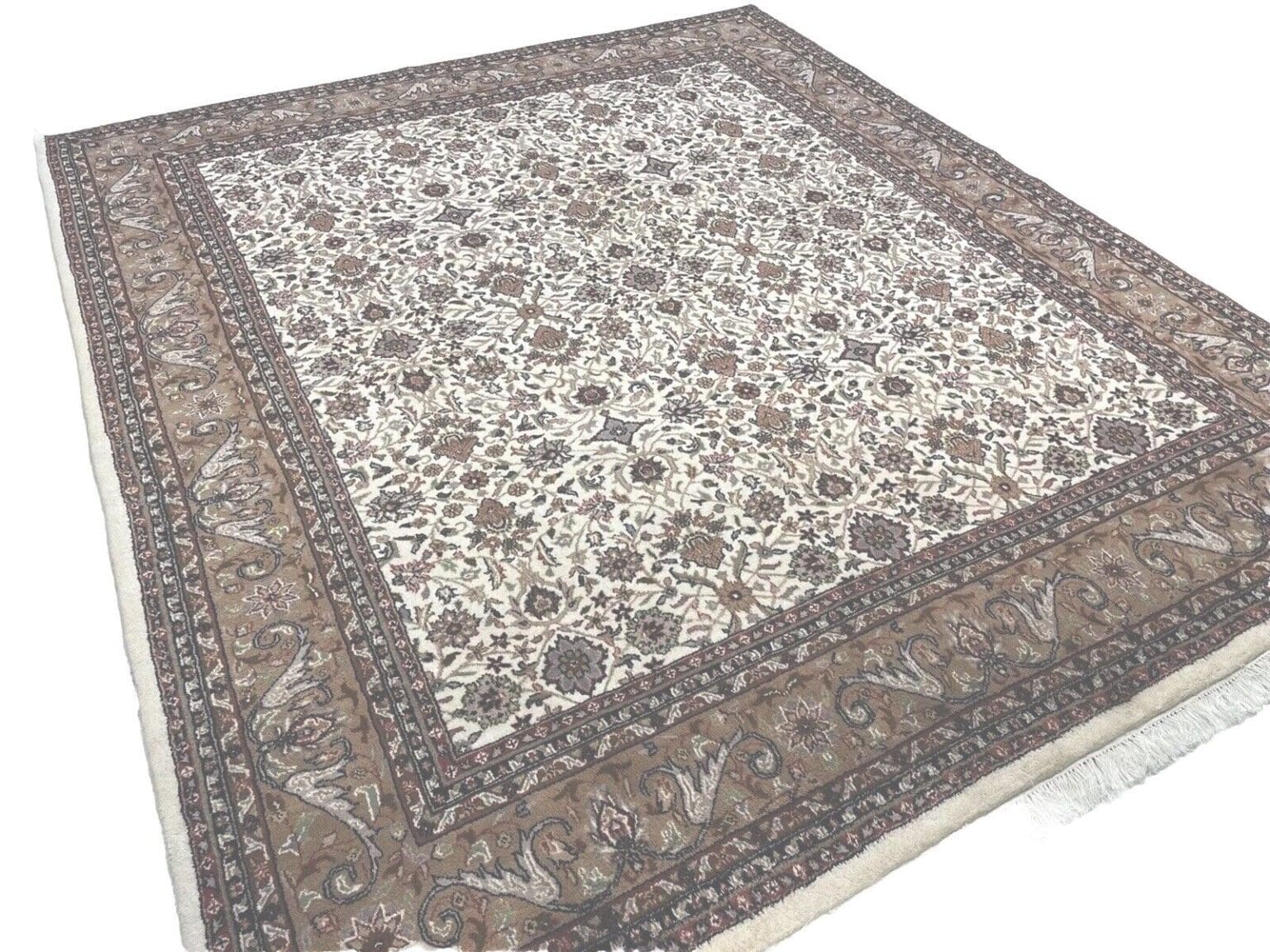
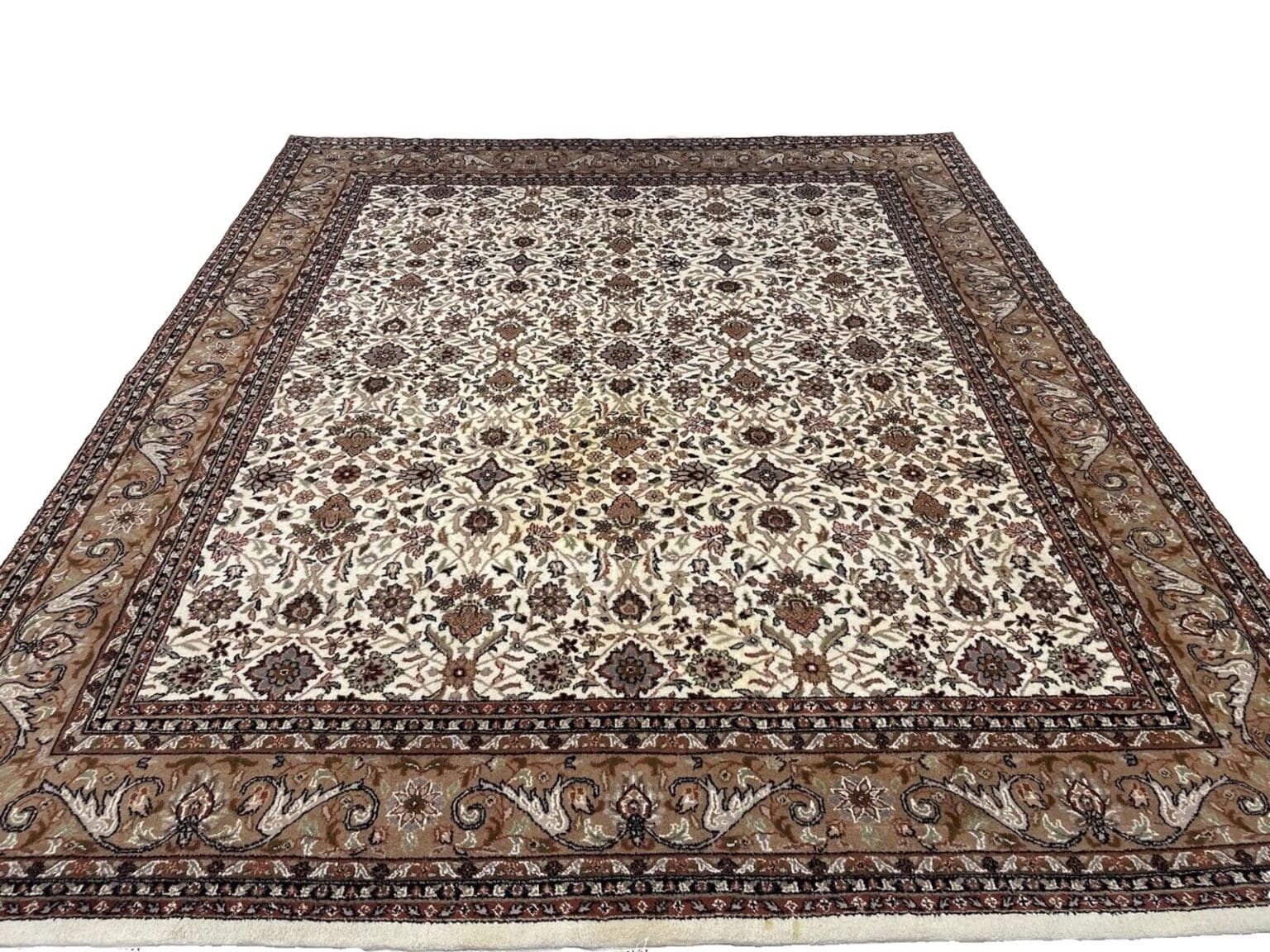
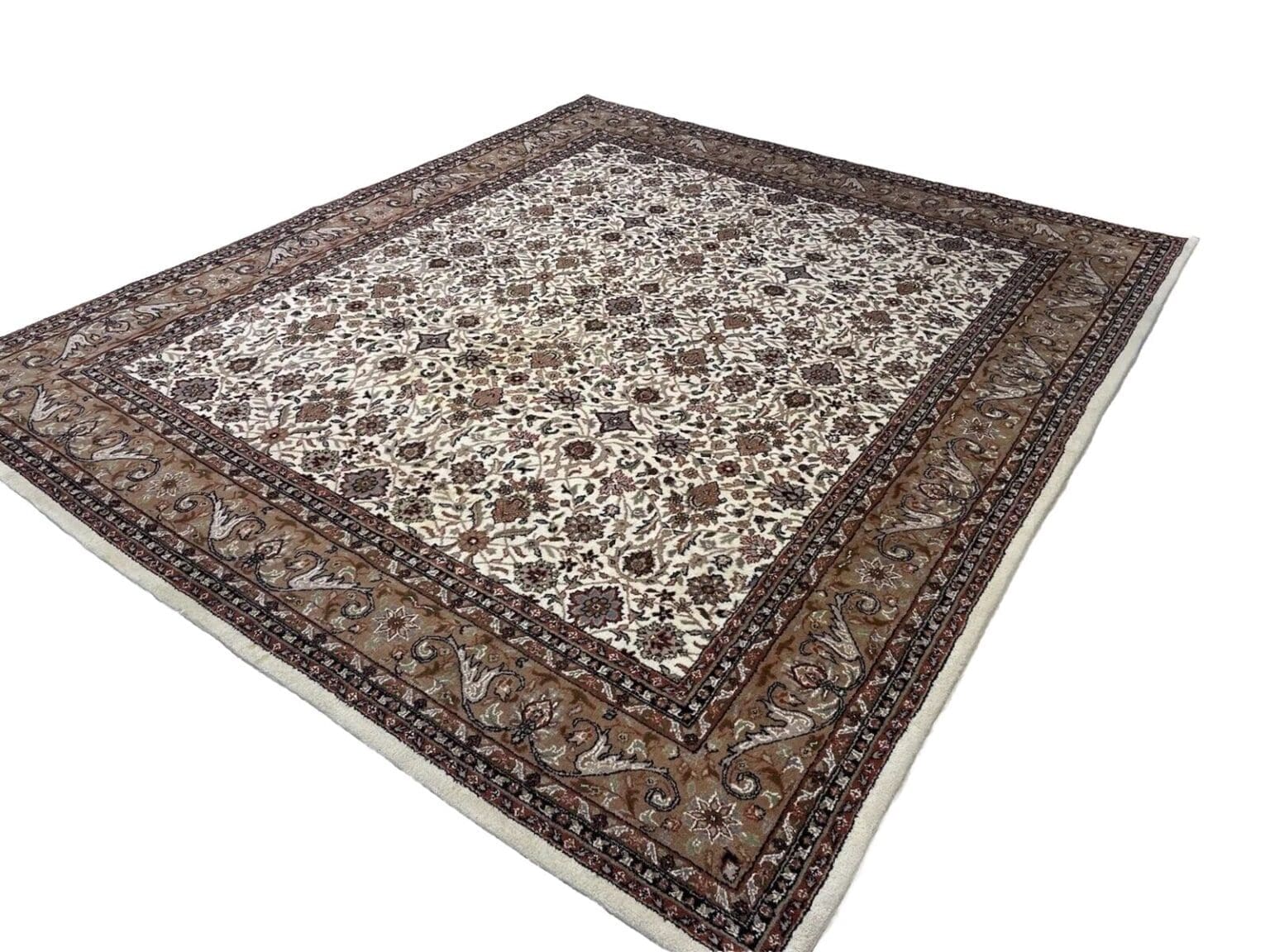
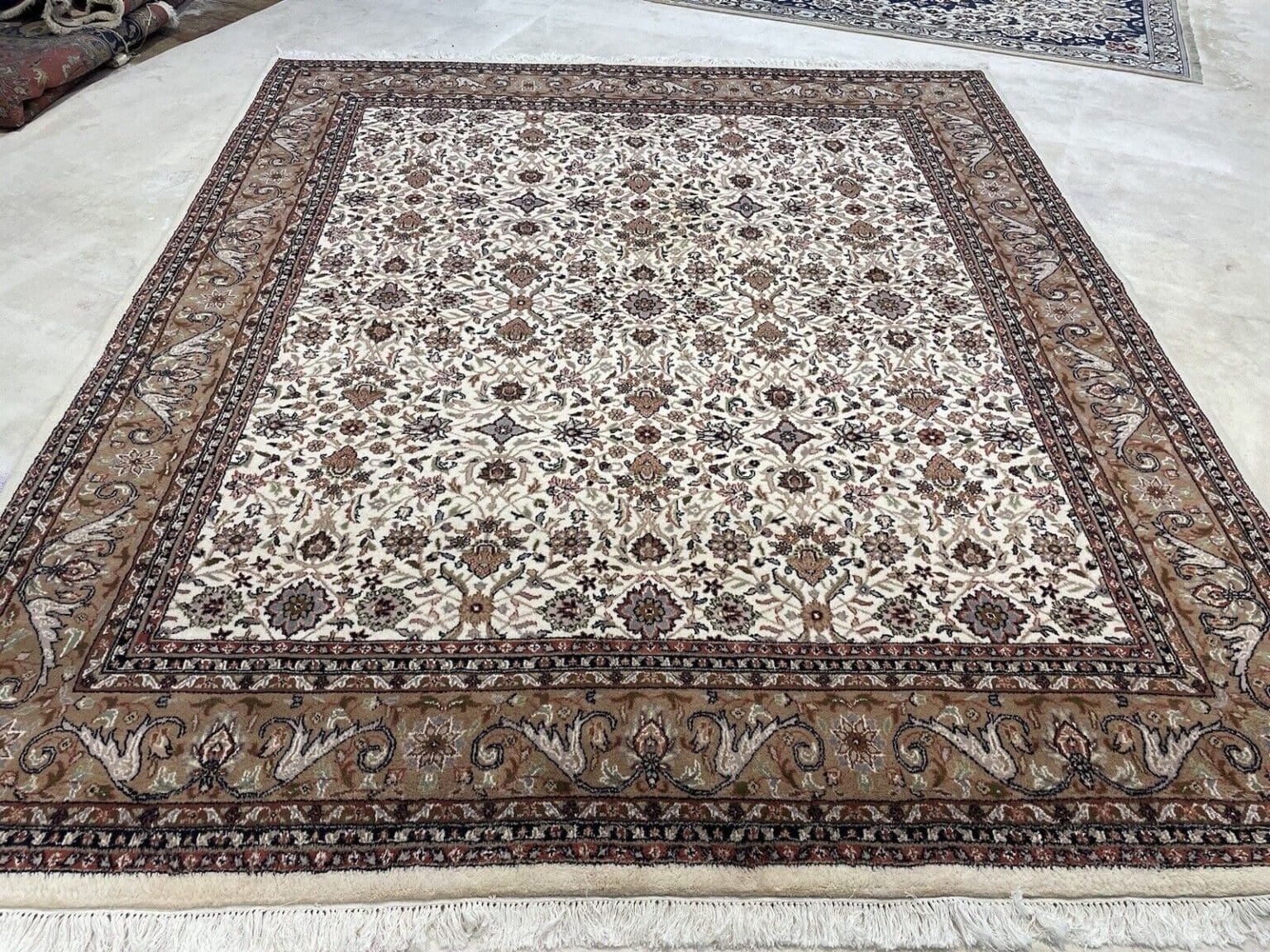
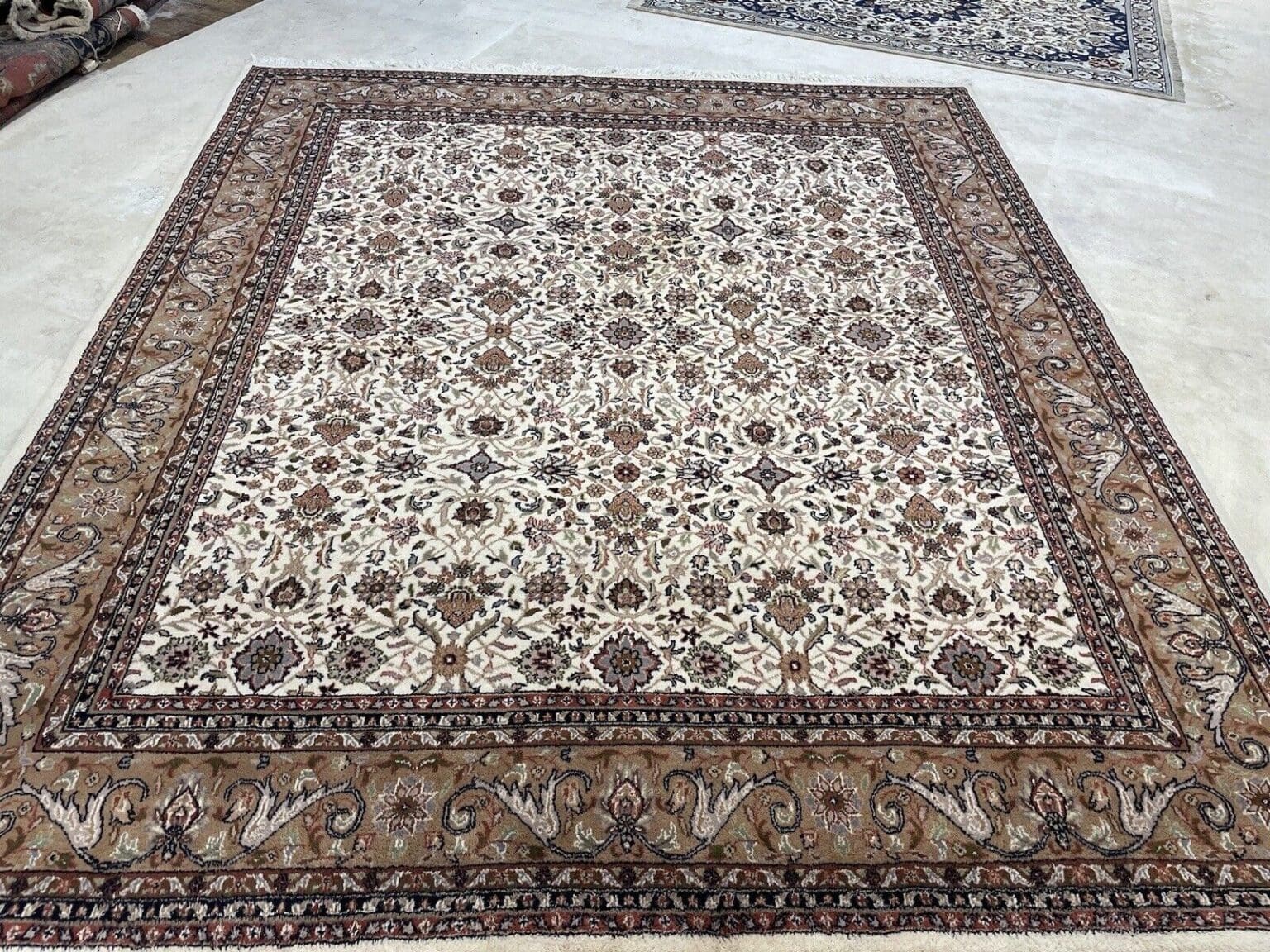
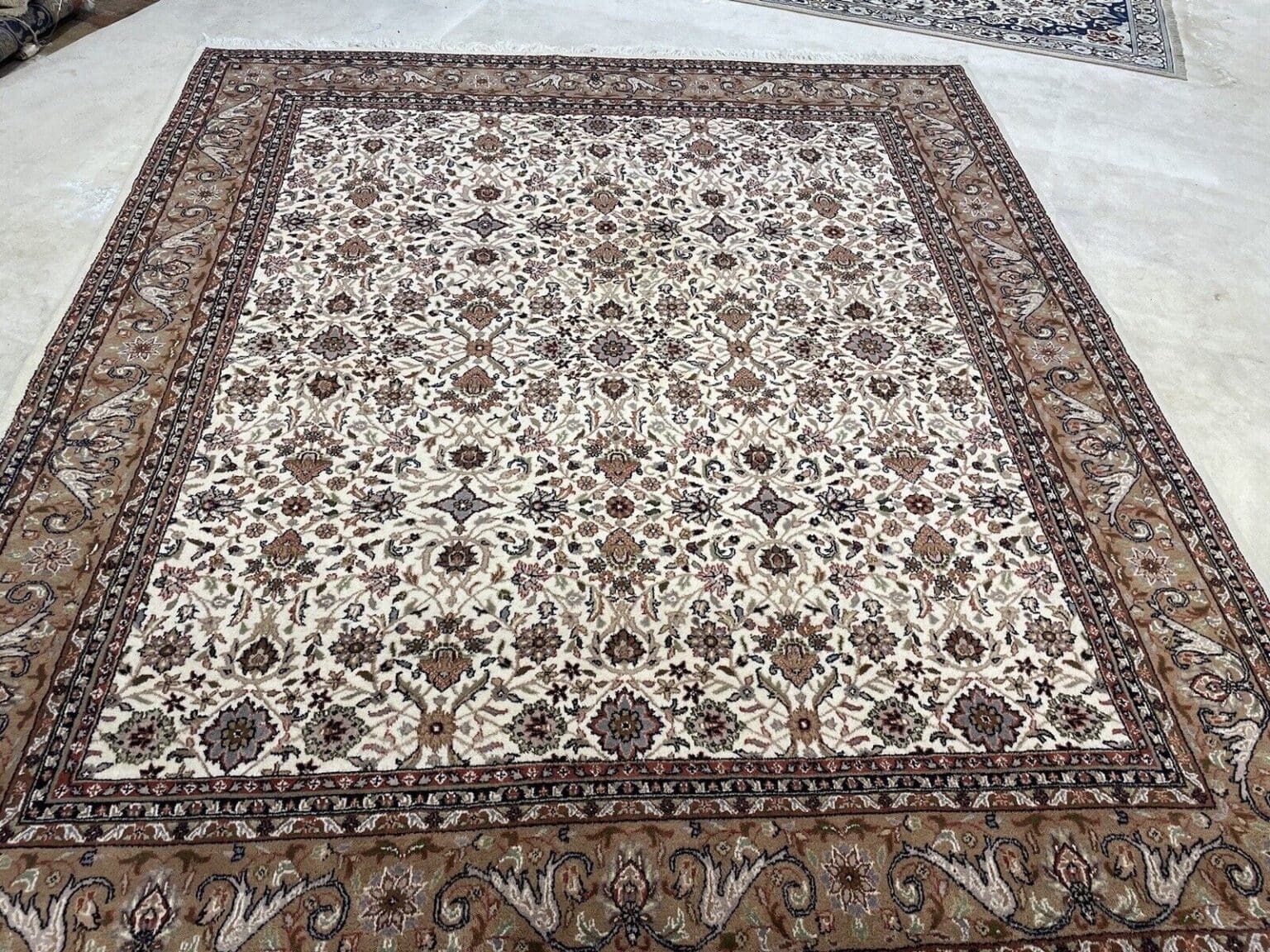
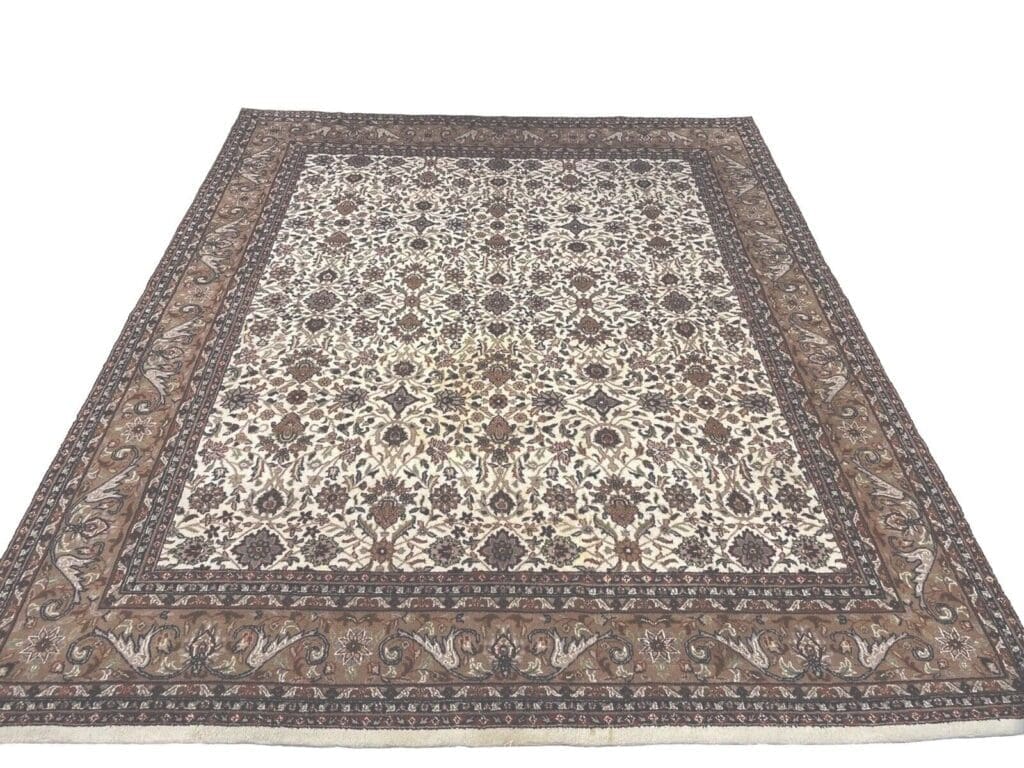
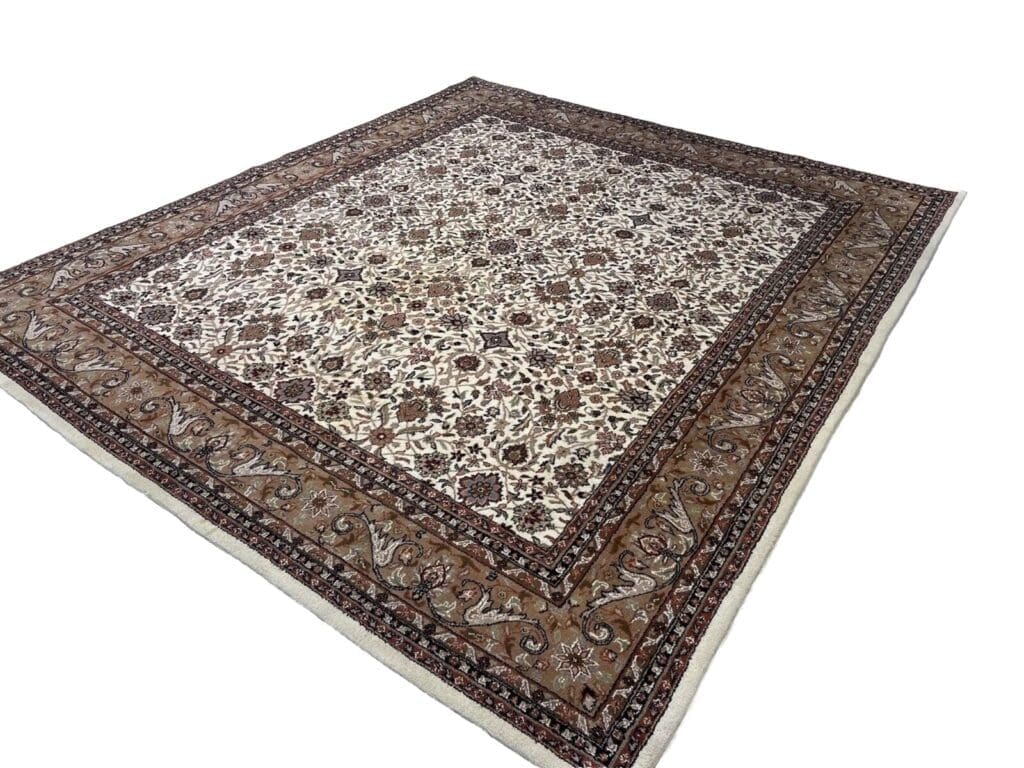
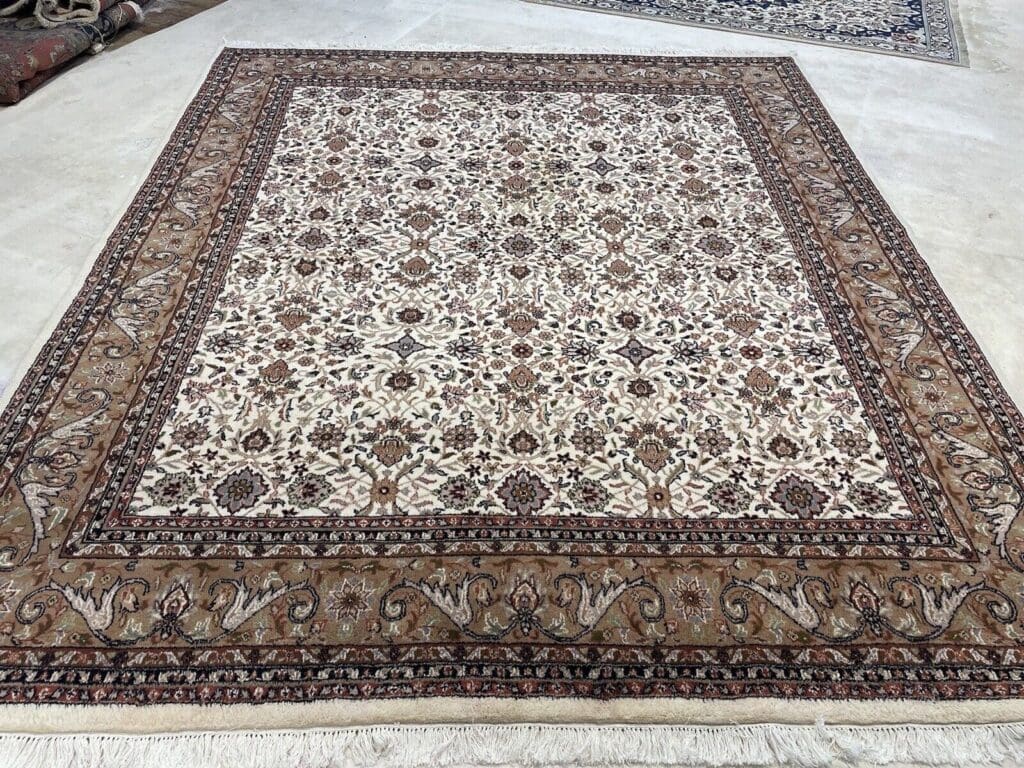
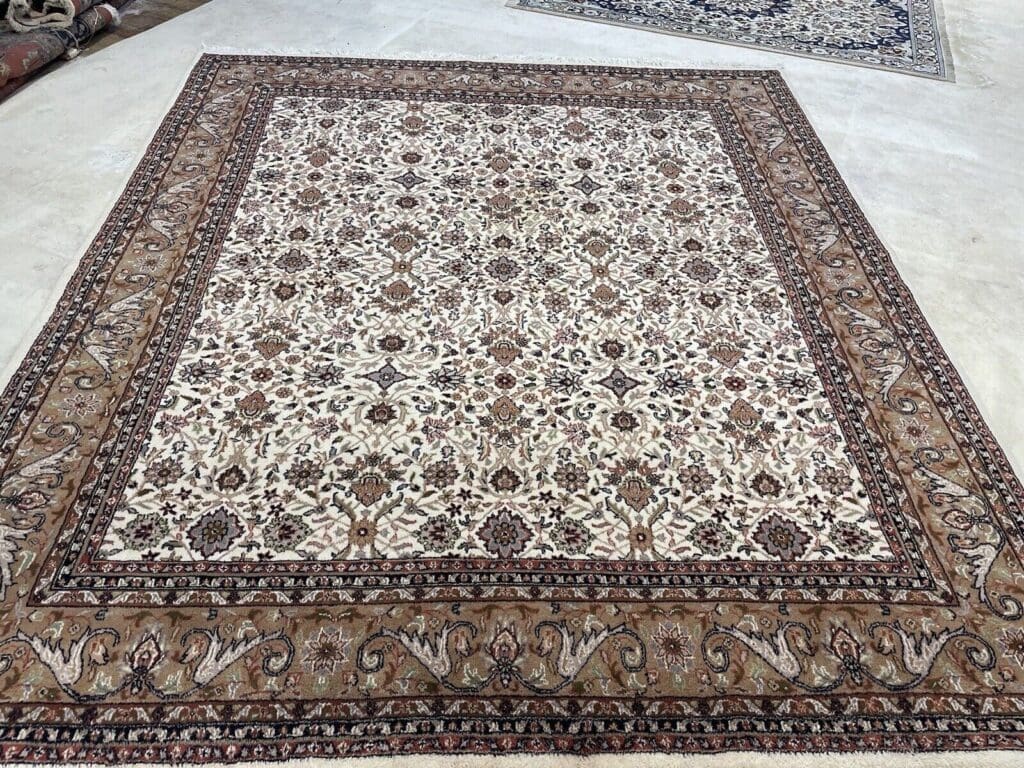
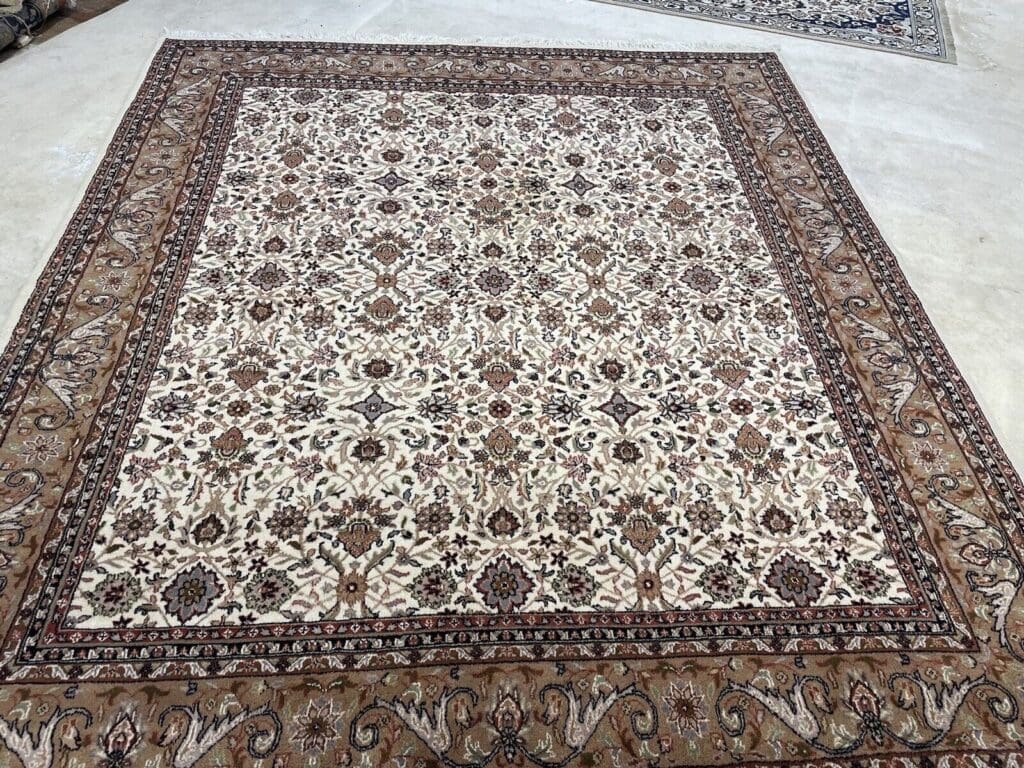
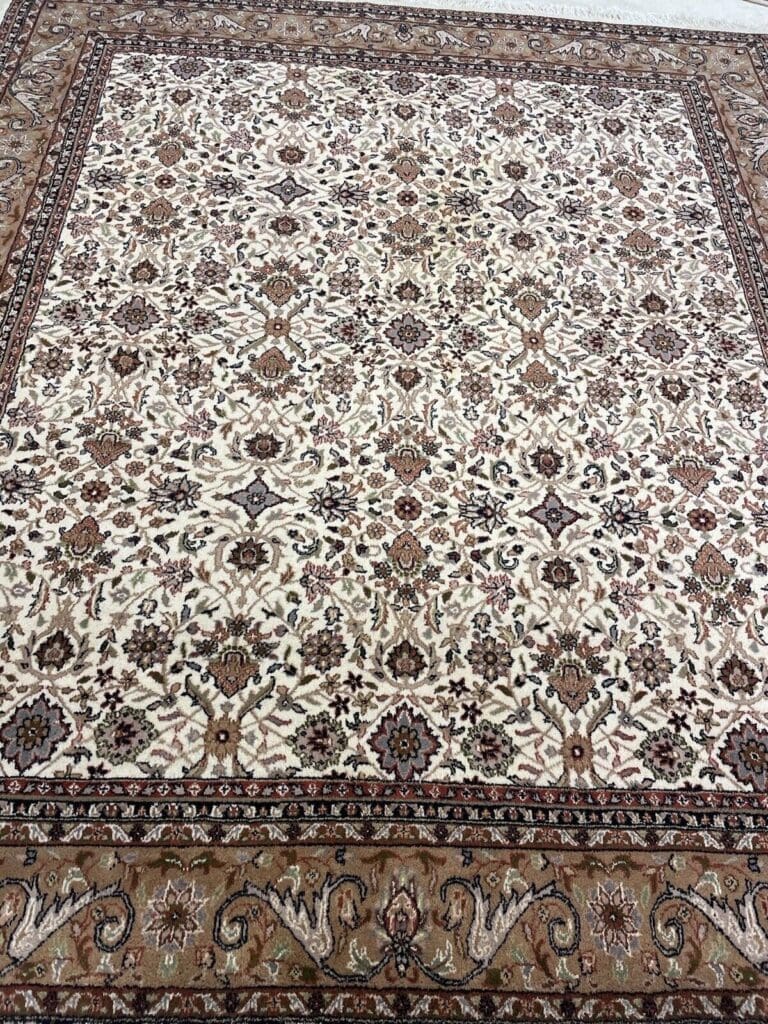
Hand-knotted Kashmir Persian rug | Material: Wool pile, cotton warp, 10 mm pile height | Size: 300×250 cm | Pattern: Traditional Persian and Oriental | Condition: New without label | Suitable for: Underfloor heating
This Kashmir Persian rug is hand-knotted with a pile made from high-quality virgin wool and a cotton warp. The combination brings together the natural character of wool with a firm textile foundation. Virgin wool is known for its robust nature and relatively easy care. It provides a pleasant handle while offering qualities that make it suitable for regular use in living spaces.
Wool can insulate against both cold and heat, helping to create a balanced feel in a room. It also has naturally temperature-regulating properties. The pile gives the rug a soft surface, while the hand-knotted construction gives each individual piece its own character. In hand knotting, the design is built knot by knot. The result is not a fully standardized series product, but a one-off made through a sequence of skilled textile operations.
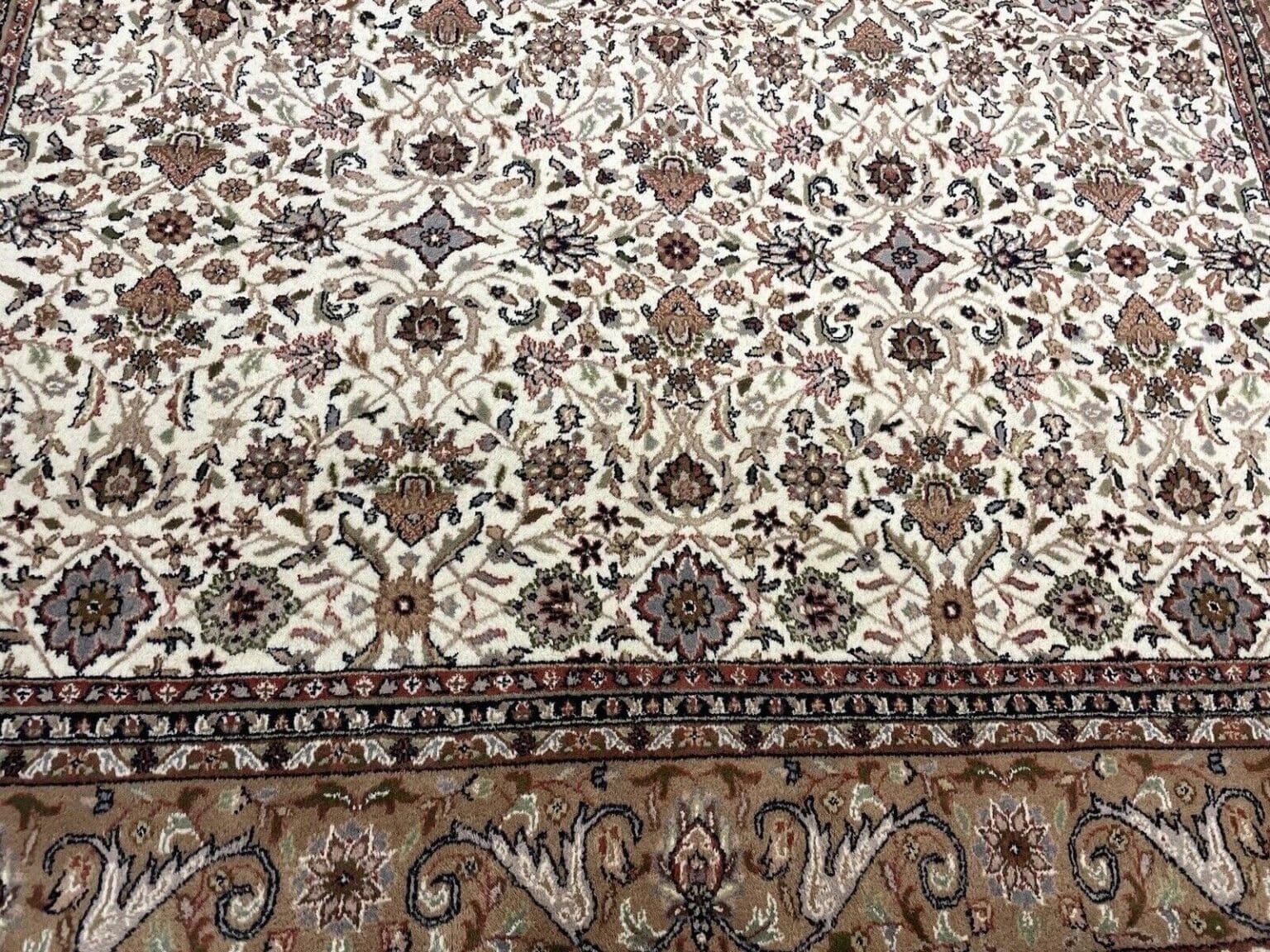
The construction makes the rug’s workmanship clearly visible. Each knot is placed separately and secured within the foundation. The pattern therefore develops gradually through the relationship between warp, weft and pile. This process requires care and precision, because the final appearance depends on the consistent repetition of many individual steps. The use of high-quality virgin wool supports the rug’s durable construction. It is new without a label.
Origin and Tradition
As a Persian rug, this piece belongs to the tradition of Iranian carpet art. Persian rugs have been made for centuries in a variety of regions. Each area has developed its own approaches to colour, ornament, structure and workmanship. The name Kashmir points to a distinct regional tradition associated with fine wool qualities and careful knotting. It is part of the rug’s designation and of the cultural context in which Kashmir carpets are understood.
Rug making is a textile craft in which design and construction are closely connected. The warp creates the foundation, while the knots form the visible pile. Through the repeated joining of these elements, a complete pattern gradually takes shape. Hand knotting is therefore fundamentally different from machine production, where an identical design can be reproduced in large numbers with a consistent mechanical structure.
Throughout the history of Persian carpet art, rugs have served many purposes. They have been made for domestic interiors and have also been used by wealthy families and royal households. Knowledge of wool, colour, knotting and design has been passed from one generation to the next. Regional traditions retained their distinctive forms while individual motifs and colour combinations continued to develop over time.
The Kashmir tradition is particularly associated with soft wool qualities and fine workmanship. This connection between material feel and careful knotting shapes the way a Kashmir rug is perceived. At the same time, the designation Persian rug places this piece within the broader history of Iranian carpets. An origin name can describe more than a location: it can also refer to an established textile culture with its own methods, patterns and standards of making.
Design and Pattern
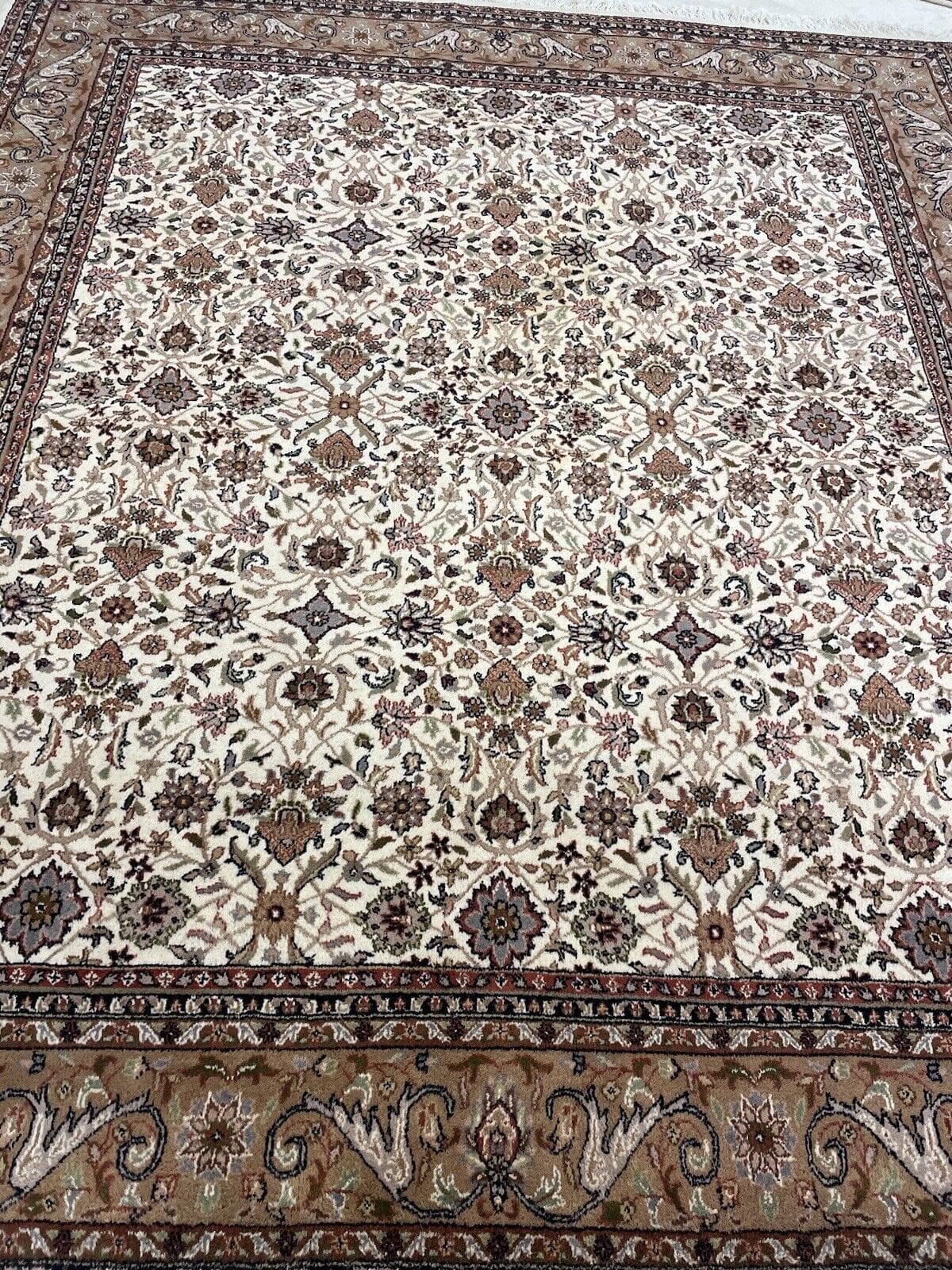
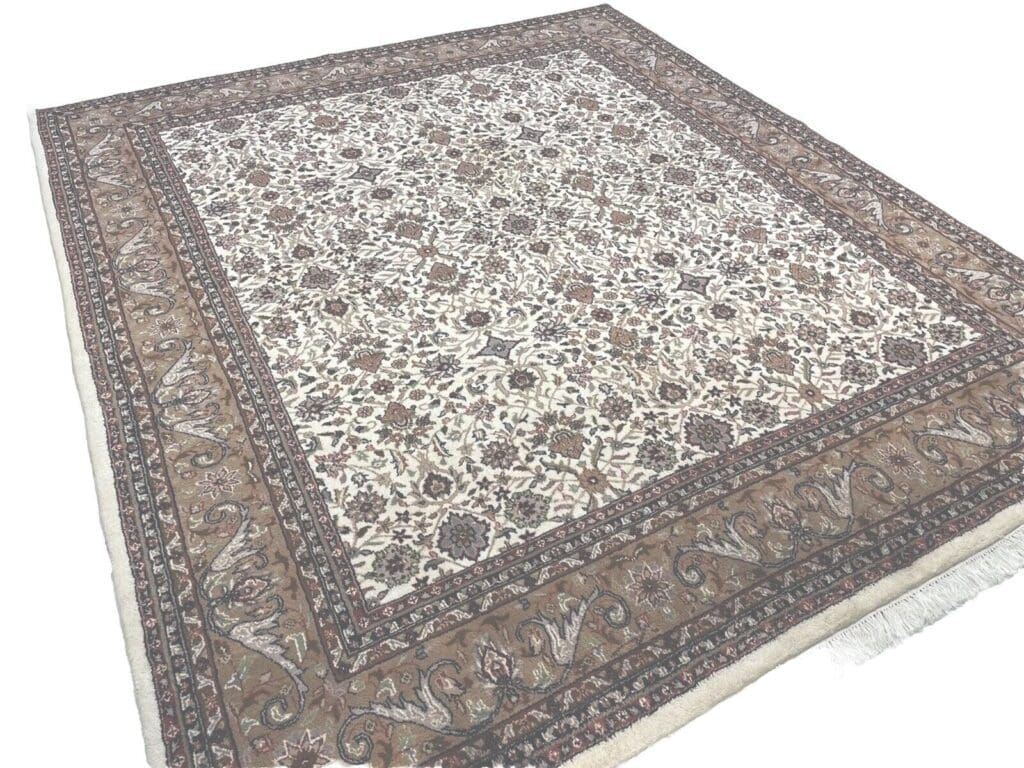
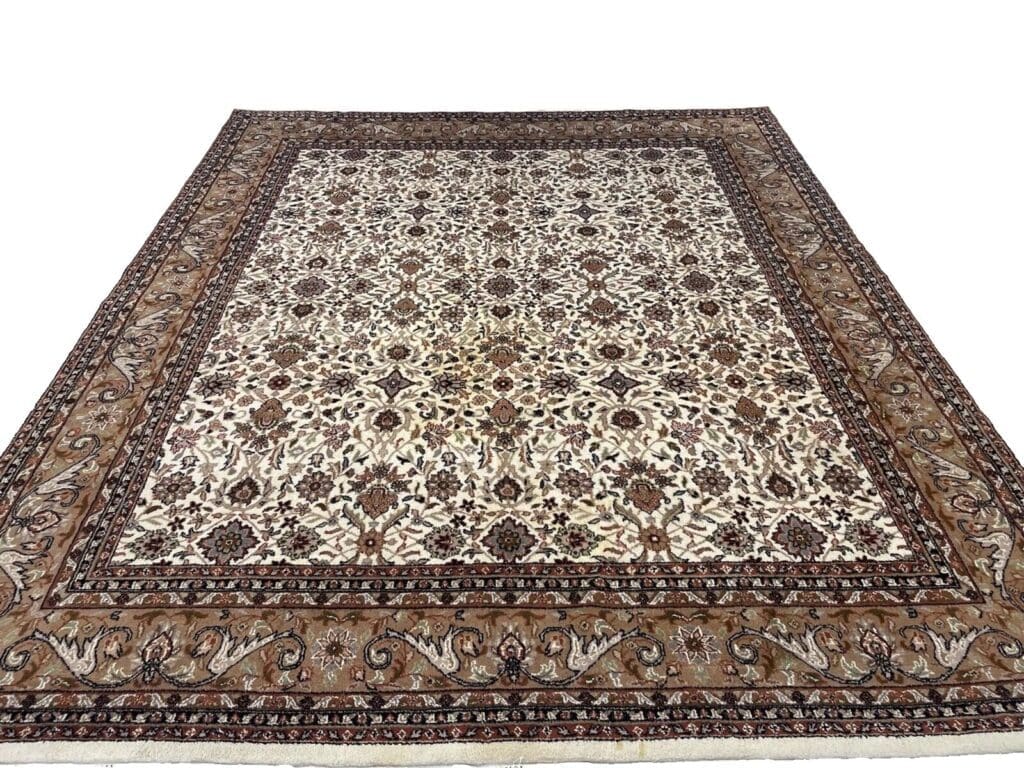
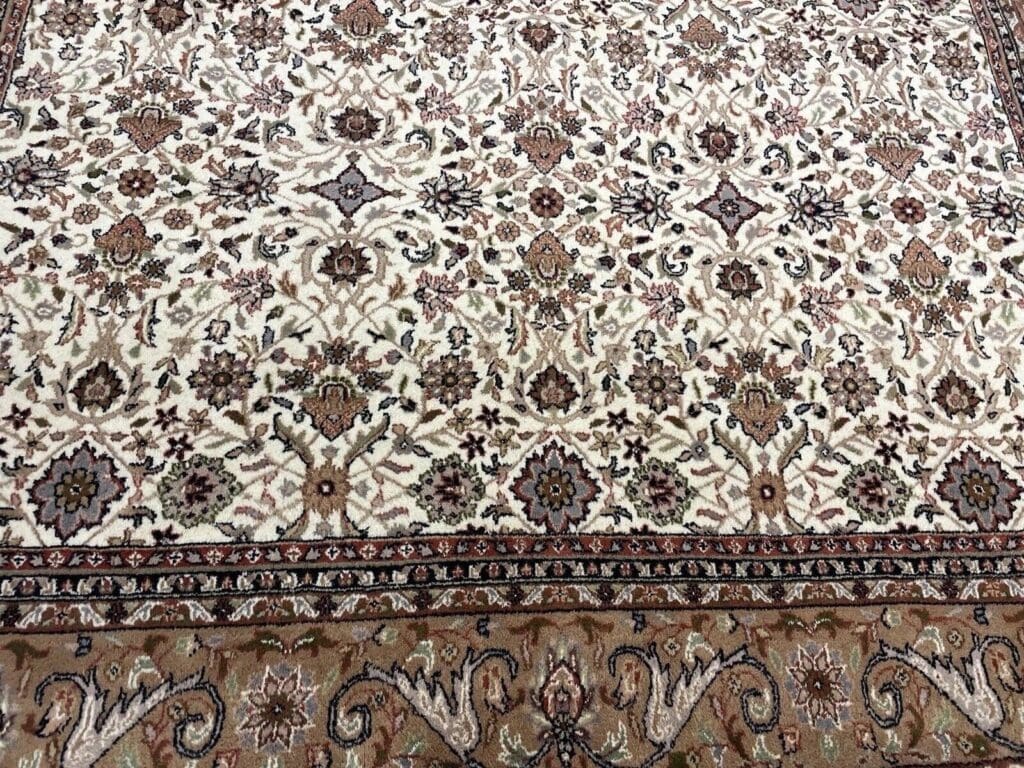
The design is traditional Persian and Oriental. A beige ground is framed by a rust-brown border. The border creates a clear outer structure around the inner field and gives the overall composition a defined finish. Beige provides a calm base, while rust brown introduces a warm and distinct accent.
Traditional Oriental rugs often use an ordered relationship between a central field and surrounding border areas. A border can mark the transition between the centre and the outer edge, contain the composition and give the pattern a measured structure. On this rug, the rust-brown border stands in a clear yet warm relationship to the beige ground. The colour arrangement supports the traditional character named for the design.
Persian pattern traditions include a wide range of floral, geometric and stylized forms. Ornaments may draw on natural shapes, simplify them or preserve forms that have been handed down over generations. Symbolic associations and legendary stories have also influenced Oriental rug design. The traditional pattern of this piece belongs within that broader cultural setting without being assigned to a specific unnamed motif.
A rug pattern is shaped not only by individual signs, but also by the interaction of colour, repetition, framing and workmanship. In a hand-knotted rug, the design is formed from many separate knots. This gives the drawing a textile depth and a lively surface. The combination of beige, a rust-brown border and traditional Persian-Oriental styling creates a clearly organized composition with a warm colour effect.
Special Features
This rug is suitable for use in a room with underfloor heating. The virgin wool contributes to a comfortable interior climate because wool naturally helps regulate temperature. A wool rug can also soften room acoustics and contribute to a quieter acoustic impression. These qualities add a functional dimension to its role as a textile floor covering.
Wool is also associated with reducing allergens in the air. Together with the natural material base and hand-knotted construction, this makes the rug suitable for a range of domestic settings. The stated uses include living rooms, bedrooms, studies and dining rooms. The rug is new without a label.
FAQ
How should I care for my Kashmir Persian rug?
Regular vacuuming on a low setting helps remove dust and dirt from the wool pile. If a spill occurs, the affected area should be treated promptly with a damp cloth and a mild carpet cleaner. Vigorous rubbing can place unnecessary stress on the surface, so gentle treatment is preferable. The rug should not be left in direct sunlight for long periods, as this can cause the colours to fade. Careful, regular maintenance supports the appearance and everyday properties of the wool pile.
Can I use the rug in a room with underfloor heating?
Yes. This Kashmir Persian rug is suitable for rooms with underfloor heating. Wool provides a pleasant sense of warmth and helps maintain a balanced interior climate. The heating temperature should not be set too high, so that the material and the quality of the rug are protected. Keeping the heat at a moderate level supports continued use and avoids placing unnecessary stress on the wool pile.
How can I identify an authentic Persian rug?
Hand-knotted rugs often have a slightly irregular knot structure. This can indicate manual production, whereas machine-made rugs generally have a more uniform construction. The reverse side can provide another clue: on a hand-knotted rug, the pattern may be visible from behind. Certificates or documents showing the origin can offer further indications when assessing authenticity and classifying a rug.
To provide the best experiences, we use technologies like cookies to store and/or access device information. Consenting to these technologies will allow us to process data such as browsing behavior or unique IDs on this site. Not consenting or withdrawing consent, may adversely affect certain features and functions.
Functional Always active
The technical storage or access is strictly necessary for the legitimate purpose of enabling the use of a specific service explicitly requested by the subscriber or user, or for the sole purpose of carrying out the transmission of a communication over an electronic communications network.
Preferences
The technical storage or access is necessary for the legitimate purpose of storing preferences that are not requested by the subscriber or user.
Statistics
The technical storage or access that is used exclusively for statistical purposes.The technical storage or access that is used exclusively for anonymous statistical purposes. Without a subpoena, voluntary compliance on the part of your Internet Service Provider, or additional records from a third party, information stored or retrieved for this purpose alone cannot usually be used to identify you.
Marketing
The technical storage or access is required to create user profiles to send advertising, or to track the user on a website or across several websites for similar marketing purposes.

 SECURE PAYMENT
 SHIPPING PARTNERS


