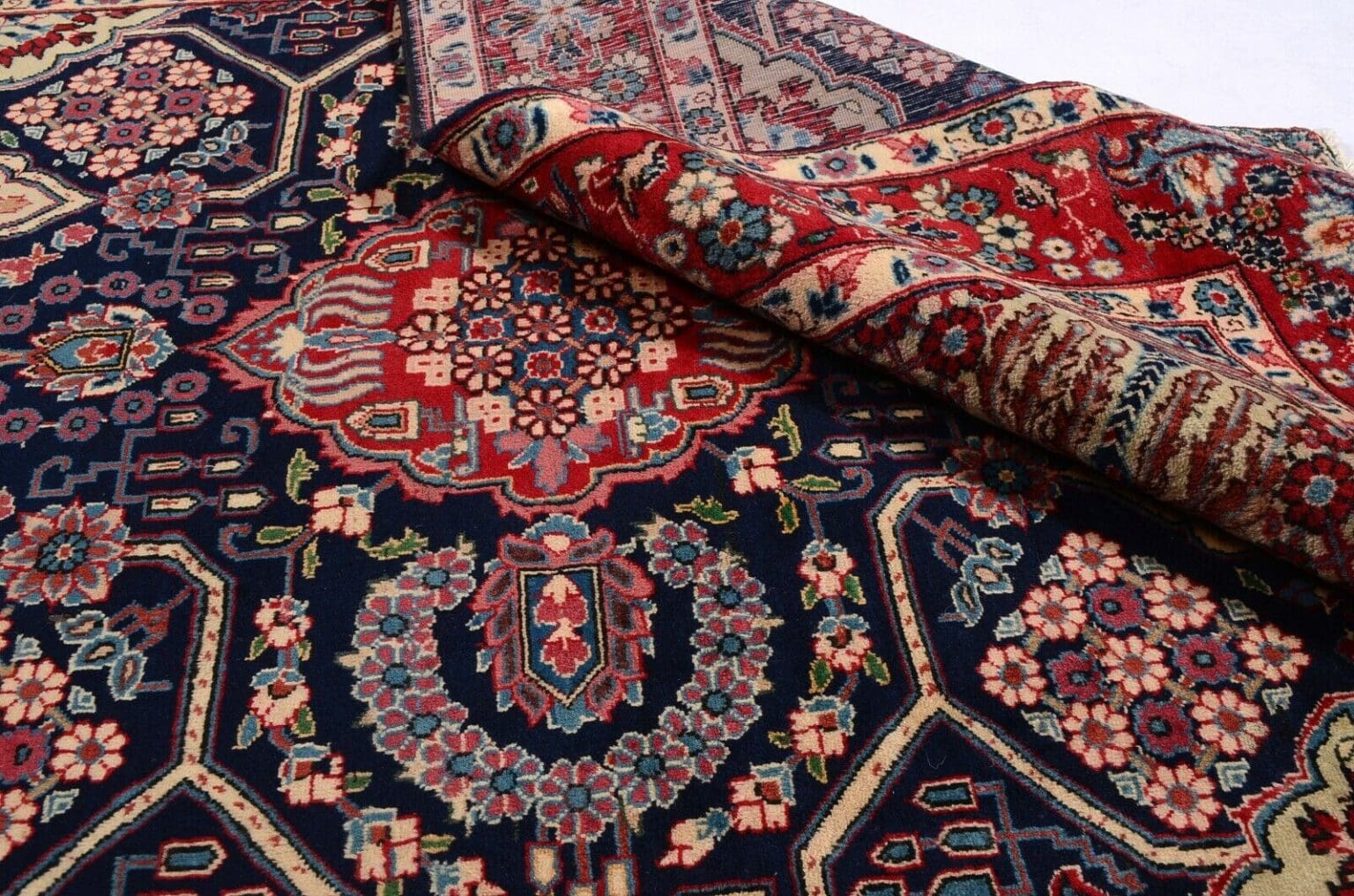
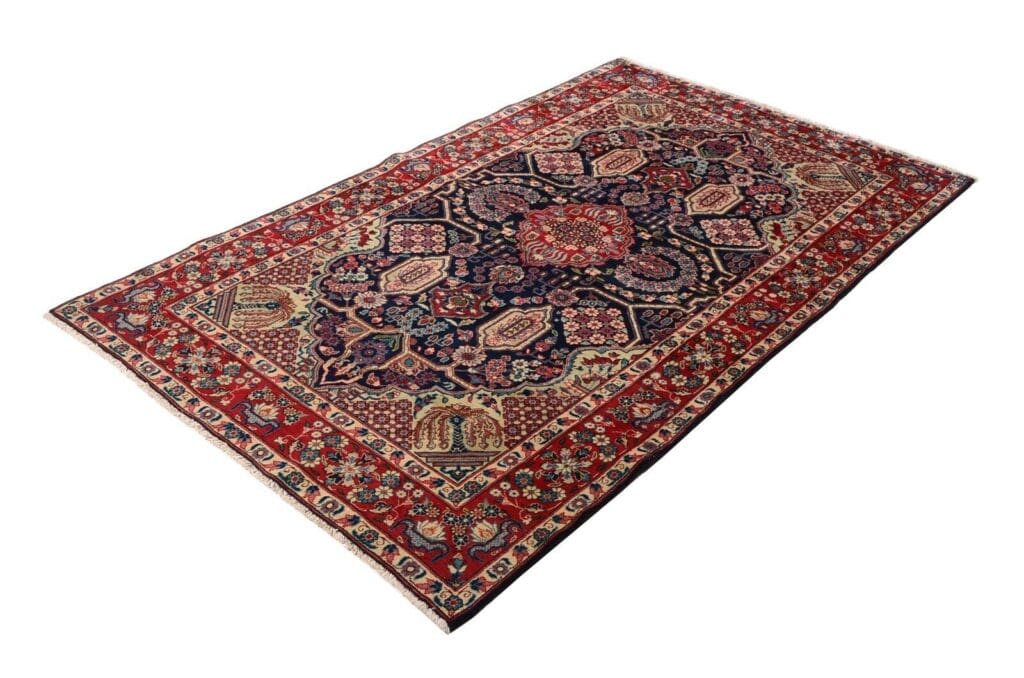
This Kashan Persian rug is hand-knotted with a pile of 100% virgin wool and a warp of 100% cotton. In this established construction, the warp provides the supporting framework while the wool pile forms the visible and tactile surface. Virgin wool is used in rug making for its pleasant handle and natural resilience. It can retain warmth and contributes to a balanced feel underfoot. With suitable care, a wool pile can preserve its structure and surface over an extended period.
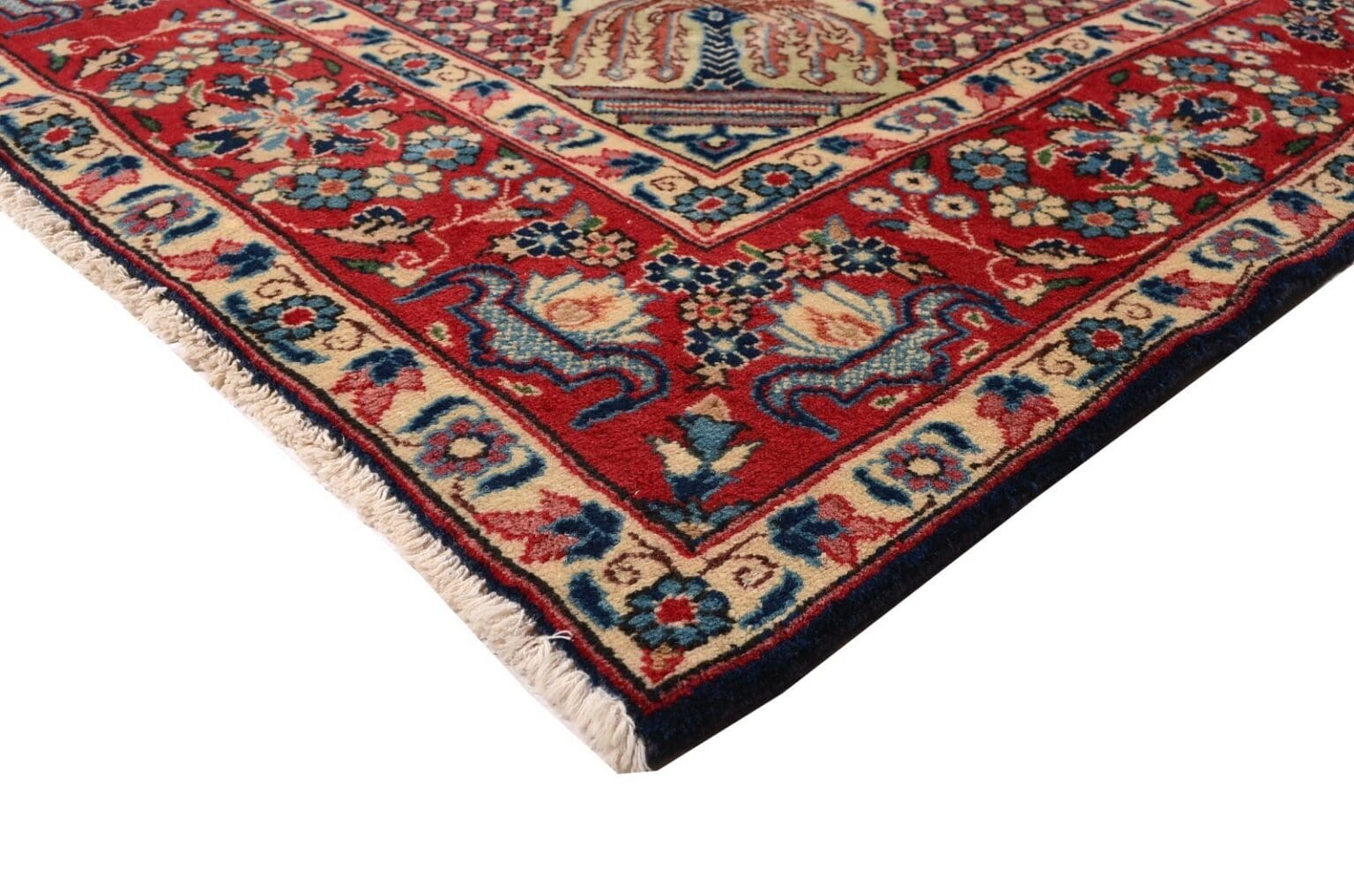
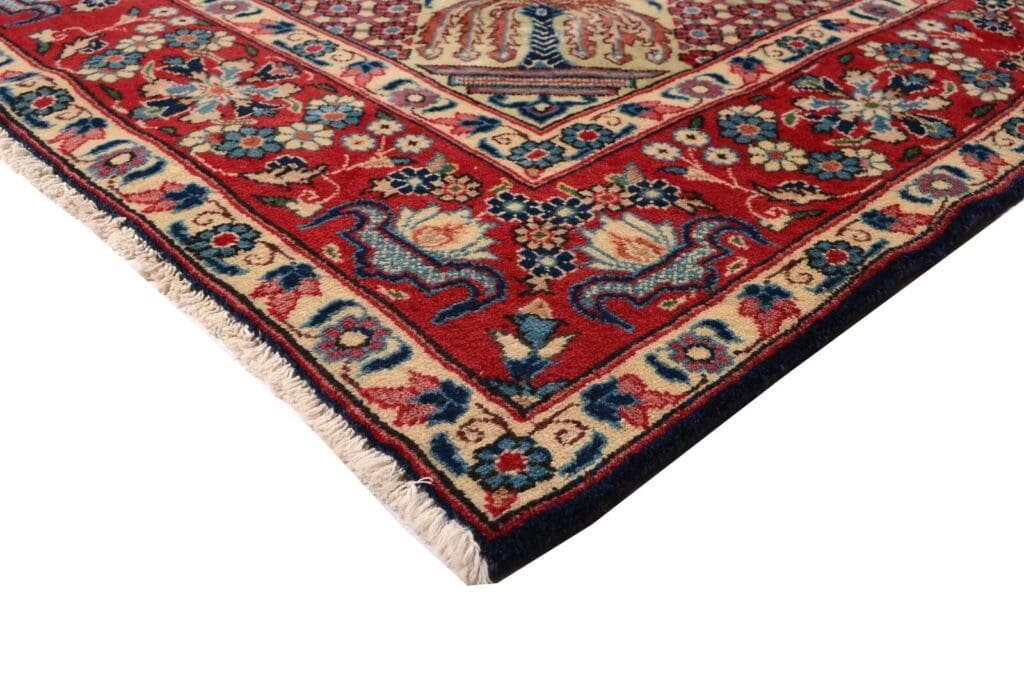
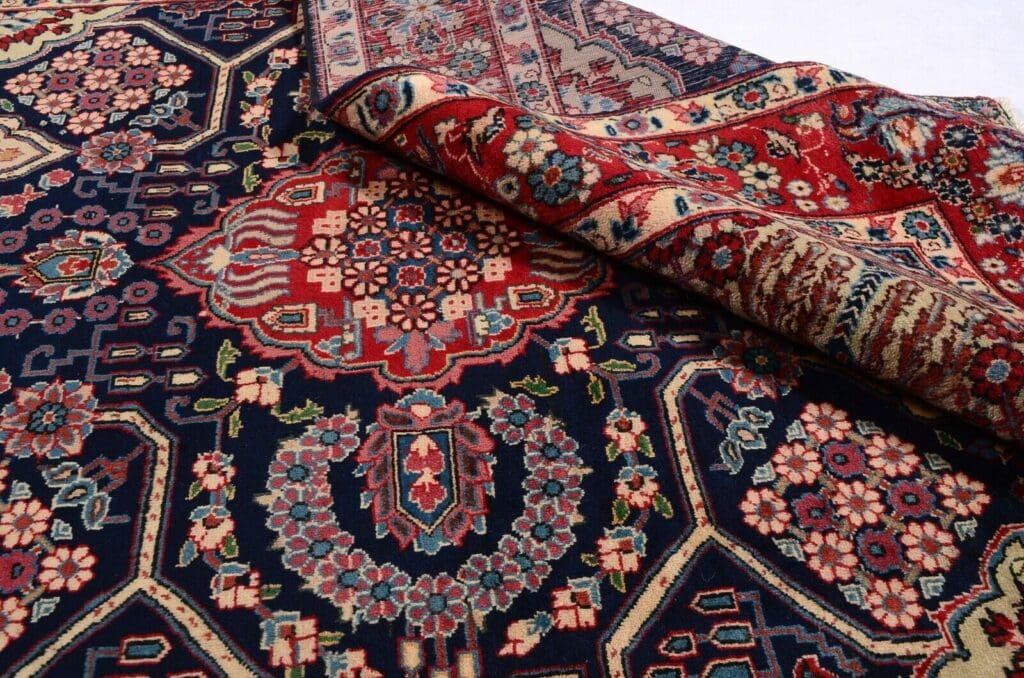
Hand-knotting is made up of a series of individual operations. Knots are placed one by one around the warp, after which each row is compacted and aligned. The pile is then brought to an even height and the surface is checked. This method allows flowers, leaves, vines and medallion forms to be defined with precision. Smaller transitions within a floral design can also be rendered in a differentiated manner. The craft requires attention to knot tension, colour sequence and the accurate transfer of the design.
The knot density of this rug is 350,000 knots per square metre. It describes the number of knots placed within a defined area and provides a technical indication of the fineness of the work. It is not the only criterion used when assessing a rug. The consistency of the knotting, the tension of the warp, the treatment of the pile, the execution of the outlines and the clarity of the pattern are also relevant. In this piece, hand-knotted construction, a wool pile and a cotton warp are combined with a floral medallion design.
Origin and Tradition
Kashan lies in the heart of Iran and is one of the recognised centres of Persian rug production. The city has a long history of textile and carpet making. Its importance grew especially during the Safavid dynasty in the sixteenth century. During this period, Iran was an important centre for courtly and representative textiles. Knowledge of design, dyeing, knotting and finishing was passed down through generations. This continuity shaped the visual and technical vocabulary associated with Kashan rugs.
A Kashan rug therefore represents not only a particular appearance but also a regional method of working. In traditional production, a design is planned and transferred to the rug in carefully balanced proportions. The weaver follows the plan while building up the coloured areas knot by knot. This preparation makes it possible to create closed borders, balanced fields and finely divided floral forms. Depending on the design, the central field may be restrained or filled with an extensive arrangement of vines and blossoms.
Nature is a frequent source for Kashan ornament. Leaves, flowers, vines and stylised plant forms are arranged to create a connected pattern across the field. Persian rug traditions also include geometric forms as well as depictions of animals and people. Such elements may carry regional, cultural or symbolic associations. Their meaning depends on the surrounding composition. A floral design is therefore not simply a repetition of decorative details, but part of a visual language shaped by the history of Persian weaving through order, rhythm and recurrence.
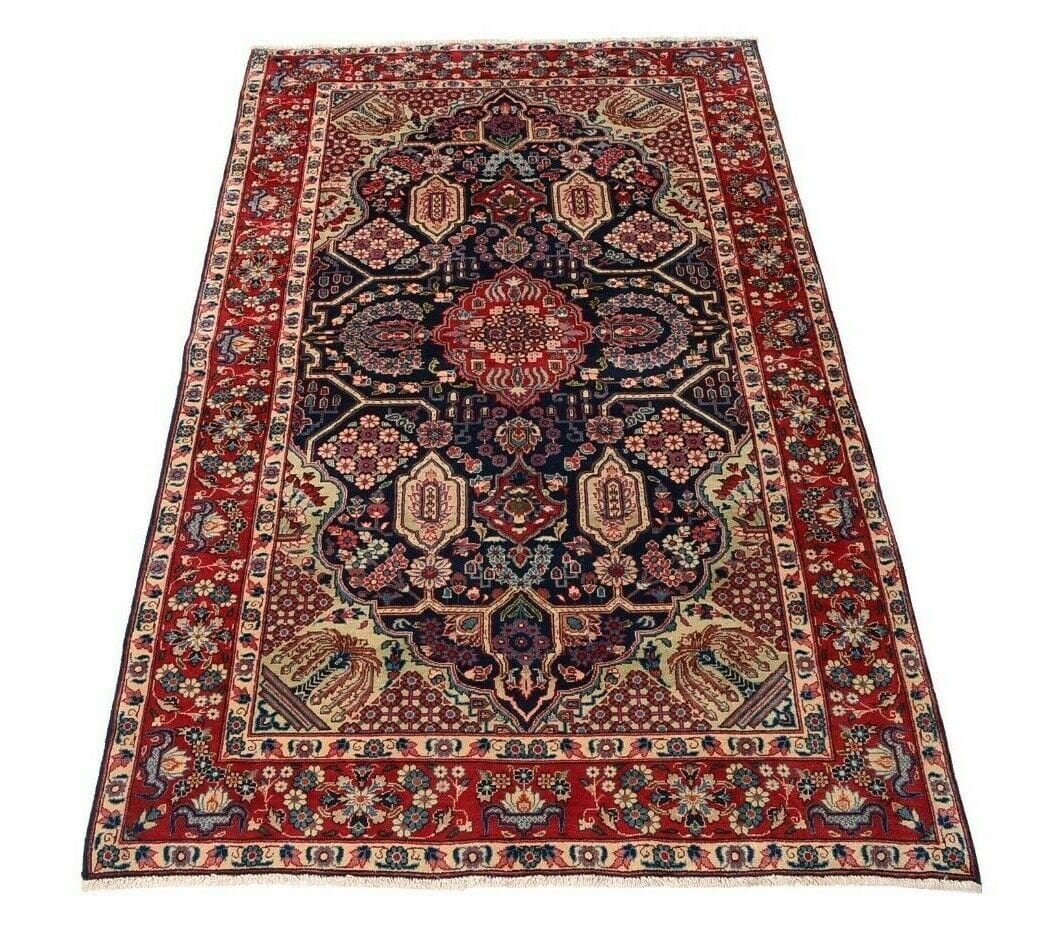
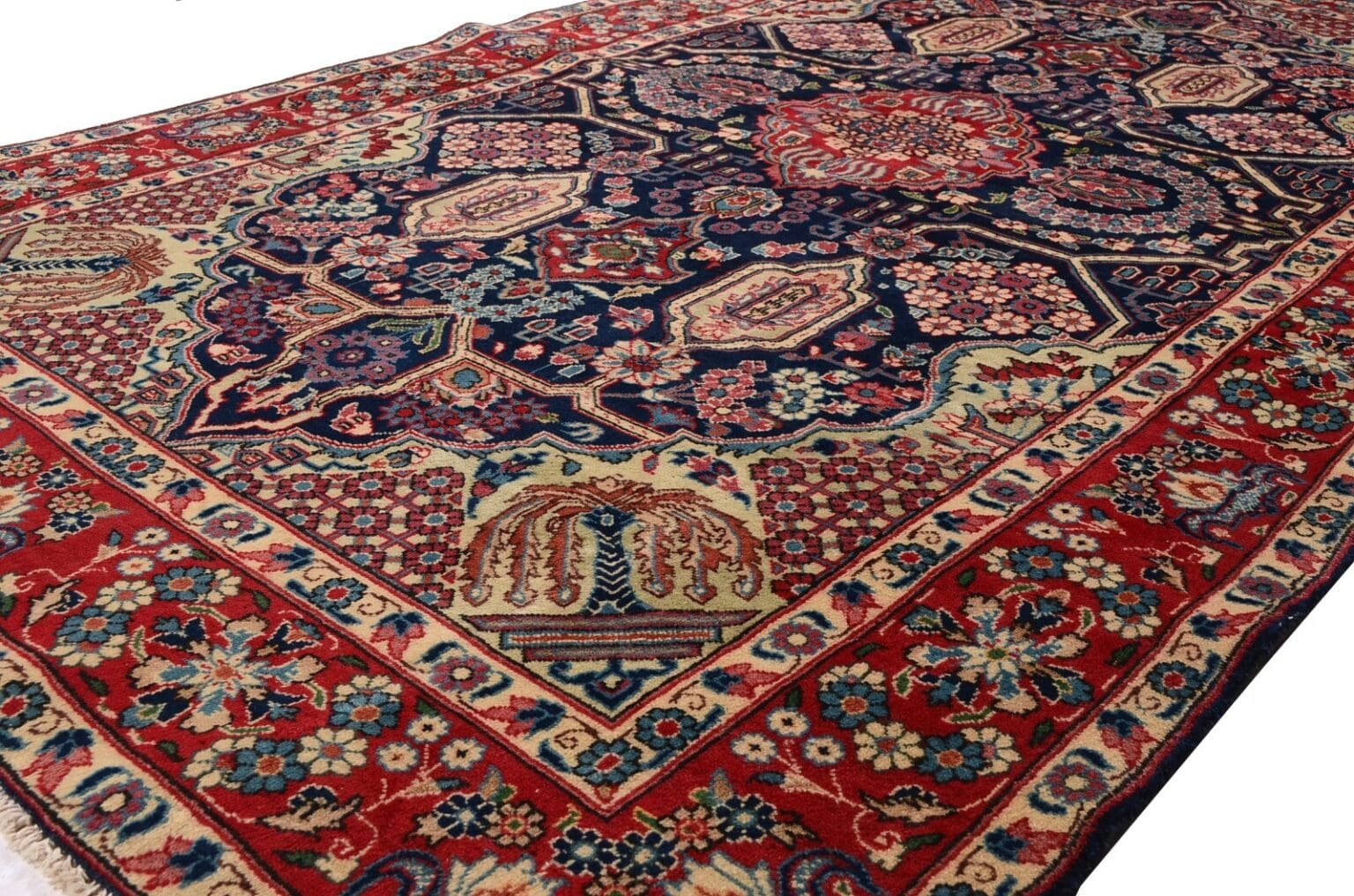
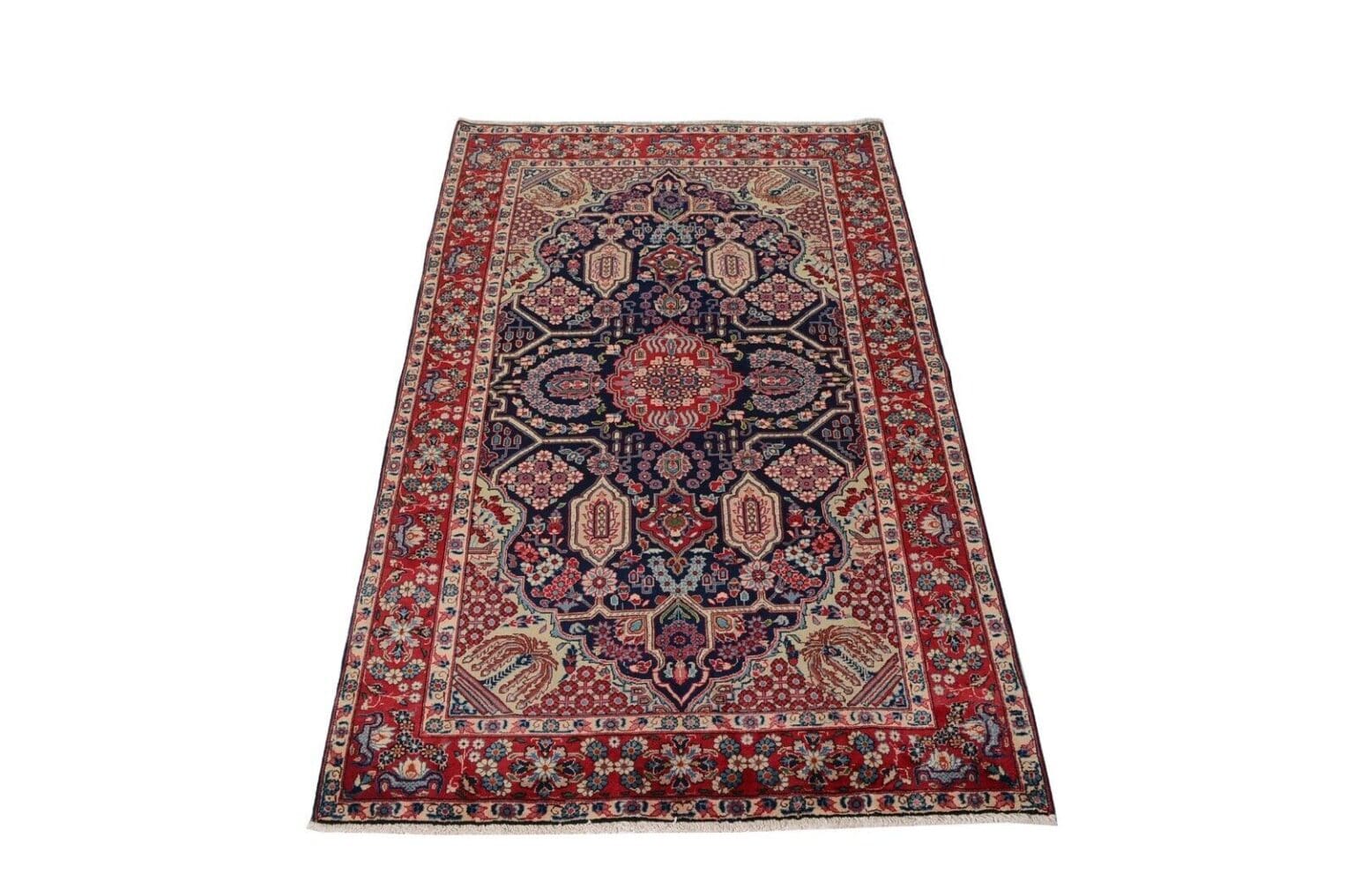
Colour is as important to this tradition as the drawing itself. Kashan rugs are known for lively colours and clearly organised contrasts. Blue is the colour recorded for this particular rug. In Persian ornament, blue can appear in different shades, from deep and subdued tones to lighter variations. It may serve as a ground colour or contrast with floral details. The effect of a blue field is created by the relationship between the ground, the outlines, the accompanying colours and the individual ornaments.
The Kashan tradition involves more than tying the knots. Reading a design, maintaining consistent tension, selecting compatible colour tones and finishing the surface all require knowledge. A traditional rug is consequently the result of several coordinated stages of work. This regional and technical context explains Kashan’s established place in the history of Persian rug making without assigning the rug to a particular workshop or individual weaver where no such information is provided.
The transmission of this knowledge took place in many rug-producing centres through families, workshops and local communities of craftspeople. Practical understanding of material behaviour, colour relationships, knot structure and post-knotting treatment was as important as familiarity with pattern designs. The combination of inherited design principles and manual execution helps explain the regional identity of Kashan rugs. Each finished rug nevertheless depends on its own design, colour arrangement and the care applied during its individual making.
Design and Pattern
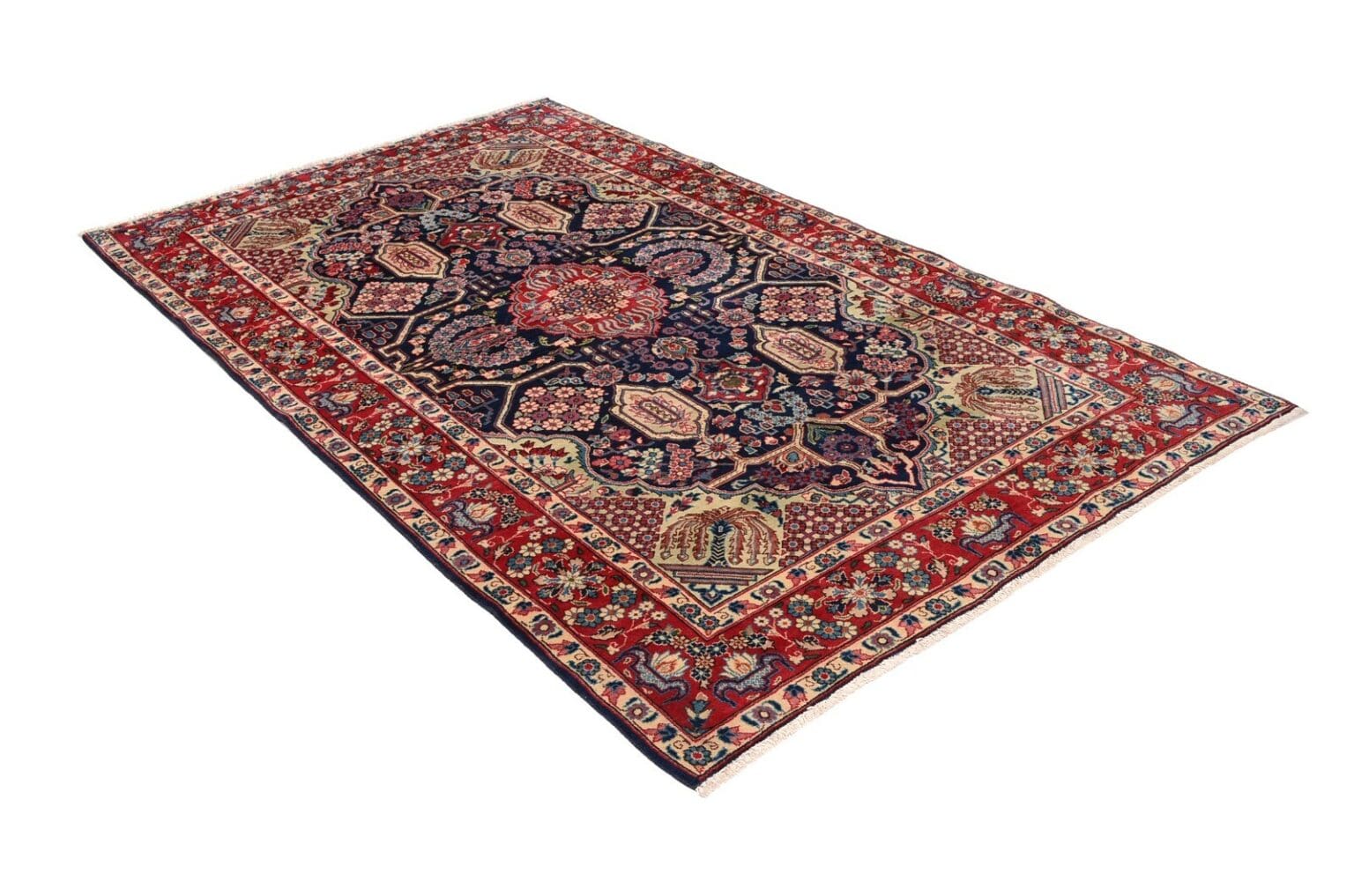
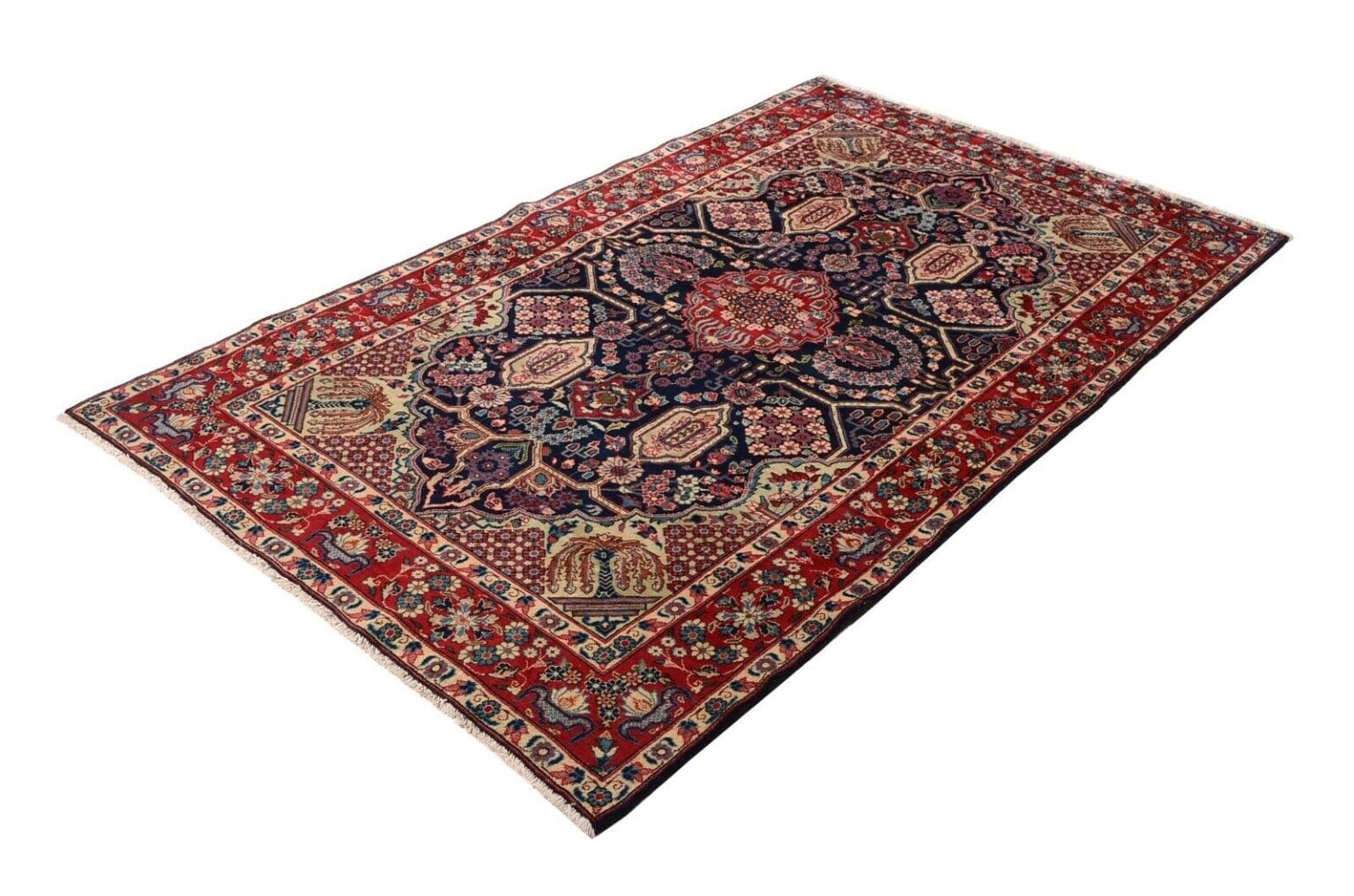
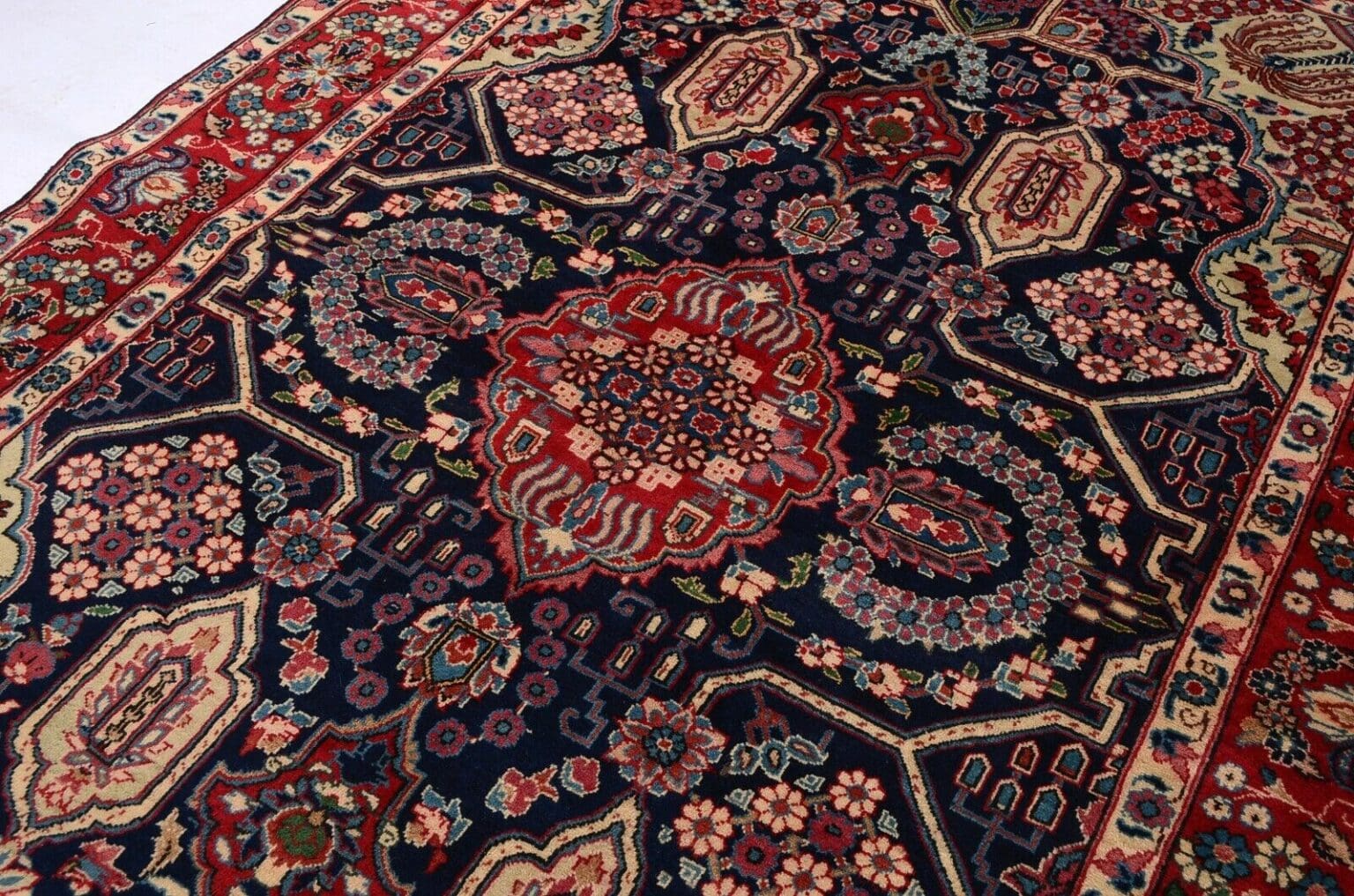
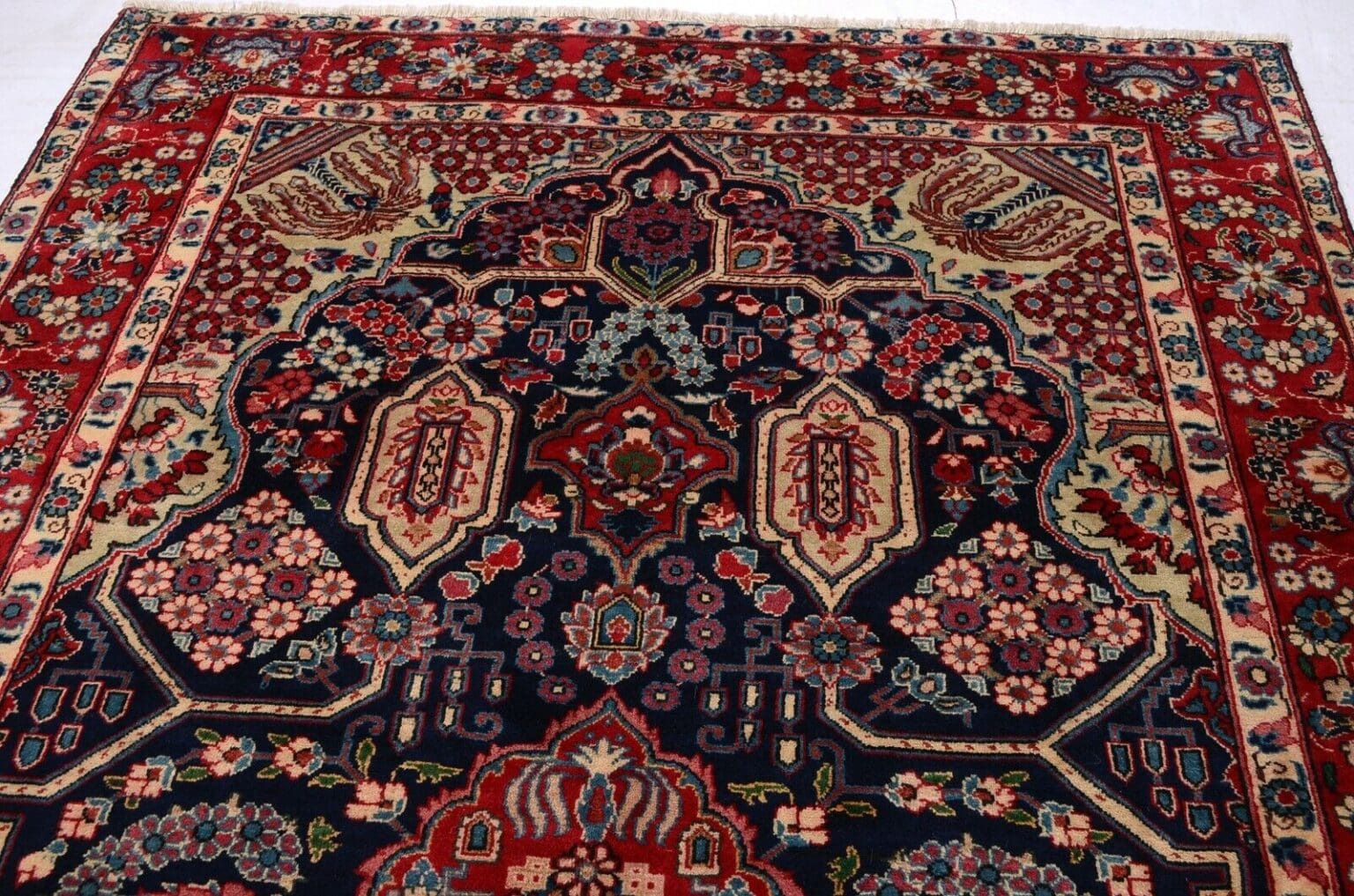
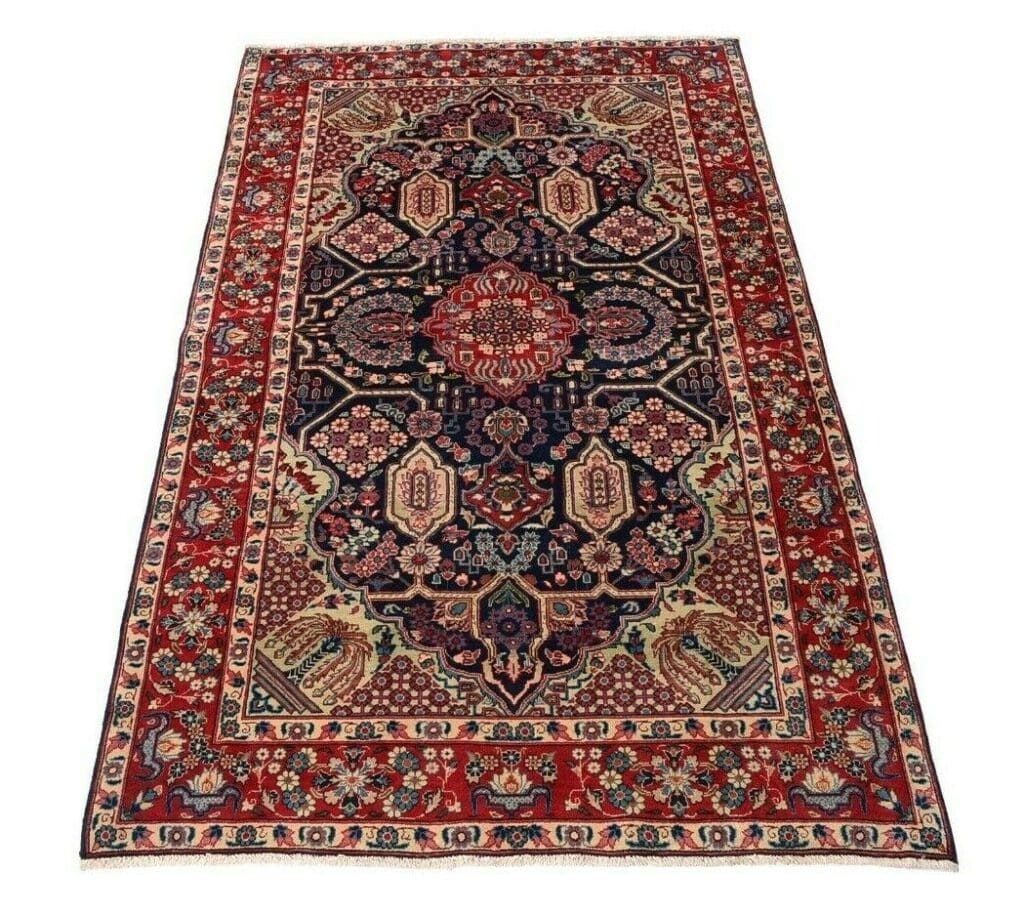
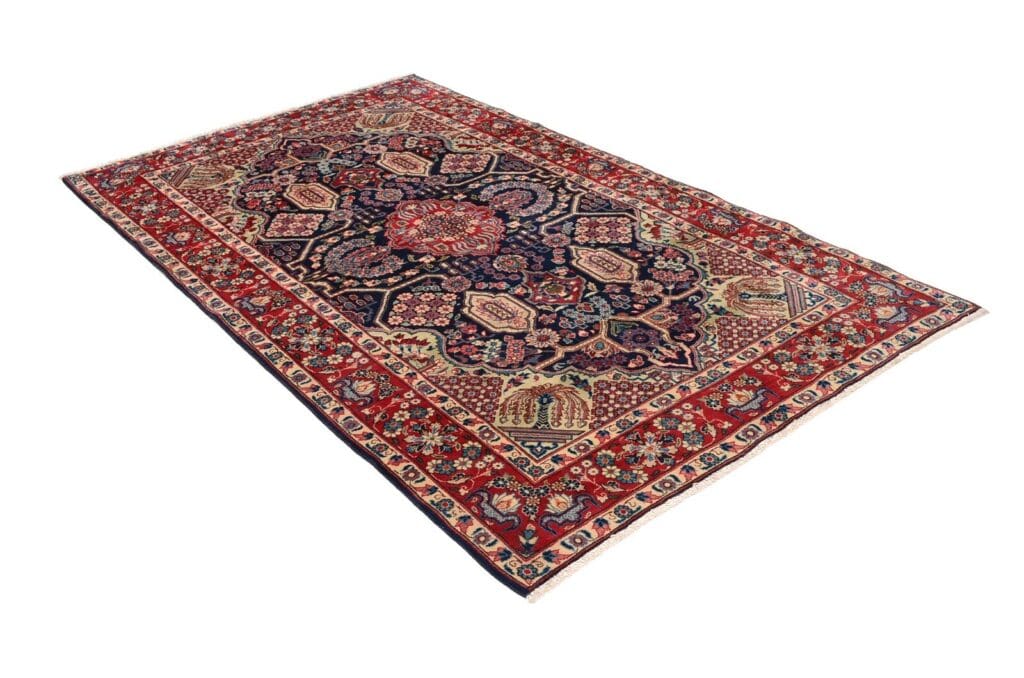
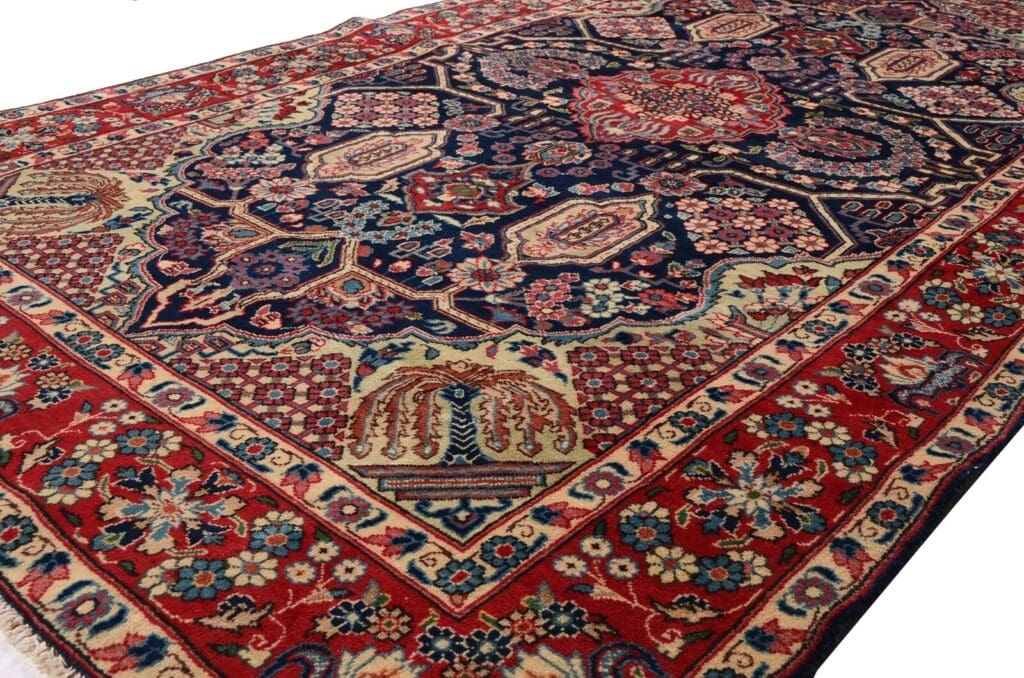
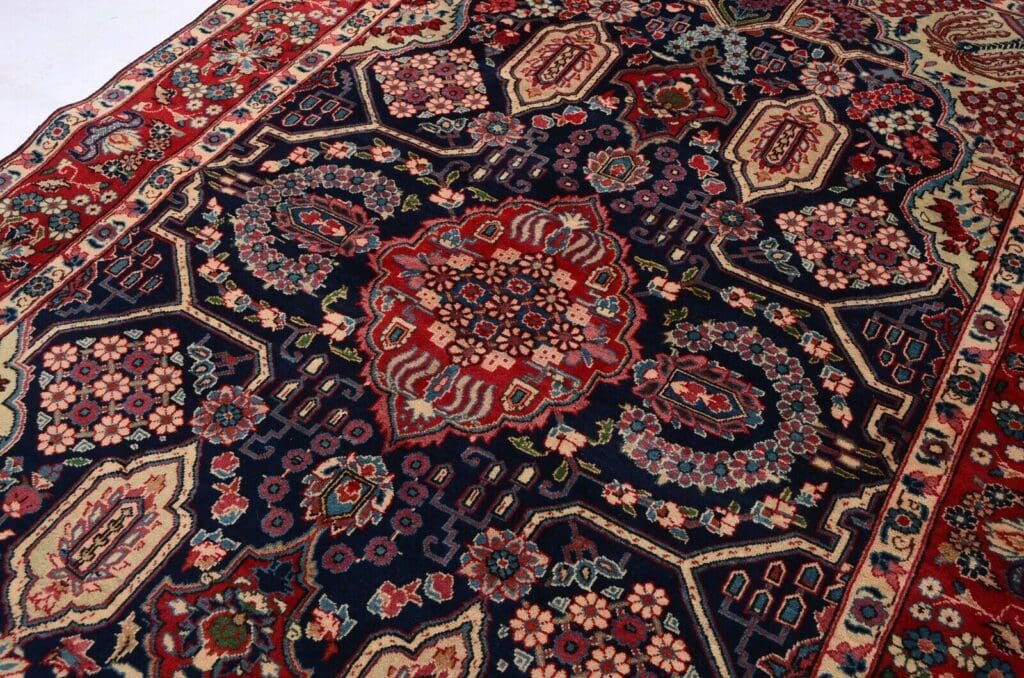
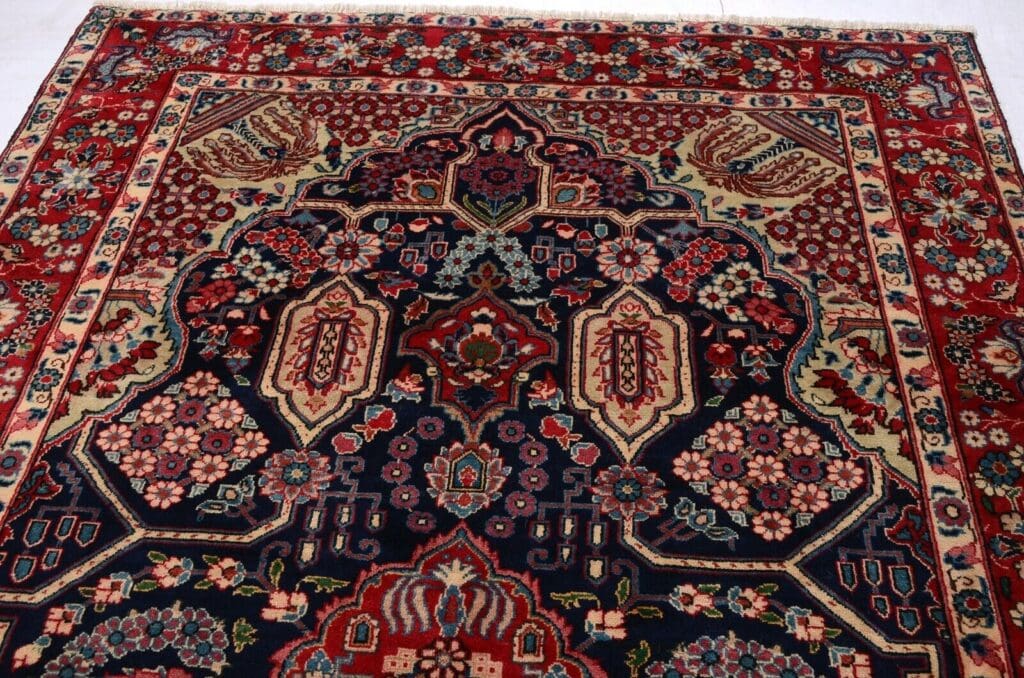
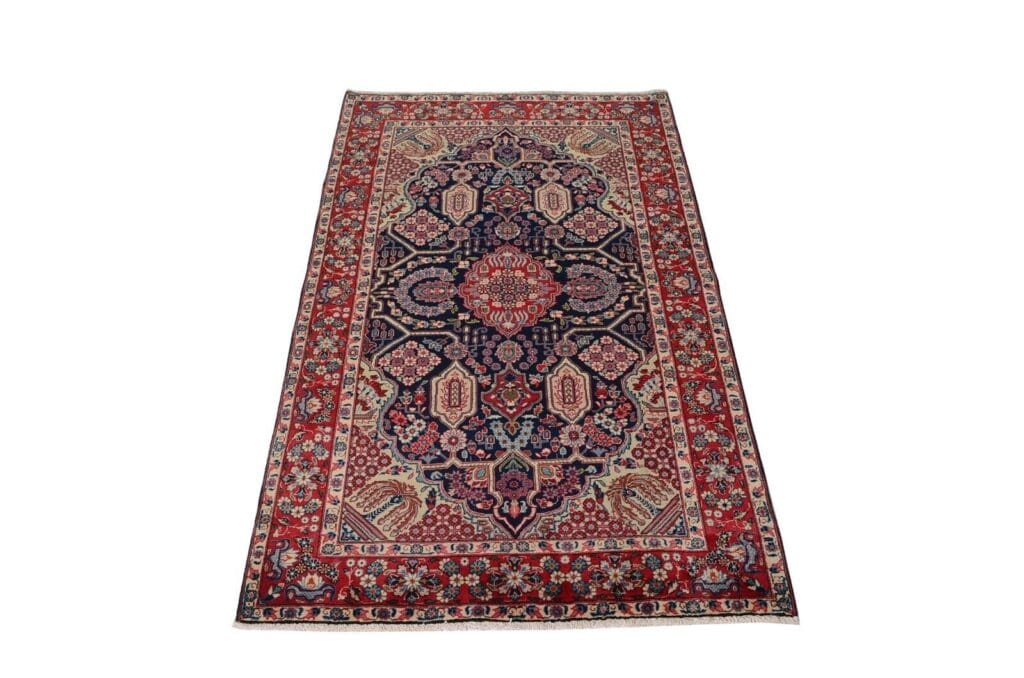
The pattern of this rug is described as a floral motif with a medallion. A medallion normally acts as the visual centre of a rug design. It may be circular, oval, polygonal or composed of several interlocking forms. The other elements are often related to the centre through the main axes. This creates an ordered field in which the central form, the surrounding ground and the borders function as parts of one composition.
The floral theme adds softer lines to the medallion’s clear geometry. Vines may surround the central form, blossoms may appear at measured intervals and leaves may connect separate groups of ornaments. In Persian rug design, these elements are generally stylised rather than intended as exact botanical illustrations. The plant forms follow a rhythm that divides the field and gives the drawing a recognisable direction. The result is decorative while retaining a clear underlying order.
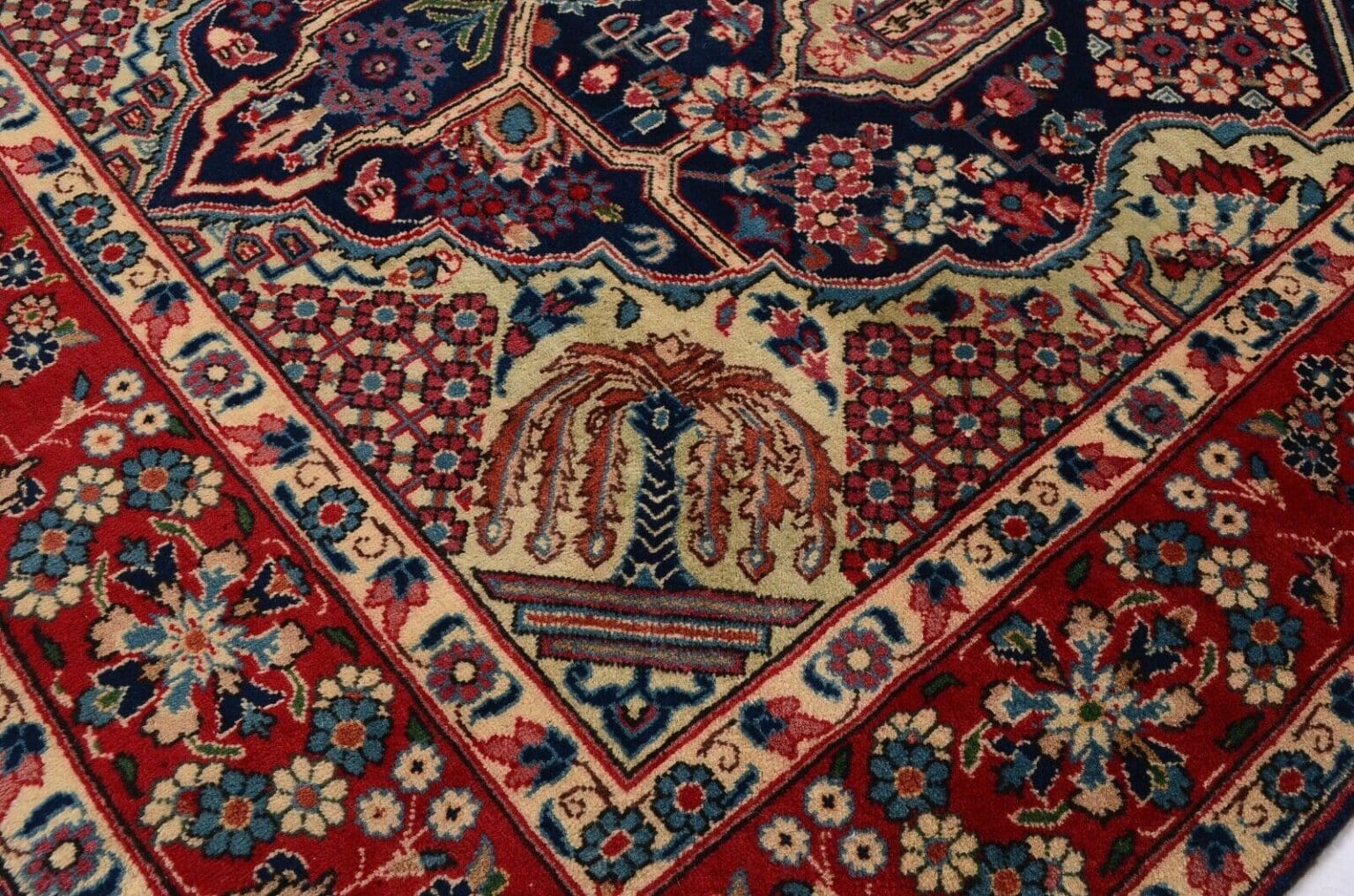
Kashan designs can contain a high level of detail. Small blossoms, curling vines and finely separated outlines require careful execution during knotting. A high knot density can support the rendering of such transitions, but it does not replace the design plan or the skill needed to follow it. The appearance of the pattern depends on the interaction of the design, the knotting technique and the distribution of colour. Floral shapes can remain legible even when many individual elements are connected.
The blue colouring recorded for this rug influences the way the pattern is read. It may give the medallion a calm surrounding field or connect the centre with the flowers and borders. Colour contrasts make outlines more visible, while related tones create gentler transitions. The combination of precise drawing and active colour relationships can be understood as an organised yet richly articulated composition.
Floral ornament in Persian rugs is often associated with nature, growth and fertility. These interpretations belong to the broader symbolic language of the tradition and do not add a separate claim about the individual history of this rug. The medallion can be read as the organising centre, while the plant forms animate the surrounding field. Together, the two design elements draw on established Persian principles of central composition and ordered botanical ornament.
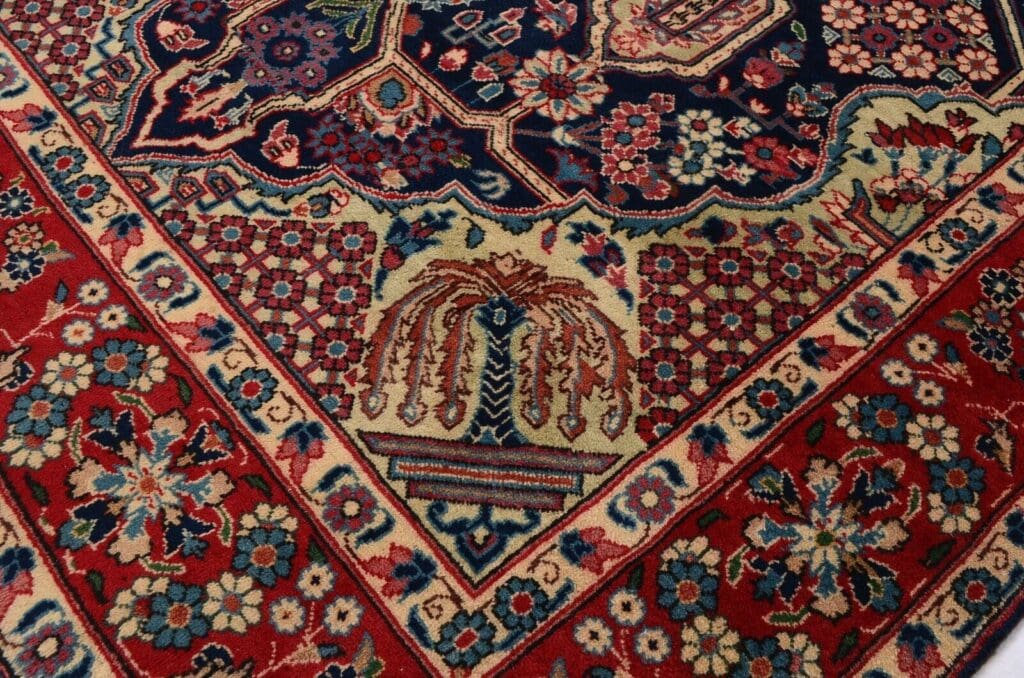
The border also has a structural role in this type of design. It frames the inner field, separates it from the edge and creates a transition between the central pattern and its surroundings. A main border may be accompanied by narrower guard borders. Their ornaments are often coordinated with the motifs in the field. The symmetry of the medallion and the repetition of floral elements help the viewer understand the rug as a coherent surface rather than as a collection of isolated details.
Special Features
The rug is in very good, unused condition and is 40 to 50 years old. Its listed thickness is approximately 10 mm, and it is suitable for use with underfloor heating. The combination of hand-knotted construction, virgin-wool pile, cotton warp and floral medallion gives a clear account of its technical and visual character. When using a rug over underfloor heating, a suitable underlay and sufficient air circulation should be taken into consideration.
Routine care consists of gentle vacuuming with a setting suitable for wool rugs. Vigorous brushing, rubbing and harsh cleaning products should be avoided. If liquid is spilled, it should be blotted with an absorbent cloth rather than worked into the pile. A thorough wash is best entrusted to a specialist rug cleaner familiar with the material, dyes and hand-knotted construction. Prolonged direct sunlight can generally affect colours, so placement and occasional rotation should be considered when planning regular use.
FAQ
How should I clean this Kashan Persian rug?
For regular care, gentle vacuuming with a setting suitable for wool is sufficient. Strong brushing, friction and aggressive cleaning agents should be avoided. If a spill occurs, blot the liquid with an absorbent cloth and do not press it deeper into the pile. A complete cleaning should be entrusted to a specialist rug laundry. Depending on use, professional cleaning every one to two years may be appropriate. The cleaner should be told that the rug has a virgin-wool pile, a cotton warp and hand-knotted construction, so the process can be matched to its structure.
Which furniture works well with a Kashan Persian rug?
The floral medallion design can be paired with furniture made from wood and other natural materials. Traditional furniture echoes the rug’s established visual language, while simple Scandinavian design can provide a quiet counterpoint to the ornament. A contemporary interior can also work when the surrounding pieces do not compete with the pattern. The blue field may be repeated in selected textiles or accessories to create a connection within the room. A balanced arrangement is useful so that the medallion remains visible and the rug is not completely covered by furniture.
How can I assess the quality of a Persian rug?
Several factors should be considered together. Knot density provides an indication of fineness, while material, consistency of knotting and overall craftsmanship offer further points of reference. A clearly drawn design with coherent symmetry and cleanly executed outlines shows how carefully a pattern has been followed. The condition of the pile and the structure of the warp should also be examined. For this rug, the listed details are a 100% virgin-wool pile, a 100% cotton warp, hand-knotted construction and a density of 350,000 knots per square metre. Technical characteristics and the clarity of the pattern should therefore be assessed together rather than relying on knot density alone.
To provide the best experiences, we use technologies like cookies to store and/or access device information. Consenting to these technologies will allow us to process data such as browsing behavior or unique IDs on this site. Not consenting or withdrawing consent, may adversely affect certain features and functions.
Functional Always active
The technical storage or access is strictly necessary for the legitimate purpose of enabling the use of a specific service explicitly requested by the subscriber or user, or for the sole purpose of carrying out the transmission of a communication over an electronic communications network.
Preferences
The technical storage or access is necessary for the legitimate purpose of storing preferences that are not requested by the subscriber or user.
Statistics
The technical storage or access that is used exclusively for statistical purposes.The technical storage or access that is used exclusively for anonymous statistical purposes. Without a subpoena, voluntary compliance on the part of your Internet Service Provider, or additional records from a third party, information stored or retrieved for this purpose alone cannot usually be used to identify you.
Marketing
The technical storage or access is required to create user profiles to send advertising, or to track the user on a website or across several websites for similar marketing purposes.
 SECURE PAYMENT
 SHIPPING PARTNERS


