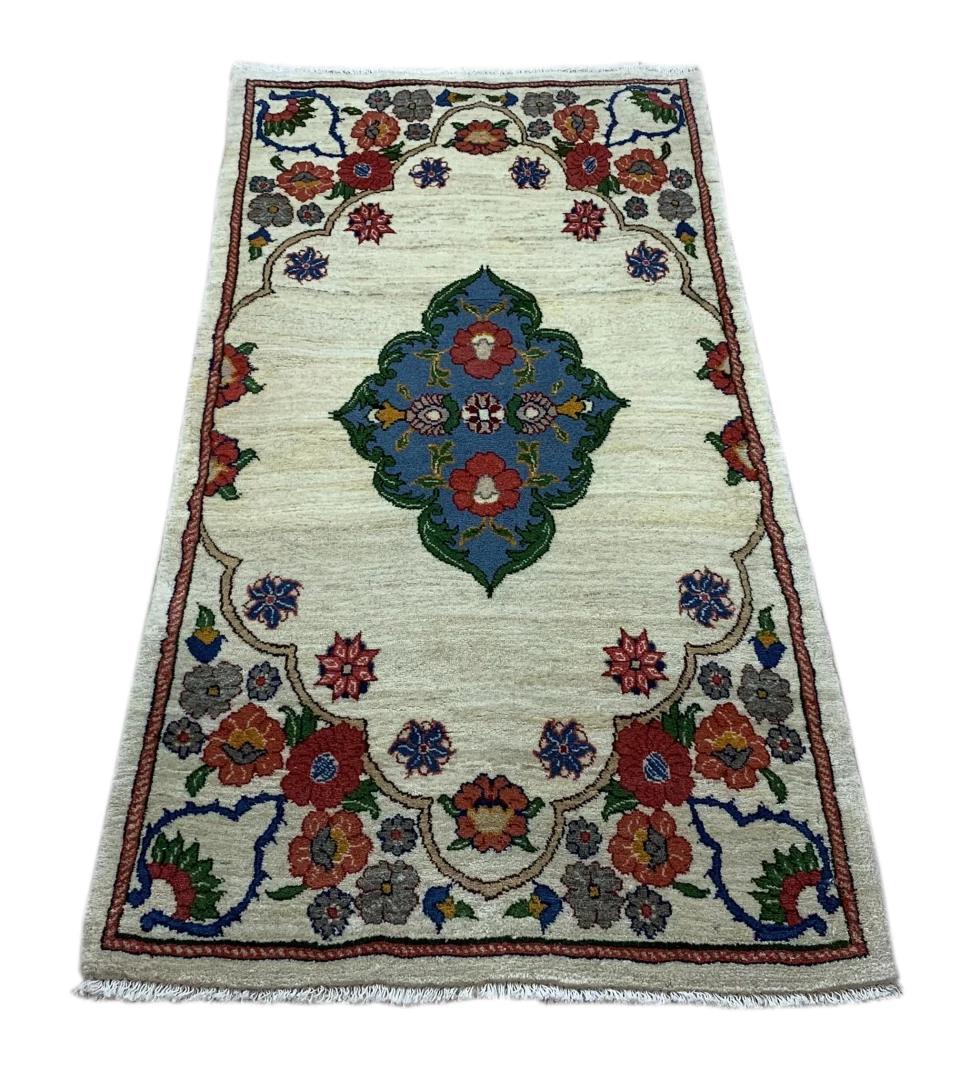
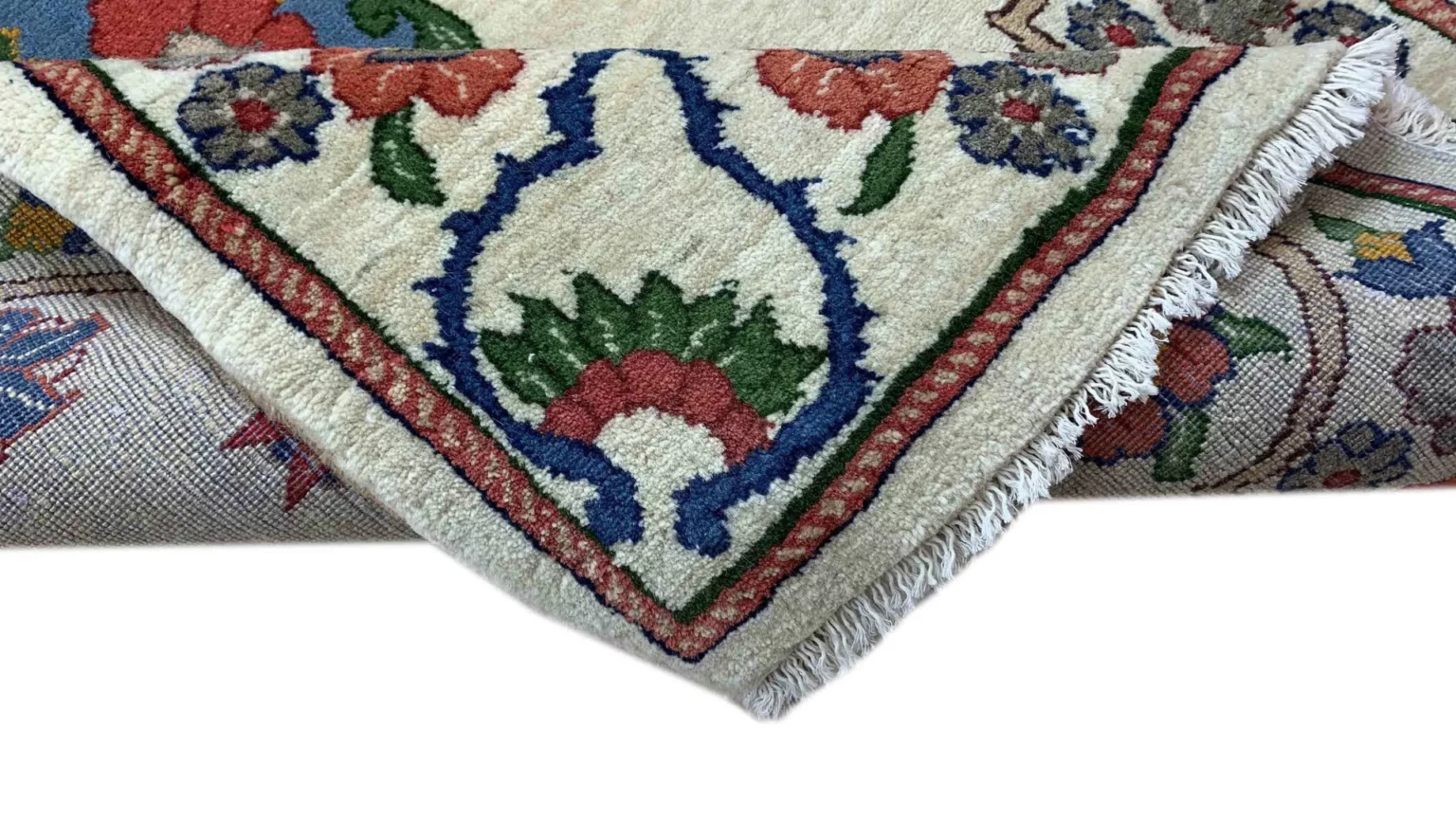
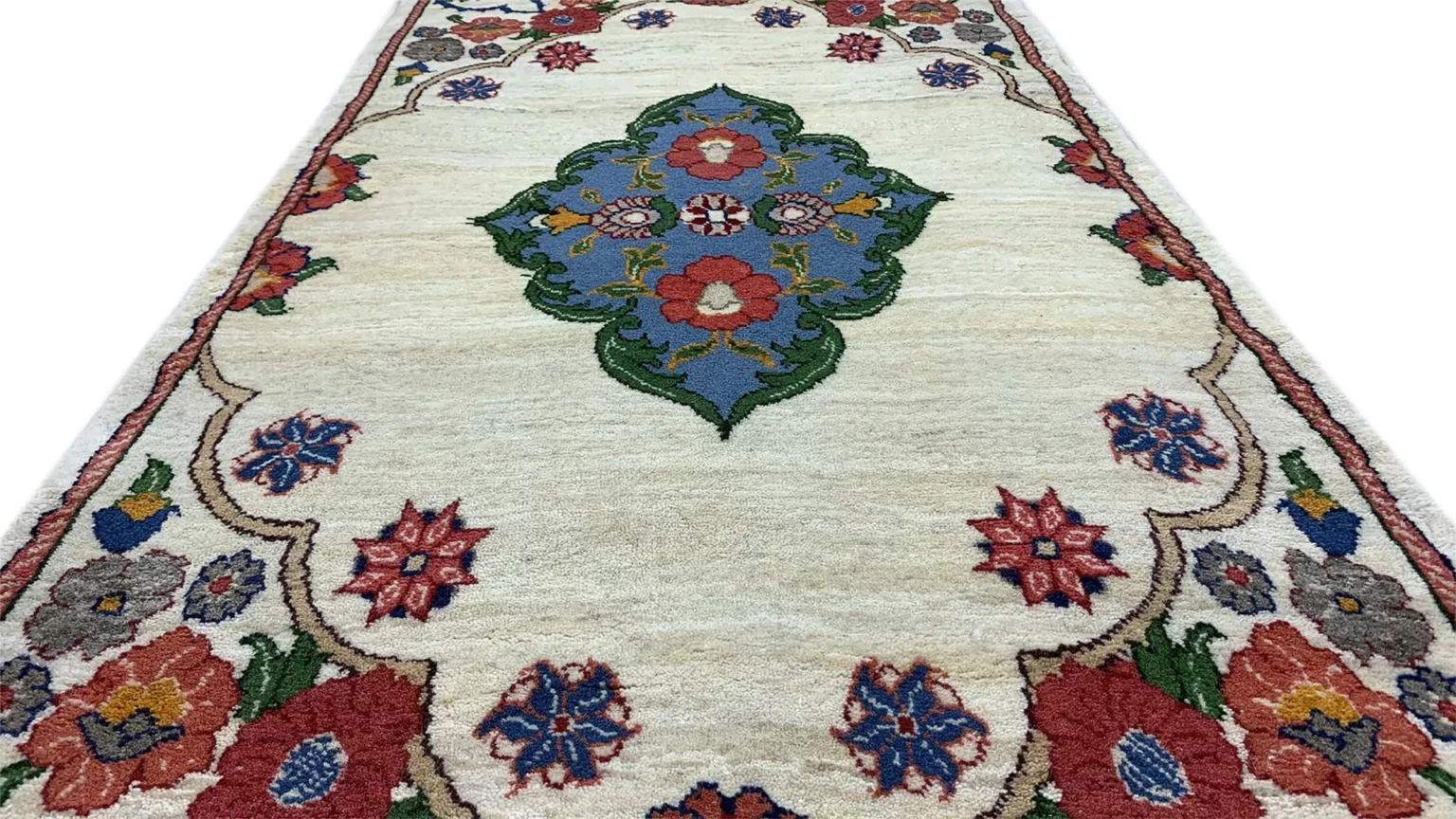
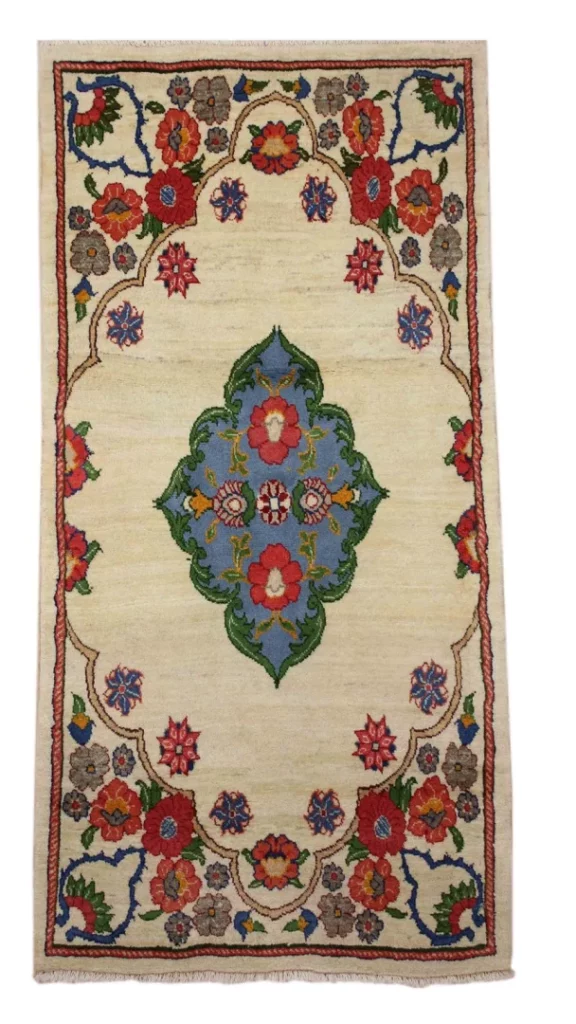
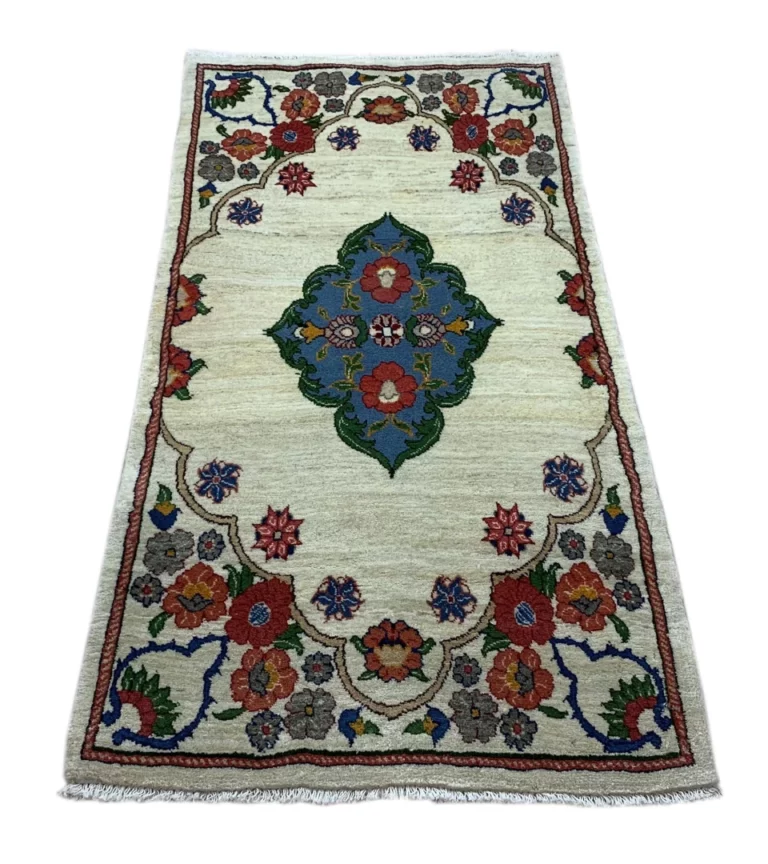
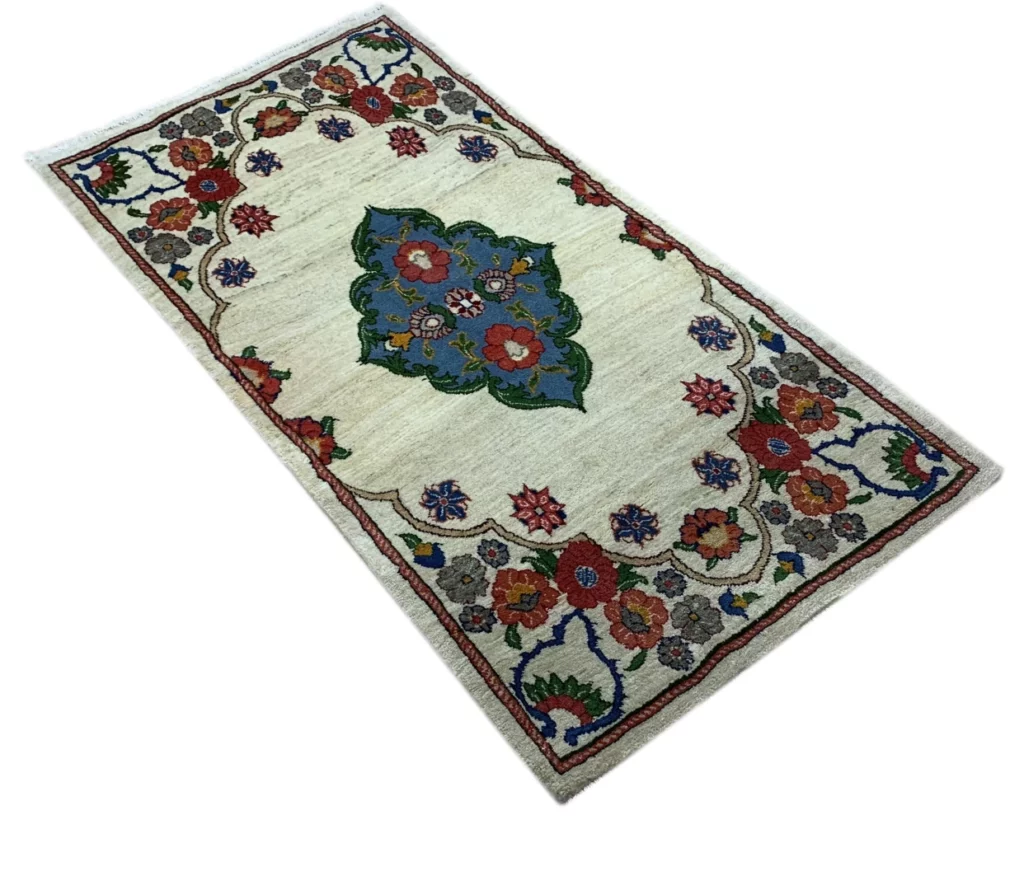
Hand-knotted Hamadan Persian Rug | Knot density: 100,000 – 350,000 knots/m² | Material: Pile resistant wool | Size: 153 x 79 cm | Pattern: Varied designs in blue and red | Condition: Very good
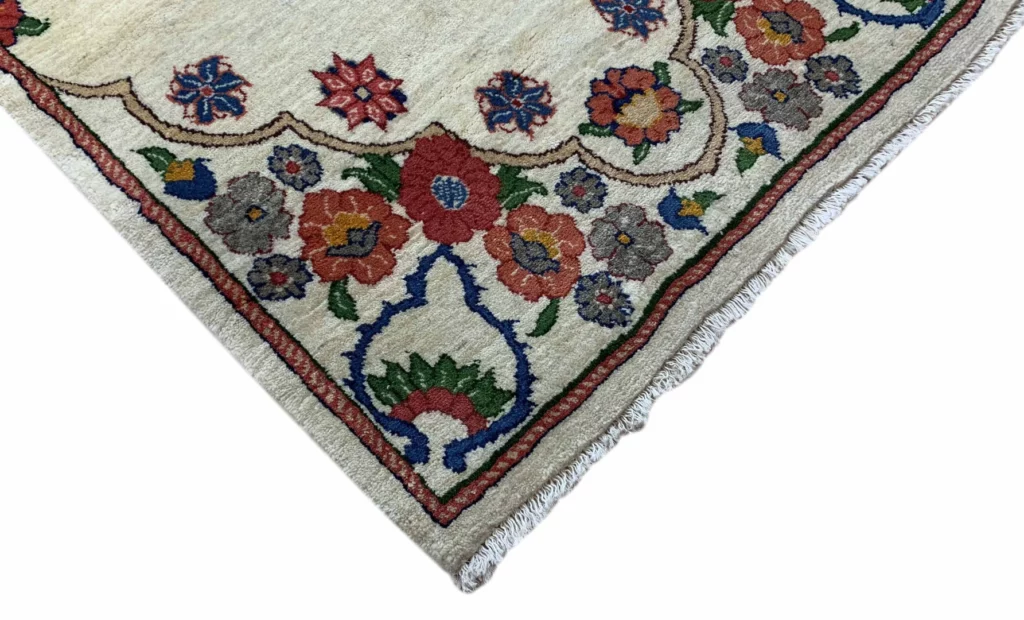
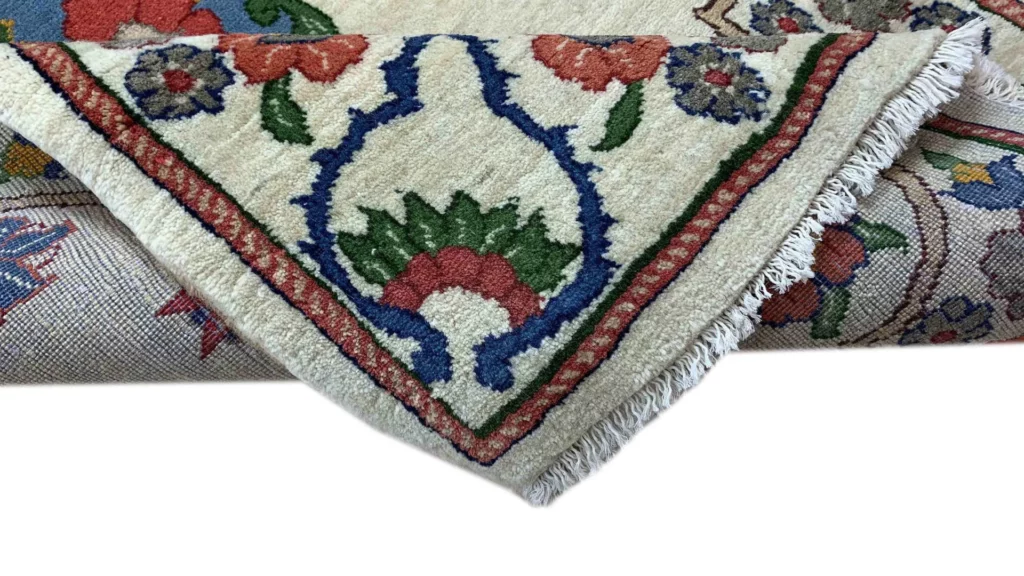
This Hamadan Persian rug is hand-knotted and made with resistant wool. Wool is one of the defining materials associated with many rugs from the region. It combines durability with a soft, pleasant feel, making it suitable for a rug intended to be used in a living space as well as viewed as a textile work. The material gives the pile a natural character while supporting the robust construction associated with Hamadan weaving.
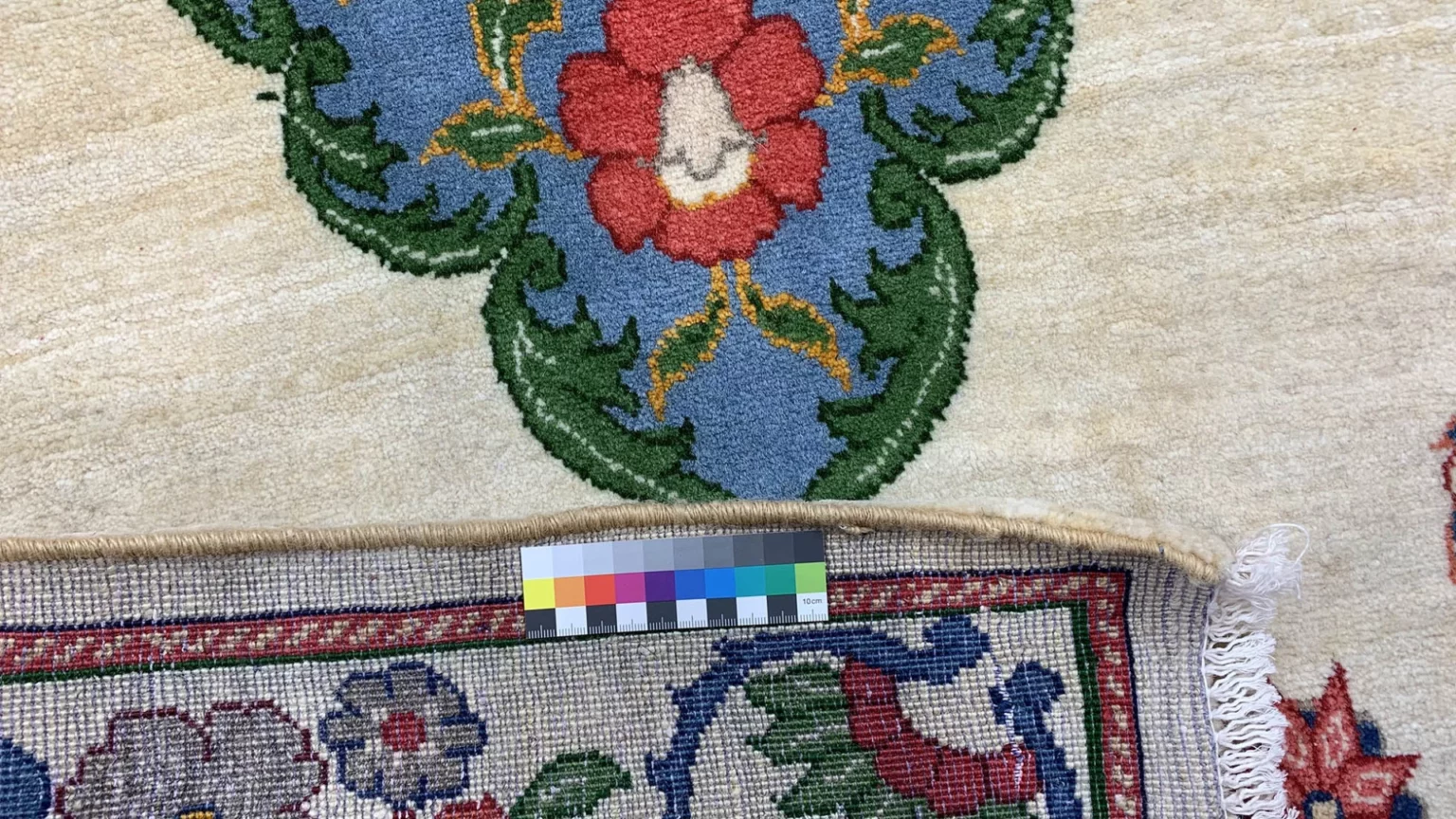
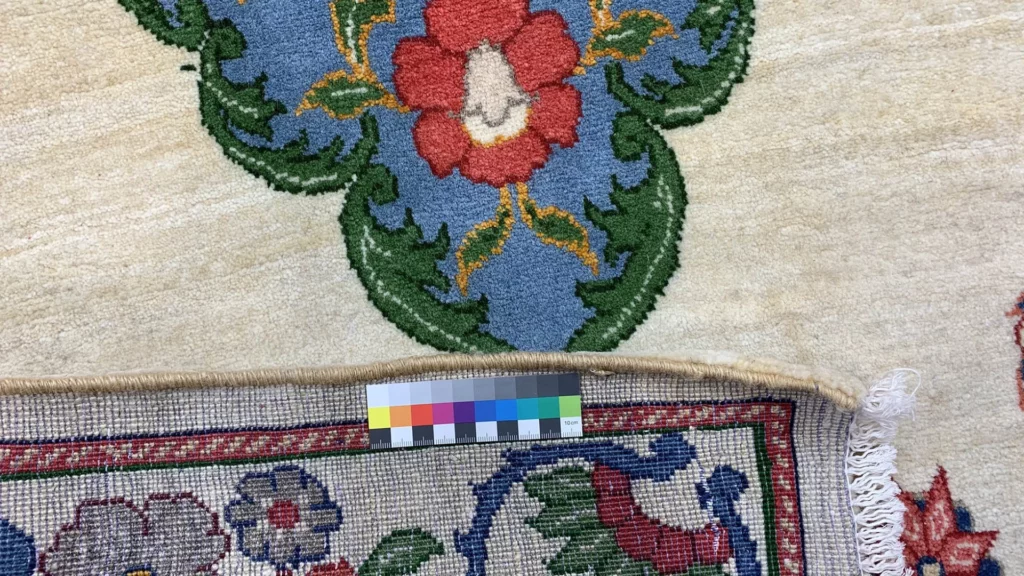
Hand-knotting is carried out knot by knot and requires experience, concentration, and a consistent working process. The knot density recorded for this rug ranges from 100,000 to 350,000 knots per square metre. Knot density describes the closeness of the knots within the structure and is one of the technical features used when considering a hand-knotted rug. It belongs to the construction details of this particular piece.
The resistant wool is complemented by the rug’s very good condition and hand-knotted workmanship. Wool has long been used in Oriental rug making because it can withstand regular use while retaining a comfortable textile surface. In this rug, material, construction, and condition form a straightforward description of a traditionally made Hamadan piece with a durable wool pile.
Origin and Tradition
This rug comes from Hamadan in northwestern Iran. Hamadan names both a city and an important rug-producing region. In the trade, the regional name Hamadan is used for rugs made in the city as well as in many surrounding villages and towns. The provenance connects this individual rug with an area where rug making has long been an important craft and source of production.
Hamadan is known for a high level of rug production. That productivity does not result in one uniform appearance. The regional designation covers a broad group of rugs with differing drawings, colour arrangements, and local expressions. Work from nearby communities has contributed to a varied tradition in which related pieces can share a regional identity while remaining distinct in their designs.
Assadabad, Khamseh, and Nahawand are among the regional variations associated with the wider Hamadan area. These names refer to places and subregions in the surrounding landscape. Their rugs are often offered under the general trade name Hamadan, keeping the connection to the region visible even when individual motifs and construction details differ. This use of a shared name reflects the geographical relationship within the weaving area.
The Hamadan rug belongs to the long tradition of Iranian knotting. Within that tradition, material, structure, colour, and drawing are developed together rather than being separated into unrelated elements. There is no single compulsory Hamadan pattern. Regional makers have worked with geometric layouts, floral forms, and combinations of both, allowing the designation to include a considerable range of visual approaches.
Hamadan rugs are produced in formats ranging from narrow runners to larger rugs for living rooms. This broad production tradition explains why the regional name can describe pieces intended for different spaces and uses. The present rug belongs to that tradition through its Hamadan origin, hand-knotted construction, resistant wool, and blue-and-red design. Its precise combination of these features remains specific to the individual rug.
Design and Pattern
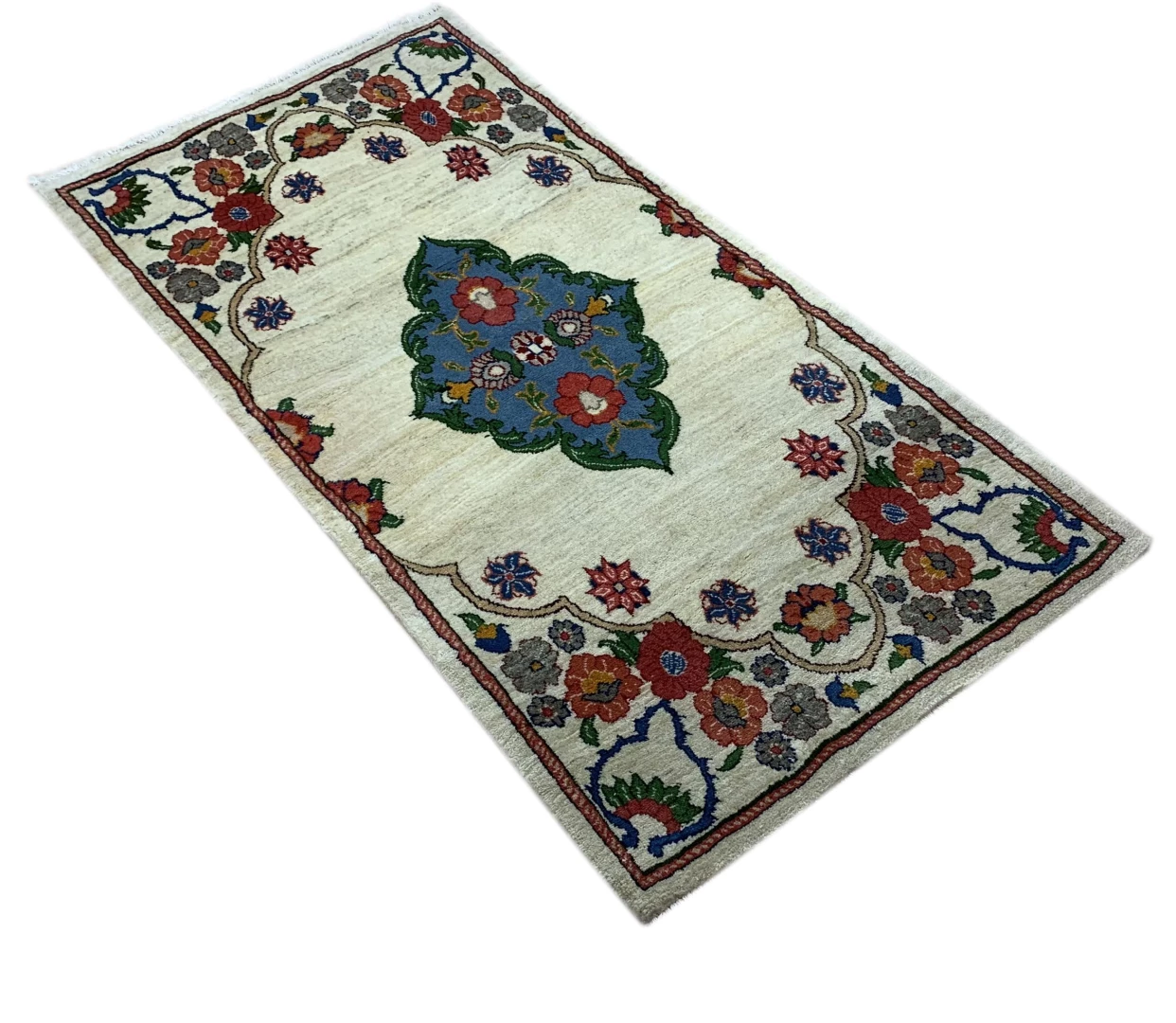
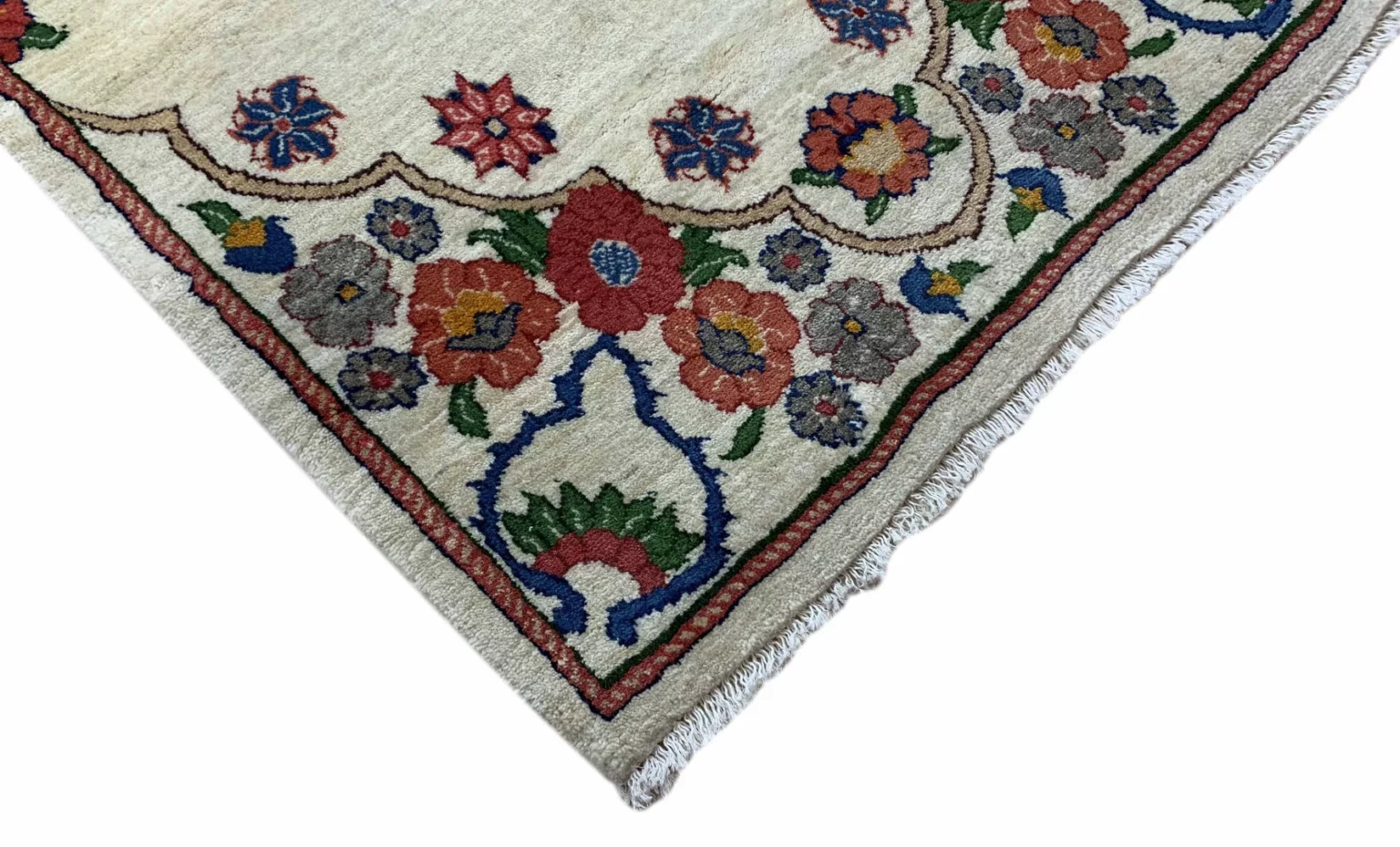
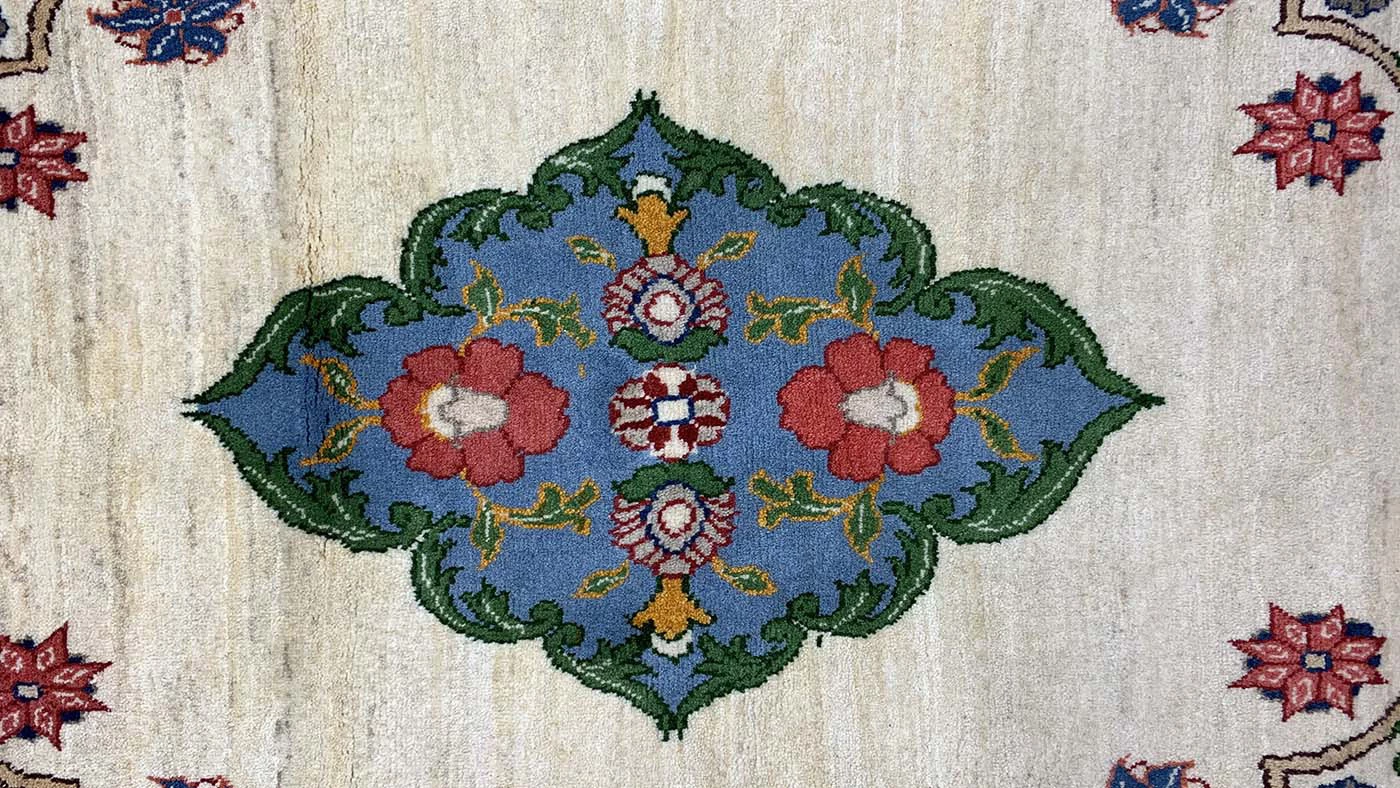
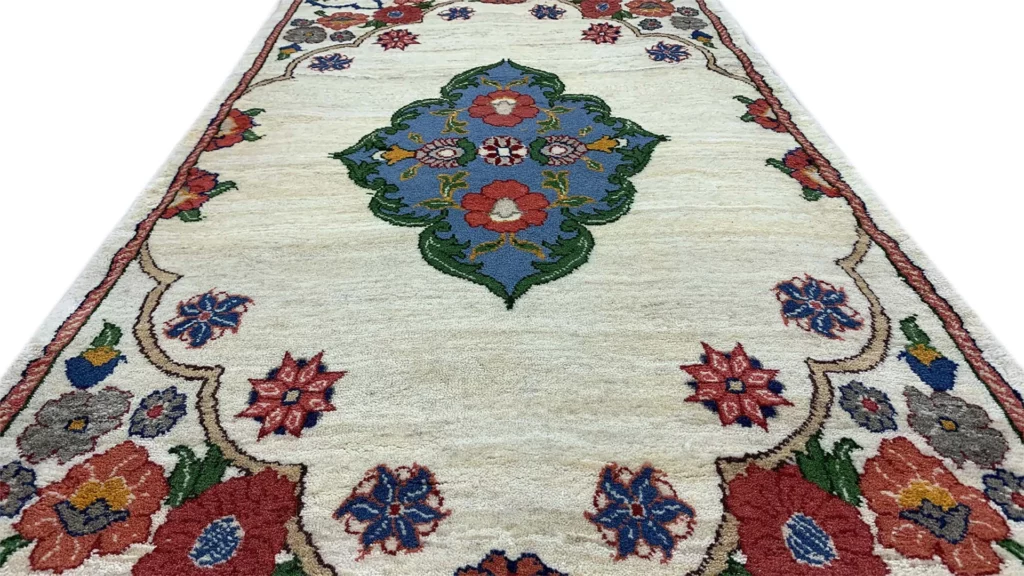
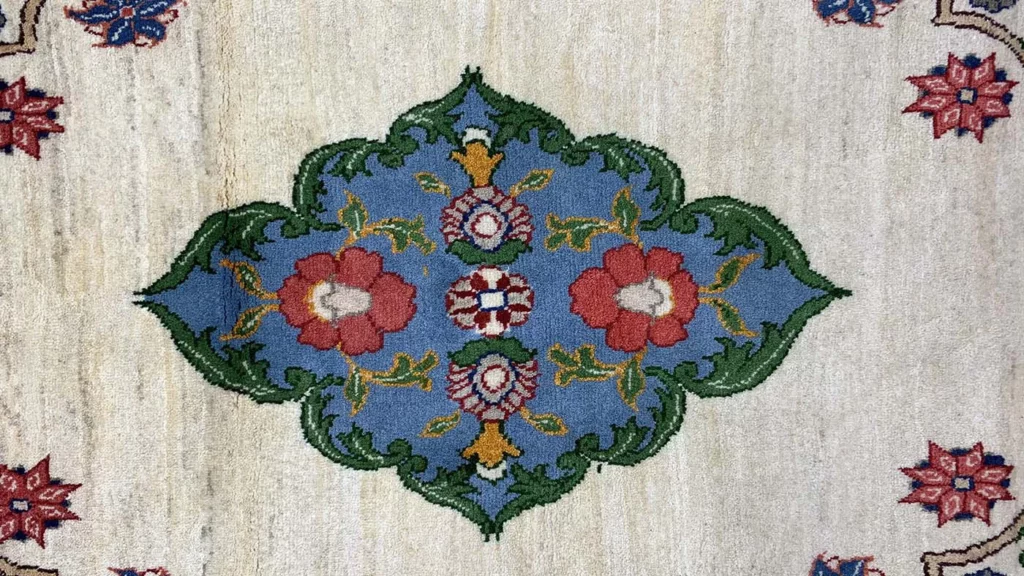
The design of this rug is described as a varied composition in blue and red. These colours may appear in different shades and combinations and are among the colours commonly associated with Hamadan rugs. The colour description indicates the main visual direction of this piece without reducing it to one fixed palette. Within the regional tradition, blue and red can be arranged in many different ways.
Hamadan pattern traditions range from geometric forms to floral motifs. Geometric designs may be built from lines, repeated compartments, diamonds, or other ordered shapes. Floral designs may use stylised flowers, leaves, and vines. Such motifs are often organised into a clear regional composition rather than copied as a single universal template. The result can be strongly structured, more freely arranged, or a combination of both.
The breadth of Hamadan design is an important part of its identity. Hamadan is a regional trade name rather than the name of one exclusive pattern. Rugs from Assadabad, Khamseh, and Nahawand add further local variation to the wider field. Their forms can differ while remaining connected through the region’s weaving history and shared use of durable wool and hand-knotted construction.
Blue gives a composition depth and a cool colour presence, while red can provide a more pronounced accent. The balance between the two depends on the drawing, the shade, and the surrounding motifs. In this rug, the design is identified broadly as varied and blue-and-red rather than being assigned to one named motif. That wording preserves the distinction between its documented appearance and the wider range of Hamadan patterns.
Because of this variety, Hamadan rugs can work with both traditional and more contemporary interiors. A structured geometric drawing can emphasise an ordered room, while floral elements can add a softer ornamental note. The individual arrangement remains decisive. A hand-knotted rug is not a mass-produced image: its colour relationships, motif placement, and surface are brought together in one particular piece.
Special Features
The defining features of this rug are its Hamadan provenance, hand-knotted workmanship, resistant wool pile, and varied design in blue and red. Its condition is described as very good. These points provide a factual profile of the piece and distinguish the features that are relevant when assessing this individual Oriental rug.
The wool gives the pile a durable yet pleasant surface, while the construction reflects the practical side of Hamadan rug making. The colours and varied pattern provide its decorative character. Like Oriental rugs generally, a wool rug can also help dampen sound and contribute to a comfortable atmosphere in a room. These practical qualities accompany, rather than replace, the regional and handmade character.
This is a one-off rug. The name Hamadan identifies its regional origin; it does not claim that every rug sold under that name was made in one workshop or follows one identical design. The specific combination of origin, wool, hand-knotting, blue and red decoration, and very good condition belongs to this individual piece.
FAQ
How should I care for my Hamadan Persian rug?
The rug should be vacuumed regularly, thoroughly but gently. This removes loose dirt while avoiding unnecessary strain on the pile. Spills and stains should be dealt with as soon as possible. A damp cloth and a mild cleaning product can be used for this purpose. Work carefully and avoid vigorous rubbing, so that the wool pile and the coloured pattern receive gentle treatment during spot cleaning.
Where does the Hamadan Persian rug come from?
The rug comes from Hamadan in northwestern Iran. Hamadan refers both to the city and to the surrounding rug-producing region. Rugs of this type are knotted in the city and in many nearby villages and towns. The regional variations associated with the area include Assadabad, Khamseh, and Nahawand. In the trade, these different local expressions are often brought together under the general name Hamadan.
Which colours are typical of Hamadan rugs?
Blue and red are particularly typical colours for Hamadan rugs. They can appear in different shades and combinations, depending on the local variation, the pattern structure, and the individual workmanship. For this rug, the design is described as varied and blue and red. This identifies its main colour world without suggesting that all Hamadan rugs use one identical arrangement or one fixed set of motifs.
To provide the best experiences, we use technologies like cookies to store and/or access device information. Consenting to these technologies will allow us to process data such as browsing behavior or unique IDs on this site. Not consenting or withdrawing consent, may adversely affect certain features and functions.
Functional Always active
The technical storage or access is strictly necessary for the legitimate purpose of enabling the use of a specific service explicitly requested by the subscriber or user, or for the sole purpose of carrying out the transmission of a communication over an electronic communications network.
Preferences
The technical storage or access is necessary for the legitimate purpose of storing preferences that are not requested by the subscriber or user.
Statistics
The technical storage or access that is used exclusively for statistical purposes.The technical storage or access that is used exclusively for anonymous statistical purposes. Without a subpoena, voluntary compliance on the part of your Internet Service Provider, or additional records from a third party, information stored or retrieved for this purpose alone cannot usually be used to identify you.
Marketing
The technical storage or access is required to create user profiles to send advertising, or to track the user on a website or across several websites for similar marketing purposes.

 SECURE PAYMENT
 SHIPPING PARTNERS