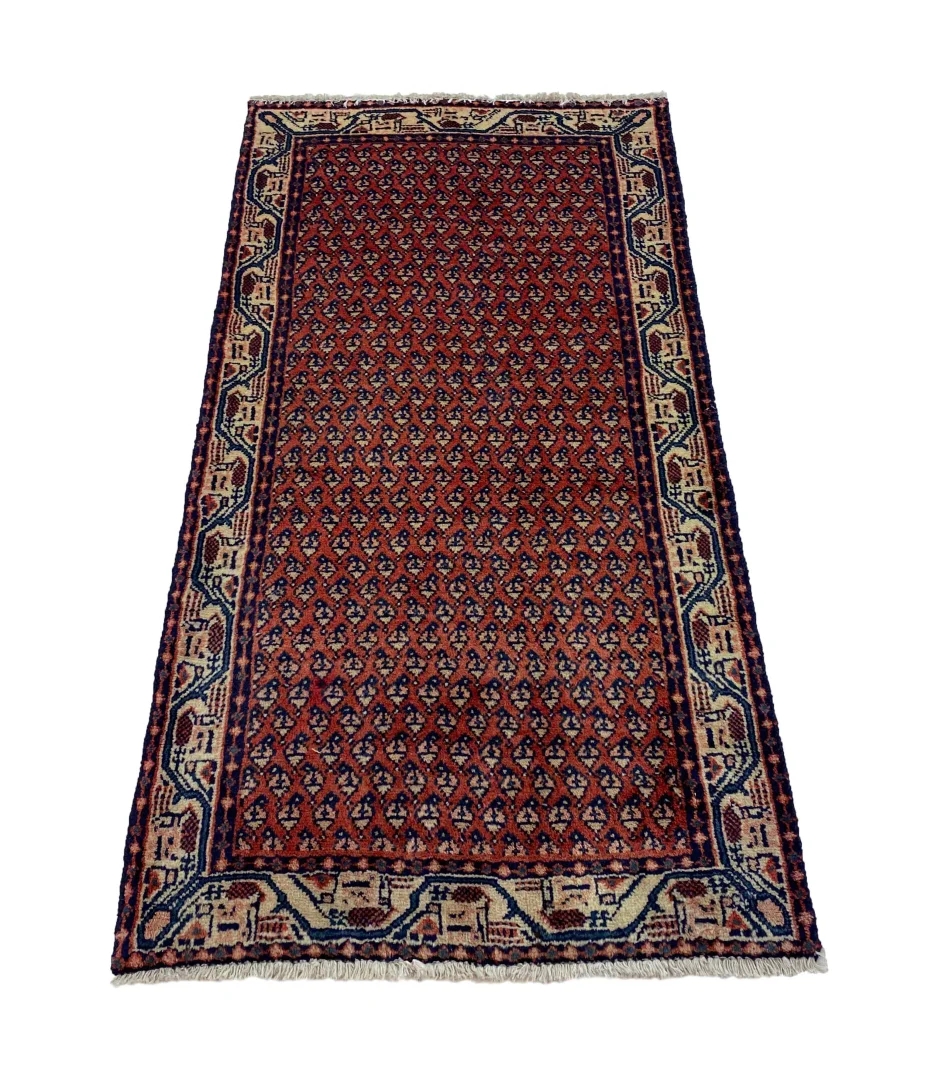
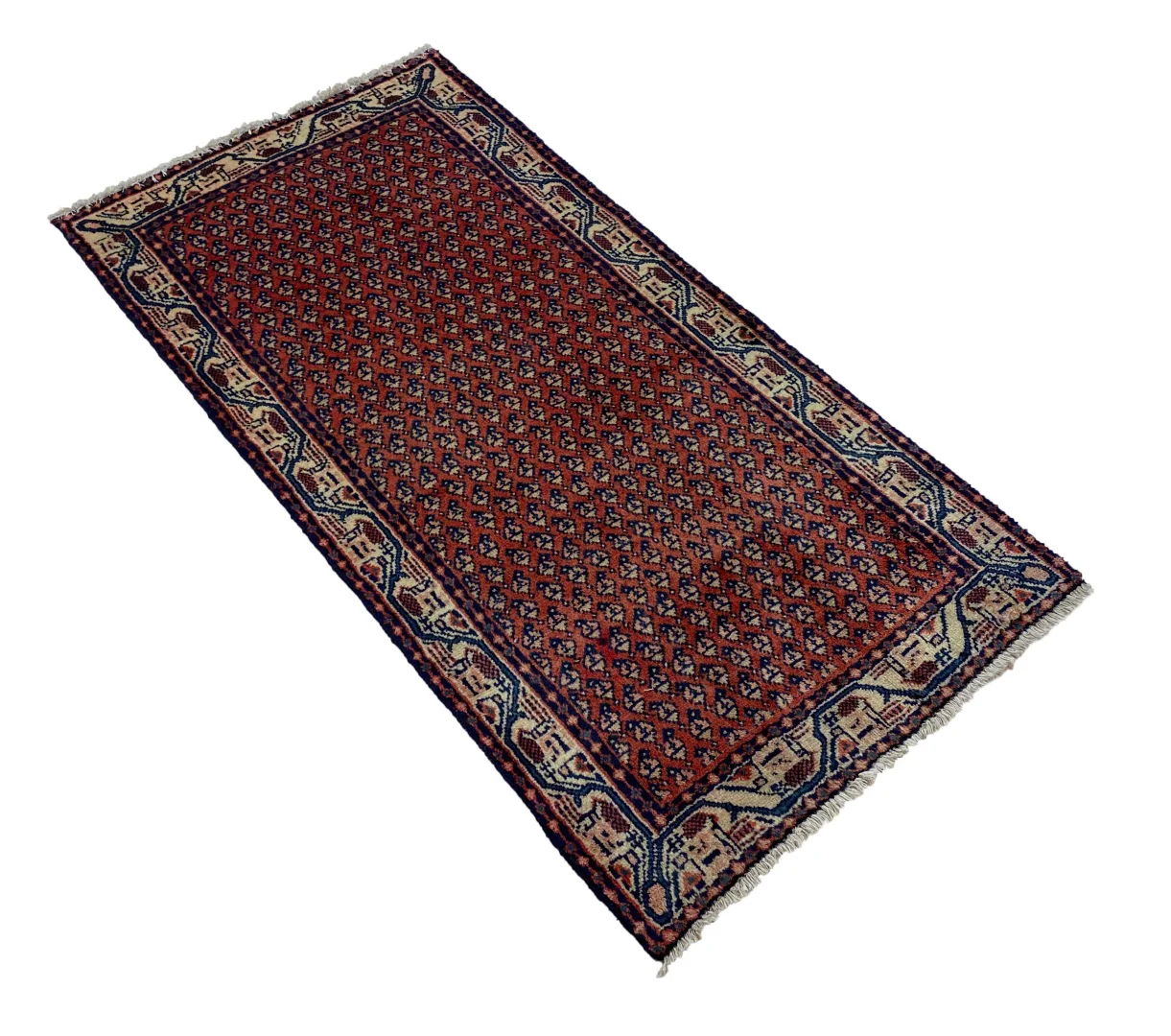
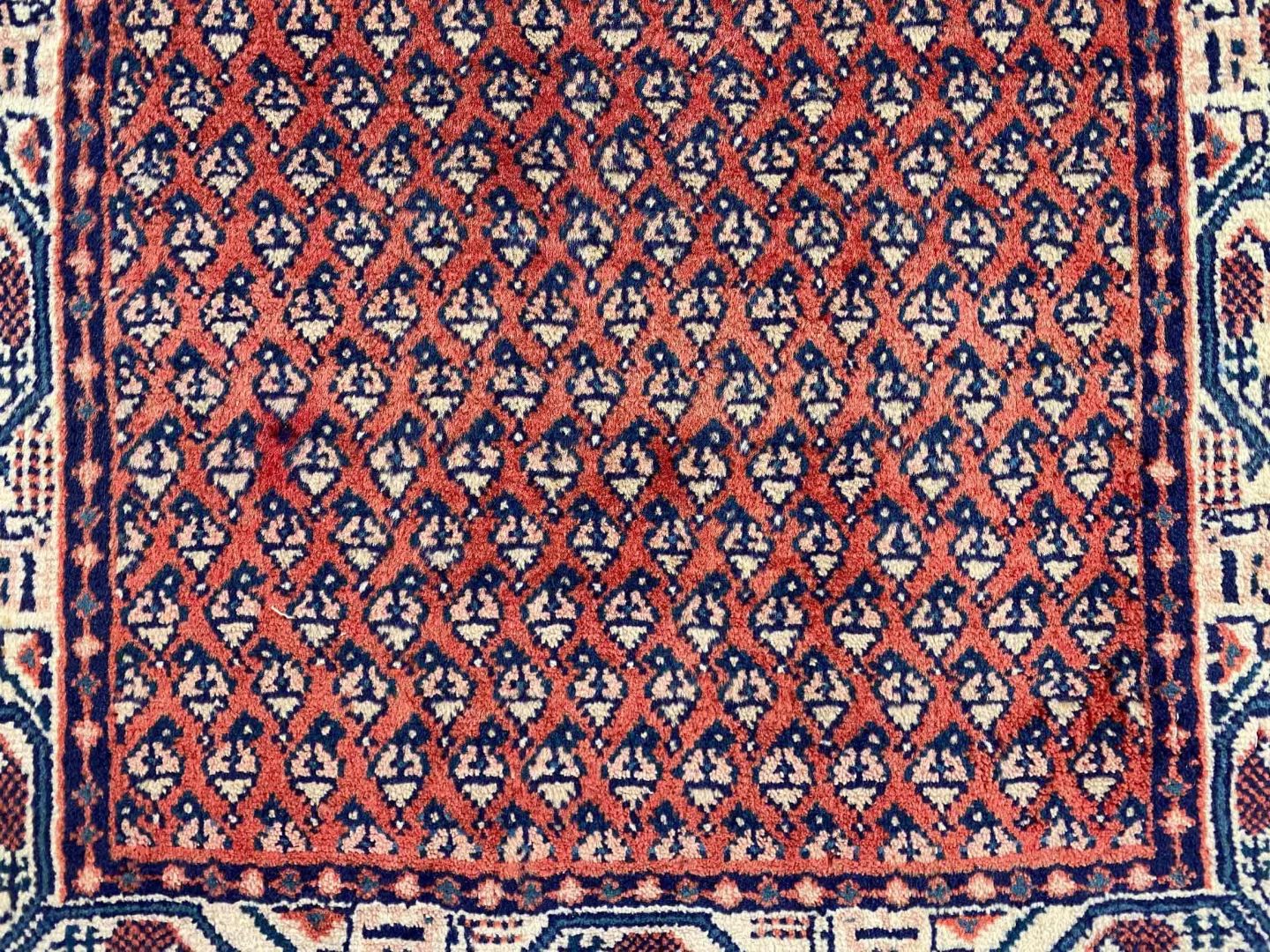
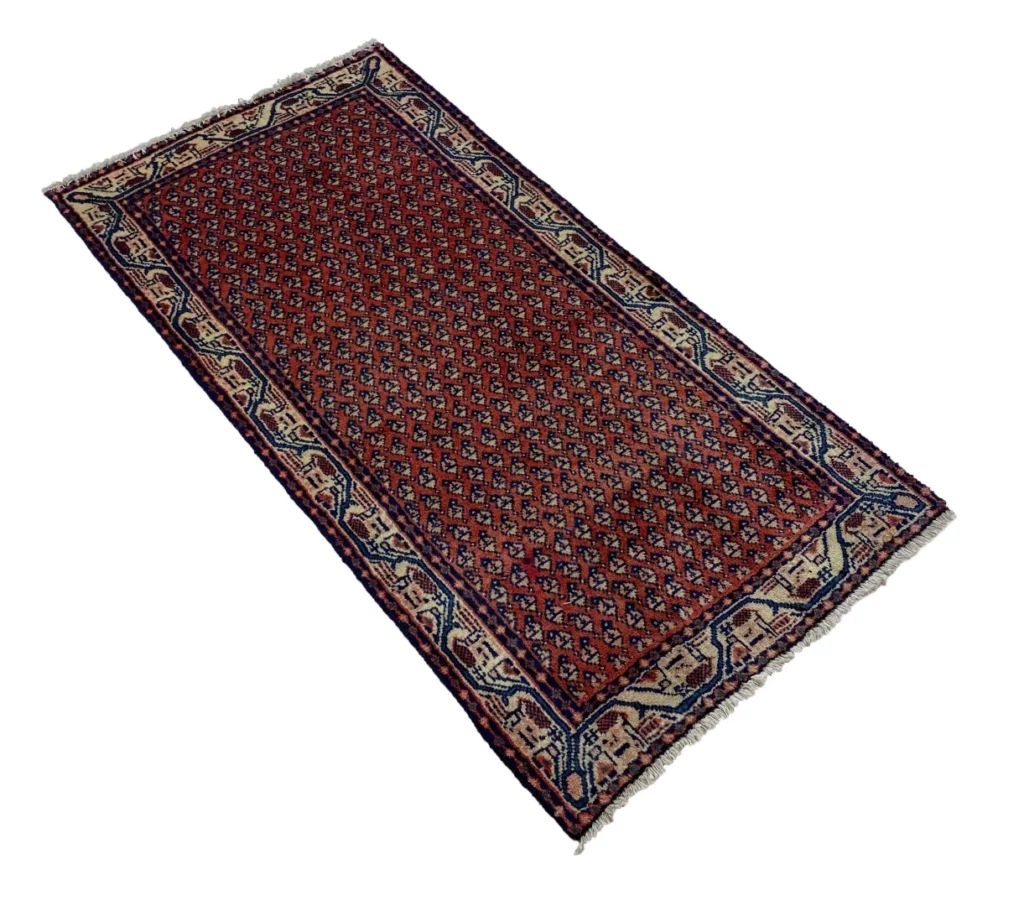
This Hamadan Persian rug is hand-knotted and made from resistant wool. The wool is described as fine, soft and pleasant, while also offering exceptional resilience. It therefore combines a comfortable surface with the durability associated with a hard-wearing rug material. The robust character of the wool is one of the features used to describe Hamadan rugs.
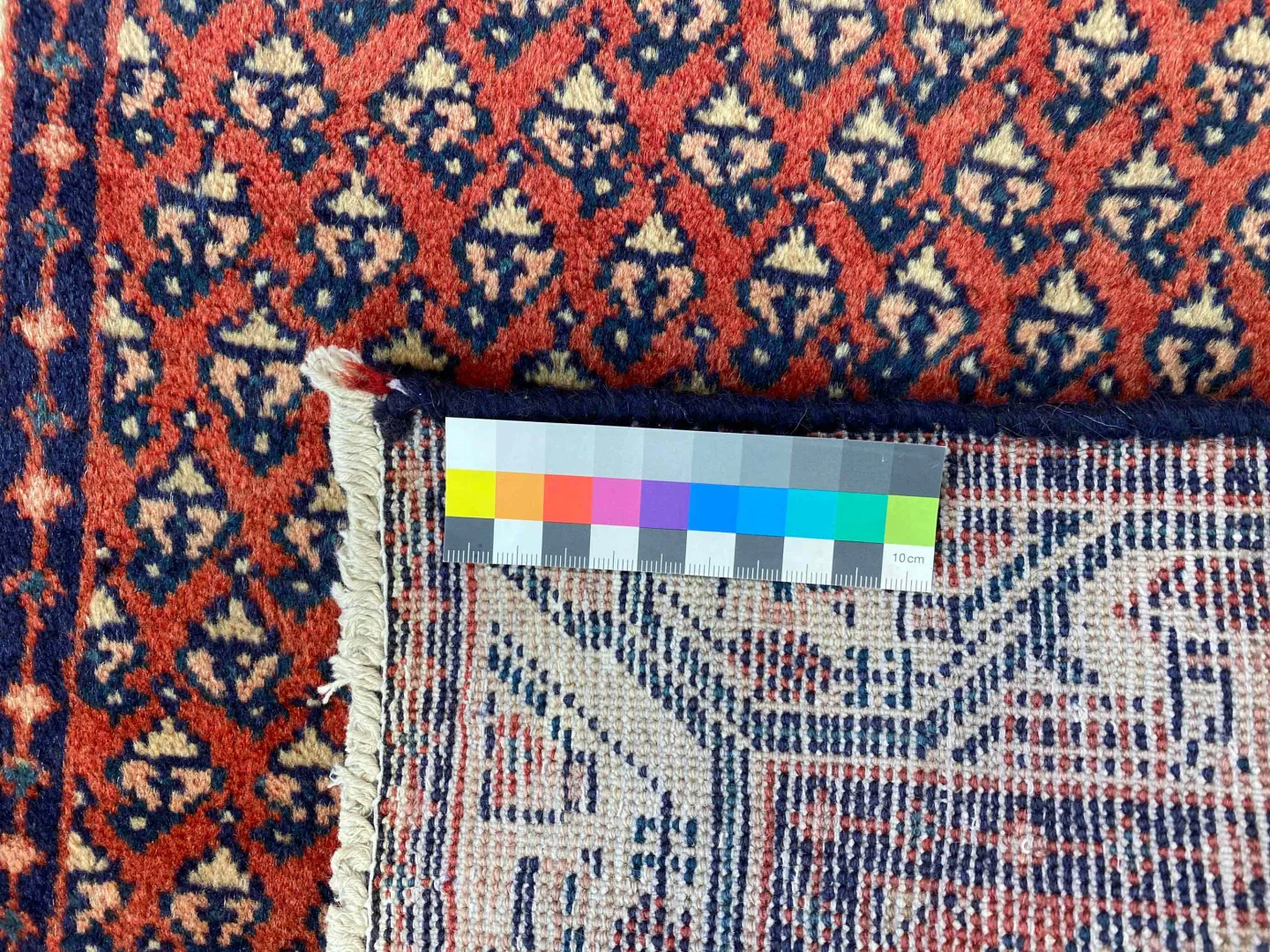
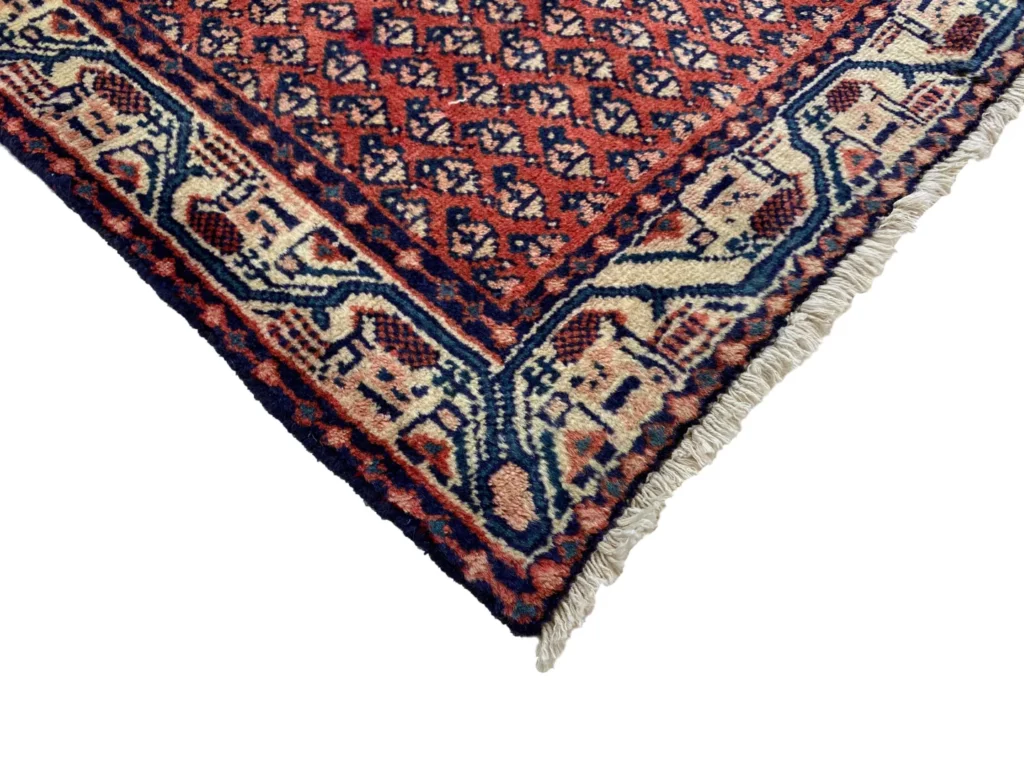
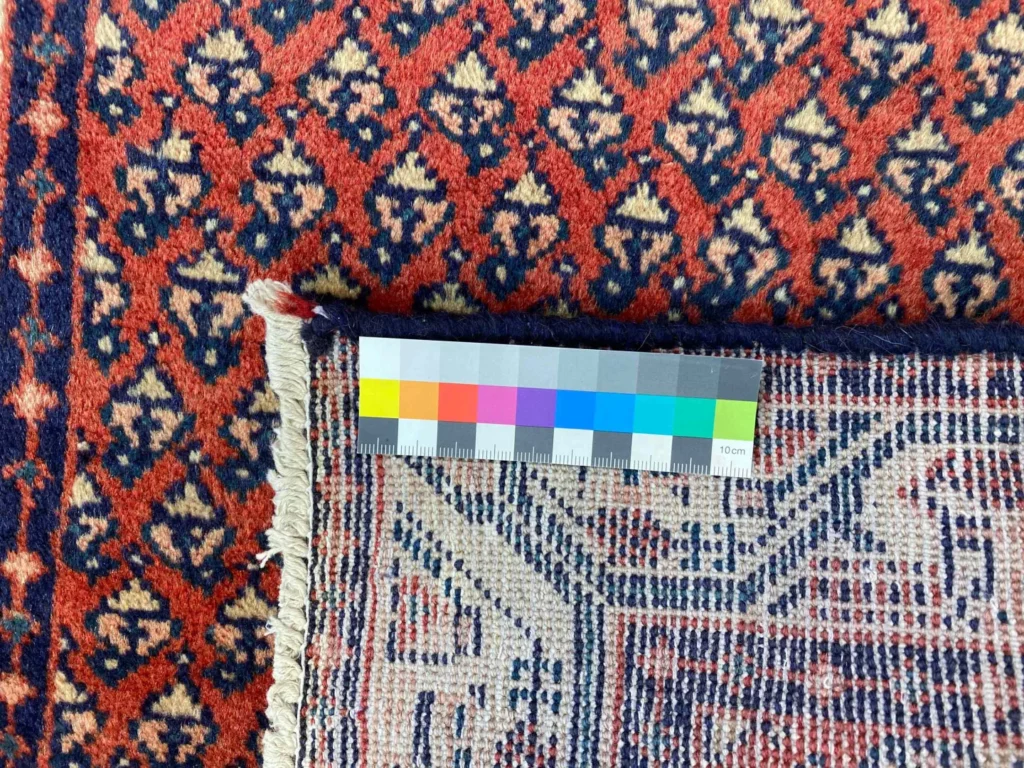
The knot density is 100,000 to 350,000 knots per square metre. This range reflects the different levels of fineness found in Hamadan rug making. Hand-knotting allows the design to be built knot by knot, supporting both detailed drawing and long-term durability. Each knot forms part of the structure and contributes to the individually executed character of a hand-made textile.
Natural dyes are specified for Hamadan rugs. They produce lively colours that do not fade over the years. Together with resistant wool and hand-knotted construction, this creates the combination of material strength, visual detail and durability described for the type. This rug is listed as being well preserved.
Origin and Tradition
Hamadan is in north-western Iran and is the stated origin of this Persian rug. The surrounding region is known for many villages where carpet weaving has been an established craft. Hamadan therefore refers not only to a place, but also to a broad weaving area with several local traditions. Rugs associated with the region can share a general identity while still differing in drawing, colour arrangement and decorative structure.
The villages commonly connected with the Hamadan weaving area include Assadabad, Khamseh, Maslaghan, Enjelas, Nahawand, Tuyserkan and Mousel. Each is described as having developed distinctive designs. Local patterns and working traditions were passed down and developed within the villages, creating a varied regional vocabulary. This explains why the Hamadan group includes rugs with different visual expressions rather than one fixed template.
Hamadan rugs belong to the wider tradition of Iranian carpet weaving. In a hand-knotted carpet, the structure is formed by placing individual knots in sequence. Knot density influences how finely lines, borders and small decorative forms can be rendered. A denser construction can support more detailed drawing, while the regional design tradition determines how those forms are selected and arranged.
The rugs of Hamadan are known for their durable and hard-wearing character. This quality is associated with wool and with the traditional hand-made construction. They are consequently both products of an established cultural craft and functional textiles. Their identity comes from the relationship between Iranian origin, village-based weaving knowledge, practical material choices and varied decorative traditions.
Other rug traditions are also part of the wider cultural context. Bakhtiari rugs are known for lively colours and complex patterns, while Gabbeh rugs are associated with simple yet expressive designs. These examples illustrate the range within Iranian carpet culture. Hamadan represents one particular regional tradition within this larger field, with its own village variations and characteristic combination of practical construction and diverse pattern language.
The history of a weaving region is preserved through repeated craft practices rather than through a single design formula. Patterns can be adapted by individual weavers and local workshops, while familiar forms remain recognisable across the area. The resulting diversity is an important part of Hamadan tradition. It allows the regional name to describe a family of related carpets while leaving room for different compositions and decorative emphases.
Design and Pattern
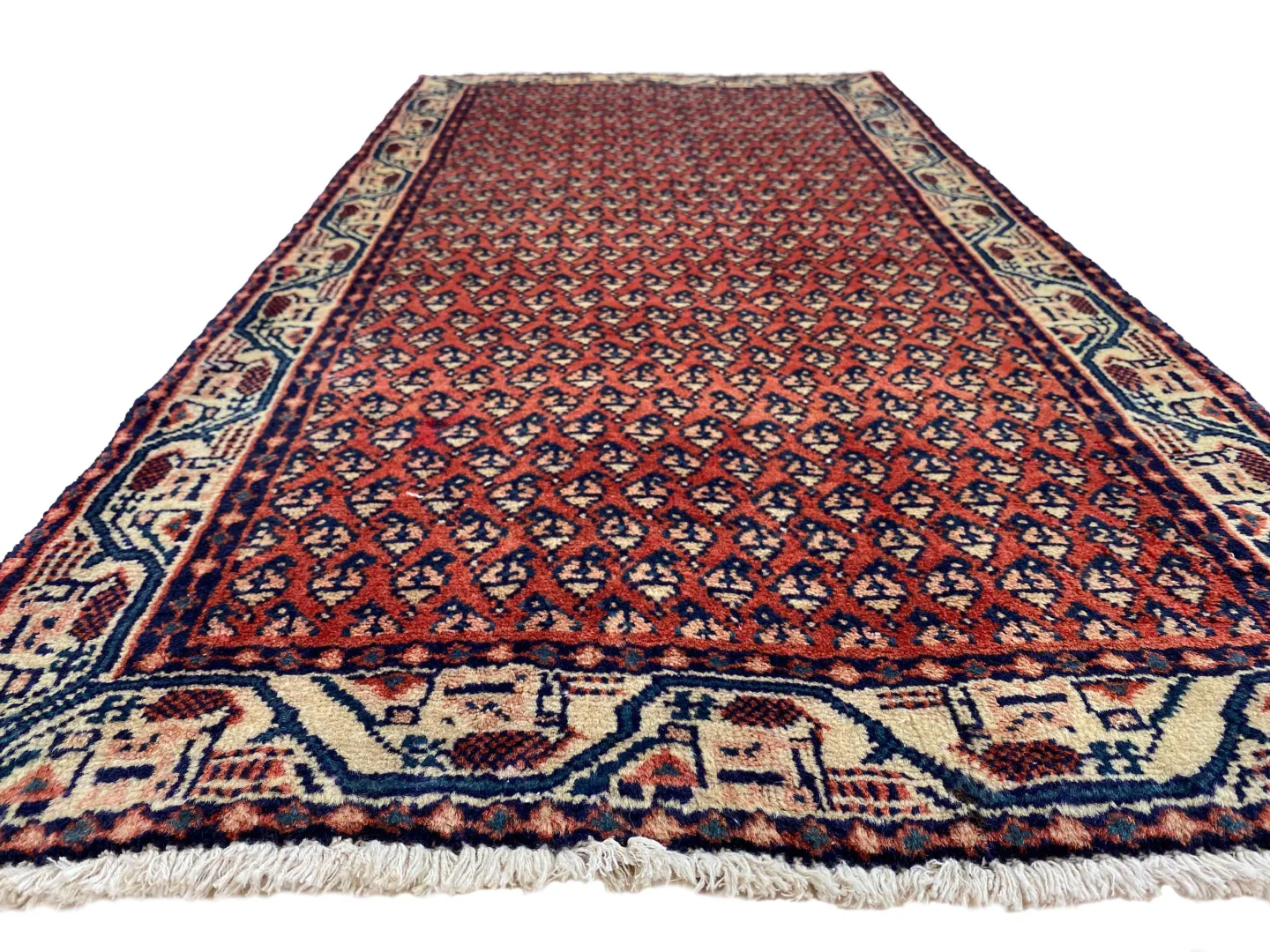
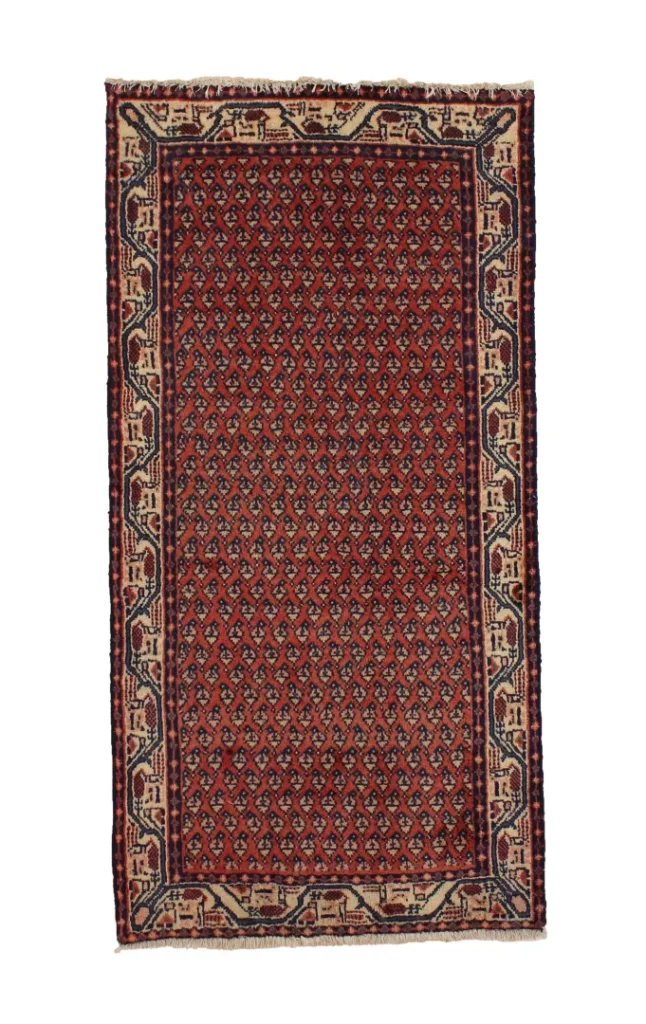
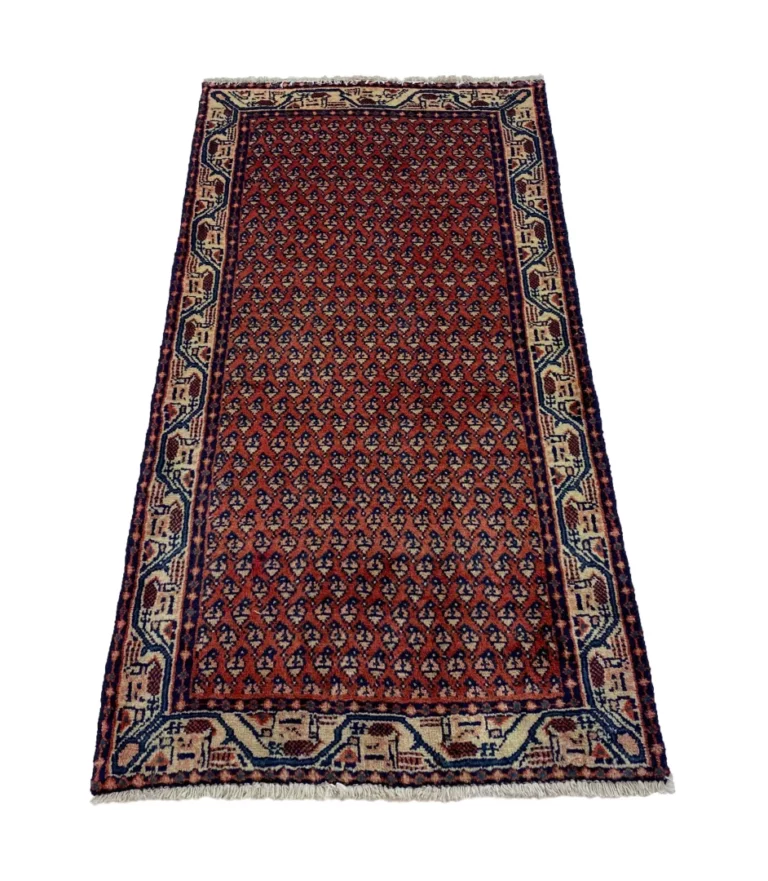
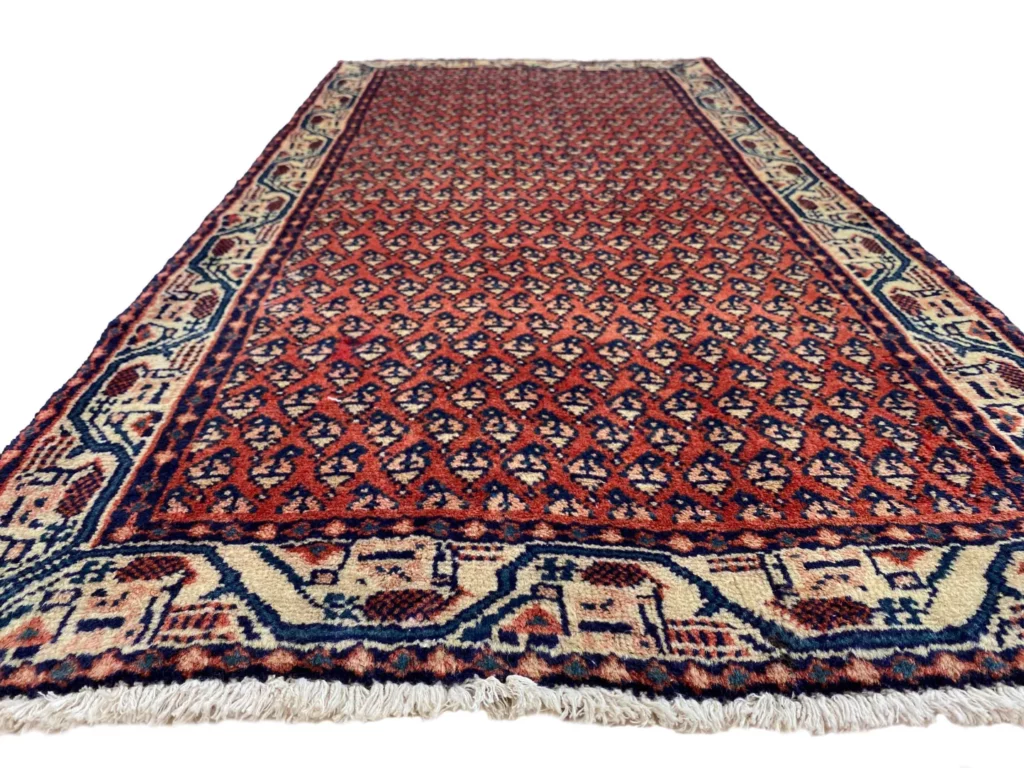
The pattern is described as offering varied design options. Hamadan rugs often combine traditional geometric designs with floral motifs. Geometric elements give the composition clear outlines and a sense of order. Floral details introduce curved lines and organic forms. Their combination creates one of the recurring design possibilities associated with Hamadan weaving, although the exact arrangement can differ from one rug to another.
A geometric composition may use diamonds, medallions, repeated border forms or balanced fields to organise the surface. Floral motifs may appear as individual ornaments, scrolling branches or supplementary details around a central arrangement. These terms describe established pattern families rather than a claim that every Hamadan rug contains all of them. The local origin and the weaver’s chosen composition determine which elements are present.
The variety of design is central to the Hamadan tradition. Rugs from the area do not follow one unchanging visual scheme. The villages of Assadabad, Khamseh, Maslaghan, Enjelas, Nahawand, Tuyserkan and Mousel are named as examples of communities that have contributed their own patterns. The shared regional name identifies the weaving culture, while the drawing and colour balance reveal the particular expression of each carpet.
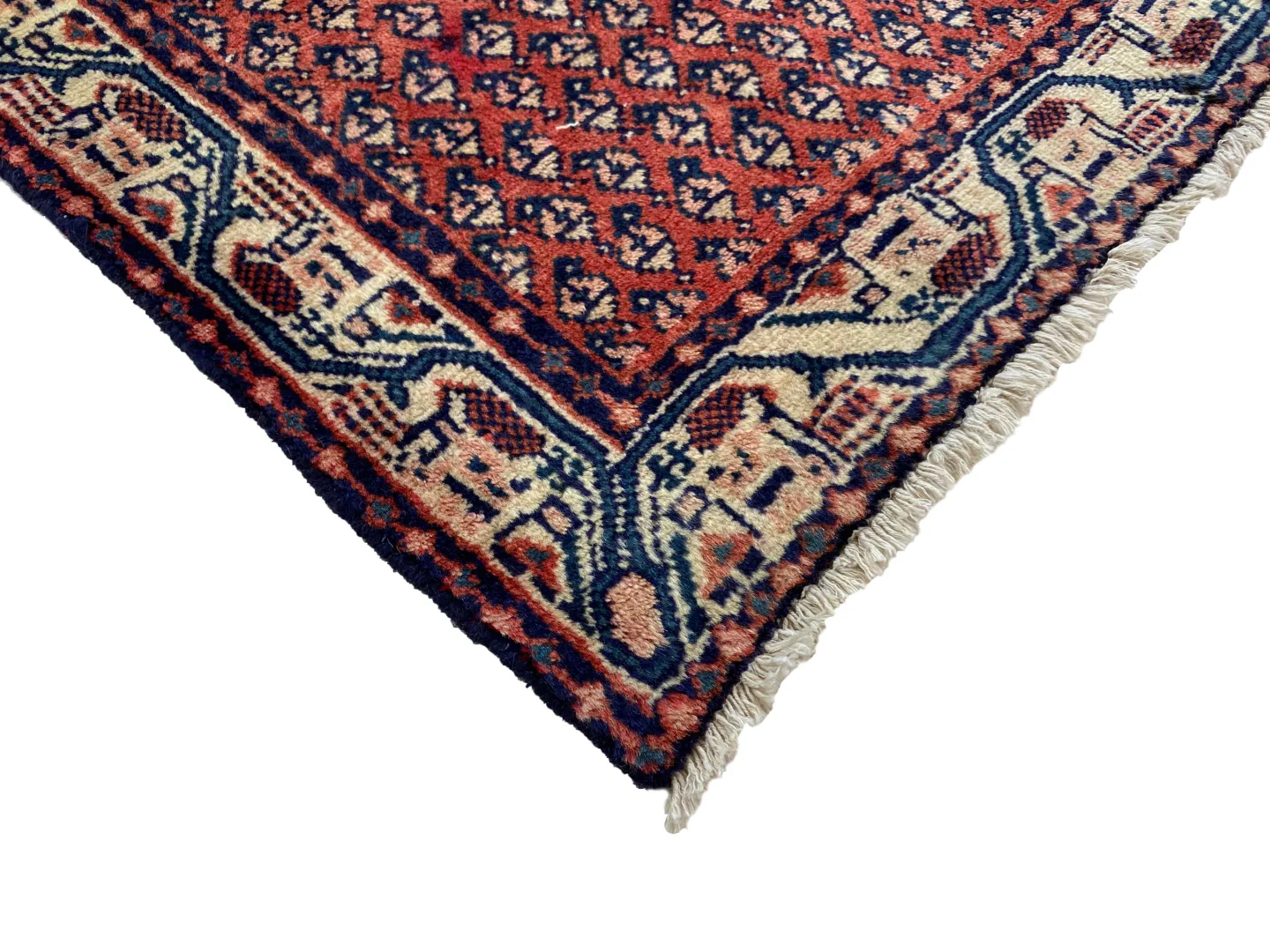
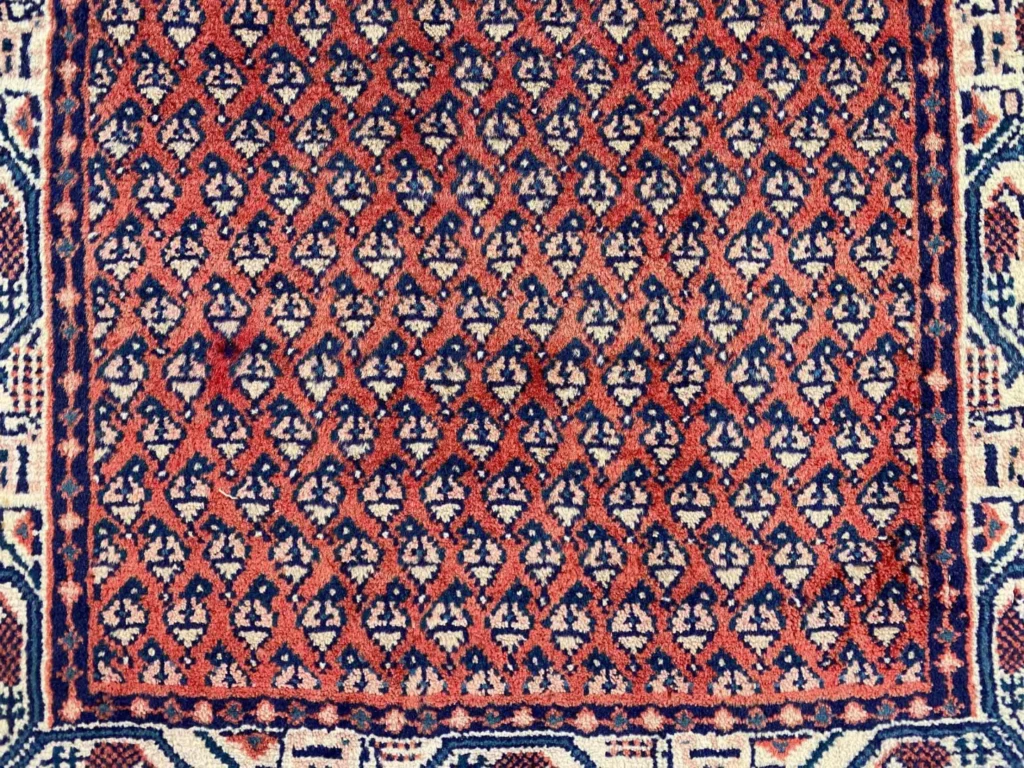
Natural dyes give the designs lively colours. Colour in a traditional rug has both a decorative and an organisational role. It can separate fields, emphasise a border, clarify a geometric figure or distinguish floral details from the surrounding ground. The use of natural dyes is part of the stated Hamadan tradition and is associated with colours that remain vivid over the years.
Hand-knotting also shapes the appearance of the pattern. Since the design is built one knot at a time, lines, transitions and small motifs can be developed through a carefully ordered sequence. The stated knot-density range indicates the level of fineness that can occur in Hamadan rugs. The pattern is therefore not a mechanically repeated print, but a woven composition created through the interaction of knots, wool, colour and regional design practice.
Hamadan rugs are described as suitable for different areas of a home, including living rooms, bedrooms and hallways. This reflects the versatility of the rug type rather than a claim about a particular interior. The effect depends on the individual design. Geometric patterns can support a more structured setting, while floral details can provide a more ornamental presence. Varied designs allow the Hamadan tradition to work across different furnishing contexts.
The balance between ornament and structure is one of the reasons the Hamadan group contains such a broad range of appearances. Some compositions can be read through strong repeated forms, while others place greater emphasis on floral detail or colour contrast. What unites them is not a single motif, but the connection to a regional hand-knotting tradition in north-western Iran.
Special Features
The defining features of this rug are its Hamadan origin, hand-knotted construction, resistant wool, natural-dye tradition and varied design description. The stated knot density points to the detailed character associated with the type. Geometric and floral design possibilities place the rug within a broad regional pattern tradition rather than a single prescribed layout. Its condition is described as well preserved.
The origin region includes villages with their own designs, which gives the Hamadan name a diverse meaning. The combination of a durable wool material, hand-made construction and lively natural-dye colours brings together practical use and traditional decoration. As a hand-knotted rug, the individual execution is part of its character, while the regional background explains the range of forms found within Hamadan weaving.
FAQ
What makes a Hamadan Persian rug special?
A Hamadan Persian rug brings together Iranian origin, hand-knotted construction, resistant wool and a knot density associated with detailed weaving. Its designs are varied rather than restricted to one pattern. Traditional geometric forms may be combined with floral motifs, and natural dyes provide lively colours. The different villages in the Hamadan region have developed their own designs, so rugs sharing the regional name can still have distinctly different appearances.
How should I care for my Hamadan rug?
Regular cleaning is recommended to preserve the rug’s appearance and durability. For a thorough cleaning, professional treatment is advisable so that the hand-knotted structure and wool can be handled appropriately. Direct sunlight should be avoided because it can encourage the colours to fade. This is particularly relevant to a rug whose appearance includes colours produced with natural dyes.
Where can I buy an authentic Hamadan Persian rug?
Authentic Hamadan Persian rugs can be found at specialist rug dealers and at handicraft markets. When purchasing, look for certificates confirming the product’s origin and quality. A clear description should also identify the regional designation, hand-knotted construction, material and condition. These details help distinguish the rug’s actual characteristics and provide a sound basis for assessing its authenticity.
To provide the best experiences, we use technologies like cookies to store and/or access device information. Consenting to these technologies will allow us to process data such as browsing behavior or unique IDs on this site. Not consenting or withdrawing consent, may adversely affect certain features and functions.
Functional Always active
The technical storage or access is strictly necessary for the legitimate purpose of enabling the use of a specific service explicitly requested by the subscriber or user, or for the sole purpose of carrying out the transmission of a communication over an electronic communications network.
Preferences
The technical storage or access is necessary for the legitimate purpose of storing preferences that are not requested by the subscriber or user.
Statistics
The technical storage or access that is used exclusively for statistical purposes.The technical storage or access that is used exclusively for anonymous statistical purposes. Without a subpoena, voluntary compliance on the part of your Internet Service Provider, or additional records from a third party, information stored or retrieved for this purpose alone cannot usually be used to identify you.
Marketing
The technical storage or access is required to create user profiles to send advertising, or to track the user on a website or across several websites for similar marketing purposes.

 SECURE PAYMENT
 SHIPPING PARTNERS


