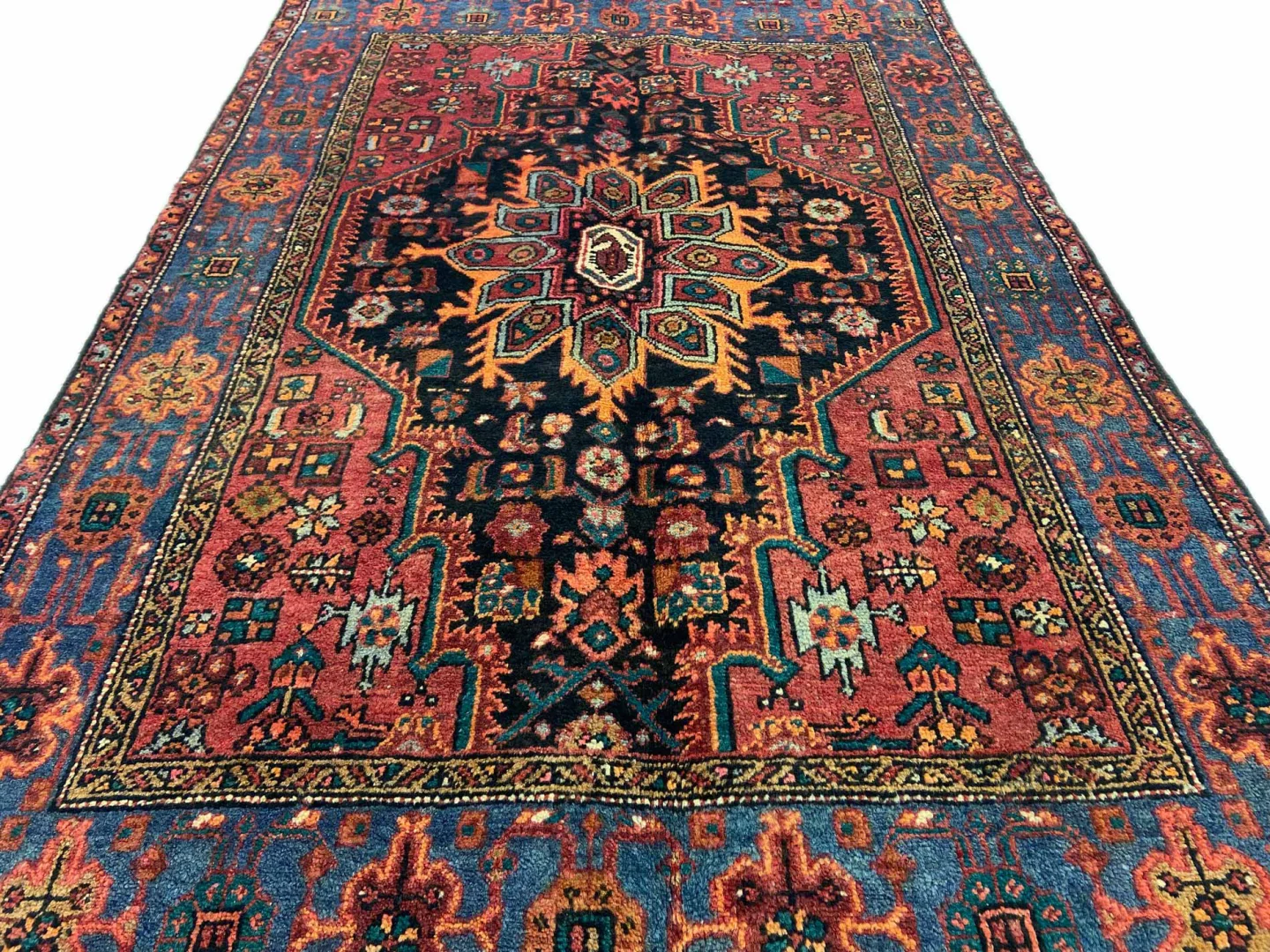
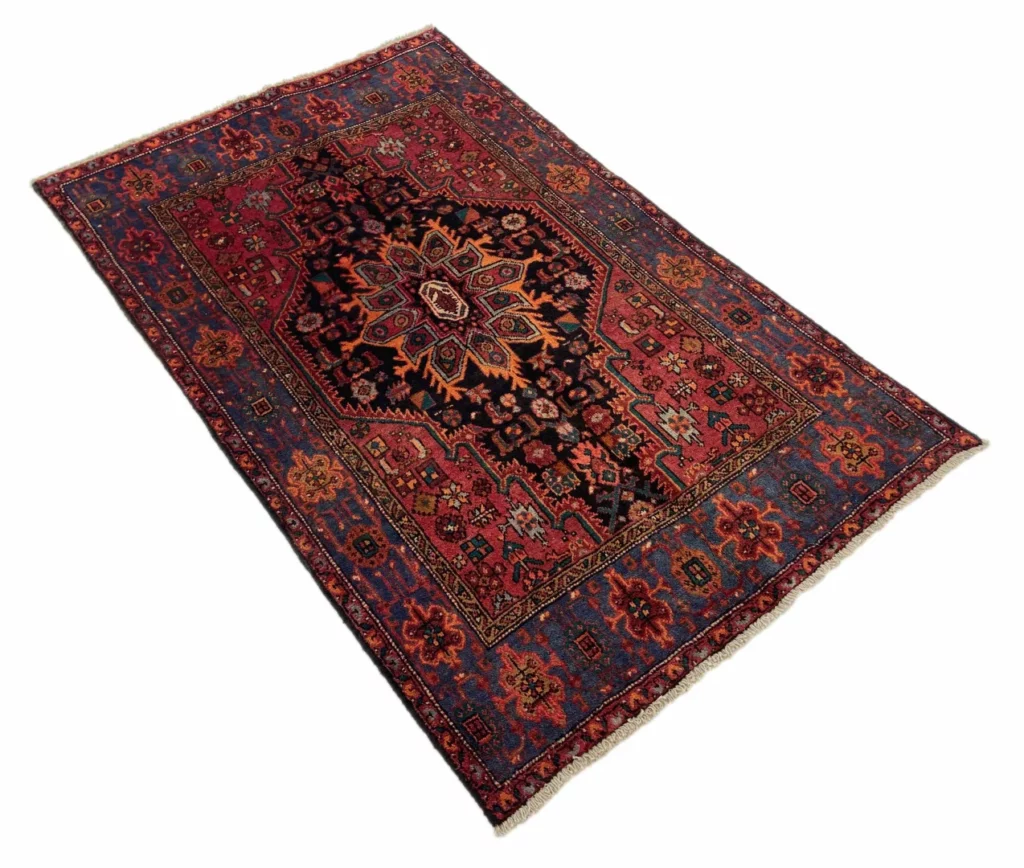
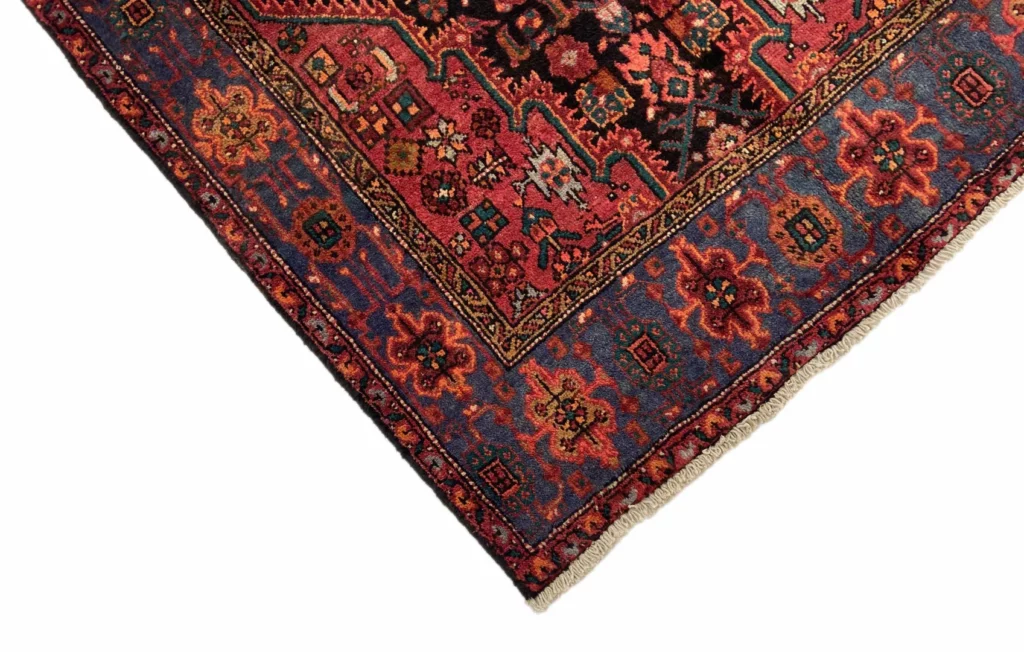
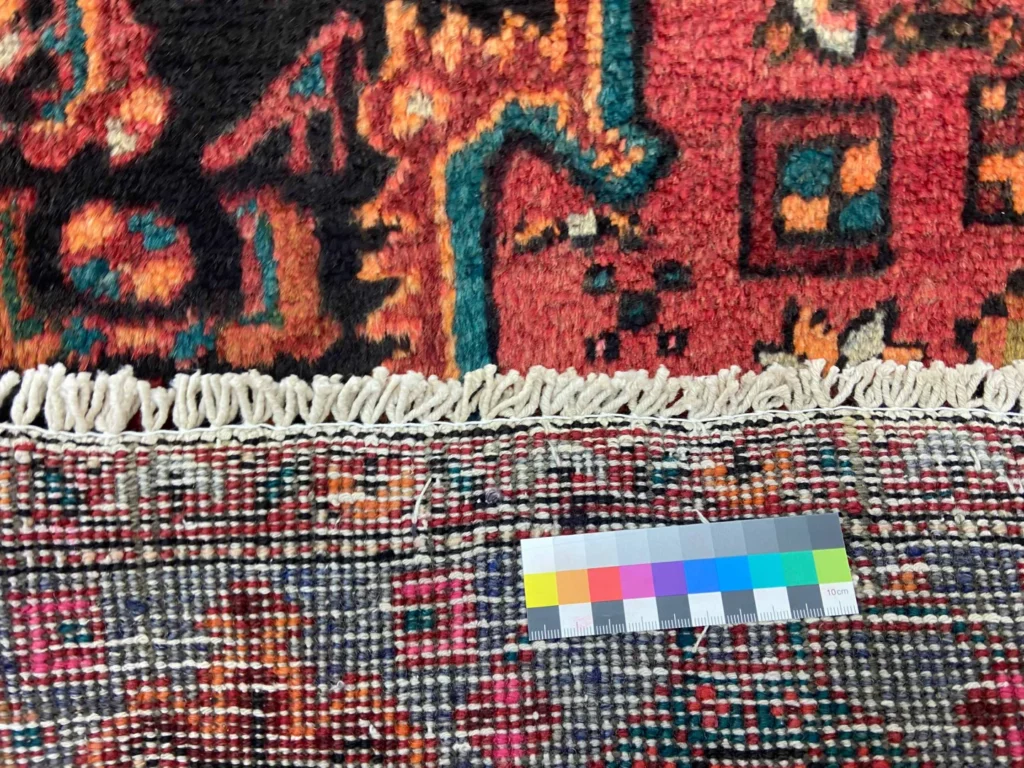
This hand-knotted Persian rug from Goltogh is made of high-quality wool. Wool is used in rug making for its soft handle and hard-wearing character. With hand-knotting, the pile is built knot by knot rather than produced through an industrial process. Each row requires concentrated manual work and careful control of the textile surface. The wool pile therefore combines a pleasant feel with a material quality suited to regular use.
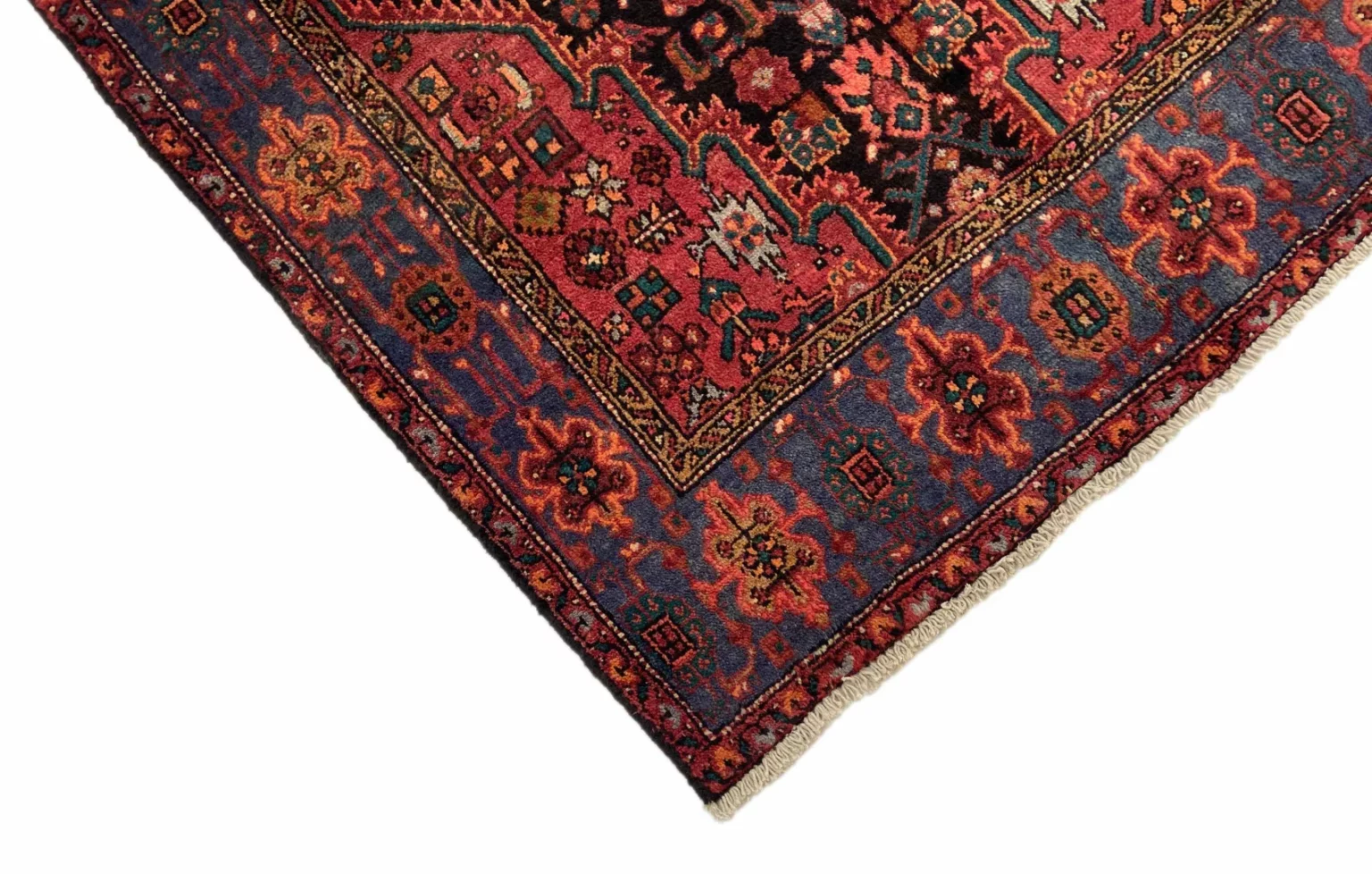
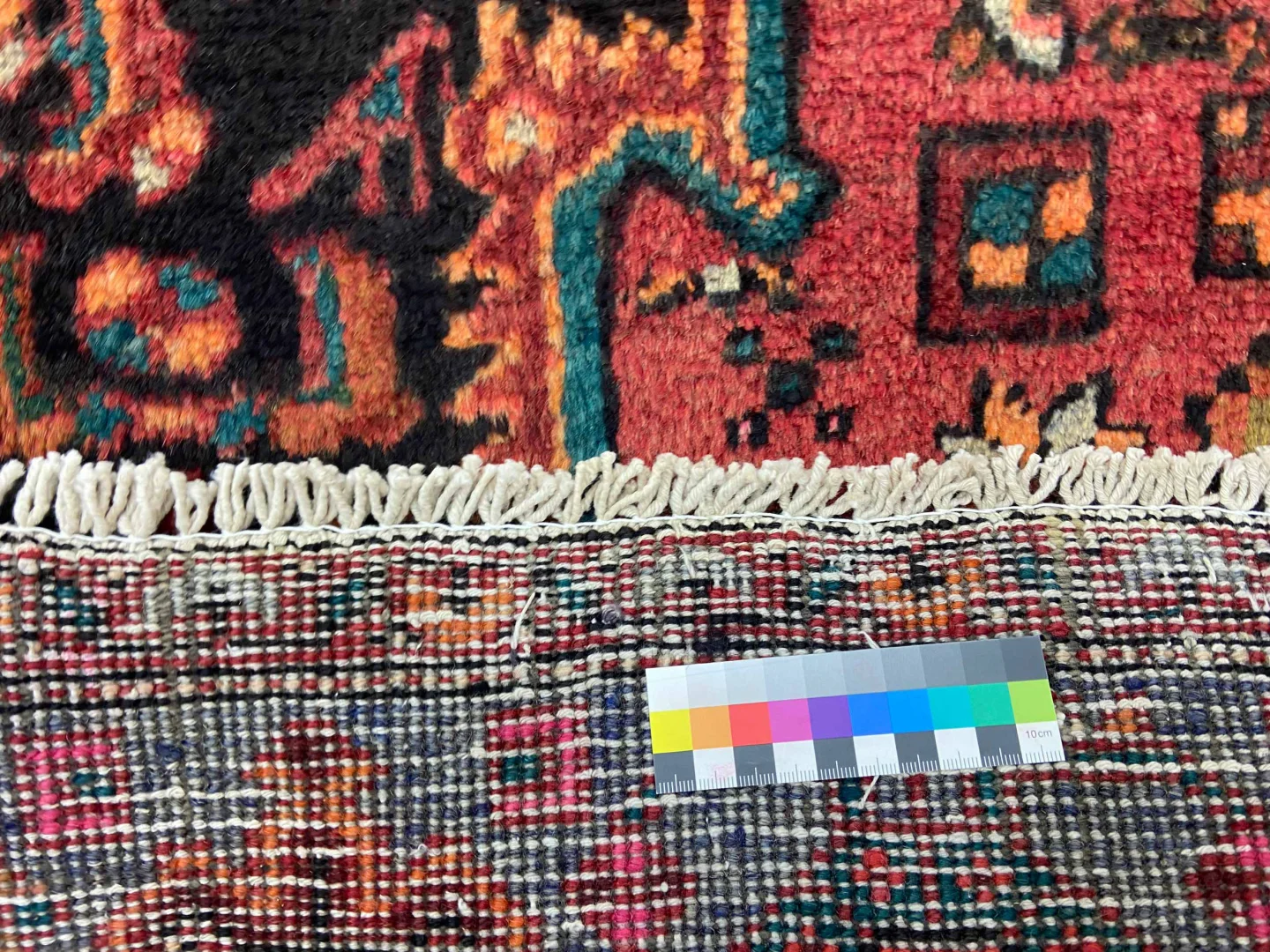
The knot density of this Goltogh rug is 120,000 to 250,000 knots per square metre. Knot density records the number of knots placed within a defined area and gives a clear indication of the detailed construction. It is also part of the rug’s technical structure and helps explain why the piece is described as durable and hard-wearing. The density belongs to this rug’s product specifications, while the hand-knotted method describes how its surface was made.
In a hand-knotted rug, the foundation is formed and the pile is attached by a sequence of individual knots. The process depends on the skill and attention of the person making the rug. The high-quality wool named for this piece is the main pile material. Silk is mentioned in the general description of some Goltogh rugs, but it is not specified as a material for this rug and is not presented here as part of its construction.
Origin and Tradition
This rug comes from Goltogh in northwestern Persia. Its origin places it within a regional Persian rug tradition shaped by handcraft and inherited knowledge. Goltogh is not only a geographic name in this context; it also identifies a setting in which rug-making practices have been maintained over many generations. The tradition brings together practical experience, established design ideas and careful treatment of wool as a textile material.
Rug production in the Goltogh region is rooted in techniques that have been passed down for centuries. Such knowledge includes the preparation of the foundation, the handling of the pile, the use of suitable materials and the translation of a design into rows of knots. Each maker continues this tradition through manual work. The result is created through a series of deliberate craft operations rather than through an anonymous, standardised manufacturing line.
Northwestern Persia has long been a setting for varied forms of rug production. Regional traditions there include dense constructions as well as different floral and geometric design languages. Goltogh rugs are associated with a practical, robust approach to handcraft and with carefully worked surfaces. The continuity of the craft explains why an origin name on an Oriental rug can refer both to a place and to a body of inherited knowledge, without making every rug from that place identical.
The name Goltogh identifies the origin of this Persian rug in northwestern Persia. It should not be read as the name of one specific motif on this individual piece. Instead, it describes the regional context of the weaving tradition. The hand-knotted construction, wool pile and stated knot density add technical information to that origin. Together, these details place the rug within a Persian craft tradition while keeping the description limited to the characteristics identified for this piece.
Goltogh rugs are sometimes considered alongside other Persian regional traditions such as Bidjar and Zandschan. Those traditions are also associated with hard-wearing qualities, although their designs and construction practices have their own identities. This comparison illustrates the variety within Persian rug culture. Different regions developed distinct approaches to colour, ornament and structure, while handwork and the transmission of knowledge remain shared foundations of the broader tradition.
Design and Pattern
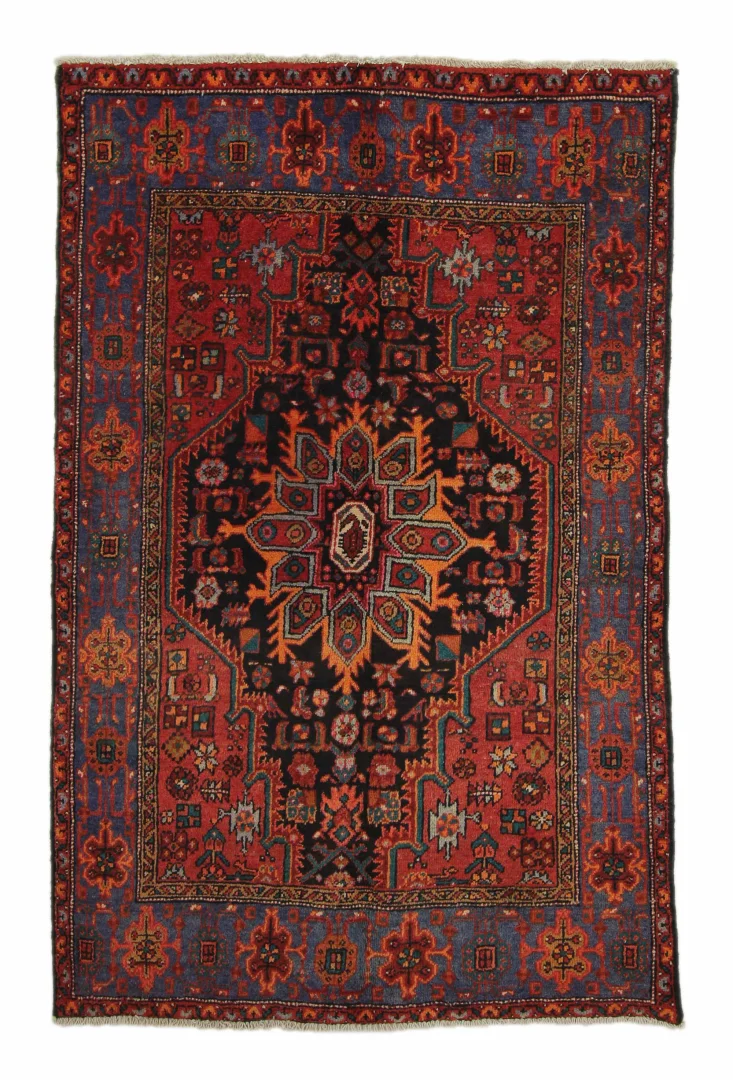
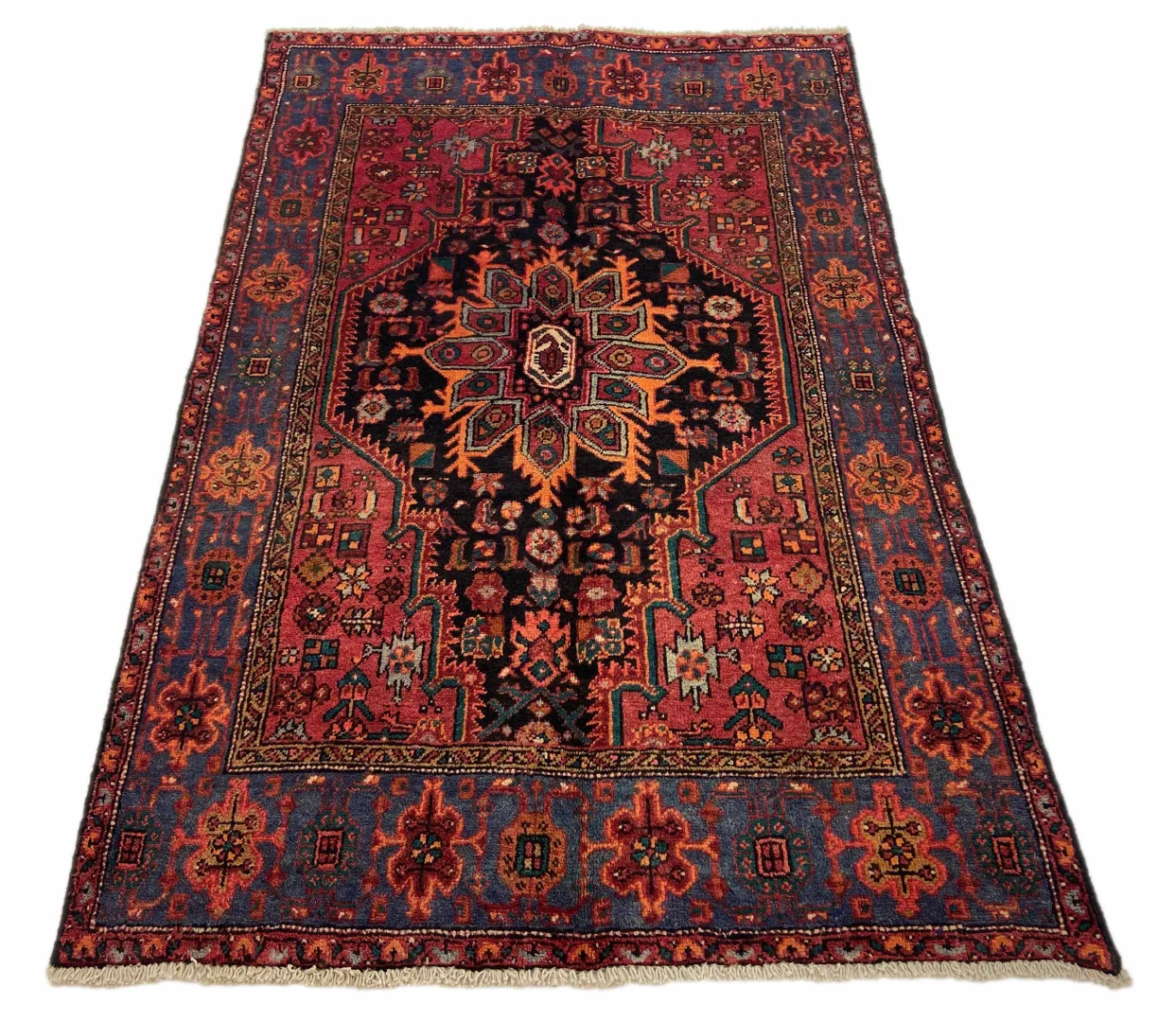
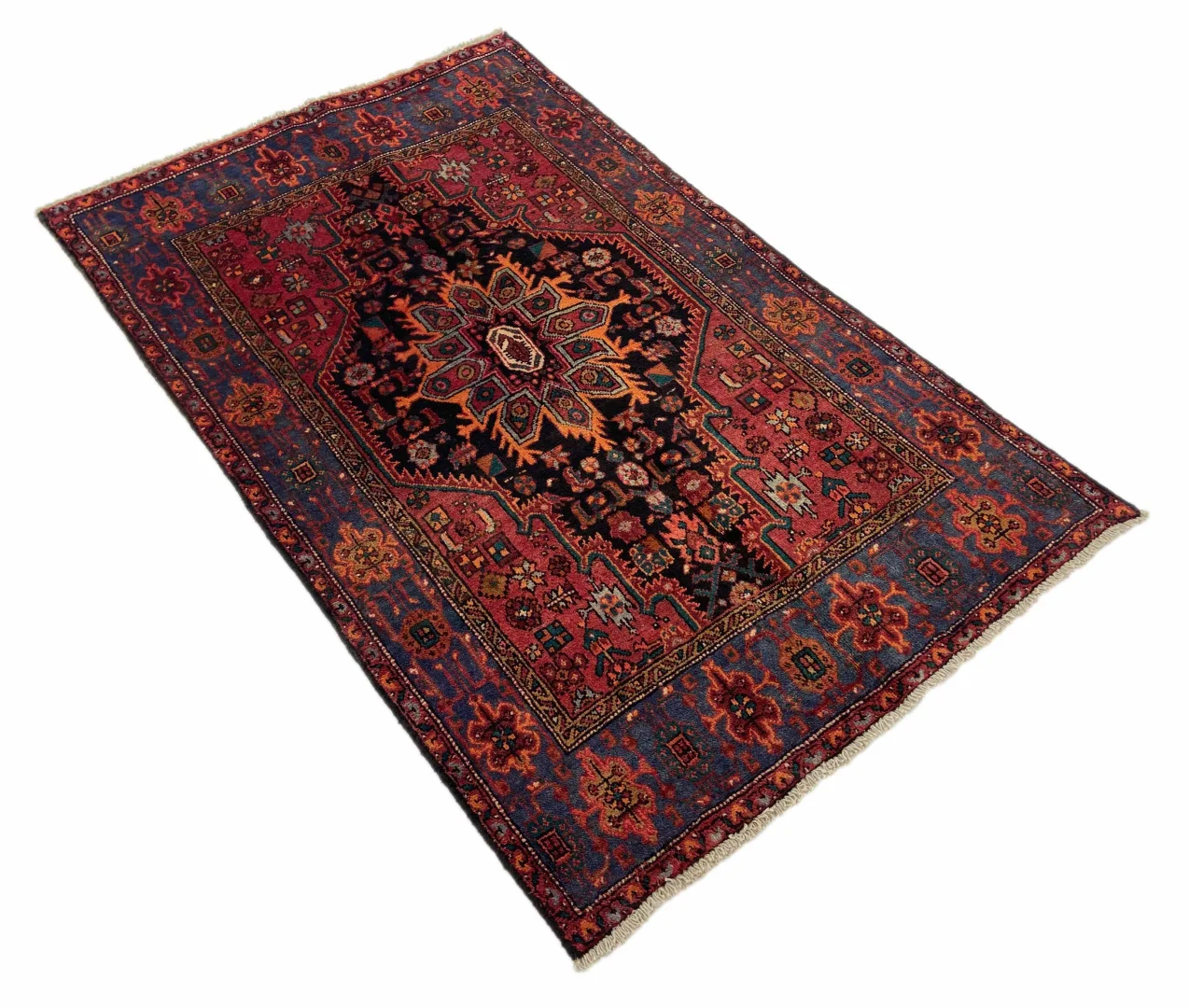
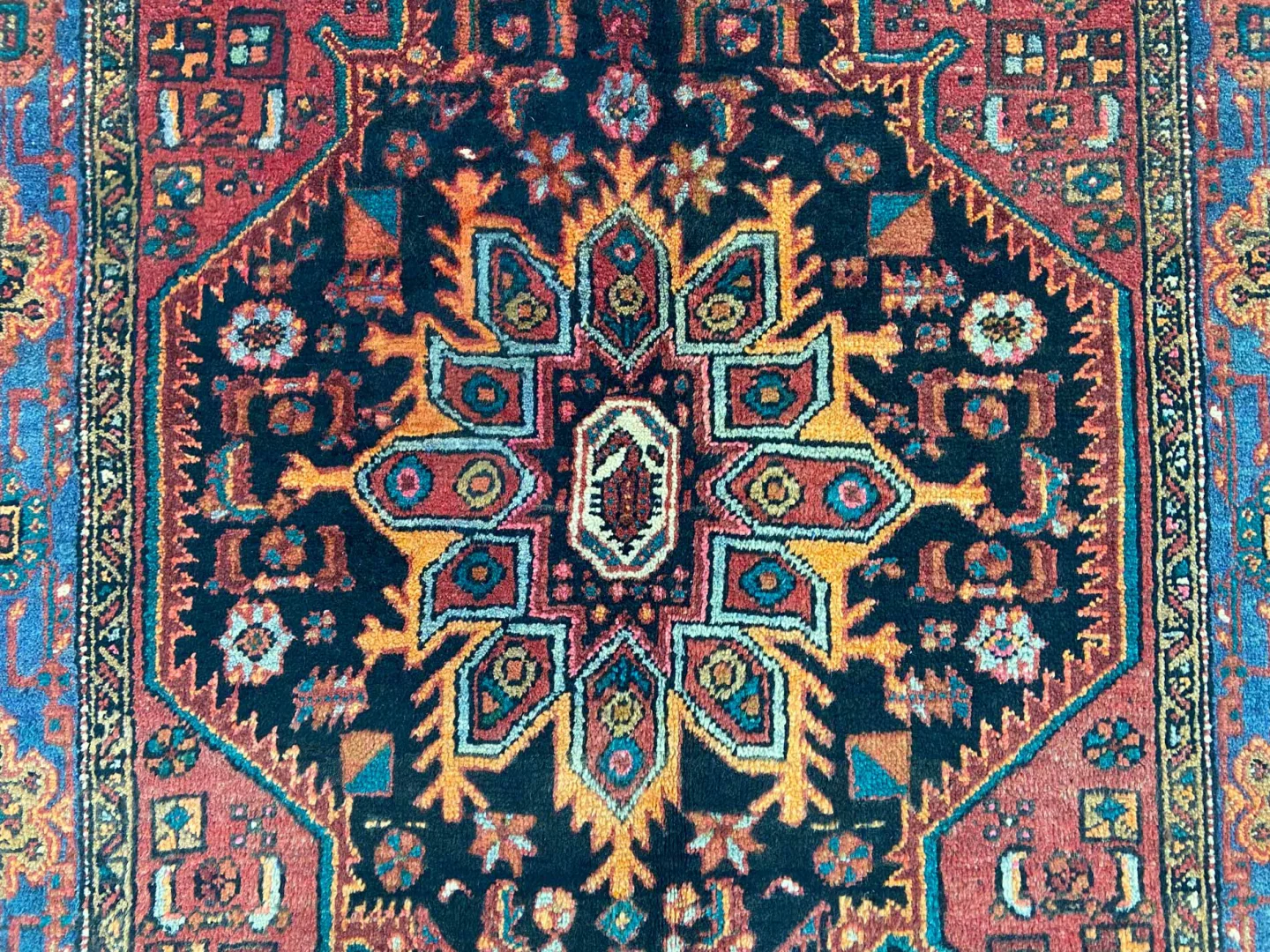
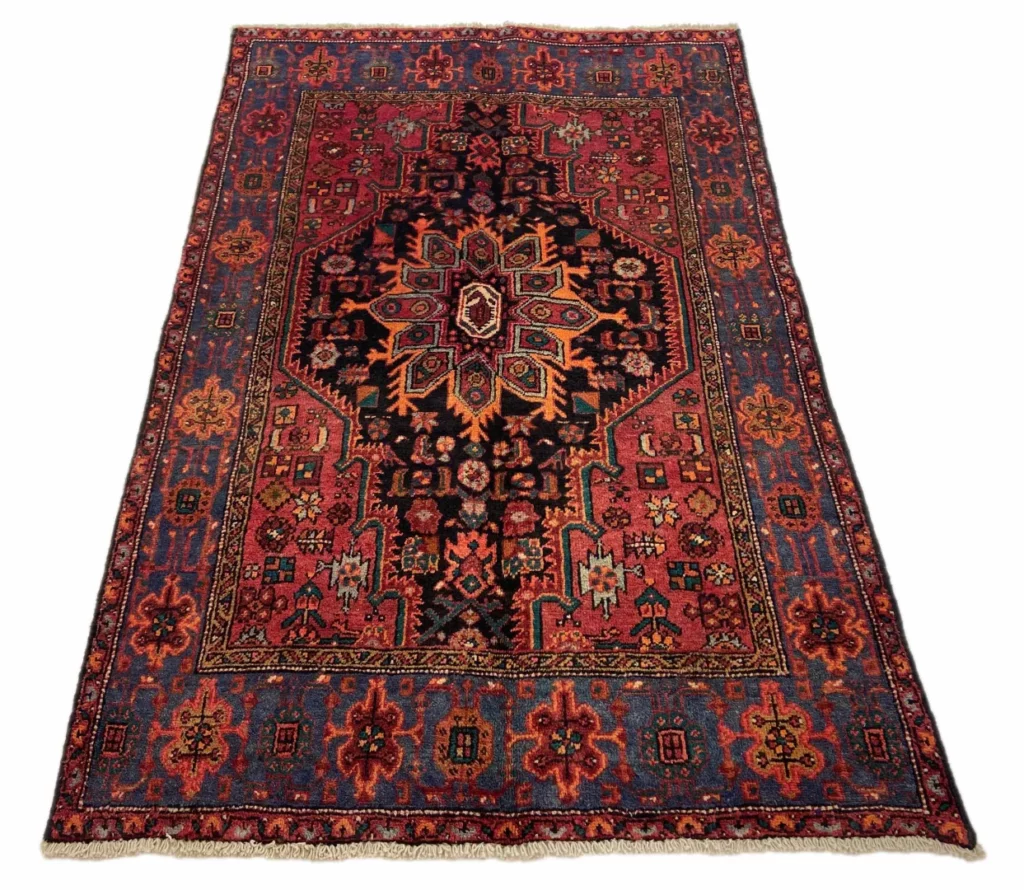
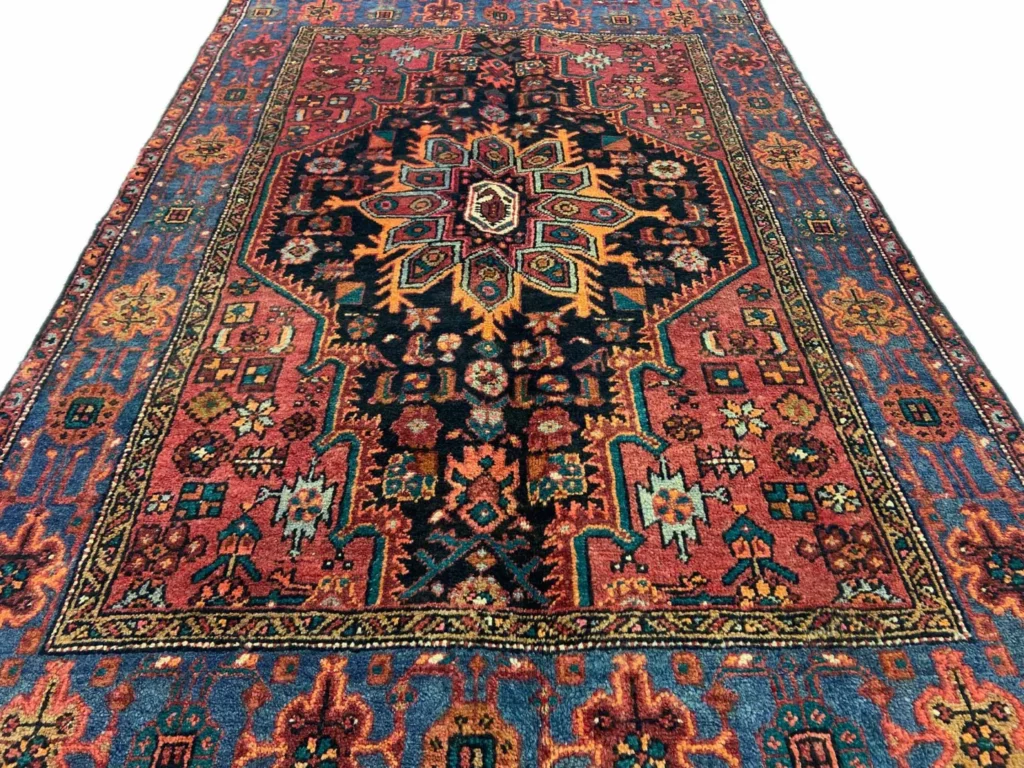
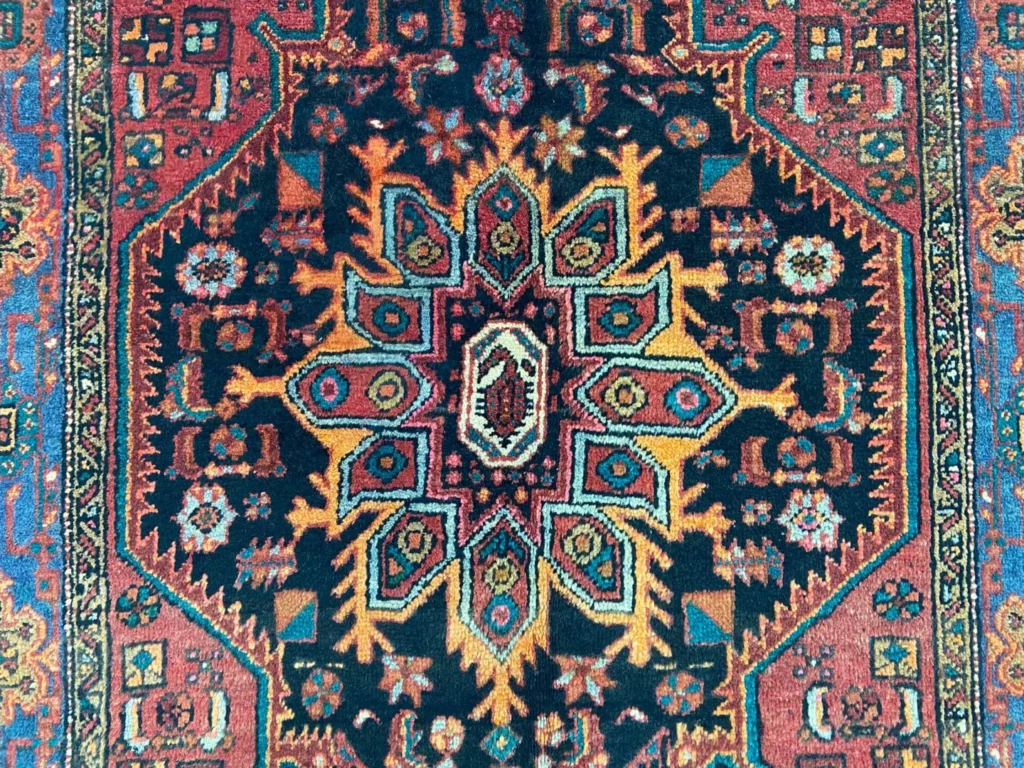
Goltogh rugs often feature traditional floral designs. These patterns draw on the natural surroundings of the region and turn elements such as flowers, leaves and vines into ordered textile ornament. The forms are generally adapted to the requirements of a woven or knotted surface rather than copied as naturalistic images. Repetition, balance and the relationship between the central field and its surrounding areas help create a coherent composition.
The design varies from one Goltogh rug to another. For that reason, the place name alone does not identify one fixed arrangement. A maker may work with inherited floral ideas while choosing a different organisation of motifs, proportions or connecting elements. Even rugs based on a similar regional vocabulary can therefore have distinct visual structures. This variation is part of the nature of one-off, hand-knotted work, although no additional individual motif is named for this rug.
The general description of Goltogh rugs refers to vivid colours arranged in harmonious combinations. Typical shades include deep red, blue, beige and gold. These colours can be used in the field, in borders or in the spaces that connect separate ornaments. Deep red may give a composition warmth, while blue can establish contrast. Beige and gold provide lighter passages and can help individual details remain legible within the overall pattern.
Colour in a Persian rug is understood through the relationship between its different tones. A border may frame the field and establish a clear edge, while repeated floral elements can organise the interior. Some designs use reflection or regular repetition; others create a more varied rhythm across the surface. In Goltogh tradition, the colour palette and the floral vocabulary work together to produce a balanced regional design language.
Floral ornament has a long history in Persian rug design. It allows a large surface to be structured into connected areas and gives the eye a path through the composition. Leaves and vines can link separate forms, while stylised blossoms act as repeated points of emphasis. Geometric simplification may be used so that the design can be transferred accurately into rows of knots. The pattern is therefore inseparable from the technique: the visual plan has to be expressed through many small, individually placed units.
The design tradition is decorative, but it is also a record of how craft knowledge is organised. Pattern, colour and knotting must be considered together. A relatively detailed surface depends on the relationship between the design and the density of the knots, while wool provides a tactile textile ground. For this rug, the regional Goltogh origin and the general tradition of floral designs are identified. A more specific named motif or exact colour arrangement is not stated and is therefore not added.
Special Features
The stated special features of this rug are its hand-knotted construction, its high-quality wool pile and its knot density of 120,000 to 250,000 knots per square metre. It is also described as durable and hard-wearing. These characteristics connect a labour-intensive method with a material selected for practical use. The rug comes from Goltogh in northwestern Persia and belongs to a regional tradition based on techniques transmitted over centuries.
The knot density is a concrete technical feature of this individual rug, not merely a general description of the region. Along with the hand-knotted structure, it indicates the detailed nature of the work. The wool adds a soft surface and the hard-wearing quality associated with the material. Goltogh rugs often use floral designs, but no precise motif name is given for this individual piece. The description therefore remains with the stated origin, material, construction and durability.
FAQ
What makes the Goltogh Persian rug distinctive?
This rug is distinguished by its hand-knotted construction, high-quality wool and knot density of 120,000 to 250,000 knots per square metre. Together, these details describe a carefully made textile with the durable and hard-wearing qualities stated for the piece. Its origin in Goltogh, northwestern Persia, is another defining feature. Goltogh is connected with a centuries-old rug-making tradition in which practical techniques and design knowledge have been passed from one generation to the next. Floral patterns are common within the broader Goltogh design tradition, although this rug is not assigned a more specific individual motif.
How should I care for a Goltogh Persian rug?
The rug should be vacuumed regularly and gently, taking care not to place unnecessary stress on the wool pile. When a deeper cleaning is needed, professional cleaning is the appropriate approach for a hand-knotted wool rug. A specialist can choose a method that respects the construction and the surface of the textile. Direct sunlight should be avoided because prolonged exposure can cause colours to fade over time. Regular, restrained care helps preserve the feel of the wool and the appearance of the pattern. For stains or heavier soiling, professional treatment is preferable to an improvised home remedy.
Where do the materials for the Goltogh Persian rug come from?
The materials used for Goltogh Persian rugs come mainly from the Persian region. Wool is traditionally obtained from local sheep herds and prepared for use in rug making. It is valued for its softness and its hard-wearing nature, which makes it suitable for hand-knotted floor coverings. The general description of Goltogh rugs also mentions silk from specialised sources for some rugs, where it can add extra lustre. High-quality wool is the material specified for this rug, however, and silk is not claimed as part of this particular piece.
To provide the best experiences, we use technologies like cookies to store and/or access device information. Consenting to these technologies will allow us to process data such as browsing behavior or unique IDs on this site. Not consenting or withdrawing consent, may adversely affect certain features and functions.
Functional Always active
The technical storage or access is strictly necessary for the legitimate purpose of enabling the use of a specific service explicitly requested by the subscriber or user, or for the sole purpose of carrying out the transmission of a communication over an electronic communications network.
Preferences
The technical storage or access is necessary for the legitimate purpose of storing preferences that are not requested by the subscriber or user.
Statistics
The technical storage or access that is used exclusively for statistical purposes.The technical storage or access that is used exclusively for anonymous statistical purposes. Without a subpoena, voluntary compliance on the part of your Internet Service Provider, or additional records from a third party, information stored or retrieved for this purpose alone cannot usually be used to identify you.
Marketing
The technical storage or access is required to create user profiles to send advertising, or to track the user on a website or across several websites for similar marketing purposes.
 SECURE PAYMENT
 SHIPPING PARTNERS


