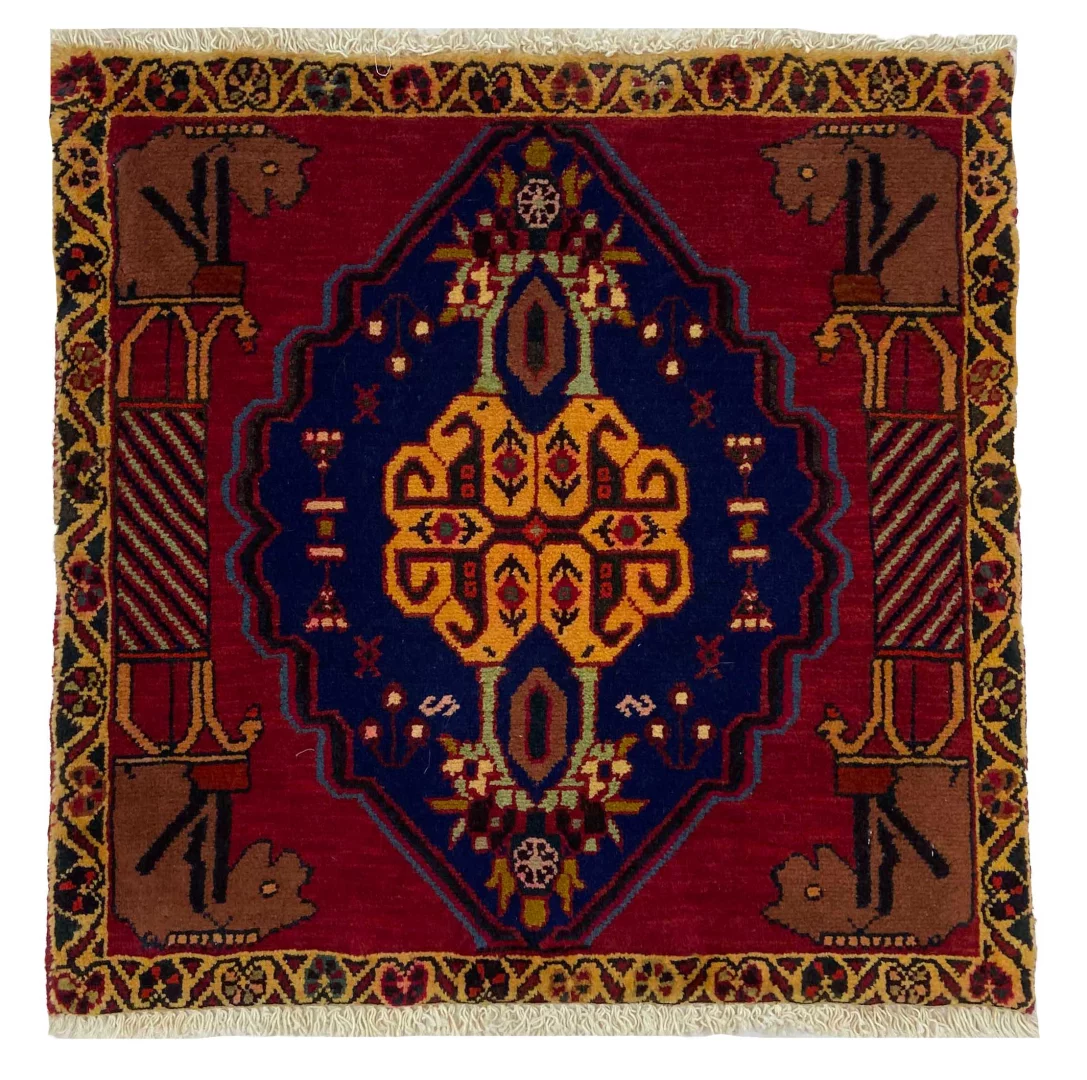
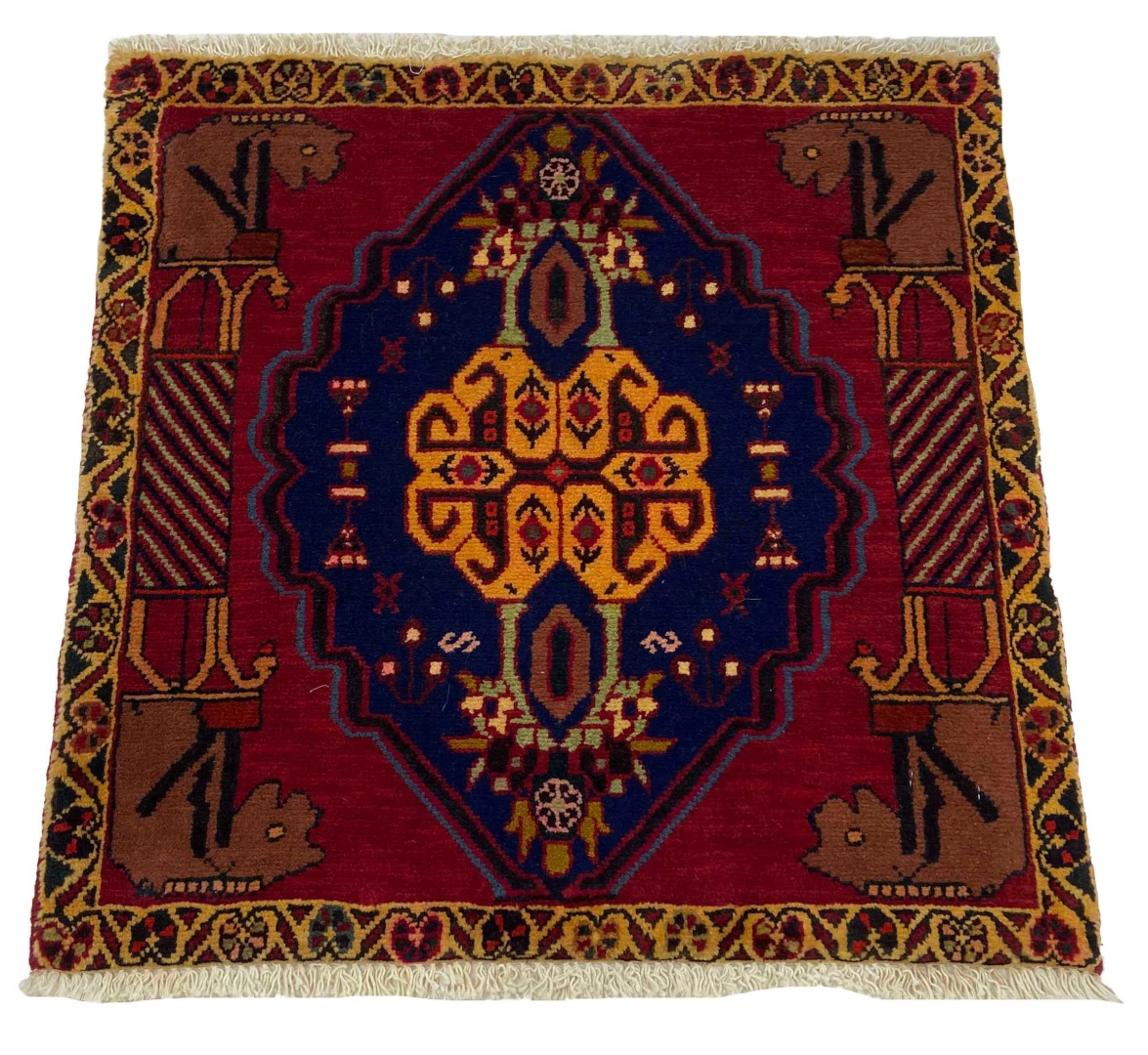
This Ghashghai Persian rug is made with natural wool. The wool forms the pile and therefore shapes the rug’s tactile and visual character. No other material, and no cotton warp, is specified for this piece. Its construction is hand-knotted, so the surface was created through a manual sequence of individual knots rather than through industrial production.
The knot density is 180,000 to 250,000 knots per square metre. This density supports a clear and differentiated rendering of ornaments across the field. It also reflects the time-consuming nature of hand-knotting, in which the pattern is built progressively through many separate knots. Natural wool gives the pile its traditional material character while the manual process determines the individual execution.
The rug was carefully knotted by hand in the open air. It was made without prior planning. This working method is a stated feature of the piece and gives its design an individual expression. Rather than being one identical unit from a repeated industrial series, it is a single work shaped by the decisions and rhythm of manual production.
The condition is described as high-quality craftsmanship. This description concerns the execution of the rug and complements the information about natural wool, handwork and knot density. No information is provided about its age, restoration, fringes, edges or signs of use, so no such details are added here.
Origin and Tradition
The rug comes from southern Persia, from Fars Province. It is associated with the Ghashghai, a nomadic people of the region. Fars is one of the important landscapes of Persian rug culture, where weaving traditions developed in connection with regional identity, mobile forms of life and practical craft. The Ghashghai tradition is therefore both a geographic and a cultural reference.
Ghashghai rugs are known for bringing robustness and visual design together. Within a nomadic setting, a rug could serve a practical purpose while also carrying the group’s own ornamental language. This combination of utility and decoration remains central to the way Ghashghai weaving is understood. The designs can reflect a region and a way of life without every rug following one fixed and unchanging template.
The open-air production described for this rug relates to the mobile life traditionally associated with the Ghashghai. The work did not necessarily take place in a permanent workshop. Knotting could be part of everyday life within a nomadic community. The stated absence of a prior plan points to a direct and flexible manner of making, distinct from a process in which a complete design is fixed before the first knot is tied.
In Persian rug culture, an origin name can describe more than a place on a map. It may also identify a group of weavers, an inherited way of working or a recognisable visual vocabulary. In a Ghashghai rug these meanings meet: Fars identifies the regional setting, while Ghashghai identifies the cultural and craft tradition. The rug can thus be placed within the weaving culture of southern Persia.
In comparison with Shiraz rugs, Ghashghai rugs are described as having particularly high quality and durability. This comparison belongs to the established description of two traditions connected with the same broader region. Shiraz is also associated with Fars, while Ghashghai emphasises the nomadic tradition of the area. The distinction shows that one landscape can contain several different craft identities and standards of execution.
The weaving culture of Fars is part of a wider regional diversity. Luri rugs also come from the area around Fars and are known for varied colours and patterns. Bakhtiari rugs are associated with floral and geometric designs. Rugs of the Qashqai group are likewise notable for complex patterns that reflect the cultural influences of the region. These related traditions provide context without changing the origin of this Ghashghai rug.
Alongside traditional makers, modern designers draw inspiration from Ghashghai rug art. They develop new approaches to design and to the use of materials, bringing elements of classical rug culture into contemporary work. Such reinterpretations can make the tradition accessible to a younger generation of buyers. The rug described here remains a hand-knotted example of Ghashghai craft, with its own geometric ornament and regional identity.
Design and Pattern
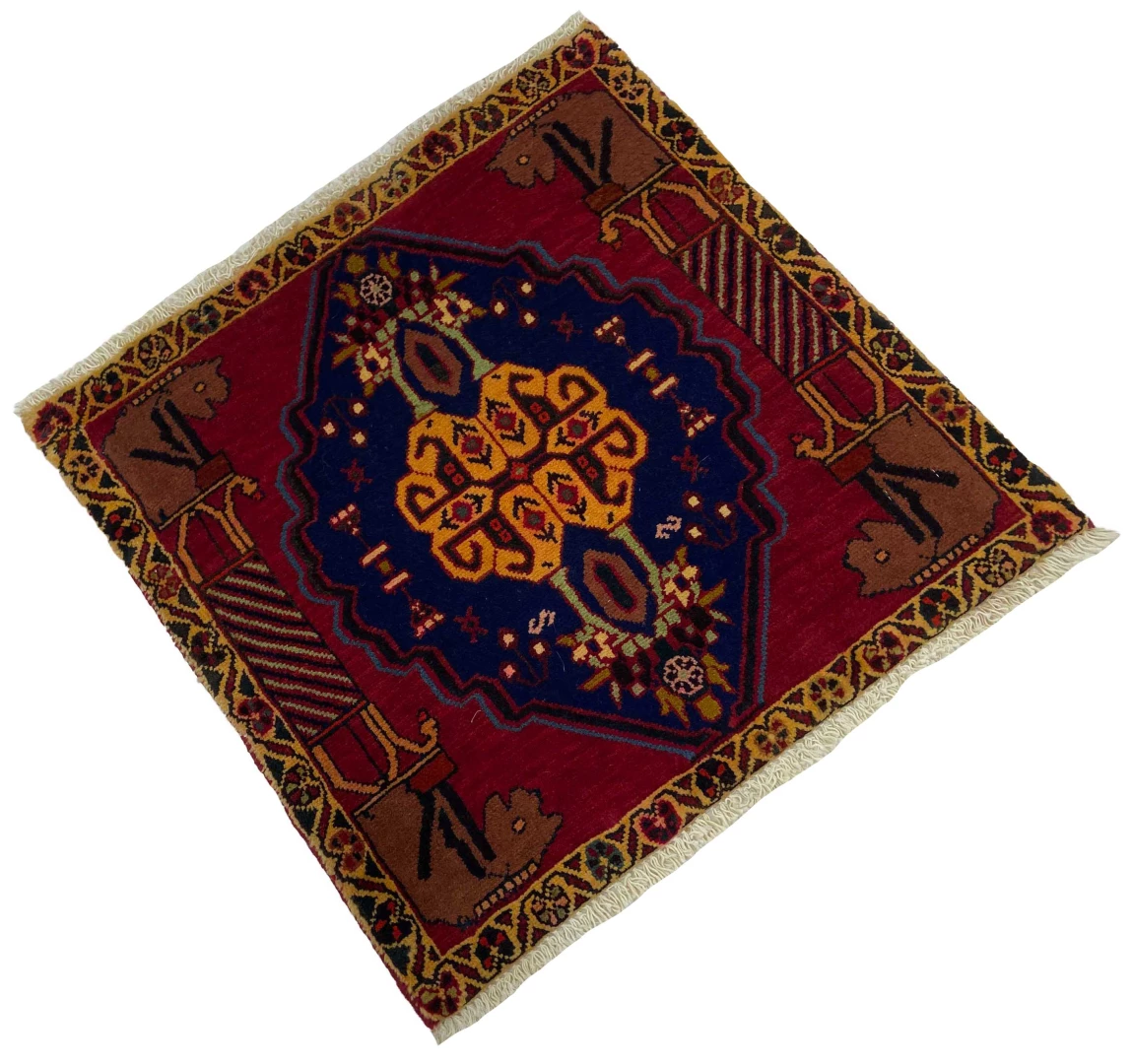
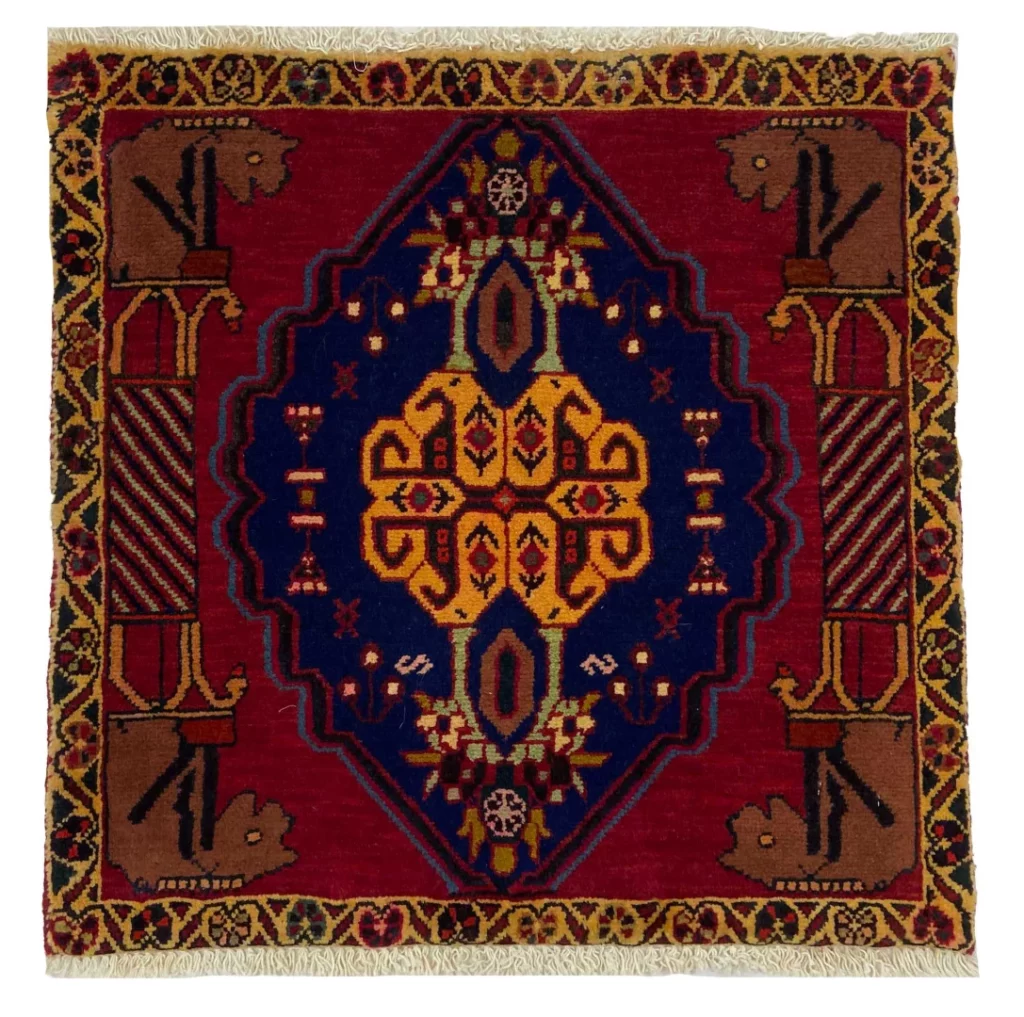
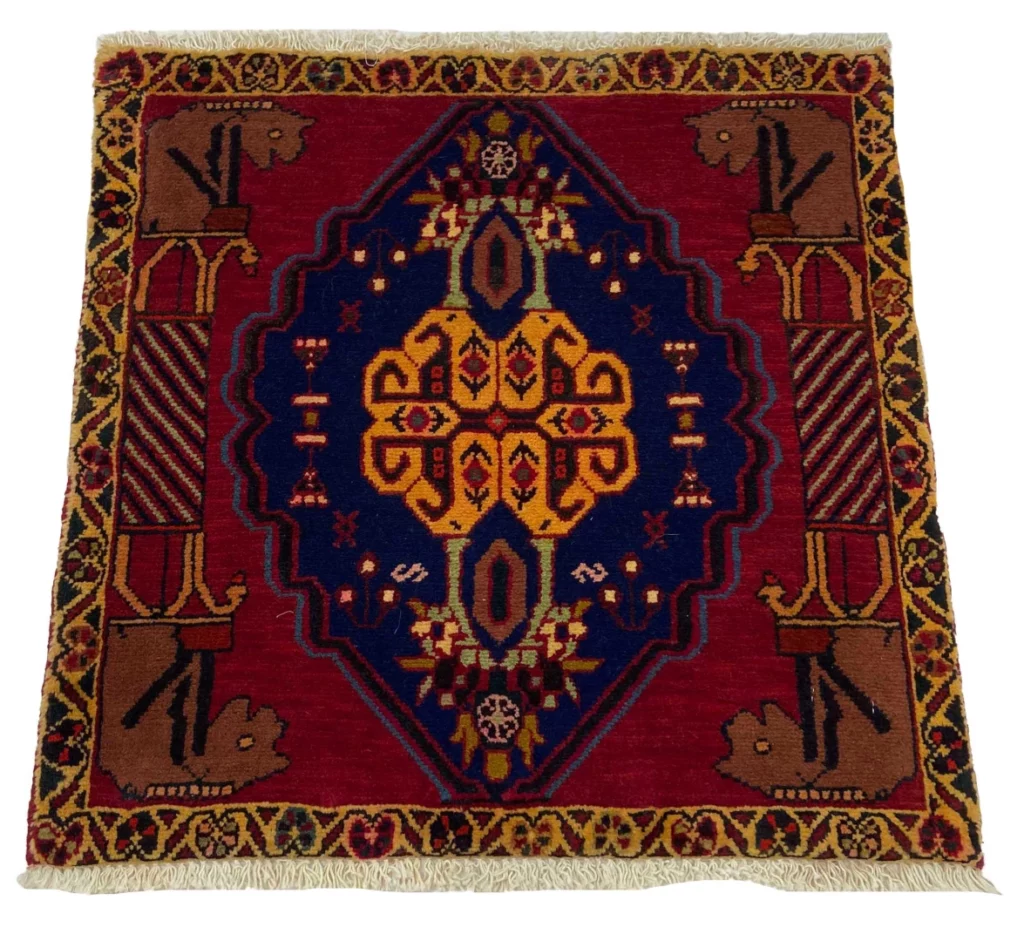
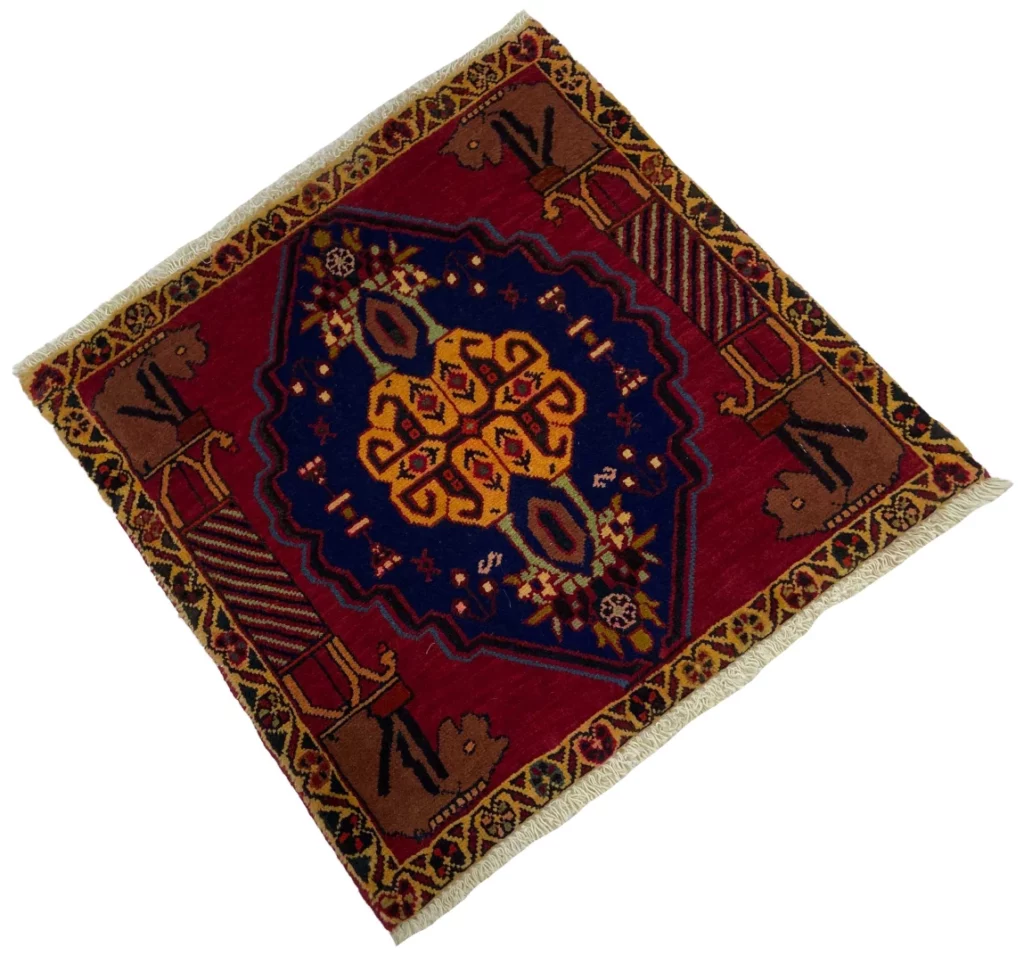
The pattern of this rug consists of geometric ornaments. Geometric forms organise a textile surface through repetition, alignment, fields or rhythmic sequences. In a hand-knotted rug, these elements are built knot by knot. The result is an ordered ornamental structure that is still shaped by the character of manual execution.
Ghashghai geometric ornaments are often associated with nature and nomadic life. Impressions from the natural world may enter a design in simplified rather than strictly representational forms. The nomadic way of life provides another cultural context for repeated signs, structured arrangements and forms that can carry symbolic associations. The rug does not tell a literal picture story; instead, it preserves a visual language in which landscape, community and tradition can be suggested.
Ghashghai rugs often use shades of red and brown. In the source description these colours are presented as harmoniously coordinated and as creating a warm, welcoming effect. A complete colour list is not given for this individual rug. The relevant description is limited to the frequent connection of red and brown tones with Ghashghai rugs and to their harmonious overall impression.
The geometric design benefits from the stated knot density. A density of 180,000 to 250,000 knots per square metre permits smaller ornamental units to be rendered with differentiation. It also indicates the amount of manual work involved in building the surface. With a hand-knotted rug, precision is not produced by printing or by a machine-made repeat, but through the controlled placement of many individual knots.
The pattern traditions of Fars demonstrate how varied ornament can be within one region. Luri work is associated with colourful patterns, Bakhtiari rugs with floral and geometric designs, and Qashqai-group rugs with complex patterns reflecting regional cultural influences. Within this setting, the Ghashghai rug represents a geometric vocabulary connected with nature and nomadic life.
The design is not simply decoration without context; it forms part of an inherited visual culture. When a rug is made without a prior plan, the execution can respond directly to the working process. The geometric principle therefore receives an individual interpretation. No separate drawing is specified for this piece. Instead, its pattern is described as a hand-made composition developed during knotting.
Contemporary designers use Ghashghai rug art as a starting point for new design concepts. They do not necessarily reproduce a historical model, but may create their own solutions for pattern and materials. These modern approaches bring traditional forms into current settings and can appeal to younger buyers. The rug itself is identified as a traditional hand-knotted Ghashghai rug with geometric ornaments.
Special Features
The distinctive features are its origin in southern Persia and Fars Province, its connection with the Ghashghai tradition and its geometric ornaments. Natural wool and hand-knotting define its material and technical character. It was carefully made by hand in the open air and without a prior plan, a working method specifically connected with the individual nature of the piece.
The knot density of 180,000 to 250,000 knots per square metre is associated with detailed and durable construction. Its condition is described through high-quality craftsmanship. Together with the warm effect often created by red and brown tones, these details present a rug that combines regional tradition, manual work and geometric design.
As a one-off hand-knotted work, the rug is not the same as an industrial article produced in identical copies. Its particular character lies in the combination of material, technique, Fars origin and an ornament developed without prior planning. No further individual characteristics are stated, so none are added.
FAQ
How should I care for my Ghashghai rug?
Regular vacuuming helps keep the rug clean. If cleaning is required, it should be carried out professionally. Direct sunlight should be avoided so that the colours do not fade. These recommendations take account of the hand-knotted construction and natural wool without introducing cleaning procedures that are not specified for this rug.
Where does the Ghashghai Persian rug come from?
The Ghashghai Persian rug comes from southern Persia, specifically Fars Province. Its origin is connected with the Ghashghai, the nomadic people who traditionally knot rugs in this region. The rug therefore belongs to the Persian weaving culture of southern Persia and is not assigned to a production area outside this regional context.
What makes a Ghashghai rug unique?
Its character comes from the combination of traditional handwork, natural wool and characteristic geometric ornaments. The patterns are often inspired by nature and nomadic life. The rug was also hand-knotted in the open air without prior planning, has a knot density of 180,000 to 250,000 knots per square metre and is described as having high-quality craftsmanship.
To provide the best experiences, we use technologies like cookies to store and/or access device information. Consenting to these technologies will allow us to process data such as browsing behavior or unique IDs on this site. Not consenting or withdrawing consent, may adversely affect certain features and functions.
Functional Always active
The technical storage or access is strictly necessary for the legitimate purpose of enabling the use of a specific service explicitly requested by the subscriber or user, or for the sole purpose of carrying out the transmission of a communication over an electronic communications network.
Preferences
The technical storage or access is necessary for the legitimate purpose of storing preferences that are not requested by the subscriber or user.
Statistics
The technical storage or access that is used exclusively for statistical purposes.The technical storage or access that is used exclusively for anonymous statistical purposes. Without a subpoena, voluntary compliance on the part of your Internet Service Provider, or additional records from a third party, information stored or retrieved for this purpose alone cannot usually be used to identify you.
Marketing
The technical storage or access is required to create user profiles to send advertising, or to track the user on a website or across several websites for similar marketing purposes.
 SECURE PAYMENT
 SHIPPING PARTNERS


